
Four Treasures Reference Database
Record No. 535
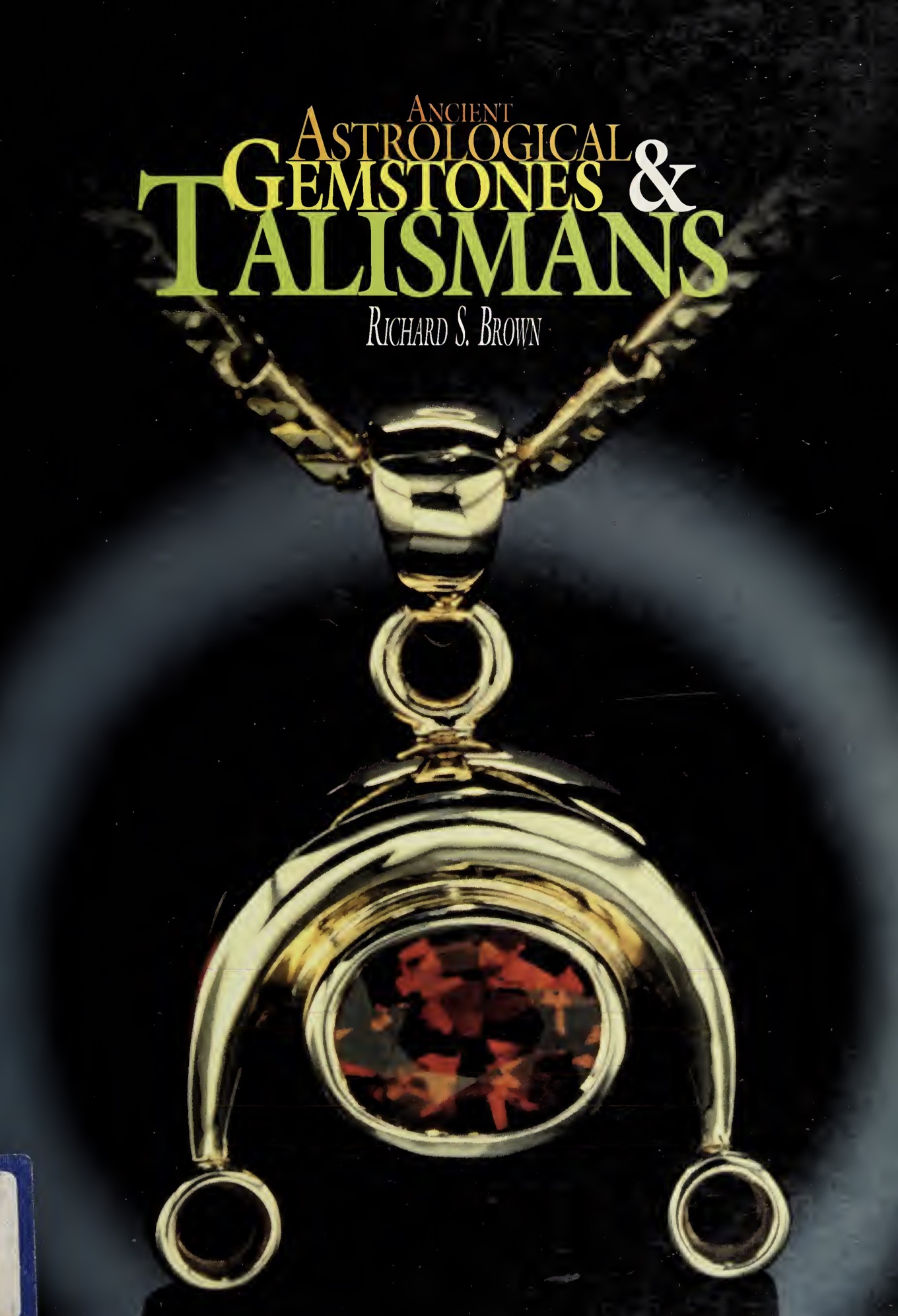
Ancient Astrological Gemstones & Talismans
Book
Brown, R.S. (1995) Ancient Astrological Gemstones & Talismans. Bangkok, A.G.T. Co., Ltd., 148 pp.
ISBN/ISSN: 9748902242 | Sinkankas/Born No.: NIS/NIB | RWHL
corundum, history.1, India.12.2, gems, Indian lapidary
Richard Shaw Brown’s Ancient Astrological Gemstones & Talismans: The Complete Science of Planetary Gemology is an extensively illustrated examination of the traditional relationship between gemstones, planetary influences, and talismanic jewelry, drawing principally upon Hindu astrological and religious literature. Compiled from research undertaken in Asia between 1968 and 1994, the book seeks to reconcile ancient Vedic concepts of gemstone efficacy with modern gemological terminology and the practical manufacture of gemstone talismans. Brown describes the system of navaratna, or nine gems, in which particular gemstones correspond to the nine celestial influences recognized in Indian sidereal astrology (jyotisha). These associations comprise ruby for the Sun, natural pearl for the Moon, red coral for Mars, emerald for Mercury, yellow sapphire for Jupiter, diamond for Venus, blue sapphire for Saturn, hessonite garnet for Rahu, and cat’s-eye chrysoberyl for Ketu. Rahu and Ketu represent the ascending and descending lunar nodes rather than physical planets. The author explains the traditional belief that gemstones transmit or enhance planetary influences through their colors and other supposed energetic properties, thereby affecting health, prosperity, relationships, spiritual development, and personal fortune. Particular importance is attached to the quality of the gemstones selected for astrological purposes. Brown argues that natural, untreated gemstones possessing excellent color, transparency, and freedom from visible defects are essential for producing beneficial effects, whereas heavily included, flawed, synthetic, or otherwise unsuitable stones may be ineffective or potentially inauspicious according to traditional interpretations. The discussion distinguishes these principles from modern commercial birthstone lists, which the author regards as having little connection with authentic astrological practice. Gemological characteristics, including gemstone identity, color, clarity, and physical properties, are considered alongside their symbolic and religious significance. Considerable attention is devoted to the design and manufacture of talismans, particularly the selection and arrangement of gemstones in gold settings incorporating planetary symbols and traditional motifs. The book discusses the importance of individual horoscopes in selecting appropriate stones, together with the relationships between planetary deities, gemstones, colors, and the circumstances considered favorable for their use. Ancient Sanskrit sources, including the Garuda Purana and other works on gemstones and astrology, provide the historical and religious framework for the author's interpretations. The publication contains 161 color plates illustrating gemstones, gemstone-set rings, pendants, and elaborate talismanic ornaments, emphasizing both the visual beauty of the materials and their traditional astrological associations. A glossary and bibliography supplement the discussion. Although Brown presents planetary gemology as a science, the proposed astrological and therapeutic effects of gemstones have not been established through reproducible scientific evidence and must be distinguished from their objectively measurable mineralogical and optical properties. For gemologists and historians of jewelry, the book is particularly valuable as a record of South Asian gemstone traditions, historical beliefs concerning gem quality, the association of individual gem species with planetary deities, and the continuing influence of religious and astrological concepts upon gemstone selection, jewelry design, and marketing in contemporary Asia.