
Four Treasures Reference Database
Record No. 6242
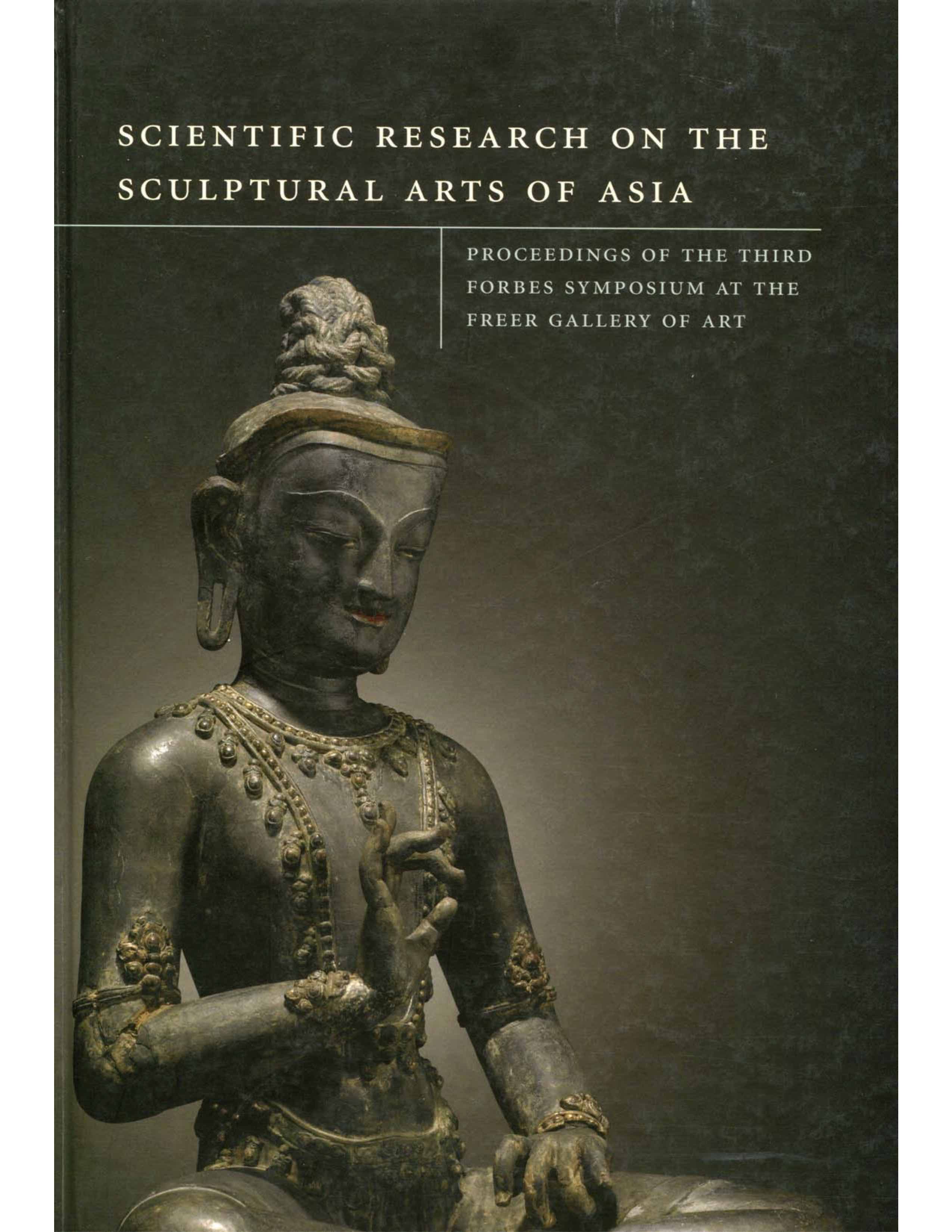
A noninvasive mineralogical study of nephrite artifacts from the Philippines and surroundings: The distribution of Taiwan nephrite and implications for island Southeast Asian archaeology
Book Section
Iizuka, Y., Hung, H.C. and Bellwood, P. (2007) A noninvasive mineralogical study of nephrite artifacts from the Philippines and surroundings: The distribution of Taiwan nephrite and implications for island Southeast Asian archaeology. In: Scientific Research on the Sculptural Arts of Asia, London: Archetype Publications, pp. 12–19.
ISBN/ISSN: 9781900000000 | Sinkankas/Born No.: NIS/NIB | RWHL*
Close Abstract
Hide Keywords
Copy Reference
gems, jade, nephrite, China, Taiwan, Philippines
Jade artifacts composed of nephrite are found in China, Taiwan, and some regions of Southeast Asia, commencing in Neolithic times. Nephrite deposits are rare in nature, and it is widely accepted that chemical analysis is required if nephrite artifacts are to be sourced to specific quarries. Most analytical methods, however, require object sampling to obtain the chemical compositions of materials. A low-vacuum scanning electron microscope with an energy-dispersive x-ray spectrometer is a powerful and completely noninvasive method of analysis. It requires no conventional sampling, apart from surface cleaning of the artifact. This system has been used for noninvasive mineral studies of nephrite ornaments (Sa Huynh type lingling-o earrings) from Iron Age sites in the Tabon Caves on Palawan Island in the Philippines and in Niah Cave in Sarawak, western Borneo, Malaysia. These ornaments were found to be composed of nephrite (tremolite-actinolite amphiboles) with zinc-bearing chromite inclusions. The mineralogical characteristics of these nephrite ornaments are comparable to those of native rock from the Fengtian nephrite deposit in eastern Taiwan. The results suggest that the original materials for these artifacts were collected in eastern Taiwan and offer important information about long-distance cultural interaction among ancient Austronesian societies, commencing around 2000 B.C.E. and continuing until after 500 C.E.