
Four Treasures Reference Database
Record No. 6703
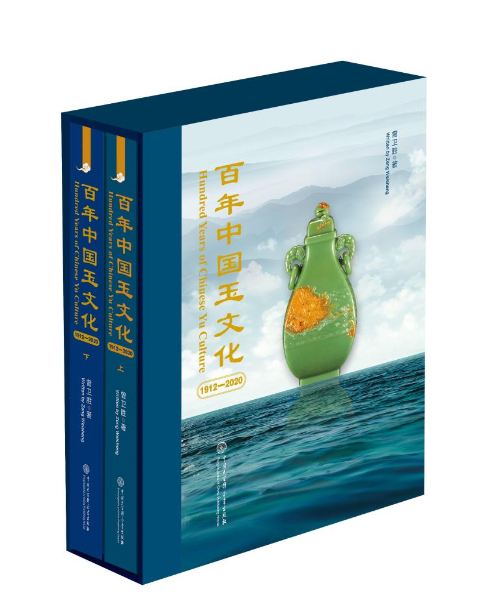
Hundred Years of Chinese Yu Culture 1912–2020
百年中国玉文化1912—2020
Book
Zeng, W. (2023) Hundred Years of Chinese Yu Culture 1912–2020. [百年中国玉文化1912—2020] Beijing, Encyclopedia of China Publishing House, 2 Vols.
ISBN/ISSN: 9787520000000 | Sinkankas/Born No.: NIS/NIB | Language: in Chinese | RWHL*
Close Abstract
Hide Keywords
Copy Reference
gems, jade, Chinese jade carving, jadeite, fei cui, nephrite, fei cui, Fischer-Chinese
The book includes over a hundred jade carving artists (spanning over a century in the book's timeframe), showcasing more than 50 classic works from different eras, regions, styles, and materials, focusing on representative figures and artworks in the world of art. Zeng Weisheng emphasized that during the writing process, every effort was made to respect history and spare no expense in researching materials, in order to uncover the people and events that deserve their true historical status and to restore those forgotten historical facts and steadfastness. One of the significant ways of inheriting the skills in the jade carving industry is through generations, with nearly a thousand influential jade carving artists (masters) documented over the past century. However, it's rare to find father and son pairs both achieving outstanding artistic accomplishments. The book only highlights the father-son pairs of Gu Yongjun and Gu Ming from Yangzhou and Lin Hengyun and Lin Fei from Fuzhou. After outlining the development of Chinese jade culture over the past century, the book attempts to explore relevant issues concerning the future development of modern Chinese jade culture and provides recommendations. Liu Zuochen, Executive Director (President) and Party Committee Secretary of the Encyclopedia of China Publishing House, pointed out that the selected time period in the book is highly representative. First, both the photography techniques and records have never been so detailed and exquisite as seen in this book. Over a hundred masterpieces have been passed down, showcasing both orderly inheritance and continuous innovation, which demonstrates the author's vision and grasp of jade culture. Second, the structure and framework are rigorous, balancing between an overview and specific subtopics, making it scientific. Lastly, the images are exquisite, especially in the seventh chapter, which lists classic jade artworks from over a century, allowing readers to grasp the development of jade craftsmanship and derive aesthetic enjoyment from it. Bi Lijun, Vice President and Secretary-General of the China Jewelry Jade Jewelry Industry Association, stated that the development of Chinese jade culture over the past 100 years has been both tortuous and splendid. The book primarily focuses on jade carving artisans and jade artworks, conducting a detailed analysis and summary from historical and artistic perspectives. It includes two essential sections: Jade Carving Artists" and "Classic Jade Carving Artworks," fully reflecting the author's appreciation and respect for jade carving art and its creators. It is hoped that this book will promote the better inheritance and innovation of Chinese jade culture. Shi Hongyue, Deputy President and full-time Vice President of the China Jewelry Jade Jewelry Industry Association, highly praised the comprehensive exploration of jade culture in this book, spanning over a century and covering aspects such as the historical background, figures, events, mineral resources, classic artworks, education, market, and craft styles. He believes that this book lays the foundation for advancing Chinese jade culture. Renowned jade artists Song Shiyi, Tian Jianqiao, and Zhang Tiecheng shared their thoughts on the current state and future of modern Chinese jade carving. They unanimously agreed that the entire jade carving art world should look back to tradition, delve deeper into the new value of jade beauty and craftsmanship in the modern context, and reevaluate the standards of contemporary jade carving art with an attitude of "revival and reflection." Based on this foundation, they should continue to draw from the strengths of world art, exchange and blend, and ultimately create a jade carving development path with distinctive Chinese characteristics and artistic features."