
Four Treasures Reference Database
Record No. 679
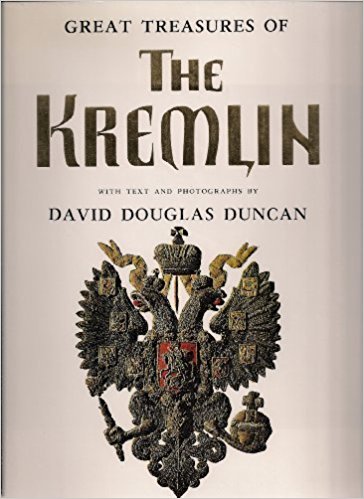
Great Treasures of the Kremlin
Book
Duncan, D.D. (1979) Great Treasures of the Kremlin. New York, Abbeville Press, 176 pp.
Sinkankas/Born No.: NIS / NIB | RWHL
corundum, quality.10, Kremlin, Tajikistan.12, spinel, gems
David Douglas Duncan’s Great Treasures of the Kremlin is a lavishly illustrated photographic and historical survey of the Russian imperial treasures preserved within the Moscow Kremlin, particularly the collections of the Armory Chamber, its cathedrals, and royal palaces. Beginning in 1956, Duncan made five visits to Moscow over three years, obtaining exceptional permission from Soviet authorities to photograph the Kremlin’s interiors and treasures in color. His photographs, taken with 35 mm Leica cameras, are accompanied by historical narratives and a substantial research supplement providing additional information on individual objects, their materials, craftsmanship, provenance, and historical associations. The book traces the development of the Kremlin from a medieval fortress into the ceremonial and political center of Russia, emphasizing the accumulation of precious objects under successive grand princes, tsars, and emperors. Of particular gemological interest are the elaborate crowns, ecclesiastical ornaments, jeweled Gospel covers, ceremonial weapons, and imperial regalia incorporating diamonds, rubies, sapphires, emeralds, turquoise, topaz, garnets, and pearls. The Cap of Monomakh, the traditional symbol of Russian sovereignty, is described as a gold filigree headdress decorated with emeralds, rubies, and pearls, its origins obscured by legends associating it with Byzantium. The Cap of Kazan, commissioned by Ivan the Terrible following his conquest of Kazan in 1552, features intricate gold filigree, turquoise, pearls, rubies, and a large yellow topaz that replaced an earlier ruby. Other notable objects include the diamond-encrusted crown of Peter the Great, the crown of Empress Anna incorporating diamonds from Catherine I’s crown, and the magnificent jeweled orb and throne of Tsar Alexei Mikhailovich. Duncan also documents the exceptionally rich ecclesiastical treasures of the Russian Orthodox Church, including a seventeenth-century patriarchal mitre decorated with emeralds, rubies, enamel, and pearls, and a Gospel cover commissioned during the reign of Feodor Alexeievich containing fifty-seven pounds of gold and numerous pear-shaped emeralds. The jeweled Gospel book presented by Ivan the Terrible in 1571 is particularly remarkable for its rubies, large sapphires, golden topazes, silver reliefs, and enamel decoration. Earlier Russian goldsmithing traditions are represented by the thirteenth-century Ryazan treasure, comprising gold filigree ornaments decorated with garnets and enamel. The book further illustrates pearl-embroidered ecclesiastical vestments, elaborate icon covers, gold and silver ceremonial vessels, jeweled horse trappings, and precious objects exchanged as diplomatic gifts. Among the latter is an Ottoman presentation to Catherine the Great incorporating rubies, diamonds, gold, and a large emerald. Duncan concludes with the Romanov dynasty’s decline, including the magnificent Fabergé egg commemorating its tercentenary in 1913, and the preservation of imperial treasures following the Russian Revolution. Although primarily a photographic history rather than a systematic gemological catalogue, the volume provides valuable visual documentation of historic gemstone settings, goldsmithing, enameling, pearl embroidery, and the ceremonial use of precious materials in Russian court and religious art.