
Four Treasures Reference Database
Record No. 7568
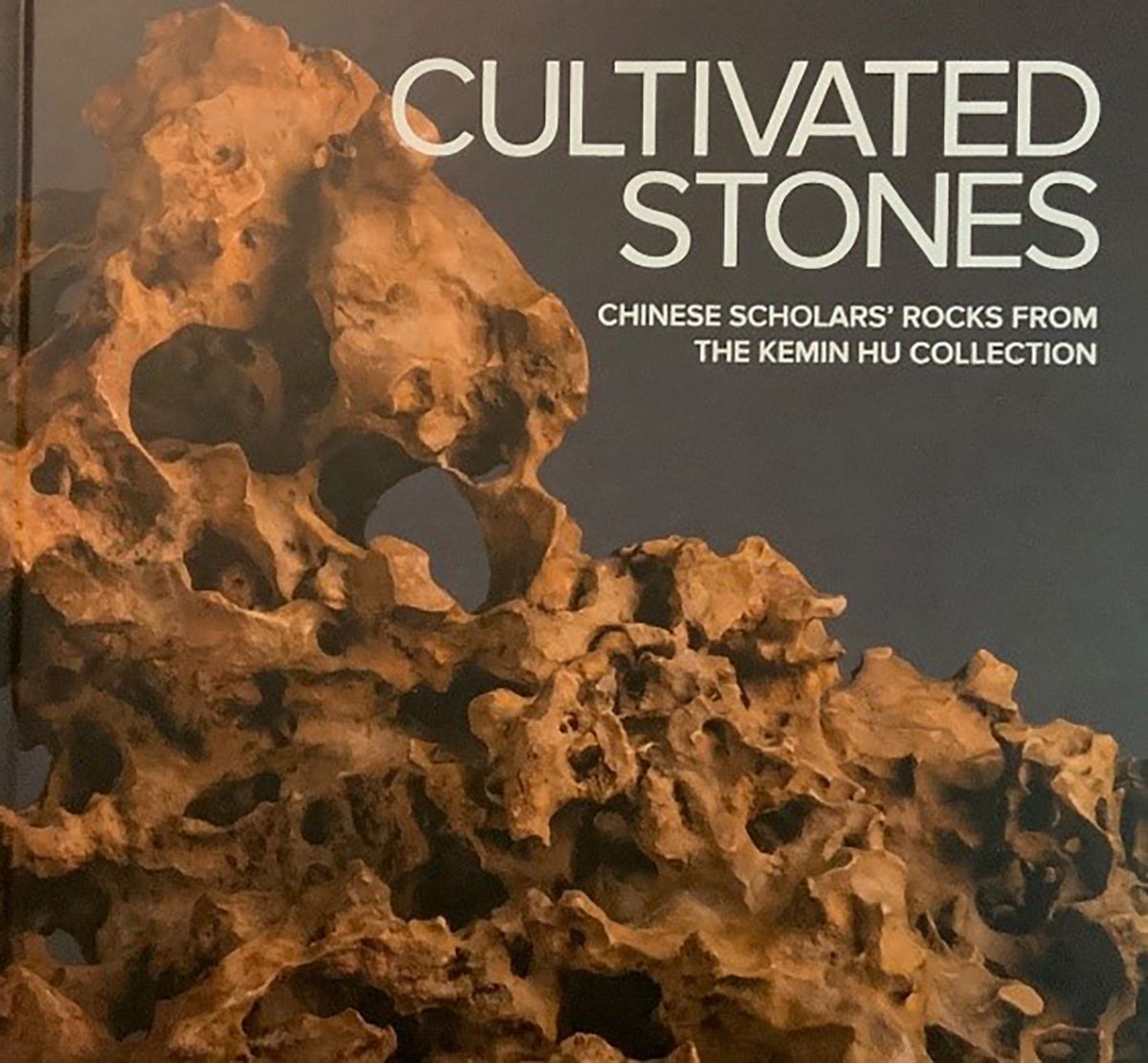
Cultivated Stones | Chinese Scholar’s Rocks from the Kemin Hu Collection
Book
Emerson-Dell, K. (2022) Cultivated Stones | Chinese Scholar’s Rocks from the Kemin Hu Collection. Washington, DC, National Bonsai Foundation, 145 pp.
ISBN/ISSN: 9798220000000 | Sinkankas/Born No.: NIS/NIB | RWHL*
Close Abstract
Hide Keywords
Copy Reference
gems, jade, Chinese scholar’s rocks, scholar’s studio
VSANA: This is a significant publication, perhaps the most important book on Chinese Scholars’ rocks published in 2022. It is more than just a documentation of the gift of 112 Chinese stones presented to the U.S. National Arboretum (USNA) in Washington, D.C. by Kemin Hu. Hu is a well-known stone collector, dealer, and author of several books about classical and modern Chinese viewing stones. Last year, Hu decided to present many of her stones along with 17 stones that were originally in her father’s collection in an eventual effort to establish a Chinese Scholars’ Rock museum within the National Bonsai and Penjing Museum at the USNA. Several features in this book combine to make it an outstanding volume. First and foremost is the catalog section that divides the 112 stones into nine sections. Stones with shared characteristics are grouped in each group. This is an immense aid to readers. It can be difficult for people to experience difficulty in understanding the breadth of stone appreciation in China, with more than 600 different types of viewing stones recognized by the View Stone Association of China. However, Kathleen Emerson-Dell’s grouping of the Hu donation into nine sections is a good educational aid. The first section, Honorable stones, features 17 stones from Hu Zhaokang, Kemin’s father. A second section, Distance Mountains, brings together those stones reminiscent of faraway mountains. Narrow, vertically oriented stones are brought together in the Towering Peaks section; while colorful stones are assembled into another section Stones of Color. A small section is devoted to fossils that have long been a part of Chinese stone appreciation practices for many centuries. It is nice to see that enhanced stones, which have been carved, shaped, and polished, are recognized along with the natural stones that have only been cleaned in preparation for display. Enhancing stones has been integral to Chinese stone appreciation from ancient times to the present. Not all students of Chinese stone will agree with the statement that carved stones are differentiated from natural stones by adding the Chinese term ling long. The Chinese words, ling long, have long been used for delicate or graceful stones, especially with rocks that possess many holes. This term has been applied to completely natural stones and to enhanced stones. Scholars have shown that the ling long has different meanings over time. The carefully researched article about the appeal of Chinese Scholars’ Rocks by Phillip Bloom is an important scholarly contribution to understanding the complex nature of Asian stone from ancient to modern times. He succeeds in dissecting and explaining the appeal of scholars’ rocks. It appears that Bloome may represent the next generation of scholarship on Chinese viewing stones by adding to the immense contributions of the earlier generation of scholars—Hay, Mowery, Stuart & Little. Cultivated Stones is a beautifully designed volume with a sharp layout and stunning and evocative photographs of the one-hundred-plus stones Illustrated. It is a quality publication from all aspects of production—paper quality, binding, and binding.