
Four Treasures Reference Database
Record No. 7754
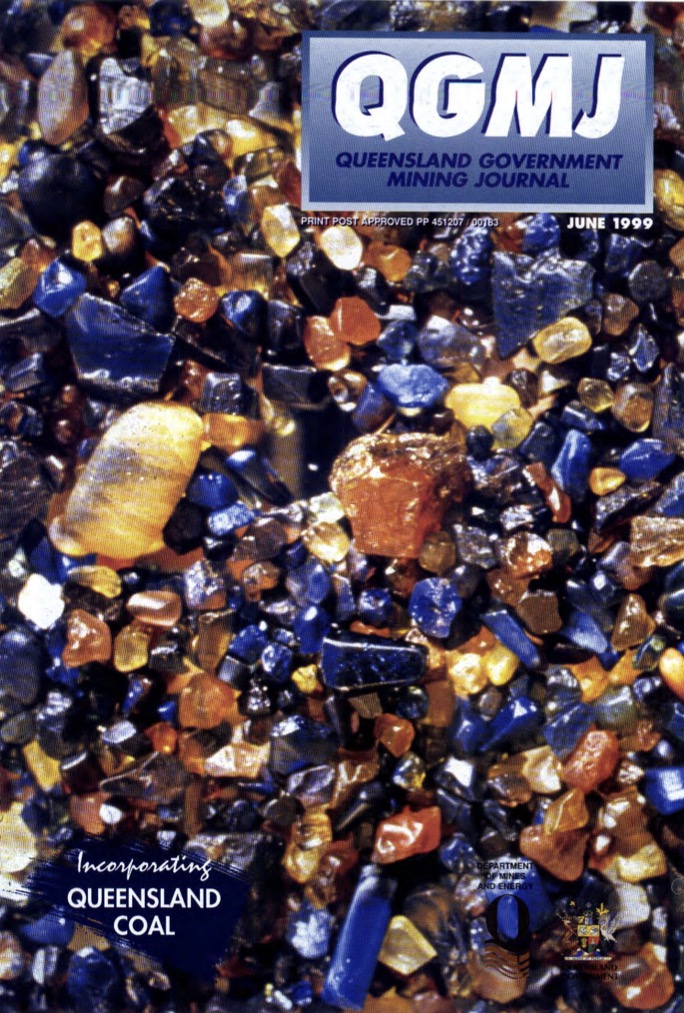
Sapphire and ruby in Australia
Journal Article
Neville, B.J. and Gnielinski, F., von (1999) Sapphire and ruby in Australia. Queensland Government Mining Journal, Vol. 100, No. 1171, June, pp. 6–12.
RWHL*
Close Abstract
Hide Keywords
Copy Reference
corundum, geology.11, sources.12, Australia.12, gems
Sapphires, predominantly medium to dark blue but also in other colors (e.g., green and parti-color), have been mined in eastern Australia for more than 100 years. Most have come from two major fields: Anakie in Queensland and New England in New South Wales. The sapphires are alluvial, derived from the erosion of alkali volcanic rocks (basalt lavas, pyroclastics, and volcaniclastics) of Tertiary and Quaternary age. They are similar in many ways (including gemological properties) to sapphires from Thailand, Cambodia, Nigeria, and China, which also are associated with alkali volcanic rocks of similar ages. The gem properties of Australian sapphires are typical for sapphire, with a broad range of refractive index (nε = 1.761–1.765, nω = 1.769–1.774) and specific gravity (3.97–4.02) values. The diaphaneity varies from transparent to opaque. Most stones exhibit a strong 450 nm iron-related absorption band with a spectroscope, and most are inert to both long- and short-wave UV radiation. Australian sapphires are characterized by their inclusions (e.g., pyrochlore, ilmenite, and spinel), chemistry (high iron content), and strong growth zoning and color banding. Nearly all are heat treated to improve clarity and color. The average size of faceted Australian sapphires is under 2 ct. The largest recorded rough sapphire, which weighed 4,180 ct, was carved into a 3,294 ct bust of Dr. Martin Luther King, Jr. Although numerous alluvial occurrences of ruby have been reported in Australia, gem-quality material is rare, and none of these deposits has ever been economic. The first discovery with significant potential was within gneiss in the Harts Range (Northern Territory). However, mining ceased after only minor production of mostly low-grade cabochon material. Sapphire mining in Australia was minor and sporadic from the 1880s until the early 1960s, except for a few favorable periods—such as immediately preceding World War I, when there was strong demand from Germany and Imperial Russia. Demand for sapphires increased in the 1960s and, with the arrival of buyers from Thailand, there was unprecedented activity in the Anakie and New England fields. Mining reached its peak in the mid-1970s, making Australia a major world producer. Since then, the Australian sapphire industry has declined because of the depletion of known resources, increased costs, and difficult land access. The situation has been further exacerbated by the discovery in recent years of important deposits in countries that have lower mining costs, mainly Madagascar, Tanzania, and Nigeria. Since 1998, sapphire mining in Australia has effectively ceased, and the industry faces an uncertain future.