
Four Treasures Reference Database
Record No. 8094
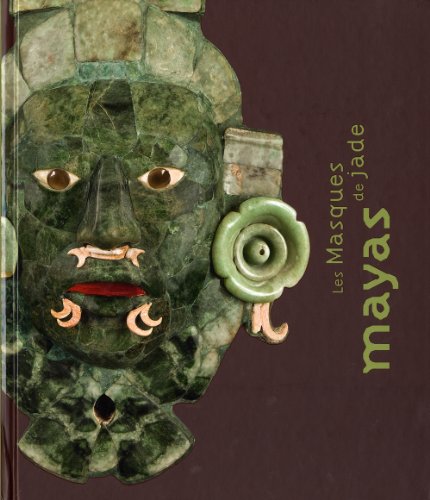
Les Masques de Jade Mayas
The Mayan Jade Masks
Book
Restellini, M. (2012) Les Masques de Jade Mayas. [The Mayan Jade Masks] Paris, Pinacothèque de Paris, 312 pp.
ISBN/ISSN: 9782360000000 | Sinkankas/Born No.: NIS/NIB | Language: in French | RWHL*
gems, jade, jadeite, fei cui, Mesoamerica, Mexico, Guatemala, Costa Rica, Mayans, Olmecs, Aztecs
The Pinacothèque de Paris presents the most important archaeological discovery of the last decade in Mexico: the jade mosaic masks. These exceptional masks, fully restored by the most eminent specialists in Maya archaeology, represent the faces of deities. Created for the most prestigious rulers of the lost Maya cities, their purpose was to ensure eternal life for these high dignitaries after their death. Archaeologists date the settlement of the Mayas in Central America to around 2000 BCE. Their cultural presence covers the Yucatan Peninsula and the Chiapas region in Mexico and extends to present-day Honduras, El Salvador, Belize, and Guatemala. This brilliant civilization excelled in all fields: astronomy, mathematics, and a complex glyph-based writing system, which has only recently been deciphered. Unlike the centralized organization of the Inca Empire, the Maya political system resembled a mosaic of independent city-states, alternating between armed conflicts and alliances depending on events. Maya civilization reached its peak during the so-called “classic” period, between 250 and 900 CE. The works on display today all belong to this era of cultural flourishing. The Mayas had a particular predilection for the color green. Jade was, for them, the rarest and most precious material. A privilege of the elite, the green stone was also associated with the sacred. Surprisingly, the Mayas used these stones to represent the solar deity, as shown by the numerous jade effigies depicting the sun. Maya artists crafted the masks from green stone tesserae with great skill, adjusting the size and color of the tesserae to achieve the highest degree of naturalism. The jade masks on display were found in the tombs of aristocrats. Some of them are funerary masks that represent the individualized faces of Maya rulers. The interpretation of the works is enriched by a fruitful contextualization: the masks are presented, in fact, with the rest of the funerary ensemble—pectorals, necklaces, earrings, bracelets, ceramics, and other offerings. The catalog retraces the exhibition’s journey, the result of a decade of research and restoration carried out by the largest Mexican institutions under the supervision of Sofía Martínez del Campo Lanz, a renowned expert and author of the catalog texts.