
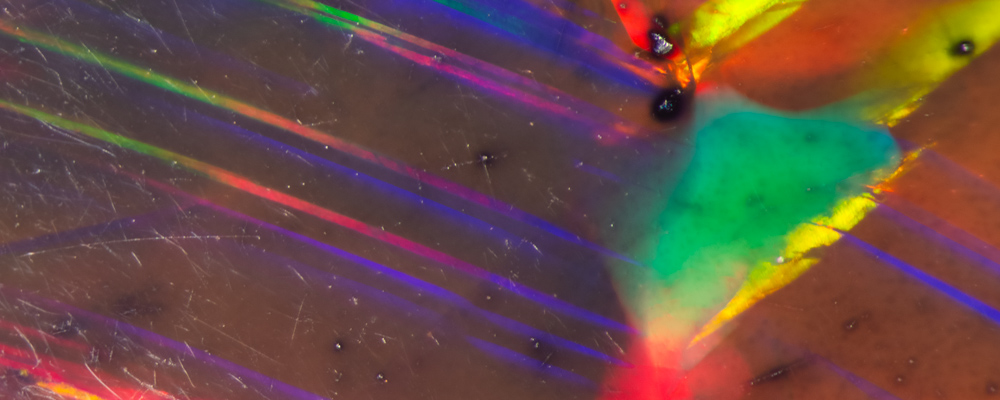
A parcel of opals shows tell-tale signs of smoke treatment.
Smoke Treated Ethiopian Opal
Smoke treatment is a long-recognized method used to darken the body color of opal and enhance its play-of-color through increased contrast. With careful observation, this treatment can be identified using visual and microscopic features. The following case study documents a particularly clear example.
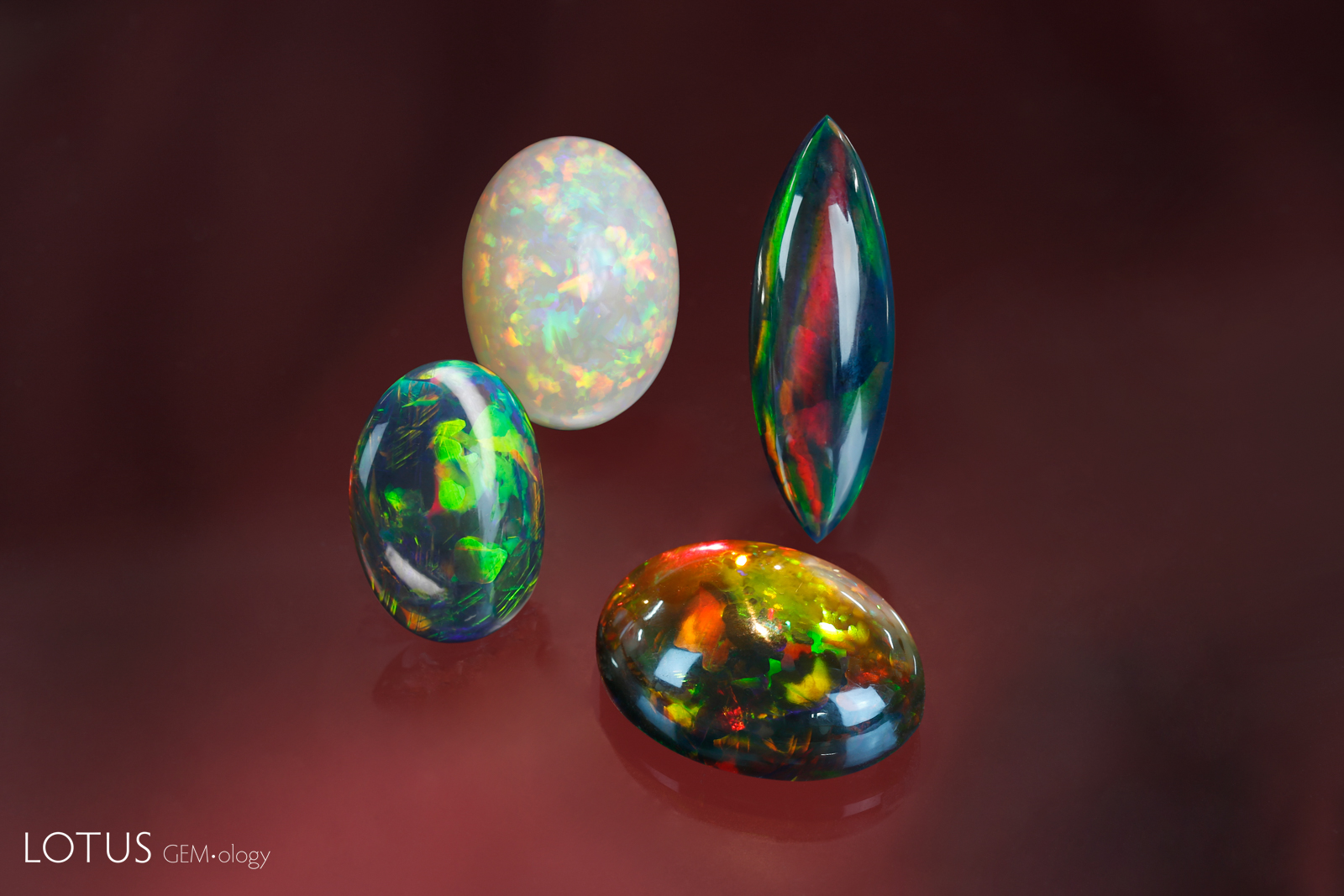 Figure 1. A parcel of opals, all displaying play of color. Note how the play of color stands out against the dark background of the three black opals in the foreground in comparison with the white opal in the background. Gemological testing demonstrated that the black opals were smoke treated, which enhanced the appearance of the play of color effect. Photo: Ronnakorn Manorotkul/Lotus Gemology.
Recently, a parcel of both white and black opals was submitted to the laboratory, declared by the client to be from Ethiopia. All of them displayed a play-of-color effect, with the black ones being particularly striking, as the vibrant colors stood out against the black background (figure 1). Upon closer examination, several features in the black opals drew the authors’ attention.
Numerous small, mottled black spots were present throughout the stones. These dark discolorations appeared much more prominently around areas where there were small pits and scratches at the surface (figures 2 and 3). Additionally, when fiber optic lighting was used to illuminate one of the stones, it displayed a black rim around the edges, surrounding a white core (figure 4). In the other treated stones in the parcel, however, the dark color extended throughout the entire stone. This observation demonstrates that the absence of color zoning does not preclude smoke treatment. The features observed are consistent with smoke treated opal (Renfro et. al., 2019 and Williams & Williams, 2011).
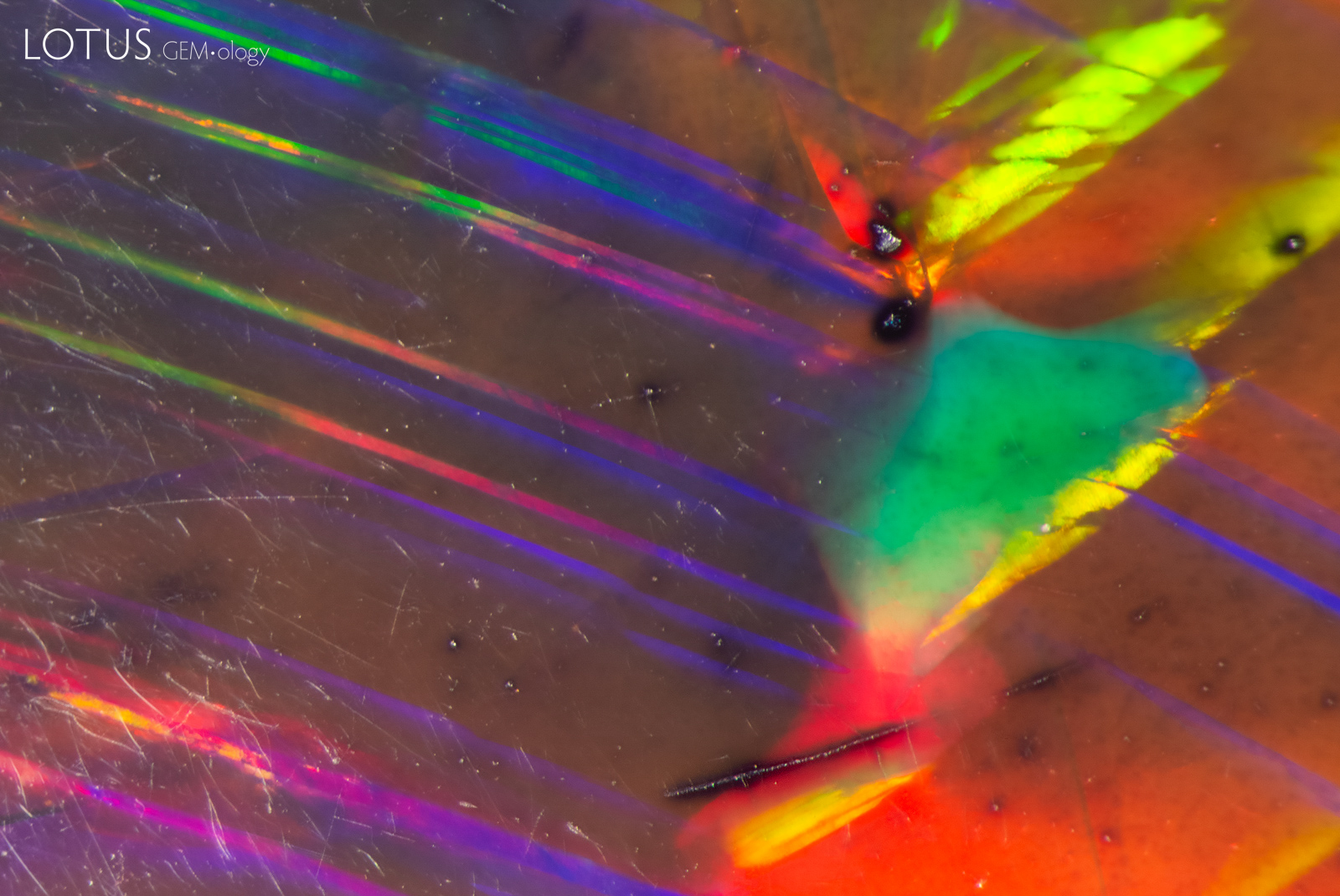 Figure 2. In addition to the dazzling play of color display in this opal, several black spots can be observed. These are particularly concentrated around the pits and scratches on the surface, as well as appearing in fainter blotches elsewhere in the stone. Photo: E. Billie Hughes/Lotus Gemology FOV: 3 mm.
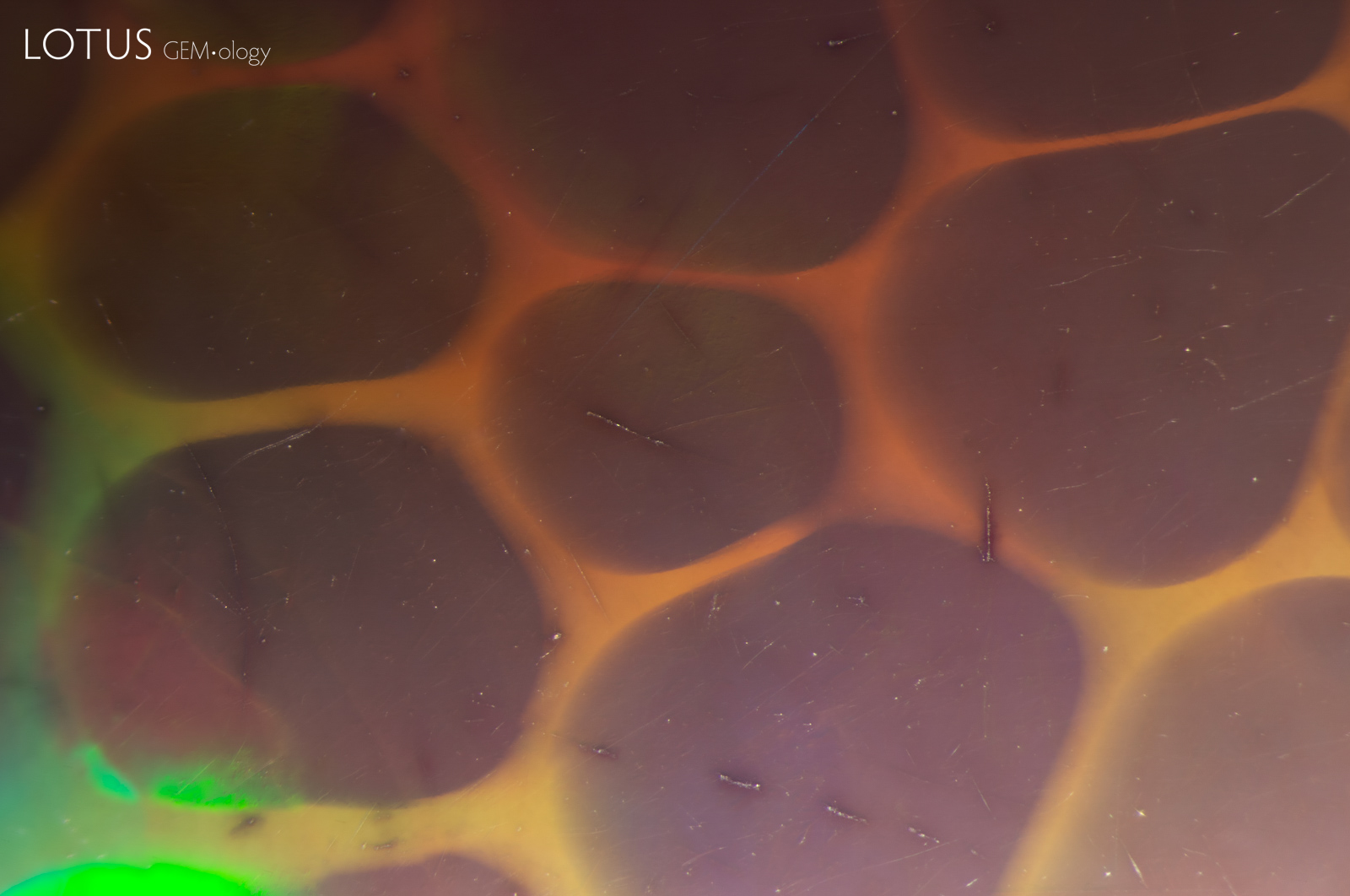 Figure 3. A flash of play of color and a cellular structure can be observed in this opal. Areas around fine scratches in the stone display a dark color concentration, providing evidence that the stone was smoke treated. Photo: E. Billie Hughes/Lotus Gemology. FOV: 2.4 mm.
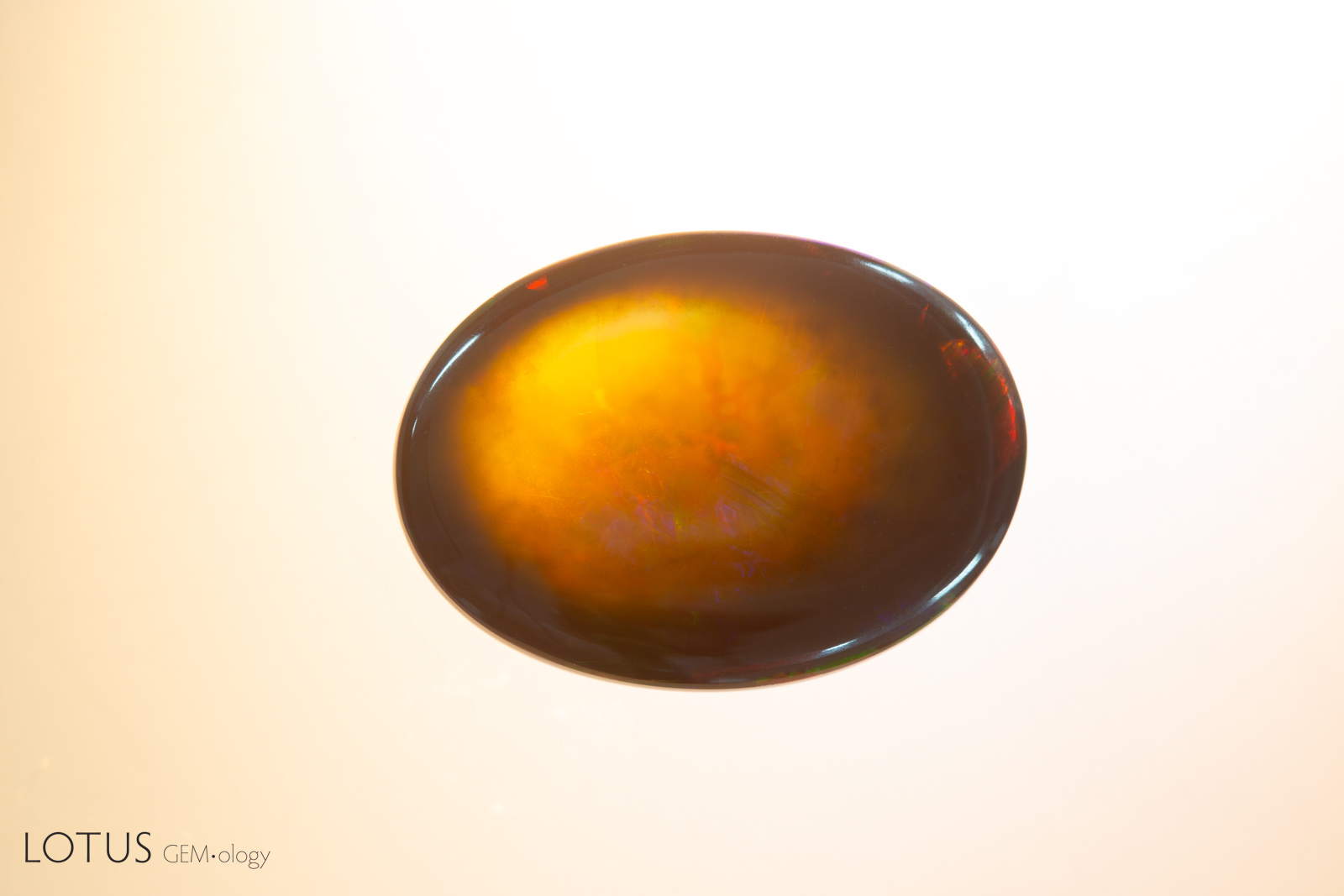 Figure 4. A 31.80 ct opal that was smoke treated. When illuminated with transmitted fiber optic light a dark rim around the edges of the stone is visible around a lighter colored core. Photo: Ronnakorn Manorotkul/Lotus Gemology.
Williams & Williams (2011) also reported the presence of a Raman peak at 1150cm-1 in smoke treated opal, which may aid in treatment identification, although fluorescence can obscure the signal. In the samples examined here, Raman analysis did not produce spectra of sufficient clarity to confirm treatment. In this case, visual observations alone were sufficient for identification.
Smoke treatment has reported since at least 1947 (Mayers, 1947) and may be conducted in a variety of methods. Typically, the treatment involves taking preformed opal and wrapping it in paper, aluminum foil, or some combination of these materials. Some techniques may involve the combination of oil or fertilizer. The wrapped parcel is then heated to carbonize the wrapping/oil, which “dyes” the stone from the carbon particles from the smoke (and oil, if present) (Nassau, 1994). One historical account about Mexican opals illustrates some of the risks involved with this treatment, which may crack the stones:
“The lapidary now places the pot deep in a bed of hot charcoal, on which the family supper is usually cooking, and goes off for a short siesta or to the near-by church to offer a prayer for the health of his black-opals-to-be; the cooking of opals is not so certain a thing as to cause one to lightly spurn divine assistance.”
(Mayers, 1947)
This is similar to the sugar treatment that has been reported in Andamooka opal from Australia where a sugar acid-carbonizing treatment is used to darken the color of opal matrix (Brown, 1991). Sugar treatment has been found to be effective in Ethiopian opal as well (Fritsch, 2011).
Darkening of the background color of opal allows the play of color to appear more vibrant because of the high contrast (Gubelin & Koivula, 2005), as demonstrated by the stones examined here. In these samples, smoke treatment resulted in characteristic features including mottled color concentrations around surface reaching features and color zoning revealed by fiber optic illumination. The examples here provide clear visual references that can assist gemologists in recognizing smoke treated opal.

About the Authors
E. Billie Hughes is Co-Founder and Managing Director of Lotus Gemology, where she oversees the company's day-to-day operations while continuing gemological research and laboratory work. After graduating from UCLA, she became a Fellow of the Gemmological Association of Great Britain (FGA). Her research focuses on ruby and sapphire, including low-temperature heat treatment, and she has authored and co-authored articles in leading gemological journals. She has conducted fieldwork at gem deposits around the world, including nearly every major ruby and sapphire locality.
Billie is an internationally recognized educator who has lectured for trade organizations, museums, and luxury jewelry houses, including extensive educational work with Van Cleef & Arpels. She has also served as a judge on Thailand's The Secret Gems television series. An award-winning photographer and photomicrographer, her images have received honors in the Nikon Small World and Gem-A competitions and have appeared in publications including National Geographic and Forbes. She is also the creator of Hyperion, Lotus Gemology's online inclusion database.
Billie developed an interest in gemstones from an early age, accompanying her parents on expeditions to mines and gem-producing regions around the world. That lifelong passion for fieldwork, laboratory research, education, and photography continues to shape her work at Lotus Gemology today.
Natcha ('Ing') Rattana-anan has been interested in gems since childhood, which inspired her to study gemology at Chiang Mai University, where she did an award-winning thesis on heat treatment of amethyst. After graduating in 2024, she joined Lotus's gemological team.
Notes
This article first appeared in The Australian Gemmologist, Vol. 29, No. 3.
References
- Brown, G. (1991) Treated Andamooka matrix opal. Gems & Gemology, Vol. 27, No. 2, pp.100–106.
- Fritsch, E. (2011) Sugar-acid treatment of opal from Wollo, Ethiopia. Gems & Gemology, Vol. 47 No. 4, pp. 333–334.
- Gubelin, E.J., Koivula, J.I. (2005) Photoatlas of Inclusions in Gemstones, Vol. 2. Basel, Switzerland, Opinio Publishers, pp. 503–504.
- Mayers, D. E. (1947) Mexican black opal. Gems & Gemology, Vol. 5, No. 11, pp. 475–476.
- Nassau, K. (1994) Gemstone Enhancement (2nd Ed.). London, Butterworths, pp. 166–169.
- Renfro, N., McClure, S. (2011) Dyed purple hydrophane opal. Gems & Gemology, Vol. 47 No. 4, pp. 260–270.
- Renfro, N., Koivula, J., Muyal, J., McClure, S., Schumacher, K., Shigley, J. (2019) Inclusions in natural, treated, synthetic, and imitation opal. Gems & Gemology, Vol. 55, No. 2.
- Williams B., Williams C. (2011) Smoke treatment in Wollo opal. https://www.pinfire.de/opal-literature/Smoke-Treatment-in-Wollo-Opal.pdf [date accessed: Jan. 23, 2026].