
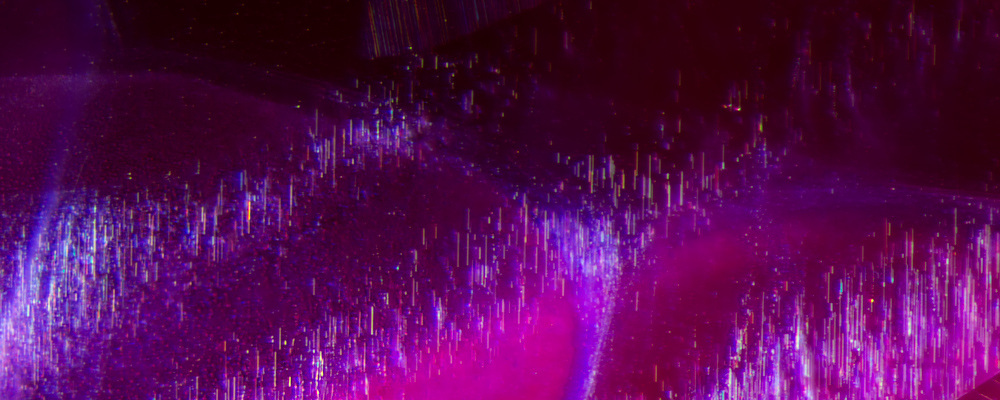
Mong Hsu ruby is known for cottony diaspore 'silk,' but in rare cases another type of silk can be observed.
Silk Varieties in Mong Hsu Ruby
Rubies from Myanmar’s Mong Hsu mines have been well known to the trade for decades. A common inclusion is the presence of zoned clouds of cottony “silk,” believed to be diaspore. Our laboratory recently received a parcel of over 30 Mong Hsu rubies, all of which contained clouds of this diaspore silk, as seen in the sample shown in figure 1.
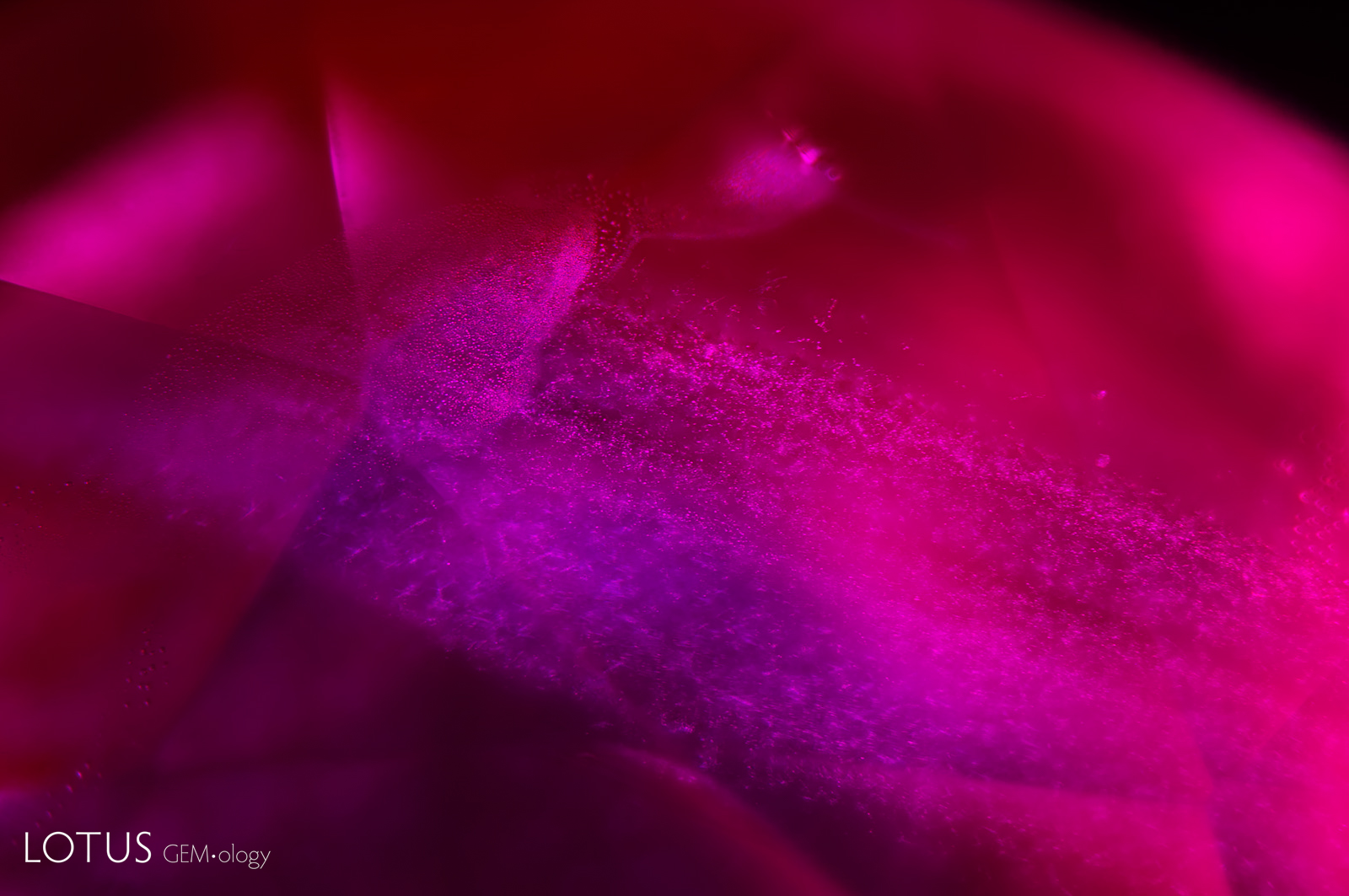 Figure 1. Bands of cottony silk, likely diaspore, as seen in this stone, are a common inclusion in rubies from Myanmar’s Mong Hsu mines. Photo: E. Billie Hughes/Lotus Gemology. FOV: 2.8 mm.
However, this stone stood out from the rest of the lot. In addition to the wispy diaspore silk, it also contained several bands of silk in fine, intact needles, which are likely rutile (figure 2). It was, in fact, the only stone in this suite to contain this type of silk. While rutile silk needles are not common in Mong Hsu rubies, they have been reported on rare occasions. We have also observed this in a few samples from our laboratory’s sample collection.
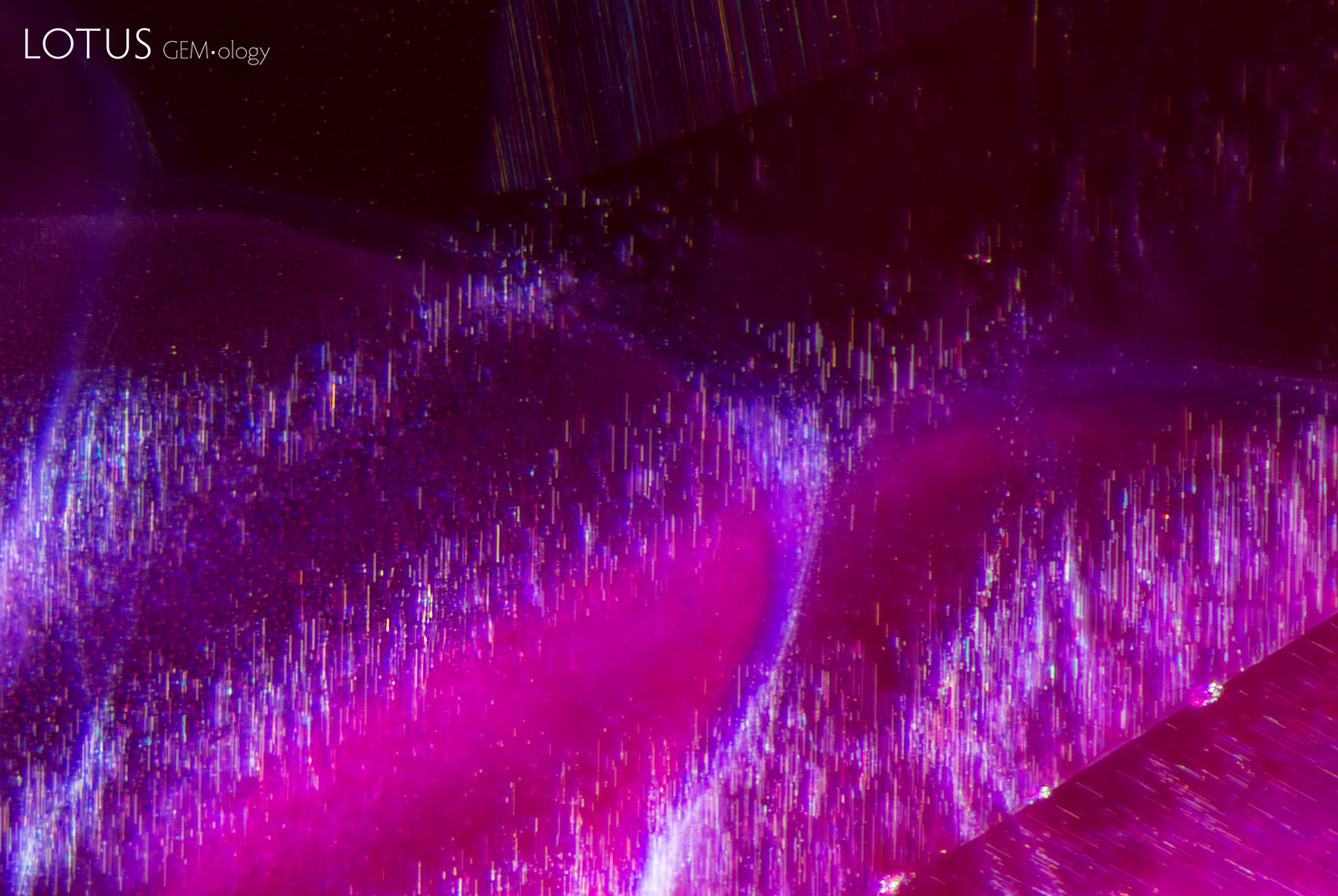 Figure 2. The same Mong Hsu ruby also contained silk in bands of very fine needles, which may be rutile. These well-defined needles are much more rarely seen in Mong Hsu rubies. Photo: E. Billie Hughes/Lotus Gemology. FOV: 1.5 mm.
It is worth noting that despite the intact silk needles, this stone was determined to have been heated. Supporting evidence included other inclusions such as melted fingerprints, as well as a clear 3309 series with 3232 in the infrared spectrum and zoned chalky short-wave fluorescence. This serves as an important reminder that the presence of intact silk needles does not always mean that a stone is unheated.

About the Authors
E. Billie Hughes is Co-Founder and Managing Director of Lotus Gemology, where she oversees the company's day-to-day operations while continuing gemological research and laboratory work. After graduating from UCLA, she became a Fellow of the Gemmological Association of Great Britain (FGA). Her research focuses on ruby and sapphire, including low-temperature heat treatment, and she has authored and co-authored articles in leading gemological journals. She has conducted fieldwork at gem deposits around the world, including nearly every major ruby and sapphire locality.
Billie is an internationally recognized educator who has lectured for trade organizations, museums, and luxury jewelry houses, including extensive educational work with Van Cleef & Arpels. She has also served as a judge on Thailand's The Secret Gems television series. An award-winning photographer and photomicrographer, her images have received honors in the Nikon Small World and Gem-A competitions and have appeared in publications including National Geographic and Forbes. She is also the creator of Hyperion, Lotus Gemology's online inclusion database.
Billie developed an interest in gemstones from an early age, accompanying her parents on expeditions to mines and gem-producing regions around the world. That lifelong passion for fieldwork, laboratory research, education, and photography continues to shape her work at Lotus Gemology today.
Notes
This article first appeared in The Australian Gemmologist, Vol. 29, No. 3.