Sapphire Inclusions
Explore sapphire inclusions in Hyperion, the Lotus Gemology inclusion database. Hyperion contains photomicrographs of inclusions and internal features in natural sapphire, documented with information on geographic origin, treatment, lighting conditions, field of view, photographer and published references.
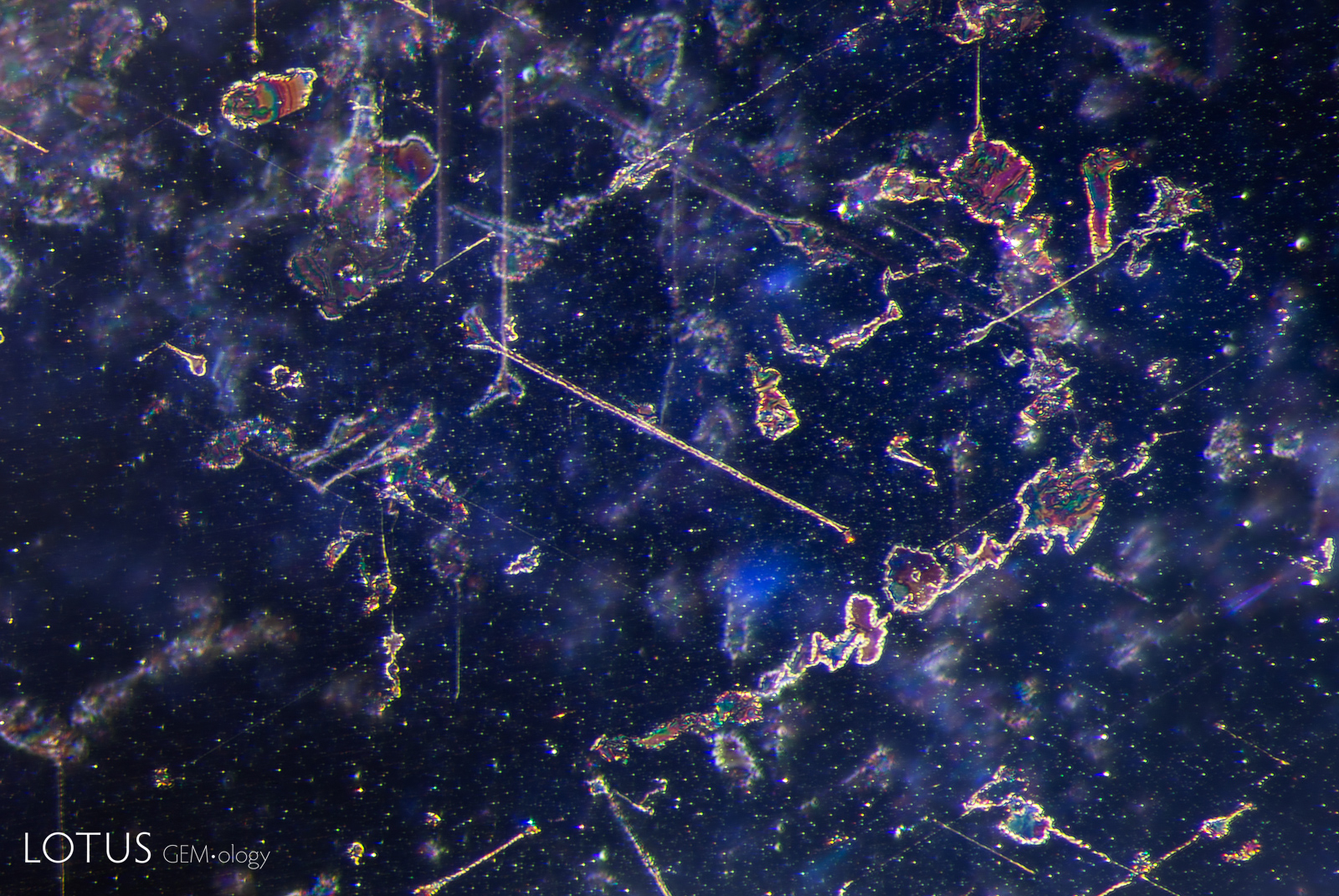
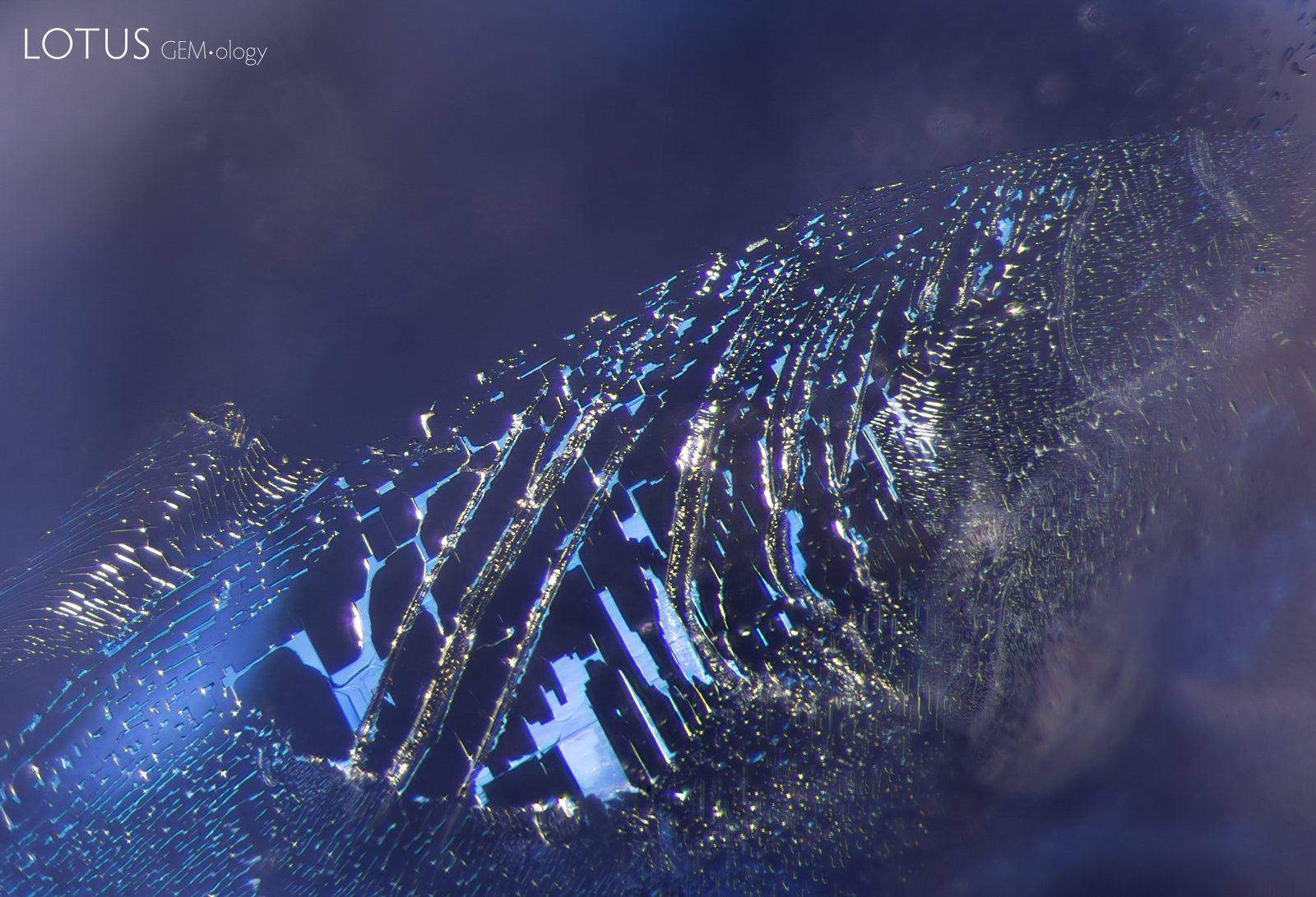
These dotted outlines, sometimes called “crop circles,” can occasionally be found in blue sapphires heated at high temperatures. While frequently associated with beryllium diffused stones, they are not conclusive evidence of diffusion treatment. The stone pictured here was heated, but showed no evidence of beryllium diffusion.
Natural Sapphire •
Sri Lanka (Ceylon) •
Enhancements:
Heat (H) •
Lighting Conditions:
Dark Field + Oblique Fiber Optic
Photographer:
E. Billie Hughes •
Image Number:
A-005-6689-1
• Field of View = 2mm
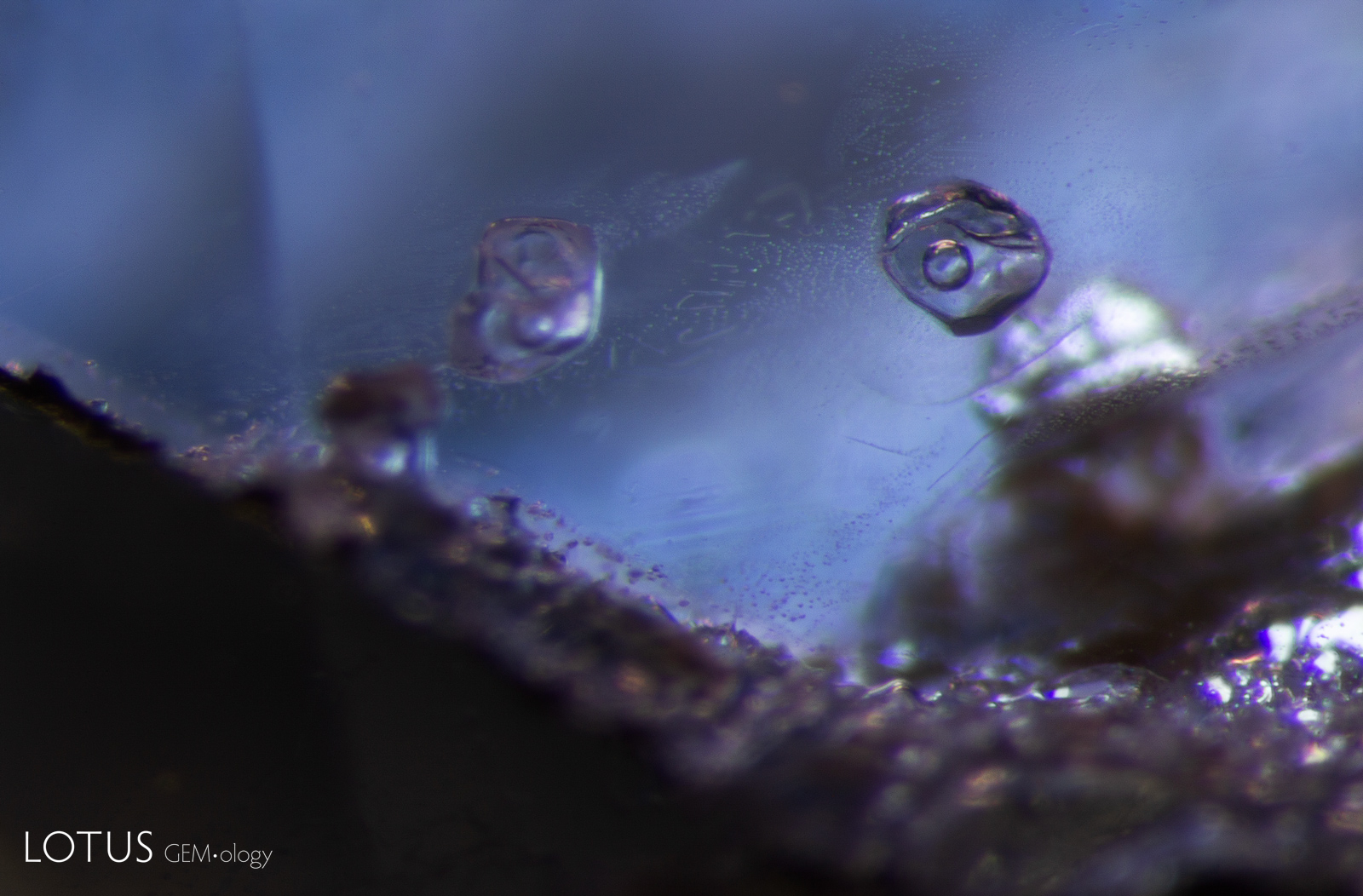
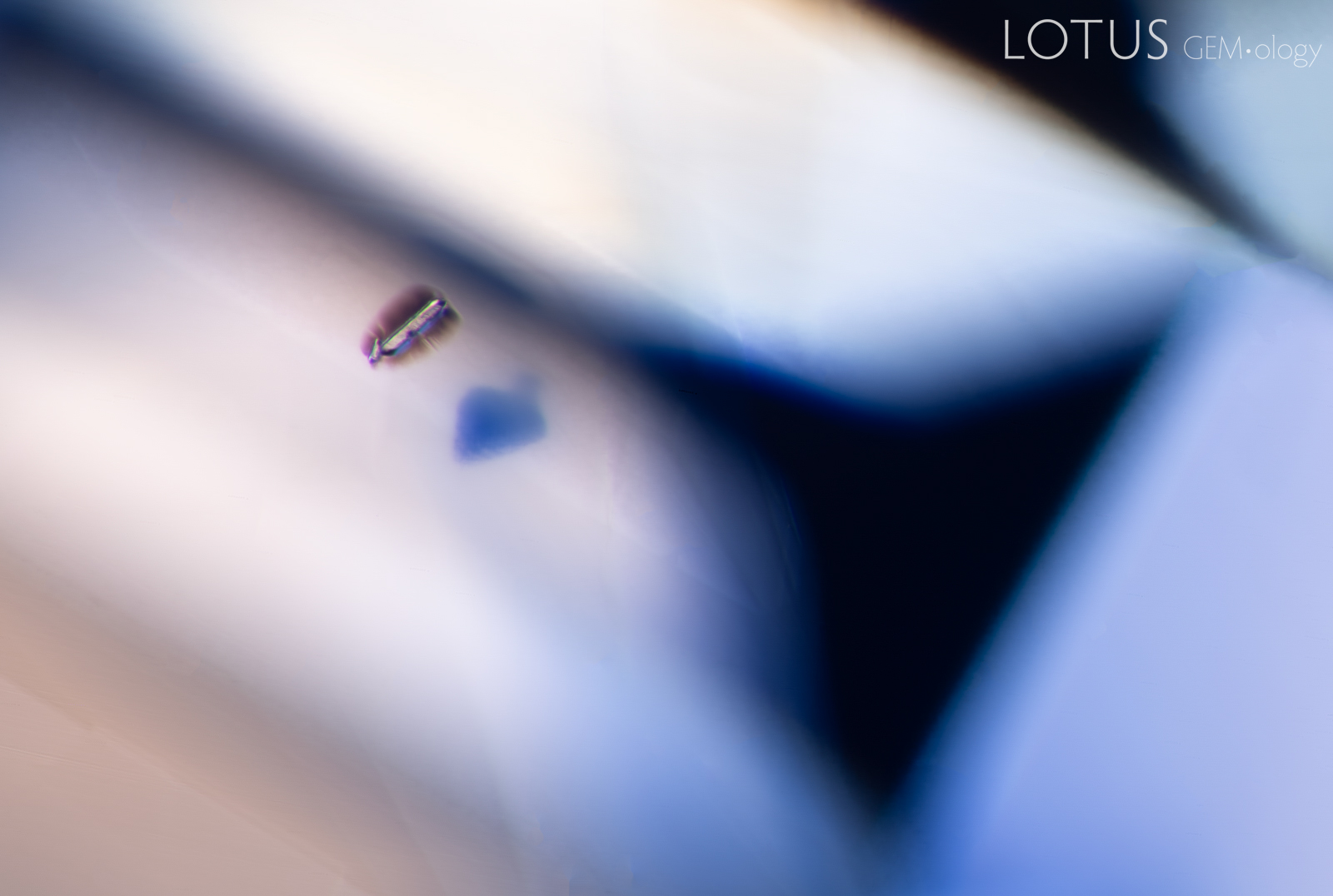
A bubble is present in this cavity in a blue sapphire treated with heat and pressure. With the gentle heat of a hot point, we observed that the bubble is mobile. It is unusual to see a mobile bubble present in a heated sapphire, as they may make cavities explode when heated, but it is possible that the addition of pressure kept this inclusion intact.
Natural Sapphire •
Sri Lanka (Ceylon) •
Enhancements:
Heat (H) •
Lighting Conditions:
Light Field (Transmitted Light)
Photographer:
E. Billie Hughes •
Image Number:
A-005-6408-1
• Field of View = 1.6mm
[various authors] (2019) Squeezing sapphire: Pressure-heated sapphire.
Rainbow connection. Microscopic thin films create an iridescent burst of color in this untreated sapphire.
Natural Sapphire •
Sri Lanka (Ceylon) •
Enhancements:
None Detected (None) •
Lighting Conditions:
Dark Field
Photographer:
E. Billie Hughes •
Image Number:
A-005-6202-3
• Field of View = 1.5mm
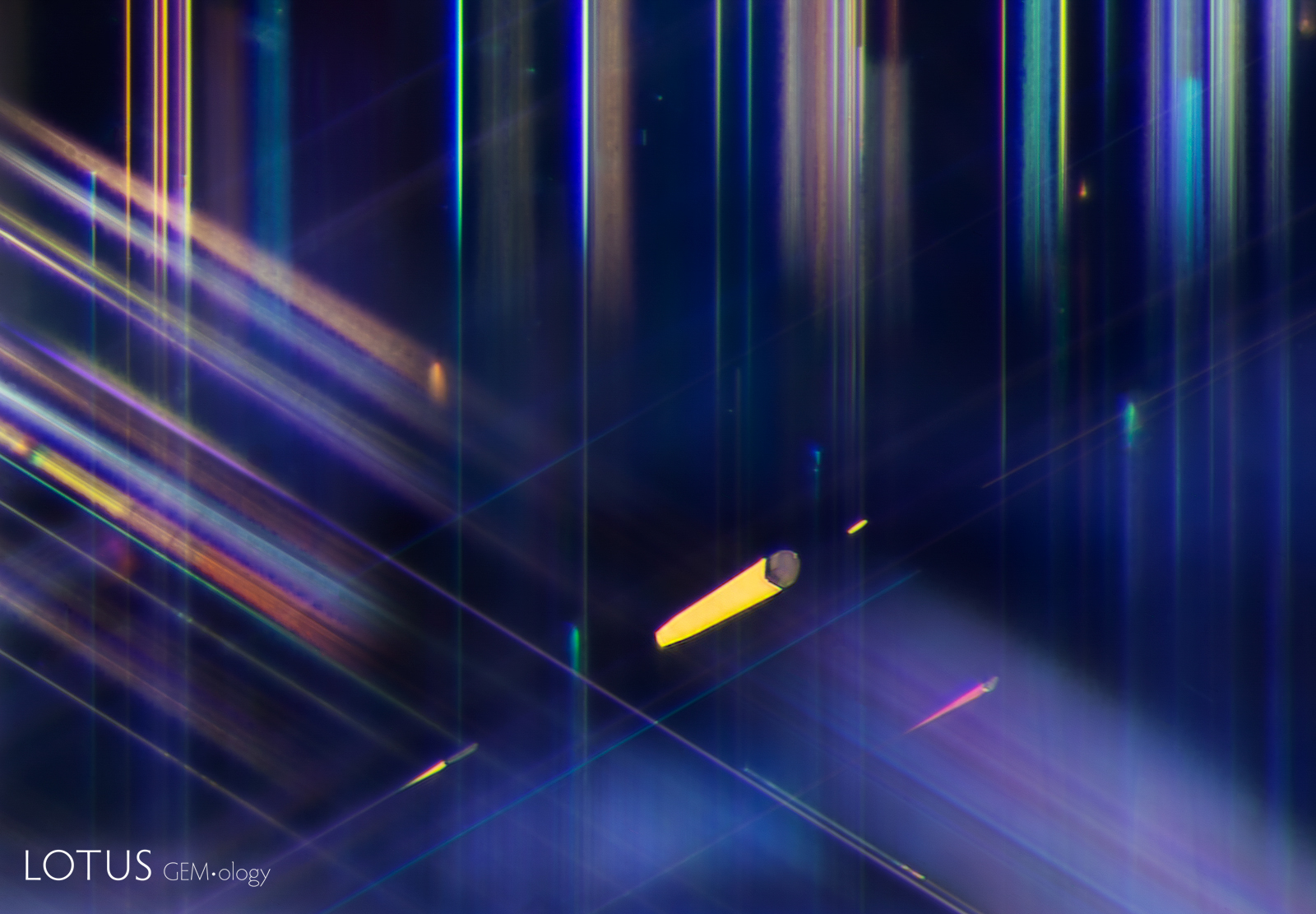
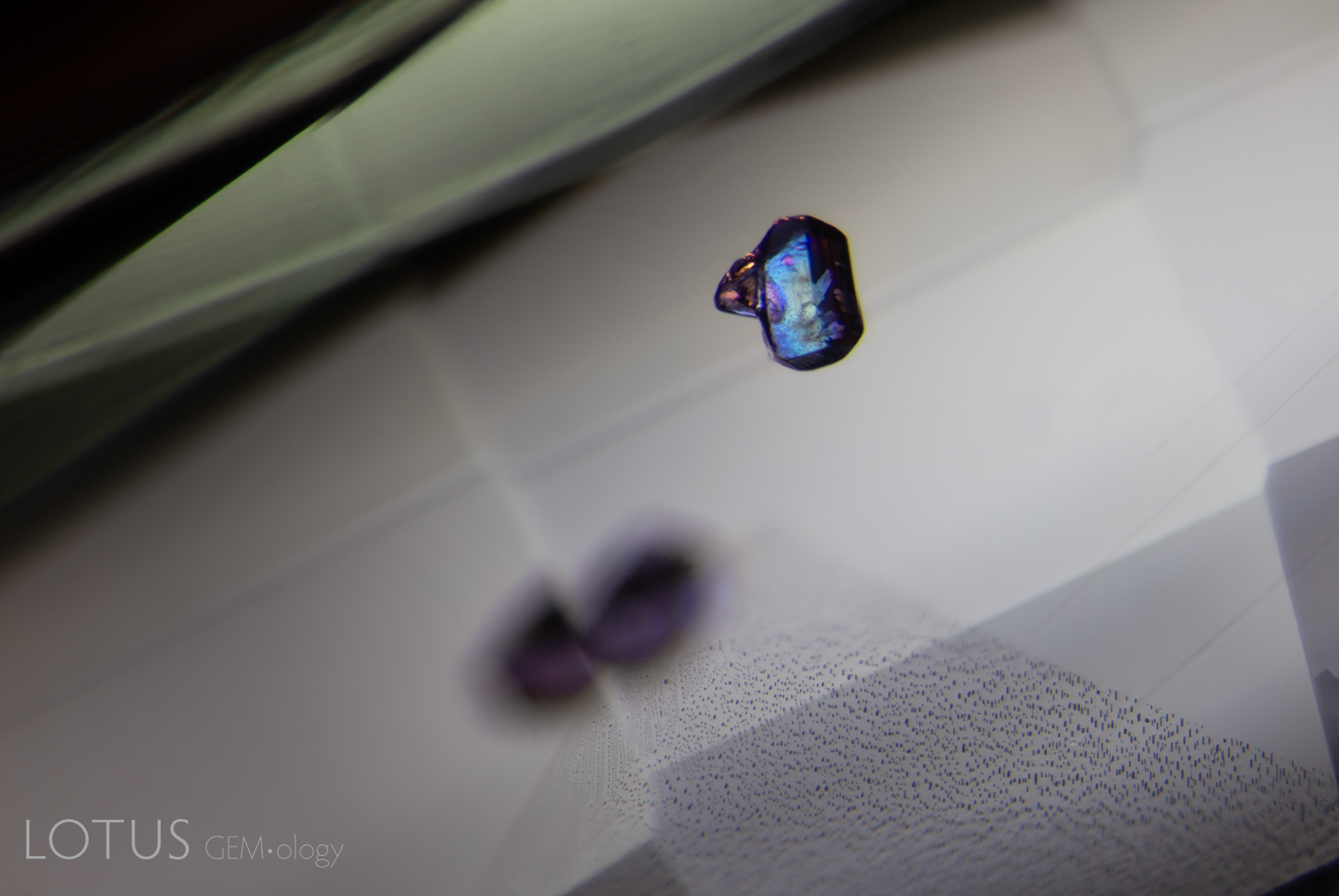
A small platelet is surrounded by rutile silk in this unheated sapphire.
Natural Sapphire •
Sri Lanka (Ceylon) •
Enhancements:
None Detected (None) •
Lighting Conditions:
Fiber Optic: Oblique
Photographer:
Natcha Rattana-anan •
Image Number:
A-005-5859-1
• Field of View = 1.6mm
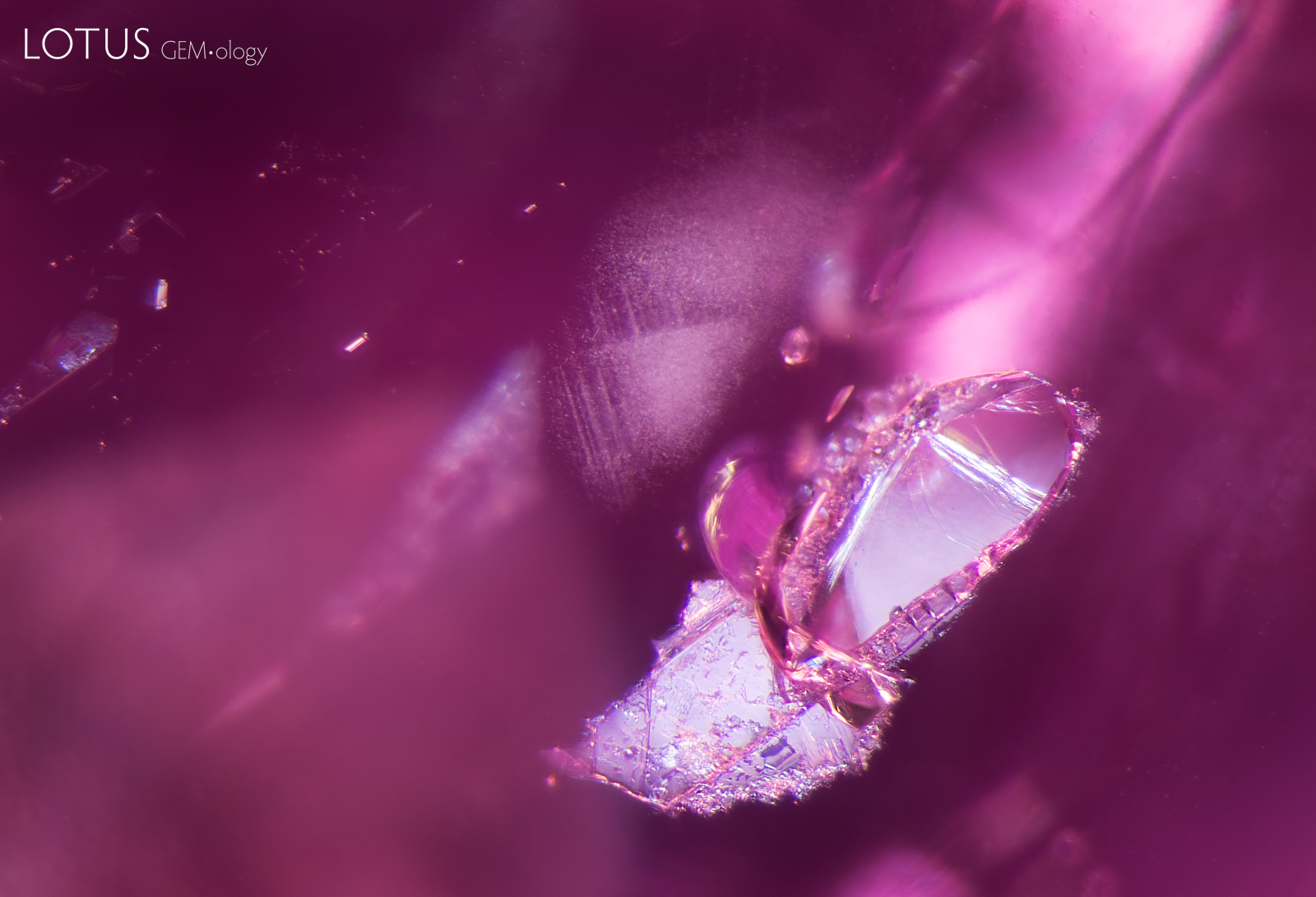
Suspended in time, a negative crystal encapsulates part of the Earth’s history in this pink sapphire.
Natural Sapphire •
Myanmar (Burma); Mogok/Namya •
Enhancements:
None Detected (None) •
Lighting Conditions:
Dark Field + Diffuse Fiber Optic
Photographer:
E. Billie Hughes •
Image Number:
A-005-5717-3
• Field of View = 2mm
A partially healed fissure, or fingerprint, can be observed in this sapphire. The angular healing patterns form naturally due to the crystalline structure of the gem.
Natural Sapphire •
Sri Lanka (Ceylon) •
Enhancements:
None Detected (None) •
Lighting Conditions:
Fiber Optic: Diffuse Oblique
Photographer:
E. Billie Hughes •
Image Number:
A-005-5716-2
• Field of View = 2.2mm
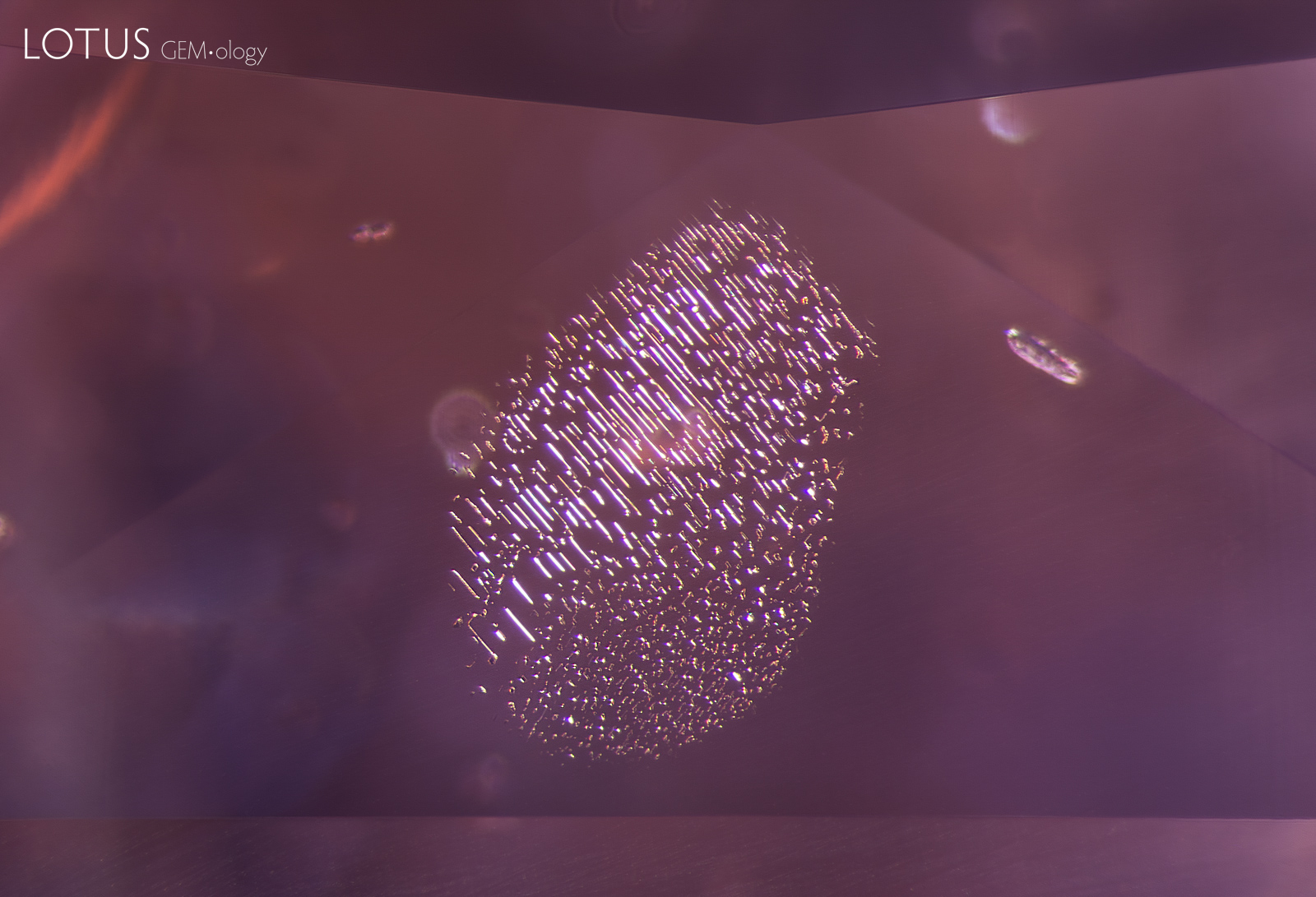
God’s thumbprint. When magnified, a partially healed fissure can be seen in this sapphire. It’s easy to see why gemologists have nicknamed these inclusions “fingerprints.”
Natural Sapphire •
Sri Lanka (Ceylon) •
Enhancements:
None Detected (None) •
Lighting Conditions:
Dark Field + Diffuse Fiber Optic
Photographer:
E. Billie Hughes •
Image Number:
A-005-5715-2
• Field of View = 2.1mm
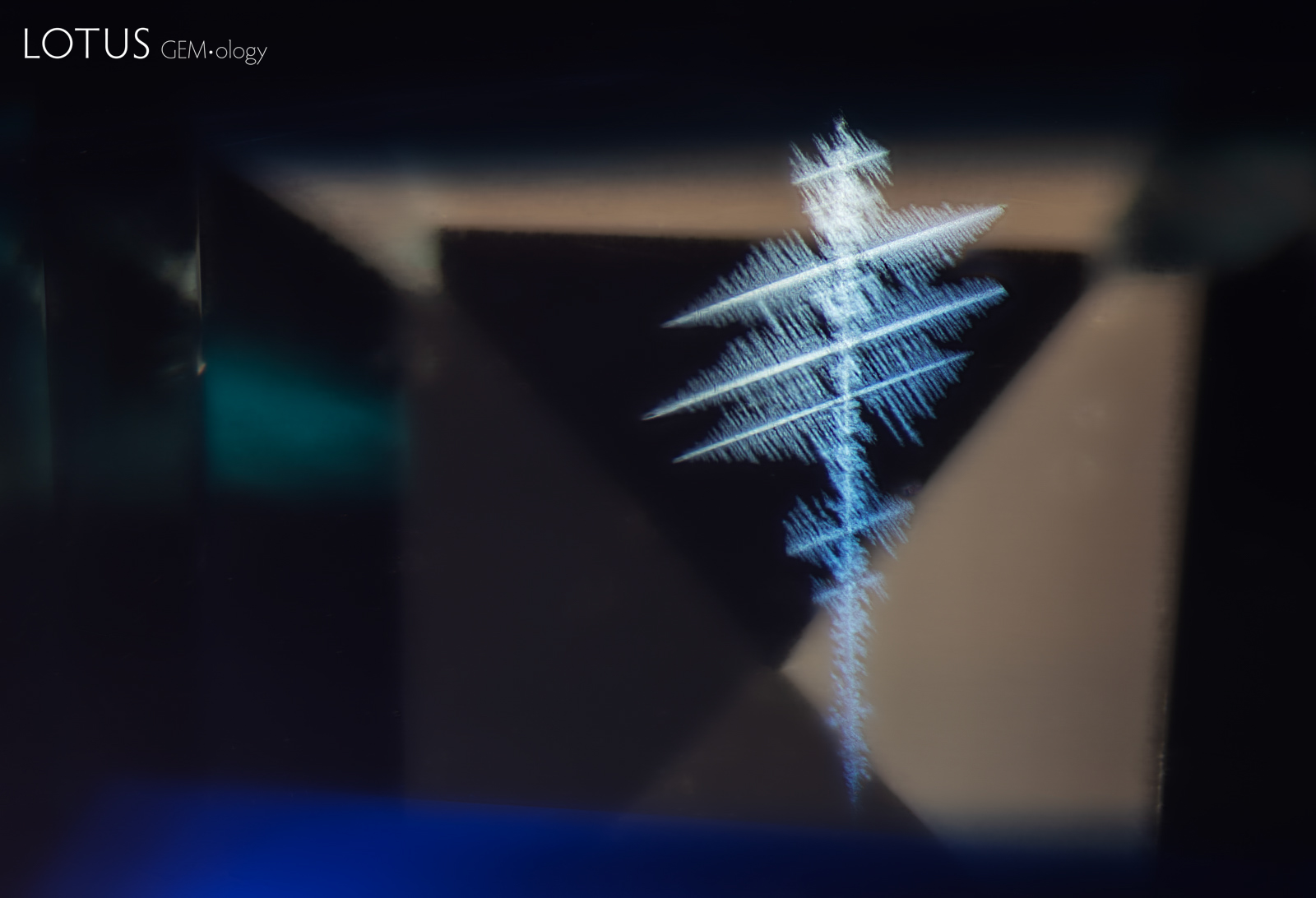
An angelic form of dislocation needles rises from the depths in this basalt-related sapphire.
Natural Bi-Color Sapphire •
Basalt Related •
Enhancements:
None Detected (None) •
Lighting Conditions:
Fiber Optic: Diffuse Oblique
Photographer:
E. Billie Hughes •
Image Number:
A-005-5461-1
• Field of View = 4mm
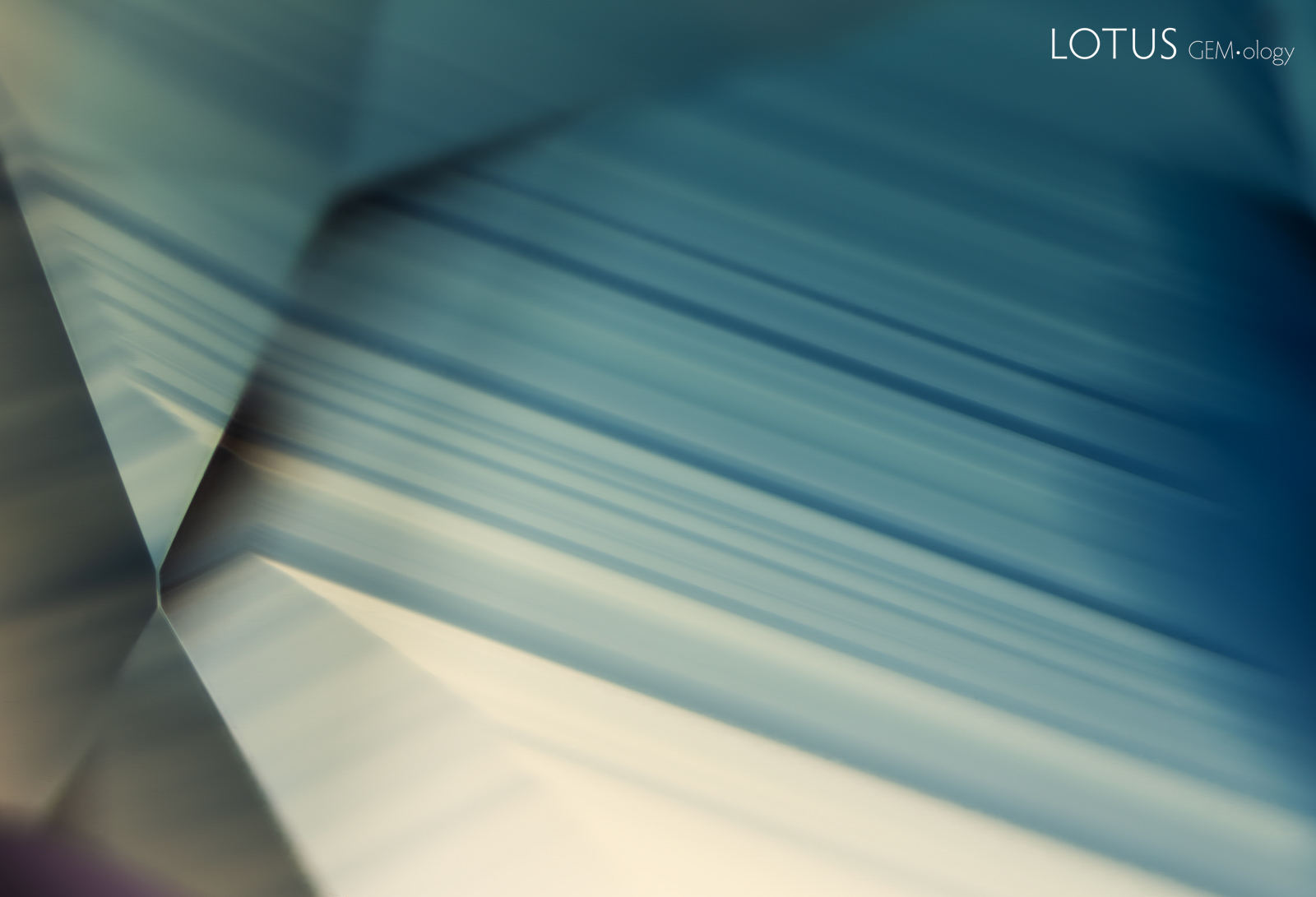
Angular color zoning in a basalt related sapphire. In some cases these color zones can create a “parti-color” appearance.
Natural Parti-Color Sapphire •
Basalt Related •
Enhancements:
None Detected (None) •
Lighting Conditions:
Diffuse Light Field (Transmitted Light)
Photographer:
E. Billie Hughes •
Image Number:
A-005-4724-1
• Field of View = 5.6mm
A multitude of prismatic apatite crystals are dispersed across this blue sapphire from Mogok, Myanmar. Apatite, a calcium phosphate mineral, is a common guest in corundum and many other gemstones.
Natural Sapphire •
Myanmar (Burma); Mogok/Namya •
Enhancements:
Fissure Filling with colorless Oil/resin (FF-O1); No indications of heating (No indications of heating) •
Lighting Conditions:
Dark Field + Shadowing
Photographer:
Kaylan Khourie •
Image Number:
A-005-4459-2
• Field of View = 2.8mm
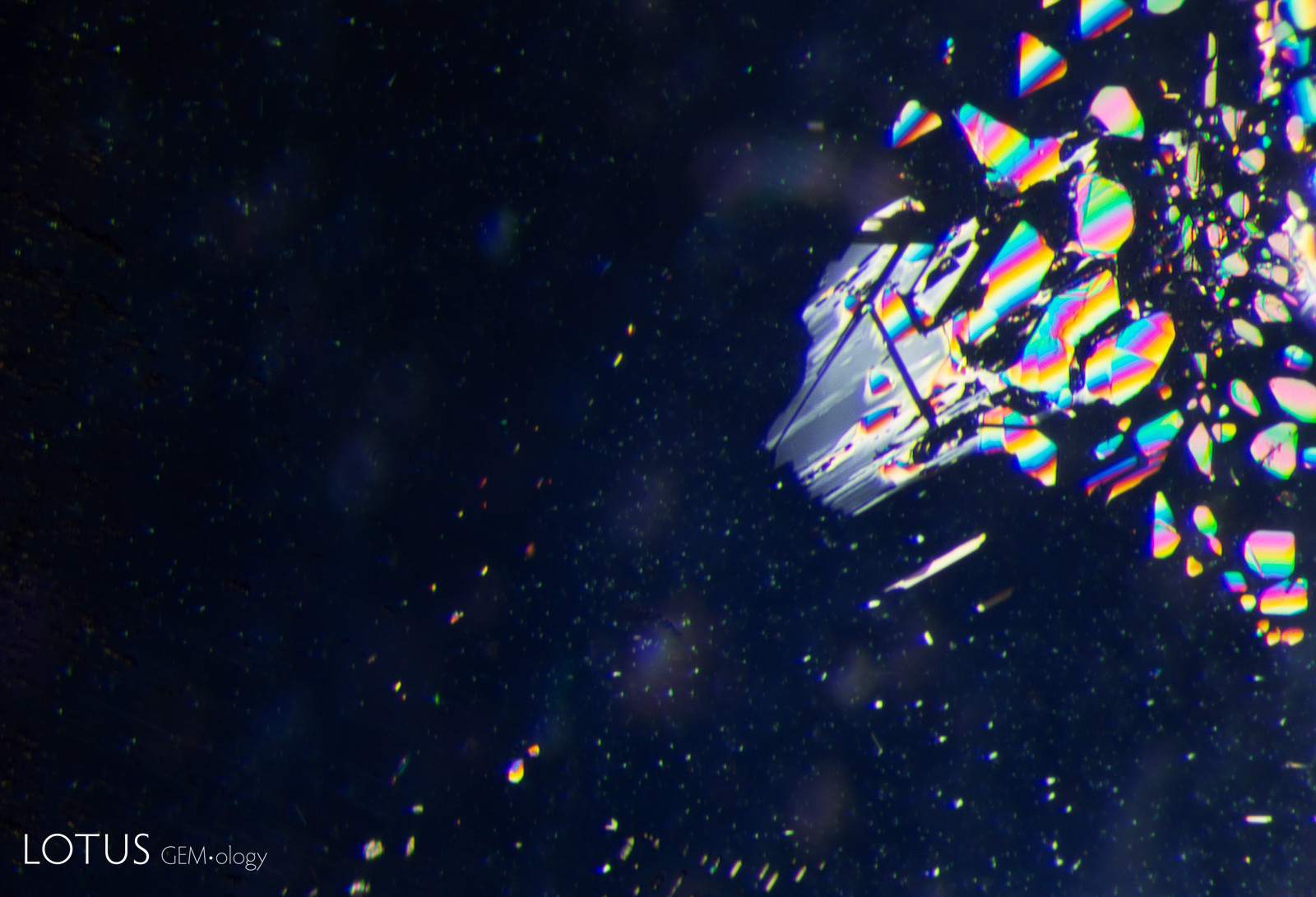
This blue sapphire from Myanmar’s Mogok Valley contains several prismatic apatite crystals. Observation between crossed polarized filters reveals not only the bright interference colors of the apatite, but also of its sub-inclusions.
Natural Sapphire •
Myanmar (Burma); Mogok/Namya •
Enhancements:
Fissure Filling with colorless Oil/resin (FF-O1); No indications of heating (No indications of heating) •
Lighting Conditions:
Dark Field + Crossed Polars
Photographer:
Kaylan Khourie •
Image Number:
A-005-4459-1
• Field of View = 3.6mm
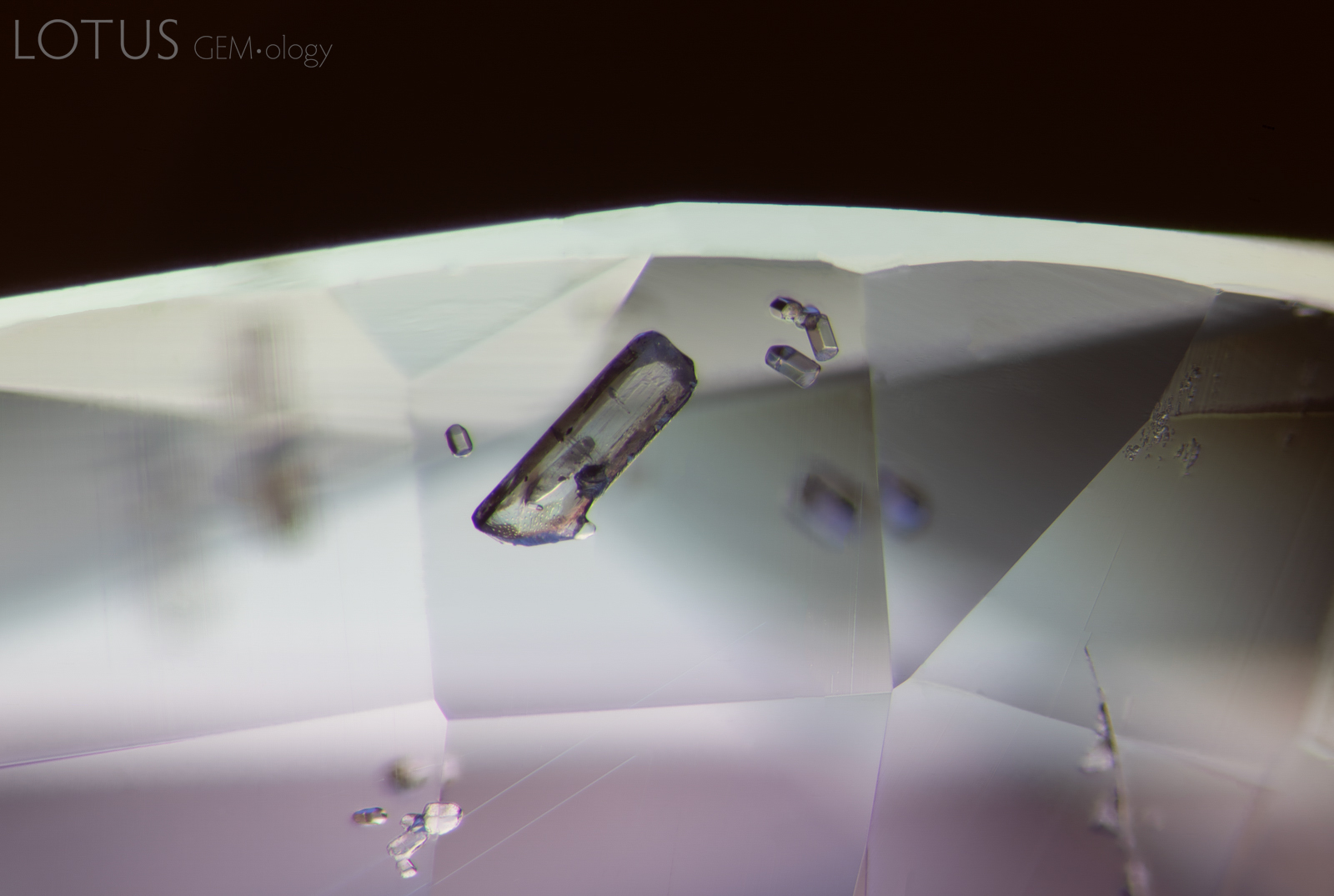
These two elongated zircon crystals appear to float above the deep blue color zones of this sapphire from Madagascar. The microfissures surrounding the crystals are a result of radiation from the thorium and uranium traces in the zircon.
Natural Sapphire •
Madagascar •
Enhancements:
None Detected (None) •
Lighting Conditions:
Dark Field
Photographer:
Kaylan Khourie •
Image Number:
A-005-4444-1
• Field of View = 3mm
Search the Complete Hyperion Database
Sapphire inclusions may include mineral crystals, rutile silk, healed fissures, fluid inclusions, negative crystals, color zoning and other features formed during or after crystal growth. Such features are important to gemologists because they can provide evidence useful in identifying sapphire, understanding its geological history, recognizing treatment and, in some cases, determining geographic origin.
Sapphire Inclusion Photomicrographs
The Hyperion sapphire gallery includes microscopic features found in sapphires from major deposits around the world. Each entry is accompanied by descriptive information and, where available, references to the gemological literature.
What Inclusions Can Reveal About Sapphire
Inclusions are an important part of sapphire identification. Their form, composition, orientation and alteration can help gemologists distinguish natural sapphire from synthetic material, recognize evidence of heat treatment, and study the geological environment in which the sapphire formed.
Hyperion combines inclusion photomicrography with supporting gemological information so that individual features can be compared with documented examples from known sapphire deposits.
About Hyperion
Hyperion is the Lotus Gemology searchable inclusion database. It allows users to browse gemstone inclusions by gem type, geographic origin, treatment and keyword.