Burmese Sapphire Inclusions
Explore Burmese sapphire inclusions in Hyperion, the Lotus Gemology inclusion database. Hyperion contains photomicrographs of inclusions and internal features in natural sapphires from Myanmar (Burma), documented with information on treatment, lighting conditions, field of view, photographer and published references.
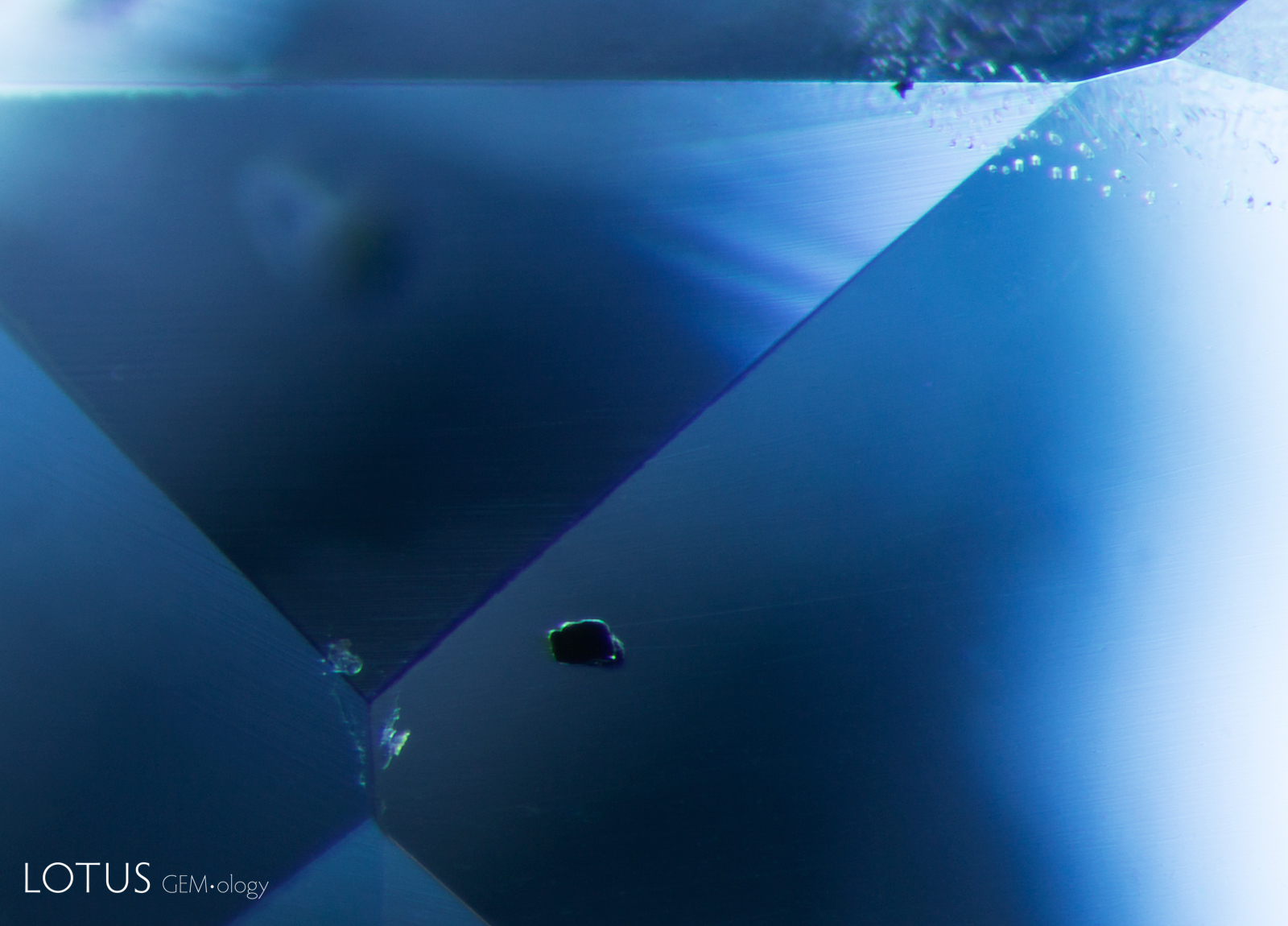
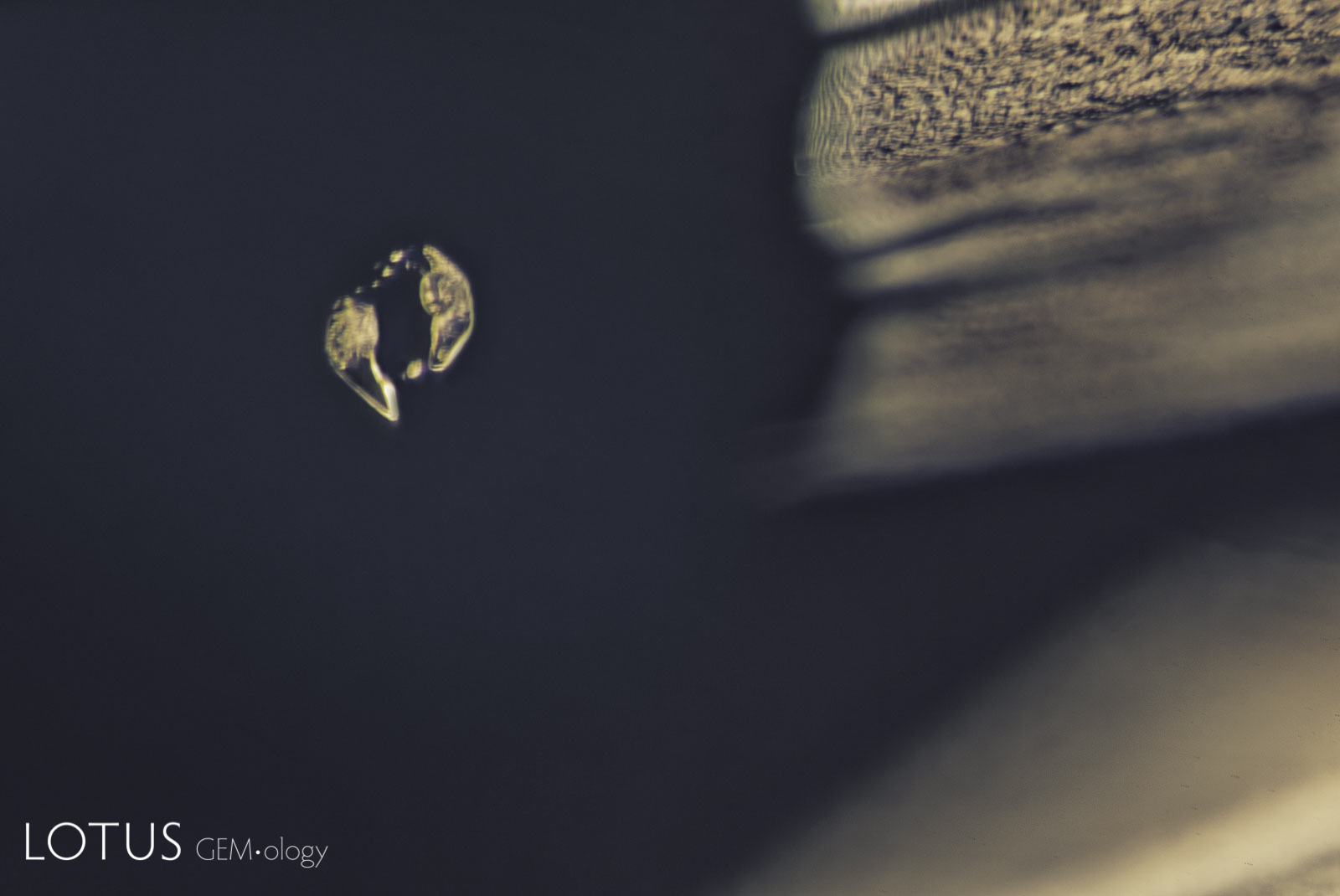
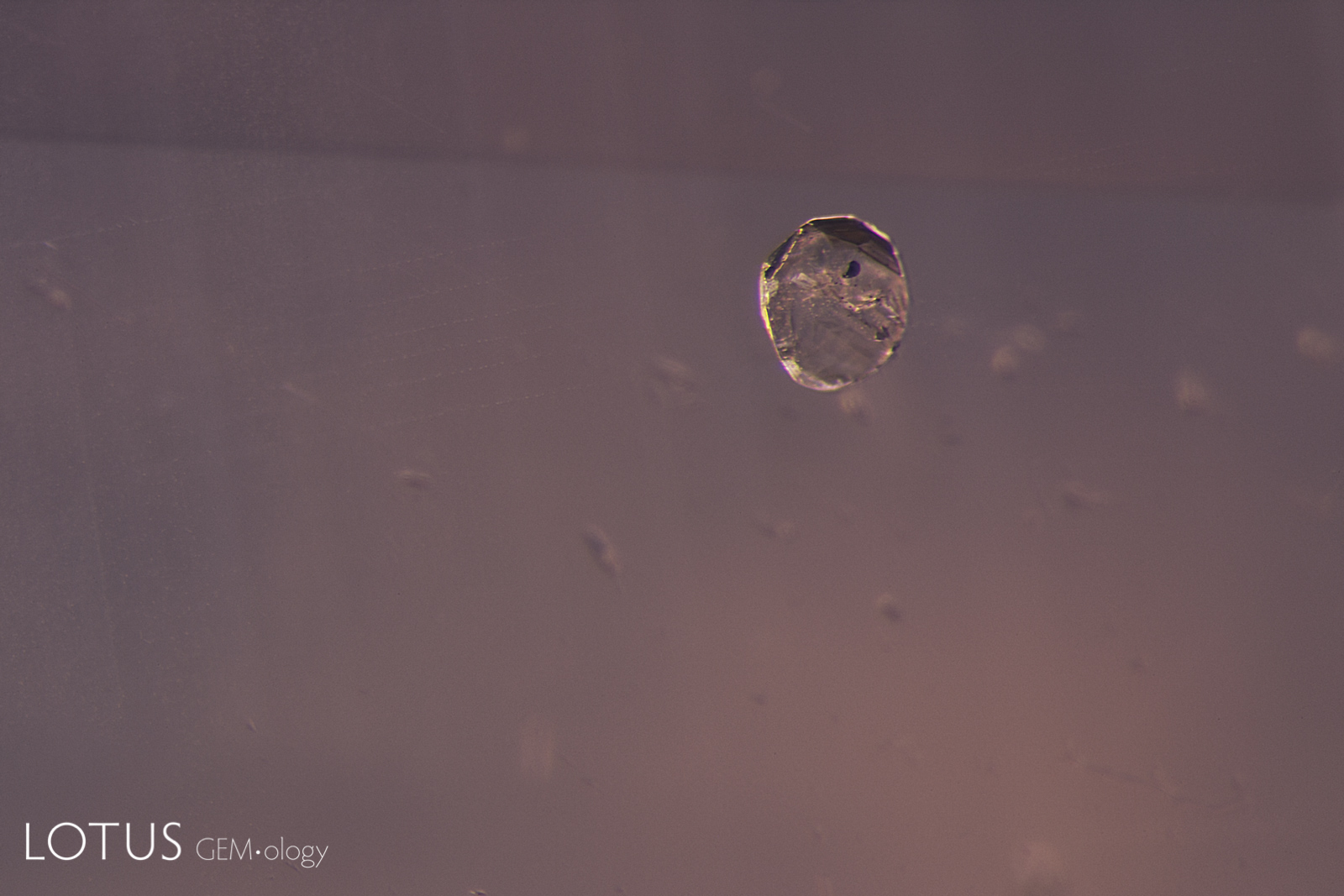
A rounded zircon crystal is cut through in this untreated sapphire from Myanmar (Burma). Its identity was confirmed with micro Raman.
Natural Sapphire •
Myanmar (Burma); Mogok •
Enhancements:
None Detected (None) •
Lighting Conditions:
Fiber Optic: Oblique
Photographer:
Wimon Manorotkul •
Image Number:
A-003-6375-2
• Field of View = 3mm
Hughes, R.W., Manorotkul, W. and Hughes, E.B. (2017) Ruby & Sapphire: A Gemologist's Guide. Bangkok, Lotus Publishing, 816 pp.; RWHL*.
Gübelin, E.J. and Koivula, J.I. (2008) Photoatlas of Inclusions in Gemstones, Volume 3. Basel, Switzerland, Opinio Publishers, 672 pp.; RWHL*.
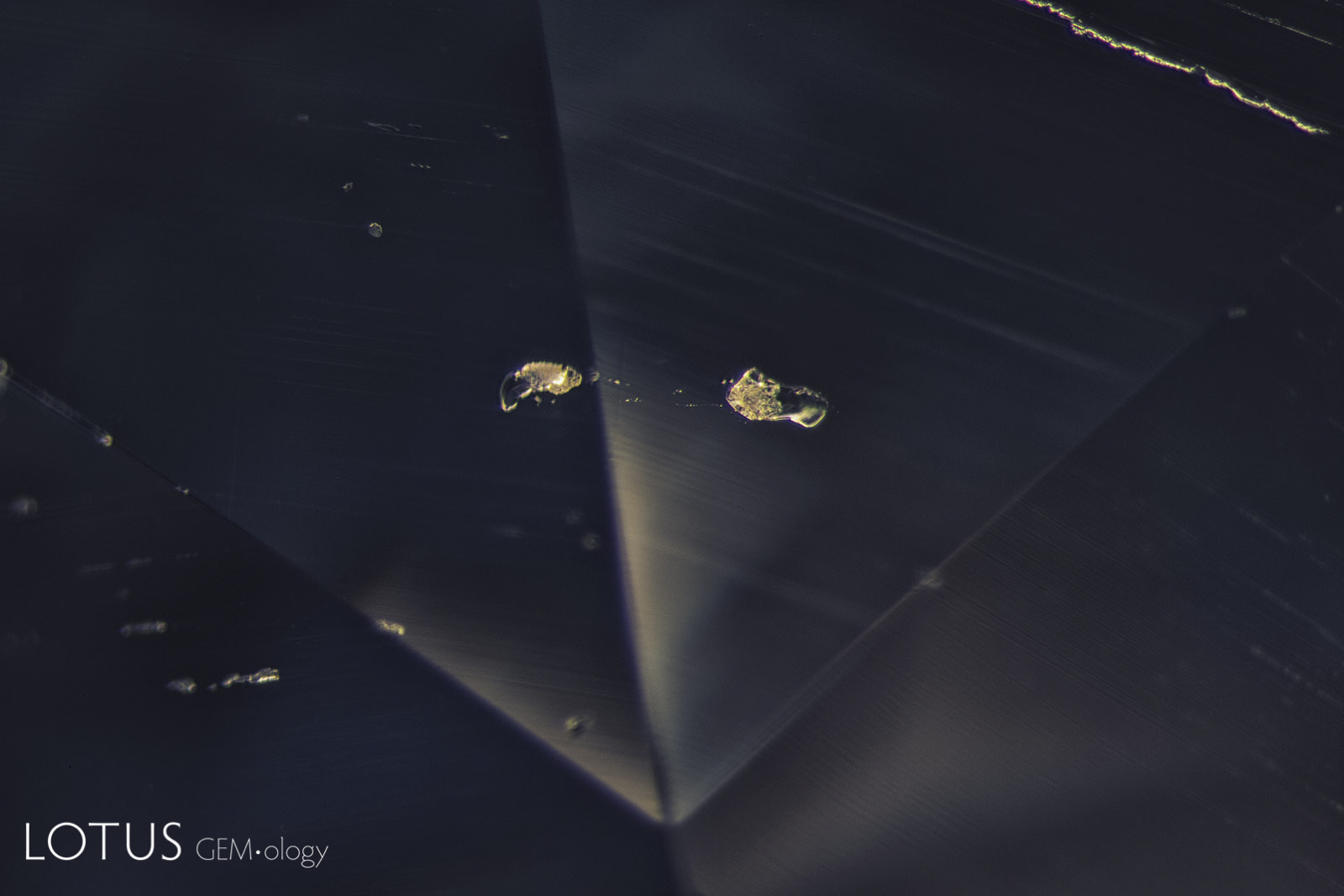
These small irregular crystal grains were identified via micro Raman as anorthite feldspar.
Natural Sapphire •
Myanmar (Burma); Mogok •
Enhancements:
None Detected (None) •
Lighting Conditions:
Dark Field
Photographer:
Richard W. Hughes •
Image Number:
A-003-6374-2
• Field of View = 2.5mm
Gübelin, E.J. (1969) On the nature of mineral inclusions in gemstones. Journal of Gemmology, Vol. 11, No. 5, Jan., pp. 149–192; RWHL*
These small irregular crystal grains were identified via micro Raman as anorthite feldspar.
Natural Sapphire •
Myanmar (Burma); Mogok •
Enhancements:
None Detected (None) •
Lighting Conditions:
Dark Field
Photographer:
Richard W. Hughes •
Image Number:
A-003-6374-1
• Field of View = 1.6mm
Gübelin, E.J. (1969) On the nature of mineral inclusions in gemstones. Journal of Gemmology, Vol. 11, No. 5, Jan., pp. 149–192; RWHL*
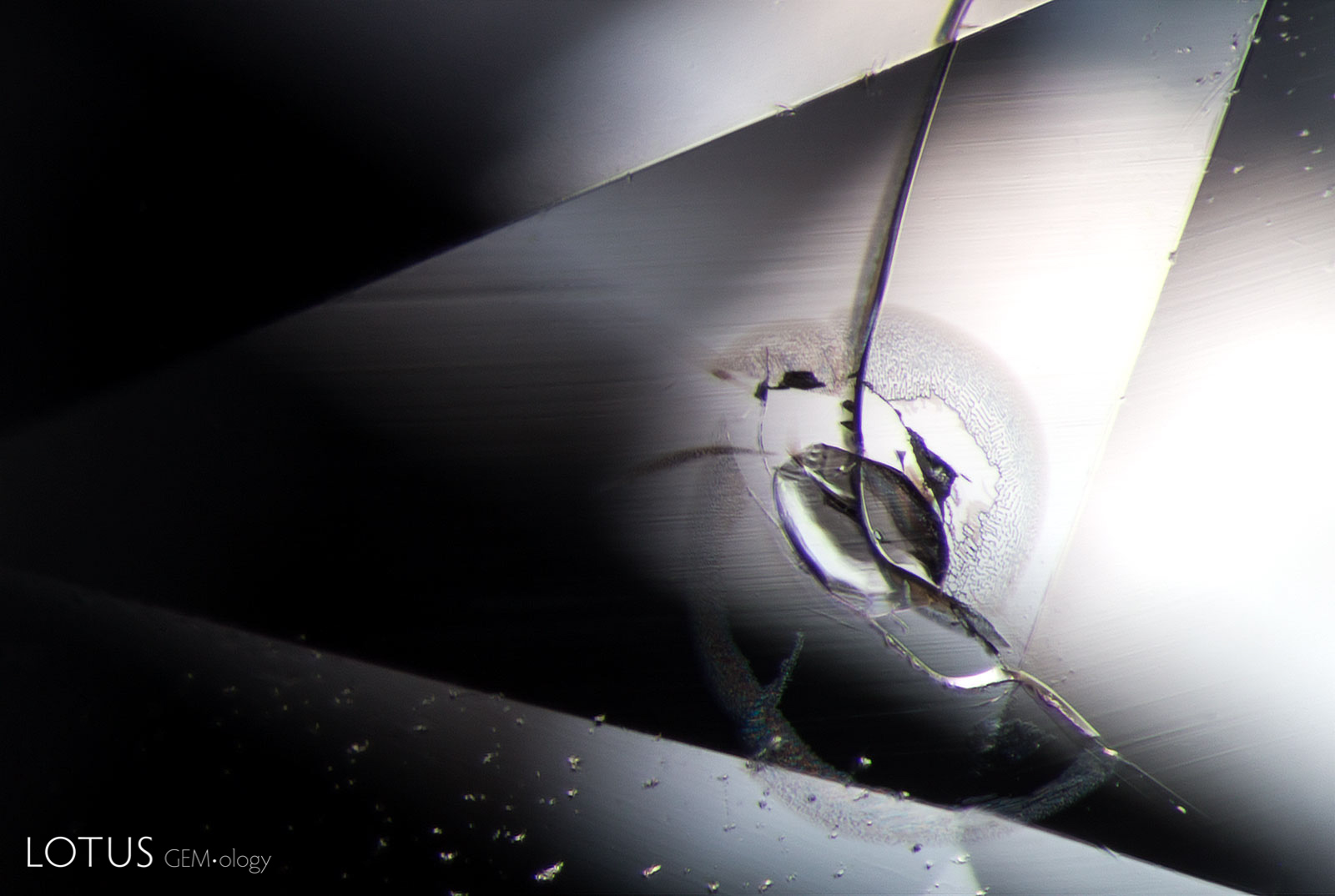
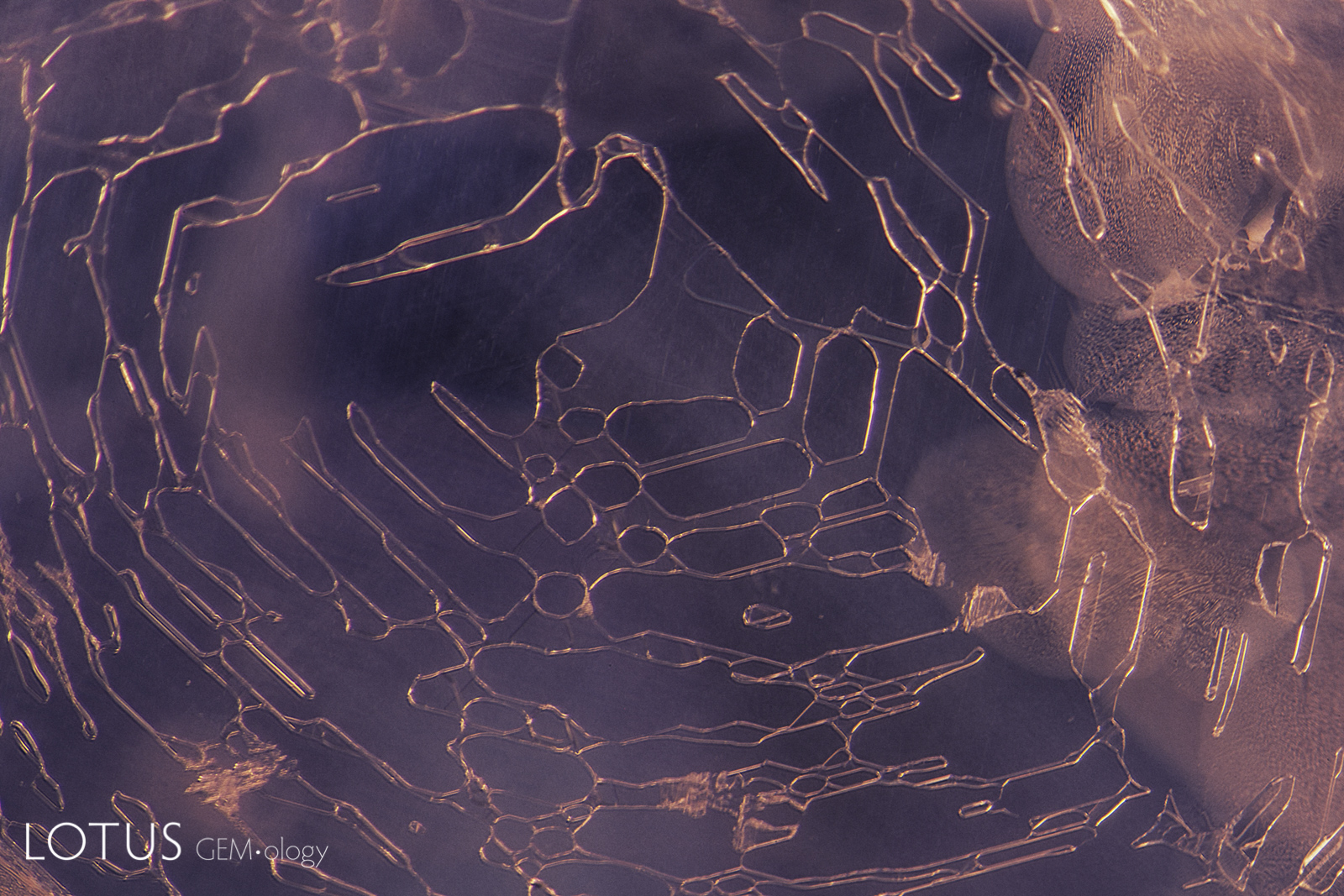
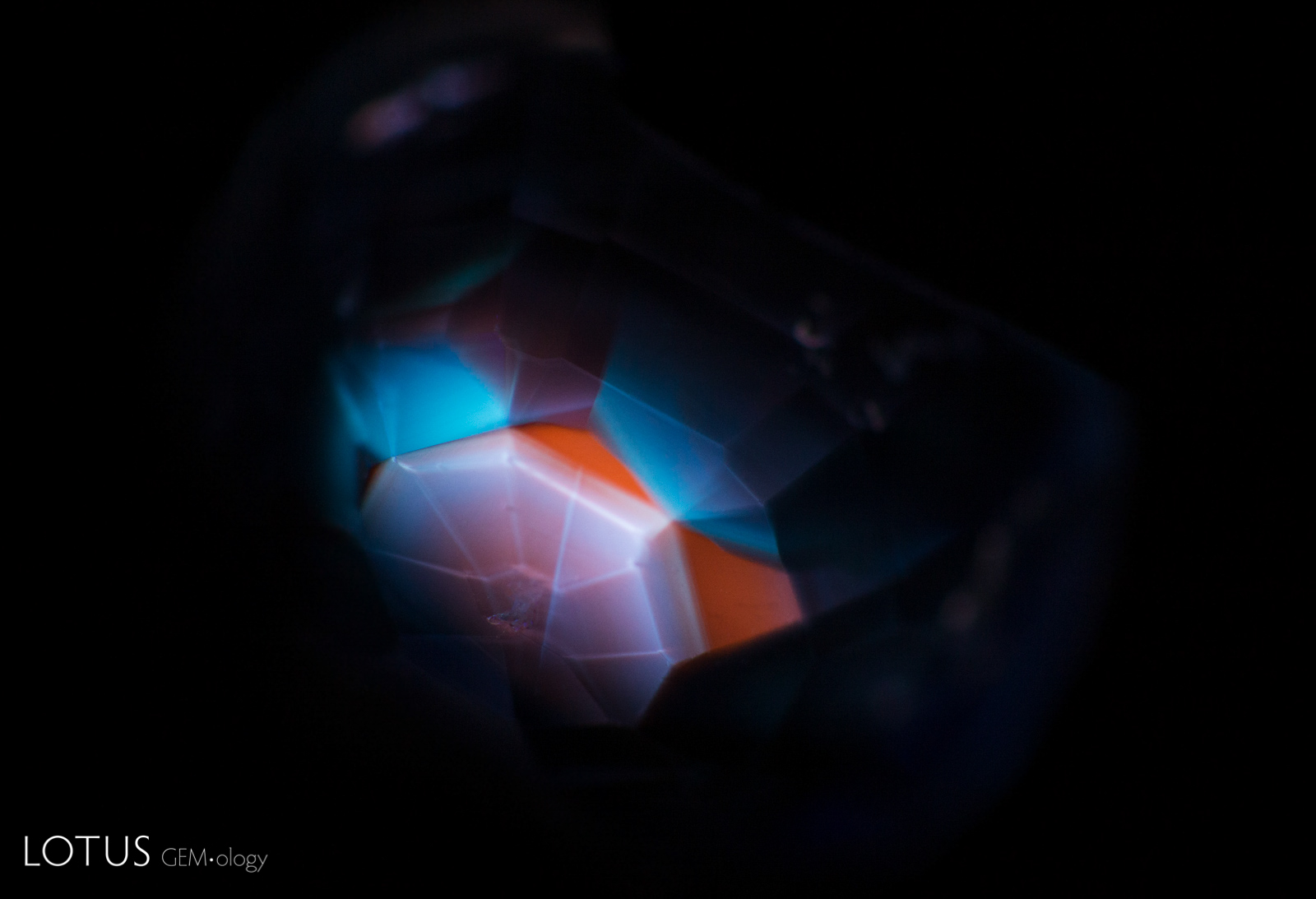
This sapphire from Myanmar’s Mogok Stone Tract displays a classic fingerprint inclusion in a spider’s web shape. The plane of the inclusion is close to the basal plane. As a result, the healed areas have a hexagonal shape.
Natural Sapphire •
Myanmar (Burma); Mogok •
Enhancements:
None Detected (None) •
Lighting Conditions:
Dark Field
Photographer:
Richard W. Hughes •
Image Number:
A-003-6364-1
• Field of View = 5mm
Roedder, E. (1962) Ancient fluids in crystals. Scientific American, Vol. 207, pp. 38–47; RWHL*.
Hughes, R.W., Manorotkul, W. and Hughes, E.B. (2017) Ruby & Sapphire: A Gemologist's Guide. Bangkok, Lotus Publishing, 816 pp.; RWHL*.
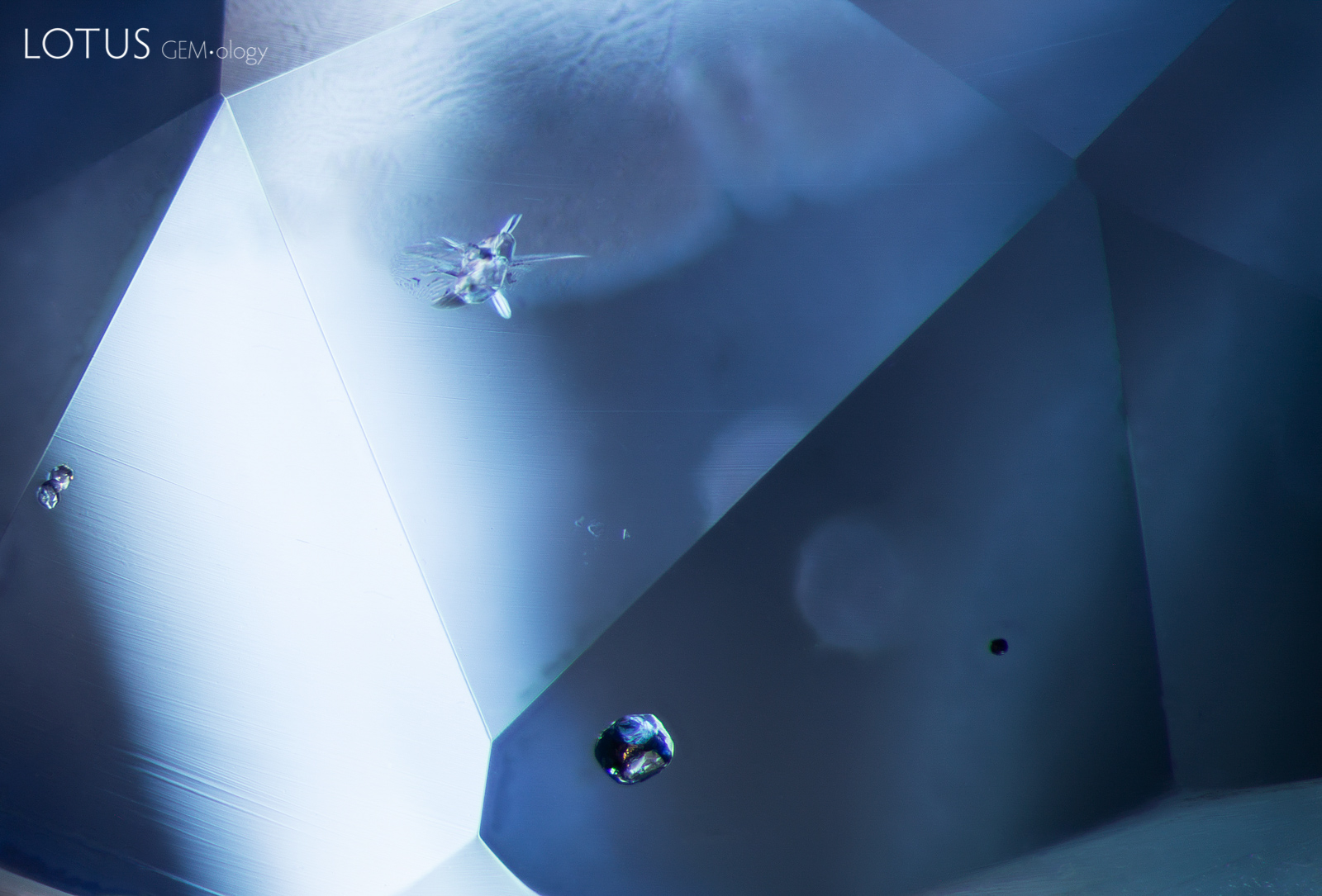
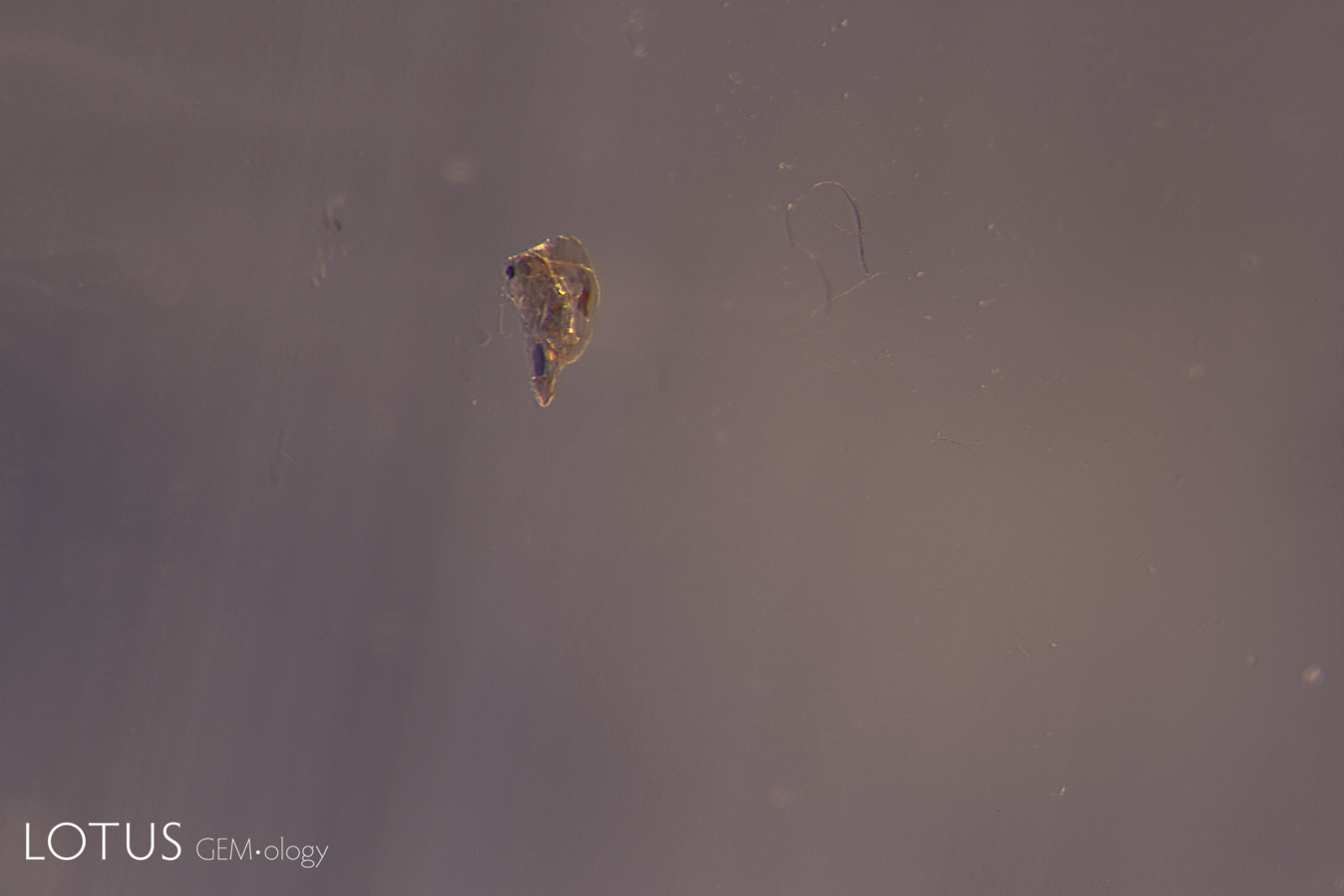
Another common guest mineral in sapphire is phlogopite mica, which is typically brown or orange in color. This example was identified as fluorapatite by micro Raman.
Natural Sapphire •
Myanmar (Burma); Mogok •
Enhancements:
None Detected (None) •
Lighting Conditions:
Dark Field
Photographer:
Richard W. Hughes •
Image Number:
A-003-6364-2
• Field of View = 2mm
Hughes, R.W., Manorotkul, W. and Hughes, E.B. (2017) Ruby & Sapphire: A Gemologist's Guide. Bangkok, Lotus Publishing, 816 pp.; RWHL*.
Gübelin, E.J. and Koivula, J.I. (2008) Photoatlas of Inclusions in Gemstones, Volume 3. Basel, Switzerland, Opinio Publishers, 672 pp.; RWHL*.
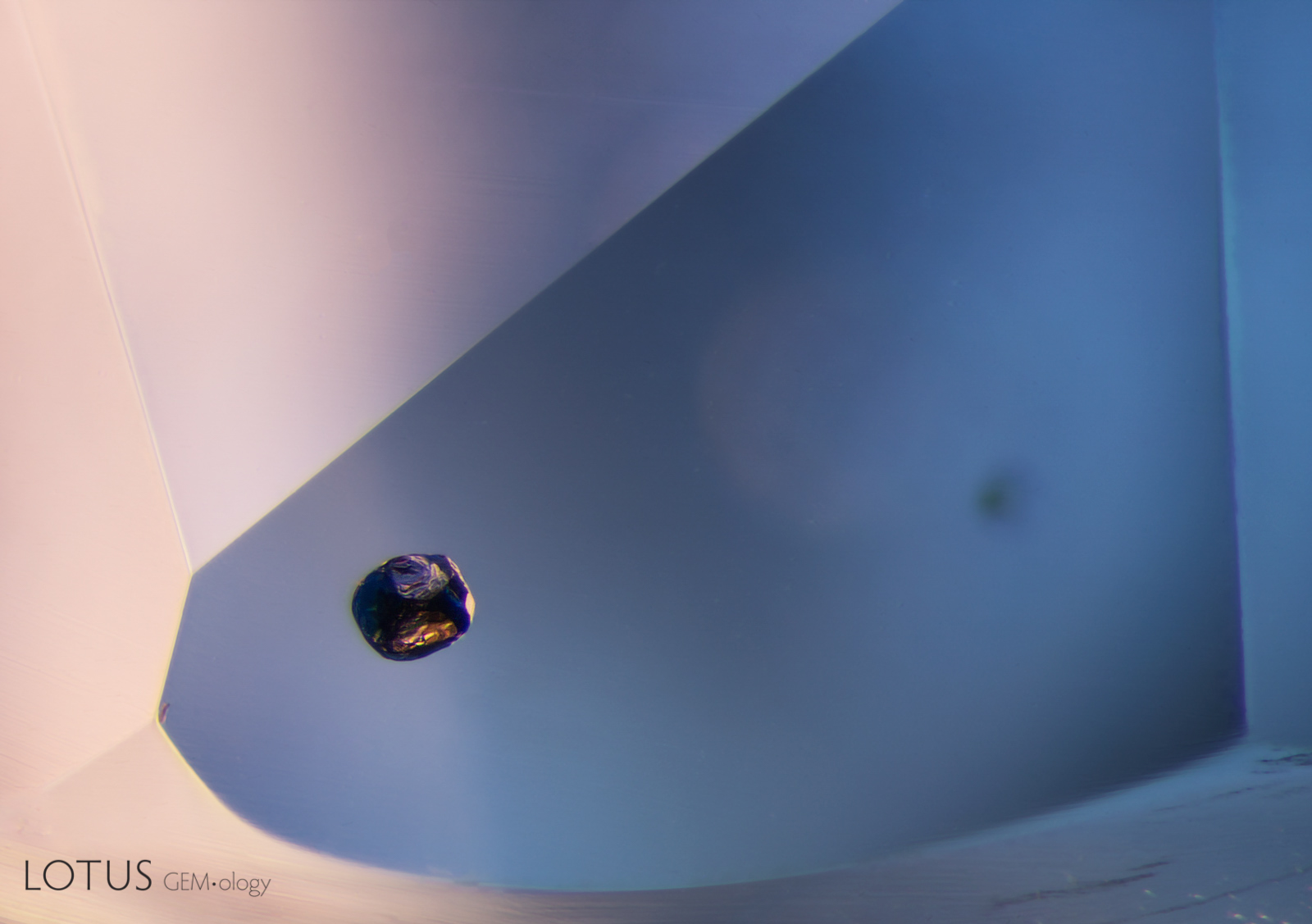
A common guest mineral in sapphire is apatite. These can take on a variety of forms, from rounded balls, such as that shown here, to hexagonal prisms and dog’s tooth shapes. This example was identified as fluorapatite by micro Raman.
Natural Sapphire •
Myanmar (Burma); Mogok •
Enhancements:
None Detected (None) •
Lighting Conditions:
Dark Field
Photographer:
Richard W. Hughes •
Image Number:
A-003-6364-3
• Field of View = 2mm
Hughes, R.W., Manorotkul, W. and Hughes, E.B. (2017) Ruby & Sapphire: A Gemologist's Guide. Bangkok, Lotus Publishing, 816 pp.; RWHL*.
Gübelin, E.J. and Koivula, J.I. (2008) Photoatlas of Inclusions in Gemstones, Volume 3. Basel, Switzerland, Opinio Publishers, 672 pp.; RWHL*.
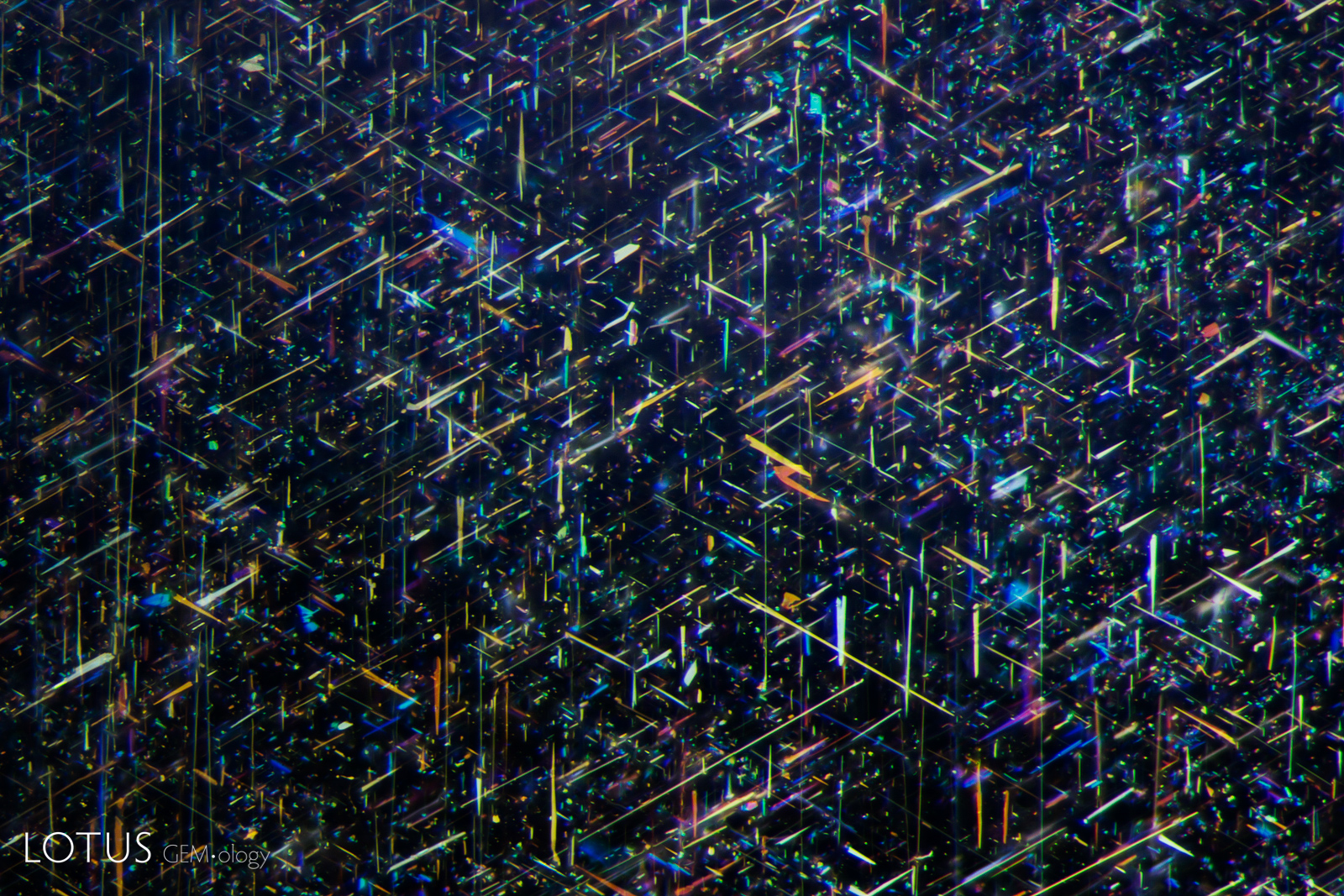
Clouds of undissolved rutile silk decorate the inner world of this sapphire, providing evidence that the stone has not been subject to heat treatment. Specimen courtesy of Discovery Gems.
Natural Color-Change Sapphire •
Myanmar (Burma); Mogok •
Enhancements:
None Detected (None) •
Lighting Conditions:
Fiber Optic: Diffuse Oblique
Photographer:
E. Billie Hughes •
Image Number:
A-003-4989-2
• Field of View = 3mm
Hughes, R.W., Manorotkul, W. et al. (2017) Ruby & Sapphire: A Gemologist's Guide. Bangkok, Lotus Publishing, 816 pp.; RWHL*.
Koivula, J.I. and Hughes, R.W. (2005) Following the Silk Road: Rutile in corundum. Bangkok, Lotusgemology.com, RWHL*.
83 Total Images
Results: 25 – 36 | Page 3 of 7 Pages
Search the Complete Hyperion Database
Burmese sapphire inclusions may include mineral crystals, rutile silk, healed fissures, fluid inclusions, negative crystals, growth features and other internal features formed during or after crystal growth. Such features are important to gemologists because they can provide evidence useful in identifying sapphire and evaluating a possible Burmese origin.
Burmese Sapphire Inclusion Photomicrographs
The Hyperion Burmese sapphire gallery includes microscopic features documented in sapphires from Myanmar (Burma). Each entry is accompanied by descriptive information and, where available, references to the gemological literature.
What Inclusions Can Reveal About Burmese Sapphire
Inclusions are an important part of geographic origin determination in sapphire. Their form, composition, orientation and associations can provide evidence that, when considered together with other gemological properties, may support or contradict a Burmese origin.
Hyperion combines inclusion photomicrography with supporting gemological information so that individual features can be compared with documented examples from Burmese sapphires.
About Hyperion
Hyperion is the Lotus Gemology searchable inclusion database. It allows users to browse gemstone inclusions by gem type, geographic origin, treatment and keyword.