Madagascar Sapphire Inclusions
Explore Madagascar sapphire inclusions in Hyperion, the Lotus Gemology inclusion database. Hyperion contains photomicrographs of inclusions and internal features in natural sapphires from Madagascar, documented with information on treatment, lighting conditions, field of view, photographer and published references.
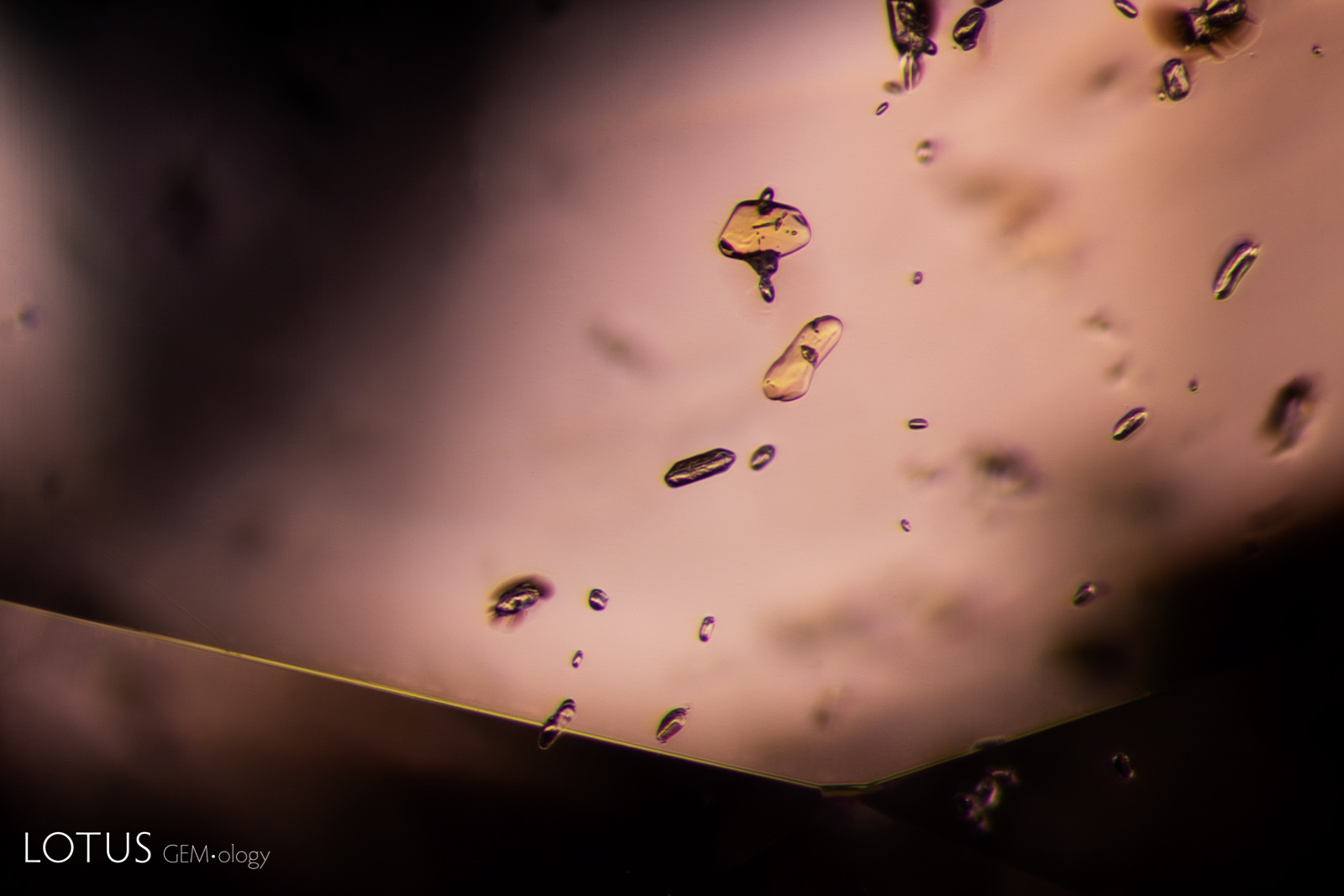
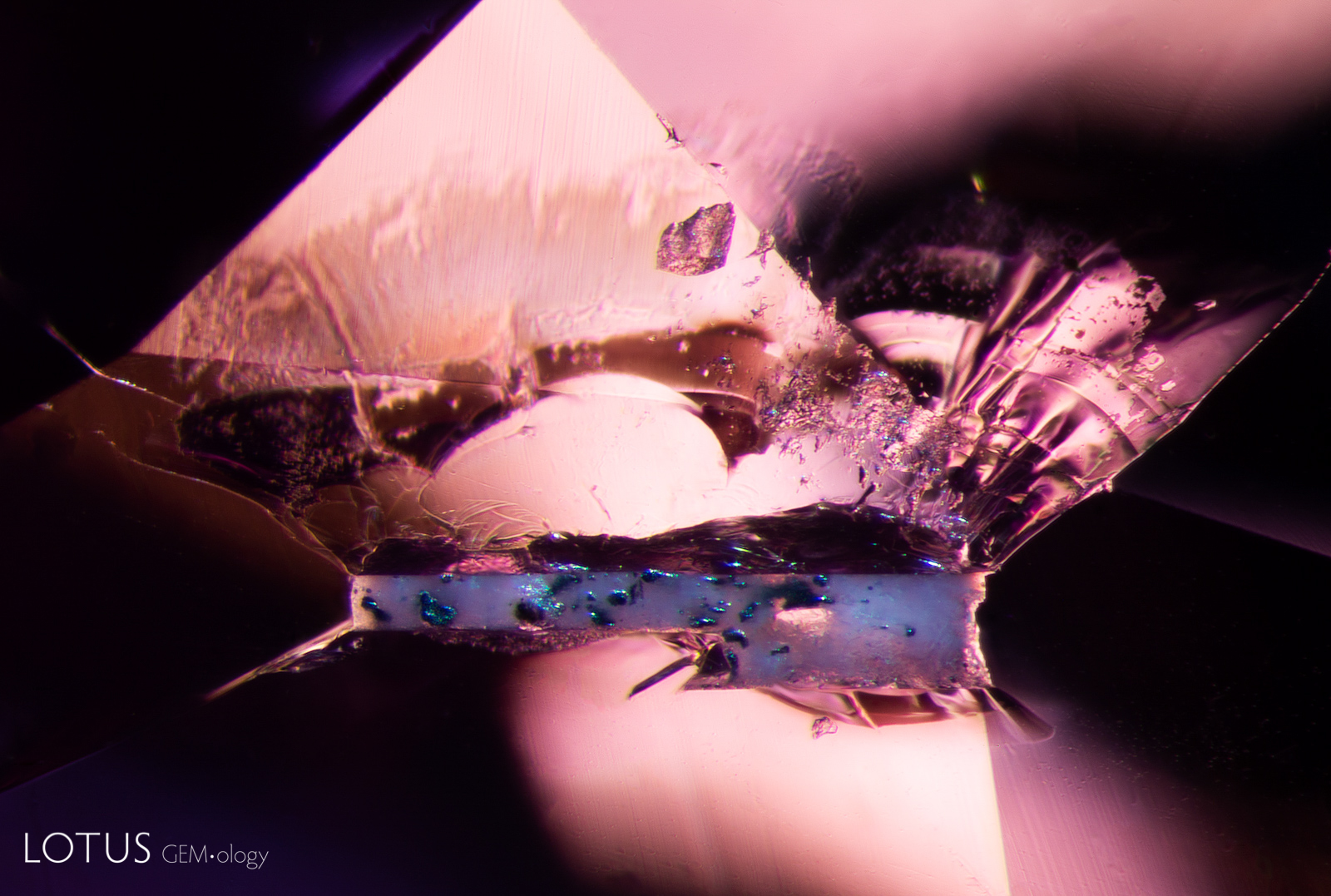
The mottled appearance of these platelets suggests that their sapphire host was heat treated.
Natural Padparadscha Sapphire •
Madagascar •
Enhancements:
Heat (H) •
Lighting Conditions:
Fiber Optic: Diffuse Oblique
Photographer:
E. Billie Hughes •
Image Number:
A-004-1639-1
• Field of View = 1mm
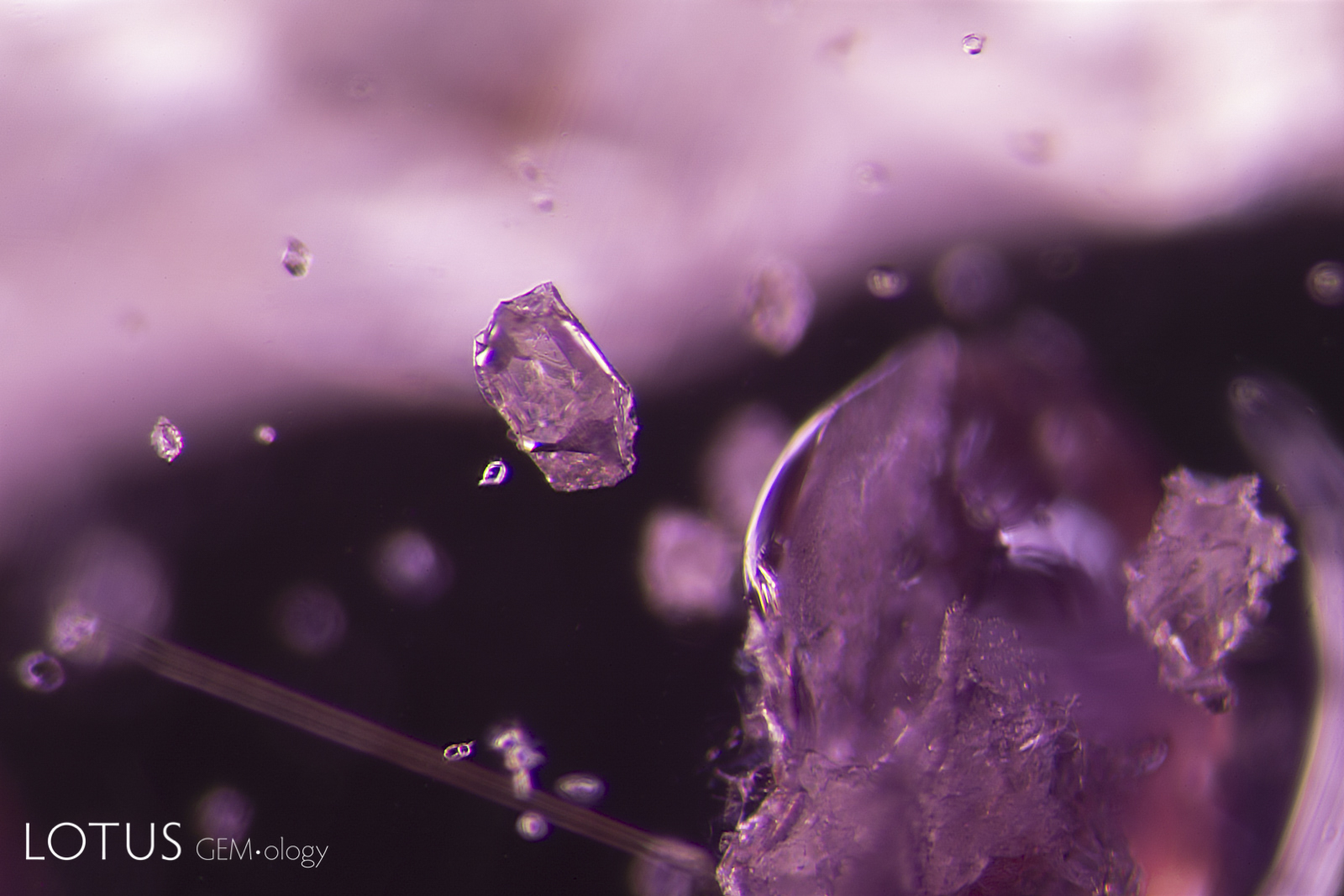
A pair of yellow monazite crystals is suspended in this pink sapphire from Madagascar. These types of crystals can turn colorless when heated, providing evidence that this sample is untreated.
Natural Padparadscha Sapphire •
Madagascar •
Enhancements:
None Detected (None) •
Lighting Conditions:
Dark Field
Photographer:
E. Billie Hughes •
Image Number:
A-004-1142-1
• Field of View = 2mm
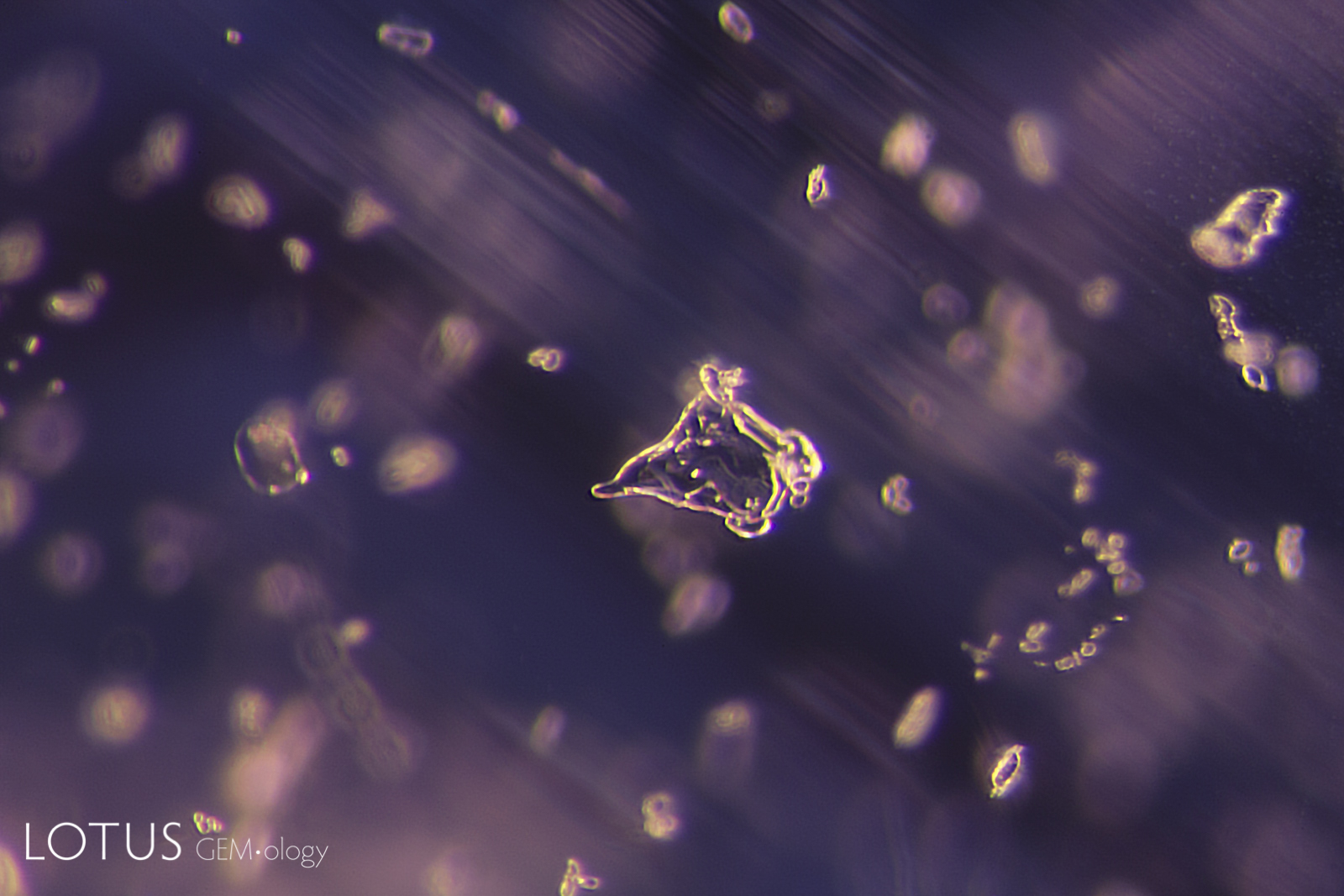
Confetti-like platelets and fine, unbroken needles can be viewed in this untreated sapphire.
Natural Sapphire •
Madagascar •
Enhancements:
None Detected (None) •
Lighting Conditions:
Dark Field + Blue Filter + Diffuse Fiber Optic
Photographer:
E. Billie Hughes •
Image Number:
A-004-0547-1
• Field of View = 3mm
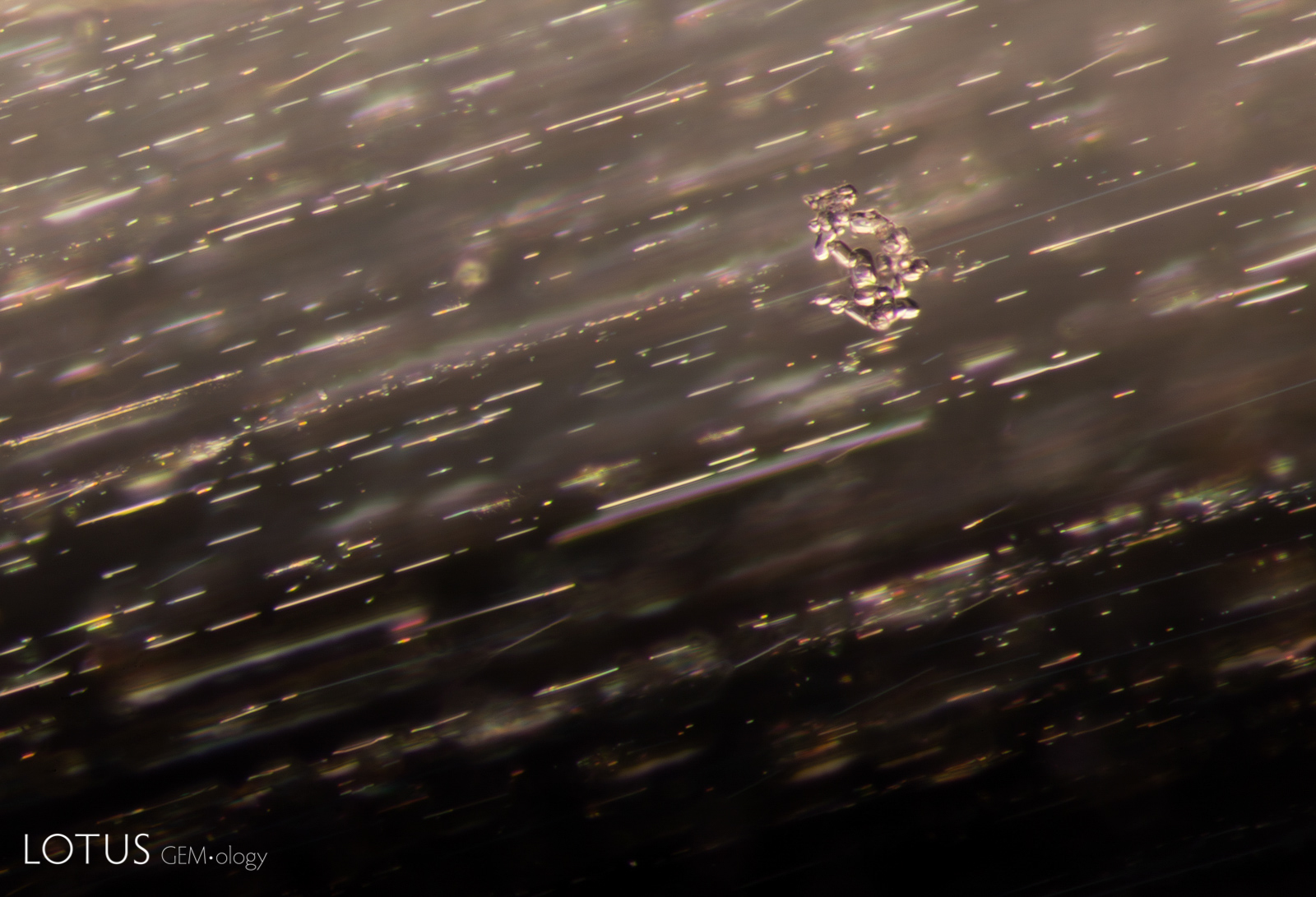
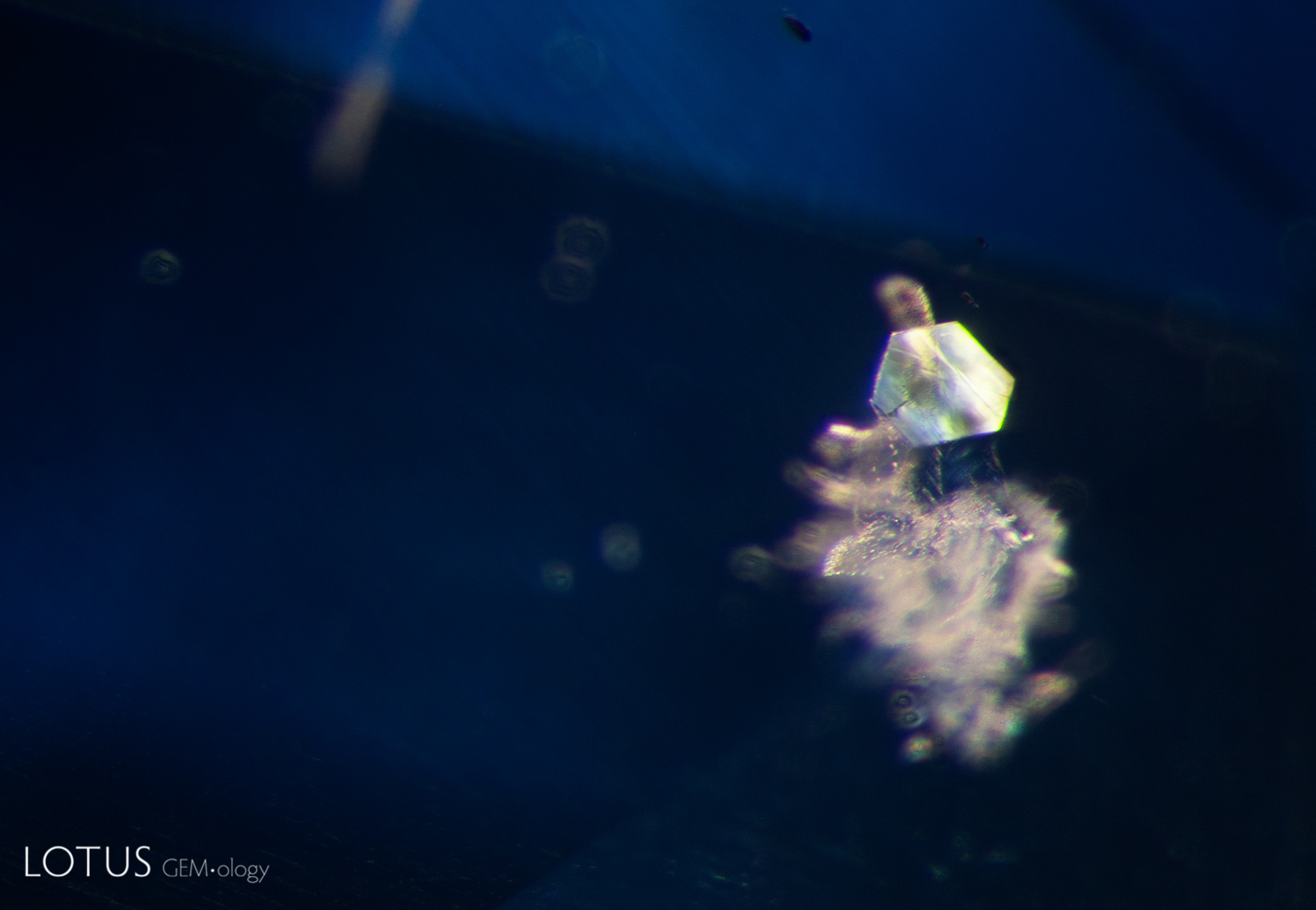
This untreated sapphire contains a cluster of small, transparent crystals appears to float amidst a cloud of fine silk needles.
Natural Sapphire •
Madagascar •
Enhancements:
None Detected (None) •
Lighting Conditions:
Dark Field
Photographer:
E. Billie Hughes •
Image Number:
A-004-0548-1
• Field of View = 2mm
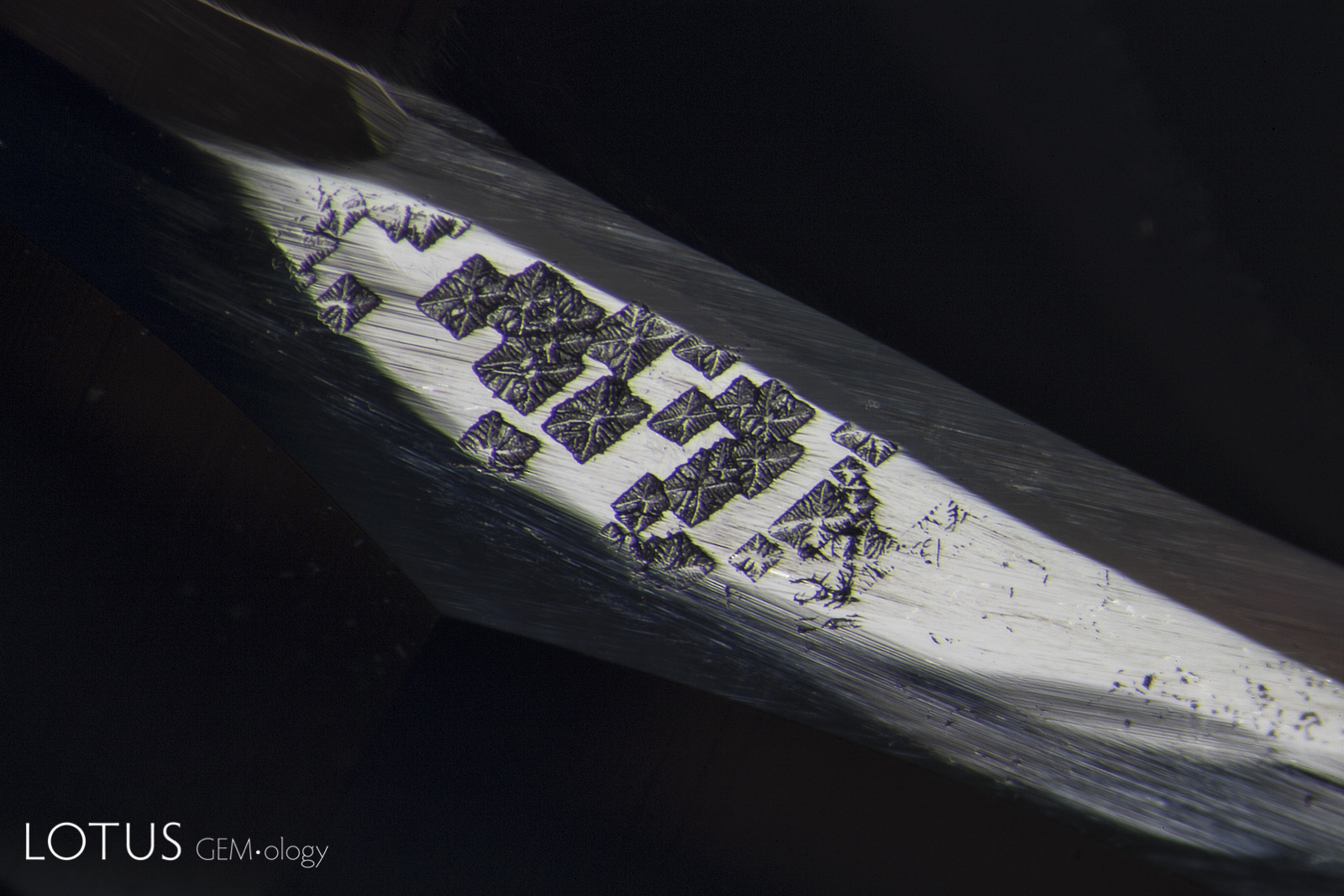
In the “We thought we had seen it all” department, this unusual inclusion was found on the polished girdle of an untreated Madagascar sapphire. We believe it to be made up of growth marks on the surface of the original sapphire crystal.
Natural Sapphire •
Madagascar •
Enhancements:
None Detected (None) •
Lighting Conditions:
Fiber Optic: Diffuse Overhead
Photographer:
Richard W. Hughes •
Image Number:
A-003-9743-1
• Field of View = 5mm
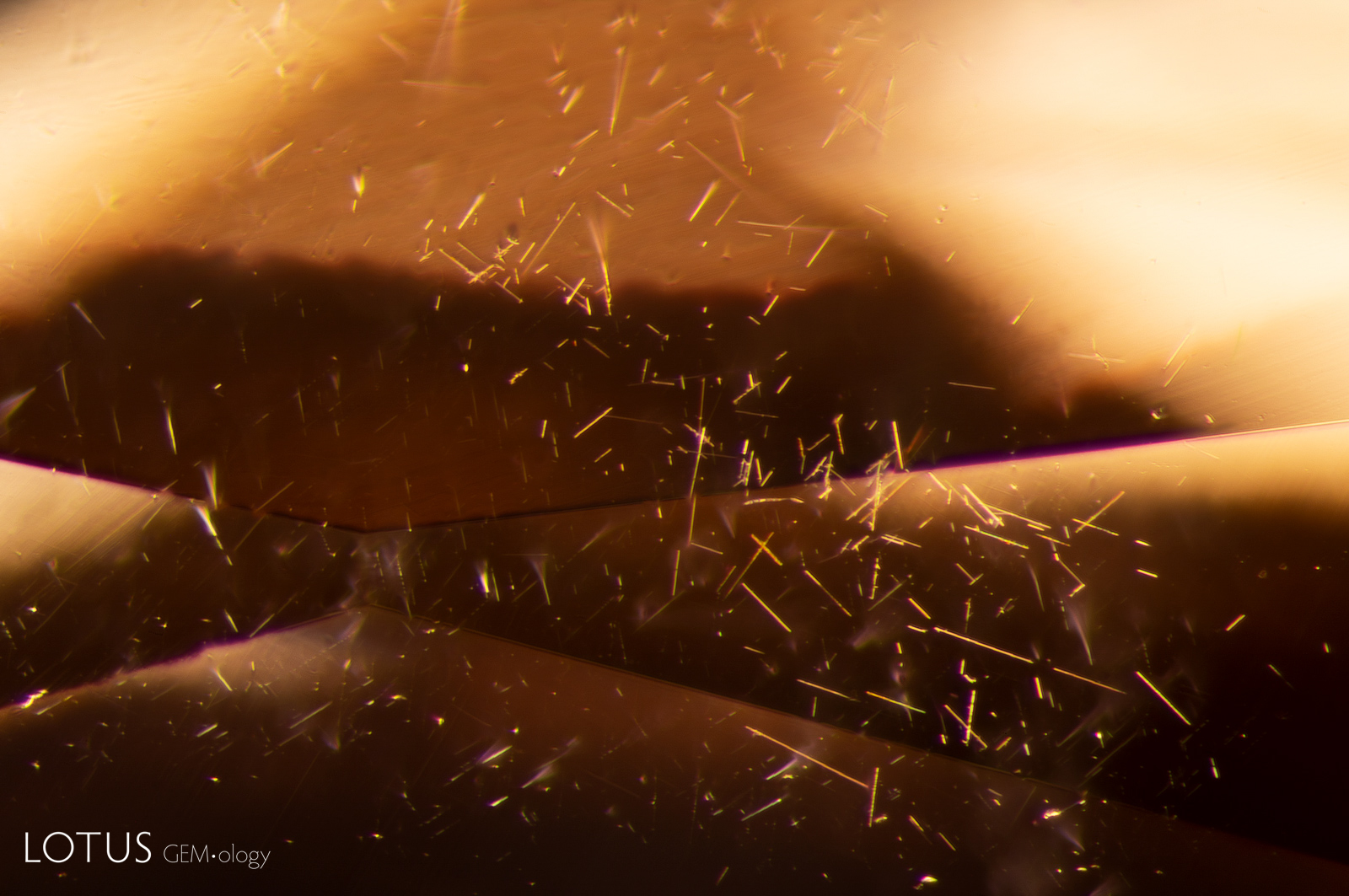
Some Madagascar sapphires, like this one, display a distinctive “pick up sticks” type silk where the silk is not oriented in the basal plane.
Natural Padparadscha Sapphire •
Madagascar •
Enhancements:
None Detected (None) •
Lighting Conditions:
Dark Field
Photographer:
E. Billie Hughes •
Image Number:
A-003-8813-1
• Field of View = 2mm
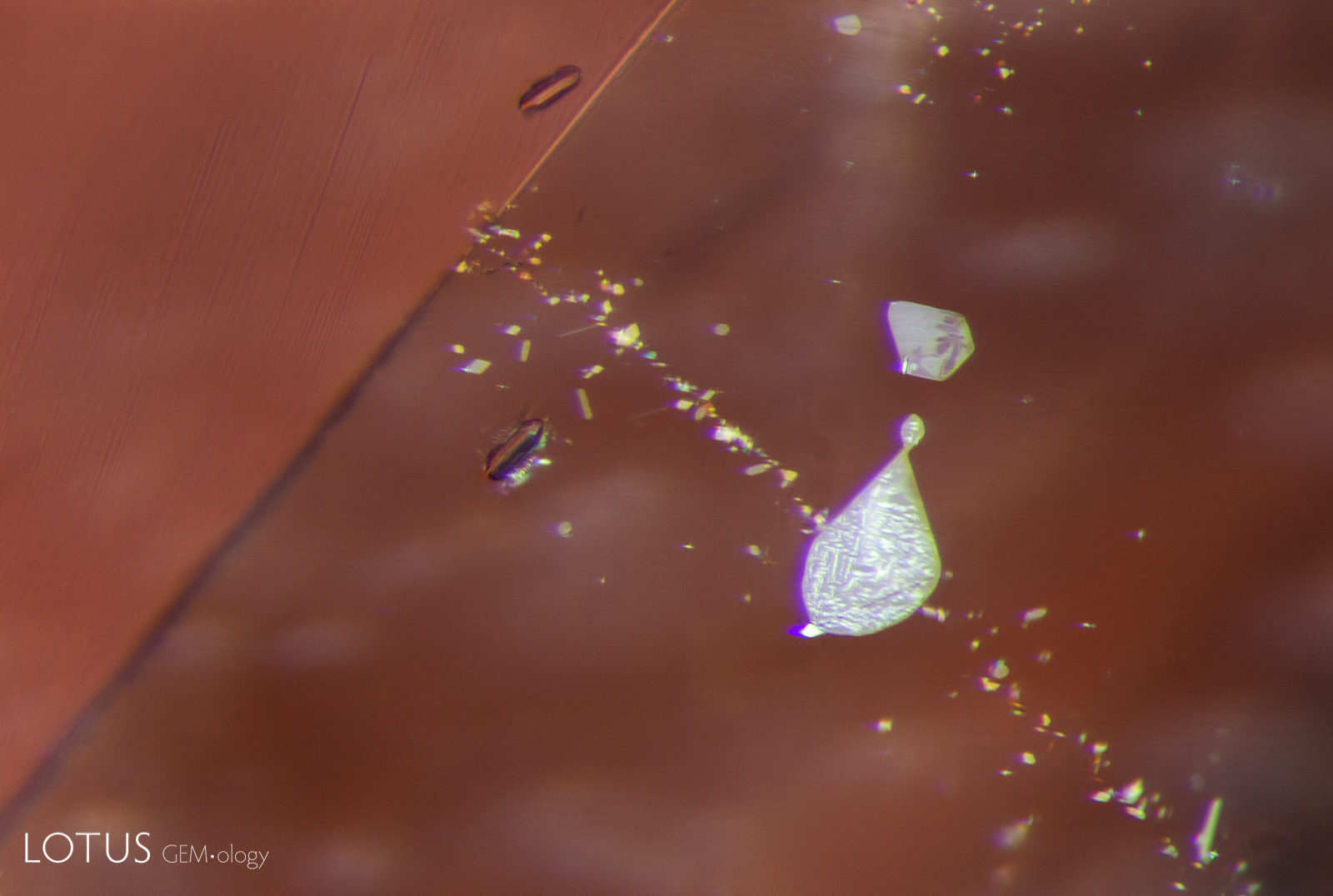
When examining this pink sapphire from Madagascar we spotted this interesting white crystal cut through on the surface. Micro Raman spectroscopy identified the crystal as andalusite.
Natural Padparadscha Sapphire •
Madagascar •
Enhancements:
Heat (H) •
Lighting Conditions:
Dark Field + Oblique Fiber Optic
Photographer:
E. Billie Hughes •
Image Number:
A-003-6544-1
• Field of View = 2mm
This untreated pink sapphire from the Ilakaka area of Madagascar was part of a large parcel purchased from a miner by the author in 2005. It contains rounded zircon crystals, and blocky crystals, some with fringes. The crystal in the center was identified as muscovite mica by micro Raman.
Natural Sapphire •
Madagascar •
Enhancements:
None Detected (None) •
Lighting Conditions:
Dark Field
Photographer:
Richard W. Hughes •
Image Number:
R-003-0356-1
• Field of View = 2mm
This untreated pink sapphire from the Ilakaka area of Madagascar was part of a large parcel purchased from a miner by the author in 2005. It contains zoned clouds of fine rutile dust, rounded zircon crystals, and in the center, an irregular rounded crystal that was identified by micro Raman as anorthite, one of the end members of the plagioclase feldspar series.
Natural Sapphire •
Madagascar •
Enhancements:
None Detected (None) •
Lighting Conditions:
Dark Field
Photographer:
Richard W. Hughes •
Image Number:
A-003-6353-1
• Field of View = 2mm
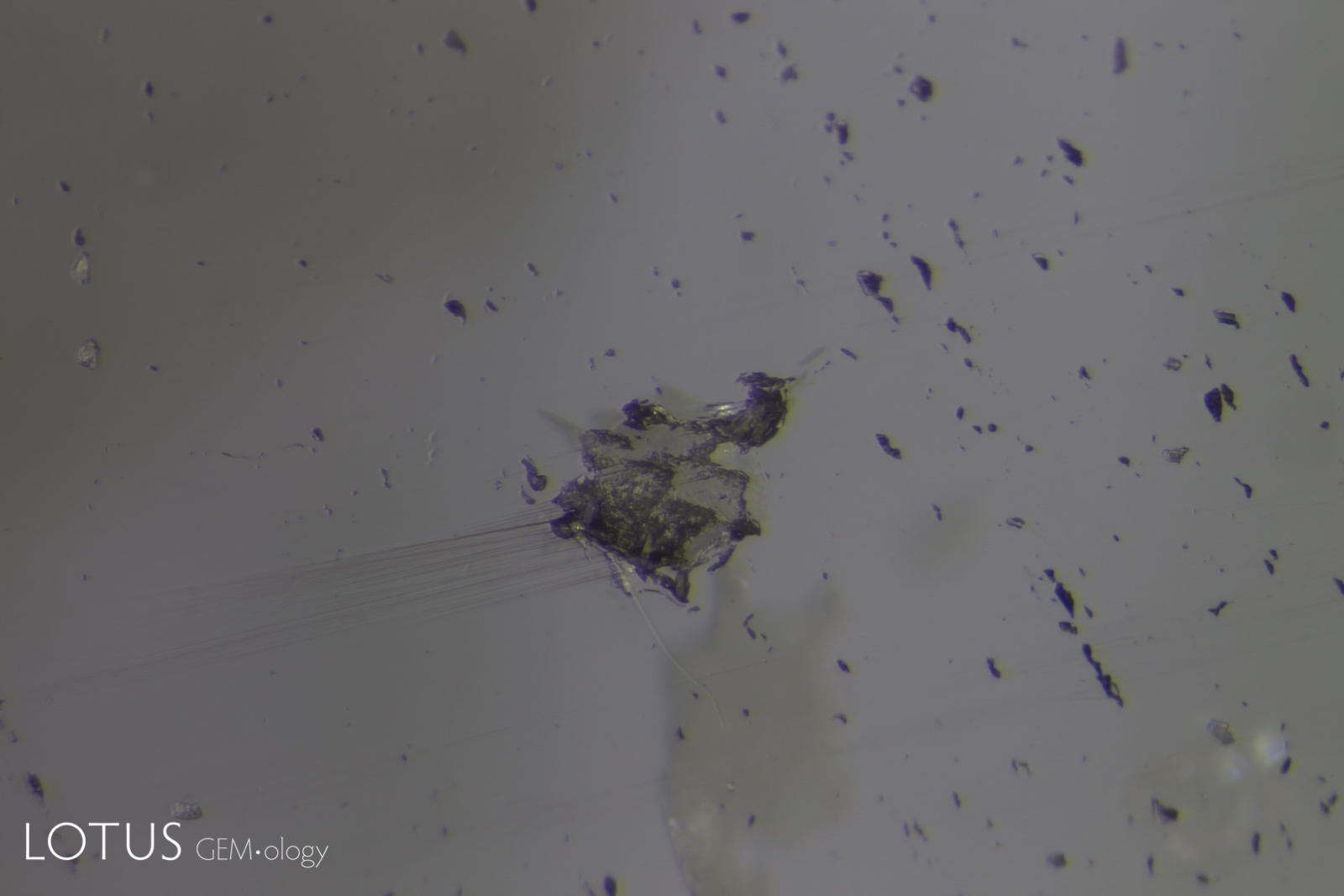
A superficial chalky patch is visible when this sapphire is viewed under shortwave UV illumination. While a chalky shortwave UV fluorescence is generally a strong indicator of heat treatment, on occasion we have seen these superficial patches in stones we believe to be untreated.
Natural Sapphire •
Madagascar •
Enhancements:
None Detected (None) •
Lighting Conditions:
Ultraviolet: Short Wave
Photographer:
E. Billie Hughes •
Image Number:
A-003-6344-2
This hexagonal crystal with a metallic luster stood out in its sapphire host. Micro Raman analysis confirmed its identity as graphite.
Natural Sapphire •
Madagascar •
Enhancements:
None Detected (None) •
Lighting Conditions:
Dark Field + Diffuse Fiber Optic
Photographer:
E. Billie Hughes •
Image Number:
A-003-6344-1
• Field of View = 2.2mm
This blocky white crystal was found breaking the surface in a pink sapphire from Madagascar’s Ilakaka region collected at the mines by Lotus Gemology’s Richard Hughes in 2005. Using our micro Raman unit to analyze it, we were pleasantly surprised to discover that it was andalusite. To the best of our knowledge, this is the first time andalusite has been discovered as an inclusion in corundum. Overhead lighting clearly shows the lower luster of the andalusite compared to the surrounding sapphire. This is because andalusite has an RI of 1.63, while corundum is 1.76.
Natural Sapphire •
Madagascar •
Enhancements:
None Detected (None) •
Lighting Conditions:
Fiber Optic: Diffuse Overhead
Photographer:
Richard W. Hughes •
Image Number:
R-003-6246-2
• Field of View = 2mm
Search the Complete Hyperion Database
Madagascar sapphire inclusions may include mineral crystals, rutile silk, healed fissures, fluid inclusions, negative crystals, growth features and other internal features formed during or after crystal growth. Such features are important to gemologists because they can provide evidence useful in identifying sapphire and evaluating a possible Madagascar origin.
Madagascar Sapphire Inclusion Photomicrographs
The Hyperion Madagascar sapphire gallery includes microscopic features documented in sapphires from Madagascar. Each entry is accompanied by descriptive information and, where available, references to the gemological literature.
What Inclusions Can Reveal About Madagascar Sapphire
Inclusions are an important part of geographic origin determination in sapphire. Their form, composition, orientation and associations can provide evidence that, when considered together with other gemological properties, may support or contradict a Madagascar origin.
Hyperion combines inclusion photomicrography with supporting gemological information so that individual features can be compared with documented examples from Madagascar sapphires.
About Hyperion
Hyperion is the Lotus Gemology searchable inclusion database. It allows users to browse gemstone inclusions by gem type, geographic origin, treatment and keyword.