Burmese Spinel Inclusions
Explore Burmese spinel inclusions in Hyperion, the Lotus Gemology inclusion database. Hyperion contains photomicrographs of inclusions and internal features in natural spinels from Myanmar (Burma), documented with information on treatment, lighting conditions, field of view, photographer and published references.
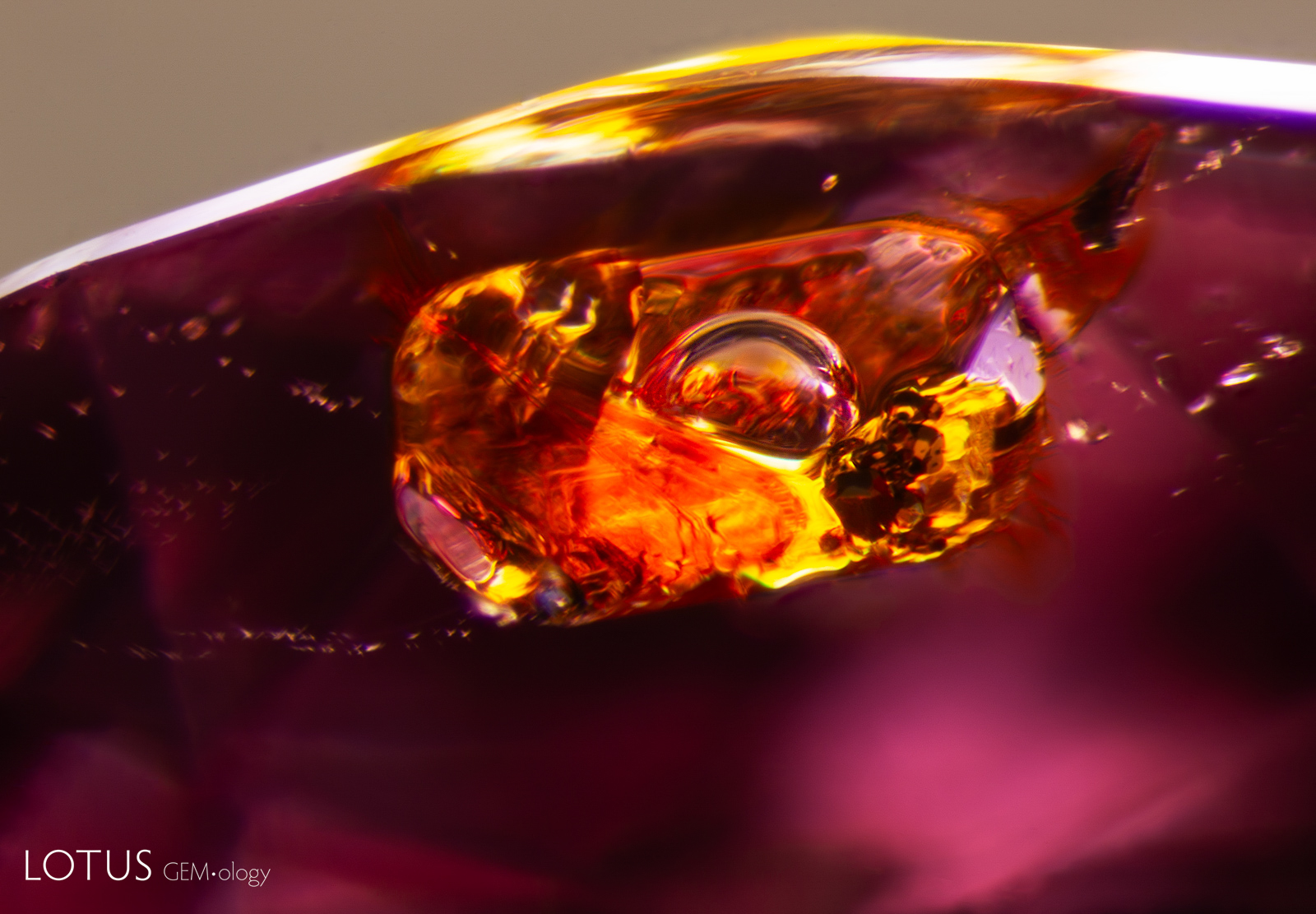
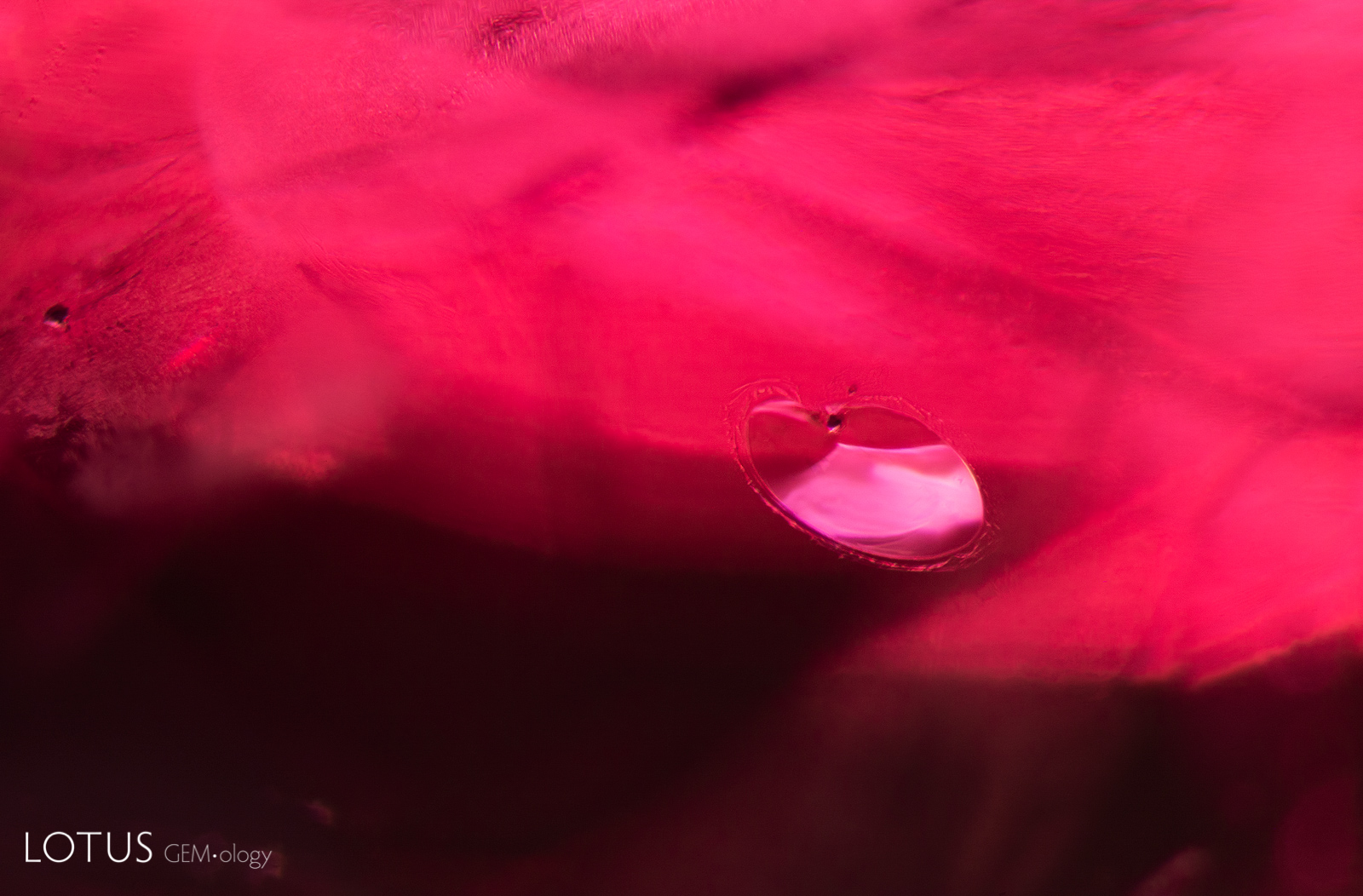
A small cavity containing a mobile bubble can be observed under magnification in this spinel. Raman spectroscopy confirmed that the yellow-orange areas are sulfur-rich fluids. Sample courtesy Rosway.
Natural Spinel •
Myanmar (Burma); Mogok/Namya •
Enhancements:
None Detected (None) •
Lighting Conditions:
Diffuse Light Field + Fiber Optic
Photographer:
E. Billie Hughes •
Image Number:
A-006-0671-1
• Field of View = 1.8mm
Hughes, E.B., Koivula, J.I., Manorotkul, W., Renfro, N. and Hughes, R.W. (2019) Spinel inclusions: An exercise in aesthetics. InColor, No. 43, pp. 48–55; RWHL*.
Vertriest, W. and Raynaud, V. (2017) Complex yellow fluid inclusions in red Burmese spinel. Gems & Gemology, Vol. 53, No. 4, Winter, p. 468; RWHL*.
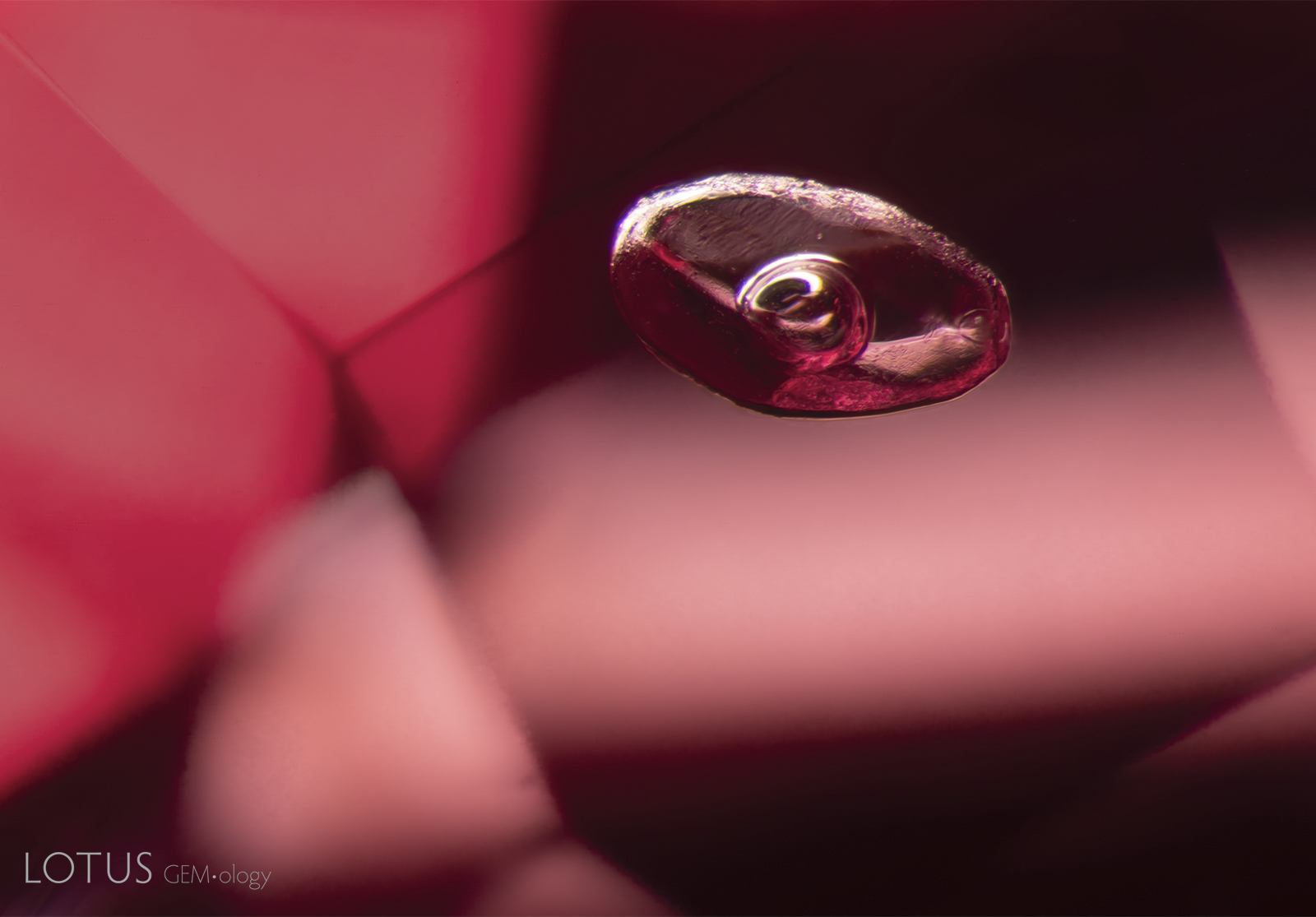
A large negative crystal with a mobile gas bubble resides in this unheated Burmese spinel. Analyses with microRaman spectroscopy were inconclusive. However, a near-invisible fissure extends through this negative crystal to the surface. By using a hot point, oil leaked out of this fissure and others around the stone. Therefore, the cavity may be filled with oil.
Natural Spinel •
Myanmar (Burma); Mogok/Namya •
Enhancements:
Fissure Filling with colorless Oil/resin (FF-O3); No indications of heating (No indications of heating) •
Lighting Conditions:
Dark Field + Oblique Fiber Optic
Photographer:
Kaylan Khourie •
Image Number:
A-005-9145-1
• Field of View = 2.7mm
• Magnification = 6.5x
Hughes, R.W. (2020) Oiled spinel & tanzanite — shocking revelations.
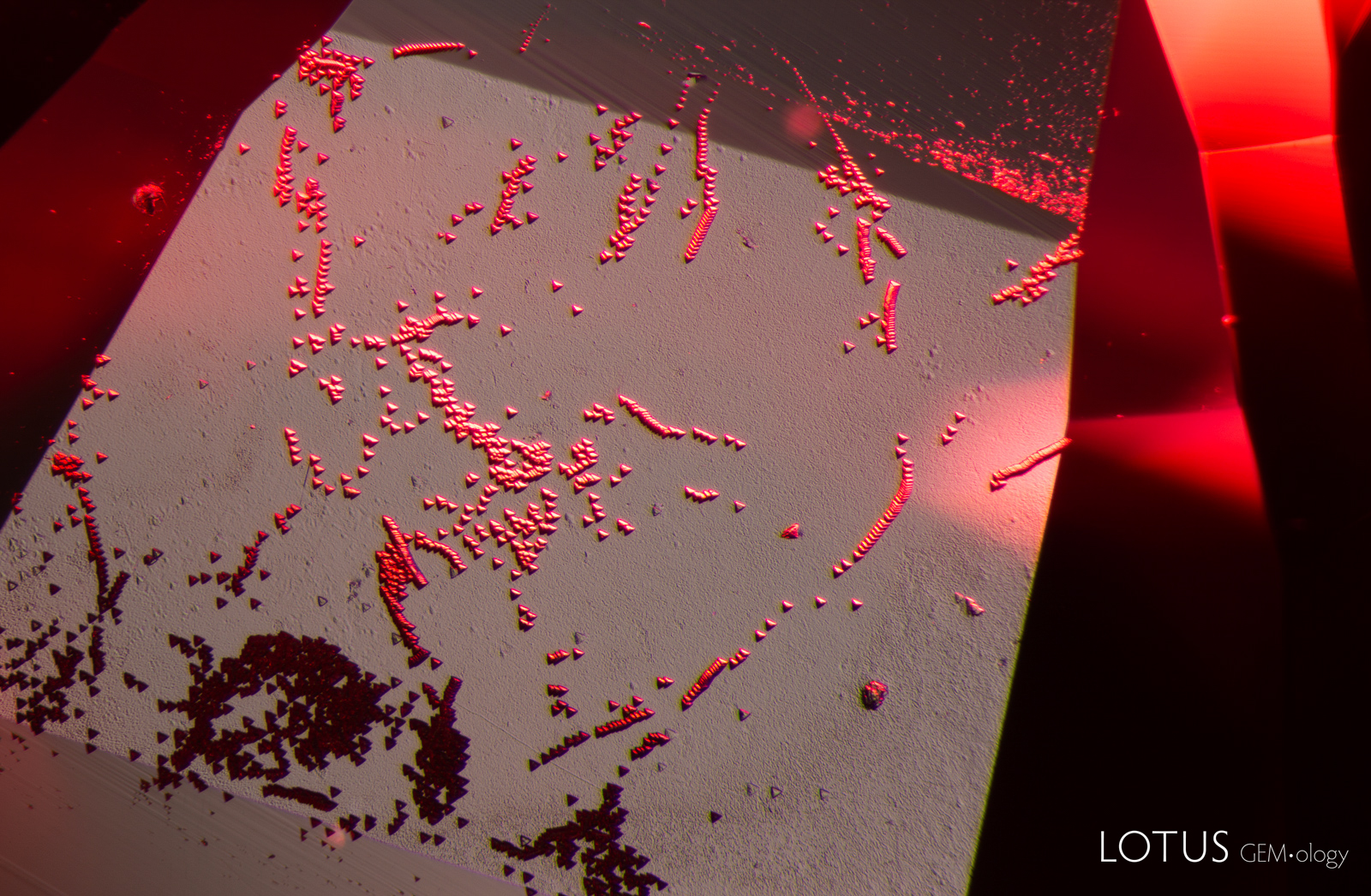
A smattering of tiny triangular growth markings covers the pavilion facets of this spinel. Usually these would be removed with cutting and polishing, but in this case they were left on the stone, a reminder of the stone’s natural origin.
Natural Spinel •
Myanmar (Burma); Mogok/Namya •
Enhancements:
None Detected (None) •
Lighting Conditions:
Dark Field + Diffuse Fiber Optic
Photographer:
E. Billie Hughes •
Image Number:
A-005-6485-1
• Field of View = 3.6mm
Hughes, E.B., Koivula, J.I., Manorotkul, W., Renfro, N. and Hughes, R.W. (2019) Spinel inclusions: An exercise in aesthetics. InColor, No. 43, pp. 48–55; RWHL*.
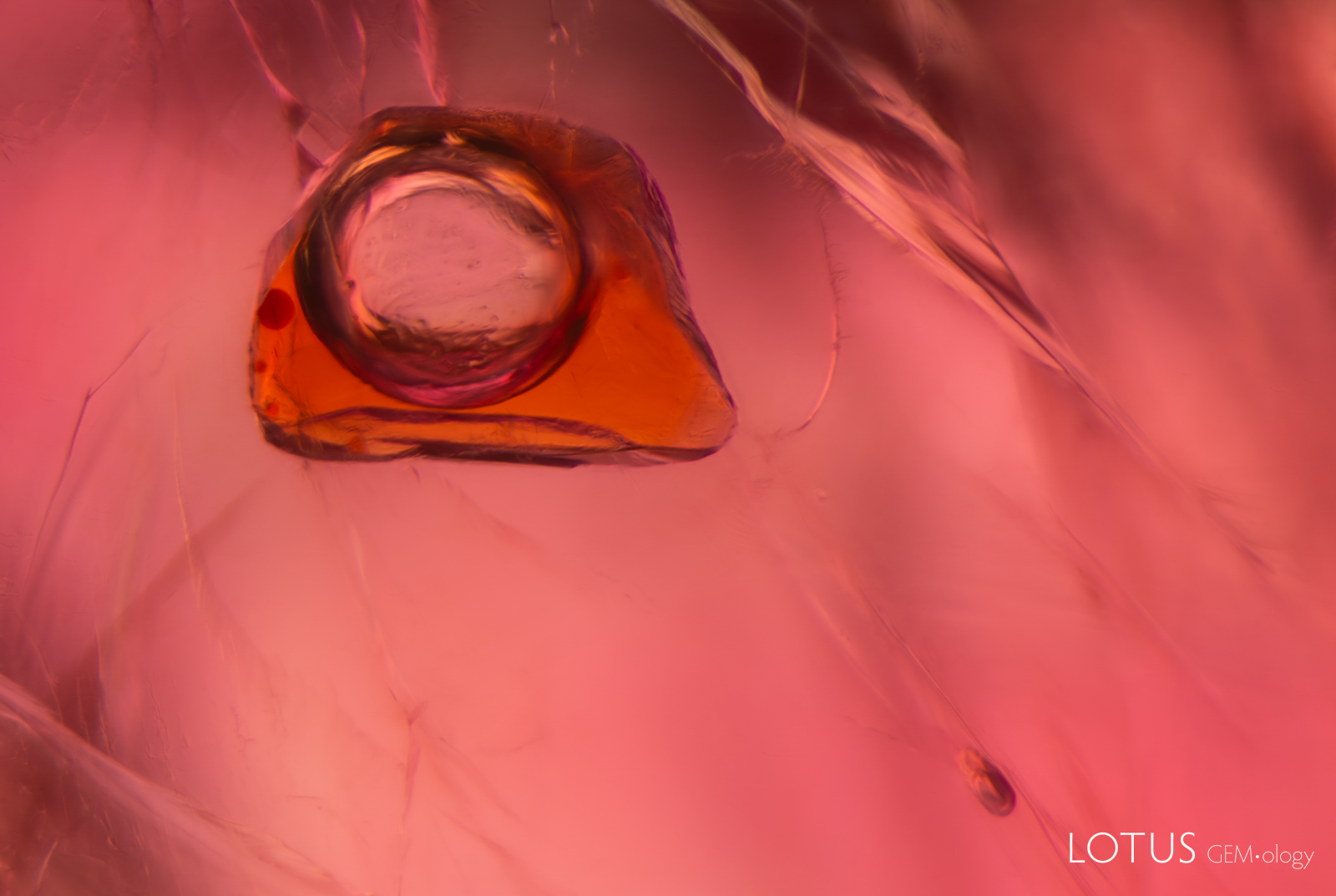
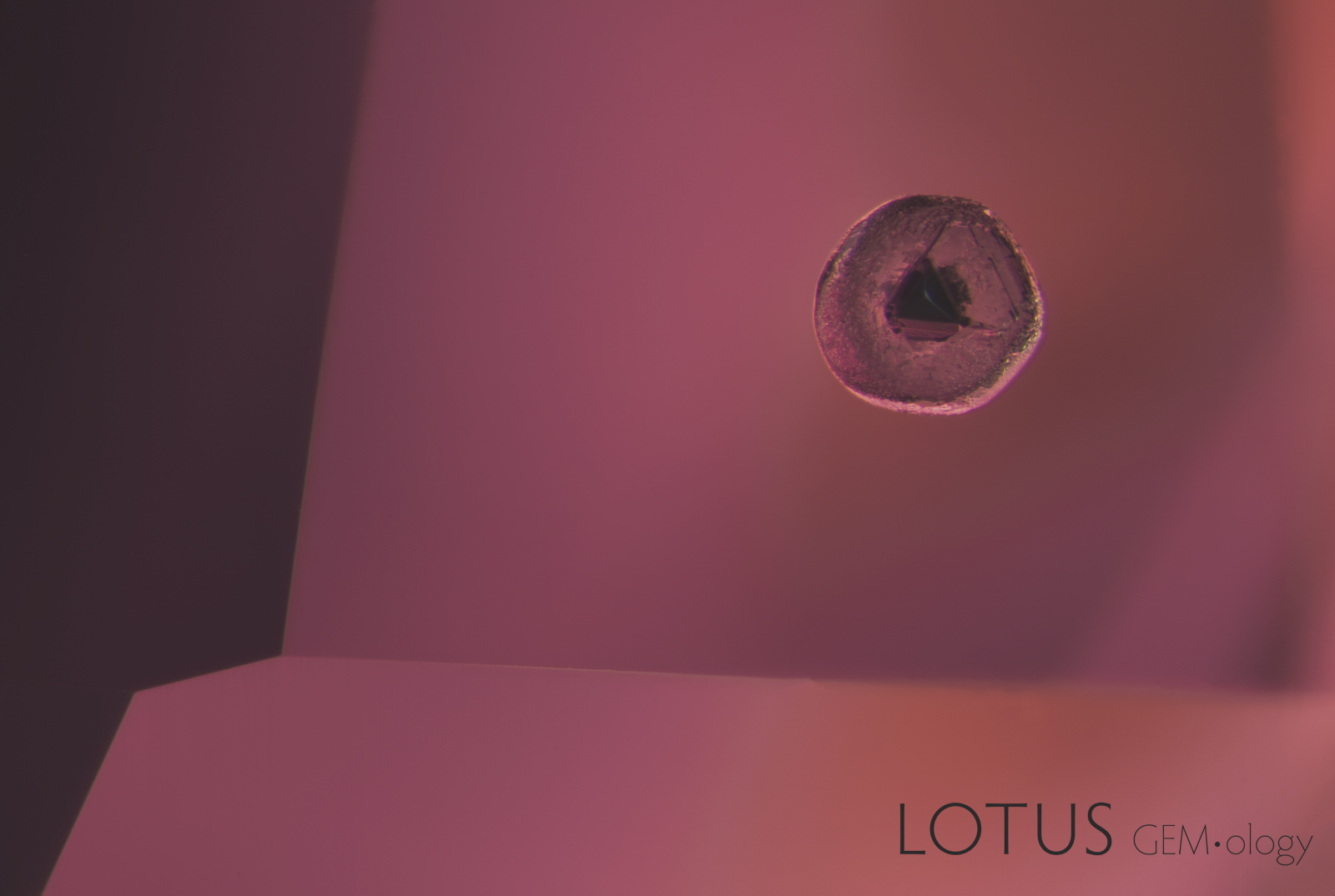
This negative crystal is filled with a yellowish orange liquid and contains a gas bubble at its center. These fluid inclusions, likely sulfur-rich liquids, are typically observed in Burmese spinels.
Natural Spinel •
Myanmar (Burma); Mogok/Namya •
Enhancements:
None Detected (None) •
Lighting Conditions:
Diffuse Light Field (Transmitted Light)
Photographer:
Pimmada Rojtanat •
Image Number:
R-005-4726-3
• Field of View = 2.6mm
Hughes, E.B., Koivula, J.I., Manorotkul, W., Renfro, N. and Hughes, R.W. (2019) Spinel inclusions: An exercise in aesthetics. InColor, No. 43, pp. 48–55; RWHL*.
Vertriest, W. and Raynaud, V. (2017) Complex yellow fluid inclusions in red Burmese spinel. Gems & Gemology, Vol. 53, No. 4, Winter, p. 468; RWHL*.
Peretti, A., Mullis, J., Franz, L., de Capitani, C., Mathys, D., and Günther, D. (2017) Spinel formation by sulfur-rich saline brines from Mansin (Mogok area, Myanmar). 15th Swiss Geoscience Meeting, Davis, Switzerland.
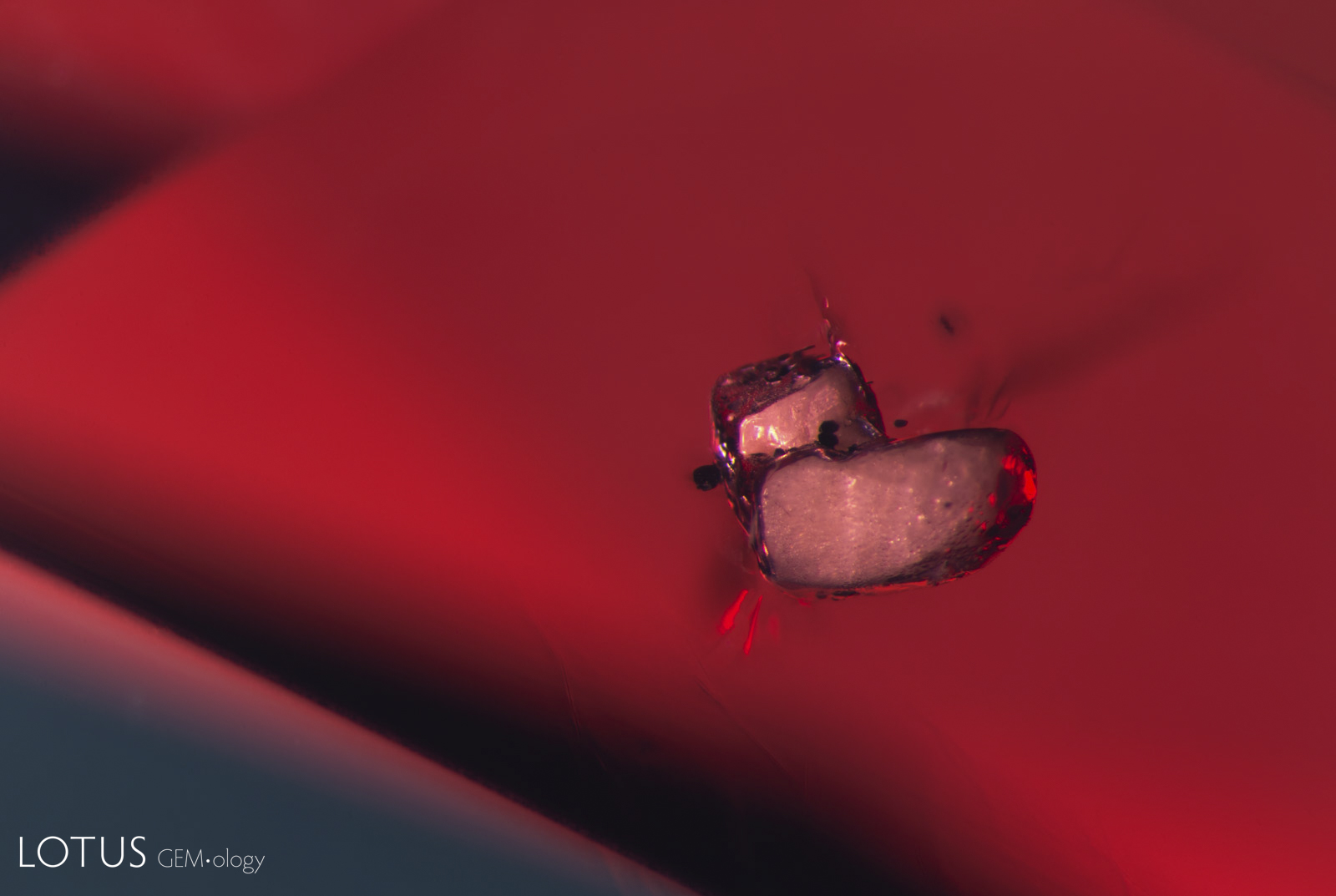
Amazing apatite. Apatite crystals (like this one, which was identified with micro Raman, are common guests in spinels.
Natural Spinel •
Myanmar (Burma); Mogok/Namya •
Enhancements:
None Detected (None) •
Lighting Conditions:
Dark Field + Diffuse Fiber Optic
Photographer:
E. Billie Hughes •
Image Number:
A-004-9890-1
• Field of View = 4.7mm
Gübelin, E.J. and Koivula, J.I. (2005) Photoatlas of Inclusions in Gemstones, Volume 2. Basel, Switzerland, Opinio Publishers, 830 pp.; RWHL*.
Hughes, E.B., Koivula, J.I., Manorotkul, W., Renfro, N. and Hughes, R.W. (2019) Spinel inclusions: An exercise in aesthetics. InColor, No. 43, pp. 48–55; RWHL*.
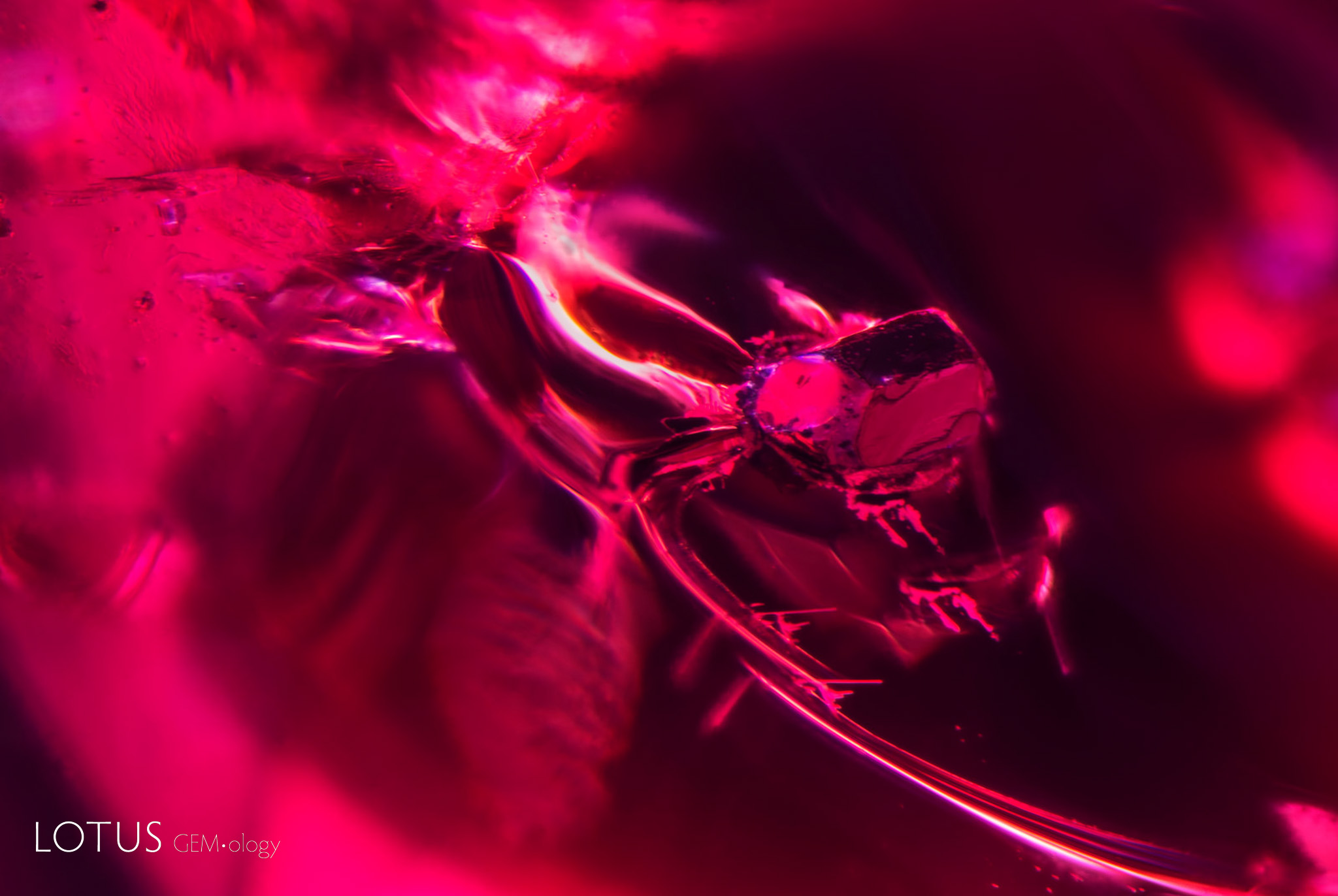
Apatite crystal with an embedded graphite platelet. Gemologists often refer to this apatite/graphite combination as a “belly button” apatite. These are common in spinels from Burma.
Natural Spinel •
Myanmar (Burma); Mogok/Namya •
Enhancements:
None Detected (None) •
Lighting Conditions:
Dark Field + Diffused Light
Photographer:
Kaylan Khourie •
Image Number:
A-004-8668-1
• Field of View = 4.5mm
Gübelin, E.J. (1973) Internal World of Gemstones. Zürich: ABC Verlag, reprinted 1983, 234 pp.
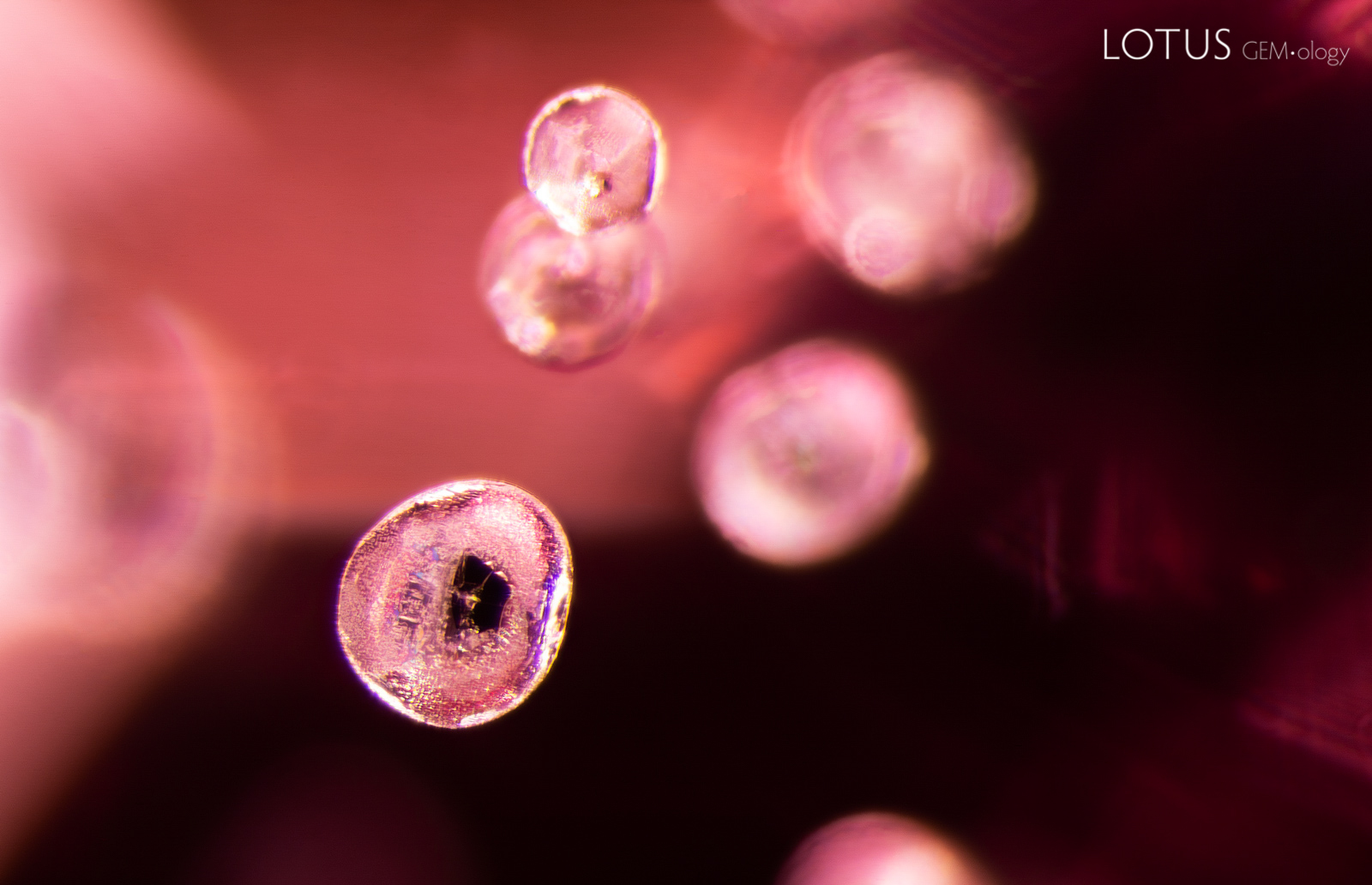
Numerous rounded crystals were suspended in this spinel. Analysis with micro Raman determined that they are apatite crystals with a black graphite platelet in the center.
Natural Spinel •
Myanmar (Burma); Mogok/Namya •
Enhancements:
None Detected (None) •
Lighting Conditions:
Dark Field + Oblique Fiber Optic
Photographer:
E. Billie Hughes •
Image Number:
A-004-4762-2
• Field of View = 2.5mm
Gübelin, E.J. and Koivula, J.I. (2005) Photoatlas of Inclusions in Gemstones, Volume 2. Basel, Switzerland, Opinio Publishers, 830 pp.; RWHL*.
Hughes, E.B., Koivula, J.I., Manorotkul, W., Renfro, N. and Hughes, R.W. (2019) Spinel inclusions: An exercise in aesthetics. InColor, No. 43, pp. 48–55; RWHL*.
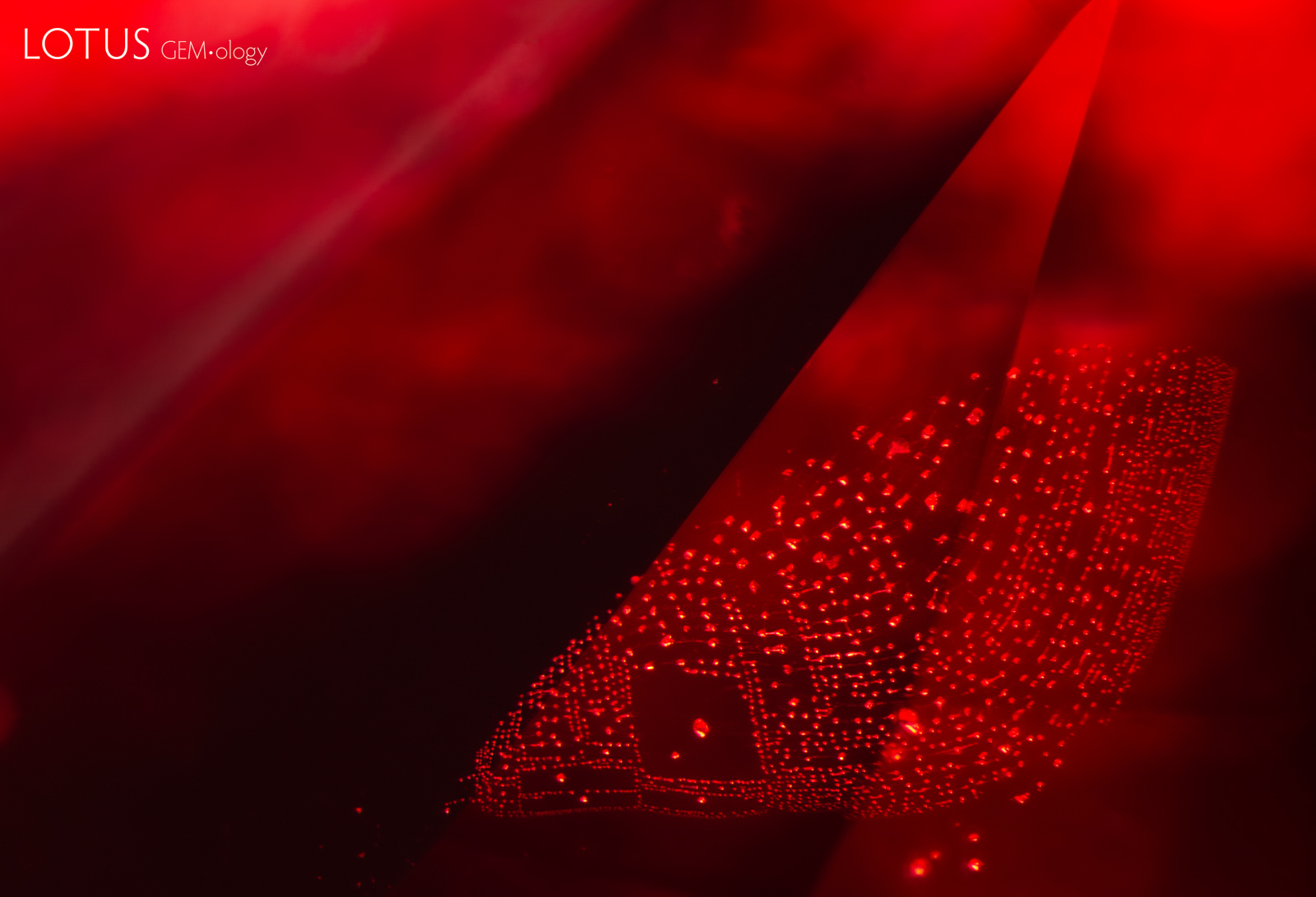
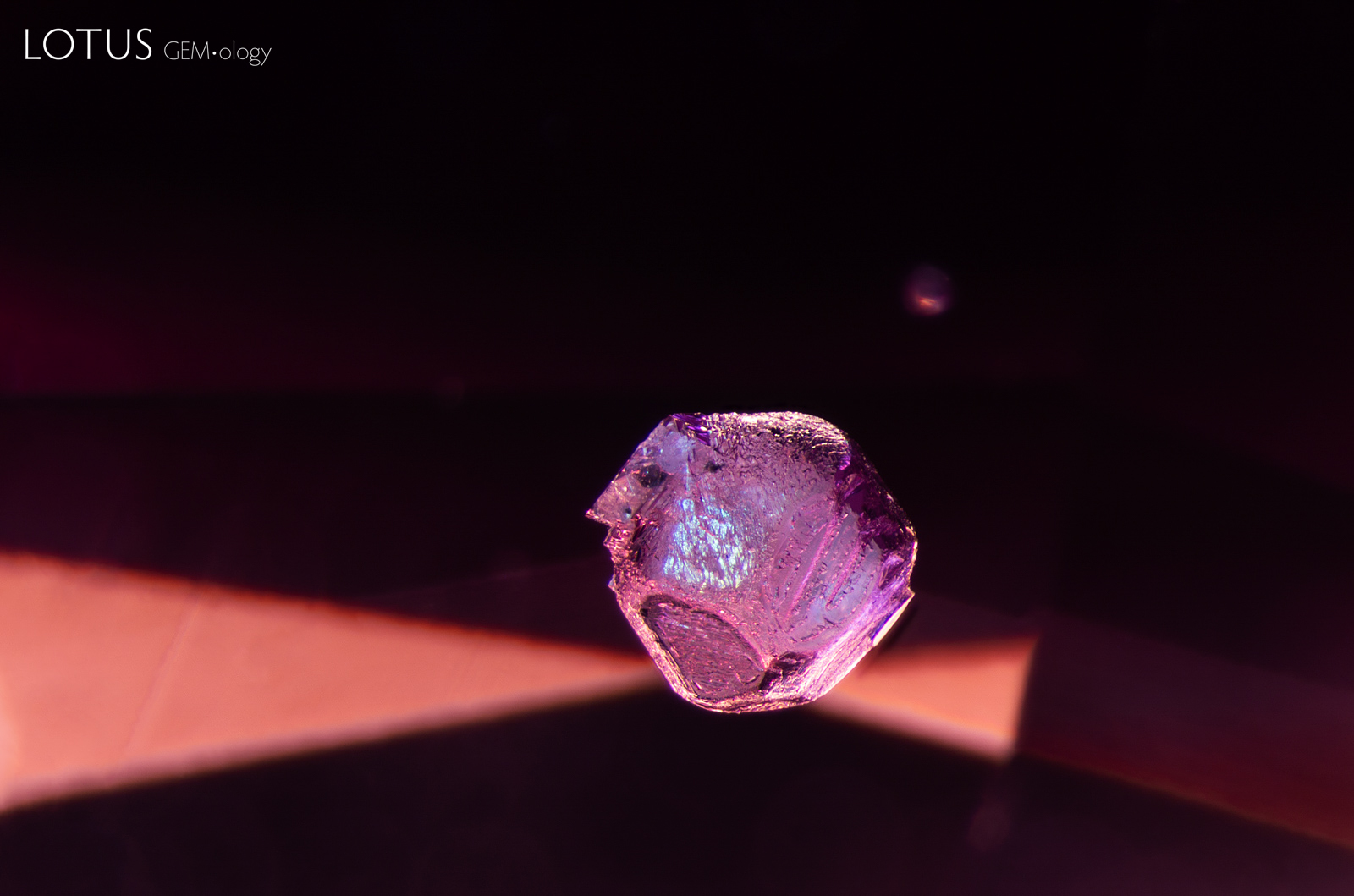
The bright, glassy discoid depicted here provides evidence that its spinel host was heated. Raman spectroscopy confirmed this suspicion.
Natural Spinel •
Myanmar (Burma); Mogok/Namya •
Enhancements:
Heat (H) •
Lighting Conditions:
Dark Field
Photographer:
E. Billie Hughes •
Image Number:
A-004-0696-1
• Field of View = 3mm
Hughes, E.B., Koivula, J.I., Manorotkul, W., Renfro, N. and Hughes, R.W. (2019) Spinel inclusions: An exercise in aesthetics. InColor, No. 43, pp. 48–55; RWHL*.
Gübelin, E.J. and Koivula, J.I. (2005) Photoatlas of Inclusions in Gemstones, Volume 2. Basel, Switzerland, Opinio Publishers, 830 pp.; RWHL*.
67 Total Images
Results: 1 – 12 | Page 1 of 6 Pages
Search the Complete Hyperion Database
Burmese spinel inclusions may include mineral crystals, healed fissures, fluid inclusions, negative crystals, growth features and other internal features formed during or after crystal growth. Such features are important to gemologists because they can provide evidence useful in identifying spinel and evaluating a possible Burmese origin.
Burmese Spinel Inclusion Photomicrographs
The Hyperion Burmese spinel gallery includes microscopic features documented in spinels from Myanmar (Burma). Each entry is accompanied by descriptive information and, where available, references to the gemological literature.
What Inclusions Can Reveal About Burmese Spinel
Inclusions are an important part of geographic origin determination in spinel. Their form, composition and associations can provide evidence that, when considered together with other gemological properties, may support or contradict a Burmese origin.
Hyperion combines inclusion photomicrography with supporting gemological information so that individual features can be compared with documented examples from Burmese spinels.
About Hyperion
Hyperion is the Lotus Gemology searchable inclusion database. It allows users to browse gemstone inclusions by gem type, geographic origin, treatment and keyword.