Heated Sapphire Inclusions
Explore inclusions in heat-treated sapphire in Hyperion, the Lotus Gemology inclusion database. Hyperion contains photomicrographs of inclusions and internal features in natural sapphires that have been subjected to heat treatment, documented with information on geographic origin, lighting conditions, field of view, photographer and published references.
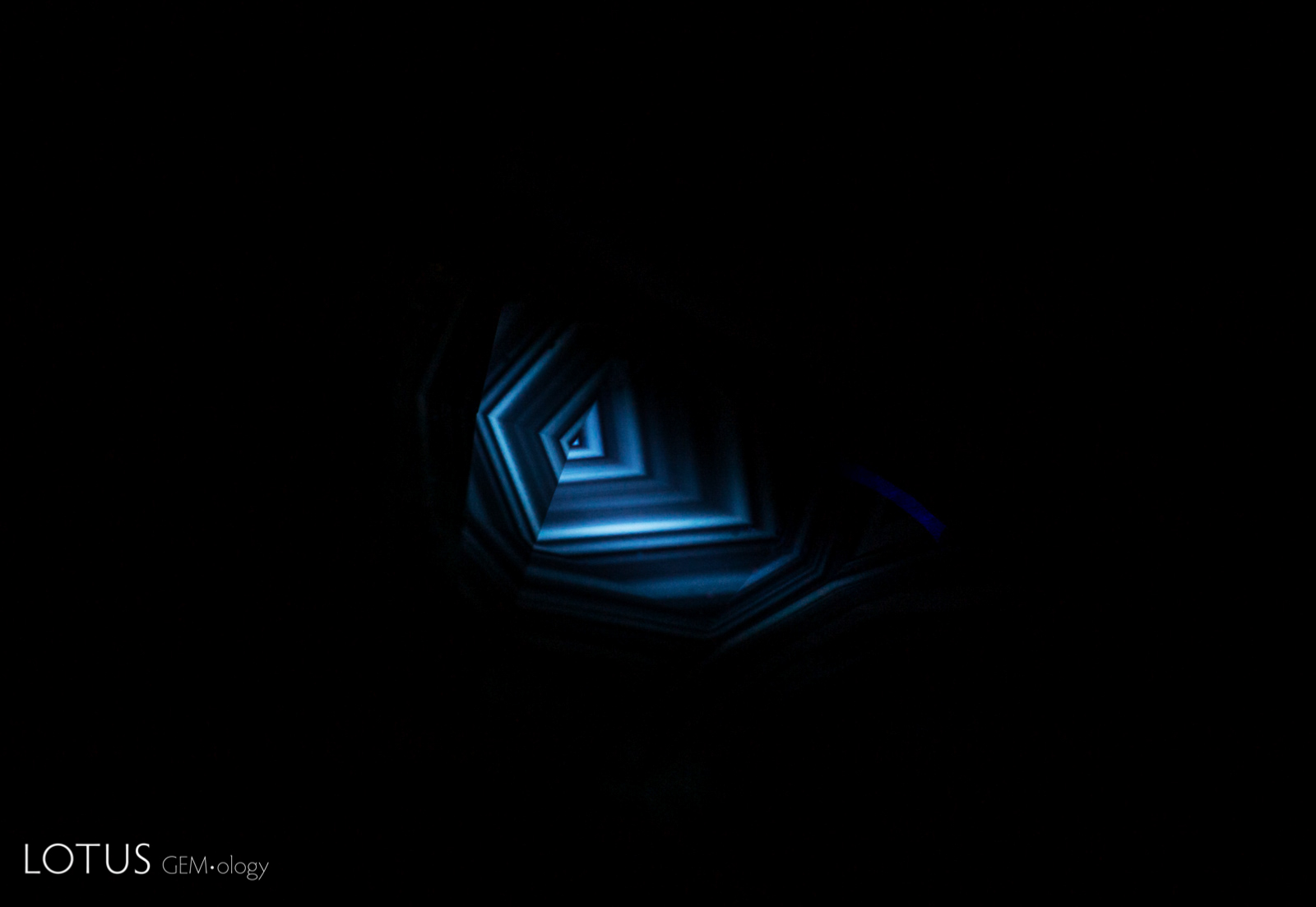
The angular chalky reaction, observable with short wave illumination, provides clear evidence that this blue sapphire was heated.
Natural Sapphire •
Not Determinable •
Enhancements:
Heat (H) •
Lighting Conditions:
Ultraviolet: Shortwave
Photographer:
E. Billie Hughes •
Image Number:
A-003-7648-4
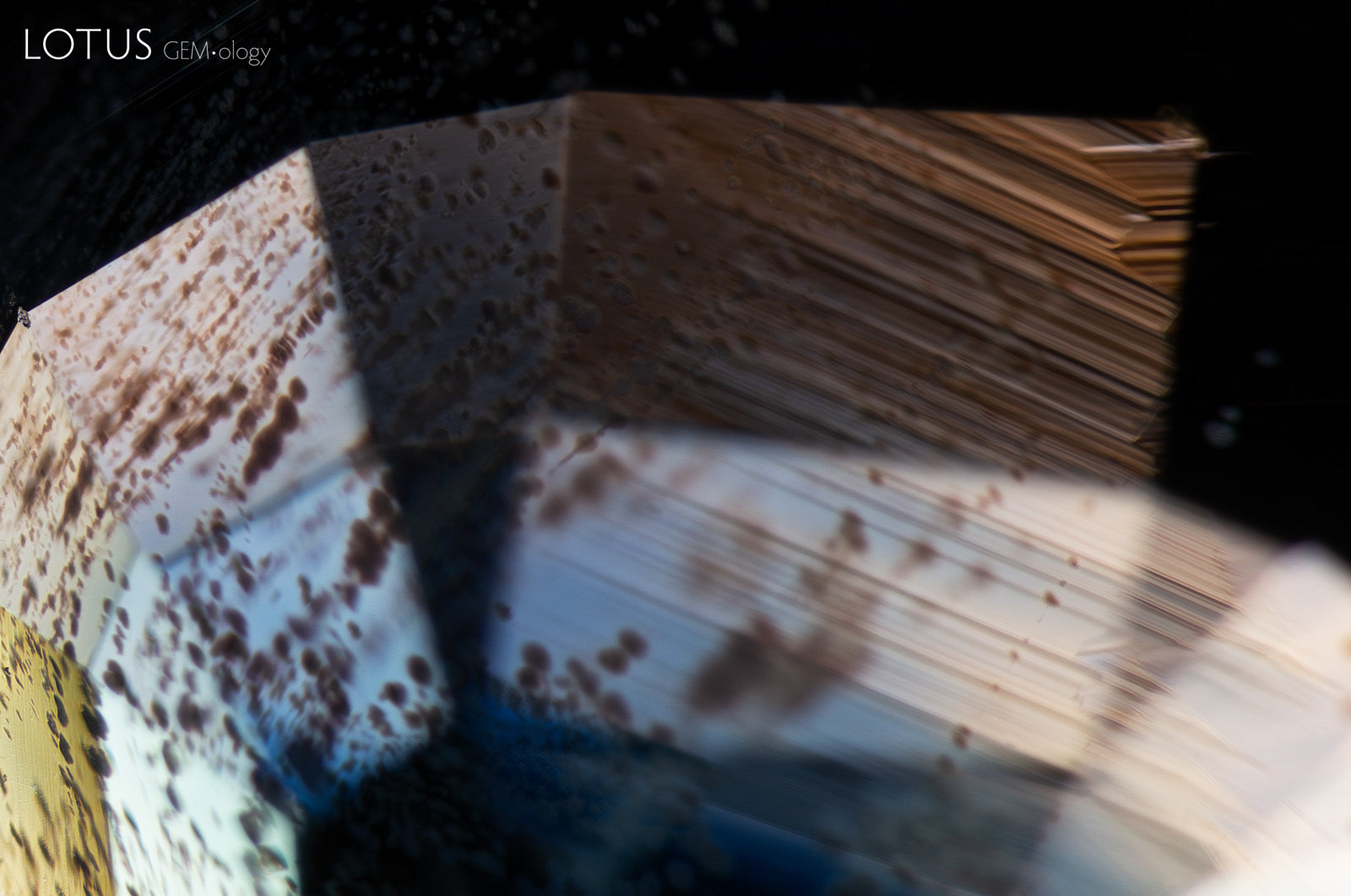
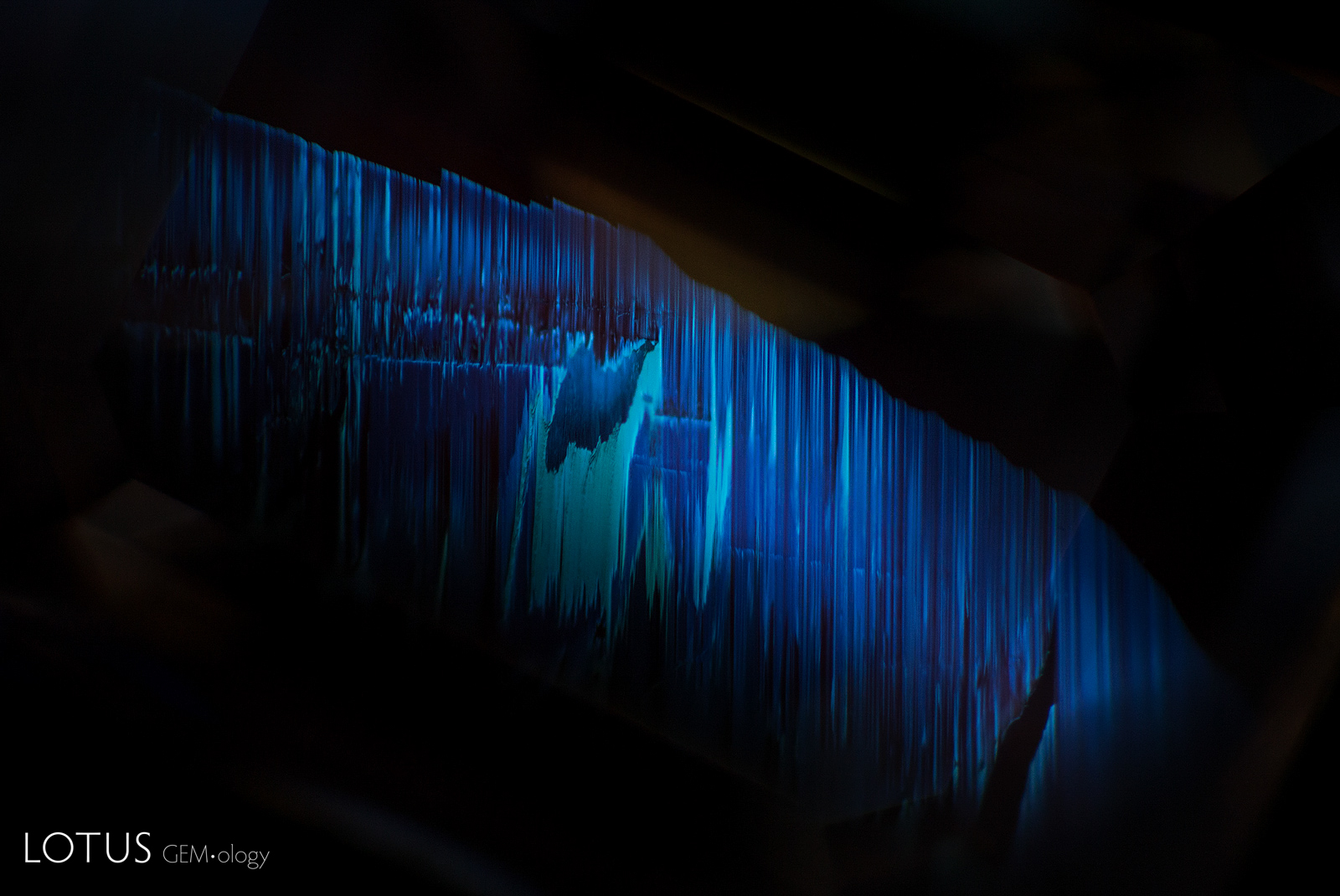
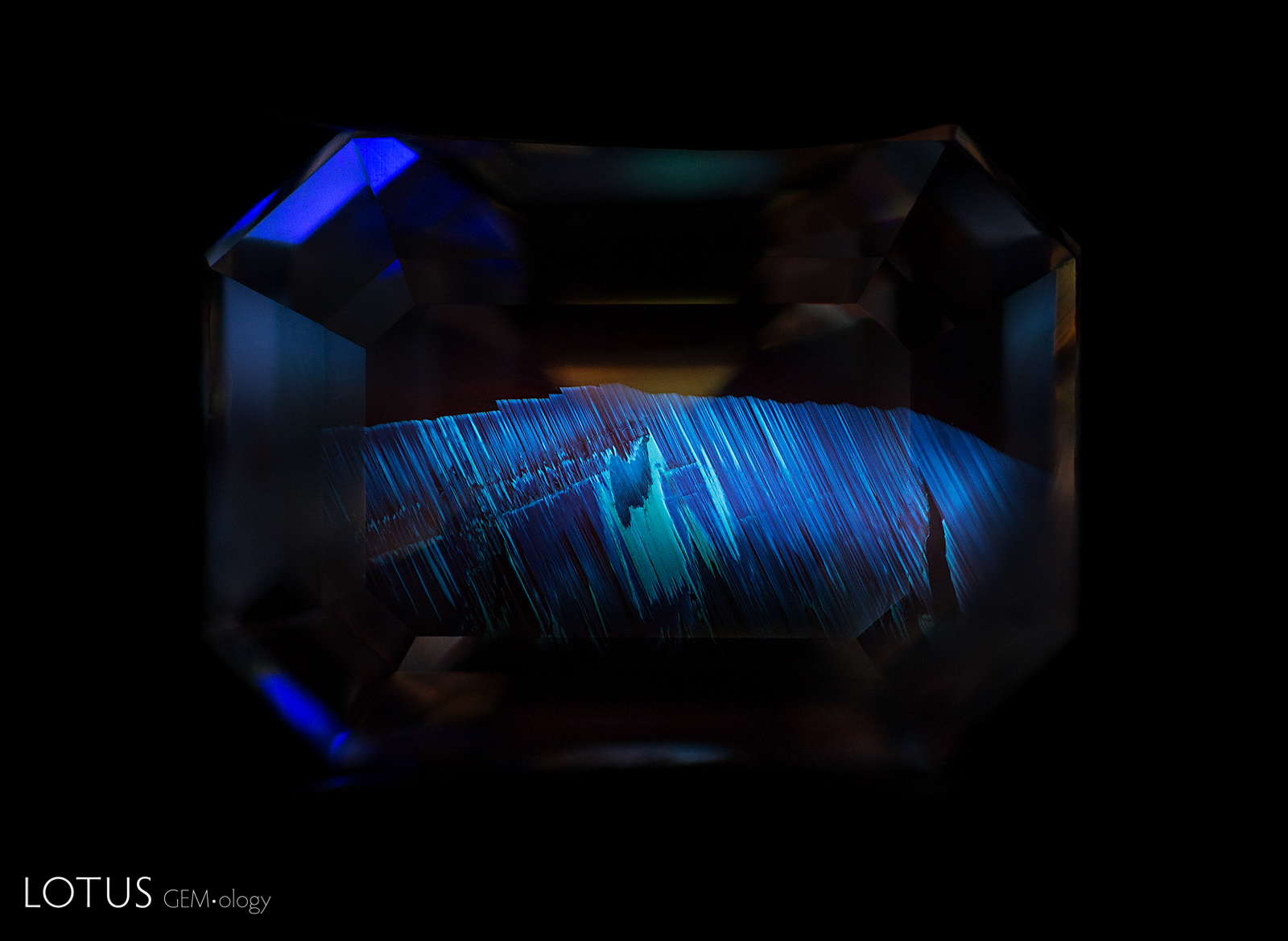
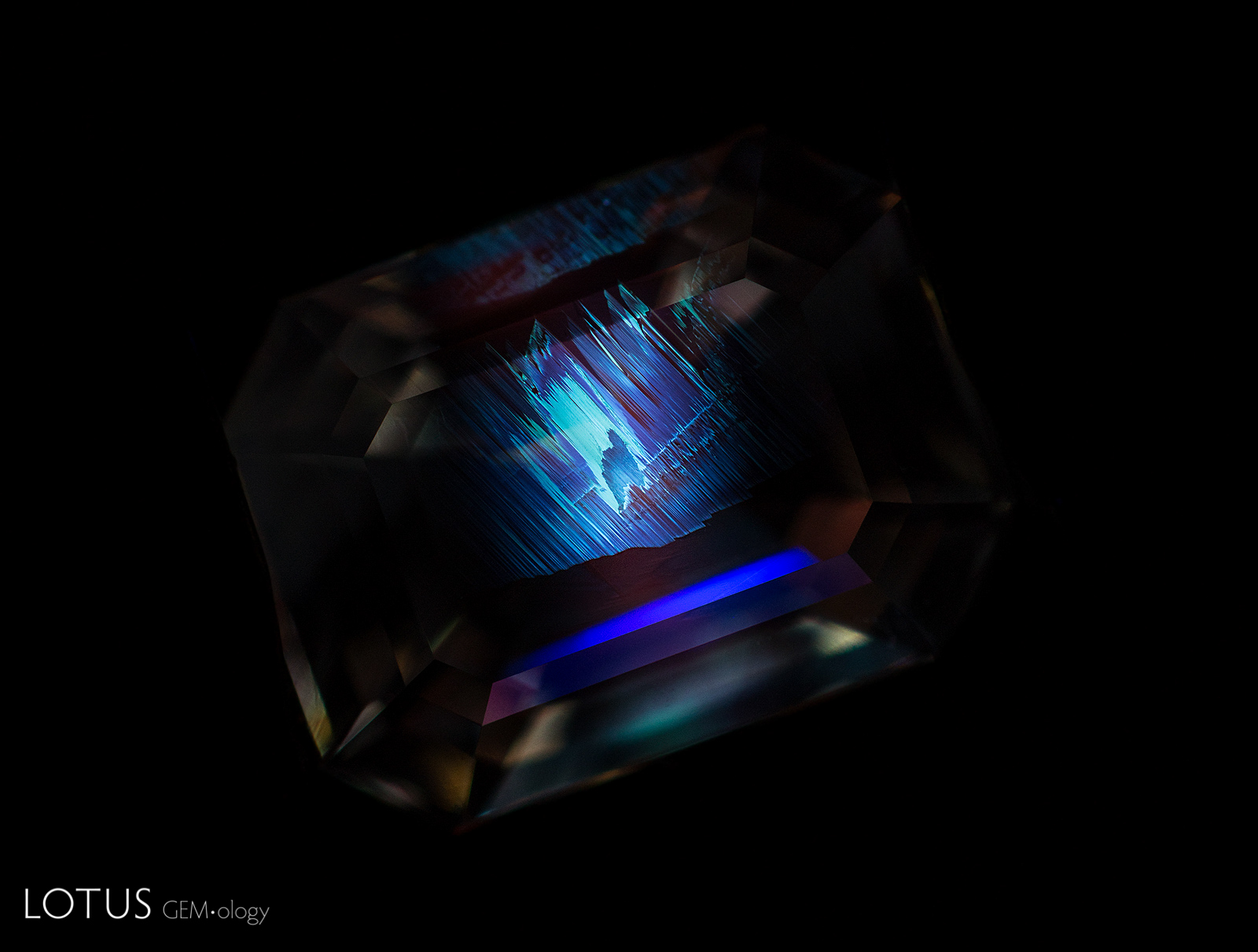
Sharp angular growth zoning and a series of thin-film decrepitation halos, which look brown in this lighting condition, stand out in this blue sapphire.
Natural Sapphire •
Not Determinable •
Enhancements:
Heat (H) •
Lighting Conditions:
Dark Field
Photographer:
E. Billie Hughes •
Image Number:
A-003-7648-3
• Field of View = 6.5mm
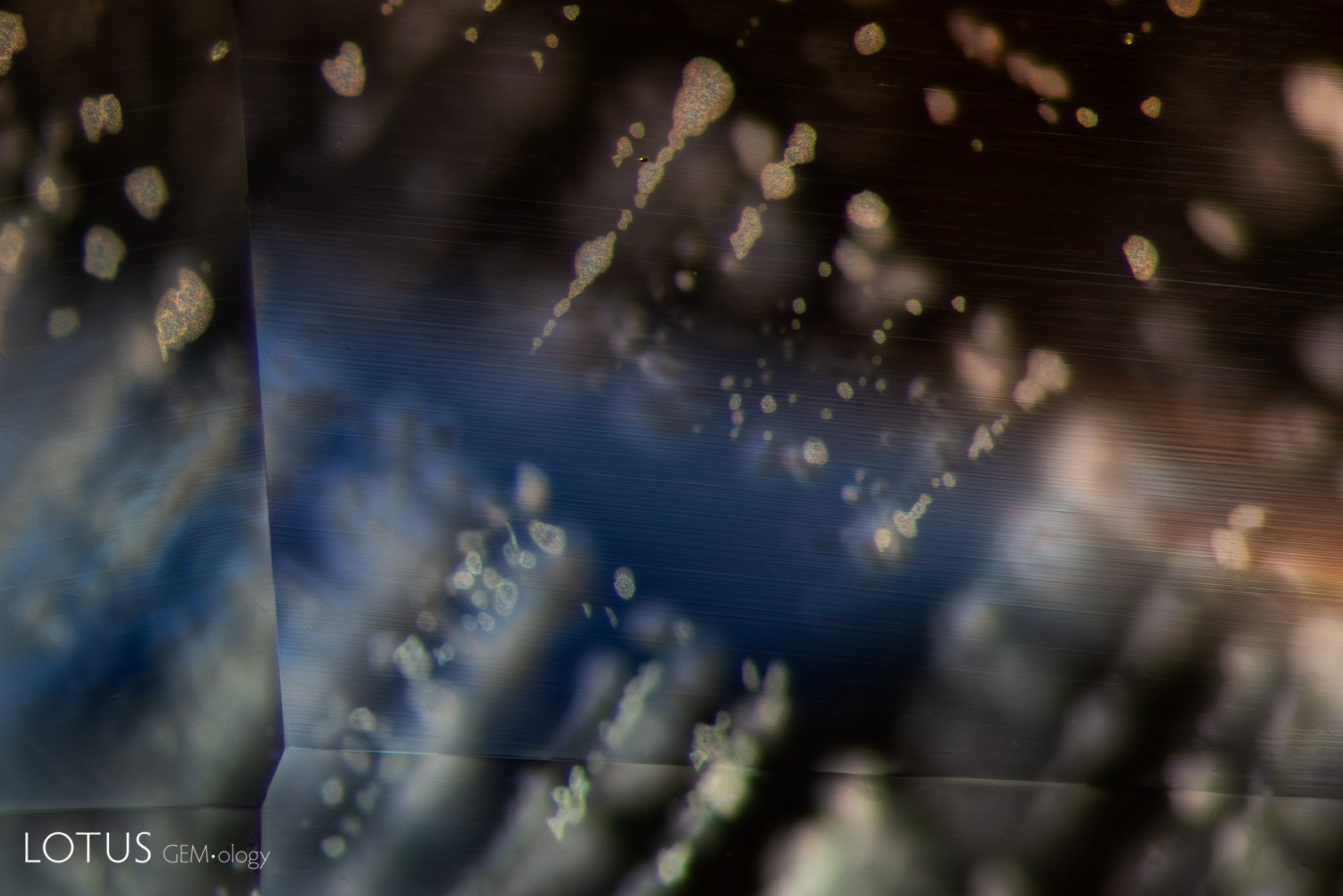
A series of thin-film decrepitation halos decorates the interior of this blue sapphire.
Natural Sapphire •
Not Determinable •
Enhancements:
Heat (H) •
Lighting Conditions:
Dark Field
Photographer:
E. Billie Hughes •
Image Number:
A-003-7648-2
• Field of View = 3mm
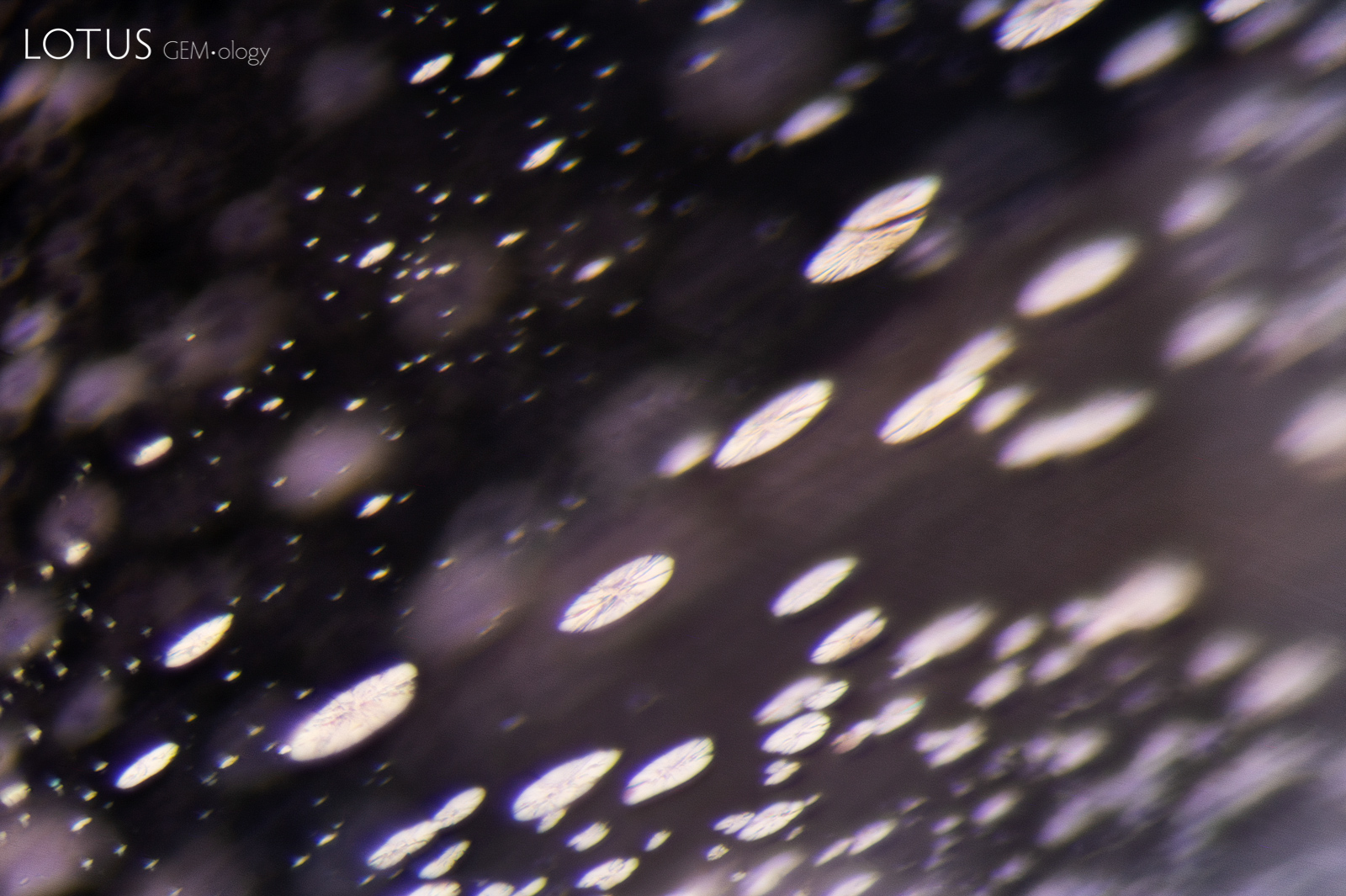
A series of thin-film decrepitation halos decorates the interior of this blue sapphire. We can see that light reflects off them at the same angle.
Natural Sapphire •
Not Determinable •
Enhancements:
Heat (H) •
Lighting Conditions:
Dark Field
Photographer:
E. Billie Hughes •
Image Number:
A-003-7648-1
• Field of View = 2mm
Florida, 2100.
Natural Sapphire •
Basalt Related •
Enhancements:
Heat (H) •
Lighting Conditions:
Fiber Optic: Diffuse Overhead
Photographer:
Richard W. Hughes •
Image Number:
A-003-7264-2
• Field of View = 5mm
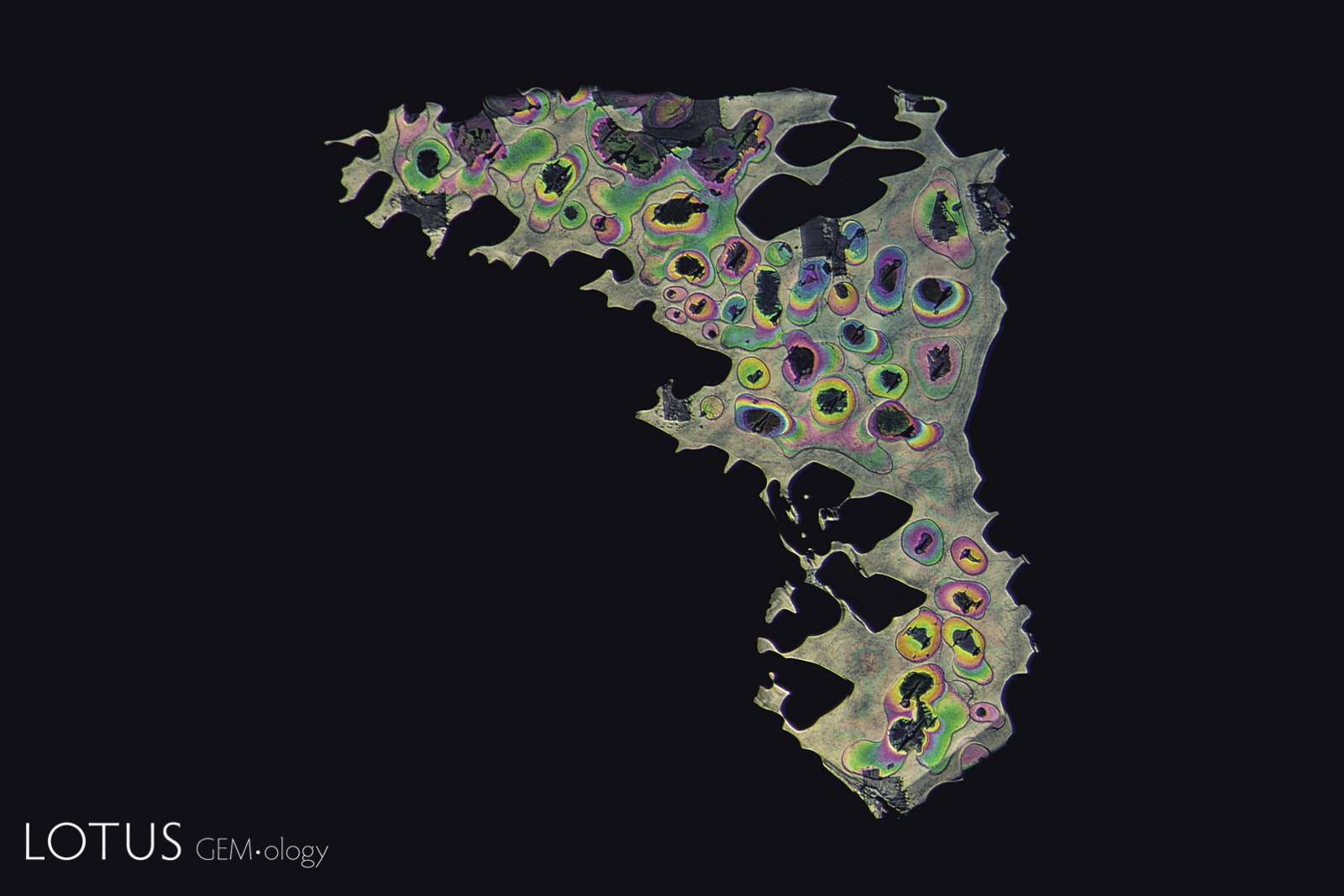
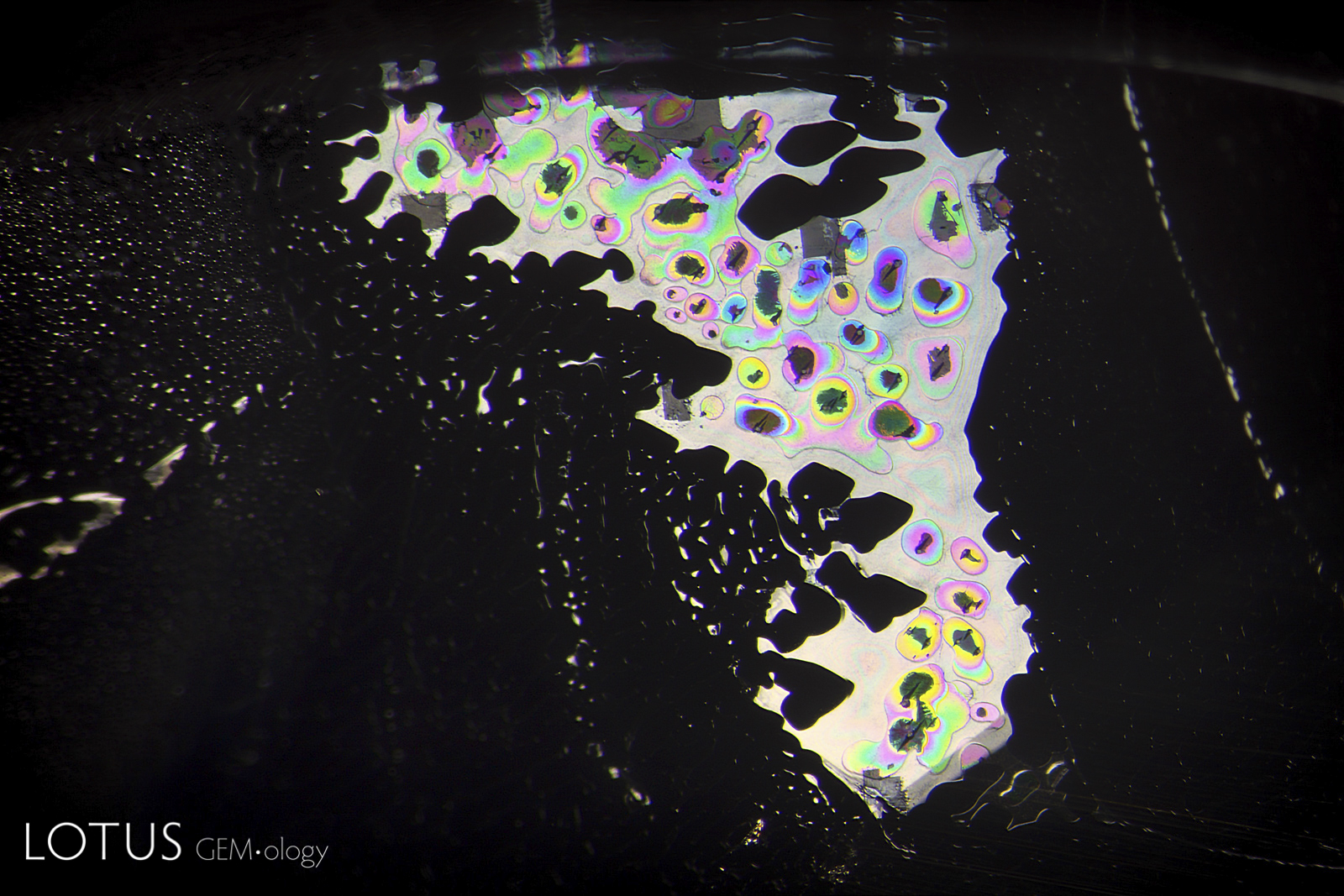
Photomicrography is no different than ordinary photography. It’s all about controlling light. In this case, a nondescript fluid inclusion in dark-field illumination morphed into a spectral spectacular when light was brought from above.
Natural Sapphire •
Basalt Related •
Enhancements:
Heat (H) •
Lighting Conditions:
Fiber Optic: Diffuse Overhead
Photographer:
Richard W. Hughes •
Image Number:
A-003-7264-1
• Field of View = 5mm
Koivula, J.I. (1982) Inclusions in a better light. Gemological Institute of America, Eash, D.M., ed., In International Gemological Symposium Proceedings, Santa Monica, CA, pp. 471–476; RWHL*.
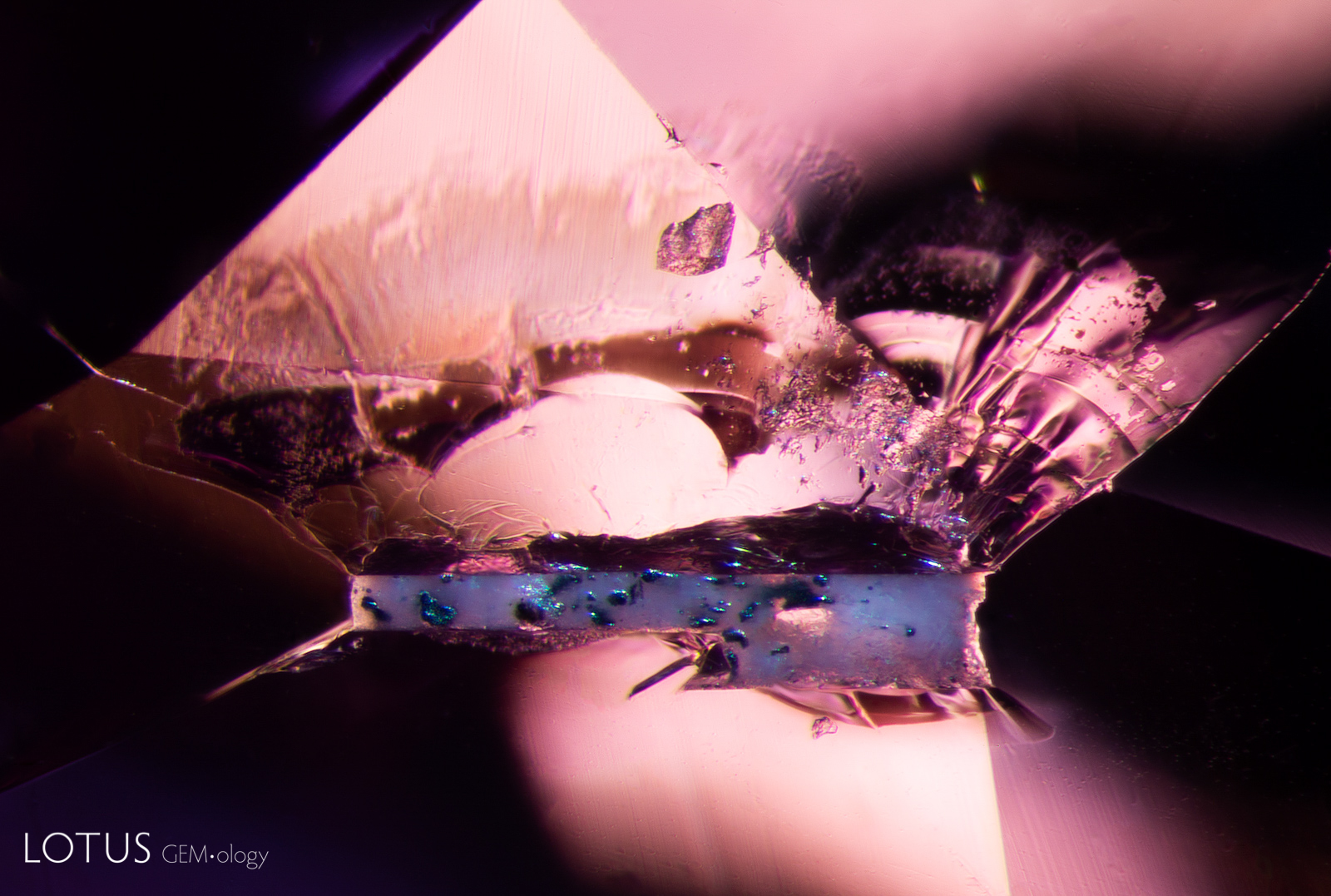
When examining this pink sapphire from Madagascar we spotted this interesting white crystal cut through on the surface. Micro Raman spectroscopy identified the crystal as andalusite.
Natural Padparadscha Sapphire •
Madagascar •
Enhancements:
Heat (H) •
Lighting Conditions:
Dark Field + Oblique Fiber Optic
Photographer:
E. Billie Hughes •
Image Number:
A-003-6544-1
• Field of View = 2mm
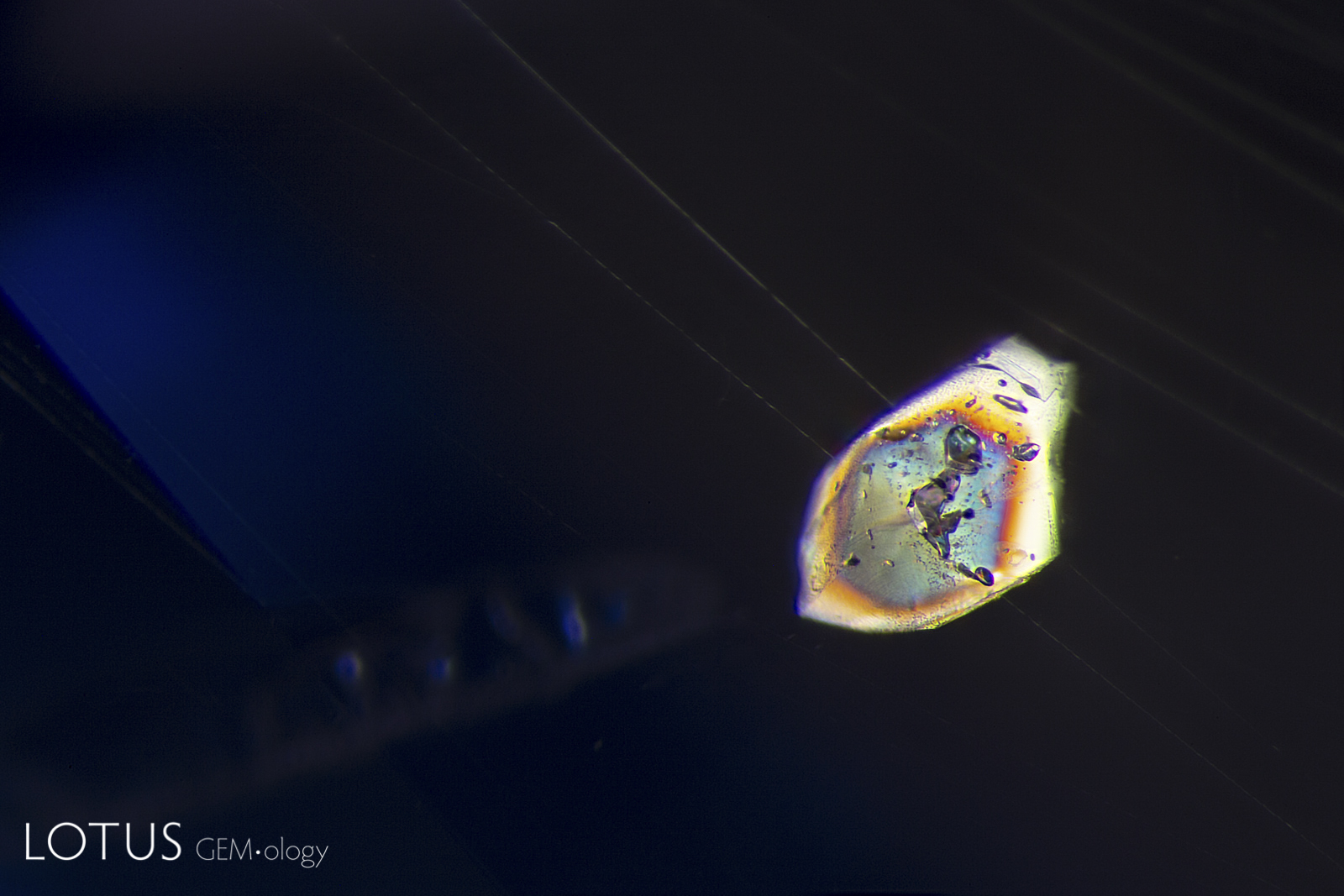
This heat-treated blue sapphire from Sri Lanka featured a corundum crystal included in the sapphire that was cut through on the surface. When viewed between crossed polars, the corundum crystal is brilliantly silhouetted against a dark background.
Natural Sapphire •
Sri Lanka (Ceylon) •
Enhancements:
Heat (H) •
Lighting Conditions:
Diffuse Light Field + Crossed Polars
Photographer:
Richard W. Hughes •
Image Number:
A-003-5747-2
• Field of View = 2mm
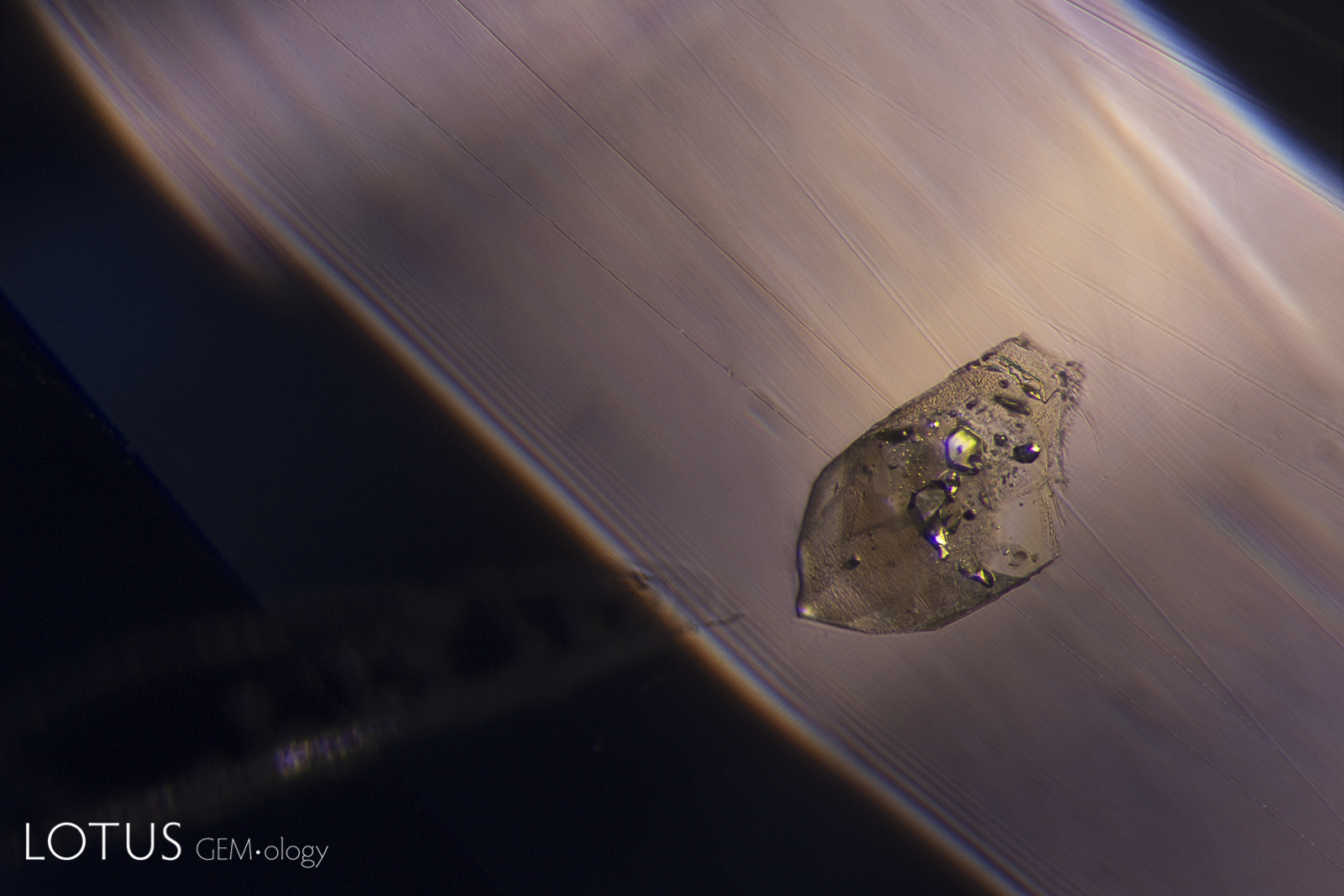
This heat-treated blue sapphire from Sri Lanka featured a corundum crystal included in the sapphire that was cut through on the surface.
Natural Sapphire •
Sri Lanka (Ceylon) •
Enhancements:
Heat (H) •
Lighting Conditions:
Light Field + Shadowing
Photographer:
Richard W. Hughes •
Image Number:
A-003-5747-1
• Field of View = 2mm
When viewed in shortwave UV illumination, chalky angular zoned clouds of particles become evident. This is a clear sign of heat treatment.
Natural Sapphire •
Sri Lanka (Ceylon) •
Enhancements:
Heat (H) •
Lighting Conditions:
Ultraviolet: Shortwave
Photographer:
E. Billie Hughes •
Image Number:
A-003-5760-3
When viewed in shortwave UV illumination, chalky angular zoned clouds of particles become evident. This is a clear sign of heat treatment.
Natural Sapphire •
Sri Lanka (Ceylon) •
Enhancements:
Heat (H) •
Lighting Conditions:
Ultraviolet: Shortwave
Photographer:
E. Billie Hughes •
Image Number:
A-003-5760-2
When viewed in shortwave UV illumination, chalky angular zoned clouds of particles become evident. This is a clear sign of heat treatment.
Natural Sapphire •
Sri Lanka (Ceylon) •
Enhancements:
Heat (H) •
Lighting Conditions:
Ultraviolet: Shortwave
Photographer:
E. Billie Hughes •
Image Number:
A-003-5760-1
Search the Complete Hyperion Database
Heat treatment can alter inclusions and other internal features in sapphire. Changes may include modification or dissolution of rutile silk, alteration of mineral crystals, decrepitation of fluid inclusions, changes to healed fissures and the formation of heat-related features. Such evidence can be important in determining whether a sapphire has been heated.
Heated Sapphire Inclusion Photomicrographs
The Hyperion heated sapphire gallery includes microscopic features documented in heat-treated natural sapphires. Each entry is accompanied by descriptive information and, where available, references to the gemological literature.
What Inclusions Can Reveal About Heat Treatment
Microscopic examination is an important part of detecting heat treatment in sapphire. The condition of mineral inclusions, rutile silk, fissures and other internal features can provide evidence of exposure to elevated temperatures. These features are evaluated together with other gemological observations when determining treatment status.
Hyperion combines inclusion photomicrography with supporting gemological information so that heat-related features can be compared with documented examples in treated sapphires.
About Hyperion
Hyperion is the Lotus Gemology searchable inclusion database. It allows users to browse gemstone inclusions by gem type, geographic origin, treatment and keyword.