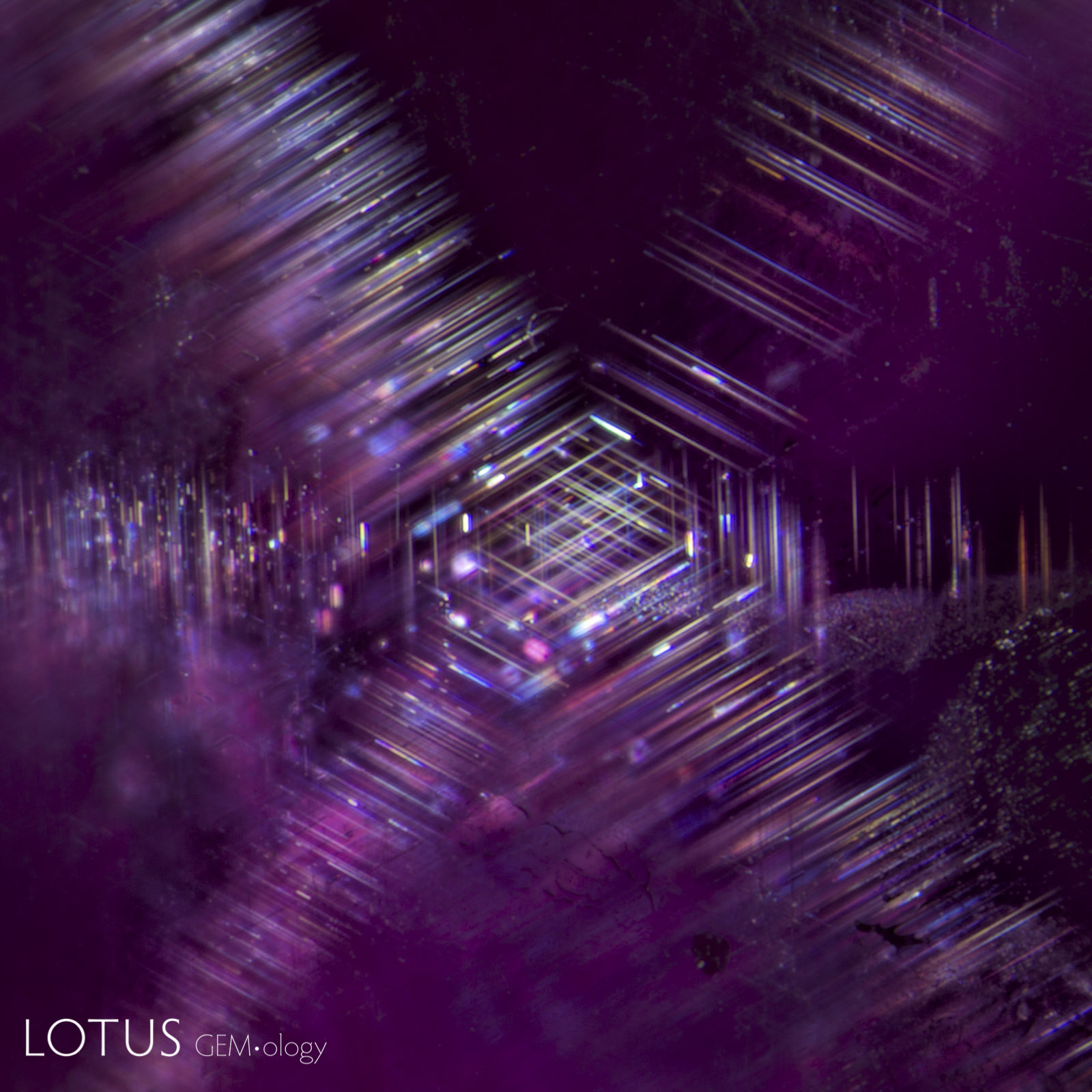
Star Ruby Inclusions
Explore star ruby inclusions in Hyperion, the Lotus Gemology inclusion database. Hyperion contains photomicrographs of inclusions and internal features in natural star rubies, documented with information on geographic origin, treatment, lighting conditions, field of view, photographer and published references.
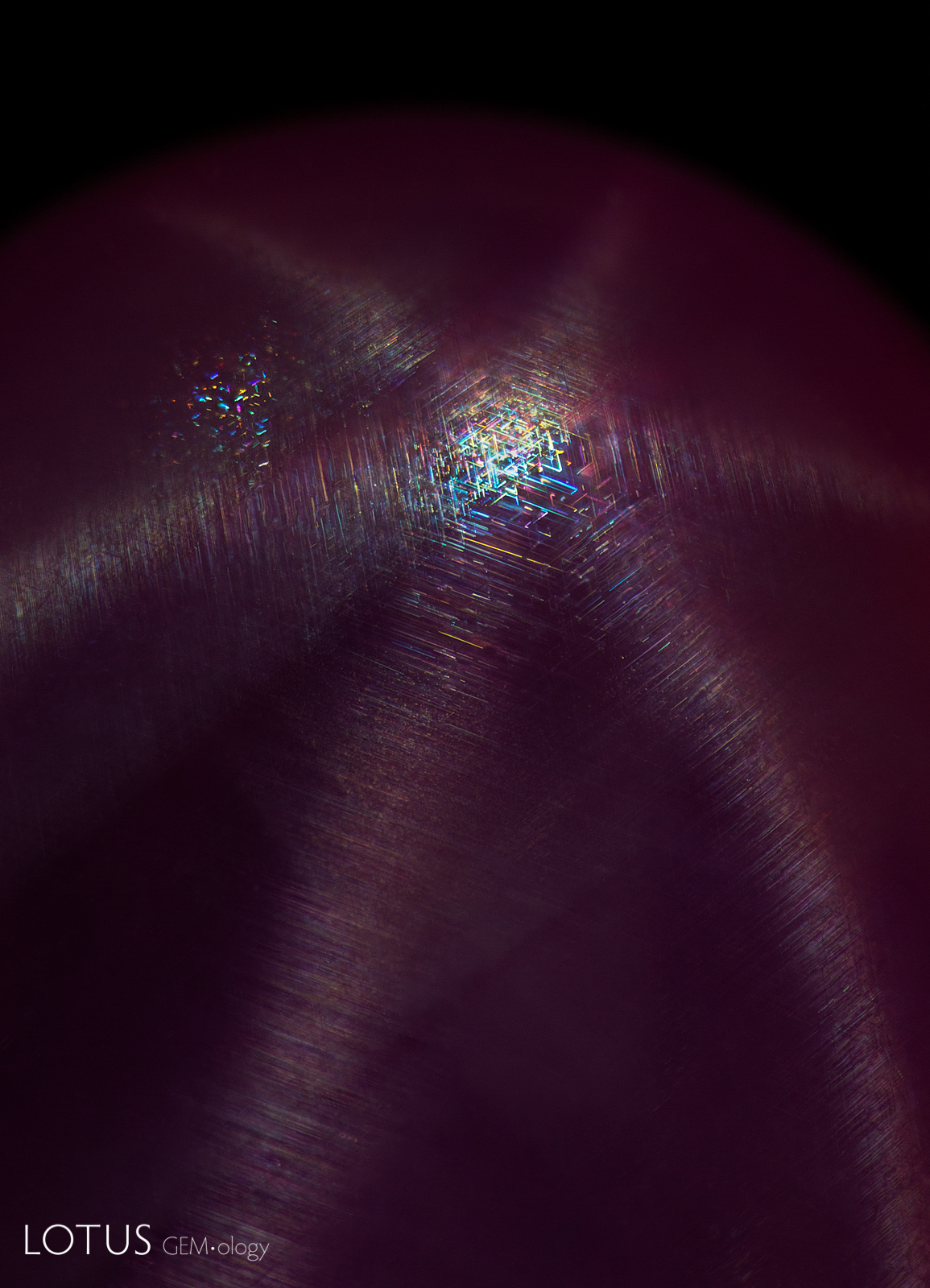
This star ruby is ready for its close-up. When cut in the right manner, some rubies and sapphires with rutile silk inclusions can display a “star,” a phenomenon known as asterism.
Natural Star Ruby •
Myanmar (Burma); Mogok/Namya •
Enhancements:
None Detected (None) •
Lighting Conditions:
Fiber Optic: Diffuse Overhead
Photographer:
E. Billie Hughes •
Image Number:
A-003-6623-1
• Field of View = 7.5mm
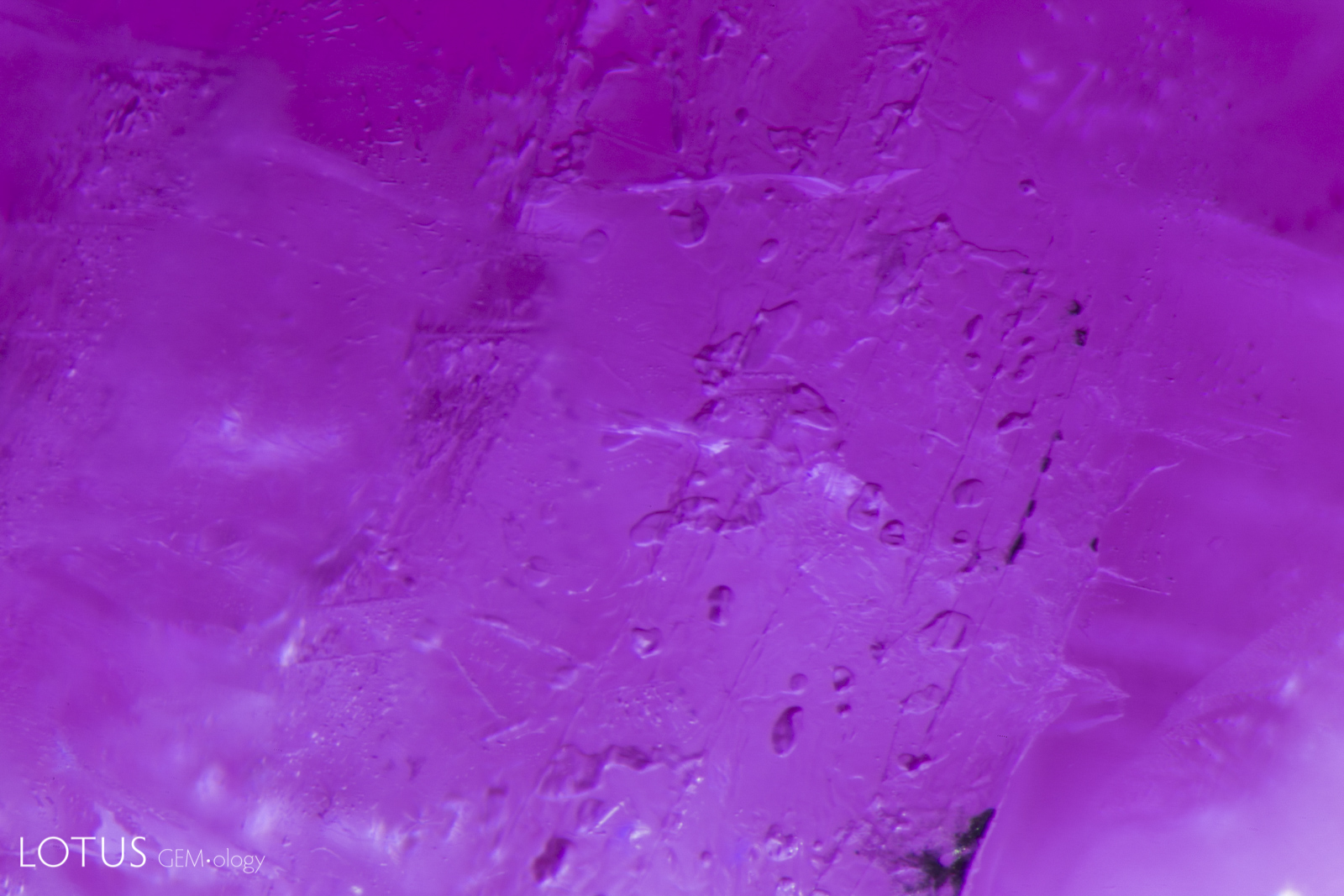
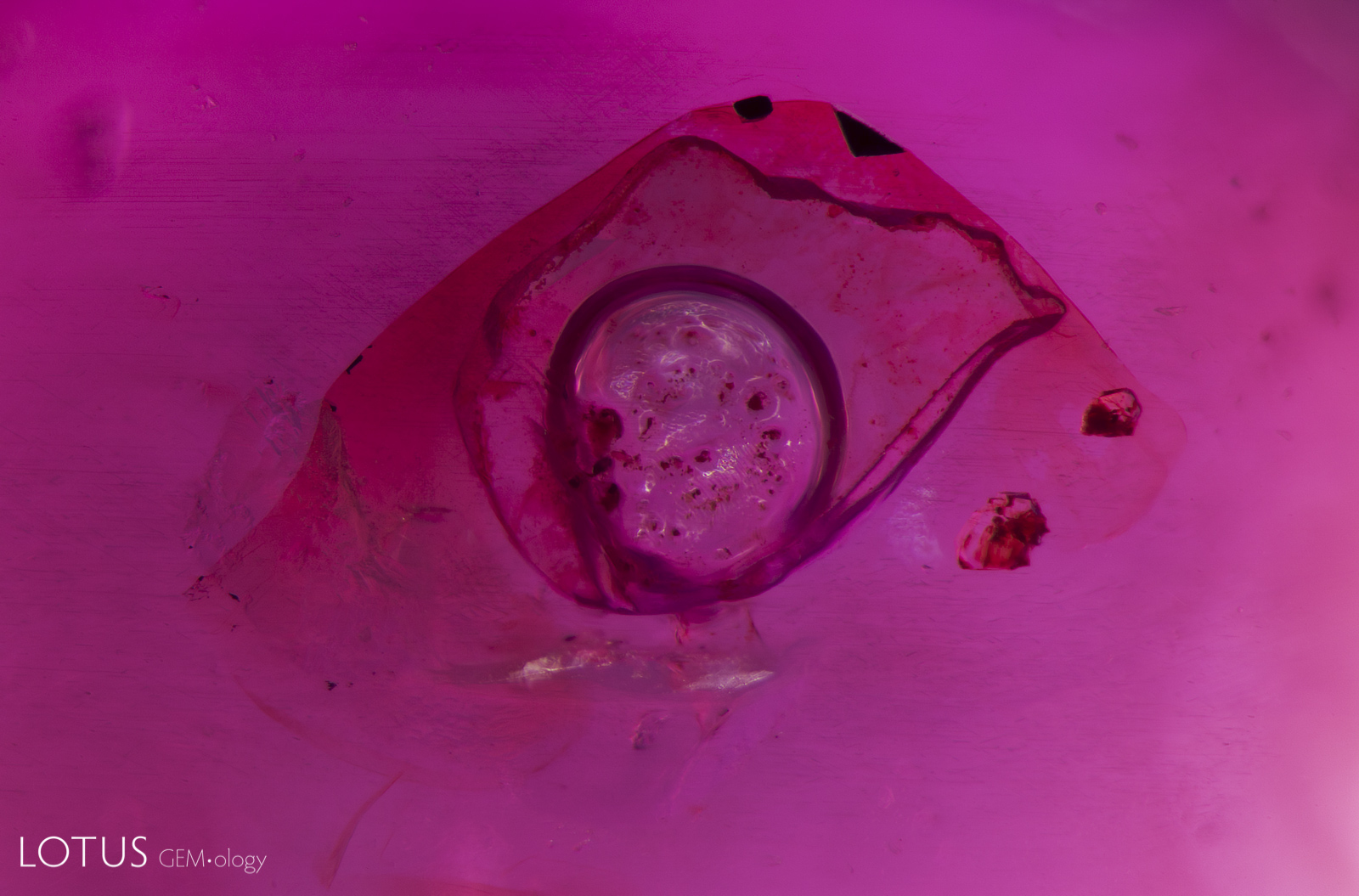
Flattened gas bubbles create irregular shapes in a fissure in a glass hybrid ruby.
Glass Hybrid Star Ruby •
No Origin •
Enhancements:
Lead Glass-type Hybrid (LGH) •
Lighting Conditions:
Fiber Optic: Oblique
Photographer:
E. Billie Hughes •
Image Number:
A-002-7362-8
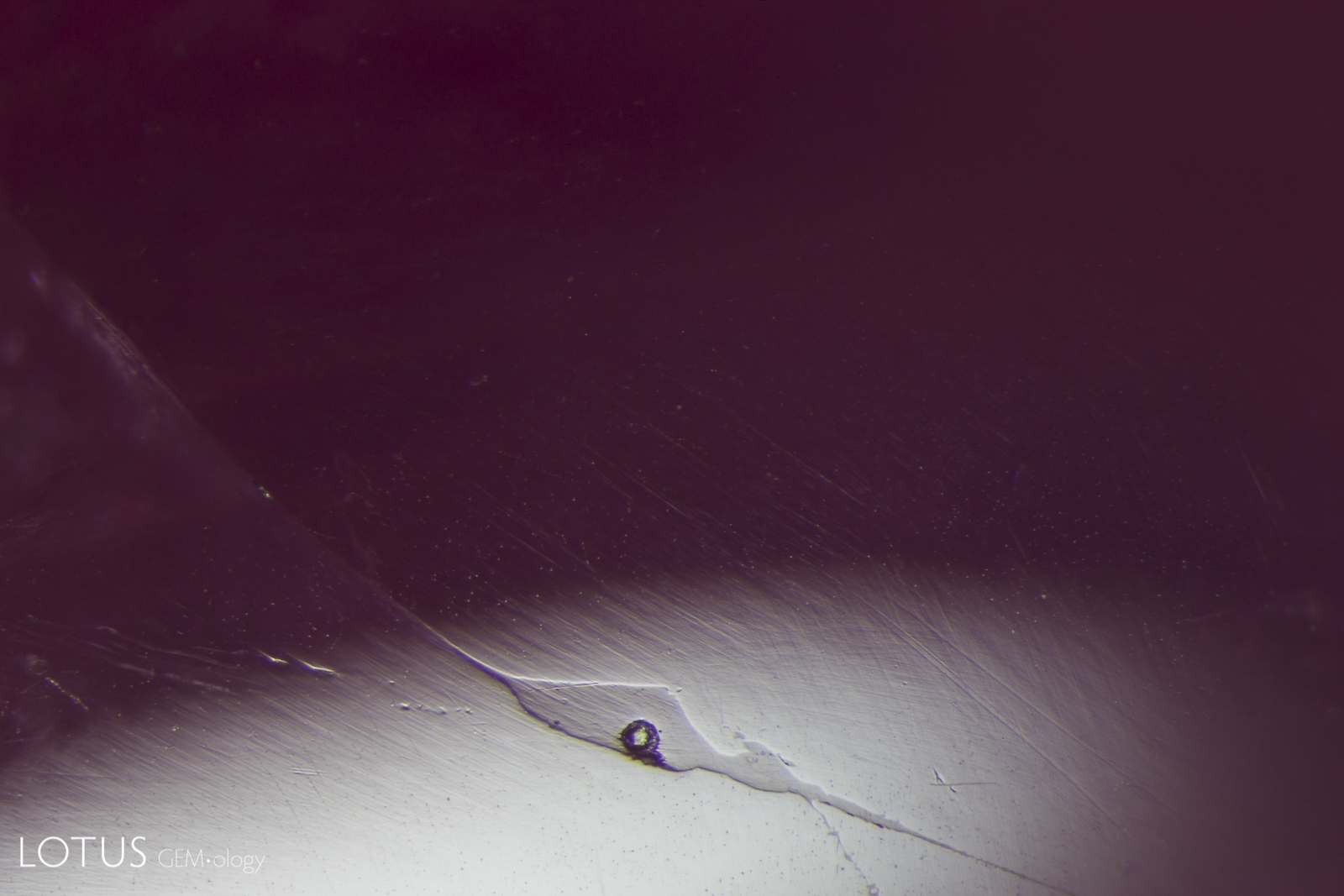
A narrow fissure has been filled with glass, shown by the duller luster of the glass when compared to the surrounding corundum. We can also see a round spot where a gas bubble popped in the glassy area.
Glass Hybrid Star Ruby •
No Origin •
Enhancements:
Lead Glass-type Hybrid (LGH) •
Lighting Conditions:
Dark Field + Diffuse Fiber Optic
Photographer:
E. Billie Hughes •
Image Number:
A-002-7362-7
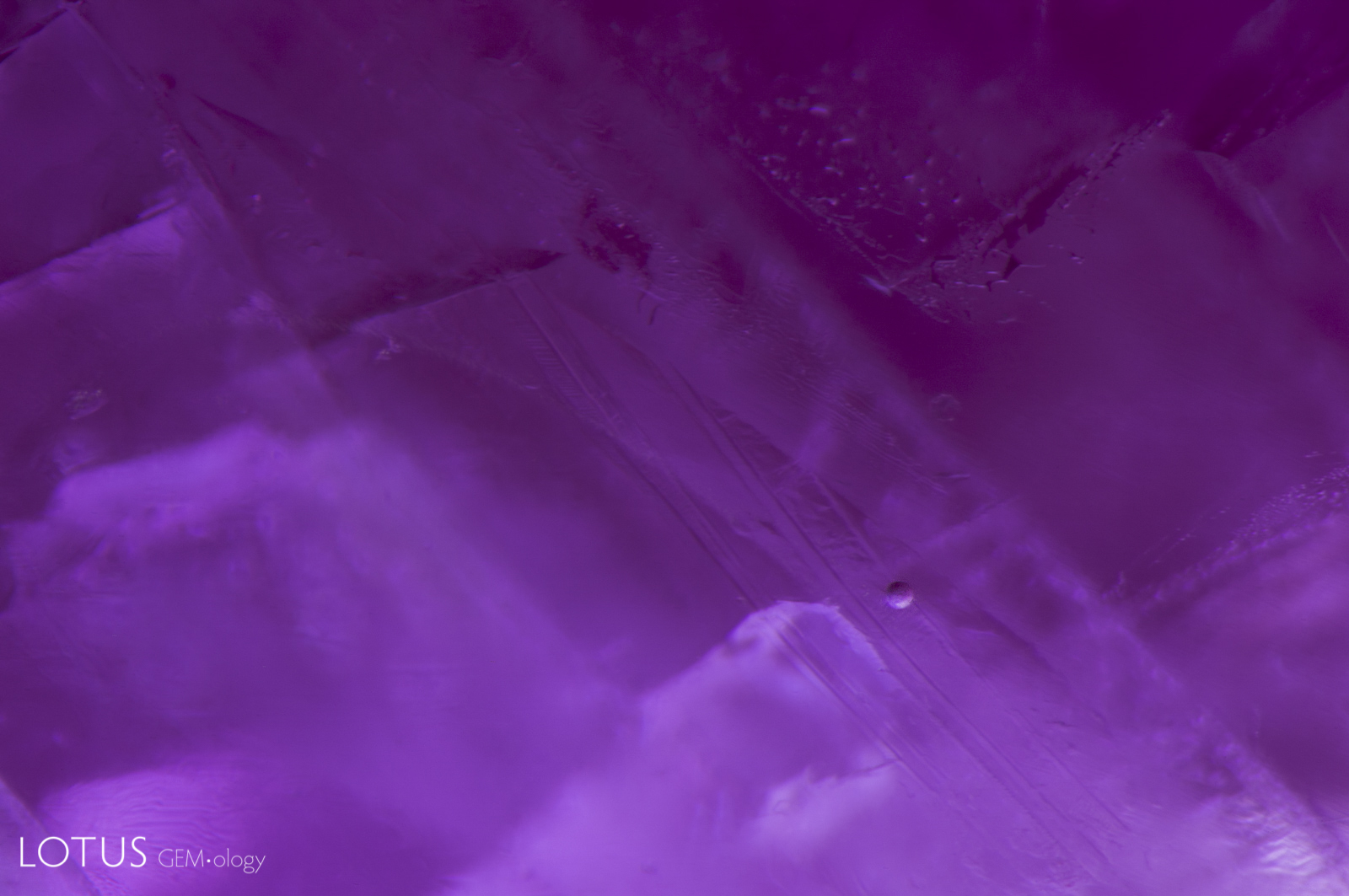
A small gas bubble is visible in a glass filled area in this glass hybrid ruby.
Glass Hybrid Star Ruby •
No Origin •
Enhancements:
Lead Glass-type Hybrid (LGH) •
Lighting Conditions:
Fiber Optic: Diffuse Oblique
Photographer:
E. Billie Hughes •
Image Number:
A-002-7362-5
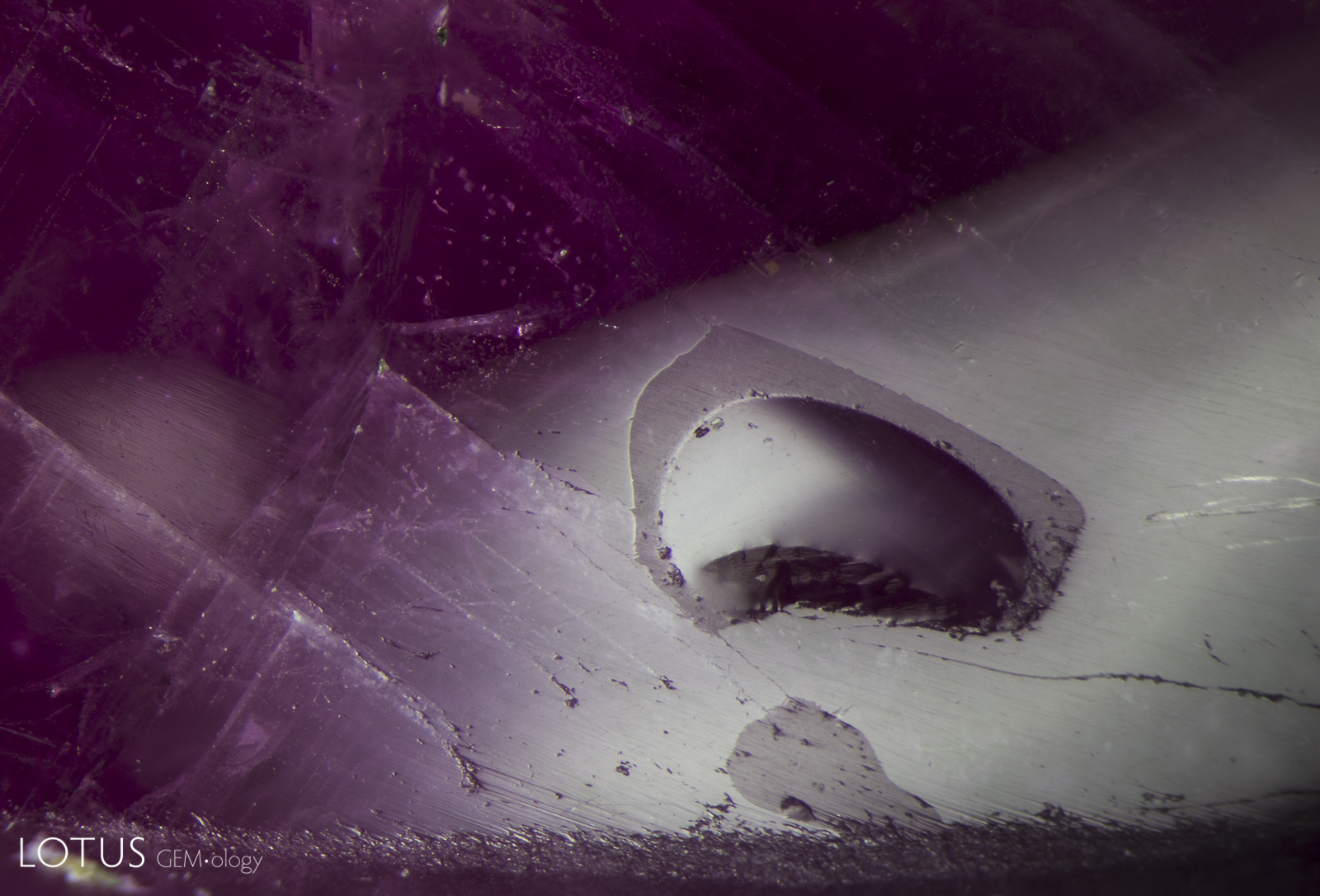
The surface of this glass-filled cavity shows a duller luster when compared to the higher luster of the corundum.
Glass Hybrid Star Ruby •
No Origin •
Enhancements:
Lead Glass-type Hybrid (LGH) •
Lighting Conditions:
Fiber Optic: Diffuse Overhead
Photographer:
E. Billie Hughes •
Image Number:
A-002-7362-4
Undissolved rutile silk needles normally suggest that a stone has not been heated. However, in this example the stone hasn’t been heated at a high enough temperature to melt the silk, but other features prove that the stone has been treated.
Glass Hybrid Star Ruby •
No Origin •
Enhancements:
Lead Glass-type Hybrid (LGH) •
Lighting Conditions:
Fiber Optic: Diffuse Oblique
Photographer:
E. Billie Hughes •
Image Number:
A-002-7362-3
This round gas bubble is suspended in a small cavity on a Burmese ruby which has some filler substance (this could be resin or oil). Oil is often used to mask the appearance of fissures and cavities.
Natural Star Ruby •
Myanmar (Burma); Mogok/Namya •
Enhancements:
None Detected (None) •
Lighting Conditions:
Dark Field + Oblique Fiber Optic
Photographer:
E. Billie Hughes •
Image Number:
A-002-5490-1
Lotus Gemology (2015) Lotus Gemology Lab Alert for Oiled Gems. Bangkok, LotusGemology.com, RWHL*.
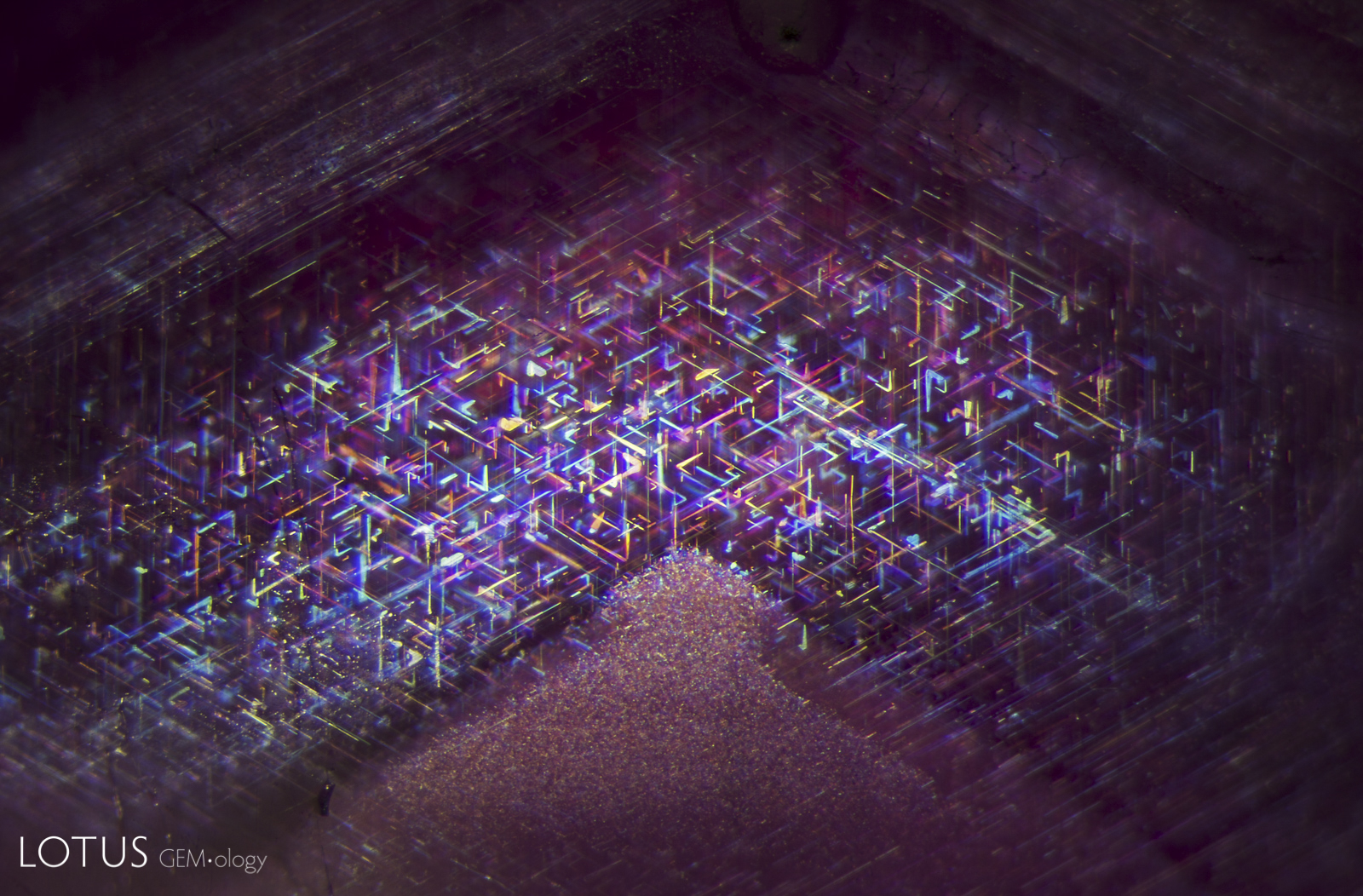
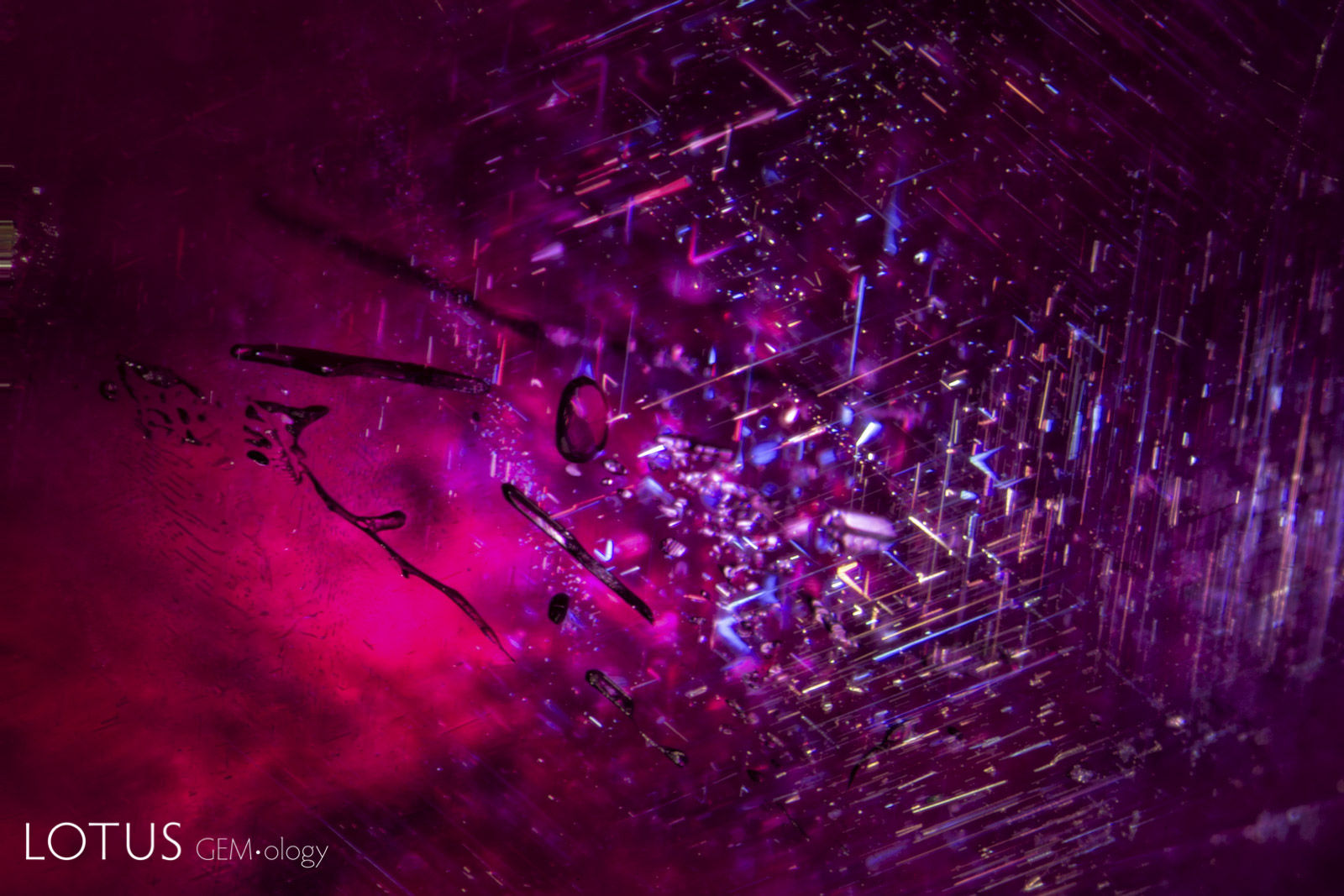
A classic inclusion scene in a star ruby from Myanmar’s Mogok Stone Tract. Here we can see severely elongated negative crystals against a backdrop of undissolved rutile silk.
Natural Star Ruby •
Myanmar (Burma); Mogok/Namya •
Enhancements:
None Detected (None) •
Lighting Conditions:
Fiber Optic: Oblique
Photographer:
Richard W. Hughes •
Image Number:
A-001-6213-1
Hughes, R.W. (1997) Ruby & Sapphire. Boulder, CO, RWH Publishing, 512 pp.; RWHL*.
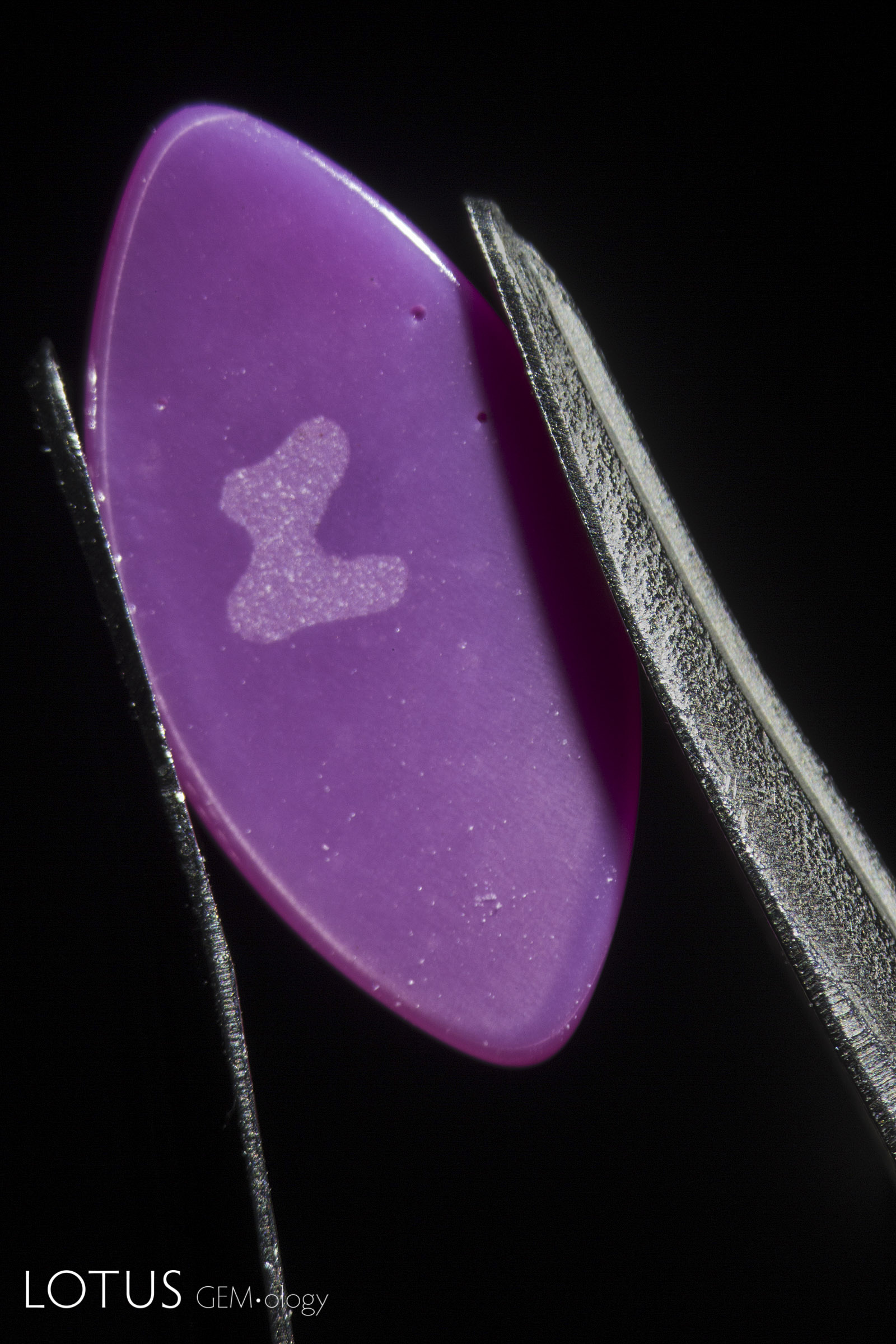
The engraved “L” on the back of a genuine Linde synthetic star ruby. All of the Linde production featured this branding.
Synthetic Star Ruby •
Verneuil •
Enhancements:
None Detected (None) •
Lighting Conditions:
Fiber Optic: Diffuse Overhead
Photographer:
E. Billie Hughes •
Image Number:
R-001-4643-1
Hughes, R.W. (1997) Ruby & Sapphire. Boulder, CO, RWH Publishing, 512 pp.; RWHL*.
The star imprisoned in the heart of this asterated ruby from Sri Lanka is due to tiny crystals of rutile formed through a process of exsolution, where excess titanium was squeezed out of solution. Unable to grow freely, it was constrained by the host corundum structure, forced to crystallize in three directions in the host’s basal plane. The result is simple magic—a magnificent star—yet another wonder that is the microworld of gemstones.
Natural Star Ruby •
Sri Lanka (Ceylon) •
Enhancements:
None Detected (None) •
Lighting Conditions:
Fiber Optic: Overhead
Photographer:
Richard W. Hughes •
Image Number:
A-001-4422-1
• Field of View = 5mm
The secret silken world of this untreated ruby from Burma’s Mogok Stone Tract is revealed with overhead lighting that reflects off of the undissolved rutile silk. The lack of breakdown proves that the gem has not been subjected to high-temperature heat treatment.
Natural Star Ruby •
Myanmar (Burma); Mogok/Namya •
Enhancements:
None Detected (None) •
Lighting Conditions:
Fiber Optic: Diffuse Overhead
Photographer:
E. Billie Hughes •
Image Number:
A-001-1871-2
The secret silken world of this untreated ruby from Burma’s Mogok Stone Tract is revealed with overhead lighting that reflects off of the undissolved rutile silk. The lack of breakdown proves that the gem has not been subjected to high-temperature heat treatment.
Natural Star Ruby •
Myanmar (Burma); Mogok/Namya •
Enhancements:
None Detected (None) •
Lighting Conditions:
Fiber Optic: Diffuse Overhead
Photographer:
E. Billie Hughes •
Image Number:
A-001-1871-1
Search the Complete Hyperion Database
Star ruby inclusions may include oriented rutile silk, mineral crystals, healed fissures, fluid inclusions, growth zoning and other features formed during or after crystal growth. Of particular importance are oriented inclusions capable of producing asterism when the stone is cut with the appropriate orientation.
Star Ruby Inclusion Photomicrographs
The Hyperion star ruby gallery includes microscopic features documented in natural star rubies from deposits around the world. Each entry is accompanied by descriptive information and, where available, references to the gemological literature.
What Inclusions Can Reveal About Star Ruby
Inclusions are fundamental to the study of star ruby because asterism results from light reflected by oriented internal features. Microscopic examination can help reveal the nature and orientation of these features, distinguish natural asterism from some artificial effects, recognize evidence of treatment and provide information relevant to geographic origin.
Hyperion combines inclusion photomicrography with supporting gemological information so that individual features can be compared with documented examples from natural star rubies.
About Hyperion
Hyperion is the Lotus Gemology searchable inclusion database. It allows users to browse gemstone inclusions by gem type, geographic origin, treatment and keyword.