Natural Ruby Inclusions
Explore ruby inclusions in Hyperion, the Lotus Gemology inclusion database. Hyperion contains photomicrographs of inclusions and internal features in natural ruby, documented with information on geographic origin, treatment, lighting conditions, field of view, photographer and published references.
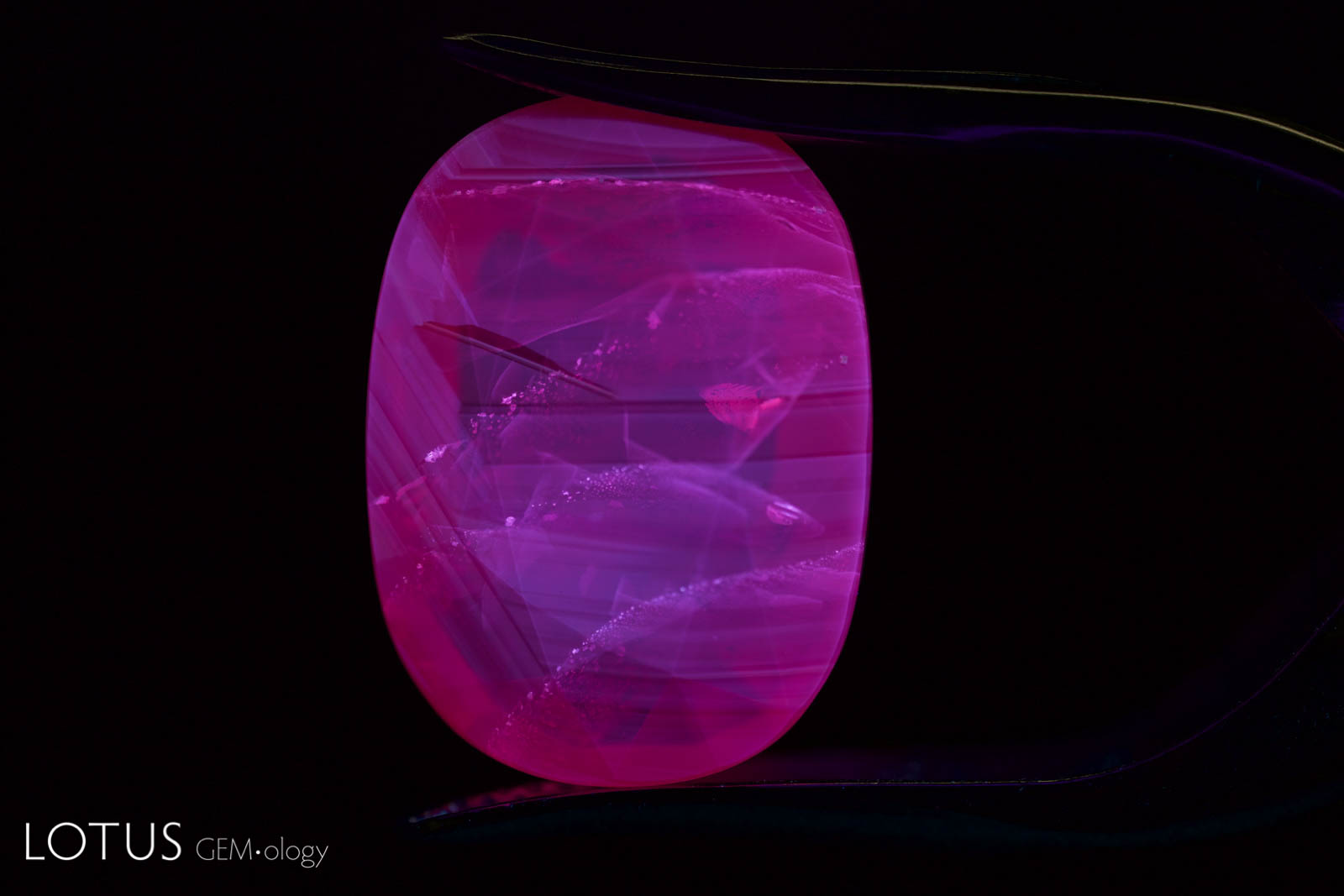
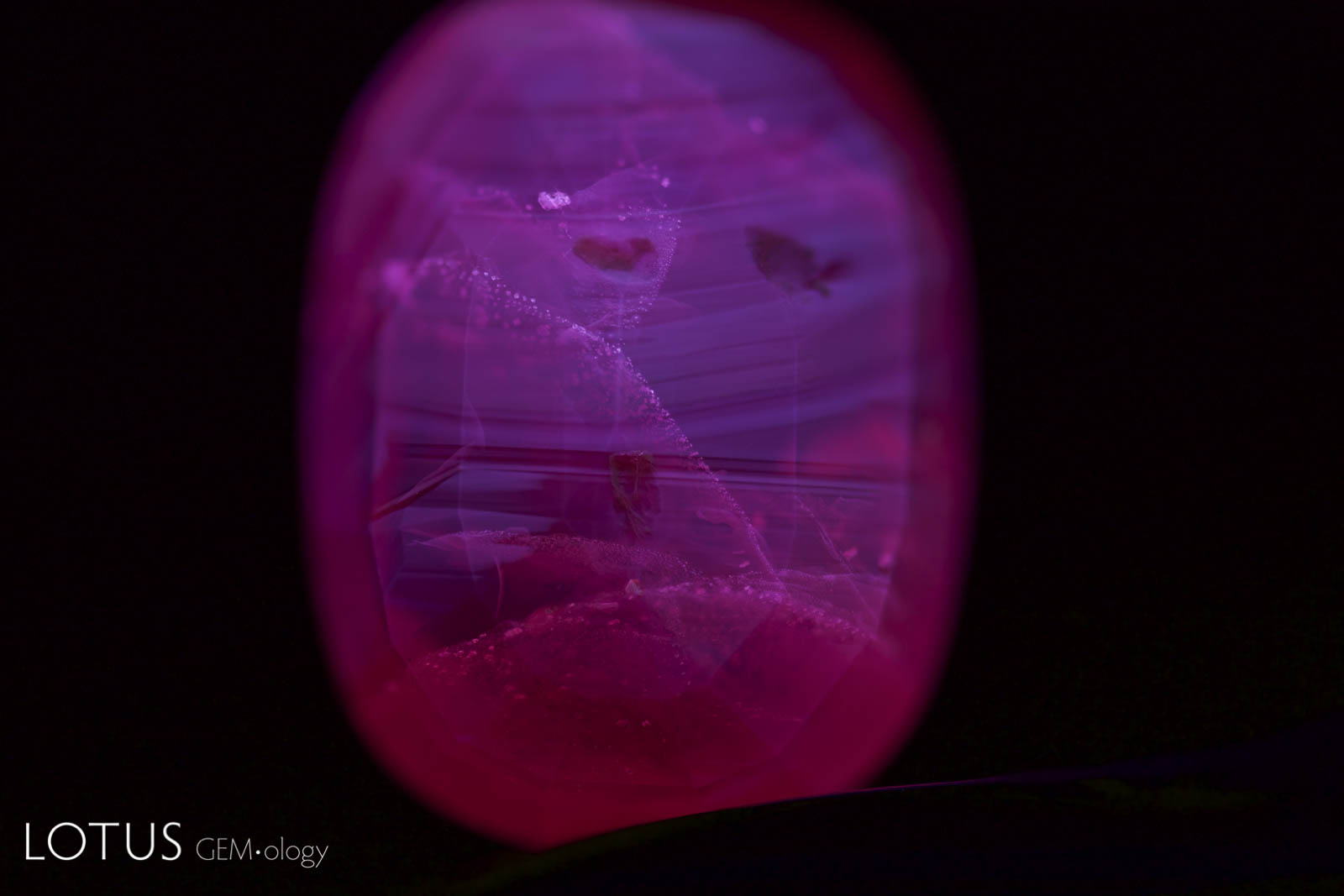
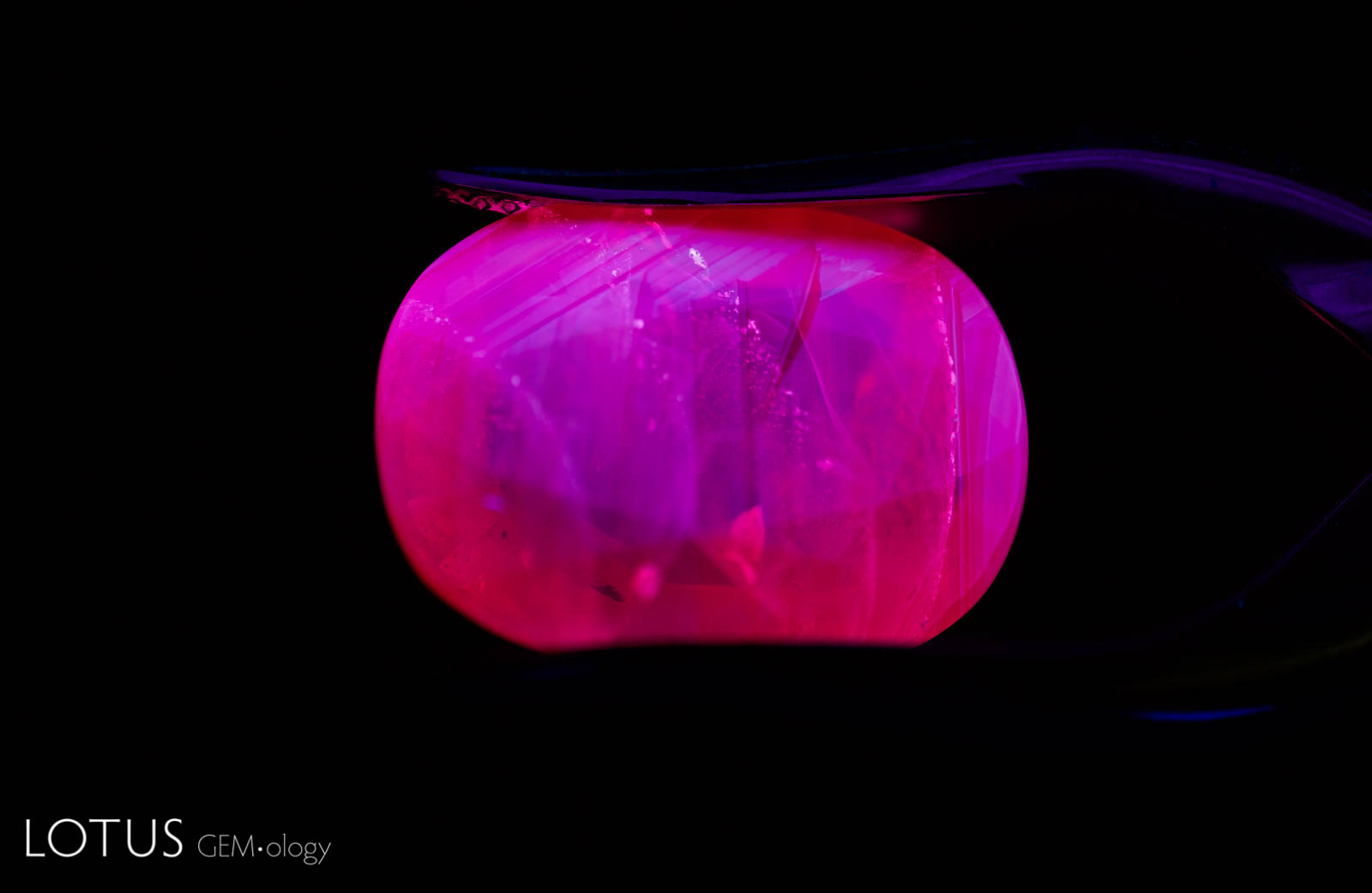
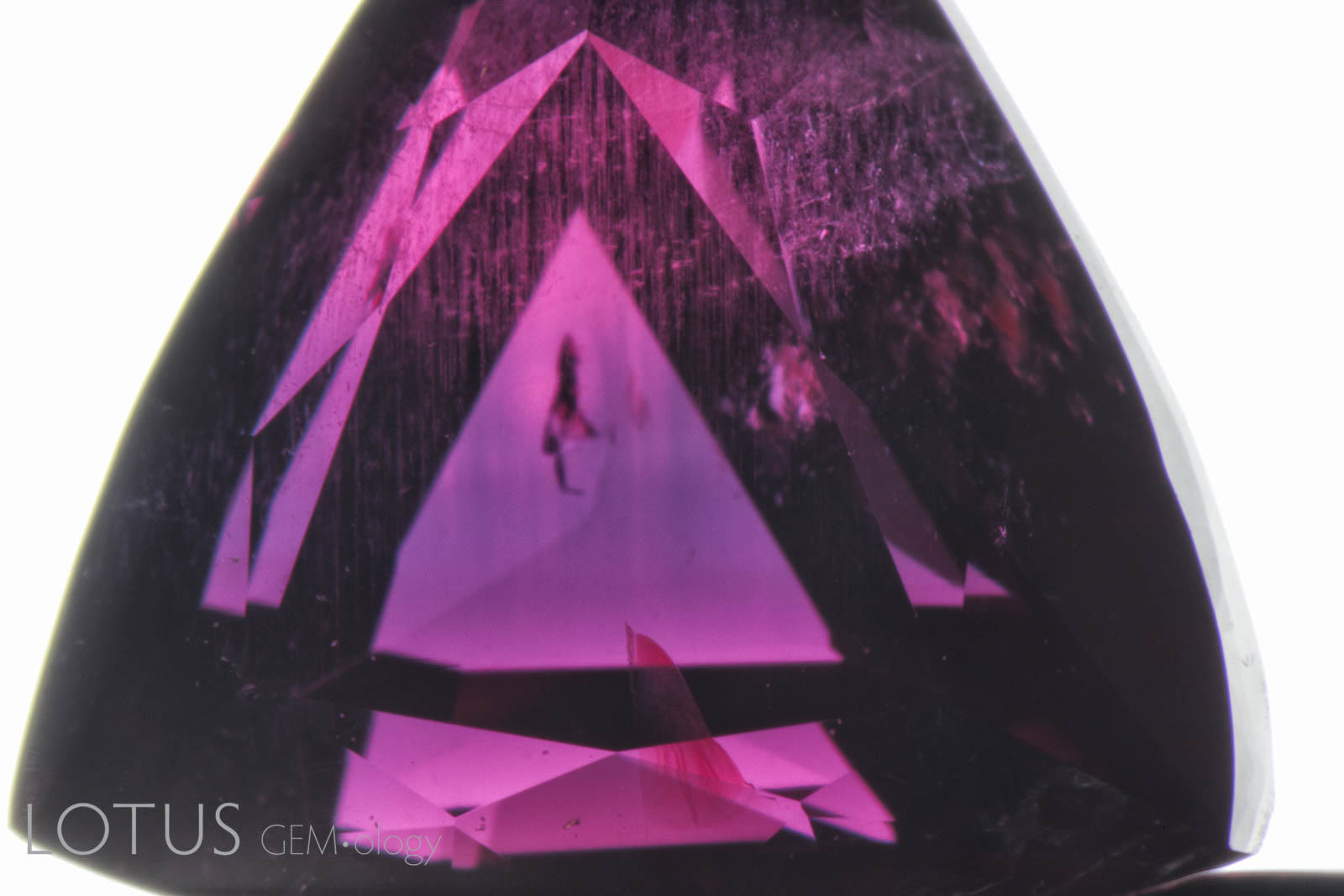
Rubies from Tanzania’s Winza mines often display blue color zones. This is a particularly fine example.
Natural Ruby •
Tanzania; Winza •
Enhancements:
None Detected (None) •
Lighting Conditions:
Fiber Optic: Transmitted
Photographer:
Richard W. Hughes •
Image Number:
A-001-0537-1
Schwarz, D., Pardieu, V. et al. (2008) Rubies and sapphires from Winza, central Tanzania. Gems & Gemology, Vol. 44, No. 4, Winter, pp. 322–347; RWHL*.
Peretti, A., Peretti, F. et al. (2008) Winza rubies identified. Contributions to Gemology, Vol. 7, pp. 1–97; RWHL*.
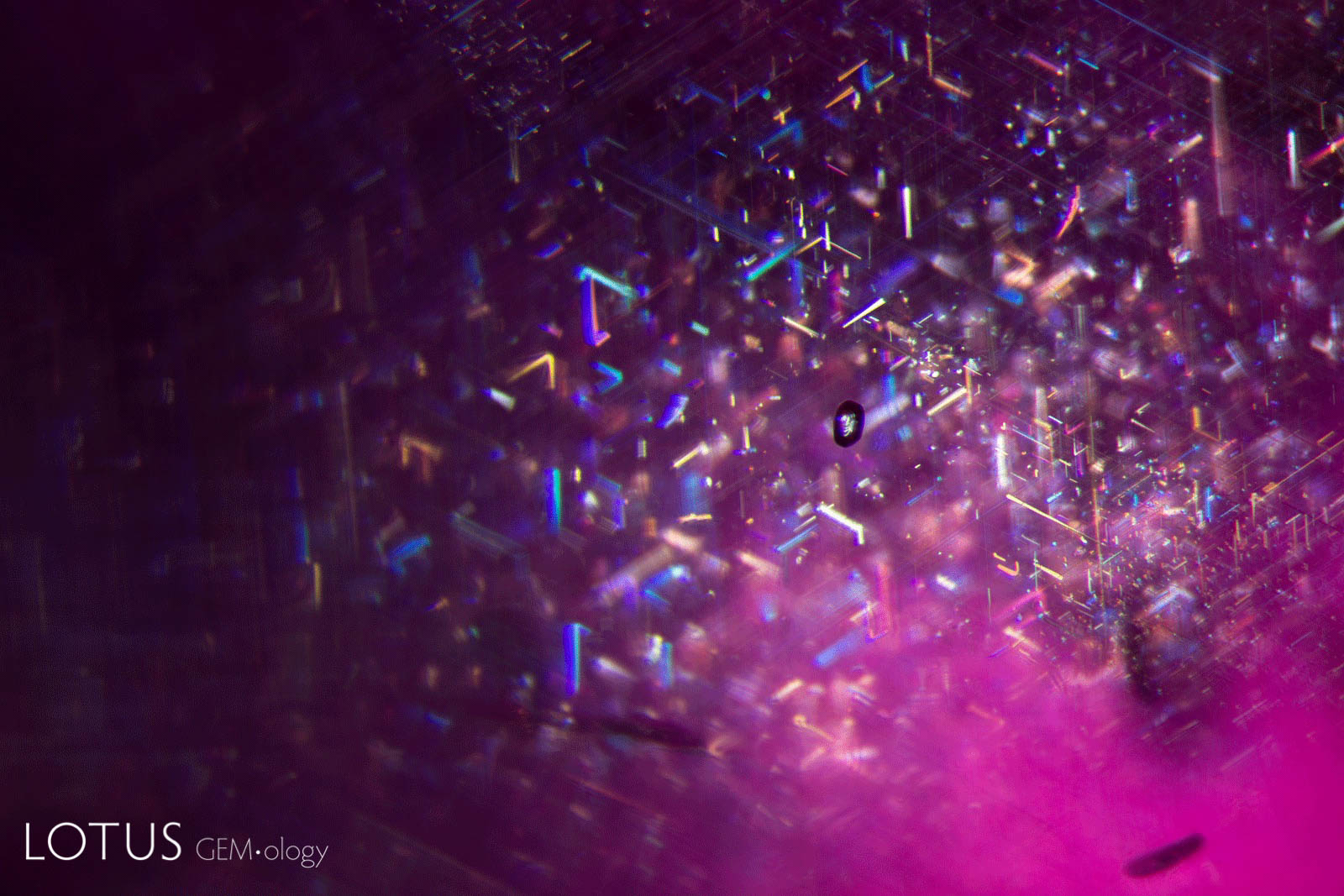
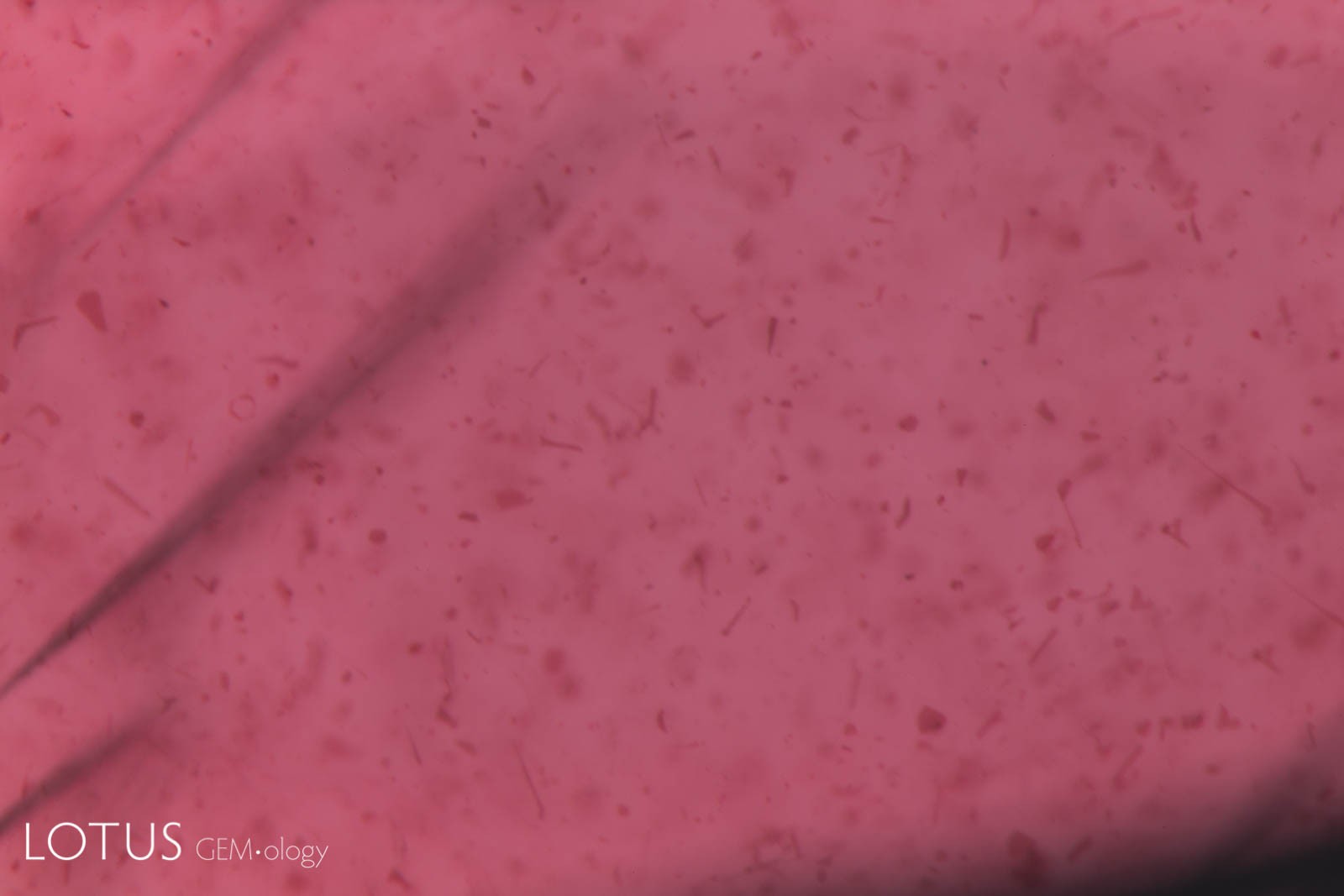
Rutile silk with vague blue zones in an untreated Mozambique ruby. Note that where the planes of rutile silk are concentrated, the blue color is absent. This is caused by what inclusion specialist John Koivula has dubbed “chromophore cannibalization.” Rutile consists of titanium dioxide and as it grows it sucks the titanium out of solid solution from the surrounding ruby, cannibalizing (removing) the blue color in the process.
Natural Ruby •
Mozambique •
Enhancements:
None Detected (None) •
Lighting Conditions:
Diffuse Light Field (Transmitted Light)
Photographer:
Richard W. Hughes •
Image Number:
A-001-0489-2
Pardieu, V., Sangsawong, S. et al. (2013) Rubies from the Montepuez area (Mozambique). Gemological Institute of America, October 5, 84 pp.; RWHL*.
Koivua, J.I. (2013) Useful visual clue indicating corundum heat treatment. Gems & Gemology, Vol. 49, No. 3, Fall, pp. 160–161; RWHL*.
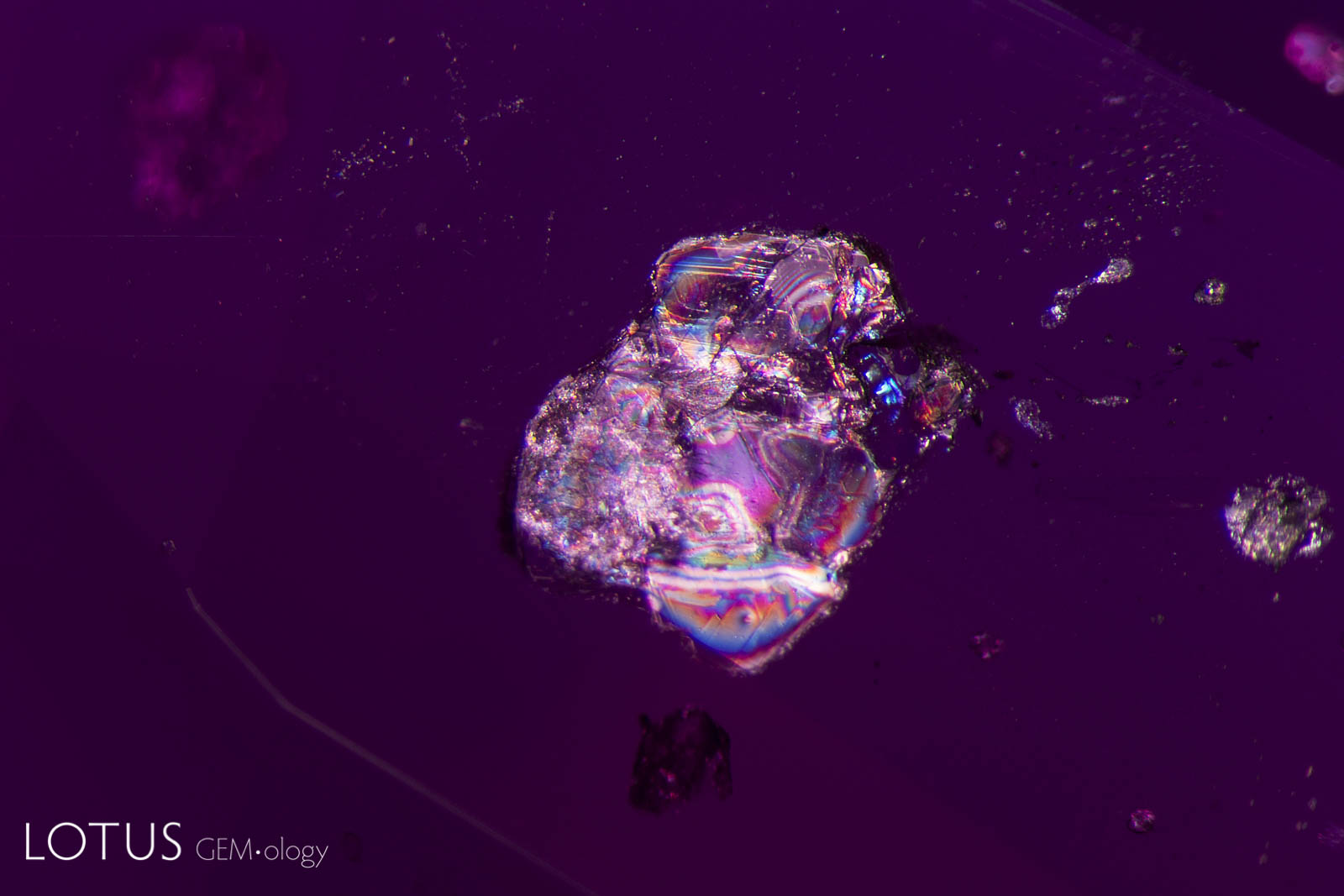
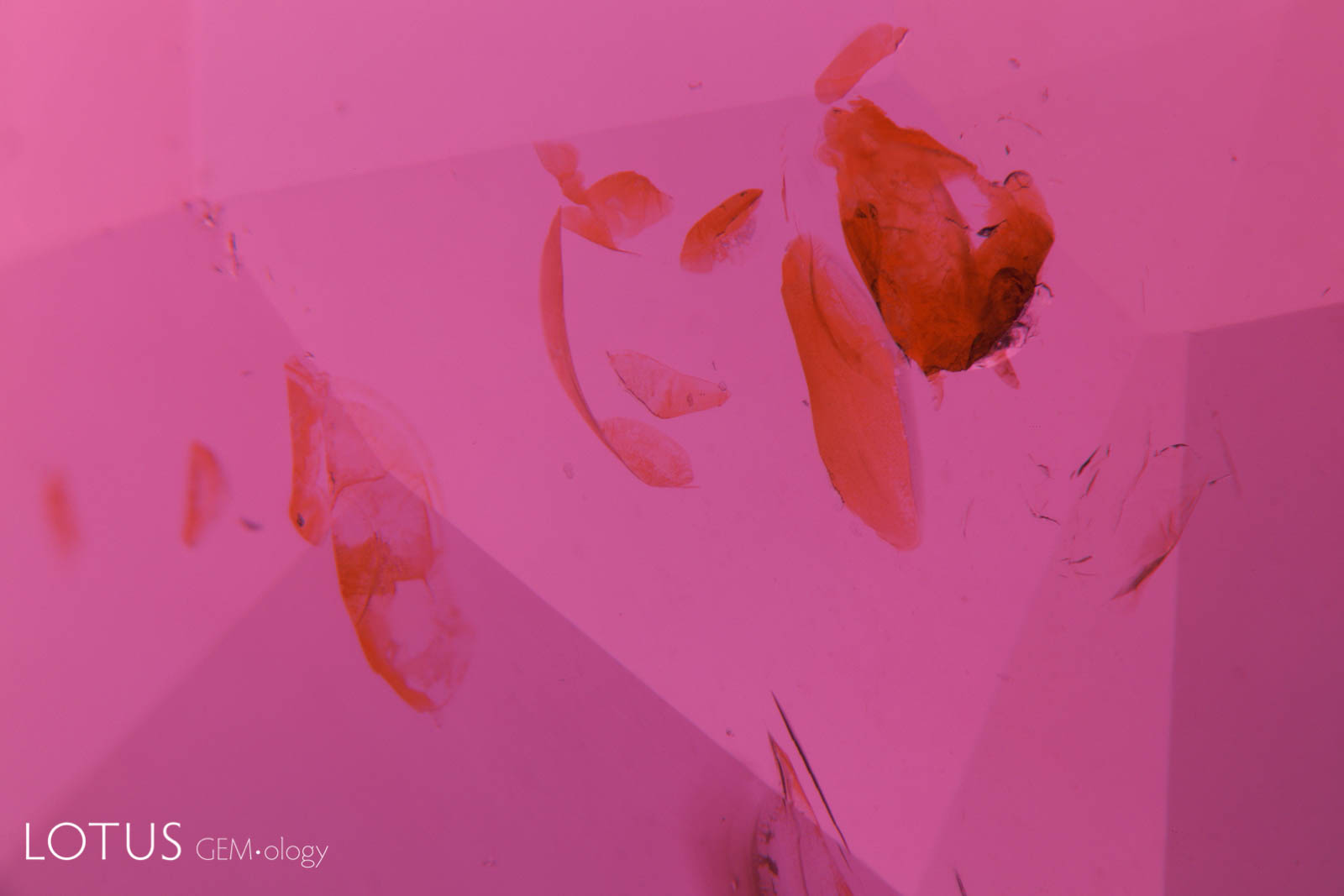
Mozambique rubies are recovered from an iron-rich soil, which stains the surface-reaching fissures orange. Heat treatment at just 350°C converts the yellowish limonite, which consists of α-FeO(OH), to reddish hematite, which consists of α-Fe2O3. Unfortunately the strong body color of ruby makes it impossible to see this conversion by color alone, but micro-Raman spectroscopy can sometimes detect the change. Heat treatment also causes these naturally-stained fissures to become white and even begin healing into fingerprints.
Natural Ruby •
Mozambique •
Enhancements:
None Detected (None) •
Lighting Conditions:
Diffuse Light Field (Transmitted Light)
Photographer:
Richard W. Hughes •
Image Number:
A-001-0489-1
Pardieu, V., Sangsawong, S. et al. (2013) Rubies from the Montepuez area (Mozambique). Gemological Institute of America, October 5, 84 pp.; RWHL*.
Koivua, J.I. (2013) Useful visual clue indicating corundum heat treatment. Gems & Gemology, Vol. 49, No. 3, Fall, pp. 160–161; RWHL*.
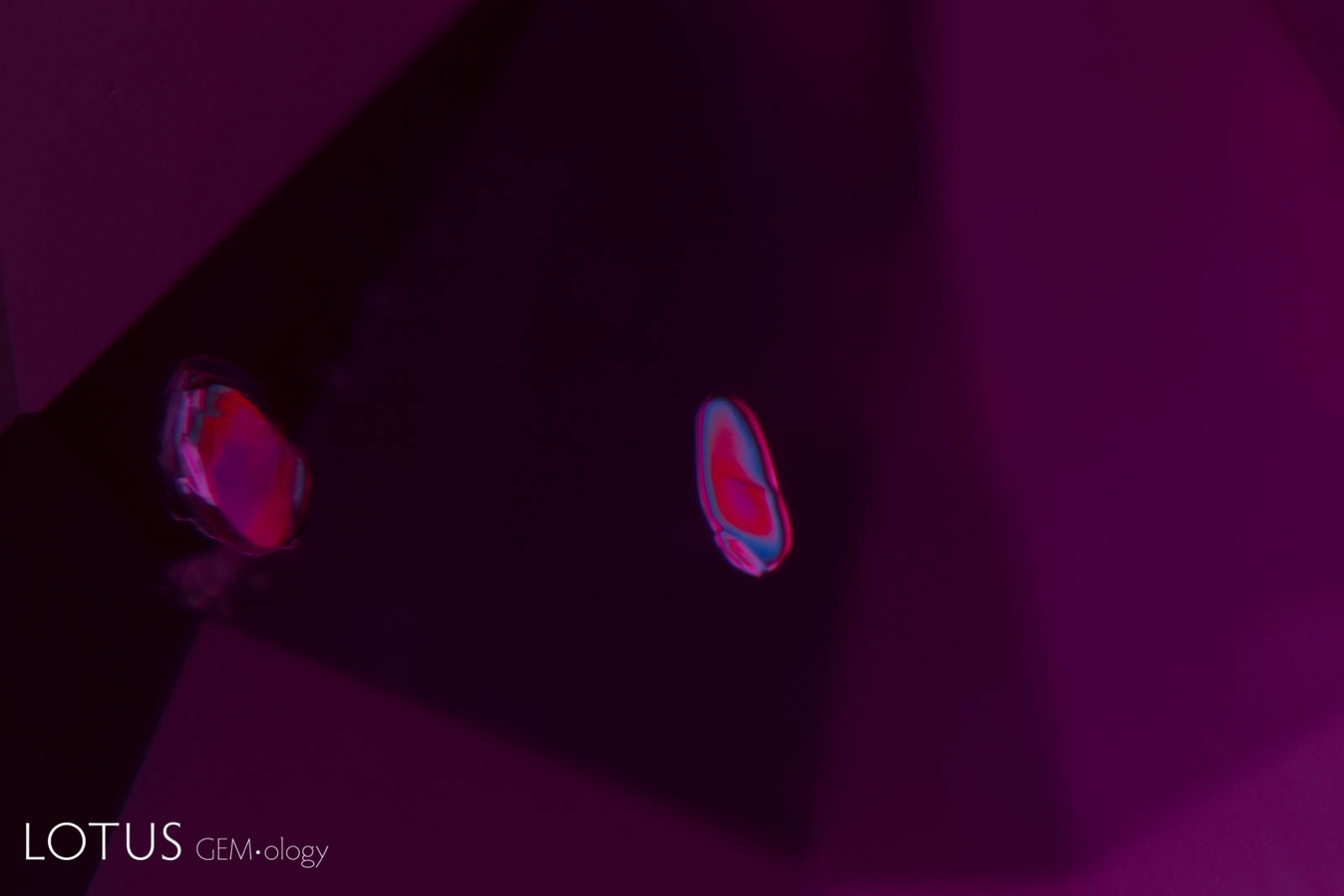
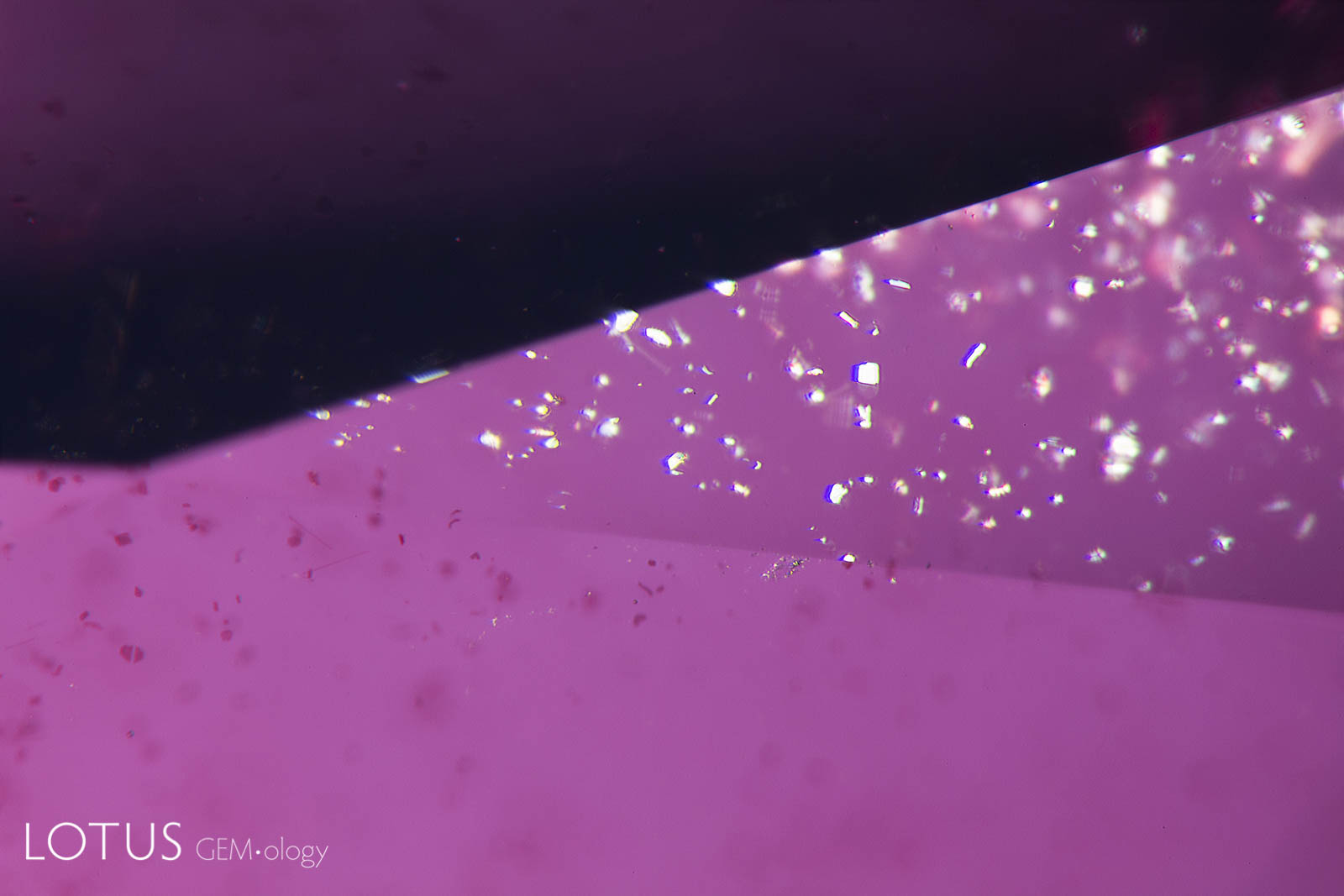
Iron-rich silk seen in reflected light in this ruby from Tanzania’s Umba Valley.
Natural Ruby •
Tanzania; Umba Valley •
Enhancements:
None Detected (None) •
Lighting Conditions:
Fiber Optic: Diffuse Overhead
Photographer:
Richard W. Hughes •
Image Number:
A-001-0488-2
Gunawardene, M. (1984) Reddish-brown sapphires from Umba Valley, Tanzania. Journal of Gemmology, Vol. 19, No. 2, April, pp. 139–144; RWHL.
Zwaan, P.C. (1974) Garnet, corundum, and other gem minerals from Umba, Tanzania. Scripta Geologica, Vol. 20, pp. 19–30; RWHL*.
Hänni, H.A. (1987) On corundums from Umba Valley, Tanzania. Journal of Gemmology, Vol. 20, No. 5, January, pp. 278–284; RWHL*.
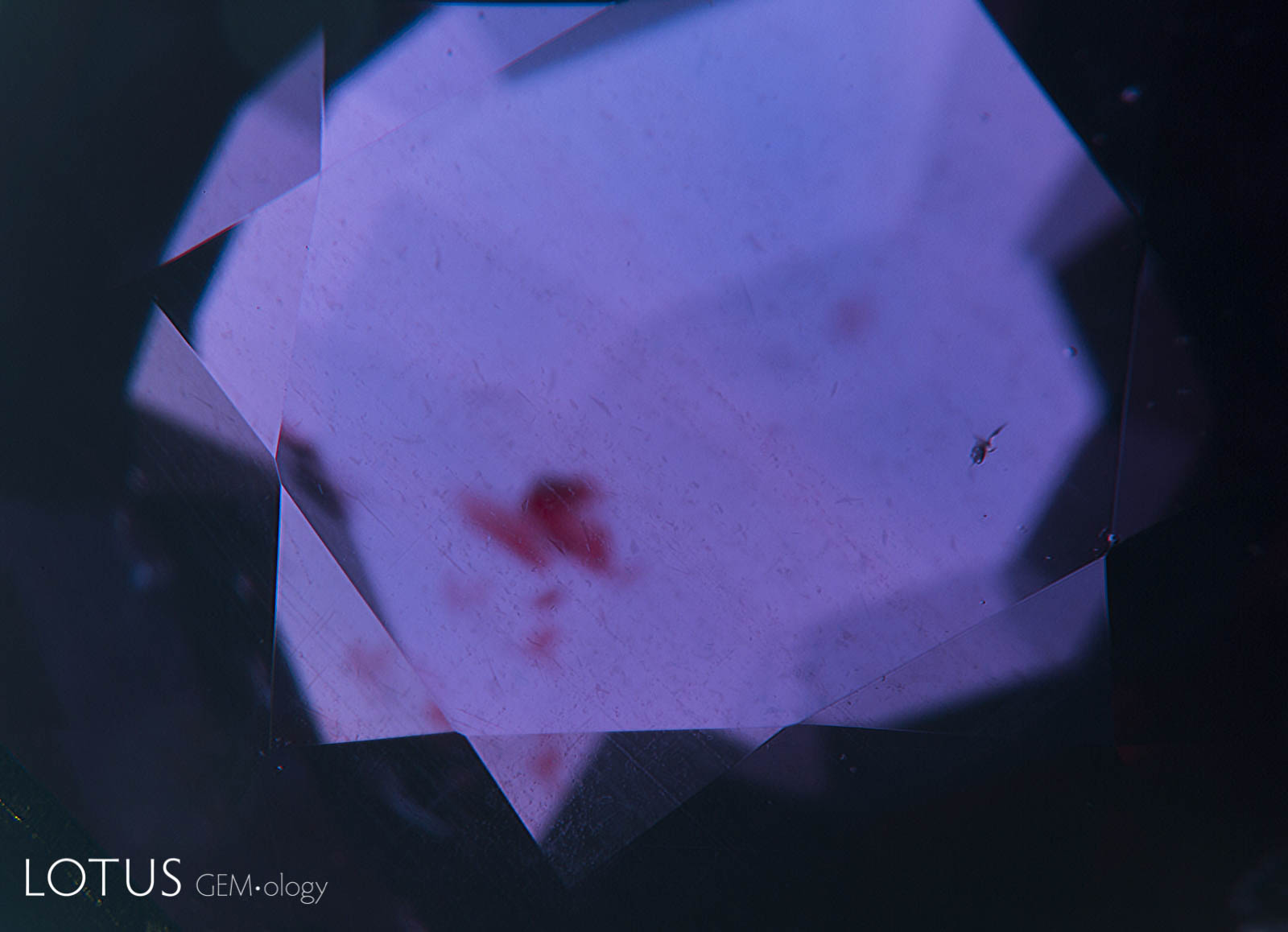
Iron-rich silk seen in transmitted light in this ruby from Tanzania’s Umba Valley.
Natural Ruby •
Tanzania; Umba Valley •
Enhancements:
None Detected (None) •
Lighting Conditions:
Diffuse Light Field (Transmitted Light)
Photographer:
Richard W. Hughes •
Image Number:
A-001-0488-1
Gunawardene, M. (1984) Reddish-brown sapphires from Umba Valley, Tanzania. Journal of Gemmology, Vol. 19, No. 2, April, pp. 139–144; RWHL.
Zwaan, P.C. (1974) Garnet, corundum, and other gem minerals from Umba, Tanzania. Scripta Geologica, Vol. 20, pp. 19–30; RWHL*.
Hänni, H.A. (1987) On corundums from Umba Valley, Tanzania. Journal of Gemmology, Vol. 20, No. 5, January, pp. 278–284; RWHL*.
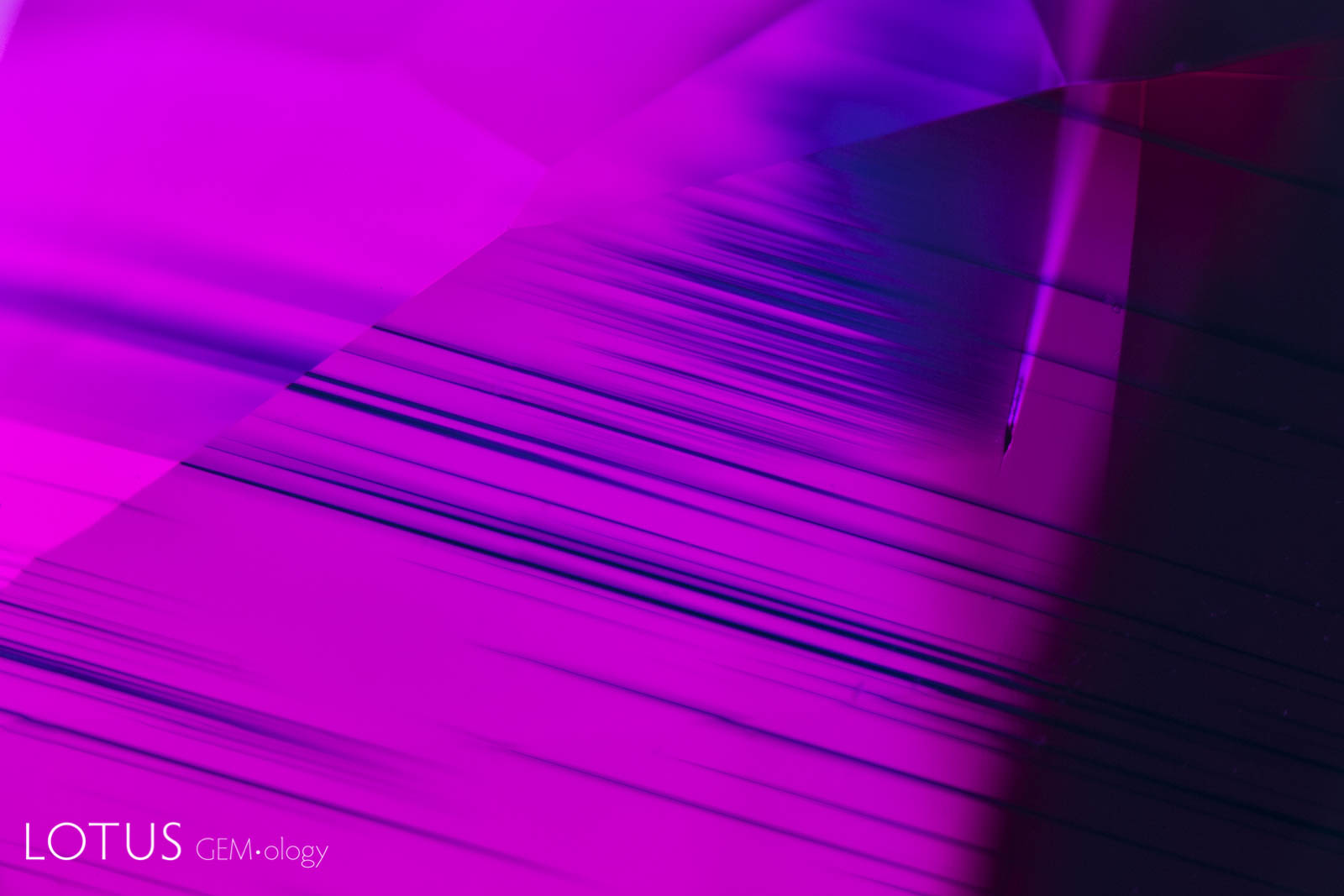
Rutile silk with vague blue zones in an untreated Mozambique ruby. Note that where the planes of rutile silk are concentrated, the blue color is absent. This is caused by what inclusion specialist John Koivula has dubbed “chromophore cannibalization.” Rutile consists of titanium dioxide and as it grows it sucks the titanium out of solid solution from the surrounding ruby, cannibalizing (removing) the blue color in the process.
Natural Ruby •
Mozambique •
Enhancements:
None Detected (None) •
Lighting Conditions:
Diffuse Light Field (Transmitted Light)
Photographer:
Richard W. Hughes •
Image Number:
A-001-0485-2
Pardieu, V., Sangsawong, S. et al. (2013) Rubies from the Montepuez area (Mozambique). Gemological Institute of America, October 5, 84 pp.; RWHL*.
478 Total Images
Results: 445 – 456 | Page 38 of 40 Pages
Search the Complete Hyperion Database
Natural ruby inclusions may include mineral crystals, rutile silk, healed fissures, fluid inclusions, negative crystals, color zoning and other features formed during or after crystal growth. Such features are important to gemologists because they can provide evidence useful in identifying ruby, understanding its geological history, recognizing treatment and, in some cases, determining geographic origin.
Natural Ruby Inclusion Photomicrographs
The Hyperion natural ruby gallery includes microscopic features found in rubies from major deposits around the world. Each entry is accompanied by descriptive information and, where available, references to the gemological literature.
What Inclusions Can Reveal About Natural Ruby
Inclusions are an important part of ruby identification. Their form, composition, orientation and alteration can help gemologists distinguish natural ruby from synthetic material, recognize evidence of heat treatment, and study the geological environment in which the ruby formed.
Hyperion combines inclusion photomicrography with supporting gemological information so that individual features can be compared with documented examples from known ruby deposits.
About Hyperion
Hyperion is the Lotus Gemology searchable inclusion database. It allows users to browse gemstone inclusions by gem type, geographic origin, treatment and keyword.