Explore books, articles and historical sources on ruby, sapphire and corundum in Four Treasures, the Lotus Gemology reference database. This bibliography brings together matching records from the collection, with publication details, abstracts and cover images where available.
Ruby & Sapphire References
The list below matches the terms ruby, rubies, sapphire or corundum in the database's searchable fields. Some references discuss these gems as part of a broader subject. Linked titles take you to external links where you may find the full reference.
Clarity enhancement of corundum by fissure treatment
Journal Article
Stephan, T. and Henn, U. (2018) Reinheitsverbesserung von Korunden durch Rissbehandlung [Clarity enhancement of corundum by fissure treatment]. [Clarity enhancement of corundum by fissure treatment]Gemmologie: Zeitschrift der Deutschen Gemmologischen Gesellschaft, Vol. 67, No. 3/4, pp. 37–46.
Record No. 6020 | Sinkankas/Born No.: NIS/NIB | Language: in German with English abstract | not seen
Reference copied to clipboard!
gems, corundum, treatments.6
Stephan and Henn examine methods used to improve the apparent clarity of ruby and sapphire by treating surface-reaching fissures. The article discusses the filling of fractures with foreign substances, particularly glass and related materials, and the resulting reduction in the visibility of fissures through changes in their optical appearance. The authors describe diagnostic features useful for recognizing treated stones, including flash effects, trapped gas bubbles, differences in luster, and residues or filling material visible within fractures under magnification. They consider the extent to which such treatments can alter a stone’s appearance and the problems they create for identification, durability, valuation, and disclosure. The study emphasizes careful microscopic examination, supplemented where necessary by analytical methods, to distinguish fissure-treated corundum from untreated material and to characterize the substances introduced into its fractures.
Stephan, T. and Müller, S. (2018) Nachweis der Temperaturbehandlung von Korund [Identification of the heat treatment of corundum]. [Identification of the heat treatment of corundum]Gemmologie: Zeitschrift der Deutschen Gemmologischen Gesellschaft, Vol. 67, No. 3/4, pp. 21–36.
Record No. 6019 | Sinkankas/Born No.: NIS/NIB | Language: in German with English abstract | not seen
Reference copied to clipboard!
gems, corundum, treatments.6
Stephan and Müller examine methods for identifying heat treatment in corundum, with particular emphasis on ruby and sapphire. The article reviews the effects of heating on internal features and gemological properties and discusses the diagnostic evidence that can distinguish heated from unheated stones. Microscopic criteria include changes to mineral inclusions, healed fissures, altered growth structures, and other heat-related features, while spectroscopic and analytical methods provide additional evidence where microscopy alone is inconclusive. The authors consider the difficulties created by different heating temperatures, treatment conditions, and starting materials, since some treatments produce conspicuous alteration whereas others leave only subtle indications. The study emphasizes the need to combine microscopic observation with appropriate instrumental methods when determining whether a ruby or sapphire has undergone heat treatment.
Henn, U., Milisenda, C., Stephan, T. and Huaysan, B. (2018) Diffusions- und Oberflächenbehandlung bei Korunden [Diffusion and surface treatment of corundum]. [Diffusion and surface treatment of corundum]Gemmologie: Zeitschrift der Deutschen Gemmologischen Gesellschaft, Vol. 67, No. 3/4, pp. 47–60.
Record No. 6018 | Sinkankas/Born No.: NIS/NIB | Language: in German with English abstract | not seen
Reference copied to clipboard!
gems, corundum, treatments.6
Henn, Milisenda, Stephan, and Huaysan examine diffusion and surface treatments applied to gem corundum and the methods used to identify them. The article discusses treatments in which chemical elements are introduced at or near the surface of ruby and sapphire to modify their color, including diffusion processes capable of producing or enhancing particular color zones, as well as coatings and other surface modifications. Attention is given to the distribution and penetration depth of treatment-related color, the effects visible under magnification and immersion, and the analytical techniques used to detect artificially introduced elements or surface layers. The authors emphasize the importance of distinguishing these treatments from conventional heat treatment and naturally occurring color zoning and discuss the gemological implications of treatment depth, durability, recutting, and disclosure.
Häger, T. (2018) Temperaturbehandlung von Korund. [Heat treatment of corundum]Gemmologie: Zeitschrift der Deutschen Gemmologischen Gesellschaft, Vol. 67, No. 3/4, pp. 11–20.
Record No. 4168 | Sinkankas/Born No.: NIS/NIB | Language: in German with English abstract | not seen
Reference copied to clipboard!
gems, corundum, treatments.6
Häger reviews the heat treatment of corundum, explaining the physical and chemical processes by which heating can modify the color and clarity of ruby and sapphire. The article discusses the influence of temperature, atmosphere, and heating conditions on color-producing trace elements and defects in the corundum lattice, as well as the dissolution or alteration of inclusions and other changes affecting transparency. Different treatment objectives and procedures are considered, including the enhancement, removal, or modification of color and the improvement of apparent clarity. The paper provides the scientific background necessary for understanding modern corundum heating and the variables that determine the results obtained from different starting materials and treatment conditions.
Lind, T. (2018) Behandelte Korunde - Einführung in die Thematik [Treated corundum - Introduction to the topic]. [Treated corundum - Introduction to the topic]Gemmologie: Zeitschrift der Deutschen Gemmologischen Gesellschaft, Vol. 67, No. 3/4, pp. 1–10.
Record No. 4167 | Sinkankas/Born No.: NIS/NIB | Language: in German | not seen
Reference copied to clipboard!
gems, corundum, treatments.6
Lind provides an introduction to the treatment of gem corundum, outlining the principal methods used to modify the appearance of ruby and sapphire and the gemological problems associated with their identification. Particular attention is given to heat treatment, which may alter color and clarity, as well as treatments involving the introduction of foreign substances into fissures and other procedures intended to improve a stone’s appearance. The article places these techniques in the broader context of the gem trade and laboratory examination, emphasizing the distinction between natural characteristics and treatment-induced changes. It also introduces the diagnostic approaches used to recognize treated corundum, including microscopic observation and instrumental analysis, and stresses the importance of correct identification and disclosure of treatments.
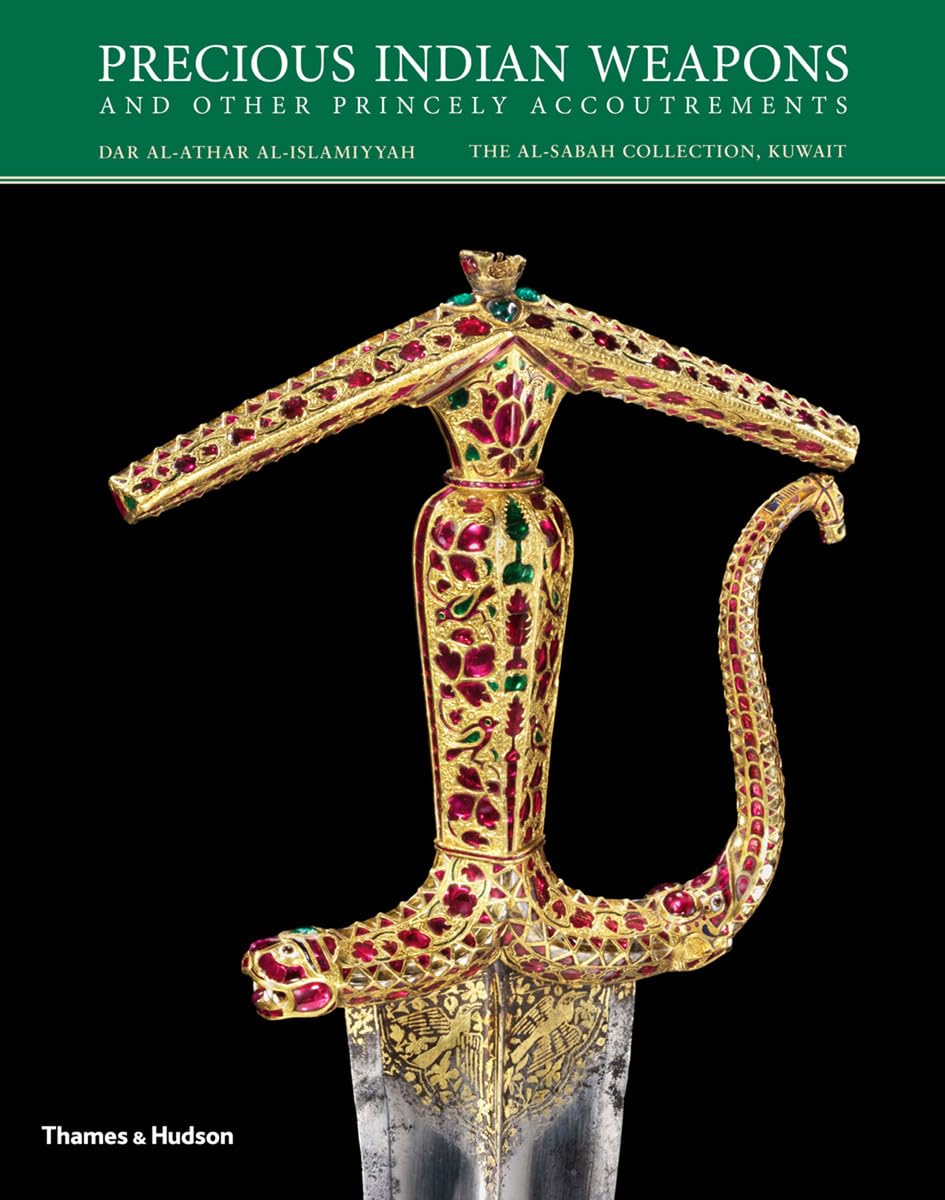
Precious Indian Weapons and other Princely Accoutrements
Book
Kaoukji, S. (2017)Precious Indian Weapons and other Princely Accoutrements. London, Thames and Hudson, 504 pp.
Record No. 27827 | ISBN/ISSN: 9780500000000 | Sinkankas/Born No.: NIS/NIB | not seen
This spectacular collection of nearly 200 jewelled weapons and priceless accoutrements from the Indian subcontinent was assembled over many decades. Produced for aristocratic patrons who valued the arts, these richly decorated edged weapons and other princely objects bear witness to the legendary opulence and refinement of the Indian courts during the sixteenth to the nineteenth centuries. The 9th edition of T&H series on TASC, this is a dazzling celebration of one of the world’s greatest collections of precious weapons. The ninth in Thames & Hudson’s acclaimed series with The al-Sabah Collection, Precious Indian Weapons is divided into fourteen chapters that explore the intricacies and details of hilts, knives, swords, and various other weapons. Rendered in silver, gold, and gems, the dazzling array of decorative motifs presented here includes intricate floral, geometric, and animal designs that testify both to the astonishing skill of their craftsmen and to the area’s complex interconnected cultural histories.
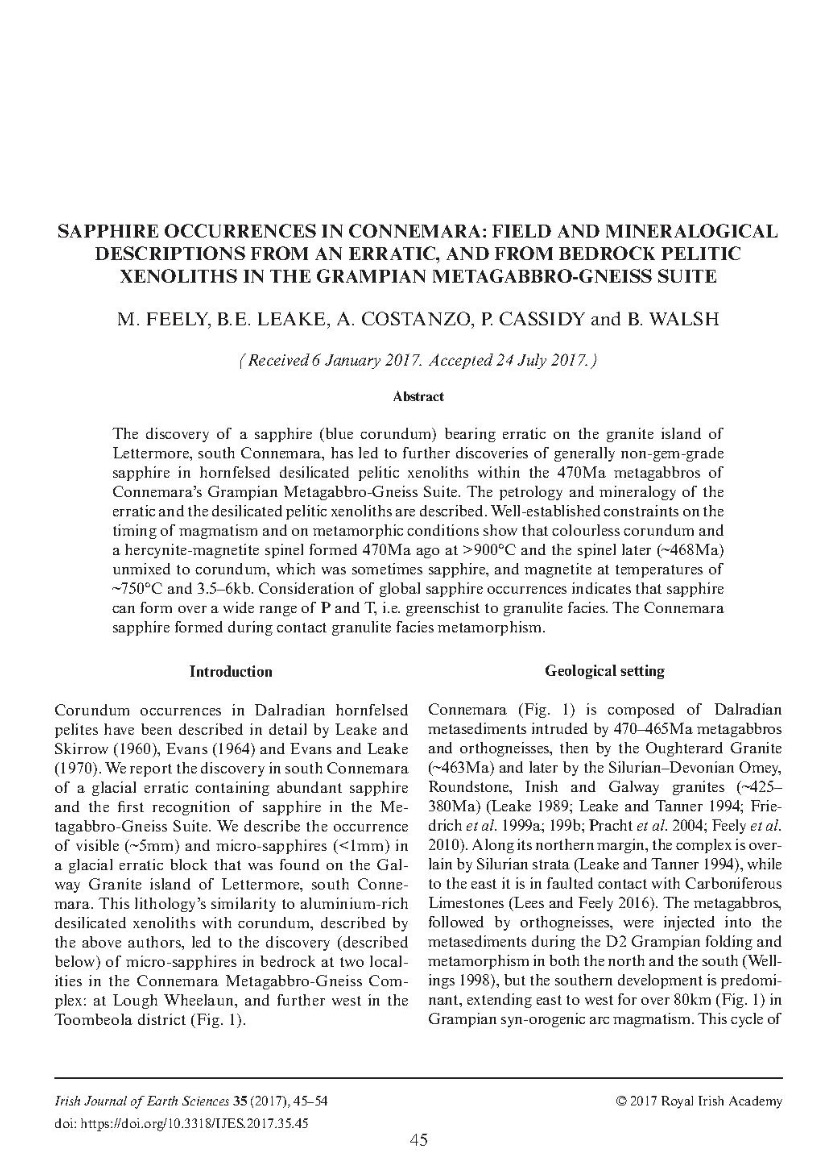
Feely, M., Leake, B.E., Costanzo, A., Cassidy, P. and Walsh, B. (2017) Sapphire occurrences in Connemara: Field and mineralogical descriptions from an erratic, and from bedrock pelitic xenoliths in the Grampian Metagabbro-Gneiss Suite.Irish Journal of Earth Sciences, Vol. 35, pp. 45–54.
The discovery of a sapphire (blue corundum) bearing erratic on the granite island of Lettermore, south Connemara, has led to further discoveries of generally non-gem-grade sapphire in hornfelsed desilicated pelitic xenoliths within the 470 Ma metagabbros of Connemara’s Grampian Metagabbro-Gneiss Suite. The petrology and mineralogy of the erratic and the desilicated pelitic xenoliths are described. Well-established constraints on the timing of magmatism and on metamorphic conditions show that colourless corundum and a hercynite-magnetite spinel formed 470 Ma ago at >900 °C and the spinel later (~468 Ma) unmixed to corundum, which was sometimes sapphire, and magnetite at temperatures of ~750 °C and 3.5–6 kb. Consideration of global sapphire occurrences indicates that sapphire can form over a wide range of P and T, i.e. greenschist to granulite facies. The Connemara sapphire formed during contact granulite facies metamorphism.
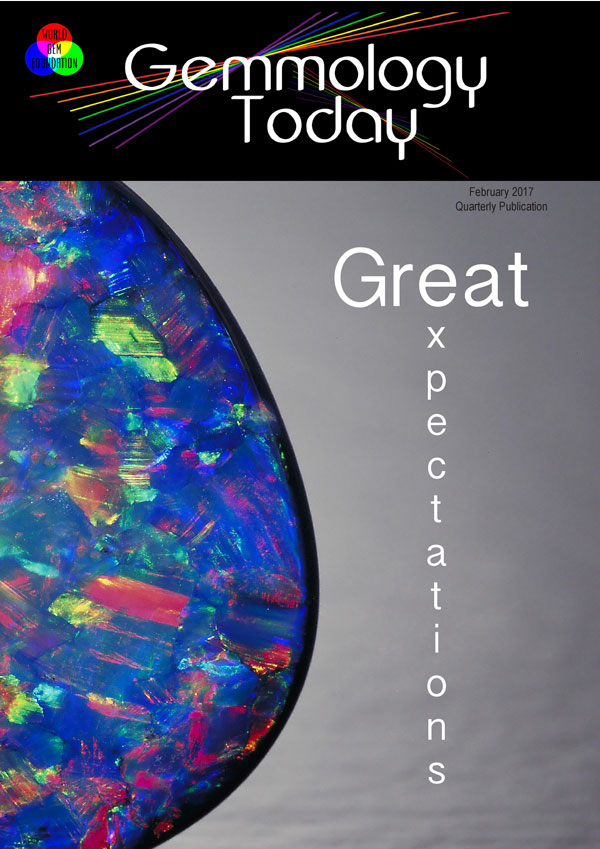
Women in Gemmology: Interview with E. Billie Hughes
Journal Article
Dominy, G. (2017) Women in Gemmology: Interview with E. Billie Hughes.Gemmology Today, February, pp. 14–21.
Record No. 4105 | seen
Reference copied to clipboard!
gems, corundum, inclusions.5, E. Billie Hughes, Lotus Gemology
Today women are playing an integral role in the jewellery and gemstone industry from the store front to the laboratory. Here we look at the women who are making a difference.
Mineralogy and petrology of the An Phu marble hosted spinel and corundum deposit, Luc Yen, N-Vietnam
Conference Paper
Hauzenberger, C.A., Bagola, C., Haeger, T., Muellen, C., Khoi, N.N. and Huong, L.T.T. (2014)Mineralogy and petrology of the An Phu marble hosted spinel and corundum deposit, Luc Yen, N-Vietnam. Proceedings of the 4th International Gem and Jewelry Conference, Chiang Mai, Thailand pp. 76–78.
Record No. 7792 | not seen
Reference copied to clipboard!
gems, spinel, ruby, Vietnam
Spectroscopic identification of rubies
Journal Article
Gayevsy, Y., Grushinskaya, E. and Belichinko, E. (2012) Spectroscopic identification of rubies.Russian Diamonds & Jewellery, Winter, pp. 12–14.
Record No. 7776 | not seen
Reference copied to clipboard!
corundum, color.4, gems
Comments on spectrophotometers in gem labs
Personal Communication
Scarratt, K. (2012)Comments on spectrophotometers in gem labs.
Record No. 3242 | JLEL
Reference copied to clipboard!
gems, corundum, color.4
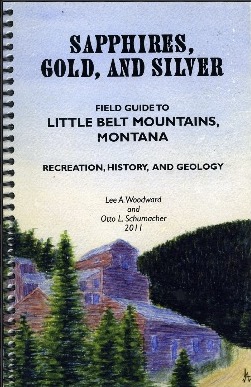
Sapphires, Gold and Silver: Field guide to Little Belt Mountains, Montana
Book
Woodward, L.A. and Schumacher, O.L. (2011)Sapphires, Gold and Silver: Field guide to Little Belt Mountains, Montana., Running Wolf Press
Record No. 28138 | Sinkankas/Born No.: NIS/NIB | not seen
Reference copied to clipboard!
gems, corundum, USA.12, Montana.12, sapphire, Little Belt Mountains, gold, silver
Ancient jade workshops: Archaeological reconnaissance in the upper Rio El Tambor, Guatemala
Book Section
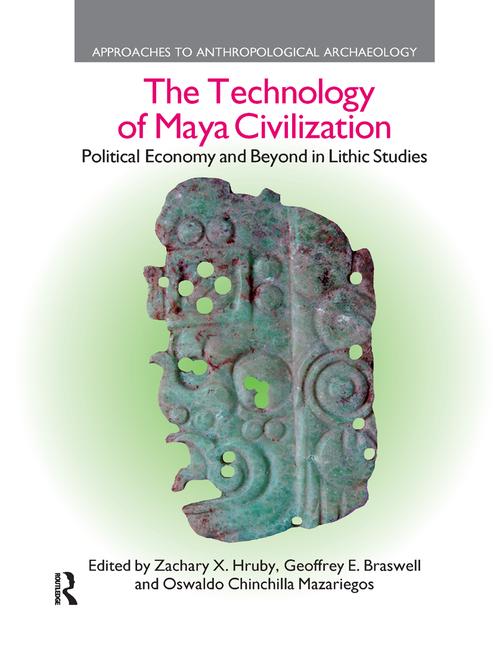
Taube, K.A., Hruby, Z.X. and Romero, L.A. (2011) Ancient jade workshops: Archaeological reconnaissance in the upper Rio El Tambor, Guatemala. In: The Technology of Maya Civilization: Political Economy Amd Beyond in Lithic Studies, London: Routledge, pp. 141–148.
Record No. 6178 | Sinkankas/Born No.: NIS/NIB | not seen
The ancient Maya shaped their world with stone tools. Lithic artifacts helped create the cityscape and were central to warfare and hunting, craft activities, cooking, and ritual performance. 'The Technology of Maya Civilization' examines Maya lithic artefacts made of chert, obsidian, silicified limestone, and jade to explore the relationship between ancient civilizations and natural resources. The volume presents case studies of archaeological sites in Guatemala, Mexico, Belize, and Honduras. The analysis draws on innovative anthropological theory to argue that stone artefacts were not merely cultural products but tools that reproduced, modified, and created the fabric of society.
Civilization: The West and the Rest
Book
Ferguson, N. (2011)Civilization: The West and the Rest. New York, Penguin Press, 402 pp.
Record No. 3312 | Sinkankas/Born No.: NIS/NIB | LTL
Cartier, L.E. (2011) Rubis et saphirs de Marosely, Madagascar. [Rubies and sapphires of Marosely, Madagascar]Revue de Gemmologie A.F.G., No. 175, pp. 9–13.
Record No. 3137 | Language: in French | not seen
Reference copied to clipboard!
corundum, Madagascar.12, gems
This article examines the eluvial corundum deposit recently discovered at Marosely, in south-central Madagascar. The material ranges from red to blue, and stones are typically zoned, giving them an overall purple color. FTIR spectra show the presence of 3160 and 3309 cm⁻¹ absorptions in the untreated corundum. The relevance of these bands to the detection of heat-treated corundum is discussed. LA-ICP-MS data for chromophores in color-zoned samples are consistent with EDXRF spectroscopy. Results for other trace elements (i.e., concentrations of <1000 ppm) proved less revealing. Further research using other analytical methods is needed to advance the study of the corundum origin.
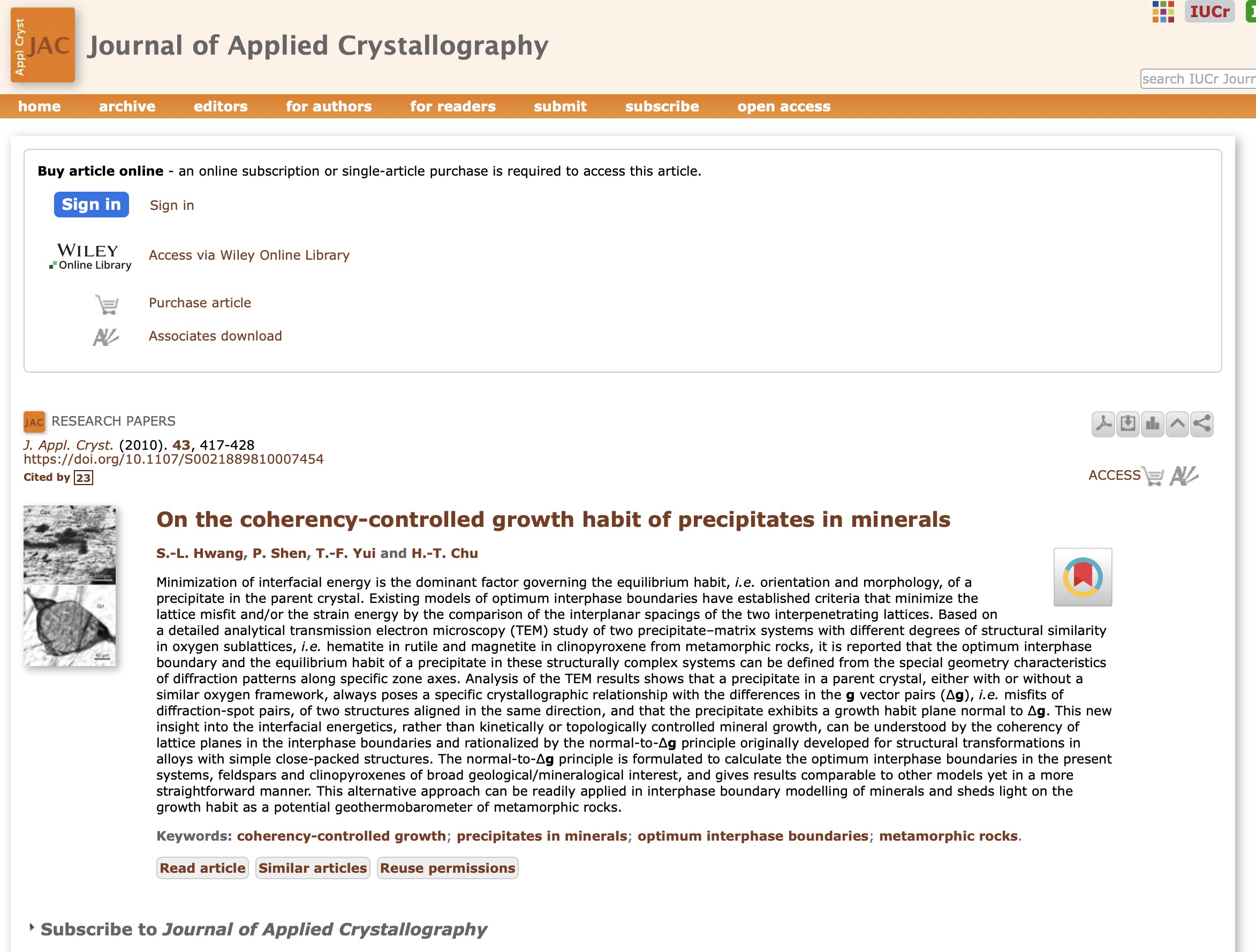
Hwang, S.-L., Shen, P., Yui, T.-F. and Chu, H.-T. (2010) On the coherency-controlled growth habit of precipitates in minerals.Journal of Applied Crystallography, Vol. 43, No. 3, pp. 417–428.
Minimization of interfacial energy is the dominant factor governing the equilibrium habit, i.e. orientation and morphology, of a precipitate in the parent crystal. Existing models of optimum interphase boundaries have established criteria that minimize the lattice misfit and/or the strain energy by the comparison of the interplanar spacings of the two interpenetrating lattices. Based on a detailed analytical transmission electron microscopy (TEM) study of two precipitate-matrix systems with different degrees of structural similarity in oxygen sublattices, i.e. hematite in rutile and magnetite in clinopyroxene from metamorphic rocks, it is reported that the optimum interphase boundary and the equilibrium habit of a precipitate in these structurally complex systems can be defined from the special geometry characteristics of diffraction patterns along specific zone axes. Analysis of the TEM results shows that a precipitate in a parent crystal, either with or without a similar oxygen framework, always poses a specific crystallographic relationship with the differences in the g vector pairs ([Delta]g), i.e. misfits of diffraction-spot pairs, of two structures aligned in the same direction, and that the precipitate exhibits a growth habit plane normal to [Delta]g. This new insight into the interfacial energetics, rather than kinetically or topologically controlled mineral growth, can be understood by the coherency of lattice planes in the interphase boundaries and rationalized by the normal-to-[Delta]g principle originally developed for structural transformations in alloys with simple close-packed structures. The normal-to-[Delta]g principle is formulated to calculate the optimum interphase boundaries in the present systems, feldspars and clinopyroxenes of broad geological/mineralogical interest, and gives results comparable to other models yet in a more straightforward manner. This alternative approach can be readily applied in interphase boundary modelling of minerals and sheds light on the growth habit as a potential geothermobarometer of metamorphic rocks.
Sagesses Minérales: Médecine et Magie des Pierres Précieuses au Moyen Âge
Mineral Wisdoms: Medicine and Magic of Precious Stones in the Middle Ages
Book
Gontero-Lauze, V. (2010)Sagesses Minérales: Médecine et Magie des Pierres Précieuses au Moyen Âge. [Mineral Wisdoms: Medicine and Magic of Precious Stones in the Middle Ages] Paris, Classiques Garnier, 316 pp.
Record No. 27902 | ISBN/ISSN: 9782810000000 | Sinkankas/Born No.: NIS/NIB | Language: in French | not seen
Reference copied to clipboard!
gems, early lapidaries, early gemology, early mineralogy, Albertus Magnus, Philippe de Thaon, Jean de Mandeville, Middle Ages, medieval, medicine, Bible, magic, symbolism, beastiary
Treatises on precious stones, lapidaries catalogue and describe gems, then present their medicinal and magical virtues. The emerald heals vision; the sapphire enables escape from prison; the diamond, like the sapphire, is the stone of love; the carbuncle, which is born in the head of the dragon, shines with a dazzling brilliance, and so on. From the lapidary of Philippe de Thaon to that of Jean de Mandeville, these little-known texts open a window into the world of the marvelous, while shedding light on medieval encyclopedism. These treatises on precious stones present the inventory of the jewels and their medical and magical qualities. This volume gives the translation of five treatises dating from the 12th to the 14th century, thus giving access to these difficult texts so that their importance for the history of science and for social history of mentalities may be appreciated.
Comparative study of rubies and fancy sapphires from two different deposit types in Yen Bai Province, Vietnam
Conference Paper
Khoi, N.N., Sutthirat, C., Tuan, D.A., Nam, N.V., Thuyet, N.T.M. and Nhung, N.T. (2010)Comparative study of rubies and fancy sapphires from two different deposit types in Yen Bai Province, Vietnam. Proceedings of the 5th International Conference “Provenance and Properties of Gems and Geo-Materials" Hanoi", October 17–24,
Sotheby's (2010)Magnificent Jewels. New York: Sotheby’s, 9 December
Record No. 4548 | not seen
Reference copied to clipboard!
gems, jade, jadeite, fei cui jade, jade at auction
This sale contained Lot 435, a necklace gifted to one of the daughters of Java sugar magnate, Oei Tiong Ham. The single-strand composed of 30 jadeite beads of uniform size, measuring approximately 13.44 to 13.32 mm., the translucent stones of brilliant emerald green color, some suffused with areas of paler hue, the silver clasp of later date centering a round star sapphire flanked by 2 translucent pear-shaped emerald cabochons, length 19¾ inches.
Rubin in Zoisit—ein Klassiker aus Longido in Tansania
Ruby in zoisite—A classic from Longido, Tanzania
Journal Article
Hintze, J. (2010) Rubin in Zoisit—ein Klassiker aus Longido in Tansania. [Ruby in zoisite—A classic from Longido, Tanzania]Lapis, Vol. 35, No. 12, pp. 15–19.
Record No. 3026 | Language: in German | not seen
Reference copied to clipboard!
corundum, Tanzania.12, gems
Exploring the Literature of Corundum
Ruby and sapphire research spans mineralogy, gem deposits, identification, treatments, synthesis and the history of the gem trade. Older publications can also be useful for tracing terminology, early observations and accounts of mining localities. Publication dates and the original source should be considered when using historical descriptions.
Four Treasures is Lotus Gemology's freely accessible gemological reference database. Use the full database to search by author, title or keyword and explore literature on gemology, mineralogy, jewelry and related fields. Where available, hyperlinks on titles may lead directly to the full publication.

![Reinheitsverbesserung von Korunden durch Rissbehandlung [Clarity enhancement of corundum by fissure treatment]](/media/publications/14549716570739735552_book.jpg "Reinheitsverbesserung von Korunden durch Rissbehandlung [Clarity enhancement of corundum by fissure treatment]")
![Nachweis der Temperaturbehandlung von Korund [Identification of the heat treatment of corundum]](/media/publications/06161108573390531840_book.jpg "Nachweis der Temperaturbehandlung von Korund [Identification of the heat treatment of corundum]")
![Diffusions- und Oberflächenbehandlung bei Korunden [Diffusion and surface treatment of corundum]](/media/publications/40554398811595363584_book.jpg "Diffusions- und Oberflächenbehandlung bei Korunden [Diffusion and surface treatment of corundum]")
![Behandelte Korunde - Einführung in die Thematik [Treated corundum - Introduction to the topic]](/media/publications/37694182491477909504_book.jpg "Behandelte Korunde - Einführung in die Thematik [Treated corundum - Introduction to the topic]")