Ruby & Sapphire Bibliography

Ruby & Sapphire Bibliography

Explore books, articles and historical sources on ruby, sapphire and corundum in Four Treasures, the Lotus Gemology reference database. This bibliography brings together matching records from the collection, with publication details, abstracts and cover images where available.

Ruby & Sapphire References

The list below matches the terms ruby, rubies, sapphire or corundum in the database's searchable fields. Some references discuss these gems as part of a broader subject. Linked titles take you to external links where you may find the full reference.
4,161–4,180 of 4,671 matching references

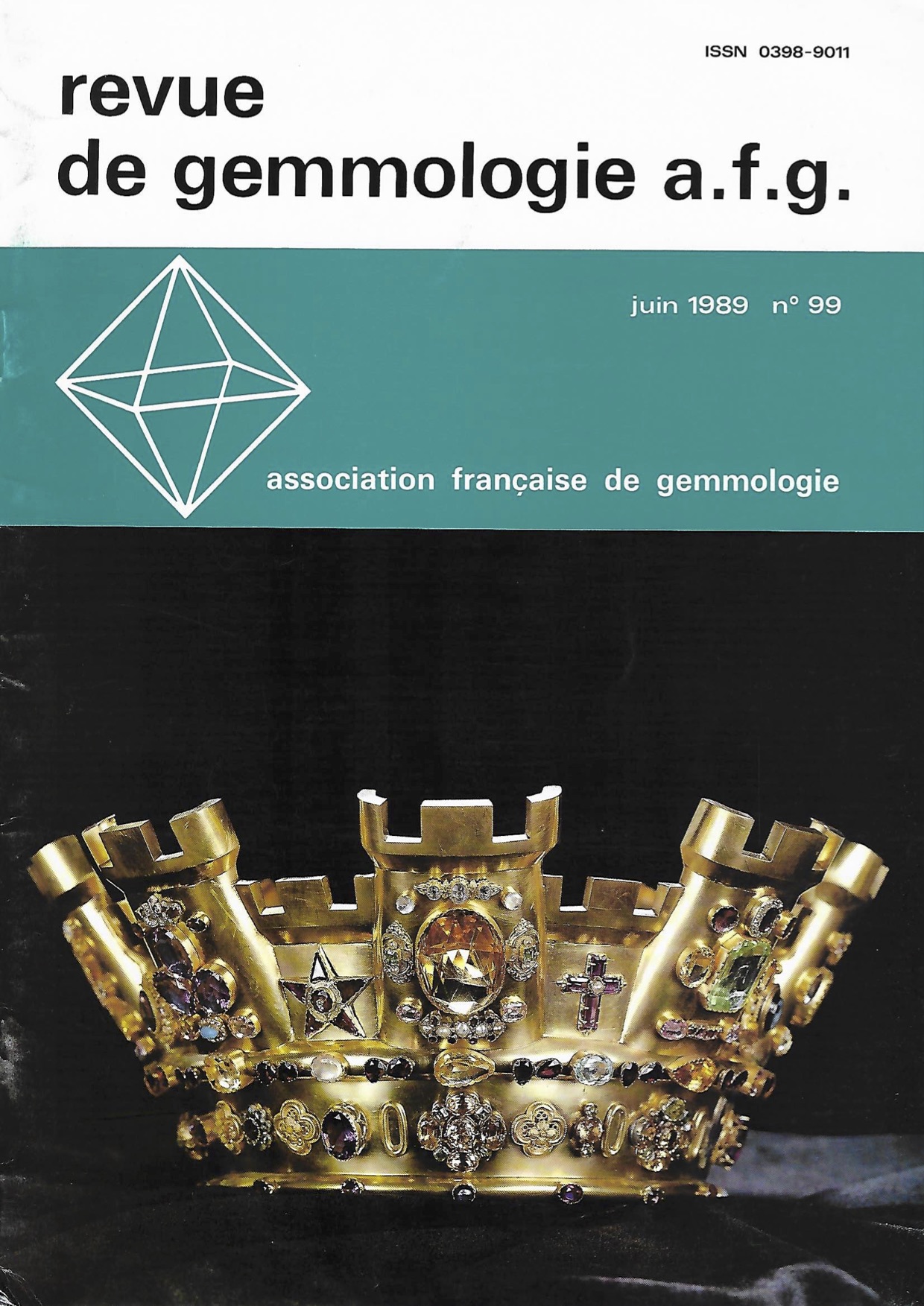
Le nouveau traitement produisant des couleurs orange à jaune dans les saphirs
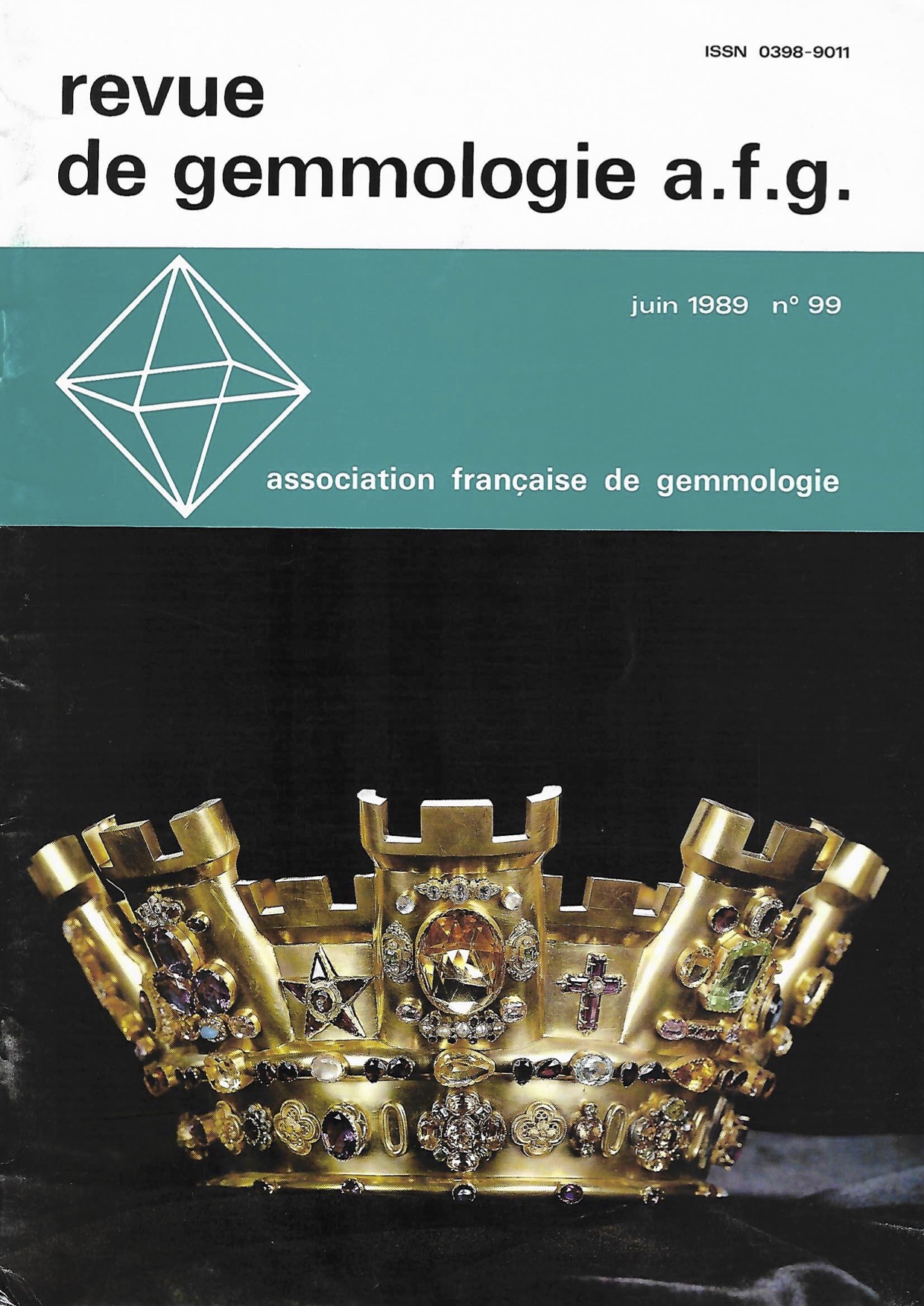
The new treatment producing orange to yellow colors in sapphires
Journal Article
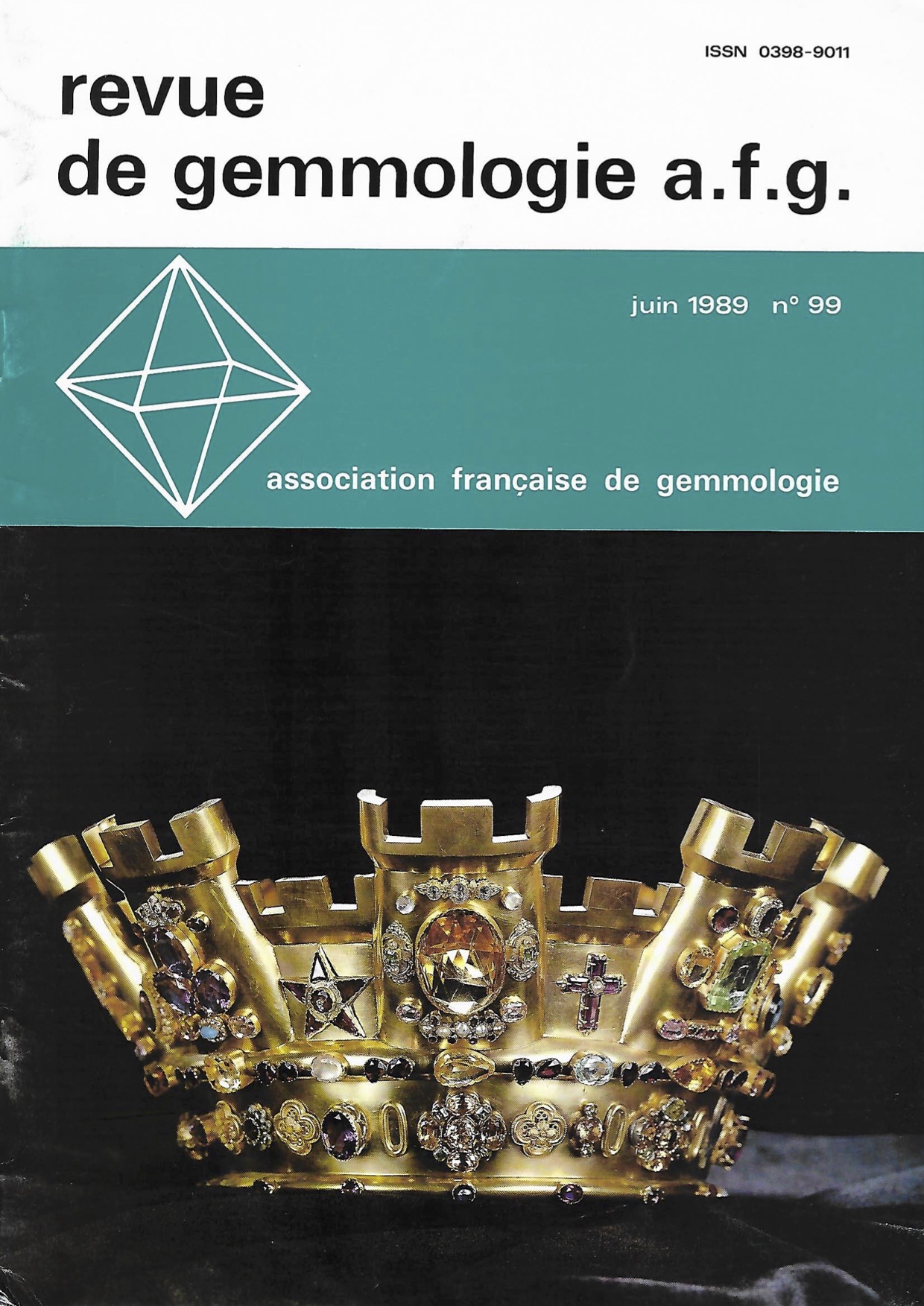
Fritsch, E., Chalain, J.P., Hänni, H., Devouard, B., Chazot, G., Giuliani, G., Schwarz, D., Rollion-Bard, C., Garnier, V., Barda, S., Ohnenstetter, D., Notari, F. and Maitrallet, P. (2003) Le nouveau traitement produisant des couleurs orange à jaune dans les saphirs. [The new treatment producing orange to yellow colors in sapphires] Revue de Gemmologie A.F.G., No. 147, pp. 11–23.
Record No. 7777  |  Language: in French  |  not seen

Comment l'observation de la luminescence (fluorescence) peut aider à l'identification des corindons jaunes, rose orangé et orange, traités par diffusion de béryllium
How the observation of luminescence (fluorescence) can aid in the identification of yellow, pink-orange, and orange corundums treated by beryllium diffusion
Journal Article
Notari, F., Fritsch, E. and Grobon, C. (2003) Comment l'observation de la luminescence (fluorescence) peut aider à l'identification des corindons jaunes, rose orangé et orange, traités par diffusion de béryllium. [How the observation of luminescence (fluorescence) can aid in the identification of yellow, pink-orange, and orange corundums treated by beryllium diffusion] Revue de Gemmologie A.F.G., No. 148, pp. 40–43.
Record No. 7774  |  Language: in French  |  not seen

Study on large-sized ruby grown by temperature gradient technique

Journal Article
Song, C., Zhou, S., Si, J., Li, H., Zhou, G., Hang, Y. and Xu, J. (2003) Study on large-sized ruby grown by temperature gradient technique. Journal of Synthetic Crystals, Vol. 32, No. 5, pp. 423–426.
Record No. 7735  |  not seen
Large crystals of synthetic ruby (not of gem quality) were grown by the temperature gradient technique from seed plates using Al₂O₃ powders mixed with 0.5–3% Cr₂O₃. Crystallization started at 2,050 °C; cooling rates were 0.5–2.5 °C/hour. The largest crystal measured 75 mm in diameter, 45 mm long, and weighed 1,076 g. This crystal was dark red in the center and even darker red (almost black) at its edges and bottom. Wave-like growth bands were observed in the top portion, while clouds of minute inclusions were concentrated near the seed plate. The concentration of the inclusions decreased from edge to center and from bottom to top, resulting in a “trumpet”-shaped distribution along the growth direction similar to that found in synthetic Ti-doped sapphire crystals grown by the same technique. Electron-microprobe analysis showed that the inclusions were mainly uncrystallized Al₂O₃ powder. Gas bubbles or voids also were observed. Microprobe and spectroscopic (visible range) data showed that the Cr³⁺ concentration increased in two directions (i.e., from center to edge and from bottom to top), corresponding to the growth progression. The authors propose that the quality of synthetic ruby crystals produced by this method could be improved by optimizing the cooling rate, purifying the raw materials, and controlling the temperature during growth.
Les gisements de rubis associés aux marbres de l'Asie Centrale et du Sud-Est: genèse et caractérisation isotopique
Les gisements de rubis associés aux marbres de l'Asie Centrale et du Sud-Est: genèse et caractérisation isotopique

The ruby deposits associated with marbles from Central and Southeast Asia: genesis and isotopic characterization
Thesis
Garnier, V. (2003) Les gisements de rubis associés aux marbres de l'Asie Centrale et du Sud-Est: genèse et caractérisation isotopique. [The ruby deposits associated with marbles from Central and Southeast Asia: genesis and isotopic characterization]., Vandoeuvre-lès-Nancy: Institut National Polytechnique de Lorraine, 373 pp.
Record No. 7352  |  Language: in French  |  not seen

The peculiarity of olivine from Sri Lanka
Journal Article
Graziani, G., Martarelli, L. and Zoysa, G. (2002) The peculiarity of olivine from Sri Lanka. Gemmologie: Zeitschrift der Deutschen Gemmologischen Gesellschaft, Vol. 51, No. 1, pp. 29–48.
Record No. 27026  |  not seen

Rubis trapiches de Mong Hsu, Myanmar

Trapiche rubies from Mong Hsu, Myanmar
Journal Article
Garnier, V., Ohnenstetter, D., Giuliani, G. and Schwarz, D. (2002) Rubis trapiches de Mong Hsu, Myanmar. [Trapiche rubies from Mong Hsu, Myanmar] Revue de Gemmologie. A.F.G., No. 144, pp. 5–12.
Record No. 7763  |  Language: in French  |  not seen
After a comparison of the geologic occurrences of trapiche emerald and trapiche ruby, and a discussion of the various theories proposed for their formation, this article presents the results of an investigation of the chemical compositions, and the solid and fluid inclusions, of six trapiche rubies from Mong Hsu. The study used advanced analytical techniques such as energy- and wavelength-dispersive spectrometry and “cold” cathodoluminescence. The authors identify 12 minerals not previously reported as inclusions in trapiche rubies or as components of their skeletal “arms.” The rubies show a chemical zonation that can be linked to variations in the chemical composition of the growth fluid. The chromium content, in particular, appears to be related to variations in the circulation of metasomatic fluids rich in REE (rare-earth element) fluorides.

Ladder-shaped hydrothermal growth of color [sic] corundum crystals

Journal Article
Chen, Z., Zheng, J., Zhang, C., Huo, H., Zhou, W. and Shen, H. (2002) Ladder-shaped hydrothermal growth of color [sic] corundum crystals. Journal of Synthetic Crystals, Vol. 31, No. 1, pp. 18–21.
Record No. 7760  |  not seen
Researchers in Guilin, China, have developed a new type of autoclave for the hydrothermal growth of synthetic corundum. This autoclave has a growth ladder made of gold wires that can accommodate six to ten seed crystals simultaneously. The crystal growth zone of the autoclave is 300 mm long and features a temperature gradient of 0.27 °C/cm. The temperature in the growth zone ranges from 505° to 515 °C, while the dissolution zone ranges from 550° to 580 °C. The operating pressure is approximately 1,500–2,000 atmospheres. Various colors of synthetic corundum—including red, pink, yellow to orange-yellow, yellowish green, brownish red, and “white”—have been successfully grown by adding different dopants (e.g., Cr³⁺, V³⁺, Mn³⁺, Co³⁺, Ni²⁺, Ni³⁺). The concentration of these impurities in the growth environment is regulated by the diameters of openings in the capsules that contain them. High-quality synthetic corundum crystals measuring 30 × 25 × 10 mm (60–90 ct) are produced in seven to ten days.
Nontraditional genetic classification of gem corundum deposits

Nontraditional genetic classification of gem corundum deposits

Journal Article
Melnikov, E.P., Vasiliev, A.V. and M.A., V. (2002) Nontraditional genetic classification of gem corundum deposits. Gemological Bulletin (Gemological Society of Russia), No. 5, pp. 7–18.
Record No. 7749  |  not seen
Based on mineralogic and geologic research on corundum occurrences in Russia, and published data on corundum localities occurring elsewhere, it is emphasized that regional metamorphism of different rock types (e.g., marble, gneiss) is the major factor controlling the formation of corundum deposits and determining the quality of the gems they contain. The chemical and physical properties of the metamorphic host rocks ultimately determine the characteristics of gem corundum. The sapphires from Kashmir and rubies from Myanmar, which formed in metamorphic environments, are cited as examples. The superb gems from these deposits had the appropriate chromophoric elements available during their formation, under the proper metamorphic conditions. Characteristic mineral inclusions are considered indicative of specific genetic types of corundum, and, for alluvial stones, the inclusions can be used to infer the origin of the gem corundum. Gem corundums originating from other geologic sources (e.g., igneous or metasomatic) are likely to be of lower quality than those of metamorphic origin.
Ruby and sapphire provinces [and belts] of the world

Ruby and sapphire provinces [and belts] of the world

Journal Article
Melnikov, E.P. and Viktorov, M.A. (2002) Ruby and sapphire provinces [and belts] of the world. Gemological Bulletin, No. 3, pp. 18–25.
Record No. 7740  |  not seen
Russian geologists have classified gem corundum deposits into 12 genetic types based on their worldwide geographic occurrence and the geology of these areas (e.g., tectonic features, igneous and metamorphic events, volcanism, rock types, ages of major rock units, and geologic origin of economic gem deposits) on global, regional, and local scales. Three are “provinces” (covering hundreds of thousands to millions of square kilometers): (1) Southeast Asia—China, Vietnam, Laos, Cambodia, Thailand; (2) South Asia—Myanmar, India, Nepal, Pakistan, Tajikistan; and (3) Karelia-Kola in Russia. Six are “belts,” which are smaller, and usually elongate with folded and faulted rocks; they are found in Australia, China, Russia (e.g., the Ural Mountains), East Africa (also including Madagascar and South Africa), West Africa, and Brazil. Three are “areas,” which are even smaller units (measured in thousands of square kilometers): Nigeria, Colombia, and the U.S. (North Carolina and Montana). All deposits described in this paper are grouped into “monogenic” and “polygenic” types. Monogenic deposits are magmatic, pegmatitic, or metasomatic, whereas polygenetic deposits have a metamorphic or metamorphic-metasomatic origin. All 12 types of gem corundum deposits are described with details and, where possible, using a representative deposit. For example, historical data, a description of the corundum crystals, production figures, future economic potential, geologic origin, and a geologic cross-section are presented for the Koltashi deposit in the Urals, which is representative of the Ural belt. Such information is of practical value to anyone who is searching for gem corundum deposits.

Eine neue Diffusionsbehandlung liefert orangefarbene und gelbe Saphire [A new diffusion treatment supplies orange and yellow sapphires]
A new diffusion treatment supplies orange and yellow sapphires
Journal Article
Hänni, H.A. and Pettke, T. (2002) Eine neue Diffusionsbehandlung liefert orangefarbene und gelbe Saphire [A new diffusion treatment supplies orange and yellow sapphires]. [A new diffusion treatment supplies orange and yellow sapphires] Gemmologie: Zeitschrift der Deutschen Gemmologischen Gesellschaft, Vol. 51, No. 4, pp. 137–152.
Record No. 7732  |  Language: In German  |  not seen
Since 2001, large amounts of treated orange to yellow and “padparadscha”-like sapphires have appeared in the gem trade. The rough material mainly came from Songea (Tanzania) and Ilakaka (Madagascar). About 150 of these stones were examined with several methods. The results showed that the stones were not only heat treated, but also diffusion-treated with beryllium (Be). The diffusioninduced color may extend as much as several millimeters into the stone (which, when small, means the entire stone). Unlike traditional diffusion treatment, the Be diffusion may not be undetectable by viewing the color distribution in immersion.. The Be content in corundum is normally less than ~1 ppm. However, this new Be diffused corundum typically contains 10–15 ppm beryllium. The original trace-element contents of the natural material strongly influence the outcome of the diffusion treatment. This new type of diffusion-treated sapphire has raised concerns about the identification of such stones and the terminology used to describe them.

What a little radiation can do

Journal Article
Scarratt, K. (2002) What a little radiation can do. Rapaport Diamond Report, 1-Mar, pp. 109–113.
Record No. 6783  |  not seen

A review of developments in shaped crystal growth of sapphire by the Stepanov and related techniques
Journal Article
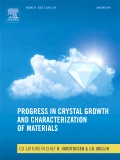
Antonov, P.I. and Kurlov, V.N. (2002) A review of developments in shaped crystal growth of sapphire by the Stepanov and related techniques. Progress in Crystal Growth and Characterization of Materials, Vol. 44, No. 2, pp. 63–122.
Record No. 5308  |  not seen
The Stepanov method is a specialized technique for growing crystals from a melt. Compared to other melt processes, such as the Czochralski or “pulling” method, its major advantage is that the shape (cross-section) of a crystal can be gradually changed during growth. The basic requirement is that a melt column with a defined shape be formed, which is accomplished with the aid of a special “shaper.” Liquid melt columns with various shapes can be made by properly applying a high-frequency electromagnetic field.. Since the initial work by Stepanov in 1938, progress in developing the method has proceeded along two lines: (1) development of technology for producing single crystals of a desired shape, and (2) understanding the physical phenomena involved in the formation of the shaped crystals. Synthetic sapphire crystals with various defined shapes, primarily for industrial use, have been successfully grown using this technique. For example, synthetic sapphire tubes up to 85 mm in diameter and ribbons 120 mm wide have been grown and used for their optical properties. Sapphire rods with various shapes have also been grown. Microvoids and gas bubbles are the main defects found in such crystals.TL

Beryllium analysis by secondary ion mass spectroscopy
Book Section
Hervig, R.L. (2002) Beryllium analysis by secondary ion mass spectroscopy. In: Beryllium: Mineralogy, Petrology, and Geochemistry, Reviews in Mineralogy and Geochemistry, Washington, DC: Mineralogical Society of America, Vol. 50 , pp. 319–332.
Record No. 3199  |  Sinkankas/Born No.: NIS/NIB  |  not seen

Orange treated sapphire—towards finding a name for a new product
Journal Article
Hänni, H.A. (2002) Orange treated sapphire—towards finding a name for a new product. Journal of the Gemmological Association of Hong Kong, Vol. 23, pp. 23–28.
Record No. 3198  |  not seen

The evaluation and pricing of star sapphires
Journal Article
Robertson, S. (2002) The evaluation and pricing of star sapphires. The Guide, Vol. 21, No. 6, pp. 8–10.
Record No. 2683  |  not seen
If you have ever visited a gem show, you no doubt have seen the paper plate displays of pale colored star sapphires that are common fixtures at industry venues like Tucson and Las Vegas. Although, technically speaking, the contents of these plates are in fact star sapphires, they are hardly representative of the beauty that these phenomenal gems can exhibit. In this article we will examine the factors currently influencing the star sapphire market. We will examine the quality traits that are considered during grading as well as assess current demand and availability of natural blue star sapphire. And we will conclude with some thoughts on pricing.

Is it pink or is it padparadscha?

Journal Article
Scarratt, K. (2002) Is it pink or is it padparadscha? Rapaport, Vol. 25, pp. 103–109.
Record No. 2539  |  not seen

Comparative study of corundum from various Indian occurrences – corundum from Kerala
Journal Article
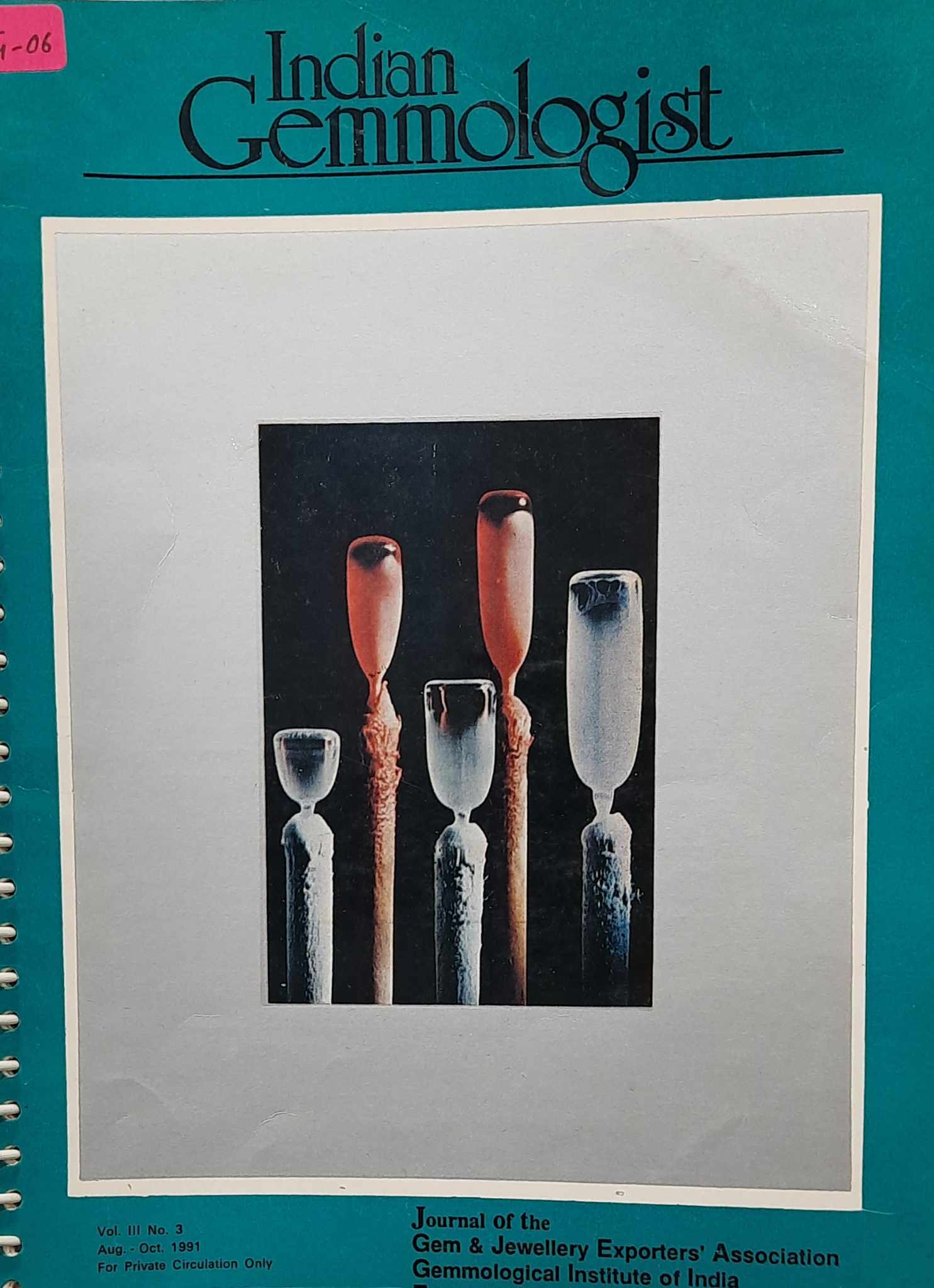
Panijikar, J. (2002) Comparative study of corundum from various Indian occurrences – corundum from Kerala. Indian Gemmologist, Vol. 10, No. 4, pp. 23–28.
Record No. 2521  |  Sinkankas/Born No.: NIS/NIB  |  not seen

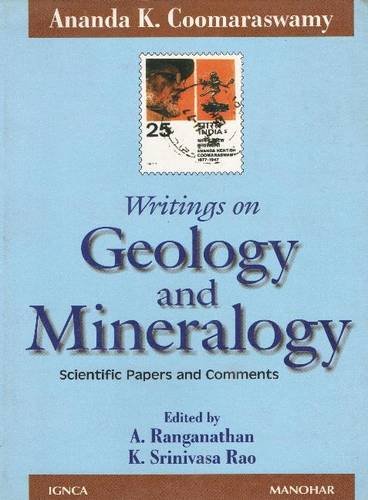
Writings on Geology and Mineralogy: Scientific Papers and Comments

Book
Coomaraswamy, A.K. (2001) Writings on Geology and Mineralogy: Scientific Papers and Comments. New Delhi, Indira Gandhi National Centre for the Arts and Manohar Publishers & Distributors, xxix + 319 pp.
Record No. 29511  |  ISBN/ISSN: 9788170000000  |  Sinkankas/Born No.: NIS/NIB  |  not seen
A posthumous collection of Ananda K. Coomaraswamy’s writings on the geology and mineralogy of Ceylon, bringing together his scientific papers, official reports, and related comments from the period when he served as Director of the Mineralogical Survey of Ceylon. The volume documents his geological and mineralogical investigations of the island, including studies of rocks, minerals, ore deposits, and economically important mineral resources, and reprints his Ceylon Administrative Reports for 1903–1906. Of particular gemological interest are his observations on Ceylon’s gem deposits and gem-mining industry, including the occurrence, recovery, and distribution of precious stones. The collection preserves the early scientific work of Coomaraswamy before his subsequent career as an influential historian of Indian and Asian art and provides an important contemporary source for the geology, mineralogy, and gemology of early twentieth-century Ceylon.
La clarté de ­l’escarboucle dans les romans antiques

La clarté de ­l’escarboucle dans les romans antiques

The brilliance of the carbuncle in ancient romances
Journal Article
Gontero-Lauze, V. (2001) La clarté de ­l’escarboucle dans les romans antiques. [The brilliance of the carbuncle in ancient romances] PRIS-MA, Recherches sur la littérature ­d’imagination au Moyen Âge, Clarté: Essais sur la lumière I, January–June, pp. 57–71.
Record No. 28053  |  Sinkankas/Born No.: NIS/NIB  |  Language: in French  |  not seen

Rich gemstone potentials discovered in Somaliland

Journal Article
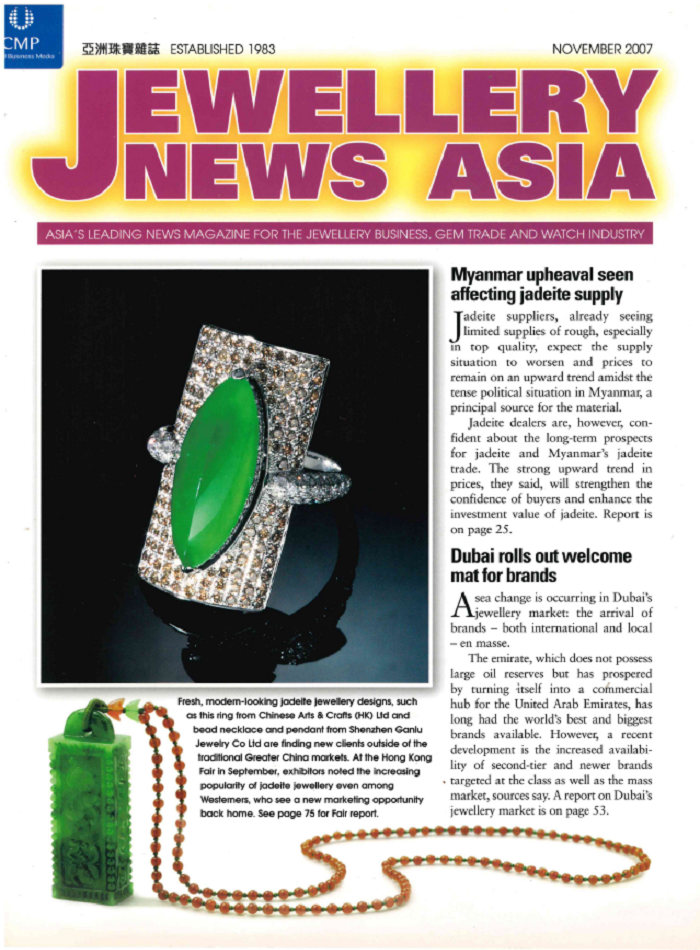
Kinnaird, J.A. (2001) Rich gemstone potentials discovered in Somaliland. Jewellery News Asia, No. 197, January, pp. 58, 60, 62–63.
Record No. 26743  |  not seen
Recent geological surveys indicate that Somaliland has abundant deposits of gemstones, from emerald to aquamarine, ruby and sapphire as well as vast amounts of garnet, quartz and opal, and lesser-known minerals such as titanite and vesuvianite. Somaliland in northern Africa appears to be the new potential gemstone-bearing area comparable to Madagascar or Tanzania. In addition to pegmatite, which are the host rocks of emerald and other kinds of beryl such as aquamarine, Somaliland has metamorphic rocks that hold nodules of ruby and sapphire. There is little understanding of its mineral deposits, but villagers in Somaliland use primitive tools to dig out a range of gemstones that they offer for sale to dealers locally. When aid officials at the European Community (EC) office in the capital, Hargeisa, first saw the gemstones, they believed they had been stolen from graves. To determine whether these stones came out of the ground or were stolen, EC invited Dr. Judith Kinnaird, a consultant geologist and gemmologist from the University of Witwatersrand in Johannesburg, to investigate. Dr. Kinnaird visited the country twice and, in addition to identifying gem minerals, she helps local miners distinguish among similar coloured minerals and is working with Progressive Interventions (supported by EC funding) to help set up a gemmological association and marketing channels. Somaliland is part of the Mozambique Belt and was formerly part of the same landmass as Madagascar, Tanzania, Sri Lanka and India prior to continental drift. Recovery of gemstones began only in 1988 and is still carried out in a primitive and haphazard manner. The gem-producing belt is a narrow strip between 30 and 80 km wide and 200 to 300 km long, running roughly parallel to the Gulf of Aden. The country, once a British protectorate, suffered a nine-year civil war from 1982, leaving infrastructure like roads and bridges in disrepair. Dr. Kinnaird described access to gem deposits as difficult and hazardous. The terrain includes high mountains and coastal regions with temperatures reaching up to 50°C. Two emerald-producing areas, Alihiley and Simodi, occur at the contact of pegmatite and chromium-bearing schist. Patchy colour development and dual-colour zoning were observed in crystals. At Simodi, pegmatite is visible across the hillsides, and emerald is being mined again after years of inactivity, despite dangerous pit conditions and lack of equipment. In Alihiley, rudimentary mechanical tools like a compressor are used. East of the emerald belt, aquamarine and other beryls occur in pegmatite intruding granite, giving rise to large but often cracked crystals coloured by iron or titanium. Reports also mention yellow beryl (heliodor). Ruby and sapphire are found in metamorphic rocks, not pegmatite. Ruby has been found in red corundum cores with green zoisite, while sapphire occurs in nodules, greenish-blue near the surface and better-quality blue material at depth. Unlike other African countries, ruby and sapphire are not found together. Garnet is extremely abundant, in red to orange colours and of multiple types, including pyrope and almandine, and some green garnets initially mistaken for Tsavorite were identified as vesuvianite. Orange to yellow opals lacking play-of-colour have been found, but high-quality reddish opal with good play-of-colour also occurs, possibly in both lava and gypsum/anhydrite strata. Quartz is widespread, including high-purity rock crystal, smoky quartz, banded forms, and deep purple amethyst. Additional minerals include red spinel, watermelon tourmaline, colourless topaz, blue and green vesuvianite, titanite, apatite, and zircon. Some locals mistake quartz for diamond, though Dr. Kinnaird clarified there are no diamonds in Somaliland.

Exploring the Literature of Corundum

Ruby and sapphire research spans mineralogy, gem deposits, identification, treatments, synthesis and the history of the gem trade. Older publications can also be useful for tracing terminology, early observations and accounts of mining localities. Publication dates and the original source should be considered when using historical descriptions.

For an introduction to collecting books on this subject, read Ruby & Sapphire Books: Collecting the Literature of Corundum.

About Four Treasures

Four Treasures is Lotus Gemology's freely accessible gemological reference database. Use the full database to search by author, title or keyword and explore literature on gemology, mineralogy, jewelry and related fields. Where available, hyperlinks on titles may lead directly to the full publication.

Search the Complete Four Treasures Database