Ruby & Sapphire Bibliography

Ruby & Sapphire Bibliography

Explore books, articles and historical sources on ruby, sapphire and corundum in Four Treasures, the Lotus Gemology reference database. This bibliography brings together matching records from the collection, with publication details, abstracts and cover images where available.

Ruby & Sapphire References

The list below matches the terms ruby, rubies, sapphire or corundum in the database's searchable fields. Some references discuss these gems as part of a broader subject. Linked titles take you to external links where you may find the full reference.
4,341–4,360 of 4,678 matching references

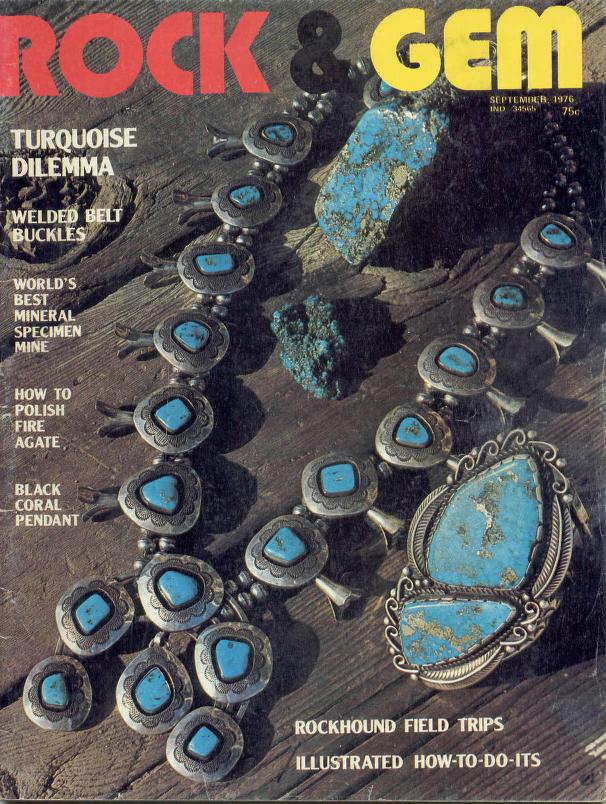
New Yogo sapphires—A new section of the gem-laden dike is now being mined
Journal Article
Voynick, S.M. (1987) New Yogo sapphires—A new section of the gem-laden dike is now being mined. Rock & Gem, August, pp. 25–29.
Record No. 1789  |  not seen

Lamellare Einschaltungen von Diaspor in Korund

Journal Article
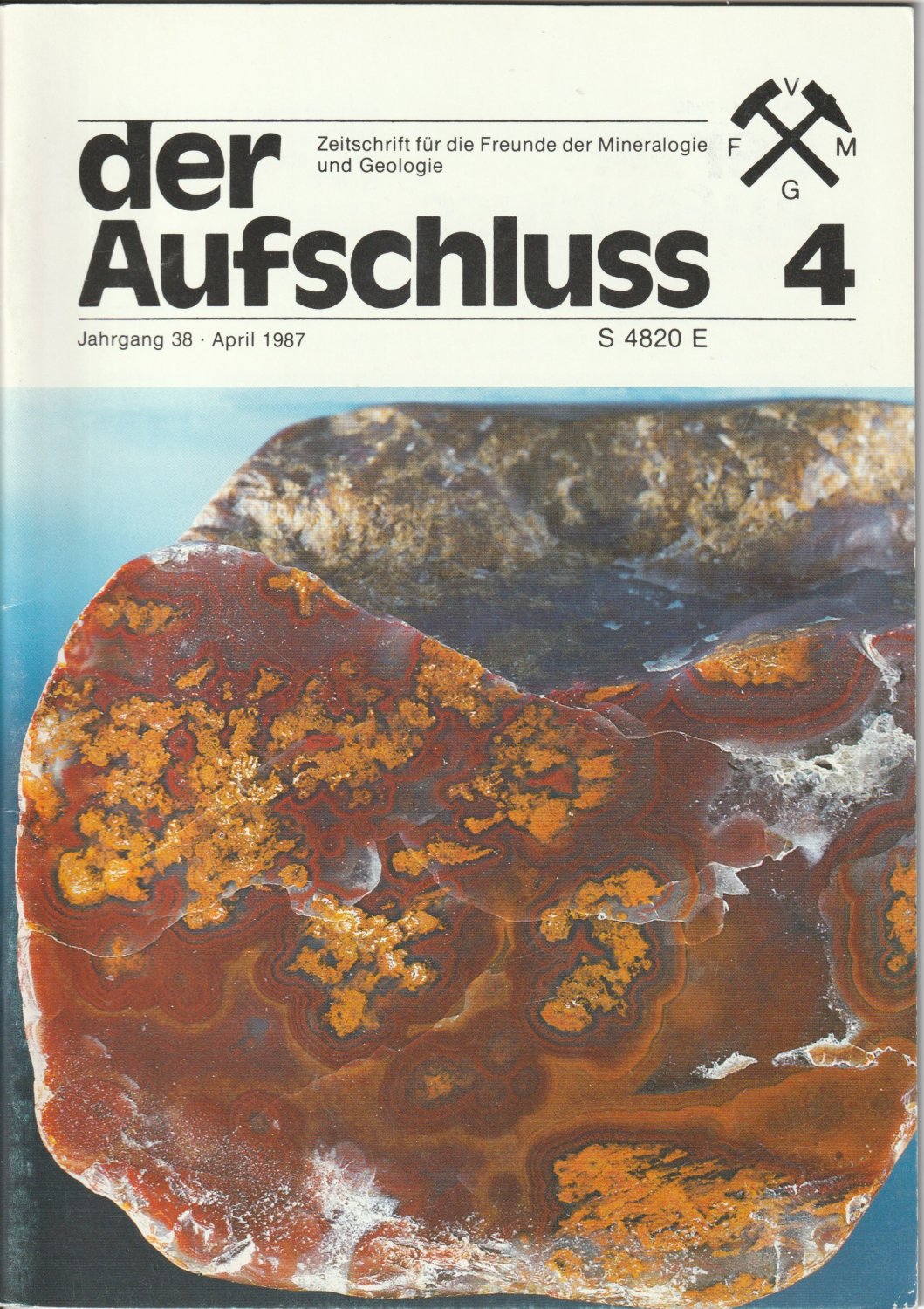
Schmetzer, K. (1987) Lamellare Einschaltungen von Diaspor in Korund. Der Aufschluss, Vol. 38, No. 3, pp. 335–337.
Record No. 1554  |  Language: in German  |  not seen
Tertiary maar volcanism and the origin of sapphires in northeastern New South Wales

Tertiary maar volcanism and the origin of sapphires in northeastern New South Wales

Report
Pecover, S.R. (1987) Tertiary maar volcanism and the origin of sapphires in northeastern New South Wales. Geological Survey of New South Wales,
Record No. 1415  |  ISBN/ISSN: Report No. GS1987/058  |  not seen
Regional distribution of sapphire, diamond and volcaniclastic rocks
Regional distribution of sapphire, diamond and volcaniclastic rocks

Report
Lishmund, S.R. (1987) Regional distribution of sapphire, diamond and volcaniclastic rocks. Geological Survey of New South Wales,
Record No. 1196  |  ISBN/ISSN: Report No. GS1987/058  |  not seen

The Literature of Gemstones

Book
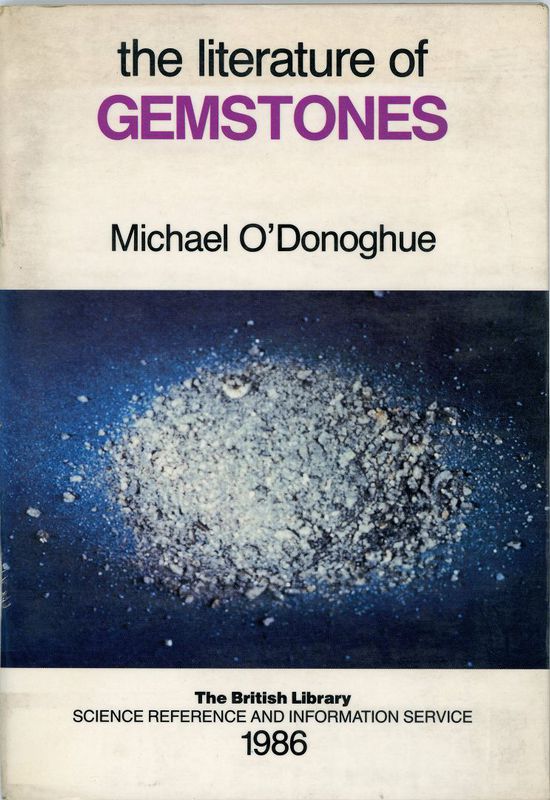
O’Donoghue, M. (1986) The Literature of Gemstones. London, British Library Science Reference and Information Service, 75 pp.
Record No. 16961  |  ISBN/ISSN: 9780710000000  |  not seen
Nigel Israel: This is an extremely useful little book (booklet would, I think, be a better description) by the Curator of Earth Sciences at the British Library. Starting with a general preface and introduction, it attempts, quite successfully, to list the more important works on gemmology under various categories, including encyclopaedic works, general comprehensive surveys, gem testing, gem testing instruments, quick reference publications, textbooks, synthetic gemstones, fashioning, works on individual species, jewellery, gemstones of particular localities, bibliographies, abstracts, journals, gemstone prices, guides to collections, and regalia. The works are listed with their publication details, including if and where they are held by the British Library, and, in many cases, with helpful descriptions by the author. The book ends with a useful index, followed, inexplicably, by two pages of beryl and corundum crystal diagrams. The literature of gemmology is extremely large, so the selection is necessarily a personal one by the author, and many people will likely be surprised by the omission of some of their favorite works. The reviewer was personally most surprised by the exclusion of Diamonds and Precious Stones by Emanuel (1865 and 1867), as this book contains an extremely extensive bibliography of historic books on gemstones. However, despite the unfortunately high price of a soft-covered booklet of little more than photostat quality, I would certainly recommend The Literature of Gemstones (together with the author’s companion work The Literature of Mineralogy) to anyone interested in gemmology.
Report on search for Sapphire in Sumcham and surrounding areas (Paddar) Doda District, J&K
Report on search for Sapphire in Sumcham and surrounding areas (Paddar) Doda District, J&K

Unpublished Work
Singh, R.P. and Sharma, K.K. (1986) Report on search for Sapphire in Sumcham and surrounding areas (Paddar) Doda District, J&K. unpublished report.
Record No. 16881  |  not seen

Recent developments in sapphire growth by heat exchanger method (HEM)

Conference Paper
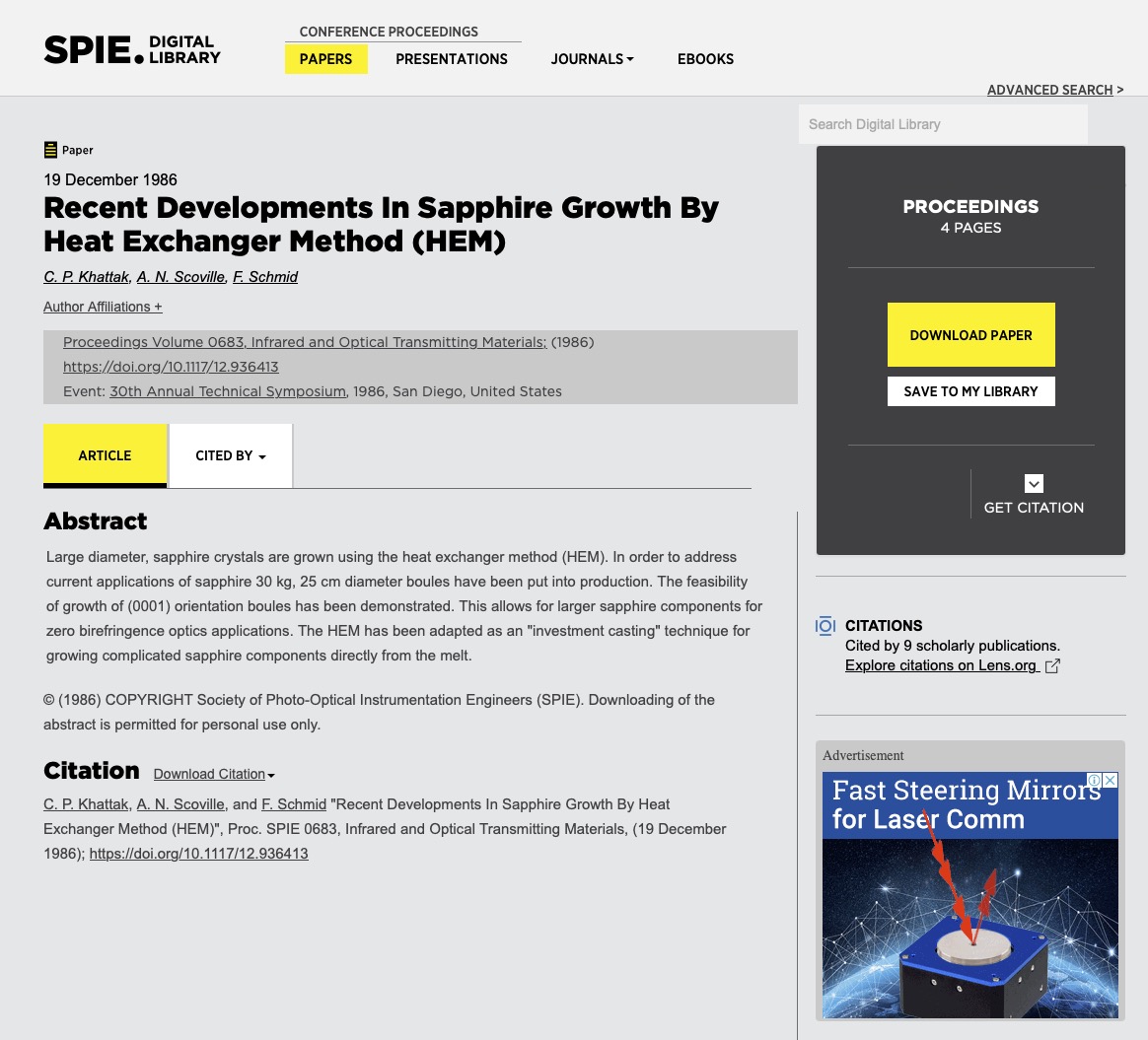
Khattak, C.P., Scoville, A.N. and Schmid, F. (1986) Recent developments in sapphire growth by heat exchanger method (HEM). Proceedings of the SPIE Conference on Infrared and Optical Transmitting Materials,: SPIE, 181 pp..
Record No. 7786  |  not seen
Large diameter, sapphire crystals are grown using the heat exchanger method (HEM). In order to address current applications of sapphire 30 kg, 25 cm diameter boules have been put into production. The feasibility of growth of (0001) orientation boules has been demonstrated. This allows for larger sapphire components for zero birefringence optics applications. The HEM has been adapted as an investment casting" technique for growing complicated sapphire components directly from the melt."
The niobium and yttrium abundances in the sedimentary gem deposits of Sri Lanka

The niobium and yttrium abundances in the sedimentary gem deposits of Sri Lanka

Journal Article
Dissanayake, C.B. and Rupasinghe, M.S. (1986) The niobium and yttrium abundances in the sedimentary gem deposits of Sri Lanka. Journal of the National Sciences Council of Sri Lanka, Vol. 14, No. 1, pp. 55–74.
Record No. 7639  |  not seen
Inverell, Glen Innes district/fossicker’s map: includes indexed street maps of Inverell and Glen Innes.
Inverell, Glen Innes district/fossicker’s map: includes indexed street maps of Inverell and Glen Innes.

Map
New South Wales Central Mapping Authority (1986) Inverell, Glen Innes district/fossicker’s map: includes indexed street maps of Inverell and Glen Innes. Bathurst: Central Mapping Authority, Dept. of Lands, New South Wales.
Record No. 7347  |  Sinkankas/Born No.: NIS/NIB  |  Language: in english  |  not seen
This recreational fossicking map covers the Inverell–Glen Innes district of northern New South Wales, one of Australia’s principal sapphire-producing regions. Designed for field use rather than as a geological monograph, it provides the road and locality information needed to reach fossicking areas and identifies sites where gemstones and minerals may be sought. The district is particularly noted for alluvial sapphire and zircon, with gem-bearing gravels associated with streams draining the New England basaltic province. The map also incorporates indexed street plans of Inverell and Glen Innes, making it both a fossicking guide and a general district map. Contemporary geological literature confirms that public fossicking reserves existed throughout the Inverell–Glen Innes sapphire field.

Lapidary section in Bhoja’s Yuktikalpataru—An assessment
Journal Article
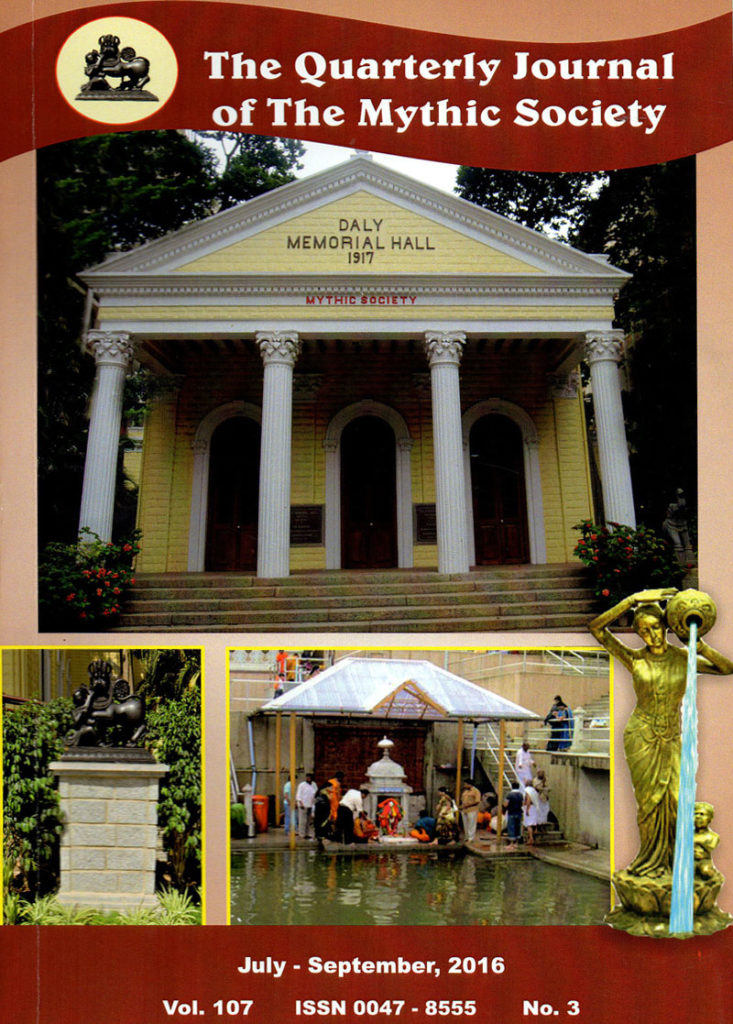
Gangadharan, N. and Rajashekharan, K.C. (1986) Lapidary section in Bhoja’s Yuktikalpataru—An assessment. Quarterly Journal of the Mythic Society, Vol. 77, Nos. 1–2, Jan.–June, pp. 136–154.
Record No. 4783  |  not seen

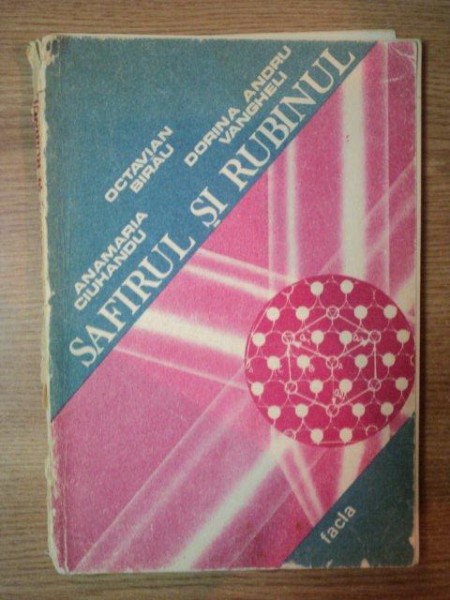
Safirul si Rubinul

Sapphire and Ruby
Book
Birau, O., Ciuhandu, A. and Vangheli, D.A. (1986) Safirul si Rubinul. [Sapphire and Ruby] Timisoara, Rumania, Editura Facla, 171 pp.
Record No. 4711  |  Sinkankas/Born No.: NIS/NIB  |  Language: in Romanian  |  seen
Birău, Ciuhandu and Vangheli present a comprehensive Romanian-language treatment of ruby and sapphire as gem varieties of corundum. The book places particular emphasis on the crystallography and crystal structure of corundum, including its investigation by X-ray methods, while also treating the mineralogical and gemological properties of ruby and sapphire. Tables, diagrams, experimental methods and analytical techniques accompany the text. A contemporary Journal of Gemmology review describes it as an “exhaustive treatise” on ruby and sapphire, specifically noting its detailed treatment of crystal structure and its extensive bibliography.

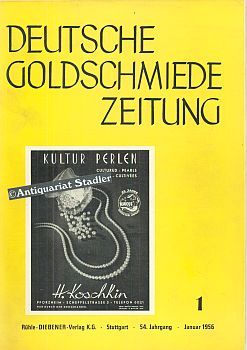
Die diagnostischen eigenschaften der neuen synthesen
The diagnostic properties of the new syntheses
Journal Article
Gübelin, E.J. (1986) Die diagnostischen eigenschaften der neuen synthesen. [The diagnostic properties of the new syntheses] Deutsche Goldschmiede-Zeitung, Vol. 84, No. 11, pp. 69–76.
Record No. 2175  |  Language: in German  |  not seen
Gübelin reviews the diagnostic properties of several recently introduced synthetic gemstones and the problems they pose for separation from their natural counterparts. Emphasis is placed on the combination of conventional gemological properties with microscopic examination of inclusions and growth structures, supplemented where necessary by spectroscopic and other analytical methods. The article discusses characteristic features of newer synthetic materials, particularly synthetic corundum and emerald, and shows that physical constants alone may be insufficient for identification as manufacturing techniques increasingly reproduce the appearance and properties of natural stones. Gübelin stresses the diagnostic importance of flux residues, metallic inclusions, growth zoning and other internal features associated with particular synthesis processes. The paper summarizes practical criteria by which these newer products can be recognized in gemological testing.

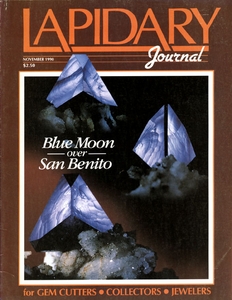
Curved striae

Journal Article
Themelis, T. (1986) Curved striae. Lapidary Journal, March, p. 19.
Record No. 1695  |  not seen

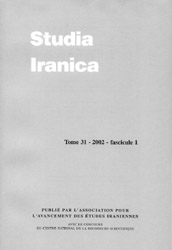
Sur la terminologie des gemmes: Yâqût et la‘l chez les auteurs persans

On the terminology of gemstones: Yâqût and la‘l among Persian authors
Journal Article
Vesel, Ž. (1985) Sur la terminologie des gemmes: Yâqût et la‘l chez les auteurs persans. [On the terminology of gemstones: Yâqût and la‘l among Persian authors] Studia Iranica, Vol. 14, No. 2, pp. 147–155.
Record No. 3342  |  Language: in French  |  not seen
Vesel examines the historical meaning and usage of the Persian gem terms yāqūt and laʿl, showing that they cannot simply be translated indiscriminately as “ruby.” Through comparison of Persian mineralogical and literary sources, she demonstrates that yāqūt generally denoted corundum and could be qualified by color: red yāqūt corresponding to ruby and blue yāqūt to sapphire, with other color varieties also recognized. Laʿl, by contrast, referred particularly to the gem historically known in Europe as balas ruby, corresponding principally to spinel and strongly associated with the mines of Badakhshan. The article traces the distinctions and occasional confusion between these terms among Persian authors and demonstrates the importance of historical terminology when identifying gemstones described in Islamic and Persian texts. Later scholarship specifically summarizes Vesel’s distinction as yāqūt for true Ceylon ruby and laʿl for the Balas ruby of Badakhshan.
Rapport sur les resultats de l'exploitation et du traitement des saphirs sur la localite Ban Houei Sai dans la Republique Populaire Democratique du Laos

Rapport sur les resultats de l'exploitation et du traitement des saphirs sur la localite Ban Houei Sai dans la Republique Populaire Democratique du Laos

Report on the results of the exploitation and treatment of sapphires at the Ban Houei Sai locality in the Lao People’s Democratic Republic
Journal Article
Polytechna (1985) Rapport sur les resultats de l'exploitation et du traitement des saphirs sur la localite Ban Houei Sai dans la Republique Populaire Democratique du Laos. [Report on the results of the exploitation and treatment of sapphires at the Ban Houei Sai locality in the Lao People’s Democratic Republic] Polytechna,
Record No. 2855  |  Sinkankas/Born No.: NIS/NIB  |  Language: in French  |  not seen
This unpublished Polytechna report records the results of sapphire exploration, mining, and processing trials at Ban Houei Sai (Ban Houei Xay/Huay Xai) in northwestern Laos. The operation involved sapphire-bearing alluvial gravels associated with Quaternary basaltic terrain and appears to have been conducted as a pilot mining and treatment project intended to evaluate the deposit’s economic potential. The report documents the exploitation and processing of the sapphire-bearing gravels and the results obtained from the recovered corundum, providing an early technical assessment of a deposit that later became an important Lao sapphire locality. Later geological sources explicitly cite the Polytechna report in connection with the Ban Houei Sai sapphire field.
Nga-Mauk Ruby trail

Nga-Mauk Ruby trail

Magazine Article
Gyi, S.M.M. (1985) Nga-Mauk Ruby trail. Ka-Lyar Woman's Magazine,, 6-Jun
Record No. 2573  |  not seen

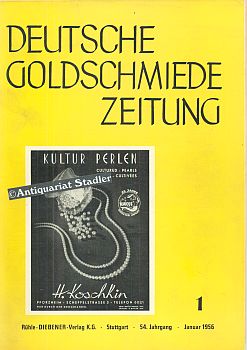
Zwei neue Kunstprodukte auf dem Edelsteinmarkt
Two new synthetic products on the gemstone market
Journal Article
Gübelin, E.J. (1985) Zwei neue Kunstprodukte auf dem Edelsteinmarkt. [Two new synthetic products on the gemstone market] Deutsche Goldschmiede-Zeitung, November, 7 pp..
Record No. 2173  |  Sinkankas/Born No.: NIS/NIB  |  Language: in German  |  not seen
Gübelin describes two recently introduced artificial gem materials: Ramaura flux-grown synthetic ruby and yttrium aluminium gallium garnet (YAGG), a green artificial material used as an imitation of tsavorite. For Ramaura ruby, he discusses manufacture by flux growth at about 1250°C, the use of chromium as the coloring agent, and the effects of flux constituents and growth conditions on crystal form. Because its conventional physical properties closely resemble those of natural ruby, identification relies heavily on microscopic examination; numerous characteristic inclusions are illustrated, while UV-visible spectroscopy is reported to offer no certain separation. The second material, YAGG, differs markedly from tsavorite in its physical properties, with refractive index around 1.90 and specific gravity 5.06–5.08. Gübelin describes its composition and characteristic yellowish flux inclusions and notes that, despite its garnet structure, it is not a silicate. The article contains 42 photographs and illustrations.

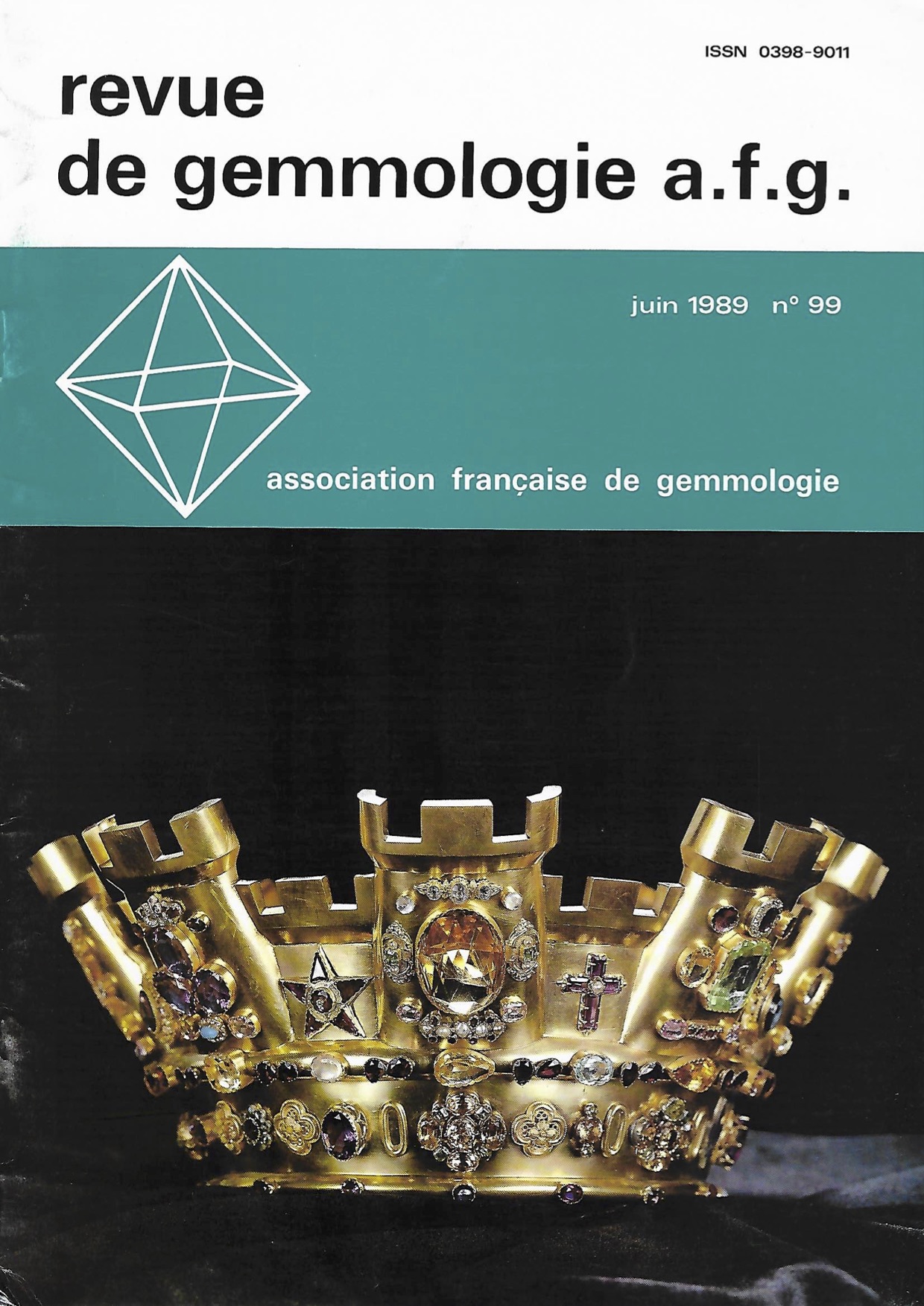
Identification des nouveaux saphirs synthétiques et des saphirs traités
Identification of new synthetic sapphires and treated sapphires
Journal Article
Gübelin, E.J. (1985) Identification des nouveaux saphirs synthétiques et des saphirs traités. [Identification of new synthetic sapphires and treated sapphires] Revue de Gemmologie A.F.G., No. 82, March,
Record No. 2171  |  Sinkankas/Born No.: NIS/NIB  |  Language: in French  |  not seen
Gübelin examines the identification of newly introduced Chatham flux-grown blue and orange synthetic sapphires and of natural sapphires whose color has been altered by heat treatment or surface diffusion. The physical properties of the Chatham synthetics differ little from those of natural sapphire, making microscopic examination particularly important. Blue Chatham sapphires may show irregular blue, yellow, and colorless zoning, straight or angular growth structures, polysynthetic twinning, coarse or delicate flux residues forming feathers, veils, nets, lace-like patterns, and misleading “fingerprints,” together with black platinum platelets, rods, splinters, and needles that reflect with a characteristic silvery metallic lustre; X-ray analysis confirmed the metallic inclusions as platinum. Some blue specimens also fluoresce intense pale green under long-wave ultraviolet radiation. Chatham orange sapphires range from brownish orange through orange-red to pinkish-orange “padparadschah” colors and likewise contain flux residues and platinum inclusions that provide important evidence of synthetic origin; ultraviolet absorption and electron-spin-resonance measurements are also investigated as possible means of separation from natural stones. Gübelin then discusses heat-treated natural sapphires, in which high temperatures may produce pockmarked surfaces, altered or melted mineral inclusions, circular tension fractures with lace-like rims, enhanced cloudy or phantom-like zoning, and fine exsolved particles producing turbidity. Diffusion-treated sapphires may additionally show strongly colored surface-reaching fissures and inclusions, irregular surface coloration, and concentrations of color along facet junctions and the girdle; immersion in a highly refractive liquid makes these features particularly conspicuous. Gübelin emphasizes that no single characteristic is universally diagnostic and recommends careful comparison of macroscopic appearance, physical properties, ultraviolet response, spectra, and especially microscopic inclusions when distinguishing natural, synthetic, heat-treated, and diffusion-treated sapphires.

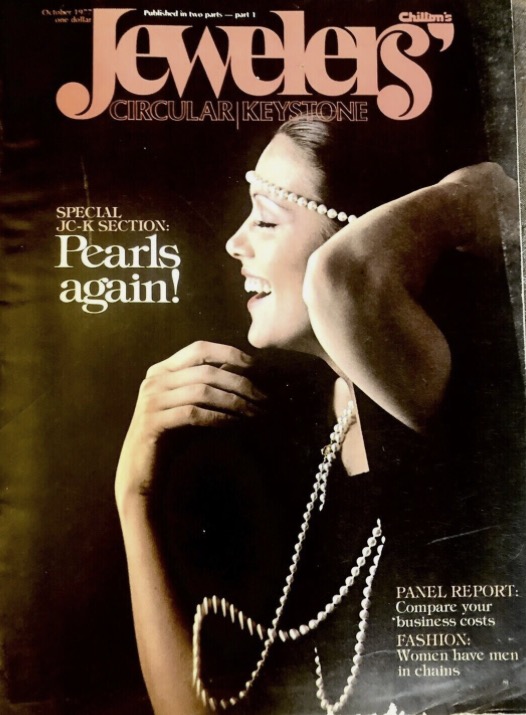
Intergem at the brink: Can Yogo sapphire firm survive?
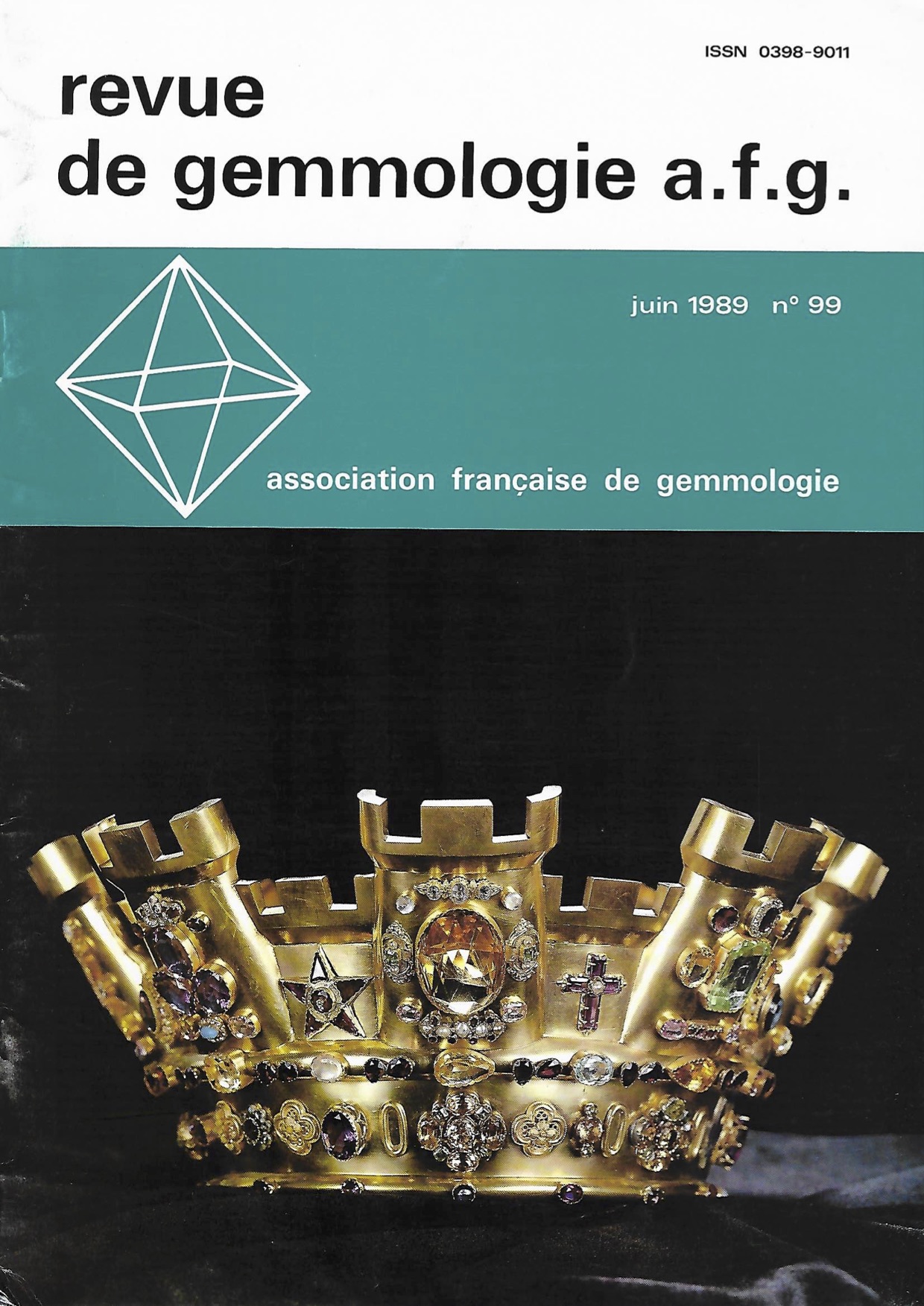
Journal Article
Smith, J.V. (1985) Intergem at the brink: Can Yogo sapphire firm survive? Jewelers’ Circular-Keystone, pp. 146–152.
Record No. 1616  |  not seen

Deux nouveaux produits artificiels sur le marché des pierres précieuses: Le rubis synthétique “Ramaura” et le gallo-aluminate d’yttrium

Two new artificial products on the gemstone market: Synthetic ruby “Ramaura” and yttrium gallo-aluminate
Journal Article
Gübelin, E.J. (1985–1986) Deux nouveaux produits artificiels sur le marché des pierres précieuses: Le rubis synthétique “Ramaura” et le gallo-aluminate d’yttrium. [Two new artificial products on the gemstone market: Synthetic ruby “Ramaura” and yttrium gallo-aluminate] Revue de Gemmologie A.F.G., No. 85, pp. 13–16; No. 86, p. 15; No. 87, pp. 15–16,
Record No. 903  |  Sinkankas/Born No.: NIS/NIB  |  Language: in French  |  not seen
Gübelin describes two recently introduced artificial gem materials: Ramaura flux-grown synthetic ruby and yttrium gallium aluminate (YAG), the latter marketed as a green imitation of tsavorite garnet. The first portion discusses the manufacture and gemological properties of Ramaura ruby and emphasizes microscopic features useful for separating it from natural ruby, particularly characteristic flux residues and growth-related inclusions. The later installments treat yttrium gallium aluminate, describing its physical and optical properties and characteristic inclusions. The green material has a high refractive index and specific gravity and contains distinctive reddish-brown flux inclusions and wispy veil-like features. The series illustrates the importance of inclusion microscopy in recognizing artificial gem materials whose appearance may closely resemble natural gemstones. Contemporary abstracts confirm that the second installment concentrates on characteristic inclusions and the third on the physical and optical properties and inclusions of yttrium gallium aluminate.

Exploring the Literature of Corundum

Ruby and sapphire research spans mineralogy, gem deposits, identification, treatments, synthesis and the history of the gem trade. Older publications can also be useful for tracing terminology, early observations and accounts of mining localities. Publication dates and the original source should be considered when using historical descriptions.

For an introduction to collecting books on this subject, read Ruby & Sapphire Books: Collecting the Literature of Corundum.

About Four Treasures

Four Treasures is Lotus Gemology's freely accessible gemological reference database. Use the full database to search by author, title or keyword and explore literature on gemology, mineralogy, jewelry and related fields. Where available, hyperlinks on titles may lead directly to the full publication.

Search the Complete Four Treasures Database