Ruby & Sapphire Bibliography

Ruby & Sapphire Bibliography

Explore books, articles and historical sources on ruby, sapphire and corundum in Four Treasures, the Lotus Gemology reference database. This bibliography brings together matching records from the collection, with publication details, abstracts and cover images where available.

Ruby & Sapphire References

The list below matches the terms ruby, rubies, sapphire or corundum in the database's searchable fields. Some references discuss these gems as part of a broader subject. Linked titles take you to external links where you may find the full reference.
4,361–4,380 of 4,678 matching references

The Mine of Rare Gems in the Knowledge of Jewels (Mādīn al-Nawādir fī Maʿrifat al-Jawāhir)
مادِنُ النَّوَادِرِ فِي مَعْرِفَةِ الْجَوَاهِرِ
Book
al-Bayhaqī, a.-ʿ.i.a.-Ḥ. (1985) The Mine of Rare Gems in the Knowledge of Jewels (Mādīn al-Nawādir fī Maʿrifat al-Jawāhir). [مادِنُ النَّوَادِرِ فِي مَعْرِفَةِ الْجَوَاهِرِ] al-Safat, al-Kuwayt, Maktabat Dar al-Urubah, 158 pp.
Record No. 443  |  Sinkankas/Born No.: NIS/NIB  |  Language: in Arabic  |  not seen
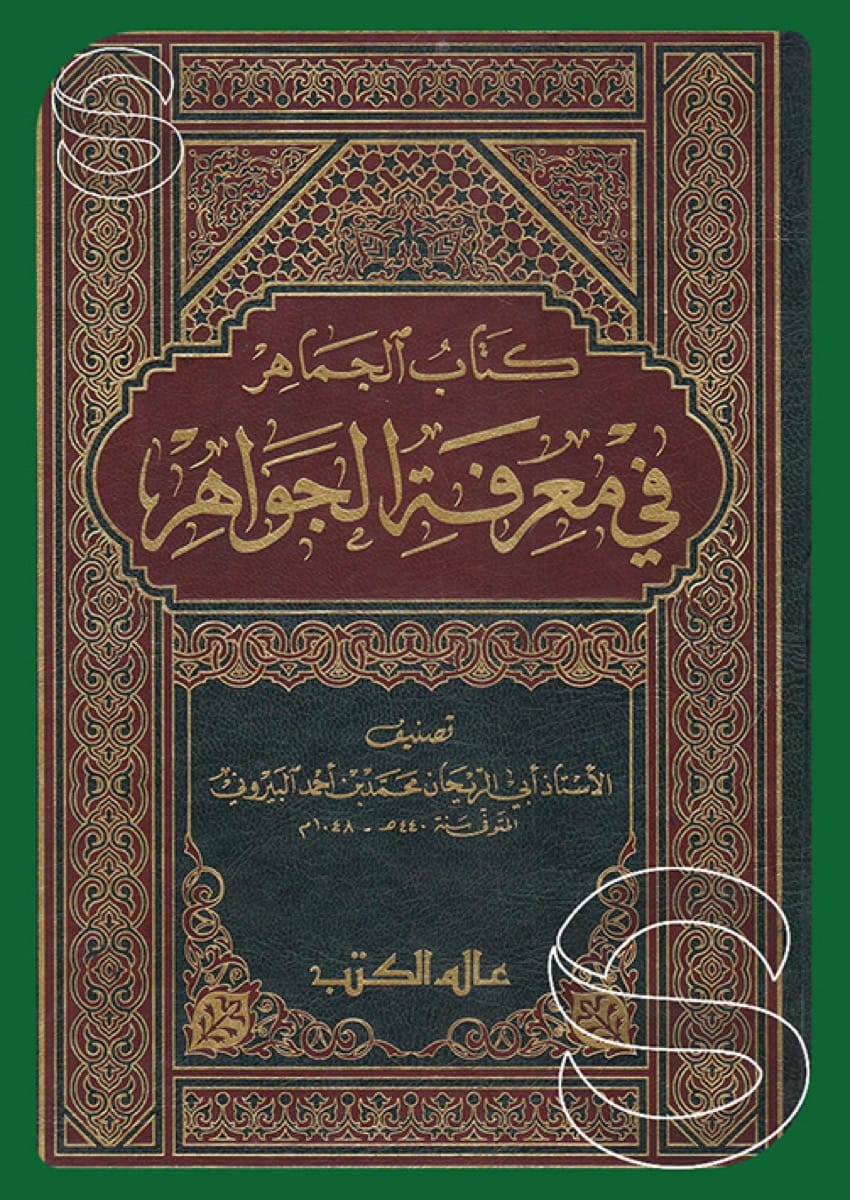
​The title Mādīn al-Nawādir fī Maʿrifat al-Jawāhir (مادِنُ النَّوَادِرِ فِي مَعْرِفَةِ الْجَوَاهِرِ) refers to an Arabic treatise on gemstones and mineralogy authored by al-Bayhaqī (al-ʿAlāʾ ibn al-Ḥasan), a medieval Islamic scholar. This work was published in Kuwait in 1985, as noted in scholarly references. ​The title translates roughly to “The Mine of Rare Gems in the Knowledge of Jewels,” indicating a comprehensive study of precious stones. It's important not to confuse this work with Kitāb al-Jamāhir fī Maʿrifat al-Jawāhir by Abū Rayḥān al-Bīrūnī, another seminal text on mineralogy from the Islamic Golden Age. Both texts share thematic similarities but are distinct in authorship and content.​

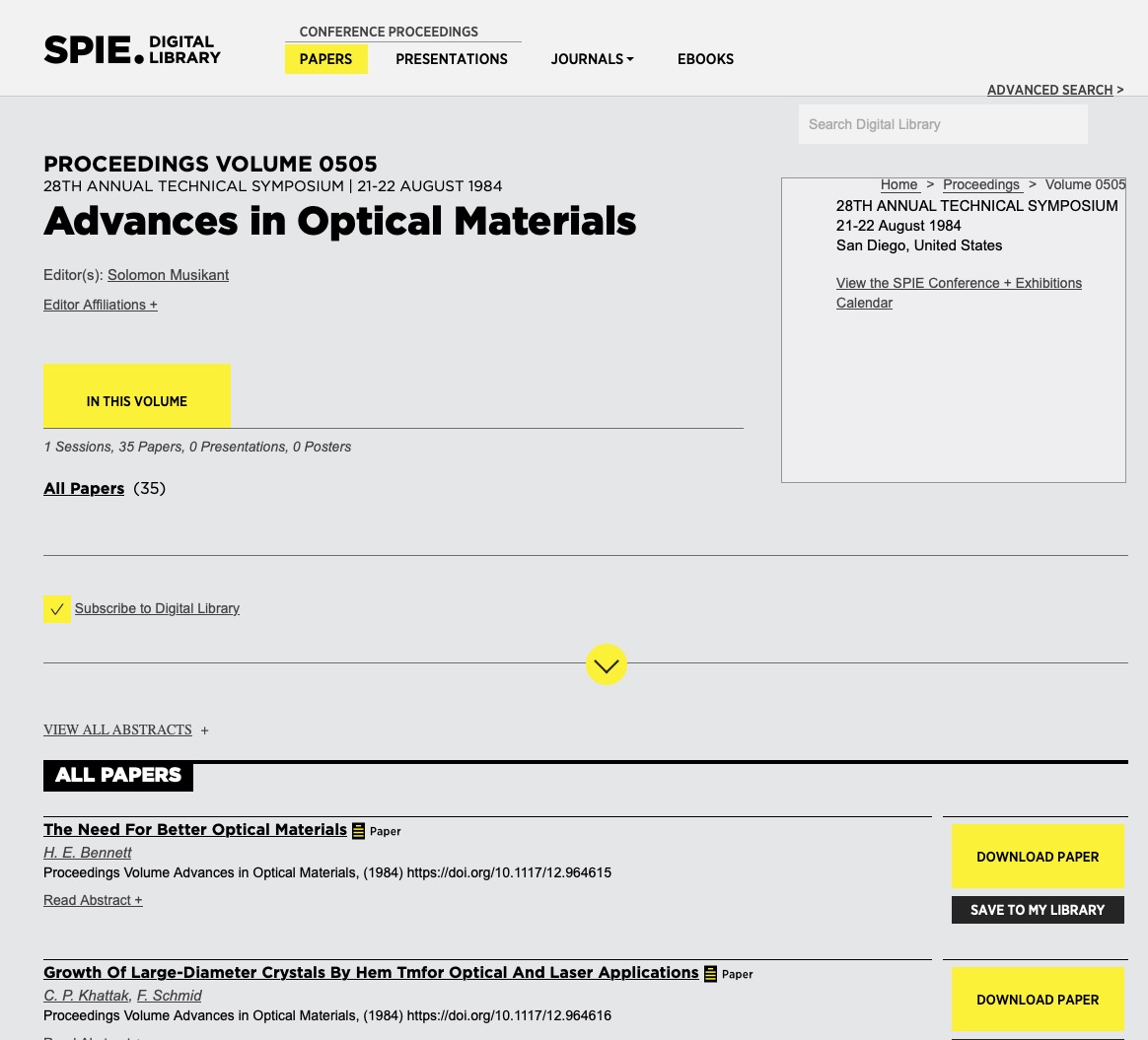
Growth of large-diameter crystals by heat exchanger method for optical and laser applications
Conference Paper
Khattak, C.P. and Schmid, F. (1984) Growth of large-diameter crystals by heat exchanger method for optical and laser applications. SPIE Conference on Advances in Optical Materials,
Record No. 7783  |  not seen
The Heat Exchanger Method (HEM), a new crystal growth process, is in commercial production for 20 cm diameter sapphire crystals and 40 cm diameter silicon ingots for optical applications. The simplicity of the HEM, combined with a very high degree of control of the submerged, solid–liquid interface, allows growth of high-quality crystals. The HEM is also being adapted for the growth of Co:MgF₂, Ti:Al₂O₃, and Cr:Al₂O₃ crystals for laser applications.

Thai fraud—fact or fiction? An interview with AIGS Lab director Richard Hughes

Journal Article
Kremkow, C. (1984) Thai fraud—fact or fiction? An interview with AIGS Lab director Richard Hughes. The Goldsmith, October, p. 42.
Record No. 2378  |  seen

[Yogo Gulch sapphires]

Yogo Gulch sapphires
Newspaper Article
Wall Street Journal (1984) [Yogo Gulch sapphires]. Wall Street Journal, Aug. 29, New York
Record No. 1804  |  not seen

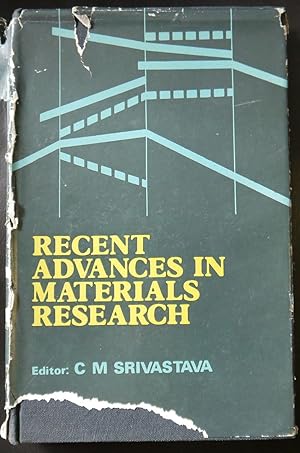
High temperature vapourisation from ceramic materials

Book Section
Sata, T. (1984) High temperature vapourisation from ceramic materials. In: Recent Advances in Materials Research, Rotterdam, Netherlands: A.A. Balkema, pp. 263–276.
Record No. 1530  |  not seen
Discusses vapourisation of Fe-oxide stains from corundum during high temperature heat treatment.
Ädelstenar med Alexandriteffekt

Ädelstenar med Alexandriteffekt

Gemstones with Alexandrite effect
Journal Article
Gübelin, E.J. (1983) Ädelstenar med Alexandriteffekt. [Gemstones with Alexandrite effect] Gem: Bulletinen Stockholms Gemmologiska Förening, No. 1/2,
Record No. 2166  |  Sinkankas/Born No.: NIS/NIB  |  Language: in Swedish  |  not seen
Gübelin discusses the alexandrite effect—the apparent change in color shown by certain gemstones under light sources of different spectral composition. Alexandrite chrysoberyl typically changes from blue-green or green in daylight to red or reddish violet in incandescent light, but comparable behavior also occurs in some garnets, sapphires, spinels, kyanite, fluorite and monazite. The phenomenon is explained in terms of absorption spectra having transmission regions in both the blue-green and red portions of the visible spectrum, separated by strong absorption in the yellow region. Which color predominates therefore depends on the spectral distribution of the illuminating light. The article relates the effect to the chromophoric trace elements present in the various gem minerals and emphasizes that the phenomenon is not restricted to chrysoberyl.

Emissionsspektralanalyse von natürlichen und synthetischen rubinen, sapphiren, smaragden und alexandriten
Emission spectral analysis of natural and synthetic rubies, sapphires, emeralds, and alexandrites
Journal Article
Kuhlmann, H. (1983) Emissionsspektralanalyse von natürlichen und synthetischen rubinen, sapphiren, smaragden und alexandriten. [Emission spectral analysis of natural and synthetic rubies, sapphires, emeralds, and alexandrites] Zeitschrift der Deutschen Gemmologischen Gesellschaft, Vol. 32, No. 4, pp. 179–195.
Record No. 1135  |  Sinkankas/Born No.: NIS/NIB  |  Language: In German  |  not seen
Kuhlmann applies emission spectrographic analysis to 207 natural and 61 synthetic rubies, sapphires, emeralds and alexandrites, examining eleven trace elements: Be, Cr, Cu, Fe, Mn, Mo, Ni, Si, Sn, Ti and V. The analyses reveal characteristic trace-element patterns that can help distinguish natural gemstones of different geographic origins from synthetic products. Natural rubies from Kenya, Tanzania, Afghanistan, India, Burma and Greenland contain varying combinations of Cr, Si, Ti, V, Mn, Fe, Sn and Cu, whereas Chatham and Verneuil synthetic rubies show molybdenum, and Kashan and Knischka synthetics contain comparatively more copper. Natural sapphires from several localities likewise show trace-element assemblages differing from Verneuil and Chatham synthetics. Corresponding comparisons are made for natural and synthetic emerald and alexandrite. Kuhlmann concludes that emission spectrography provides a useful supplementary method for determining natural versus synthetic origin and, in some cases, characterizing geographic provenance. The paper contains eight figures and one table.

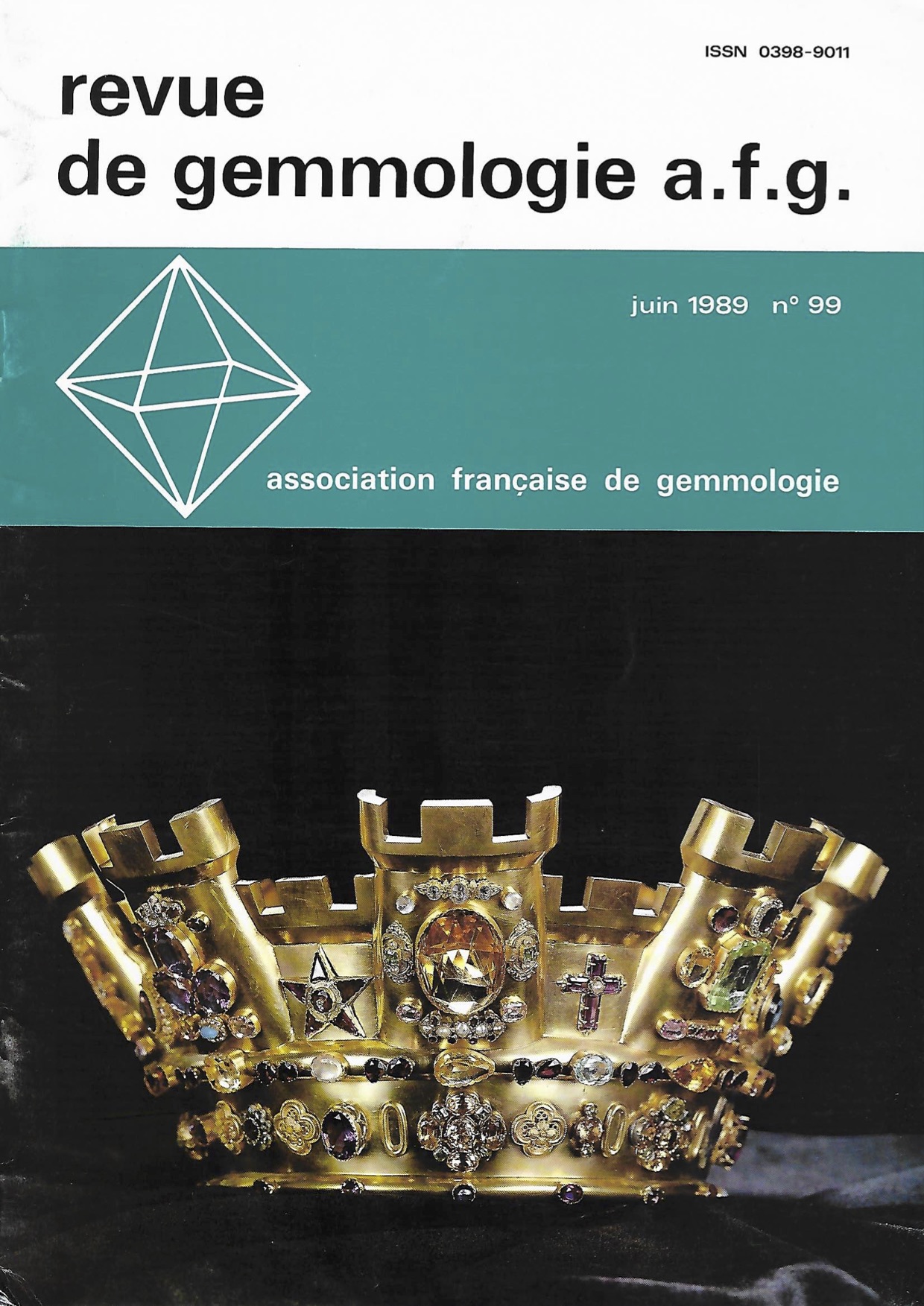
Marques de distinction des nouveaux rubis synthétiques

Distinguishing marks of new synthetic rubies
Journal Article
Gübelin, E.J. (1983) Marques de distinction des nouveaux rubis synthétiques. [Distinguishing marks of new synthetic rubies] Revue de Gemmologie A.F.G., No. 76, septembre,
Record No. 902  |  Sinkankas/Born No.: NIS/NIB  |  Language: in French  |  not seen
Gübelin describes the diagnostic characteristics of the newer flux-grown synthetic rubies produced by Chatham, Kashan and Knischka. Particular emphasis is placed on microscopic examination of their characteristic inclusions, some of which may resemble features encountered in natural ruby and therefore complicate identification. The article illustrates and compares the internal features of the three products, showing how inclusion morphology and growth-related characteristics can be used to distinguish these synthetic rubies from natural stones. The paper contains 42 figures, 41 in color.

Yogo sapphire envy of world

Newspaper Article
Charlier, M. (1983) Yogo sapphire envy of world. Billings Gazette, 25-Jul, Billings, MT
Record No. 497  |  not seen

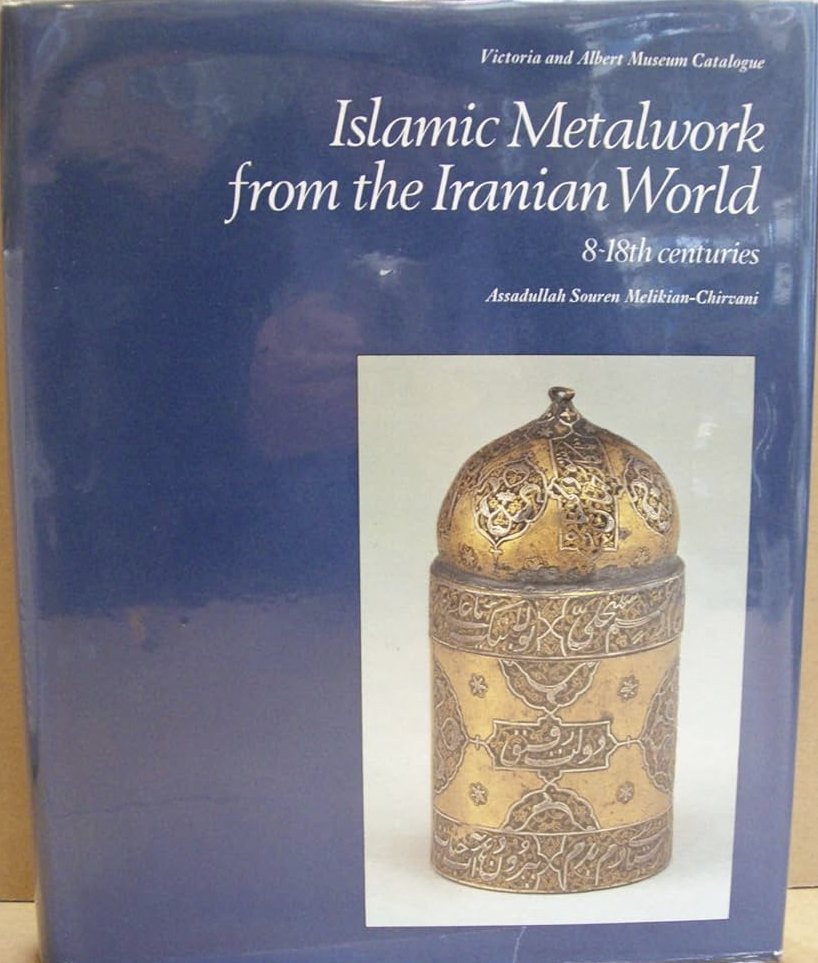
Islamic Metalwork from the Iranian World, 8–18th Centuries
Book
Melikian-Chirvani, A.S. (1982) Islamic Metalwork from the Iranian World, 8–18th Centuries. London, Victoria & Albert Museum, 445 pp.
Record No. 27832  |  ISBN/ISSN: 9780110000000  |  Sinkankas/Born No.: NIS/NIB  |  not seen
This was the first outline of Islamic Iranian metalwork to be published in any language. It is based on the collection in the Victoria & Albert Museum and is the work of Dr. Assadullah Souren Melikian-Chirvani [b. 1936], the distinguished authority of Near Eastern metalwork. The many illustrations present relevant details of epigraphy and iconography, the great majority of which have not been previously published. Souren Melikian is a French-Iranian art historian, art critic, and curator. He is a renowned scholar of Iranian culture, and its sphere of influence.

Naturfarbene und behandelte gelbe und orange-braune Saphire
Natural and treated yellow and orange-brown sapphires
Journal Article
Schmetzer, K., Bosshart, G. and Hänni, H. (1982) Naturfarbene und behandelte gelbe und orange-braune Saphire. [Natural and treated yellow and orange-brown sapphires] Zeitschrift der Deutschen Gemmologischen Gesellschaft, Vol. 31, pp. 265–279.
Record No. 4970  |  Language: In German  |  not seen

Principles of Geochemistry

Book
Mason, B. and Moore, C.B. (1982) Principles of Geochemistry. New York, John Wiley & Sons, 344 pp. (see p. 42)
Record No. 4907  |  seen

Über die gemmologische bedeutung des gallium-nachweises in korunden
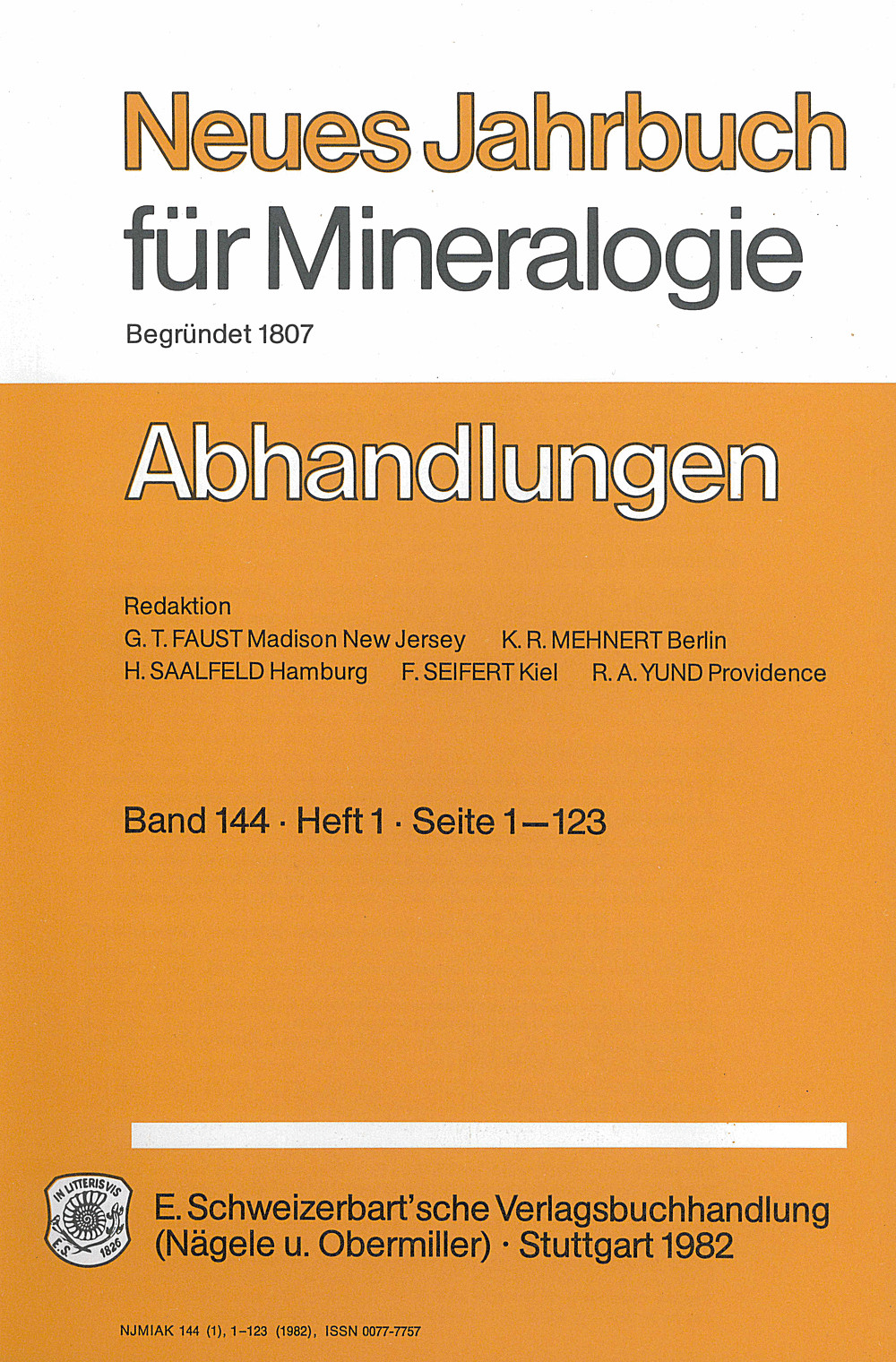
On the gemological significance of the detection of gallium in corundum
Journal Article
Hänni, H.A. and Stern, W.B. (1982) Über die gemmologische bedeutung des gallium-nachweises in korunden. [On the gemological significance of the detection of gallium in corundum] Zeitschrift der Deutschen Gemmologischen Gesellschaft, Vol. 31, pp. 255–260.
Record No. 4798  |  Language: In German  |  not seen
Hänni and Stern investigate whether gallium can provide a useful chemical criterion for distinguishing natural from synthetic corundum. Using energy-dispersive X-ray fluorescence analysis, they examined 24 natural and eight synthetic corundums of various colors and origins. Gallium was detected in all of the natural specimens examined, whereas none was detected in the synthetic samples. The authors therefore propose gallium detection as a potentially valuable supplementary test for establishing natural origin, while recognizing the analytical detection limits involved.

Absorptionsspektroskopie und Farbe von V3+-haltigen natürlichen Oxiden und Silikaten - ein Beitrag zur Kristallchemie des Vanadiums
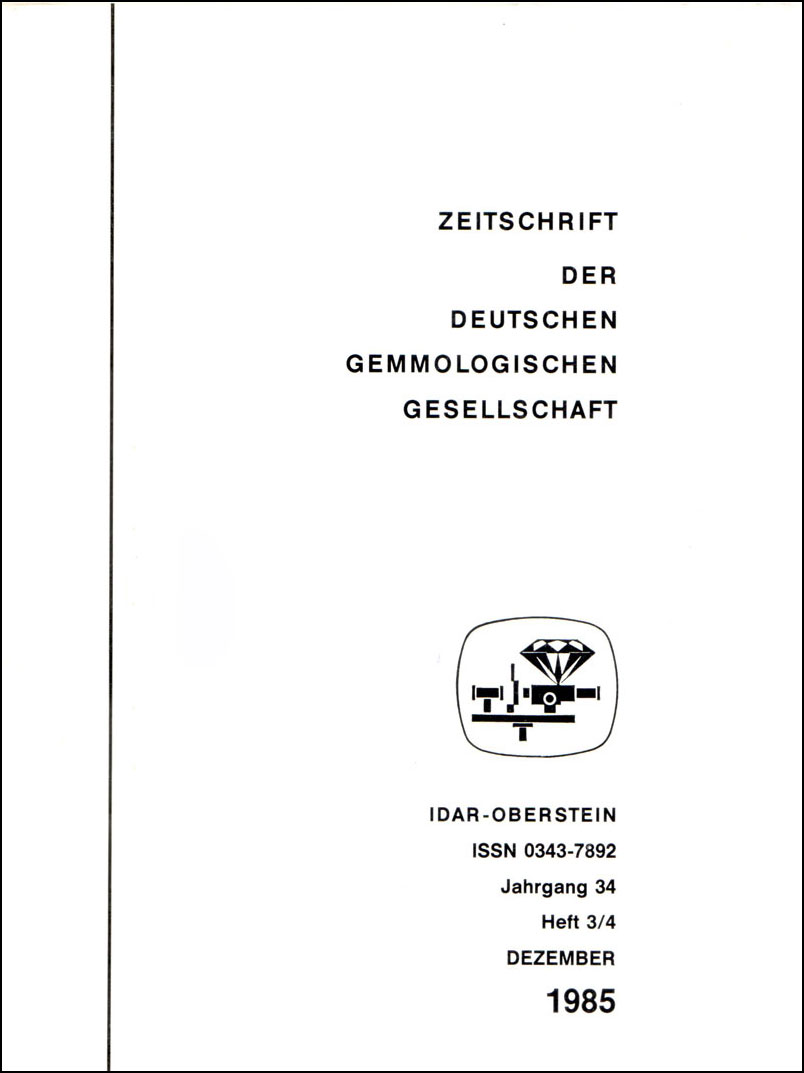
Absorption spectroscopy and color of V3+-containing natural oxides and silicates – A contribution to the crystal chemistry of vanadium
Journal Article
Schmetzer, K. (1982) Absorptionsspektroskopie und Farbe von V3+-haltigen natürlichen Oxiden und Silikaten - ein Beitrag zur Kristallchemie des Vanadiums. [Absorption spectroscopy and color of V3+-containing natural oxides and silicates – A contribution to the crystal chemistry of vanadium] Neus Jahrbuch für Mineralogie – Abhandlungen, Vol. 144, No. 1, pp. 73–106.
Record No. 3247  |  Language: in German  |  JLEL
The absorption spectra of vanadium-containing solids, especially of oxides and silicates, are described; new spectroscopical data are given for V³⁺ in axinite, diopside, tremolite, muscovite, roscoelite, cyanite, kornerupine, and tourmaline. The spectra consist of two strong absorption bands in the visible area, which are assigned to the ligand field transitions ³T₁(F) → ³T₂(F) [ν₁] and ³T₁(F) → ³T₁(P) [ν₂] of V³⁺ in octahedral or distorted octahedral oxygen coordination polyhedrons. The absorption maxima of V³⁺ are observed between 18,500 and 15,100 cm⁻¹ (ν₁) as well as between 26,700 and 22,500 cm⁻¹ (ν₂). From the positions of both absorption maxima, the values of the ligand field parameters Dq (from 1990 to 1660 cm⁻¹) and B (from 640 to 510 cm⁻¹) are calculated for the different crystal structures. The absorption spectra of V³⁺ are compared with the data of chromium-containing substances with similar or identical host lattices. In some silicates and oxides, an isomorphic replacement of Mg²⁺ and/or Al³⁺ by V³⁺ or Cr³⁺ is possible only in one distinct lattice site or in several sites of the host lattice, showing only small differences in their M–O distances: alum, GASH, spinel, corundum, garnet, topaz, axinite, beryl, pyroxene, amphibole, mica. The spectroscopic data of these solids are compared with the absorption spectra of minerals with two or more octahedral lattice sites with different M–O distances. In the tourmaline lattice, a preference of the smaller Al-site compared with the greater Mg-site by V³⁺ is deduced. The absorption spectra of zoisite are explained by a superposition of the bands of V³⁺ on the smaller Al1,2-site and the bands of the oxovanadium complex VO²⁺. The lattice position of V³⁺ in cyanite and kornerupine could not be deduced from spectroscopical data. The ligand-field parameter Dq, as well as the position of the maxima of ν₁ and ν₂ in vanadium- and chromium-containing solids, are dependent upon the average metal–oxygen distance r of the VO₆ or CrO₆ polyhedron of the host lattice and of the cation polyhedron of the oxygen anions. An increasing M–O distance r due to a lattice expansion causes a shift of ν₁ and ν₂ to smaller wavelengths; the ligand field parameter (Dq) is also reduced (distance effect). An increase of the average M–O distance, i.e., a lattice expansion, is possible to be caused by an increase of the concentration of the transition metal cation (here V³⁺ or Cr³⁺, concentration effect), by an isomorphic replacement of other cations in solid solution series (diadochic exchange effect), or by vacant lattice sites in solid solution series (loosening effect in structures). Another reason for a shift of ν₁ and ν₂ to smaller wavelengths, as well as a decrease of Dq, is the contra-polarisation of the oxygen anions caused by an interaction with neighbouring cations (contra-polarisation effect). In general, this effect is smaller in oxides and larger in silicates; it can be approximately estimated for V³⁺ and Cr³⁺ in different lattice types: chlorite.

Neue Mikrosonden-Analysen von Mineral-Einschlüssen einschliesslich eines Rubins im Diamant

New microprobe analyses of mineral inclusions including a ruby in diamond
Journal Article
Gübelin, E.J. (1982) Neue Mikrosonden-Analysen von Mineral-Einschlüssen einschliesslich eines Rubins im Diamant. [New microprobe analyses of mineral inclusions including a ruby in diamond] Zeitschrift der Deutschen Gemmologischen Gesellschaft, Vol. 31, No. 1/2, pp. 23–40.
Record No. 2164  |  Sinkankas/Born No.: 2589; NIB  |  Language: In German  |  not seen
Gübelin reports electron-microprobe analyses of mineral inclusions from nine diamonds. The inclusions were studied either after crushing the host diamond and separating the enclosed mineral, or by cutting and polishing the diamond until an inclusion was exposed at the surface; separated inclusions could also be examined by X-ray methods. The analytical results are presented for the various inclusion minerals, with discussion of their significance for the origin and formation of their diamond hosts. Of particular interest is the identification of a red inclusion as corundum (ruby), the first substantiated occurrence of ruby as an inclusion in natural diamond; this ruby is assigned to the eclogitic suite of diamond inclusions. The paper contains 17 figures, 16 in color, and two tables.
New synthetic rubies made by Professor P.O. Knischka
New synthetic rubies made by Professor P.O. Knischka

Book Section
Gübelin, E.J. (1982) New synthetic rubies made by Professor P.O. Knischka. In: Proceedings of the First International Coloured Gemstones Conference and Gem and Jewellery Exhibition, Colombo, Sri Lanka
Record No. 2160  |  not seen

Anakie gemfields: Sapphire mining

Journal Article
Robinson, R. (1982) Anakie gemfields: Sapphire mining. Wahroongai News, November, pp. 17–21.
Record No. 1484  |  not seen

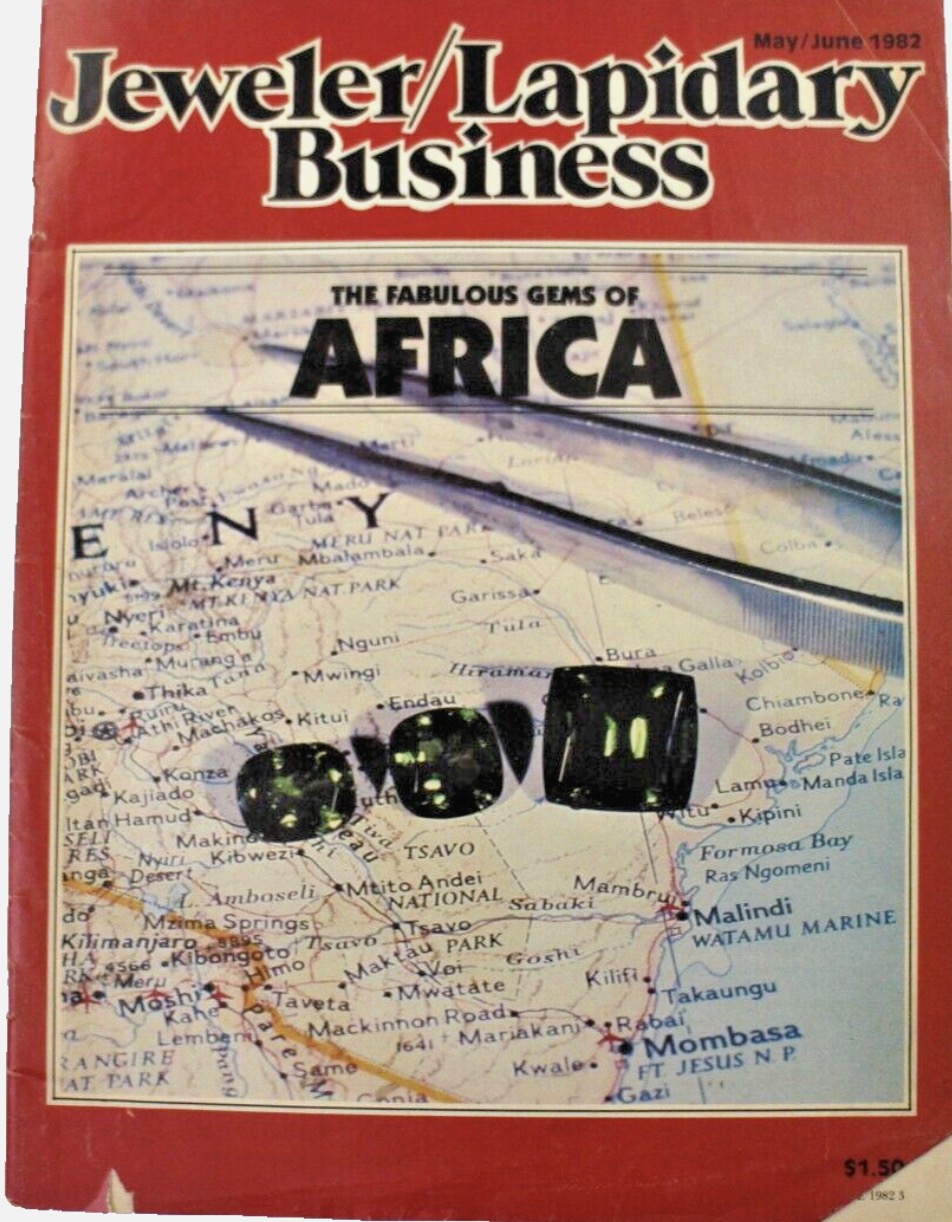
Gemstones of Africa: Sapphires of Umba
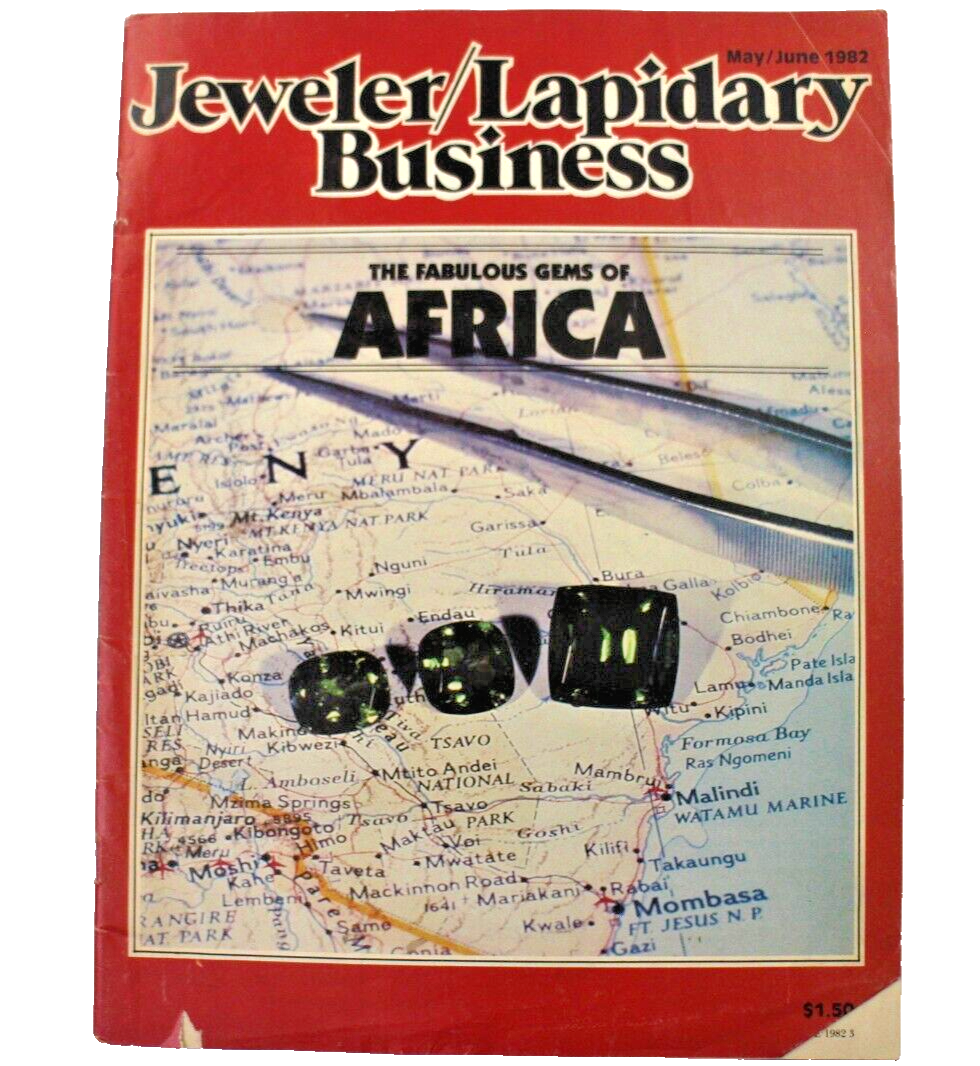
Journal Article
Naftule, R. (1982) Gemstones of Africa: Sapphires of Umba. Jeweler & Lapidary Business, May/June, p. 8, 3 pp..
Record No. 1327  |  not seen

Burma

Journal Article
Kumar, V. (1982) Burma. Jeweler/Lapidary Business, Vol. 6, No. 2, pp. 28–30.
Record No. 1136  |  not seen

Erkennungsmerkmale der neuen synthetischen Saphire

Identification features of the new synthetic sapphires
Journal Article
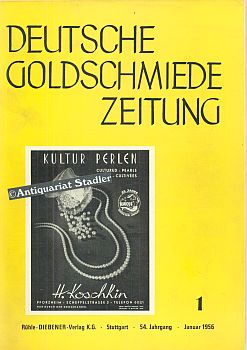
Gübelin, E.J. (1982) Erkennungsmerkmale der neuen synthetischen Saphire. [Identification features of the new synthetic sapphires] Deutsche Goldschmiede-Zeitung, Vol. 80, No. 11, November, pp. 51–57.
Record No. 900  |  Sinkankas/Born No.: NIS/NIB  |  Language: in German  |  not seen
Gübelin discusses the identification of newly available synthetic and treated blue sapphires, concentrating on Chatham flux-grown synthetic sapphire and on natural sapphires whose color has been modified by heat treatment or surface diffusion. He describes the crystal habits and physical and optical properties of rough and faceted Chatham material, followed by a detailed examination of diagnostic inclusions, some of which closely resemble inclusions in natural sapphire. Twenty-three color photomicrographs illustrate these features. A further 15 photomicrographs document characteristics of color-enhanced sapphires, including altered mineral inclusions surrounded by tension cracks, pockmarked girdle surfaces, pronounced color zoning, and concentrations of color in surface-reaching fractures.

Exploring the Literature of Corundum

Ruby and sapphire research spans mineralogy, gem deposits, identification, treatments, synthesis and the history of the gem trade. Older publications can also be useful for tracing terminology, early observations and accounts of mining localities. Publication dates and the original source should be considered when using historical descriptions.

For an introduction to collecting books on this subject, read Ruby & Sapphire Books: Collecting the Literature of Corundum.

About Four Treasures

Four Treasures is Lotus Gemology's freely accessible gemological reference database. Use the full database to search by author, title or keyword and explore literature on gemology, mineralogy, jewelry and related fields. Where available, hyperlinks on titles may lead directly to the full publication.

Search the Complete Four Treasures Database