Explore books, articles and historical sources on ruby, sapphire and corundum in Four Treasures, the Lotus Gemology reference database. This bibliography brings together matching records from the collection, with publication details, abstracts and cover images where available.
Ruby & Sapphire References
The list below matches the terms ruby, rubies, sapphire or corundum in the database's searchable fields. Some references discuss these gems as part of a broader subject. Linked titles take you to external links where you may find the full reference.
4,381–4,400 of 4,678 matching references
A gemstone trip to Nepal [in Japanese]
in Japanese
Journal Article
Baba, T. (1982) A gemstone trip to Nepal [in Japanese].Gemmological Review [月刊ジェモロジカル・レビュー], Vol. 4, No. 12, pp. 2–5.
Record No. 401 | not seen
Reference copied to clipboard!
corundum, Nepal.12, gems
Temperature growth conditions of corundum as related to crystal perfection: Theoretical calculation
Journal Article
Ignatov, I.I., Lingart, Y.K., Marchenko, N.V., Tikhonova, N.A. and Shtipelman, Y.I. (1981) Temperature growth conditions of corundum as related to crystal perfection: Theoretical calculation.Journal of Crystal Growth, Vol. 52, Part 1, pp. 411–416.
A technique has been developed for calculating temperature fields (T-fields) in optical crystals in which heat exchange proceeds by both radiation and conductivity. The results of calculation of T-fields in corundum crystals grown by horizontal uniaxial crystallization are reported. The fields of the first and second temperature derivatives (T' and T'', respectively) have been considered in order to reveal crystal regions in which stress and dislocations are most probable to appear. A minimum, associated with the radiative-conductive heat exchange, has been found on the T'' curve in the vicinity of free crystal boundary. It is proved that a linear T-field cannot be obtained in optical crystals.
Wüthrich, A. and Weibel, M. (1981) Optical theory of asterism.Physics and Chemistry of Minerals, Vol. 7, pp. 53–54.
Record No. 5031 | not seen
Reference copied to clipboard!
corundum, color and luminescescence.4, gems
A simple explanation of chatoyancy and asterism is given in terms of physical and geometrical optics. The basic phenomena involved are the scattering of light by thin cylinders and its refraction by curved surfaces. To substantiat this theory, it has been shown that the star can also be observed in asteriated stones having a plane surface.
Die farbursachen und farben der mineralart Korund
The causes of color and colors of the mineral species corundum
Journal Article
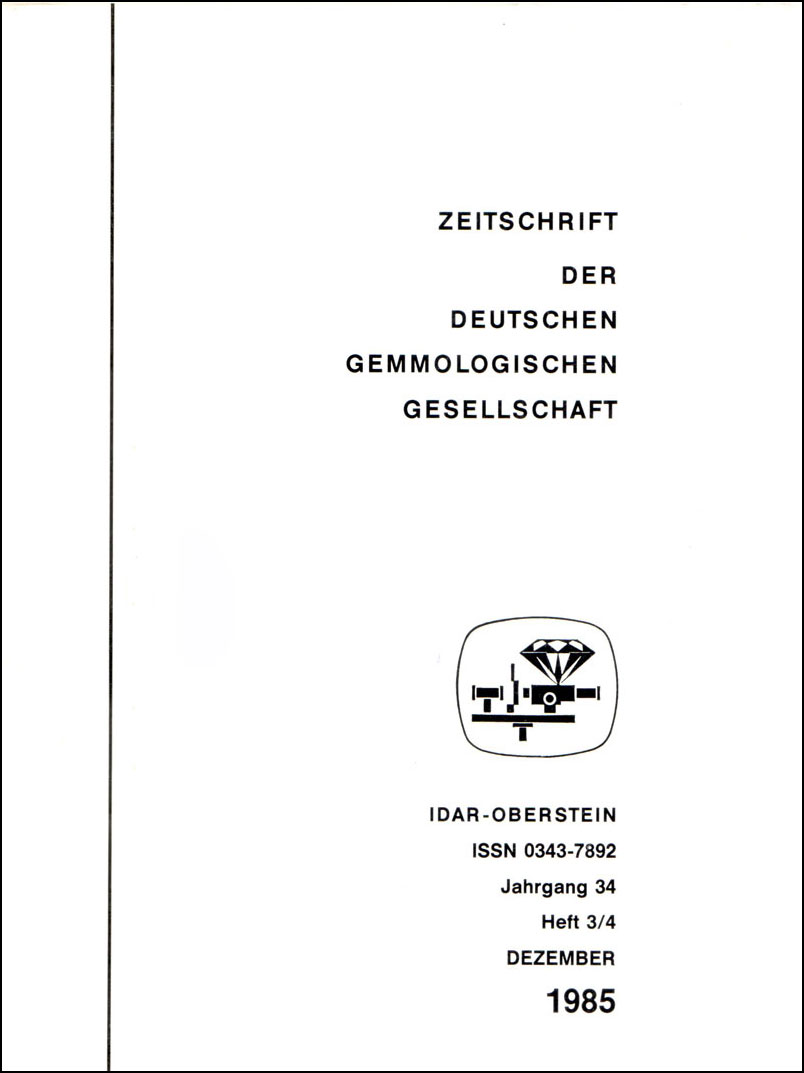
Schmetzer, K. and Bank, H. (1981) Die farbursachen und farben der mineralart Korund. [The causes of color and colors of the mineral species corundum]Zeitschrift der Deutschen Gemmologischen Gesellschaft, Vol. 30, No. 3/4, pp. 152–156.
Record No. 4968 | Language: In German | not seen
Reference copied to clipboard!
corundum, sapphire, color.4, spectra, gems
Schmetzer and Bank review the causes of color in corundum and its gem varieties ruby, sapphire, and padparadscha. They attribute coloration principally to transition-metal ions—iron, titanium, chromium, and vanadium—as well as to lattice defects. Natural corundum is rarely colored by only a single ion or ion pair; instead, many stones owe their appearance to several color-producing mechanisms acting simultaneously. Consequently, the absorption spectra of mixed-color corundums can be interpreted as superpositions of several fundamental spectral types, producing the wide range of colors observed in natural corundum.
The ruby rush
Journal Article
Mumme, I.A. (1981) The ruby rush.Australian Lapidary Magazine, Oct./Nov., pp. 13–18.
Record No. 1312 | not seen
Reference copied to clipboard!
corundum, ruby, Australia.12, gems
Gem Investor’s Seminar on Rubies and Sapphires
Book
Ho, H. (1981)Gem Investor’s Seminar on Rubies and Sapphires. Bangkok, Asian Institute of Gemological Sciences
Record No. 994 | seen
Reference copied to clipboard!
corundum, ruby, sapphire, quality.10, gems
Mineralogical studies and minor element analyses of corundum and associated minerals of the Mogok gemstone tract
Thesis
U Tin Hlaing (1981) Mineralogical studies and minor element analyses of corundum and associated minerals of the Mogok gemstone tract., Rangoon: Rangoon University
Record No. 984 | not seen
Reference copied to clipboard!
corundum, Burma.12, gems
“Cooked” geudas converted to blue sapphires
Newspaper Article
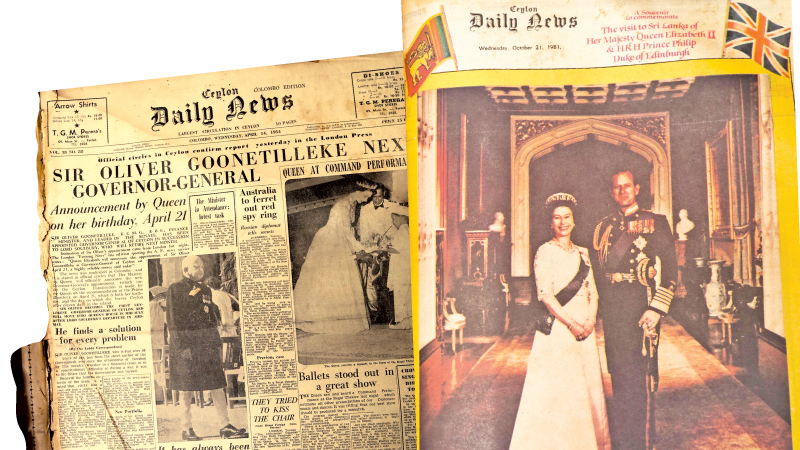
Ceylon Daily News (1981) “Cooked” geudas converted to blue sapphires.Ceylon Daily News, Sept. 23, Colombo
Record No. 564 | not seen
Reference copied to clipboard!
corundum, treatments.6, Sri Lanka.12, gems
Origine et signification de la saphirine et des minéraux associés dans les amphibolites à saphirine et corindon de la série du Haut Allier (M.C.F.)
Origin and meaning of sapphire and associated minerals in sapphire and corundum amphibolites of the Haut Allier series (M.C.F.)
Journal Article
Braud, C. (1981) Origine et signification de la saphirine et des minéraux associés dans les amphibolites à saphirine et corindon de la série du Haut Allier (M.C.F.). [Origin and meaning of sapphire and associated minerals in sapphire and corundum amphibolites of the Haut Allier series (M.C.F.)]D.E.A. Université de Montpellier,
Record No. 487 | Sinkankas/Born No.: NIS/NIB | Language: in French | not seen
Reference copied to clipboard!
corundum, France.12, gems, sapphire
Braud studies the origin and petrological significance of sapphirine and associated minerals in sapphirine- and corundum-bearing amphibolites of the Haut-Allier series in the French Massif Central. The work concerns unusual metamorphic assemblages containing pargasite, anorthite, corundum, and sapphirine, previously recognized in the Haut-Allier as evidence of granulite-facies metamorphism.
Stones of Lanka: An Invaluable Compendium for Miners, Buyers, Brokers & Exporters
Book
Anonymous (1981)Stones of Lanka: An Invaluable Compendium for Miners, Buyers, Brokers & Exporters. Colombo, Vantage Enterprises, 60 leaves
Record No. 334 | not seen
Reference copied to clipboard!
corundum, Sri Lanka.12, gems
Gems and Jewellery of Sri Lanka
Book
Anonymous (1981)Gems and Jewellery of Sri Lanka. Colombo, Export Development Board
Record No. 332 | not seen
Reference copied to clipboard!
corundum, ruby, sapphire, Sri Lanka.12, Ceylon, gems
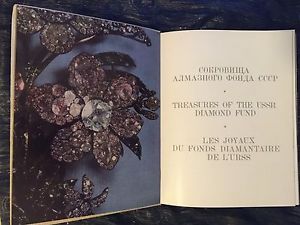
Treasures of the USSR Diamond Fund
Book
USSR Diamond Fund (1980)Treasures of the USSR Diamond Fund. Moscow, 23 pp. + 69 pp. color plates
Record No. 29168 | Sinkankas/Born No.: NIS | not seen
Reference copied to clipboard!
corundum, quality.10, gems
One of the world's largest and most memorable treasure chambers, the Diamond Treasury of the USSR, the Almazny Fond, is a veritably unique collection of gemstones, nuggets of precious metals and exquisite jewellery. The core and historical nucleus of this collection is comprised of what are commonly known as the Crown Jewels, in other words, the imperial regalia, and the gem-studded insignia of the various orders of chivalry and diverse virtue made by the court jewellers and goldsmiths in the 18th and 19th centuries. When the First World War broke out in 1914 the Crown Jewels were deposited within the Armoury Chamber, or Arms Palace, in the Moscow Kremlin, for long a treasury in its own right. After the Great October Socialist Revolution in 1917, these treasures, along with famous gemstones, were nationalized and assembled into a collection that has come to be called the Diamond Treasury of the USSR. When diamonds were discovered in Yakutia, in the 1950s, the rare stones found supplemented the Diamond Treasury, which likewise stored brilliant-cut diamonds well displaying the virtuoso skill of Soviet cutters and also more modern works of art executed by Soviet jewellers. The Treasury also boasts a unique collection of gold and platinum nuggets, second to none in the world by virtue of the diversity of their crystalline structure. Among these one could indicate a platinum nugget tipping the scales at almost the full 8 kilograms and the Grand Triangle—Bolshoi Treugolnik—gold nugget which weighs—believe it or not—no less than 36 kilograms!
First discovery of ruby in the marbles of the Southwestern Pamirs
Перваянаходка рубина в мраморах ЮЗ Памира
Journal Article
Konovalenko, S.I. and Rossovsky, L.N. (1980) First discovery of ruby in the marbles of the Southwestern Pamirs. [Перваянаходка рубина в мраморах ЮЗ Памира]Записки Всесоюзного минералогического общества [Proceedings of the All-Union Mineralogical Society], Vol. 109, No. 6, pp. 707–709.
Record No. 29134 | Sinkankas/Born No.: NIS/NIB | Language: in Russian | not seen
Reference copied to clipboard!
gems, corundum, Tajikistan.12, ruby, sapphire
Konovalenko and Rossovsky report the first discovery of ruby hosted by marble in the Southwestern Pamirs of present-day Tajikistan. Later accounts identify this 1979 discovery as ruby mineralization in marbles of the Archean Shakhdarin series and cite the paper as the first documentation of this type of Pamir ruby occurrence. It helped establish the presence of marble-hosted ruby mineralization in the region, preceding the discovery of the important Snezhnoe and Trika deposits in 1980 and the subsequent recognition of numerous ruby occurrences in the Pamirs.
Study by Raman spectroscopy of inclusions in diamonds, sapphires, and emeralds
Journal Article
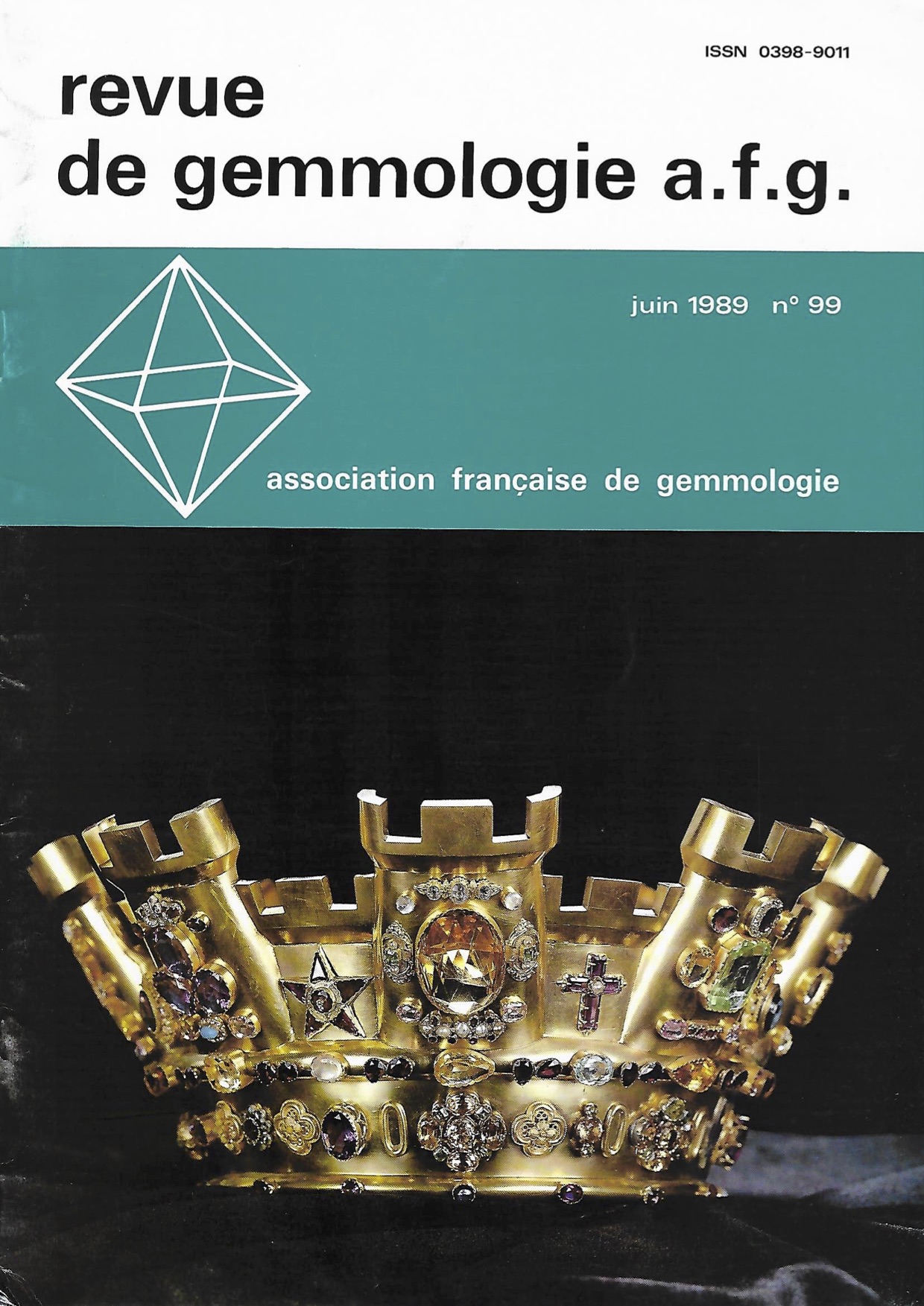
Dele-Dubois, M.-L., Dhamelincourt, P. and Schubnel, H.-J. (1980) Étude par spectroscopie raman d'inclusions dans les diamants, saphirs et émeraudes. [Study by Raman spectroscopy of inclusions in diamonds, sapphires, and emeralds]Revue de Gemmologie A.F.G., No. 63, pp. 11–14.
Record No. 7724 | Sinkankas/Born No.: NIS/NIB | Language: in French | seen
Dele-Dubois, Dhamelincourt, and Schubnel examine the application of Raman spectroscopy to the non-destructive identification of mineral inclusions in diamonds, sapphires, and emeralds. The technique permits inclusions to be analyzed in situ through the host gemstone by means of their characteristic Raman spectra, avoiding the need to extract or otherwise damage them. The authors demonstrate the usefulness of Raman spectroscopy for identifying very small inclusions that may be difficult to determine by conventional microscopy, illustrating its value both for gemological identification and for investigating the mineral assemblages trapped during gemstone formation.
Gemstones in the pegmatites of Hindu Kush, southern Pamirs and western Himalayas
Драгоценные камни в пегматитах Гиндукуша, Южного Памира и Западных Гималаев
Book Section
Rossovsky, L.N. and Konovalenko, S.I. (1980) Gemstones in the pegmatites of Hindu Kush, southern Pamirs and western Himalayas. [Драгоценные камни в пегматитах Гиндукуша, Южного Памира и Западных Гималаев] In: Gem Minerals (Proceedings of the XI General Meeting of IMA, Novosibirsk) Самоцветы = Gem Minerals: Материалы XI съезда ММА, Новосибирск, Leningrad: Nauka, pp. 52–62.
Record No. 7668 | Language: in Russian | not seen
Reference copied to clipboard!
corundum, USSR.12, Tajikistan.12, gems
[New finds of precious corundum in the eastern Baltic Shield] in Russian
Book Section
Bukanov, V.V. and Lipovsky, Y.O. (1980) [New finds of precious corundum in the eastern Baltic Shield] in Russian. In: Proceedings of the XI General meeting of IMA, Novosibirsk, pp. 110–116.
Record No. 7610 | not seen
Reference copied to clipboard!
corundum, USSR.12, Russia.12, gems
Synthetische Rubine mit Edelsteinqualität, isometrischem Habitus und hoher Zahl unbeschädigter Kristallflächen
Synthetic rubies with gemstone quality, isometric habit, and a high number of undamaged crystal faces
Journal Article
Gübelin, E.J. and Knischka, P.O. (1980) Synthetische Rubine mit Edelsteinqualität, isometrischem Habitus und hoher Zahl unbeschädigter Kristallflächen. [Synthetic rubies with gemstone quality, isometric habit, and a high number of undamaged crystal faces]Zeitschrift der Deutschen Gemmologischen Gesellschaft, Vol. 29, No. 3/4, pp. 155–185.
Record No. 5046 | Sinkankas/Born No.: NIS/NIB | Language: In German | not seen
Reference copied to clipboard!
corundum, synthetic corundum.7, gems
Gübelin and Knischka describe a new gem-quality synthetic ruby produced by Paul O. Knischka using a proprietary “gradient technique” involving supersaturation and controlled cooling. The resulting crystals have an unusual nearly isometric or pseudocubic habit and exceptionally numerous well-developed, undamaged crystal faces, with examples possessing 32 or 38 faces. The authors compare several types of Knischka synthetic ruby with natural and Verneuil synthetic ruby, examining crystal morphology, trace-element chemistry, optical and gemological properties, fluorescence, and inclusions. In color and general appearance the material closely resembles natural ruby, although it tends toward a more violet red; refractive index, birefringence, and other standard properties offer little assistance in separation. Microscopic features include folded or feather-like inclusions, color zoning, two-phase inclusions, negative crystals, and occasional metallic platelets, some of which can resemble features in natural stones. The study emphasizes the increasing difficulty of distinguishing high-quality synthetic ruby from natural material and the potential diagnostic value of inclusions and trace-element composition.
The alexandrite effect in minerals: Chrysoberyl, garnet, corundum, fluorite
Journal Article
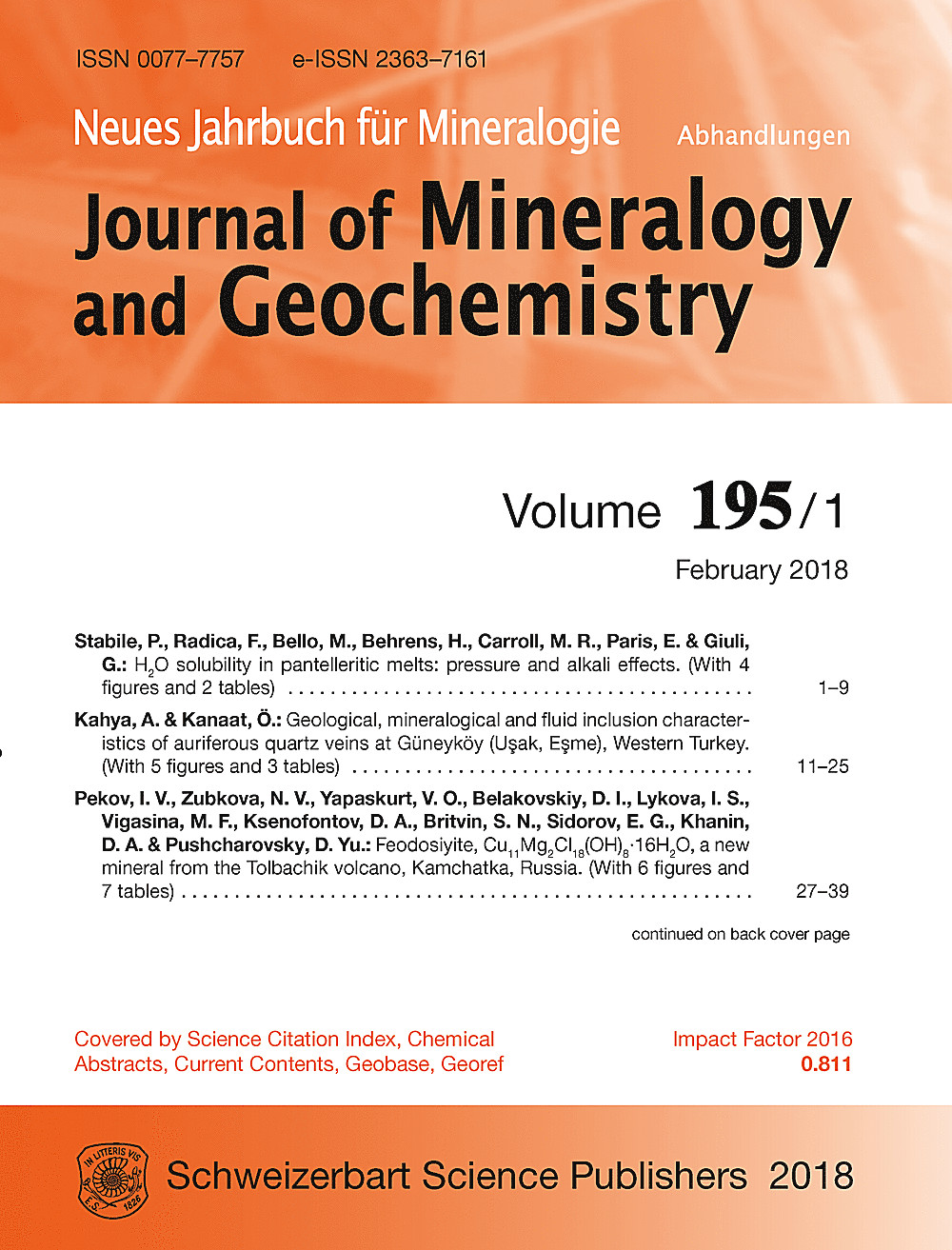
Schmetzer, K., Bank, H. and Gübelin, E.J. (1980) The alexandrite effect in minerals: Chrysoberyl, garnet, corundum, fluorite.Neues Jahrbuch für Mineralogie, Abhandlungen, Vol. 138, No. 2, February, pp. 147–164.
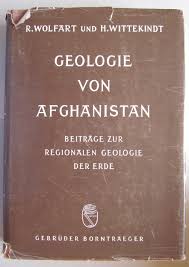
Wolfart, R. and Wittekindt, H. (1980)Geologie von Afghanistan. Berlin, Gebruder Borntraeger
Record No. 5029 | not seen
Reference copied to clipboard!
corundum, Afghanistan.12, gems
A proposal for delimiting ruby (from rose and violet corundum) and emerald (from light green and dark green beryl)
Journal Article
Superchi, M. and Rolandi, V. (1980) A proposal for delimiting ruby (from rose and violet corundum) and emerald (from light green and dark green beryl).Zeitschrift der Deutschen Gemmologischen Gesellschaft, Vol. 29, pp. 68–70.
Record No. 5000 | not seen
Reference copied to clipboard!
corundum, quality.10, gems
Exploring the Literature of Corundum
Ruby and sapphire research spans mineralogy, gem deposits, identification, treatments, synthesis and the history of the gem trade. Older publications can also be useful for tracing terminology, early observations and accounts of mining localities. Publication dates and the original source should be considered when using historical descriptions.
Four Treasures is Lotus Gemology's freely accessible gemological reference database. Use the full database to search by author, title or keyword and explore literature on gemology, mineralogy, jewelry and related fields. Where available, hyperlinks on titles may lead directly to the full publication.

![A gemstone trip to Nepal [in Japanese]](/components/com_lotusgemologypublications/assets/noimage.jpg "A gemstone trip to Nepal [in Japanese]")