Ruby & Sapphire Bibliography

Ruby & Sapphire Bibliography

Explore books, articles and historical sources on ruby, sapphire and corundum in Four Treasures, the Lotus Gemology reference database. This bibliography brings together matching records from the collection, with publication details, abstracts and cover images where available.

Ruby & Sapphire References

The list below matches the terms ruby, rubies, sapphire or corundum in the database's searchable fields. Some references discuss these gems as part of a broader subject. Linked titles take you to external links where you may find the full reference.
281–300 of 4,671 matching references

Mineral inclusions in ruby and sapphire from the Bo Welu gem deposit in Chanthaburi, Thailand
Journal Article
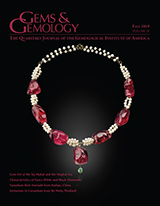
Promwongnan, S. and Sutthirat, C. (2019) Mineral inclusions in ruby and sapphire from the Bo Welu gem deposit in Chanthaburi, Thailand. Gems & Gemology, Vol. 55, No. 3, Fall, pp. 354–369.
Record No. 6024  |  ISBN/ISSN: 0016626X  |  DOI: https://dx.doi.org/10.5741/GEMS.55.3.354  |  RWHL*
The mineral inclusions of alluvial ruby and sapphire from the Bo Welu gem deposit in Thailand’s Chanthaburi Province were collected and investigated. This deposit is directly related to a basaltic terrain. Raman spectroscopy and electron probe micro-analyzer (EPMA) measurements allow the identification of mineral inclusions of pyrope-rich garnet, sillimanite, high-Al diopside, sapphirine, nepheline, quartz, feldspar (mostly plagioclase), spinel, sulfide, anhydrite, and silicate melts in ruby and purple sapphire. Zircon, alkali feldspar (mostly with high Na content), monazite, columbite, and sulfide were identified in blue sapphire. This study represents the first report of several inclusions in ruby and sapphire from this gem deposit.The mineral inclusions of alluvial ruby and sapphire from the Bo Welu gem deposit in Thailand’s Chanthaburi Province were collected and investigated. This deposit is directly related to a basaltic terrain. Raman spectroscopy and electron probe micro-analyzer (EPMA) measurements allow the identification of mineral inclusions of pyrope-rich garnet, sillimanite, high-Al diopside, sapphirine, nepheline, quartz, feldspar (mostly plagioclase), spinel, sulfide, anhydrite, and silicate melts in ruby and purple sapphire. Zircon, alkali feldspar (mostly with high Na content), monazite, columbite, and sulfide were identified in blue sapphire. This study represents the first report of several inclusions in ruby and sapphire from this gem deposit.

Rushing for gemstones and gold: Reflecting on experiences from the United States, Canada, New Zealand, Australia and Madagascar, 1848-present
Journal Article
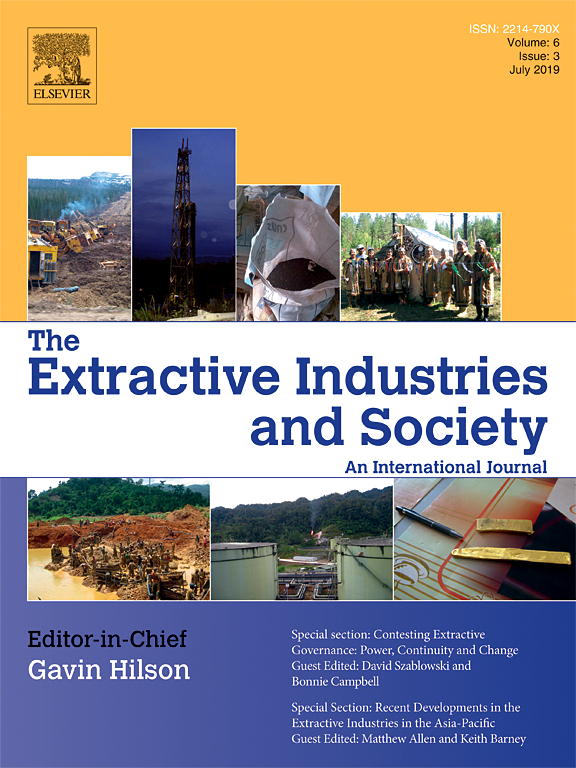
Canavesio, R. and Pardieu, V. (2019) Rushing for gemstones and gold: Reflecting on experiences from the United States, Canada, New Zealand, Australia and Madagascar, 1848-present. The Extractive Industries and Society, Vol. 6, No. 4, pp. 1055–1065.
Record No. 6023  |  DOI: https://doi.org/10.1016/j.exis.2019.08.005  |  RWHL*
The extraction of gold and gemstones is often done by small-scale miners, particularly in Africa. It is labor intensive and during the last two centuries the extraction of these resources produced a large number of rushes. This article compares the nineteenth-century North American, Australian and New Zealand rushes for gold, and the Malagasy rushes produced by gemstone mining since the 1990s. Rushes are classified according to the number of participating migrants who participated in each rush. On this point, the article show that artisanal and small-scale gemstone mining in Madagascar produced rushes of comparable magnitude to those observed in North America and Australia in the second half of the 19th century. Moreover, by relating these migratory phenomena, which are often studied independently of each other, a global analysis of rushes demonstrates that most of them fit into a migratory network more vast and durable than the durations of rushes themselves.

An update on mineral inclusions and their composition in ruby from the Bo Rai gem field in Trat Province, eastern Thailand
Journal Article
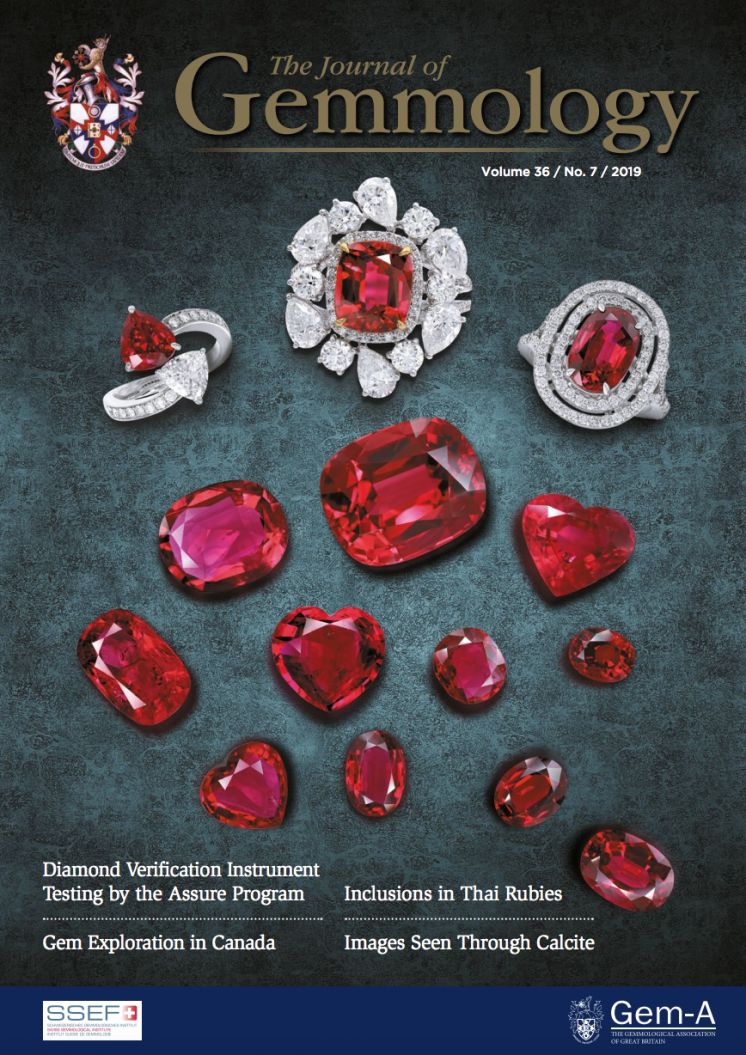
Promwongnan, S. and Sutthirat, C. (2019) An update on mineral inclusions and their composition in ruby from the Bo Rai gem field in Trat Province, eastern Thailand. Journal of Gemmology, Vol. 36, No. 7, pp. 634–645.
Record No. 6013  |  ISBN/ISSN: 221252  |  RWHL*
The Bo Rai alluvial gem field in Trat Province, eastern Thailand, was a major mining site for Thai ruby during the early 1980s, and this material continues to circulate in the gem market worldwide. For this study, approximately 1,000 Bo Rai ruby samples were examined and pre-screened for mineral inclusions. The rough stones usually formed platy, waterworn, tabular crystals with etched or resorbed surfaces. UV-Vis-NIR spectroscopy indicated a relatively high Fe content, which was confirmed by trace-element analysis. Solid inclusions typically consisted of Al-rich pyroxene, plagioclase and pyrope with subordinate sillimanite and spinel (both of which are reported here for the first time), as well as sulphides and silicate melt inclusions. The inclusion assemblage of pyroxene, plagioclase, pyrope and spinel closely resembles the mineralogy of mafic granulite xenoliths in alkali basalt associated with the Bo Rai gem field, which supports ruby formation in mafic granulite prior to being transported to the earth’s surface via basaltic eruptions.

A decade of ruby from Mozambique: A review
Journal Article
Vertriest, W. and Saeseaw, S. (2019) A decade of ruby from Mozambique: A review. Gems & Gemology, Vol. 55, No. 2, Summer, pp. 162–183.
Record No. 6010  |  ISBN/ISSN: 0016626X  |  DOI: https://dx.doi.org/10.5741/GEMS.55.2.162  |  RWHL*
In less than a decade, Mozambique has become the world’s most productive source for gem-quality ruby. Since the discovery in 2009, GIA has followed these deposits from the front lines, collecting data in the field and in the laboratory. The development of the deposit in Montepuez has been extremely interesting, with different players involved and different types of material unearthed. This article provides a summary and overview of the current knowledge about Mozambican ruby, including the history of mining and the market impact, as well as a comprehensive gemological characterization and discussion of the most common treatments applied to the stones. Much of the information in this article is based on the authors’ observations in the field and market as well as several publications (Pardieu et al., 2009, 2013, 2015; Saeseaw et al., 2018).

Land of origins: A gemological expedition to Ethiopia
Journal Article
Vertriest, W., Girma, D., Wongrawang, P., Atikarnsakul, U. and Schumacher, K. (2019) Land of origins: A gemological expedition to Ethiopia. Gems & Gemology, Vol. 55, No. 1, Spring, pp. 72–88.
Record No. 5997  |  ISBN/ISSN: 0016626X  |  DOI: http://dx.doi.org/10.5741/GEMS.55.1.72  |  RWHL*
Although Ethiopia is considered the cradle of mankind and the land of origins, gemstones never played a significant role in its long history and rich culture. Only in the last decade did Ethiopia emerge in the gem trade, with the discovery of large opal deposits near the town of Wegel Tena (Rondeau et al., 2010). When the first high-quality emeralds from Shakiso in southern Ethiopia reached the market in the fall of 2016, GIA’s Carlsbad and Bangkok labs conducted a joint preliminary study (Renfro et al., 2017). And in February 2017, GIA received news of a sapphire discovery near Aksum in northern Tigray Province (Vertriest et al., 2017). With all of this new material reaching the market, GIA collaborated with the Ethiopian Ministry of Mines, Petroleum and Natural Gas in Addis Ababa to set up an expedition to the sapphire, opal, and emerald sources. In March 2018, a team of four GIA gemologists and videographers traveled to Ethiopia to visit its gem sources. The first target was the sapphire deposit in the north, followed by the opal mines in the central highlands. The last area visited was near Shakiso to witness the developing emerald mines. During the expedition (figure 1), we documented mining techniques, social impact, material processing, natural challenges, and limitations. We also collected samples at the mines and nearby markets in accordance with GIA’s sampling protocols. These samples are now part of GIA’s reference collection and used for origin determination, research projects, and treatment experiments.

U-Pb ages of zircon inclusions in sapphires from Ratnapura and Balangoda (Sri Lanka) and implications for geographic origin
Journal Article
Elmaleh, E., Schmidt, S.T., Karampelas, S., Link, K., Kiefert, L., Süssenberger, A. and Paul, A. (2019) U-Pb ages of zircon inclusions in sapphires from Ratnapura and Balangoda (Sri Lanka) and implications for geographic origin. Gems & Gemology, Vol. 55, No. 1, Spring, pp. 18–28.
Record No. 5996  |  ISBN/ISSN: 0016626X  |  RWHL*
Five sapphires from the secondary placer deposits of Ratnapura and Balangoda in Sri Lanka were classified as being of metamorphic/metasomatic/non-basalt-related origin based on trace-element analysis (LA-ICP-MS) and inclusion characterization. Two sapphires—one from each deposit—contained suitable zircon inclusions that were dated using the LA-ICP-MS method. They yielded U-Pb ages of approximately 549 Ma. The results suggest that the zircon enclosed in the sapphires probably formed in a high-temperature event at the end of the Pre-cambrian granulite facies metamorphism of the ancient Gondwana continent and that this event coincides with the crystallization of the sapphires. The metamorphic character of these sapphires is confirmed from the trace-element composition as well as the solidand liquid-phase inclusions.

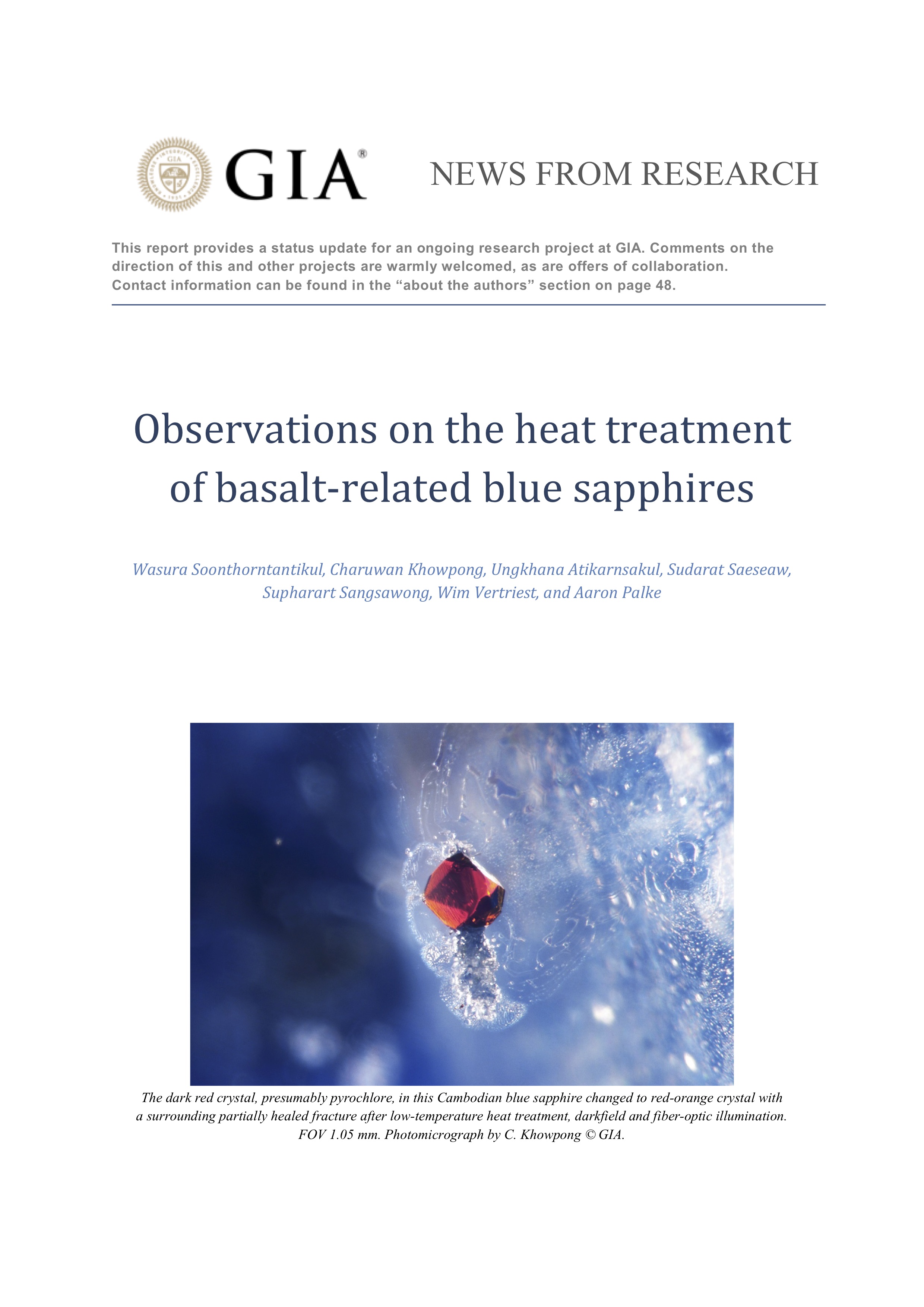
Observations on the heat treatment of basalt-related blue sapphires
Report
Soonthorntanikul, W., Khowpong, C., Atikarnsakul, U., Saeseaw, S., Sangsawong, S., Vertriest, W. and Palke, A. (2019) Observations on the heat treatment of basalt-related blue sapphires. GIA News From Research, no city: Gemological Institute of America, 60 pp.
Record No. 5979  |  RWHL*
Basalt-related blue sapphires typically have an oversaturated blue color causing the stones to be too dark when faceted. Low-temperature heat treatment can lighten dark material. However, it is difficult to identify this treatment using standard gemological testing and microscopic examination. For instance, unheated sapphires are transported to the earth’s surface by hot, basaltic magma which may have thermally altered their inclusions, causing them to look similar to those seen in artificially heated material. In this study, 50 basalt-related blue sapphires were heat treated in air (oxidizing atmosphere). Changes in color appearance, UV fluorescence, internal features, and spectroscopic properties post treatment were compared with the results before treatment to find suitable approaches for detecting heat treatment on blue sapphires from basalt-related deposits. The main factors affecting the sapphires’ response to heat treatment include the temperatures employed and the duration of the treatment process. Initial experiments at temperatures of 500–1500 °C for 7 hours showed that the blue color appears to lighten at 700 °C and higher. Temperatures ranging from 700 to 1050 °C were then selected for a more in-depth study on the effect of heating time with durations of 1.75, 7, and 28 hours. The results showed negligible change to a slight lightening of the blue color after treatment at 700 °C, while an obvious lightening of the blue color occurred at 900 and 1050 °C. Some mineral inclusions, iron stains, and partially healed fractures showed signs of alteration during these heating experiments, while needles and minute particles did not show any signs of change. All unheated samples studied were inert to short-wave ultraviolet radiation. After heating, most remained inert under short-wave UV, but a few samples exhibited a very weak chalky green fluorescence. FTIR spectra obtained from the samples varied considerably, with differences in peak intensities before and after heating. Differences were also seen as the duration of heating was changed. In most cases, unheated blue sapphires from basalt-related deposits revealed the characteristic 3309 cm⁻¹ series (sharp peaks at 3309, 3232 and 3186 cm⁻¹) in the FTIR spectrum with the intensity of 3232 cm⁻¹ being much lower than that of 3309 cm⁻¹. After heating at 700 °C and 900 °C, the intensity of the 3309 cm⁻¹ peak decreased and the 3232 cm⁻¹ peak increased, respectively. However, in most cases, some samples that initially showed a relatively intense 3232 cm⁻¹ peak before treatment exhibited a more intense 3309 cm⁻¹ peak and a less intense 3232 cm⁻¹ peak post treatment. After heating at 1050 °C for 1.75 hours, we recorded a decrease in the intensity of the 3309 cm⁻¹ peak and an increase in the 3232 cm⁻¹ peak, to the point where they were of almost comparable intensity. When subsequently heated for 7 and 28 hours, the intensity of the 3309 cm⁻¹ peak increased and that of the 3232 cm⁻¹ peak decreased. UV-Vis-NIR spectra obtained from the samples heated at 900 °C and 1050 °C for 1.75, 7, and 28 hours showed a reduction in the height/intensity of the broad band centered at 580 nm related to an Fe²⁺–Ti⁴⁺ intervalence charge transfer. This reduction is the root cause of the lighter color after heat treatment. The results of this study showed that even with advanced testing, it is very challenging to separate basalt-related sapphires that have been artificially heated from natural unheated stones, owing to the variable results associated with the experimental temperatures and durations used. Inclusion studies may provide sufficient evidence in some cases, but even when comparing the inclusions seen before and after treatment, separation often remains challenging.

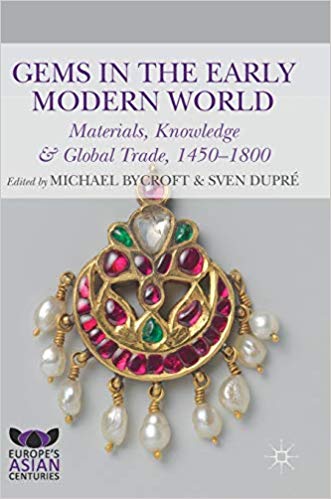
Gems in the Early Modern World: Materials, Knowledge and Global Trade, 1450–1800
Edited Book
Bycroft, M. and Dupré, S., editor (2019) Gems in the Early Modern World: Materials, Knowledge and Global Trade, 1450–1800.. Cham, Switzerland, Palgrave Macmillan, xvii, 359 pp..
Record No. 5956  |  ISBN/ISSN: 9783320000000  |  Sinkankas/Born No.: NIS/NIB  |  RWHL*
This edited collection is an interdisciplinary study of gems in the early modern world. It examines the relations between the art, science, and technology of gems, and it does so against the backdrop of an expanding global trade in gems. The eleven chapters are organised into three parts. The first part sets the scene by describing how gems moved around the early modern world, how they were set in motion, and how they were pulled together in the course of their travels. The second part is about value. It asks why people valued gems, how they determined the value of a given gem, and how the value of a gem was connected to its perceived place of origin. The third part deals with the skills involved in cutting, polishing, and mounting gems, and how these skills were transmitted and articulated by artisans. The common themes of all these chapters are materials, knowledge and global trade. The contributors to this volume focus on the material properties of gems such as their weight and hardness, on the knowledge involved in exchanging them and valuing them, and on the cultural consequences of the expanding trade in gems in Eurasia and the Americas.

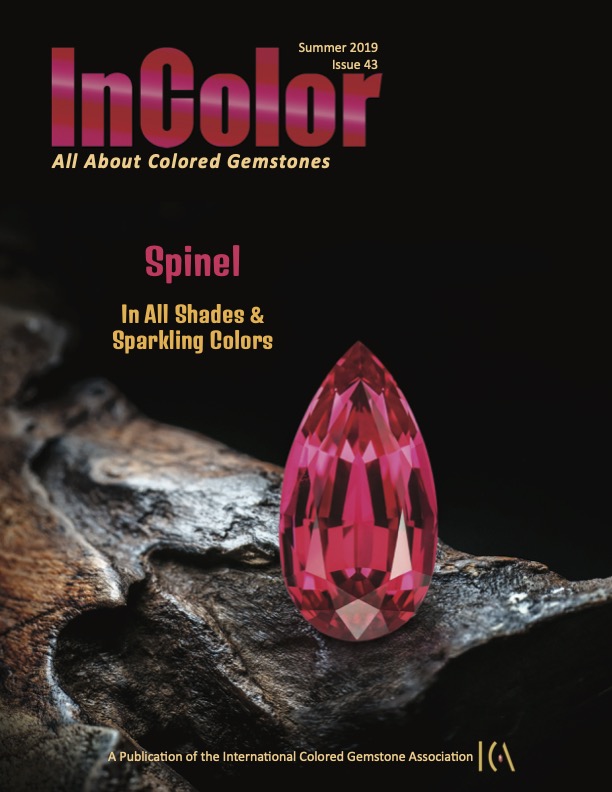
Spinel: A gemstone for kings

Journal Article
Cassius-Duranton, M.-L. (2019) Spinel: A gemstone for kings. InColor, No. 43, Summer, pp. 74–81.
Record No. 4596  |  RWHL*
Nice and well-illustrated article discussing the history of spinel from early times and on.

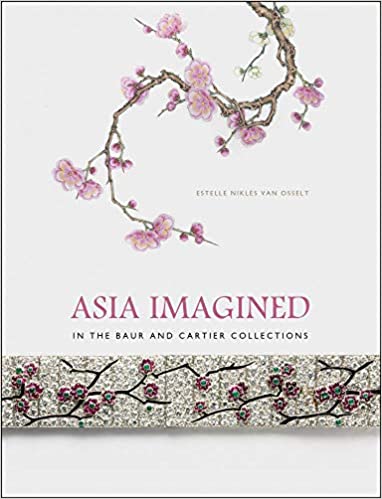
Asia Imagined: In the Baur and Cartier Collections
Edited Book
Osselt, E.N., van, editor (2019) Asia Imagined: In the Baur and Cartier Collections.. Milan, 5 Continents Editions, 336 pp..
Record No. 4539  |  ISBN/ISSN: 9788870000000  |  Sinkankas/Born No.: NIS/NIB  |  RWHL*
In the nineteenth and twentieth centuries it was fashionable to collect 'curios', objects so named because they aroused 'curiosity'. Imaginatively decorated and made from different materials, some of which are still underappreciated, these exotic objects from China and Japan fascinated Westerners. They stimulated a fad for Asia, captivated art lovers, and had a profound influence on the graphic arts in Europe. This beguiling period kindled a passion for collecting in Alfred Baur (1865-1951) and for creation in Alfred Cartier (1841-1925) and his three sons, Louis (1875-1942), Pierre (1878-1964), and Jacques (1884-1941). While the pieces fashioned in Asian style by the Maison Cartier are generally known, their historical and cultural context is not, thus the idea arose of bringing these fine creations together with the collections of the Baur Foundation, Museum of Far Eastern Art, based in Geneva. As one leafs through the pages, Asia Imagined slowly becomes apparent, like a treasure hunt. Diamond-studded pagodas and pavilions, busy scholars beneath the starry sky, nacreous moonlight scenes, shimmering phoenixes, jade dragons, and multi-colured cherry blossom-like gems depict an imaginary land. The Cartier magic has its effect. Side-by-side with the creations of the Parisian jeweler, the imperial porcelains, lacquerware embellished with precious metals, embroidered silks, jades, colored enamels, netsuke, sword hilts, and prints belonging to the Baur Foundation give their version of the marvels of China and Japan and install a unique dialogue, offering an exceptional opportunity to view two of the world's most outstanding collections.

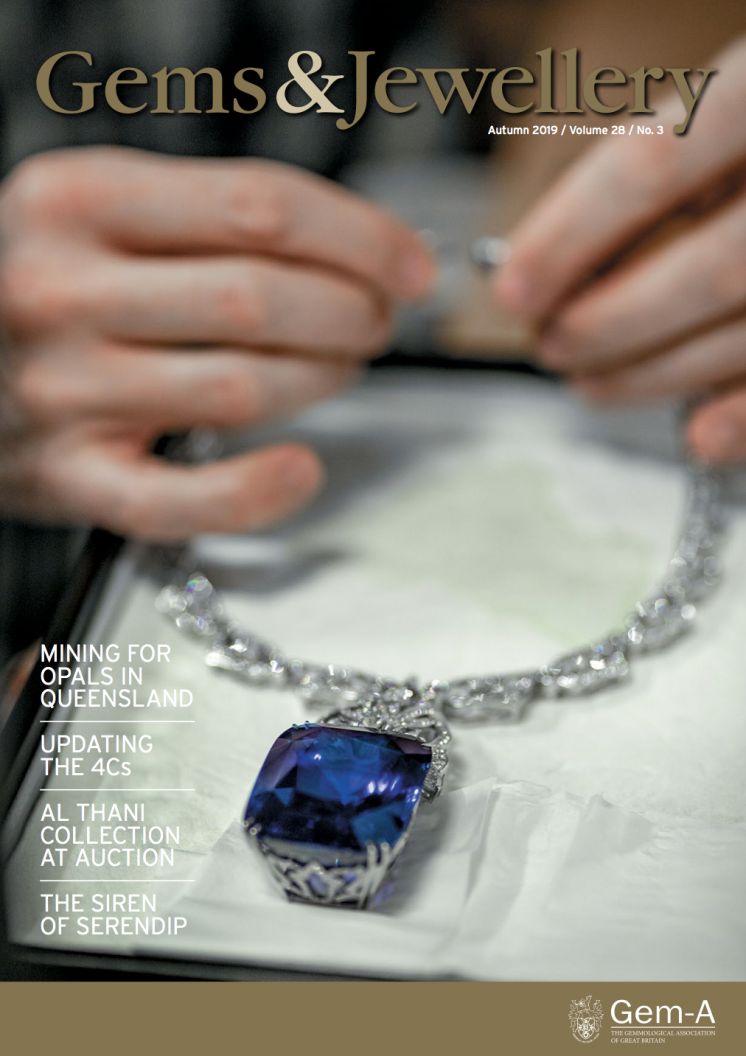
The siren’s call

Journal Article
Galopim de Carvalho, R. (2019) The siren’s call. Gems&Jewellery, Vol. 28, No. 3, Autumn, pp. 36–37.
Record No. 4161  |  ISBN/ISSN: 17468043  |  RWHL*
At 422.66 carats, the Siren of Serendip blue sapphire is a sight to behold. Here, Rui Galopim de Carvalho FGA DGA shares the story behind this fascinating (and exceptionally large) gemstone and describes the process of setting it into a beautiful white gold and diamond necklace.

Maharajas & Mughal Magnificence

Catalog
Christie’s (2019) Maharajas & Mughal Magnificence. New York: Christie’s, 19 June, Sale 17464
Record No. 4154  |  RWHL*
Feast your eyes on an unparalleled collection of Mughal jewels, European-Indian hybrid designs and 20th-Century creations by leading Jewellery houses. Spanning over 500 years of history and sovereign power on the subcontinent, Maharajas & Mughal Magnificence tells the story of a continuous tradition of patronage from the Mughal Empire to present day, with provenance including the royal and noble families of India. This comprehensive trove of nearly 400 diamonds, coloured stones and the finest jewelled objects, swords and daggers will be offered in a landmark auction this June in New York. These objects are offered from The Al Thani Collection. From next year, works of art from this encyclopedic collection will be shown at a new museum space in Paris. In addition to new acquisitions, sale proceeds will support ongoing initiatives of The Al Thani Collection Foundation which extend from exhibitions, publications and lectures to sponsorships of projects at museums around the world.

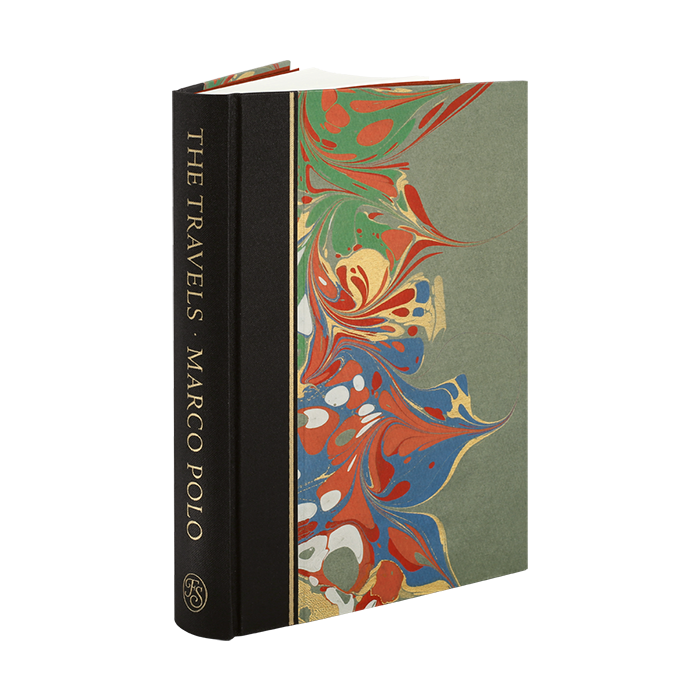
The Travels • Marco Polo

Book
Polo, M. (2019) The Travels • Marco Polo. London, Folio Society, 354 pp.
Record No. 4128  |  Sinkankas/Born No.: NIS/NIB  |  RWHL*
Few books can be said to have changed the world but The Travels is one of them. Despite being written nearly 800 years ago, its epic scale and accounts of near-mythical exploits have ensured its continued popularity. This exceptional new edition reproduces Nigel Cliff's meticulous and accessible translation ‘the first English translation of the original text in nearly 50 years’ as well as his compelling introduction. Essential reading for newcomers to The Travels, it will also inform and entertain those familiar with the book. Adorned with decorative borders and chapter titles, the text is illustrated with the complete collection of 84 miniatures from the 1410 Duc de Berry manuscript housed at the Bibliotheque Nationale in Paris. A quarter-bound buckram binding and marbled paper sides add the finishing touches to this beautiful collector's edition.

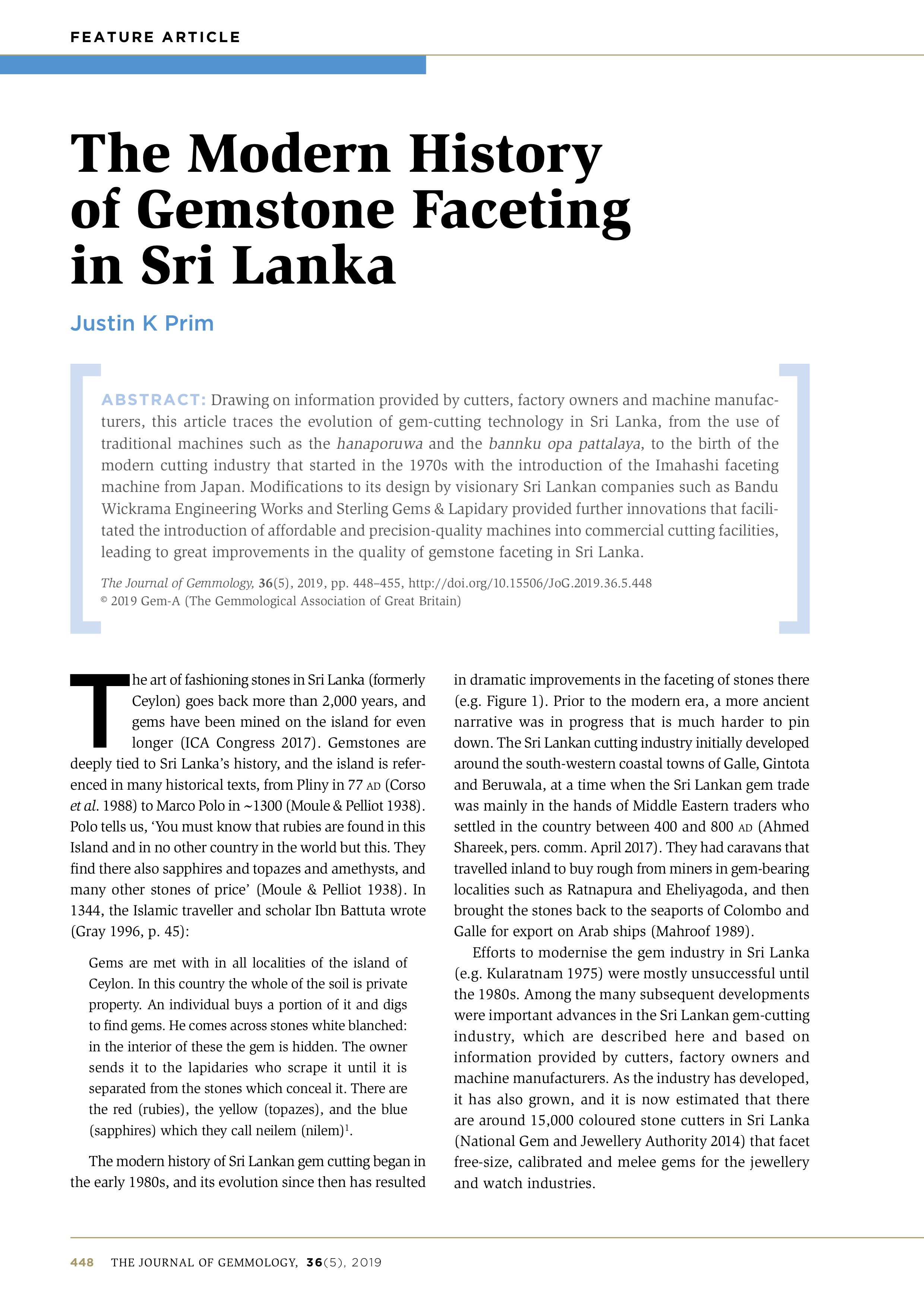
The modern history of gemstone faceting in Sri Lanka
Journal Article
Prim, J.K. (2019) The modern history of gemstone faceting in Sri Lanka. Journal of Gemmology, Vol. 36, No. 5, pp. 448–455.
Record No. 4119  |  ISBN/ISSN: 221252  |  DOI: https://doi.org/10.15506/JoG.2019.36.5.448  |  RWHL*
Drawing on information provided by cutters, factory owners and machine manufacturers, this article traces the evolution of gem-cutting technology in Sri Lanka, from the use of traditional machines such as the hanaporuwa and the bannku opa pattalaya, to the birth of the modern cutting industry that started in the 1970s with the introduction of the Imahashi faceting machine from Japan. Modifications to its design by visionary Sri Lankan companies such as Bandu Wickrama Engineering Works and Sterling Gems & Lapidary provided further innovations that facilitated the introduction of affordable and precision-quality machines into commercial cutting facilities, leading to great improvements in the quality of gemstone faceting in Sri Lanka.

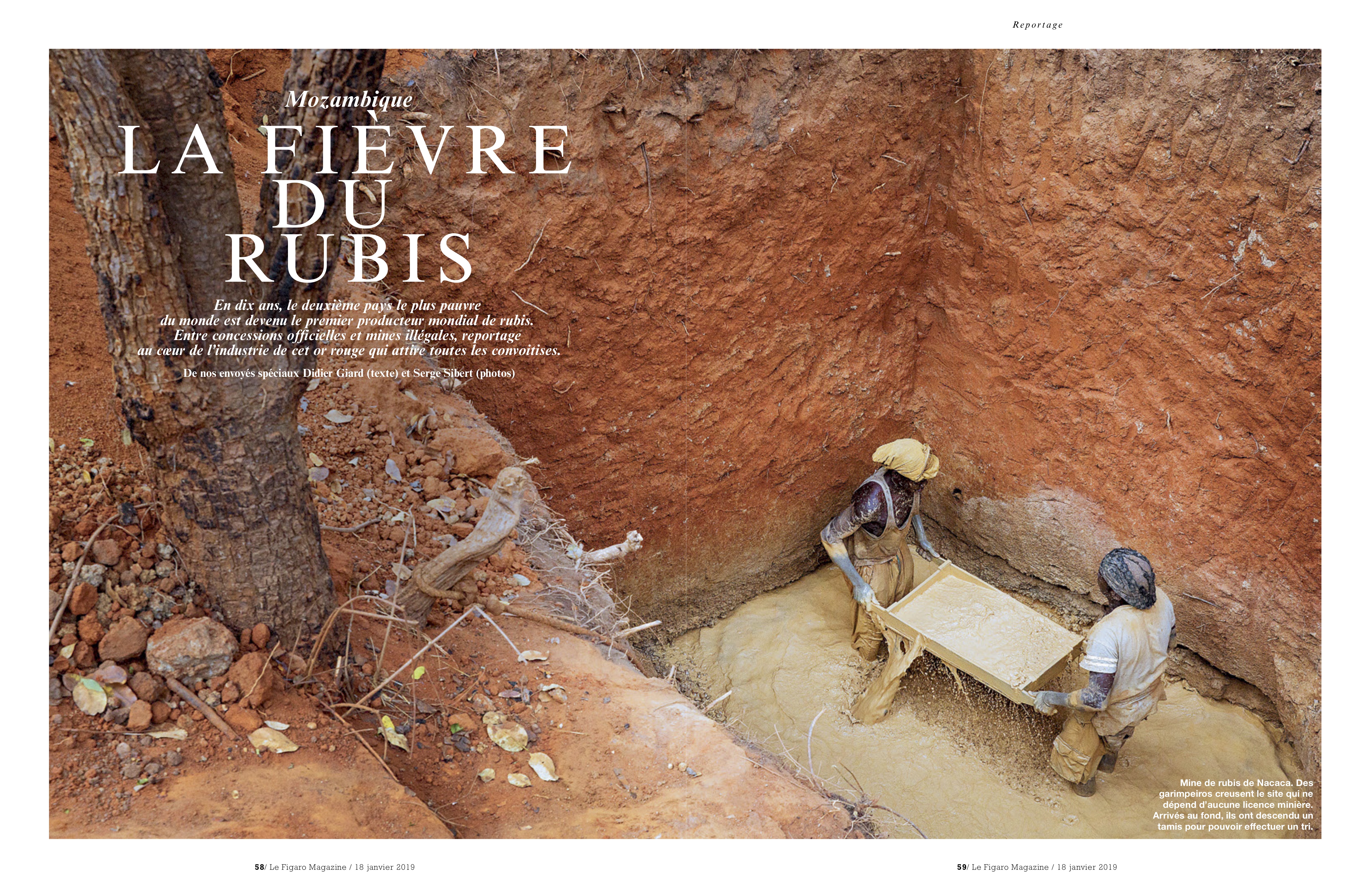
Mozambique: La Fièvre du Rubis

Mozambique: The ruby fever
Magazine Article
Giard, D. (2019) Mozambique: La Fièvre du Rubis. [Mozambique: The ruby fever] Le Figaro,, 18 janvier
Record No. 4074  |  Sinkankas/Born No.: NIS/NIB  |  Language: in French  |  RWHL*
Giard reports on the extraordinary development of ruby mining around Montepuez in northern Mozambique following the discovery of major deposits there in the late 2000s. The article describes the resulting “ruby fever,” which drew large numbers of artisanal miners, traders, and foreign buyers to the region, and the subsequent development of large-scale organized mining. It examines the exceptional quantity and quality of some Mozambican rubies, their rapid rise to prominence in the international colored-stone market, and the transformation of Mozambique into one of the world’s major ruby sources. Giard also addresses the economic and human consequences of the boom, including competition between artisanal miners and concession holders, security and illegal mining, local living conditions, and the challenge of ensuring that exploitation of this valuable gem resource contributes to sustainable development in the mining region.

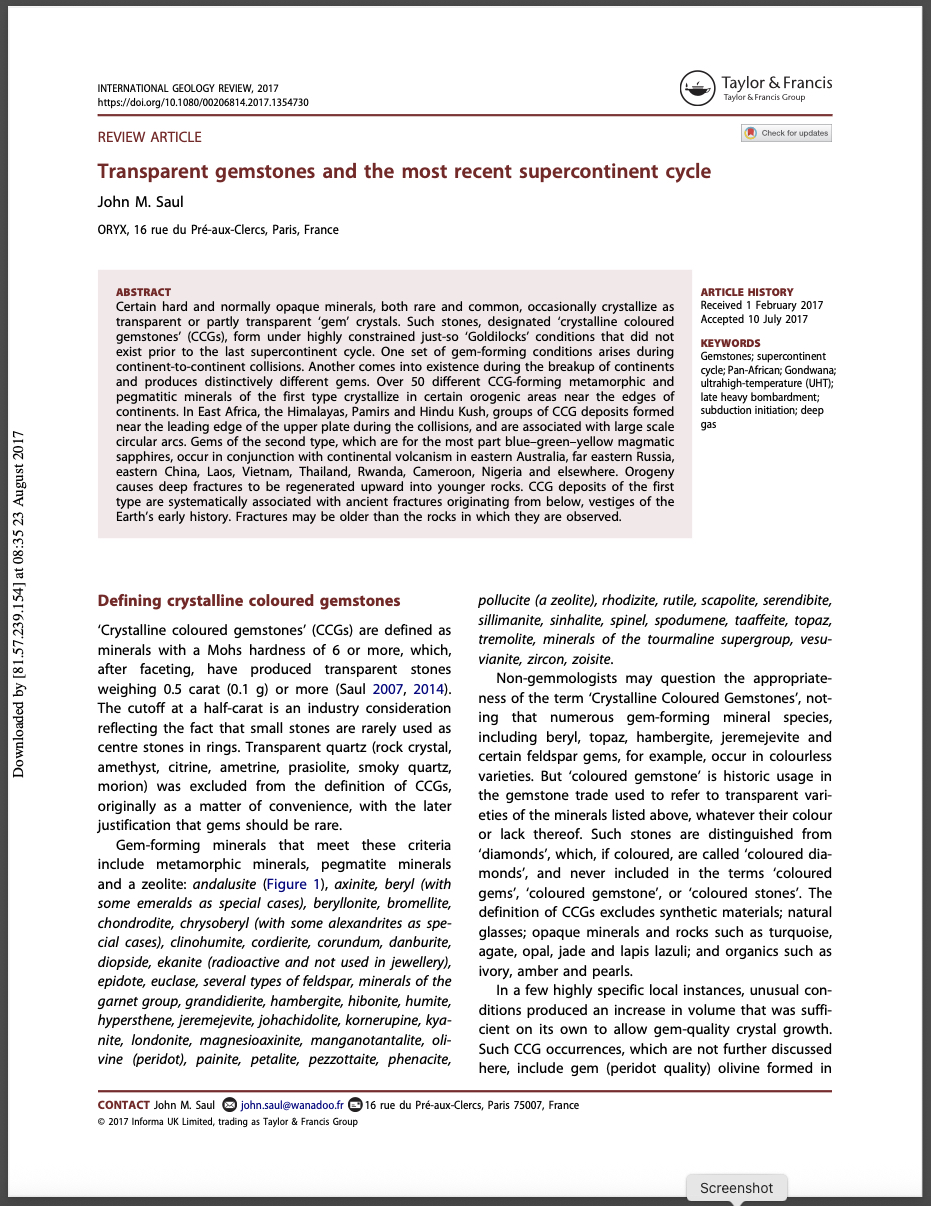
Transparent gemstones and the most recent supercontinent cycle
Journal Article
Saul, J.M. (2018) Transparent gemstones and the most recent supercontinent cycle. International Geology Review, Vol. 60, No. 7, pp. 889–910.
Record No. 27906  |  ISBN/ISSN: 0020-6814  |  DOI: https://doi.org/10.1080/00206814.2017.1354730  |  Sinkankas/Born No.: NIS/NIB  |  RWHL*
Certain hard and normally opaque minerals, both rare and common, occasionally crystallize as transparent or partly transparent ?gem? crystals. Such stones, designated ?crystalline coloured gemstones? (CCGs), form under highly constrained just-so ?Goldilocks? conditions that did not exist prior to the last supercontinent cycle. One set of gem-forming conditions arises during continent-to-continent collisions. Another comes into existence during the breakup of continents and produces distinctively different gems. Over 50 different CCG-forming metamorphic and pegmatitic minerals of the first type crystallize in certain orogenic areas near the edges of continents. In East Africa, the Himalayas, Pamirs and Hindu Kush, groups of CCG deposits formed near the leading edge of the upper plate during the collisions, and are associated with large scale circular arcs. Gems of the second type, which are for the most part blue?green?yellow magmatic sapphires, occur in conjunction with continental volcanism in eastern Australia, far eastern Russia, eastern China, Laos, Vietnam, Thailand, Rwanda, Cameroon, Nigeria and elsewhere. Orogeny causes deep fractures to be regenerated upward into younger rocks. CCG deposits of the first type are systematically associated with ancient fractures originating from below, vestiges of the Earth?s early history. Fractures may be older than the rocks in which they are observed.

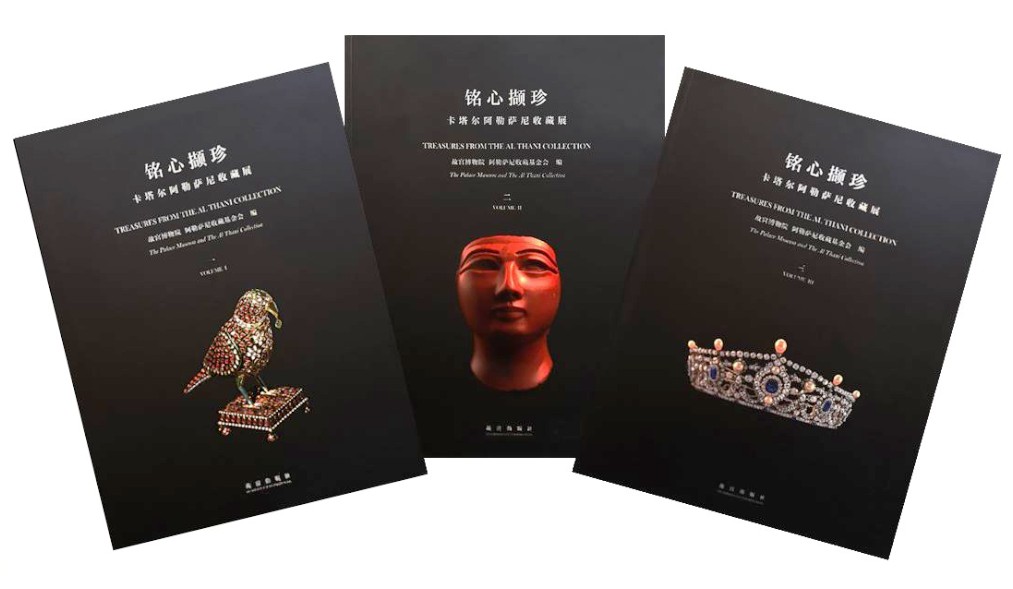
Treasures from the Al Thani Collection
Book
Al Thani Collection (2018) Treasures from the Al Thani Collection. Beijing, Forbidden City Publishing House, 3 Vols., 319, 756 pp.
Record No. 16705  |  ISBN/ISSN: 9787510000000  |  Sinkankas/Born No.: NIS/NIB  |  Language: in Chinese and English  |  RWHL*
Treasures from the Al Thani Collection was an exhibition of artworks from the Al Thani Collection that was held at the Palace Museum in Beijing in 2018. The exhibition featured a diverse selection of artworks from different cultures and time periods. The exhibition featured artworks from antiquity to the early modern period. The exhibition included manuscripts, miniatures, metalwork, textiles, and jewelry. The exhibition included works from different civilizations, such as Egypt, China, Maya, and Cycladic. Sheikh Hamad bin Abdullah Al Thani is a member of the Qatari royal family and a distinguished collector. The first volume of the set documents the exhibition “The Gems and Jewels of India”. It is split into different sections including: The Mughal Treasury; Dynastic Gem and Jewels; Objects of Jade and Rock Crystal; Objects in Gold and Enamel; Regalia and Jewelled Ornaments; Cartier and the Great European Jewellers, and, finally, Contemporary Creations. The second and third volumes both document a second exhibition, held in 2018, entitled “Masterpieces from a Royal Collection”. Volume II focuses on ‘The Ancient World’ and ‘The Wider World’. The former includes Egyptian, Greek and Roman, Mesopotamian and Iranian works as well as Central Asian treasures, whilst the latter has objects from China, Pre- Columbian Central and South America, Africa and the Pacific. Volume III is split more specifically into ‘The Islamic World’ and ‘The European World’. Each theme is further devided into sub sections which cover all aspects of art including Manuscripts, Miniatures, Metalwork and Textiles, or Medieval Reliquaries, Limoges Enamels, Renaissance Jewellery, Rock Crystal and Wunderkammer objects, Silver, Jewellery (Cartier, Melerio, Chaumet, Bolin) and 54 pieces by Fabergé.

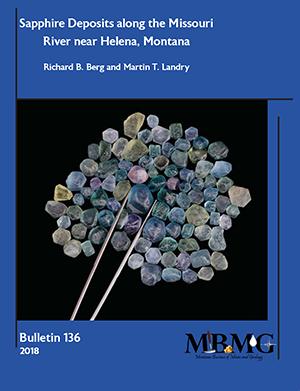
Sapphires Deposits along the Missouri River near Helena, Montana
Journal Article
Berg, R.B. (2018) Sapphires Deposits along the Missouri River near Helena, Montana. Bulletins of the Montana Bureau of Mines and Geology, Bulletin 136, 52 pp..
Record No. 6415  |  RWHL*

Boehmite needles in corundum are Rose channels
Journal Article
Notari, F., Fritsch, E., Caplan, C. and Hainschwang, T. (2018) Boehmite needles in corundum are Rose channels. Gems & Gemology, Vol. 54, No. 3, Fall, p. 257.
Record No. 6268  |  ISBN/ISSN: 0016626X  |  RWHL*
Crystallographically oriented, linear inclusions in corundum are often referred to as “boehmite needles” or “polycrystalline boehmite” (boehmite is the orthorhombic aluminum hydroxide γ-AlOOH). These inclusions are oriented along the edges of the rhombohedral faces and form angles of about 90°. They are always found at the intersection of twin lamellae, formed by twinning along the rhombohedral faces. They contain apparently polycrystalline material tentatively identified (at least in some cases) as boehmite. These are common in natural corundum and sometimes used as a criterion to separate natural from synthetic corundum. Boehmite can be recognized through its infrared absorption. The great majority of the “needle”-containing gem corundum showed no boehmite infrared absorption, thus leading us to believe that these inclusions have a different origin. Microscopic observation reveals three aspects: some are lath- or ribbon-shaped, others are clearly negative crystals, and sometimes they appear as dotted lines. At the outcrop of the feature on the gem’s surface there is most commonly a void that can be followed into the gem, so the “needle” is essentially empty. This feature was also documented in a flux-grown synthetic ruby with no boehmite infrared signal. These channels are favored during titanium diffusion and take on color first, as diffusion is much faster in the empty space. It is known that in a small number of materials—some metals, calcite, and diamond—hollow channels may form at the intersection of twin lamellae, caused by deformation twinning. This was discovered by Gustav Rose (1868) in calcite, and thus the features are called “Rose channels” (figure 1). We believe that “boehmite needles” are in fact Rose channels. Even when very small, these channels would explain the optical relief observed, without a change in chemistry or infrared absorption. They fit the crystallographic nature of the structures observed.

Gemological characterization of sapphires from Yogo Gulch, Montana

Journal Article
Renfro, N., Palke, A. and Berg, R.B. (2018) Gemological characterization of sapphires from Yogo Gulch, Montana. Gems & Gemology, Vol. 54, No. 2, Summer, pp. 184–201.
Record No. 6267  |  ISBN/ISSN: 0016626X  |  RWHL*
Yogo Gulch in central Montana is one of the most important gem deposits in the United States. Although very little material has been recovered there in recent years, it has produced several million carats of rough sapphire over the course of its history (Voynick, 2001). These stones, known for their vibrant untreated blue color and high clarity, have always commanded a price premium, especially in sizes larger than 0.75 ct. This paper offers a thorough gemological characterization of Yogo sapphire, which may be unfamiliar to many gemologists. Fortunately, Yogo sapphires are unique and experienced gemologists can easily separate them from gem corundum of different geographic origins throughout the world, making it possible to determine the provenance of impor- tant stones from this deposit.

Exploring the Literature of Corundum

Ruby and sapphire research spans mineralogy, gem deposits, identification, treatments, synthesis and the history of the gem trade. Older publications can also be useful for tracing terminology, early observations and accounts of mining localities. Publication dates and the original source should be considered when using historical descriptions.

For an introduction to collecting books on this subject, read Ruby & Sapphire Books: Collecting the Literature of Corundum.

About Four Treasures

Four Treasures is Lotus Gemology's freely accessible gemological reference database. Use the full database to search by author, title or keyword and explore literature on gemology, mineralogy, jewelry and related fields. Where available, hyperlinks on titles may lead directly to the full publication.

Search the Complete Four Treasures Database