Ruby & Sapphire Bibliography

Ruby & Sapphire Bibliography

Explore books, articles and historical sources on ruby, sapphire and corundum in Four Treasures, the Lotus Gemology reference database. This bibliography brings together matching records from the collection, with publication details, abstracts and cover images where available.

Ruby & Sapphire References

The list below matches the terms ruby, rubies, sapphire or corundum in the database's searchable fields. Some references discuss these gems as part of a broader subject. Linked titles take you to external links where you may find the full reference.
361–380 of 4,671 matching references

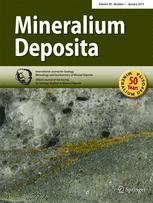
Vanadium-rich ruby and sapphire within Mogok Gemfield, Myanmar: implications for gem color and genesis
Journal Article
Khin Zaw, Sutherland, F.L., Yui, T., Meffre, S. and Thu, K. (2015) Vanadium-rich ruby and sapphire within Mogok Gemfield, Myanmar: implications for gem color and genesis. Mineralium Deposita, Vol. 50, pp. 25–39.
Record No. 5586  |  RWHL*
Rubies and sapphires are of both scientific and commercial interest. These gemstones are corundum colored by transition elements within the alumina crystal lattice: Cr3+ yields red in ruby and Fe2+, Fe3+, and Ti4+ ionic interactions color sapphires. A minor ion, V3+ induces slate to purple colors and color change in some sapphires, but its role in coloring rubies remains enigmatic. Trace element and oxygen isotope composition provide genetic signatures for natural corundum and assist geographic typing. Here, we show that V can dominate chromophore contents in Mogok ruby suites. This raises implications for their color quality, enhancement treatments, geographic origin, exploration and exploitation and their comparison with rubies elsewhere. Precise LA-ICP-MS analysis of ruby and sapphire from Mogok placer and in situ deposits reveal that V can exceed 5,000 ppm, giving V/Cr, V/Fe and V/Ti ratios up to 26, 78, and 97 respectively. Such values significantly exceed those found elsewhere suggesting a localized geological control on V-rich ruby distribution. Our results demonstrate that detailed geochemical studies of ruby suites reveal that V is a potential ruby tracer, encourage comparisons of V/Cr-variation between ruby suites and widen the scope for geographic typing and genesis of ruby. This will allow more precise comparison of Asian and other ruby fields and assist confirmation of Mogok sources for rubies in historical and contemporary gems and jewelry.

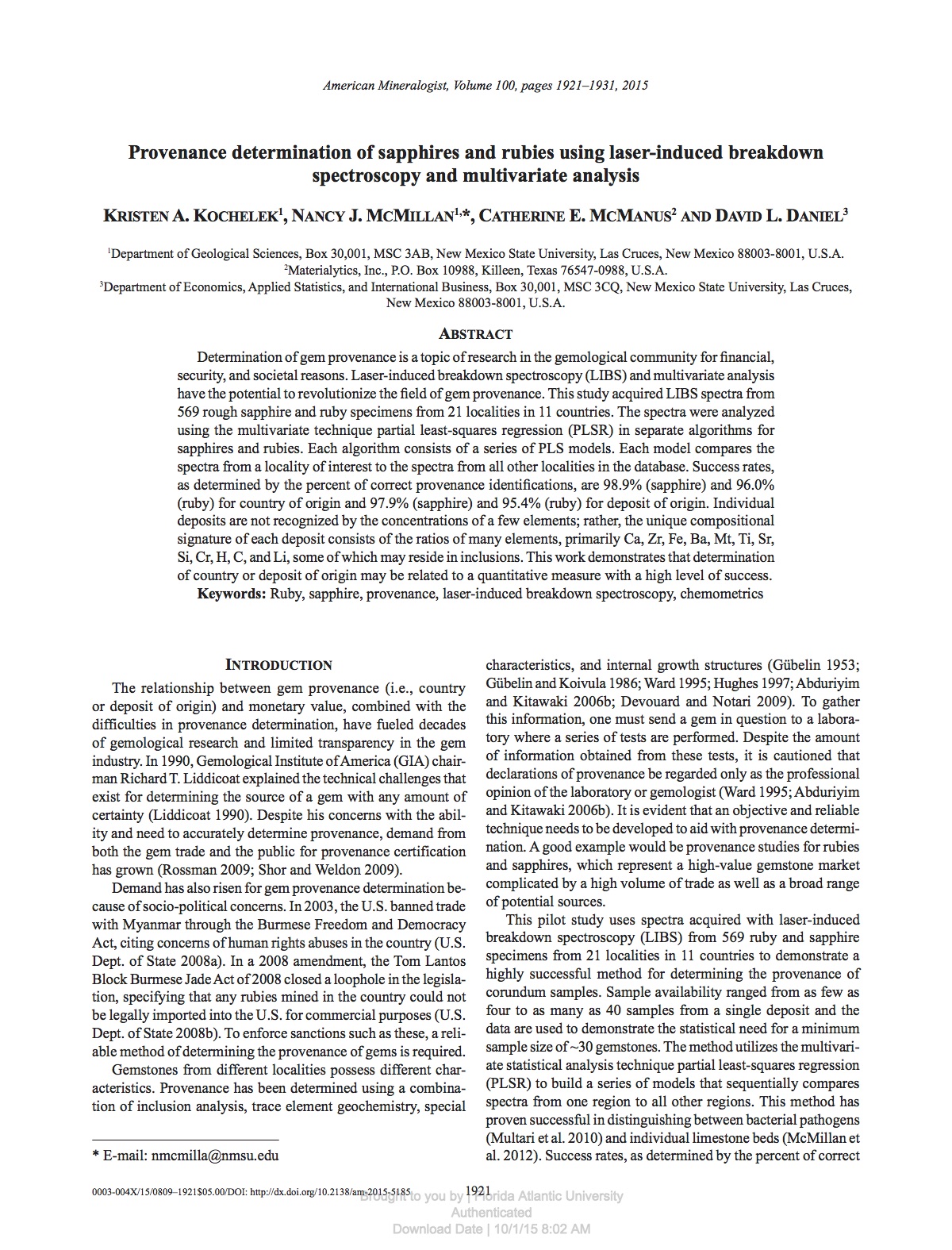
Provenance determination of sapphires and rubies using laser-induced breakdown spectroscopy and multivariate analysis
Journal Article
Kochelek, K.A., McMillan, N.J., McManus, C. and Daniel, D.L. (2015) Provenance determination of sapphires and rubies using laser-induced breakdown spectroscopy and multivariate analysis. American Mineralogist, Vol. 100, pp. 1921–1931.
Record No. 5577  |  RWHL*
Determination of gem provenance is a topic of research in the gemological community for nancial, security, and societal reasons. Laser-induced breakdown spectroscopy (LIBS) and multivariate analysis have the potential to revolutionize the eld of gem provenance. This study acquired LIBS spectra from 569 rough sapphire and ruby specimens from 21 localities in 11 countries. The spectra were analyzed using the multivariate technique partial least-squares regression (PLSR) in separate algorithms for sapphires and rubies. Each algorithm consists of a series of PLS models. Each model compares the spectra from a locality of interest to the spectra from all other localities in the database. Success rates, as determined by the percent of correct provenance identi cations, are 98.9% (sapphire) and 96.0% (ruby) for country of origin and 97.9% (sapphire) and 95.4% (ruby) for deposit of origin. Individual deposits are not recognized by the concentrations of a few elements; rather, the unique compositional signature of each deposit consists of the ratios of many elements, primarily Ca, Zr, Fe, Ba, Mt, Ti, Sr, Si, Cr, H, C, and Li, some of which may reside in inclusions. This work demonstrates that determination of country or deposit of origin may be related to a quantitative measure with a high level of success.

From exsolution to 'gold sheen': A new variety of corundum
Journal Article
Bui, T.N., Deliousi, K., Malik, T.K. and Corte, K., de (2015) From exsolution to 'gold sheen': A new variety of corundum. Journal of Gemmology, Vol. 34, No. 8, October, pp. 678–691.
Record No. 5573  |  ISBN/ISSN: 221252  |  RWHL*

Rubies and Sapphires from Snezhnoe, Tajikistan
Journal Article
Sorokina, E.S., Litvinenko, A.K., Hofmeister, W., Häger, T., Jacob, D.E. and Z.Z., N. (2015) Rubies and Sapphires from Snezhnoe, Tajikistan. Gems & Gemology, Vol. 51, No. 2, Summer, pp. 160–175.
Record No. 5563  |  ISBN/ISSN: 0016626X  |  RWHL*
Discovered during the late 1970s, the Snezhnoe ruby and sapphire deposit in Tajikistan was active until the collapse of the former Soviet Union in the early 1990s and the outbreak of regional conflicts. This marble-hosted occurrence has seen renewed interest, as it is a large and potentially productive deposit that has not been sufficiently studied. Testing of samples identified solid inclusions of margarite enriched with Na and Li (calcic ephesite or soda margarite). These are believed to be previously unreported for gem corundum. Allanite, muscovite, and fuchsite (chromium-bearing muscovite) were identified for the first time in ruby and sapphire from Snezhnoe. These and other inclusions such as zircon, rutile, K-feldspar, and Ca-Na-plagioclase could serve to distinguish them from stones mined elsewhere. Concentrations of trace elements were typical for ruby and sapphire of the same formation type. The highest Cr concentrations were observed within the bright red marble-hosted rubies, and these values were very similar to those of the famous Burmese rubies from Mogok.

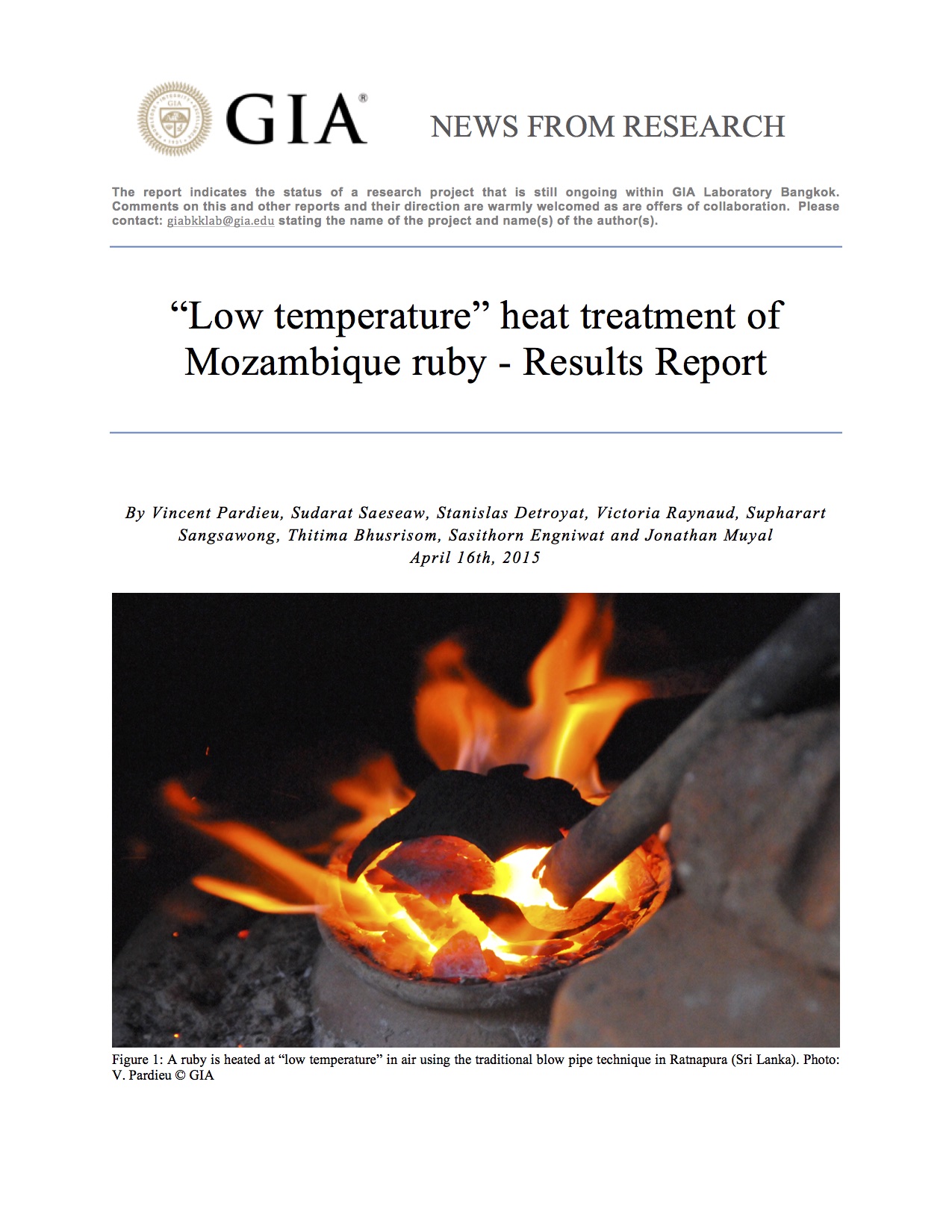
Low temperature" heat treatment of Mozambique ruby: Results report"
Report
Pardieu, V., Saeseaw, S., Detroyat, S., Raynaud, V., Sangsawong, S., Bhusrisom, T., Engniwat, S. and Muyal, J. (2015) Low temperature" heat treatment of Mozambique ruby: Results report". GIA News from Research, Bangkok: Gemological Institute of America, 16 April, 34 pp.
Record No. 5540  |  RWHL*
Heat treatment of corundum in Sri Lanka has likely been performed on gems for near 1000 years or more as Teifaschi, an Arab writer wrote the following in 1240 (Sersen, 1991): “In Serandib (Sri Lanka) and its environs, ruby is treated by fire. People take pebbles from the earth and crush and compress them into a mass with the aid of water. (This mixture) is daubed completely around a dry stone. Then, the whole thing is placed on a rock with other rocks set down around it. Dry firewood is thrown on the top, lit and blown upon (with bellows). The blowing is applied, along with more wood, till any black overtones on the ruby have disappeared. The amount of fire and the application of wood depends on the extent of the blackness present. People know this by experience. They heat-treat stones for at least one hour and, at most, twenty days and nights. Then, they carefully extract the ruby, its blackness having disappeared.” This description can be applied to the “blow pipe technique” we still can witness today in Sri Lanka (see Figure 1.) This technique is used is to remove or partially remove some blue components in rubies and sapphires to give in the case of rubies the appearance of a purer hue. In the past it was also used to turn light blue sapphires colorless. Another particularly interesting description of that treatment is also given by James Emerson Tennent, an English traveler who wrote “Ceylon an account of the Island” in 1859: “The blue tinge which detracts from the value of the pure ruby, whose colour should resemble “pigeon’s blood,” is removed by the Singhalese, by exposing the stone in the lime of a calcined shell and exposing it to high heat.” This reference is to the best knowledge of the authors also one of the earliest mention of “Pigeon’s Blood” in the English literature. A similar type of heat treatment of ruby to the ‘blow-pipe’ technique is also practiced in Vietnam and Thailand where a simple jeweler’s torch is used for few seconds or minutes and this is sometimes referred to as “snake bite” (see Figure 3 left). Usually only inclusion free stones are heated this way as included stones are likely to be damaged by the process. Generally the stone does not need to be repolished after this “snake bite” treatment.

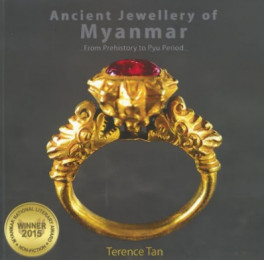
Ancient Jewellery of Myanmar • From Prehistory to Pyu Period
Book
Tan, T. (2015) Ancient Jewellery of Myanmar • From Prehistory to Pyu Period. Yangon, Mudon Sar Pae Publishing House, 300 pp.
Record No. 4547  |  ISBN/ISSN: 9790000000000  |  Sinkankas/Born No.: NIS/NIB  |  RWHL*

Gem Testing Techniques

Book
Hodgkinson, A. (2015) Gem Testing Techniques. Scotland, Valerie Hodgkinson, 541 pp.
Record No. 4518  |  Sinkankas/Born No.: NIS/NIB  |  RWHL*
From Nathan Renfro (GIA): Although several books on gem testing have been previously published, this particularly comprehensive volume by renowned gemmologist Alan Hodgkinson will certainly be a welcome addition to members of the field. This book is geared towards a general audience from beginners to career gemmologists. It is saturated with information, yet isn’t so technical to be impractical. The numerous chapters are organised in broad categories relating to particular physical properties. From acid testing of gem materials to the correct application of ultraviolet light, there is little that Hodgkinson does not cover. This book is well written with great detail. In its 552 pages, the reader will be pleased to find numerous images and diagrams that, while not generally glamorous, are very adequate for aiding the reader in understanding the concepts discussed. Scattered throughout the volume are a number of tips and tricks that the practicing gemmologist may find useful as a way to gain information while testing an unknown gem, such as using top lighting to observe pleochroism with a refractometer. Many of the methods require readily available and inexpensive materials, which many gemmologists will appreciate; the use of “visual optics” to measure refractive indices with an elongate paper as an indexed scale is one example. The book is clad in a plain blue hard cover, with silver lettering on the front cover and spine. A ribbon is included for marking one’s place as the reader navigates the pages. The overall quality of the paper, printing and binding appear to be very good. Overall, this book serves as a great reference for gemmologists. The decades of experience by the author are apparent when reading through this book. Surely this will be a highly sought-after publication from which hobbyists and professional gemmologists alike can benefit.

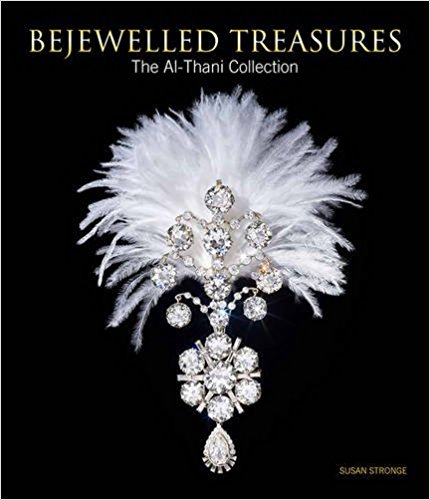
Bejewelled Treasures: The Al-Thani Collection
Edited Book
Stronge, S., editor (2015) Bejewelled Treasures: The Al-Thani Collection.. London, V & A Publishing, 128 pp..
Record No. 3862  |  Sinkankas/Born No.: NIS/NIB  |  RWHL*

Digital photomicrography for gemologists
Journal Article
Renfro, N. (2015) Digital photomicrography for gemologists. Gems & Gemology, Vol. 51, No. 2, Summer, pp. 144–159.
Record No. 3754  |  ISBN/ISSN: 0016626X  |  RWHL*
Until recently, film was the preferred medium used for capturing images through the microscope, pri-marily due to resolution limitations of digital-format cameras. The image quality that can now be achieved by digital cameras is equal, and in many ways superior, to the quality offered by film. Digital photomicrography allows gemologists the opportunity to instantly see the resultant images, which can then be adjusted with image-refining software so that they represent their subject as realistically as pos-sible. This article offers examples of some basic techniques and tips on the application of digital pro-cessing to get the most out of photomicrographs.

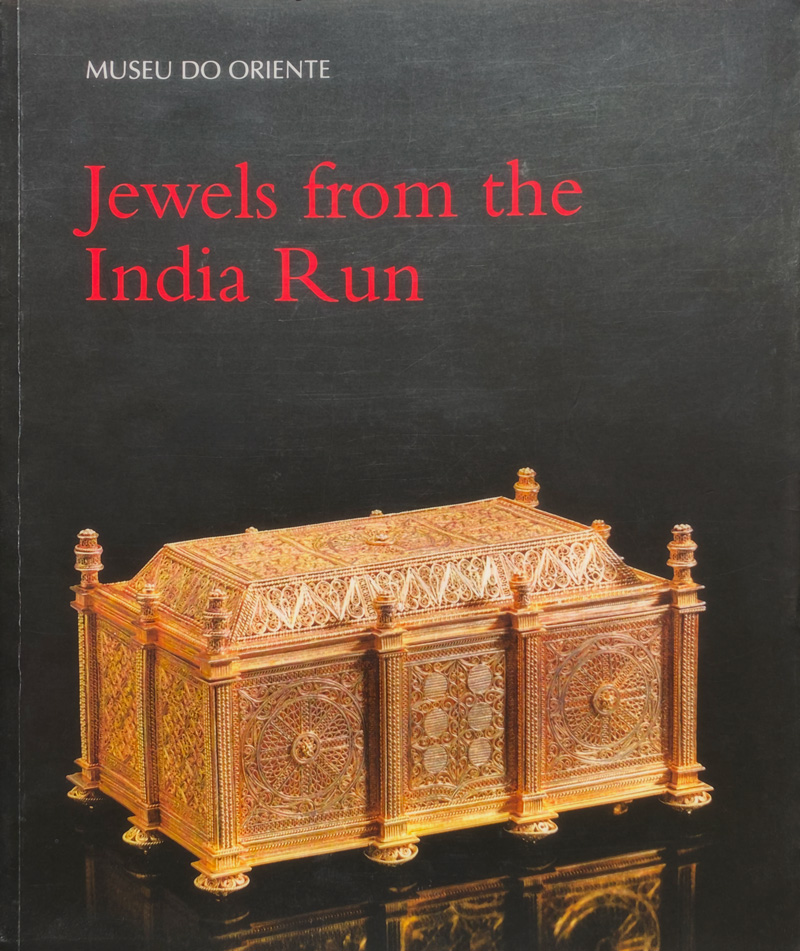
Jewels from the India Run

Book
Crespo, H.M. (2015) Jewels from the India Run. Lisbon, Fundação Oriente, 199 pp.
Record No. 3335  |  ISBN/ISSN: 9789900000000  |  Sinkankas/Born No.: NIS/NIB  |  RWHL*
Crespo examines the jewelry and precious objects that circulated between India and Portugal during the sixteenth and seventeenth centuries through the maritime network of the Portuguese Estado da Índia. Drawing upon surviving jewels, documentary records, inventories, paintings, and other contemporary sources, he explores how Indian gemstones, materials, techniques, and designs entered European collections and influenced Portuguese jewelry. Particular attention is given to diamonds, rubies, sapphires, emeralds, pearls, and other precious materials carried along the India Run (Carreira da Índia), as well as to objects produced by Indian and Indo-Portuguese craftsmen. The study demonstrates that this exchange was not simply the importation of Asian gems into Europe but a complex interaction of Portuguese and Indian tastes, technologies, and traditions. Jewels served as personal ornaments, diplomatic gifts, devotional objects, indicators of social status, and portable stores of wealth. Richly illustrated with surviving objects and comparative material, the volume provides an important study of the gemstone trade and the cross-cultural development of jewelry during the period of early Portuguese expansion in Asia.

Lotus Gemology Lab Alert for Oiled Gems
Web Page
Lotus Gemology (2015) Lotus Gemology Lab Alert for Oiled Gems. Lotus Gemology, <https://lotusgemology.com/resources/articles/315-oiled-gems-lab-alert-lotus-gemology>, accessed: 3-Apr.
Record No. 3223  |  RWHL*
3 April 2015—Over the past few months gemologists at Bangkok's Lotus Gemology have noticed a disturbing increase in the number of gems submitted for testing that have been subjected to fissure filling with oils/resins. This situation has now reached the stage where a trade warning is in order. In our opinion, it is not the place for gemologists to decide what is and is not acceptable in terms of treatments. Certainly there is a place in the market for natural, treated, synthetic and imitation stones. That said, we have had a string of clients who, upon being told their stones have been fissure-filled, were visibly displeased. Not a single one was informed about the presence of this treatment at the point of memo or sale. Standard operating procedure at Lotus Gemology is to ask customers at the time of take-in if they believe their stones are treated, and if so, by what method. Since opening our doors in July 2014, we have not had a single customer declare to us that the ruby, sapphire or spinel they were submitting was filled with oil/resin. In virtually all cases, when we inform the client that the stone is fissure-filled with an oil/resin (on Lotus reports the enhancement code is FF-O, plus levels 1–4 depending on the treatment's impact on appearance), they ask to have the gem back so the filler can be removed. We believe this speaks volumes, suggesting that at the Bangkok wholesale trade level, both sellers and buyers are unaware their goods have been oil/resin treated. Thus the purpose of this trade alert is to inform buyers so they can make educated decisions. At the same time, we want to inform sellers that they may have a problem with their suppliers, who have not properly informed them of the treatments applied to the gems purchased. Finally, we believe it's important to inform gemologists around the world to be on the lookout for an enhancement that they might not be fully aware of. In doing so, we will also take this opportunity to describe some of the methods by which fissure filling with oil/resin can be detected. One of our core beliefs is that knowledge belongs to no single company or person, but is the collective property of all humans. Thus we are happy to share the following information on the methodology that we use to detect fissure filling.

Garnet mines in Europe

Book Section
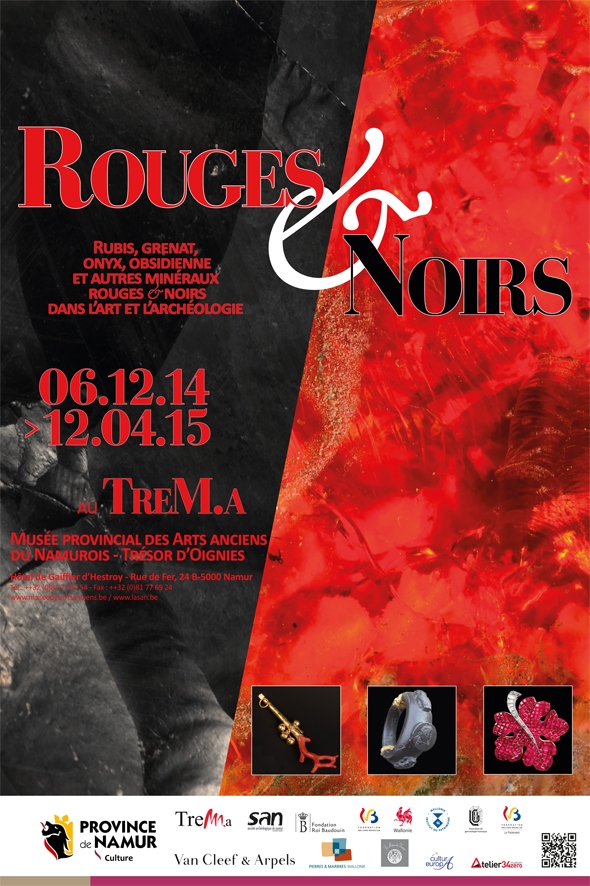
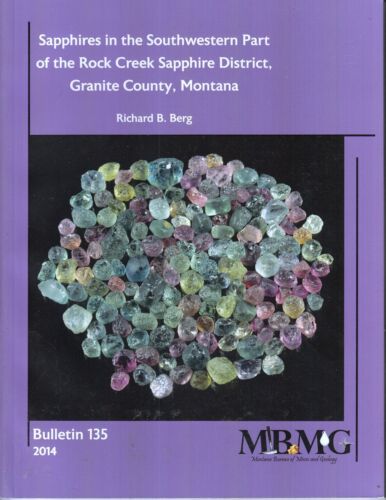
Gilg, H.A. and Hyrsl, J. (2014) Garnet mines in Europe. In: Rouges & Noirs. Rubis, grenat, onyx, obsidienne et autres minéraux rouges & noirs dans l’art et l’archéologie, Namur, Belgium: Namur, pp. 144–173.
Record No. 27575  |  ISBN/ISSN: 9782880000000  |  Sinkankas/Born No.: NIS/NIB  |  RWHL*
Transparent garnets were the most highly esteemed and valuable gem stones in Antiquity and Early Medieval times, from about 300 BCE to 700 CE, the so-called “Garnet Millennium.” Theophrastos of Eresos, Aristotle’s successor of the philosophical school in Kēos and Chalcis, in the first known mineralogical book Peri Lithon (On Stones), reported on the value of garnet, styled anthrax (“charcoal”) in Greek, in Hellenistic times: even a small stone was worth 40 gold staters weighing about 10 troy ounces. He also mentioned seaports that delivered these precious stones: Carthage in Africa, Miletus in Asia Minor, and Massalia in Europe. Important manufacturing centers of garnet jewelry in Hellenistic times were certainly Alexandria and Alabanda in Caria as noted by Pliny, but probably also some rich cities in Europe, such as Taras (Taranto) in Italy. Archaeological evidence indicates that Rome and Aquileia were important production sites of garnet jewels in Roman times, while the case of the Vesuvian cities Pompeii and Herculaneum, with ateliers and abundant jewelry, is less clear. Asia certainly hosted other significant production sites during Hellenistic and Roman times. The Roman emporion (trading center) at Arikamedu near Pondicherry in India hosted a productive garnet bead manufacture. In late Roman times, Byzantium-Constantinople and Treves (Augusta Treveriorum) were other main production sites of garnet jewels. The use of garnet in art and jewelry declined somewhat afterwards, and other red gemstones like ruby, spinel, or tourmaline became more appreciated, especially since Late Medieval and Renaissance times. Nevertheless, garnet remained a significant red stone in European jewelry throughout the centuries.

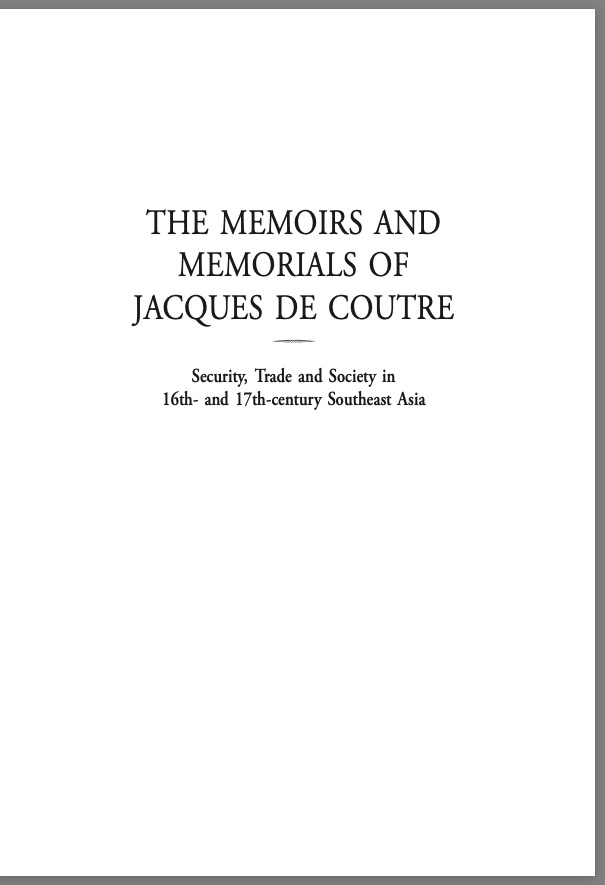
The memoirs and memorials of Jacques de Coutre | Security, Trade and Society in 16th— and 17th-Century Southeast Asia
Edited Book
Borschberg, P. and Coutre, J., de, editor (2014) The memoirs and memorials of Jacques de Coutre | Security, Trade and Society in 16th— and 17th-Century Southeast Asia.. Singapore, National University of Singapore Press, 453 pp..
Record No. 16896  |  ISBN/ISSN: 9789970000000  |  Sinkankas/Born No.: NIS/NIB  |  RWHL*
Jacques de Coutre was a Flemish gem trader who spent nearly a decade in Southeast Asia at the turn of the 17th century. He left history a substantial autobiography written in Spanish and preserved in the National Library of Spain in Madrid. Written in the form of a picaresque tale, with an acute eye for the cultures he encountered, the memoirs tell the story of his adventures in the trading centres of the day: Melaka, Ayutthaya, Patani, Pahang, Johor, Brunei and Manila. Narrowly escaping death several times, De Coutre was inevitably drawn into dangerous intrigues between the representatives of European power, myriad fortune hunters and schemers, and the rulers and courtiers in the palaces of Pahang, Patani, Siam and Johor.0In addition to his autobiography, De Coutre wrote a series of memorials to the united crown of Spain and Portugal that contain recommendations designed to remedy the decline in the fortunes of the Iberian powers in Southeast Asia, particularly against the backdrop of early Dutch political and commercial penetration into the region.0Annotated and translated into English for the first time, these materials provide a valuable first-hand account of the issues confronting the early colonial powers in Southeast Asia, and deep into the societies De Coutre encountered in the territory that today makes up Singapore, Malaysia, Indonesia, Thailand, Cambodia and the Philippines. The book is lavishly illustrated with 62 maps and drawings of the period, including many examples not previously published.

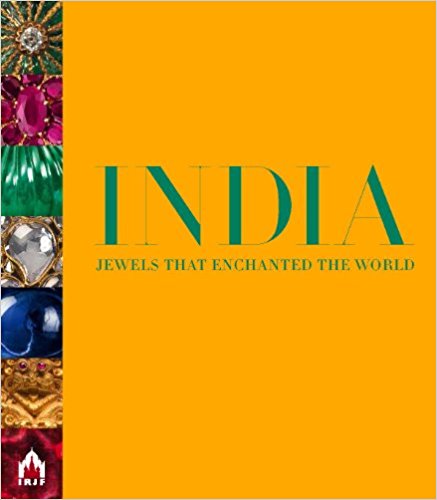
Sapphires in the Southwestern Part of the Rock Creek Sapphire District, Granite County, Montana
Journal Article
Berg, R.B. (2014) Sapphires in the Southwestern Part of the Rock Creek Sapphire District, Granite County, Montana. Bulletins of the Montana Bureau of Mines and Geology, Bulletin 135, 86 pp..
Record No. 6414  |  RWHL*

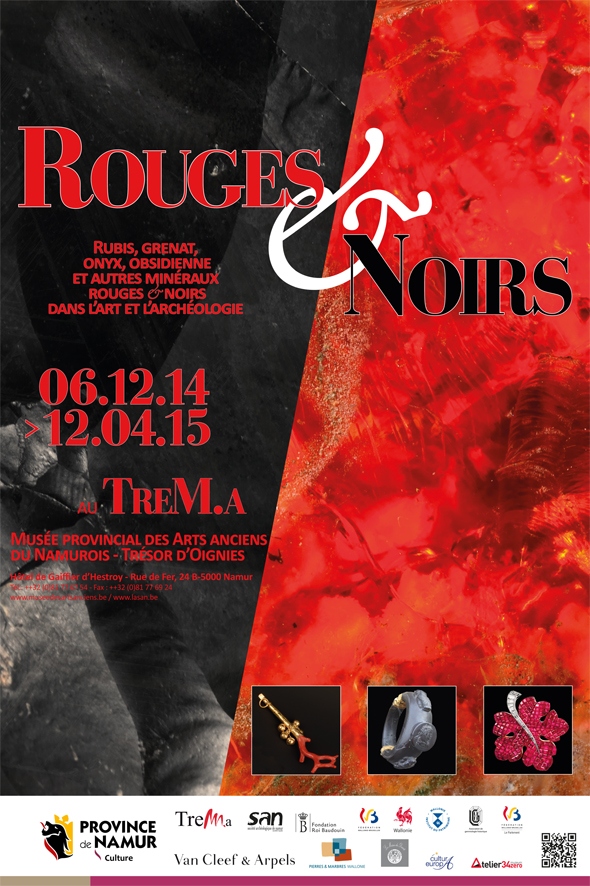
India: Jewels That Enchanted the World
Book
Shcherbina, E., Balakrishnan, U.B., Peshekhonova, L., Scarisbrick, D. and Vechinrina, O. (2014) India: Jewels That Enchanted the World. Moscow, Indo-Russian Jewellery Foundation, 427 pp.
Record No. 5653  |  Sinkankas/Born No.: NIS/NIB  |  RWHL*
India: Jewels That Enchanted the World is a richly illustrated exploration of the history, artistry, and cultural significance of Indian jewelry from antiquity to the present day. Drawing on treasures from royal collections, temple ornaments, and contemporary designs, the book traces how Indian jewels have captivated the world through their exquisite craftsmanship, symbolic meaning, and global influence. It highlights the intersection of aesthetics, spirituality, and power, examining how jewelry in India has served not only as personal adornment but also as a marker of status, devotion, and identity. With contributions from leading scholars and curators, this volume offers an in-depth look at the materials, techniques, and evolving styles that have defined India’s jewelled heritage and its enduring legacy on the international stage. It was published in conjunction with the major international exhibition of the same name, held at the State Museums of the Moscow Kremlin in 2014. The exhibition was a collaborative effort between the Kremlin Museums and several institutions and private collectors, showcasing over 300 pieces of Indian jewelry spanning five centuries. The catalog includes scholarly essays, high-quality images, and detailed descriptions of the exhibited pieces, offering historical and cultural context. It serves both as a visual record of the exhibition and a comprehensive resource on the tradition and influence of Indian jewelry across time.

Le rubis une couleur “sang de pigeon”
The ruby, a “pigeon’s blood” color
Book Section
Barmarin, G. (2014) Le rubis une couleur “sang de pigeon”. [The ruby, a “pigeon’s blood” color] In: Rouges & Noirs. Rubis, grenat, onyx, obsidienne et autres minéraux rouges & noirs dans l’art et l’archéologie, Namur, Belgium: Namur, pp. 117–143.
Record No. 5632  |  ISBN/ISSN: 9782880000000  |  Sinkankas/Born No.: NIS/NIB  |  Language: in French  |  RWHL*
You are invited on a journey into the fascinating world of red and black precious stones. Jewellery pieces, accessories, functional or luxury items illustrate the symbolic weight of each of these stones but also the particular uses they were put to through the ages and across continents. The red of fire and beauty, the black of death and fer-tility: artists and craftspeople have outdone one another in terms of imagination and skill to ex-press in stone the range of meanings associated with these colours. Working with crystals, they have created pieces that are extraordinary technical feats. The rarity and high price of red stones have incited mankind to search for articial substitutes like cranberry glass, also on show.

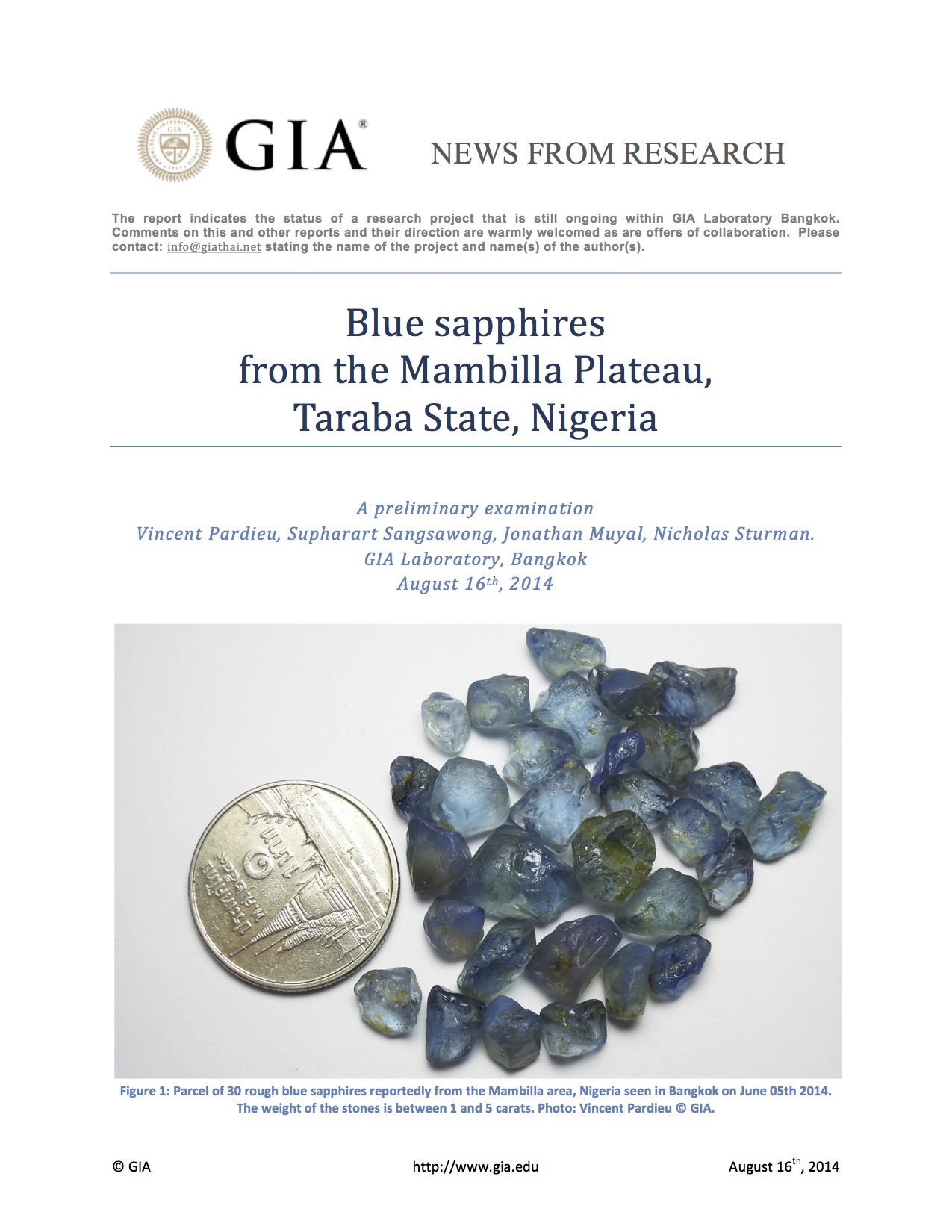
Blue sapphires from the Mambilla Plateau, Taraba State, Nigeria
Report
Pardieu, V., Sangsawong, S., Muyal, J. and Sturman, N. (2014) Blue sapphires from the Mambilla Plateau, Taraba State, Nigeria. News from Research, Bangkok: Gemological Institute of America, 16-Aug, 47 pp.
Record No. 5561  |  RWHL*
In April 2014, one of the authors (VP) was preparing a field expedition to visit sapphire deposits in Nigeria. During the preparations he contacted several West African gem merchants in Bangkok to arrange to see some samples and seek additional details about the sapphire deposits in Nigeria. This interest was fueled by the emergence of Nigeria as an important producer of gemstones over the past few years, and the lack of publications on the sapphires and sapphire deposits from and within the country. During one of these discussions he was shown a parcel of blue sapphires reportedly from a new deposit located on the Mambilla Plateau (Taraba State) in Nigeria (Figure 1). Over the following weeks, more parcels containing stones of similar appearance showed-up in Thailand, and also in Sri Lanka, as many Sri Lankan gem merchants reportedly rushed to Nigeria. All the people we met were very excited by the quality and the size of the stones being produced. Large clean stones were reported, some weighing between 100 and 300 carats with a nice blue color. Reports emerged that stones from the new deposit were being traded at very high prices. One stone reportedly sold for more than 1 million US dollars in Thailand. Photos of such stones rapidly started to appear on social media sites (Figure 2) and were also frequently encountered on the mobile phones of some West African gem merchants visiting Thailand.

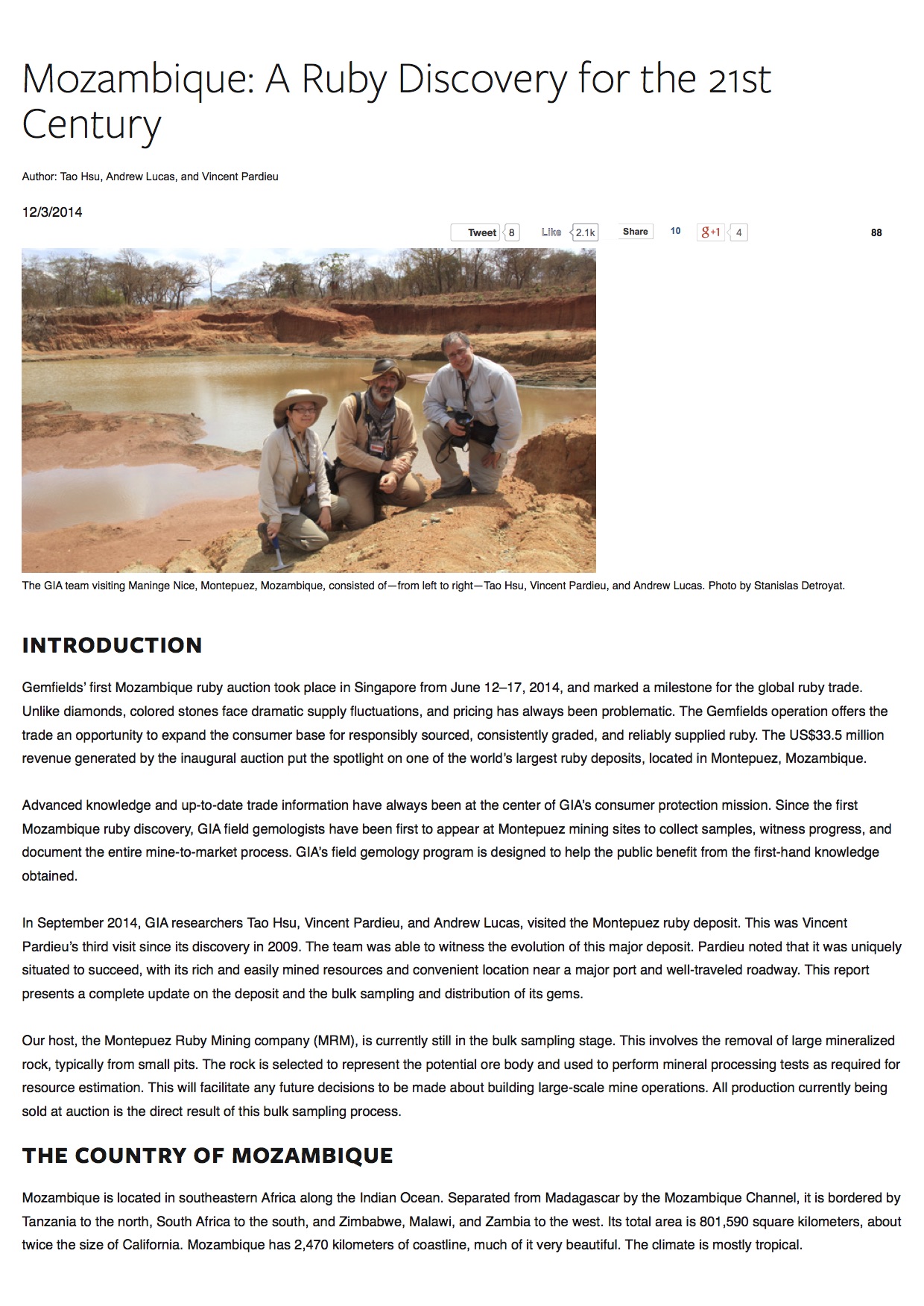
Mozambique: A ruby discovery for the 21st century
Report
Hsu, T., Lucas, A. and Pardieu, V. (2014) Mozambique: A ruby discovery for the 21st century. Carlsbad, CA: Gemological Institute of America, 3-Dec, online report
Record No. 5541  |  RWHL*
Gemfields’ first Mozambique ruby auction took place in Singapore from June 12–17, 2014, and marked a milestone for the global ruby trade. Unlike diamonds, colored stones face dramatic supply fluctuations, and pricing has always been problematic. The Gemfields operation offers the trade an opportunity to expand the consumer base for responsibly sourced, consistently graded, and reliably supplied ruby. The US$33.5 million revenue generated by the inaugural auction put the spotlight on one of the world’s largest ruby deposits, located in Montepuez, Mozambique. Advanced knowledge and up-to-date trade information have always been at the center of GIA’s consumer protection mission. Since the first Mozambique ruby discovery, GIA field gemologists have been first to appear at Montepuez mining sites to collect samples, witness progress, and document the entire mine-to-market process. GIA’s field gemology program is designed to help the public benefit from the first-hand knowledge obtained. In September 2014, GIA researchers Tao Hsu, Vincent Pardieu, and Andrew Lucas, visited the Montepuez ruby deposit. This was Vincent Pardieu’s third visit since its discovery in 2009. The team was able to witness the evolution of this major deposit. Pardieu noted that it was uniquely situated to succeed, with its rich and easily mined resources and convenient location near a major port and well-traveled roadway. This report presents a complete update on the deposit and the bulk sampling and distribution of its gems. Our host, the Montepuez Ruby Mining company (MRM), is currently still in the bulk sampling stage. This involves the removal of large mineralized rock, typically from small pits. The rock is selected to represent the potential ore body and used to perform mineral processing tests as required for resource estimation. This will facilitate any future decisions to be made about building large-scale mine operations. All production currently being sold at auction is the direct result of this bulk sampling process.

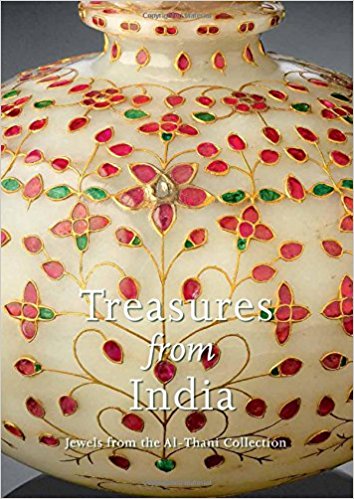
Treasures from India: Jewels from the Al-Thani Collection
Book
Haidar, N.N. and Stewart, C.A. (2014) Treasures from India: Jewels from the Al-Thani Collection. New York, Metropolitan Museum of Art, 144 pp.
Record No. 5522  |  ISBN/ISSN: 9780300000000  |  Sinkankas/Born No.: NIS/NIB  |  RWHL*
India's rich heritage of jeweled artistry is expressed in extravagant and opulent creations that range from ornaments for every part of the body to ceremonial court objects such as boxes, daggers, and thrones. Treasures from India presents more than sixty iconic works from the renowned Al-Thani collection, including pieces created for the imperial Mughals in the seventeenth century, others made for the Nizams of Hyderabad and the maharajas of the Rajput courts from the eighteenth to the twentieth century, Indian-inspired jewelry fashioned by Cartier and other Western firms, and contemporary designs. The lucid text discusses the significance of these objects within the history of Indian jeweled arts, demonstrating how they stand among the highest expressions of Indian culture.

The geology of gems and their geographic origin

Book Section
Giuliani, G., Groat, L., Ohnenstetter, D., Fallick, A.E. and Feneyrol, J. (2014) The geology of gems and their geographic origin. In: Geology of Gem Deposits, Quebec, Canada: Mineralogical Association of Canada, Short Course Series, Vol. 44 , pp. 113–134.
Record No. 5517  |  Sinkankas/Born No.: NIS/NIB  |  RWHL*

Exploring the Literature of Corundum

Ruby and sapphire research spans mineralogy, gem deposits, identification, treatments, synthesis and the history of the gem trade. Older publications can also be useful for tracing terminology, early observations and accounts of mining localities. Publication dates and the original source should be considered when using historical descriptions.

For an introduction to collecting books on this subject, read Ruby & Sapphire Books: Collecting the Literature of Corundum.

About Four Treasures

Four Treasures is Lotus Gemology's freely accessible gemological reference database. Use the full database to search by author, title or keyword and explore literature on gemology, mineralogy, jewelry and related fields. Where available, hyperlinks on titles may lead directly to the full publication.

Search the Complete Four Treasures Database