Explore books, articles and historical sources on ruby, sapphire and corundum in Four Treasures, the Lotus Gemology reference database. This bibliography brings together matching records from the collection, with publication details, abstracts and cover images where available.
Ruby & Sapphire References
The list below matches the terms ruby, rubies, sapphire or corundum in the database's searchable fields. Some references discuss these gems as part of a broader subject. Linked titles take you to external links where you may find the full reference.
381–400 of 4,671 matching references
The geology and genesis of gem corundum deposits
Book Section
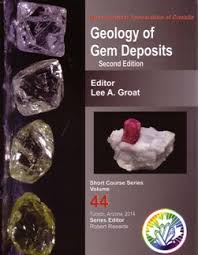
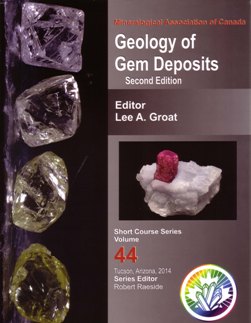
Giuliani, G., Ohnenstetter, D., Fallick, A.E., Groat, L. and Fagan, A.J. (2014) The geology and genesis of gem corundum deposits. In: Geology of Gem Deposits, Quebec, Canada: Mineralogical Association of Canada, Short Course Series, Vol. 44, pp. 29–112.
Record No. 5516 | Sinkankas/Born No.: NIS/NIB | RWHL*
Rakotosamizanany, S., Giuliani, G., Ohnenstetter, D., Rakotondrazafy, A.F.M., Fallick, A.E., Paquette, J.-L. and Tiepolo, M. (2014) Chemical and oxygen isotopic compositions, age and origin of gem corundums in Madagascar alkali basalts.Journal of African Earth Sciences, Vol. 94, pp. 156–170.
corundum, ruby, sapphire, Madagascar.12, Placer in alkali-basalt, Gem corundum deposits, Chemical composition, Oxygen isotopes, Genetic model, gems
Madagascar is a major producer of gem corundum, primarily recovered from continental basaltic fields. Key mining areas include sapphire-bearing palaeoplacer deposits such as Ambondromifehy and Nosy Be in Antsiranana Province (northern Madagascar), Soamiakatra–Mandrosohasina in Antananarivo Province (central Madagascar), and the Vatomandry district in Toamasina Province (eastern Madagascar). In Antananarivo Province, Soamiakatra is a primary deposit where rubies occur in metagabbro and pyroxenite xenoliths transported to the surface by the Ankaratra volcanic activity. Petrographic evidence indicates two distinct ruby-forming conditions: near the eclogite domain (T ≈ 1100 °C, P ≈ 20 kb) and in granulite facies (T ≈ 1100 °C, P < 15 kb). In contrast, sapphires from placer and paleoplacer deposits mainly originate from two sources: (i) magmatic sapphires (90%) derived from alkaline magma differentiation in lower crust–mantle boundary chambers, associated with syenite and anorthoclasite xenoliths in alkali-basalts. These are linked to asthenospheric upwelling and lithospheric thinning during Oligocene–Quaternary times. Zircons from Mandrosohasina and Ambatomainty sapphire deposits yield U–Pb ages of 7 Ma. These sapphires have low δ¹⁸O values (4.1 ± 0.4‰, n = 8), matching those from syenitic sources. Inclusions such as columbite-(Fe), tantalite-(Mn), pyrochlore group minerals, samarskite group minerals, uraninite, and anorthoclase further confirm syenitic origins. (ii) The remaining 10% are metamorphic xenocrysts brought up by the same magmatic event. Rubies from placer deposits show δ¹⁸O values of 3.1 ± 1.1‰ (n = 6), consistent with ruby in mafic–ultramafic rocks and metasomatic ‘plumasite’ zones (δ¹⁸O = 1.25–7.5‰, n = 35). In Toamasina Province, ~85% of the sapphires from Vatomandry are metamorphic, with δ¹⁸O = 4.1 ± 0.4‰ (n = 9), overlapping the range for metasomatic sapphires from ‘plumasites’ and biotite schists in shear zones. The remaining ~15% are magmatic, with low δ¹⁸O values consistent with sapphire-bearing syenites. In Antsiranana Province, rubies are absent; sapphires are ~40% magmatic and ~60% metamorphic, with δ¹⁸O = 4.5 ± 0.5‰ (n = 11), comparable to the other provinces. Zircons yield contrasting U–Pb ages: 40.6 Ma (Ambondromifehy) and 0.7 Ma (Nosy Be). These data—corundum characteristics, isotopic signatures, and radiometric ages—demonstrate two distinct corundum sources in Madagascar’s alkali-basalts. One comprises rubies from metagabbro and garnet–pyroxenite complexes of eclogite facies, retrograded to granulite facies during the Pan-African orogeny. The other includes sapphires either magmatic, coeval with volcanic events involving differentiated alkaline magma, or metamorphic, extracted from Precambrian basement during magma ascent.
Geology of Gem Deposits
Edited Book
Groat, L.A., editor (2014)Geology of Gem Deposits.. Québec, Mineralogical Association of Canada, Short Course Series, Vol. 44, 270 pp.. 2nd ed..
Record No. 3347 | Sinkankas/Born No.: NIS/NIB | RWHL*
Reference copied to clipboard!
corundum, geology.11, gems, jade, jadeite, fei cui jade, Burma
Mughal gems in context
Journal Article
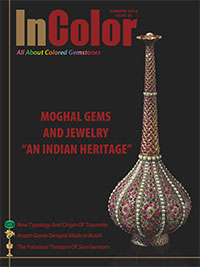
Ogden, J.M. (2014) Mughal gems in context.InColor, No. 24, Summer, pp. 36–47.
Record No. 3345 | RWHL*
Reference copied to clipboard!
corundum, history.1, quality.10, gems, Indian lapidary
Jewelry Foundation is one example; then in October this year the Metropolitan Museum of Art, New York will host Treasures from India: Jewels from the Al-Thani Collection. This latter show will exhibit a selection of significant objects from a Qatari Royal collection of Mughal jewelry. There is the obvious visual appeal of such jewelry and its workmanship, but there is also a wealth of information that can be gleaned from it; information and insights to help us build a greater understanding of the history of Mughal India and, most relevant here, the history of the gem trade.
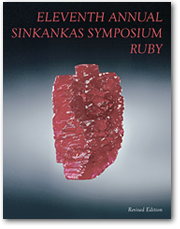
Skalwold, E.A. (2014)Dr. Allen M. Bassett and the ruby mines of Nepal: A historical overview. 11th Annual Sinkankas Symposium • Ruby, Carlsbad, CA: Pala International, pp. 42–48.
Record No. 3326 | RWHL*
Reference copied to clipboard!
corundum, Nepal.12, gems
The Rubies of Afghanistan and Tajikistan: An Update
Book Section
Bowersox, G.W. (2014) The Rubies of Afghanistan and Tajikistan: An Update. In: Eleventh Annual Sinkankas Symposium • Ruby, Fallbrook, CA: Pala International, pp. 49–66.
Record No. 3313 | Sinkankas/Born No.: NIS/NIB | RWHL*
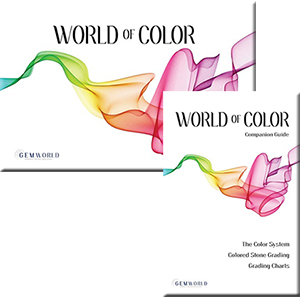
Gemworld (2014)World of Color Communication System. Glenview, IL, Gemworld International, 2 Vols.
Record No. 3303 | Sinkankas/Born No.: NIS/NIB | RWHL*
Reference copied to clipboard!
corundum, quality.10, gems, color science
Two years in development, this new color communication system, based on Munsell has over 1,400 colors in this master comparison book of colors. Each of 40 pages has its own unique overlay chart, developed by color specialists and adapted for use in the jewelry industry by our own team of experts. The transparent overlay chart gives the name of the color. Highly recommended.
Culture and History: A fabulous 291-carat sapphire rediscovered at the MNHN: the “Devonshire-Branicki”
Journal Article
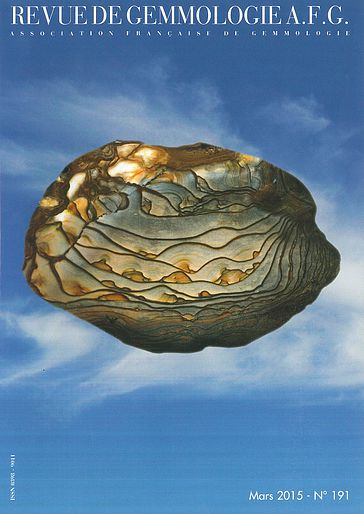
Farges, F. (2014) Culture et Histoire: Un fabuleux saphir de 291 carats redécouvert au MNHN: le Devonshire-Branicki"". [Culture and History: A fabulous 291-carat sapphire rediscovered at the MNHN: the “Devonshire-Branicki”]Revue de Gemmologie A.F.G., Mars, No. 191, pp. 23–29.
Saul, J.M. (2014)A Geologist Speculates: On Gemstones, Origins of Gas and Oil, Moonlike Impact Scars on the Earth, the Emergence of Animals and Cancer. Paris, Les 3 Colonnes, 149 pp.
During a varied career in geology, I have observed two matters that seem to stand out as fundamental truths. First of all, there is a great deal that we do not understand about the workings of the Earth. But even so, it is clear that everything is connected, not just the many aspects of geology itself — mineralogy, earthquake studies, exploration for oil and gas, and much else — but also astronomy, biology, and even cancer studies and the emergence of complex societies. e connections are not immediately evident in our usual interactions with the world around us, however, or even by plunging into specialized studies, because so many key events took place in the exceedingly distant past, and so much has changed since. Geology, along with astronomy, turns out to be a good base from which to explore the great nexus of “things connected” because its subject matter includes events that set the stage for much of what was to come. Chapter 1 of A Geologist Speculates deals with the formation of certain transparent gemstones, garnet, ruby, tourmaline, and tanzanite, among them. e elusive conditions that allowed humdrum materials to crystallize in a transparent “gemmy” manner have puzzled scientists at least as far back as the times of Robert Boyle (1627–1691). Hints how such exceptional crystals were able to form include the presence of gases with an “organic” odor associated with many gemstone deposits, their common association with graphite, and the rough alignment of many gemstone occurrences more or less parallel to modern and ancient coastlines. ere is a logical sequence and progression to the chapters, although they can be read separately. Chapters 1 and 4 require somewhat more background than others. Chapter 2 treats the origin of gas and oil. Oil companies and their exploration teams certainly appear to have done a good job in keeping the world supplied with energy. Is it possible that they have got the science wrong? Some have thought so, including Sir Robert Robinson, Nobel Laureate in chemistry in 1947, who argued that petroleum was a material of inorganic, “mineral” origin to which molecules of biological origin had been added. Robinson wrote of the “duplex origin of petroleum,” and it is likely that he was correct, unless the origin was actually “triplex” or “multiplex.” For, as suggested by their widespread occurrence throughout the Solar System and beyond, hydrocarbons are easy to make. Earthquakes, volcanism, and the world’s reserves of petroleum, and also of water, are all addressed in this chapter. In Chapter 3, I commence with the scienti c argument that the Earth and Moon are neighbors in space and that our planet could not have escaped the great bombardment that scarred the Moon early in the history of the Solar System, leaving the lunar surface saturated with impact scars. ese days it is almost universally believed that traces of this bombardment have been eliminated from the surface of our own planet by rain, wind, cycles of erosion and, most of all, by the workings of plate tectonics with the subduction and deep burial of much or the Earth’s crust. I argue di erently, claiming that the impact scars remain but that scientists have not established the correct criteria for recognizing them. Parts of my argument, which continues into Chapter 4, hinge on the geological occurrences of various transparent gemstones and the locations of certain regions rich in oil and gas. Much of Chapter 4 deals with the first appearance of large complex animals, what is commonly referred to as the “Cambrian Explosion.” is event, or, rather, this episode in the Earth’s history, was also marked by the rst formation of particular types of gemstone deposits. Excluding special cases treated in Chapter 1, no deposits of garnet, ruby, tourma-line, tanzanite, and numerous other types of transparent gemstones were formed before the approximate time of the Cambrian Explosion. In short, I argue that exceptional moun-tains — including a “supermountain” — were formed around this time, that deposits of gemstones were formed in their root-zones, and that the existence of complex animals is due to the erosion of these mountains and the materials that were then washed into the seas. For many, however, the main interest of Chapter 4 is the examination of the nature of cancer, a pathology that did not, and could not, exist before the “Explosion.” In brief, I argue that the supermountain, the gemstone deposits, the complex animals who are our ancestors, and cancer all came into existence during the same broad interval of geological time, that all were consequences of the workings of plate tectonics, and that the workings of plate tecton-ics were conditioned and guided by 3-D scars le by the same bombardment that marked the Moon. In Chapter 4, I evoked Darwinism and the workings of evolution, and in my short nal Chapter 5, I consider three life-forms that might arguably have escaped the workings of Darwinism. One case is that of human beings. I show that Darwinism is indeed universal, but I also accept that humans are somehow di erent from all other creatures, as is almost universally accepted. Darwin did not have the last word. A surprising “post-Darwinian” factor came into play during the first generation of the Paleolithic when religion, purpose-ful observations of earth and heavens, and mythmaking were all inserted into the ways of humans, inserted virtually instantaneously.
Yogo Sapphire Mine, Montana: History of a World-Class Gem Deposit
Book
Woodward, L.A. and Hanley, J.D. (2013)Yogo Sapphire Mine, Montana: History of a World-Class Gem Deposit. Lewistown, MT, Running Wolf Press, 66 pp.
Record No. 28140 | Sinkankas/Born No.: NIS/NIB | RWHL*
Reference copied to clipboard!
gems, corundum, USA.12, Montana.12, Yogo Gulch
Sapphire-bearing dikes are located in the Little Belt Mountains, Montana. This report gives an accurate and comprehensive review of the sapphire deposit and its history. Yogo sapphires constitute a world-class deposit hosted by an ultramafic ouachitite (lamprophyre) dike system of Eocene age (about 50 million years old) in central Montana. The sapphires are mostly cornflower-blue, have extremely few inclusions, and are not zoned. With high brilliance and luster in both natural and artificial light, they do not require heat treatment to enhance their color. It is estimated that since discovery in 1895 production is 18.2 million carats of rough gems with 500,000 carats of faceted sapphires. Most of the gems are less than 1 carat, platy, and relatively thin, although specimens up to 19 carats have been reported. The largest sapphire with a suitable thickness for faceting as a single gem was 12.25 carats.
Multifaceted endeavors: Jewelry and gemstones in Renaissance Venice
Book Section
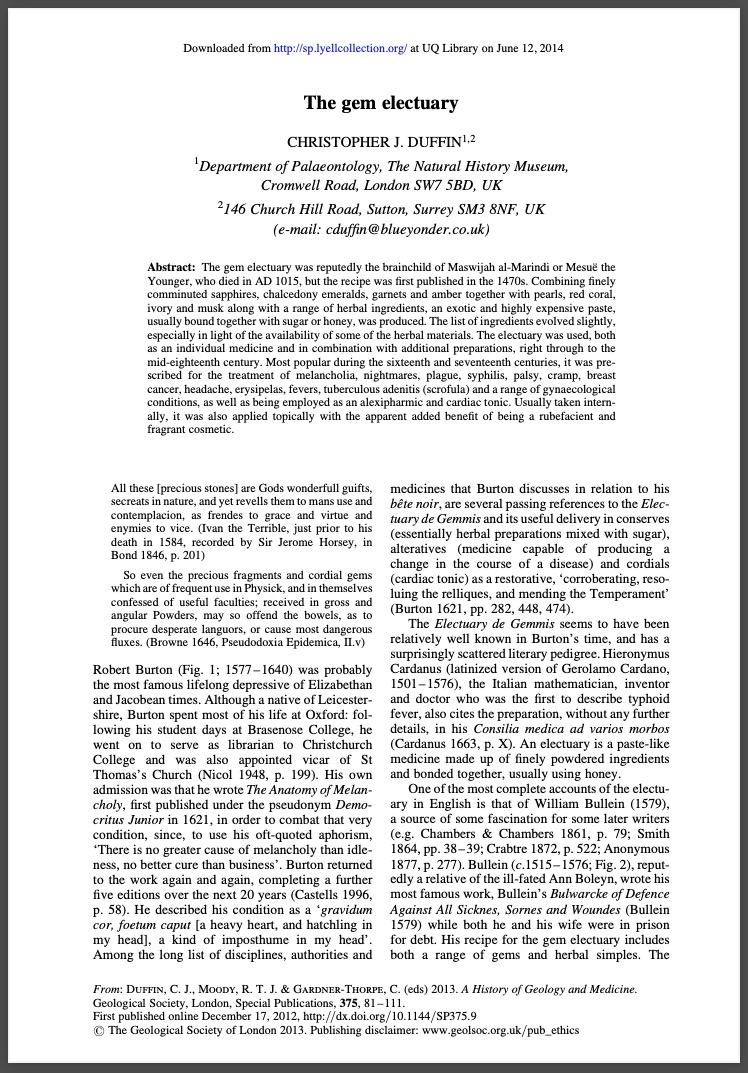
Maria, B., de (2013) Multifaceted endeavors: Jewelry and gemstones in Renaissance Venice. In: Reflections on Renassance Venice | A Celebration of Patricia Fortini Brown, pp. 118–131.
gems, history of gemology, Venice, Renaissance, culture, history of jewelry, history of gems, corundum, ruby, history.1, carbuncle, balas ruby
In Private Lives in Renaissance Venice, Patricia Fortini Brown argues that material culture served as a means by “which Venetians attempted to define and defend family identity and social rank.” Her seminal study examines a wide variety of objects, including furniture, tapestries, glassware, and, of course, portraits. According to Fortini Brown, items in the latter category served as “an important emblem of an aristocratic lifestyle.” This interpretation clearly applies to Lorenzo Lotto’s Portrait of a Lady as Lucretia (fig. 11a) and Paolo Veronese’s Portrait of Jacob König (fig. 11b). However, the two portraits share more than the early modern goal of defining an elite public identity. Rather, jewelry and gems figure prominently in both images. As is common in such portraits, the combination of gem and gesture mediates between viewer and object. In both portraits, the sitter draws the viewer’s attention to a precious object. Lucretia’s upturned palm and fingers point to a beautiful jeweled pendant that spills down over her corseted bodice, while König leans toward the viewer to display the massive emerald in his right hand. Yet a fundamental difference exists in the objects of display in these two images. The gems in Lucretia’s pendant play a supporting role as part of a larger gold setting. In Veronese’s portrait of König, the emphasis remains squarely on the emerald. While it might be tempting to attribute these representational decisions solely to the necessities of gender conventions, a larger issue informs this comparison. As will be demonstrated, in the sixteenth century jewelry featuring elaborate decorative settings such as Lucretia’s pendant would come to be matched by a newfound fascination with the natural stone itself.
Duffin, C.J. (2013) The gem electuary. In: A History of Geology and Medicine, London: Geological Society, London, Special Publications, Vol. 375, pp. 81–111.
Record No. 16454 | Sinkankas/Born No.: NIS/NIB | RWHL*
Reference copied to clipboard!
gems, jade, medicine, history of medicine
The gem electuary was reputedly the brainchild of Maswijah al-Marindi or Mesuë the Younger, who died in AD 1015, but the recipe was first published in the 1470s. Combining finely comminuted sapphires, chalcedony emeralds, garnets and amber together with pearls, red coral, ivory and musk along with a range of herbal ingredients, an exotic and highly expensive paste, usually bound together with sugar or honey, was produced. The list of ingredients evolved slightly, especially in light of the availability of some of the herbal materials. The electuary was used, both as an individual medicine and in combination with additional preparations, right through to the mid-eighteenth century. Most popular during the sixteenth and seventeenth centuries, it was prescribed for the treatment of melancholia, nightmares, plague, syphilis, palsy, cramp, breast cancer, headache, erysipelas, fevers, tuberculous adenitis (scrofula) and a range of gynaecological conditions, as well as being employed as an alexipharmic and cardiac tonic. Usually taken internally, it was also applied topically with the apparent added benefit of being a rubefacient and fragrant cosmetic.
Schmuck der Maharajas
Jewelry of the Maharajas
Book
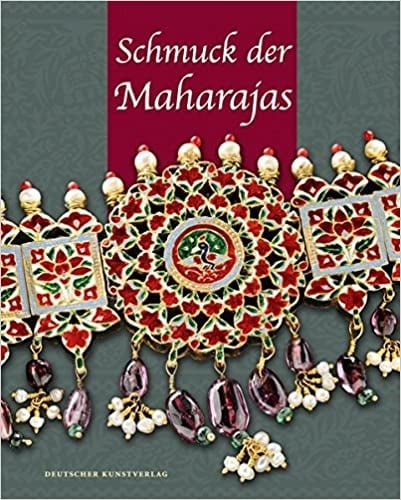
Weihreter, H. (2013)Schmuck der Maharajas. [Jewelry of the Maharajas] Munich, Deutscher Kunstverlag, 168 pp.
Record No. 7579 | ISBN/ISSN: 9783420000000 | Sinkankas/Born No.: NIS/NIB | Language: in German | RWHL*
Throughout its history, India has produced countless types of jewelry as a huge country with an almost unmanageable number of peoples and tribes. The precious ones were not only intended to decorate or provide information about the social rank of the wearer, they also served as magical protection and were indispensable in some religious ceremonies. Many pieces of jewelry also had a symbolic meaning and can be associated with ancient Indian myths due to their materiality. The publication ranges from magnificent pieces from princely treasuries to precious jade objects to the highly elaborately decorated jewelry of the Rabari people with gold granules.
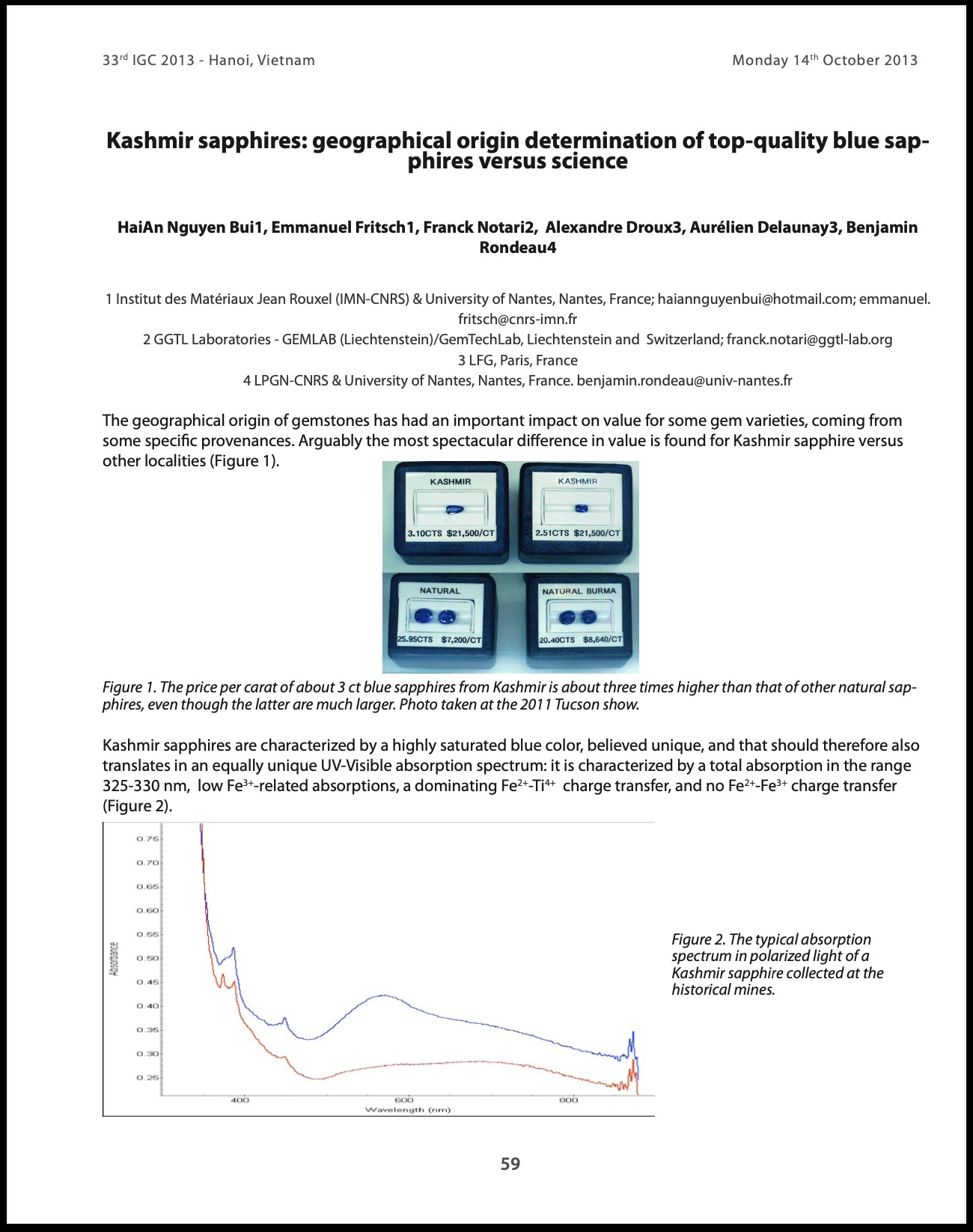
Bui, H.N., Fritsch, E., Notari, F., Droux, A., Delaunay, A. and Rondeau, B. (2013)Kashmir sapphires: Geographical origin determination of top-quality blue sapphires versus science. International Gemmological Conference, Hanoi, Vietnam pp. 59–60.
Brief note about Kashmir sapphires, with two new inclusion finds (spinel and hematite)
Record-breaking rubies discovered in Didy, Madagascar
Journal Article
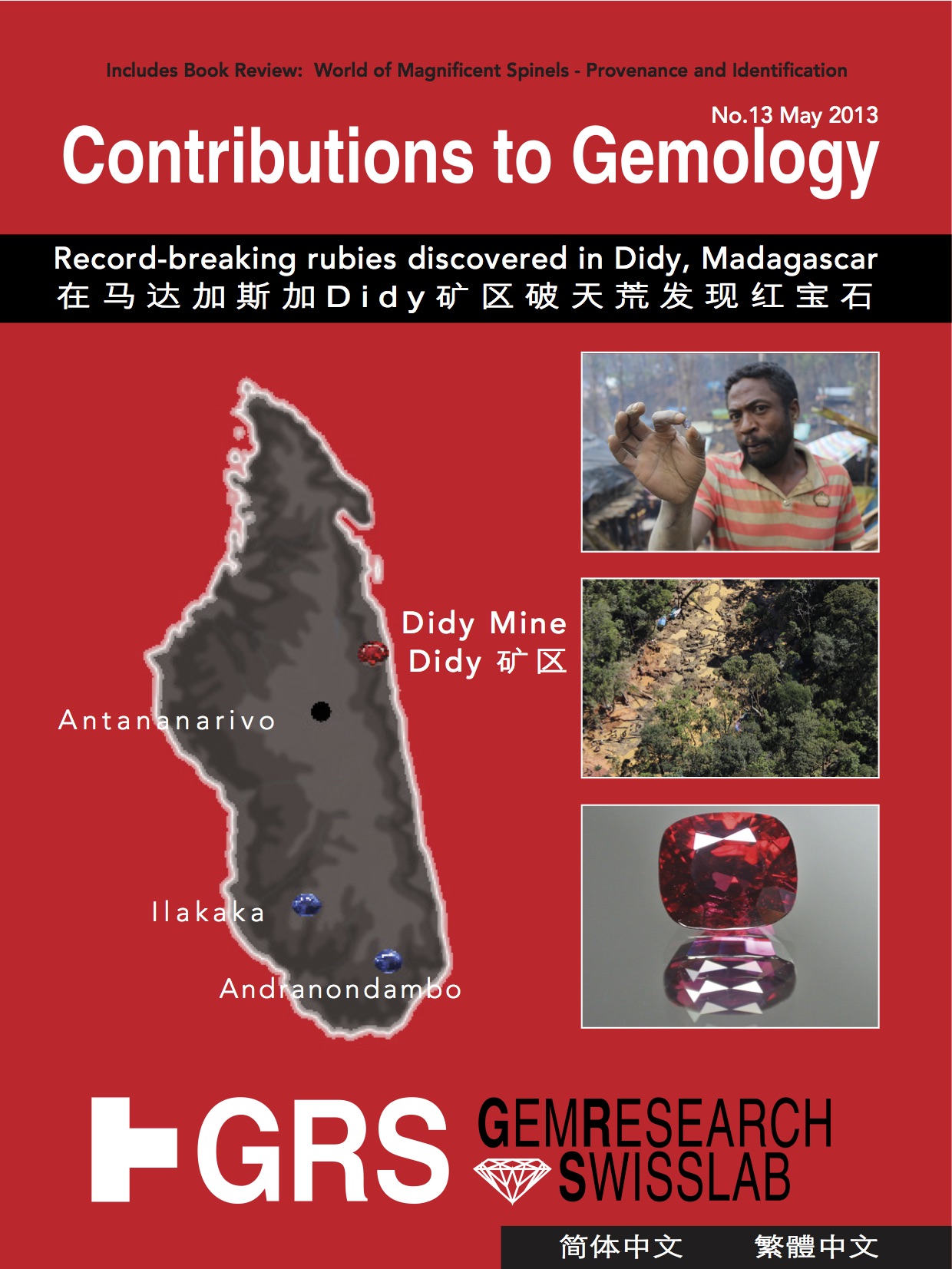
Peretti, A. and Hahn, L. (2013) Record-breaking rubies discovered in Didy, Madagascar.Contributions to Gemology, No. 13, May, pp. 2–16.
Record No. 5642 | RWHL*
Reference copied to clipboard!
corundum, Madagascar.12, gems
In May 2012, the GRS lab in Bangkok received two very large, high-quality rough ruby crystals (Fig. 1A) for testing from a client who had own straight to the lab from Madagascar.The concerned client had heard rumors swirling about in Madagascar that the crystals were synthetic, and that he needed confirmation of their authenticity before his group would proceed with further investments.Laboratory testing with ED-XRF, FTIR, UV-VIS, Raman and microscope of the specimens confirmed that the huge crystals were indeed natural and unheated. To link these crystals to the mine in question for their client, the authors undertook a perilous field trip to the source of the crystals for a first-hand inspection of the mine site. By documenting the gemstone rush on video and collecting rock and mineral samples from the site for comparison, they would be able to decode the geological conditions under which this corundum deposit was formed.
Kan-Nyunt, H.-P. (2013) Blue sapphires from the Baw Mar mine in Mogok.Gems & Gemology, Vol. 49, No. 4, Winter, pp. 223–232.
Record No. 5551 | ISBN/ISSN: 0016626X | RWHL*
Reference copied to clipboard!
corundum, Burma.12, gems
In the last five years, fine Burmese blue sapphires from the Baw Mar area of Mogok have reached the market. The faceted stones typically show a strong pleochroism from greenish to violetish blue when viewed perpendicular and parallel to the c-axis, respectively, with medium to strong saturation and medium to dark tone. Most of the samples were relatively clean under the microscope, showing multiple twinning with whitish needle-like inclusions (presumably boehmite) at the intersections. Often, these in-clusions were associated with stress tension fissures. Needles, most likely rutile, were found only occa-sionally, but small platelets and needle-like particles, probably ilmenite, appeared more frequently. Most of the stones contained surface-reaching open and healed fissures, but crystal inclusions of K-feldspar and mica (identified by Raman) were occasionally encountered. The sapphires also had a relatively high iron content, low gallium, and very low titanium. Their Ga/Mg ratio varied from 0.6 to 17. Their UV-Vis-NIR spectra displayed intense iron-related absorptions, and the FTIR absorption spectra presented mainly boehmite-and mica-related bands. Based on careful microscopic observations, combined with spectro-scopic and chemical analysis, the sapphire from Baw Mar can, in most cases, be distinguished from the blue sapphire of other localities.
Culture and History: The true story of Louis XIV’s “Great Sapphire”: Is it the “Ruspoli”?
Journal Article
Panczer, G., Riondet, G. and Farges, F. (2013) Culture et Histoire: La véritable histoire du Grand Saphir" de Louis XIV: est-il le "Ruspoli"?". [Culture and History: The true story of Louis XIV’s “Great Sapphire”: Is it the “Ruspoli”?]Revue de Gemmologie A.F.G., Séptembre, No. 185, pp. 67–71.
Culture and History: The true story of Louis XIV’s “Great Sapphire”: Is it the “Ruspoli”?
Journal Article
Farges, F. and Benbalgagh, N. (2013) Culture et Histoire: La véritable histoire du Grand Saphir" de Louis XIV: est-il le "Ruspoli"?". [Culture and History: The true story of Louis XIV’s “Great Sapphire”: Is it the “Ruspoli”?]Revue de Gemmologie A.F.G., Séptembre, No. 185, pp. 61–66.
Culture and History: In search of the real “Ruspoli”
Journal Article
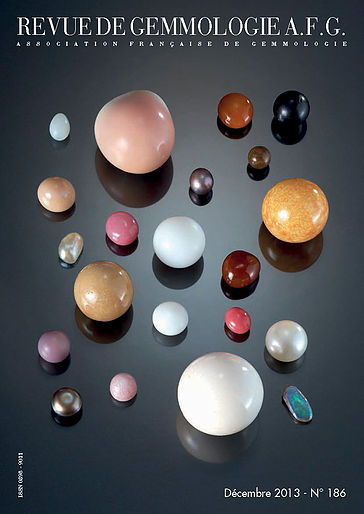
Farges, F. and Dubois, C. (2013) Culture et Histoire: À la recherche du véritable Ruspoli"". [Culture and History: In search of the real “Ruspoli”]Revue de Gemmologie A.F.G., Décembe, No. 186, pp. 20–28.
Record No. 5546 | Language: in French | RWHL*
Reference copied to clipboard!
corundum, quality.10, Ruspoli sapphire, gems
Rubies from the Montepuez area (Mozambique)
Report
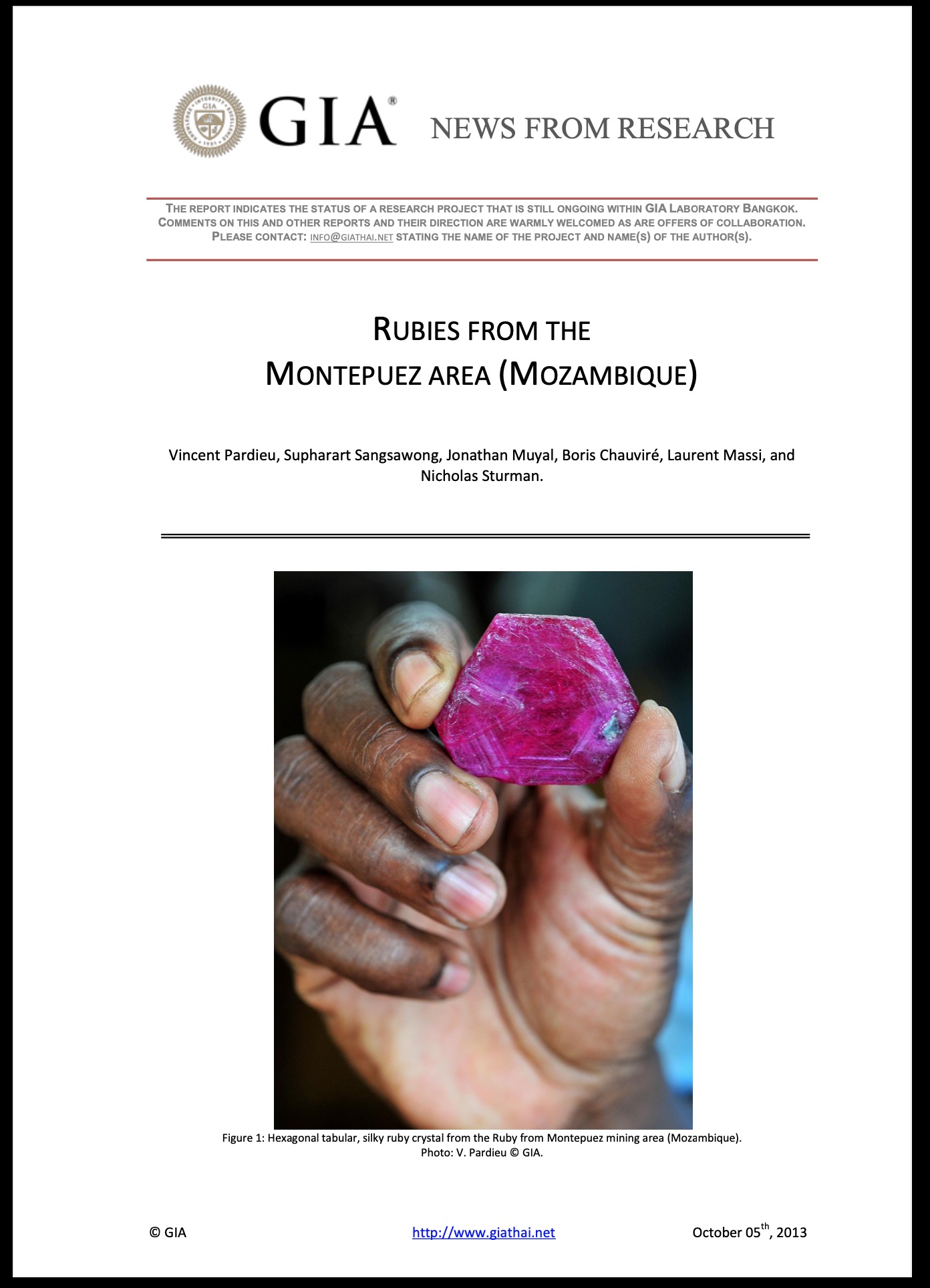
Pardieu, V., Sangsawong, S., Muyal, J., Chauviré, B., Massi, L. and Sturman, N. (2013)Rubies from the Montepuez area (Mozambique).GIA: News from Research, Bangkok: Gemological Institute of America, 5-Oct, 84 pp.
Rubies from Montepuez in northern Mozambique are particularly interesting as this new material rapidly dominated the ruby trade in Thailand, the world’s major ruby trading center, since the discovery of the deposit during the spring of 2009. This new material is quite different from rubies traditionally encountered in the market such as the marble type rubies, known for their strong fluorescent aspect related to their low iron content, like those from Mogok or Mong Hsu in Myanmar (Burma) or basalt related rubies, known for their low fluorescence due to higher iron content, from Thailand or Cambodia. Indeed the new deposit in Montepuez is not marble or basalt related but instead is an amphibole related deposit similar to the ruby deposits near Winza (Tanzania), M’Sawize (Mozambique) and probably the deposit near Didy (Madagascar), three other ruby deposits discovered fairly recently in Africa. Amphibole type rubies usually have higher iron content than those commonly found in marble related deposits but also usually exhibit lower iron content compared to those from basalt related deposits. It is interesting to note that these non-classic (i.e. amphibole type) metamorphic stones fill the gap, in relation to chemistry and appearance, between the highly fluorescent marble type rubies and the weakly fluorescent basalt related rubies familiar to the trade. For gemologists willing to find out where the gems they are studying come from, the fact that the rubies from Montepuez are coming from an amphibole related deposit is fascinating as the combination of the inclusion scene, the chemical fingerprint and the spectra associated with these stones will usually enable them to differentiate these gems quite easily from their cousins mined from marble or basalt related deposits. The data presented here, using GIA reference samples, should be very helpful in this regard.
Ruby and sapphire research spans mineralogy, gem deposits, identification, treatments, synthesis and the history of the gem trade. Older publications can also be useful for tracing terminology, early observations and accounts of mining localities. Publication dates and the original source should be considered when using historical descriptions.
Four Treasures is Lotus Gemology's freely accessible gemological reference database. Use the full database to search by author, title or keyword and explore literature on gemology, mineralogy, jewelry and related fields. Where available, hyperlinks on titles may lead directly to the full publication.