Ruby & Sapphire Bibliography

Ruby & Sapphire Bibliography

Explore books, articles and historical sources on ruby, sapphire and corundum in Four Treasures, the Lotus Gemology reference database. This bibliography brings together matching records from the collection, with publication details, abstracts and cover images where available.

Ruby & Sapphire References

The list below matches the terms ruby, rubies, sapphire or corundum in the database's searchable fields. Some references discuss these gems as part of a broader subject. Linked titles take you to external links where you may find the full reference.
4,041–4,060 of 4,671 matching references

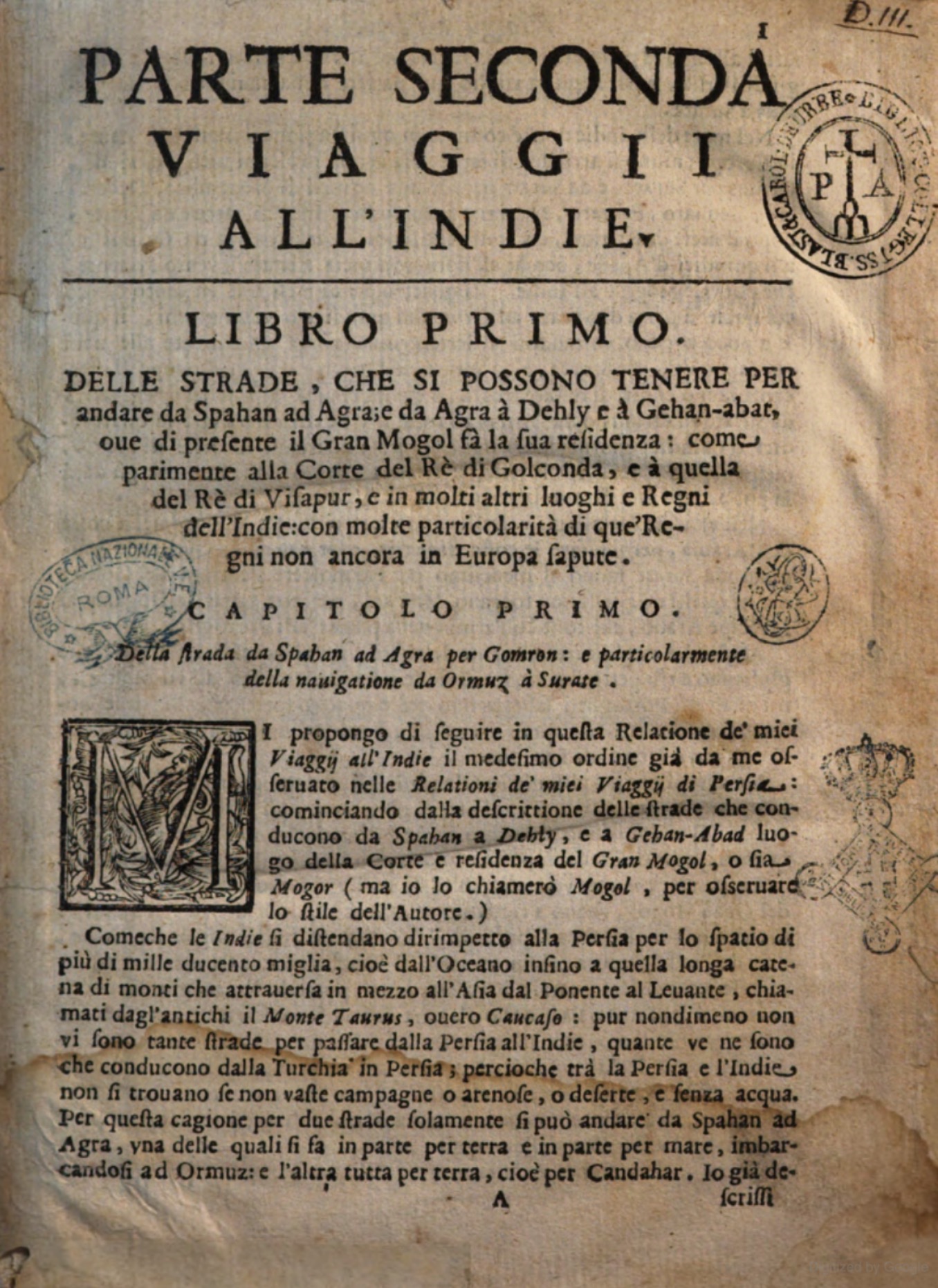
Viaggi nella Turchia, nella Persia, e nelle Indie
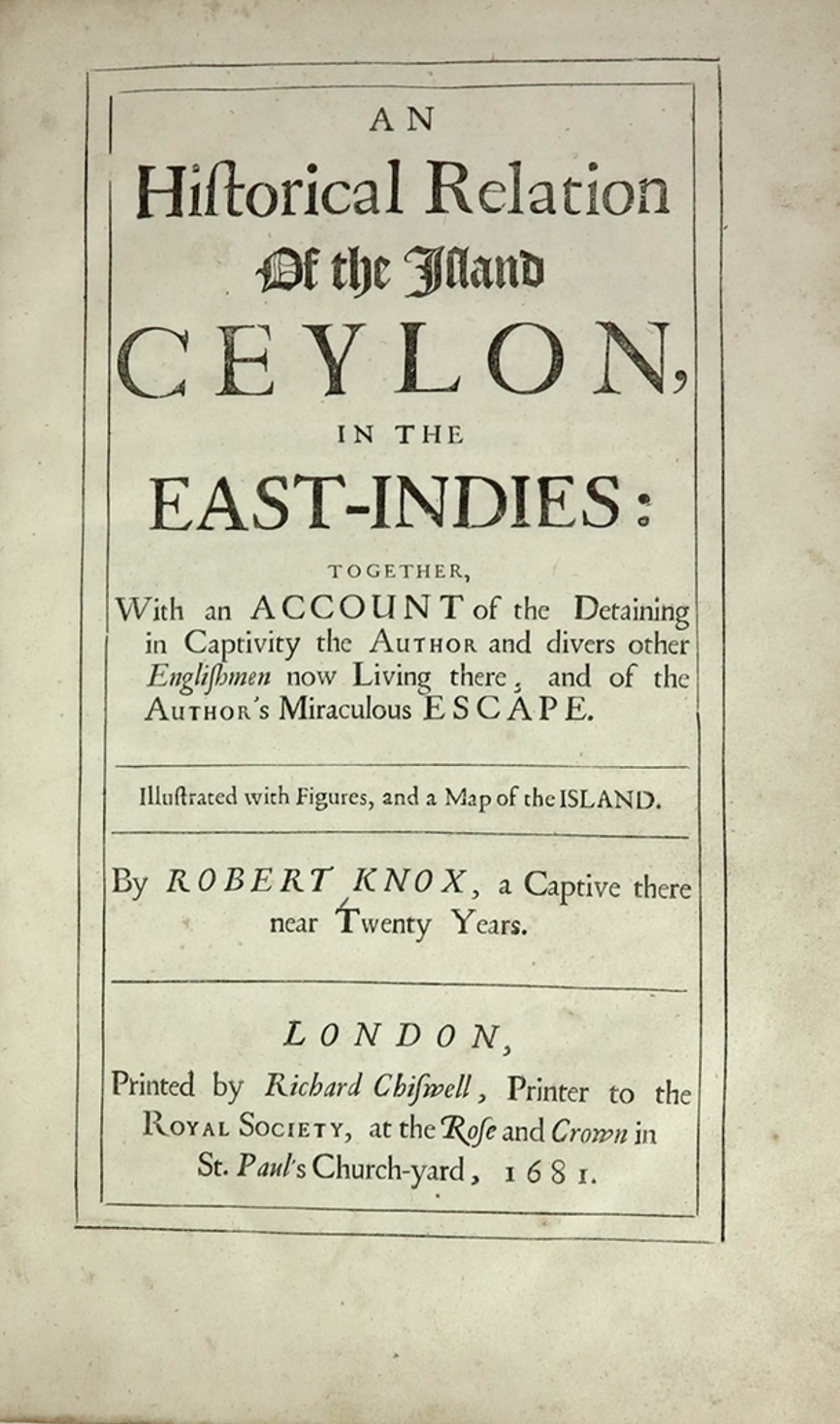
Travels in Turkey, Persia, and the Indies
Book
Tavernier, J.B. (1682) Viaggi nella Turchia, nella Persia, e nelle Indie. [Travels in Turkey, Persia, and the Indies] Rome, Giovanni Luetti, 2 Parts in 1 Vol., 488, 359 pp.
Record No. 29559  |  Sinkankas/Born No.: 6511  |  Language: in Italian  |  RWHL.
Sinkankas: This work is highly valued by historians and geographers for its rich and detailed descriptions of the regions visited by Jean-Baptiste Tavernier between 1631 and 1668, including the landscapes, cultures, and political figures he encountered during a time when dependable reports from the Near East and Asia were rare. While some have questioned the accuracy of his accounts, scholars such as William Crooke and Valentine Ball have largely defended Tavernier’s reliability, particularly when tested against modern research. In the realm of gemology, his observations have stood the test of time, especially regarding his dealings in large, high-quality gemstones—an area of expertise that reflects his success as a jeweler in Paris and his deliberate travels to acquire and sell precious stones to European royalty. His accounts are organized into five books on Turkey and Persia and three on India, the latter being of particular interest. Key chapters describe the jewels of the Great Mughal Aurangzeb, the diamond mines of India including Raolconda, the trade’s measurement systems, and details on colored gemstones, pearls, coral, amber, and medicinal materials. Tavernier is credited with the earliest descriptions of several legendary gems, including the Great Mogul, the Koh-i-Noor, and the Florentine diamonds. His “Tavernier Blue,” sold to the French royal house, is believed to be the origin of the Hope Diamond. Notably, his works include some of the earliest visual representations of famous diamonds and gemstones, with detailed engraved plates depicting these remarkable treasures, adding further historical and gemological value to his narrative.This work is highly valued by historians and geographers for its rich and detailed descriptions of the regions visited by Jean-Baptiste Tavernier between 1631 and 1668, including the landscapes, cultures, and political figures he encountered during a time when dependable reports from the Near East and Asia were rare. While some have questioned the accuracy of his accounts, scholars such as William Crooke and Valentine Ball have largely defended Tavernier’s reliability, particularly when tested against modern research. In the realm of gemology, his observations have stood the test of time, especially regarding his dealings in large, high-quality gemstones—an area of expertise that reflects his success as a jeweler in Paris and his deliberate travels to acquire and sell precious stones to European royalty. His accounts are organized into five books on Turkey and Persia and three on India, the latter being of particular interest. Key chapters describe the jewels of the Great Mughal Aurangzeb, the diamond mines of India including Raolconda, the trade’s measurement systems, and details on colored gemstones, pearls, coral, amber, and medicinal materials. Tavernier is credited with the earliest descriptions of several legendary gems, including the Great Mogul, the Koh-i-Noor, and the Florentine diamonds. His “Tavernier Blue,” sold to the French royal house, is believed to be the origin of the Hope Diamond. Notably, his works include some of the earliest visual representations of famous diamonds and gemstones, with detailed engraved plates depicting these remarkable treasures, adding further historical and gemological value to his narrative.

An Historical Relation of Ceylon

Book
Knox, R. (1681) An Historical Relation of Ceylon. London, pp. 4–7, 50–51
Record No. 2807  |  Sinkankas/Born No.: NIS/NIB  |  RWHL
Robert Knox’s An Historical Relation of Ceylon is a firsthand account of the island of Ceylon (Sri Lanka), based on nearly twenty years that Knox spent there after being detained by the Kingdom of Kandy in 1660. The work describes the island’s geography, natural products, government, religion, customs, agriculture, commerce, and everyday life, as well as Knox’s captivity and eventual escape. Of particular gemological interest are his observations on Ceylon’s precious stones, including their occurrence, recovery, qualities, and use, providing contemporary evidence for the island’s long-established gem industry. The work is an important 17th-century European eyewitness source for Sri Lankan society, natural resources, and the production and trade of gemstones.

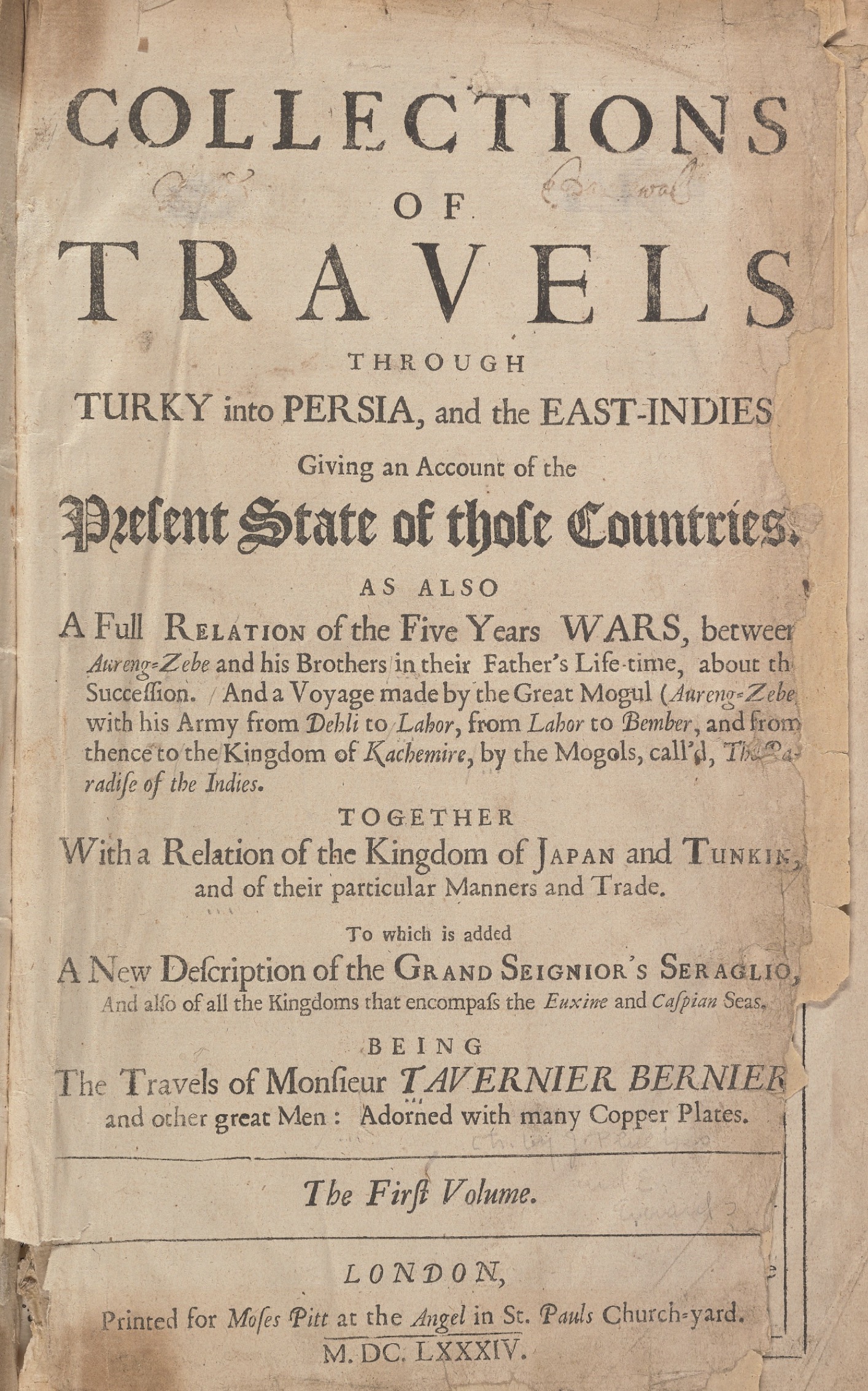
A Collection of Several Relations and Treatises Singular and Curious of John Baptista Tavernier, Baron of Aubonne
Book
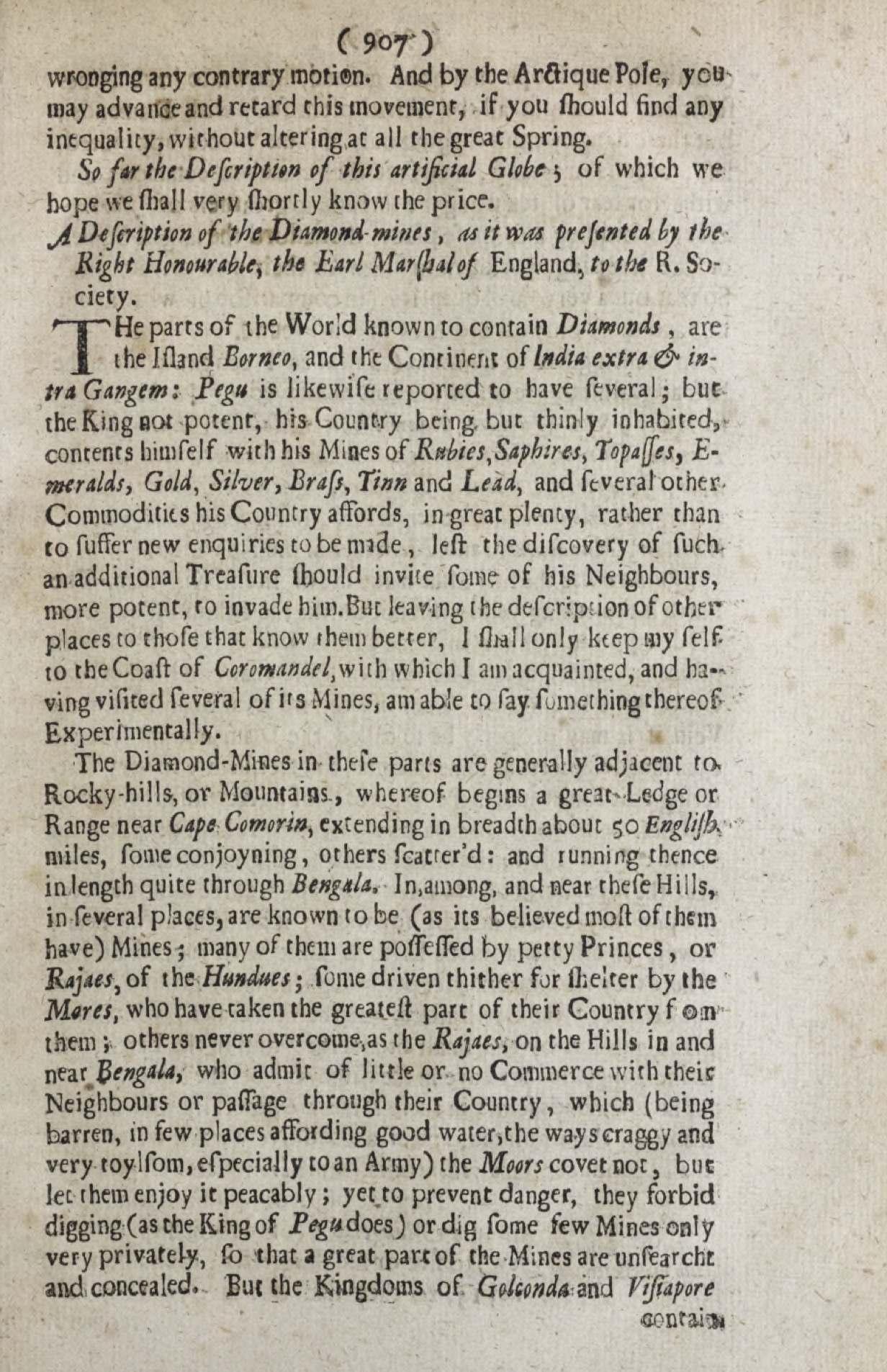
Tavernier, J.-B. (1680) A Collection of Several Relations and Treatises Singular and Curious of John Baptista Tavernier, Baron of Aubonne. London, Moses Pitt
Record No. 1683  |  RWHL
Sinkankas: This work is highly valued by historians and geographers for its rich and detailed descriptions of the regions visited by Jean-Baptiste Tavernier between 1631 and 1668, including the landscapes, cultures, and political figures he encountered during a time when dependable reports from the Near East and Asia were rare. While some have questioned the accuracy of his accounts, scholars such as William Crooke and Valentine Ball have largely defended Tavernier’s reliability, particularly when tested against modern research. In the realm of gemology, his observations have stood the test of time, especially regarding his dealings in large, high-quality gemstones—an area of expertise that reflects his success as a jeweler in Paris and his deliberate travels to acquire and sell precious stones to European royalty. His accounts are organized into five books on Turkey and Persia and three on India, the latter being of particular interest. Key chapters describe the jewels of the Great Mughal Aurangzeb, the diamond mines of India including Raolconda, the trade’s measurement systems, and details on colored gemstones, pearls, coral, amber, and medicinal materials. Tavernier is credited with the earliest descriptions of several legendary gems, including the Great Mogul, the Koh-i-Noor, and the Florentine diamonds. His “Tavernier Blue,” sold to the French royal house, is believed to be the origin of the Hope Diamond. Notably, his works include some of the earliest visual representations of famous diamonds and gemstones, with detailed engraved plates depicting these remarkable treasures, adding further historical and gemological value to his narrative.This work is highly valued by historians and geographers for its rich and detailed descriptions of the regions visited by Jean-Baptiste Tavernier between 1631 and 1668, including the landscapes, cultures, and political figures he encountered during a time when dependable reports from the Near East and Asia were rare. While some have questioned the accuracy of his accounts, scholars such as William Crooke and Valentine Ball have largely defended Tavernier’s reliability, particularly when tested against modern research. In the realm of gemology, his observations have stood the test of time, especially regarding his dealings in large, high-quality gemstones—an area of expertise that reflects his success as a jeweler in Paris and his deliberate travels to acquire and sell precious stones to European royalty. His accounts are organized into five books on Turkey and Persia and three on India, the latter being of particular interest. Key chapters describe the jewels of the Great Mughal Aurangzeb, the diamond mines of India including Raolconda, the trade’s measurement systems, and details on colored gemstones, pearls, coral, amber, and medicinal materials. Tavernier is credited with the earliest descriptions of several legendary gems, including the Great Mogul, the Koh-i-Noor, and the Florentine diamonds. His “Tavernier Blue,” sold to the French royal house, is believed to be the origin of the Hope Diamond. Notably, his works include some of the earliest visual representations of famous diamonds and gemstones, with detailed engraved plates depicting these remarkable treasures, adding further historical and gemological value to his narrative.

A description of the diamond-mines, as it was presented by the Right Honourable, the Earl Marshal of England, to the R. Society
Journal Article
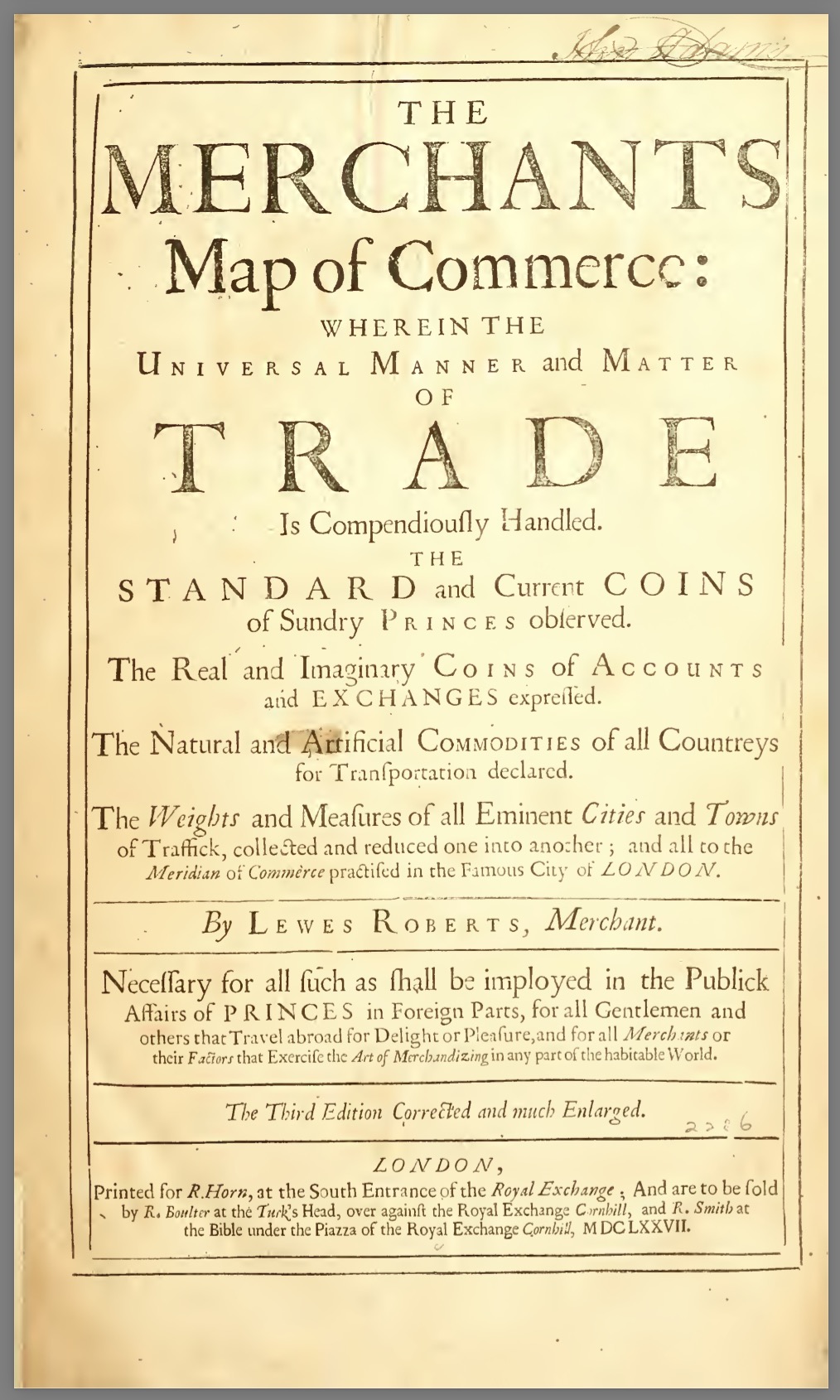
Howard, H. (1677) A description of the diamond-mines, as it was presented by the Right Honourable, the Earl Marshal of England, to the R. Society. Philosophical Transactions of the Royal Society of London, Vol. 12, No. 136, pp. 907–917.
Record No. 29009  |  Sinkankas/Born No.: NIS/NIB  |  RWHL
The parts of the World known to contain Diamonds, are the Island Borneo, and the Continent of India extra & intra Gangem; Pegu is likewise reported to have several, but the King not potent, his Country being but thinly inhabited, contents himself with his Mines of Rich Metals, Gold, Silver, Brass, Tin and Lead, and several other Commodities his Country affords, in great plenty, rather than to suffer new enquiries to be made, lest the discovery of such an additional Treasure should invite some of his Neighbours, more potent, to invade him. But leaving the description of other places to those that know them better, I shall only keep myself to the Coast of Coromandel, with which I am acquainted, and having visited several of its Mines, am able to say something thereof Experimentally.

The Merchants Map of Commerce: Wherein, the Universal Manner and Matter of Trade is Compendiously Handled
Book
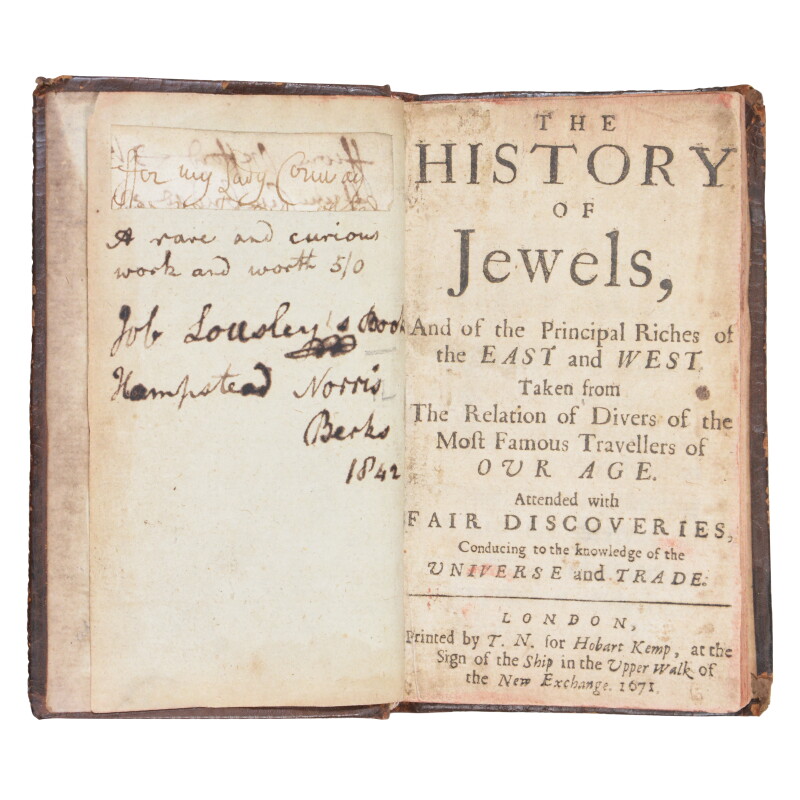
Roberts, L. (1677) The Merchants Map of Commerce: Wherein, the Universal Manner and Matter of Trade is Compendiously Handled. London, Horn, 475 pp.
Record No. 17078  |  Sinkankas/Born No.: NIS/NIB  |  RWHL
Lewes Roberts’s The Merchants Map of Commerce is a comprehensive 17th-century handbook of international trade, describing the principal commercial cities, ports, markets, commodities, currencies, weights and measures, customs duties, and trading practices of Europe, Asia, Africa, and the Americas. Intended as a practical guide for merchants, it provides detailed information on the movement and valuation of goods through contemporary trading networks. Of particular interest to gemologists are its references to diamonds, rubies, sapphires, pearls, and other precious commodities, including their principal sources and markets and aspects of their trade and valuation. The work provides valuable evidence for the commercial routes by which gemstones circulated between Asian producing regions, Middle Eastern entrepôts, and European markets during the 17th century.

The History of Jewels and of the Principal Riches of the East and West
Book
Chappuzeau, S. (1671) The History of Jewels and of the Principal Riches of the East and West. London, Hobart Kemp, 128 pp.
Record No. 2727  |  Sinkankas/Born No.: NIS/NIB  |  RWHL
Samuel Chappuzeau’s The History of Jewels, and of the Principal Riches of the East and West is an early English-language work devoted to precious stones, pearls, and other valuable natural products. It discusses diamonds, rubies, sapphires, emeralds, pearls, and other gems, including their geographical sources, qualities, sizes, values, trade, and notable specimens, while also treating other commodities regarded as riches of the East and West. Drawing upon contemporary travel and commercial literature, the book reflects European knowledge of the principal gem-producing regions and international gem trade during the 17th century. It is particularly valuable to historians of gemology for its descriptions of the characteristics and valuation of precious stones and for its evidence concerning the routes by which Asian and American luxury materials reached European markets.

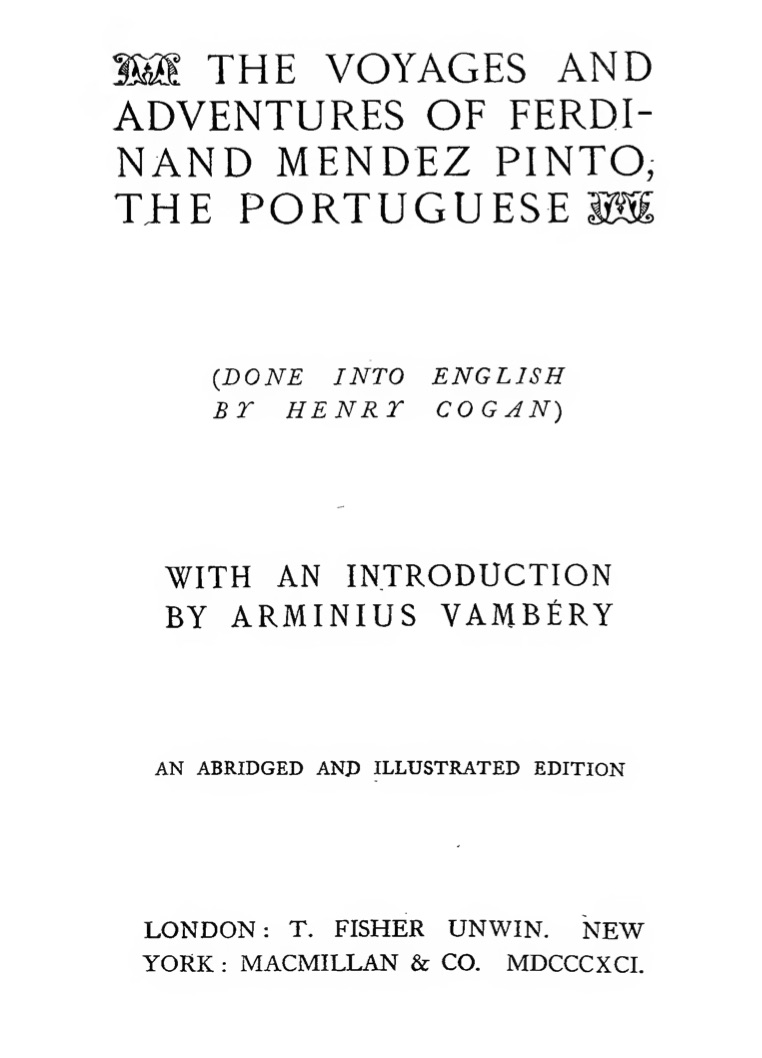
The Voyages and Adventures, of Ferdinand Mendez Pinto, the Portuguese
Book
Pinto, F.M. (1663) The Voyages and Adventures, of Ferdinand Mendez Pinto, the Portuguese. London, J. Macock
Record No. 3331  |  Sinkankas/Born No.: NIS/NIB  |  RWHL
A seventeenth-century English translation of Fernão Mendes Pinto’s Peregrinação, first published in Portuguese in 1614, recounting the author’s extensive travels and adventures across Asia during the sixteenth century. The work describes voyages through India, Southeast Asia, China, and Japan, combining personal narrative with accounts of regional geography, peoples, customs, religions, trade, warfare, and natural products. Of particular interest to gemological history are Pinto’s observations on Asian commerce and luxury goods, including precious stones and other valuable commodities encountered in the trading networks of South and Southeast Asia.

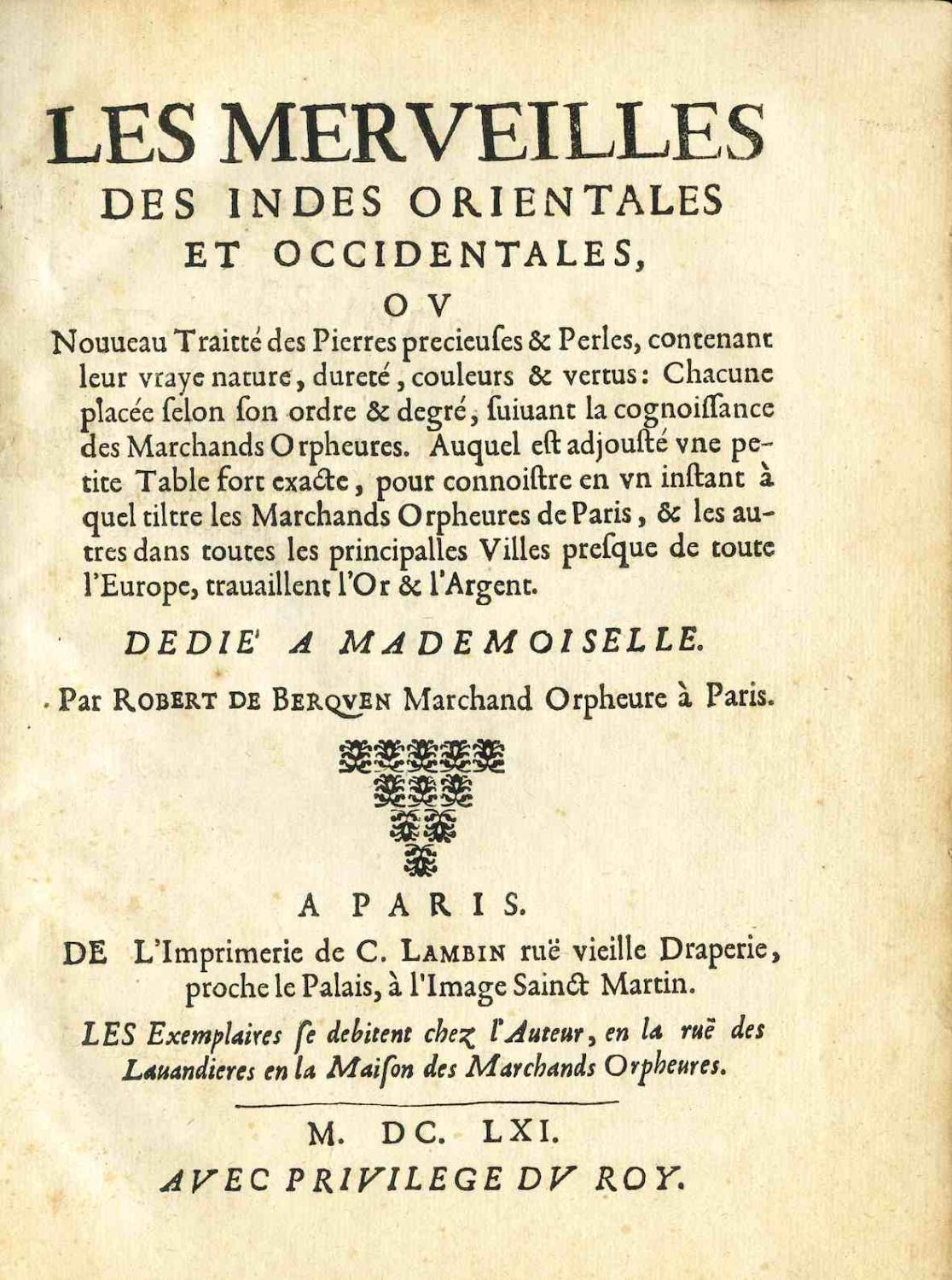
Les Merveilles des Indes Orientales et Occidentales…
The Marvels of the East and West Indies
Book
Berquen, R., de (1661) Les Merveilles des Indes Orientales et Occidentales…. [The Marvels of the East and West Indies] Paris, C. Lambin, 112 pp.
Record No. 6470  |  Sinkankas/Born No.: 592–593  |  Language: in French  |  RWHL
Sinkankas: Very early, and important treatise on gemstones, gold & silver, but with by far most space devoted to gemstones. The first chapter attempts to reconcile differing views of various writers, as cited by Berquen, on the origin of gemstones and precious metals, with following chapters taking up the principal gemstones, and some minor ones, as diamond, sapphire, topaz, ruby, spinel, emerald, amethyst, aquamarine, hyacinth, opal, chrysolite, iris, vermeille, garnets, carnelian, turquoise, quartz varieties, pearl, coral and amber, and lastly, a chapter on gold and silver. Little rhyme or reason is apparent in the way the material is presented, and occasionally some strange pairs appear as amethyst and aquamarine being discussed together in the same chapter. Despite claims to expertise, Berquen appears to have taken most of his information from the sources cited in the text and little can be identified that was not already general knowledge at the time. Berquen appeared to be most familiar with diamonds and pearls, but increasingly unfamiliar with the uncommon or rare gemstones, whose descriptions, one suspects, were mere paraphrases of other text excerpts. A footnote to the table of contents mentions only the table of precious metal finenesses as being appended to the text and nothing about the poem which comes immediately after, nor the advice to apprentices. Sabin 4957 cites the work for its material on the West Indies but actually there is very little information on same in this first edition. Another issue of this edition is described in JCB 2, 51–52; see also Brunet, 6, 262.

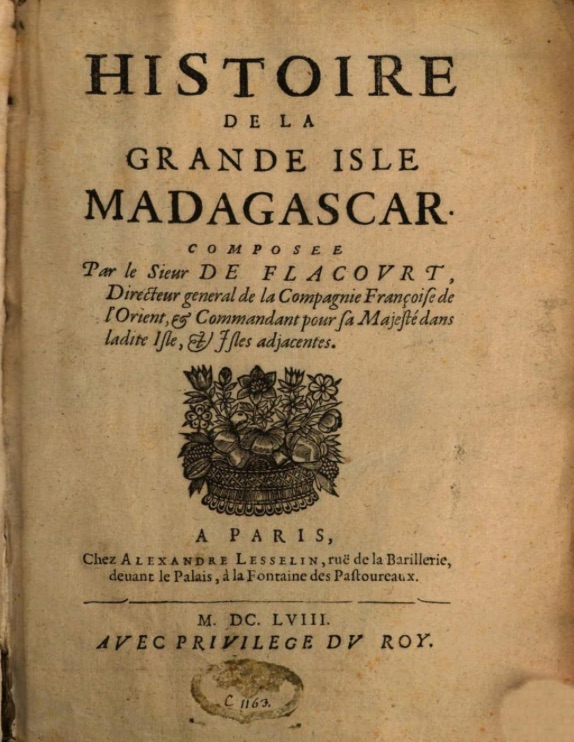
Histoire de la Grande Isle Madagascar
History of the great island Madagascar
Book
Flacourt, E.d. (1658) Histoire de la Grande Isle Madagascar. [History of the great island Madagascar] Paris, Chez G. de Lvyne, 2 v. in 1.
Record No. 7441  |  Language: in French  |  RWHL
Flacourt’s Histoire de la Grande Isle Madagascar is one of the earliest substantial European accounts of Madagascar, based largely on the author’s residence there as governor of the French settlement at Fort-Dauphin from 1648 to 1655. The work describes the island’s geography and regions, inhabitants and social customs, religion, material culture, fauna, flora and natural resources, followed by an account of the French colony and its relations and conflicts with the Malagasy population. Of particular gemological interest, Flacourt records the occurrence of precious stones in Madagascar, including topaz, aquamarine, emerald, ruby and sapphire, making the work an important early source for the history of Madagascar’s gem resources.

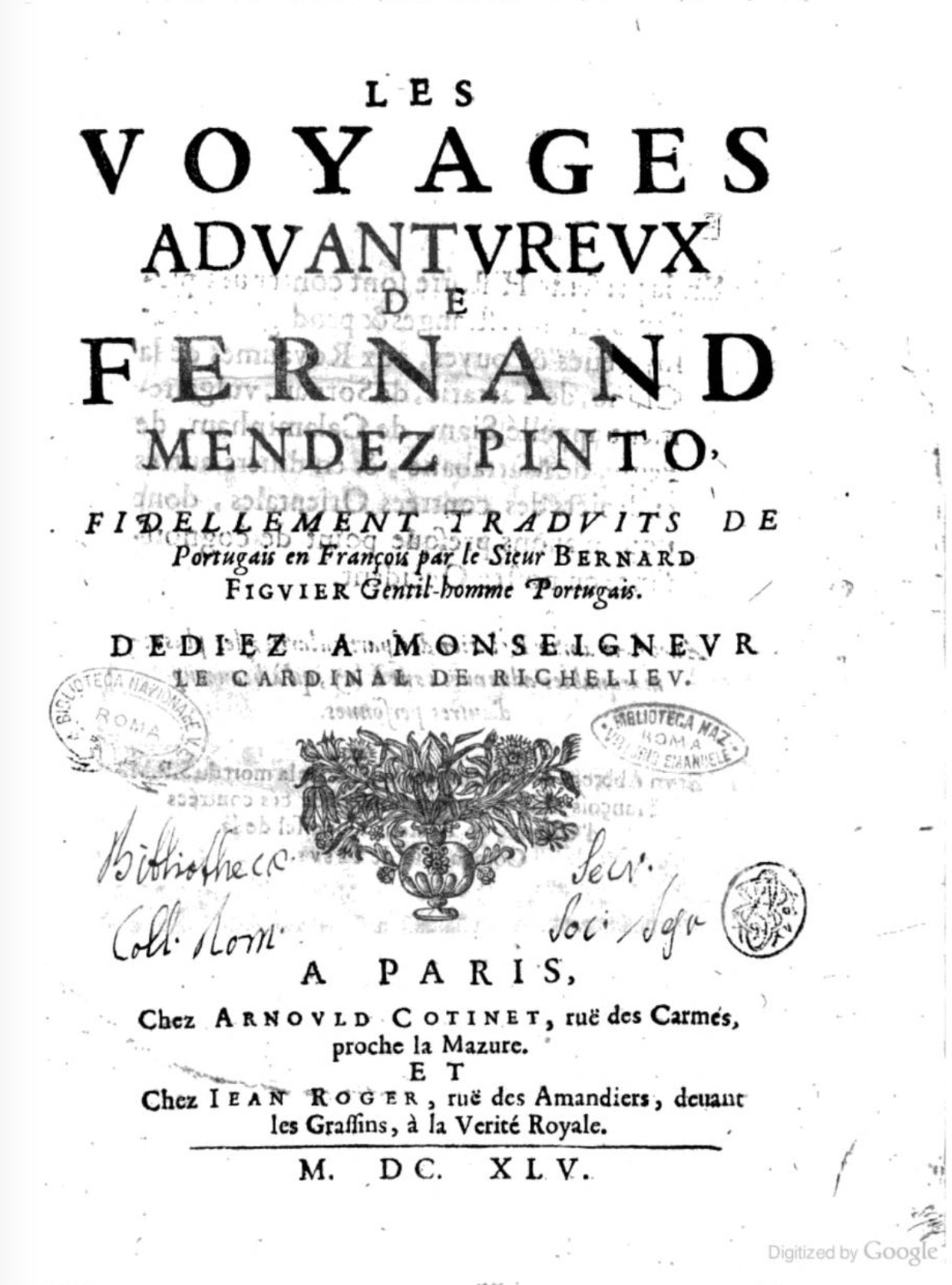
Les Voyages Advantureax De Fernand Mendez Pinto, Fidellement Traduits de Portuguais en Francois par Le Sieur Bernard Figuier, Gentilhomme Portuguais
The Adventurous Voyages of Fernand Mendez Pinto, Faithfully Translated from Portuguese into French by Sieur Bernard Figuier, Portuguese Gentleman
Book
Pinto, F.M. (1645) Les Voyages Advantureax De Fernand Mendez Pinto, Fidellement Traduits de Portuguais en Francois par Le Sieur Bernard Figuier, Gentilhomme Portuguais. [The Adventurous Voyages of Fernand Mendez Pinto, Faithfully Translated from Portuguese into French by Sieur Bernard Figuier, Portuguese Gentleman] Paris
Record No. 2846  |  Sinkankas/Born No.: NIS/NIB  |  Language: in French  |  RWHL
A French translation of Fernão Mendes Pinto’s celebrated account of his travels and adventures in Asia during the sixteenth century. Pinto describes journeys through India, Southeast Asia, China, and Japan, combining observations of peoples, cities, religions, warfare, navigation, commerce, and natural products with accounts of his extraordinary personal experiences. Of particular gemological interest are references to precious stones, pearls, gold, jewelry, and the trade in luxury materials throughout Asian commercial networks, providing an important early European perspective on the wealth and gem trade of the East. Early mention of gems in Thailand; quoted by Gühler (1947)

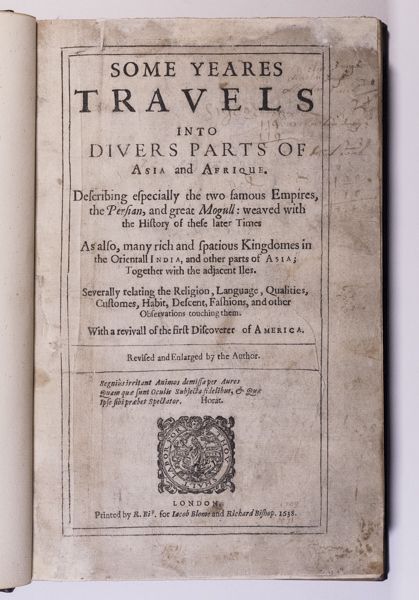
Some Yeares Travels into Divers Parts of Asia and Afrique
Book
Herbert, T. (1638) Some Yeares Travels into Divers Parts of Asia and Afrique. London, Jacob Blome & Richard Bishop
Record No. 2787  |  Sinkankas/Born No.: NIS/NIB  |  RWHL
A travel narrative by Sir Thomas Herbert describing journeys through parts of Persia, India, the Middle East, and Africa during the early seventeenth century. Herbert combines firsthand observations with historical, geographical, ethnographic, and natural-history information on the regions he visited, including cities, peoples, customs, trade, plants, animals, and natural resources. Of particular gemological interest are his references to pearls, precious stones, mines, and luxury commodities encountered in Persia and India, making the work a useful early English source on the gem trade and material wealth of Asia.

Wide Collections, Part 1

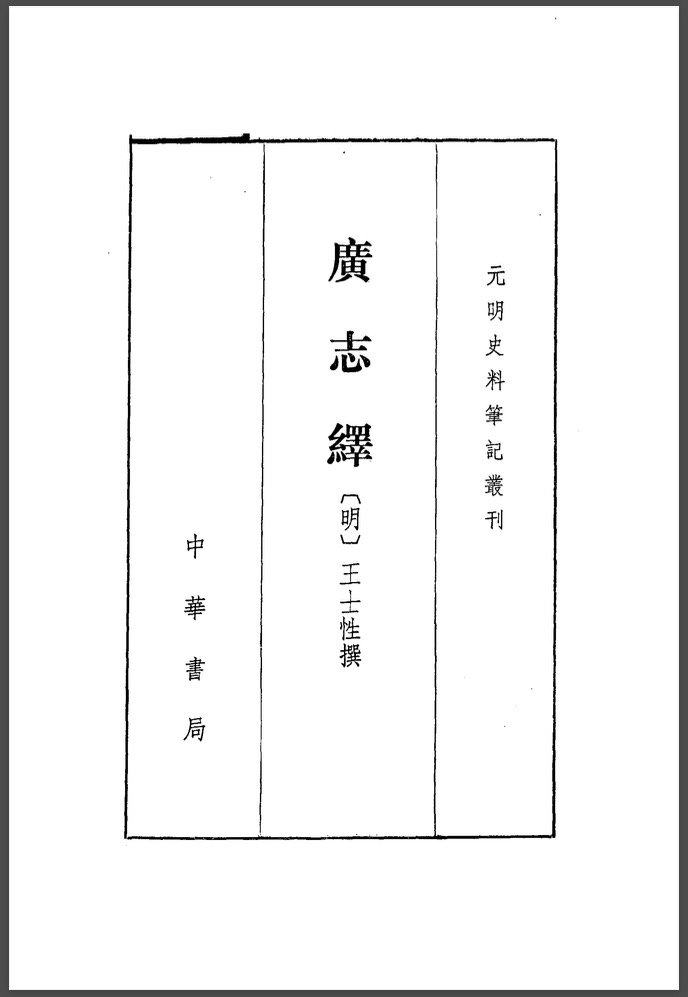
广志绎
Book
Wang, S. (1597) Wide Collections, Part 1. [广志绎]
Record No. 16778  |  Sinkankas/Born No.: NIS/NIB  |  Language: in Chinese  |  RWHL
Wang Shixing’s Guang Zhi Yi [廣志繹; Expanded Interpretations of the Gazetteers] is a geographical and ethnographic work based substantially on the author’s extensive travels as a Ming official. It records observations on different regions of China, their landscapes, populations, customs, products, commerce, agriculture, and natural resources, rather than relying solely on earlier geographical literature. Of particular interest to gemological and mineralogical history are its notices of regional products and valuable natural materials, including jade and other stones, and the commercial routes by which such materials circulated. Its observations provide useful evidence for the geography of resources and commodity trade in late Ming China. Volume 5 contains accounts of the Burmese invasions into Yunnan in the late 16th century and of Wang's advice for mobilizing troops and provisions to counter the invasion. Mention is also made of amber and gems in Mongmit and of a Ming delegation to the capital of the Toungoo dynasty (old Pegu). Prefaced in 1597. Wang Shixing was a military general whose troops were stationed in Lancang in southwestern Yunnan, near the Burmese border. His record is considered very reliable.

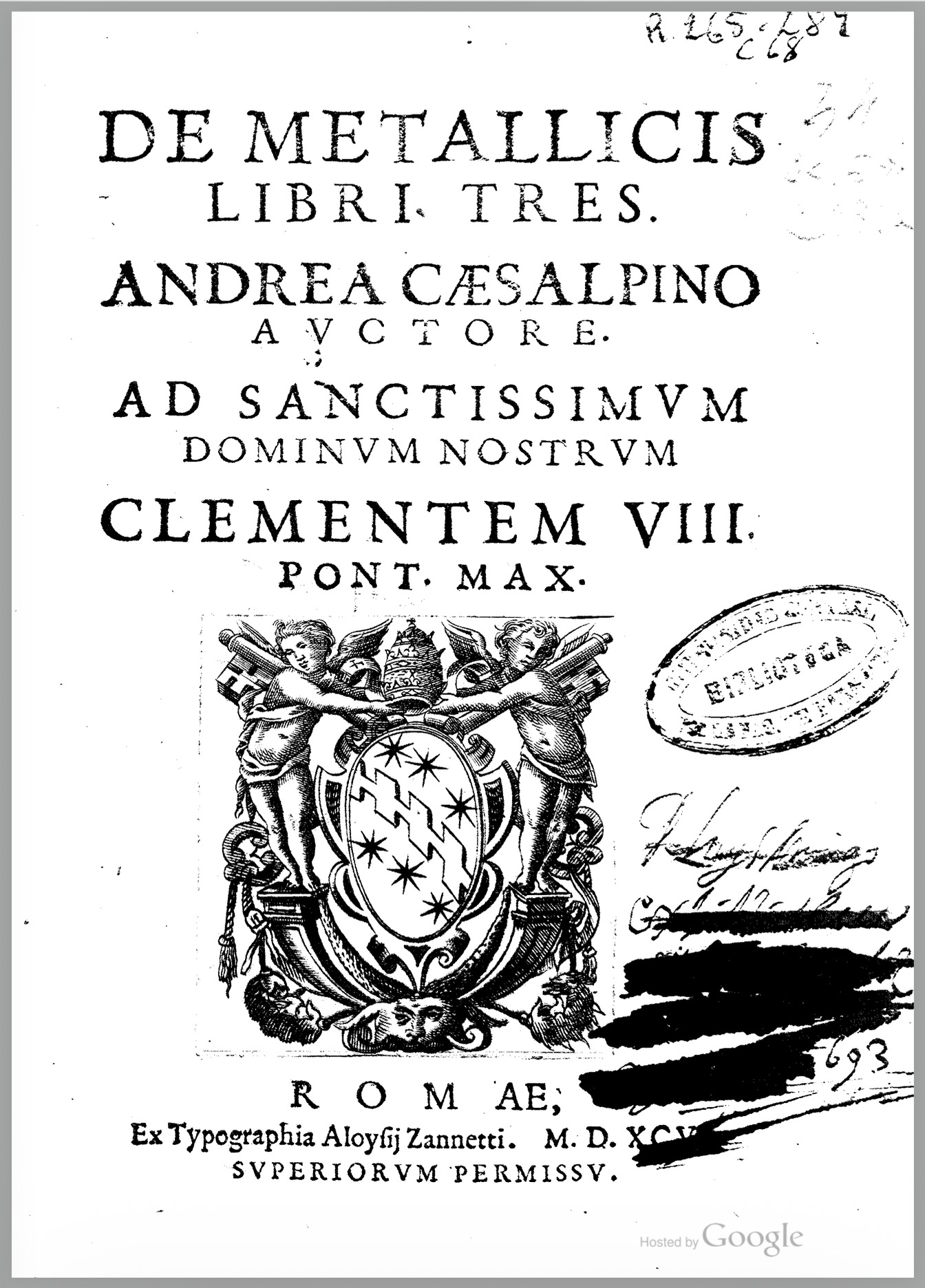
De metallicis libri tres

Three Books on Metals
Book
Cesalpino, A. (1596) De metallicis libri tres. [Three Books on Metals] Rome, ex typographia Aloysii Zanetti, 222 pp.
Record No. 29447  |  Sinkankas/Born No.: 1218–1219 (not seen); NIB  |  Language: in Latin  |  RWHL
Andrea Cesalpino’s De metallicis libri tres is a late sixteenth-century treatise on minerals, metals, stones, and related substances, organized into three books. Cesalpino attempts a systematic classification of mineral bodies according to their observable properties and modes of formation, discussing metals, metallic minerals, earths, salts, stones, and precious stones within an Aristotelian framework. He considers such characteristics as color, transparency, hardness, density, cleavage, and response to heat, together with the geological environments in which mineral substances occur. Precious and ornamental stones receive significant attention, including diamond, ruby, sapphire, emerald, topaz, garnet, amethyst, opal, and others. The work is an important early contribution to systematic mineralogy, notable for its effort to classify minerals through physical characteristics and natural relationships rather than solely through their medicinal or magical properties.

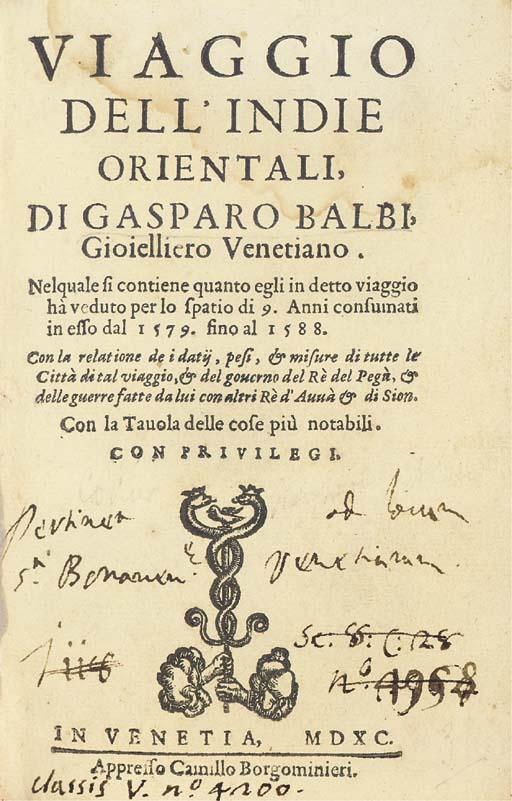
Viaggio dell’Indie Orientali, di Gasparo Balbi, Gioielliero Venetiano
Voyage to the Eastern Indies, by Gasparo Balbi, Venetian Jeweler
Book
Balbi, G. (1590) Viaggio dell’Indie Orientali, di Gasparo Balbi, Gioielliero Venetiano. [Voyage to the Eastern Indies, by Gasparo Balbi, Venetian Jeweler] Venice, C. Borgominieri, 159 pp.
Record No. 2703  |  Language: in Italian  |  RWHL
Balbi’s Viaggio dell’Indie Orientali is the account of the Venetian jeweler Gasparo Balbi’s travels through the eastern Mediterranean, Middle East, India, Sri Lanka, Pegu (Burma), and other parts of Southeast Asia during 1579–1588. Written from the perspective of a professional jeweler and merchant, the work contains particularly valuable observations on the trade in precious stones, pearls, and other luxury commodities, as well as descriptions of ports, markets, currencies, weights and measures, local customs, and commercial practices. Balbi’s descriptions of India and Pegu are especially important for the history of the gem trade, recording firsthand information concerning rubies and other gemstones and the commercial networks through which they circulated. The work also contains one of the earliest substantial European eyewitness accounts of Pegu and provides important evidence for Venetian participation in the Asian luxury-goods trade during the late 16th century.

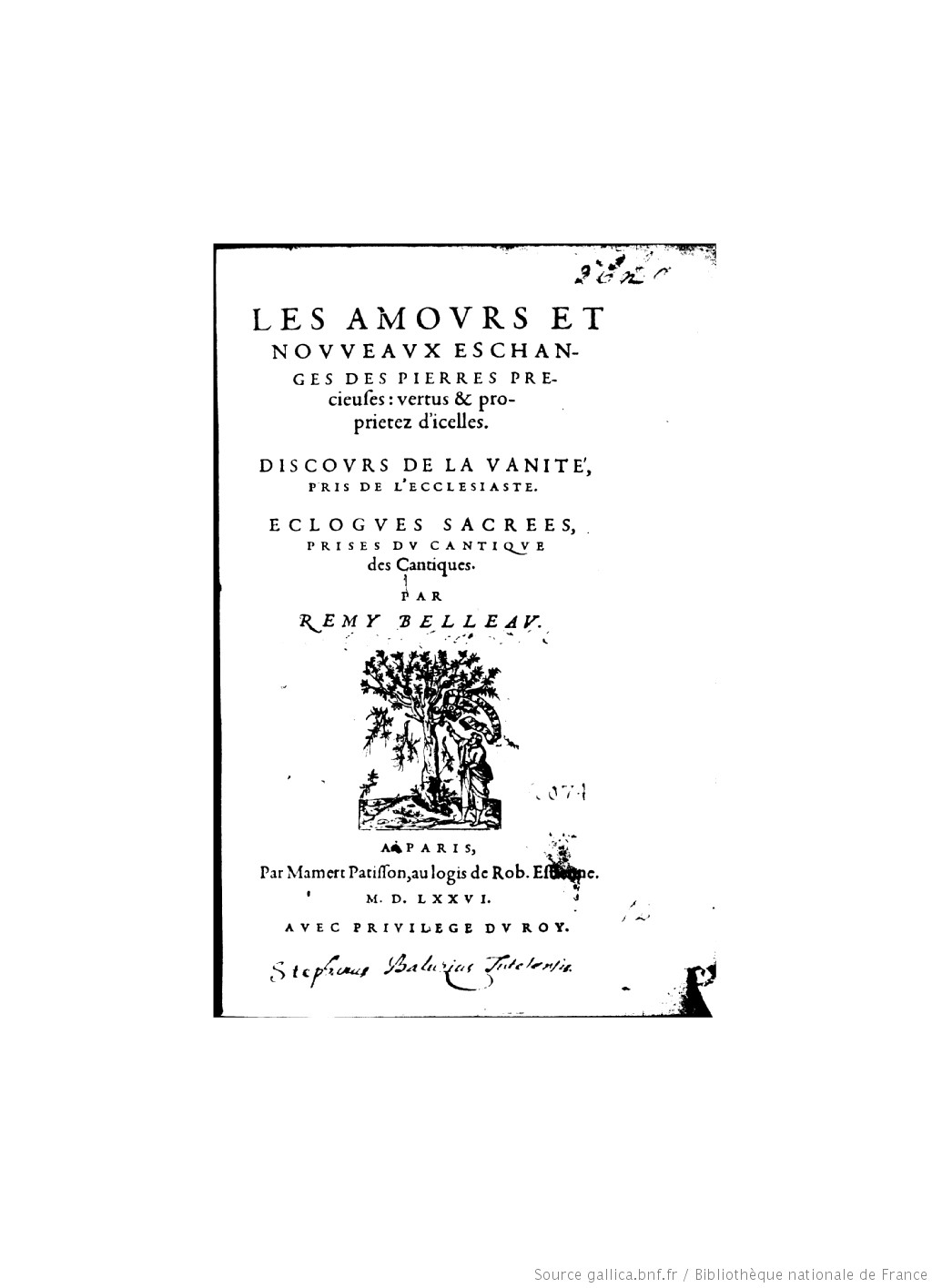
Les Amours et nouveaux échanges des pierres précieuses
The Loves and New Exchanges of Precious Stones
Book
Belleau, R. (1576) Les Amours et nouveaux échanges des pierres précieuses. [The Loves and New Exchanges of Precious Stones] Paris, M. Patisson
Record No. 2994  |  Sinkankas/Born No.: 537 (not seen); NIB  |  Language: in French  |  RWHL
A poetic lapidary by the French Renaissance poet Rémy Belleau in which precious stones are treated through a mixture of mythology, natural history, symbolism, and imaginative verse. Belleau describes individual gems, their colors, origins, virtues, legends, and supposed magical or medicinal properties, drawing upon classical and medieval lapidary traditions while transforming them into literary compositions. The work is particularly important in the cultural history of gemstones for its fusion of contemporary gem lore with Renaissance poetry and its portrayal of precious stones as objects of beauty, symbolism, and supernatural power.

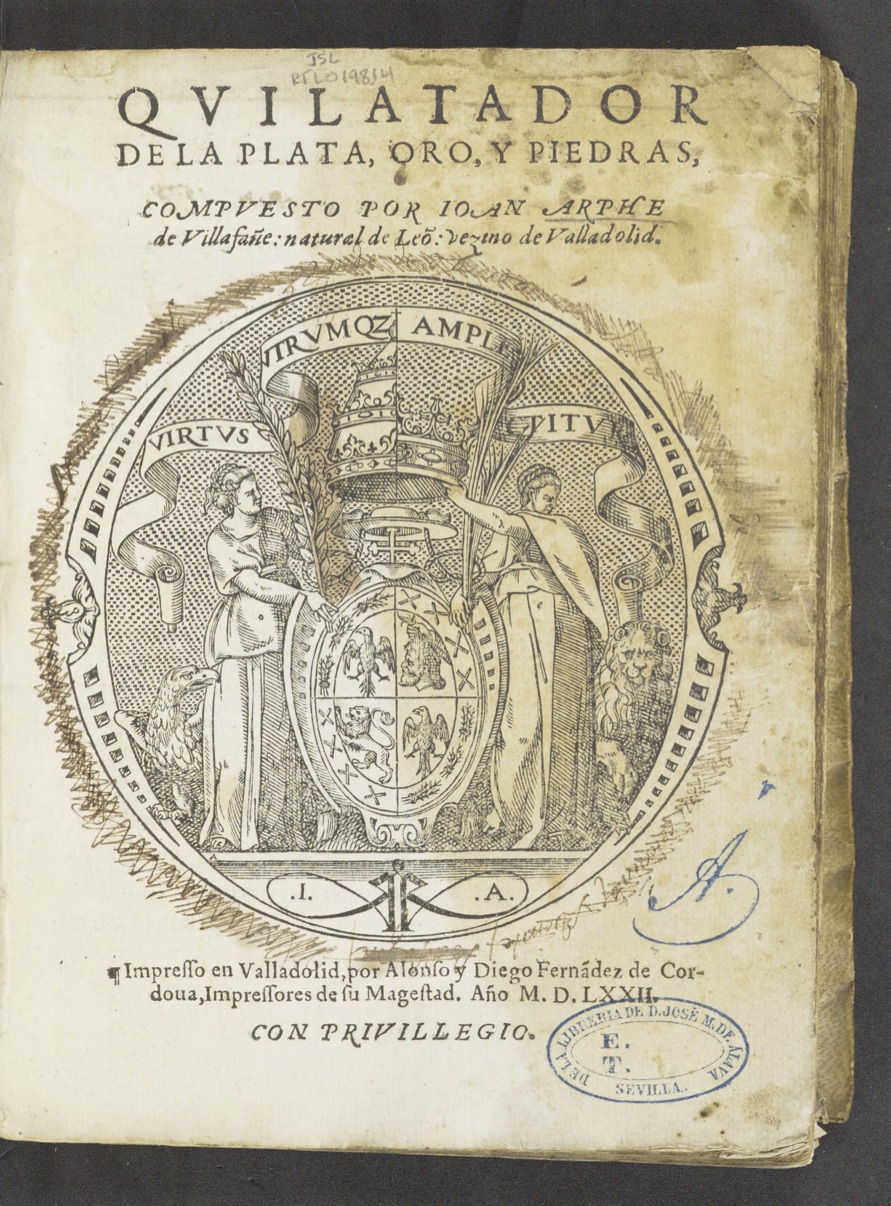
Quilatador de la Plata, Oro, Y Piedras
Assayer of Silver, Gold and Stones
Book
Arfe y Villafañe, J., de (1572) Quilatador de la Plata, Oro, Y Piedras. [Assayer of Silver, Gold and Stones] Valladolid, Alonso and Diego Fernández de Córdoba, 71 pp.
Record No. 1779  |  Sinkankas/Born No.: 215–218  |  Language: in Spanish  |  RWHL
Juan de Arfe y Villafañe (1535–1603) was a prominent Spanish goldsmith, sculptor, engraver, anatomist, and author during the Renaissance. Born in León into a distinguished family of German-origin silversmiths, he was trained by his father, Antonio de Arfe, and furthered his studies in anatomy in Toledo and Salamanca. Arfe y Villafañe is renowned for his exceptional craftsmanship in creating intricate silver monstrances for cathedrals in cities such as Seville, Valladolid, and Ávila. One of his most celebrated works is the monumental silver monstrance for Seville Cathedral, known as the “Custodia Grande,” which stands over three meters tall and weighs more than three tons. In addition to his artistic achievements, he authored several influential treatises, including: • De varia commensuración para la escultura y arquitectura (1585–1587): A comprehensive four-part work covering geometry, human and animal anatomy, gnomonics (the art of sundial construction), and architectural principles. • Quilatador de oro, plata y piedras (1572): A manual detailing the assaying and alloying of precious metals and the evaluation of gemstones, widely used by silversmiths of the time. It is famous for its information on prices in that era.

Record of Things Heard in the Remote Hot South
炎徼紀聞
Book
Tian, R. (1560) Record of Things Heard in the Remote Hot South. [炎徼紀聞]
Record No. 16777  |  Sinkankas/Born No.: NIS/NIB  |  Language: in Chinese  |  RWHL
A geographical and ethnographic work by Tian Rucheng (田汝成) concerning the southern and southwestern borderlands of Ming China. Yanjiao Jiwen (炎徼紀聞) records information on the geography, peoples, customs, administration, warfare, and natural products of regions adjoining China, particularly areas corresponding to Guangxi, Yunnan, and neighboring Southeast Asia. Drawing on official information and contemporary reports, the work is an important Ming-period source for Chinese knowledge of the southern frontier and its peoples, trade, and resources. Sun Laichen: Volume 4 contains an account of Mengmi (Mong Mit) and Mengyang that describes the conflicts among the tusis (especially the rebellion of Luchuan and the Ming efforts to suppress it) and the effect the Ming eunuchs' demand for precious stones had on border region affairs. Prefaced in 1560. Also called the Xingbian Jiwen. Based on the Nanyuan Manlu.

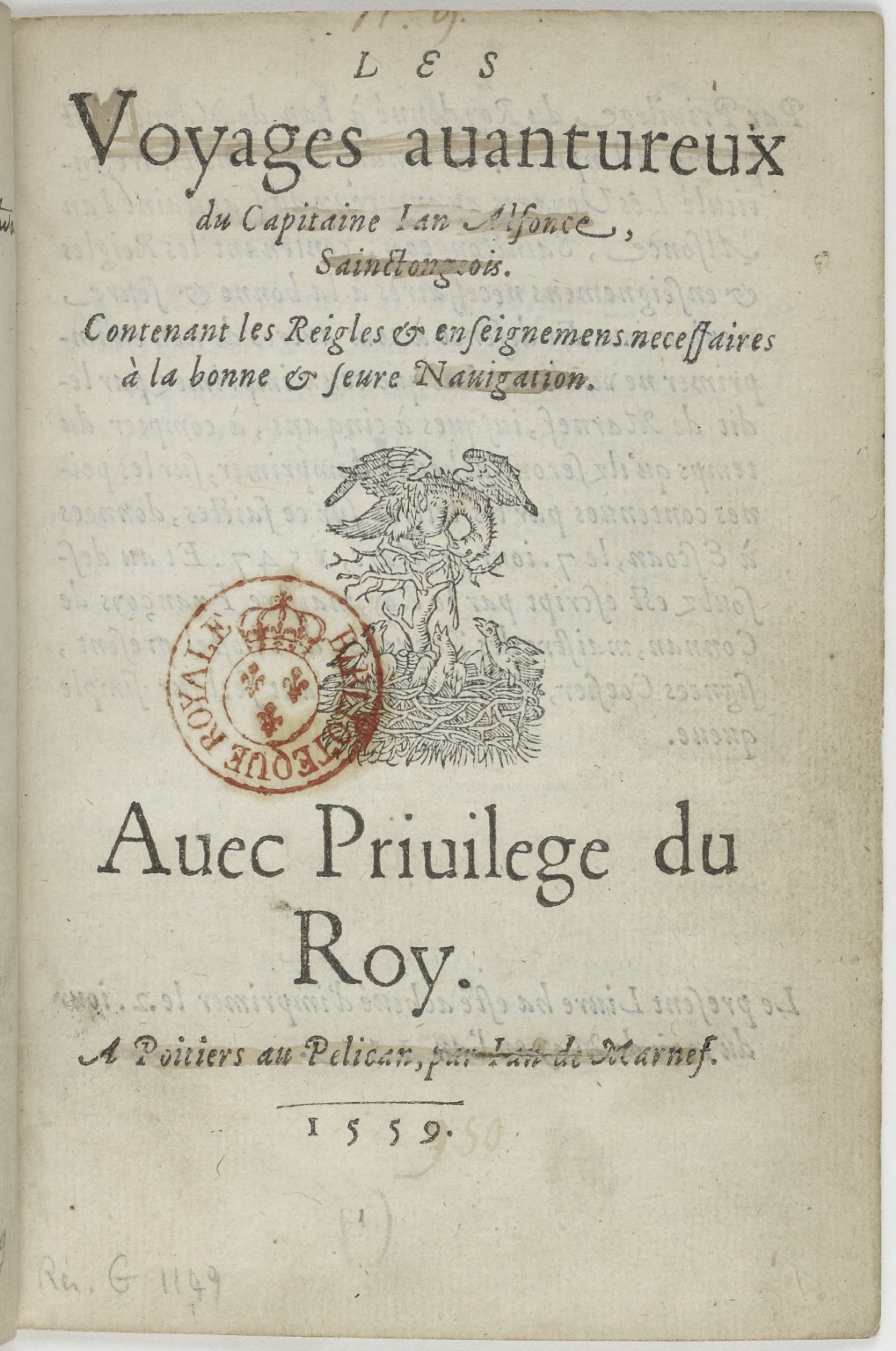
Les Voyages Avantureux du Capitaine Ian Alfonce, Sainctongeois
The adventurous voyages of Captain Ian Alfonce of Saintonge
Book
Alfonse, J.a.k.a.J.F. (1559) Les Voyages Avantureux du Capitaine Ian Alfonce, Sainctongeois. [The adventurous voyages of Captain Ian Alfonce of Saintonge] Poitiers, Ian de Marnef, 69 pp.
Record No. 2690  |  Sinkankas/Born No.: NIS/NIB  |  Language: in French  |  RWHL
An early French navigational and geographical work attributed to the experienced mariner Jean Alfonse, describing voyages and sailing routes through the Atlantic and to regions of Africa, Asia, and the Americas. The work provides practical information on coasts, islands, harbors, distances, winds, and navigation, while also recording observations on the peoples and natural products of the lands encountered. It is an important sixteenth-century source for European geographical knowledge during the early period of Atlantic exploration.

The Pirotechnia of Vannoccio Biringuccio
Book
Biringuccio, V. (1540) The Pirotechnia of Vannoccio Biringuccio. New York, Dover, 477 pp.
Record No. 7375  |  RWHL
Vannoccio Biringuccio was the Siennese metallurgist and armament maker who wrote history's first clear, comprehensive work on metallurgy. First published in 1540, shortly after Biringuccio's death, The Pirotechnia is a lavishly illustrated volume that describes in detail the equipment and processes of sixteenth-century mining, smelting, and metalworking. For centuries, this famous work has been a standard reference in the field of metals and metallurgy. It is especially valuable today as a vital source of information on the state of technology in the fifteenth and sixteenth centuries. The book first addresses the principal ores — gold, silver, copper, lead, tin, and iron — and the making of steel and brass. It then introduces semiminerals, from quicksilver and sulphur to manganese and rock crystal, and describes the assaying and preparing of ores for smelting. Other topics include the making of alloys, the art of casting, methods of melting metals, and the making of fireworks. This edition of The Pirotechnia has been reprinted from the authoritative translation published by The American Institute of Mining and Metallurgical Engineers, and is complete with an historical introduction to Biringuccio and his work. It also contains reproductions of the 94 woodcuts from the original 1540 edition, which depict centuries-old technologies ranging from the recovery of mercury with a distilling bell to a machine for boring guns.

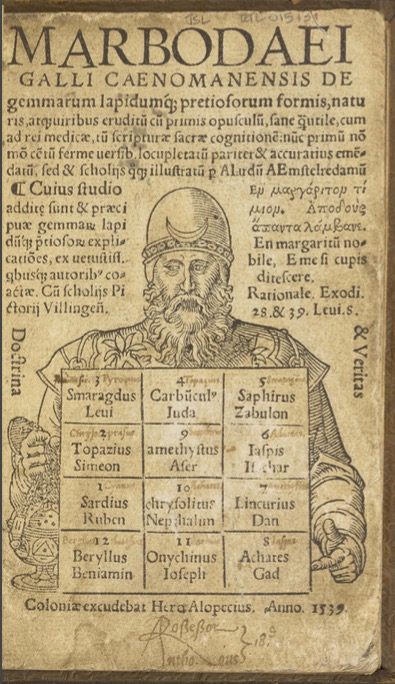
Marbo Dei Galli Poetae Ve tustissimi de lapidibus pretiosis Encheri dion, cum scholijs Pictorij Vil lingensis

Marbo, the Poet of the Galli, Most Ancient, on Precious Stones, Encheridion, with the Commentaries of Pictorius Vill ingensis
Book
Marbode, B.o.R. (1531) Marbo Dei Galli Poetae Ve tustissimi de lapidibus pretiosis Encheri dion, cum scholijs Pictorij Vil lingensis. [Marbo, the Poet of the Galli, Most Ancient, on Precious Stones, Encheridion, with the Commentaries of Pictorius Vill ingensis] Freiburg in Breisgau, unpaginated (~56 leaves)
Record No. 7070  |  Sinkankas/Born No.: 4170  |  Language: in Latin  |  RWHL
Marbode’s De lapidibus pretiosis is a medieval lapidary describing precious and unusual stones, their physical characteristics, origins, virtues, and supposed medicinal and magical properties. Written in Latin verse, it reflects both classical traditions and medieval beliefs concerning gemstones and became one of the most influential European lapidaries of the Middle Ages. Individual entries treat numerous stones, including diamond, emerald, sapphire, ruby, amethyst, beryl, topaz, crystal, jasper, and others, often combining observations of appearance with accounts of therapeutic or supernatural powers. This 1531 Freiburg edition presents Marbode’s text with the commentaries of Georg Pictorius of Villingen, providing Renaissance-era interpretation of the mineralogical and medical traditions embodied in the work.

Exploring the Literature of Corundum

Ruby and sapphire research spans mineralogy, gem deposits, identification, treatments, synthesis and the history of the gem trade. Older publications can also be useful for tracing terminology, early observations and accounts of mining localities. Publication dates and the original source should be considered when using historical descriptions.

For an introduction to collecting books on this subject, read Ruby & Sapphire Books: Collecting the Literature of Corundum.

About Four Treasures

Four Treasures is Lotus Gemology's freely accessible gemological reference database. Use the full database to search by author, title or keyword and explore literature on gemology, mineralogy, jewelry and related fields. Where available, hyperlinks on titles may lead directly to the full publication.

Search the Complete Four Treasures Database