Explore books, articles and historical sources on ruby, sapphire and corundum in Four Treasures, the Lotus Gemology reference database. This bibliography brings together matching records from the collection, with publication details, abstracts and cover images where available.
Ruby & Sapphire References
The list below matches the terms ruby, rubies, sapphire or corundum in the database's searchable fields. Some references discuss these gems as part of a broader subject. Linked titles take you to external links where you may find the full reference.
Pssst. pssst. Want a hot tip? Hit the library and dredge up a gem treatment, preferably one developed years ago, so that most have forgotten it. Spice it up a bit, give it a jazzier name. Then throw a piece into a parcel of naturals and take it round to a lab on… say… New Year's Eve. Did the lab muff the identification? Great! Call in the trade media to roll out the product (and don't forget to show them the natural report). Now promote the bejesus out of it by telling people that it's virtually unidentifiable.Sound crazy? It shouldn't. It should sound familiar, like deep surface diffusion. Most in the gem trade have now heard of the deep surface diffusion-treated sapphires. But few know how to spot them. And fewer still realize that surface diffusion is nothing new. But good treatments are a bit like vampires. No matter how often you kill them they always come back to haunt you.
Vietnamese rubies rock the market
Journal Article
Hughes, R.W. and Sersen, W.J. (1991) Vietnamese rubies rock the market.JewelSiam, Vol. 2, No. 2, p. 89.
Record No. 5101 | seen
Reference copied to clipboard!
corundum, ruby, Vietnam.12, inclusions.5, gems
Discussion of the appearance in Thailand of large quantities of ruby from northern Vietnam.
Bangkok gem market review: Vietnamese ruby
Journal Article
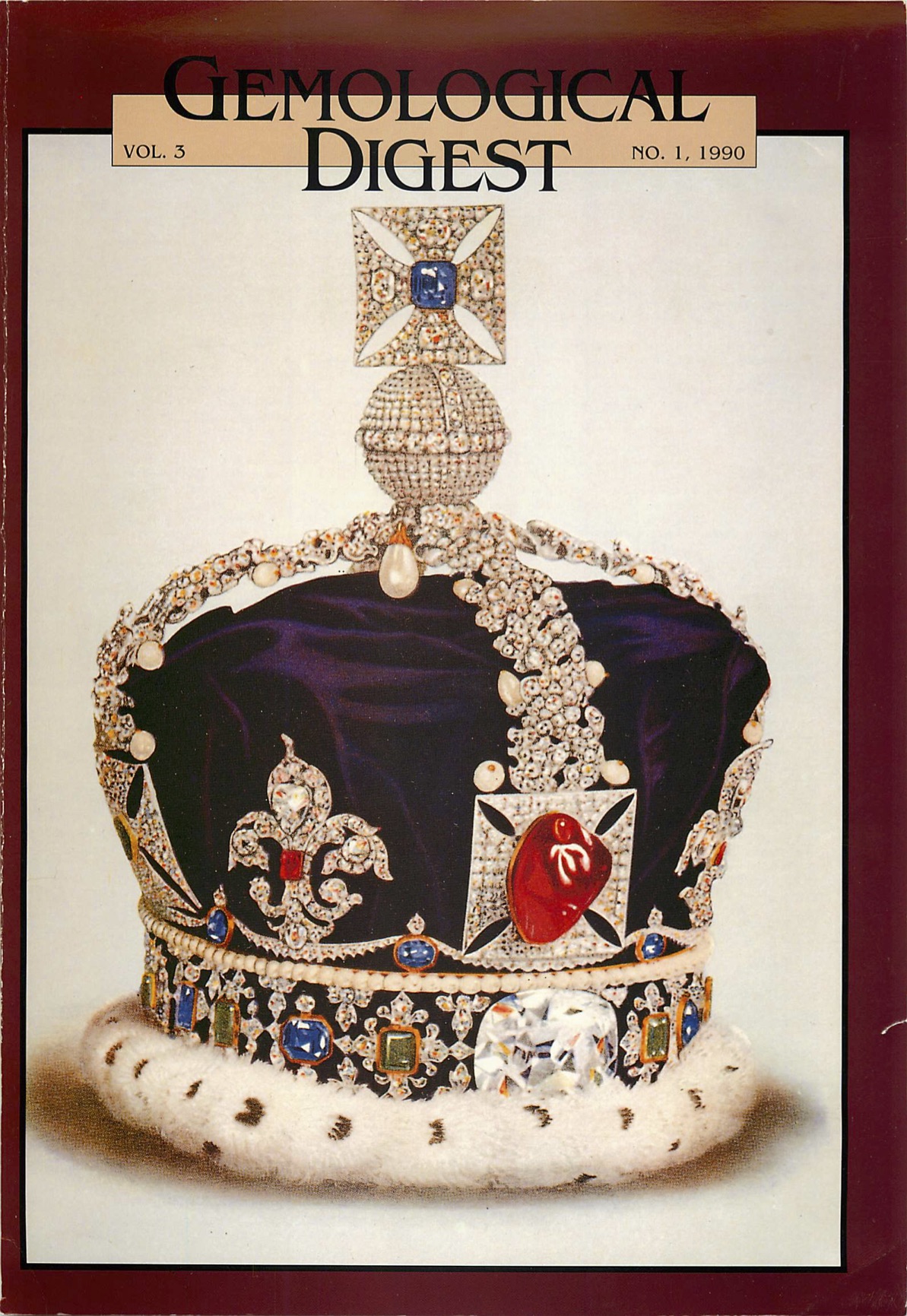
Hughes, R.W. and Sersen, W.J. (1991) Bangkok gem market review: Vietnamese ruby.Gemological Digest, Vol. 3, No. 2, pp. 68–70.
Record No. 5100 | RWHL*
Reference copied to clipboard!
corundum, ruby, Vietnam.12, inclusions.5, gems
Review of events in the Bangkok gem market, including the appearance of large quantities of ruby from northern Vietnam.
Ruby & Sapphire
Book
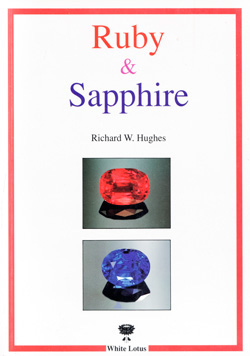
Hughes, R.W. (1991)Ruby & Sapphire. Bangkok, White Lotus, 339 pp.
Record No. 2347 | Sinkankas/Born No.: NIS/NIB | RWHL*
Reference copied to clipboard!
corundum, ruby, sapphire, gems, gems
Ruby & Sapphire explores the fascinating story of the corundum family of gems. This single volume reporesents a slightly updated version of “Corundum,” the first detailed examination of both ruby and the various sapphires, widely considered to be the most sought after of all gems. The author draws on his many years of experience to take the reader back in time to the various Asian kingdoms that were the primary sources of the fabled ruby and sapphire. For those interested in rubies and sapphires, this book offers an unparallelled look at the world's premier gems.
Thailand taking the heat
Journal Article
Hughes, R.W. (1991) Thailand taking the heat.JewelSiam, Vol. 2, No. 2, pp. 42–48.
Hughes, R.W. (1991) There's a rumble in the jungle—The sapphire face-lift face-off.Gemological Digest, Vol. 3, No. 2, pp. 17–31.
Record No. 2345 | RWHL*
Reference copied to clipboard!
surface diffusion treatments.6, blue sapphire, corundum, gems, lattice diffusion
Although not exactly new to gemology, surface diffusion-treated corundums (SDTCs) have recently been creating quite a stir in world gem markets, particularly the important Bangkok corundum market. The following article examines the subject in detail, starting with the original Linde patents and continuing up to the present-day Deep Diffusion" treatment. Methods of identification are discussed, as well as much of the back-room politics and maneuvering which has surrounded this controversial treated gem material. Also included is a quick reference table giving a detailed summary of the key identifying features of all types of natural, treated and synthetic corundums."
Hughes, R.W. (1991) The naked eye: A diamond's worst friend.JewelSiam, Vol. 2, No. 3, pp. 72–75.
Record No. 2344 | RWHL*
Reference copied to clipboard!
corundum, quality.9, diamond grading, gems
Sales of diamonds account for a large percentage of a typical jeweler's gemstone business. One of the important reasons for the dominance of diamond in the gem market is the existence of a comprehensive and internationally accepted system of quality analysis. Thls allows laypeople to buy with confidence as, with a diamond grading report, they have an independent, expert" opinion of the stone’s quality. But is this "expert" opinion, itself, always infallible, and do the different quality "steps" really indicate genuine differences in quality? Despite what some may think.the answers to these questions will have a definite impact on the colored stone business, as the trade is now moving towards the adoption of a similar system for the grading of colored stones. It is with this in mind that we examine some of the problems that the trade now encounters with the present diamond grading system."
Corundum identification in a nutshell
Journal Article
Hughes, R.W. (1991) Corundum identification in a nutshell.Gemological Digest, Vol. 3, No. 2, pp. 29–31.
Bangkok gem market review—ICA in Colombo: The good, the bad and the ugly
Journal Article
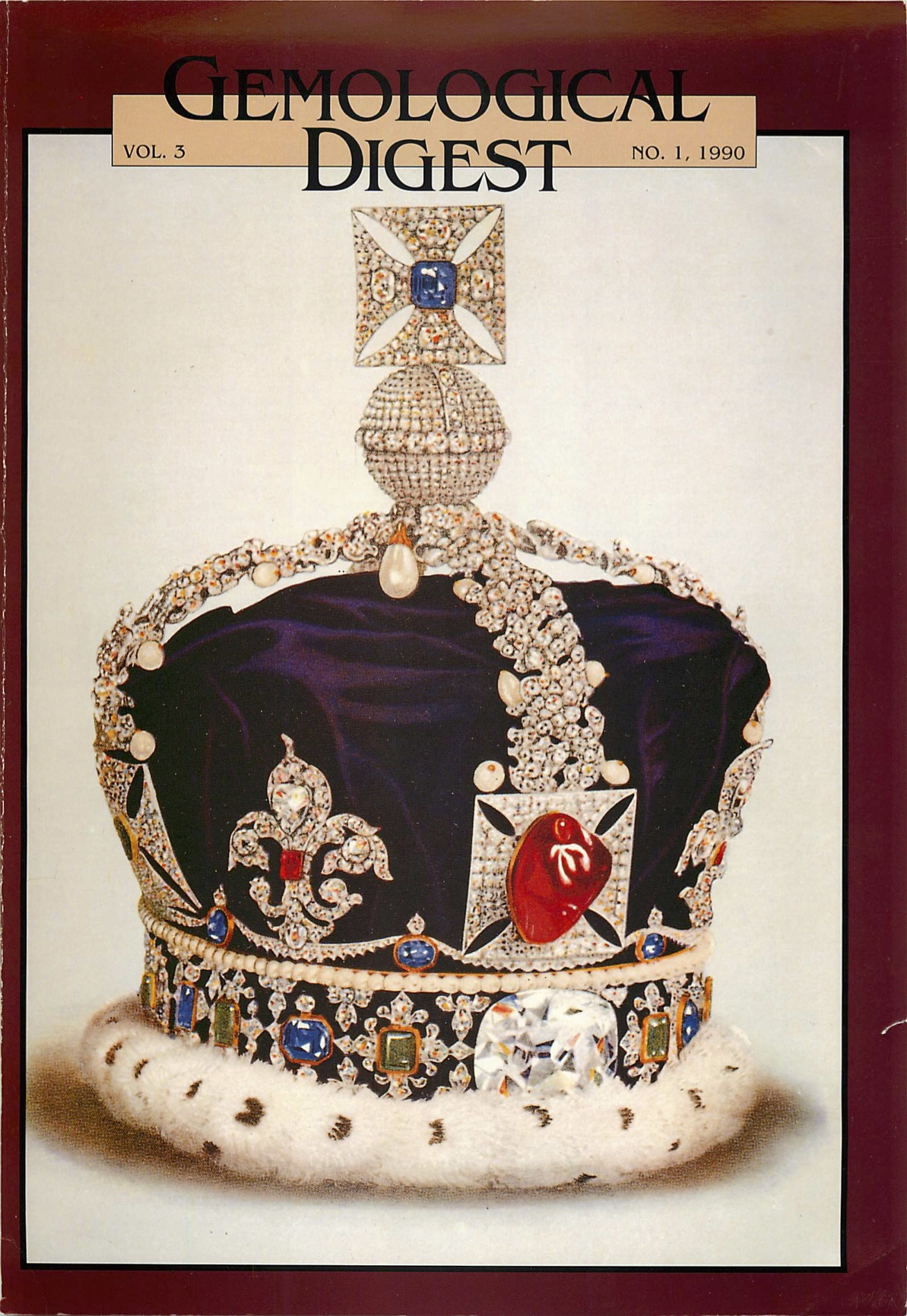
Hughes, R.W. and Sersen, W.J. (1990) Bangkok gem market review—ICA in Colombo: The good, the bad and the ugly.Gemological Digest, Vol. 3, No. 1, pp. 69–72.
Record No. 5099 | RWHL
Reference copied to clipboard!
corundum, pink sapphire, nomenclature, gems
By this time, most readers will have read all about what went down at the ICA Congress in Colombo, Sri Lanka last May. So we will just make a few brief comments on what we liked and didn't like.
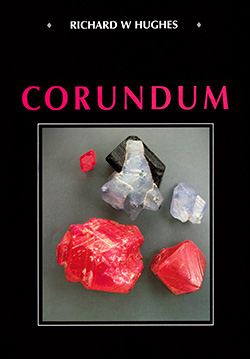
Hughes, R.W. (1990)Corundum. Northants, UK, Butterworth-Heinemann, 314 pp.
Record No. 2343 | Sinkankas/Born No.: 3069A | RWHL*
Reference copied to clipboard!
corundum, gems
Rubies and sapphires are widely considered to be among the most sought after and precious of gems. Together they account for over fifty percent of the world trade in colored gemstones. This book is the first from Richard Hughes on the subject, and the first major work to be devoted entirely to the corundum family of gemstones. It covers all aspects of rubies and sapphires, beginning with their history, chemical and physical properties. Other chapters look at treatments, synthetic corundums, methods of fashioning, famous rubies and sapphires, formation of corundum deposits and world sources, providing a valuable reference source for jewelers, gemologists, students, and the general reader.
A question of origin
Journal Article
Hughes, R.W. (1990) A question of origin.Gemological Digest, Vol. 3, No. 1, pp. 16–32.
Record No. 2341 | RWHL*
Reference copied to clipboard!
corundum, India.12, Kashmir.11, Burma.12, gems
No gemologist today would deny the importance of inclusions to the study of gemology. They are vital tools in separating synthetic gems from natural, and their importance will certainly increase along with the growing sophistication of treated gems. However, the question of inclusion-based country-of-origin reports does not find all gemologists and traders in agreement. Some support the practice; others do not. The following article takes a close look at the entire question of lab-issued origin reports, asking… a. are origin reports accurate within a reasonable degree of error using the current methods? b. even if origin reports are reasonably accurate, how are they being used in today's market? Do they provide useful collector information and protection to prospective customers, or are they merely a diversion for drawing the buyer's attention away from the stone's overall appearance and quality, to some ill-definable factor, such as origin? c. are origin reports akin to the authentication of a painting by a master artist, or do natural gems have only one artist Mother Nature? The purpose of this article is, thus, to explore objectively the arguments for and against lab origin reports. First the author explains why he believes origin reports are not totally reliable and definitely not in the best interests of the consumer. Supporters are then given the opportunity for rebuttal, explaining why they think Mr. Hughes has lost his mind. It is our hope that, out of the fray, readers, defenders of the faith, and opponents will better understand this question of origin.
Bangkok Gem Market Review
Journal Article
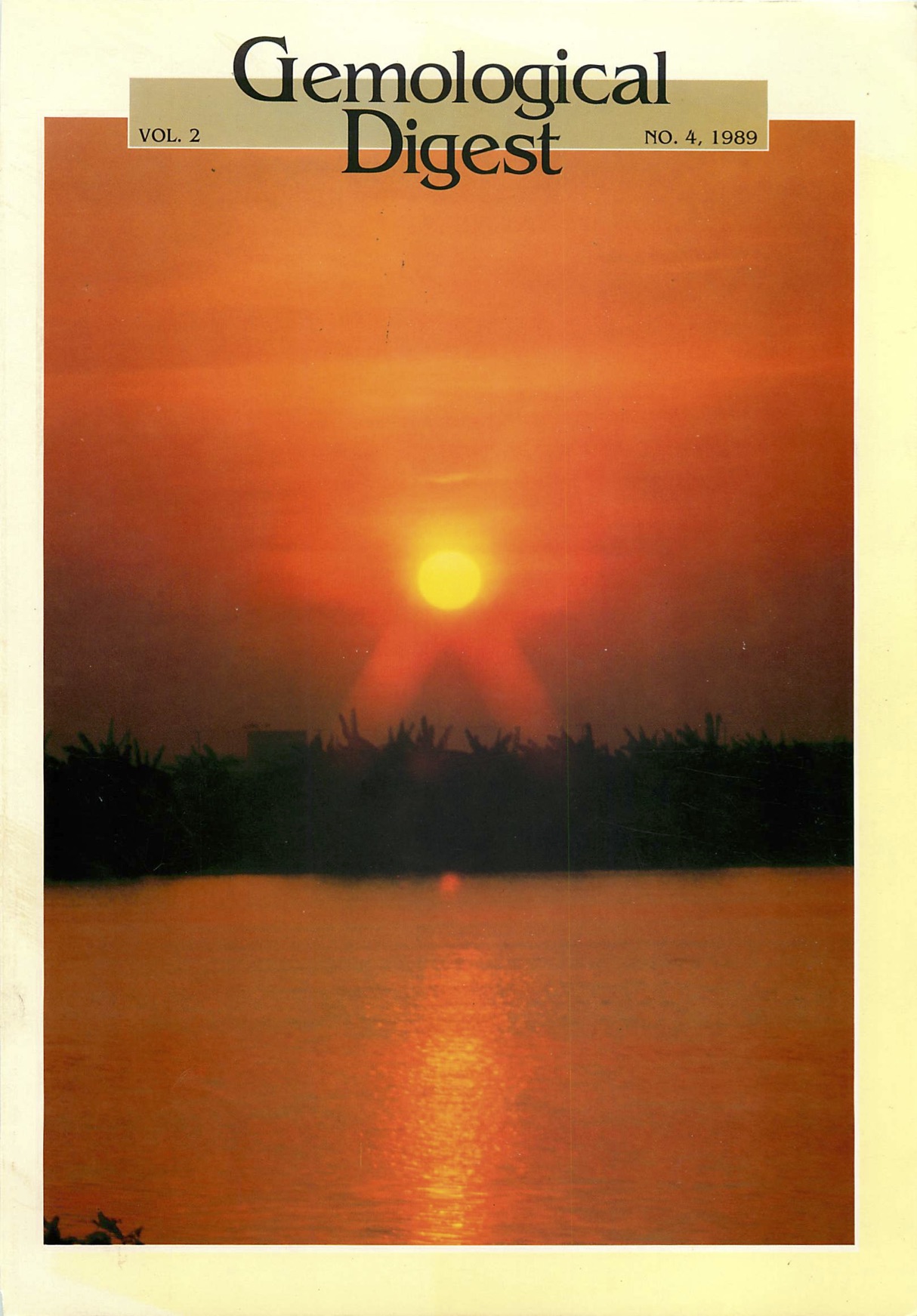
Hughes, R.W. and Sersen, W.J. (1989) Bangkok Gem Market Review.Gemological Digest, Vol. 2, No. 4, pp. 43–44.
Record No. 5098 | RWHL
Reference copied to clipboard!
corundum, quality.10, Laos.12, gems
Review of happenings in the Bangkok gem market.
The inclusions of Turkana sapphires
Journal Article
Hughes, R.W. (1989) The inclusions of Turkana sapphires.Gemological Digest, Vol. 2, No. 4, pp. 35–36.
Record No. 2338 | RWHL
Reference copied to clipboard!
corundum, sapphire, East Africa, Kenya.12, inclusions.5, gems
A brief inclusion study was done on a small sampling of Turkana sapphires provided by Ted Themelis. Perhaps the most distinctive feature throughout the lot of approximately 30 pieces was a slight cloudiness, or girasol," if you will. While in reflected light the stone might appear blue or green, in transmitted light an oily yellowish "diesel" appearance was seen (see Figure 1). This was found in virtually all specimens, except the one piece which had been heat treated. Heat treatment removed this cloudiness, as well as improving the color, suggesting that the cloudiness may be exsolved Ti and/or Fe compounds."
Bangkok gem market review
Journal Article
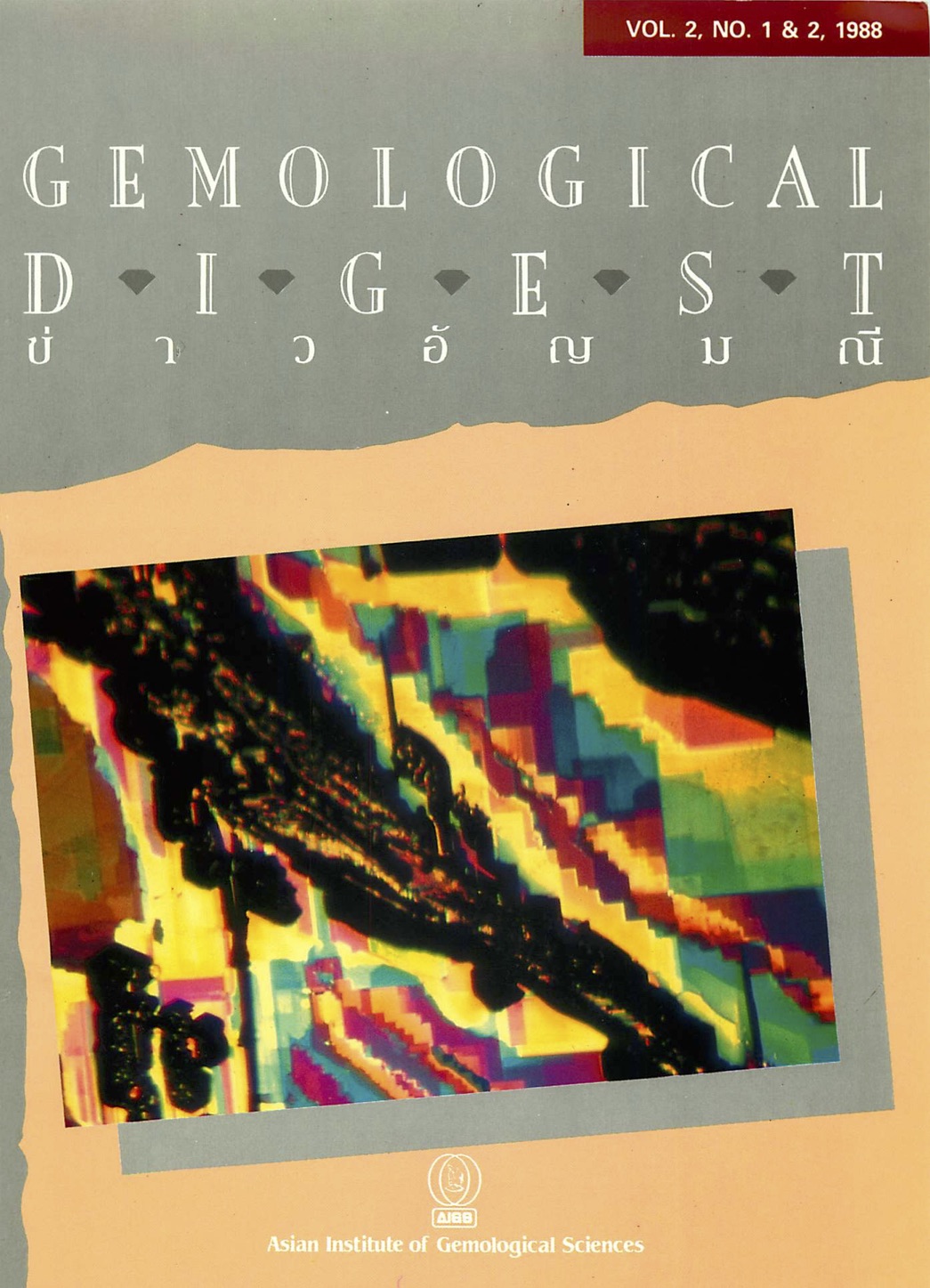
Hughes, R.W. and Sersen, W.J. (1988) Bangkok gem market review.Gemological Digest, Vol. 2, Nos. 1 & 2, pp. 20–22.
Record No. 5097 | RWHL
Reference copied to clipboard!
corundum, quality.9, gems
News from the Bangkok gem market.
Bangkok Gem Market Review: The Kanchanaburi sapphire secret
Journal Article
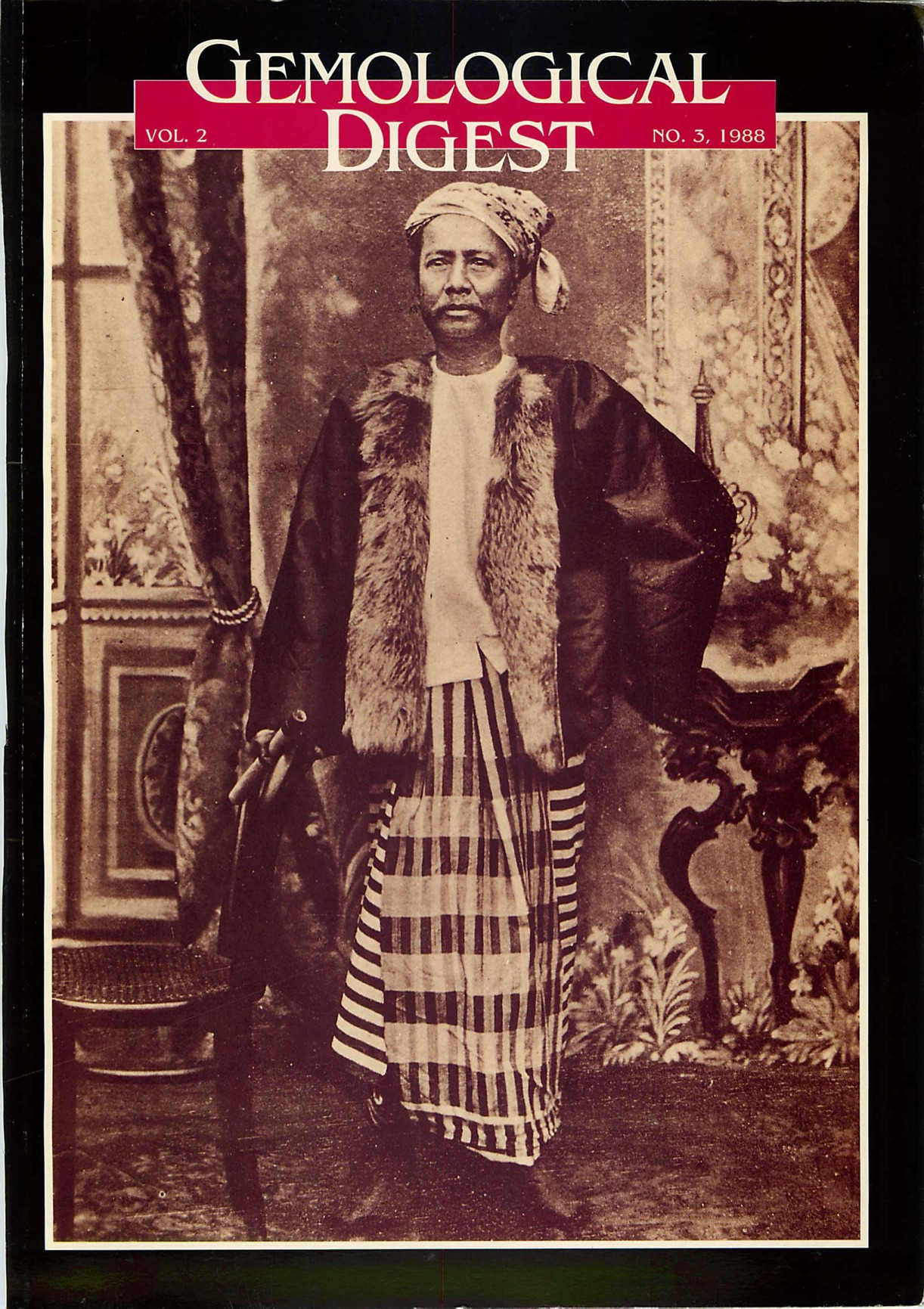
Hughes, R.W. and Sersen, W.J. (1988) Bangkok Gem Market Review: The Kanchanaburi sapphire secret.Gemological Digest, Vol. 2, No. 3, pp. 37–39.
Record No. 5096 | RWHL*
Reference copied to clipboard!
Thailand.12, Bo Ploi, gems
News from the Bangkok gem market, including the opening of the huge S.A.P. sapphire mine at Bo Ploi, Kanchanaburi.
Exploring the Literature of Corundum
Ruby and sapphire research spans mineralogy, gem deposits, identification, treatments, synthesis and the history of the gem trade. Older publications can also be useful for tracing terminology, early observations and accounts of mining localities. Publication dates and the original source should be considered when using historical descriptions.
Four Treasures is Lotus Gemology's freely accessible gemological reference database. Use the full database to search by author, title or keyword and explore literature on gemology, mineralogy, jewelry and related fields. Where available, hyperlinks on titles may lead directly to the full publication.