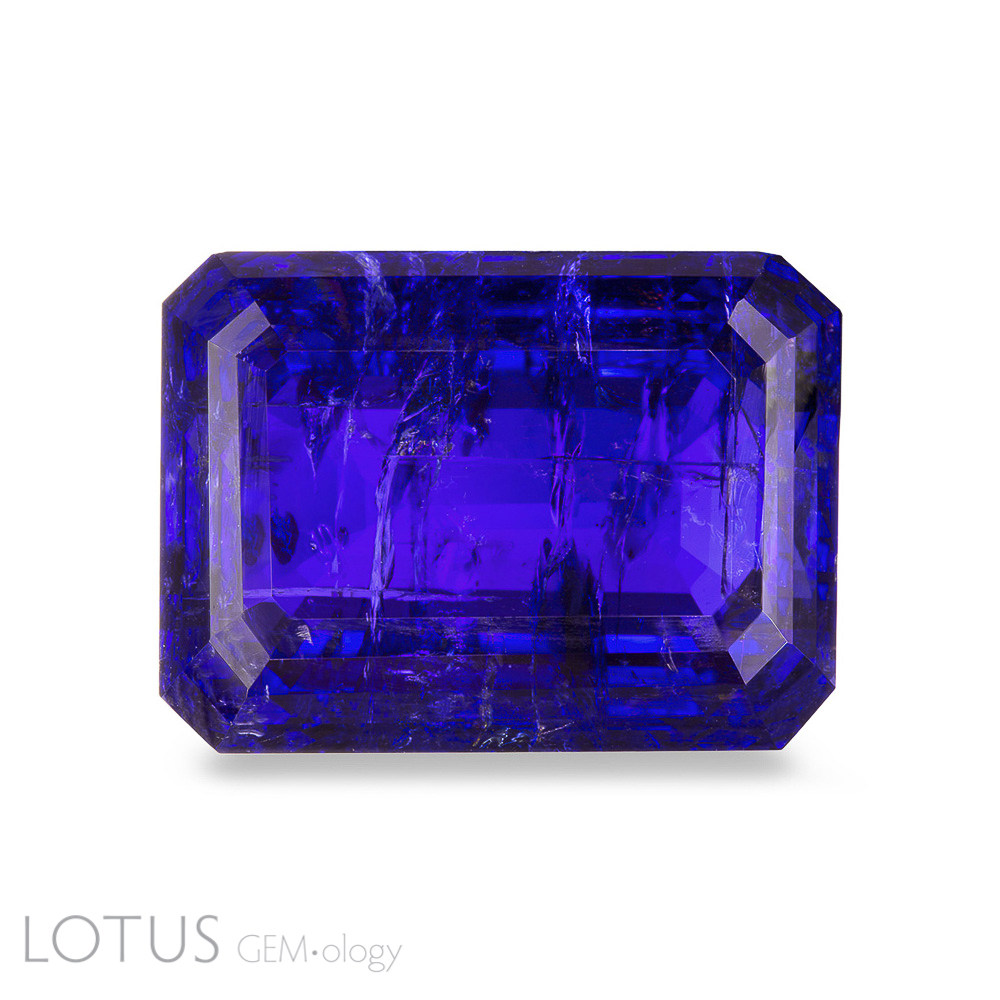
Explore tanzanite inclusions in Hyperion, the Lotus Gemology inclusion database. Hyperion contains photomicrographs of inclusions and internal features in natural tanzanite from Tanzania, documented with information on treatment, lighting conditions, field of view, photographer and published references.
Tanzanite Inclusions
Explore tanzanite inclusions in Hyperion, the Lotus Gemology inclusion database. Hyperion contains photomicrographs of inclusions and internal features in natural tanzanite from Tanzania, documented with information on treatment, lighting conditions, field of view, photographer and published references.
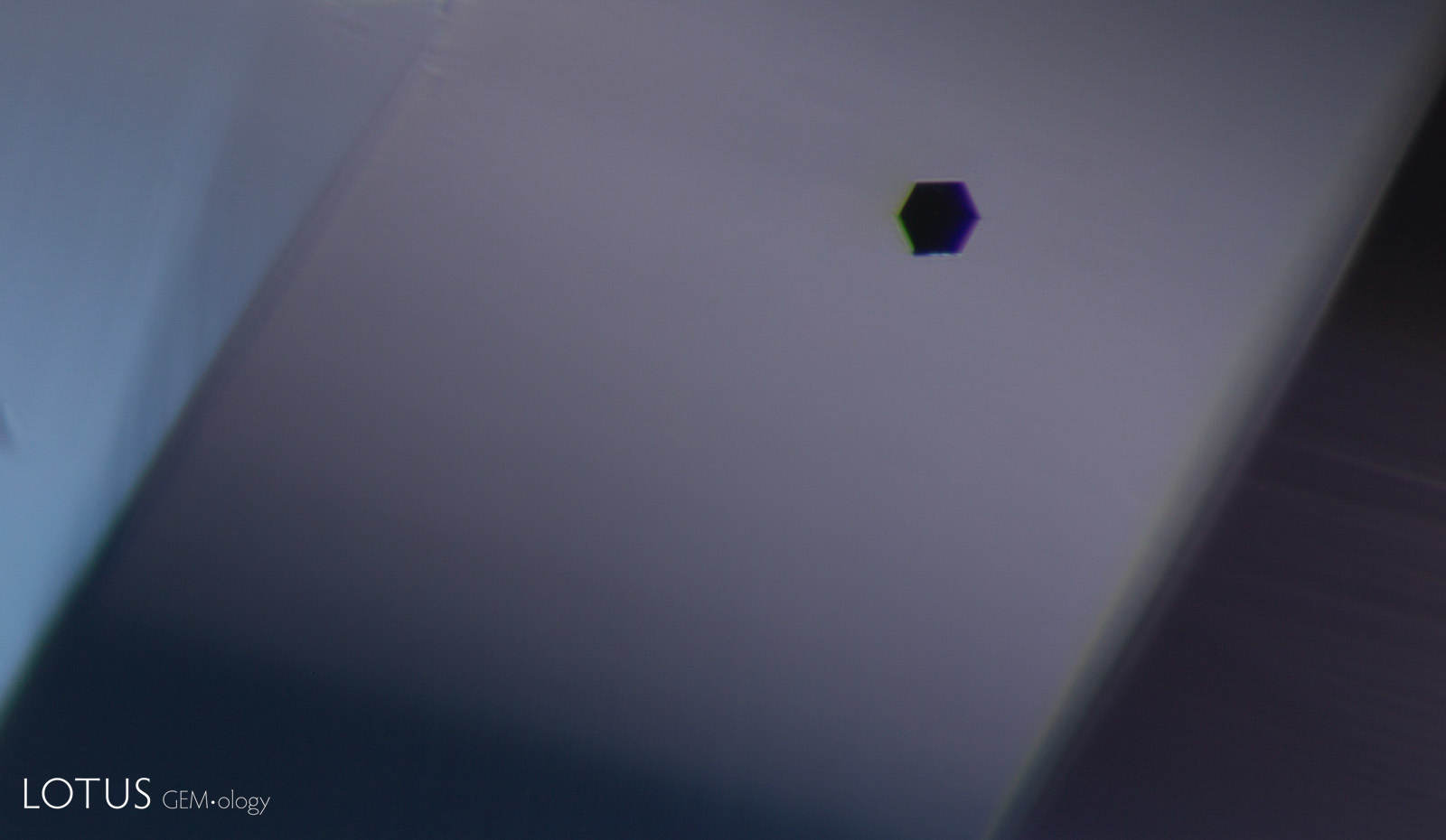
With additional fiber-optic illumination, light reflected from the same graphite crystal reveals its distinctive submetallic luster.
Natural • Zoisite • Tanzanite •
Tanzania; Merelani •
Enhancements:
None Detected (None) •
Lighting Conditions:
Dark Field + Overhead Fiber Optic
Photographer:
Natcha Rattana-anan •
Image Number:
LGI-001526
• Field of View: 1.5 mm
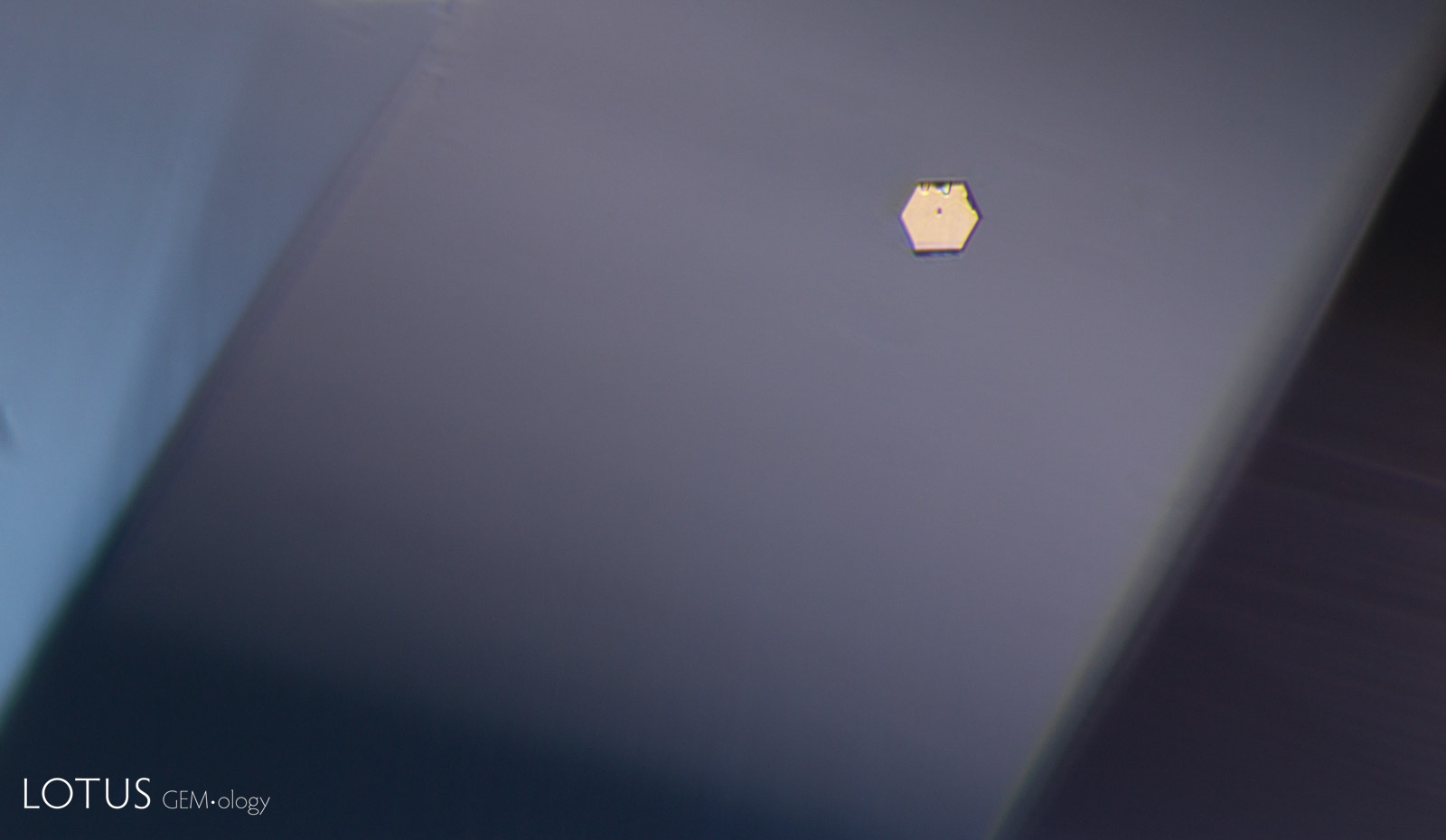
This tanzanite hosts a euhedral graphite inclusion, identified by micro-Raman spectroscopy. Its well-developed crystal habit is consistent with graphite's hexagonal crystal system. Under dark-field illumination, the inclusion appears opaque.
Natural • Zoisite • Tanzanite •
Tanzania; Merelani •
Enhancements:
None Detected (None) •
Lighting Conditions:
Dark Field
Photographer:
Natcha Rattana-anan •
Image Number:
LGI-001525
• Field of View: 1.5 mm
Gübelin, E.J. and Koivula, J.I. (1986) Photoatlas of Inclusions in Gemstones, Volume 1. Basel, Switzerland, ABC Edition, 532 pp.; RWHL*.
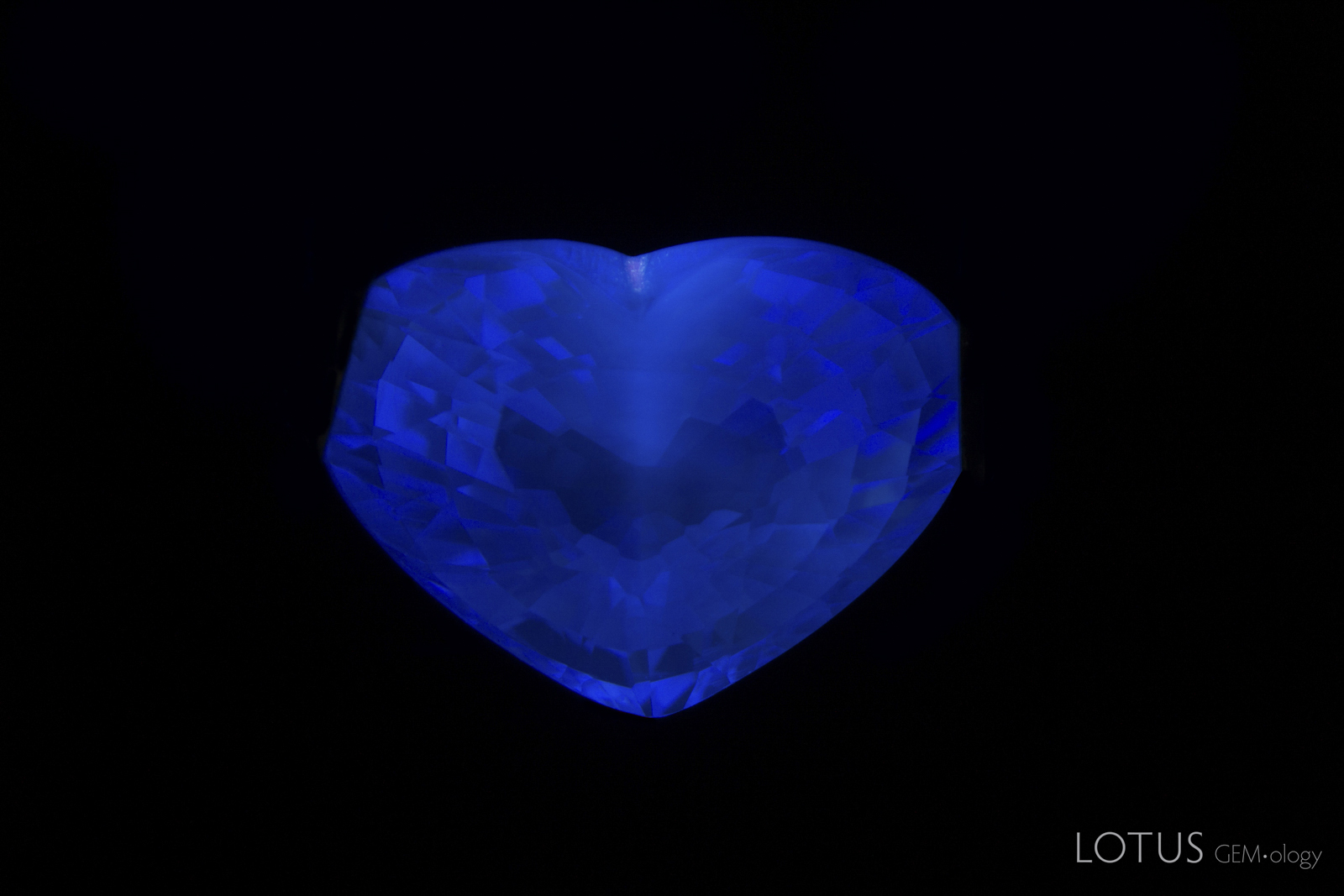
The large majority of tanzanites do not fluoresce to ultraviolet light. However, in rare cases, such as this violet tanzanite, traces of rare earth elements (REE) can create a blue fluorescence to long-wave UV radiation. The REE was detectable with PL and UV-Vis-NIR spectroscopy as well as chemical analysis.
Natural • Zoisite • Tanzanite •
Tanzania; Merelani •
Enhancements:
None Detected (None) •
Lighting Conditions:
Ultraviolet: Longwave
Photographer:
Kaylan Khourie •
Image Number:
LGI-001464
• Field of View: 20 mm
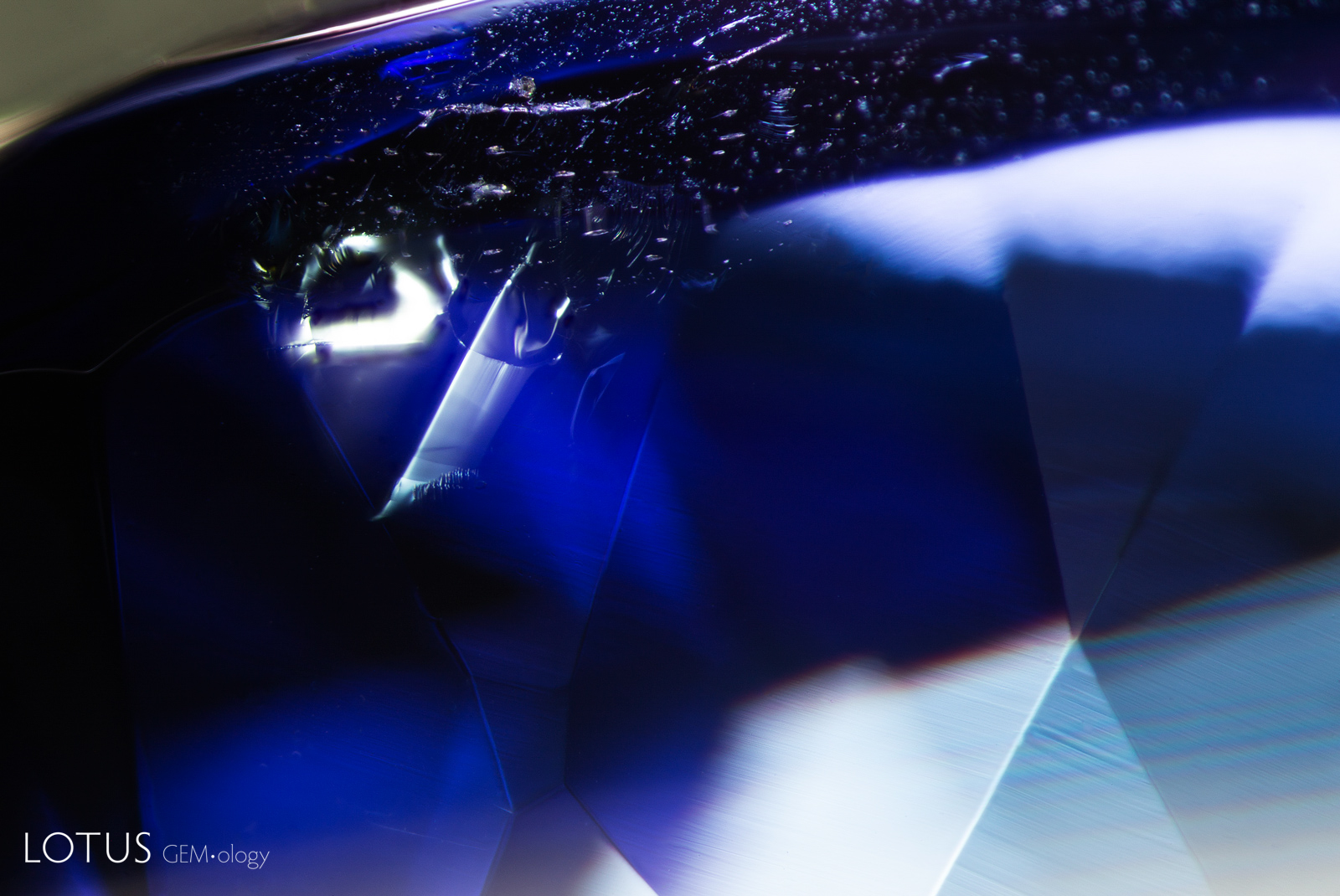
A shiny fissures is visible where a negative crystal was blown out in this heated tanzanite.
Natural • Zoisite • Tanzanite •
Tanzania; Merelani •
Enhancements:
Heat (H) •
Lighting Conditions:
Dark Field + Blue Filter + Diffuse Fiber Optic
Photographer:
E. Billie Hughes •
Image Number:
LGI-001233
• Field of View: 6 mm
Upon careful observation we spotted a glassy discoid fracture around a tube-like inclusion in this tanzanite.
Natural • Zoisite • Tanzanite •
Tanzania; Merelani •
Enhancements:
Heat (H) •
Lighting Conditions:
Dark Field + Diffuse Fiber Optic
Photographer:
E. Billie Hughes •
Image Number:
LGI-001202
• Field of View: Not recorded
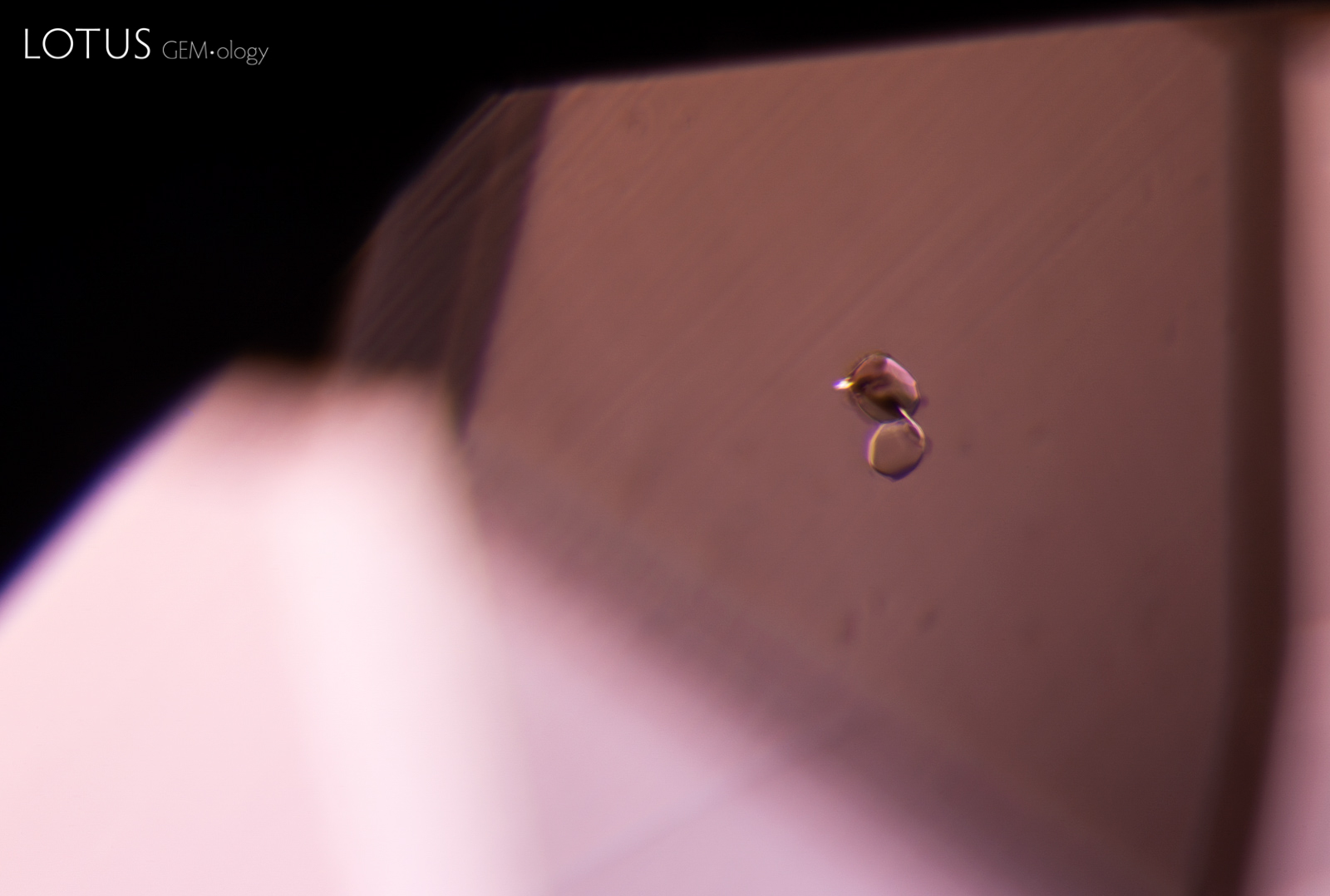
This tanzanite contained a pair of tiny, rounded crystals, which we were able to identify as diopside with micro Raman.
Natural • Zoisite • Tanzanite •
Tanzania; Merelani •
Enhancements:
None Detected (None) •
Lighting Conditions:
Dark Field
Photographer:
E. Billie Hughes •
Image Number:
LGI-001173
• Field of View: 3 mm
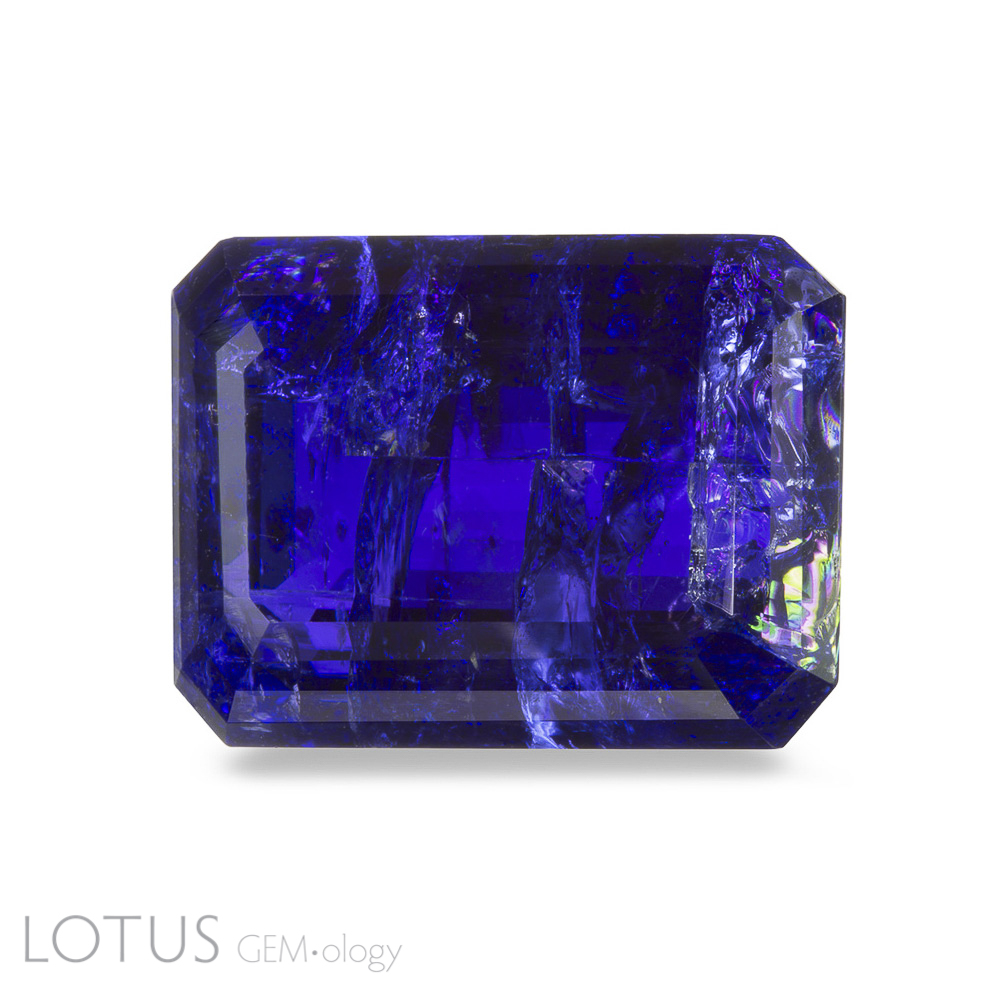
Removal of the oil/resin makes the fissures far more visible. Contrary to popular belief, the refractive index of the filler does not need to match the gem. Replacement of the air (n=1.0) with an oil or resin (n=~1.55) still provides tremendous clarity enhancement. Because filled gems allow longer light paths, there is also a noticeable improvement in color.
Natural • Zoisite • Tanzanite •
Tanzania; Merelani •
Enhancements:
None Detected (None) •
Lighting Conditions:
Diffuse Overhead
Photographer:
Ronakorn Manorotkul •
Image Number:
LGI-001116
• Field of View: Not recorded
Hughes, R.W. (2020) Oiled spinel & tanzanite — shocking revelations.
While fissure filling with oils/resins is most often seen in emerald, this treatment can also have a dramatic impact on the appearance of other gems. The above image shows a tanzanite after filling the fissures with an oil/resin.
Natural • Zoisite • Tanzanite •
Tanzania; Merelani •
Enhancements:
None Detected (None) •
Lighting Conditions:
Diffuse Overhead
Photographer:
Ronakorn Manorotkul •
Image Number:
LGI-001115
• Field of View: Not recorded
Hughes, R.W. (2020) Oiled spinel & tanzanite — shocking revelations.
Search the Complete Hyperion Database
Tanzanite inclusions may include mineral crystals, fluid inclusions, healed fissures, fractures, growth features and other internal features formed during or after crystal growth. Such features are important to gemologists because they can provide evidence useful in identifying tanzanite and understanding its geological history.
Tanzanite Inclusion Photomicrographs
The Hyperion tanzanite gallery includes microscopic features documented in natural tanzanite from Tanzania. Each entry is accompanied by descriptive information and, where available, references to the gemological literature.
What Inclusions Can Reveal About Tanzanite
Inclusions are an important part of the gemological study of tanzanite. Their form, composition and associations can provide information about the conditions under which the zoisite formed and can assist in distinguishing natural tanzanite from synthetic and imitation materials.
Hyperion combines inclusion photomicrography with supporting gemological information so that individual features can be compared with documented examples from Tanzanian tanzanite.
About Hyperion
Hyperion is the Lotus Gemology searchable inclusion database. It allows users to browse gemstone inclusions by gem type, geographic origin, treatment and keyword.