Gemology Books Bibliography

Gemology Books Bibliography

Explore books on gems, gemology, jewelry and mineralogy in Four Treasures, the Lotus Gemology reference database. This bibliography brings together matching book records from the collection, with publication details, abstracts and cover images where available.

Gemology Book References

The list below matches books concerning gemology and related subjects in the database's searchable fields. Some works cover several branches of gems, jewelry or mineralogy.
1–20 of 3,434 matching references

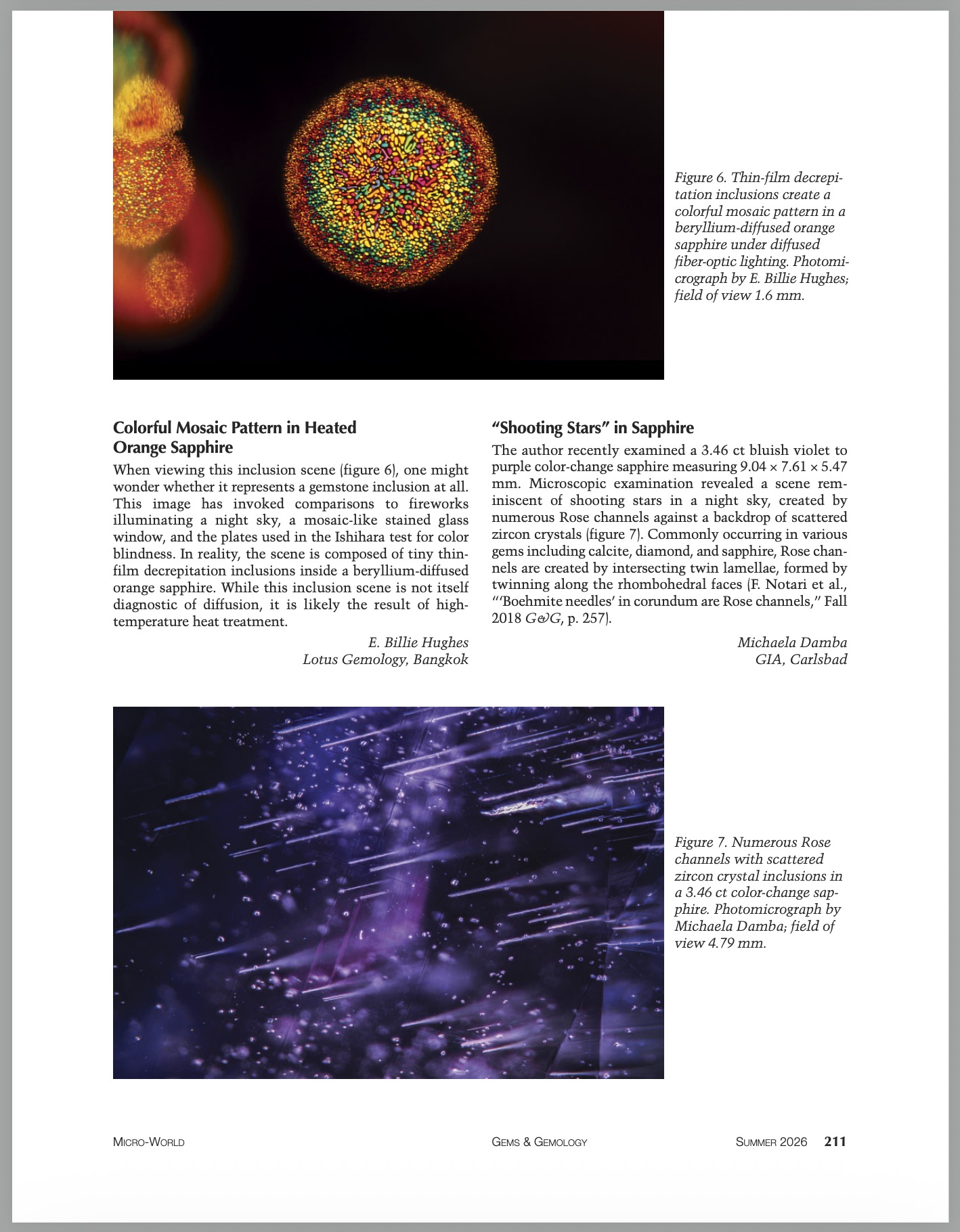
G&G Micro-World: Colorful mosaic pattern in heated orange sapphire
G&G Micro-World: Colorful mosaic pattern in heated orange sapphire

Hughes, E.B. (2026)

Journal Article · Source: Gems & Gemology · Volume: Vol. 62 · Issue: No. 2, Summer · Pages: p. 211

Abstract
The authors examined a 7.01 ct spinel reportedly from Tanzania. Under short-wave (254 nm) ultraviolet light, a small fluorescent spot was observed on the stone’s surface, caused by cut-through crystal inclusions. Micro-Raman analysis identified the inclusions as diopside, phlogopite, and edenite, forming a cluster of transparent crystals associated with a dark, opaque pyrite grain (see above, A). In reflected light, the inclusions showed luster distinct from the spinel host, with the pyrite exhibiting a golden metallic luster (see above, B). Under short-wave ultraviolet light, the crystals fluoresced in different colors: white for diopside, yellow for phlogopite, and blue for edenite (see above, C). Fluorescence from inclusions is often overlooked but can provide important identification clues.
Keywords
gems, spinel
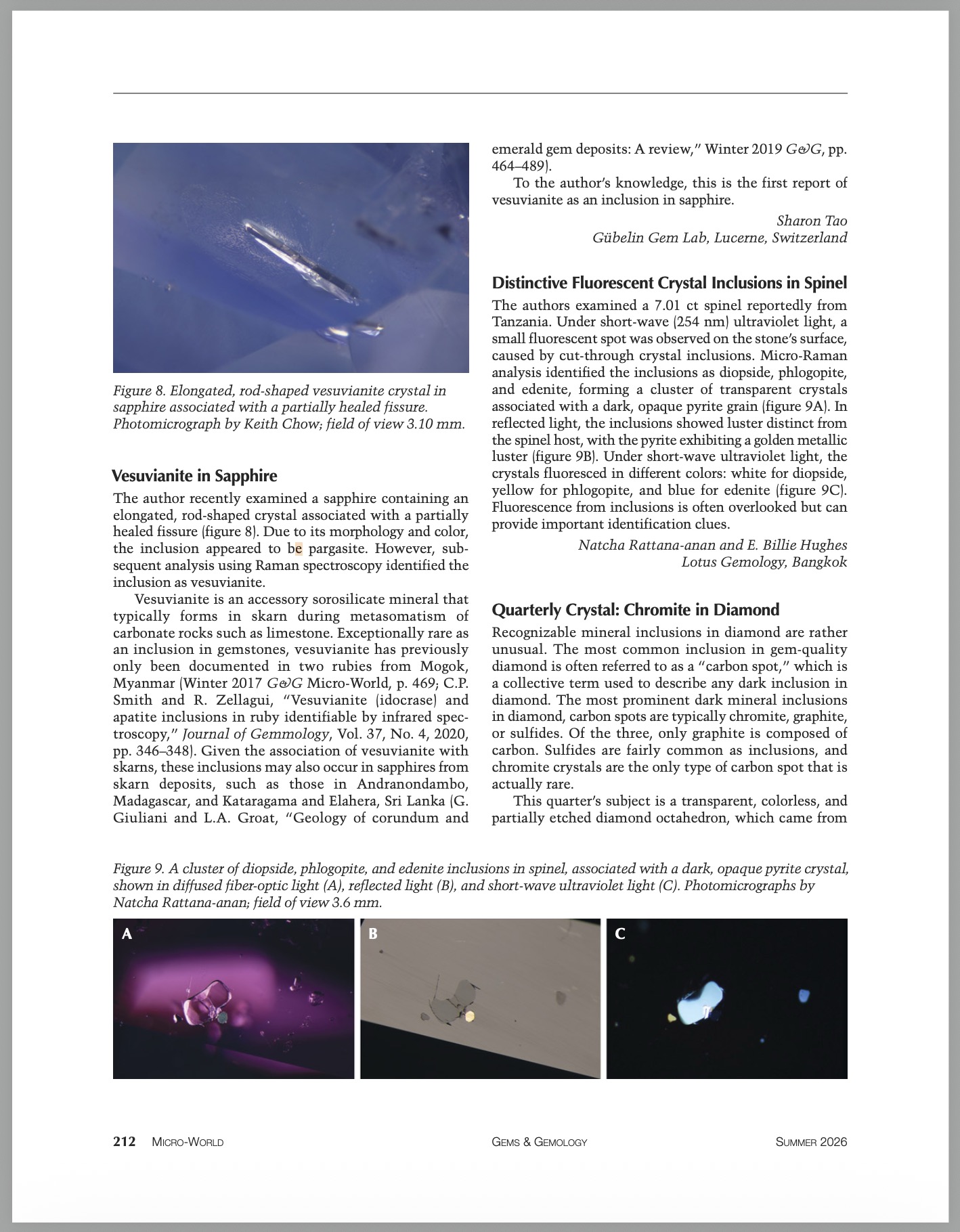
G&G Micro-World: Distinctive fluorescent crystal inclusions in spinel
G&G Micro-World: Distinctive fluorescent crystal inclusions in spinel

Rattana-anan, N. and Hughes, E.B. (2026)

Journal Article · Source: Gems & Gemology · Volume: Vol. 62 · Issue: No. 2, Summer · Pages: p. 212

Abstract
The authors examined a 7.01 ct spinel reportedly from Tanzania. Under short-wave (254 nm) ultraviolet light, a small fluorescent spot was observed on the stone’s surface, caused by cut-through crystal inclusions. Micro-Raman analysis identified the inclusions as diopside, phlogopite, and edenite, forming a cluster of transparent crystals associated with a dark, opaque pyrite grain (see above, A). In reflected light, the inclusions showed luster distinct from the spinel host, with the pyrite exhibiting a golden metallic luster (see above, B). Under short-wave ultraviolet light, the crystals fluoresced in different colors: white for diopside, yellow for phlogopite, and blue for edenite (see above, C). Fluorescence from inclusions is often overlooked but can provide important identification clues.
Keywords
gems, spinel
G&G Micro-World: Evidence of heat treatment in spinel
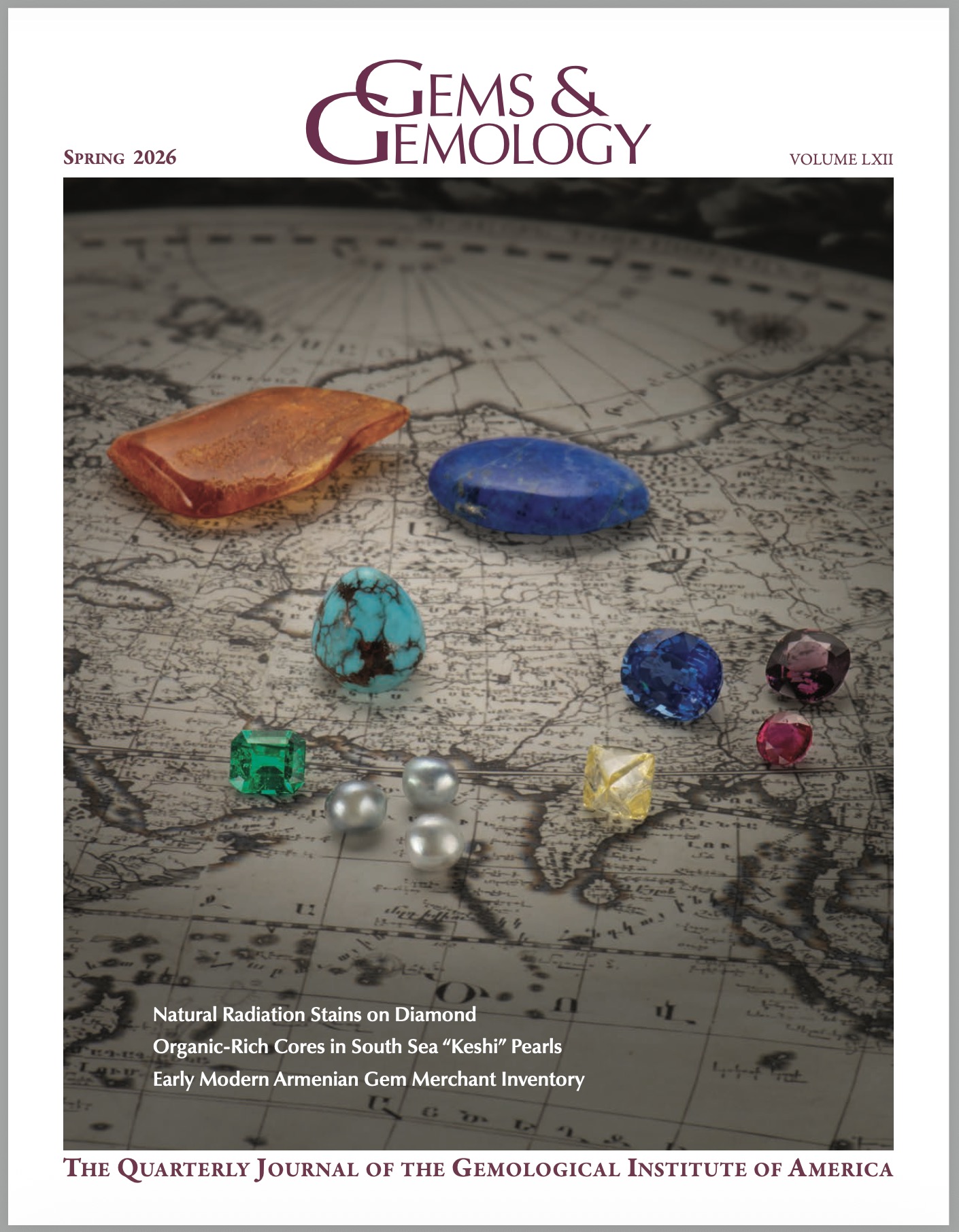
G&G Micro-World: Evidence of heat treatment in spinel

Hughes, E.B. (2026)

Journal Article · Source: Gems & Gemology · Volume: Vol. 62 · Issue: No. 1, Spring · Pages: p. 84

Abstract
The authors examined a 7.01 ct spinel reportedly from Tanzania. Under short-wave (254 nm) ultraviolet light, a small fluorescent spot was observed on the stone’s surface, caused by cut-through crystal inclusions. Micro-Raman analysis identified the inclusions as diopside, phlogopite, and edenite, forming a cluster of transparent crystals associated with a dark, opaque pyrite grain. In reflected light, the inclusions showed luster distinct from the spinel host, with the pyrite exhibiting a golden metallic luster. Under short-wave ultraviolet light, the crystals fluoresced in different colors: white for diopside, yellow for phlogopite, and blue for edenite. The study demonstrates that fluorescence from mineral inclusions, although often overlooked, can provide useful clues for their identification.
Keywords
gems, spinel, Tanzania, inclusions, diopside, phlogopite, edenite
G&G Micro-World: Mystery bubble in spinel
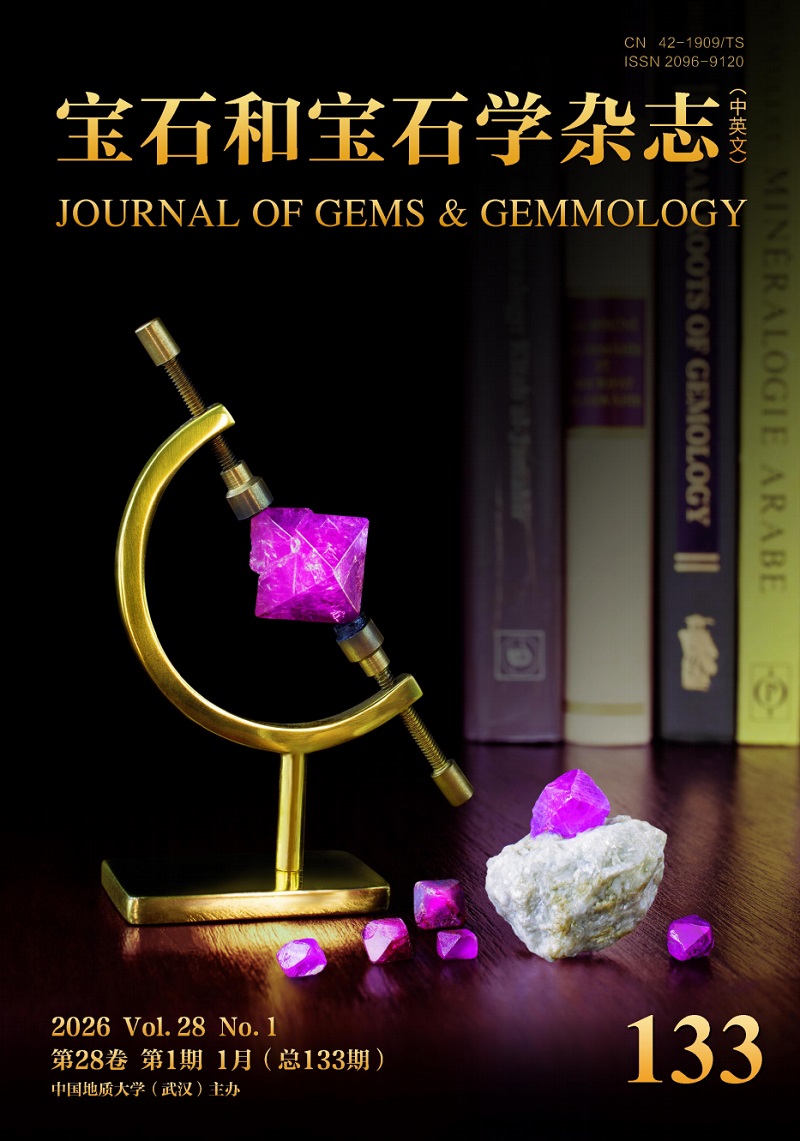
G&G Micro-World: Mystery bubble in spinel

Hughes, E.B. and Vertriest, W. (2026)

Journal Article · Source: Gems & Gemology · Volume: Vol. 62 · Issue: No. 1, Spring · Pages: p. 83–84

Abstract
Gemology is a forensic science, and often what we don’t know can be as interesting as what we do know. Recently, the authors encountered a fascinating spinel. The owner noted that the stone (reportedly from Myanmar, formerly Burma) contained an inclusion feature with a bubble inside. Closer inspection revealed a negative crystal or cavity that indeed contained a mobile bubble (see above). With gentle heating from the warmth of the microscope’s light bulb, the authors were able to see the bubble expand and contract.
Keywords
gems, spinel, Tanzania, inclusions, diopside, phlogopite, edenite
Al-Bīrūnī — The greatest gemmologist of all time?
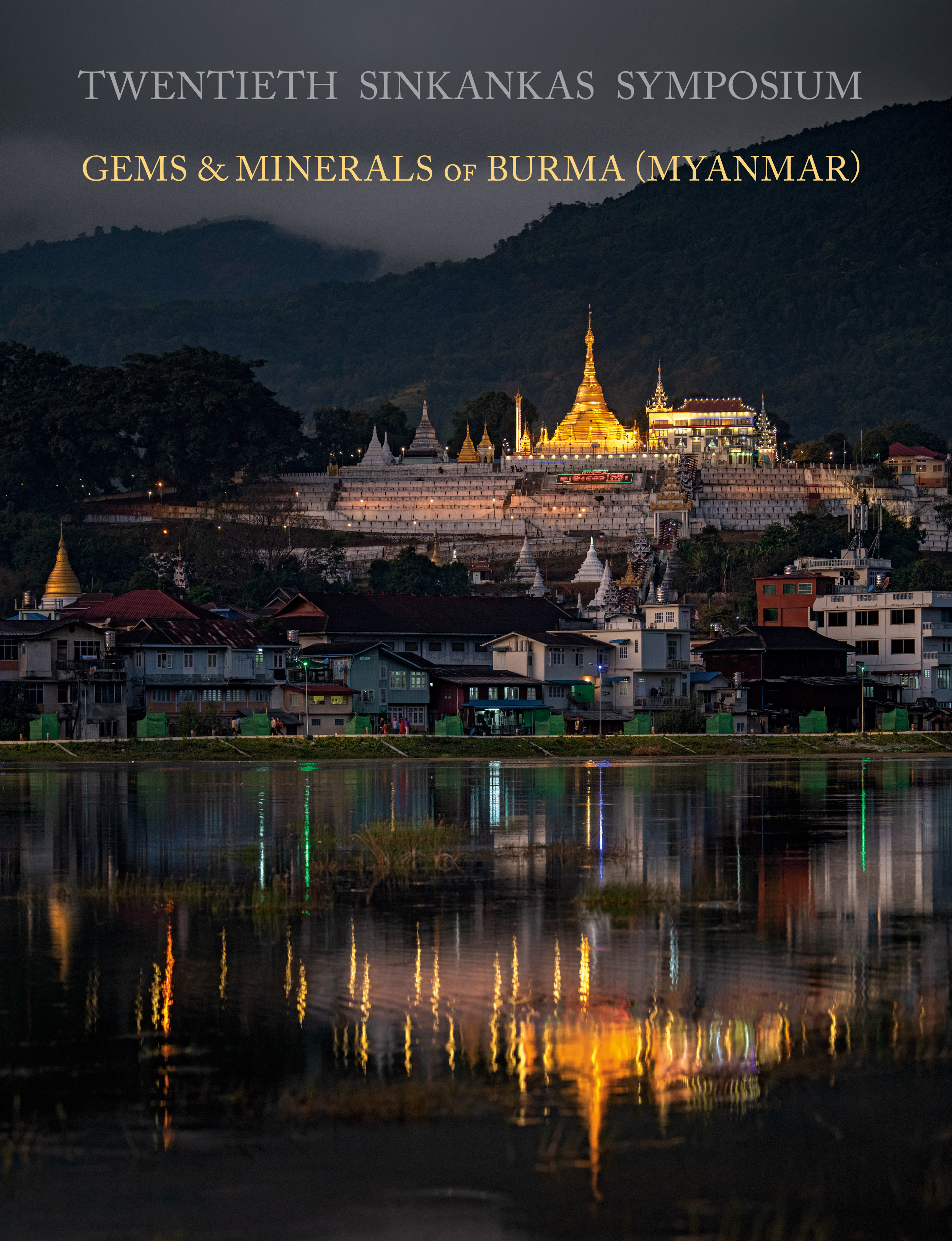
Al-Bīrūnī — The greatest gemmologist of all time?

Hughes, R.W., Thoresen, L. and Emmett, J. (2026)

Journal Article · Source: Journal of Gems & Gemmology · Volume: Vol. 28 · Issue: No. 1 · Pages: pp. 1–17

Abstract
Abū Rayḥān Muḥammad ibn Aḥmad al-Bīrūnī was born in 973 CE in what is now Uzbekistan. A polymath of the Islamic Golden Age, he distinguished himself in numerous fields, including medicine, astronomy, history, mathematics, physics, mineralogy, gemmology, encyclopedism, geography, philosophy, sociology, and travel. His vast intellectual contributions rank him among the greatest minds of any era. The author of some 145 works, tragically, many of these are now lost. Given the sheer scale and depth of his intellectual legacy, any attempt to comprehensively study al-Bīrūnī's contributions is inevitably limited and fraught with gaps. However, what we do know demonstrates that this was a remarkable man, on the order of an Aristotle or Einstein. And yet much of the world has never even heard of him. This paper will largely focus on his gemmological work while also touching on his other accomplishments.
Keywords
gems, history of gemology, Arabic mineralogy, gem prices
Broken Bangle – The blunder-besmirched history of jade nomenclature
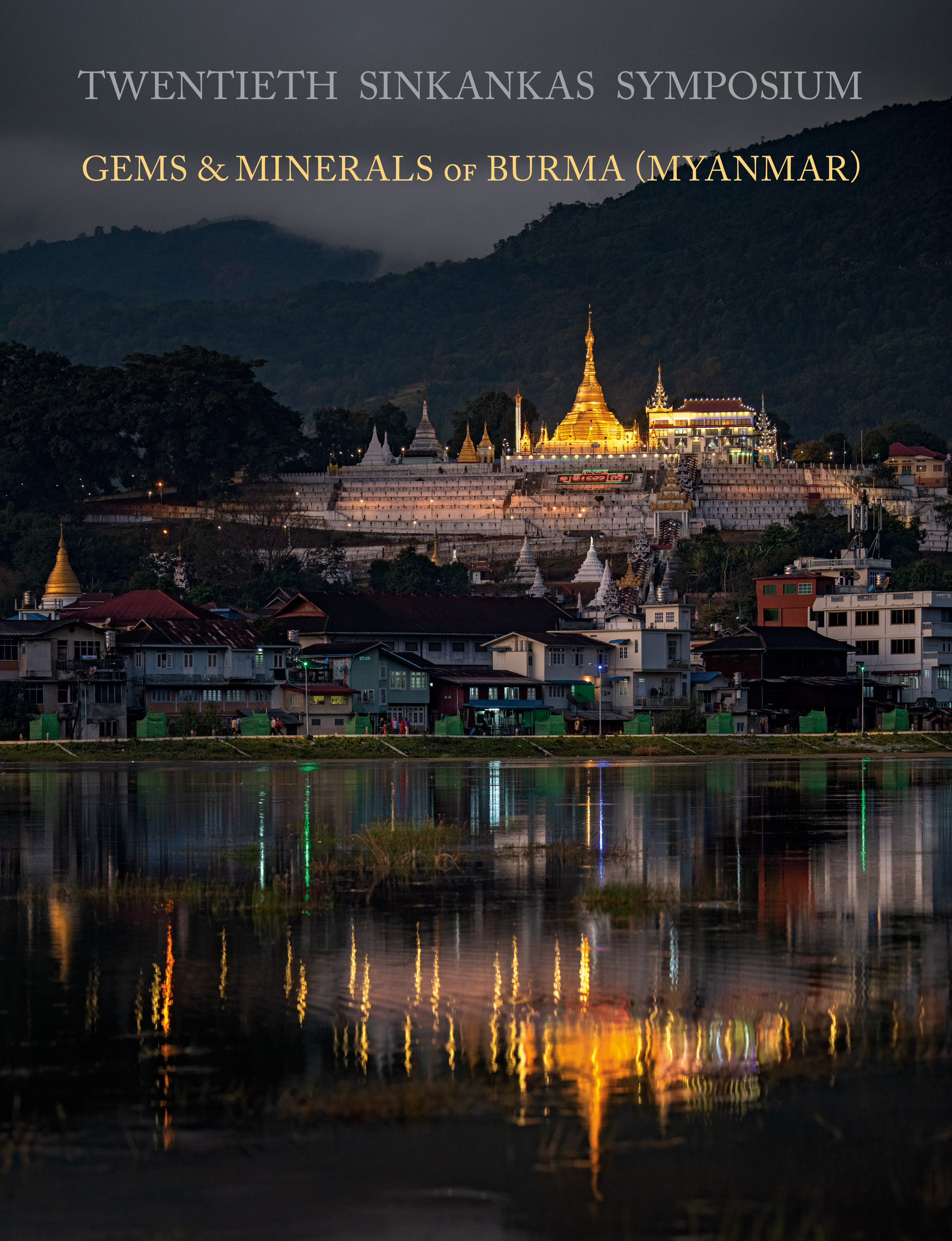
Broken Bangle – The blunder-besmirched history of jade nomenclature

Liu, S., Hughes, R.W., Zhou, Z. and Khourie, K. (2026)

Conference Paper · Source: Twentieth Sinkankas Symposium • Gems & Minerals of Burma (Myanmar) · Publisher: Pala International · Pages: pp. 56–83

Abstract
Broken Bangle | The Blunder-Besmirched History of Jade Nomenclature is an in-depth discussion of jade nomenclature and features works from the studios of some of China’s leading contemporary jade and stone carvers. The book takes readers through the entire tortuous history of jade nomenclature, detailing how the current monikers were based on misinformation and misunderstanding of the gems’ true natures. Thus, the Chinese gem yù (amphibole jade) was named “nephrite” by French mineralogist Alexis Damour in the mistaken belief it was the same as the Mesoamerican pyroxene jade that a 16th Century Spanish doctor himself misinterpreted as being used to treat kidney disease (‘nephritus’). Later, Damour created a mineral species he called “jadeite” for what was actually a gem rock already known in China as fei cui. But this gemological whodunit is much more than a dry recitation of jade nomenclature. It includes a detailed section on the occurrence and mineralogy of both yù (nephrite) and fei cui. Because jade is so intimately connected with Chinese culture, much of the Middle Kingdom’s fascinating history is also woven through its pages. Broken Bangle features dozens of color images of both historical documents and spectacular photos of contemporary jade and stone carving in China. For those whose mental picture of jade sculpture is a cliché Chinese goddess statue, prepare to have your minds blown.
Keywords
gems, jade, pyroxene jade, fei cui, Chinese history, 1766 BC-220 AD, Chinese history, 220-960, Featherwork, tian tsui, nephrite, mineralogy, history of mineralogy, jadeite, fei cui, omphacite, kosmochlor, Fischer-Other, Broken Bangle
Hyperion – Mapping hidden worlds within stones
Hyperion – Mapping hidden worlds within stones

Hughes, E.B. (2026)

Conference Paper · Source: Twentieth Sinkankas Symposium • Gems & Minerals of Burma (Myanmar) · Publisher: Pala International · Pages: pp. 51–55

Abstract
Portfolio of photomicrographs from Lotus Gemology.
Keywords
gems, corundum, inclusions.5, Burma.12, Mogok, ruby, sapphire, spinel
G&G Micro-World: Metal sulfide in spinel
G&G Micro-World: Metal sulfide in spinel

Hughes, E.B. (2025)

Journal Article · Source: Gems & Gemology · Volume: Vol. 61 · Issue: No. 4, Winter · Pages: p. 404

Abstract
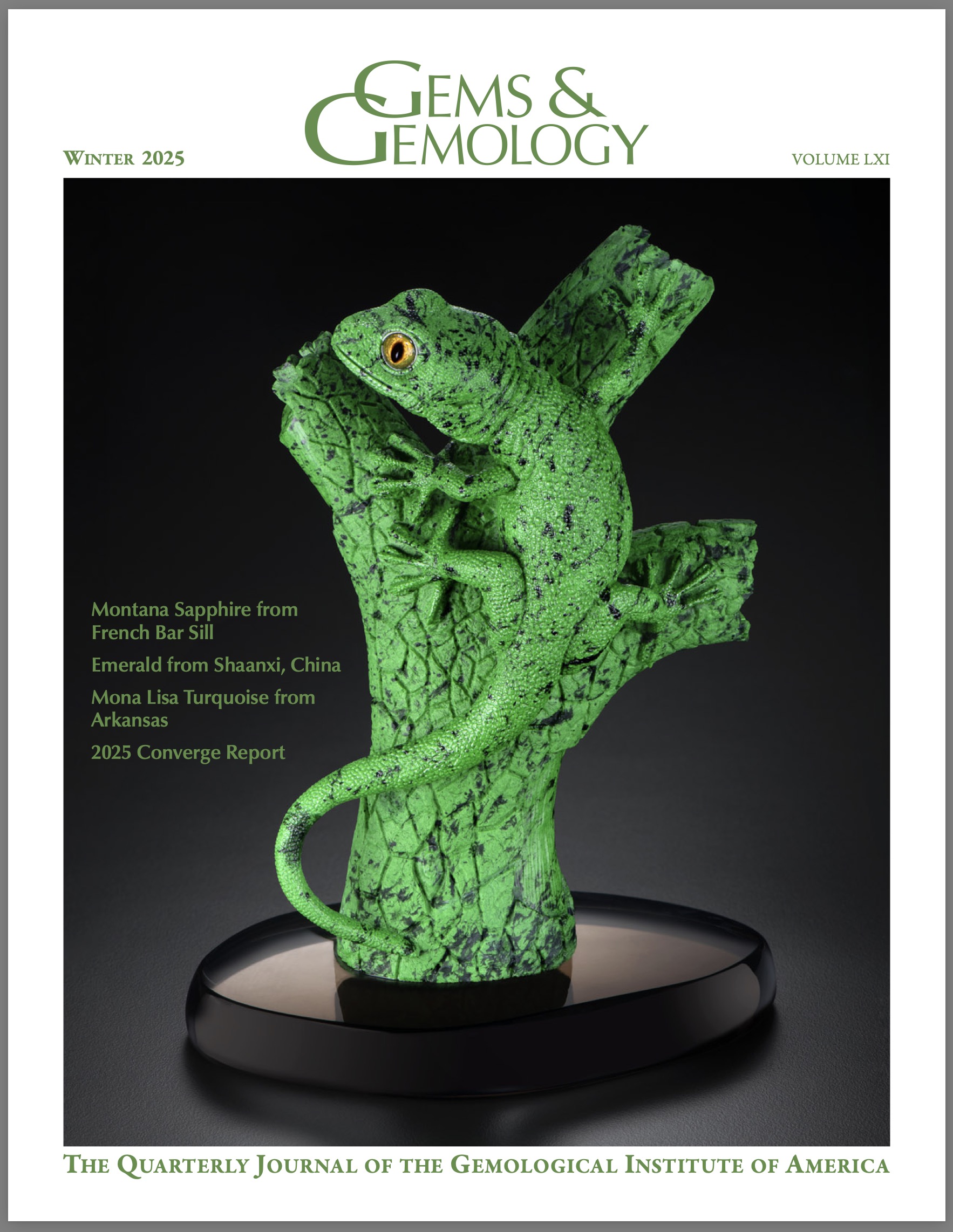
Recently, a 3.14 ct pink spinel was submitted to the Lotus Gemology laboratory, with encouragement from the owner to examine its inclusions. When viewed under the microscope, the spinel did not disappoint. Suspended within was a richly textured, opaque metallic crystal (see above). Although attempts were made to identify the inclusion using micro-Raman spectroscopy, its identity remained inconclusive. However, based on the crystal’s appearance, it was likely a metal sulfide. Similar inclusions in spinel have been reported as pyrite (E.B. Hughes et al., “Spinel inclusions: An exercise in aesthetics,” InColor, No. 43, 2019, pp. 66–73; N. Renfro et al., “Micro-features of spinel,” Spring 2021 G&G, pp. 46–49).
Keywords
gems, spinel, inclusions
G&G Micro-World: Blooming bouquet—Thin films in Russian emerald
G&G Micro-World: Blooming bouquet—Thin films in Russian emerald

Hughes, E.B. (2025)

Journal Article · Source: Gems & Gemology · Volume: Vol. 61 · Issue: No. 4, Winter · Pages: pp. 400–401

Abstract
Some gems are enchanting both outside and in. Recently, the Lotus Gemology laboratory received an interesting submission of a 78.01 ct carved Russian emerald. According to the client, the emerald was carved by gemstone engraver Michael Peuster and inspired by art nouveau artist Alphonse Mucha. The woman depicted holds blooming flowers, symbolizing the arrival of spring (figure 1). Microscopic examination revealed delicate, bouquet-like thin film inclusions on the back of the carving (figure 2). Iridescent thin films are frequently observed in emeralds from Russia, and this specimen showcased several striking examples. It was a delightful coincidence to find that the inclusion scene in this stone echoed the floral motif carved into its exterior.
Keywords
gems, beryl, emerald, Russia, Malysheva, Russian beryl, emerald mines, Ural Mountains, inclusions
Broken Bangle | The Blunder-Besmirched History of Jade Nomenclature
Broken Bangle | The Blunder-Besmirched History of Jade Nomenclature

Liu, S., Hughes, R.W., Zhou, Z. and Khourie, K. (2024)

Book · Publisher: Lotus Publishing | RWH Publishing · Pages: 120 pp.

Abstract
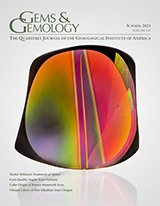
Broken Bangle | The Blunder-Besmirched History of Jade Nomenclature is an in-depth discussion of jade nomenclature and features works from the studios of some of China’s leading contemporary jade and stone carvers. The book takes readers through the entire tortuous history of jade nomenclature, detailing how the current monikers were based on misinformation and misunderstanding of the gems’ true natures. Thus, the Chinese gem yù (amphibole jade) was named “nephrite” by French mineralogist Alexis Damour in the mistaken belief it was the same as the Mesoamerican pyroxene jade that a 16th Century Spanish doctor himself misinterpreted as being used to treat kidney disease (‘nephritus’). Later, Damour created a mineral species he called “jadeite” for what was actually a gem rock already known in China as fei cui. But this gemological whodunit is much more than a dry recitation of jade nomenclature. It includes a detailed section on the occurrence and mineralogy of both yù (nephrite) and fei cui. Because jade is so intimately connected with Chinese culture, much of the Middle Kingdom’s fascinating history is also woven through its pages. Broken Bangle features dozens of color images of both historical documents and spectacular photos of contemporary jade and stone carving in China. For those whose mental picture of jade sculpture is a cliché Chinese goddess statue, prepare to have your minds blown.
Keywords
gems, jade, pyroxene jade, fei cui, Chinese history, 1766 BC-220 AD, Chinese history, 220-960, Featherwork, tian tsui, nephrite, mineralogy, history of mineralogy, jadeite, fei cui, omphacite, kosmochlor, Fischer-Other, Broken Bangle
G&G Microworld: Guest in garnet: Metal sulfide?
G&G Microworld: Guest in garnet: Metal sulfide?

Hughes, E.B. (2023)

Journal Article · Source: Gems & Gemology · Volume: Vol. 59 · Issue: No. 2, Summer · Pages: pp. 226–227

Abstract
Describes an unusual inclusion in garnet.
Keywords
gems, spinel, synthetic spinel, spinel treatments, heat treatment, spinel diffusion, nickel diffusion
Micro-World: Apatite in hackmanite

Micro-World: Apatite in hackmanite

Hughes, E.B. (2023)

Journal Article · Source: Gems & Gemology · Volume: Vol. 59 · Issue: No. 1, Spring · Pages: p. 85

Abstract
Hackmanite, Na₈Al₆Si₆O₂₄(Cl₂,S), is a variety of sodalite notable for its tenebrescence. When kept in darkness, samples can fade to pale purple and even gray or translucent to opaque white. When exposed to long-wave ultraviolet illumination, they can display a strong orange fluorescence reaction. After exposure to sunlight or artificial light with a UV component, samples can quickly develop a much stronger color. One hackmanite sample recently examined by the author (figure 1) showed this phenomenon. Another hackmanite was submitted that displayed an interesting elongated white inclusion (figure 2, left) that was identified by micro-Raman as apatite. As we examined the sample in the microscope, we tried exposing it to a 6-watt long-wave UV light for approximately one second. Almost immediately, a change was observed. The hackmanite developed a more vibrant purple color that is clearly displayed in figure 2 (right).
Keywords
gems, inclusions, hackmanite, apatite
A canary in the ruby mine: Low-temperature heat treatment experiments on Burmese ruby
A canary in the ruby mine: Low-temperature heat treatment experiments on Burmese ruby

Hughes, E.B. and Vertriest, W. (2022)

Journal Article · Source: Gems & Gemology · Volume: Vol. 58 · Issue: No. 4, Winter · Pages: pp. 400–423

Abstract
Detection of heat treatment below 1200°C in ruby and sapphire can present challenges to gemologists, as alterations to the material are often subtle. In this study, the authors heated Burmese ruby samples from Mogok, Myanmar, at temperatures ranging from 600° to 1500°C. The samples were documented using macrophotography, photomicrography of inclusions, ultraviolet fluorescence imaging, and spectroscopic analysis (Raman, ultraviolet/visible/near-infrared, and infrared) to record any changes, with a focus on features that could help detect heat treatment. A wide variety of solid inclusions, including calcite, mica, spinel, and zircon, were found in Mogok ruby. Many of those were found to be sensitive to heat treatment with regard to morphology and phase transition; their reactions varied depending on a number of factors such as size, distance from the surface, and species. Microscopic examination provided useful visual indications of heat treatment, even at lower temperatures. Raman analysis of calcite and spinel inclusions also proved valuable in providing complementary evidence of low-temperature heat treatment.
Keywords
gems, corundum, Burma.12, treatments.6, Mogok, ruby, heat treatment, inclusions.5
Gem News International: Yellow sapphires with unstable color
Gem News International: Yellow sapphires with unstable color

Hughes, E.B. (2022)

Journal Article · Source: Gems & Gemology · Volume: Vol. 58 · Issue: No. 2, Summer · Pages: pp. 259–260

Abstract
In recent years, one concern our laboratory has heard from clients and from other gemologists is the issue of color stability in corundum. Some sapphires, particularly those with a strong yellow component (including padparadscha sapphire), contain unstable color centers that may fade when the stone is exposed to light and/or heat (K. Nassau and G.K. Valente, “The seven types of yellow sapphire and their stability to light,” Winter 1987 G&G, pp. 222–231). We regularly test for this in the laboratory by conducting a fade test. Most of the sapphires we encounter that have an unstable color are unheated stones. Recently an orange sapphire of approximately 10 ct was submitted for testing (figure 1). Microscopic examination revealed signs of heat treatment, with partially dissolved silk, several glassy discoids (figure 2), and melted crystals (figure 3). A fade test was conducted by placing the stone approximately 5 cm under a 120-watt incandescent spotlight for at least an hour, and a dramatic difference was observed. The color had changed from orange to a vivid yellow (again, see figure 1). Under normal conditions, high-temperature heat treatment (at least 1200–1300°C) will bleach any color centers that might be present. This suggests that the orange color was activated after the heat treatment. It is possible that this occurred either by subjecting the stone to artificial irradiation or by placing it in sunlight (Nassau and Valente, 1987). However, we are unable to state definitively what process was used to activate the orange color. Several weeks later, we tested another yellow sapphire of approximately 18 ct (figure 4). In this instance, the stone’s features were consistent with those of unheated sapphire. Again, a fade test was performed with the 120-watt spotlight, which mildly warmed the stone to approximately 100°C. Its color also faded after the fade test, and the owner was informed. The owner explained that they had previously put the sapphire in direct sunlight, which would have brought the color back to what was likely its stable state, a process described by Nassau. To test this, we placed the stone in direct sunlight for 30 minutes, and the more intense yellow color did return. Unfortunately, placing the gem in direct sunlight behind a window in our office did not have the same effect. Upon seeing the color return after being placed in direct sunlight, we decided to try another fade test, this time using a light source that would not warm up the stone. An XD-300 xenon light source was used, and the stone was placed within 5 cm of a fiber-optic light guide connected to this source. After exposure to this cooler light source for over an hour, the color did not fade. This suggests that the mild heat of the 120-watt spotlight, not just the light, faded the stone’s color and that the more intense yellow color displayed after exposure to sunlight could indeed be considered the stable color. We have since adjusted our fade tests to be light-only by switching to this cooler light source to avoid the heat generated with the 120-watt spotlight. Our experience with these sapphires has been a fascinating case study in the color stability of yellow sapphire. This example reinforces the importance of considering all possibilities when testing stones in the laboratory. We do not fully understand the exact causes of these changes, and much remains to be learned.
Keywords
gems, corundum, treatments.6, Sri Lanka.12
Gem News International: Ruby • An expensive mistake
Gem News International: Ruby • An expensive mistake

Hughes, R.W. (2022)

Journal Article · Source: Gems & Gemology · Volume: Vol. 58 · Issue: No. 2, Summer · Pages: pp. 258–259

Abstract
Gemologists at Bangkok’s Lotus Gemology recently received a 6 ct ruby for identification. Declared to be an untreated ruby from Mozambique, the stone featured a superb vivid red color of the type often termed “pigeon’s blood” in the trade. As it was also of good clarity and well cut, it was clear we were dealing with a gem of potentially high value. The UV-Vis-NIR spectrum was typical for ruby or synthetic ruby. The infrared spectrum revealed peaks at 3309 and 3232 cm⁻¹. The 3232 cm⁻¹ peak generally indicates that a stone has been subjected to artificial heat treatment. We proceeded to examine the gem under the microscope, where we found two additional pieces of evidence of heat treatment. The first feature was rutile silk typical of rubies from East Africa. In these stones, the silk consists of high-relief needles of rutile with attached unidentified “daughter” crystals of another substance of lower relief. In heat-treated stones, the daughter crystals will sometimes show partial breakdown (“GIA Lab Reports on Low-Temperature Heat Treatment of Mozambique Ruby,” GIA Research News, April 28, 2015). Small areas of breakdown in the form of irregular white patches were found in this stone (figure 1). But the most obvious evidence of heat treatment was the presence of spall marks (figure 2), which are solidified droplets of material on the surface that melted or were dissolved during heating. These spall marks across the stone showed that the ruby had been heated after cutting and had not been repolished following treatment. We can only guess at the reasons for heating such a valuable gem, but there is no doubt that this particular roll of the dice was a losing gamble because the potential improvement in appearance was slight compared to the large price difference between untreated and heated ruby. We concluded that this was a heat-treated Mozambique ruby.
Keywords
gems, corundum, treatments.6, Mozambique.12
G&G Microworld: Blue apatite in Tanzanian garnet
G&G Microworld: Blue apatite in Tanzanian garnet

Hughes, E.B. (2022)

Journal Article · Source: Gems & Gemology · Volume: Vol. 58 · Issue: No. 2, Summer · Pages: pp. 226–227

Abstract
In the micro-world, it can be challenging to identify inclusions based on sight alone, as many minerals can have a similar appearance. Occasionally, though, some inclusions have characteristic features that can aid in their identification. Recently this author had the opportunity to observe a pyrope-spessartine garnet, reportedly from Lindi Province, Tanzania, that contained blue crystal inclusions ensconced among intersecting needles (see above). Analysis with micro-Raman spectroscopy identified the inclusions as apatite. Apatites are known for their bright blue hues, and these inclusions offered an attractive example. While this sample hails from Tanzania, blue apatite has previously been reported as an inclusion in garnet from Madagascar (Winter 2020 G&G Micro-World, p. 526). These inclusions’ distinctive appearance may help gemologists recognize the material in other samples, but further analysis should be performed to identify them definitively.
Keywords
gems, garnet, inclusions, apatite
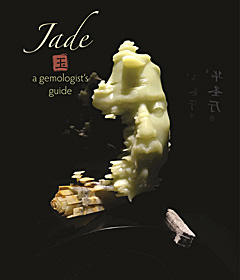
Jade • A Gemologist’s Guide

Jade • A Gemologist’s Guide

Hughes, R.W. (2022)

Edited Book · Publisher: Lotus Publishing · Pages: 534 pp.

Abstract
The study of jade is unlike that of any other gem, trespassing across conventional boundaries, particularly those of the gemological and mineralogical realm. Despite the march of mineralogical orthodoxy and conformity, the word “jade” is a fist in the air of protest, crying out not for further reduction and definition, but an expansion of the mineralogical canon to include the cultural aspects of human civilization and life. Because jade is so much more than a simple census of atoms, valence states, and places of residence. Jade is a lexicon liberator. While the literature on jade is vast, perhaps greater than any other gem, there is a distinct lack of a volume in English that treats jade as a gemological material. This book is designed to fill that gap, with extensive information on the history, sources, appraisal and identification of both treated and imitation jades. All of this is together in a single volume for the first time, making it a must-have for collectors, dealers, gemologists, appraisers, curators and anyone else with an interest in this fascinating gem. An understanding of jade is not limited to the technical or exacting; it also incorporates a feeling for the cultural, textural, and ephemeral qualities that make the study of this gem unlike any other. This volume will not just fill the “traditional gemological” gap, but will open readers’ eyes to a world beyond. Because jade is so much more…
Keywords
gems, jade, archaic jade, China, Chinese jade carving, nephrite, Xinjiang, Hetian, Khotan, Burma, Myanmar, Hpaken, Guatemala, USA, California, Alaska, Canada, BC, British Columbia, Mughal, India, New Zealand, Maori jade, Fischer-Other, Broken Bangle

Building a Gemological Library

Gemological books range from general identification manuals and textbooks to specialized works on individual gems, mineralogy, jewelry, treatments, synthesis, history and gem-producing regions.

For a curated selection of particularly useful books, read The Gemologist's Core Library — Classic Books on Gemology, Jewelry and Mineralogy.

About Four Treasures

Four Treasures is Lotus Gemology's freely accessible gemological reference database. Use the full database to search by author, title or keyword and explore literature on gemology, mineralogy, jewelry and related fields. Where available, hyperlinks on titles may lead directly to the full publication.

Search the Complete Four Treasures Database