Gemology Books Bibliography

Gemology Books Bibliography

Explore books on gems, gemology, jewelry and mineralogy in Four Treasures, the Lotus Gemology reference database. This bibliography brings together matching book records from the collection, with publication details, abstracts and cover images where available.

Gemology Book References

The list below matches books concerning gemology and related subjects in the database's searchable fields. Some works cover several branches of gems, jewelry or mineralogy.

21–40 of 3,434 matching references
Gem News International: Black star sapphire with dual treatments

Gem News International: Black star sapphire with dual treatments

Hughes, R.W., Hughes, E.B. and Manorotkul, W. (2020)

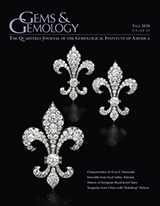
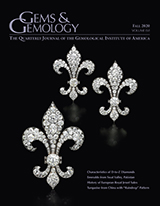
Journal Article · Source: Gems & Gemology · Volume: Vol. 56 · Issue: No. 3, Fall · Pages: pp. 442–443

Abstract
A large black star sapphire was brought in for testing. Two large pits on the base were carefully filled with brown dopping varnish. After removal of the varnish with alcohol, it was found that a large portion of the base had been filled with a lead glass.
Keywords
gems, corundum, Thailand.12, treatments.6
FTIR in gem testing • A pink sapphire lesson

FTIR in gem testing • A pink sapphire lesson

Hughes, R.W. and Manorotkul, W. (2020)

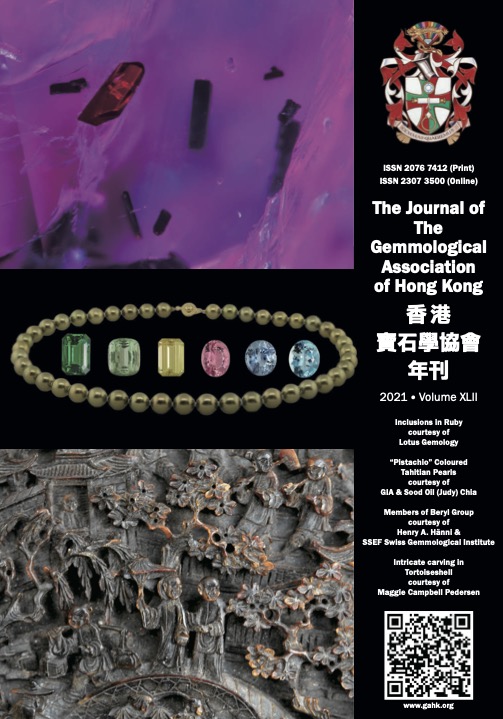
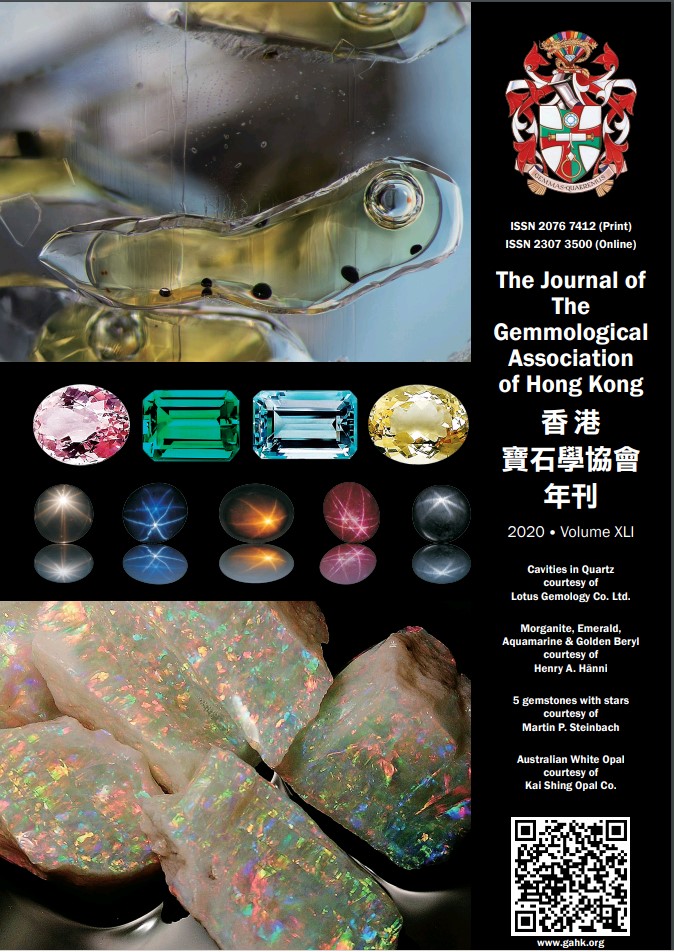
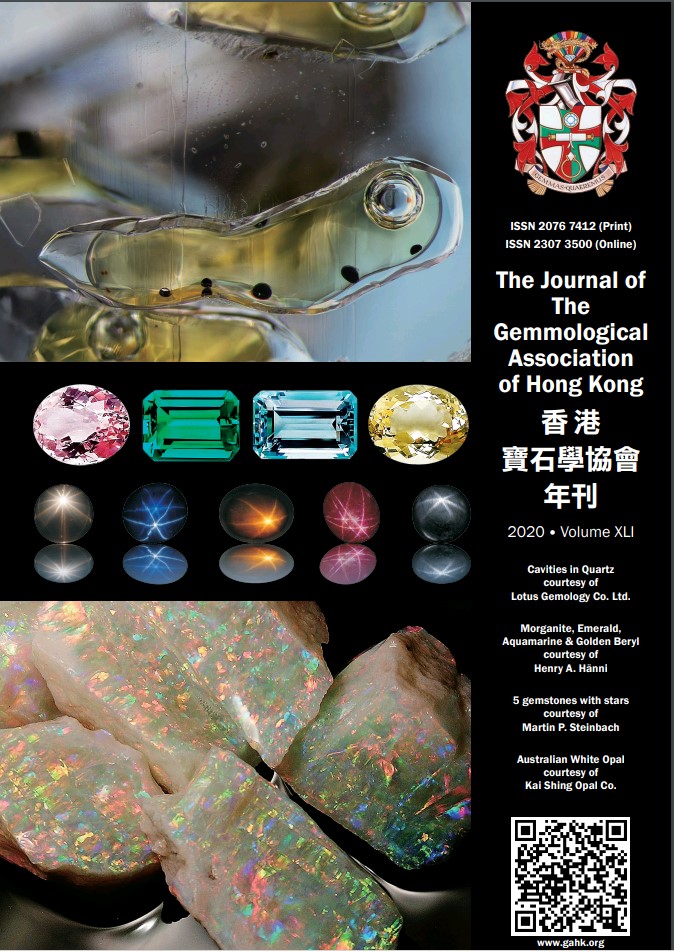
Journal Article · Source: Journal of the Gemmological Association of Hong Kong · Volume: Vol. 41 · Pages: pp. 61–63

Abstract
A discussion of DRIFTS vs the Beam Condenser FTIR attachment in the testing of pink sapphire. The DRIFTS accessory is generally much better at unmasking heat treatment in ruby and sapphire.
Keywords
gems, corundum, color.4, treatments.6
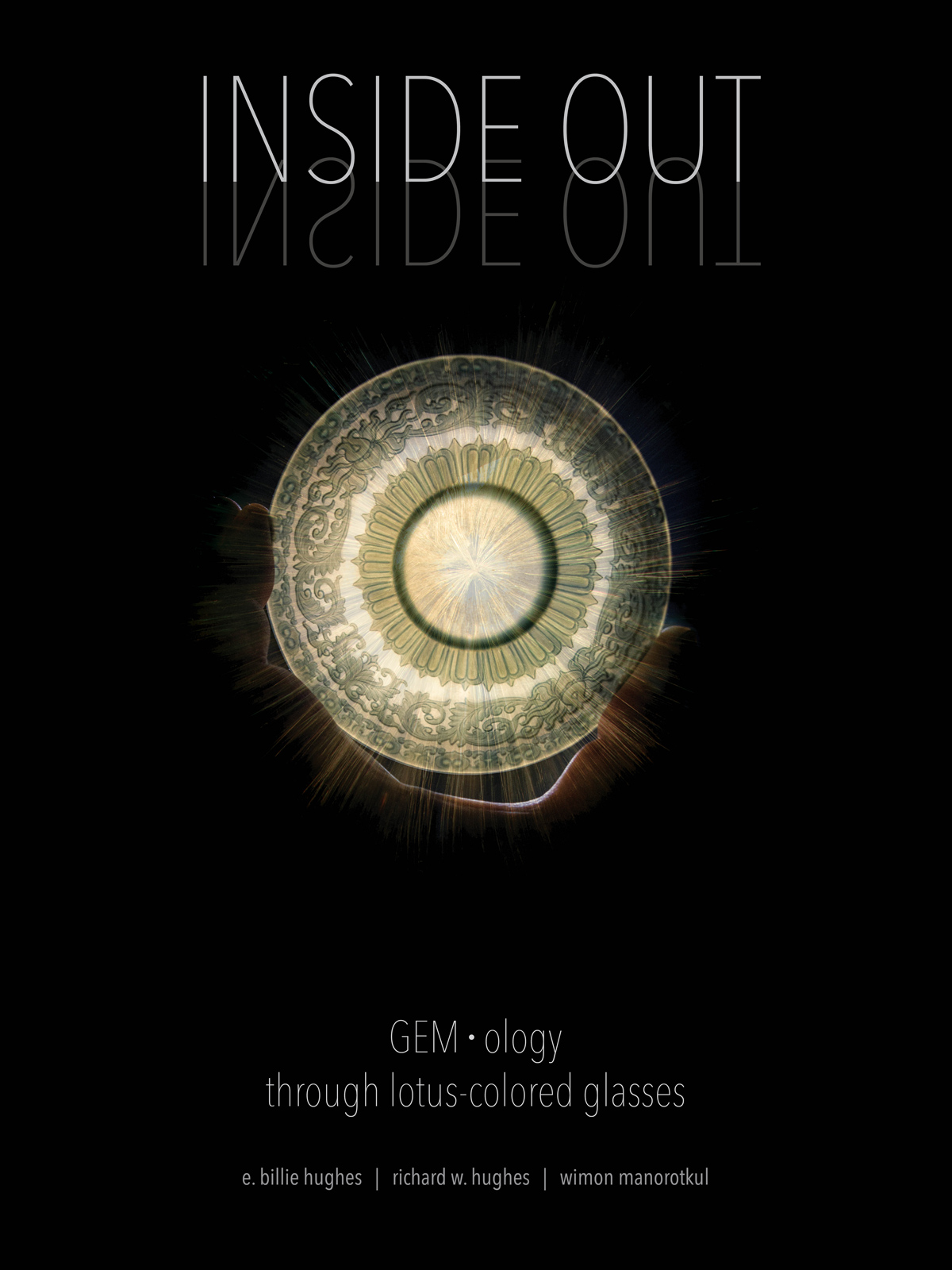
Inside Out: GEM•ology Through Lotus-Colored Glasses

Inside Out: GEM•ology Through Lotus-Colored Glasses

Hughes, E.B., Hughes, R.W. and Manorotkul, W. (2020)

Book · Publisher: Lotus Publishing · Pages: 152 pp. · Language: In English and Simplified Chinese

Abstract
From the dawn of time, precious stones have both attracted and fascinated humans in ways that few other items could. For while objects of desire are found throughout the natural world, physical beauty is too often ephemeral. From the allure of a man, woman, flower or butterfly, through the fleeting moments of a sunset, there is little that lasts and practically nothing that can be passed down to our descendants. The exception is precious stones. Not only are they the most durable creations of Mother Nature, but their visual splendor is truly eternal. This book presents a completely fresh approach to the subject. Dubbing it humanistic gemology, the authors take readers around the world, showing the places they have explored in their search for gems, along with the people and cultures encountered along the way. Within this volume, remarkable photographs of the human world are interwoven with images of the microscopic realm of the gems themselves. In a lifetime beset by time control, where living is broken into ever smaller bits, as you browse through these pages suddenly you plunge into a domain of frozen time, one that affords vistas of millions or even billions of years. For jewels offer not just superficial beauty, but a window on the primordial forces that birthed both our planet and universe. Inside Out – Gemology Through Lotus-Colored Glasses represents a fascinating new direction for gemology, linking the external and internal worlds of precious stones for the first time.
Keywords
gems, gemology, ruby, sapphire, jade, inclusions.5, corundum, garnet, quartz, China, Tibet, Thailand, Burma, Myanmar, Sri Lanka, Inner Mongolia, India, Madagascar, Mozambique, Tanzania, Rwanda, East Africa, Greenland
Gem News International: Oiled tanzanite

Gem News International: Oiled tanzanite

Hughes, R.W. (2020)

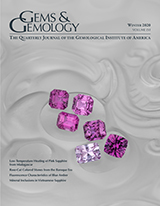
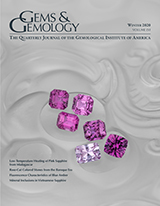
Journal Article · Source: Gems & Gemology · Volume: Vol. 56 · Issue: No. 4, Winter · Pages: pp. 552–553

Abstract
Over the past five years, gemologists at Bangkok’s Lotus Gemology have seen increasing numbers of what we might call “non-traditionally” oiled gems. This is particularly true of, but not limited to, Burmese gems such as ruby, sapphire, and spinel. But it is important to note that any gem with surface-reaching fissures can be oiled, often with dramatic improvements in apparent clarity. Cuprian and rubellite tourmalines are also frequently enhanced in this way. Recently we received a faceted tanzanite weighing more than 100 carats for testing. As is our practice for non- emeralds exhibiting fissure-filling clarity enhancement, we photograph the gem and then allow the client to re-submit the stone after filler removal. Figure 18 clearly shows the dramatic effect that fissure filling with oil/resin can have on gems such as tanzanite, even where the refractive index of the filler does not closely match that of the gem.
Keywords
gems, zoisite, tanzanite, treated tanzanite
G&G Microworld: Unmasking emerald filler

G&G Microworld: Unmasking emerald filler

Hughes, E.B. (2020)

Journal Article · Source: Gems & Gemology · Volume: Vol. 56 · Issue: No. 4, Winter · Pages: pp. 527–528

Abstract
Of the treatments we see in the laboratory, fissure filling has become one of the most ubiquitous. We have observed this treatment in a variety of stones, including emerald, ruby, sapphire, spinel, tourmaline, tanzanite, and more. The filling of fractures minimizes their appearance, making the gems appear cleaner. Fissure filling can be detected with a variety of methods. One way is to examine the infrared spectrum, where some fillers display distinctive peaks. Another is the hot point method, where oils can be observed leaking out in droplets. Some fillers are unmasked with simple observation in the microscope, because they display flashes of color or because they include visible dyes.
Keywords
gems, beryl, emerald, emerald fillers, LW UV torch
Gem News International: Oiled spinel

Gem News International: Oiled spinel

Hughes, R.W. (2020)

Journal Article · Source: Gems & Gemology · Volume: Vol. 56 · Issue: No. 3, Fall · Pages: pp. 443–444

Abstract
When a red spinel was submitted for testing, oil was found in the fissures. Removal of the oil resulted in a startling deterioration in clarity.
Keywords
gems, spinel, Burma, treatments, oiled spinel
Hidden Treasure • Collecting books about ruby & sapphire

Hidden Treasure • Collecting books about ruby & sapphire

Hughes, R.W. (2020)

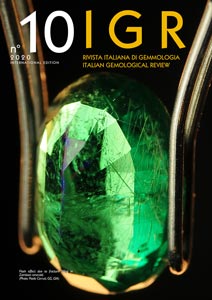
Journal Article · Source: IGR • Italian Gemological Review · Volume: Vol. 50 · Issue: No. 10 · Pages: pp. 52–62

Abstract
A discussion of the literature of ruby and sapphire (corundum), with particular emphasis on the most collectible books covering ruby and sapphire around the world.
Keywords
gems, corundum, ruby, sapphire, books
G&G Micro-World: Fluorophlogopite in Burmese spinel

G&G Micro-World: Fluorophlogopite in Burmese spinel

Hughes, R.W. (2020)

Journal Article · Source: Gems & Gemology · Volume: Vol. 56 · Issue: No. 2, Summer · Pages: pp. 293–294

Abstract
Lotus Gemology in Bangkok received a large parcel of dark red spinels for identification. Their colors, inclusion features, and trace element chemistry suggested that they originated from Myanmar’s Mogok Stone Tract. In one faceted specimen, a crystal was found breaking the surface. The crystal’s surface luster suggested a refractive index below that of the host spinel, and undercutting suggested it was also significantly lower in hardness. The inclusion’s interior also displayed signs of cleavage. Thinking it was possibly a carbonate, we proceeded to do micro-Raman analysis on the crystal. To our surprise, the result was fluorophlogopite. Fluorophlogopite, KMg₃(AlSi₃O₁₀)(F,OH)₂, is a species in the mica group and a member of the trioctahedral mica subgroup. To the best of our knowledge, this is the first reported instance of this species in spinel. Nor are we aware of it having been found included in any gem mineral to date.
Keywords
gems, spinel, inclusions, Burma, Mogok
G&G Micro-World: Böhmite in corundum

G&G Micro-World: Böhmite in corundum

Hughes, R.W. (2020)

Journal Article · Source: Gems & Gemology · Volume: Vol. 56 · Issue: No. 2, Summer · Pages: pp. 292–293

Abstract
Gemologists at Bangkok’s Lotus Gemology laboratory recently examined a large lot of rubies believed to originate from the Montepuez area of Mozambique. Microscopic examination confirmed that assessment. Many of these stones displayed features in their infrared spectra that are typical for böhmite, with a characteristic “twin peak” spectrum at ~3309 and 3089 cm⁻¹. One of the stones showed a large area cut through on a pavilion facet that appeared to be a foreign substance. A similar substance was seen in many of the fissures in the stone. Judicious use of the hot point under the microscope produced no reaction. We then moved to analyze the substance via micro-Raman. The result was böhmite, which neatly confirmed the results from the infrared spectrum. Böhmite, AlO(OH), is a polymorph of diaspore. In corundum it is generally a secondary mineral, infilling surface-reaching openings after the host corundum has grown.
Keywords
gems, corundum, inclusions.5, Mozambique.12, ruby, böhmite
Long-wave ultraviolet torches • A gemmologist’s new best friend

Long-wave ultraviolet torches • A gemmologist’s new best friend

Hughes, E.B. (2020)

Journal Article · Source: Journal of the Gemmological Association of Hong Kong · Volume: Vol. 41 · Pages: pp. 57–59

Abstract
As laboratory gemmologists, we are frequently asked by friends and colleagues for recommendations on lab equipment. Often the focus is based around the most modern and advanced instrumentation, much of which is out of reach for what my grandfather likes to call the “great unwashed.” One piece of equipment that is often overlooked is the humble ultraviolet (UV) lamp. Although it is an older and relatively affordable tool, it is an essential test in our laboratory, and we examine all submitted stones under UV light. Often used in diamond testing, it can also be a tremendous help with coloured gems, in detecting treatments and synthetics, as well as a capable tool to screen pieces of jewellery with many smaller stones.
Keywords
gems, instruments, beryl, emerald treatments, inclusions
G&G Microworld: Triplite in beryl

G&G Microworld: Triplite in beryl

Hughes, E.B. (2020)

Journal Article · Source: Gems & Gemology · Volume: Vol. 56 · Issue: No. 1, Spring · Pages: p. 145

Abstract
Among our Lotus Gemology lab clients and the gem trade as a whole, inclusions have often been seen as negative features. However, people are starting to become more interested in inclusions and see them as unique characteristics rather than mere imperfections. One such client brought us a colorless beryl with a large brownish orange crystal near the culet, hoping to learn the inclusion’s identity. Raman microscopy revealed it to be triplite. Triplite, (Mn,Fe)₂PO₄(F,OH), is a mineral named for the Greek triplos, or triple, which refers to its three directions of cleavage. While some triplites have been faceted, they are quite rare both as a mineral and as a gem material. The specimen’s owner stated that the beryl came from Pakistan. As triplite is known to be found in Pakistan, this is certainly a possibility. The owner was happy to learn that his gem contained a relatively rare mineral. We are excited to see these examples of inclusions being viewed as points of interest within a gem.
Keywords
gems, beryl, Pakistan, inclusions, triplite
G&G Microworld: Staurolite in ruby

G&G Microworld: Staurolite in ruby

Hughes, E.B. (2020)

Journal Article · Source: Gems & Gemology · Volume: Vol. 56 · Issue: No. 1, Spring · Pages: pp. 144–145

Abstract
We have examined thousands of rubies in Lotus Gemology’s laboratory, yet the hours spent peering into the microscope are never mundane because each stone captures its own piece of history through its inclusions. Recently a client submitted one such gem for testing, a 3.04 ct specimen measuring 11.98 × 7.13 × 4.21 mm that was identified as an untreated ruby from Madagascar based on inclusions. In the microscope, a few bright brownish red crystal inclusions immediately stood out. They were transparent, with a saturated red hue that, in darkfield illumination, was conspicuous even against their ruby-red background. Some were also cut through on the surface, allowing us to view them with reflected light. Observation of the surface showed that the crystals had a luster just slightly lower than that of the surrounding corundum, suggesting a slightly lower RI. To get a better idea of the crystals’ identity, we examined them using micro-Raman spectroscopy with a WITec Alpha 300R Raman imaging system with a 532 nm laser, which identified them as staurolite. Staurolite, Fe₂Al₉Si₄O₂₂(OH)₂, is a red to brown mineral known to occur in Madagascar. Its RI values are nα = 1.736–1.747, nβ = 1.740–1.754, and nγ = 1.745–1.762. Corundum has a slightly higher RI range, with nₒ = 1.767–1.722 and nₑ = 1.759–1.763. The combination of microscopic observation and Raman spectroscopy gave us confidence that these were indeed staurolite crystals. It is no wonder these crystals initially stood out. To the best of our knowledge, this is the first recorded observation of staurolite as an inclusion in corundum. This Madagascar ruby has encapsulated a fascinating kernel of history within its depths.
Keywords
gems, corundum, ruby, Madagascar.12, inclusions.5
G&G Microworld: Actinolite in spinel

G&G Microworld: Actinolite in spinel

Hughes, E.B. (2020)

Journal Article · Source: Gems & Gemology · Volume: Vol. 56 · Issue: No. 1, Spring · Pages: p. 140

Abstract
Lotus Gemology received a vivid cobalt blue spinel from Vietnam for laboratory testing. Despite its small size of well under a carat, its stunning color stood out immediately. The stone proved to be exceptionally clean. Most cobalt spinels we test contain fissures, small crystals, or other inclusions. After careful examination, we found just one tiny inclusion, a transparent teardrop-shaped crystal. Raman microscopy revealed the crystal to be actinolite, a mineral in the amphibole group. As far as we are aware, this is the first reported inclusion of actinolite in spinel.
Keywords
gems, spinel, Vietnam, Luc Yen, inclusions
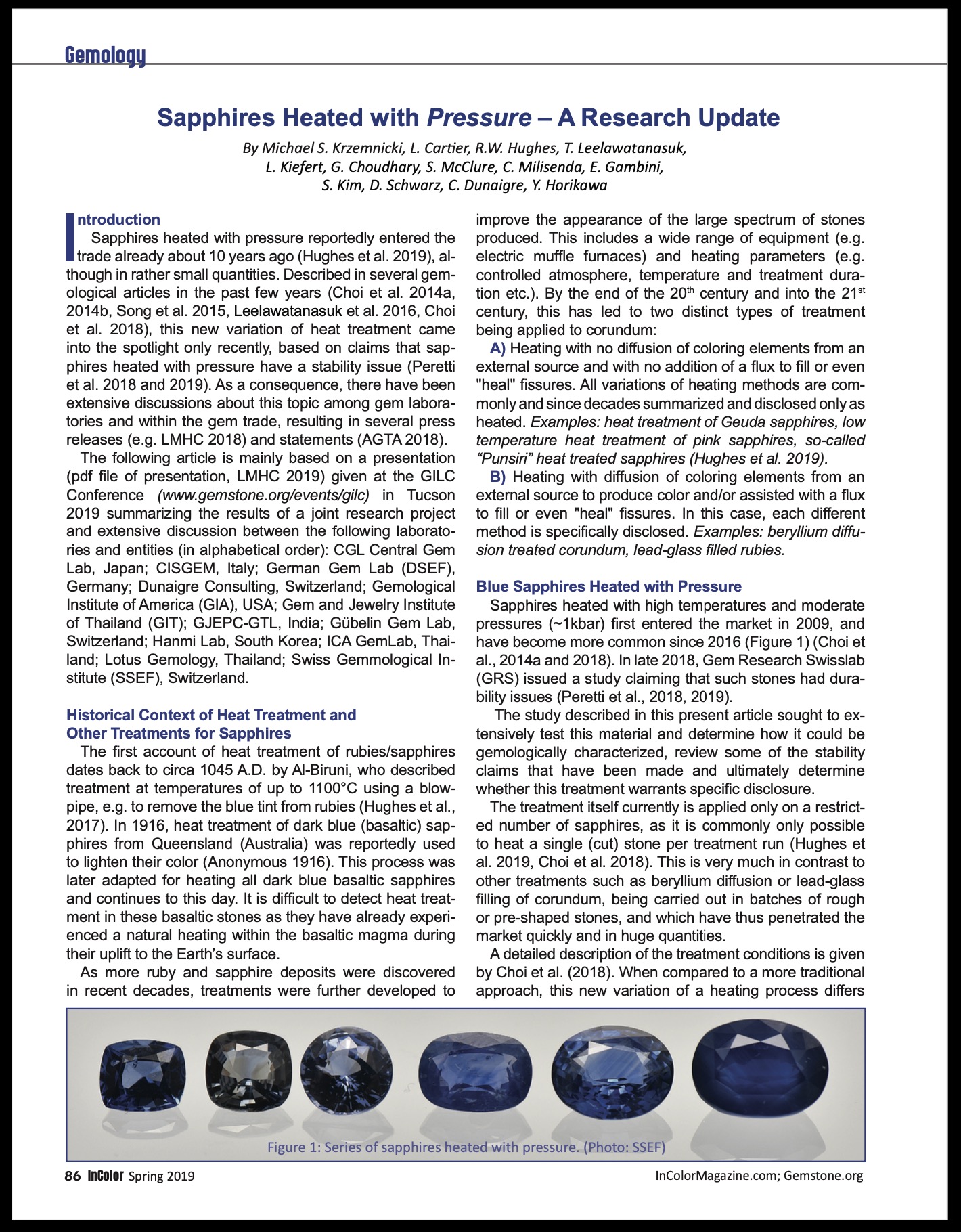
Sapphires heated with pressure – A research update

Sapphires heated with pressure – A research update

Krzemnicki, M.S., Cartier, L., Hughes, R.W., Leelawatanasuk, T., Kiefert, L., Choudhary, G., McClure, S., Milisenda, C., Gambini, E., Kim, S., Schwarz, D. and Horikawa, Y. (2019)

Journal Article · Source: InColor · Issue: Spring · Pages: pp. 86–90

Abstract
Sapphires heated with pressure reportedly entered the trade already about 10 years ago (Hughes et al., 2019), although in rather small quantities. Described by several gemological articles in the past few years (Choi et al. 2014a, 2014b, Song et al. 2015, Leelawatanasuk et al. 2016, Choi et al. 2018), this new variation of heat treatment came into the spotlight only recently, based on claims that sapphires heated with pressure have a stability issue (Peretti et al. 2018 and 2019). As a consequence, there have been extensive discussions about this topic among gem laboratories and within the gem trade, resulting in several press releases (e.g. LMHC 2018) and statements (AGTA 2018). The following article is mainly based on a presentation (pdf file of presentation, LMHC 2019) given at the GILC Conference (www.gemstone.org/events/gilc) in Tucson 2019 summarizing the results of a joint research project and extensive discussion between the following laboratories and entities (in alphabetical order): CGL Central Gem Lab, Japan; CISGEM, Italy; German Gem Lab (DSEF), Germany; Dunaigre Consulting, Switzerland; Gemological Institute of America (GIA), USA; Gem and Jewelry Institute of Thailand (GIT); GJEPC-GTL, India; Gübelin Gem Lab, Switzerland; Hanmi Lab, South Korea; ICA GemLab, Thailand; Lotus Gemology, Thailand; Swiss Gemmological Institute (SSEF), Switzerland.
Keywords
gems, corundum, treatments.6, sapphire, pressure treatment, heat treatment
Madagascar sapphire: Low-temperature heat treatment experiments

Madagascar sapphire: Low-temperature heat treatment experiments

Hughes, E.B. and Perkins, R. (2019)

Journal Article · Source: Gems & Gemology · Volume: Vol. 55 · Issue: No. 2, Summer · Pages: pp. 184–197

Abstract
Madagascar has become one of the world’s top sources of fine blue sapphire in recent times. In addition to beautiful untreated material, increasing numbers of treated stones have appeared in the market. Some have been heated to relatively low temperatures, below 1350°C, to lighten their color. To help separate unheated and heated Madagascar sapphire, the authors performed experiments to document the changes they undergo with low-temperature heat treatment in air, which is an oxidizing atmosphere.
Keywords
gems, corundum, Madagascar.12, treatments.6
G&G Micro-World: Curved banding in flame-fusion synthetic sapphires

G&G Micro-World: Curved banding in flame-fusion synthetic sapphires

Hughes, E.B. (2019)

Journal Article · Source: Gems & Gemology · Volume: Vol. 55 · Issue: No. 2, Summer · Pages: pp. 264–265

Abstract
Most synthetic ruby and sapphire on the market is grown by Verneuil flame fusion. It can usually be separated from natural corundum by its distinctive curved banding, in contrast to the angular zoning seen in natural stones. Gemologists may see these features in the microscope when using darkfield or brightfield illumination. This zoning can also be seen with use of a short-wave fluorescent light, as noted in Ruby & Sapphire: A Gemologist’s Guide (R.W. Hughes et al., Lotus Publishing, Bangkok, 2017). Recently the author noticed two excellent examples. When viewed with the Magilabs deep-UV fluorescence system (a proprietary short-wave UV source), the curved banding in the synthetics was clear (figures 10 and 11), allowing them to be easily separated from natural corundum. Gemologists using a DiamondView may see the same reaction.
Keywords
gems, corundum, synthetic corundum.7, Verneuil synthetic sapphire

Building a Gemological Library

Gemological books range from general identification manuals and textbooks to specialized works on individual gems, mineralogy, jewelry, treatments, synthesis, history and gem-producing regions.

For a curated selection of particularly useful books, read The Gemologist's Core Library — Classic Books on Gemology, Jewelry and Mineralogy.

About Four Treasures

Four Treasures is Lotus Gemology's freely accessible gemological reference database. Use the full database to search by author, title or keyword and explore literature on gemology, mineralogy, jewelry and related fields. Where available, hyperlinks on titles may lead directly to the full publication.

Search the Complete Four Treasures Database