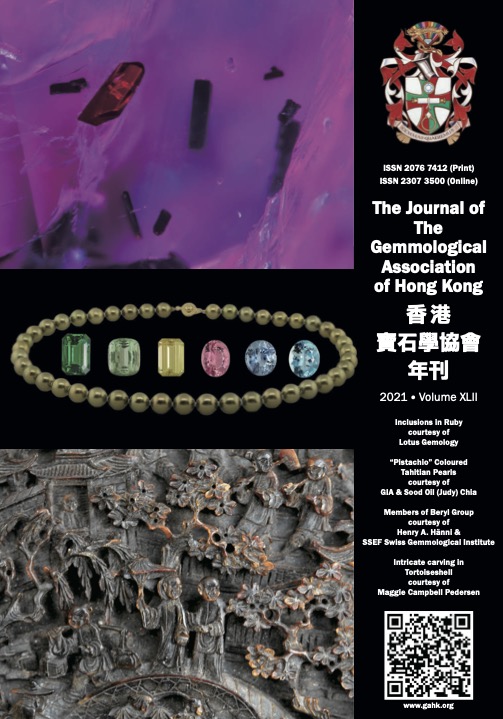
Gemstone Inclusions Bibliography

Gemstone Inclusions Bibliography

Explore books, articles and historical sources on inclusions in gemstones in Four Treasures, the Lotus Gemology reference database. This bibliography brings together matching records from the collection, with publication details, abstracts and cover images where available.

Gemstone Inclusion References

The list below matches the terms inclusion or inclusions in the database's searchable fields. Some references discuss inclusions as part of a broader subject.
1–20 of 1,109 matching references

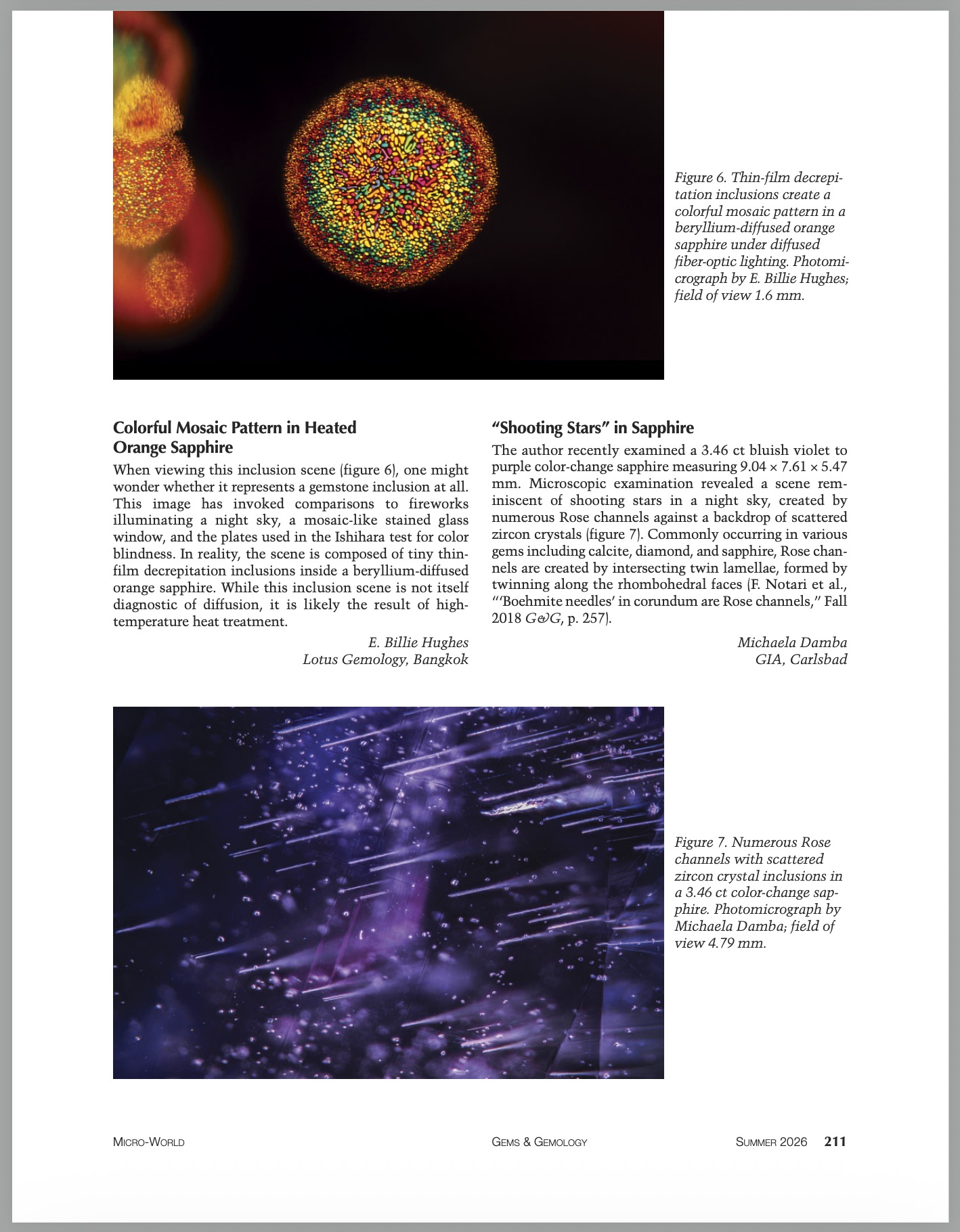
G&G Micro-World: Colorful mosaic pattern in heated orange sapphire
G&G Micro-World: Colorful mosaic pattern in heated orange sapphire

Hughes, E.B. (2026)

Journal Article · Source: Gems & Gemology · Volume: Vol. 62 · Issue: No. 2, Summer · Pages: p. 211

Abstract
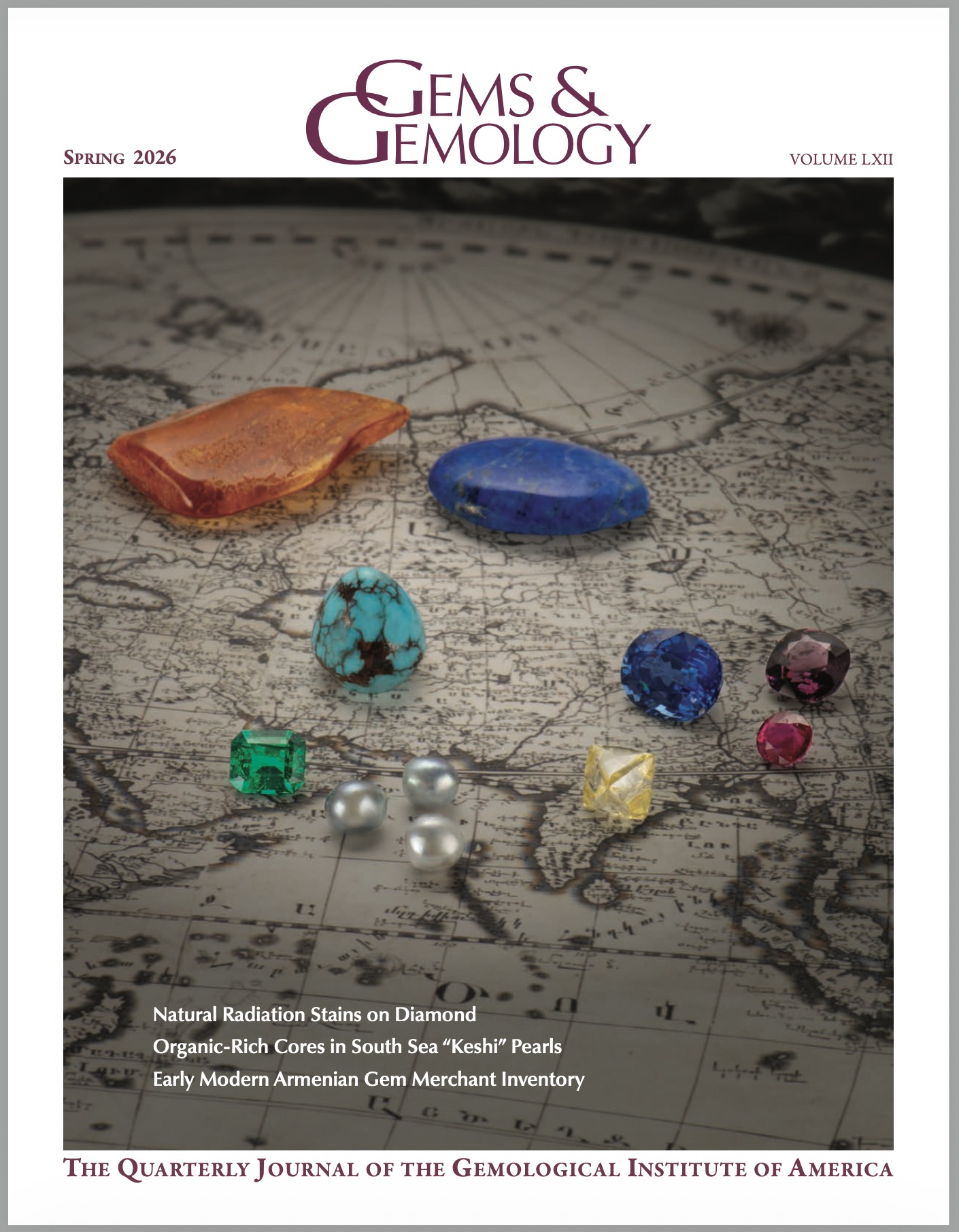
The authors examined a 7.01 ct spinel reportedly from Tanzania. Under short-wave (254 nm) ultraviolet light, a small fluorescent spot was observed on the stone’s surface, caused by cut-through crystal inclusions. Micro-Raman analysis identified the inclusions as diopside, phlogopite, and edenite, forming a cluster of transparent crystals associated with a dark, opaque pyrite grain (see above, A). In reflected light, the inclusions showed luster distinct from the spinel host, with the pyrite exhibiting a golden metallic luster (see above, B). Under short-wave ultraviolet light, the crystals fluoresced in different colors: white for diopside, yellow for phlogopite, and blue for edenite (see above, C). Fluorescence from inclusions is often overlooked but can provide important identification clues.
Keywords
gems, spinel
G&G Micro-World: Distinctive fluorescent crystal inclusions in spinel
G&G Micro-World: Distinctive fluorescent crystal inclusions in spinel

Rattana-anan, N. and Hughes, E.B. (2026)

Journal Article · Source: Gems & Gemology · Volume: Vol. 62 · Issue: No. 2, Summer · Pages: p. 212

Abstract
The authors examined a 7.01 ct spinel reportedly from Tanzania. Under short-wave (254 nm) ultraviolet light, a small fluorescent spot was observed on the stone’s surface, caused by cut-through crystal inclusions. Micro-Raman analysis identified the inclusions as diopside, phlogopite, and edenite, forming a cluster of transparent crystals associated with a dark, opaque pyrite grain (see above, A). In reflected light, the inclusions showed luster distinct from the spinel host, with the pyrite exhibiting a golden metallic luster (see above, B). Under short-wave ultraviolet light, the crystals fluoresced in different colors: white for diopside, yellow for phlogopite, and blue for edenite (see above, C). Fluorescence from inclusions is often overlooked but can provide important identification clues.
Keywords
gems, spinel
G&G Micro-World: Evidence of heat treatment in spinel
G&G Micro-World: Evidence of heat treatment in spinel

Hughes, E.B. (2026)

Journal Article · Source: Gems & Gemology · Volume: Vol. 62 · Issue: No. 1, Spring · Pages: p. 84

Abstract
The authors examined a 7.01 ct spinel reportedly from Tanzania. Under short-wave (254 nm) ultraviolet light, a small fluorescent spot was observed on the stone’s surface, caused by cut-through crystal inclusions. Micro-Raman analysis identified the inclusions as diopside, phlogopite, and edenite, forming a cluster of transparent crystals associated with a dark, opaque pyrite grain. In reflected light, the inclusions showed luster distinct from the spinel host, with the pyrite exhibiting a golden metallic luster. Under short-wave ultraviolet light, the crystals fluoresced in different colors: white for diopside, yellow for phlogopite, and blue for edenite. The study demonstrates that fluorescence from mineral inclusions, although often overlooked, can provide useful clues for their identification.
Keywords
gems, spinel, Tanzania, inclusions, diopside, phlogopite, edenite
G&G Micro-World: Mystery bubble in spinel
G&G Micro-World: Mystery bubble in spinel

Hughes, E.B. and Vertriest, W. (2026)

Journal Article · Source: Gems & Gemology · Volume: Vol. 62 · Issue: No. 1, Spring · Pages: p. 83–84

Abstract
Gemology is a forensic science, and often what we don’t know can be as interesting as what we do know. Recently, the authors encountered a fascinating spinel. The owner noted that the stone (reportedly from Myanmar, formerly Burma) contained an inclusion feature with a bubble inside. Closer inspection revealed a negative crystal or cavity that indeed contained a mobile bubble (see above). With gentle heating from the warmth of the microscope’s light bulb, the authors were able to see the bubble expand and contract.
Keywords
gems, spinel, Tanzania, inclusions, diopside, phlogopite, edenite
Beyond a single image: Uncovering evidence of heat treatment in a Burmese ruby
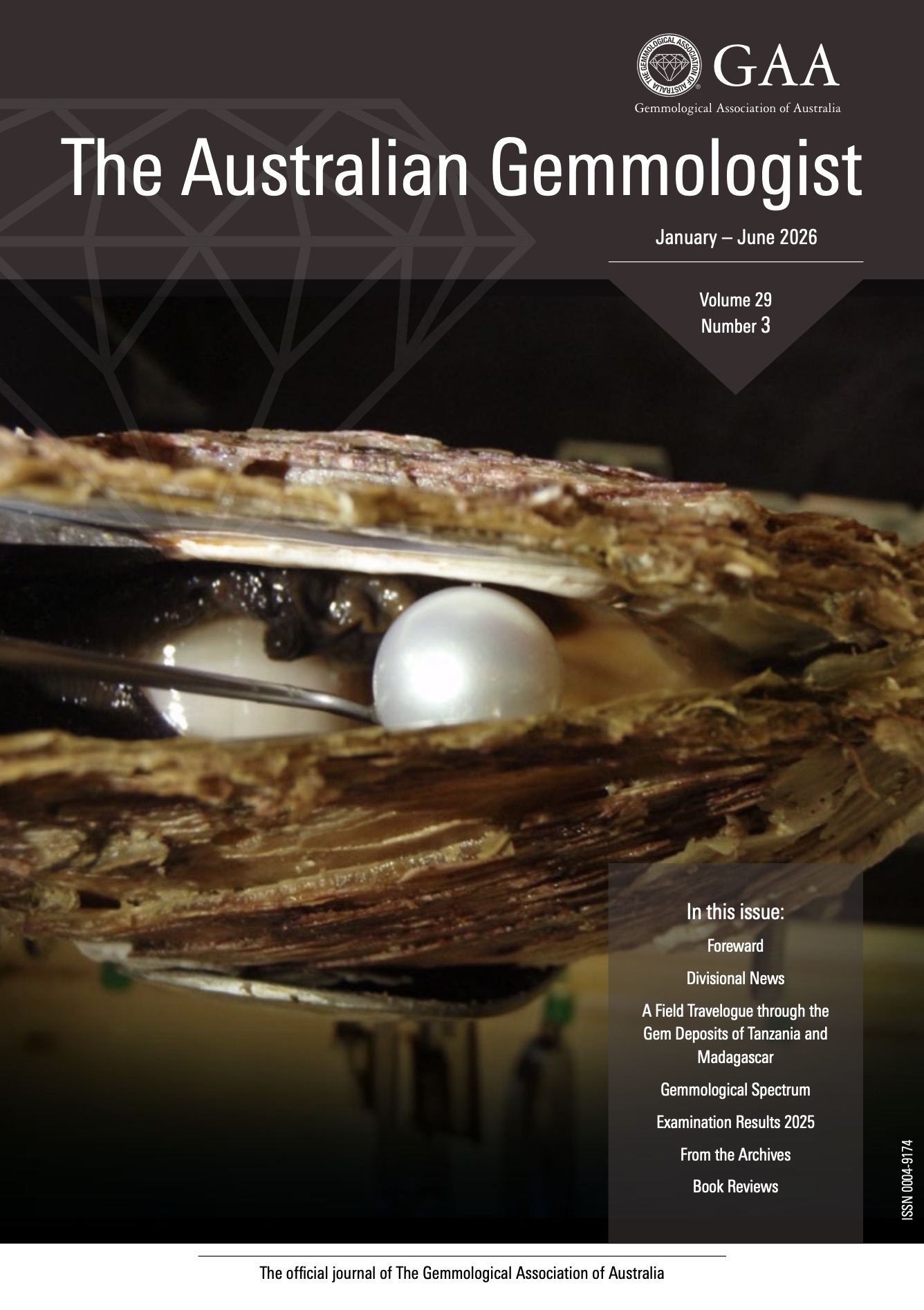
Beyond a single image: Uncovering evidence of heat treatment in a Burmese ruby

Hughes, E.B. and Rattana-anan, N. (2026)

Journal Article · Source: Australian Gemmologist · Volume: Vol. 29 · Issue: No. 3, January–July · Pages: pp. 221–223

Abstract
In a parcel of over thirty rubies from Myanmar’s Mong Hsu mines, all of the stones contained zoned clouds of cottony ‘silk’, believed to be diaspore, as seen in the sample shown in Figure 1. However, this stone stood out from the rest of the lot. In addition to the wispy diaspore silk, it also contained several bands of fine, intact silk needles, likely rutile (Figure 2). It was, in fact, the only stone in this suite to contain this type of silk. While rutile silk needles are uncommon in Mong Hsu rubies, they have been reported on rare occasions, and we have also observed them in a few samples from our laboratory’s reference collection. It is worth noting that despite the intact silk needles, this stone was determined to have been heated. Supporting evidence included other inclusions, such as melted fingerprints, as well as a clear 3309 series with 3232 in the infrared spectrum and zoned chalky short-wave ultraviolet fluorescence. This serves as an important reminder that the presence of intact silk needles does not always indicate that a stone is unheated.
Keywords
gems, corundum, Myanmar.12, Burma.12, Mong Hsu
Two types of ‘silk’ in Mong Hsu Ruby

Two types of ‘silk’ in Mong Hsu Ruby
Hughes, E.B. (2026)

Journal Article · Source: Australian Gemmologist · Volume: Vol. 29 · Issue: No. 3, January–July · Pages: p. 220

Abstract
In a parcel of over thirty rubies from Myanmar’s Mong Hsu mines, all of the stones contained zoned clouds of cottony ‘silk’, believed to be diaspore, as seen in the sample shown in Figure 1. However, this stone stood out from the rest of the lot. In addition to the wispy diaspore silk, it also contained several bands of fine, intact silk needles, likely rutile (Figure 2). It was, in fact, the only stone in this suite to contain this type of silk. While rutile silk needles are uncommon in Mong Hsu rubies, they have been reported on rare occasions, and we have also observed them in a few samples from our laboratory’s reference collection. It is worth noting that despite the intact silk needles, this stone was determined to have been heated. Supporting evidence included other inclusions, such as melted fingerprints, as well as a clear 3309 series with 3232 in the infrared spectrum and zoned chalky short-wave ultraviolet fluorescence. This serves as an important reminder that the presence of intact silk needles does not always indicate that a stone is unheated.
Keywords
gems, corundum, Tanzania.12, spinel, tanzanite, zoisite, Merelani, Mahenge, Tunduru
Hyperion – Mapping hidden worlds within stones
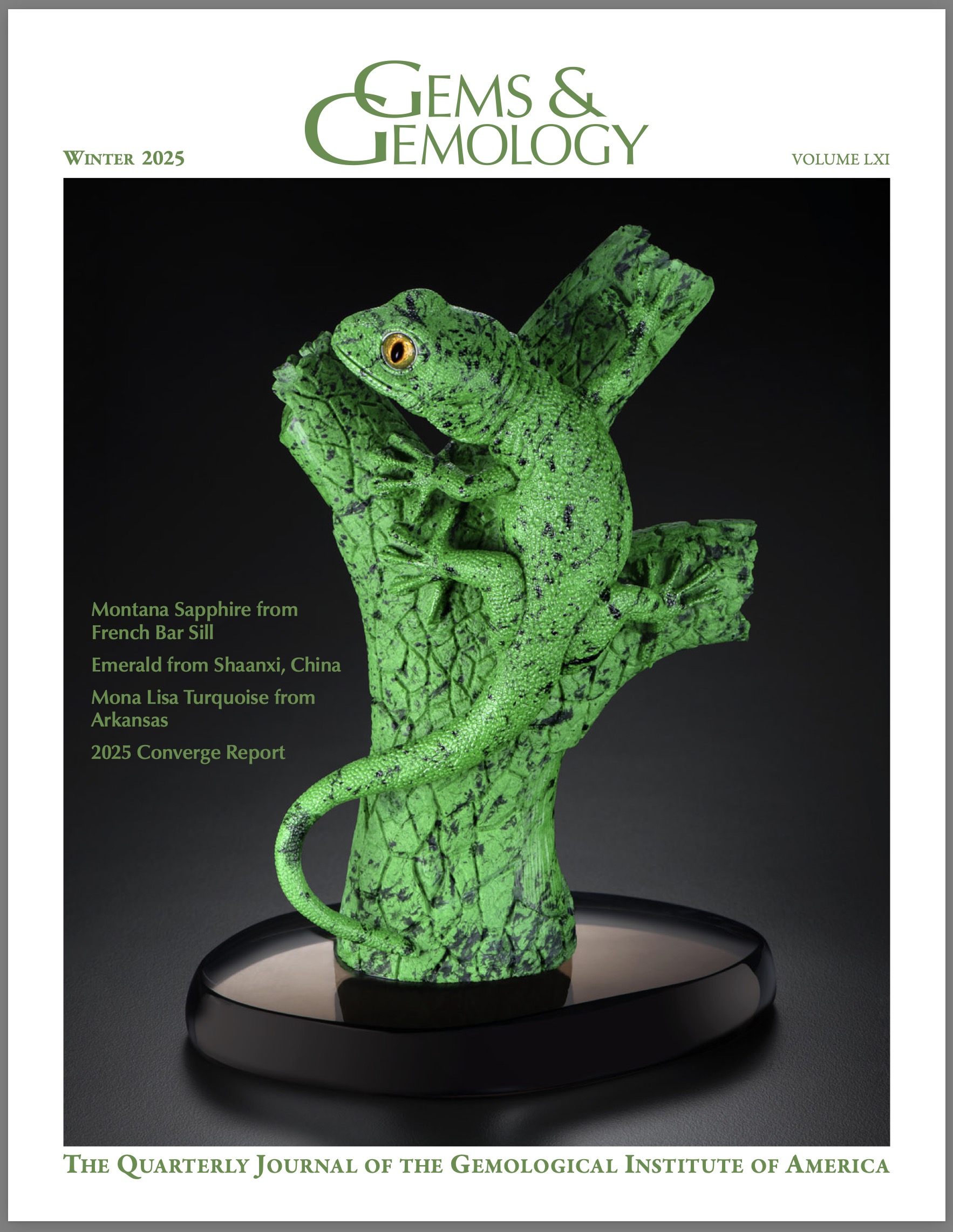
Hyperion – Mapping hidden worlds within stones

Hughes, E.B. (2026)

Conference Paper · Source: Twentieth Sinkankas Symposium • Gems & Minerals of Burma (Myanmar) · Publisher: Pala International · Pages: pp. 51–55

Abstract
Portfolio of photomicrographs from Lotus Gemology.
Keywords
gems, corundum, inclusions.5, Burma.12, Mogok, ruby, sapphire, spinel
G&G Micro-World: Metal sulfide in spinel
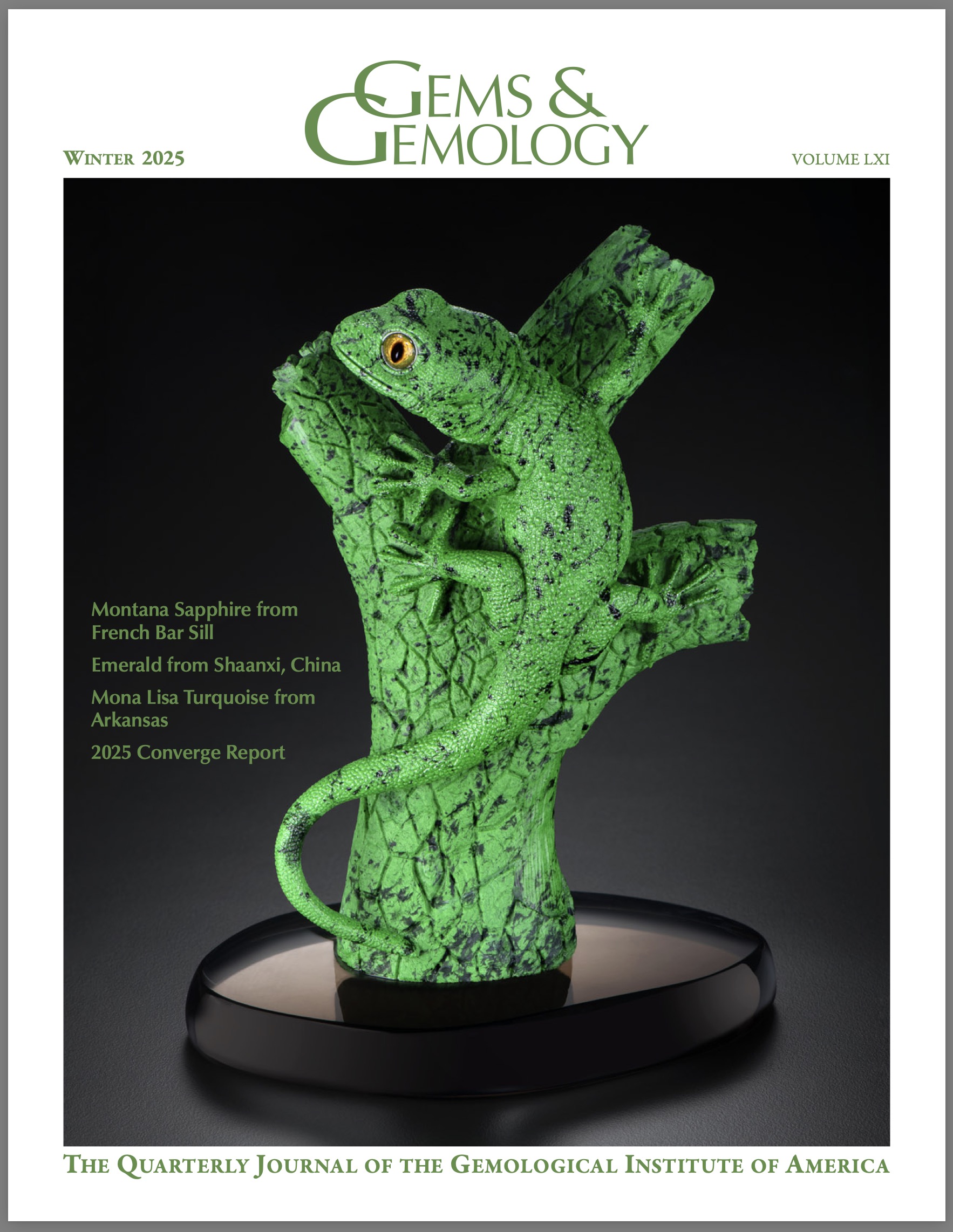
G&G Micro-World: Metal sulfide in spinel

Hughes, E.B. (2025)

Journal Article · Source: Gems & Gemology · Volume: Vol. 61 · Issue: No. 4, Winter · Pages: p. 404

Abstract
Recently, a 3.14 ct pink spinel was submitted to the Lotus Gemology laboratory, with encouragement from the owner to examine its inclusions. When viewed under the microscope, the spinel did not disappoint. Suspended within was a richly textured, opaque metallic crystal (see above). Although attempts were made to identify the inclusion using micro-Raman spectroscopy, its identity remained inconclusive. However, based on the crystal’s appearance, it was likely a metal sulfide. Similar inclusions in spinel have been reported as pyrite (E.B. Hughes et al., “Spinel inclusions: An exercise in aesthetics,” InColor, No. 43, 2019, pp. 66–73; N. Renfro et al., “Micro-features of spinel,” Spring 2021 G&G, pp. 46–49).
Keywords
gems, spinel, inclusions
G&G Micro-World: Blooming bouquet—Thin films in Russian emerald
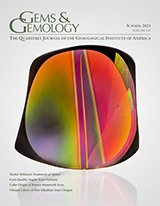
G&G Micro-World: Blooming bouquet—Thin films in Russian emerald

Hughes, E.B. (2025)

Journal Article · Source: Gems & Gemology · Volume: Vol. 61 · Issue: No. 4, Winter · Pages: pp. 400–401

Abstract
Some gems are enchanting both outside and in. Recently, the Lotus Gemology laboratory received an interesting submission of a 78.01 ct carved Russian emerald. According to the client, the emerald was carved by gemstone engraver Michael Peuster and inspired by art nouveau artist Alphonse Mucha. The woman depicted holds blooming flowers, symbolizing the arrival of spring (figure 1). Microscopic examination revealed delicate, bouquet-like thin film inclusions on the back of the carving (figure 2). Iridescent thin films are frequently observed in emeralds from Russia, and this specimen showcased several striking examples. It was a delightful coincidence to find that the inclusion scene in this stone echoed the floral motif carved into its exterior.
Keywords
gems, beryl, emerald, Russia, Malysheva, Russian beryl, emerald mines, Ural Mountains, inclusions
G&G Microworld: Guest in garnet: Metal sulfide?
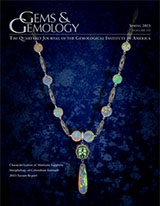
G&G Microworld: Guest in garnet: Metal sulfide?

Hughes, E.B. (2023)

Journal Article · Source: Gems & Gemology · Volume: Vol. 59 · Issue: No. 2, Summer · Pages: pp. 226–227

Abstract
Describes an unusual inclusion in garnet.
Keywords
gems, spinel, synthetic spinel, spinel treatments, heat treatment, spinel diffusion, nickel diffusion
Micro-World: Apatite in hackmanite

Micro-World: Apatite in hackmanite

Hughes, E.B. (2023)

Journal Article · Source: Gems & Gemology · Volume: Vol. 59 · Issue: No. 1, Spring · Pages: p. 85

Abstract
Hackmanite, Na₈Al₆Si₆O₂₄(Cl₂,S), is a variety of sodalite notable for its tenebrescence. When kept in darkness, samples can fade to pale purple and even gray or translucent to opaque white. When exposed to long-wave ultraviolet illumination, they can display a strong orange fluorescence reaction. After exposure to sunlight or artificial light with a UV component, samples can quickly develop a much stronger color. One hackmanite sample recently examined by the author (figure 1) showed this phenomenon. Another hackmanite was submitted that displayed an interesting elongated white inclusion (figure 2, left) that was identified by micro-Raman as apatite. As we examined the sample in the microscope, we tried exposing it to a 6-watt long-wave UV light for approximately one second. Almost immediately, a change was observed. The hackmanite developed a more vibrant purple color that is clearly displayed in figure 2 (right).
Keywords
gems, inclusions, hackmanite, apatite
A canary in the ruby mine: Low-temperature heat treatment experiments on Burmese ruby
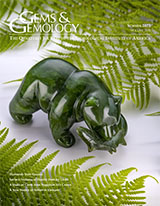
A canary in the ruby mine: Low-temperature heat treatment experiments on Burmese ruby

Hughes, E.B. and Vertriest, W. (2022)

Journal Article · Source: Gems & Gemology · Volume: Vol. 58 · Issue: No. 4, Winter · Pages: pp. 400–423

Abstract
Detection of heat treatment below 1200°C in ruby and sapphire can present challenges to gemologists, as alterations to the material are often subtle. In this study, the authors heated Burmese ruby samples from Mogok, Myanmar, at temperatures ranging from 600° to 1500°C. The samples were documented using macrophotography, photomicrography of inclusions, ultraviolet fluorescence imaging, and spectroscopic analysis (Raman, ultraviolet/visible/near-infrared, and infrared) to record any changes, with a focus on features that could help detect heat treatment. A wide variety of solid inclusions, including calcite, mica, spinel, and zircon, were found in Mogok ruby. Many of those were found to be sensitive to heat treatment with regard to morphology and phase transition; their reactions varied depending on a number of factors such as size, distance from the surface, and species. Microscopic examination provided useful visual indications of heat treatment, even at lower temperatures. Raman analysis of calcite and spinel inclusions also proved valuable in providing complementary evidence of low-temperature heat treatment.
Keywords
gems, corundum, Burma.12, treatments.6, Mogok, ruby, heat treatment, inclusions.5
G&G Microworld: Blue apatite in Tanzanian garnet
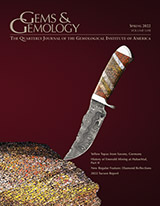
G&G Microworld: Blue apatite in Tanzanian garnet

Hughes, E.B. (2022)

Journal Article · Source: Gems & Gemology · Volume: Vol. 58 · Issue: No. 2, Summer · Pages: pp. 226–227

Abstract
In the micro-world, it can be challenging to identify inclusions based on sight alone, as many minerals can have a similar appearance. Occasionally, though, some inclusions have characteristic features that can aid in their identification. Recently this author had the opportunity to observe a pyrope-spessartine garnet, reportedly from Lindi Province, Tanzania, that contained blue crystal inclusions ensconced among intersecting needles (see above). Analysis with micro-Raman spectroscopy identified the inclusions as apatite. Apatites are known for their bright blue hues, and these inclusions offered an attractive example. While this sample hails from Tanzania, blue apatite has previously been reported as an inclusion in garnet from Madagascar (Winter 2020 G&G Micro-World, p. 526). These inclusions’ distinctive appearance may help gemologists recognize the material in other samples, but further analysis should be performed to identify them definitively.
Keywords
gems, garnet, inclusions, apatite
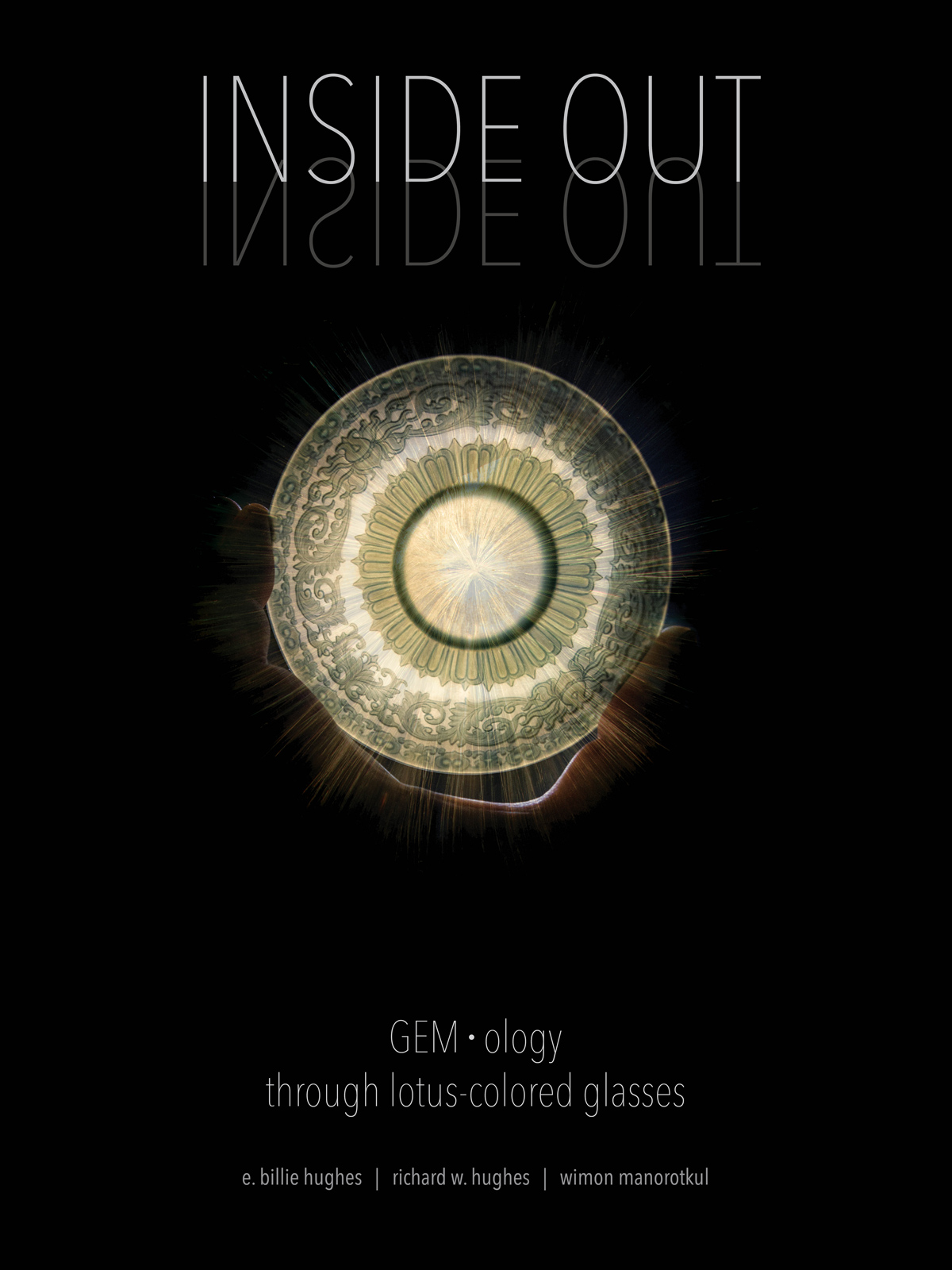
Inside Out: GEM•ology Through Lotus-Colored Glasses
Inside Out: GEM•ology Through Lotus-Colored Glasses

Hughes, E.B., Hughes, R.W. and Manorotkul, W. (2020)

Book · Publisher: Lotus Publishing · Pages: 152 pp. · Language: In English and Simplified Chinese

Abstract
From the dawn of time, precious stones have both attracted and fascinated humans in ways that few other items could. For while objects of desire are found throughout the natural world, physical beauty is too often ephemeral. From the allure of a man, woman, flower or butterfly, through the fleeting moments of a sunset, there is little that lasts and practically nothing that can be passed down to our descendants. The exception is precious stones. Not only are they the most durable creations of Mother Nature, but their visual splendor is truly eternal. This book presents a completely fresh approach to the subject. Dubbing it humanistic gemology, the authors take readers around the world, showing the places they have explored in their search for gems, along with the people and cultures encountered along the way. Within this volume, remarkable photographs of the human world are interwoven with images of the microscopic realm of the gems themselves. In a lifetime beset by time control, where living is broken into ever smaller bits, as you browse through these pages suddenly you plunge into a domain of frozen time, one that affords vistas of millions or even billions of years. For jewels offer not just superficial beauty, but a window on the primordial forces that birthed both our planet and universe. Inside Out – Gemology Through Lotus-Colored Glasses represents a fascinating new direction for gemology, linking the external and internal worlds of precious stones for the first time.
Keywords
gems, gemology, ruby, sapphire, jade, inclusions.5, corundum, garnet, quartz, China, Tibet, Thailand, Burma, Myanmar, Sri Lanka, Inner Mongolia, India, Madagascar, Mozambique, Tanzania, Rwanda, East Africa, Greenland
G&G Micro-World: Fluorophlogopite in Burmese spinel

G&G Micro-World: Fluorophlogopite in Burmese spinel

Hughes, R.W. (2020)

Journal Article · Source: Gems & Gemology · Volume: Vol. 56 · Issue: No. 2, Summer · Pages: pp. 293–294

Abstract
Lotus Gemology in Bangkok received a large parcel of dark red spinels for identification. Their colors, inclusion features, and trace element chemistry suggested that they originated from Myanmar’s Mogok Stone Tract. In one faceted specimen, a crystal was found breaking the surface. The crystal’s surface luster suggested a refractive index below that of the host spinel, and undercutting suggested it was also significantly lower in hardness. The inclusion’s interior also displayed signs of cleavage. Thinking it was possibly a carbonate, we proceeded to do micro-Raman analysis on the crystal. To our surprise, the result was fluorophlogopite. Fluorophlogopite, KMg₃(AlSi₃O₁₀)(F,OH)₂, is a species in the mica group and a member of the trioctahedral mica subgroup. To the best of our knowledge, this is the first reported instance of this species in spinel. Nor are we aware of it having been found included in any gem mineral to date.
Keywords
gems, spinel, inclusions, Burma, Mogok
G&G Micro-World: Böhmite in corundum

G&G Micro-World: Böhmite in corundum

Hughes, R.W. (2020)

Journal Article · Source: Gems & Gemology · Volume: Vol. 56 · Issue: No. 2, Summer · Pages: pp. 292–293

Abstract
Gemologists at Bangkok’s Lotus Gemology laboratory recently examined a large lot of rubies believed to originate from the Montepuez area of Mozambique. Microscopic examination confirmed that assessment. Many of these stones displayed features in their infrared spectra that are typical for böhmite, with a characteristic “twin peak” spectrum at ~3309 and 3089 cm⁻¹. One of the stones showed a large area cut through on a pavilion facet that appeared to be a foreign substance. A similar substance was seen in many of the fissures in the stone. Judicious use of the hot point under the microscope produced no reaction. We then moved to analyze the substance via micro-Raman. The result was böhmite, which neatly confirmed the results from the infrared spectrum. Böhmite, AlO(OH), is a polymorph of diaspore. In corundum it is generally a secondary mineral, infilling surface-reaching openings after the host corundum has grown.
Keywords
gems, corundum, inclusions.5, Mozambique.12, ruby, böhmite

Exploring the Literature of Gemstone Inclusions

The literature of gemstone inclusions covers identification, origin determination, treatments, synthesis, mineral inclusions, fluid inclusions and other internal features of natural and synthetic gems.

For a curated selection of important sources, read Inclusions in Gemstones — Hyperion Literature Sources.

About Four Treasures

Four Treasures is Lotus Gemology's freely accessible gemological reference database. Use the full database to search by author, title or keyword and explore literature on gemology, mineralogy, jewelry and related fields. Where available, hyperlinks on titles may lead directly to the full publication.

Search the Complete Four Treasures Database