Explore books, articles and historical sources on jade in Four Treasures, the Lotus Gemology reference database. This bibliography brings together matching records from the collection, with publication details, abstracts and cover images where available.
Jade References
The list below matches the terms jade, jadeite, nephrite or Fei Cui in the database's searchable fields. Some references discuss these materials as part of a broader subject.
3,841–3,854 of 3,854 matching references
Universal-Lexicon
Universal Lexicon
Book
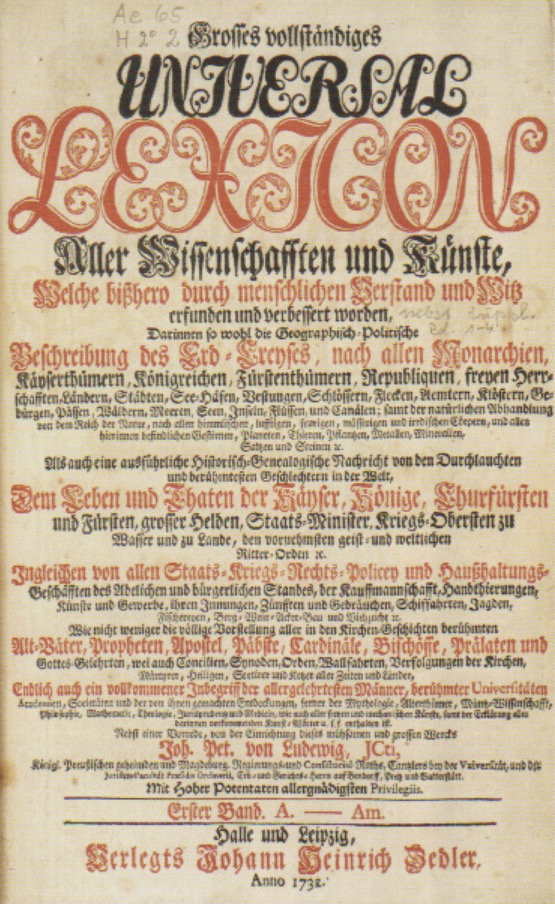
Zedler, J.H. (1732–1735)Universal-Lexicon. [Universal Lexicon] Halle-Leipzig, 68 Vols., see “Pierre divine” Vol. 11, 1735, p. 912; “Jade”, Vol. 14, 1735, pp. 123–124
Record No. 7111 | Sinkankas/Born No.: NIS / NIB | Language: in German | not seen
Johann Heinrich Zedler’s Grosses vollständiges Universal-Lexicon aller Wissenschafften und Künste is one of the largest encyclopedias published in 18th-century Europe, ultimately comprising 64 main volumes and four supplements. Its alphabetically arranged articles encompass history, geography, biography, theology, medicine, natural history, commerce, crafts, and the sciences, synthesizing information from a wide range of earlier authorities. Of particular interest to gemologists are its numerous entries on precious stones, minerals, their supposed medicinal properties, and lapidary terminology. The entry “Jade” (Vol. 14, 1735, pp. 123–124) reflects contemporary European understanding of jade and its properties and uses, while “Pierre divine” (Vol. 11, 1735, p. 912) documents the medicinal stone associated with early modern therapeutic traditions. The encyclopedia is consequently a valuable source for tracing 18th-century European gemstone nomenclature, mineralogical knowledge, and surviving beliefs concerning the medical virtues of stones.
Shi Dian Zaji (Miscellaneous Notes on a Mission to Yunnan)
使滇雜記
Book
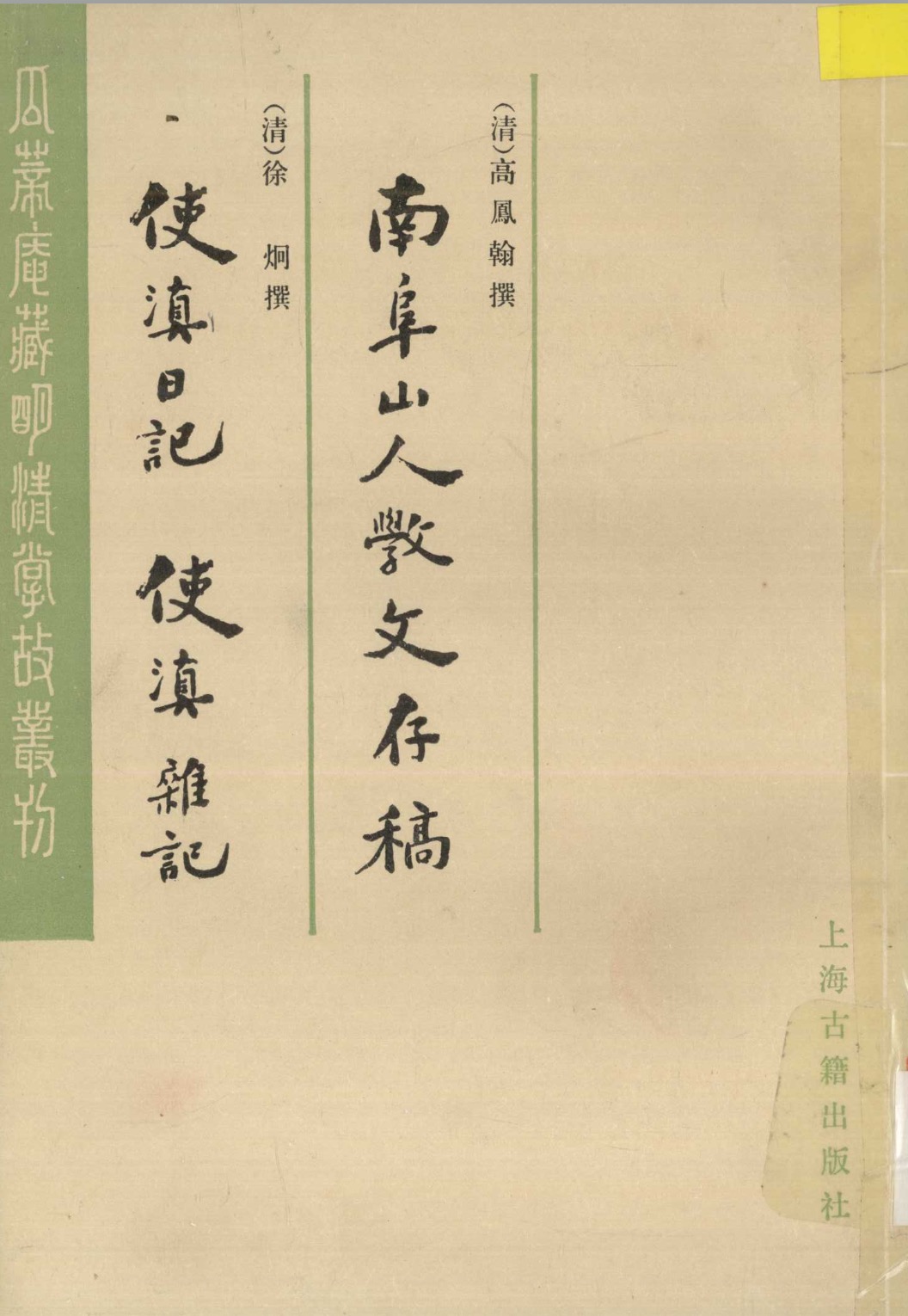
Xu, J. [徐炯] (1687–1688)Shi Dian Zaji (Miscellaneous Notes on a Mission to Yunnan). [使滇雜記], 1 juan (scroll)
Record No. 16779 | Sinkankas/Born No.: NIS / NIB | Language: in Chinese | not seen
Xu Jiong’s Shi Dian Zaji [使滇雜記; Miscellaneous Notes on a Mission to Yunnan] is a short record compiled from observations made during his official journey to Yunnan in 1687–1688 during the early Qing dynasty. The single-juan work records places, routes, local customs, products, natural resources, and other matters encountered during the mission, providing a contemporary view of Yunnan and its connections with regions farther southwest. It is of particular interest to the history of gems because Yunnan, especially the routes through Tengyue toward Burma, subsequently became the principal Chinese gateway for Burmese jadeite and other precious materials. The work is therefore useful as an early Qing source for the geographical and commercial setting in which the Yunnan–Burma gem trade developed. Sun Licheng: Contains a brief comment on gems produced in Burma. Xu Jiong was sent by the Qing emperor to Yunnan in 1687–1688. The Shi Dian Zaji is a compilation of his travel notes.
Histoire moderne du pays d’Ararad
Modern History of the Country of Ararad
Book
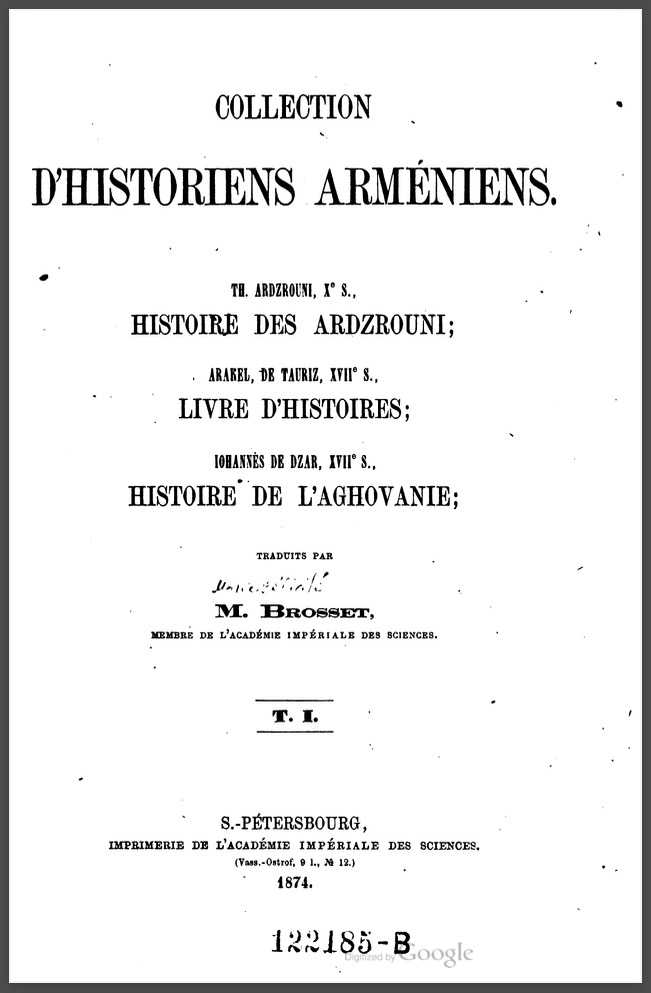
Tauriz, A.h., de [Aṙakʿel of Tabrīz] (1668)Histoire moderne du pays d’Ararad. [Modern History of the Country of Ararad] Amsterdam, (see p. 561)
Record No. 7096 | Sinkankas/Born No.: NIS / NIB | Language: in French | not seen
Arakʿel of Tabriz’s Histoire moderne du pays d’Ararad is a 17th-century Armenian chronicle describing Armenia and neighboring regions during the turbulent period of Ottoman–Safavid conflict, particularly the reign of Shah ʿAbbās I and its aftermath. Written by the Armenian cleric and historian Aṙakʿel Dawrižecʿi (Arakʿel of Tabriz), the work records wars, forced migrations, famines, political and religious affairs, Armenian communities and monasteries, trade, and relations with Persia and the Ottoman Empire. It is especially valuable because the author was close in time to many of the events described and incorporated eyewitness testimony and contemporary documentary information. Of gemological interest, the passage cited on p. 561 contains information concerning precious stones or their trade, contributing evidence for the circulation and appreciation of gems within the commercial networks linking Persia, Armenia, and neighboring regions in the 17th century.
Lapis nephriticus, von dem edlen Griesstein feiner wunderbaren Art, Kraft, Würkung und Gebrauch
The Nephritic Stone: Of the Noble Gravel Stone’s Wonderful Nature, Power, Effect, and Use
Book
Anonymous (1636)Lapis nephriticus, von dem edlen Griesstein feiner wunderbaren Art, Kraft, Würkung und Gebrauch. [The Nephritic Stone: Of the Noble Gravel Stone’s Wonderful Nature, Power, Effect, and Use] Augsburg
Record No. 29449 | Sinkankas/Born No.: NIS / NIB | Language: in Latin | not seen
Lapis nephriticus, von dem edlen Griesstein seiner wunderbaren Art, Kraft, Würkung und Gebrauch is a seventeenth-century German treatise devoted to the nephritic or “kidney stone,” describing its nature, remarkable properties, effects, and use. The work concerns the stone known in early modern Europe as lapis nephriticus, valued principally for its supposed ability to prevent or relieve kidney stones and other disorders of the kidneys and urinary tract, often through being worn against the body rather than administered internally. It belongs to the medical and lapidary tradition that associated particular stones with specific organs and diseases. The treatise is of particular importance to the history of jade because lapis nephriticus became closely associated with the material later mineralogically defined as nephrite, and its reputed action on the kidneys ultimately gave nephrite its modern name.
A Short Account of Yunnan
典销记
Book
Ni, T. [倪推] (after 1719)A Short Account of Yunnan. [典销记]
Record No. 16780 | Sinkankas/Born No.: NIS / NIB | Language: in Chinese | not seen
Sun Laichen: Contains relatively detailed descriptions of the precious stones from Mengmi, amber from Mengyang, and the travel routes from Yunnan to Burma. Written after 1719.
Records of the Grand Historian
史记 Shi Ji
Book
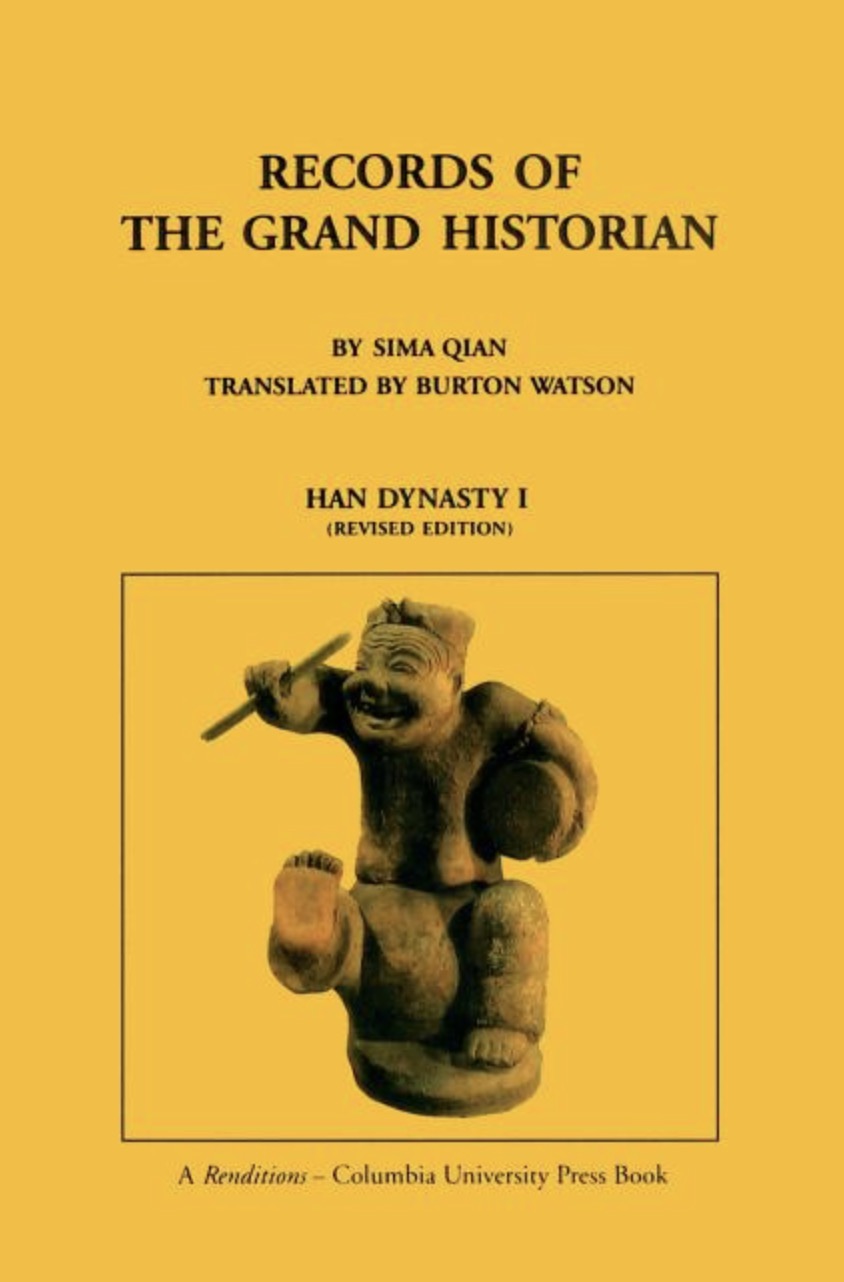
Sima, Q. [司马迁] (91 CE; Western Han)Records of the Grand Historian. [史记 Shi Ji]
Record No. 16546 | Sinkankas/Born No.: NIS / NIB | Language: in Chinese | not seen
gems, jade, China, Adam, Chinese jade books, jade lore, Fischer-Chinese
As a classic historical text, “Shi Ji” records the use of jade in ancient imperial sacrifices and national ceremonies. Completed before 91 B.C., these accounts indicate that the Sichuan-Yunnan-Burma-India overland trade route was already in use as early as (and probably before) the 2nd century B.C.
gems, jade, China, Adam, Chinese jade books, jade lore, Fischer-Chinese
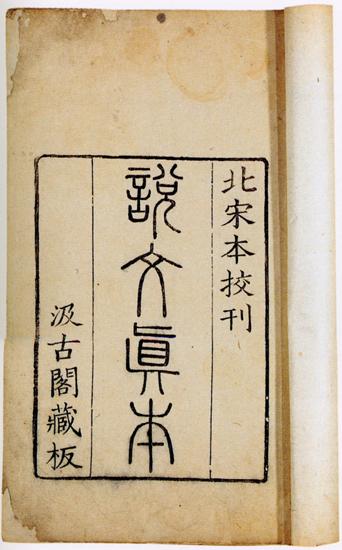
The Shuowen Jiezi [說文解字; Explaining Graphs and Analyzing Characters], compiled by Xu Shen during the Eastern Han dynasty and presented to the imperial court in 121 CE, is the earliest surviving systematic dictionary of Chinese characters and a fundamental source for the historical study of Chinese writing. The work analyzes approximately 9,350 characters, with more than 1,100 variant forms, arranging them under 540 graphic radicals and explaining their forms, meanings, and, where appropriate, pronunciations. Xu Shen classified characters according to traditional principles of character formation and frequently drew upon ancient scripts and early textual usage. Of particular interest to gemologists is the extensive treatment of characters associated with jade, minerals, stones, metals, colors, and other natural substances, particularly those grouped under the jade radical 玉. These definitions provide important evidence for the terminology, classification, and perceived properties of jade and related materials in early China and are invaluable for interpreting mineralogical and gemological terms occurring in ancient Chinese texts.
gems, jade, China, Chinese jade, Adam, jade lore, Fischer-Chinese
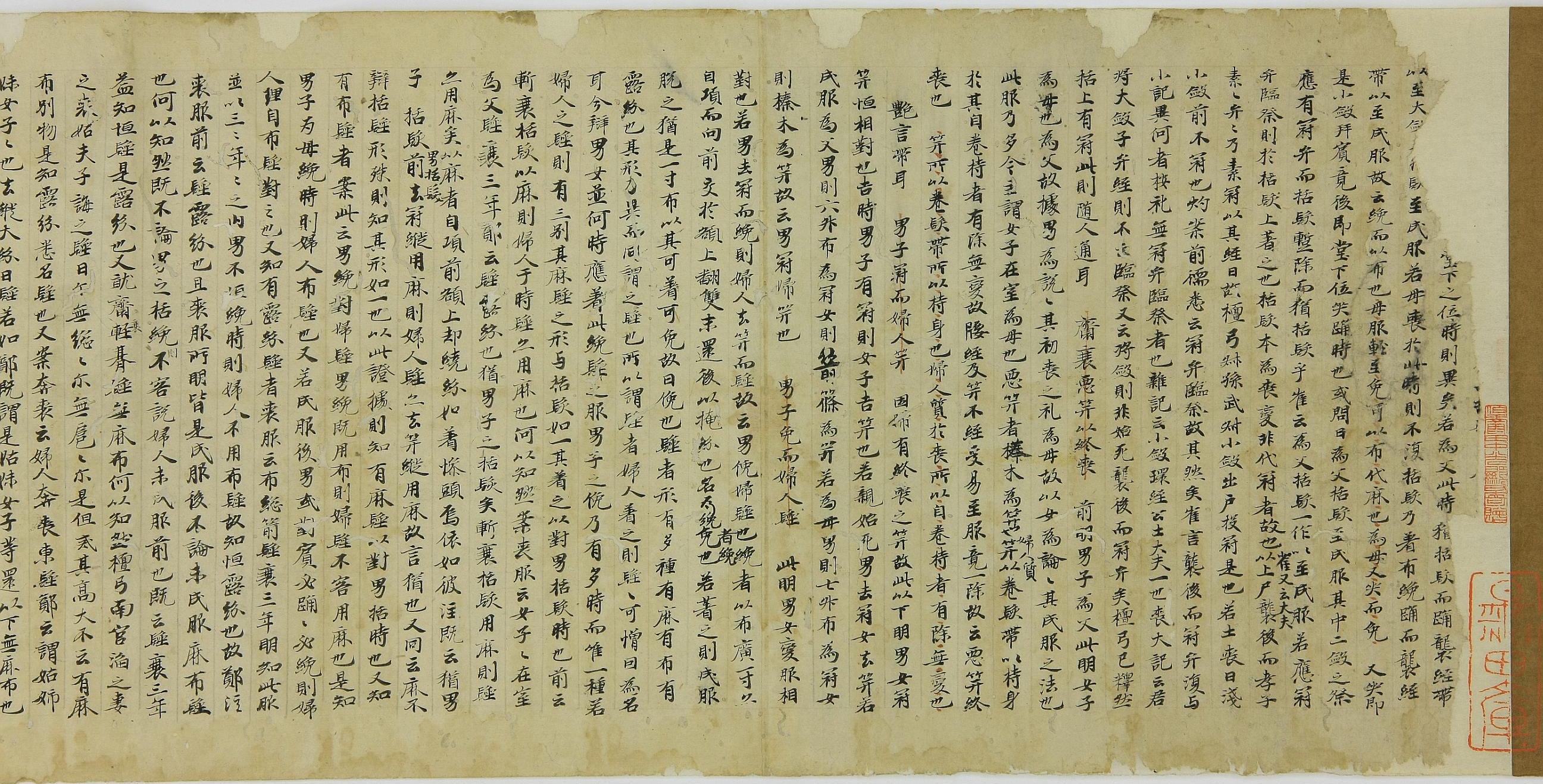
The Zhou Li [周禮; Rites of Zhou] is an ancient Chinese ritual and administrative text traditionally attributed to the Duke of Zhou (Zhou Gongdan), although the surviving work is generally considered to have been compiled considerably later. It presents an idealized system of Zhou government through detailed descriptions of official offices, responsibilities, ceremonies, crafts, taxation, agriculture, and the management of natural resources. Of particular interest to gemologists are passages concerning jade and other valued materials, including the classification, manufacture, ceremonial use, and official control of jade objects. The text describes different forms of ritual jade associated with rank, sacrifice, court ceremony, and cosmological symbolism and provides important early terminology for jade objects and their functions. It is consequently a major source for understanding the institutional, ritual, and symbolic importance of jade in early China.
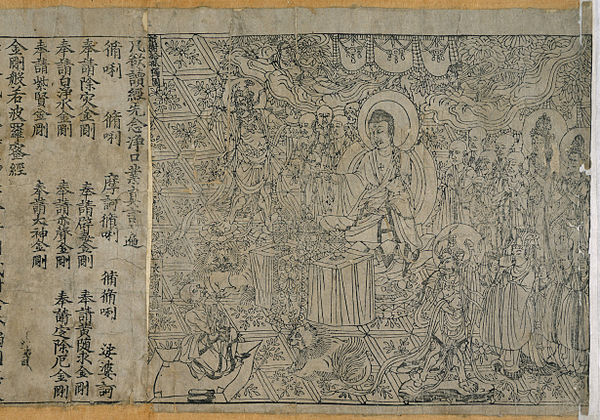
A copy of the Tang dynasty–Chinese version of the Diamond Sūtra was found among the Dunhuang manuscripts in 1900 by Daoist monk Wang Yuanlu and sold to Aurel Stein in 1907. This is considered the earliest printed book, predating Gutenberg by over 500 years. The woodblock-printed copy of the Diamond Sutra in the British Library which is not the earliest example of block printing, but is the earliest example which bears an actual date.
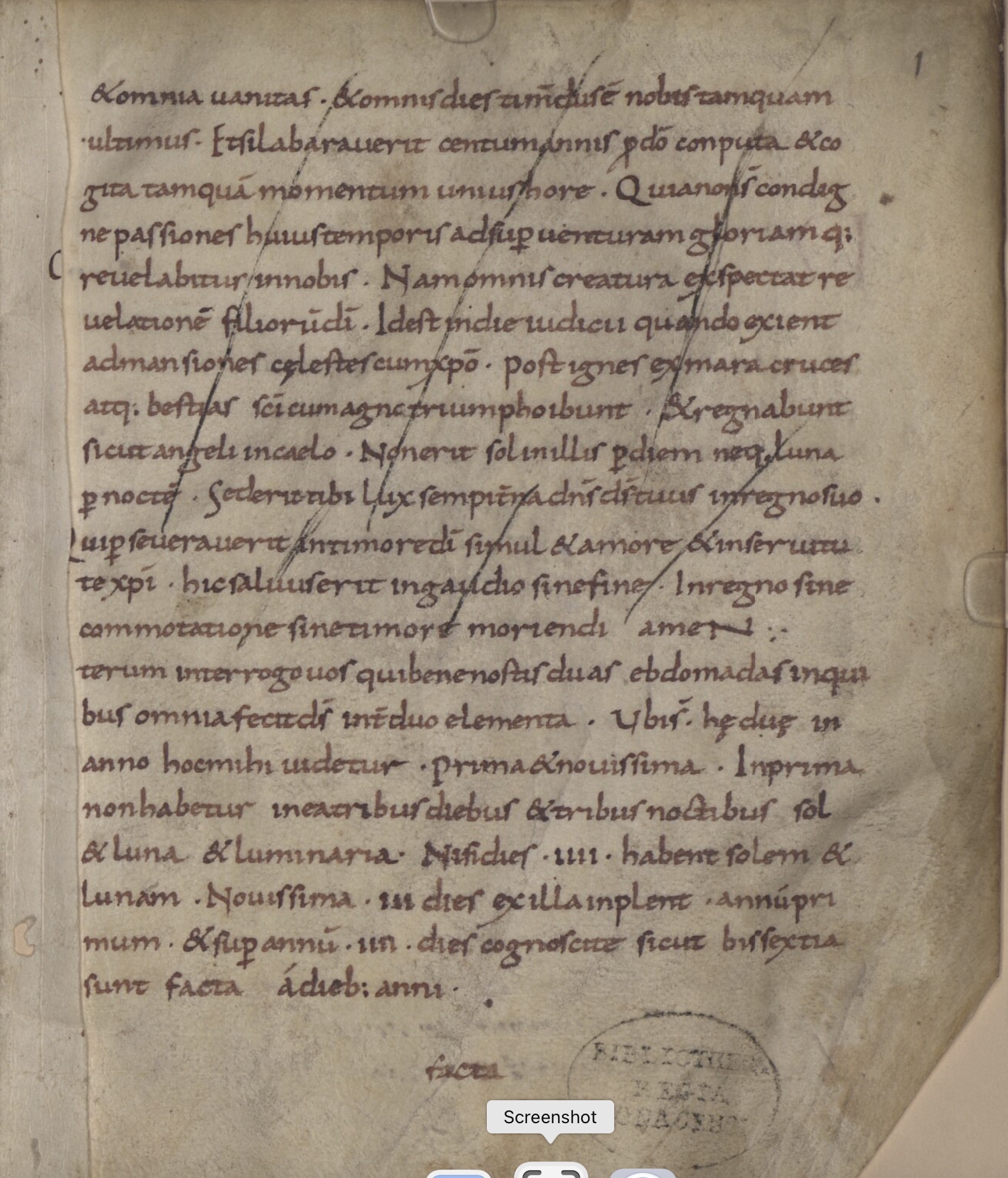
An encyclopedic treatise by Isidore of Seville on the structure and phenomena of the natural world, written in the early seventh century. De natura rerum discusses cosmology, astronomy, time, the calendar, the heavens, atmospheric phenomena, the earth, seas and other aspects of nature, drawing heavily on classical and late-antique authorities. Unlike Isidore’s Etymologiae, it is not a major lapidary or mineralogical source, and gemstones are not a principal subject. Its importance lies chiefly in the transmission of ancient natural philosophy into the medieval Latin scholarly tradition.
Report on the Jade Mines Area in Myitkyina District
Unpublished Work
Kelley, H.K. (n.d.)Report on the Jade Mines Area in Myitkyina District. unpublished report.
Record No. 4411 | Sinkankas/Born No.: NIS / NIB | not seen
Cited by Khin Maung Nyunt (2004) History of Myanmar Jade Trade till 1938
Jades of the T.B. Walker Collection at the Walker Art Center, Minneapolis, Minnesota
Book
Walker Art Center (n.d., ca. 1950)Jades of the T.B. Walker Collection at the Walker Art Center, Minneapolis, Minnesota. Minneapolis, Walker Art Center, 96 pp.
Record No. 3978 | Sinkankas/Born No.: NIS / NIB | not seen
An administrative file concerning affairs in the Jade Mines Tract of Myitkyina District, presumably dealing with the government and regulation of the mines and relations between the colonial administration, local Kachin authorities, miners, and traders.
Jade: Werkstoff der Urzeit, Schmuckstein der Neuzeit
Prehistoric Tool Material, Present-day Gem Material
Film or Broadcast
Gübelin, E.J. (n.d.)Jade: Werkstoff der Urzeit, Schmuckstein der Neuzeit. [Prehistoric Tool Material, Present-day Gem Material]
Record No. 2203 | Sinkankas/Born No.: NIS / NIB | Language: in French & German | not seen
A German- and French-language film by Eduard J. Gübelin examining jade’s transition from a material used for tools and implements in prehistoric times to a prized ornamental gemstone in the modern era. The film is recorded in the archives of the Cinémathèque suisse under the title Jade, Werkstoff der Urzeit – moderner Schmuckstein. It is a 16 mm production measuring 452 meters, tentatively dated to approximately 1970.
Exploring the Literature of Jade
Jade literature spans gemology, mineralogy, archaeology, art history, mining, carving and connoisseurship, and includes works on both jadeite and nephrite from around the world.
Four Treasures is Lotus Gemology's freely accessible gemological reference database. Use the full database to search by author, title or keyword and explore literature on gemology, mineralogy, jewelry and related fields. Where available, hyperlinks on titles may lead directly to the full publication.