Sapphire Inclusions
Explore sapphire inclusions in Hyperion, the Lotus Gemology inclusion database. Hyperion contains photomicrographs of inclusions and internal features in natural sapphire, documented with information on geographic origin, treatment, lighting conditions, field of view, photographer and published references.
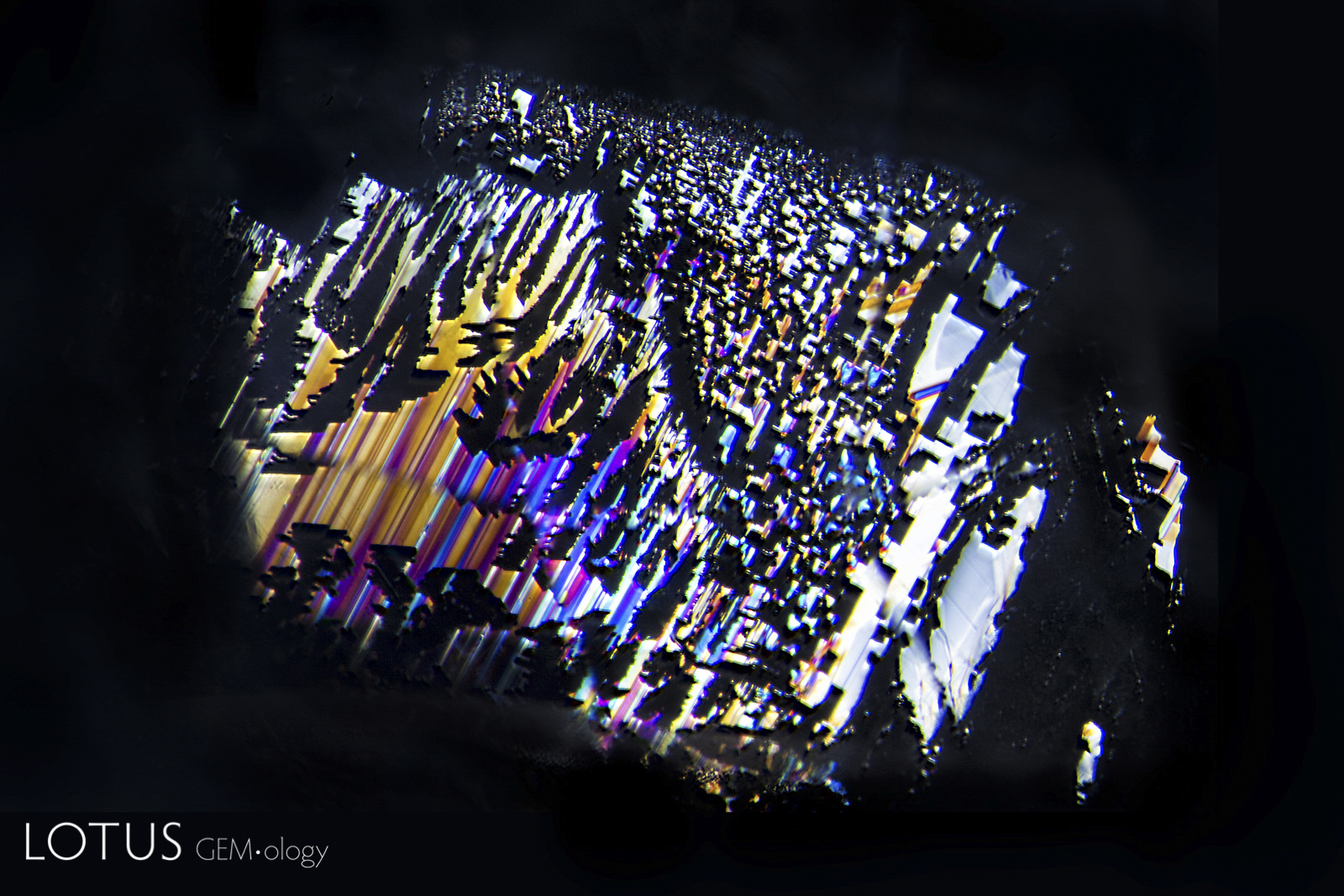
This wound in a sapphire from Sri Lanka has metamorphosed over time into the spectacularly iridescent fingerprint inclusion we see here. Such healed fissures display evidence of the underlying atomic symmetry.
Natural Sapphire •
Sri Lanka (Ceylon) •
Enhancements:
None Detected (None) •
Lighting Conditions:
Fiber Optic: Diffuse Oblique
Photographer:
Richard W. Hughes •
Image Number:
A-002-4348-1
These “folded” fingerprints that appear like little pleats or creases are thought to be an indication of Burmese origin in sapphire.
Natural Sapphire •
Myanmar (Burma); Mogok •
Enhancements:
None Detected (None) •
Lighting Conditions:
Fiber Optic: Diffuse Oblique
Photographer:
E. Billie Hughes •
Image Number:
A-002-4235-1
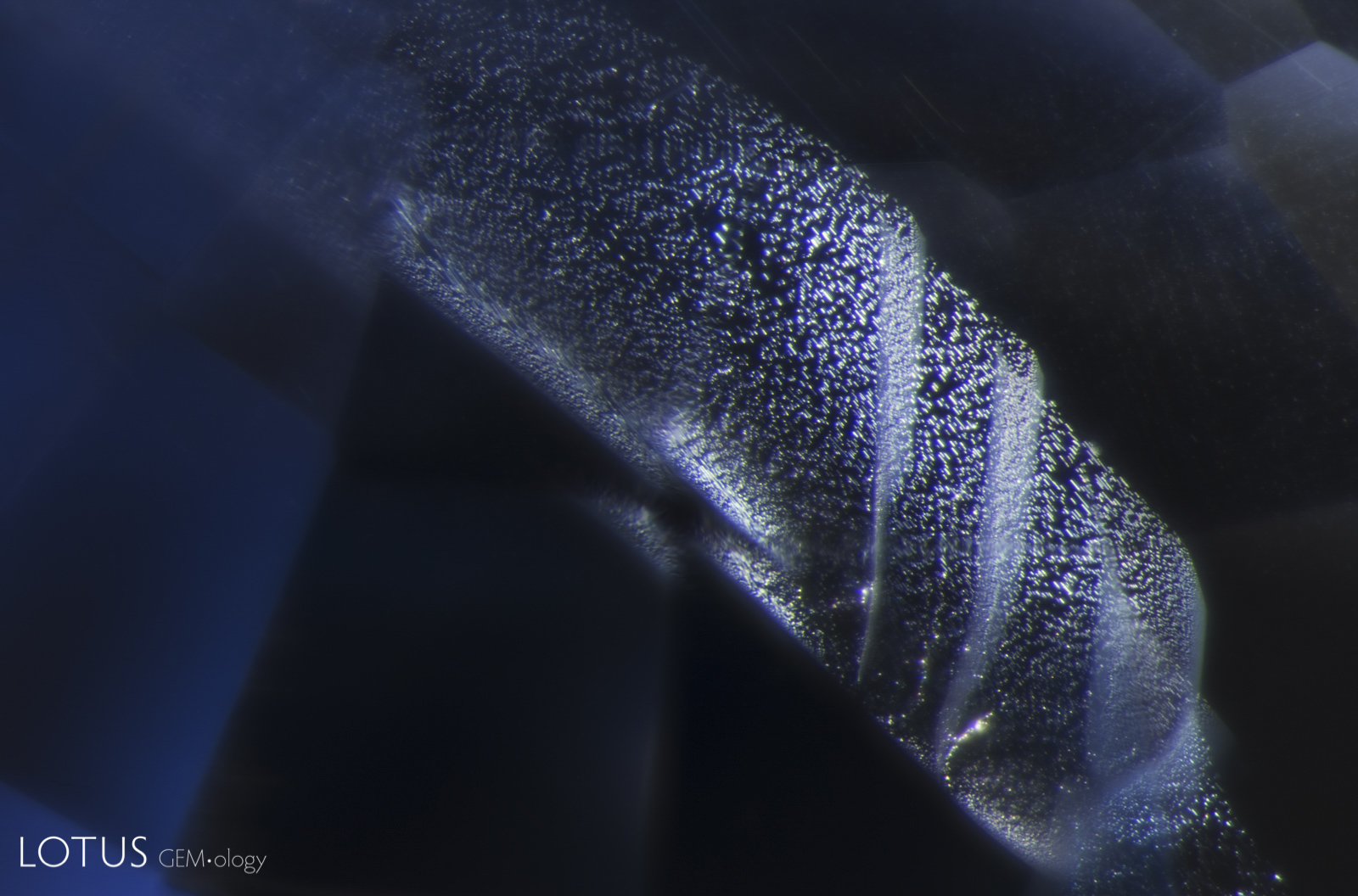
The zoned texture clouds in this Madagascar sapphire are associated with colorless areas, while the deepest blue areas are relatively free of these particle clouds.
Natural Sapphire •
Madagascar •
Enhancements:
None Detected (None) •
Lighting Conditions:
Fiber Optic: Oblique
Photographer:
E. Billie Hughes •
Image Number:
A-002-4116-1
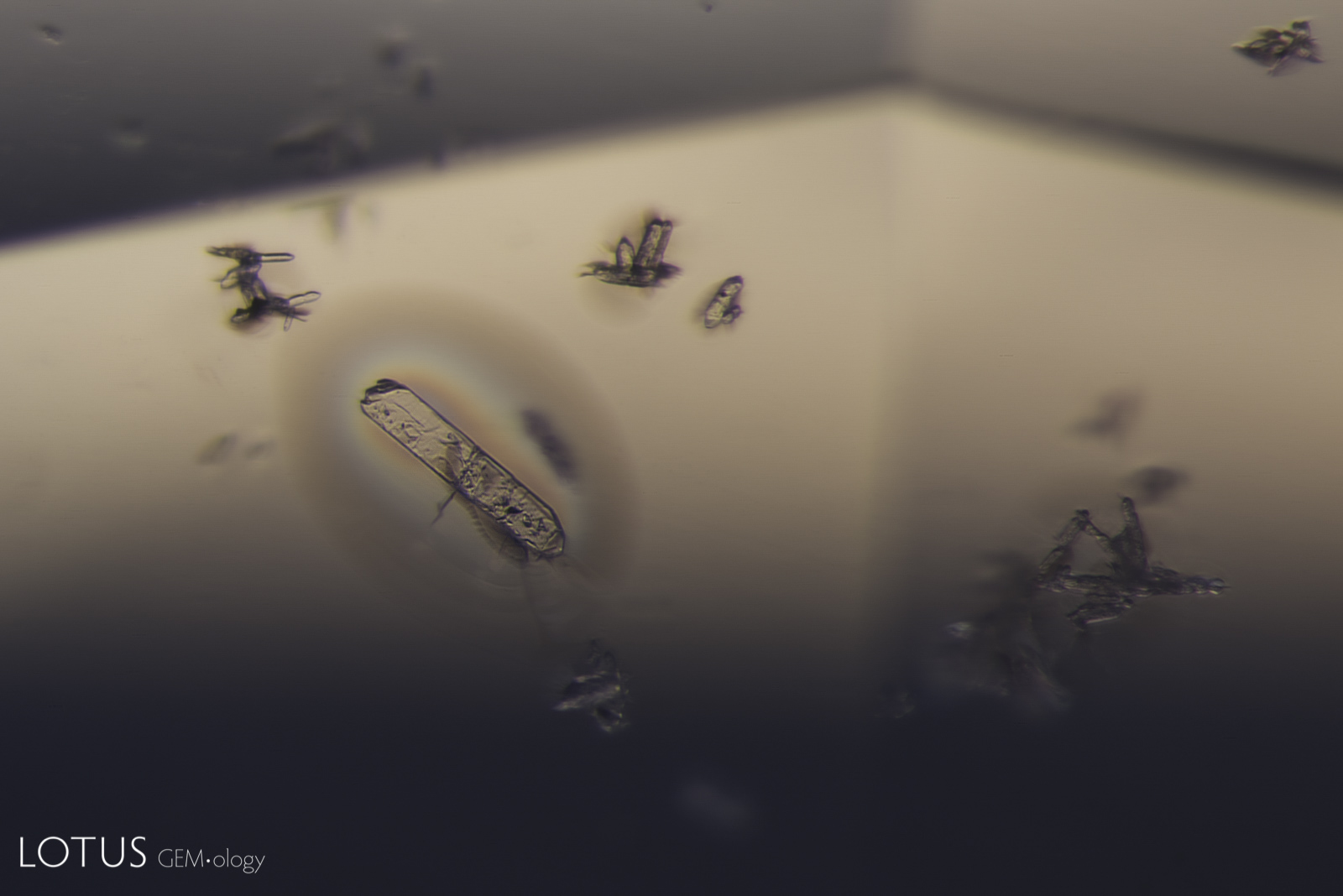
Zircon crystals like these are a common feature in Madagascar sapphire.
Natural Sapphire •
Madagascar •
Enhancements:
None Detected (None) •
Lighting Conditions:
Diffuse Light Field (Transmitted Light)
Photographer:
E. Billie Hughes •
Image Number:
A-002-4117-1
Ancient fluids trapped in a healed fissure within a Sri Lankan sapphire. Some time after the crystal grew a fissure developed. Later fluids dissolved the walls of the fissure and redeposited corundum, healing the fissure closed. Sri Lankan sapphires often display the most beautiful examples in the sapphire world.
Natural Sapphire •
Sri Lanka (Ceylon) •
Enhancements:
None Detected (None) •
Lighting Conditions:
Fiber Optic: Overhead
Photographer:
Richard W. Hughes •
Image Number:
A-002-4091-1
Roedder, E. (1962) Ancient fluids in crystals. Scientific American, Vol. 207, pp. 38–47; RWHL*.
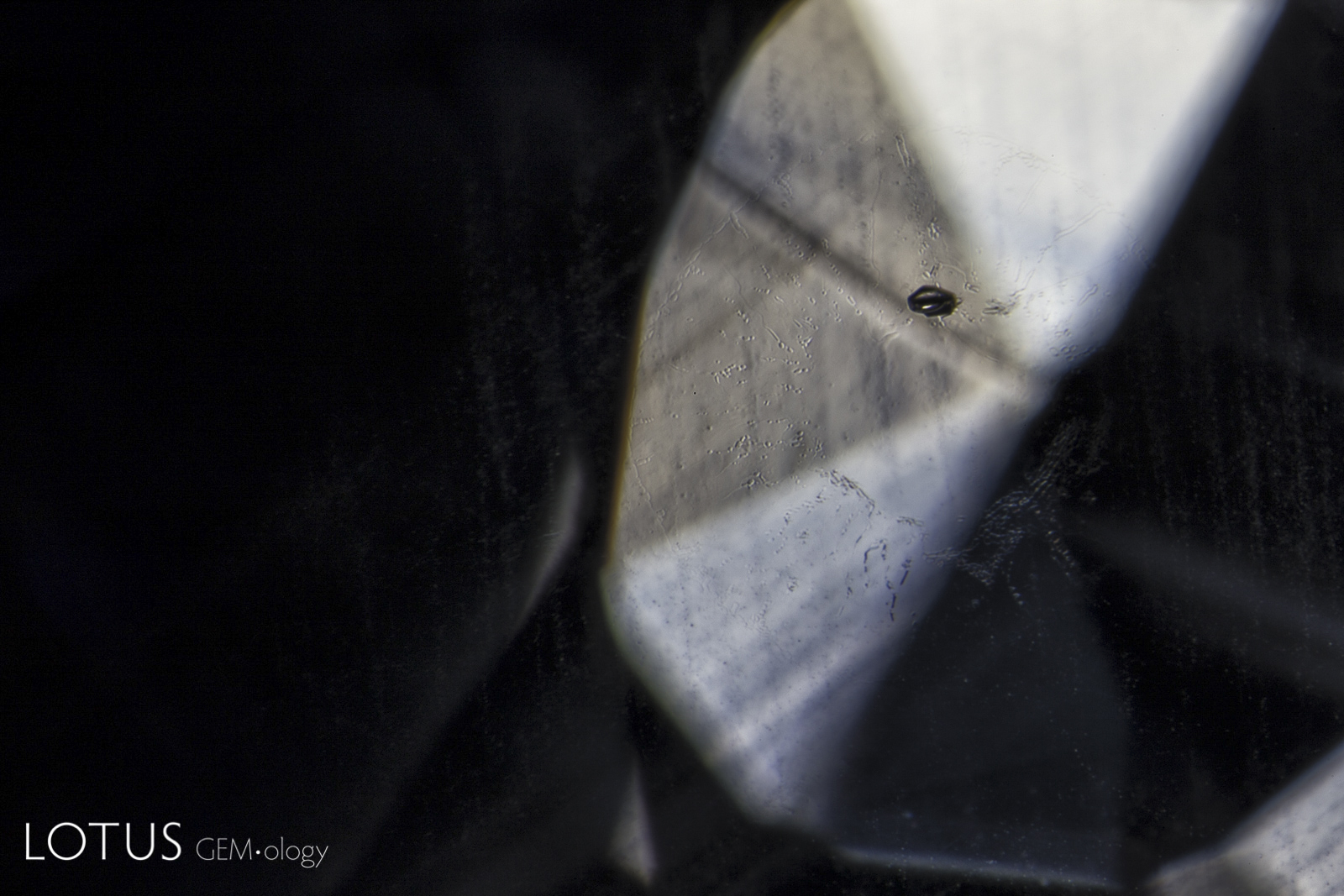
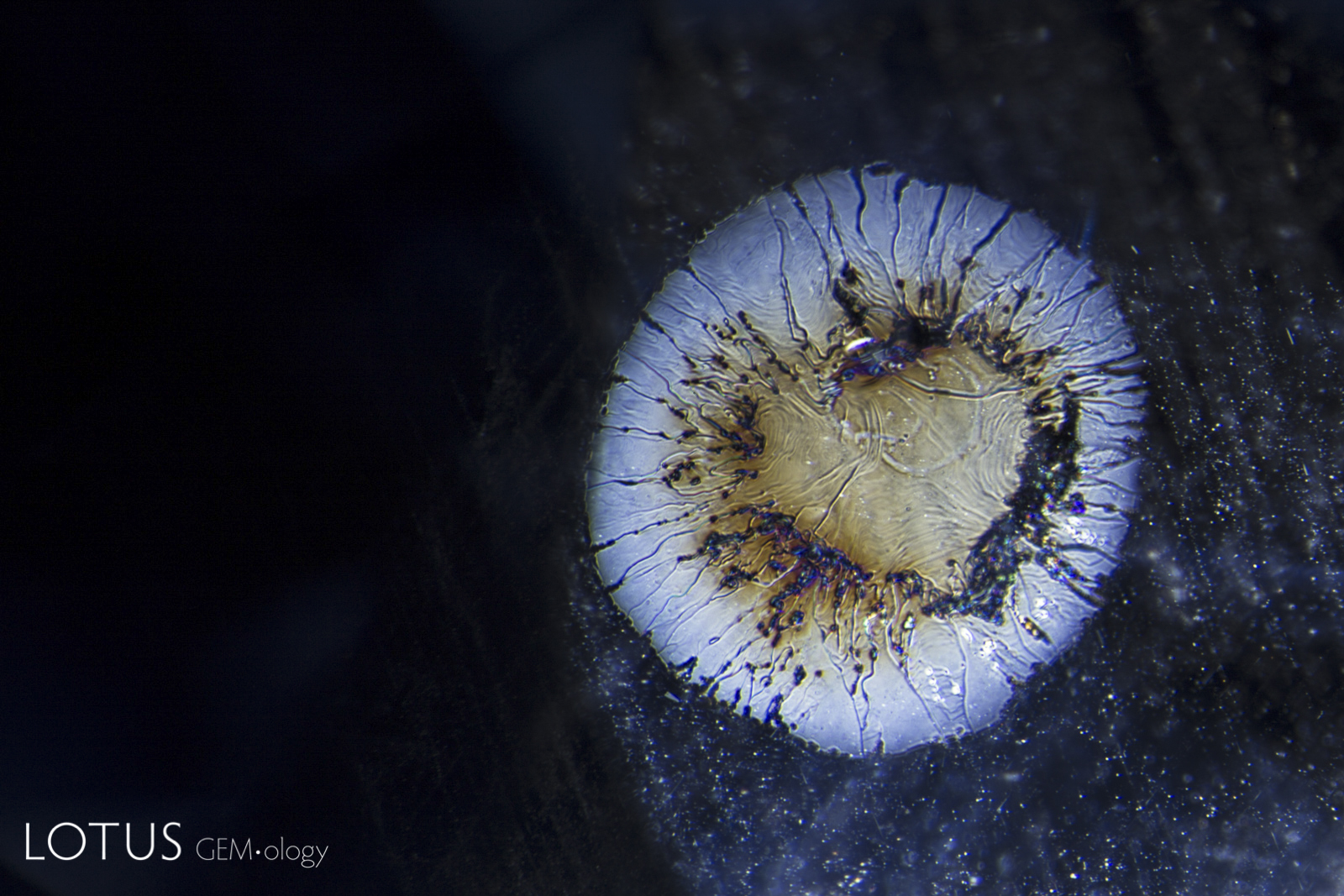
A small crystal with an iridescent thin-film decrepitation halo surrounding it. When a crystal is heated (either by a magma or artificially by human intervention), it expands. Tension is often relieved by a fissure in the weakest direction, the basal plane.
Natural Sapphire •
Thailand (Siam); Bo Ploi •
Enhancements:
Heat (H) •
Lighting Conditions:
Dark Field
Photographer:
Richard W. Hughes •
Image Number:
A-002-3997-2
A small crystal with an iridescent thin-film decrepitation halo surrounding it. When a crystal is heated (either by a magma or artificially by human intervention), it expands. Tension is often relieved by a fissure in the weakest direction, the basal plane.
Natural Sapphire •
Thailand (Siam); Bo Ploi •
Enhancements:
Heat (H) •
Lighting Conditions:
Fiber Optic: Overhead
Photographer:
Richard W. Hughes •
Image Number:
A-002-3997-1
Sharp angular growth zoning defined by milky “texture” clouds. These texture clouds are composed of submicroscopic titanium-rich exsolved particles. Where they form, the gem is decolorized, as the titanium is no longer available to produce color. This phenomena was named “chromophore cannibalization” by photomicropgrapher John Koivula. Areas where the clouds are absent are a deep blue color.
Natural Sapphire •
Madagascar •
Enhancements:
None Detected (None) •
Lighting Conditions:
Fiber Optic: Oblique
Photographer:
Richard W. Hughes •
Image Number:
A-002-4026-5
Sharp angular growth zoning defined by milky “texture” clouds. These texture clouds are composed of submicroscopic titanium-rich exsolved particles. Where they form, the gem is decolorized, as the titanium is no longer available to produce color. This phenomena was named “chromophore cannibalization” by photomicropgrapher John Koivula. Areas where the clouds are absent are a deep blue color.
Natural Sapphire •
Madagascar •
Enhancements:
None Detected (None) •
Lighting Conditions:
Fiber Optic: Oblique
Photographer:
Richard W. Hughes •
Image Number:
A-002-4026-4
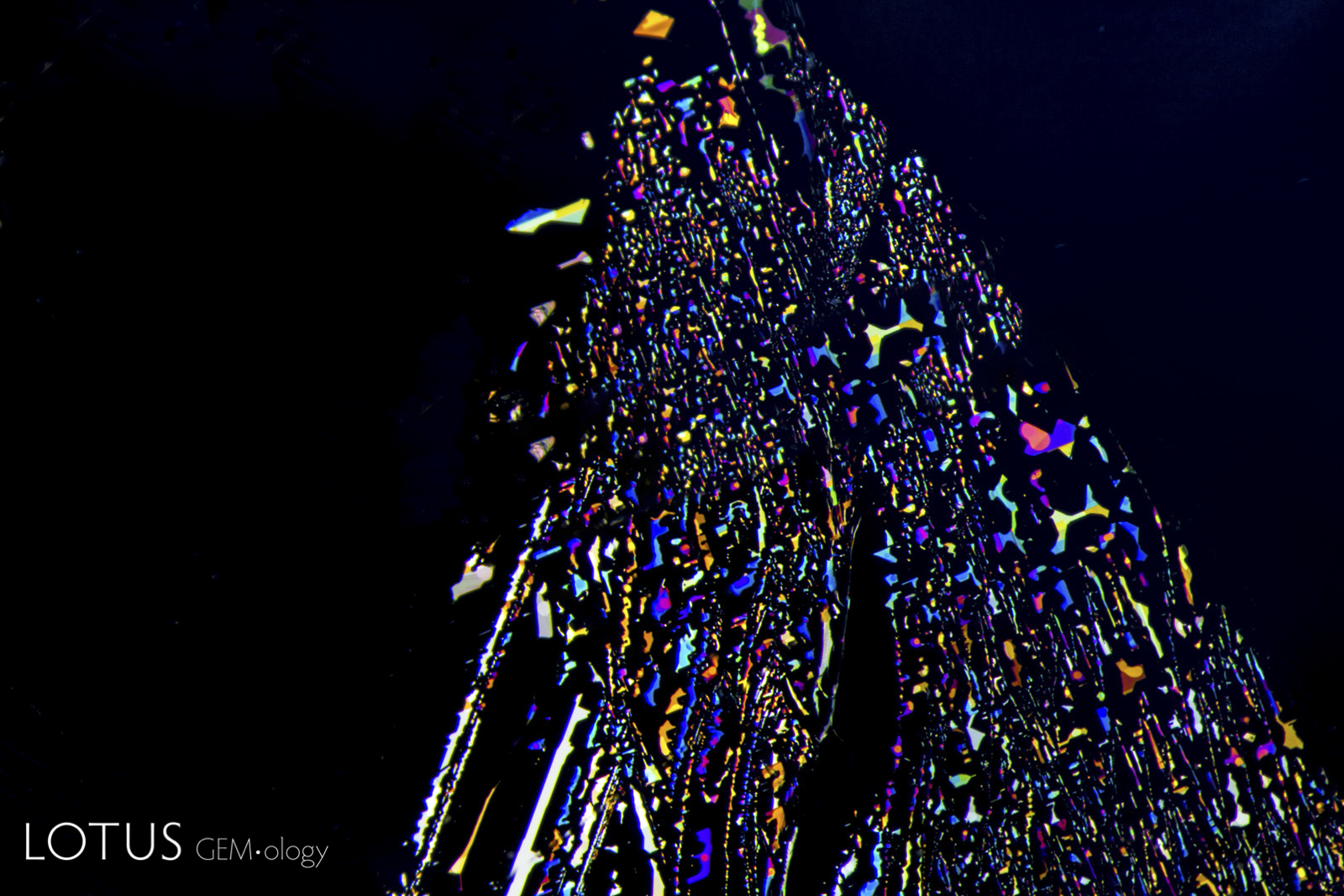
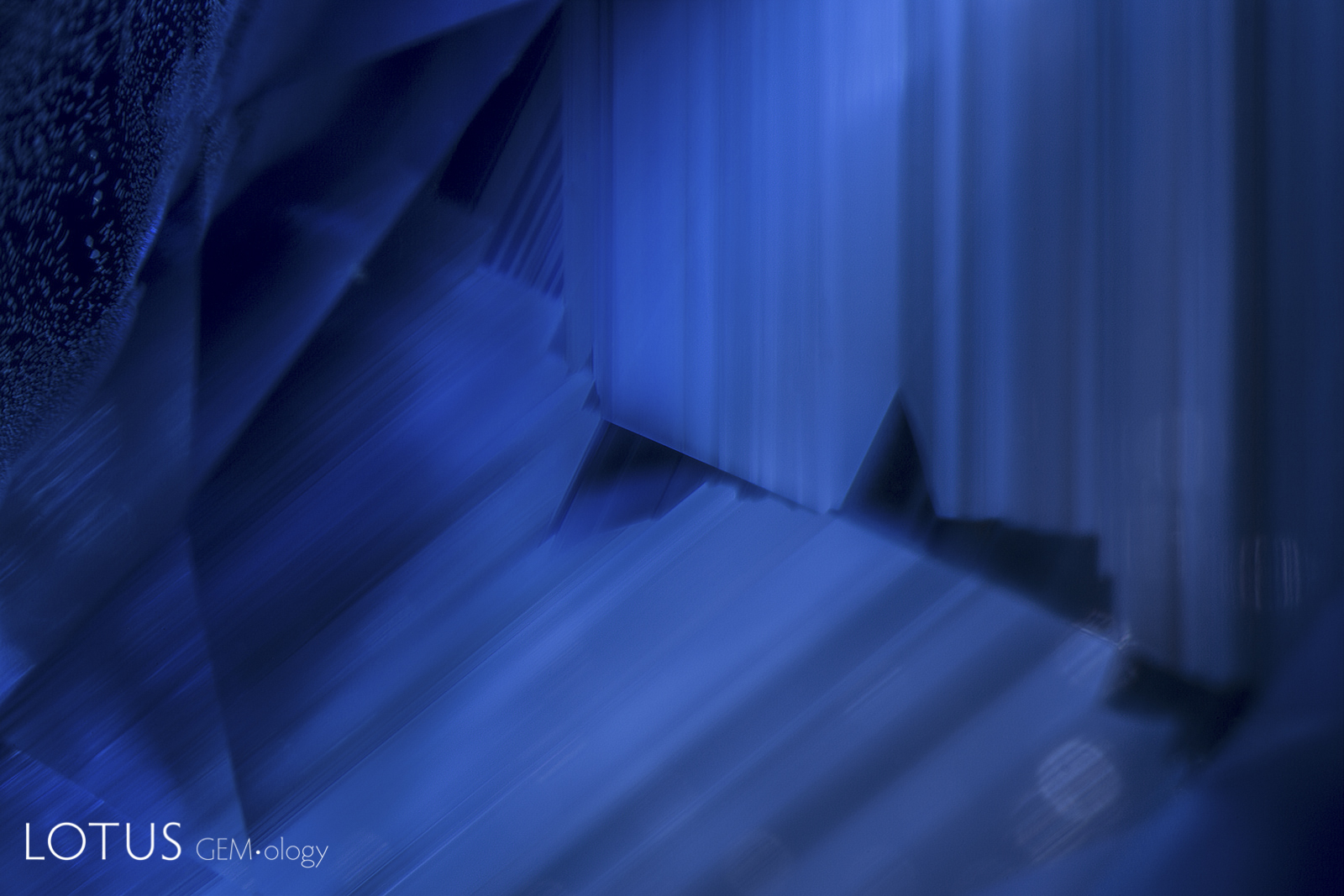
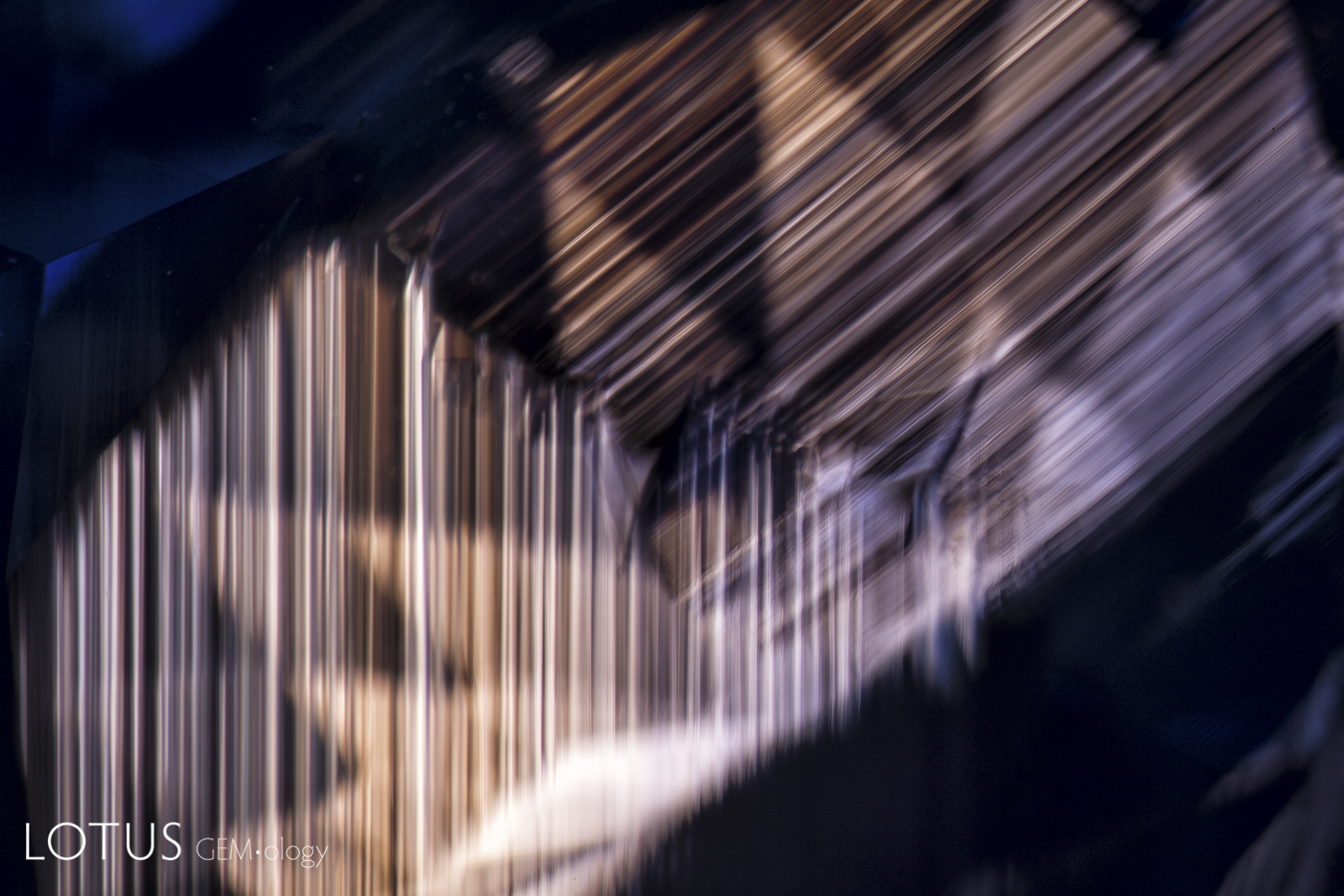
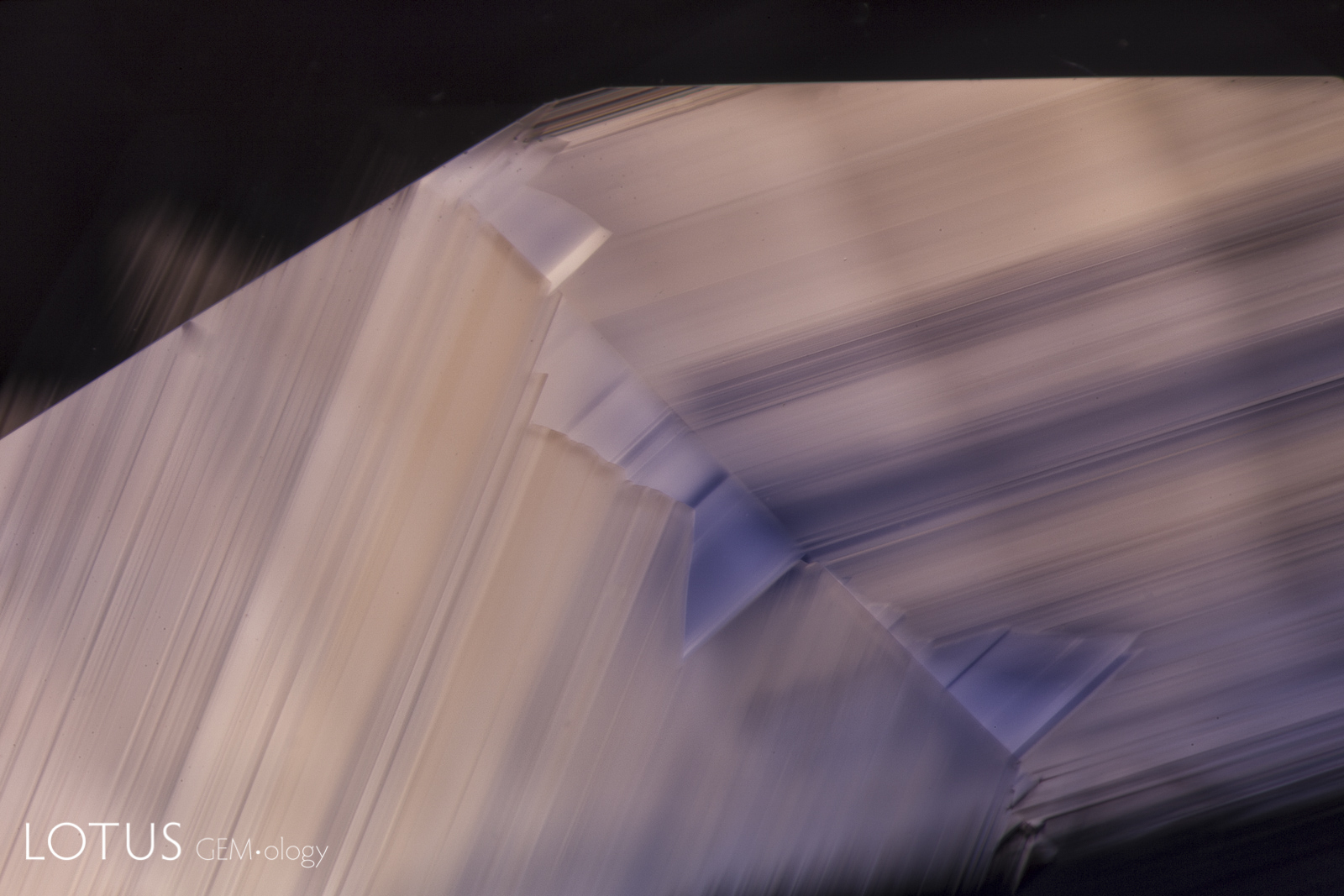
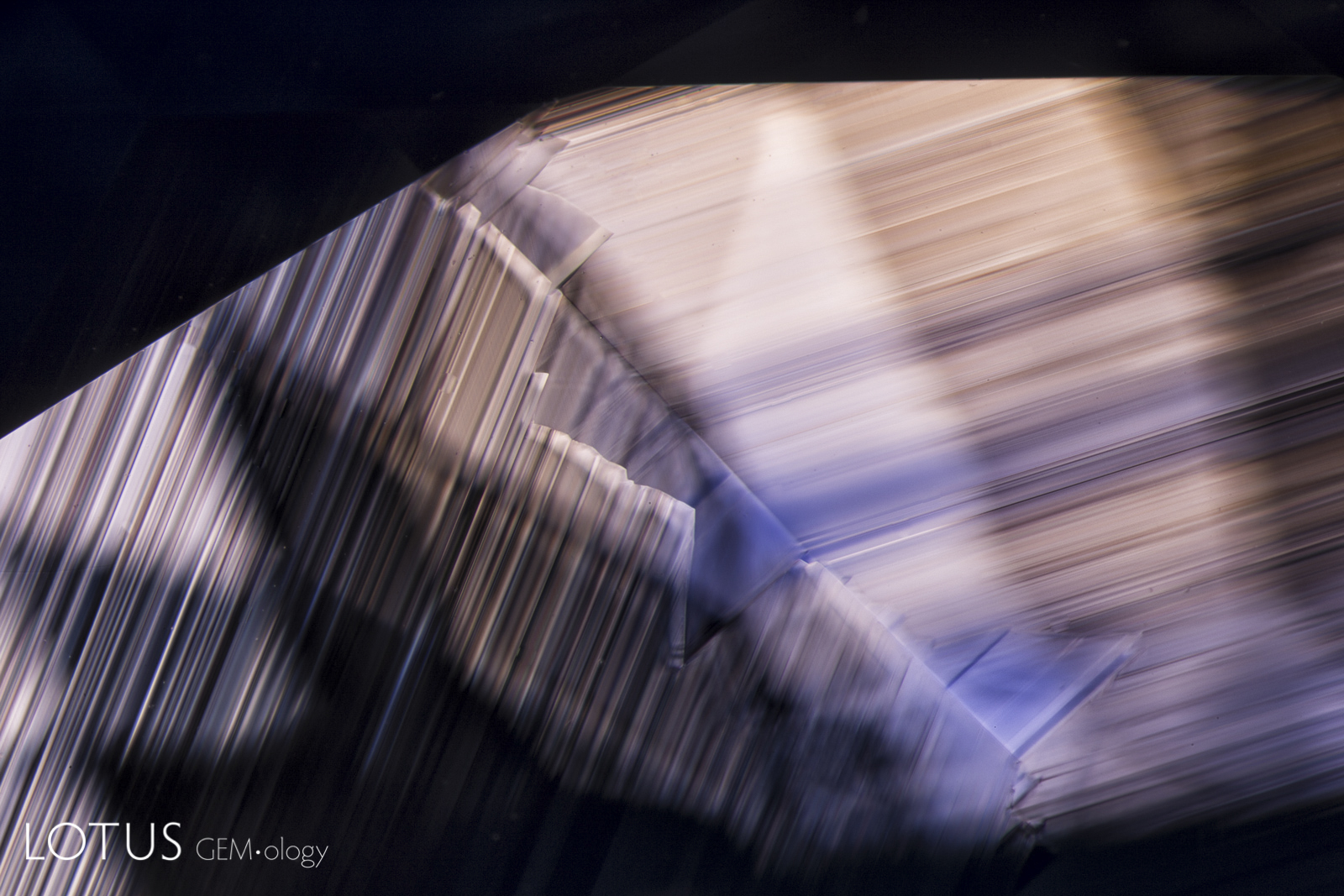
Extremely sharp angular growth zoning in a Madagascar sapphire. At times the zoning is so sharp, it created iridescence via diffraction of visible light.
Natural Sapphire •
Madagascar •
Enhancements:
None Detected (None) •
Lighting Conditions:
Dark Field
Photographer:
Richard W. Hughes •
Image Number:
A-002-4026-3
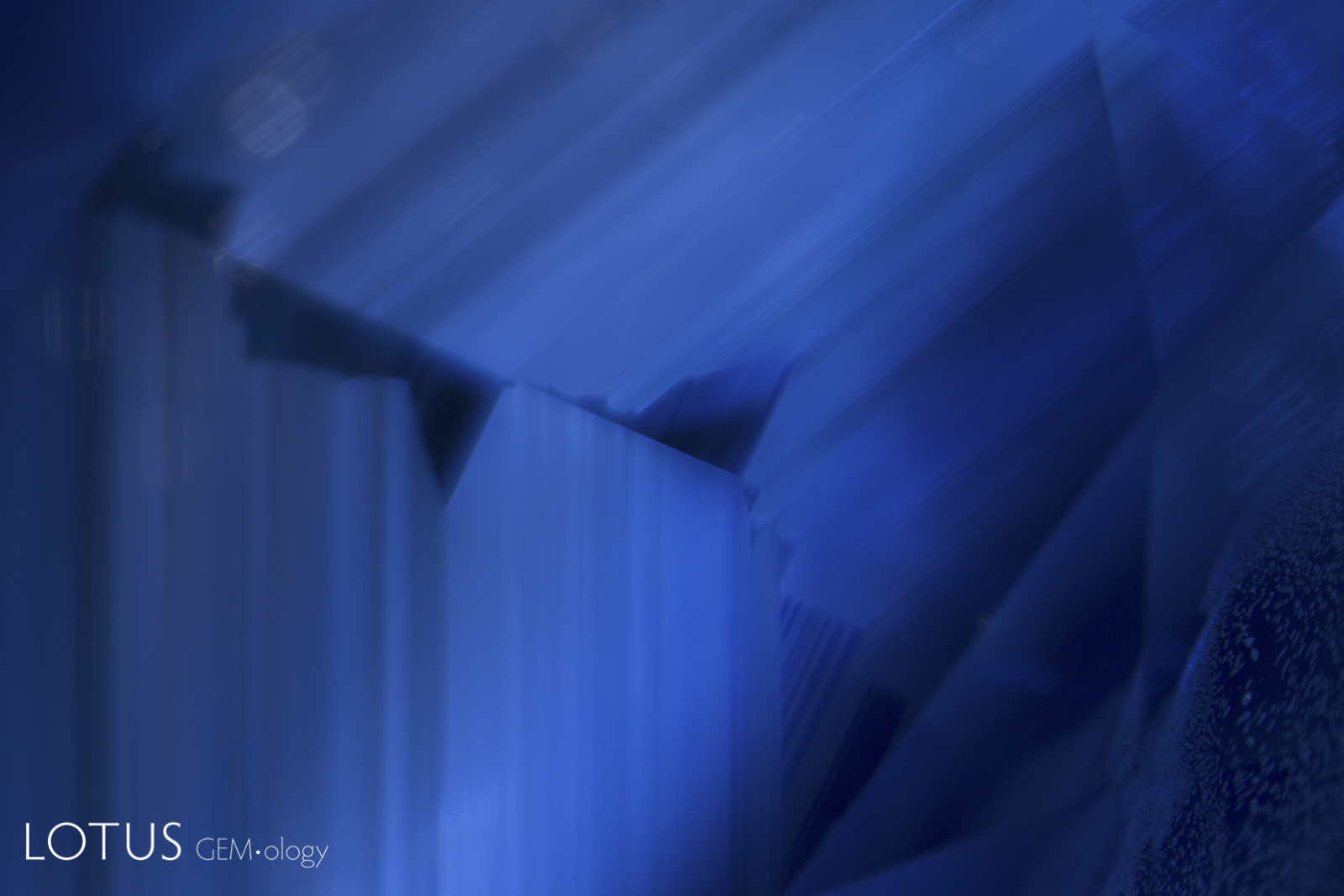
Extremely sharp angular growth zoning in a Madagascar sapphire. At times the zoning is so sharp, it created iridescence via diffraction of visible light. This is the same position, but using light field illumination.
Natural Sapphire •
Madagascar •
Enhancements:
None Detected (None) •
Lighting Conditions:
Diffuse Light Field (Transmitted Light)
Photographer:
E. Billie Hughes •
Image Number:
A-002-4026-2
Extremely sharp angular growth zoning in a Madagascar sapphire. At times the zoning is so sharp, it created iridescence via diffraction of visible light.
Natural Sapphire •
Madagascar •
Enhancements:
None Detected (None) •
Lighting Conditions:
Dark Field + Shadowing
Photographer:
E. Billie Hughes •
Image Number:
A-002-4026-1
Search the Complete Hyperion Database
Sapphire inclusions may include mineral crystals, rutile silk, healed fissures, fluid inclusions, negative crystals, color zoning and other features formed during or after crystal growth. Such features are important to gemologists because they can provide evidence useful in identifying sapphire, understanding its geological history, recognizing treatment and, in some cases, determining geographic origin.
Sapphire Inclusion Photomicrographs
The Hyperion sapphire gallery includes microscopic features found in sapphires from major deposits around the world. Each entry is accompanied by descriptive information and, where available, references to the gemological literature.
What Inclusions Can Reveal About Sapphire
Inclusions are an important part of sapphire identification. Their form, composition, orientation and alteration can help gemologists distinguish natural sapphire from synthetic material, recognize evidence of heat treatment, and study the geological environment in which the sapphire formed.
Hyperion combines inclusion photomicrography with supporting gemological information so that individual features can be compared with documented examples from known sapphire deposits.
About Hyperion
Hyperion is the Lotus Gemology searchable inclusion database. It allows users to browse gemstone inclusions by gem type, geographic origin, treatment and keyword.