Sapphire Inclusions
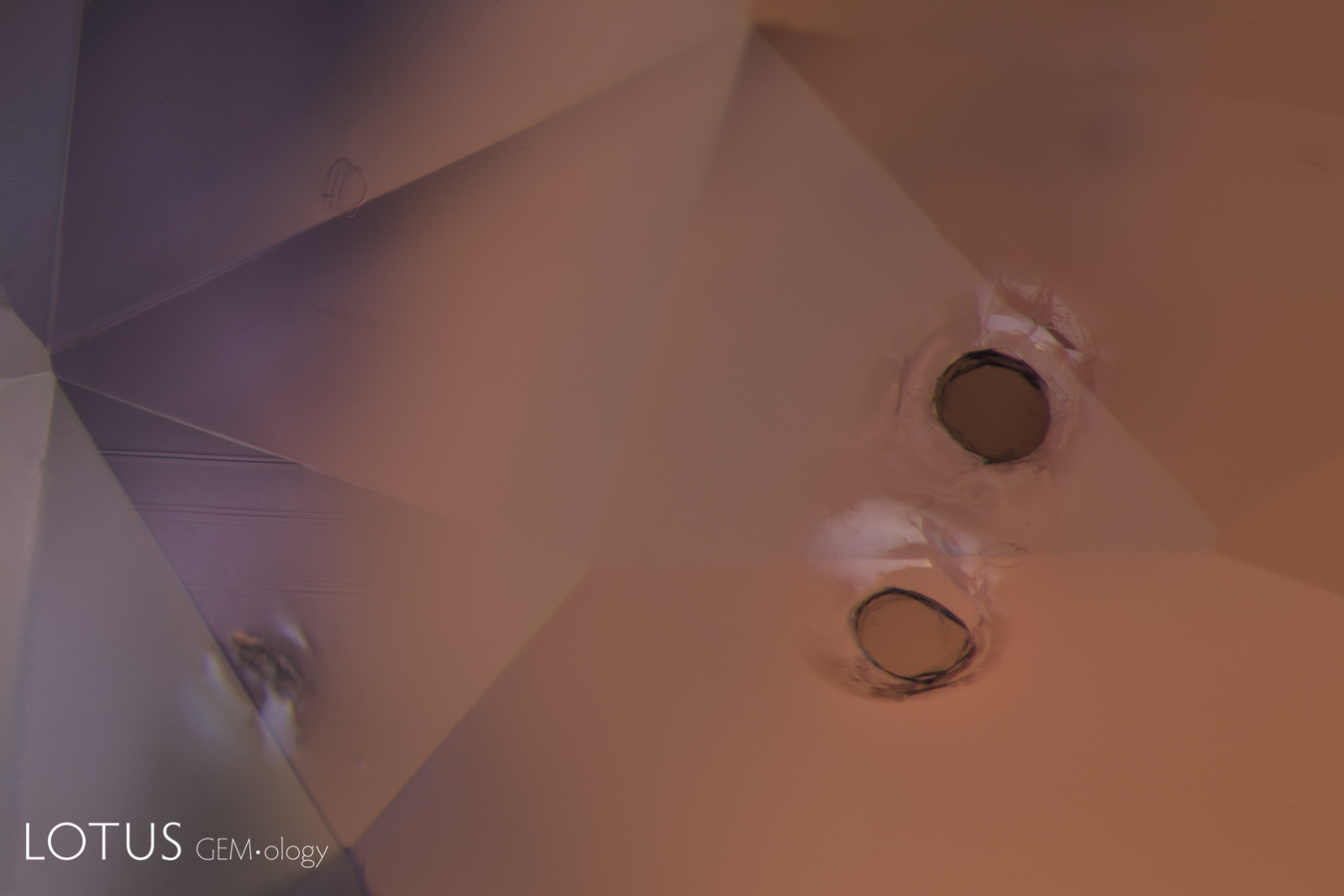
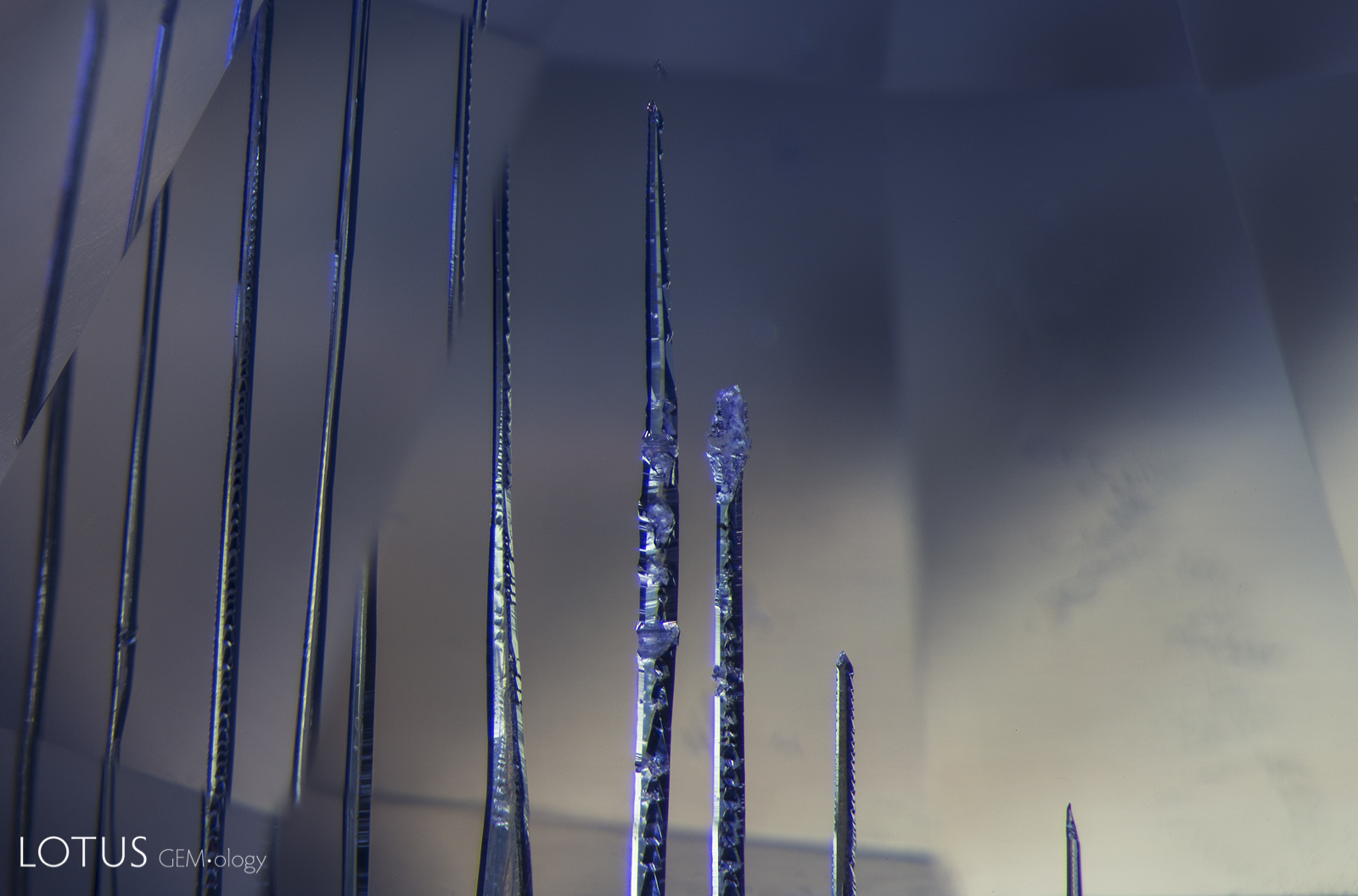
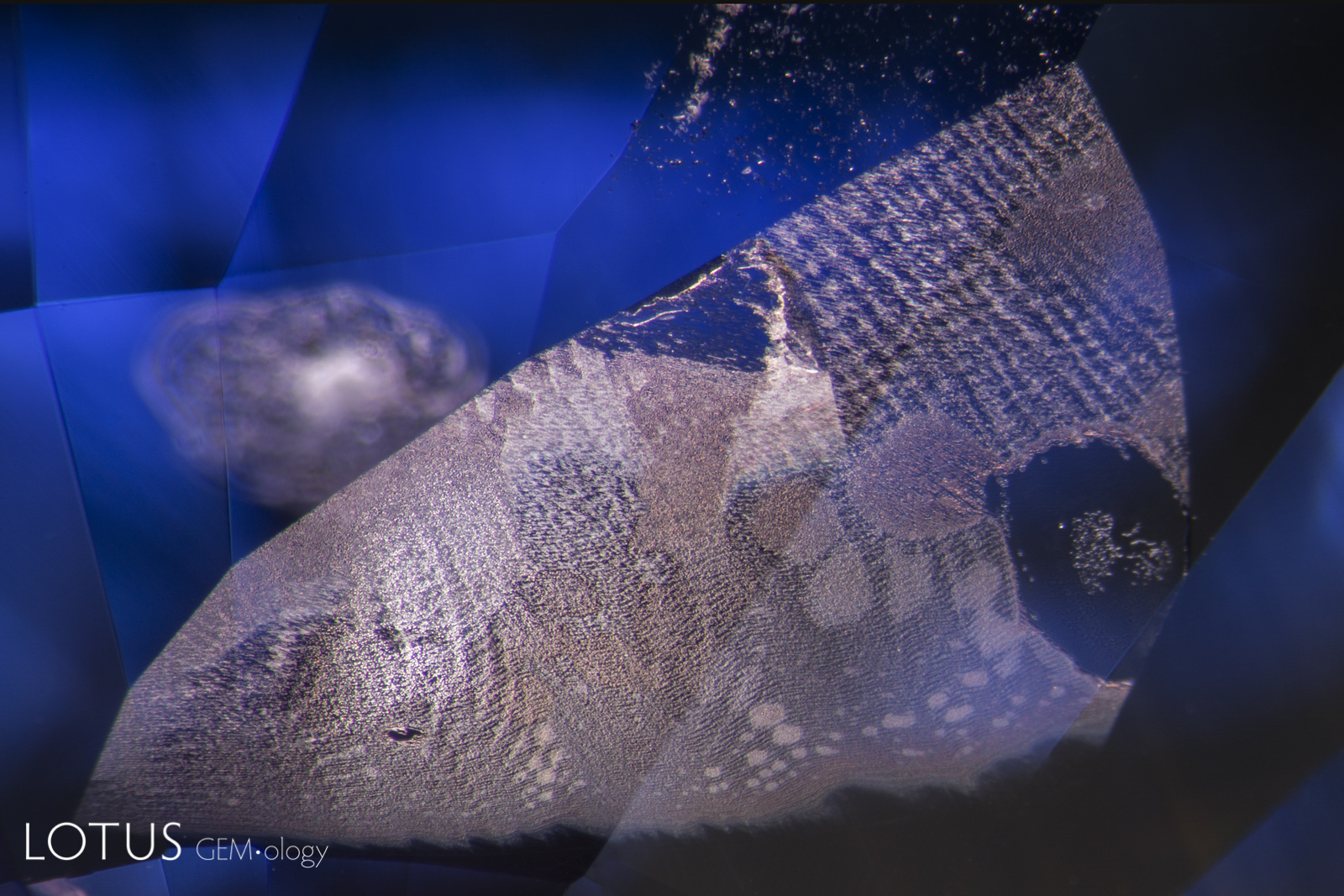
Explore sapphire inclusions in Hyperion, the Lotus Gemology inclusion database. Hyperion contains photomicrographs of inclusions and internal features in natural sapphire, documented with information on geographic origin, treatment, lighting conditions, field of view, photographer and published references.
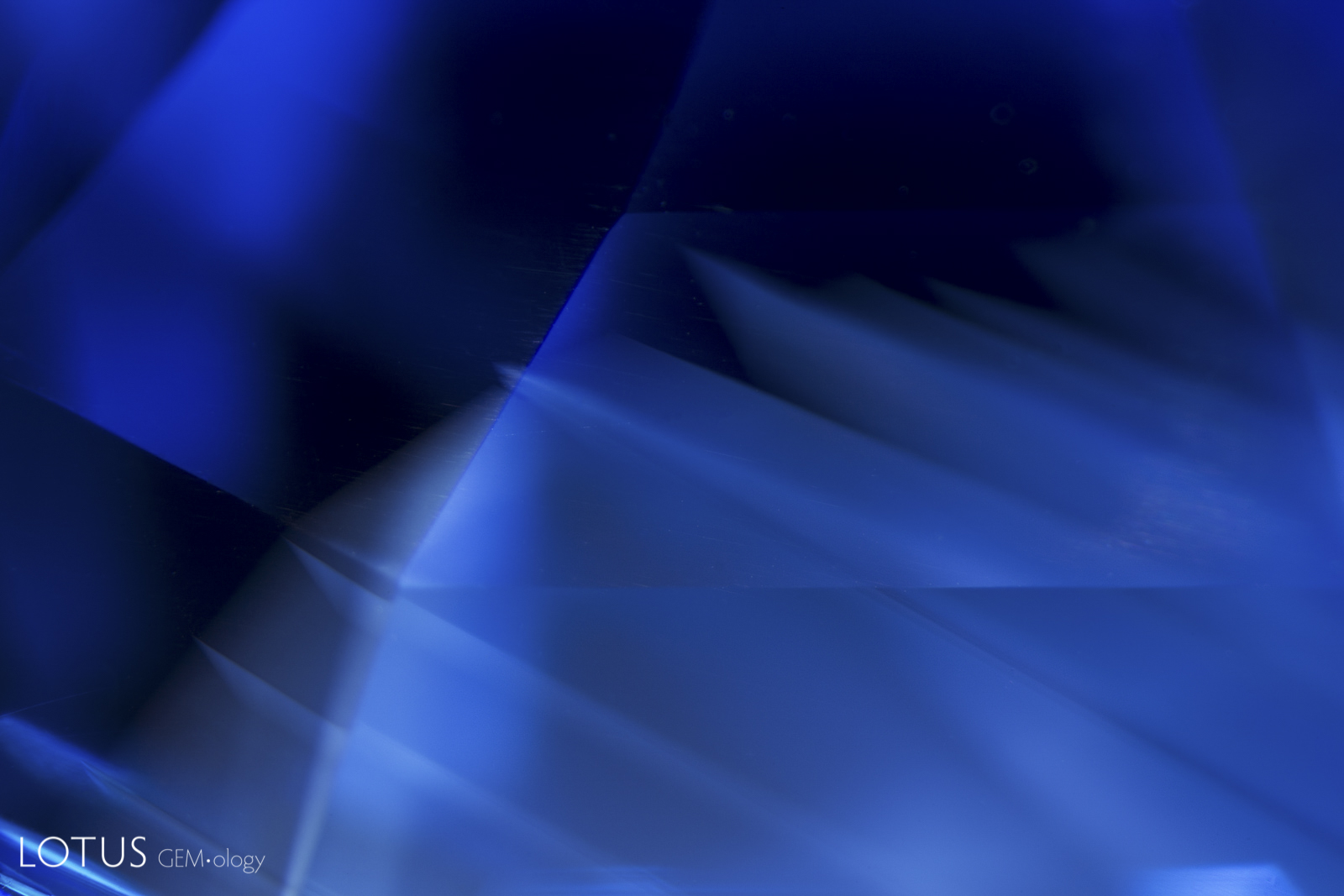
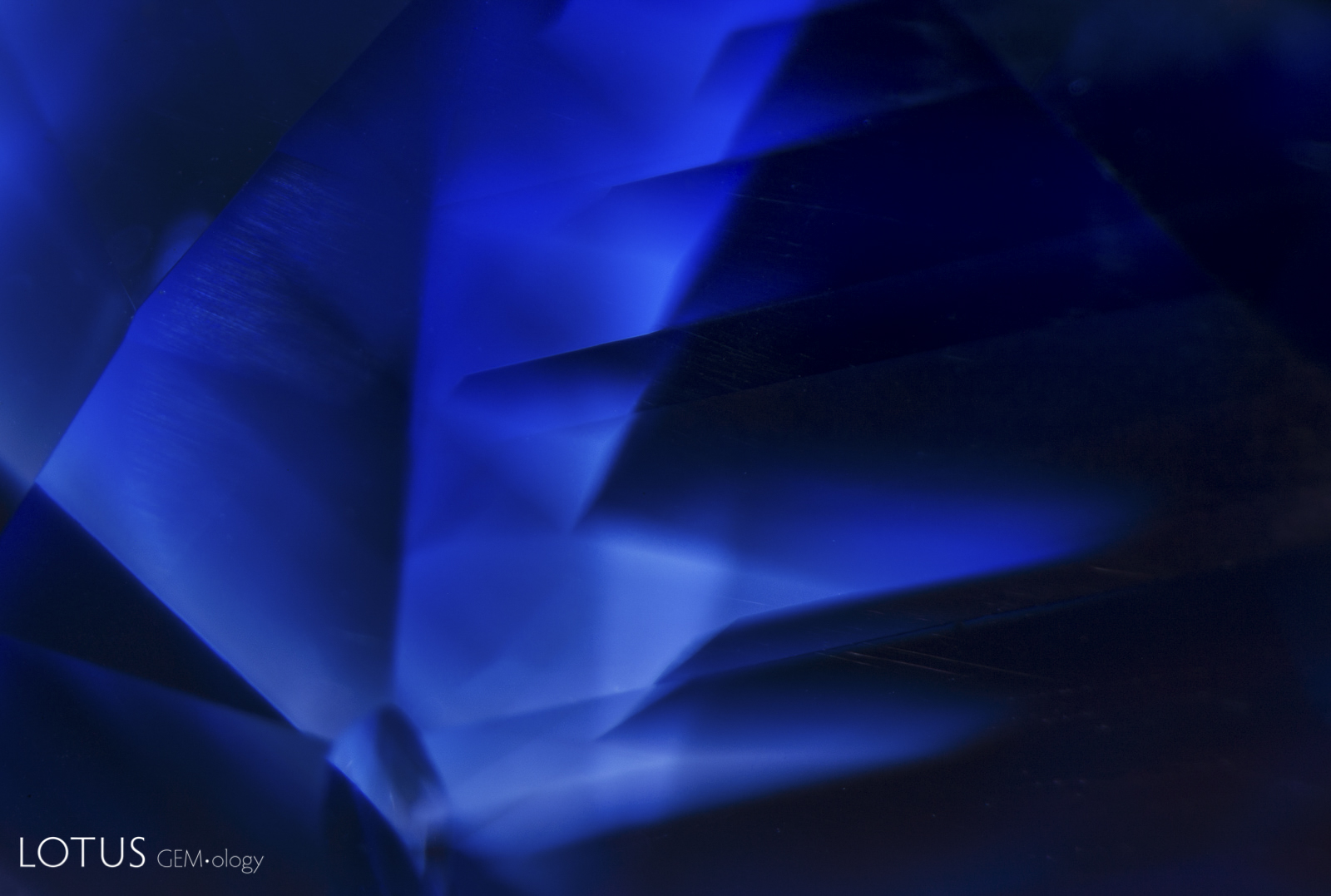
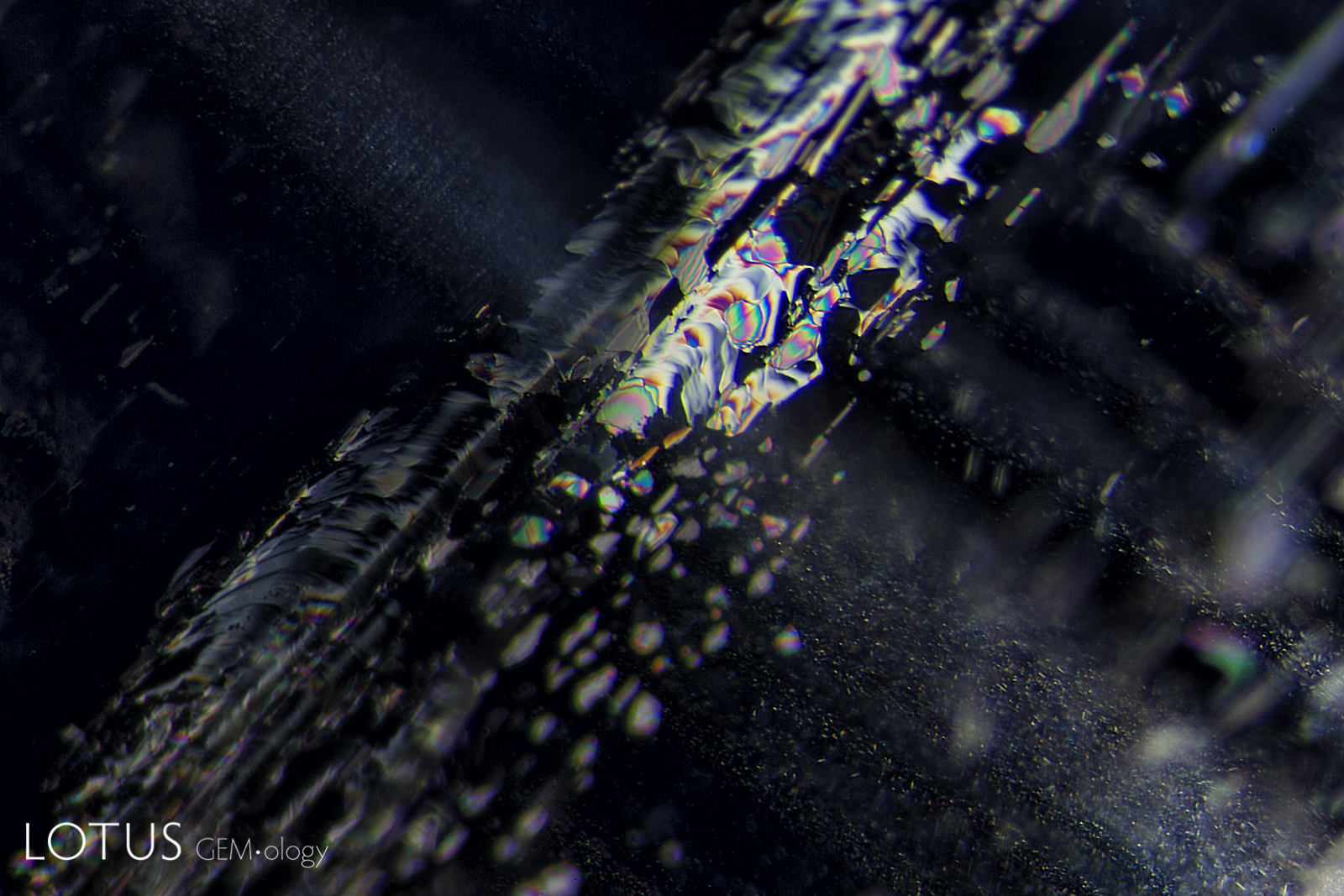
Dense “parquet” style zoned clouds in an untreated Sri Lanka sapphire.
Natural Sapphire •
Sri Lanka (Ceylon) •
Enhancements:
None Detected (None) •
Lighting Conditions:
Fiber Optic: Oblique
Photographer:
E. Billie Hughes •
Image Number:
A-002-7181-2
Dense “parquet” style zoned clouds in an untreated Sri Lanka sapphire.
Natural Sapphire •
Sri Lanka (Ceylon) •
Enhancements:
None Detected (None) •
Lighting Conditions:
Fiber Optic: Oblique
Photographer:
E. Billie Hughes •
Image Number:
A-002-7181-1
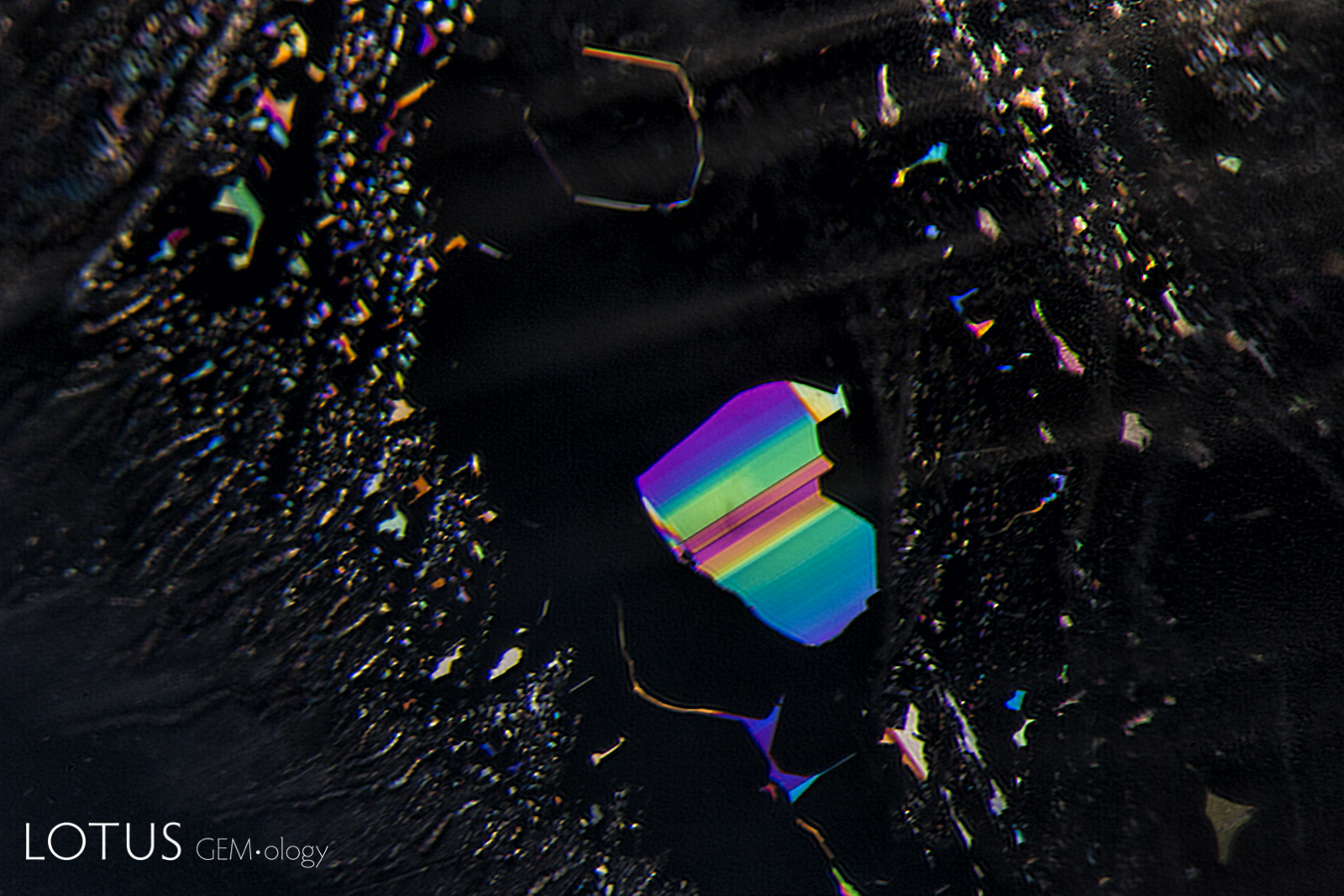
Oblique fiber-optic illumination reveals lovely iridescence in this secondary liquid inclusion in an untreated sapphire from Sri Lanka.
Natural Sapphire •
Sri Lanka (Ceylon) •
Enhancements:
None Detected (None) •
Lighting Conditions:
Fiber Optic: Oblique
Photographer:
Richard W. Hughes •
Image Number:
A-002-7103-1
Roedder, E. (1962) Ancient fluids in crystals. Scientific American, Vol. 207, pp. 38–47; RWHL*.
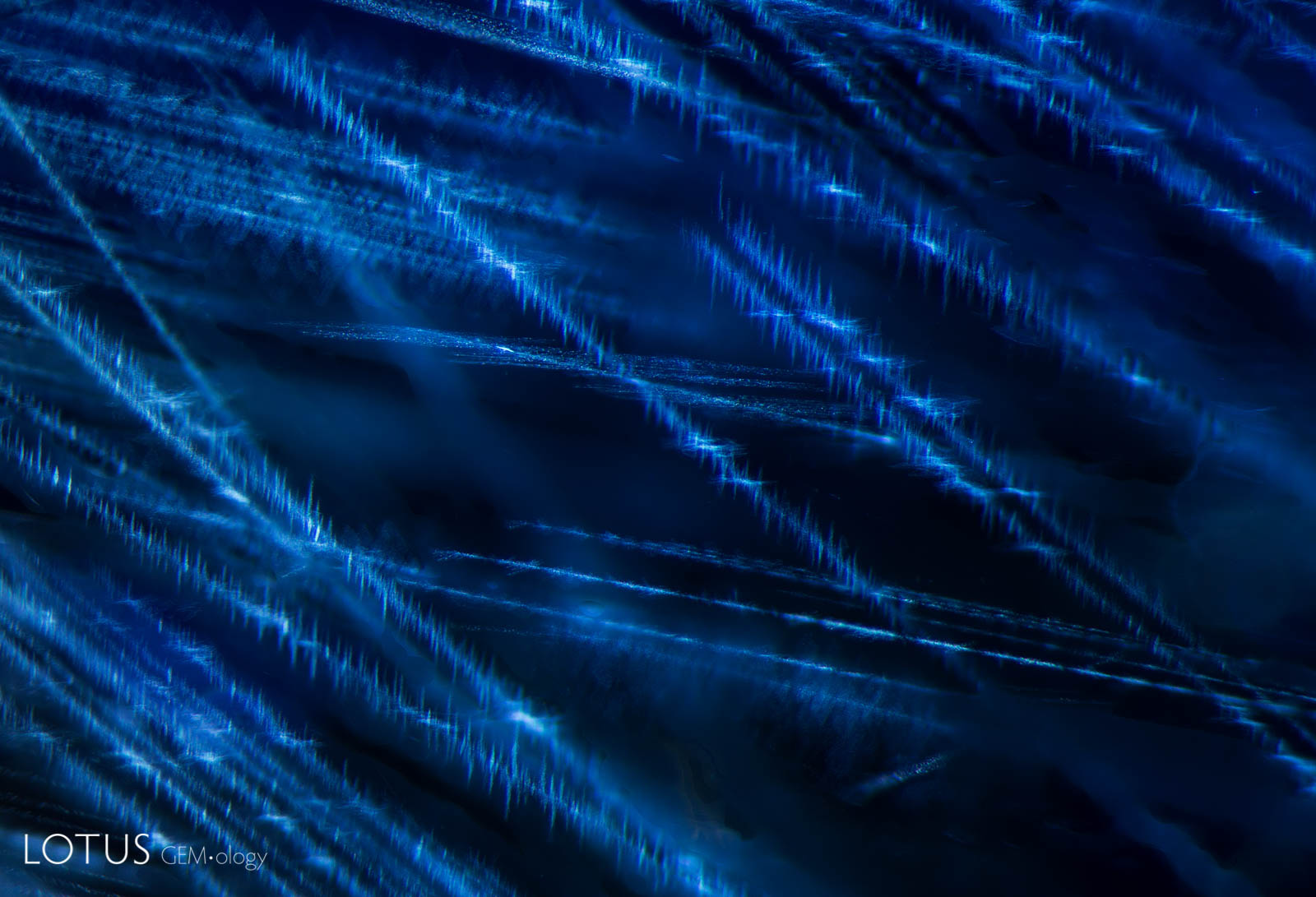
Streams of fine particles zig-zag across this heated sapphire.
Natural Sapphire •
Not Determinable •
Enhancements:
Heat (H) •
Lighting Conditions:
Fiber Optic: Oblique
Photographer:
E. Billie Hughes •
Image Number:
A-002-7077-2
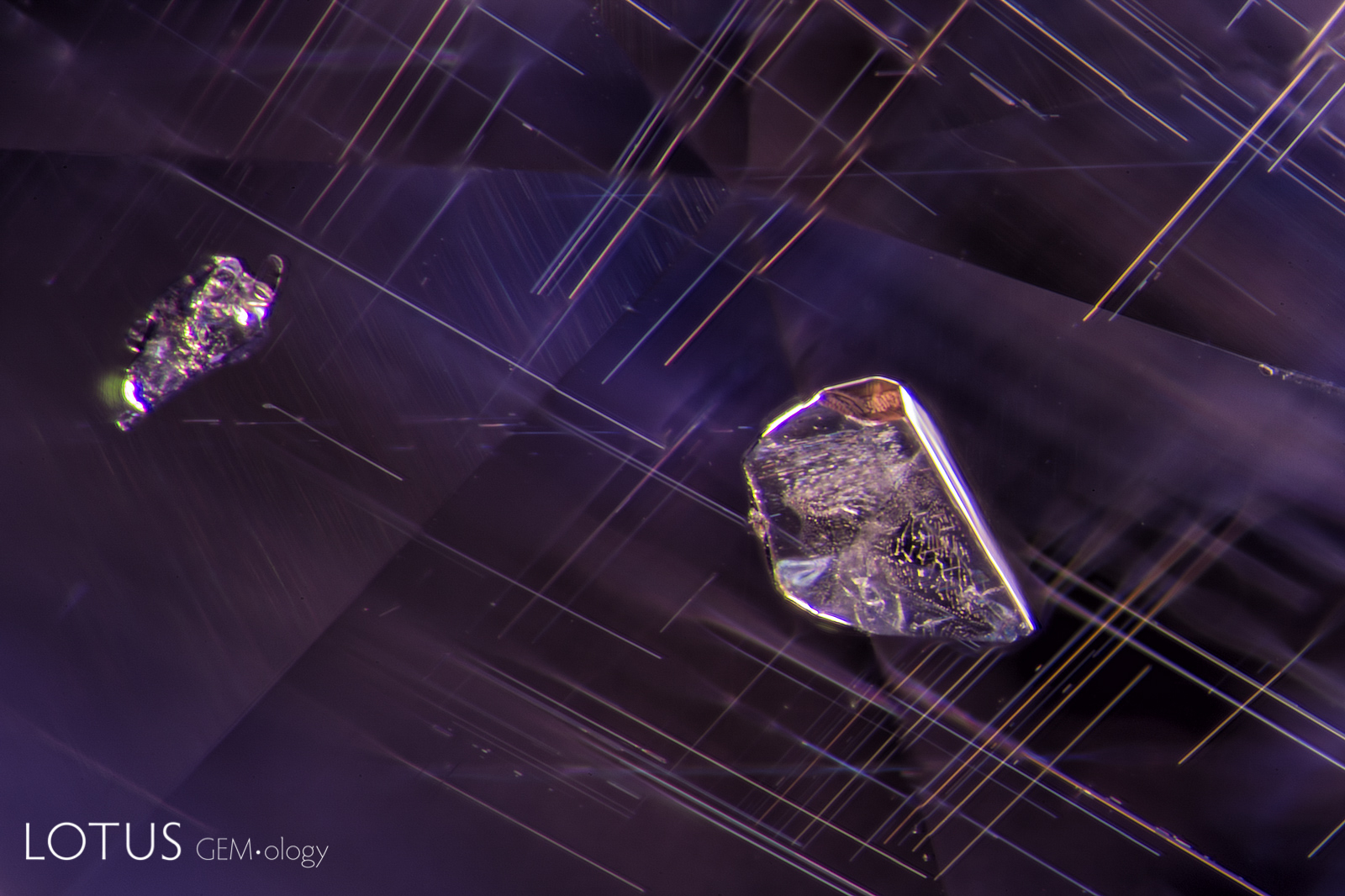
Unidentified sold crystals in a blue-violet sapphire from Sri Lanka. Careful examination shows that the larger crystal contains its own fingerprint inclusions.
Natural Sapphire •
Sri Lanka (Ceylon) •
Enhancements:
None Detected (None) •
Lighting Conditions:
Dark Field
Photographer:
Richard W. Hughes •
Image Number:
A-002-6861-1
In some sapphires, negative crystals are found flattened in the plane of the basal pinacoid. This lovely iridescent example in a blue sapphire from Myanmar’s Mogok Stone Tract is surrounded by zoned clouds of rutile dust. Negative crystals generally cannot take heat treatment and if they have no open path to the surface, will burst during treatment.
Natural Sapphire •
Myanmar (Burma); Mogok •
Enhancements:
None Detected (None) •
Lighting Conditions:
Fiber Optic: Oblique
Photographer:
Richard W. Hughes •
Image Number:
A-002-6867-1
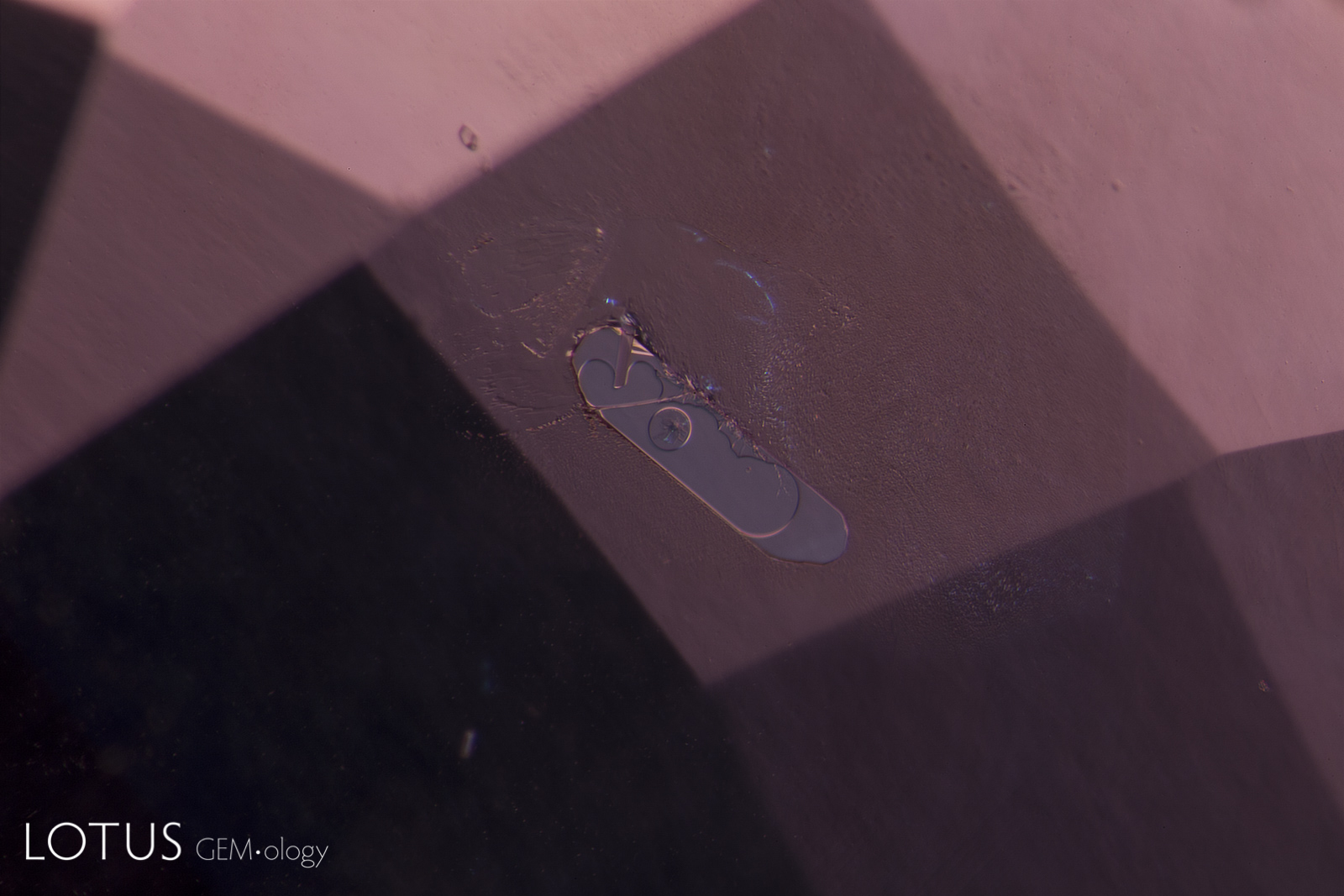
In this flattened negative crystal in a Sri Lankan padparadscha sapphire, multiple phases can be found, including both liquid and gaseous carbon dioxide and a diaspore needle. Because diaspore’s refractive index (nα = 1.682–1.706 nβ = 1.705–1.725 nγ = 1.730–1.752) is so close to corundum (1.762–1.770) the diaspore needle almost disappears into the sapphire, appearing like a narrow indentation into the negative crystal. Liquid carbon dioxide becomes a gas at a fairly low temperature, with just the heat of the microscope causing the bubble to disappear. Intact negative crystals such as this are positive proof that the specimen has not been heat treated.
Natural Padparadscha Sapphire •
Sri Lanka (Ceylon) •
Enhancements:
None Detected (None) •
Lighting Conditions:
Dark Field
Photographer:
Richard W. Hughes •
Image Number:
A-002-6853-2
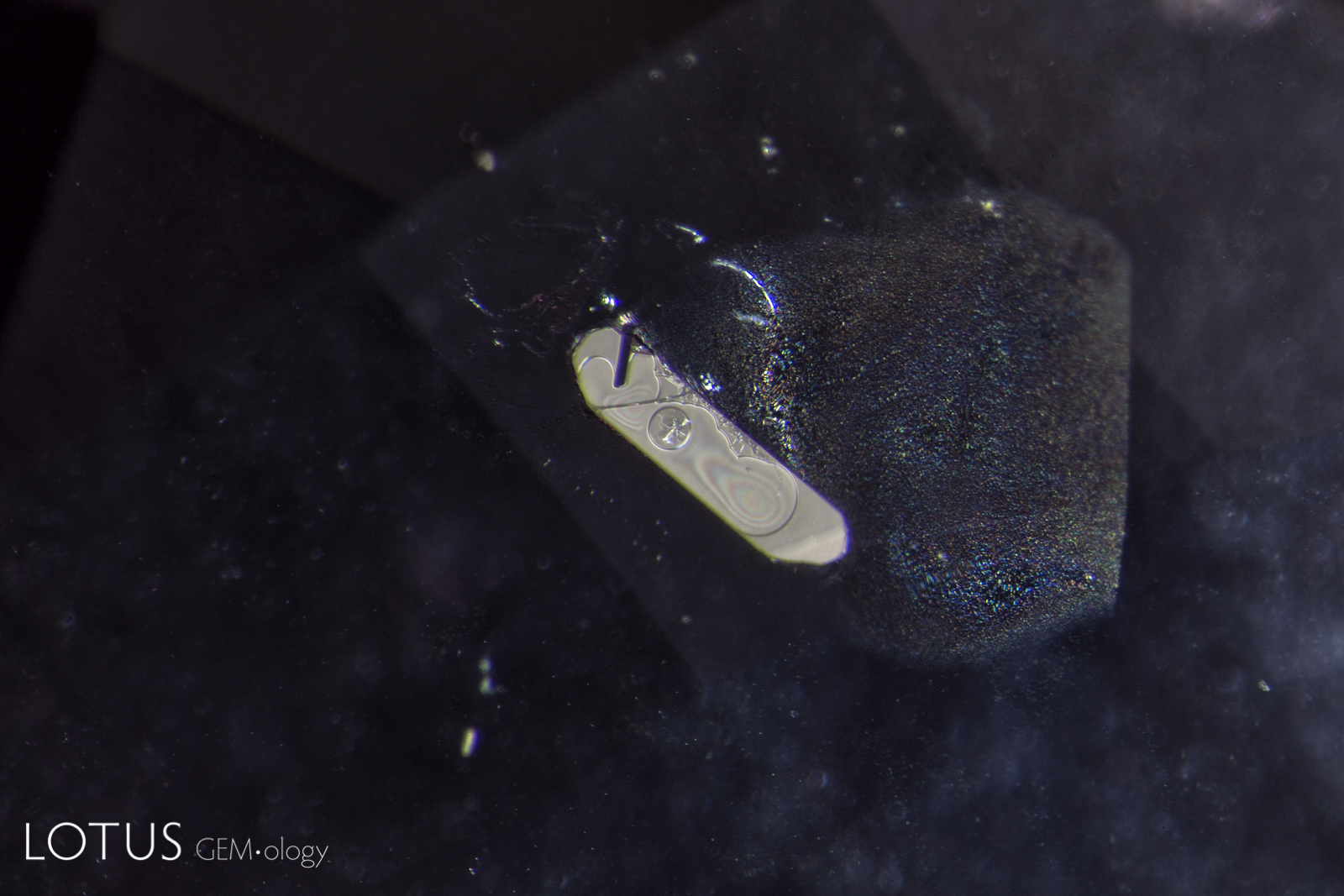
In this flattened negative crystal in a Sri Lankan padparadscha sapphire, multiple phases can be found, including both liquid and gaseous carbon dioxide and a diaspore needle. Because diaspore’s refractive index (nα = 1.682–1.706 nβ = 1.705–1.725 nγ = 1.730–1.752) is so close to corundum (1.762–1.770) the diaspore needle almost disappears into the sapphire, appearing like a narrow indentation into the negative crystal. Liquid carbon dioxide becomes a gas at a fairly low temperature, with just the heat of the microscope causing the bubble to disappear. Intact negative crystals such as this are positive proof that the specimen has not been heat treated.
Natural Padparadscha Sapphire •
Sri Lanka (Ceylon) •
Enhancements:
None Detected (None) •
Lighting Conditions:
Dark Field + Overhead Fiber Optic
Photographer:
Richard W. Hughes •
Image Number:
A-002-6853-1
When viewed with dark-field illumination, the glassy tension halos around each monazite crystal are more distinct.
Natural Sapphire •
Madagascar •
Enhancements:
Heat (H) •
Lighting Conditions:
Dark Field
Photographer:
E. Billie Hughes •
Image Number:
A-002-6695-2
Brown monazite crystals are sometimes found in sapphires from Madagascar’s Ilakaka region. In this gem one can see glassy tension halos around each, indicating that the gem was subjected to low temperature (less than 1400°C) heat treatment.
Natural Sapphire •
Madagascar •
Enhancements:
Heat (H) •
Lighting Conditions:
Light Field (Transmitted Light)
Photographer:
E. Billie Hughes •
Image Number:
A-002-6695-1
We often find growth tubes in Madagascar sapphire. This example is particularly striking with a stark, etched appearance.
Natural Sapphire •
Madagascar •
Enhancements:
None Detected (None) •
Lighting Conditions:
Dark Field + Diffuse Fiber Optic
Photographer:
E. Billie Hughes •
Image Number:
A-002-6477-1
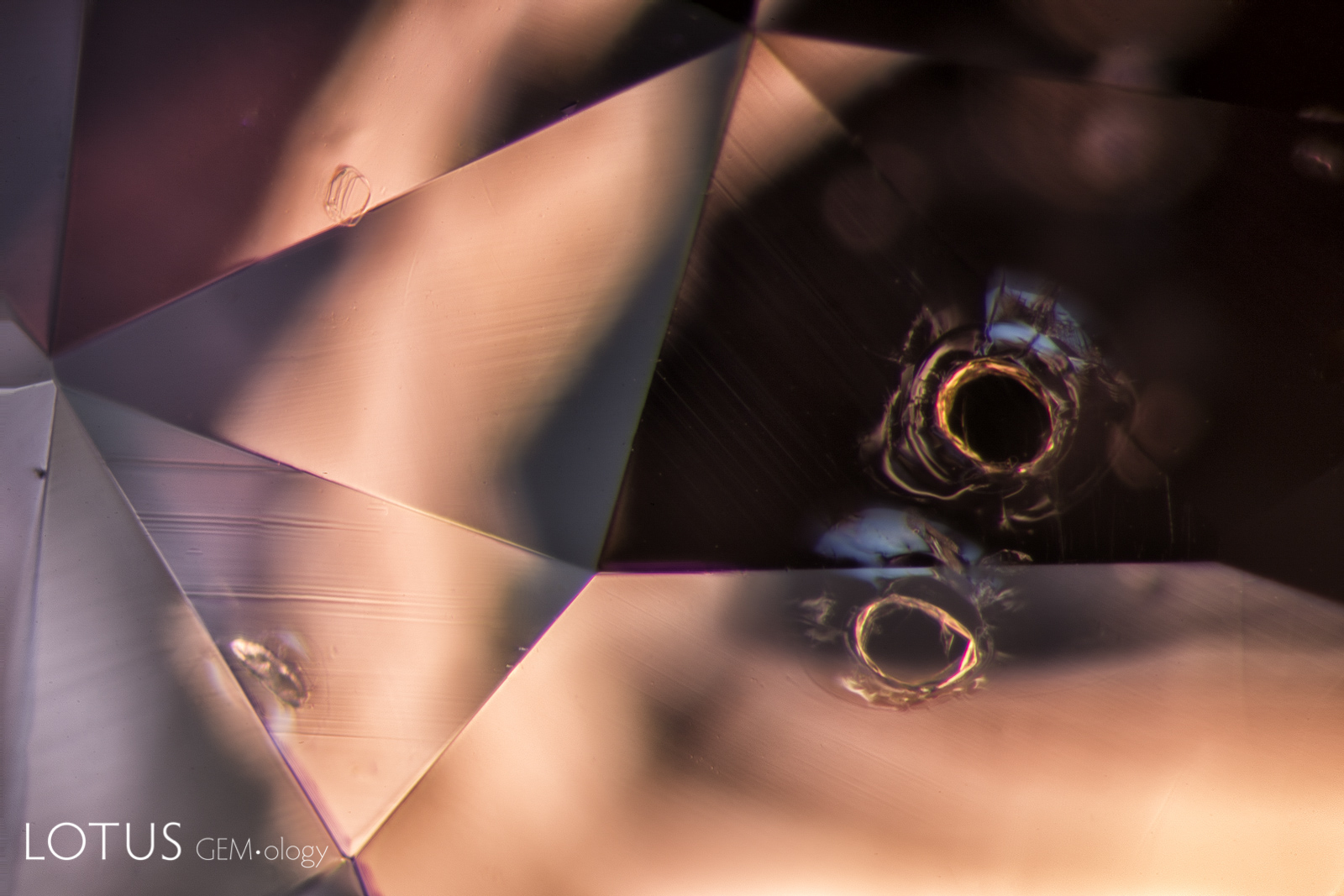
In this sapphire from Sri Lanka, evidence of high temperature heat treatment can be found in this moiré-patterned fingerprint. The once-lovely lacy pattern of liquid droplets is now besmirched by circular “explosions,” where the pressure from heating caused ruptures in the microscopic negative crystals, thus deflowering Mother Nature’s exquisite work of art.
Natural Sapphire •
Sri Lanka (Ceylon) •
Enhancements:
Heat (H) •
Lighting Conditions:
Dark Field + Shadowing
Photographer:
Richard W. Hughes •
Image Number:
A-002-6297-1
Search the Complete Hyperion Database
Sapphire inclusions may include mineral crystals, rutile silk, healed fissures, fluid inclusions, negative crystals, color zoning and other features formed during or after crystal growth. Such features are important to gemologists because they can provide evidence useful in identifying sapphire, understanding its geological history, recognizing treatment and, in some cases, determining geographic origin.
Sapphire Inclusion Photomicrographs
The Hyperion sapphire gallery includes microscopic features found in sapphires from major deposits around the world. Each entry is accompanied by descriptive information and, where available, references to the gemological literature.
What Inclusions Can Reveal About Sapphire
Inclusions are an important part of sapphire identification. Their form, composition, orientation and alteration can help gemologists distinguish natural sapphire from synthetic material, recognize evidence of heat treatment, and study the geological environment in which the sapphire formed.
Hyperion combines inclusion photomicrography with supporting gemological information so that individual features can be compared with documented examples from known sapphire deposits.
About Hyperion
Hyperion is the Lotus Gemology searchable inclusion database. It allows users to browse gemstone inclusions by gem type, geographic origin, treatment and keyword.