Spinel Inclusions
Explore spinel inclusions in Hyperion, the Lotus Gemology inclusion database. Hyperion contains photomicrographs of inclusions and internal features in natural spinel, documented with information on geographic origin, treatment, lighting conditions, field of view, photographer and published references.
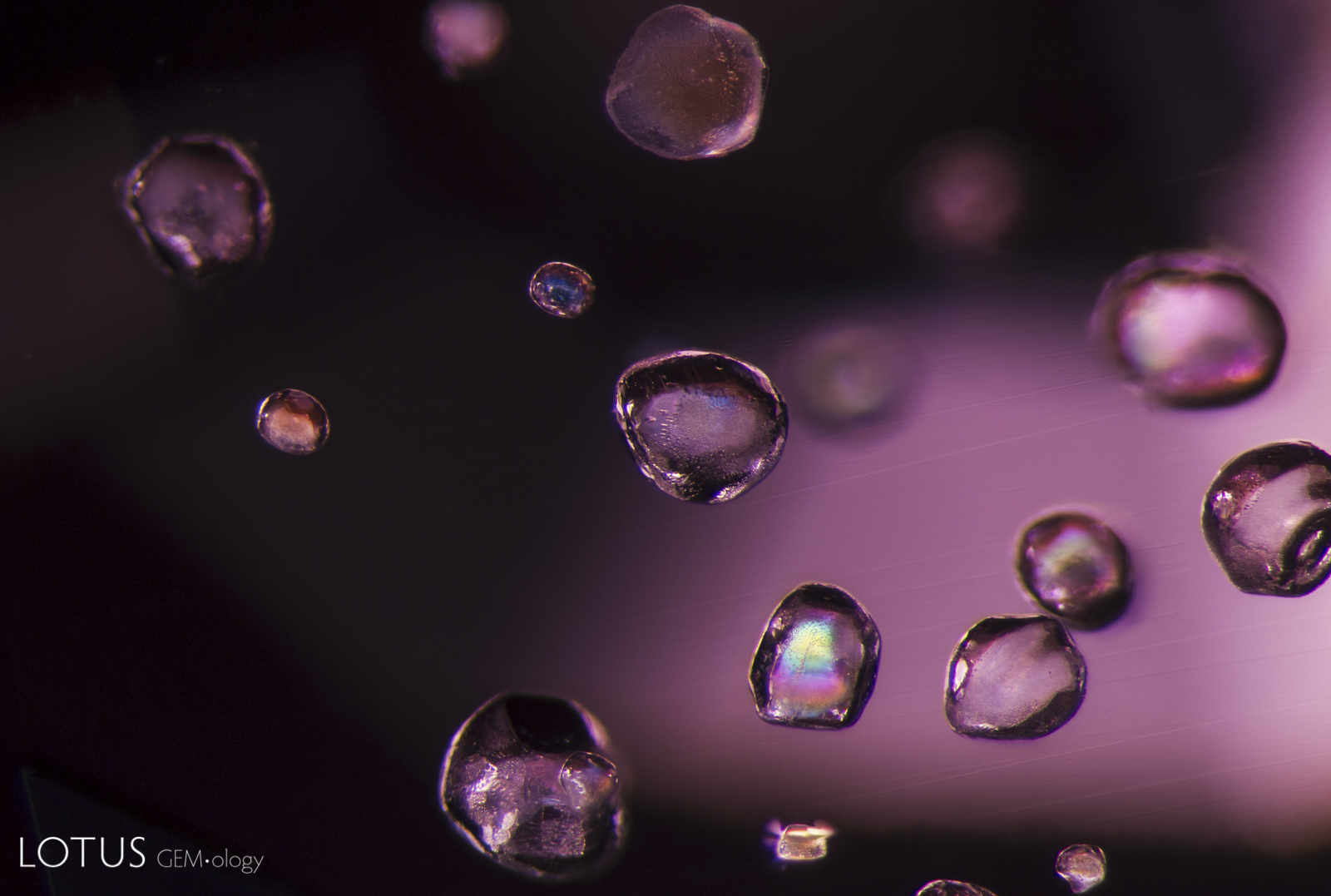
When viewed in crossed polars, these rounded apatite crystals display interference colors that make them look like a cluster of soap bubbles suspended in air.
Natural Spinel •
Myanmar (Burma); Mogok/Namya •
Enhancements:
None Detected (None) •
Lighting Conditions:
Diffuse Light Field + Crossed Polars
Photographer:
E. Billie Hughes •
Image Number:
A-002-7648-1
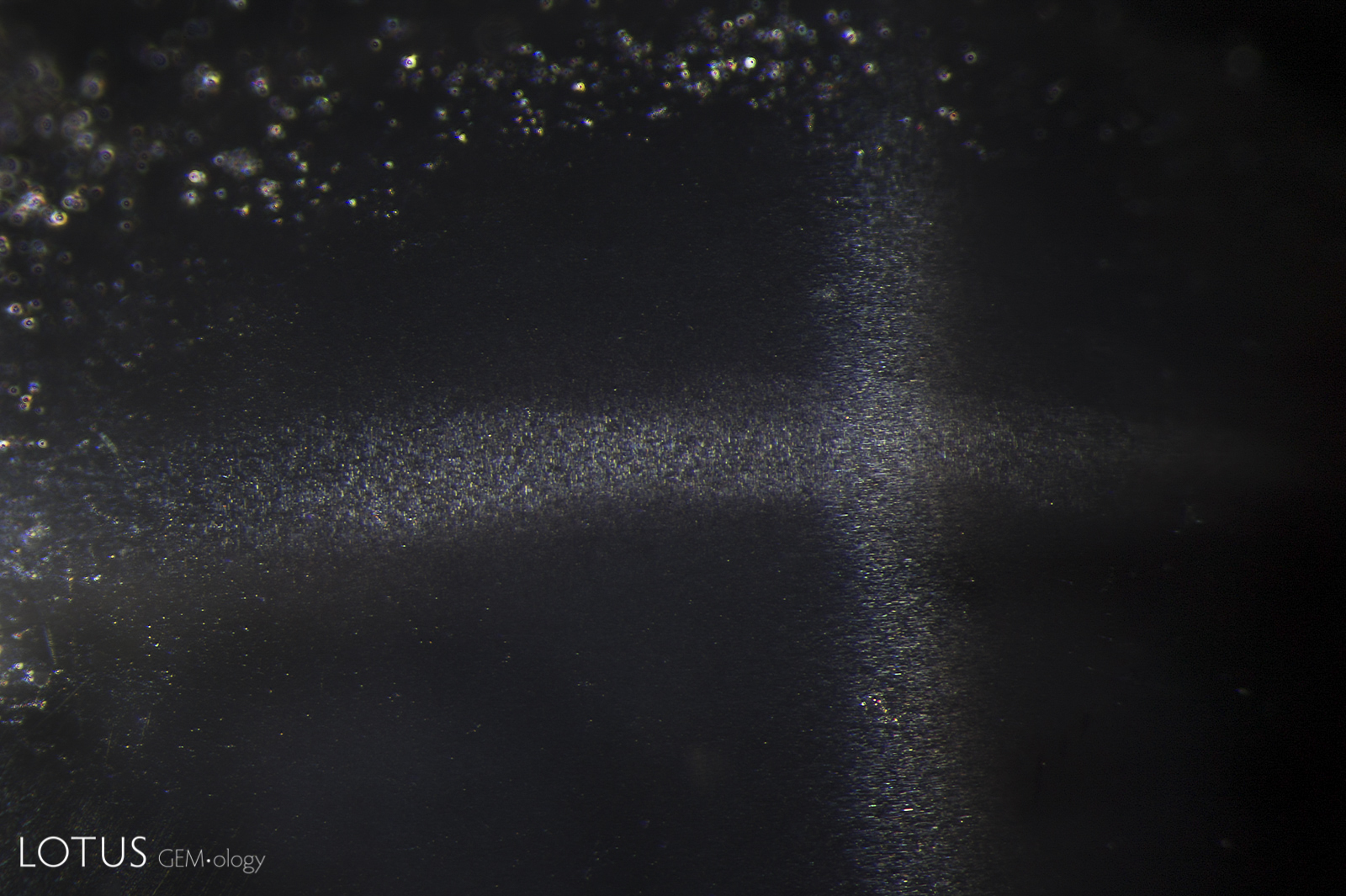
In addition to having six-rayed stars, spinels like this one can also display four-rayed stars if the base is parallel to a cube face.
Natural Star Spinel •
Not Determinable •
Enhancements:
None Detected (None) •
Lighting Conditions:
Fiber Optic: Oblique
Photographer:
E. Billie Hughes •
Image Number:
A-002-6909-4
Reflective silk platelets in this star spinel create a scene reminiscent of city lights in the evening.
Natural Star Spinel •
Not Determinable •
Enhancements:
None Detected (None) •
Lighting Conditions:
Fiber Optic: Diffuse Oblique
Photographer:
E. Billie Hughes •
Image Number:
A-002-6909-3
Two kinds of silk are visible in this star spinel: a fine, dense cloud of tiny needles as well as larger reflective platelets.
Natural Star Spinel •
Not Determinable •
Enhancements:
None Detected (None) •
Lighting Conditions:
Fiber Optic: Diffuse Oblique
Photographer:
E. Billie Hughes •
Image Number:
A-002-6909-2
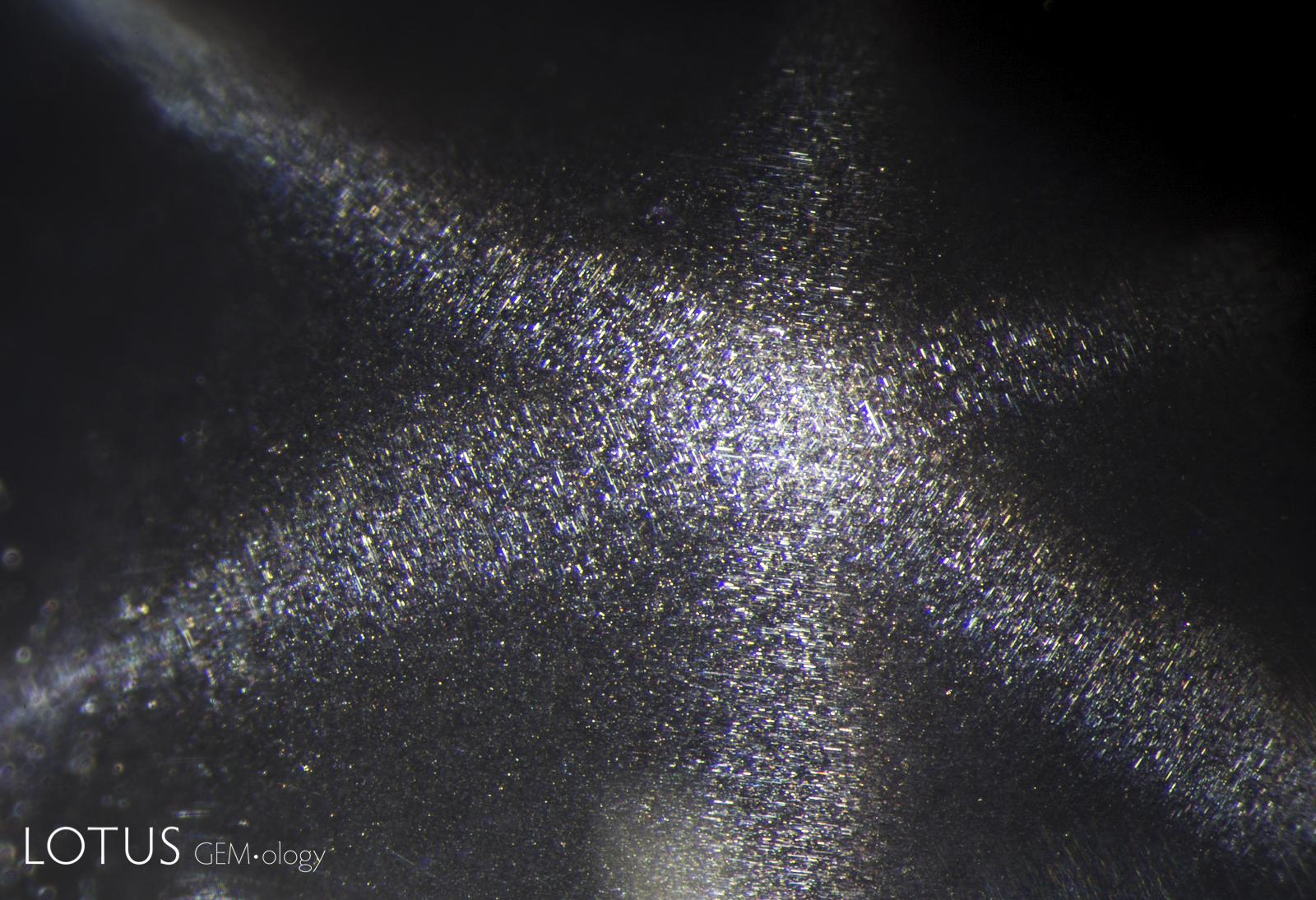
Fine silk creates a six-rayed star in this spinel. Spinel has the ability to display six- or four-rayed stars, depending on how the stone is oriented during cutting. Six-rayed stars are seen if the cabochon base is parallel to the octahedron face, while four-rayed stars occur when the base is parallel to a cube face;
Natural Star Spinel •
Not Determinable •
Enhancements:
None Detected (None) •
Lighting Conditions:
Fiber Optic: Oblique
Photographer:
E. Billie Hughes •
Image Number:
A-002-6909-1
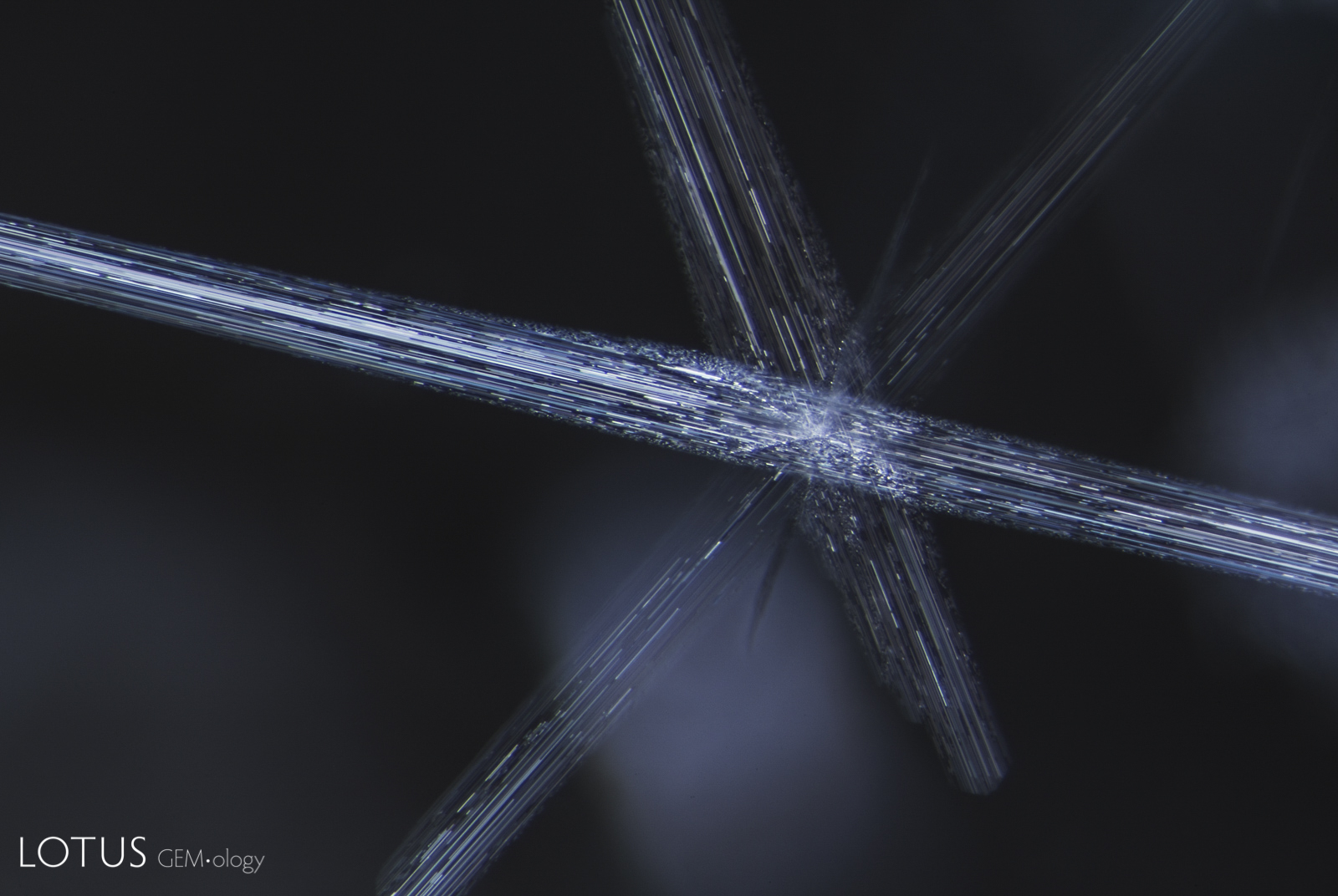
Stellate (star-like) dislocation needles like these commonly decorate Vietnamese spinel.
Natural Spinel •
Vietnam •
Enhancements:
None Detected (None) •
Lighting Conditions:
Fiber Optic: Diffuse Oblique
Photographer:
E. Billie Hughes •
Image Number:
A-002-6777-1
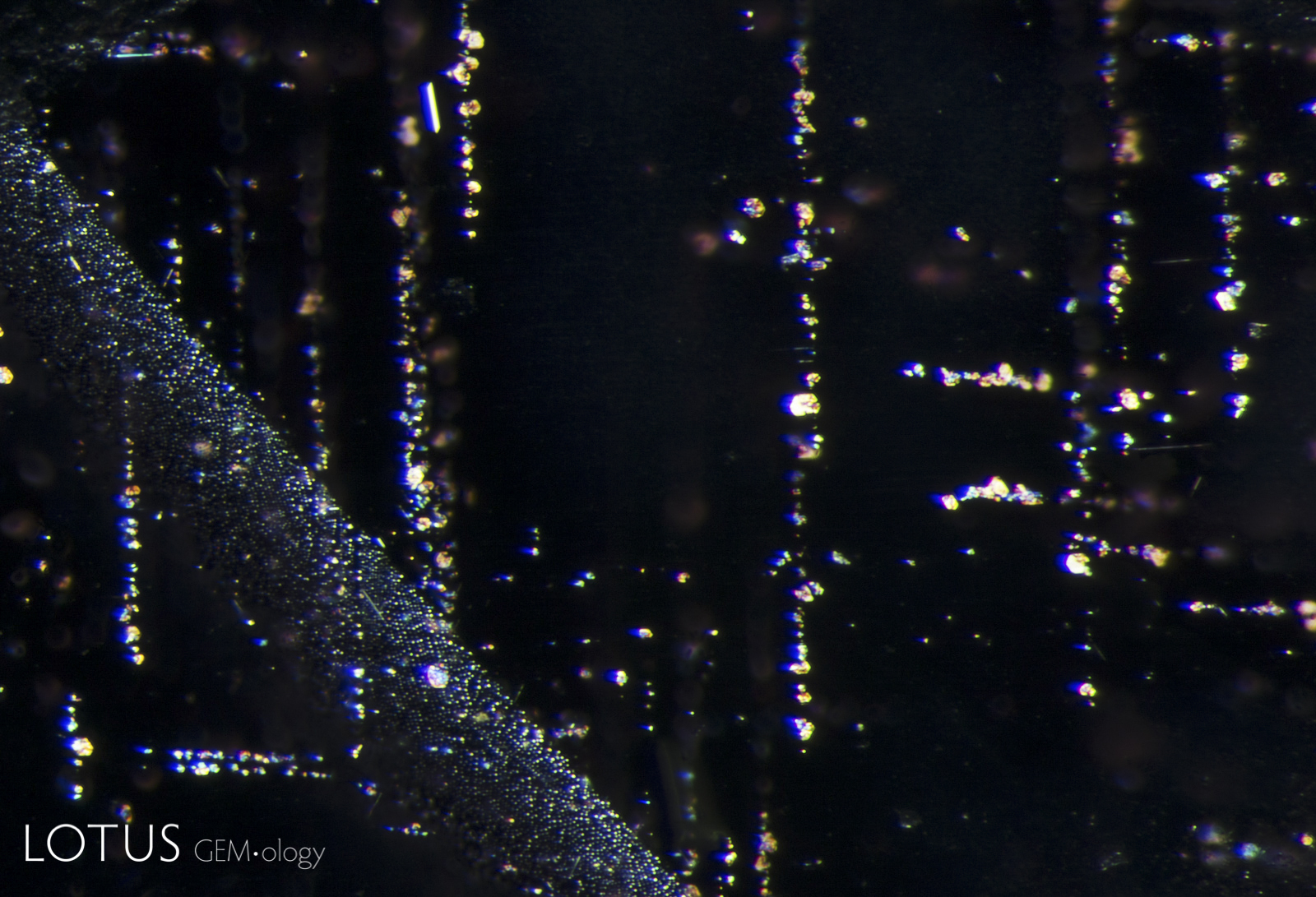
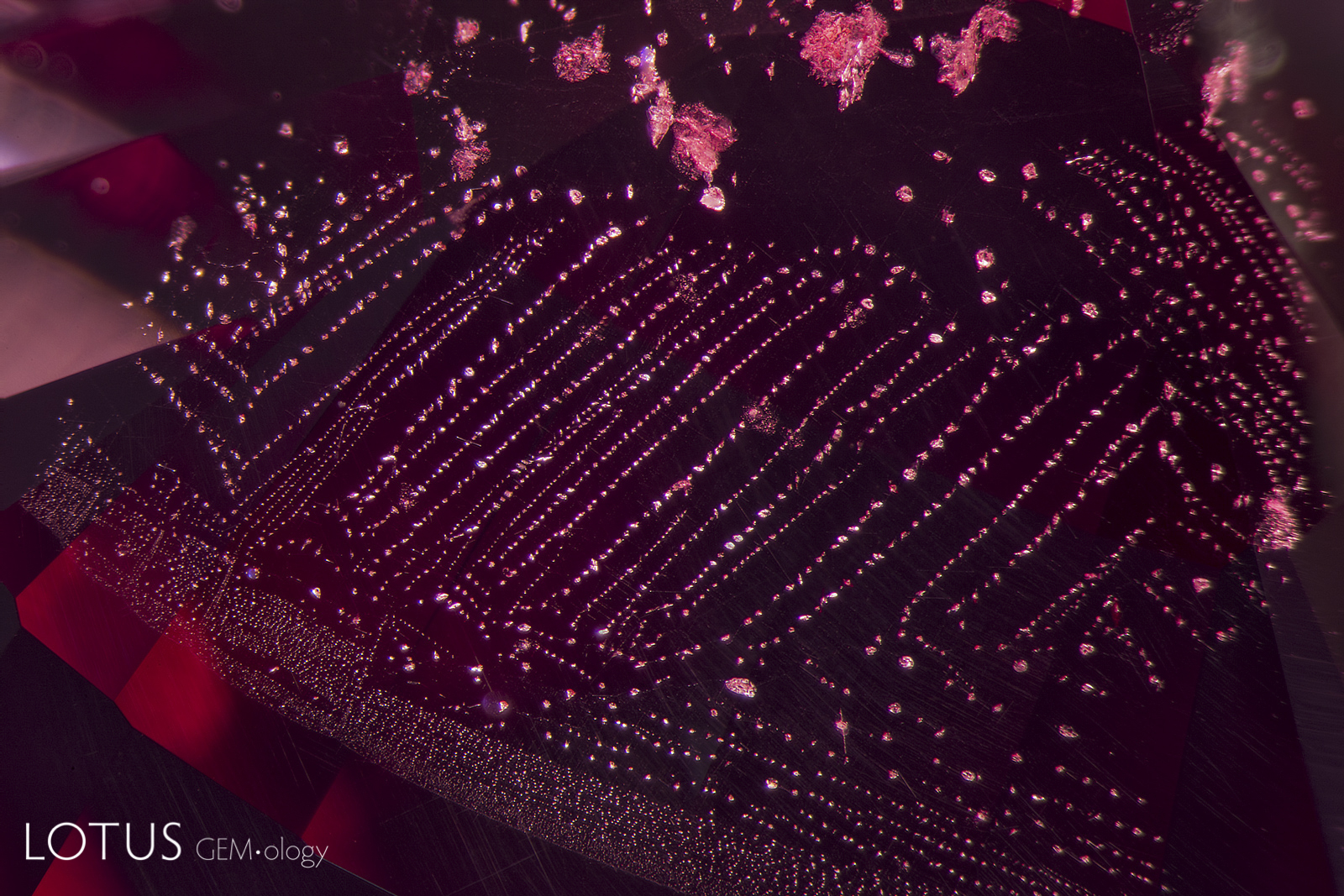
When fissures in spinel heal, they often do so in a distinctive pattern of octahedral negative crystals which align in rows according to the underlying atomic symmetry, as show in this spinel from Tanzania’s Mahenge district.
Natural Spinel •
Tanzania; Mahenge •
Enhancements:
None Detected (None) •
Lighting Conditions:
Dark Field
Photographer:
Richard W. Hughes •
Image Number:
A-002-5946-1
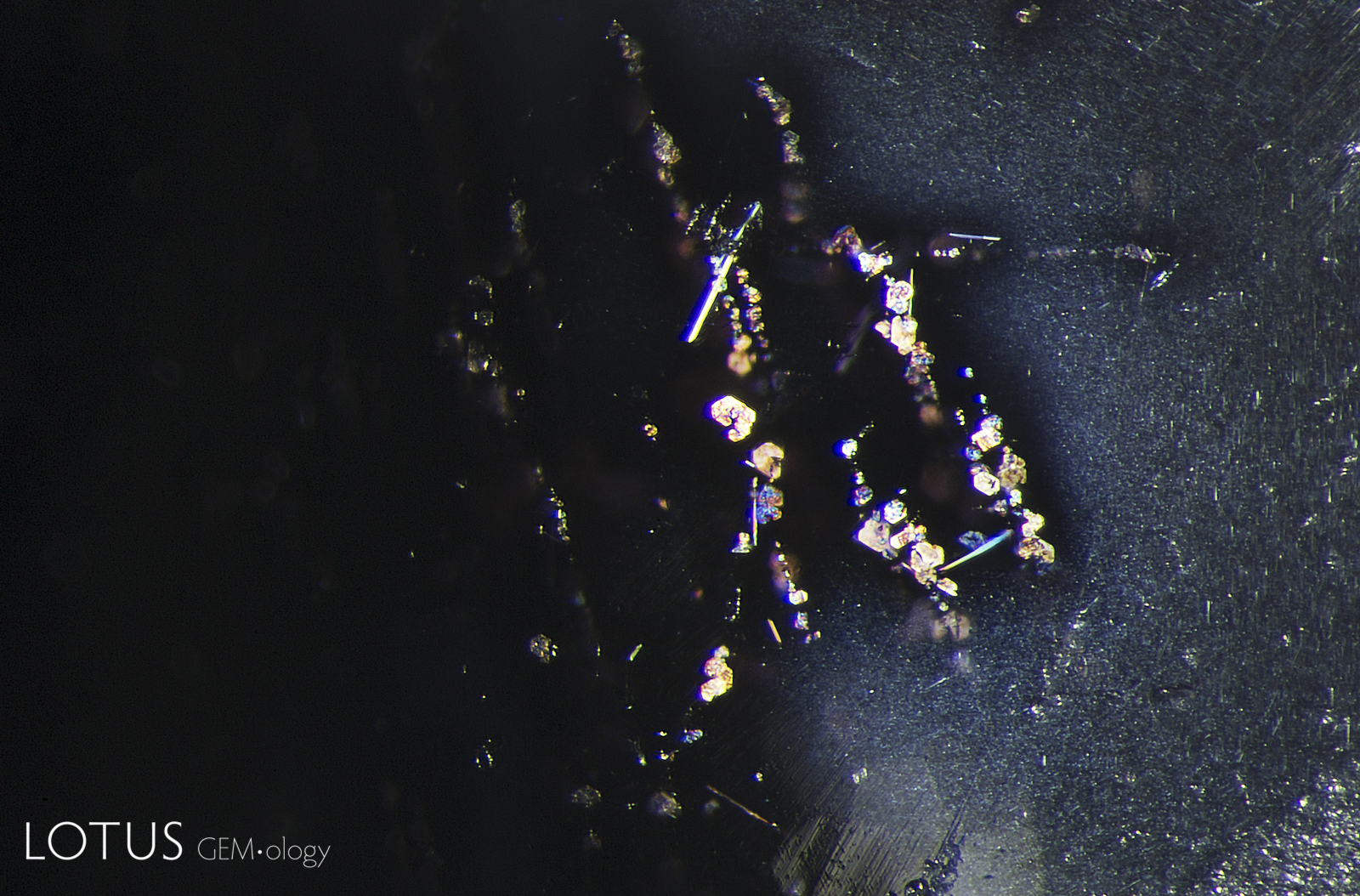
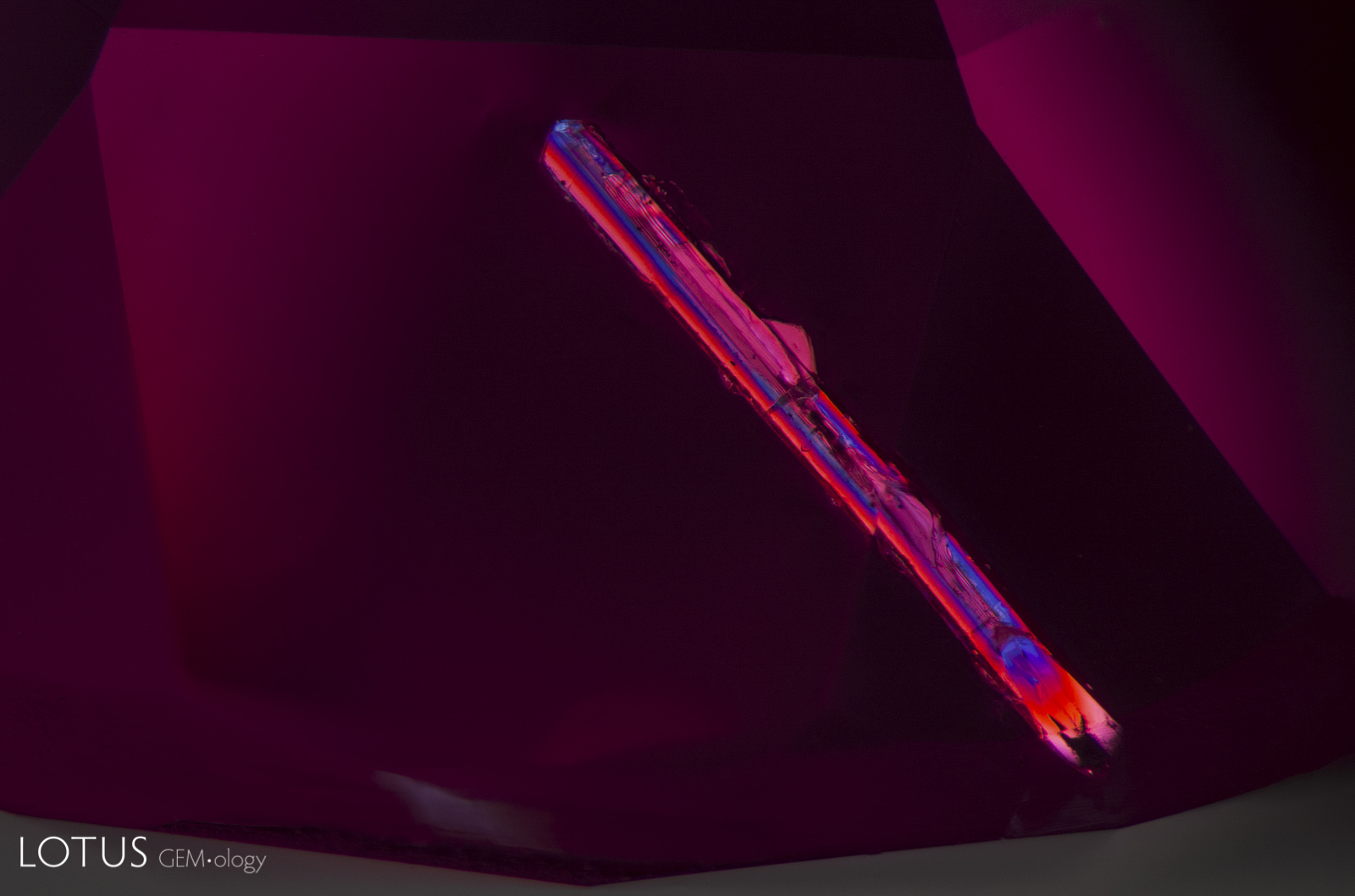
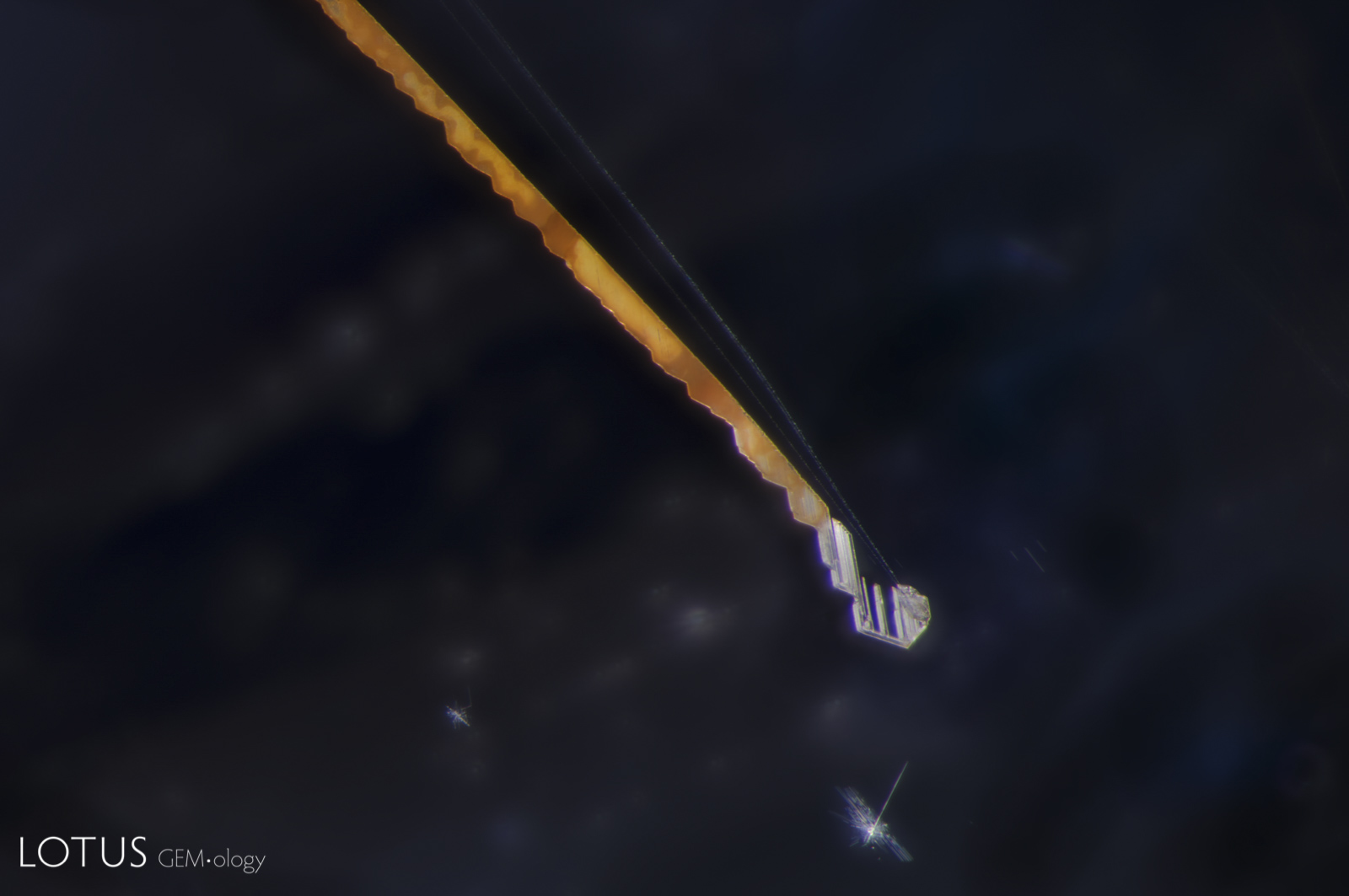
This rod-like crystal, cut through on the surface of a Burma spinel, displays vivid colors when viewed in crossed polars.
Natural Spinel •
Myanmar (Burma); Mogok/Namya •
Enhancements:
None Detected (None) •
Lighting Conditions:
Dark Field + Crossed Polars
Photographer:
E. Billie Hughes •
Image Number:
A-002-5828-1
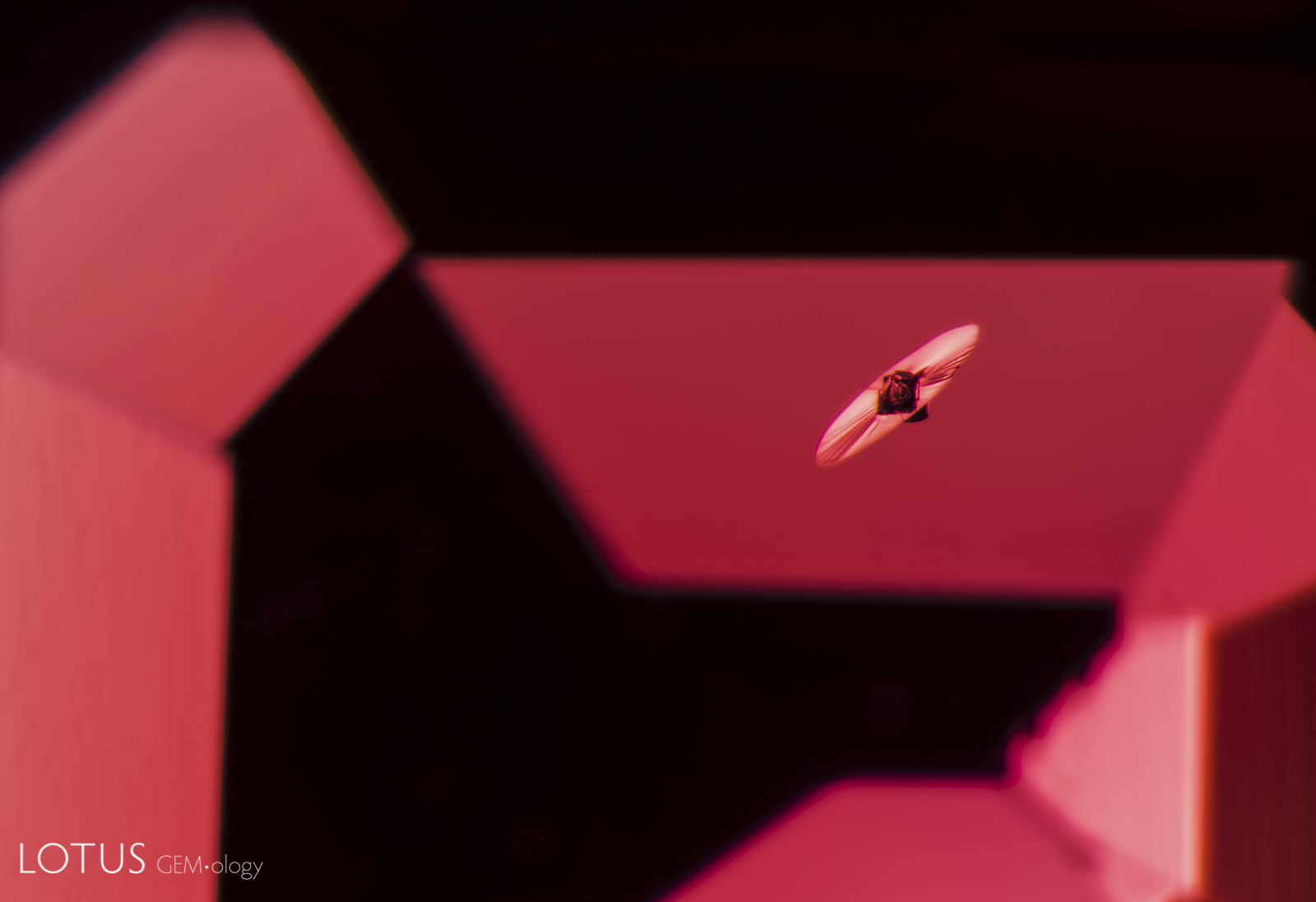
A small octahedral crystal ensconced in a halo seems to float by in this untreated Burma spinel.
Natural Spinel •
Myanmar (Burma); Mogok/Namya •
Enhancements:
None Detected (None) •
Lighting Conditions:
Dark Field
Photographer:
E. Billie Hughes •
Image Number:
A-002-5074-1
An epigenetically stained growth tube is stands out next to tiny dislocations in this Madagascar spinel.
Natural Spinel •
Madagascar •
Enhancements:
None Detected (None) •
Lighting Conditions:
Dark Field
Photographer:
E. Billie Hughes •
Image Number:
A-002-4501-1
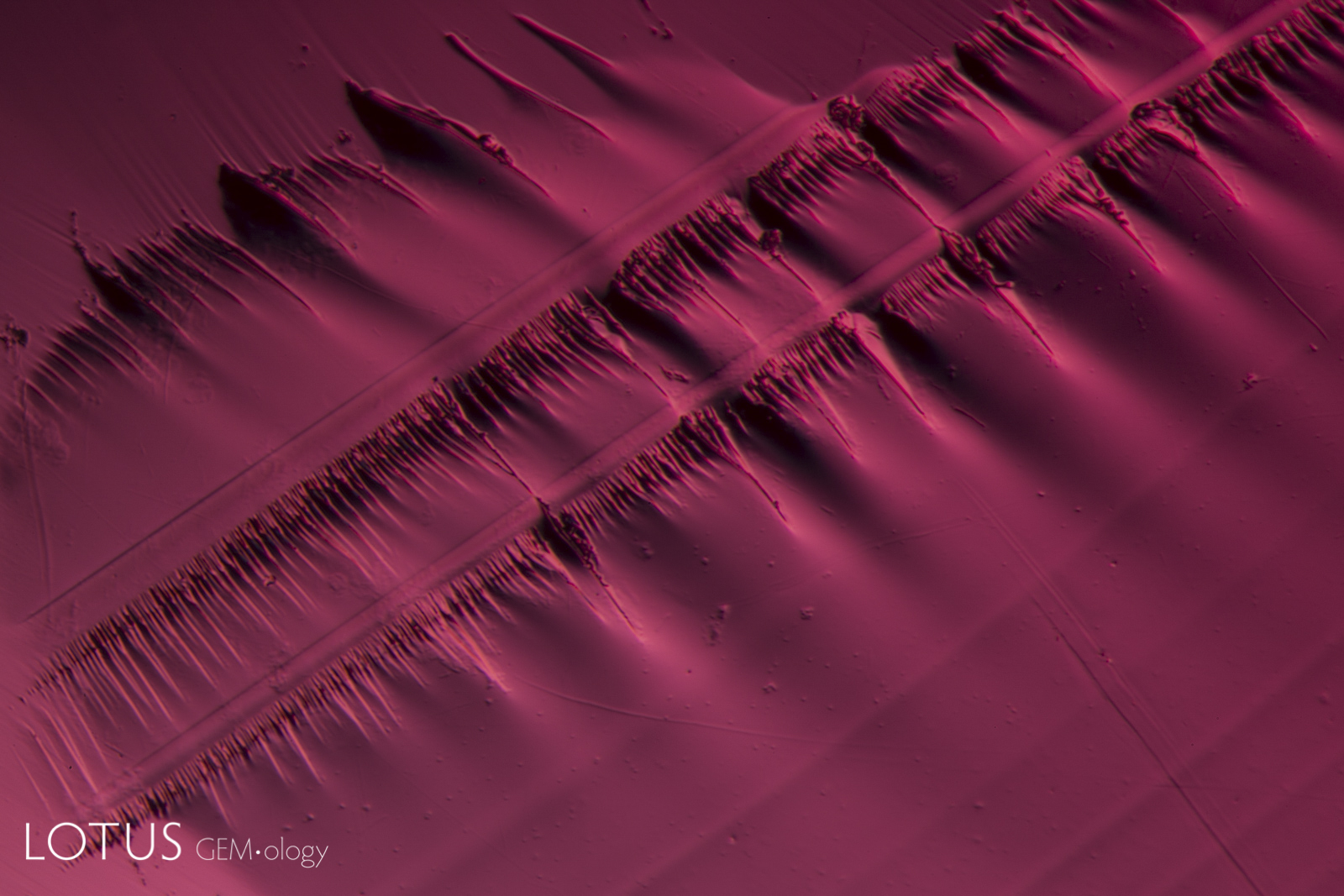
Red planet. Like the surface of a distant world, a simple conchoidal fracture on a red spinel displays the infinite beauty of crystals.
Natural Spinel •
Myanmar (Burma); Mogok/Namya •
Enhancements:
Fissure Filling with colorless Oil/resin (FF-O1); No indications of heating (No indications of heating) •
Lighting Conditions:
Light Field + Shadowing
Photographer:
Richard W. Hughes •
Image Number:
A-002-4451-3
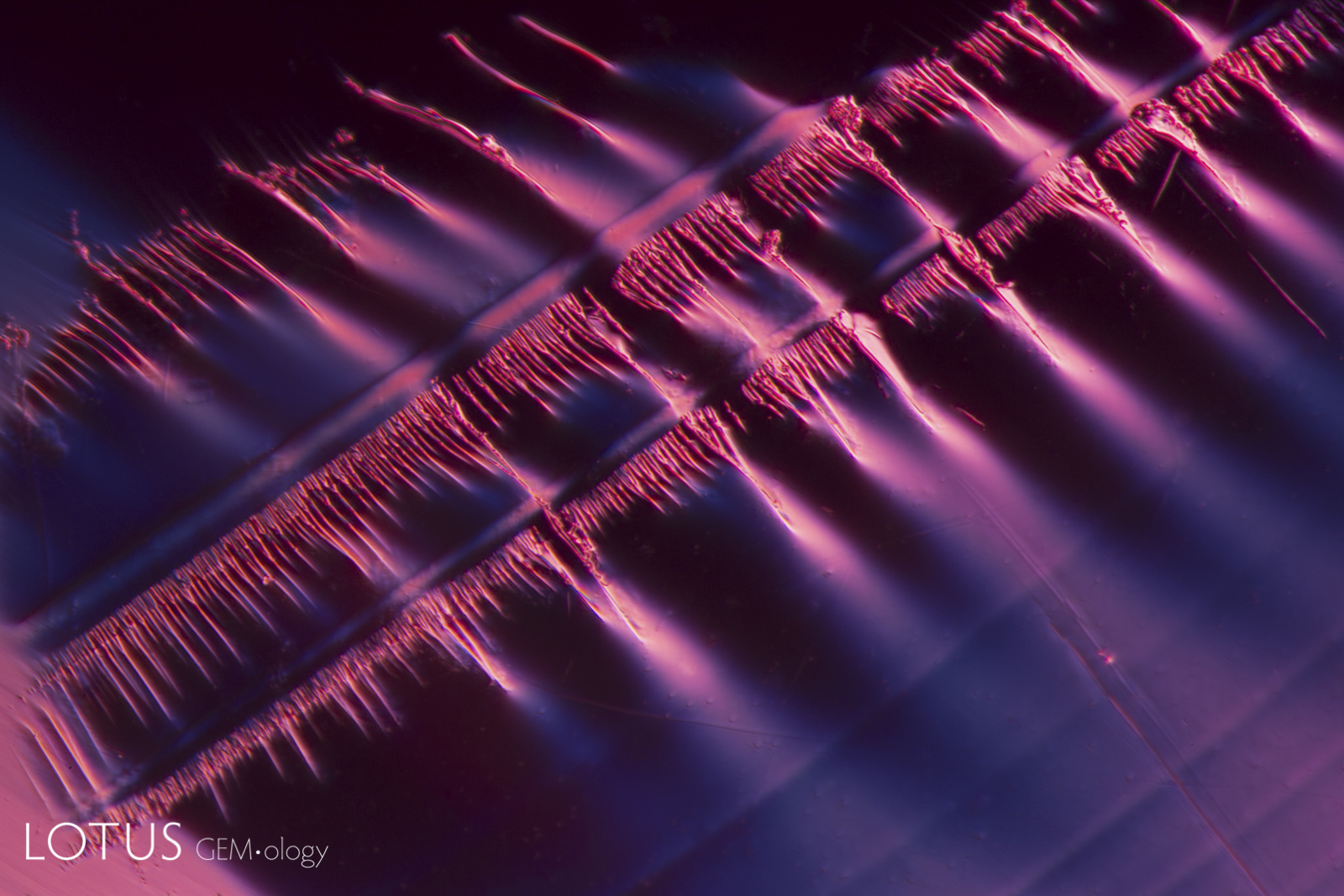
The same conchoidal fracture, with an adjustment to the shadowing illumination radically changes the appearance.
Natural Spinel •
Myanmar (Burma); Mogok/Namya •
Enhancements:
Fissure Filling with colorless Oil/resin (FF-O1); No indications of heating (No indications of heating) •
Lighting Conditions:
Light Field + Shadowing
Photographer:
Richard W. Hughes •
Image Number:
A-002-4451-2
Search the Complete Hyperion Database
Spinel inclusions may include mineral crystals, healed fissures, fluid inclusions, negative crystals, growth features and other internal features formed during or after crystal growth. Such features are important to gemologists because they can provide evidence useful in identifying spinel, understanding its geological history, recognizing treatment and, in some cases, determining geographic origin.
Spinel Inclusion Photomicrographs
The Hyperion spinel gallery includes microscopic features found in spinels from major deposits around the world. Each entry is accompanied by descriptive information and, where available, references to the gemological literature.
What Inclusions Can Reveal About Spinel
Inclusions are an important part of spinel identification. Their form, composition and alteration can help gemologists distinguish natural spinel from synthetic material, recognize evidence of treatment, and study the geological environment in which the spinel formed.
Hyperion combines inclusion photomicrography with supporting gemological information so that individual features can be compared with documented examples from known spinel deposits.
About Hyperion
Hyperion is the Lotus Gemology searchable inclusion database. It allows users to browse gemstone inclusions by gem type, geographic origin, treatment and keyword.