Spinel Inclusions
Explore spinel inclusions in Hyperion, the Lotus Gemology inclusion database. Hyperion contains photomicrographs of inclusions and internal features in natural spinel, documented with information on geographic origin, treatment, lighting conditions, field of view, photographer and published references.
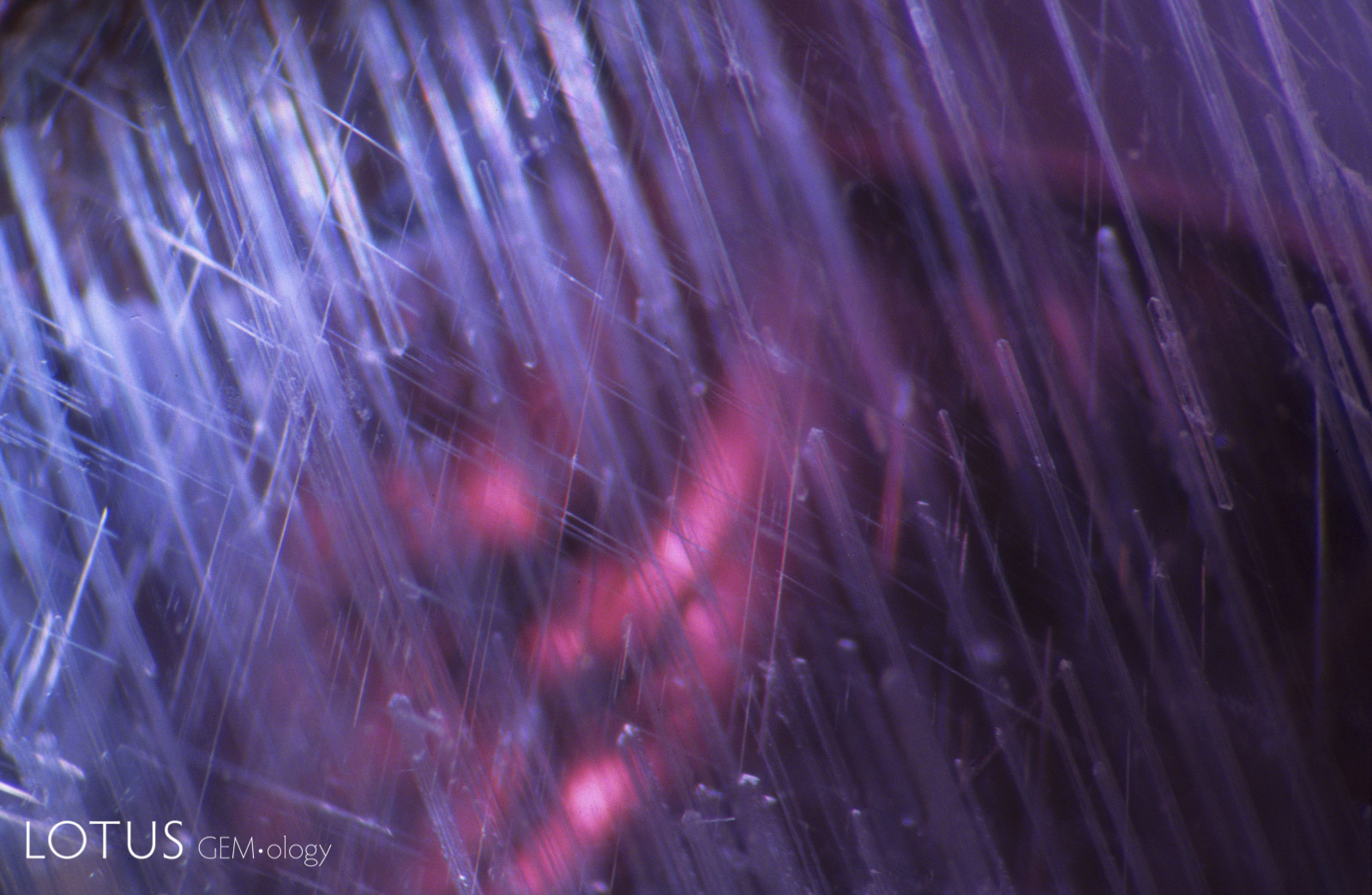
Acicular reflective elongated thin lathes of exsolution högbomite can result in chatoyancy in some particularly special gem spinels from Sri Lanka. 40X
Natural Spinel •
Sri Lanka (Ceylon) •
Enhancements:
None Detected (None) •
Lighting Conditions:
Fiber Optic: Oblique
Photographer:
John I. Koivula •
Image Number:
R-001-3880-1
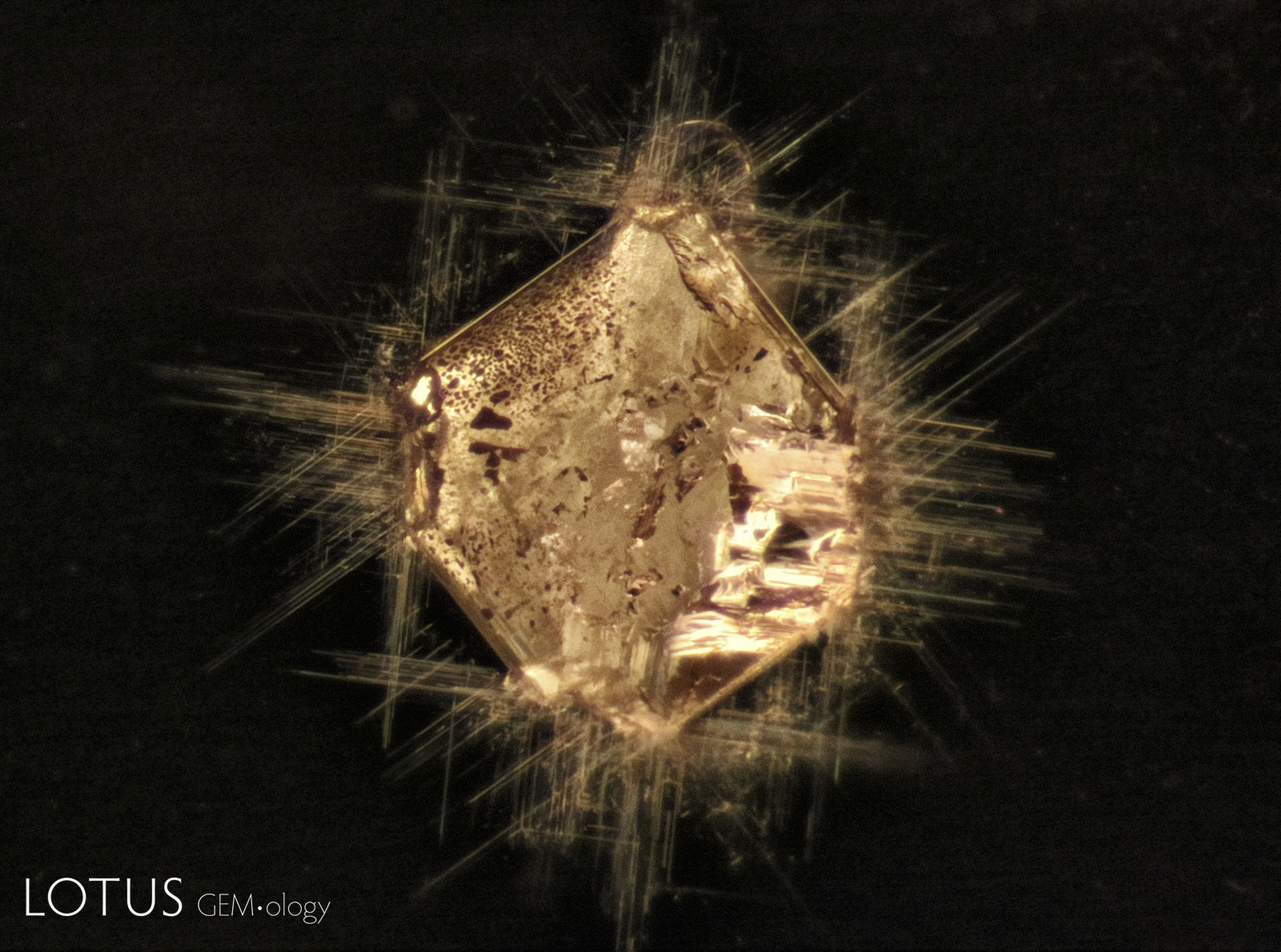
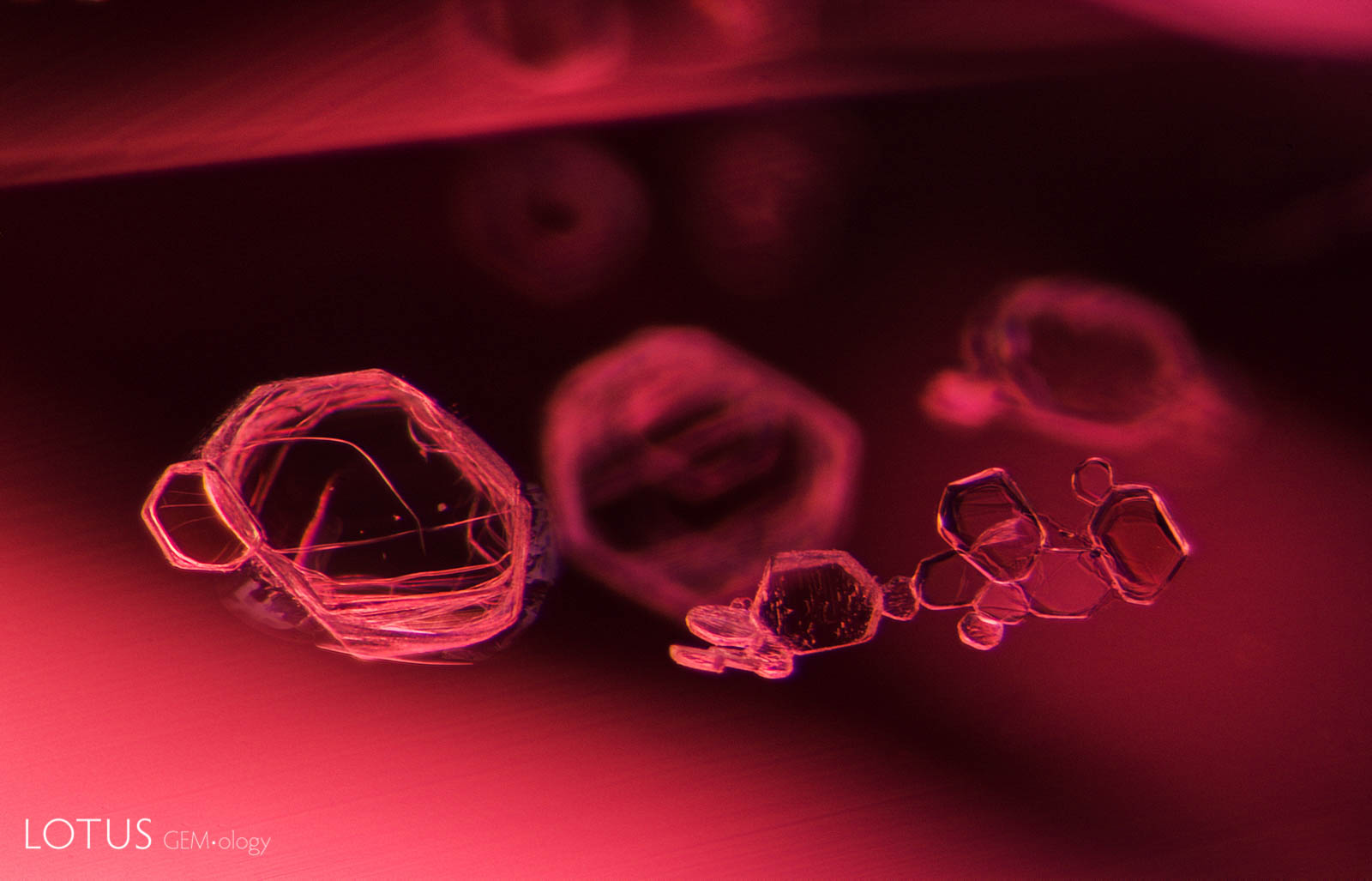
Xenomorphic carbonate (probably dolomite) filling an octahedral negative crystal with oriented needles at the corners. The needles might be either mineral matter or acicular voids. Spinel host from Burma (Myanmar). 200X.
Natural Spinel •
Myanmar (Burma); Mogok/Namya •
Enhancements:
None Detected (None) •
Lighting Conditions:
Fiber Optic: Oblique
Photographer:
John I. Koivula •
Image Number:
R-001-3863-1
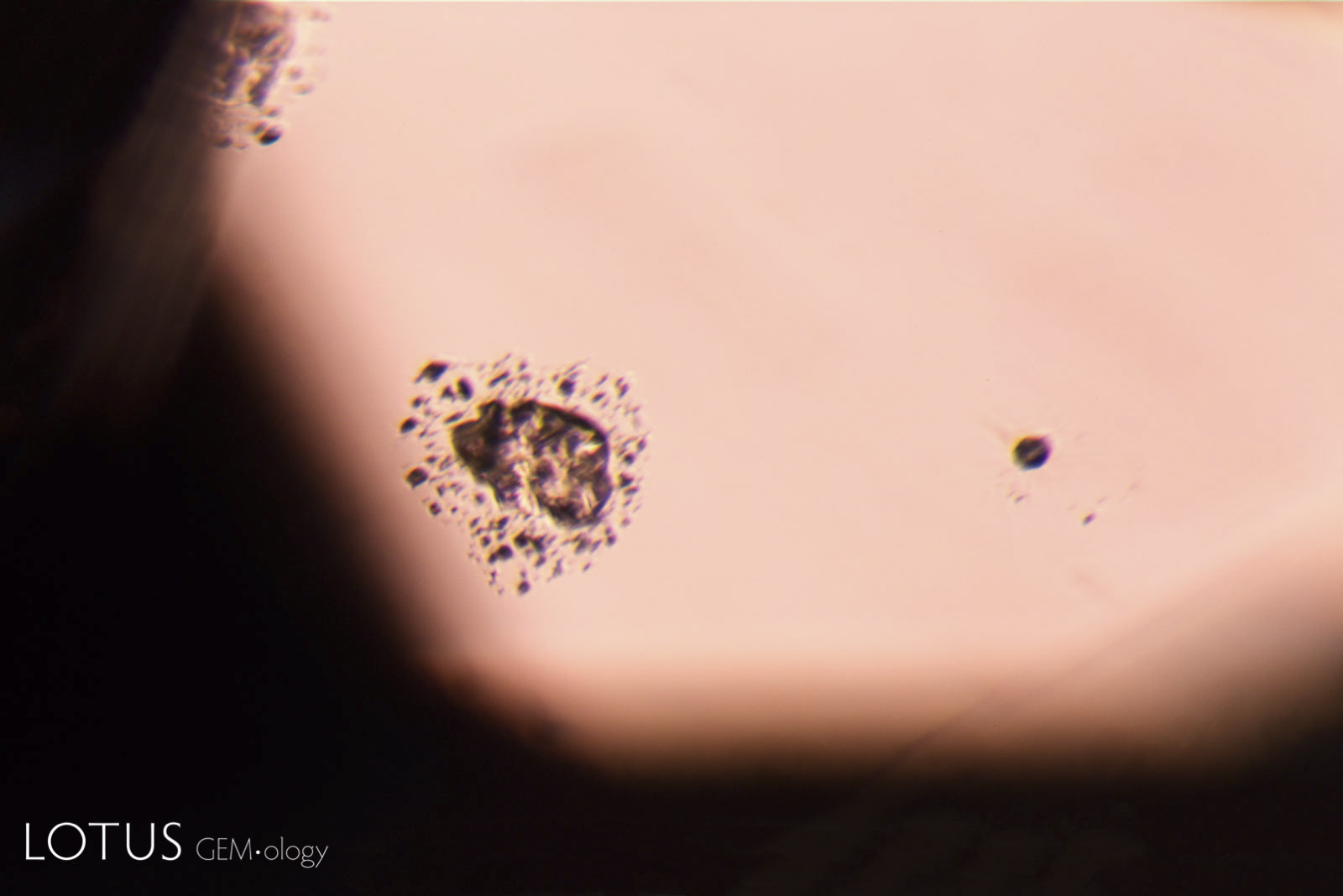
This spinel from Madagascar displayed a number of these inclusions, which consisted of a solid crystal surrounded by a cloud of tiny inclusion.
Natural Spinel •
Madagascar •
Enhancements:
None Detected (None) •
Lighting Conditions:
Diffuse Light Field (Transmitted Light)
Photographer:
E. Billie Hughes •
Image Number:
A-001-3772-1
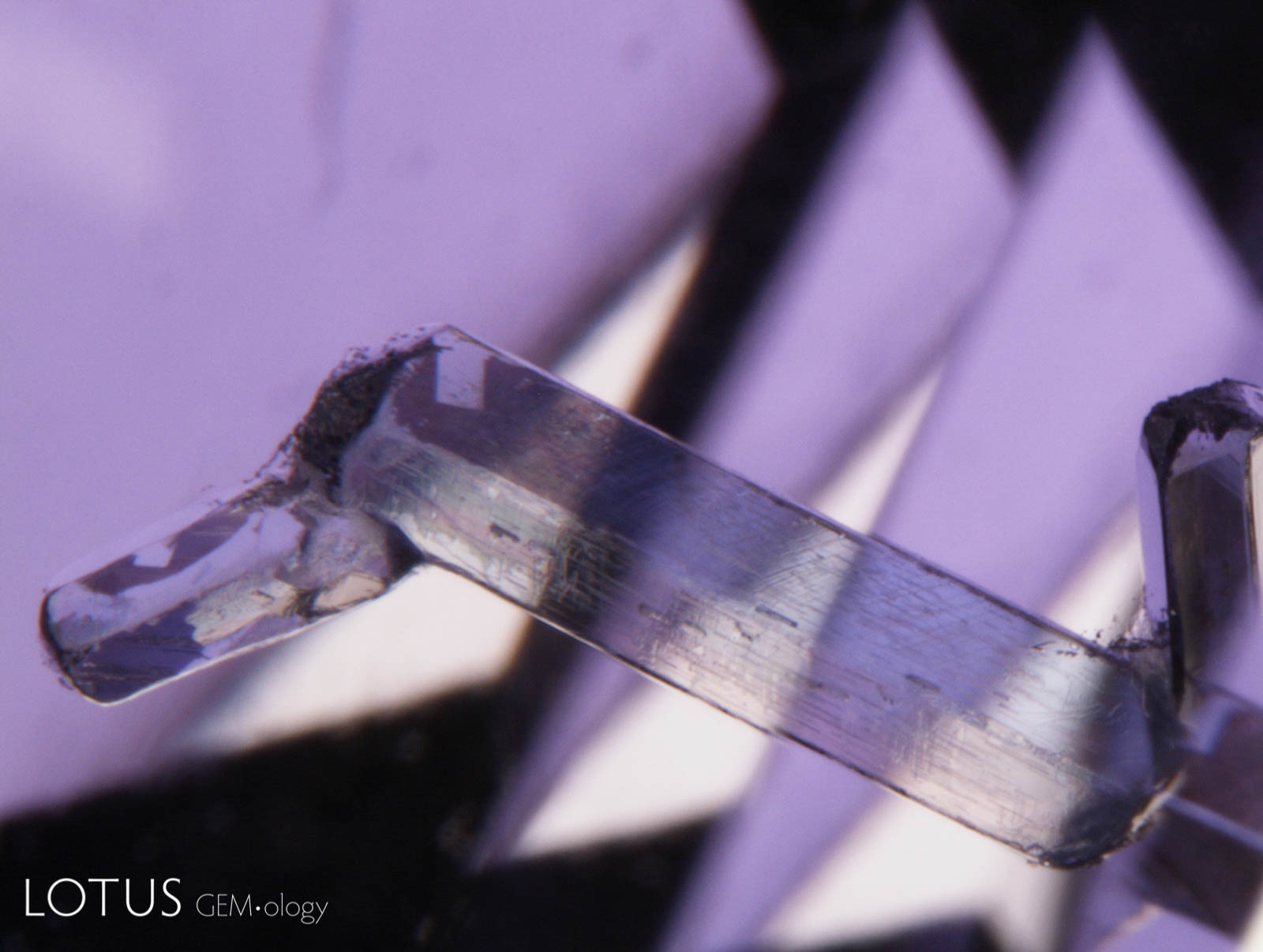
Lovely apatite prisms enrich the interior of this purple spinel from Sri Lanka’s gem gravels. Apatite is a common guest in spinel.
Natural Spinel •
Sri Lanka (Ceylon) •
Enhancements:
None Detected (None) •
Lighting Conditions:
Shadowing
Photographer:
John I. Koivula •
Image Number:
R-001-3741-1
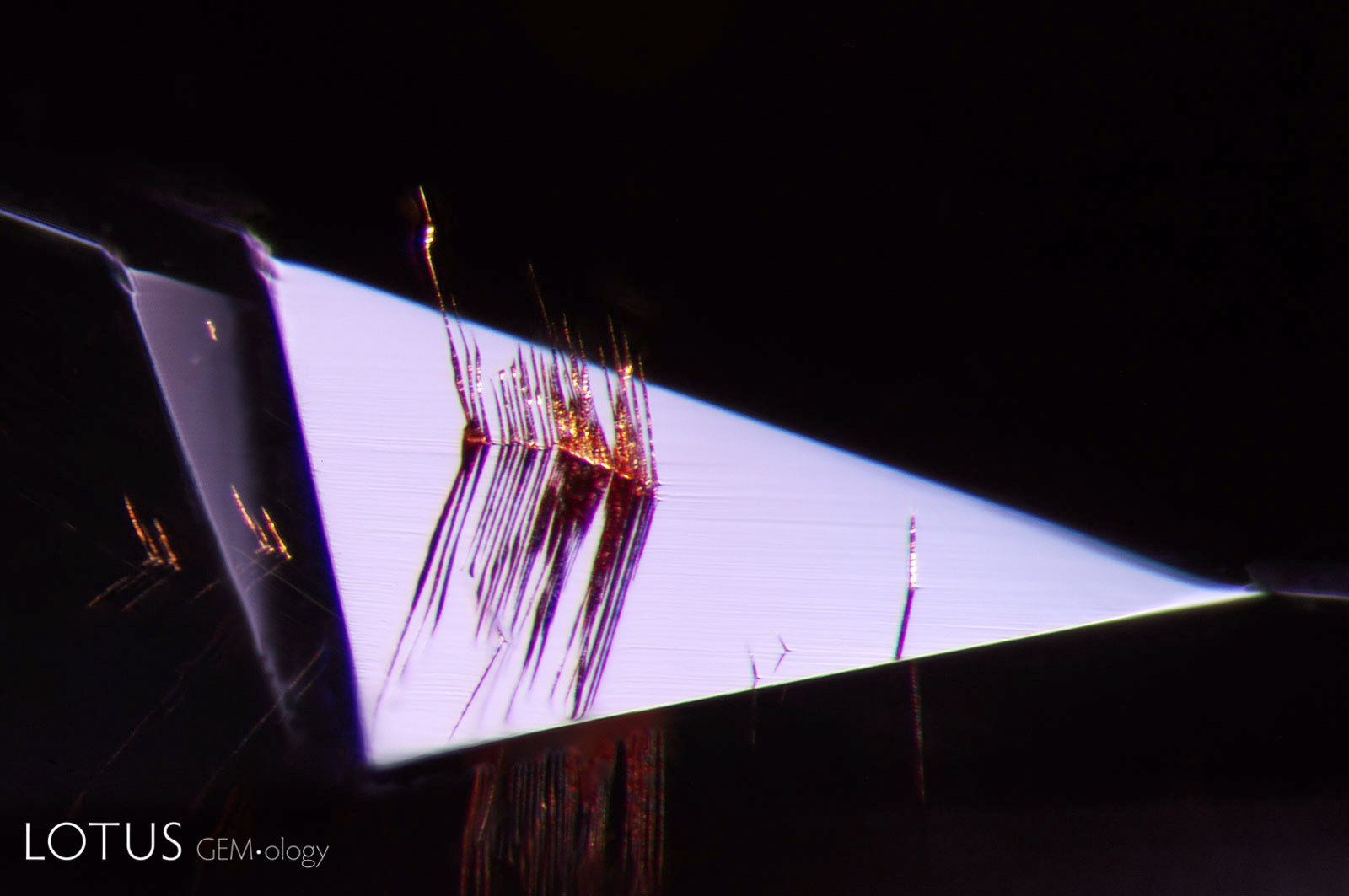
Orange-stained growth tubes protrude from a facet in this cobalt-blue spinel from Sri Lanka.
Natural Spinel •
Sri Lanka (Ceylon) •
Enhancements:
None Detected (None) •
Lighting Conditions:
Dark Field
Photographer:
E. Billie Hughes •
Image Number:
A-001-3716-1
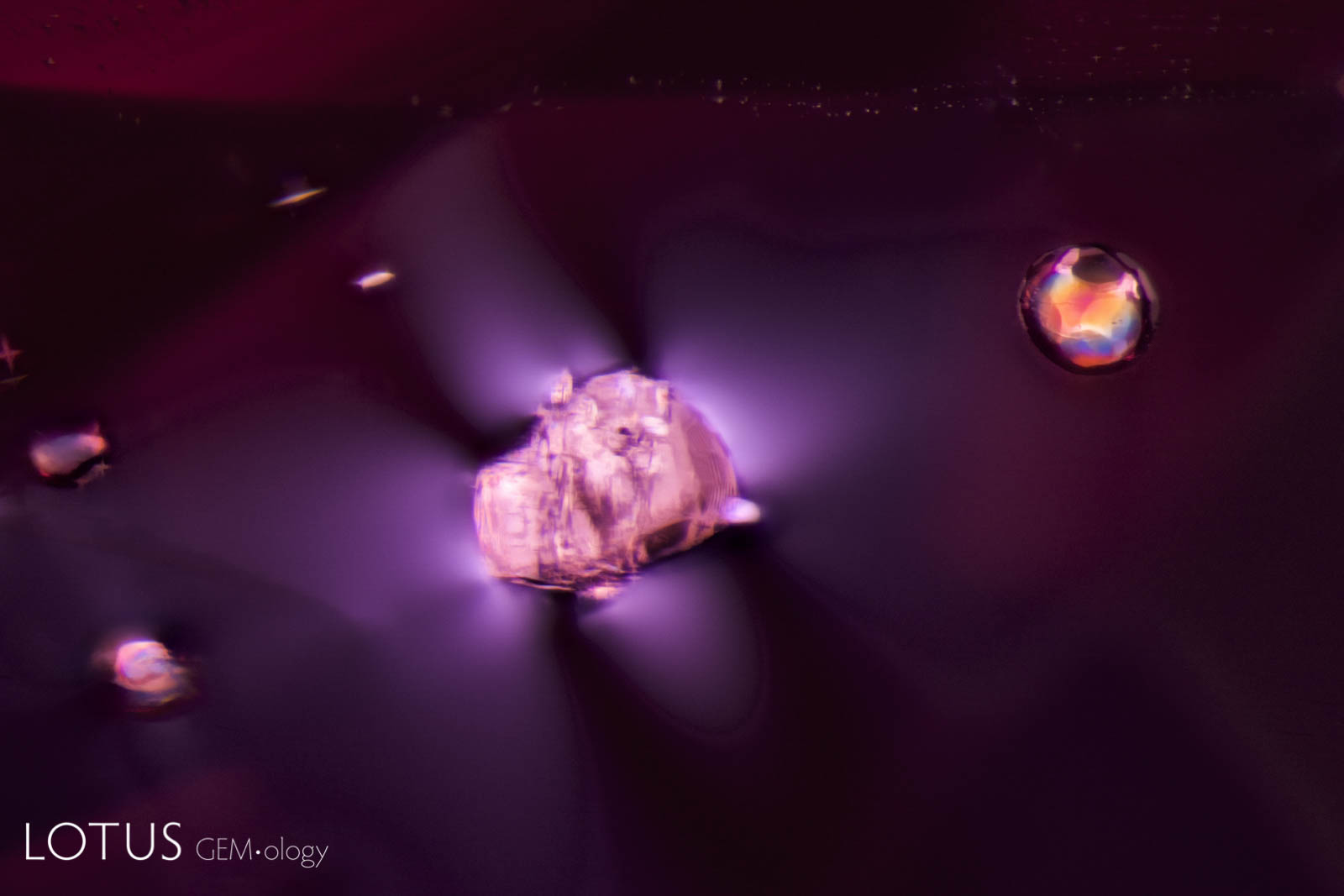
This rounded apatite crystal displays interference colors between crossed polars in a Tanzanian spinel.
Natural Spinel •
Tanzania; Mahenge •
Enhancements:
None Detected (None) •
Lighting Conditions:
Diffuse Light Field + Crossed Polars
Photographer:
E. Billie Hughes •
Image Number:
A-001-3594-2
A rounded apatite crystal displays interference colors while another unknown crystal exhibits strain between crossed polars in this Tanzanian hot pink spinel.
Natural Spinel •
Tanzania; Mahenge •
Enhancements:
None Detected (None) •
Lighting Conditions:
Diffuse Light Field + Crossed Polars
Photographer:
Richard W. Hughes •
Image Number:
A-001-3594-1
Transparent crystals in a spinel.
Natural Spinel •
Vietnam •
Enhancements:
None Detected (None) •
Lighting Conditions:
Dark Field
Photographer:
E. Billie Hughes •
Image Number:
A-001-3485-3
Octahedron-shaped inclusions are the most common feature of spinels from all sources. In some cases they may actually be solid crystals of spinel. In other cases, such as this fingerprint with tiny rows of octahedra, they represent tiny negative crystals. This example is in a stone from Mahenge, Tanzania. In certain cases, these negative crystals may be filled with a foreign substance (such as white dolomite, yellow phlogopite or black hercynite spinel).
Natural Spinel •
Tanzania; Mahenge •
Enhancements:
None Detected (None) •
Lighting Conditions:
Diffuse Light Field (Transmitted Light)
Photographer:
E. Billie Hughes •
Image Number:
A-001-3432-1
Short needles and exsolved particles in a spinel from Mahenge, Tanzania. Clouds of dust-like particles are typical for Mahenge spinel.
Natural Spinel •
Tanzania; Mahenge •
Enhancements:
None Detected (None) •
Lighting Conditions:
Dark Field
Photographer:
E. Billie Hughes •
Image Number:
A-001-3366-1
Octahedron-shaped inclusions are the most common feature of spinels from all sources. In some cases they may actually be solid crystals of spinel. In other cases, they may be seen as fingerprints with tiny rows of octahedra-shaped negative crystals. In certain cases, these negative crystals may be filled with a foreign substance (such as white dolomite, yellow phlogopite or black hercynite spinel).
Natural Spinel •
Myanmar (Burma); Mogok/Namya •
Enhancements:
None Detected (None) •
Lighting Conditions:
Dark Field + Oblique Fiber Optic
Photographer:
E. Billie Hughes •
Image Number:
A-001-3311-1
Unusual flat fingerprint in a red spinel.
Natural Spinel •
Myanmar (Burma); Mogok/Namya •
Enhancements:
None Detected (None) •
Lighting Conditions:
Fiber Optic: Oblique
Photographer:
Richard W. Hughes •
Image Number:
A-001-3310-2
Search the Complete Hyperion Database
Spinel inclusions may include mineral crystals, healed fissures, fluid inclusions, negative crystals, growth features and other internal features formed during or after crystal growth. Such features are important to gemologists because they can provide evidence useful in identifying spinel, understanding its geological history, recognizing treatment and, in some cases, determining geographic origin.
Spinel Inclusion Photomicrographs
The Hyperion spinel gallery includes microscopic features found in spinels from major deposits around the world. Each entry is accompanied by descriptive information and, where available, references to the gemological literature.
What Inclusions Can Reveal About Spinel
Inclusions are an important part of spinel identification. Their form, composition and alteration can help gemologists distinguish natural spinel from synthetic material, recognize evidence of treatment, and study the geological environment in which the spinel formed.
Hyperion combines inclusion photomicrography with supporting gemological information so that individual features can be compared with documented examples from known spinel deposits.
About Hyperion
Hyperion is the Lotus Gemology searchable inclusion database. It allows users to browse gemstone inclusions by gem type, geographic origin, treatment and keyword.