Mozambique Ruby Inclusions
Explore Mozambique ruby inclusions in Hyperion, the Lotus Gemology inclusion database. Hyperion contains photomicrographs of inclusions and internal features in natural rubies from Mozambique, documented with information on treatment, lighting conditions, field of view, photographer and published references.
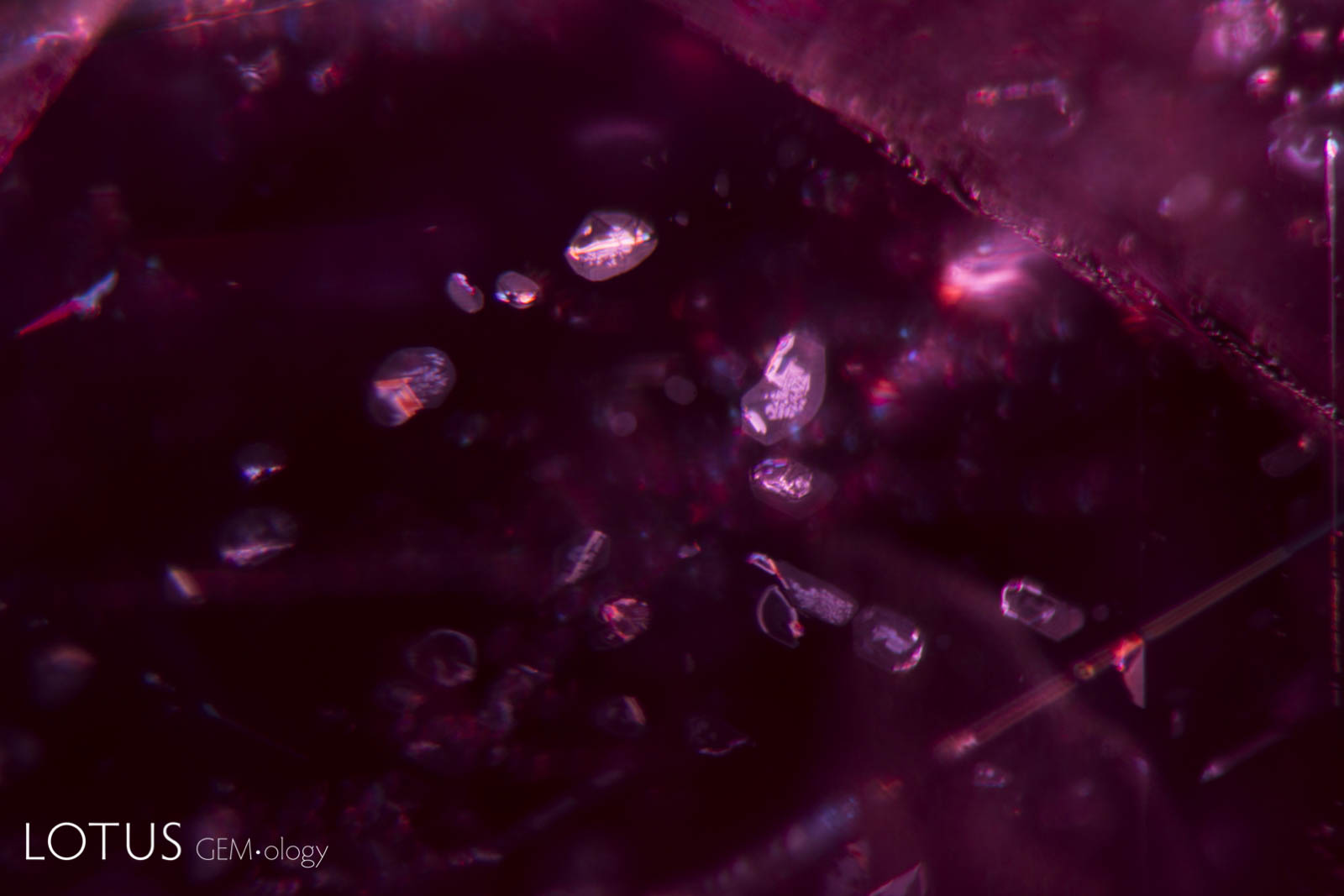
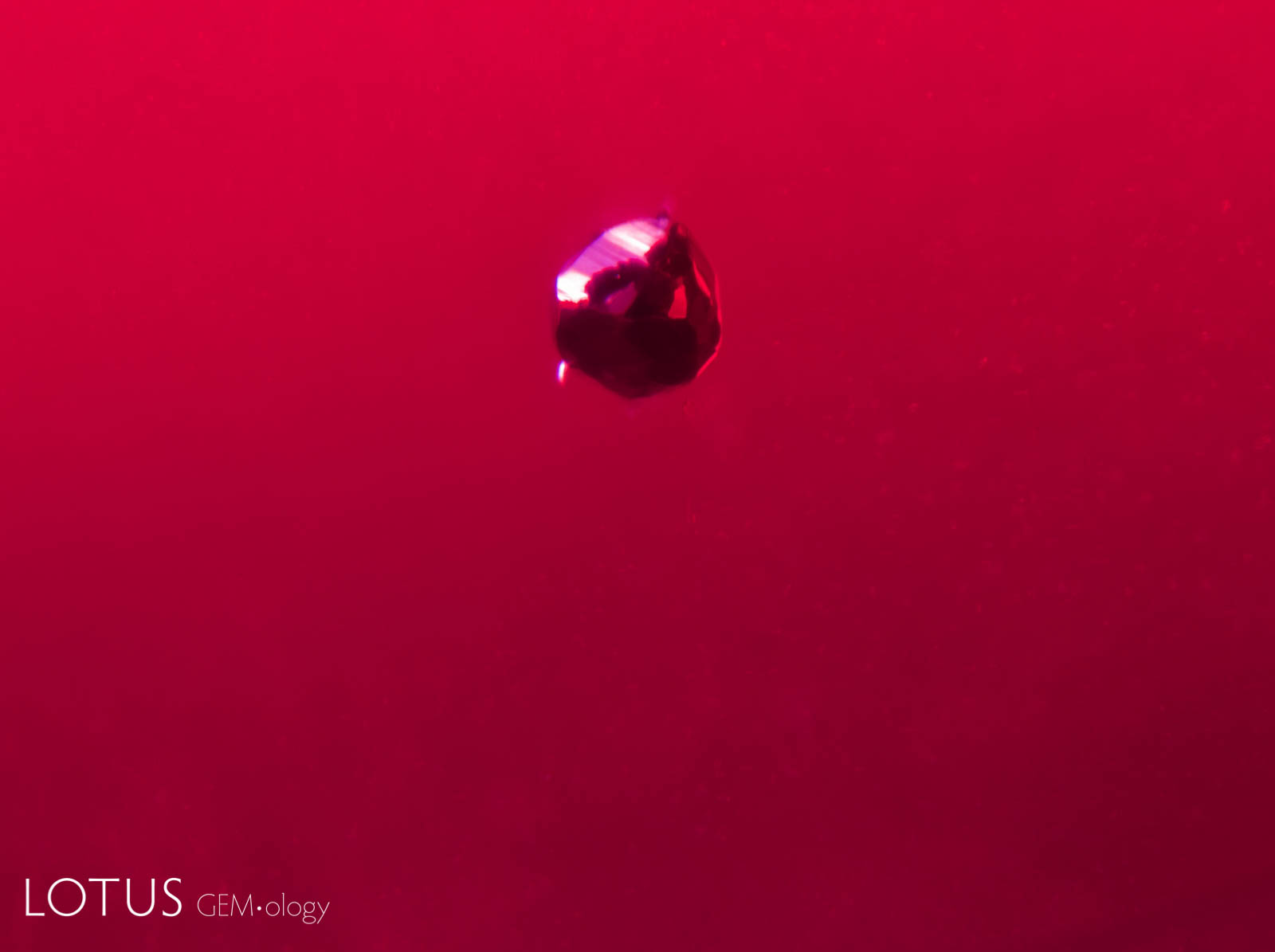
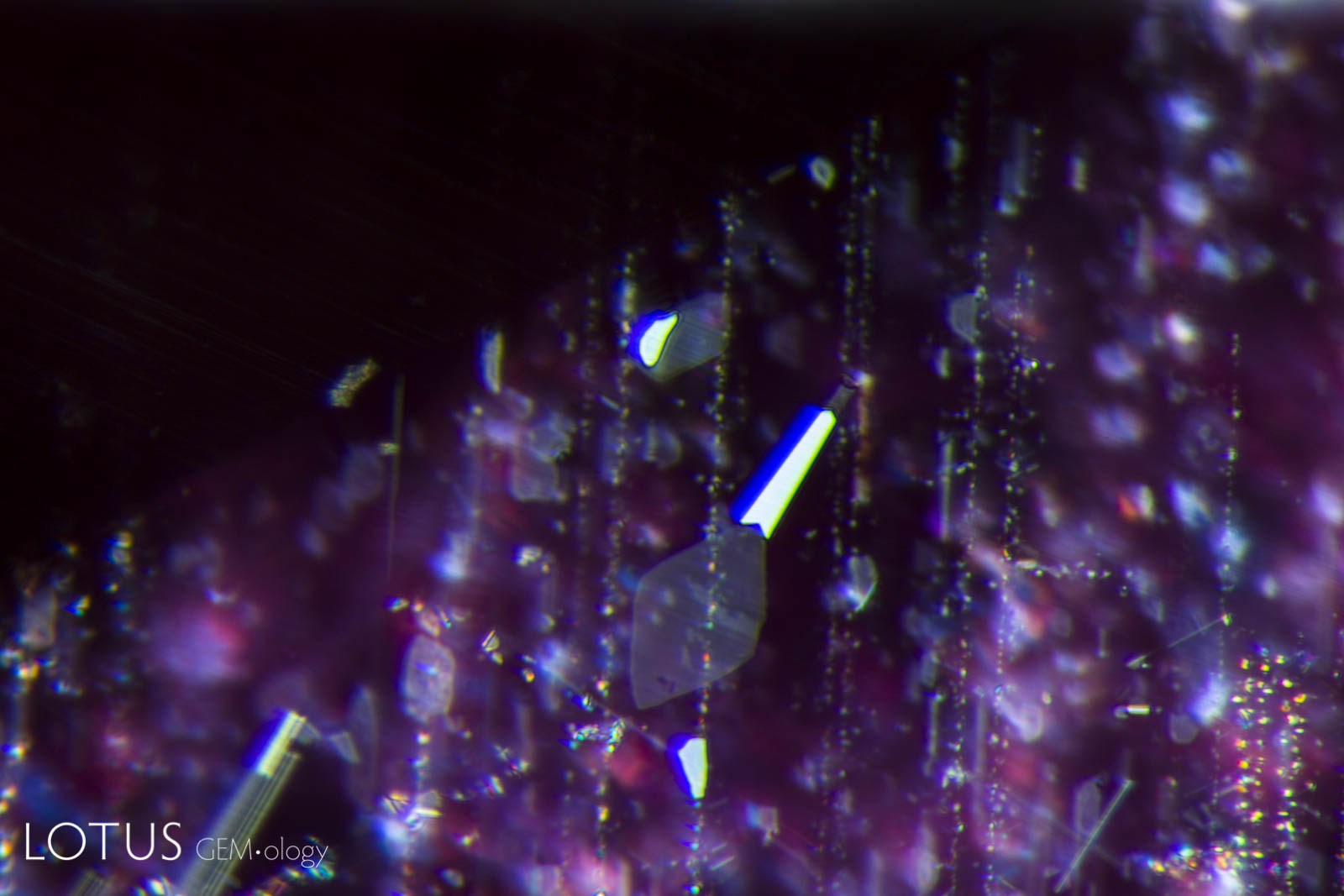
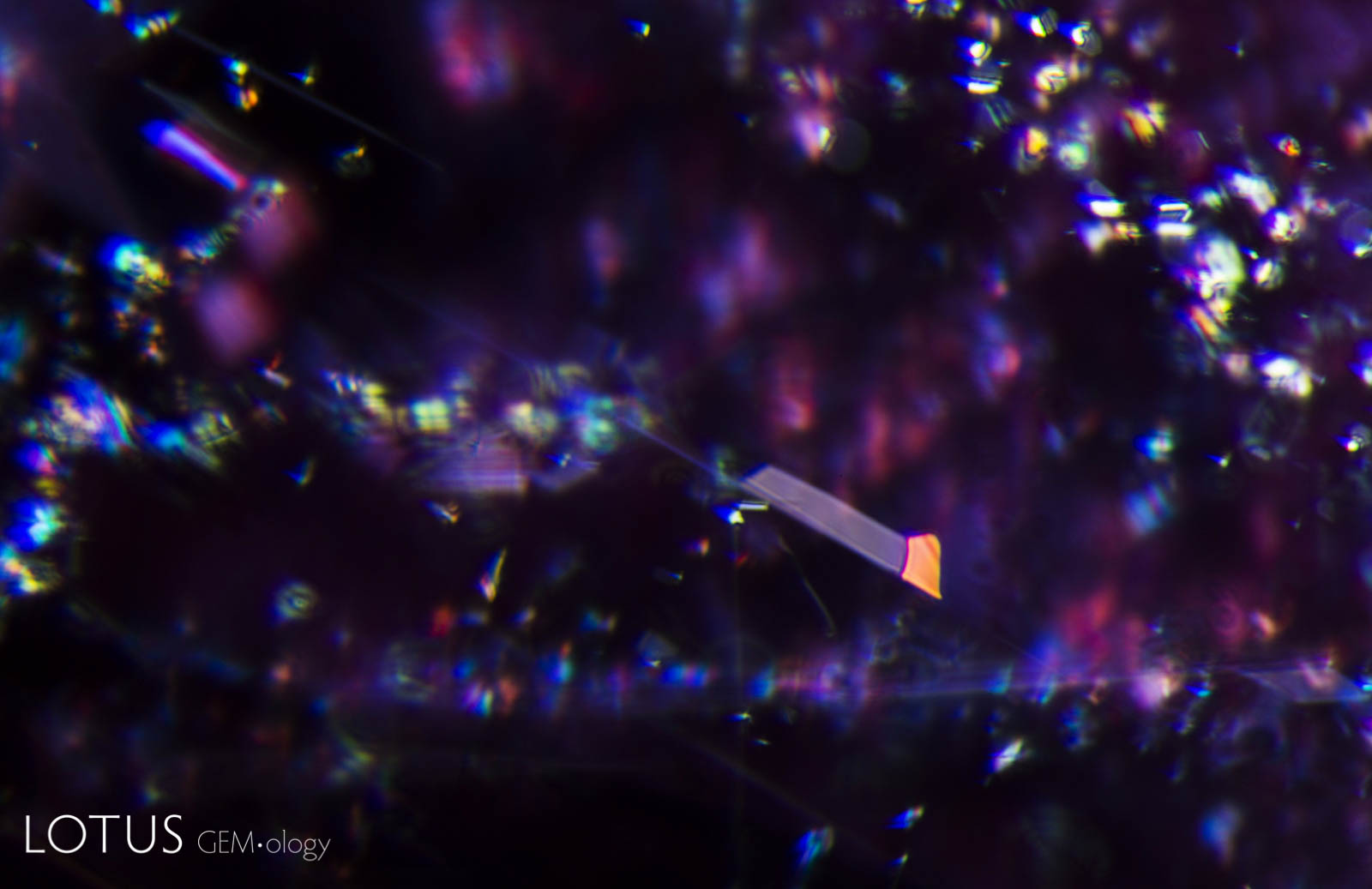
Rutile silk (high relief) with daughter crystals (lower relief) at the broad ends is a common feature of Mozambique rubies. Heat treatment often produces a breakdown, creating white spots or bubbles within the daughter crystals, as can be seen here.
Natural Ruby •
Mozambique •
Enhancements:
Heat + Fissure Healing (H-FH) •
Lighting Conditions:
Fiber Optic: Diffuse Overhead
Photographer:
E. Billie Hughes •
Image Number:
A-001-0840-1
Rutile silk (high relief) with daughter crystals (lower relief) at the broad ends is a common feature of Mozambique rubies. Heat treatment often produces a breakdown, creating white spots or bubbles within the daughter crystals.
Natural Ruby •
Mozambique •
Enhancements:
Heat + Fissure Healing (H-FH) •
Lighting Conditions:
Fiber Optic: Diffuse Overhead
Photographer:
E. Billie Hughes •
Image Number:
A-001-0835-1
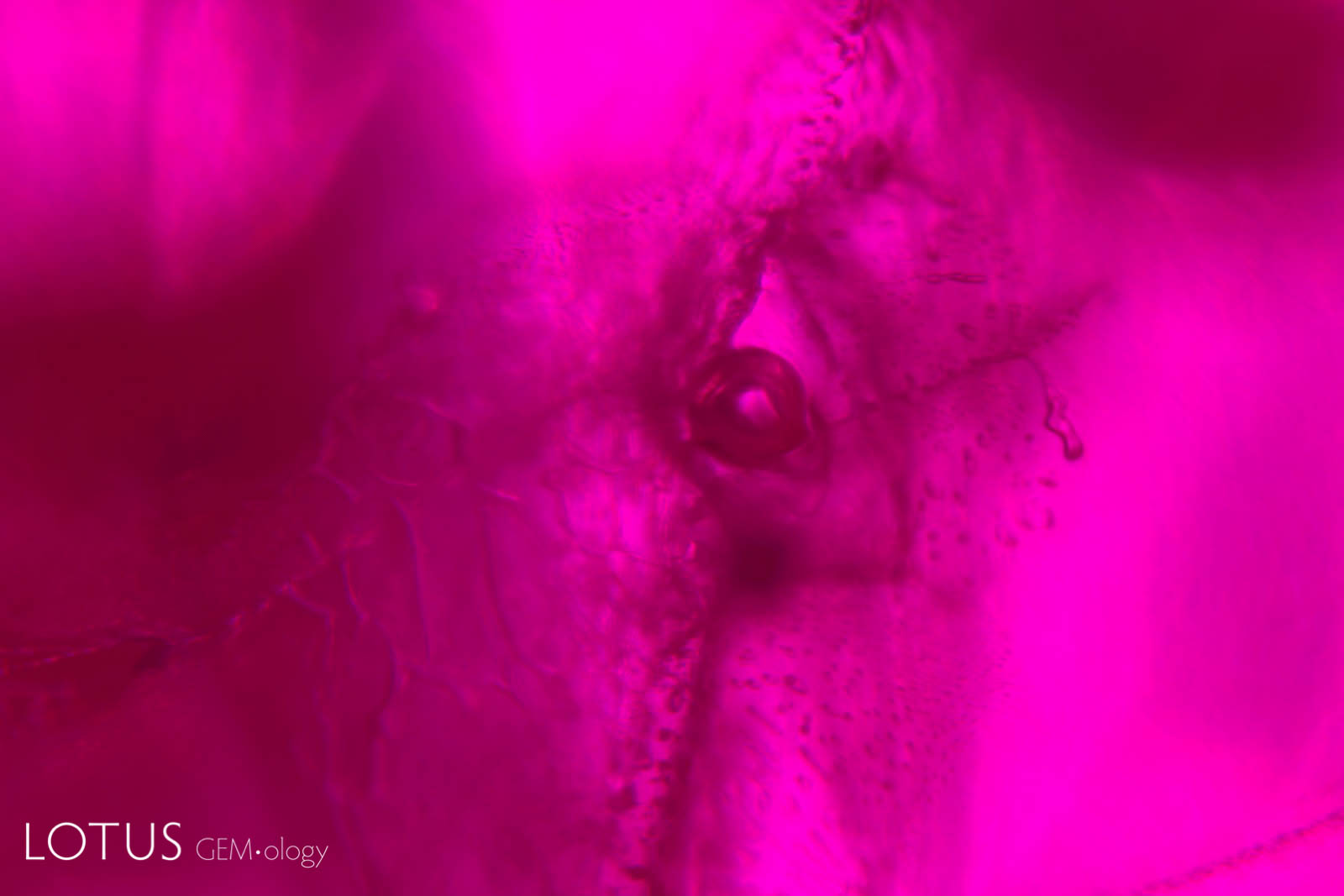
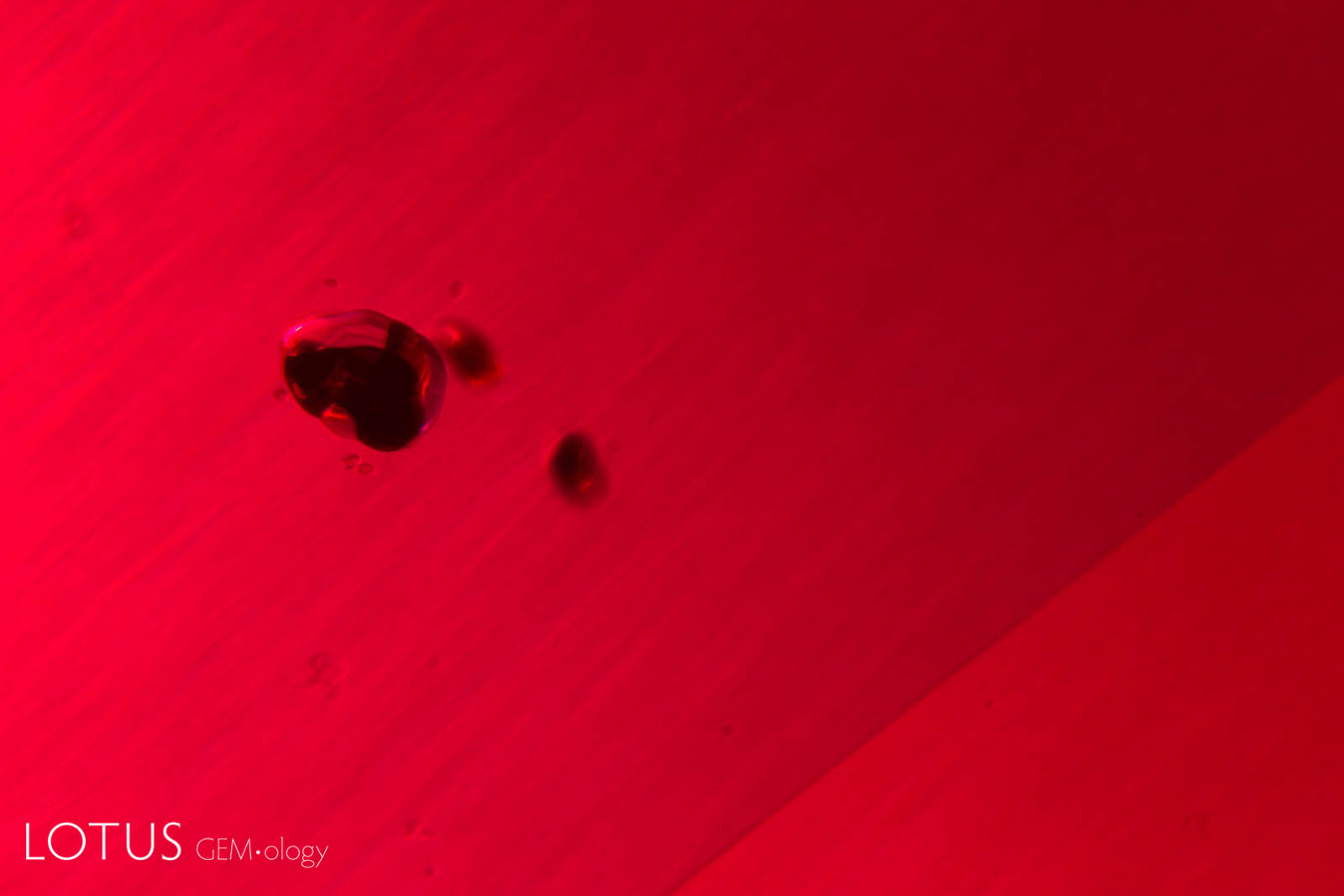
A large gas bubble trapped within the glass filling a large cavity of this treated Mozambique ruby. Flux-healed fingerprints can also be seen nearby.
Natural Ruby •
Mozambique •
Enhancements:
Heat + Fissure Healing (H-FH) •
Lighting Conditions:
Fiber Optic: Oblique
Photographer:
E. Billie Hughes •
Image Number:
A-001-0836-3
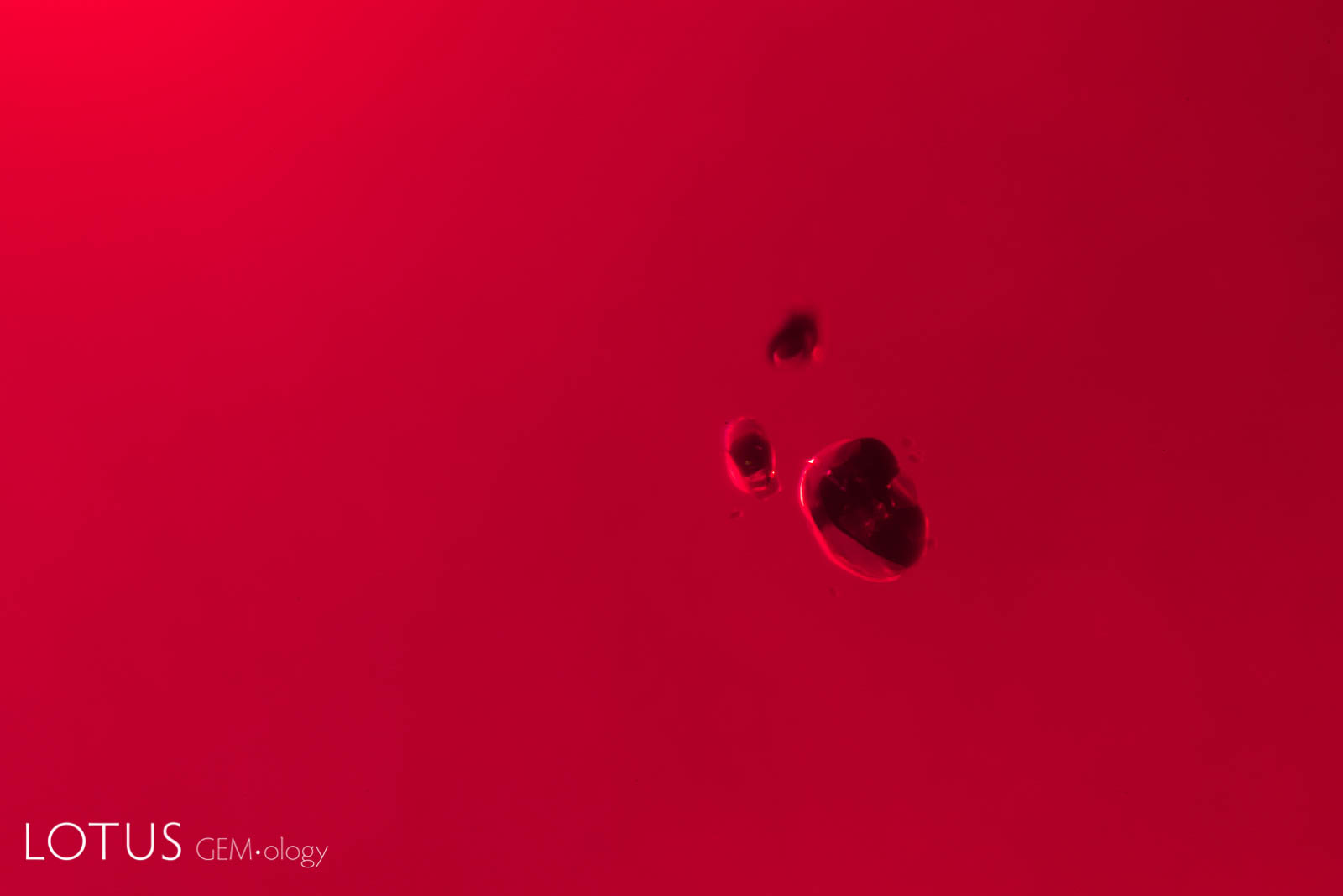
Flattened gas bubbles within a glass-filled fissure of a treated Mozambique ruby.
Natural Ruby •
Mozambique •
Enhancements:
Heat + Fissure Healing (H-FH) •
Lighting Conditions:
Fiber Optic: Oblique
Photographer:
E. Billie Hughes •
Image Number:
A-001-0836-2
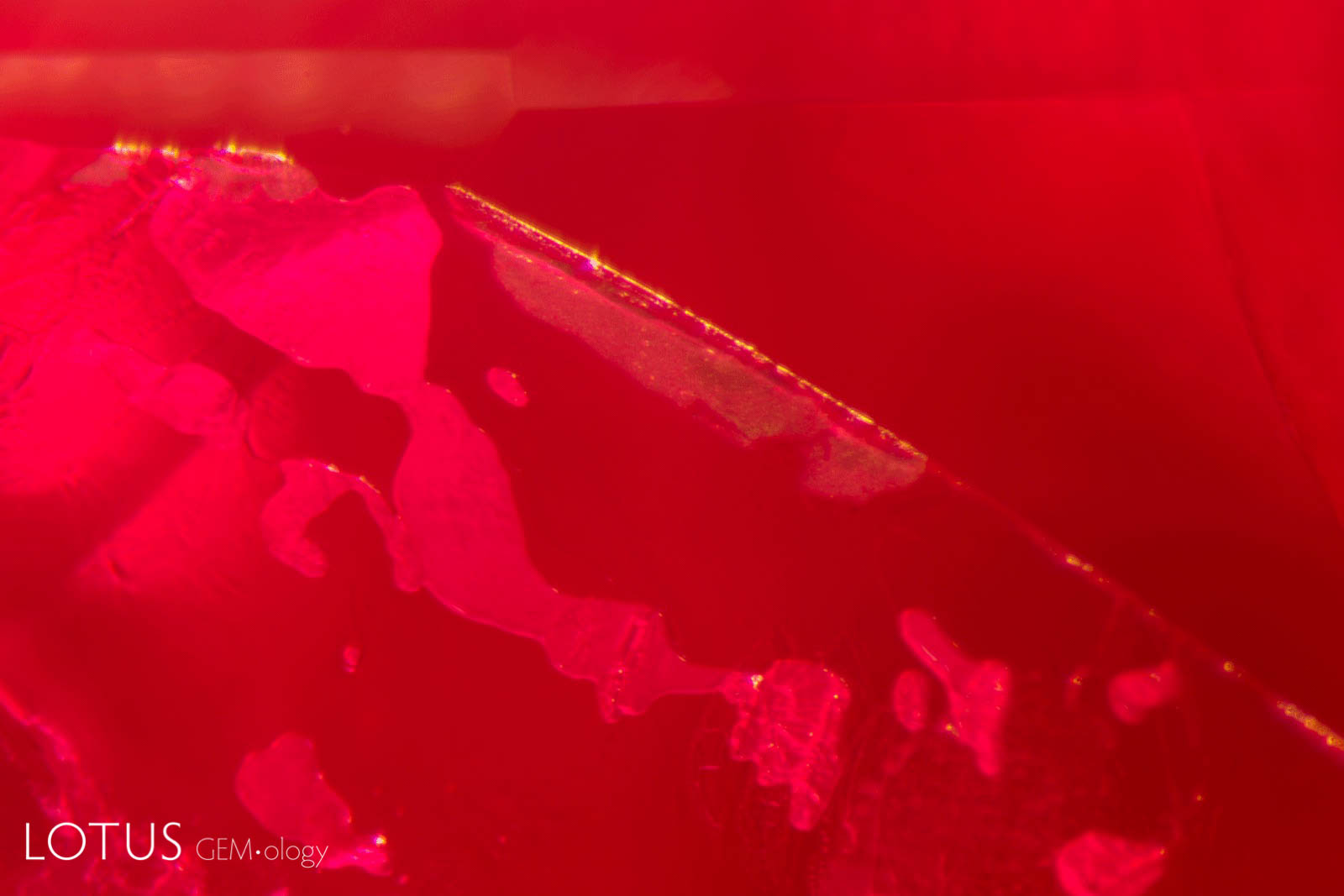
A large glass-filled cavity on the surface of this heated ruby from Mozambique. Lower-grade ruby from Mozambique is sometimes treated by both flux healing and glass infilling.
Natural Ruby •
Mozambique •
Enhancements:
Heat + Fissure Healing (H-FH) •
Lighting Conditions:
Fiber Optic: Diffuse Overhead
Photographer:
E. Billie Hughes •
Image Number:
A-001-0836-1
Hughes, R.W. (1984) Repaired surfaces found on rubies. Jewellery News Asia, No. 6, pp. 1, 33; RWHL*.
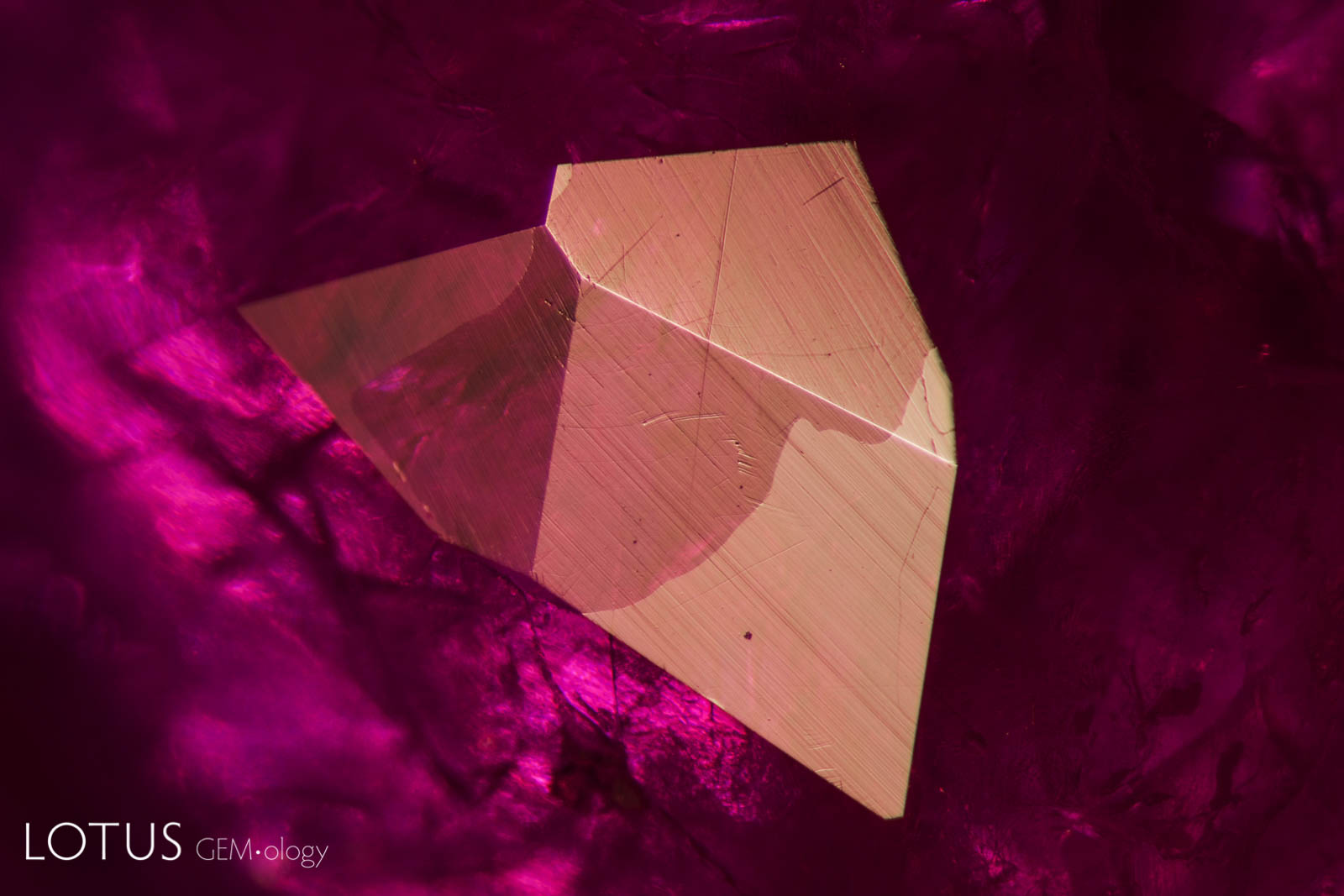
Inclusion of what is probably chalcopyrite in a ruby from Montepuez, Mozambique.
Natural Ruby •
Mozambique •
Enhancements:
None Detected (None) •
Lighting Conditions:
Fiber Optic: Oblique
Photographer:
E. Billie Hughes •
Image Number:
A-001-0743-1
Undissolved rutile silk with attached daughter crystals in the basal plane of a ruby from Mozambique’s Montepuez region.
Natural Ruby •
Mozambique •
Enhancements:
None Detected (None) •
Lighting Conditions:
Fiber Optic: Diffuse Overhead
Photographer:
Richard W. Hughes •
Image Number:
A-001-0741-3
Inclusions of what is probably pargasite with dark grains of embedded chromite in a ruby from Montepuez, Mozambique.
Natural Ruby •
Mozambique •
Enhancements:
None Detected (None) •
Lighting Conditions:
Fiber Optic: Transmitted
Photographer:
Richard W. Hughes •
Image Number:
A-001-0741-2
Inclusions of what is probably pargasite with dark grains of embedded chromite in a ruby from Montepuez, Mozambique.
Natural Ruby •
Mozambique •
Enhancements:
None Detected (None) •
Lighting Conditions:
Fiber Optic: Transmitted
Photographer:
E. Billie Hughes •
Image Number:
A-001-0741-1
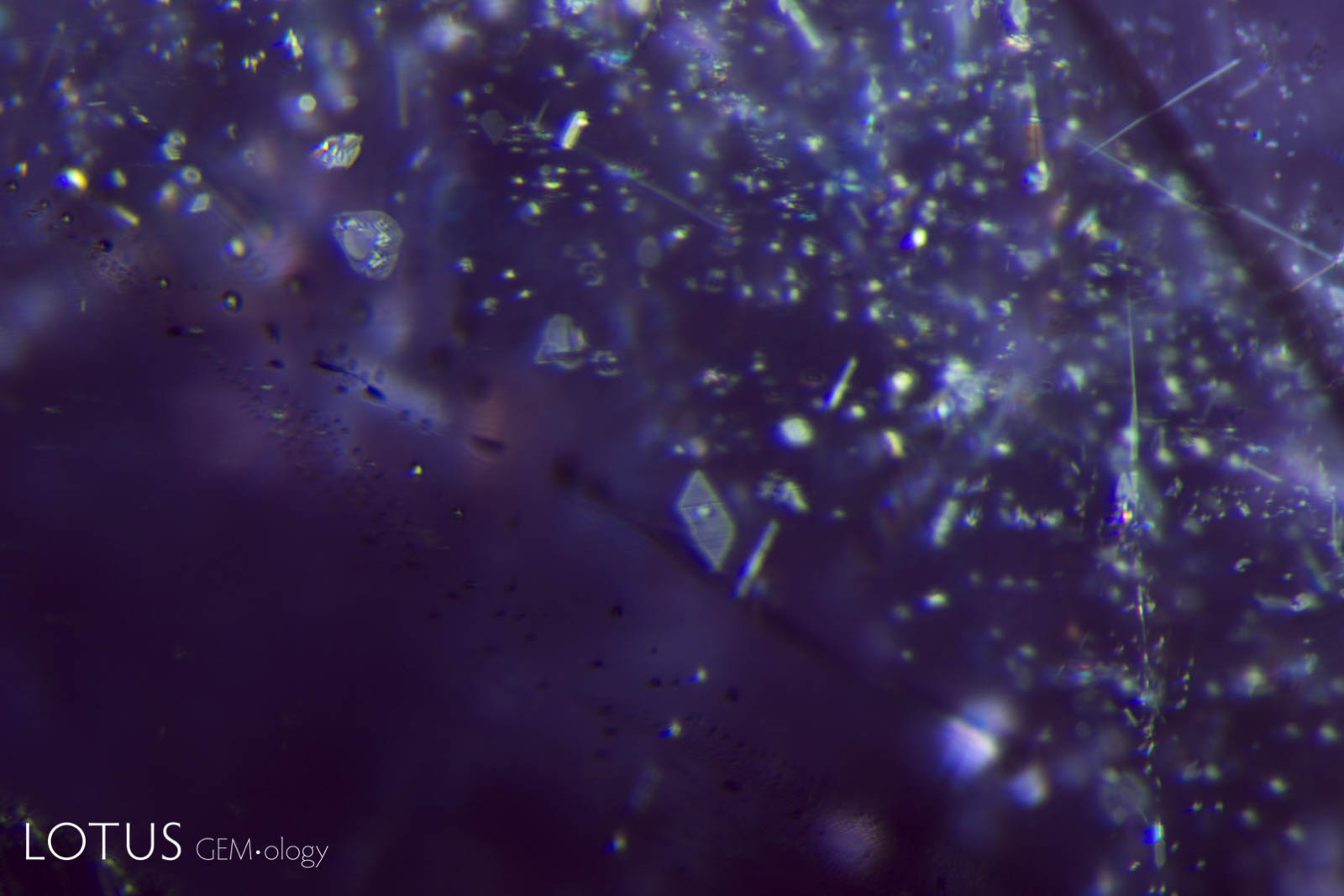
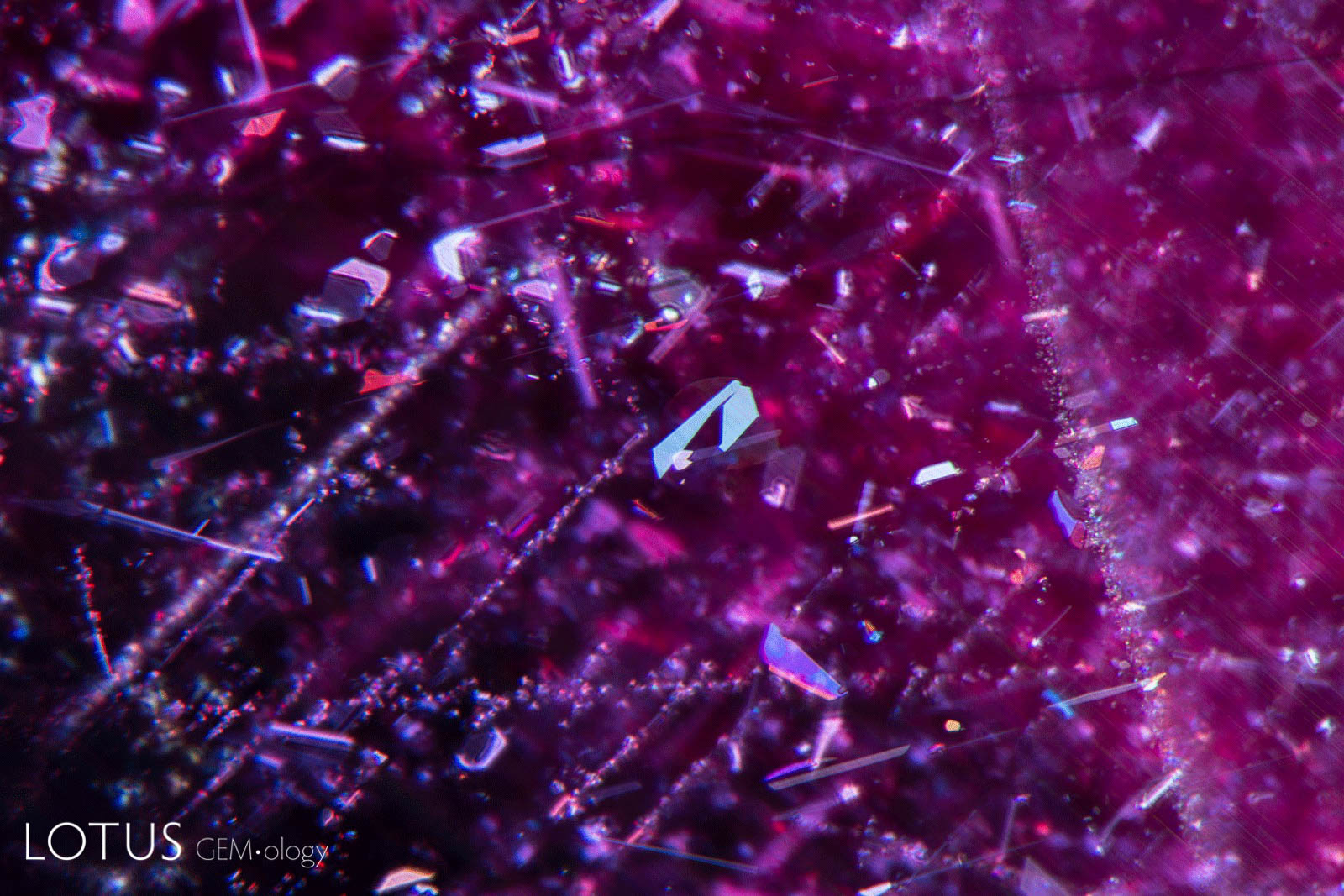
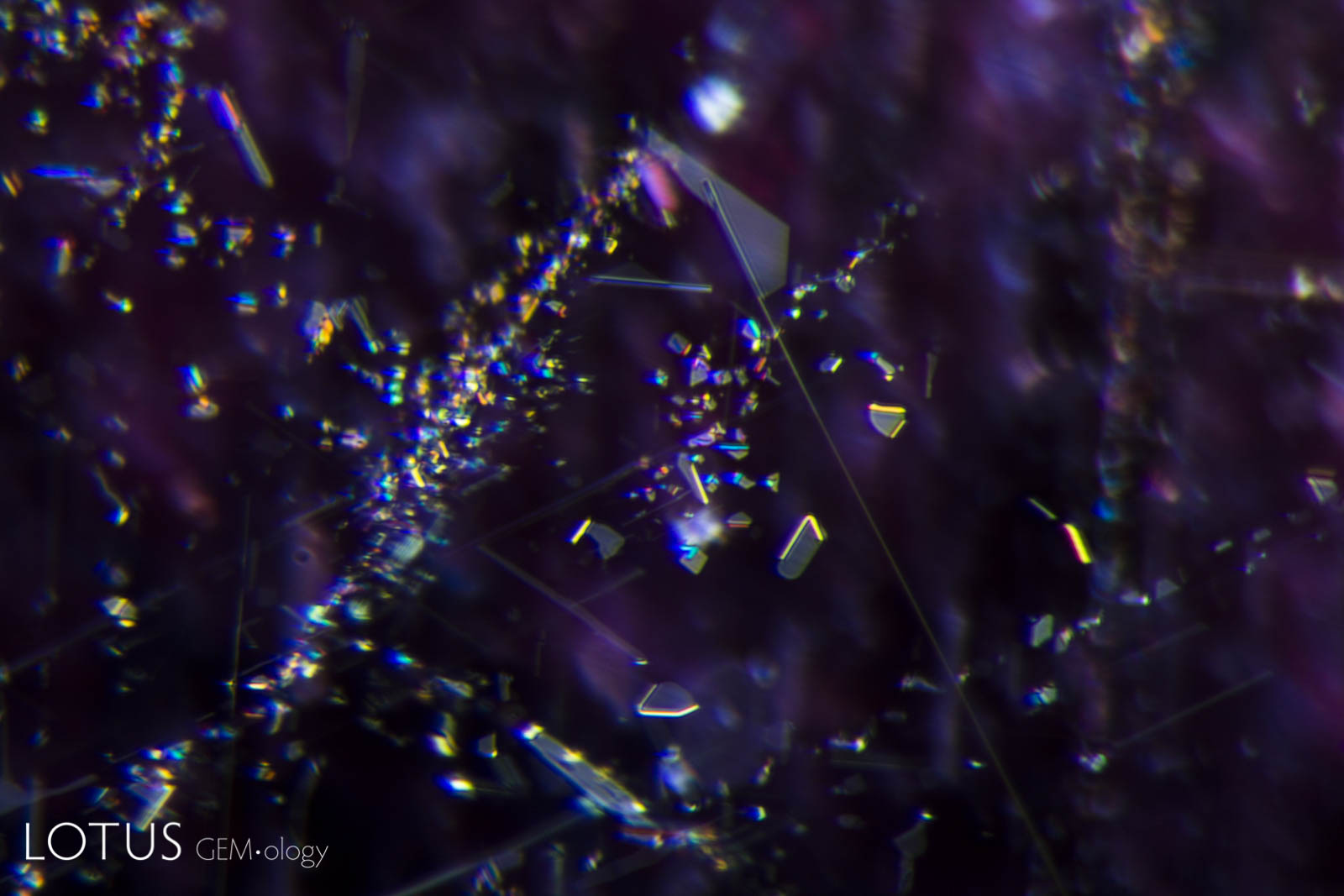
Probably the most common inclusion in Mozambique ruby is rutile silk. The rutile forms as high-relief twinned needles with tiny re-entrant angles at the broad end, attached to “daughter” crystals of lower relief. During heat treatment, the daughter crystals may show breakdown in the form of bubbles or mottling.
Natural Ruby •
Mozambique •
Enhancements:
None Detected (None) •
Lighting Conditions:
Fiber Optic: Diffuse Overhead
Photographer:
E. Billie Hughes •
Image Number:
A-001-0706-2
Probably the most common inclusion in Mozambique ruby is rutile silk. The rutile forms as high-relief twinned needles with tiny re-entrant angles at the broad end, attached to “daughter” crystals of lower relief. During heat treatment, the daughter crystals may show breakdown in the form of bubbles or mottling.
Natural Ruby •
Mozambique •
Enhancements:
None Detected (None) •
Lighting Conditions:
Fiber Optic: Diffuse Overhead
Photographer:
E. Billie Hughes •
Image Number:
A-001-0706-1
Probably the most common inclusion in Mozambique ruby is rutile silk. The rutile forms as high-relief twinned needles with tiny re-entrant angles at the broad end, attached to “daughter” crystals of lower relief. During heat treatment, the daughter crystals may show breakdown in the form of bubbles or mottling.
Natural Ruby •
Mozambique •
Enhancements:
None Detected (None) •
Lighting Conditions:
Fiber Optic: Diffuse Overhead
Photographer:
E. Billie Hughes •
Image Number:
A-001-0707-1
Search the Complete Hyperion Database
Mozambique ruby inclusions may include mineral crystals, rutile silk, healed fissures, fluid inclusions, negative crystals, growth features and other internal features formed during or after crystal growth. Such features are important to gemologists because they can provide evidence useful in identifying ruby and evaluating a possible Mozambique origin.
Mozambique Ruby Inclusion Photomicrographs
The Hyperion Mozambique ruby gallery includes microscopic features documented in rubies from Mozambique. Each entry is accompanied by descriptive information and, where available, references to the gemological literature.
What Inclusions Can Reveal About Mozambique Ruby
Inclusions are an important part of geographic origin determination in ruby. Their form, composition, orientation and associations can provide evidence that, when considered together with other gemological properties, may support or contradict a Mozambique origin.
Hyperion combines inclusion photomicrography with supporting gemological information so that individual features can be compared with documented examples from Mozambique rubies.
About Hyperion
Hyperion is the Lotus Gemology searchable inclusion database. It allows users to browse gemstone inclusions by gem type, geographic origin, treatment and keyword.