Heated Sapphire Inclusions
Explore inclusions in heat-treated sapphire in Hyperion, the Lotus Gemology inclusion database. Hyperion contains photomicrographs of inclusions and internal features in natural sapphires that have been subjected to heat treatment, documented with information on geographic origin, lighting conditions, field of view, photographer and published references.
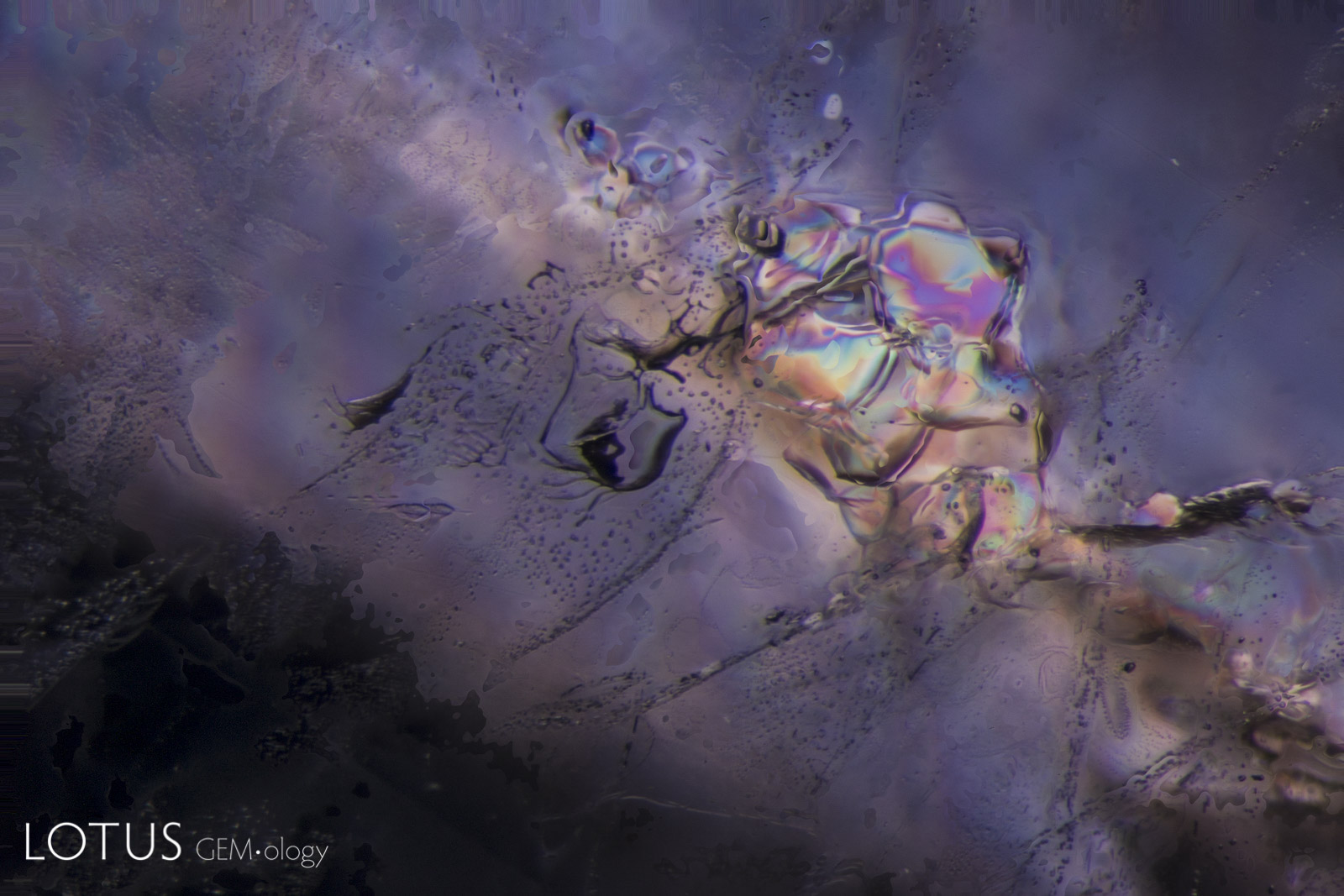
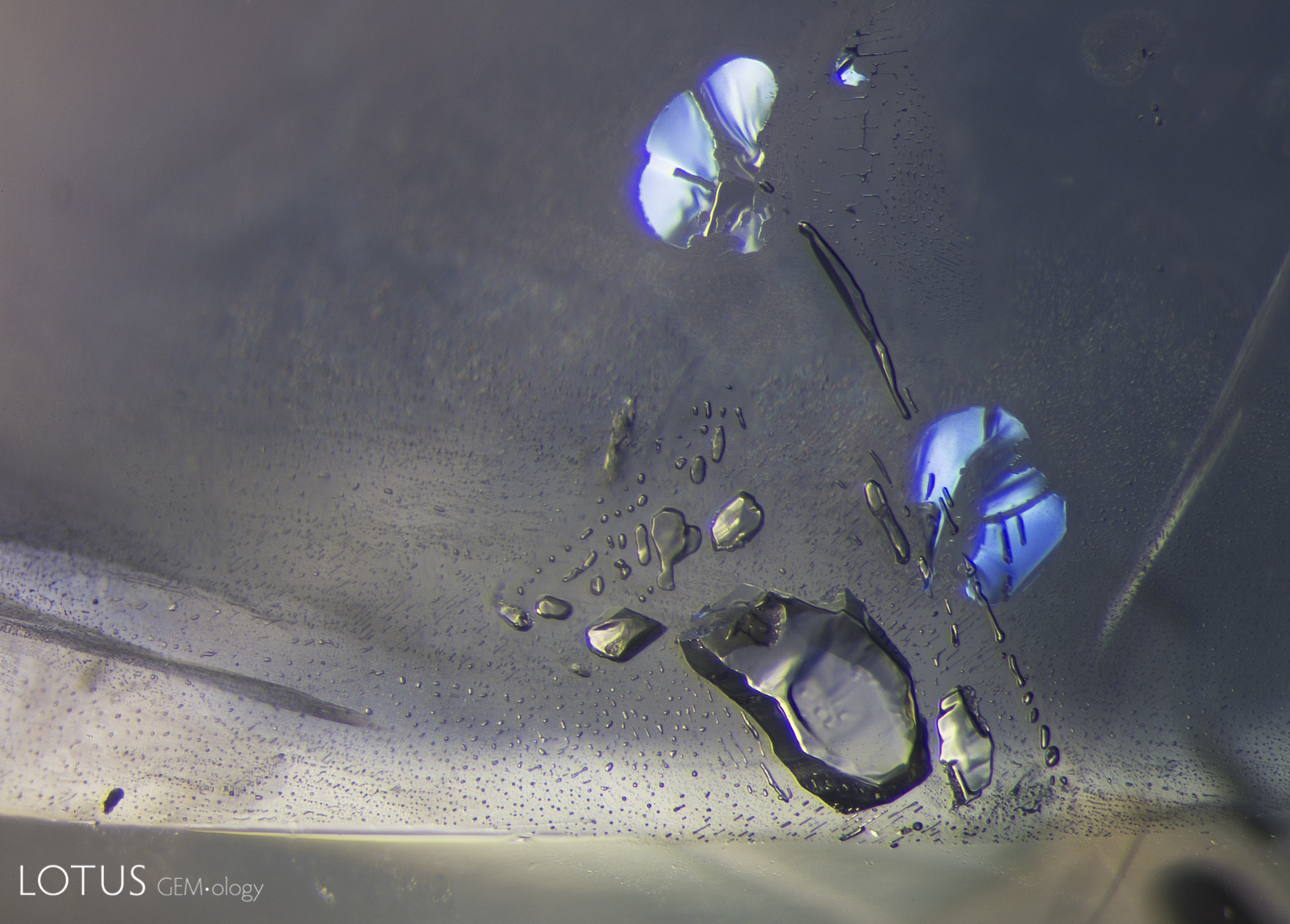
Transparent birefringent crystals and heat-altered fingerprints in a sapphire of unknown origin.
Natural Sapphire •
Not Determinable •
Enhancements:
Heat (H) •
Lighting Conditions:
Diffuse Light Field + Crossed Polars
Photographer:
Richard W. Hughes •
Image Number:
A-001-6792-1
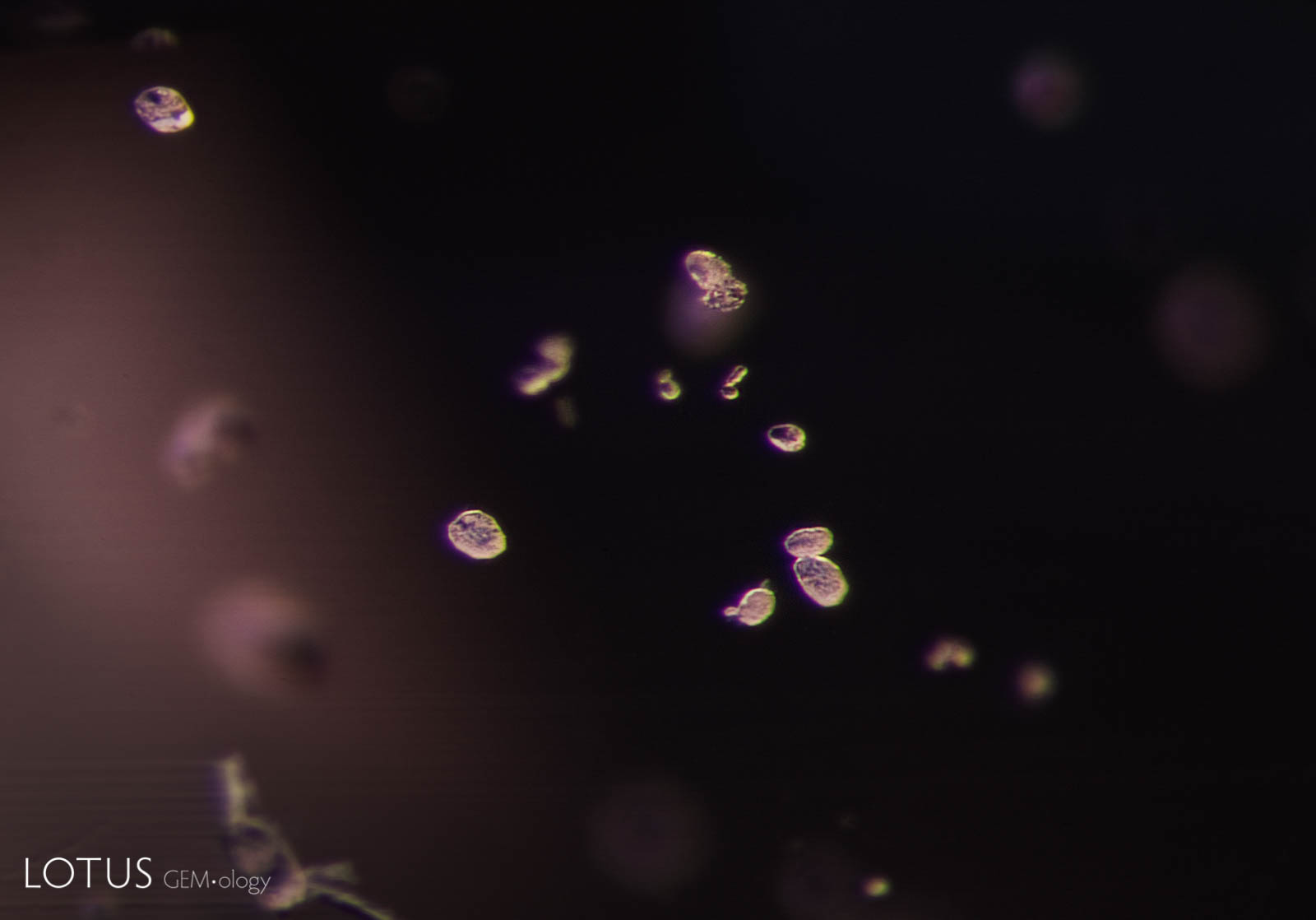
The surfaces of these negative crystals are glossy and smooth, showing signs of heating in this Sri Lankan sapphire.
Natural Sapphire •
Sri Lanka (Ceylon) •
Enhancements:
Heat (H) •
Lighting Conditions:
Dark Field + Diffuse Fiber Optic
Photographer:
E. Billie Hughes •
Image Number:
A-001-6480-1
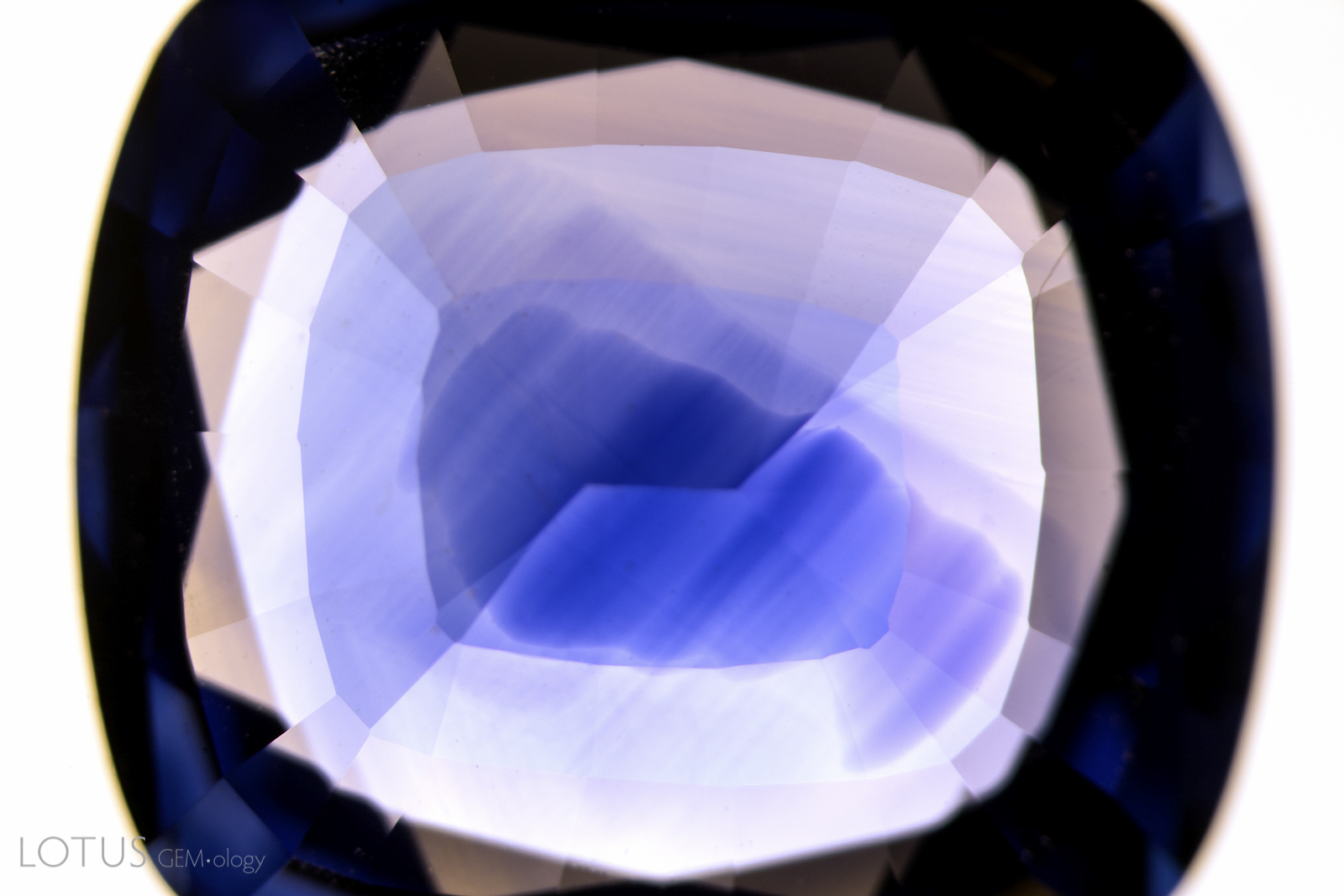
“Punsiri” zoning in a heated blue sapphire.
Natural Sapphire •
Sri Lanka (Ceylon) •
Enhancements:
Heat (H) •
Lighting Conditions:
Diffuse Light Field (Transmitted Light)
Photographer:
E. Billie Hughes •
Image Number:
A-001-5990-1
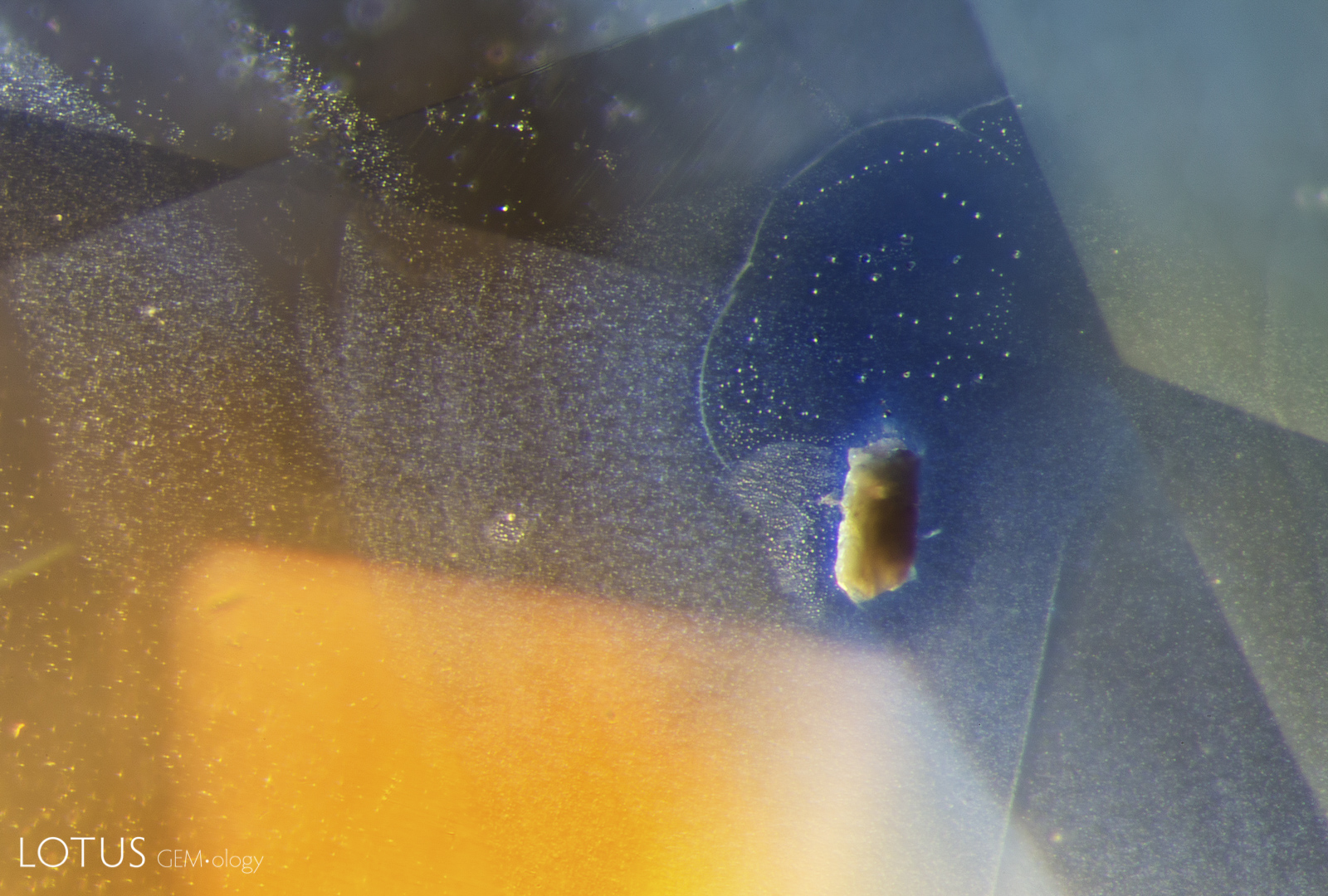
Internal diffusion caused by the heat treatment of a titanium-bearing crystal in a Malawi sapphire.
Natural Sapphire •
Malawi •
Enhancements:
Heat (H) •
Lighting Conditions:
Dark Field + Oblique Fiber Optic
Photographer:
E. Billie Hughes •
Image Number:
R-001-5756-1
Koivula, J.I. (1987) Internal diffusion. Journal of Gemmology, Vol. 20, No. 7/8, pp. 474–477; RWHL*.
Internal diffusion caused by heat treatment of a titanium-bearing crystal causes the blue color concentration in this Malawi sapphire.
Natural Sapphire •
Malawi •
Enhancements:
Heat (H) •
Lighting Conditions:
Dark Field + Diffuse Fiber Optic
Photographer:
E. Billie Hughes •
Image Number:
R-001-5741-1
Koivula, J.I. (1987) Internal diffusion. Journal of Gemmology, Vol. 20, No. 7/8, pp. 474–477; RWHL*.
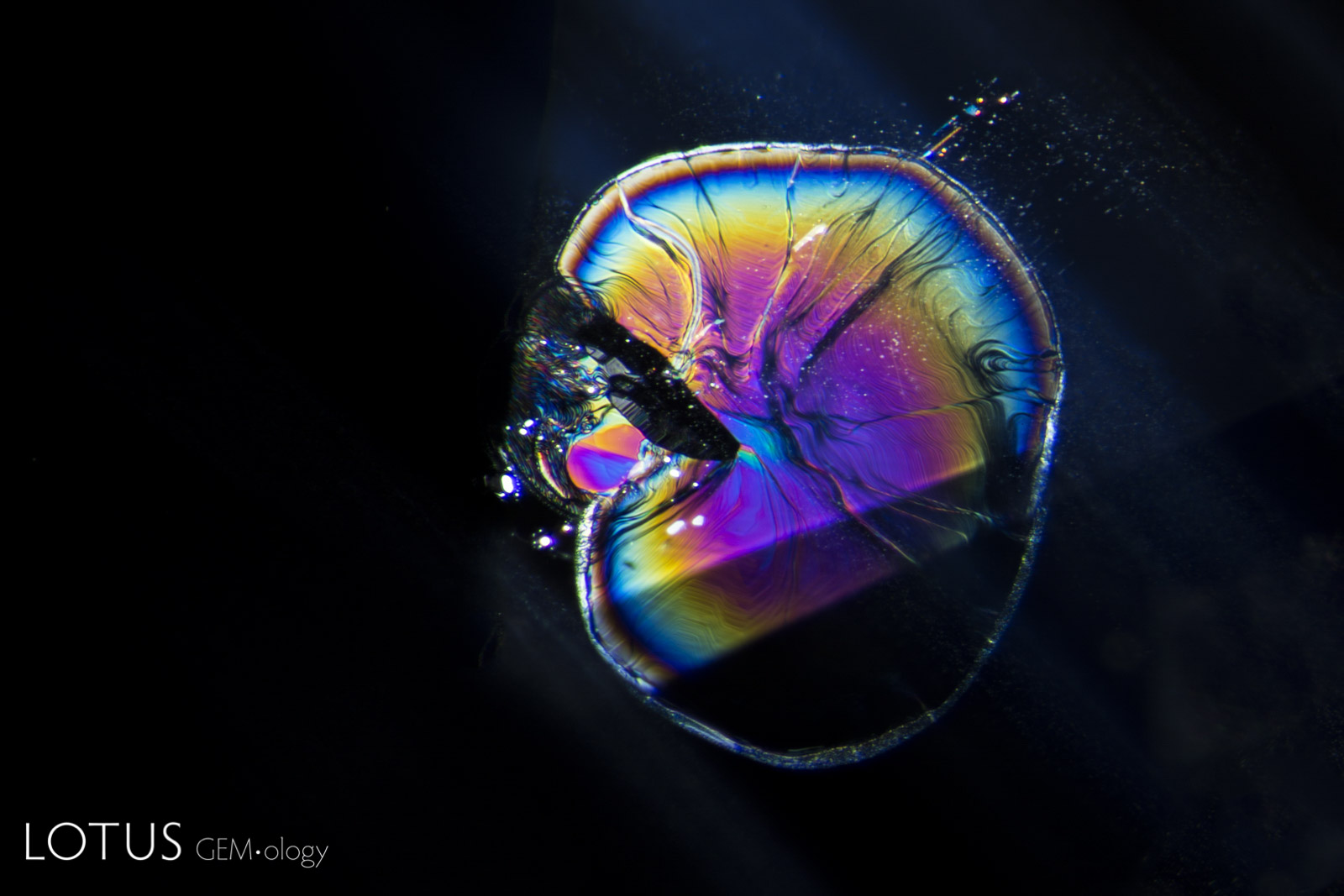
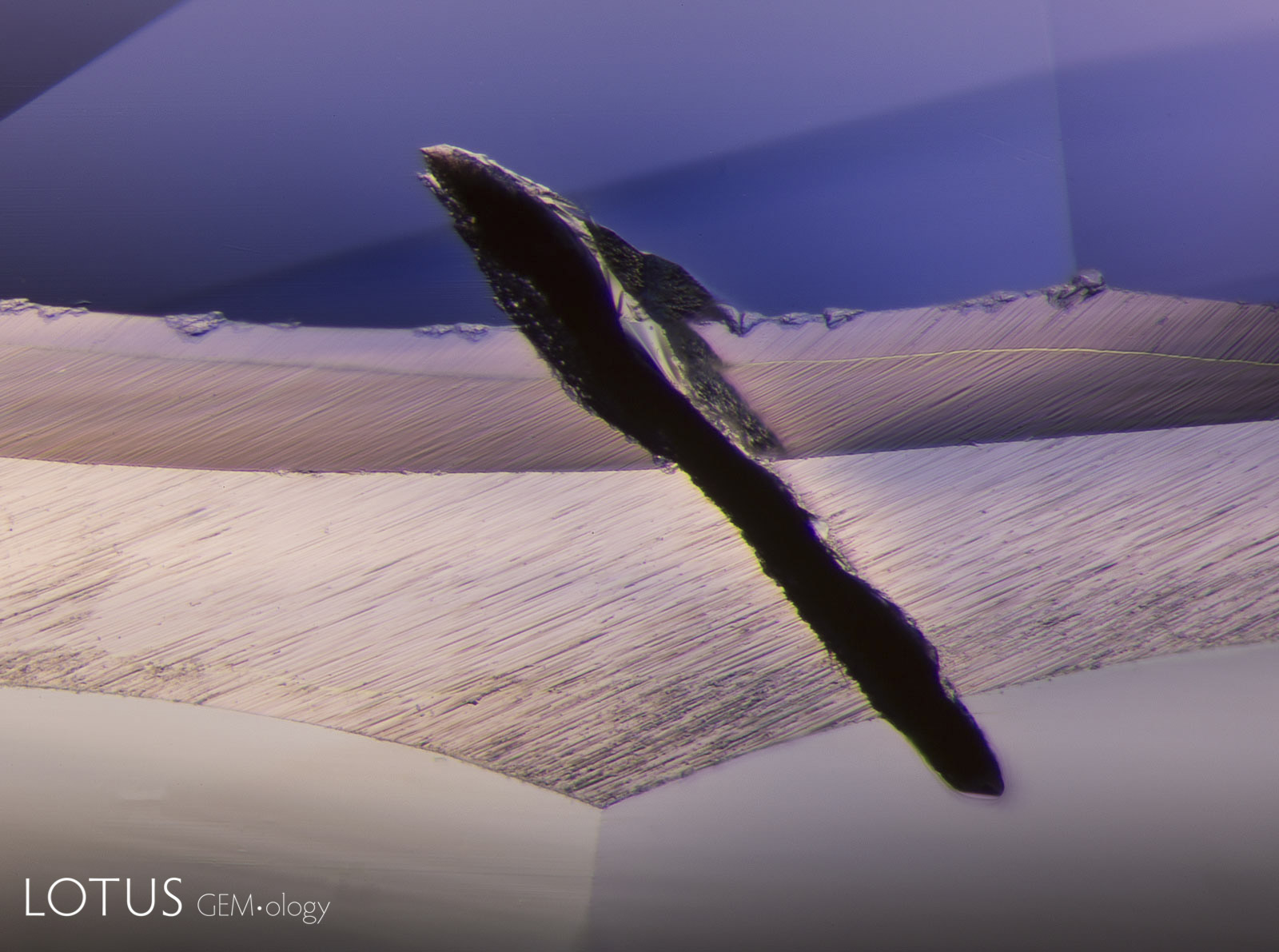
An iridescent fissure surrounds a small crystal in this basaltic sapphire from Bo Ploi, Thailand. When an included crystal such as this is heated, it expands, producing pressure on the host. The easiest release of that pressure is generally in the basal plane, producing a flat “discoid” fissure such as this.
Natural Sapphire •
Thailand (Siam); Bo Ploi •
Enhancements:
Heat (H) •
Lighting Conditions:
Fiber Optic: Oblique
Photographer:
Richard W. Hughes •
Image Number:
A-001-5761-1
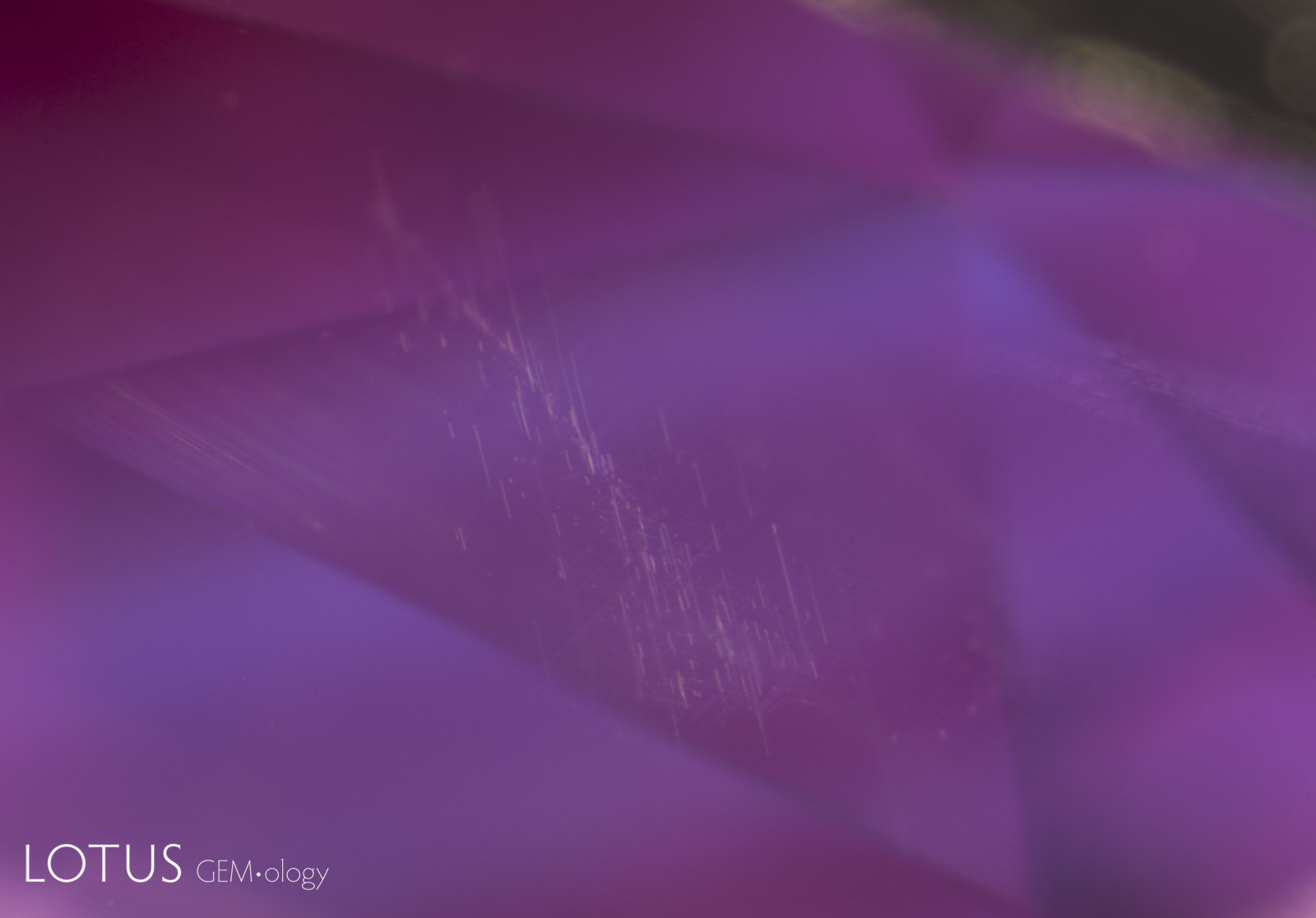
Undissolved rutile silk in fine needles is seen against a backdrop of fine exsolved particles in this padparadscha sapphire from Sri Lanka.
Natural Padparadscha Sapphire •
Sri Lanka (Ceylon) •
Enhancements:
Heat (H) •
Lighting Conditions:
Dark Field + Oblique Fiber Optic
Photographer:
Patharaphum Sudprasert •
Image Number:
A-001-5673-1
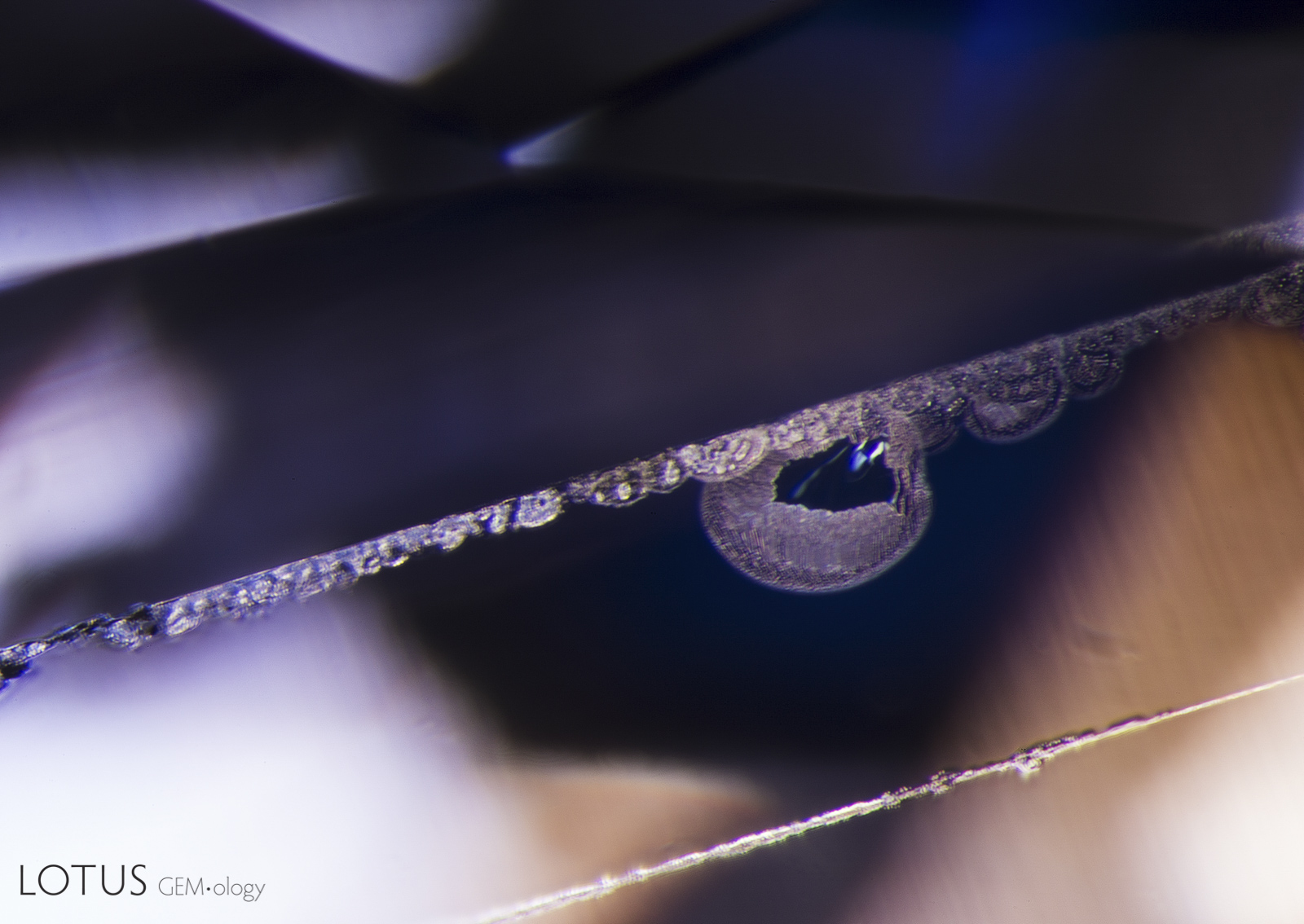
These long growth tubes with glassy areas show clear signs of heat alteration.
Natural Sapphire •
Madagascar •
Enhancements:
Heat (H) •
Lighting Conditions:
Dark Field
Photographer:
E. Billie Hughes •
Image Number:
A-001-5414-1
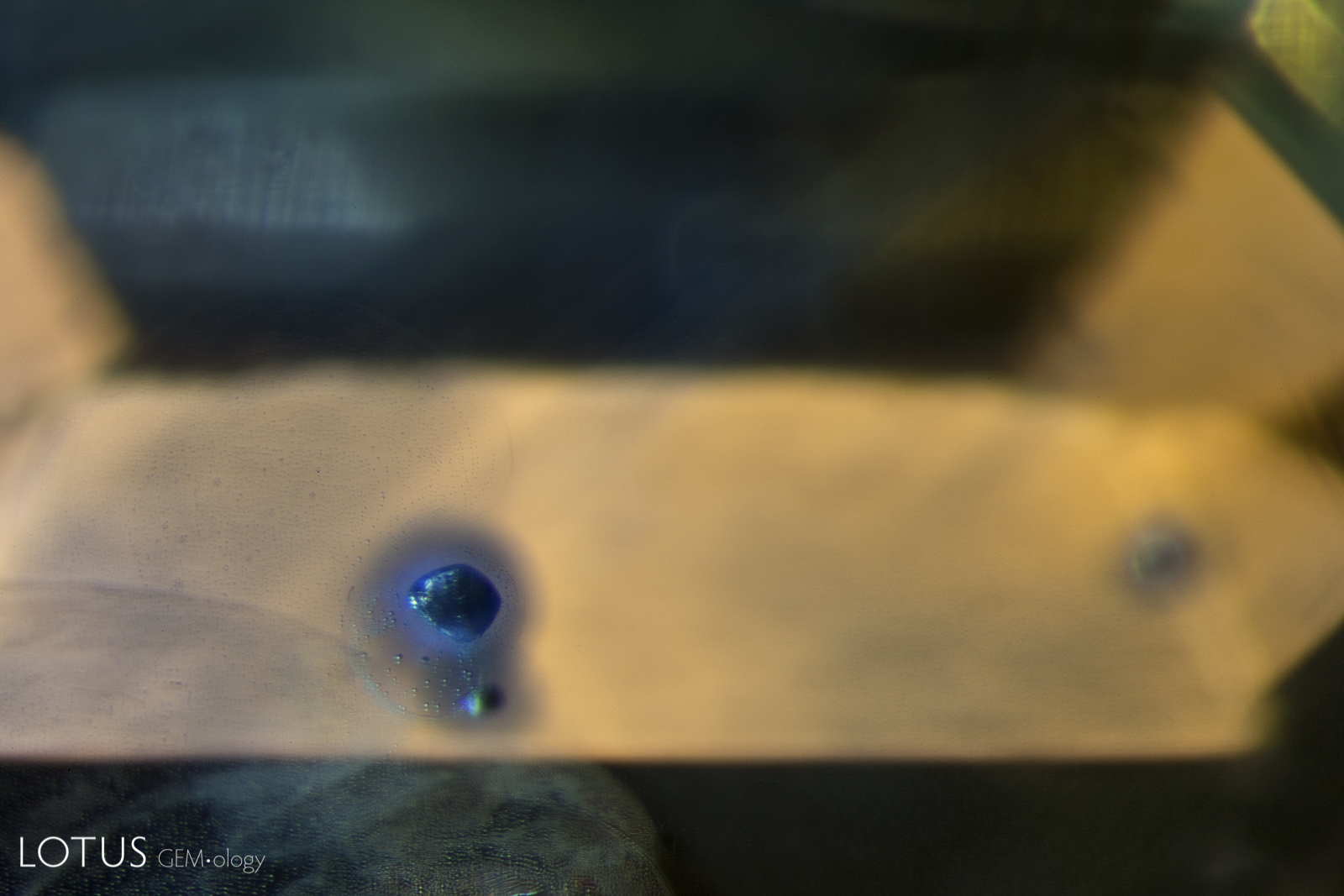
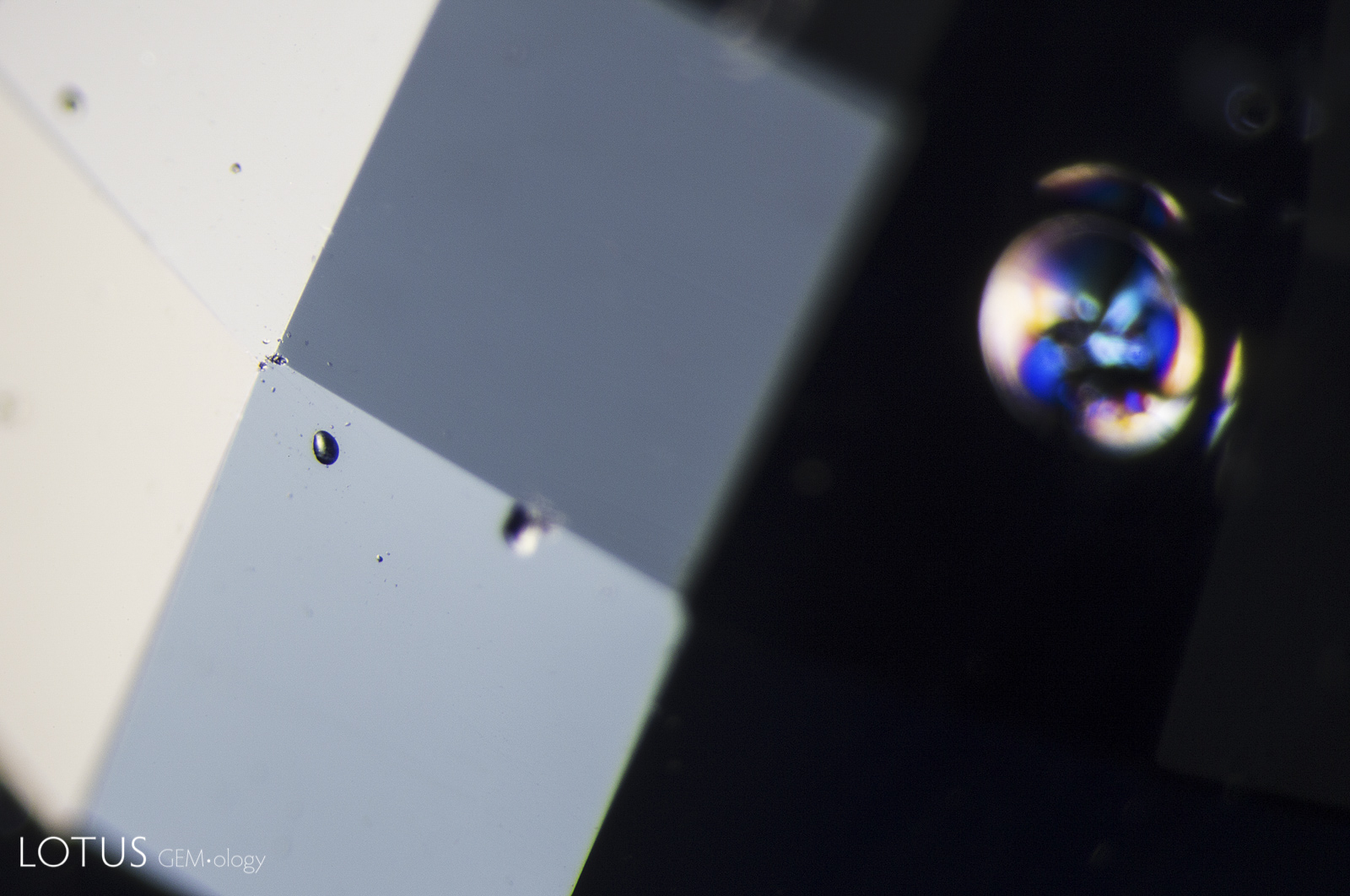
In the foreground on the left, a spall mark is visible, providing a piece of evidence that this stone was heated. Although it looks like a small water droplet, it is “frozen” in place and cannot be rubbed or scraped off. In the background, we also see a shiny melted crystal “discoid,” confirming that the stone is heated.
Natural Sapphire •
Sri Lanka (Ceylon) •
Enhancements:
Heat (H) •
Lighting Conditions:
Fiber Optic: Diffuse Overhead
Photographer:
E. Billie Hughes •
Image Number:
A-001-5147-1
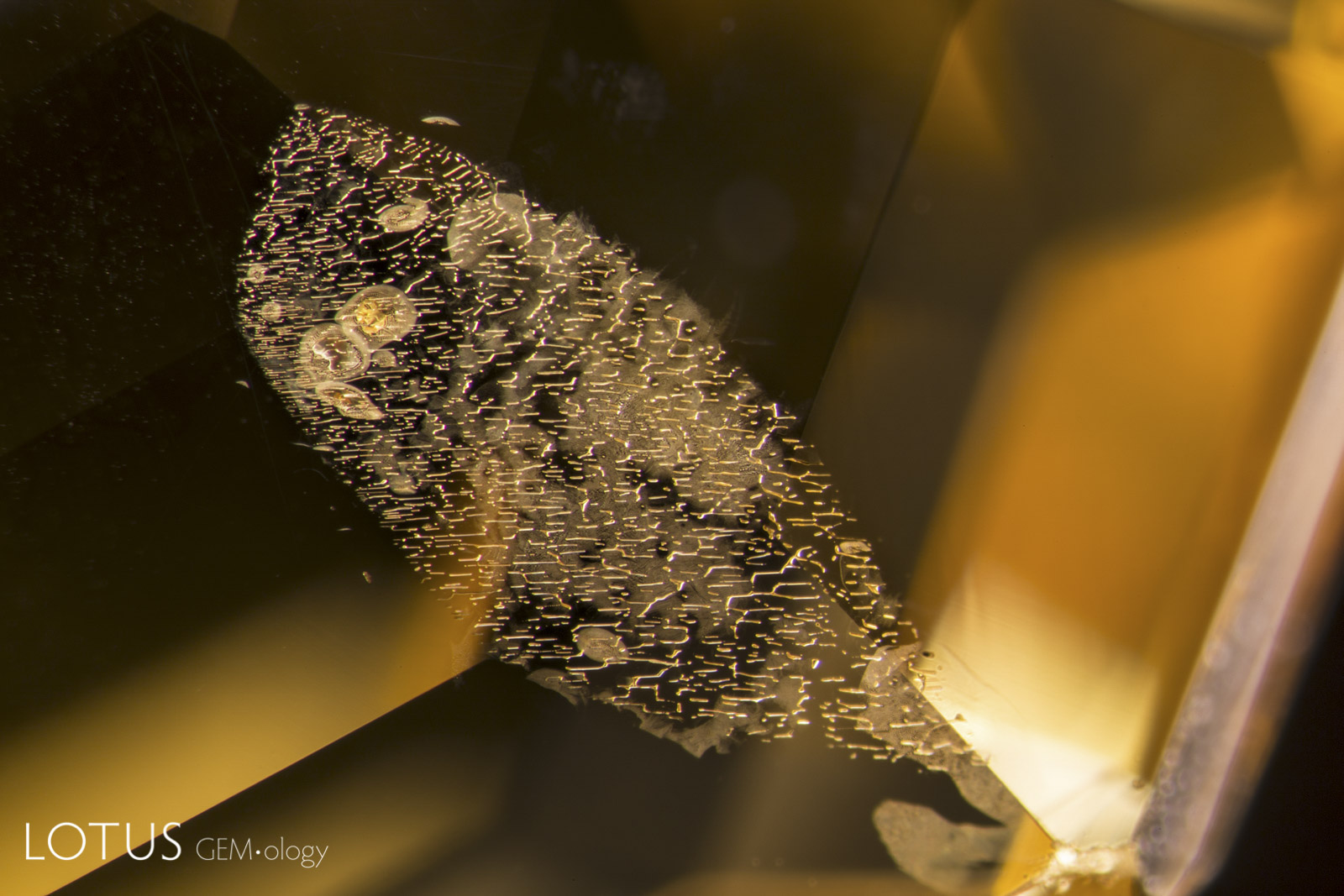
Heat-altered fingerprint in a heat-treated yellow sapphire from Sri Lanka. Note the small burst clouds around the fingerprint channels.
Natural Sapphire •
Sri Lanka (Ceylon) •
Enhancements:
Heat (H) •
Lighting Conditions:
Dark Field
Photographer:
Richard W. Hughes •
Image Number:
A-001-4574-1
A narrow and deeply indented natural on the girdle of a Madagascar sapphire. These features are quite common on Madagascar sapphires of all colors.
Natural Sapphire •
Madagascar •
Enhancements:
Heat (H) •
Lighting Conditions:
Diffuse Light Field (Transmitted Light)
Photographer:
E. Billie Hughes •
Image Number:
A-001-3921-1
This color-change sapphire from Madagascar contained many zircon crystals that showed clear evidence of heat treatment, including cloudiness.
Natural Color-Change Sapphire •
Madagascar •
Enhancements:
Heat (H) •
Lighting Conditions:
Fiber Optic: Oblique
Photographer:
E. Billie Hughes •
Image Number:
A-001-3514-2
Search the Complete Hyperion Database
Heat treatment can alter inclusions and other internal features in sapphire. Changes may include modification or dissolution of rutile silk, alteration of mineral crystals, decrepitation of fluid inclusions, changes to healed fissures and the formation of heat-related features. Such evidence can be important in determining whether a sapphire has been heated.
Heated Sapphire Inclusion Photomicrographs
The Hyperion heated sapphire gallery includes microscopic features documented in heat-treated natural sapphires. Each entry is accompanied by descriptive information and, where available, references to the gemological literature.
What Inclusions Can Reveal About Heat Treatment
Microscopic examination is an important part of detecting heat treatment in sapphire. The condition of mineral inclusions, rutile silk, fissures and other internal features can provide evidence of exposure to elevated temperatures. These features are evaluated together with other gemological observations when determining treatment status.
Hyperion combines inclusion photomicrography with supporting gemological information so that heat-related features can be compared with documented examples in treated sapphires.
About Hyperion
Hyperion is the Lotus Gemology searchable inclusion database. It allows users to browse gemstone inclusions by gem type, geographic origin, treatment and keyword.