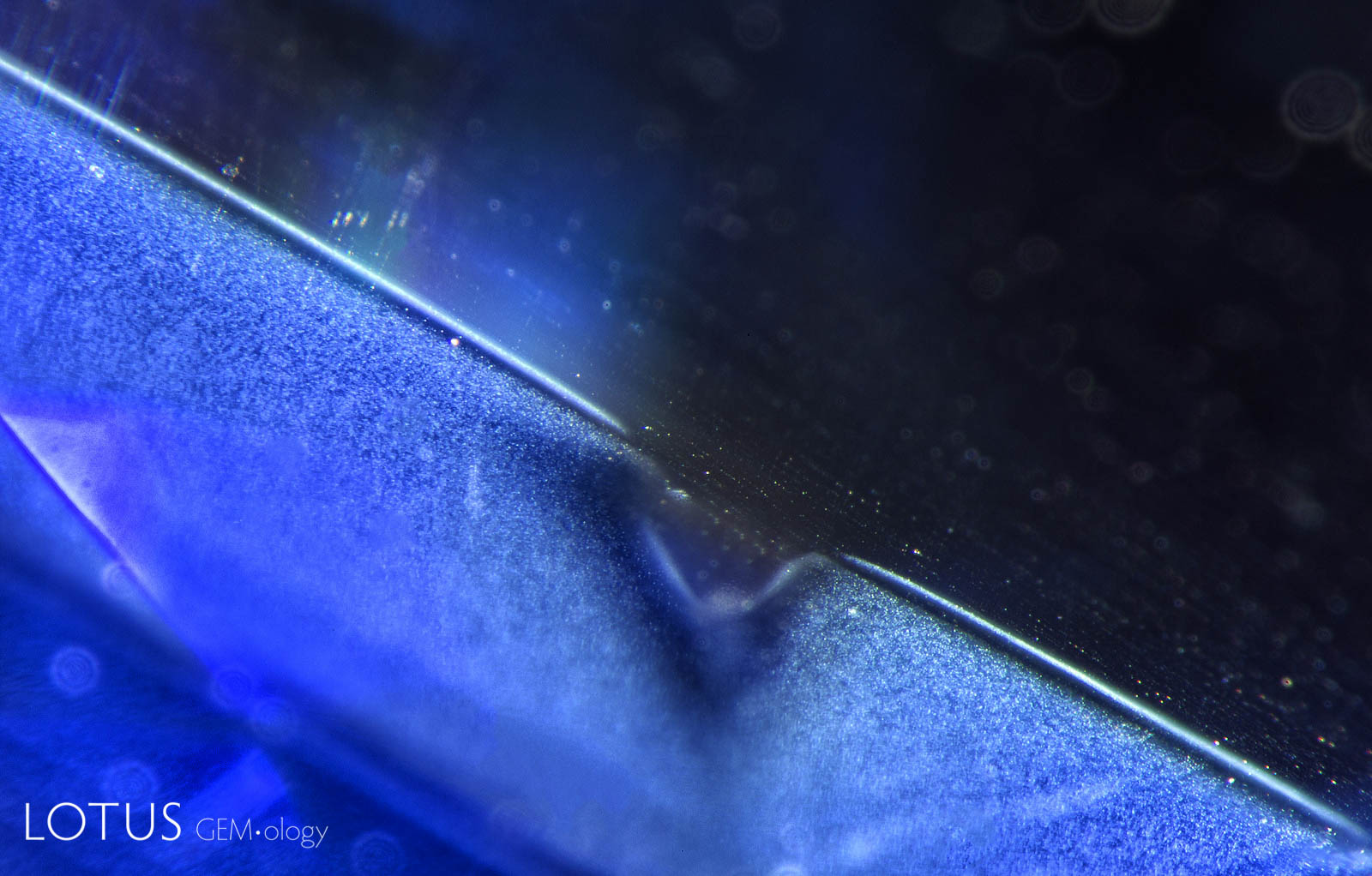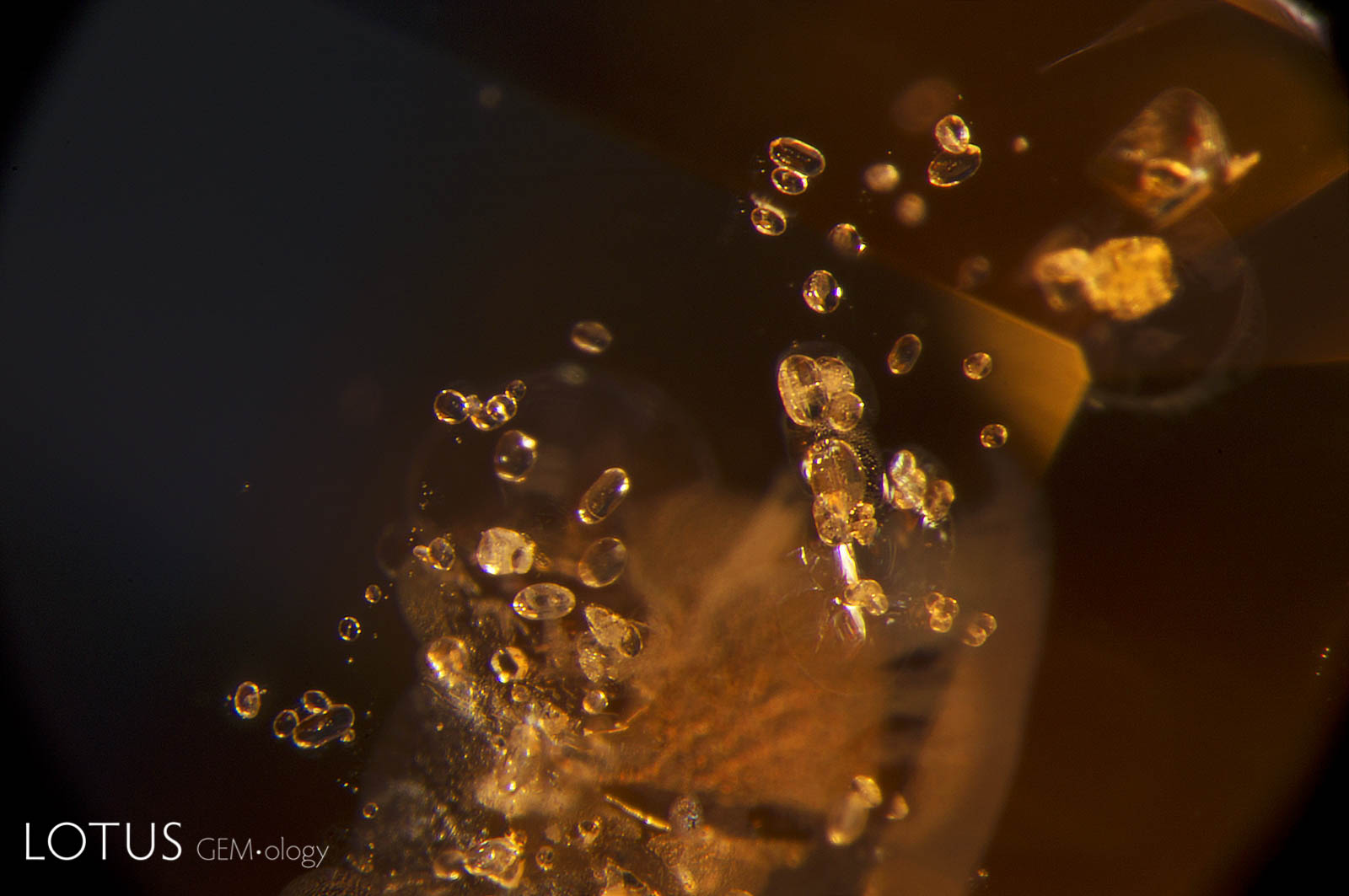
Heated Sapphire Inclusions
Explore inclusions in heat-treated sapphire in Hyperion, the Lotus Gemology inclusion database. Hyperion contains photomicrographs of inclusions and internal features in natural sapphires that have been subjected to heat treatment, documented with information on geographic origin, lighting conditions, field of view, photographer and published references.
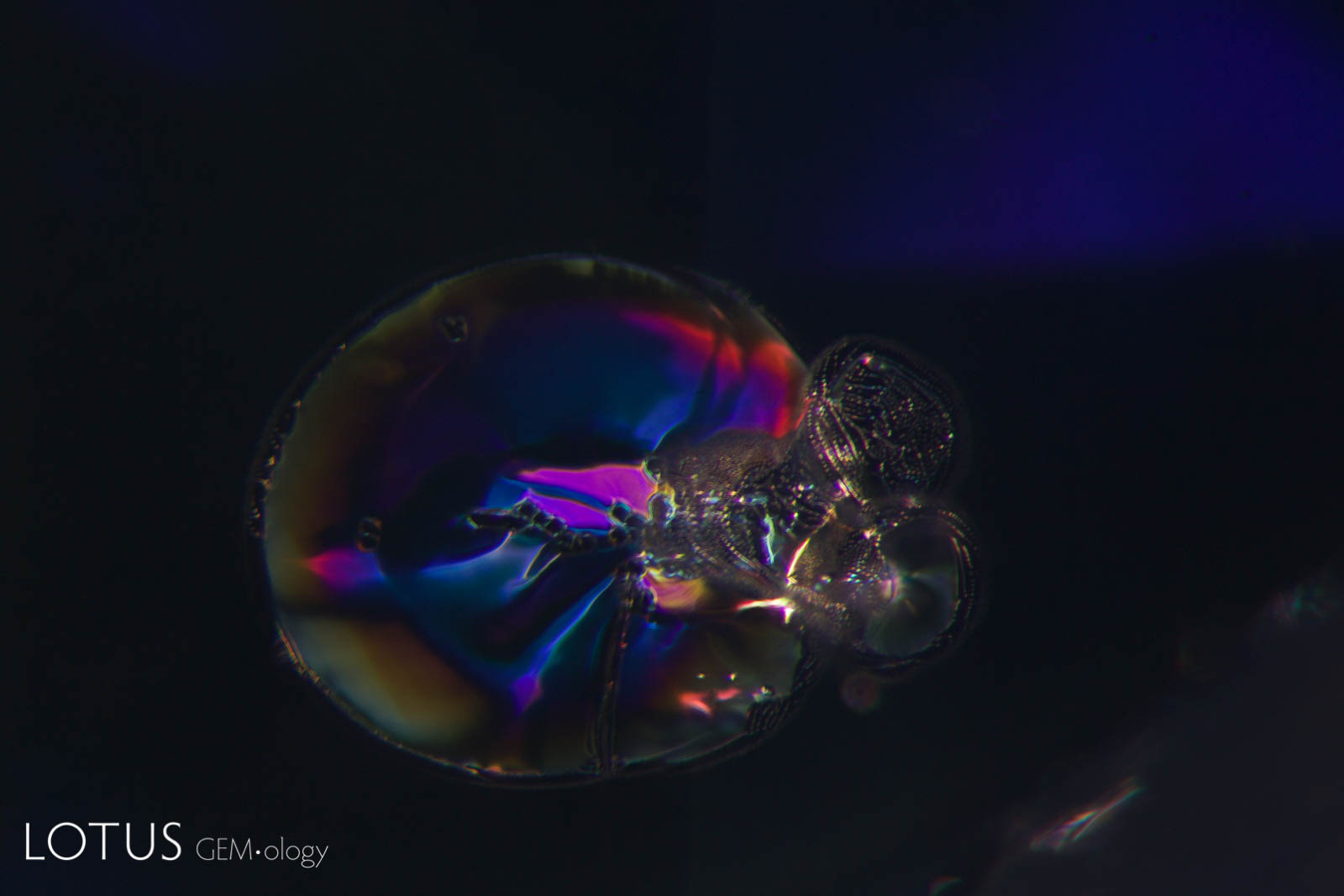
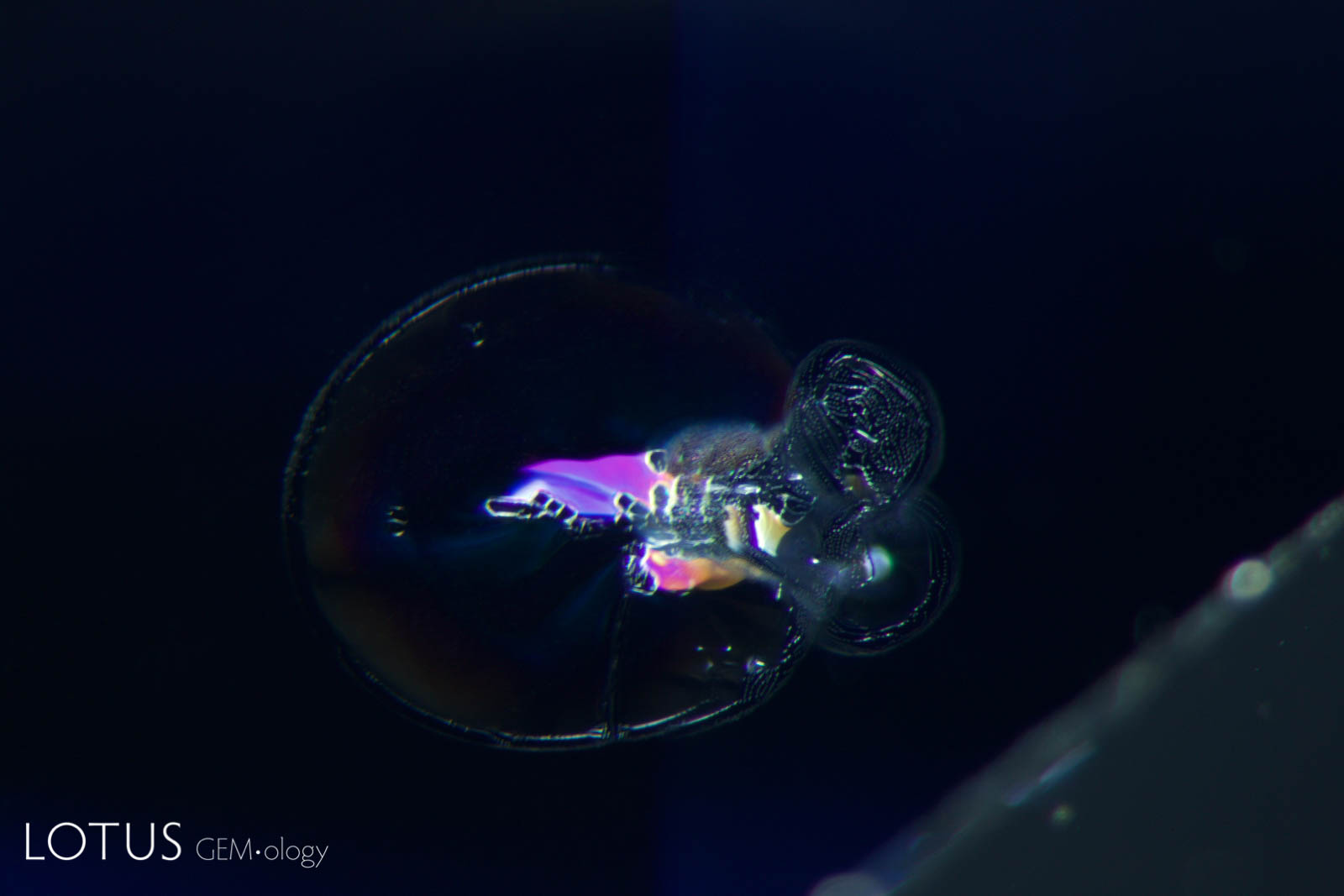
Glassy “discoid” inclusions in a heat-treated sapphire from Sri Lanka.
Natural Sapphire •
Sri Lanka (Ceylon) •
Enhancements:
Heat (H) •
Lighting Conditions:
Fiber Optic: Oblique
Photographer:
E. Billie Hughes •
Image Number:
A-001-0733-3
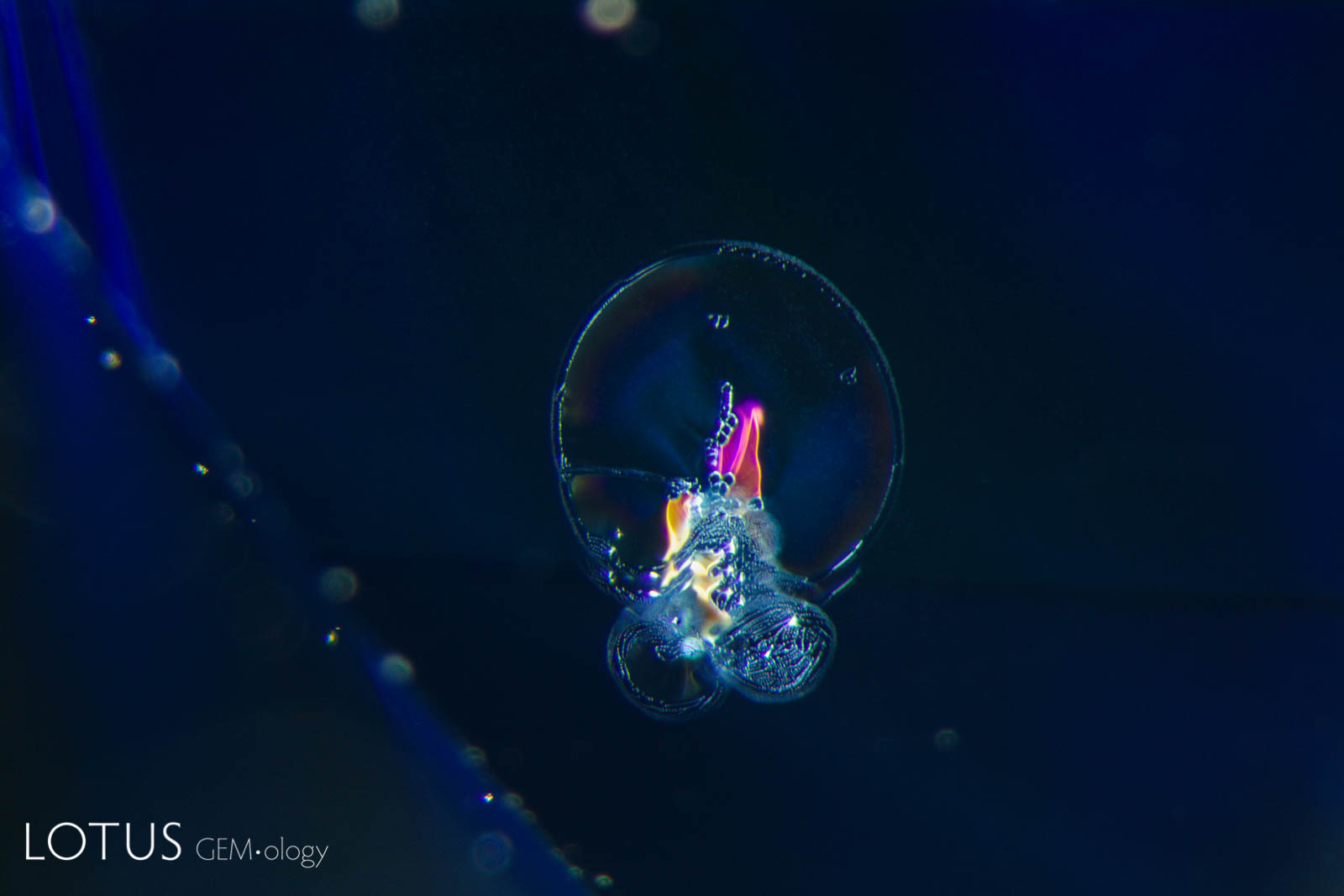
Glassy “discoid” inclusions in a heat-treated sapphire from Sri Lanka.
Natural Sapphire •
Sri Lanka (Ceylon) •
Enhancements:
Heat (H) •
Lighting Conditions:
Fiber Optic: Oblique
Photographer:
E. Billie Hughes •
Image Number:
A-001-0733-2
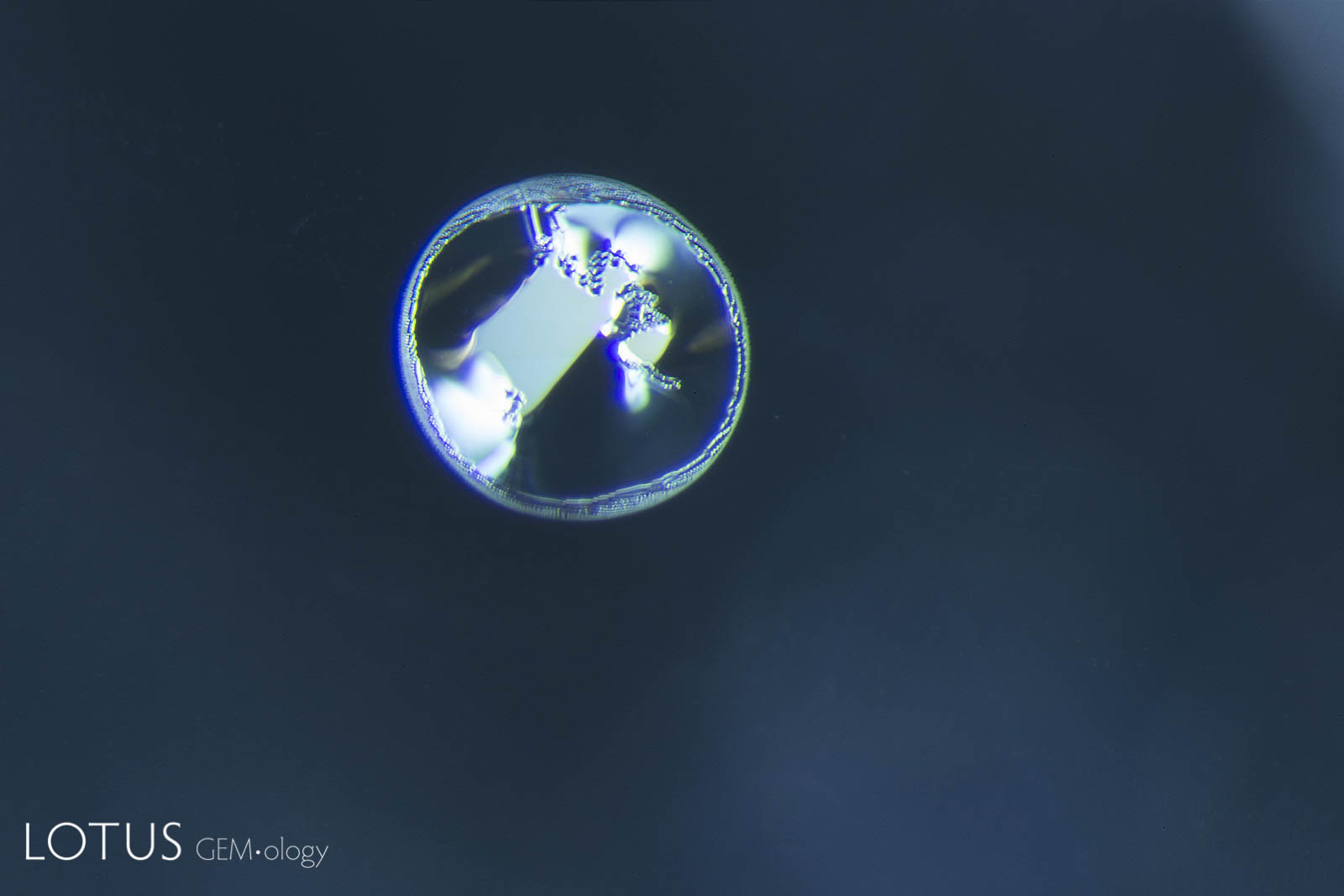
Glassy “discoid” inclusions in a heat-treated sapphire from Sri Lanka.
Natural Sapphire •
Sri Lanka (Ceylon) •
Enhancements:
Heat (H) •
Lighting Conditions:
Fiber Optic: Oblique
Photographer:
E. Billie Hughes •
Image Number:
A-001-0733-1
A heat-induced discoid inclusion in a heat-treated sapphire from Sri Lanka.
Natural Sapphire •
Sri Lanka (Ceylon) •
Enhancements:
Heat (H) •
Lighting Conditions:
Fiber Optic: Oblique
Photographer:
Richard W. Hughes •
Image Number:
A-001-0642-1
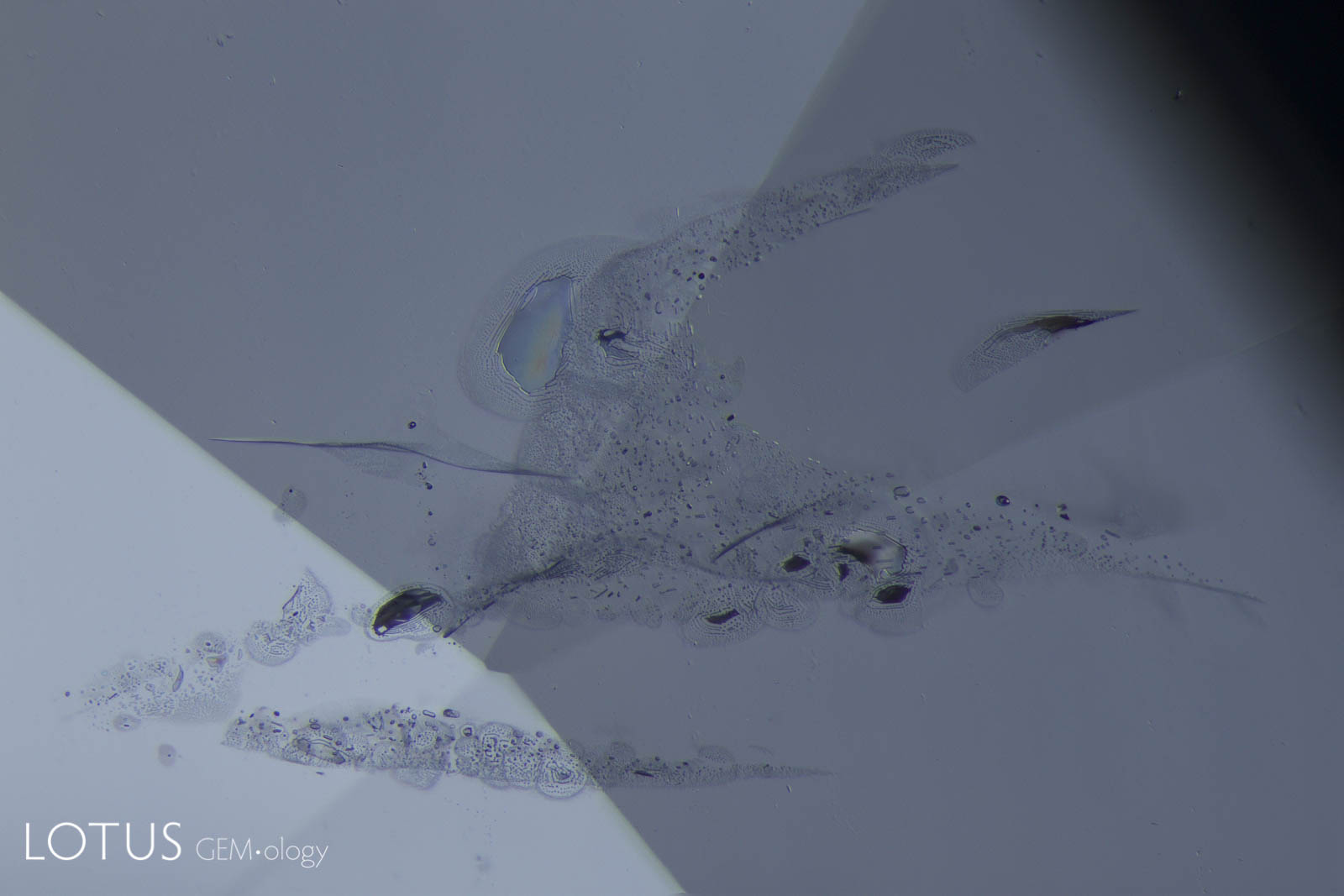
Heat-altered fingerprints in a heat-treated Ceylon sapphire. Close examination reveals microscopic fractures around each negative crystal, due to the heat treatment.
Natural Sapphire •
Sri Lanka (Ceylon) •
Enhancements:
Heat (H) •
Lighting Conditions:
Fiber Optic: Oblique
Photographer:
Richard W. Hughes •
Image Number:
A-001-0638-1
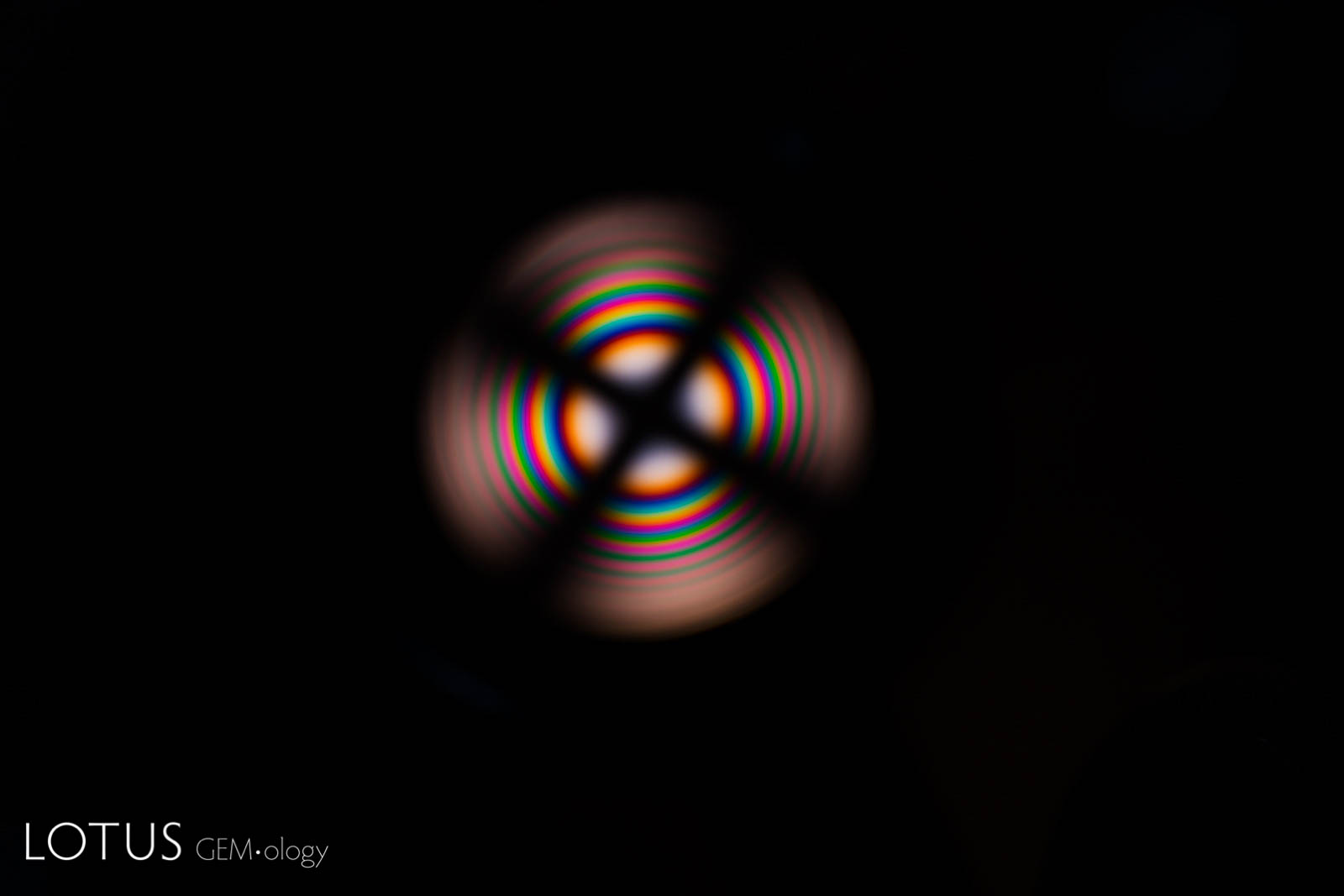
Uniaxial interference figure in blue sapphire.
Natural Sapphire •
Sri Lanka (Ceylon) •
Enhancements:
Heat (H) •
Lighting Conditions:
Diffuse Light Field + Crossed Polars
Photographer:
E. Billie Hughes •
Image Number:
A-001-0643-1
When a silky sapphire is heated to a high enough temperature, titanium from the rutile silk is forced into solid solution, coloring the stone blue. But the silk may also contain other elements that cannot dissolve into sapphire so readily, leaving behind silk “skeletons,” as shown here.
Natural Sapphire •
Sri Lanka (Ceylon) •
Enhancements:
Heat (H) •
Lighting Conditions:
Fiber Optic: Oblique
Photographer:
Richard W. Hughes •
Image Number:
A-001-0616-1
Rutile consists of titanium dioxide. When a sapphire containing exsolved rutile silk is heated, the rutile melts, sending the titanium back into solution, coloring the stone blue around the now partially dissolved silk. This creates a classic “inkspot” internal diffusion pattern, and is proof of high-temperature heat treatment.
Natural Sapphire •
Sri Lanka (Ceylon) •
Enhancements:
Heat (H) •
Lighting Conditions:
Fiber Optic: Transmitted
Photographer:
Richard W. Hughes •
Image Number:
A-001-0575-1
Koivula, J.I. (1987) Internal diffusion. Journal of Gemmology, Vol. 20, No. 7/8, pp. 474–477; RWHL*.
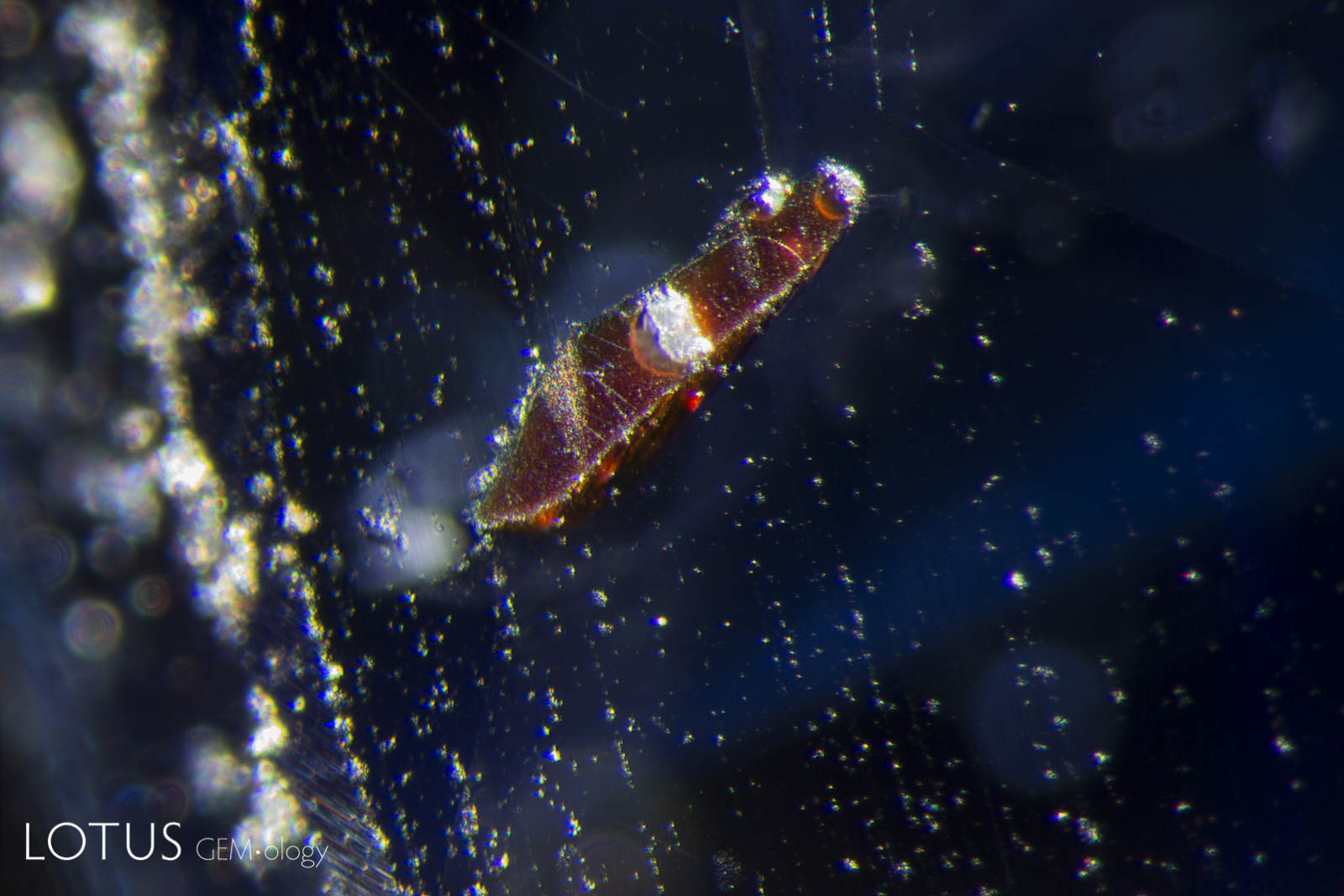
Nigeria sapphire; heated; crystal of what is probably rutile breaking the surface
Natural Sapphire •
Nigeria •
Enhancements:
Heat (H) •
Lighting Conditions:
Fiber Optic: Diffuse Overhead
Photographer:
Wimon Manorotkul •
Image Number:
A-001-0554-2
Hughes, R.W. (1997) Ruby & Sapphire. Boulder, CO, RWH Publishing, 512 pp.; RWHL*.
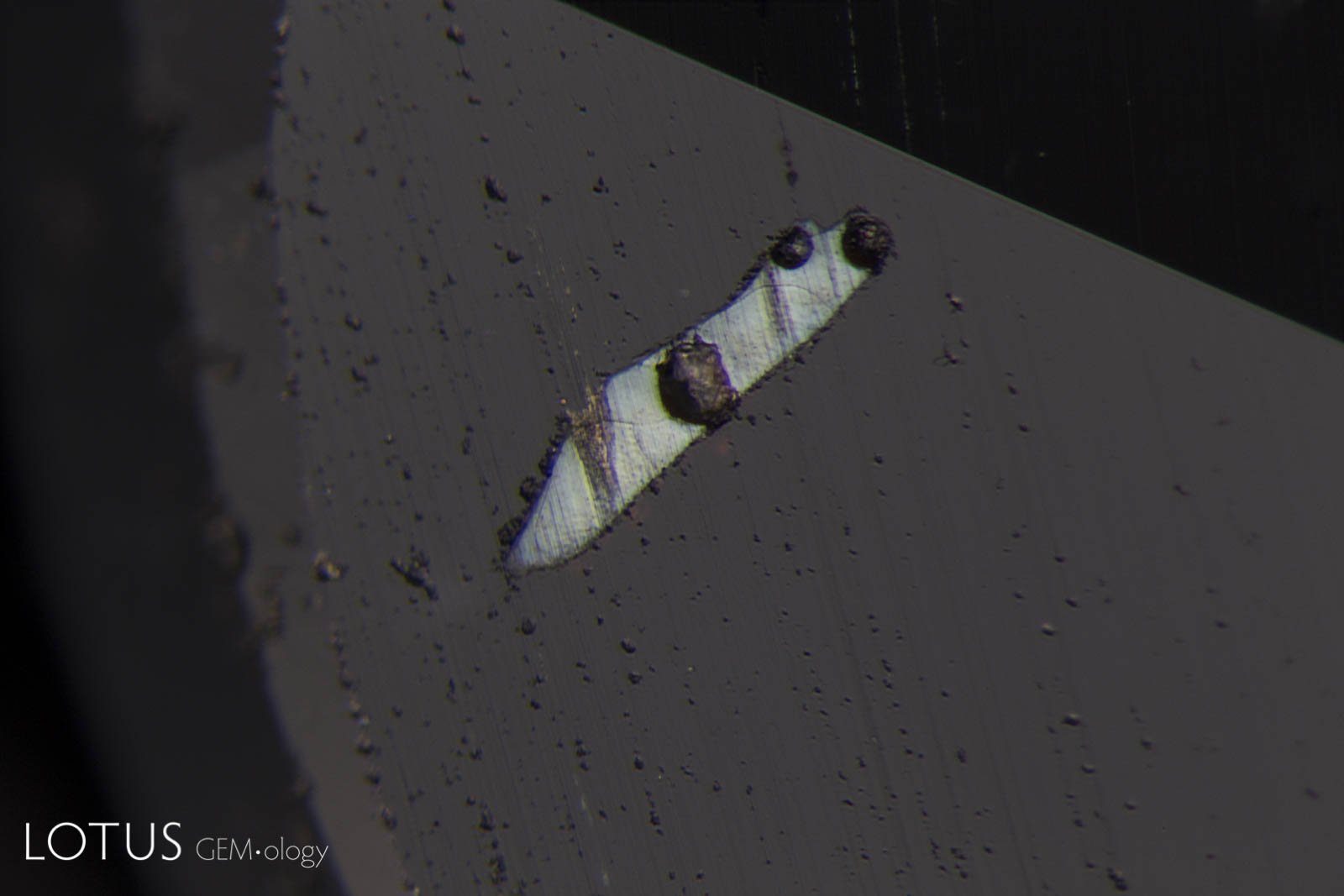
An orange rutile crystal polished through the surface of this sapphire from Nigeria.
Natural Sapphire •
Nigeria •
Enhancements:
Heat (H) •
Lighting Conditions:
Fiber Optic: Oblique
Photographer:
Wimon Manorotkul •
Image Number:
A-001-0554-1
Hughes, R.W. (1997) Ruby & Sapphire. Boulder, CO, RWH Publishing, 512 pp.; RWHL*.
Internal diffusion in heat-treated Ceylon sapphire. This is caused by the bleeding of titanium into the surrounding sapphire from titanium-bearing inclusions such as rutile during high-temperature heat treatment.
Natural Sapphire •
Sri Lanka (Ceylon) •
Enhancements:
Heat (H) •
Lighting Conditions:
Fiber Optic: Oblique
Photographer:
Wimon Manorotkul •
Image Number:
A-001-0301-1
Koivula, J.I. (1987) Internal diffusion. Journal of Gemmology, Vol. 20, No. 7/8, pp. 474–477; RWHL*.
Crystals of what are probably apatite in a heated bi-color sapphire from Sri Lanka.
Natural Sapphire •
Sri Lanka (Ceylon) •
Enhancements:
Heat (H) •
Lighting Conditions:
Fiber Optic: Oblique
Photographer:
Wimon Manorotkul •
Image Number:
A-010-0150-1
Hughes, R.W. (1997) Ruby & Sapphire. Boulder, CO, RWH Publishing, 512 pp.; RWHL*.
Search the Complete Hyperion Database
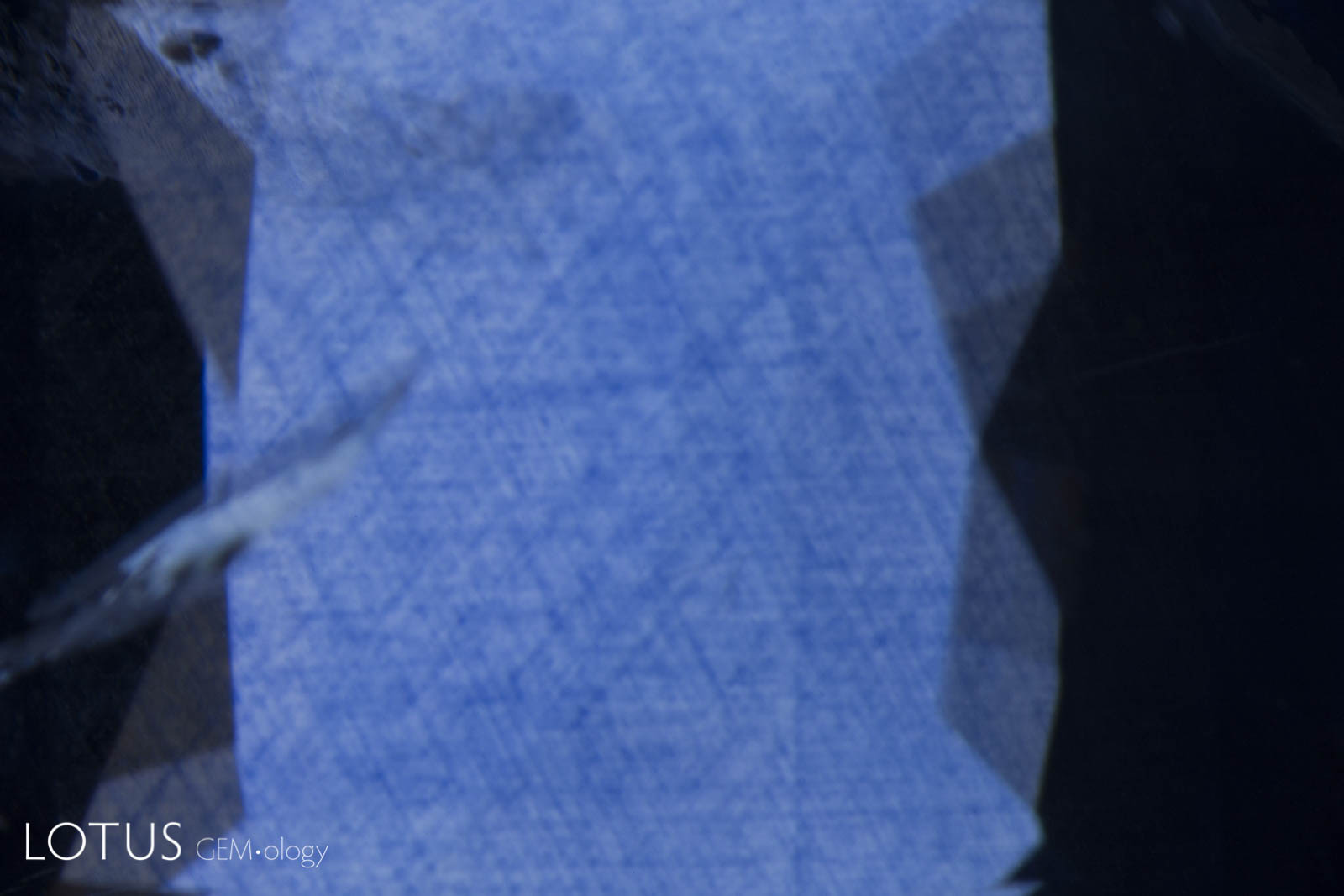
Heat treatment can alter inclusions and other internal features in sapphire. Changes may include modification or dissolution of rutile silk, alteration of mineral crystals, decrepitation of fluid inclusions, changes to healed fissures and the formation of heat-related features. Such evidence can be important in determining whether a sapphire has been heated.
Heated Sapphire Inclusion Photomicrographs
The Hyperion heated sapphire gallery includes microscopic features documented in heat-treated natural sapphires. Each entry is accompanied by descriptive information and, where available, references to the gemological literature.
What Inclusions Can Reveal About Heat Treatment
Microscopic examination is an important part of detecting heat treatment in sapphire. The condition of mineral inclusions, rutile silk, fissures and other internal features can provide evidence of exposure to elevated temperatures. These features are evaluated together with other gemological observations when determining treatment status.
Hyperion combines inclusion photomicrography with supporting gemological information so that heat-related features can be compared with documented examples in treated sapphires.
About Hyperion
Hyperion is the Lotus Gemology searchable inclusion database. It allows users to browse gemstone inclusions by gem type, geographic origin, treatment and keyword.