Star Sapphire Inclusions
Explore star sapphire inclusions in Hyperion, the Lotus Gemology inclusion database. Hyperion contains photomicrographs of inclusions and internal features in natural star sapphires, documented with information on geographic origin, treatment, lighting conditions, field of view, photographer and published references.
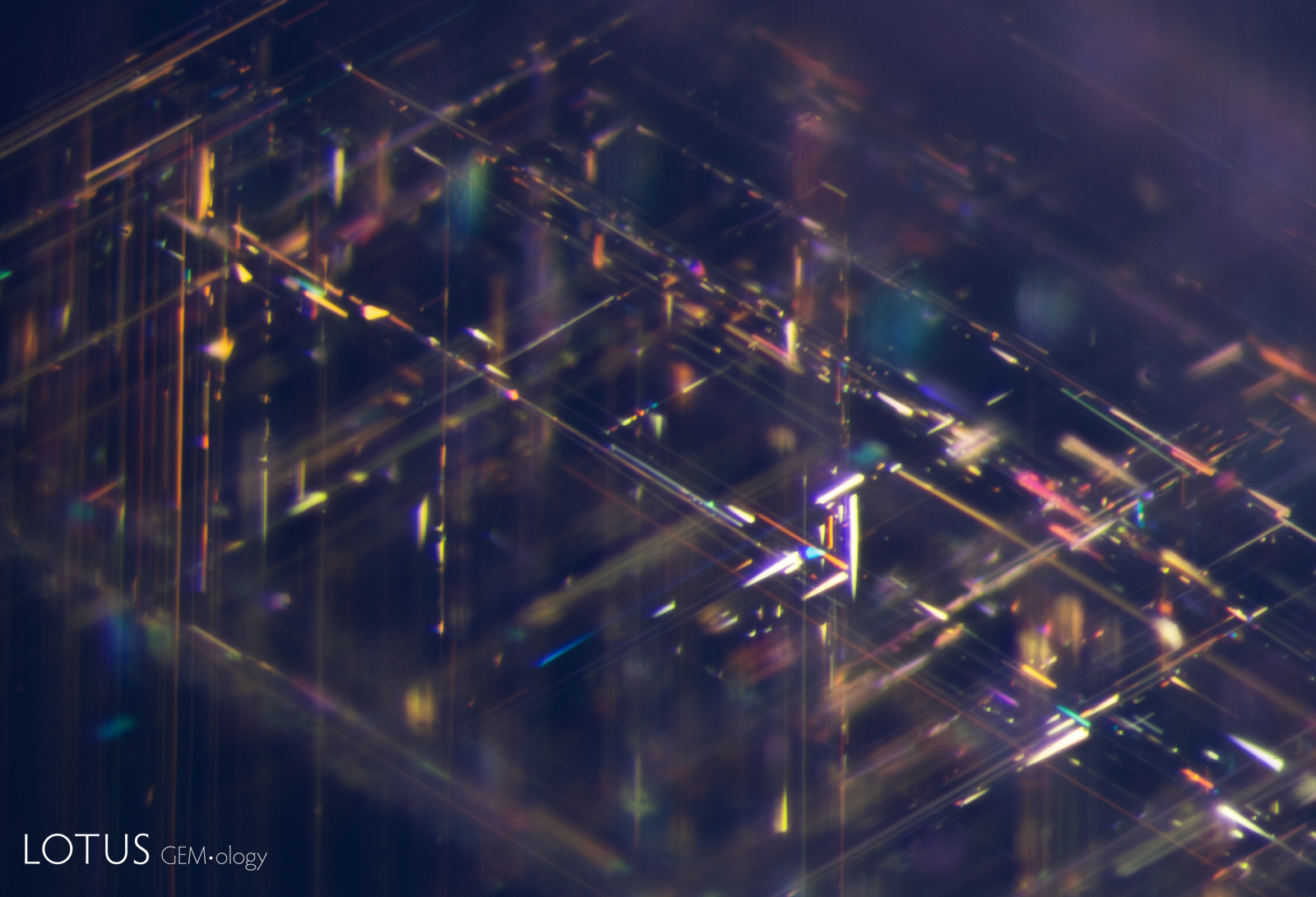
Fine needles of rutile "silk" create a dazzling display in this untreated sapphire. In this case, the silk is responsible for the asterism (star) effect in the stone.
Natural Star Sapphire •
Sri Lanka (Ceylon) •
Enhancements:
None Detected (None) •
Lighting Conditions:
Dark Field + Diffuse Fiber Optic
Photographer:
E. Billie Hughes •
Image Number:
A-005-2202-3
• Field of View = 1.9mm
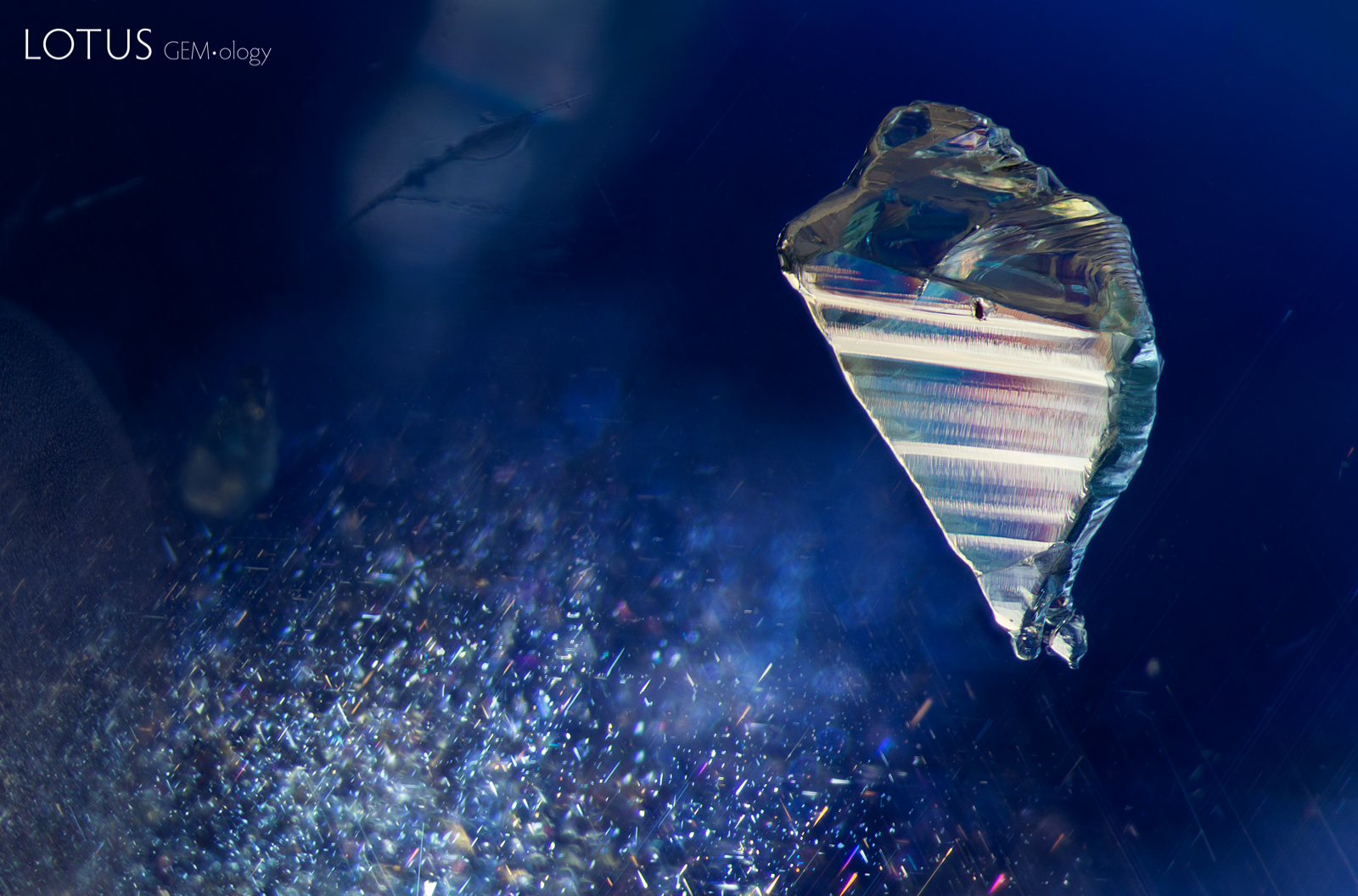
A euhedral apatite crystal, which was identified with micro Raman, appears to float over a cloud of rutile silk in this Ceylon sapphire.
Natural Star Sapphire •
Sri Lanka (Ceylon) •
Enhancements:
None Detected (None) •
Lighting Conditions:
Fiber Optic: Oblique + Diffuse
Photographer:
E. Billie Hughes •
Image Number:
A-003-9836-2
• Field of View = 6mm
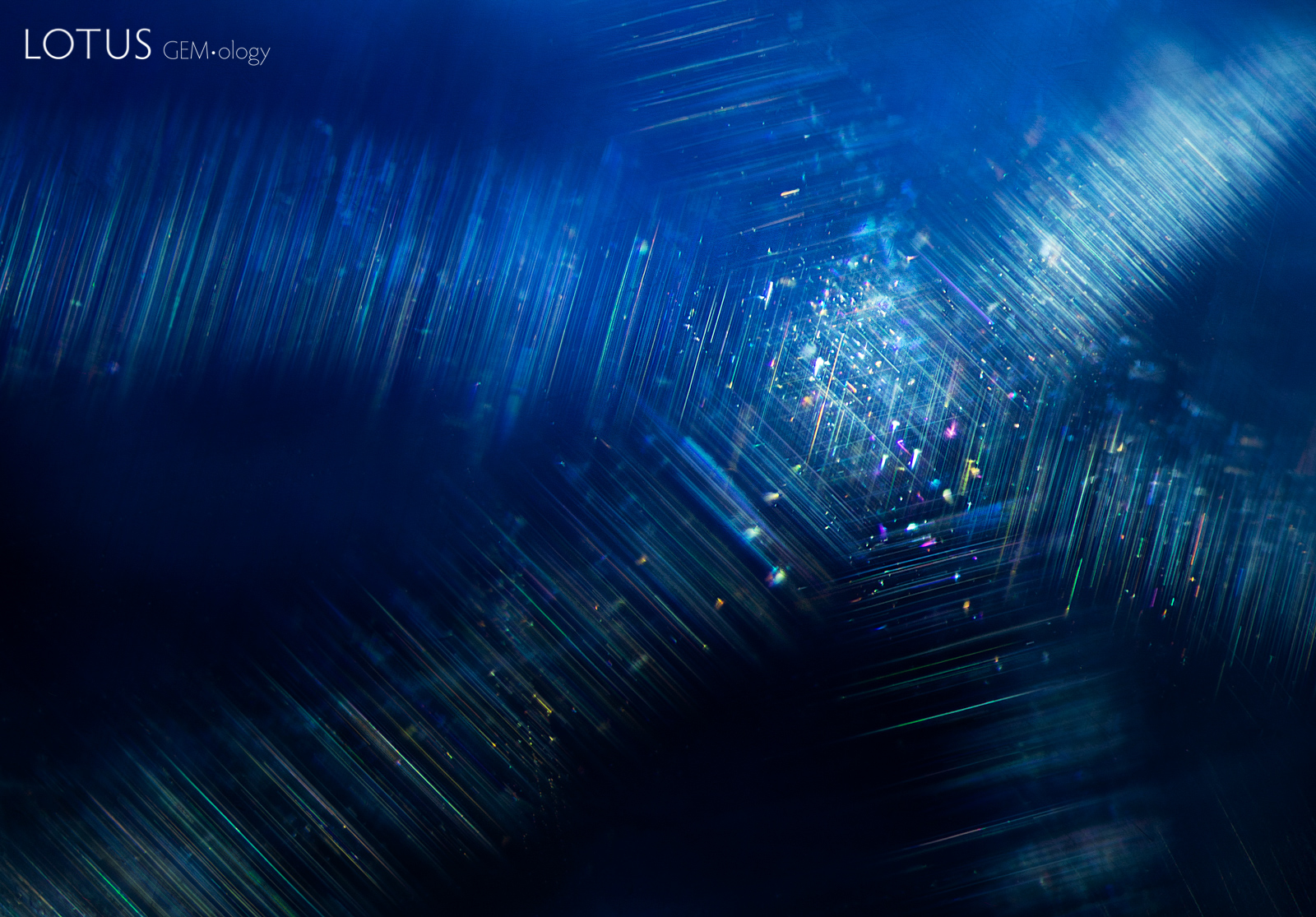
Fine needles of rutile silk come together to create a six-rayed star or “asterism” effect in this blue sapphire.
Natural Star Sapphire •
Myanmar (Burma); Mogok •
Enhancements:
None Detected (None) •
Lighting Conditions:
Fiber Optic: Oblique
Photographer:
E. Billie Hughes •
Image Number:
A-003-7609-1
• Field of View = 6mm
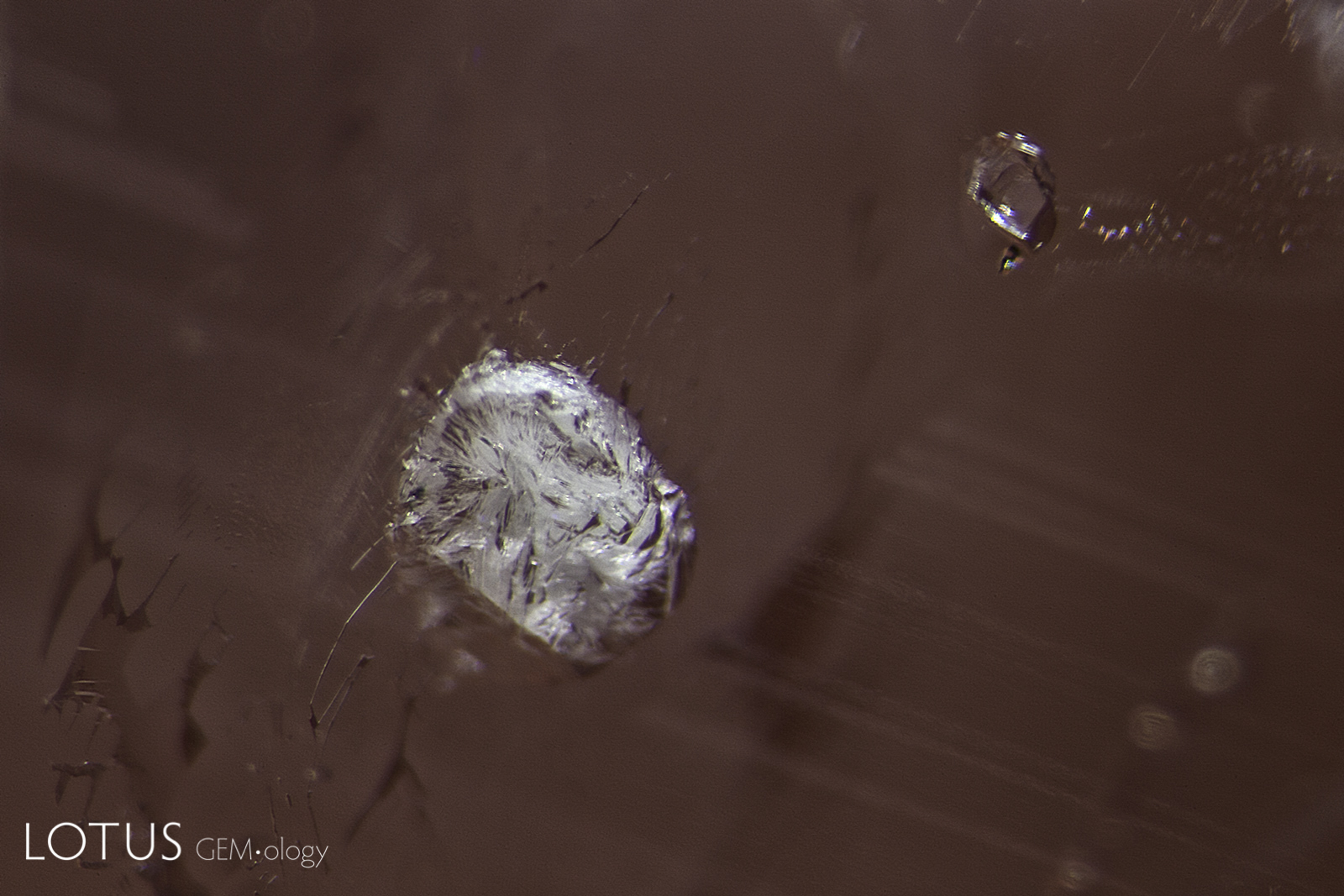
This white crystal in a star sapphire from Myanmar’s Mogok Stone Tract was identified as muscovite mica by micro Raman.
Natural Star Sapphire •
Myanmar (Burma); Mogok •
Enhancements:
None Detected (None) •
Lighting Conditions:
Fiber Optic: Oblique
Photographer:
Richard W. Hughes •
Image Number:
A-003-7331-2
• Field of View = 2mm
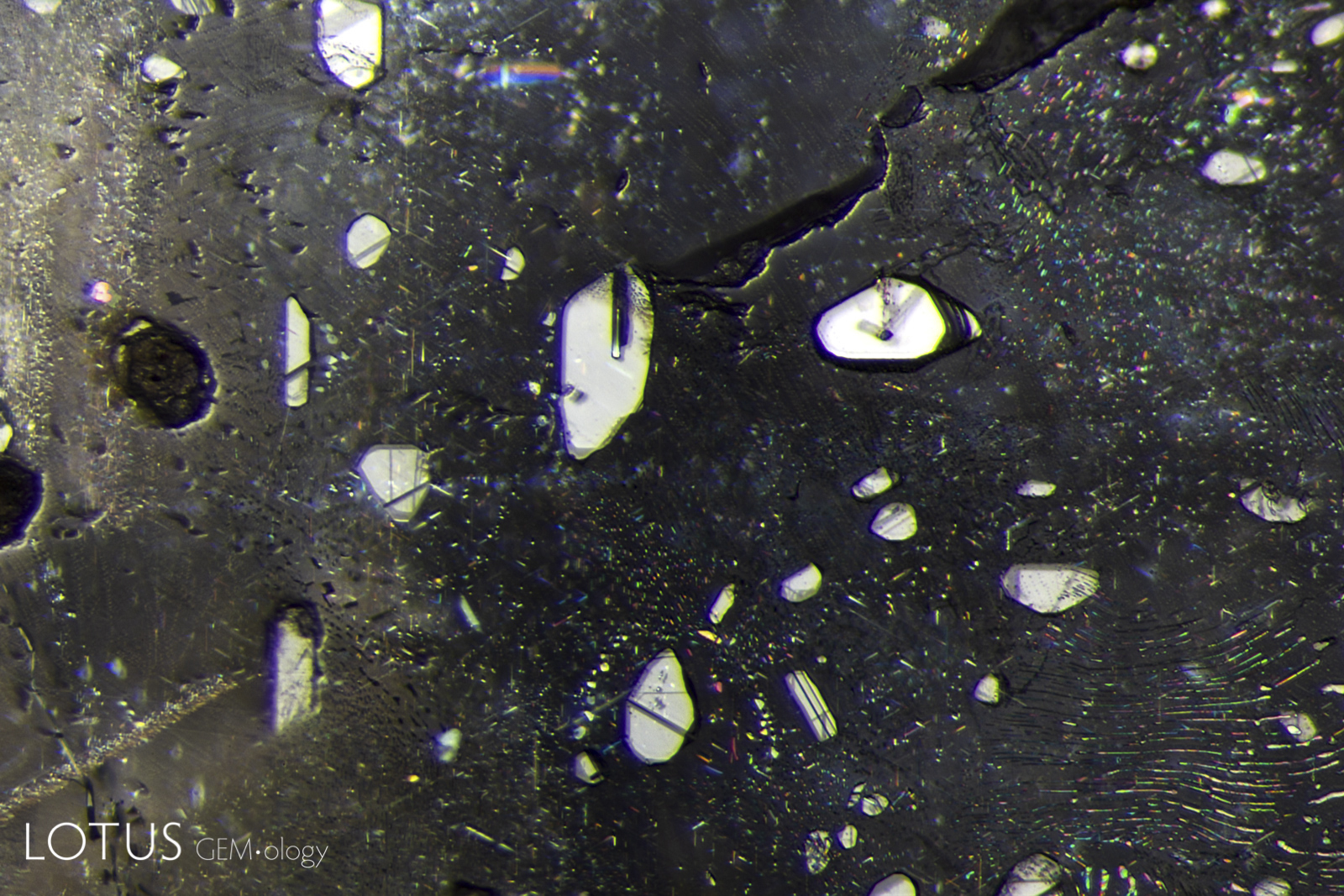
A series of flat negative crystals were found just beneath the surface of this star sapphire from Myanmar’s Mogok Stone Tract. Within many of them one can discern diaspore needles.
Natural Star Sapphire •
Myanmar (Burma); Mogok •
Enhancements:
None Detected (None) •
Lighting Conditions:
Fiber Optic: Diffuse Overhead
Photographer:
Richard W. Hughes •
Image Number:
A-003-7331-1
• Field of View = 2mm
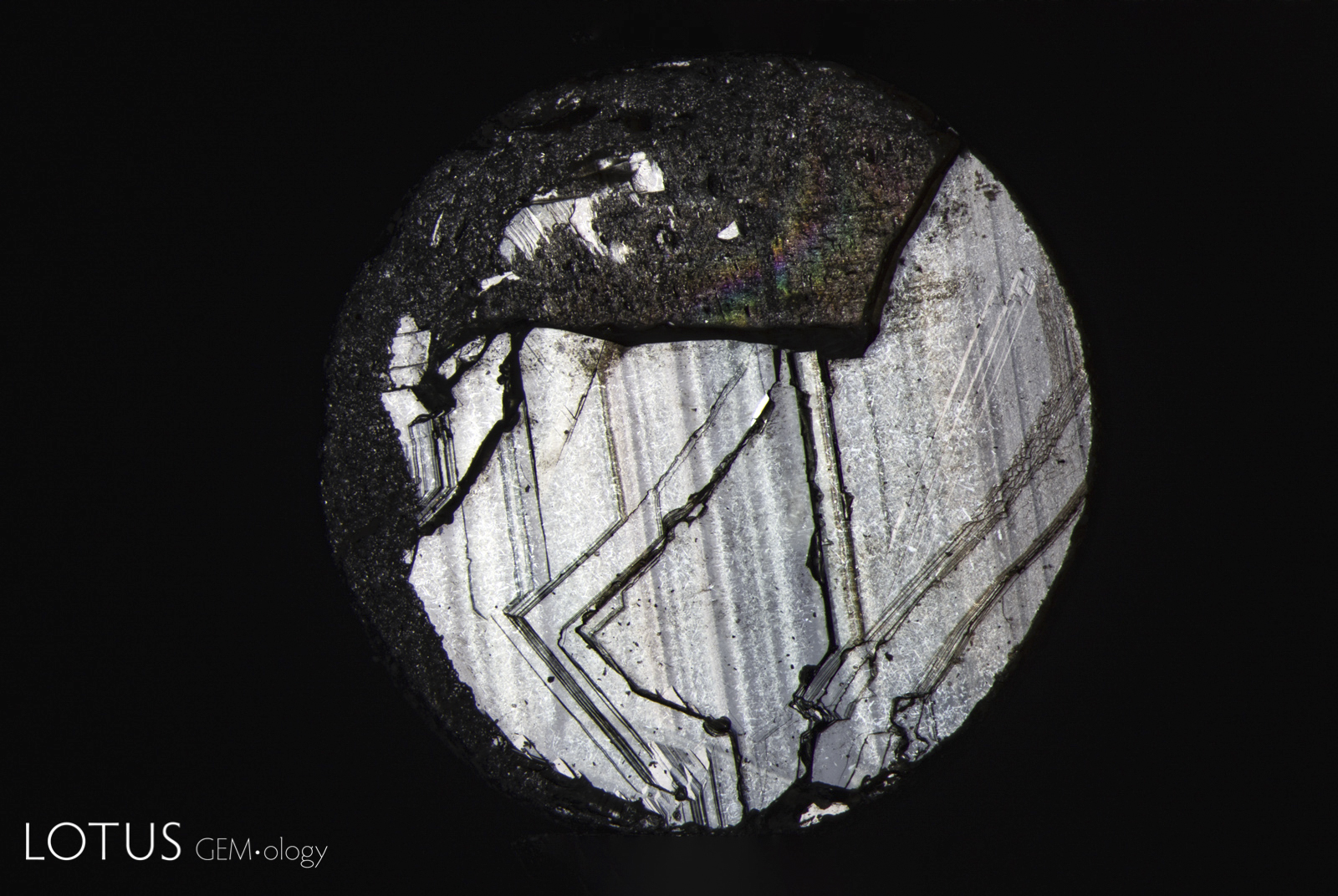
Basal parting seen on the back of a black star sapphire from Chanthaburi, Thailand. Note the step-like appearance. Basal parting in these stones is due to exsolution of hematite/ilmenite silk, which produces both the star effect and a lack adhesion.
Natural Black Star Sapphire •
Thailand (Siam); Chanthaburi •
Enhancements:
None Detected (None) •
Lighting Conditions:
Fiber Optic: Diffuse Overhead
Photographer:
Richard W. Hughes •
Image Number:
R-003-6293-1
• Field of View = 10mm
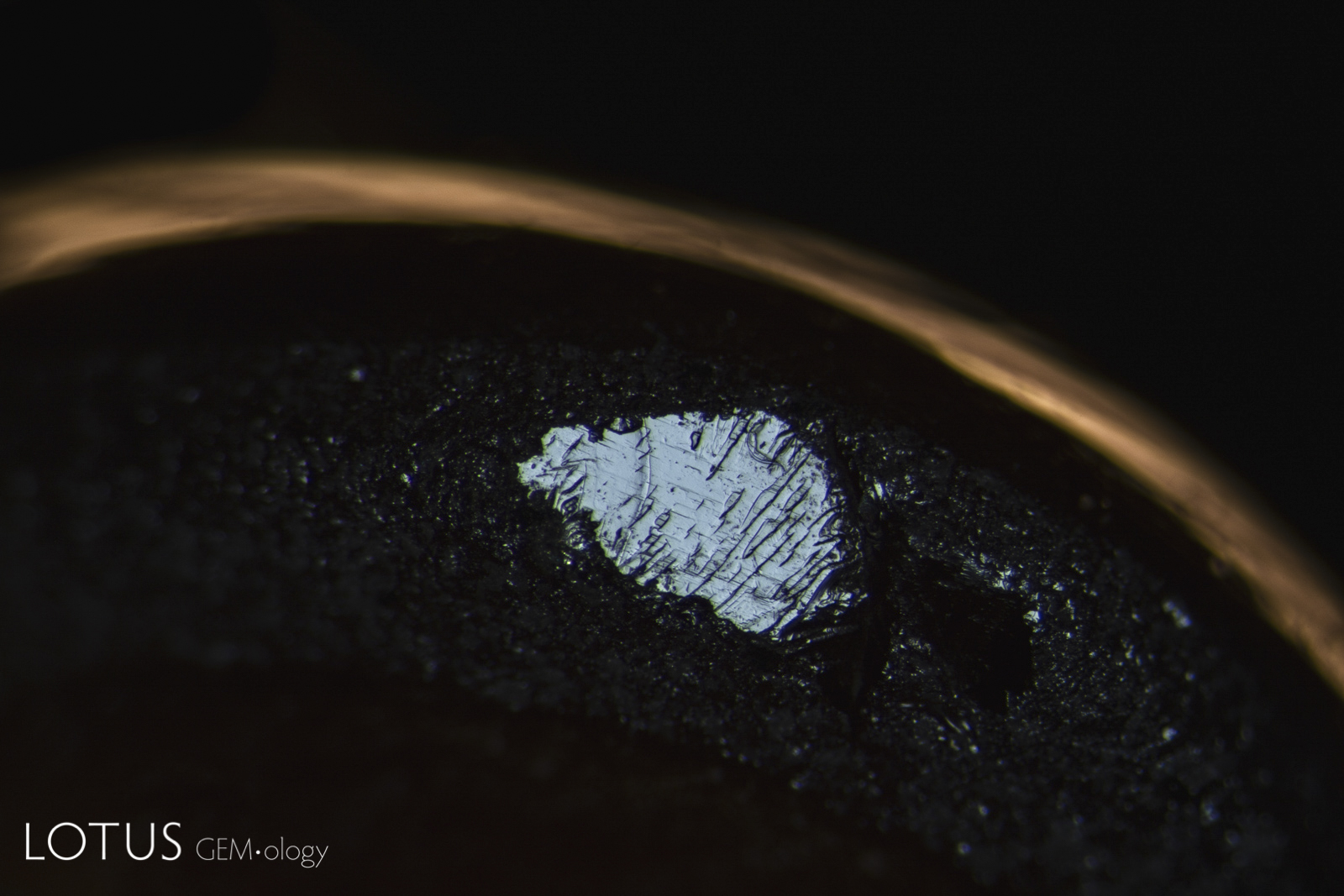
A small rhombohedral parting plane on the girdle of a black star sapphire from Chanthaburi, Thailand. This parting is cause by exsolution of boehmite, which produces a lack of adhesion.
Natural Black Star Sapphire •
Thailand (Siam); Chanthaburi •
Enhancements:
None Detected (None) •
Lighting Conditions:
Fiber Optic: Diffuse Overhead
Photographer:
Richard W. Hughes •
Image Number:
R-003-6292-2
• Field of View = 4mm
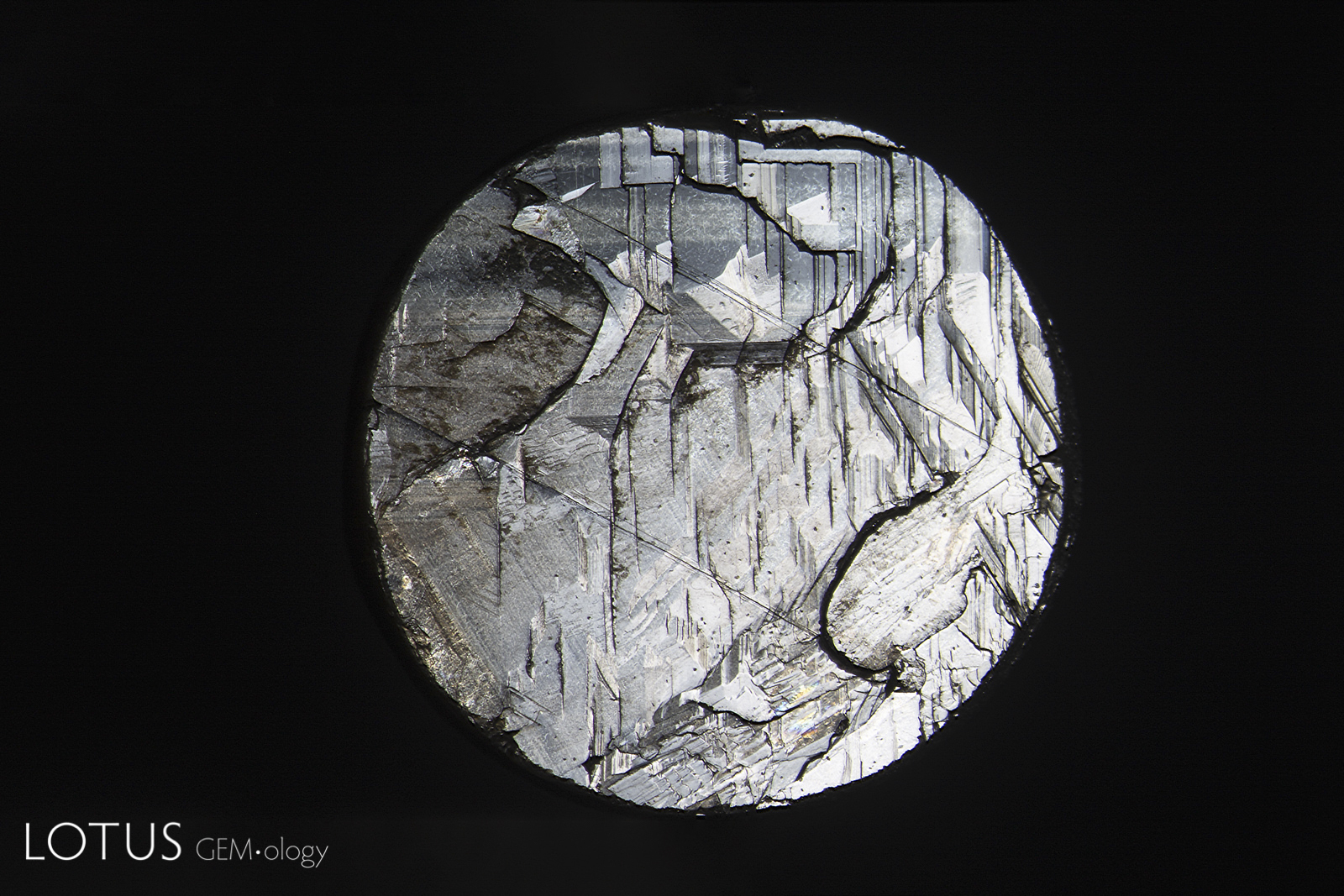
Basal parting seen on the back of a black star sapphire from Chanthaburi, Thailand. Note the step-like appearance. The two diagonal lines are rhombohedral parting planes. Basal parting in these stones is due to exsolution of hematite/ilmenite silk, which produces both the star effect and a lack adhesion.
Natural Black Star Sapphire •
Thailand (Siam); Chanthaburi •
Enhancements:
None Detected (None) •
Lighting Conditions:
Fiber Optic: Diffuse Overhead
Photographer:
Richard W. Hughes •
Image Number:
R-003-6291-1
• Field of View = 11mm
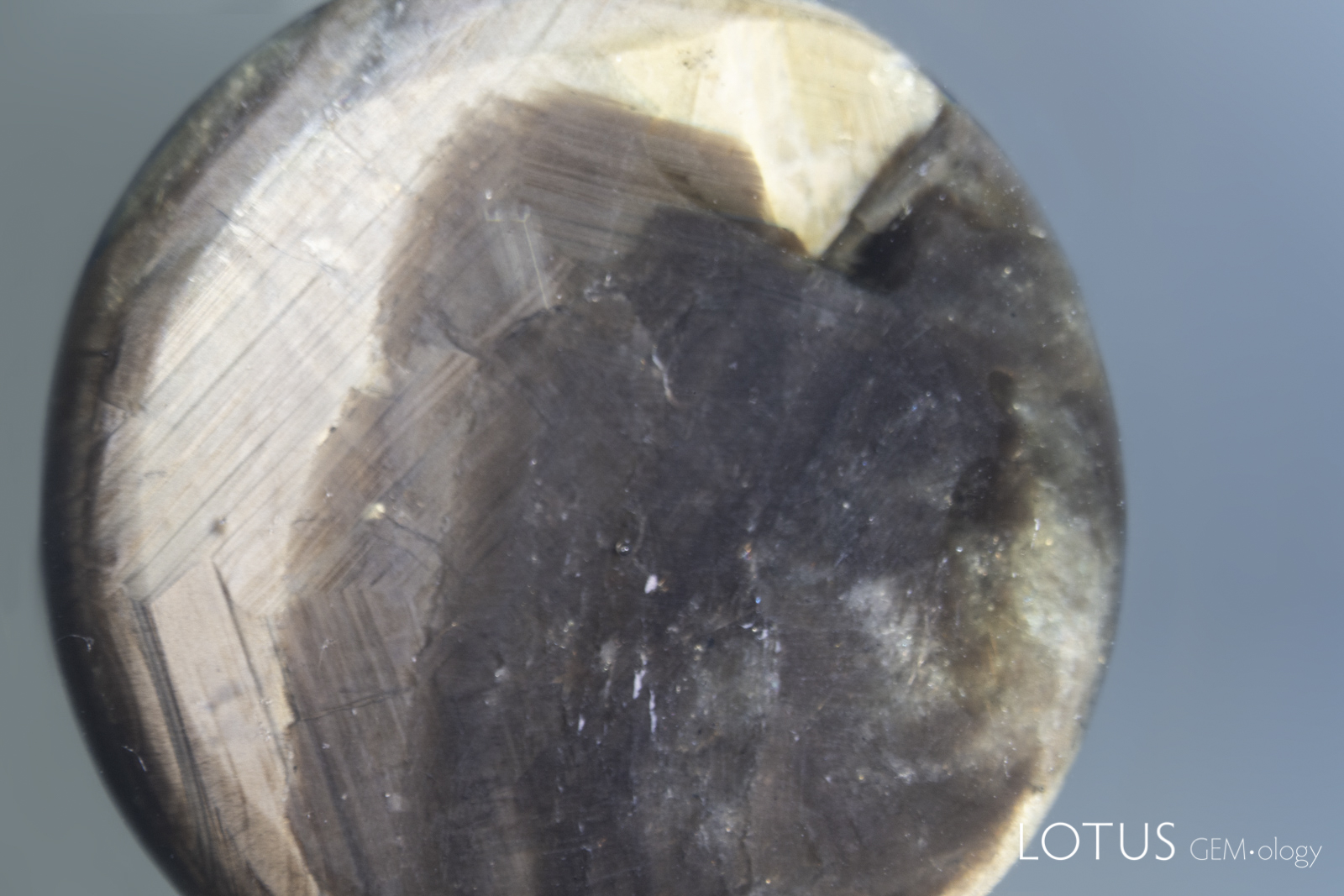
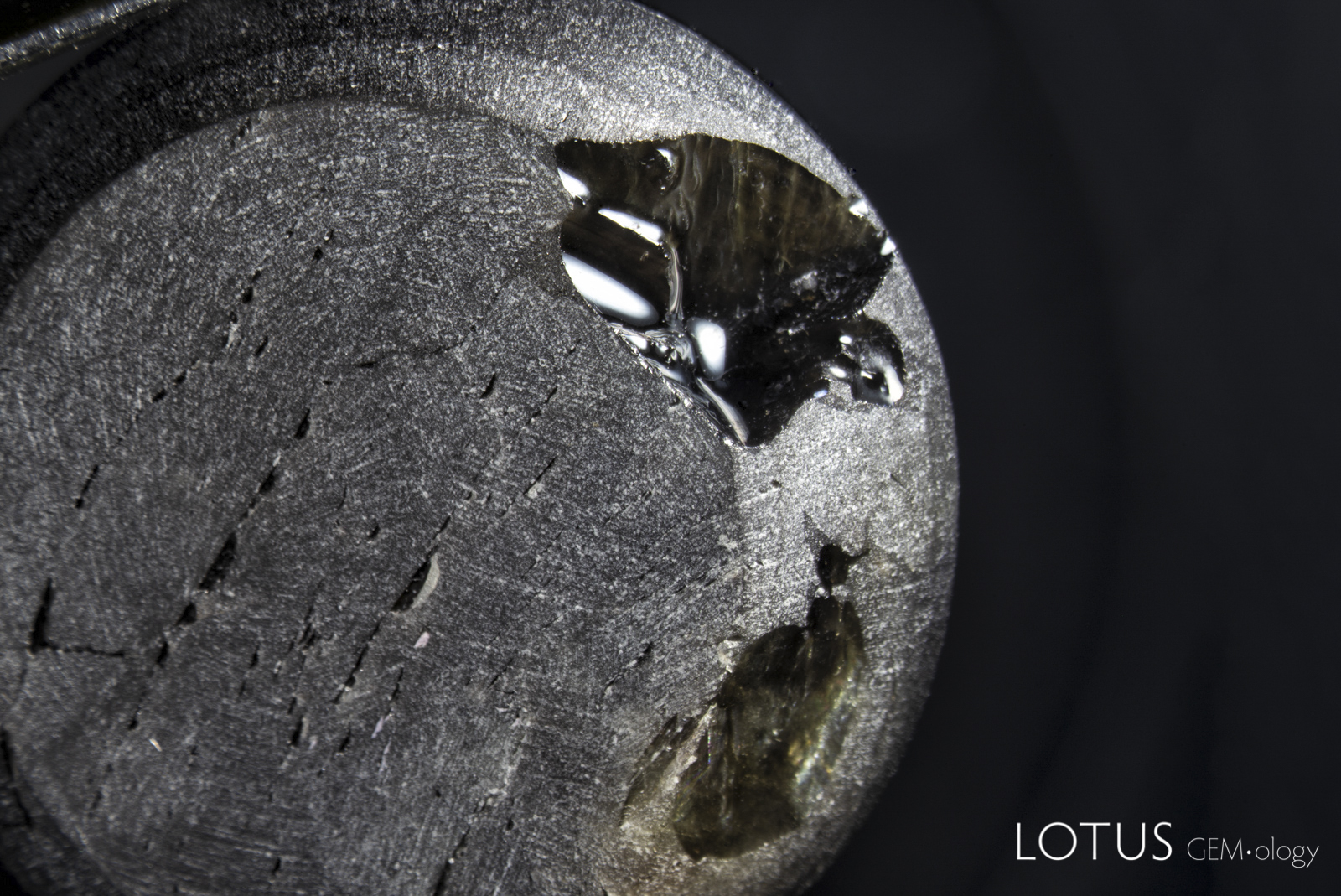
This black star sapphire had large pits on the base filled with dopping varnish. Following removal of the varnish by soaking in alcohol, the 75-ct stone lost about 0.25 ct of weight. But careful examination after the varnish removal revealed something far more sinister, a layer of glass coating the inside of the cavities. In addition, we could see the the glass extended across much of the base, as clearly revealed after immersing the gem in di-iodomethane.
Natural Star Sapphire •
Thailand (Siam); Chanthaburi •
Enhancements:
Heat + Glass Cavity/Fissure Filling (H-GF3) •
Lighting Conditions:
Diffuse Light Field + Immersion
Photographer:
Richard W. Hughes •
Image Number:
A-003-6241-7
• Field of View = 28mm
This black star sapphire had large pits on the base filled with dopping varnish. Following removal of the varnish by soaking in alcohol, the 75-ct stone lost about 0.25 ct of weight. But careful examination after the varnish removal revealed something far more sinister, a layer of glass coating the inside of the cavities. Note the perfectly smooth curved cavity surfaces, nothing like what one would expect for the broken surface of sapphire. In addition, we could see the the glass extended across much of the base.
Natural Star Sapphire •
Thailand (Siam); Chanthaburi •
Enhancements:
Heat + Glass Cavity/Fissure Filling (H-GF3) •
Lighting Conditions:
Fiber Optic: Diffuse Overhead
Photographer:
Richard W. Hughes •
Image Number:
A-003-6241-6
• Field of View = 28mm
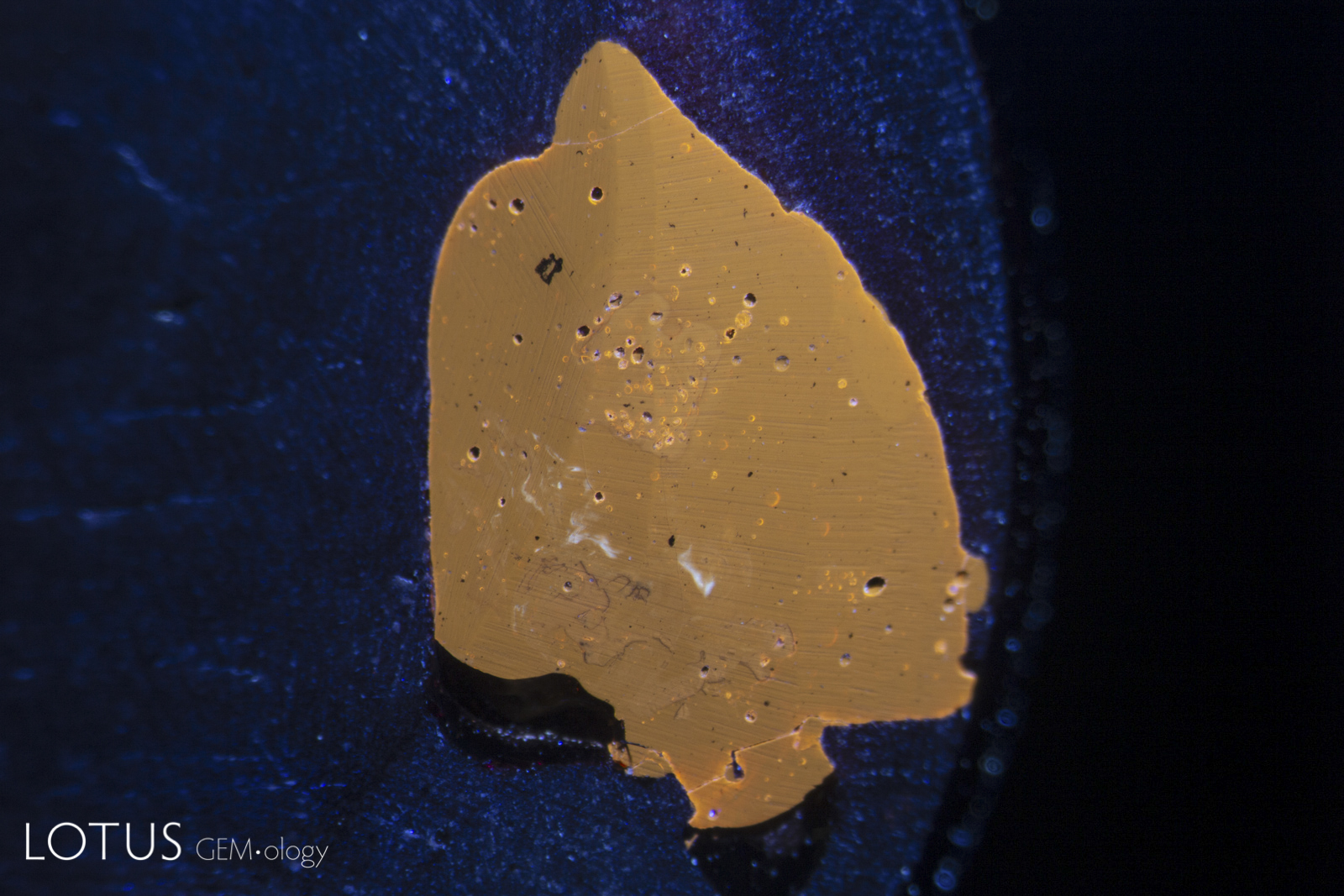
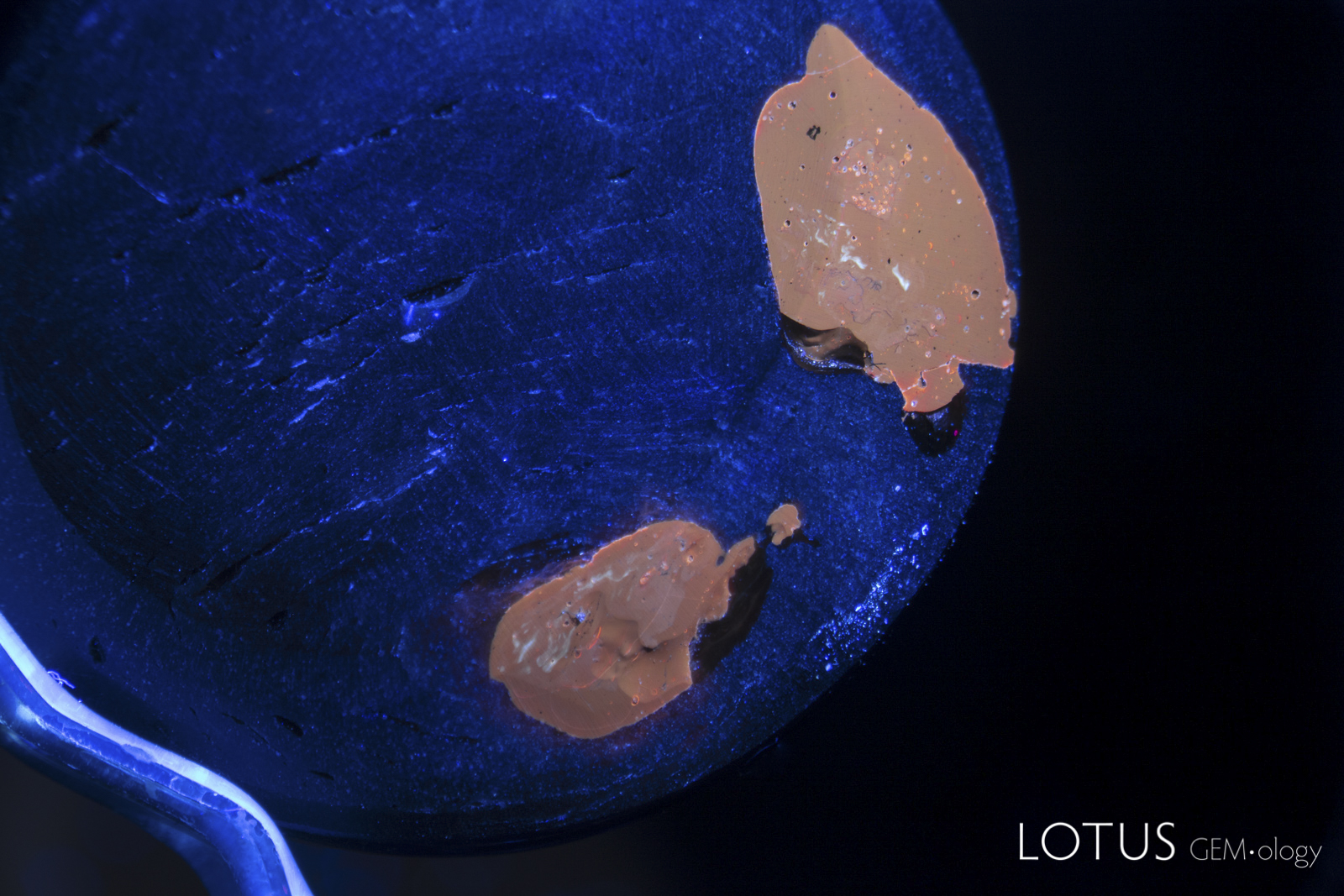
This black star sapphire from Chanthaburi, Thailand has large pits on the base filled with a brown dopping varnish. Long wave ultraviolet light shows the varnish fluoresces orange. Note the pits on the surface of the varnish where gas bubbles were cut through.
Natural Star Sapphire •
Thailand (Siam); Chanthaburi •
Enhancements:
Heat + Glass Cavity/Fissure Filling (H-GF3) •
Lighting Conditions:
Ultraviolet: Longwave
Photographer:
Richard W. Hughes •
Image Number:
A-003-6241-5
• Field of View = 20mm
This black star sapphire from Chanthaburi, Thailand has large pits on the base filled with a brown dopping varnish. Long wave ultraviolet light shows the varnish fluoresces orange.
Natural Star Sapphire •
Thailand (Siam); Chanthaburi •
Enhancements:
Heat + Glass Cavity/Fissure Filling (H-GF3) •
Lighting Conditions:
Ultraviolet: Longwave
Photographer:
Richard W. Hughes •
Image Number:
A-003-6241-2
• Field of View = 27mm
Search the Complete Hyperion Database
Star sapphire inclusions may include oriented rutile silk, mineral crystals, healed fissures, fluid inclusions, growth zoning and other features formed during or after crystal growth. Of particular importance are oriented inclusions capable of producing asterism when the stone is cut with the appropriate orientation.
Star Sapphire Inclusion Photomicrographs
The Hyperion star sapphire gallery includes microscopic features documented in natural star sapphires from deposits around the world. Each entry is accompanied by descriptive information and, where available, references to the gemological literature.
What Inclusions Can Reveal About Star Sapphire
Inclusions are fundamental to the study of star sapphire because asterism results from light reflected by oriented internal features. Microscopic examination can help reveal the nature and orientation of these features, distinguish natural asterism from some artificial effects, recognize evidence of treatment and provide information relevant to geographic origin.
Hyperion combines inclusion photomicrography with supporting gemological information so that individual features can be compared with documented examples from natural star sapphires.
About Hyperion
Hyperion is the Lotus Gemology searchable inclusion database. It allows users to browse gemstone inclusions by gem type, geographic origin, treatment and keyword.