Star Sapphire Inclusions
Explore star sapphire inclusions in Hyperion, the Lotus Gemology inclusion database. Hyperion contains photomicrographs of inclusions and internal features in natural star sapphires, documented with information on geographic origin, treatment, lighting conditions, field of view, photographer and published references.
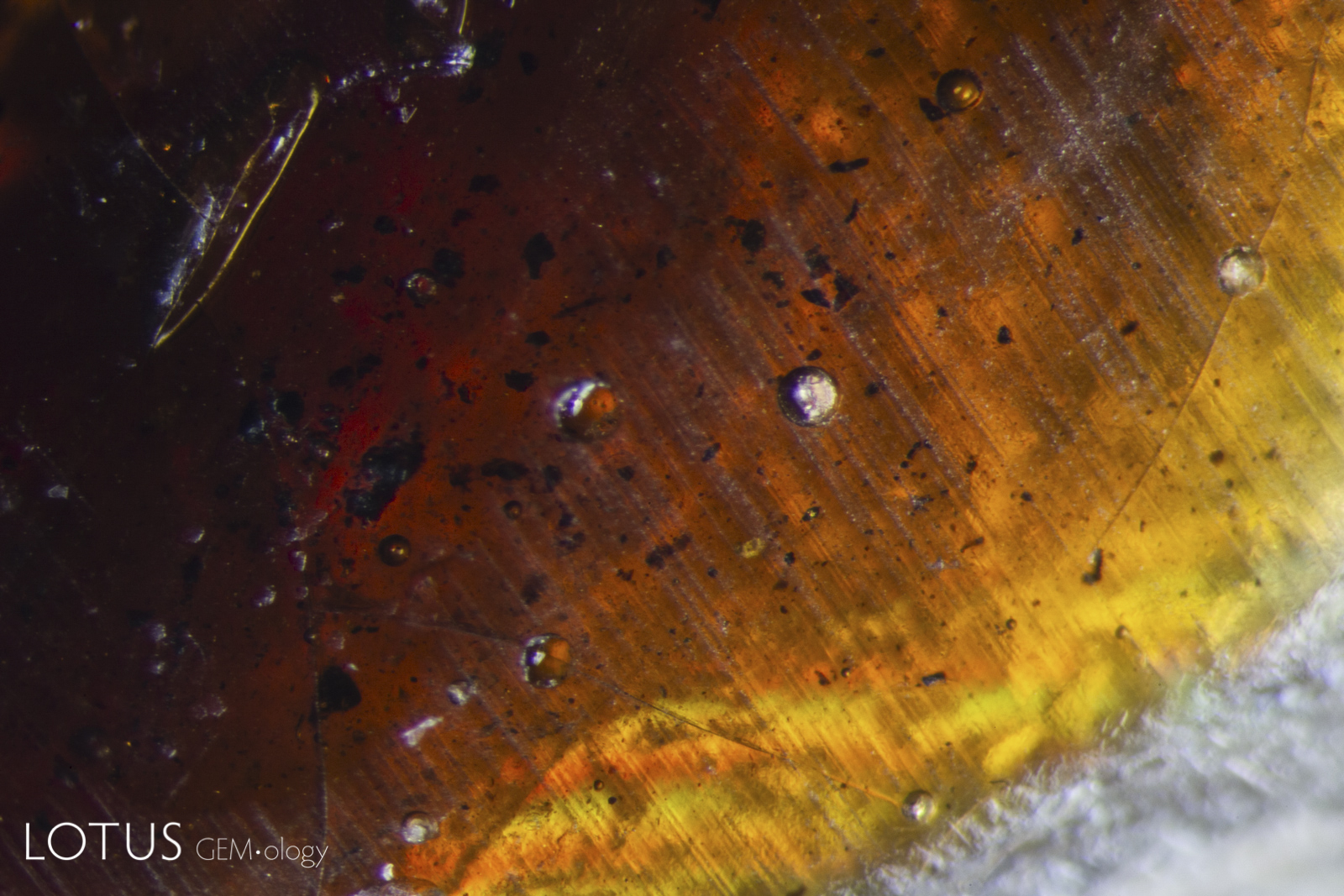
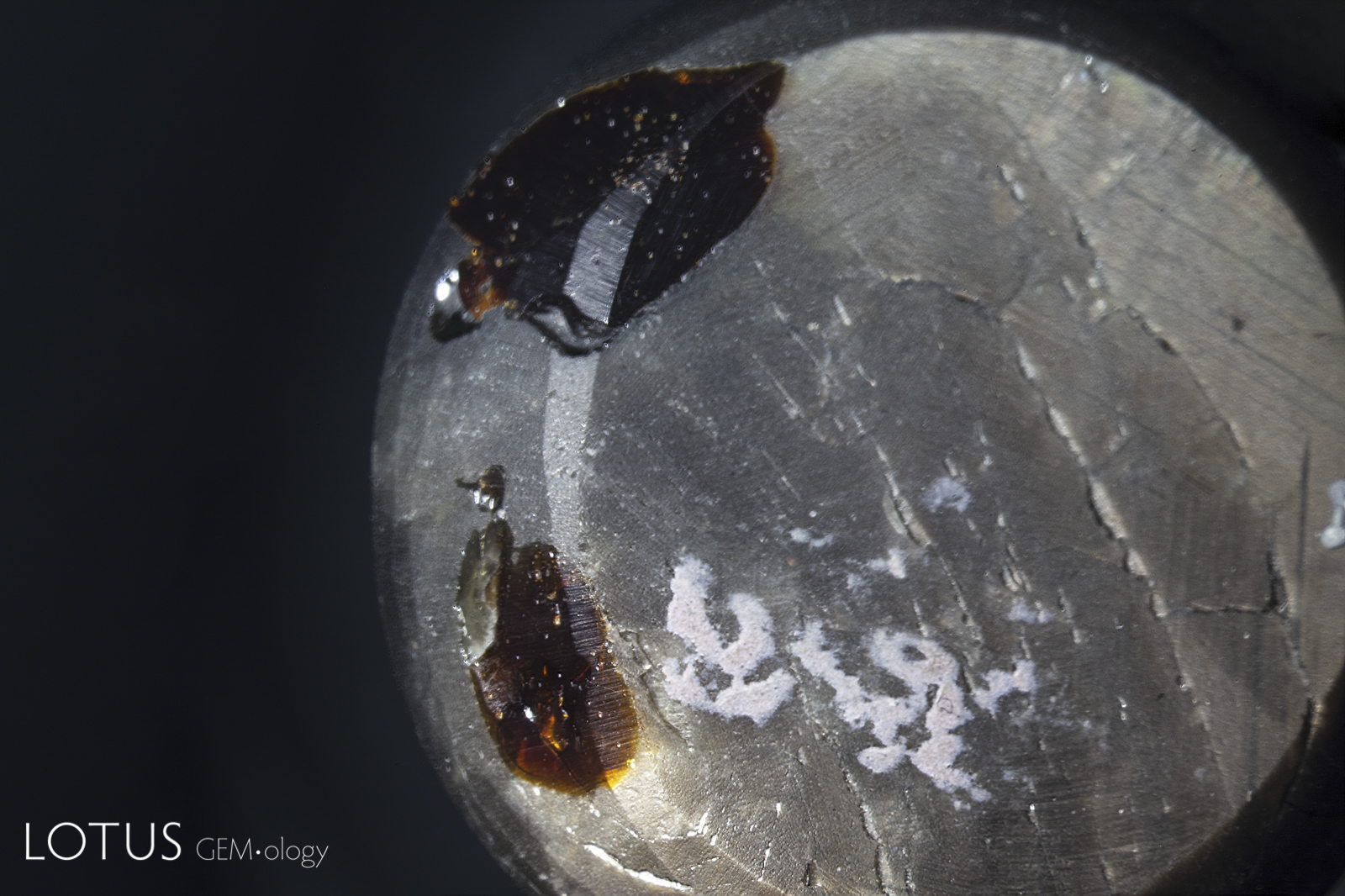
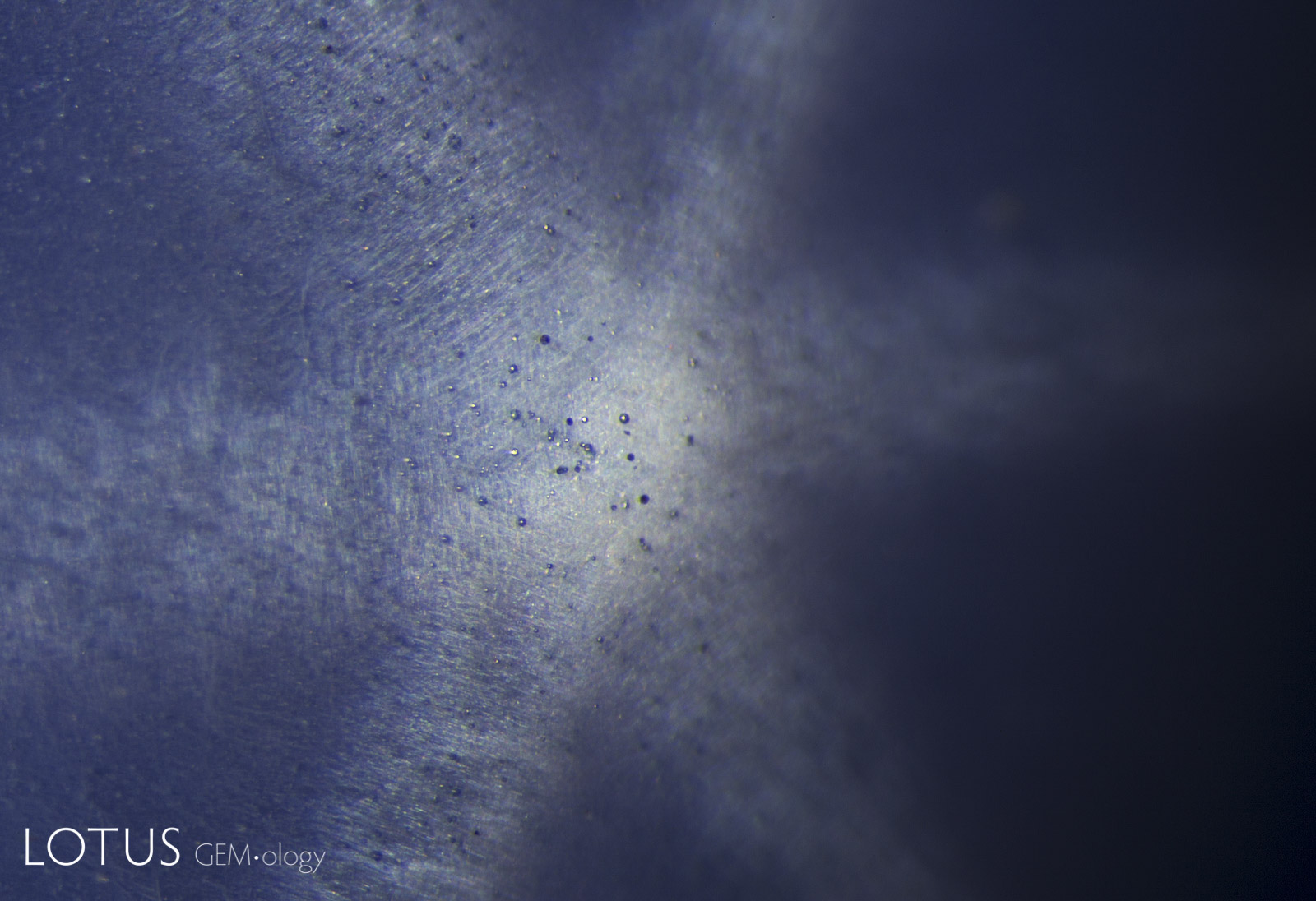
This black star sapphire from Chanthaburi, Thailand has large pits on the base filled with a brown dopping varnish. Careful examination reveals gas bubbles trapped in the varnish.
Natural Star Sapphire •
Thailand (Siam); Chanthaburi •
Enhancements:
Heat + Glass Cavity/Fissure Filling (H-GF3) •
Lighting Conditions:
Fiber Optic: Oblique
Photographer:
Richard W. Hughes •
Image Number:
A-003-6241-3
• Field of View = 5mm
This black star sapphire from Chanthaburi, Thailand has large pits on the base filled with a brown dopping varnish.
Natural Star Sapphire •
Thailand (Siam); Chanthaburi •
Enhancements:
Heat + Glass Cavity/Fissure Filling (H-GF3) •
Lighting Conditions:
Fiber Optic: Diffuse Overhead
Photographer:
Richard W. Hughes •
Image Number:
A-003-6241-1
• Field of View = 30mm
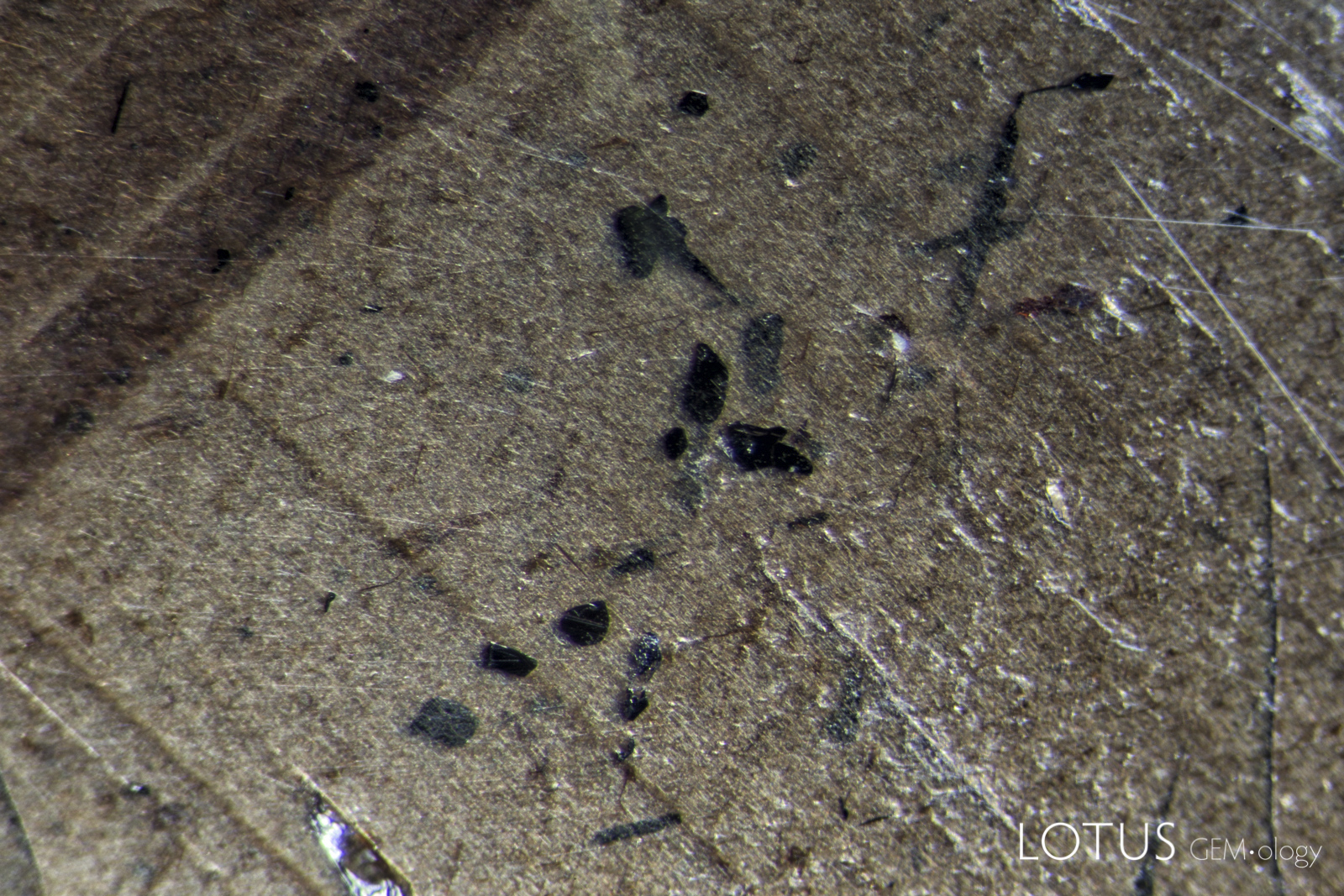
Black crystals cut through on the surface of a gold sheen star sapphire from Kenya. We identified these via micro Raman as magnetite, an Fe-rich member of the spinel group.
Natural Gold Sheen Star Sapphire •
Kenya •
Enhancements:
None Detected (None) •
Lighting Conditions:
Fiber Optic: Diffuse Overhead
Photographer:
Richard W. Hughes •
Image Number:
A-003-6163-1
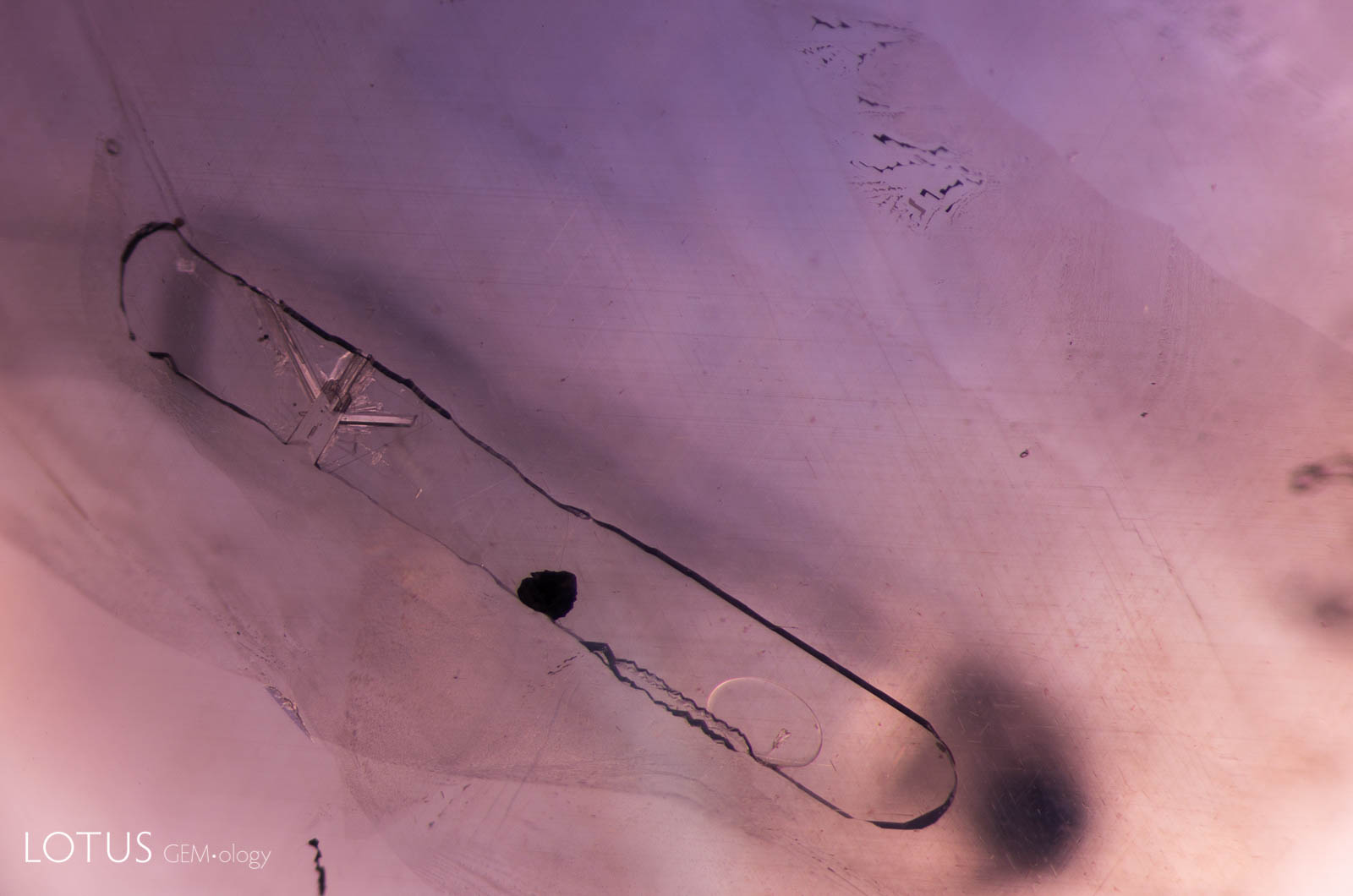
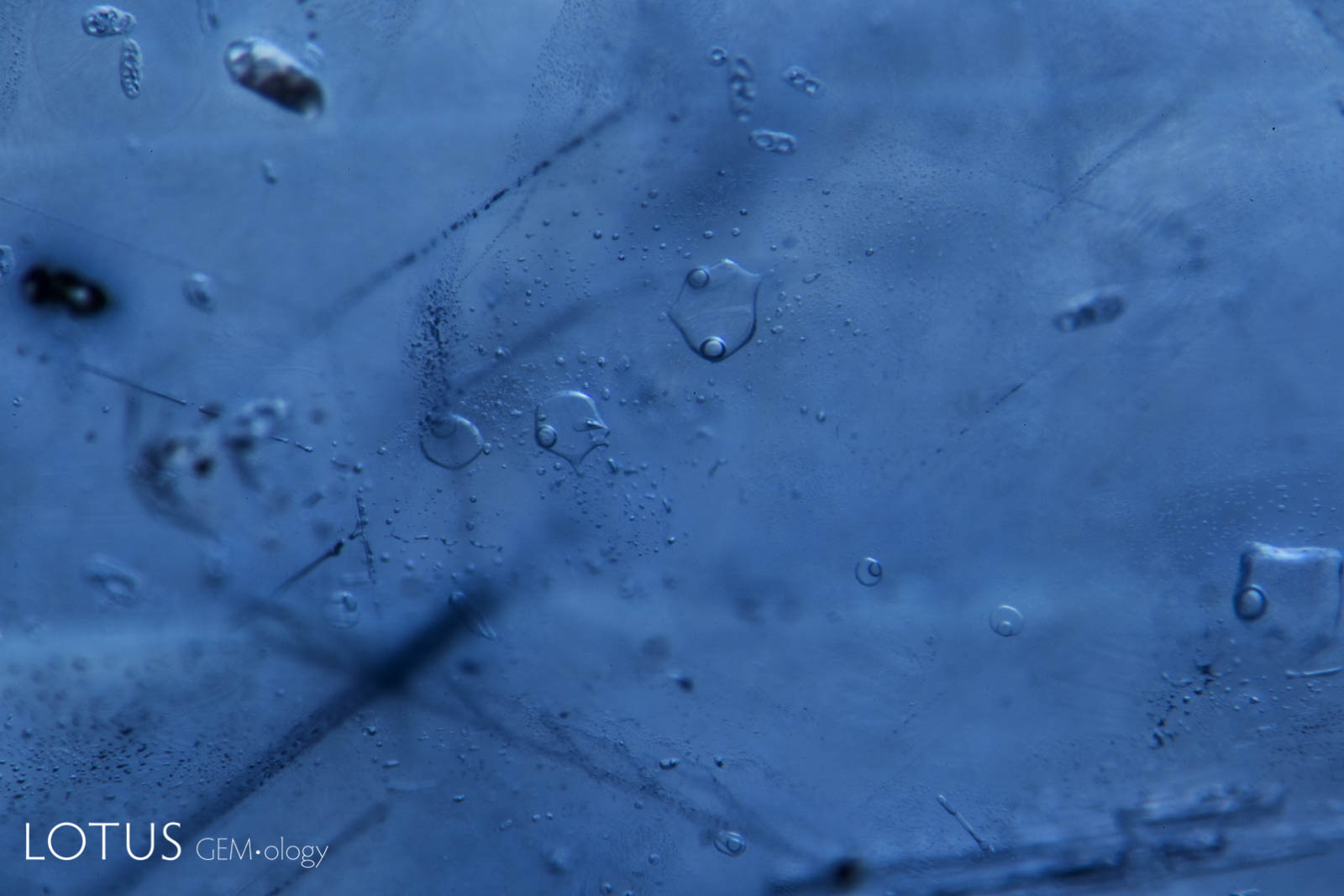
Negative crystals can contain a variety of substances. In this example, on the left we see what are likely diaspore needles, then a graphite flake in the center, and a gas bubble on the right. All show no signs of heat treatment. The gas bubble is the gaseous phase of the liquid carbon dioxide that fills the cavity.
Natural Color-Change Star Sapphire •
Sri Lanka (Ceylon) •
Enhancements:
None Detected (None) •
Lighting Conditions:
Dark Field
Photographer:
E. Billie Hughes •
Image Number:
A-002-9387-1
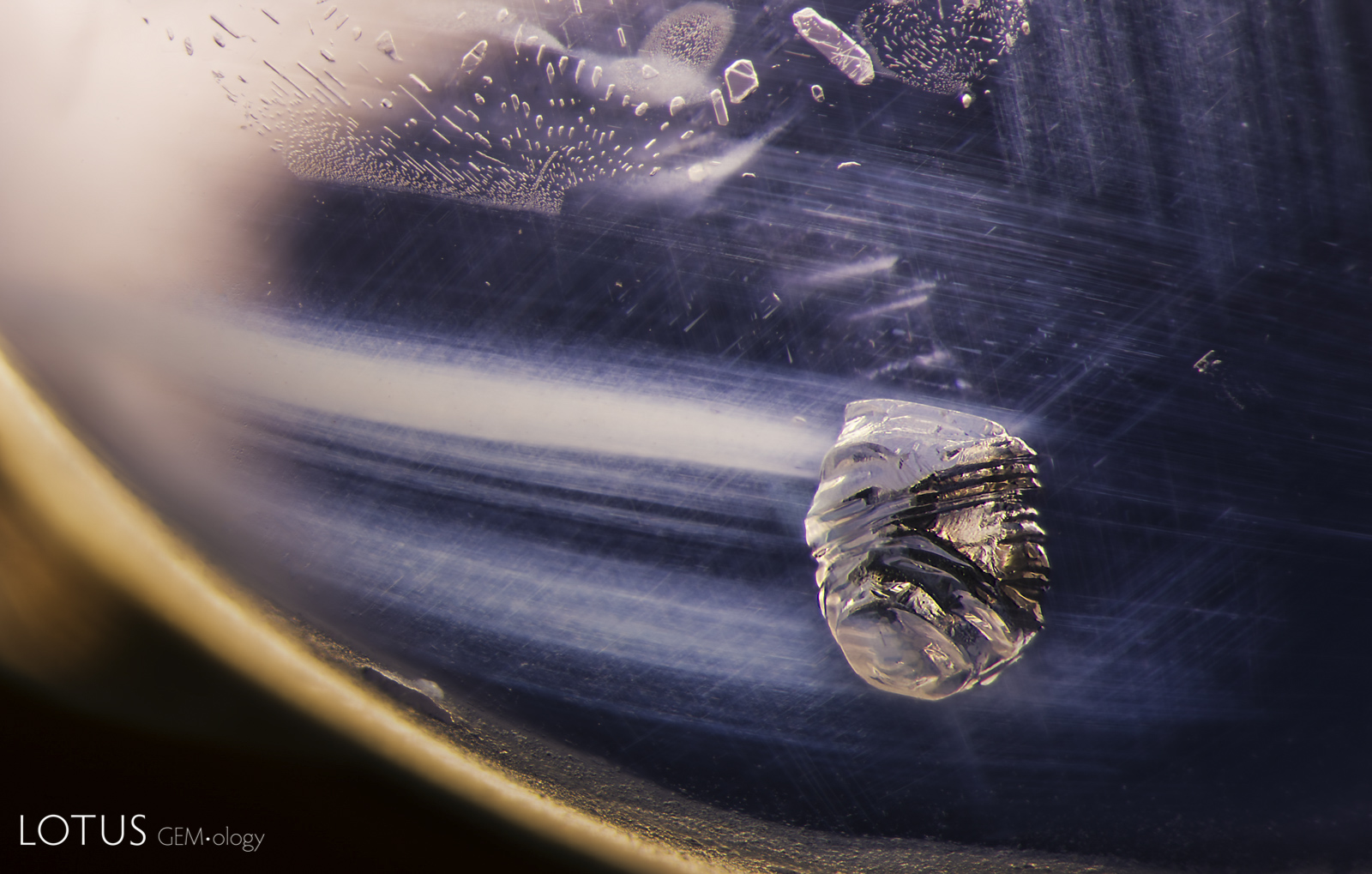
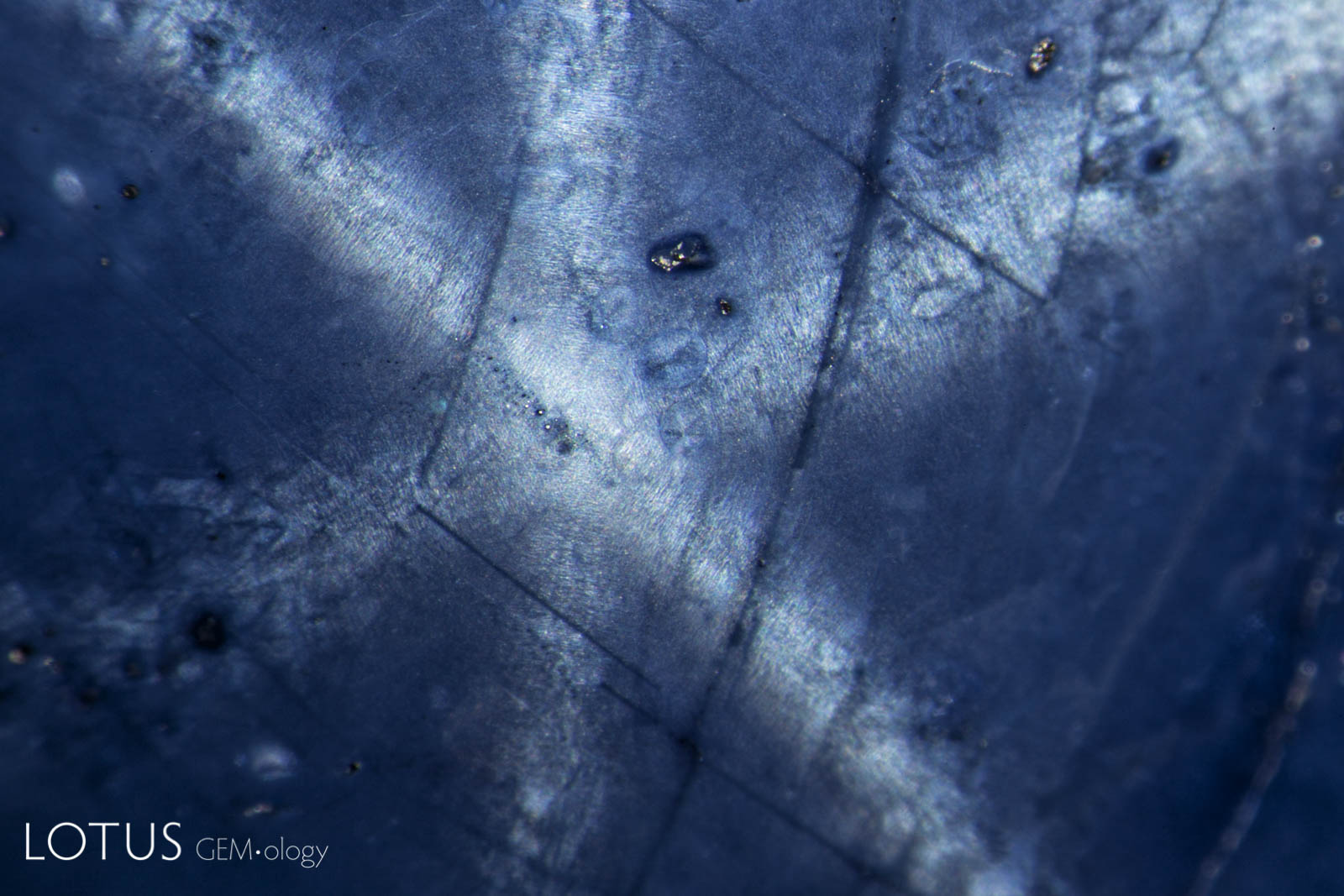
A metallic crystal zooms across an azure sky with small negative crystals and undissolved rutile silk needles providing a dramatic backdrop.
Natural Star Sapphire •
Myanmar (Burma); Mogok •
Enhancements:
None Detected (None) •
Lighting Conditions:
Dark Field
Photographer:
E. Billie Hughes •
Image Number:
A-002-2503-2
Gas bubbles and short needles in a Linde synthetic star sapphire.
Synthetic Star Sapphire •
Verneuil •
Enhancements:
None Detected (None) •
Lighting Conditions:
Fiber Optic: Overhead
Photographer:
E. Billie Hughes •
Image Number:
R-001-4642-2
Hughes, R.W. (1997) Ruby & Sapphire. Boulder, CO, RWH Publishing, 512 pp.; RWHL*.
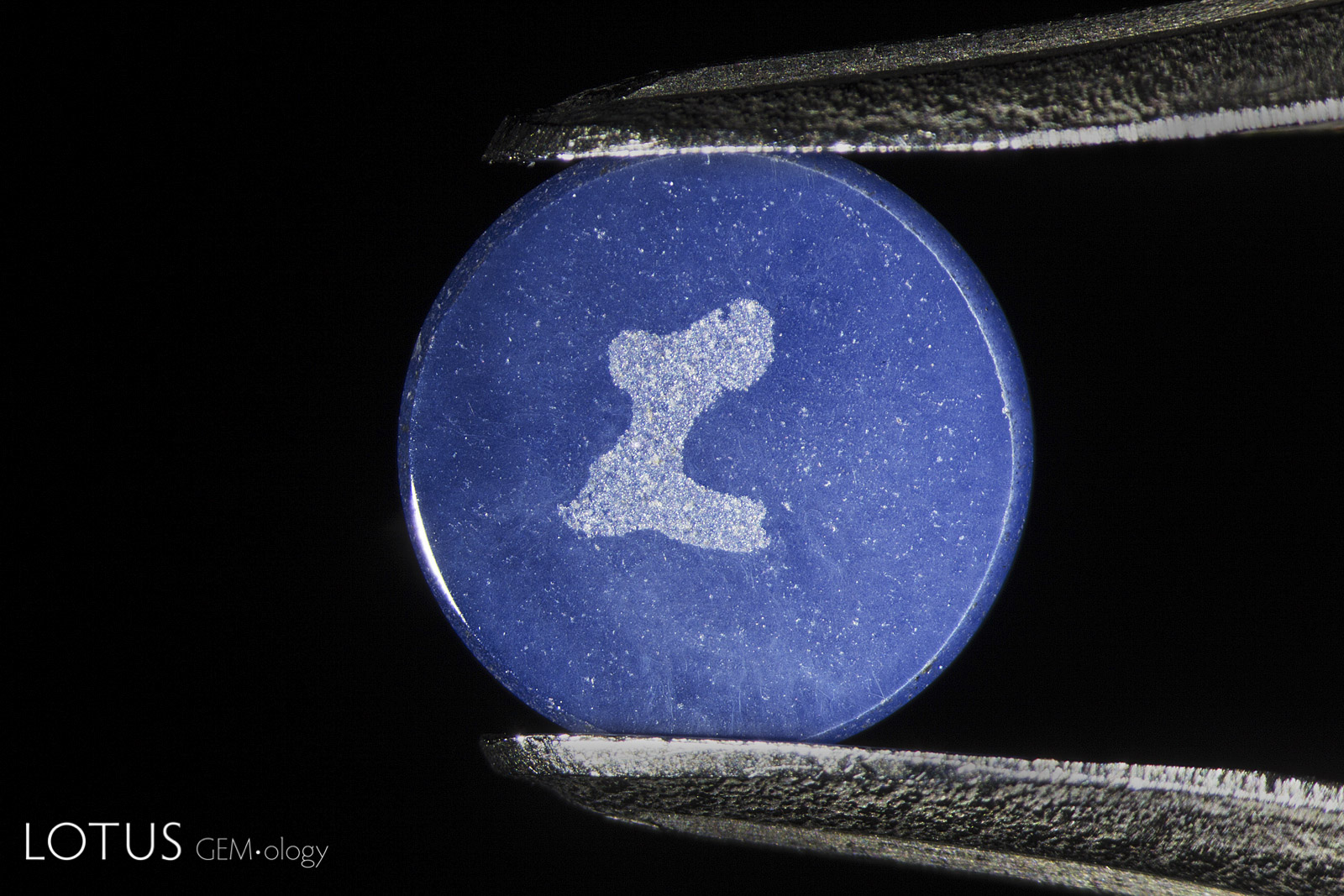
The engraved “L” on the back of a genuine Linde synthetic star ruby. All of the Linde production featured this branding.
Synthetic Star Sapphire •
Verneuil •
Enhancements:
None Detected (None) •
Lighting Conditions:
Fiber Optic: Diffuse Overhead
Photographer:
E. Billie Hughes •
Image Number:
R-001-4642-1
Hughes, R.W. (1997) Ruby & Sapphire. Boulder, CO, RWH Publishing, 512 pp.; RWHL*.
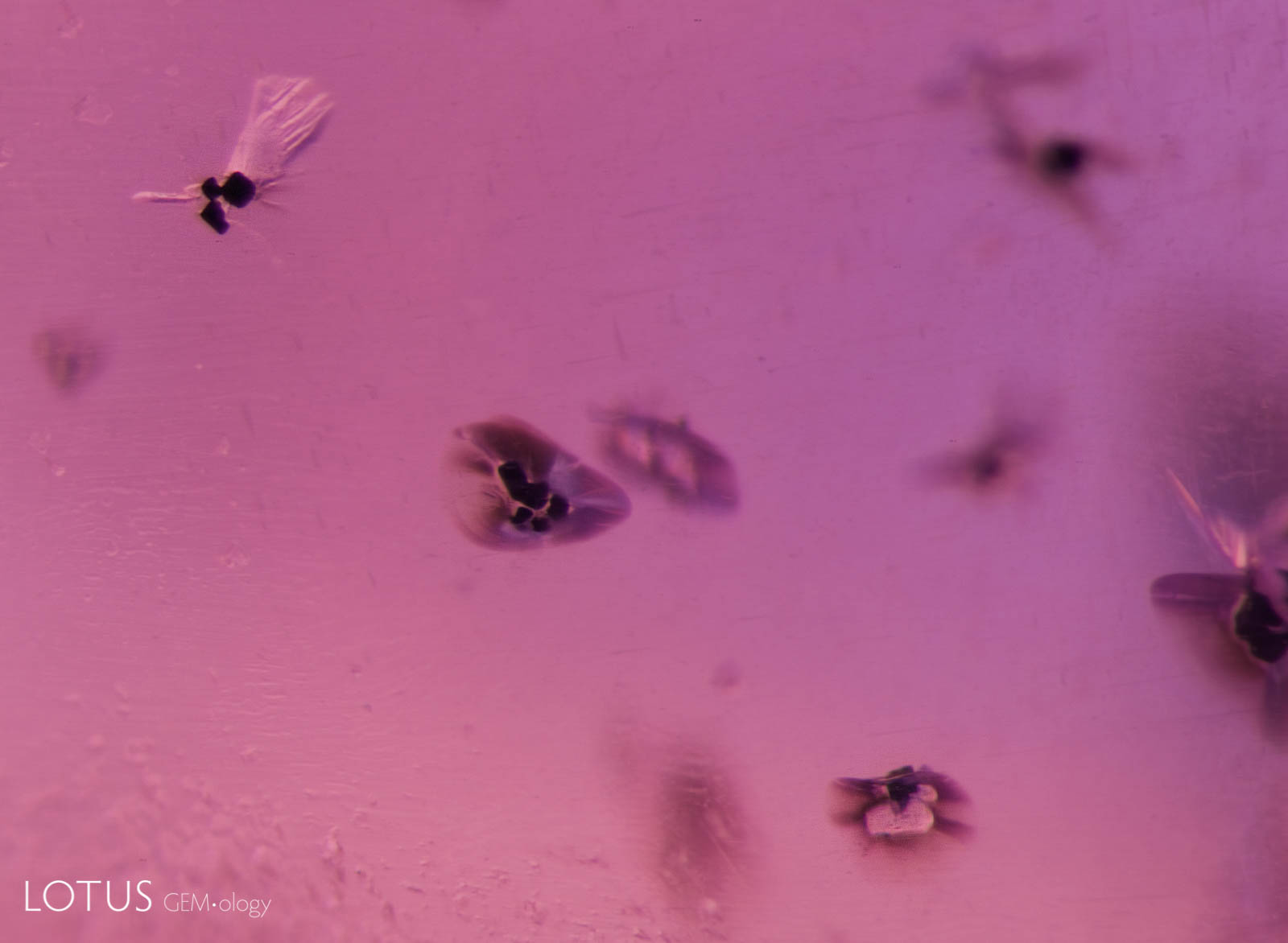
Small, blocky black uraninite crystals and rounded, transparent zircon crystals such as these are commonly found in Sri Lankan sapphire. While at first their shiny halos may seem like evidence of heat treatment, they can actually occur naturally, as in this stone. The undissolved rutile silk needles in this stone demonstrate that it has not been heated at a high temperature.
Natural Star Sapphire •
Sri Lanka (Ceylon) •
Enhancements:
None Detected (None) •
Lighting Conditions:
Dark Field
Photographer:
E. Billie Hughes •
Image Number:
A-001-3320-3
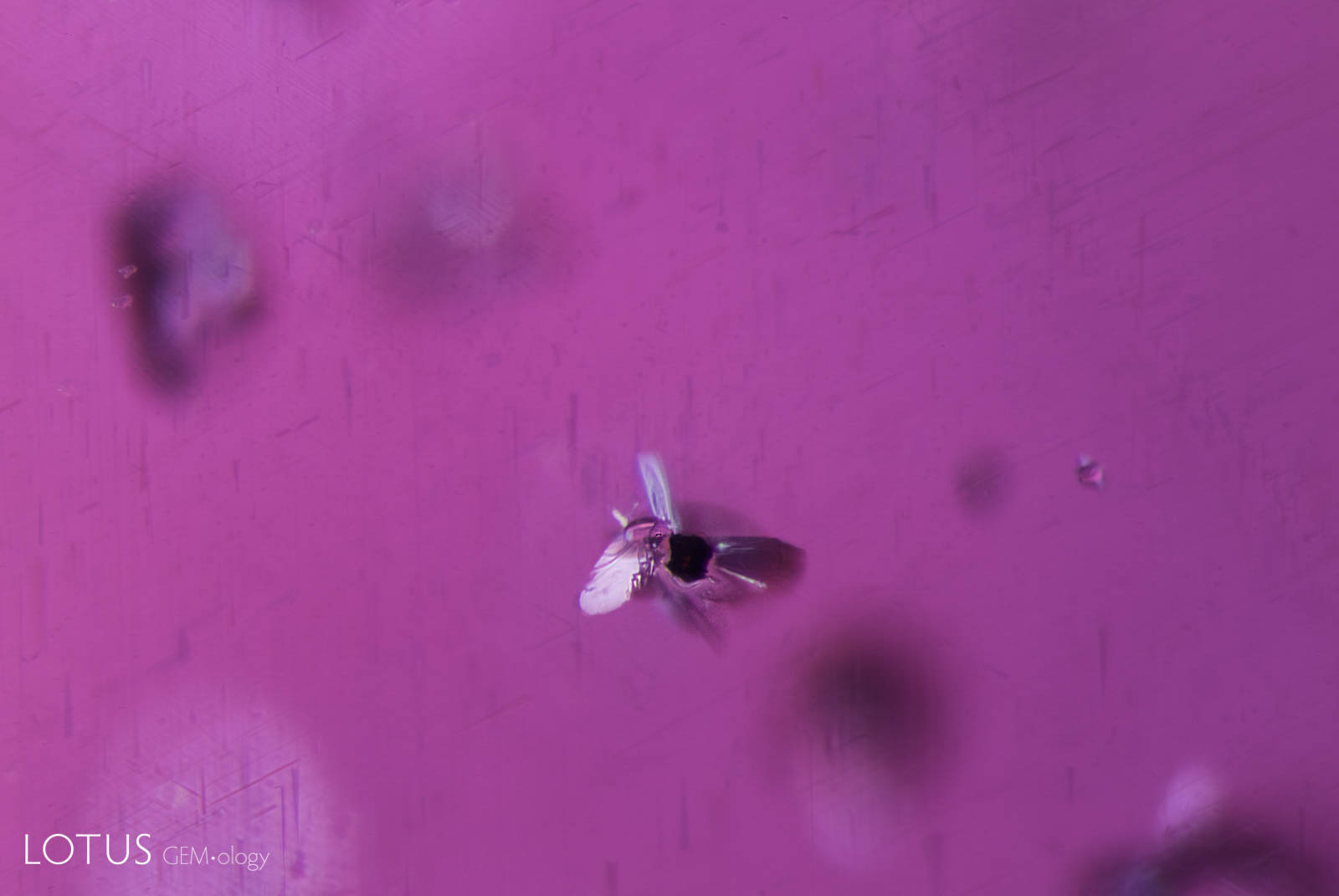
A small black uraninite crystal with shiny fissures around it. While at first this may seem like evidence of heat treatment, these halos can actually occur naturally, as in this stone. The undissolved rutile silk needles in this stone demonstrate that it has not been heated at a high temperature.
Natural Star Sapphire •
Sri Lanka (Ceylon) •
Enhancements:
None Detected (None) •
Lighting Conditions:
Dark Field
Photographer:
E. Billie Hughes •
Image Number:
A-001-3320-2
Small black uraninite crystals with shiny fissures around them in a Sri Lankan sapphire. While at first these may seem like evidence of heat treatment, these halos can actually occur naturally, as in this stone. The undissolved rutile silk needles in this stone demonstrate that it has not been heated at a high temperature.
Natural Star Sapphire •
Sri Lanka (Ceylon) •
Enhancements:
None Detected (None) •
Lighting Conditions:
Dark Field
Photographer:
E. Billie Hughes •
Image Number:
A-001-3320-1
This Burmese sapphire was diffused with titanium to induce both a blue color and a star. One can see bleeding of blue color into both surface openings and melted crystals due to the high temperatures used.
Natural Star Sapphire •
Myanmar (Burma); Mogok •
Enhancements:
Heat + Diffusion of external coloring agents (H-D) •
Lighting Conditions:
Fiber Optic: Oblique
Photographer:
Richard W. Hughes •
Image Number:
R-001-3154-3
This Burmese sapphire was diffused with titanium to induce both a blue color and a star. The rutile silk in such a diffused star occurs in extremely short needles in a shallow layer at and just below the surface.
Natural Star Sapphire •
Myanmar (Burma); Mogok •
Enhancements:
Heat + Diffusion of external coloring agents (H-D) •
Lighting Conditions:
Fiber Optic: Overhead
Photographer:
Richard W. Hughes •
Image Number:
R-001-3154-2
Search the Complete Hyperion Database
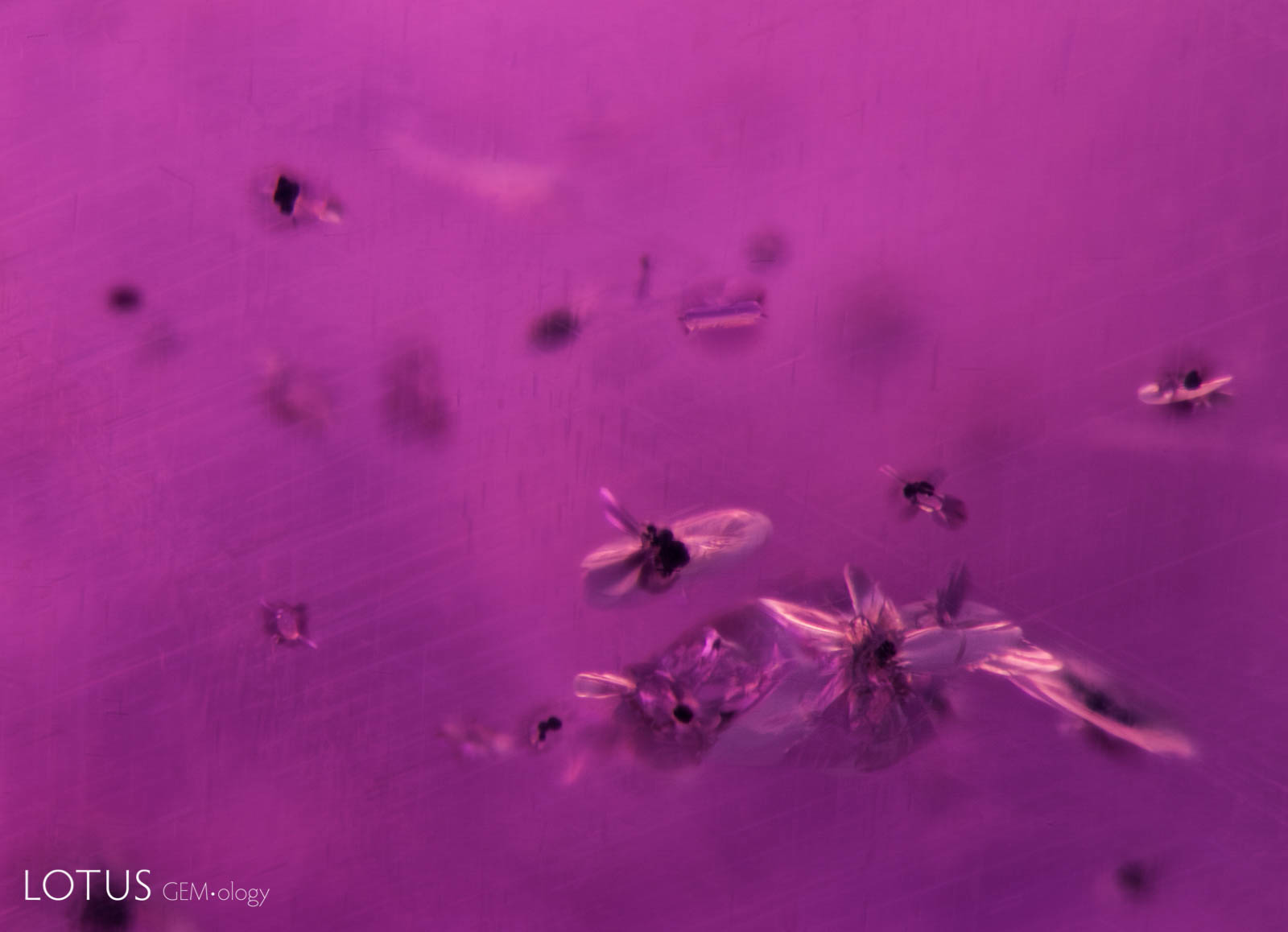
Star sapphire inclusions may include oriented rutile silk, mineral crystals, healed fissures, fluid inclusions, growth zoning and other features formed during or after crystal growth. Of particular importance are oriented inclusions capable of producing asterism when the stone is cut with the appropriate orientation.
Star Sapphire Inclusion Photomicrographs
The Hyperion star sapphire gallery includes microscopic features documented in natural star sapphires from deposits around the world. Each entry is accompanied by descriptive information and, where available, references to the gemological literature.
What Inclusions Can Reveal About Star Sapphire
Inclusions are fundamental to the study of star sapphire because asterism results from light reflected by oriented internal features. Microscopic examination can help reveal the nature and orientation of these features, distinguish natural asterism from some artificial effects, recognize evidence of treatment and provide information relevant to geographic origin.
Hyperion combines inclusion photomicrography with supporting gemological information so that individual features can be compared with documented examples from natural star sapphires.
About Hyperion
Hyperion is the Lotus Gemology searchable inclusion database. It allows users to browse gemstone inclusions by gem type, geographic origin, treatment and keyword.