Treated Sapphire Inclusions
Explore treated sapphire inclusions in Hyperion, the Lotus Gemology inclusion database. Hyperion contains photomicrographs of inclusions and internal features in natural sapphires that have undergone treatment, documented with information on geographic origin, treatment, lighting conditions, field of view, photographer and published references.
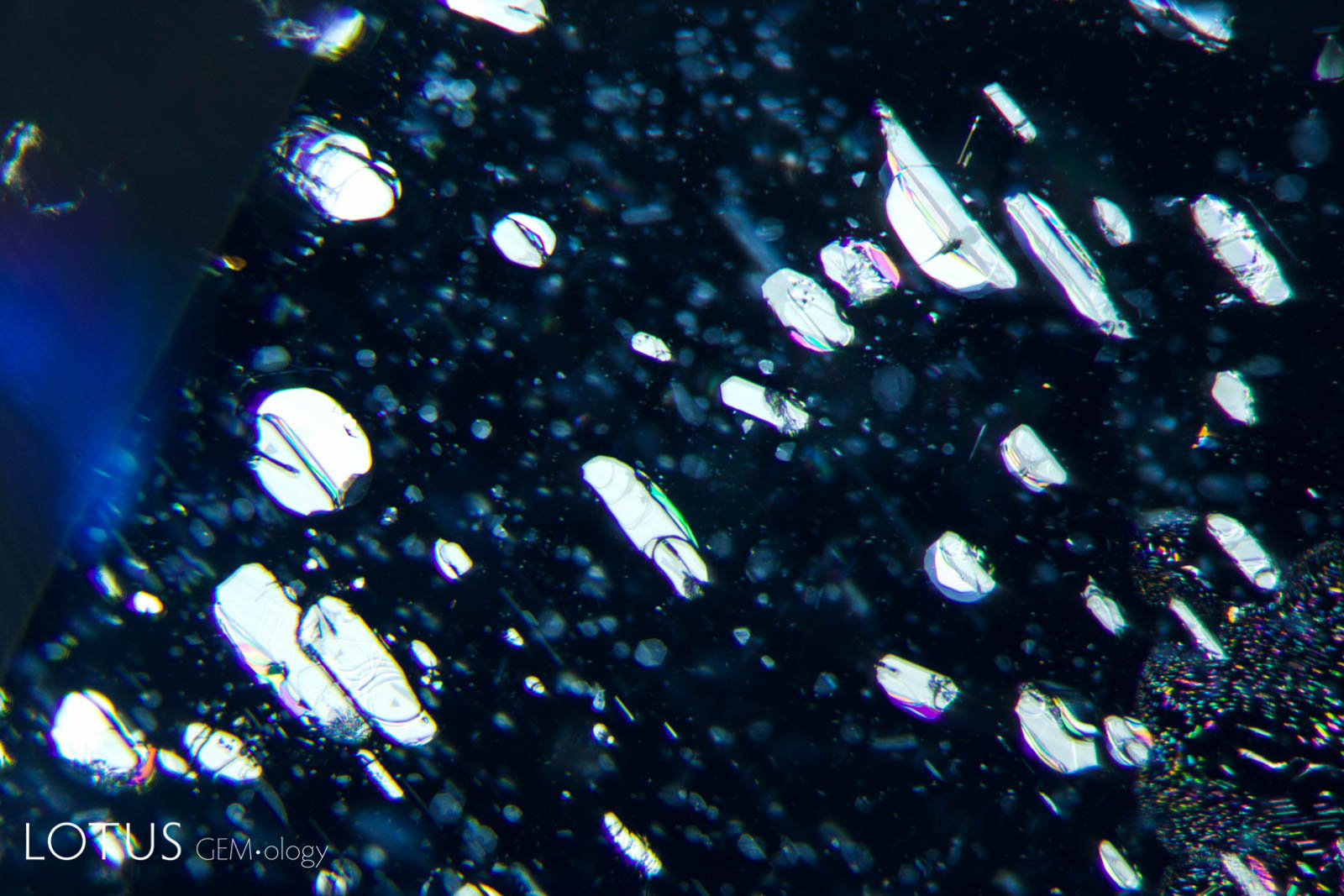
Negative crystals and small exsolved plates are seen in the basal plane of this untreated sapphire from Mogok, Myanmar.
Natural Sapphire •
Myanmar (Burma); Mogok •
Enhancements:
Fissure Filling with colorless Oil/resin (FF-O2) •
Lighting Conditions:
Fiber Optic: Oblique
Photographer:
E. Billie Hughes •
Image Number:
A-001-0587-1
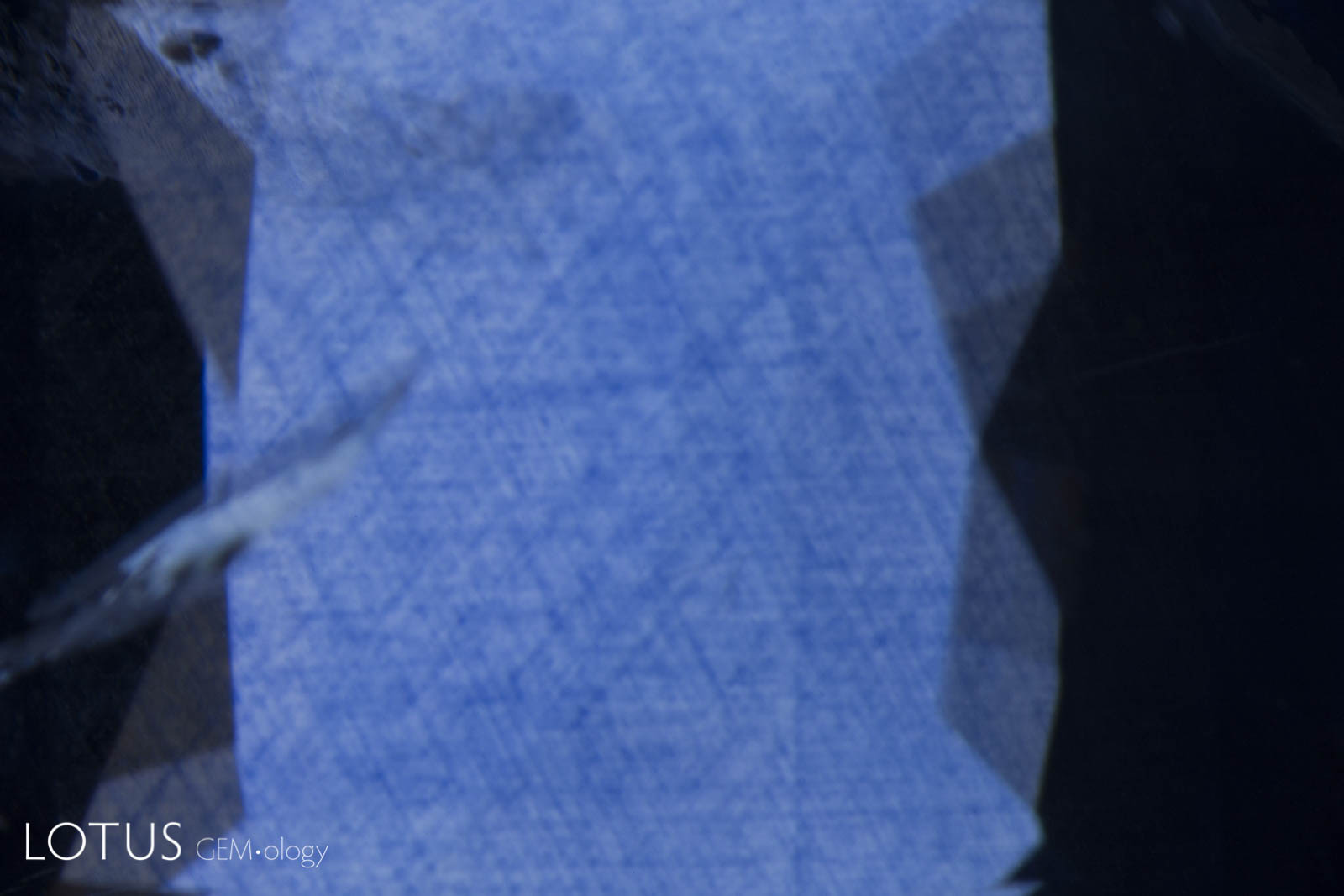
Rutile consists of titanium dioxide. When a sapphire containing exsolved rutile silk is heated, the rutile melts, sending the titanium back into solution, coloring the stone blue around the now partially dissolved silk. This creates a classic “inkspot” internal diffusion pattern, and is proof of high-temperature heat treatment.
Natural Sapphire •
Sri Lanka (Ceylon) •
Enhancements:
Heat (H) •
Lighting Conditions:
Fiber Optic: Transmitted
Photographer:
Richard W. Hughes •
Image Number:
A-001-0575-1
Koivula, J.I. (1987) Internal diffusion. Journal of Gemmology, Vol. 20, No. 7/8, pp. 474–477; RWHL*.
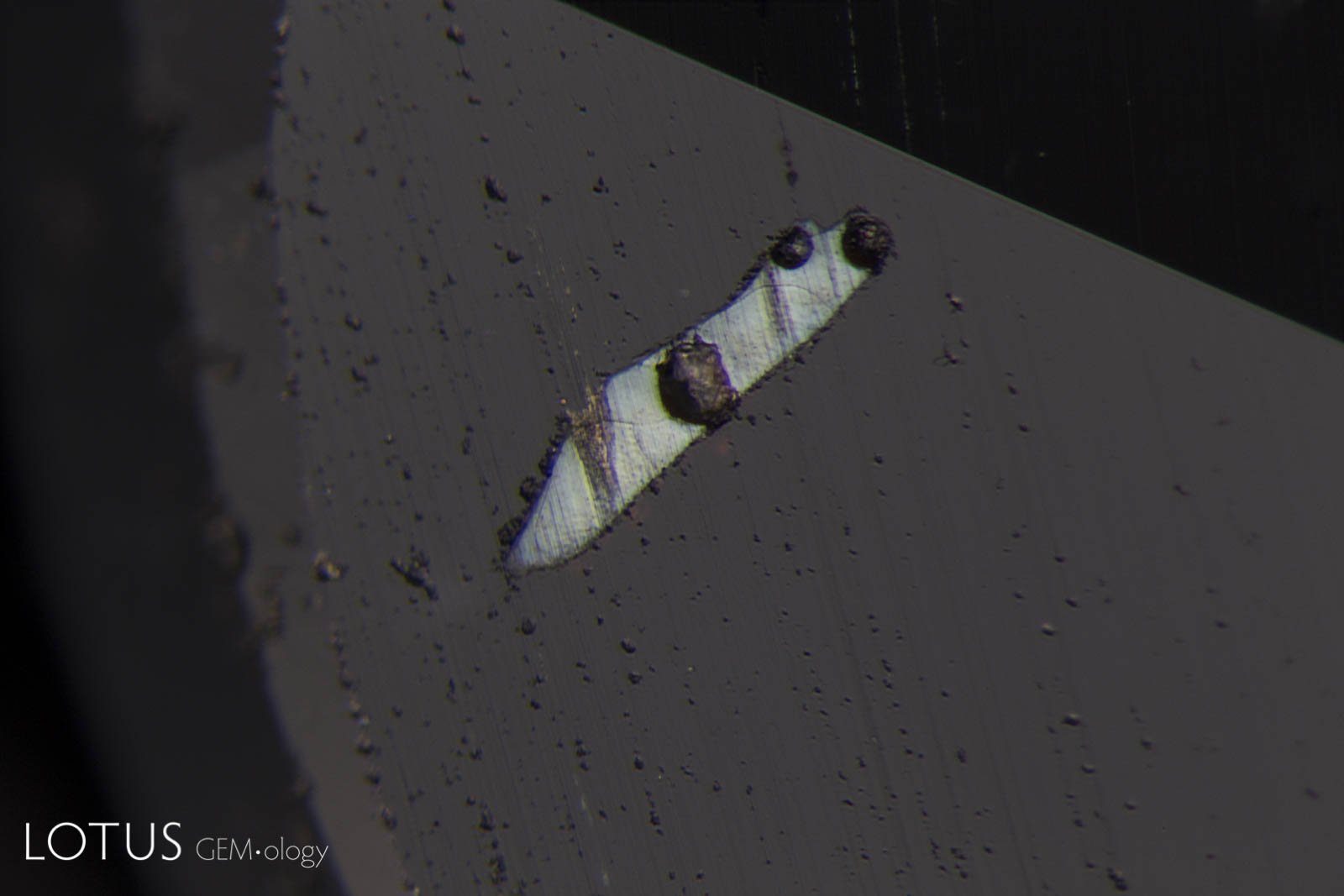
Nigeria sapphire; heated; crystal of what is probably rutile breaking the surface
Natural Sapphire •
Nigeria •
Enhancements:
Heat (H) •
Lighting Conditions:
Fiber Optic: Diffuse Overhead
Photographer:
Wimon Manorotkul •
Image Number:
A-001-0554-2
Hughes, R.W. (1997) Ruby & Sapphire. Boulder, CO, RWH Publishing, 512 pp.; RWHL*.
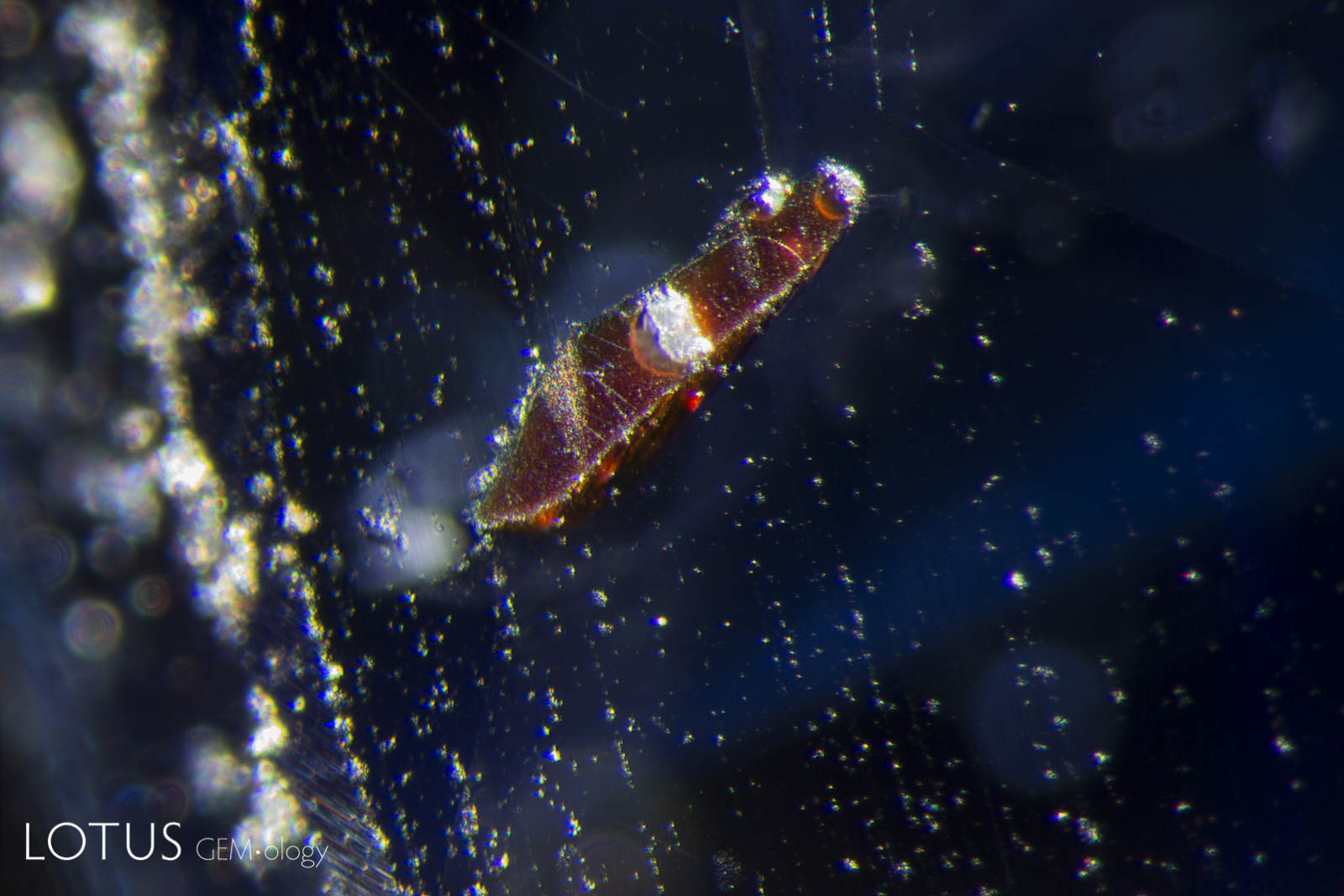
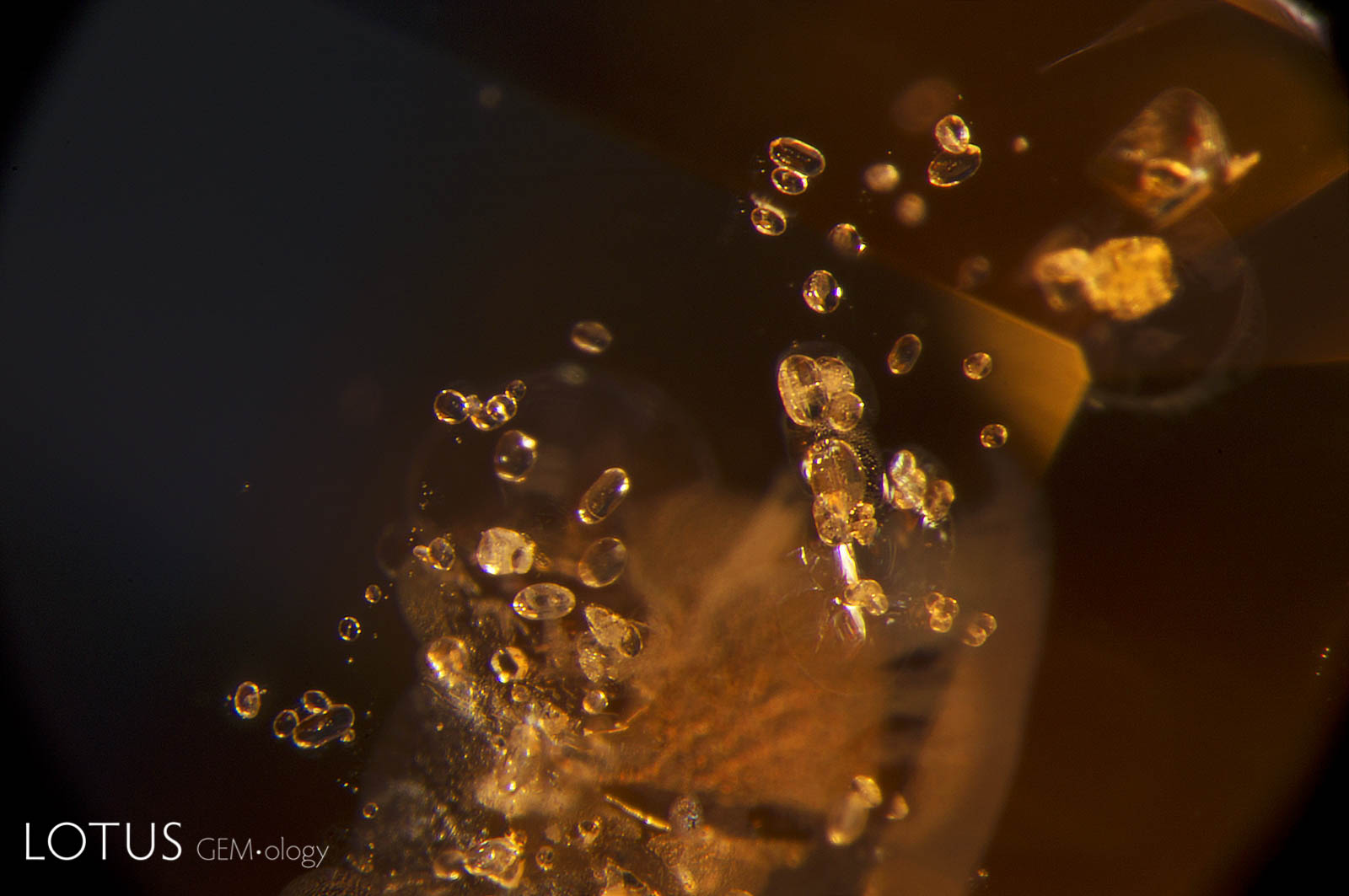
An orange rutile crystal polished through the surface of this sapphire from Nigeria.
Natural Sapphire •
Nigeria •
Enhancements:
Heat (H) •
Lighting Conditions:
Fiber Optic: Oblique
Photographer:
Wimon Manorotkul •
Image Number:
A-001-0554-1
Hughes, R.W. (1997) Ruby & Sapphire. Boulder, CO, RWH Publishing, 512 pp.; RWHL*.
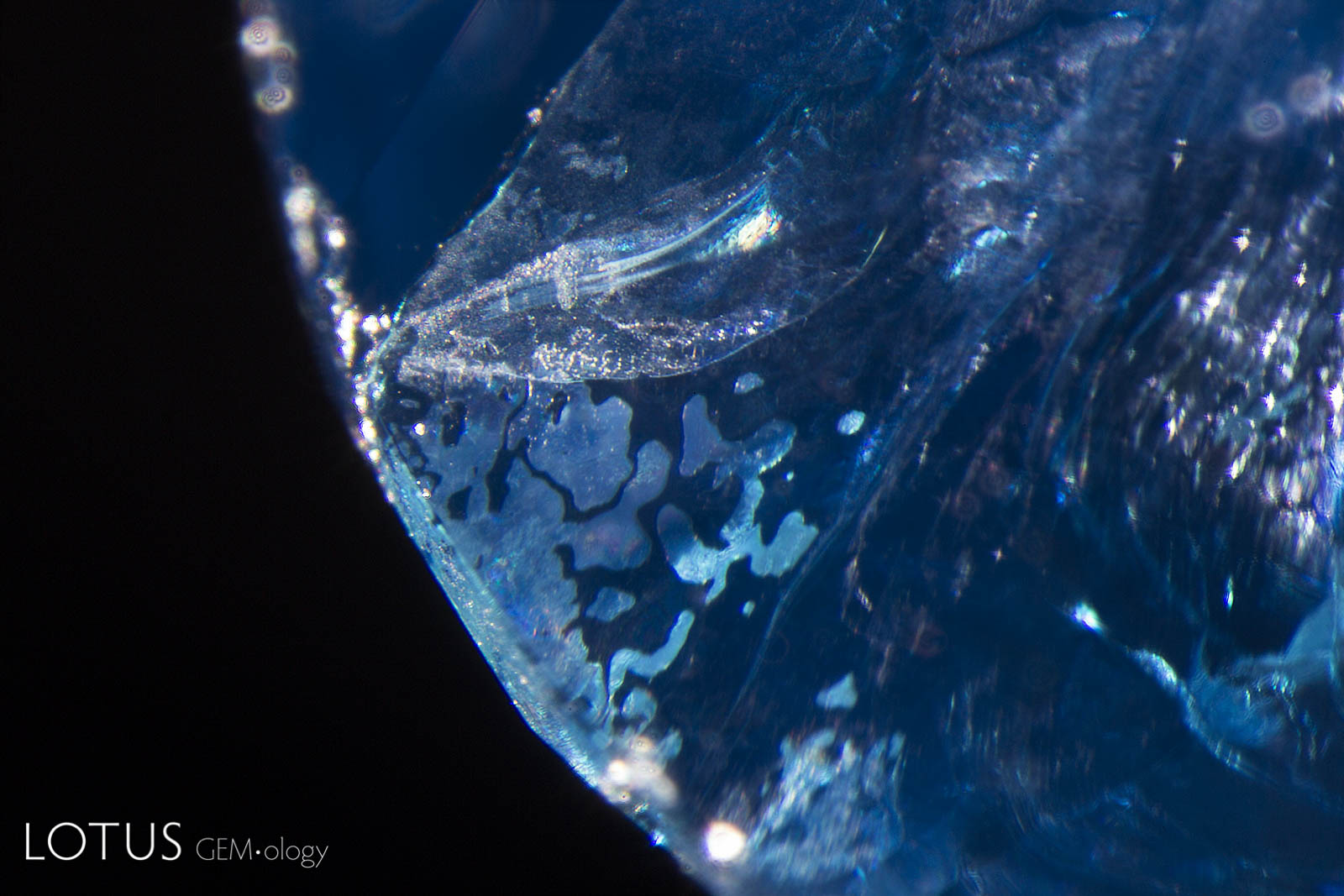
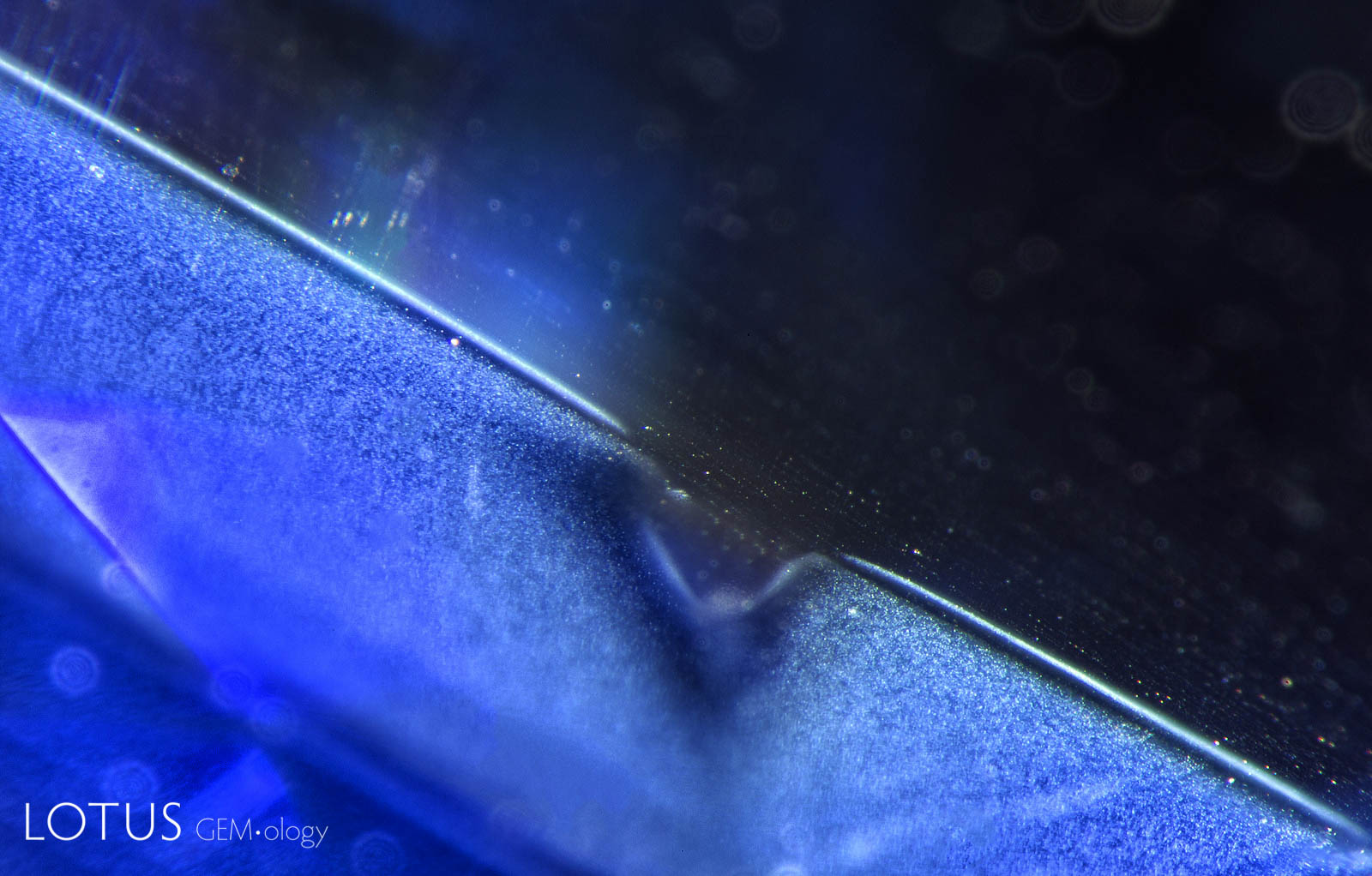
Many gems entering the market from Burma have been found to be oiled in an attempt to conceal their fissures. In transmitted light, the trapped air bubbles within the oil-filled fissures appear in high relief rounded patches. If the hot point is stroked against the surface, when the temperature is sufficiently raised, the trapped air bubbles will expand and contact as the hot point move closer or farther from them.
Natural Sapphire •
Myanmar (Burma) •
Enhancements:
Fissure Filling with colorless Oil/resin (FF-O1) •
Lighting Conditions:
Fiber Optic: Oblique
Photographer:
Richard W. Hughes •
Image Number:
A-001-0479-2
Lotus Gemology (2015) Lotus Gemology Lab Alert for Oiled Gems. Bangkok, LotusGemology.com, RWHL*.
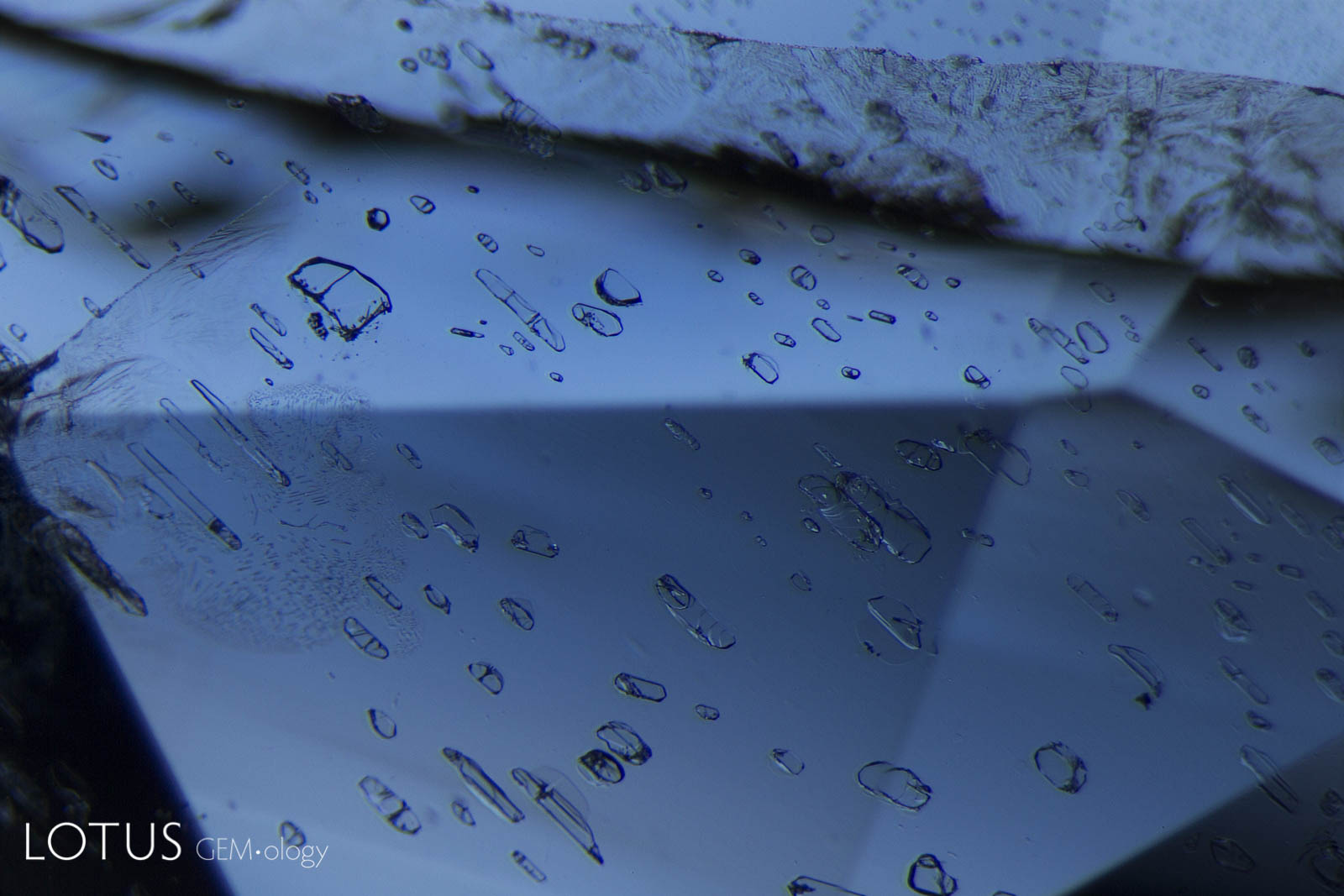
This untreated Burmese sapphire displays a fingerprint made up of well-formed negative crystals. Because high-temperature heat treatment will generally damage such cavities, undamaged negative crystals are strong evidence of the lack of high-temperature heat treatment.
Natural Sapphire •
Myanmar (Burma) •
Enhancements:
Fissure Filling with colorless Oil/resin (FF-O1) •
Lighting Conditions:
Fiber Optic: Transmitted
Photographer:
Richard W. Hughes •
Image Number:
A-001-0479-1
Internal diffusion in heat-treated Ceylon sapphire. This is caused by the bleeding of titanium into the surrounding sapphire from titanium-bearing inclusions such as rutile during high-temperature heat treatment.
Natural Sapphire •
Sri Lanka (Ceylon) •
Enhancements:
Heat (H) •
Lighting Conditions:
Fiber Optic: Oblique
Photographer:
Wimon Manorotkul •
Image Number:
A-001-0301-1
Koivula, J.I. (1987) Internal diffusion. Journal of Gemmology, Vol. 20, No. 7/8, pp. 474–477; RWHL*.
Crystals of what are probably apatite in a heated bi-color sapphire from Sri Lanka.
Natural Sapphire •
Sri Lanka (Ceylon) •
Enhancements:
Heat (H) •
Lighting Conditions:
Fiber Optic: Oblique
Photographer:
Wimon Manorotkul •
Image Number:
A-010-0150-1
Hughes, R.W. (1997) Ruby & Sapphire. Boulder, CO, RWH Publishing, 512 pp.; RWHL*.
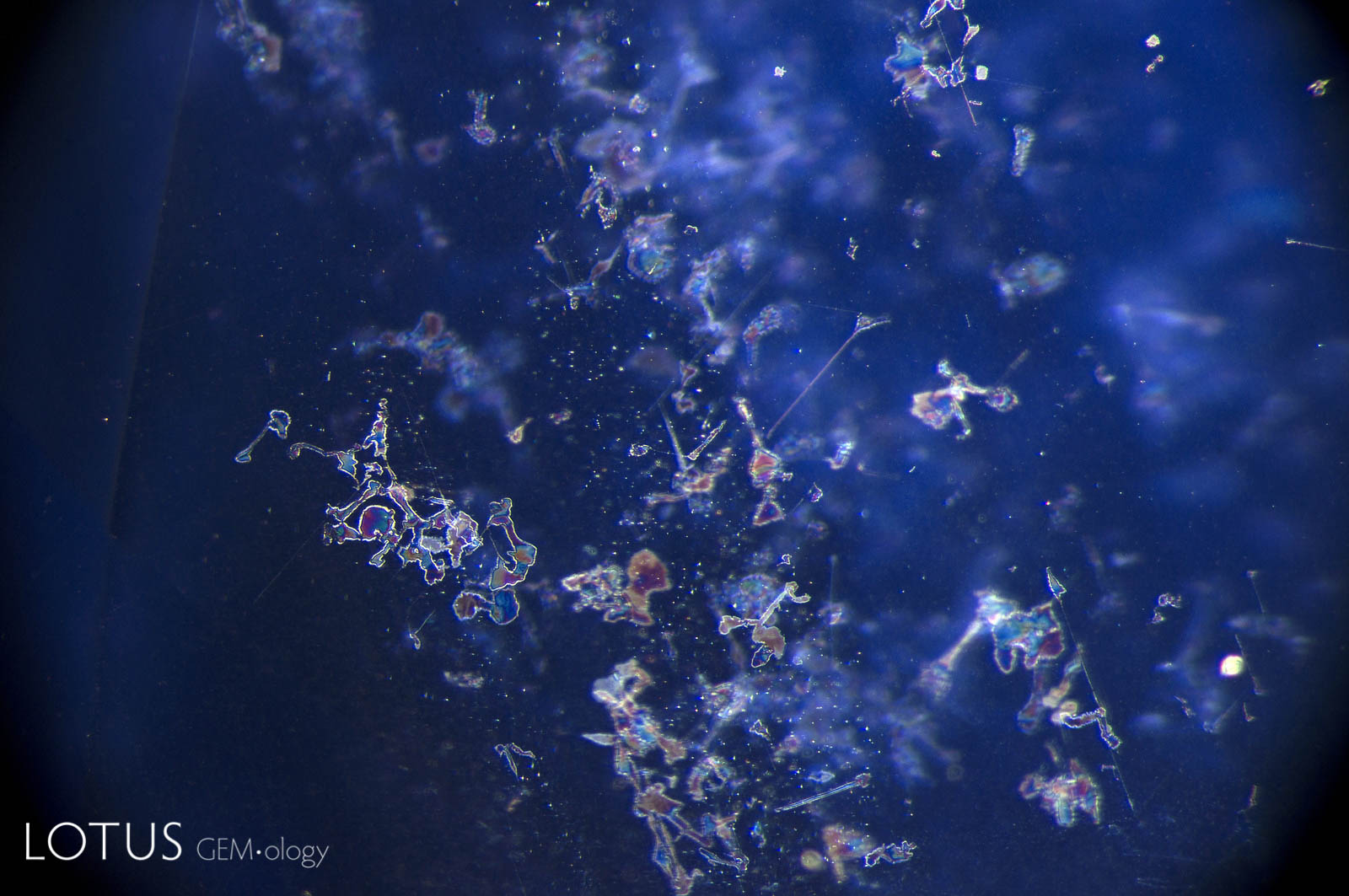
Irregular inclusions of unknown nature lying in the basal plane are seen in reflected light within this heat-treated Sri Lanka sapphire. These have sometimes been associated with beryllium diffusion, but are not diagnostic for it.
Natural Sapphire •
Sri Lanka (Ceylon) •
Enhancements:
Heat (H) •
Lighting Conditions:
Fiber Optic: Diffuse Overhead
Photographer:
Richard W. Hughes •
Image Number:
P-10129-1
http://www.ruby-sapphire.com/beryllium-treated-blue-sapphire.htm
Search the Complete Hyperion Database
Treatment can alter existing inclusions and produce new microscopic features in sapphire. These may include changes to mineral inclusions, altered rutile silk, tension fractures, healed fissures, residues and other features associated with heating, diffusion, fissure filling and other treatment processes.
Treated Sapphire Inclusion Photomicrographs
The Hyperion treated sapphire gallery includes microscopic features documented in natural sapphires subjected to treatment. Each entry identifies the recorded treatment and is accompanied by descriptive information and, where available, references to the gemological literature.
What Inclusions Can Reveal About Sapphire Treatment
Microscopic examination is an important part of detecting treatment in sapphire. The appearance and alteration of inclusions, fractures and growth features can provide evidence of treatment and, in some cases, information about the processes to which a sapphire has been subjected.
Hyperion combines inclusion photomicrography with supporting gemological information so that treatment-related features can be compared with documented examples in natural sapphire.
About Hyperion
Hyperion is the Lotus Gemology searchable inclusion database. It allows users to browse gemstone inclusions by gem type, geographic origin, treatment and keyword.