Natural Ruby Inclusions
Explore ruby inclusions in Hyperion, the Lotus Gemology inclusion database. Hyperion contains photomicrographs of inclusions and internal features in natural ruby, documented with information on geographic origin, treatment, lighting conditions, field of view, photographer and published references.
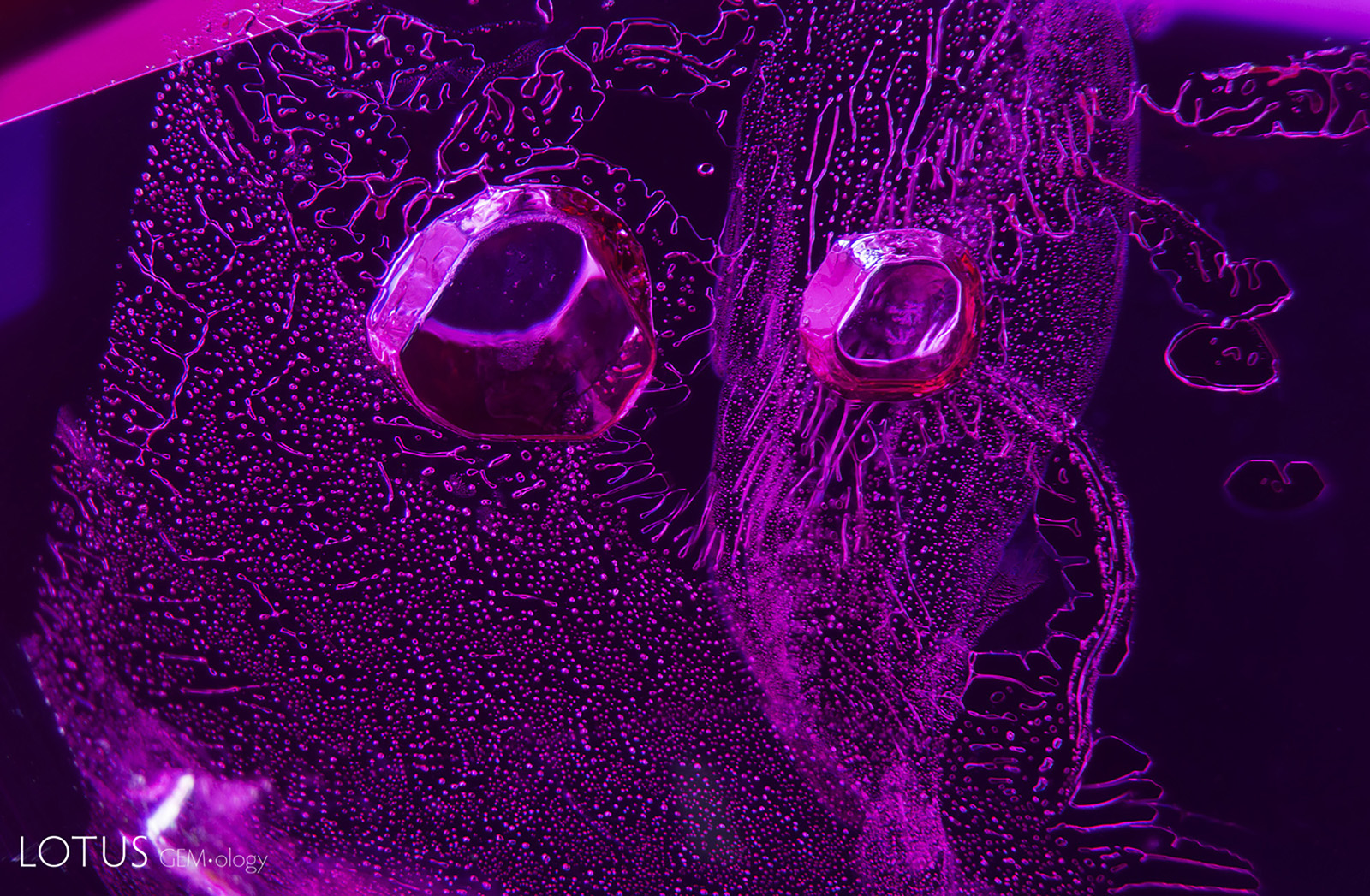
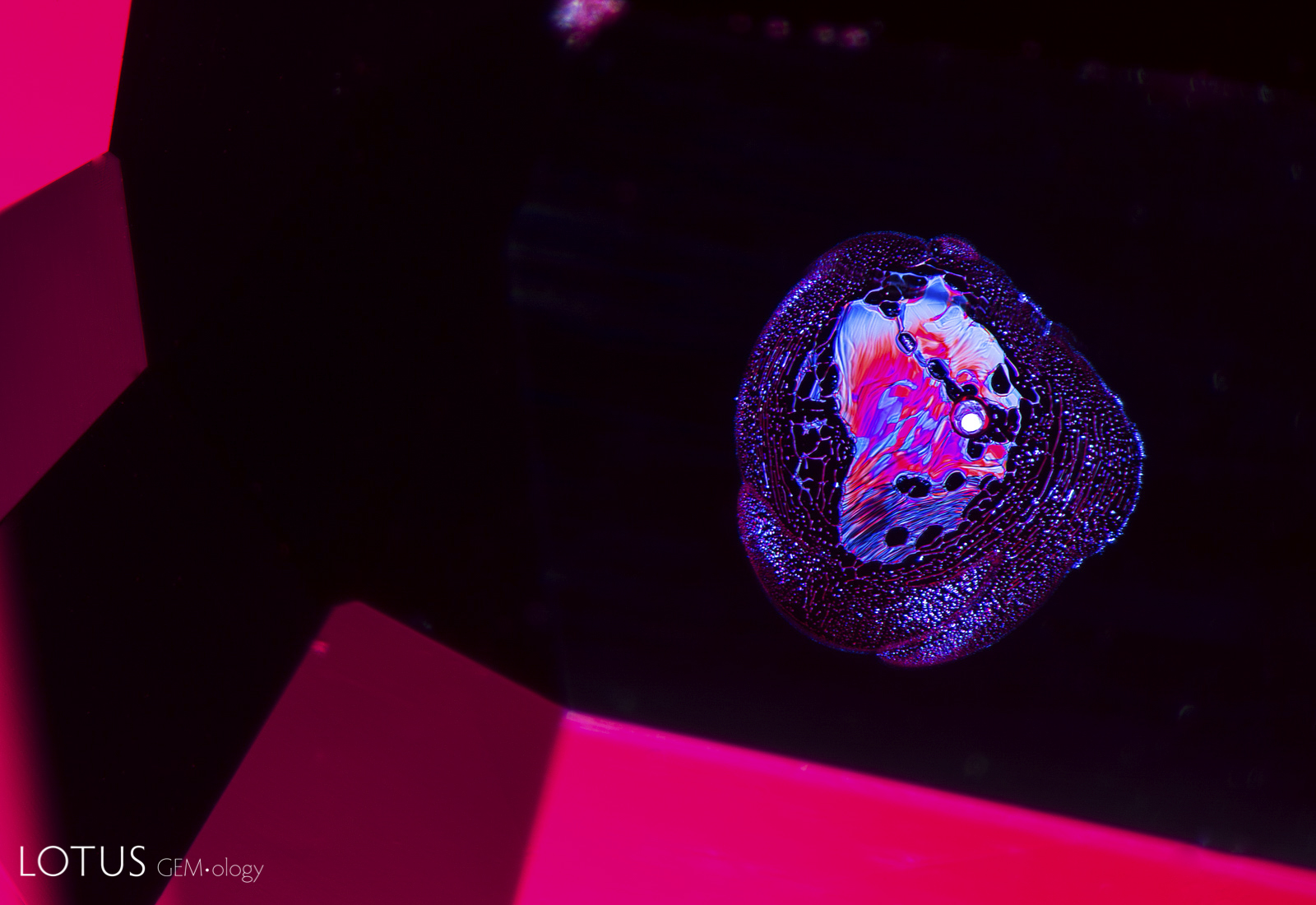
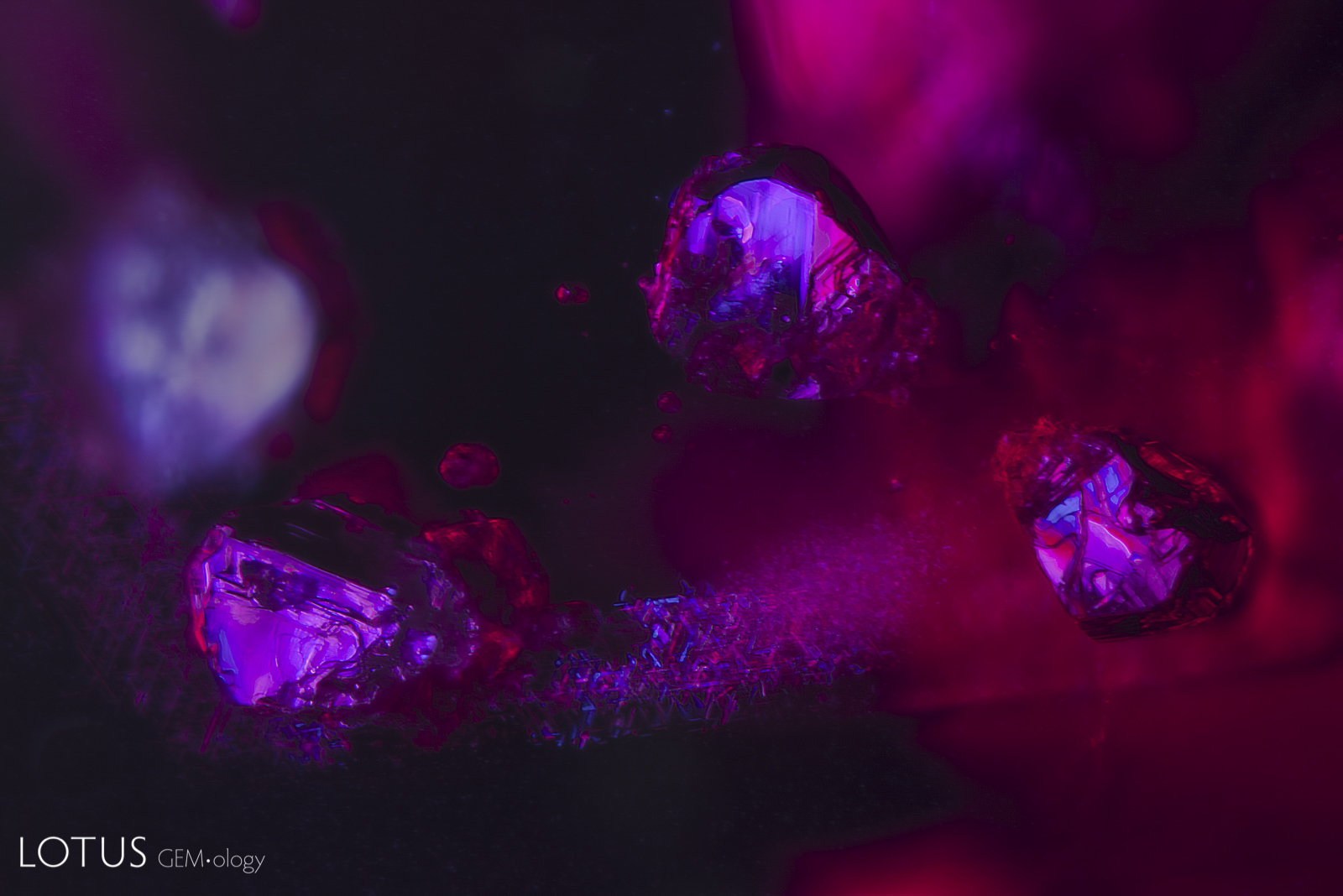
Melted crystals are surrounded by runny channels in the heat-altered fingerprints in this Thai/Cambodian ruby.
Natural Ruby •
Thailand/Cambodia •
Enhancements:
Heat (H) •
Lighting Conditions:
Dark Field + Diffuse Fiber Optic + Blue Filter
Photographer:
E. Billie Hughes •
Image Number:
A-002-6263-1
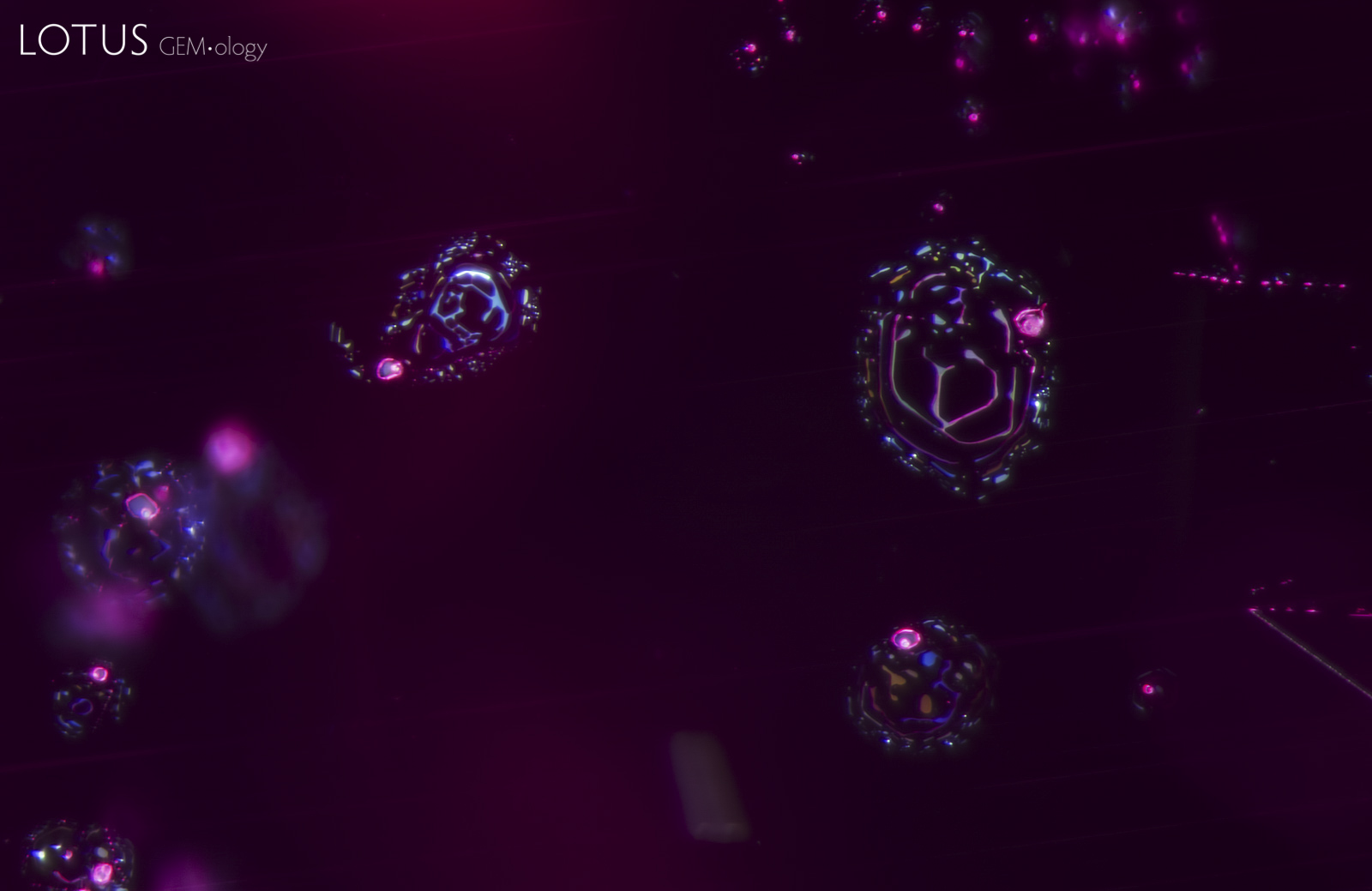
This small melted crystal surrounded by an iridescent heat-altered fingerprint is a typical inclusion in Thai/Cambodian ruby.
Natural Ruby •
Thailand/Cambodia •
Enhancements:
Heat (H) •
Lighting Conditions:
Dark Field + Diffuse Fiber Optic
Photographer:
E. Billie Hughes •
Image Number:
A-002-6261-1
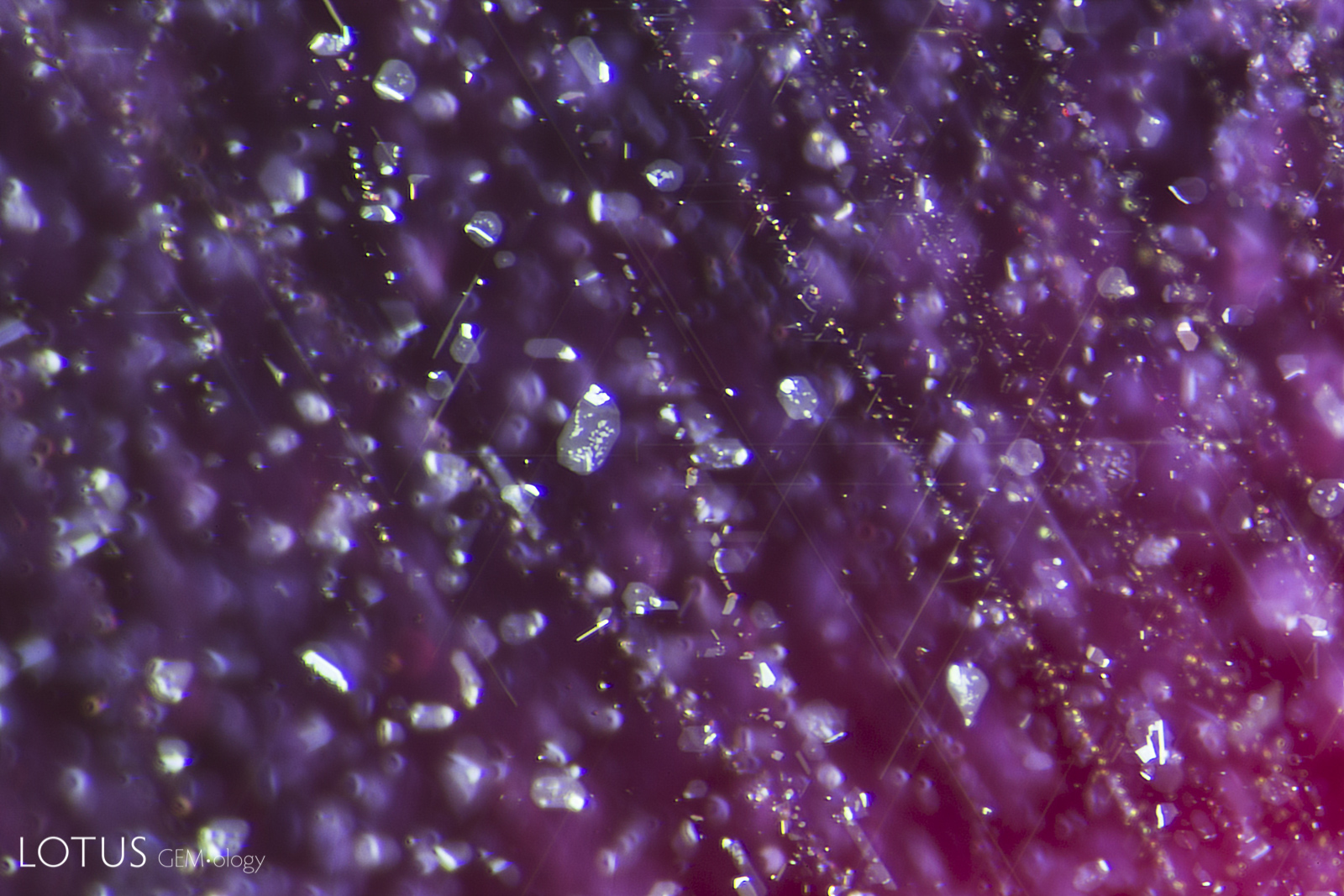
Virtually all Mozambique rubies contain exsolved rutile silk. These needles consist of two connected crystals, one a titanium-rich portion of high relief (rutile) and at the broad end, a Ti-Fe “daughter” crystal (probably ilmenite) of lower relief. When such a gem is heated, the daughter portion may start to break down, resulting in a mottled appearance on the daughter platelets.
Natural Ruby •
Mozambique •
Enhancements:
Heat (H) •
Lighting Conditions:
Fiber Optic: Diffuse Overhead
Photographer:
Richard W. Hughes •
Image Number:
A-002-5932-1
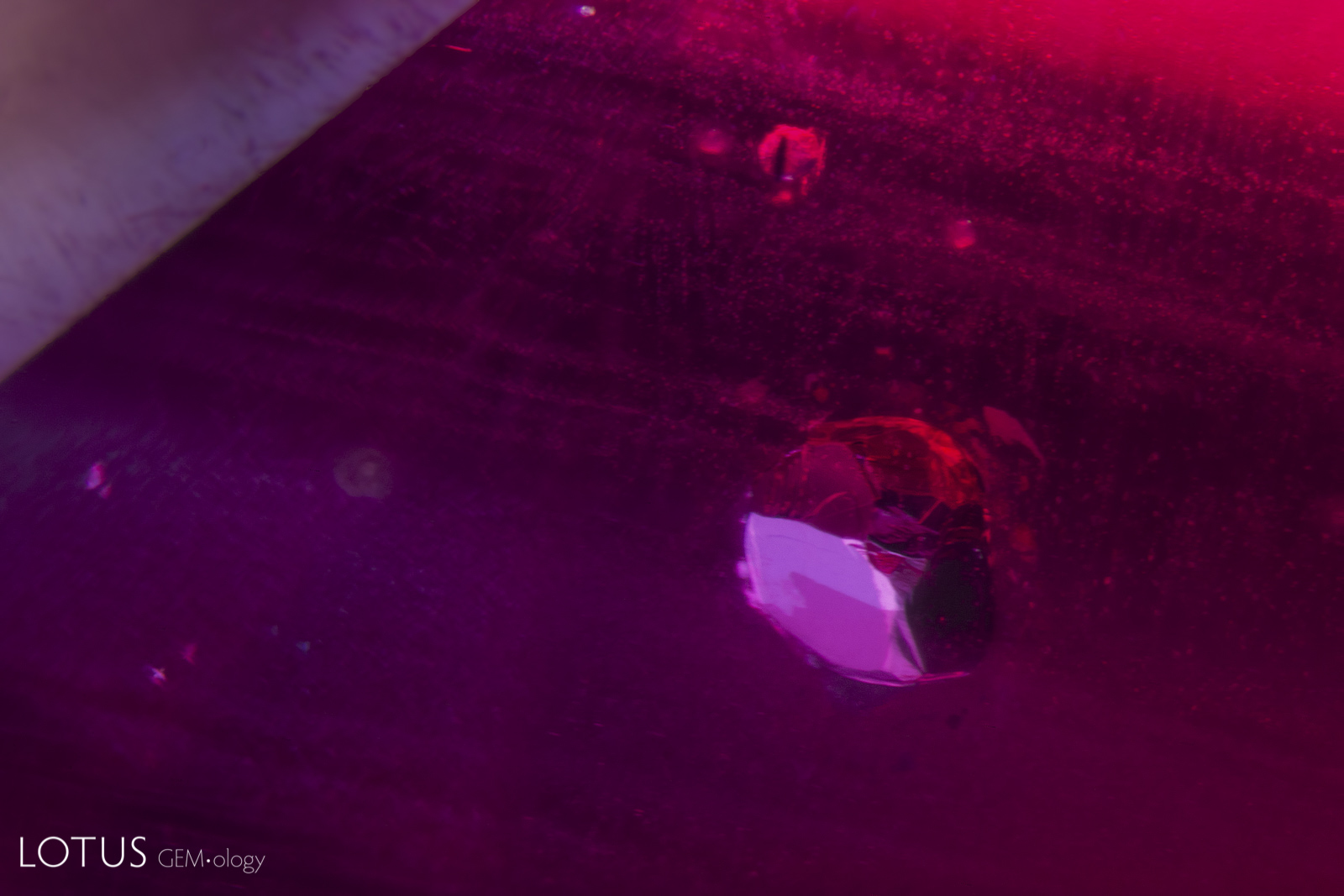
A metallic chalcopyrite crystal shines in this untreated Mozambique ruby.
Natural Ruby •
Mozambique •
Enhancements:
None Detected (None) •
Lighting Conditions:
Dark Field + Diffuse Fiber Optic
Photographer:
E. Billie Hughes •
Image Number:
A-002-5564-1
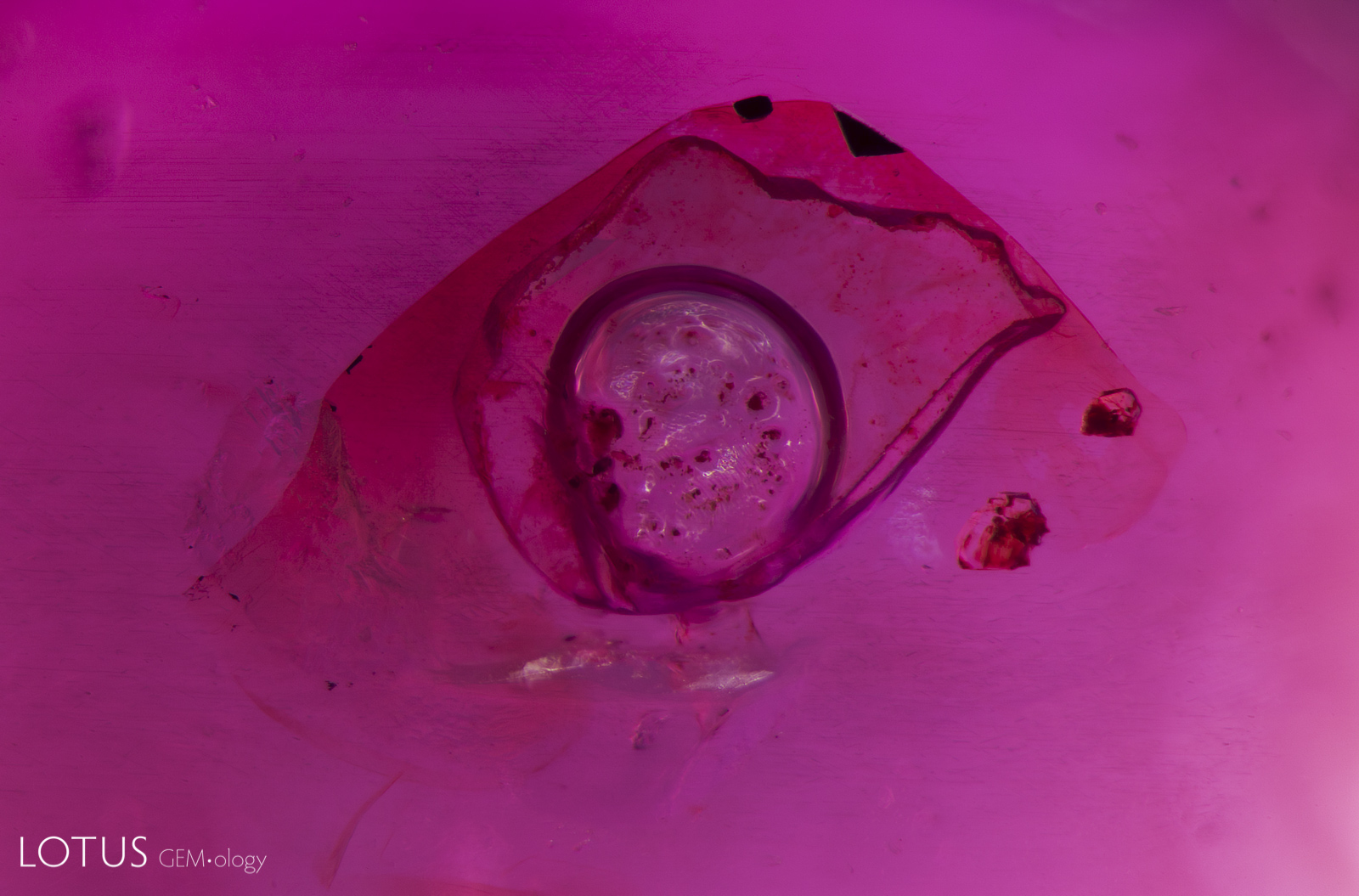
This round gas bubble is suspended in a small cavity on a Burmese ruby which has some filler substance (this could be resin or oil). Oil is often used to mask the appearance of fissures and cavities.
Natural Star Ruby •
Myanmar (Burma); Mogok/Namya •
Enhancements:
None Detected (None) •
Lighting Conditions:
Dark Field + Oblique Fiber Optic
Photographer:
E. Billie Hughes •
Image Number:
A-002-5490-1
Lotus Gemology (2015) Lotus Gemology Lab Alert for Oiled Gems. Bangkok, LotusGemology.com, RWHL*.
Intersecting growth tubes show a bubbly appearance as a result of high temperature heat treatment in this diffusion treated stone.
Natural Ruby •
Not Determinable •
Enhancements:
Heat + Diffusion of external coloring agents (H-D) •
Lighting Conditions:
Diffuse Light Field + Blue Filter
Photographer:
E. Billie Hughes •
Image Number:
A-002-5014-1
The mottled appearance of the platelets suggests this Mozambique ruby was heated.
Natural Ruby •
Mozambique •
Enhancements:
Heat (H) •
Lighting Conditions:
Dark Field + Diffuse Fiber Optic
Photographer:
E. Billie Hughes •
Image Number:
A-002-4887-1
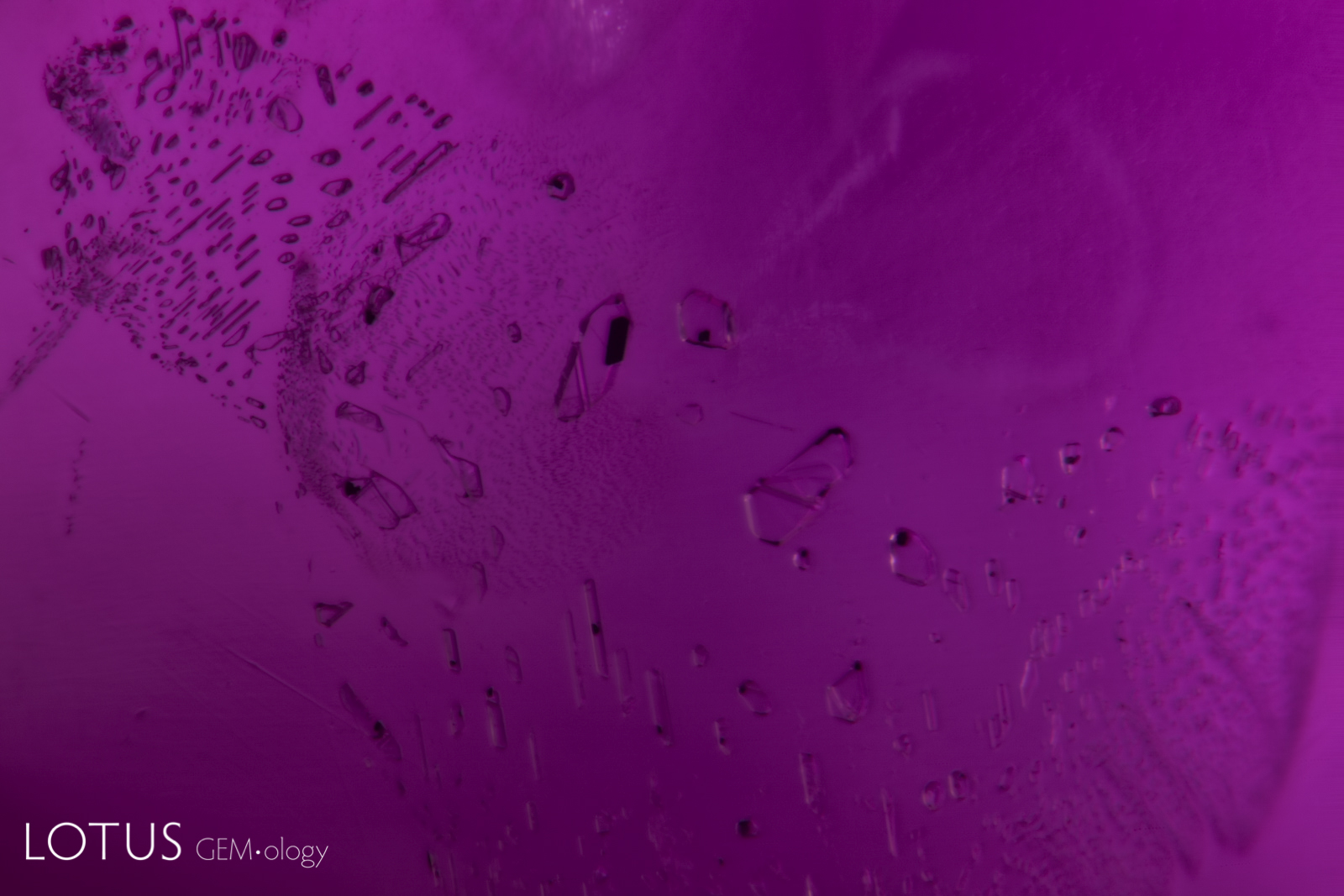
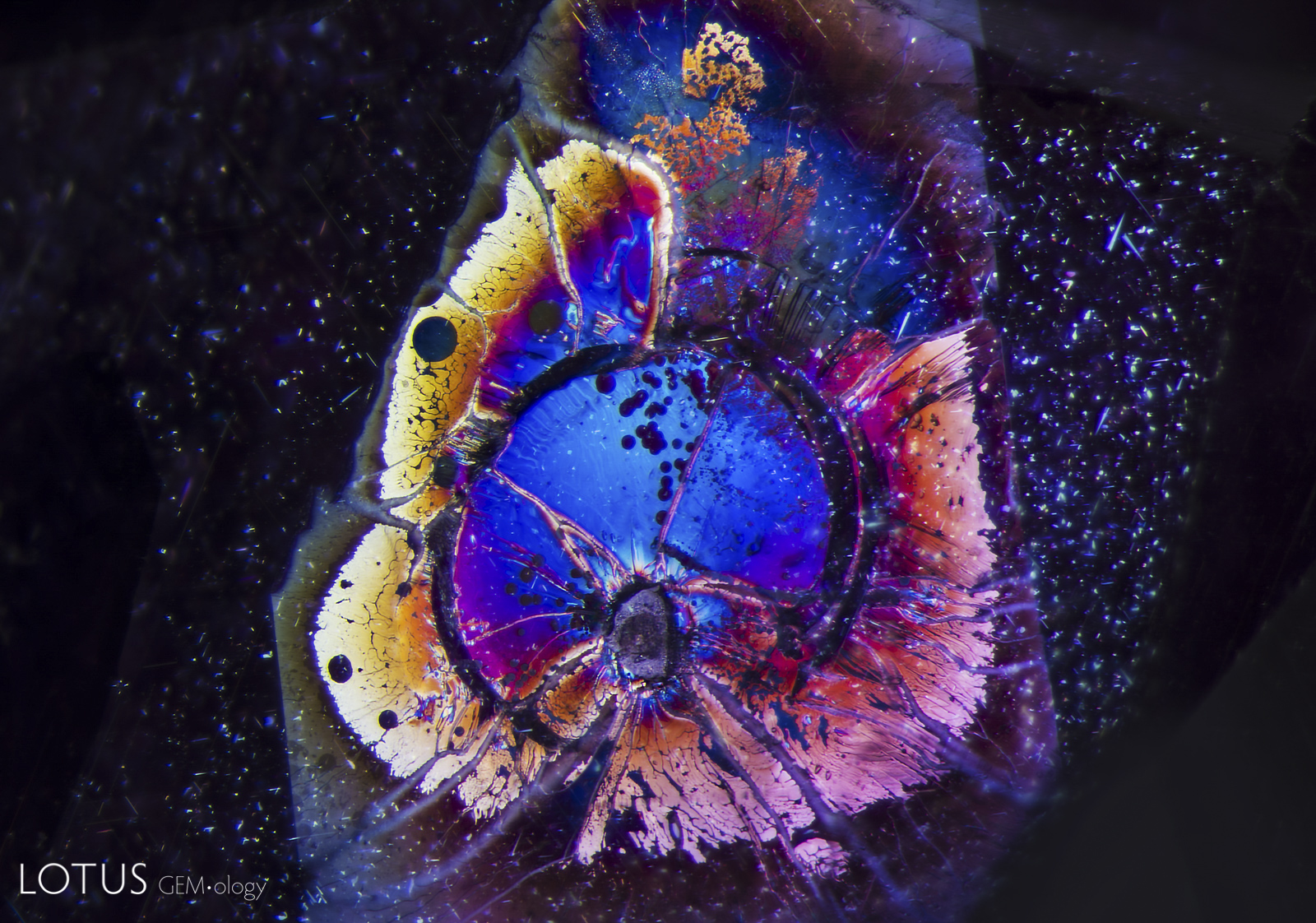
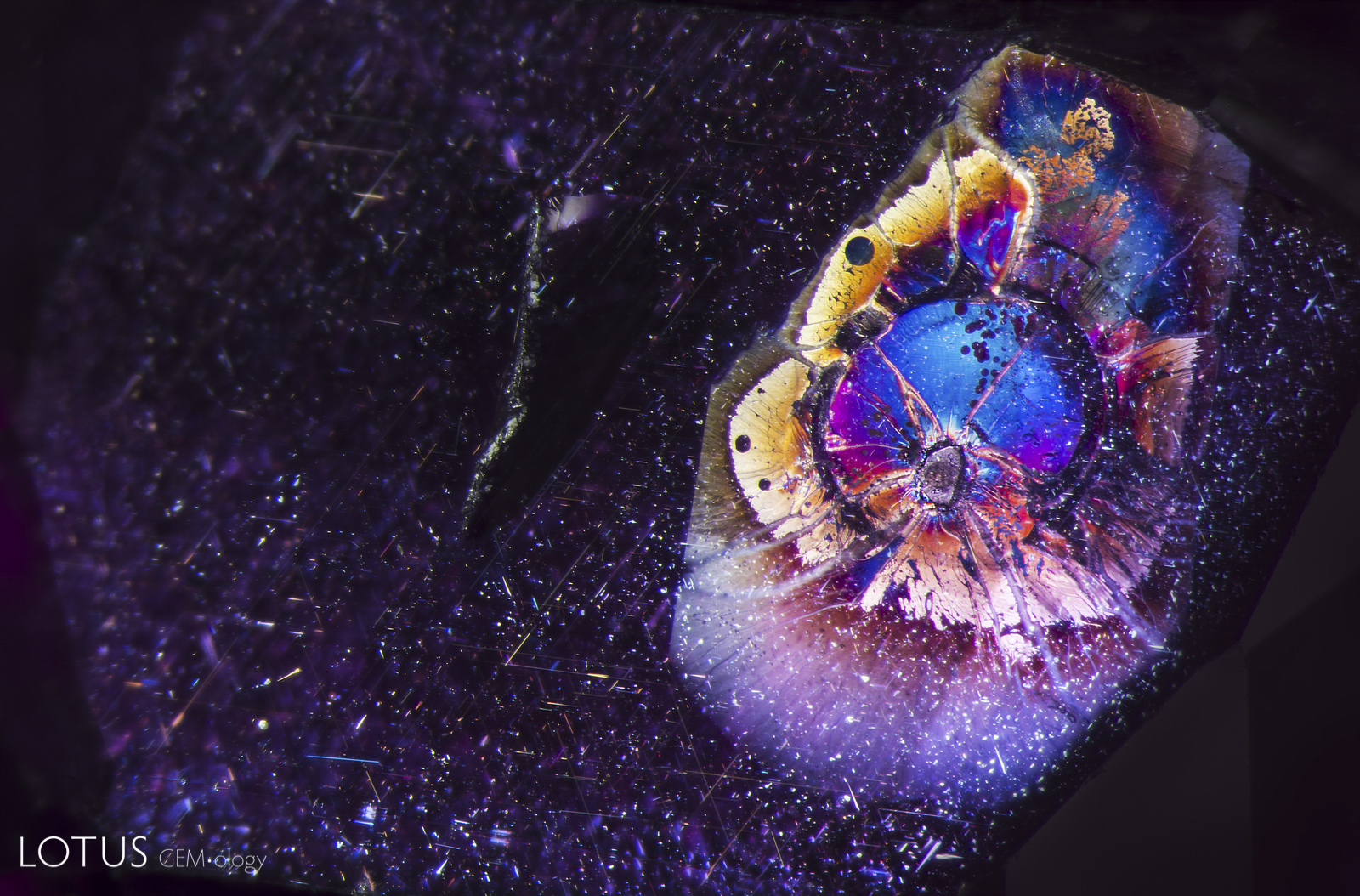
Fingerprints are simply healed fissures composed of a pattern of tiny negative crystals. In this case, we can see negative crystals that contain tiny diaspore needles, along with flat hexagonal plates of graphite. Heat treatment will damage these negative crystals and so when intact, they offer proof that the gem has not been heat treated.
Natural Ruby •
Sri Lanka (Ceylon) •
Enhancements:
None Detected (None) •
Lighting Conditions:
Dark Field
Photographer:
Richard W. Hughes •
Image Number:
A-002-4792-1
Roedder, E. (1962) Ancient fluids in crystals. Scientific American, Vol. 207, pp. 38–47; RWHL*.
Intact, undamaged crystals and fine nests of rutile silk are often seen in untreated Burmese rubies like this one.
Natural Ruby •
Myanmar (Burma); Mogok/Namya •
Enhancements:
None Detected (None) •
Lighting Conditions:
Dark Field + Diffuse Fiber Optic
Photographer:
E. Billie Hughes •
Image Number:
A-002-4777-1
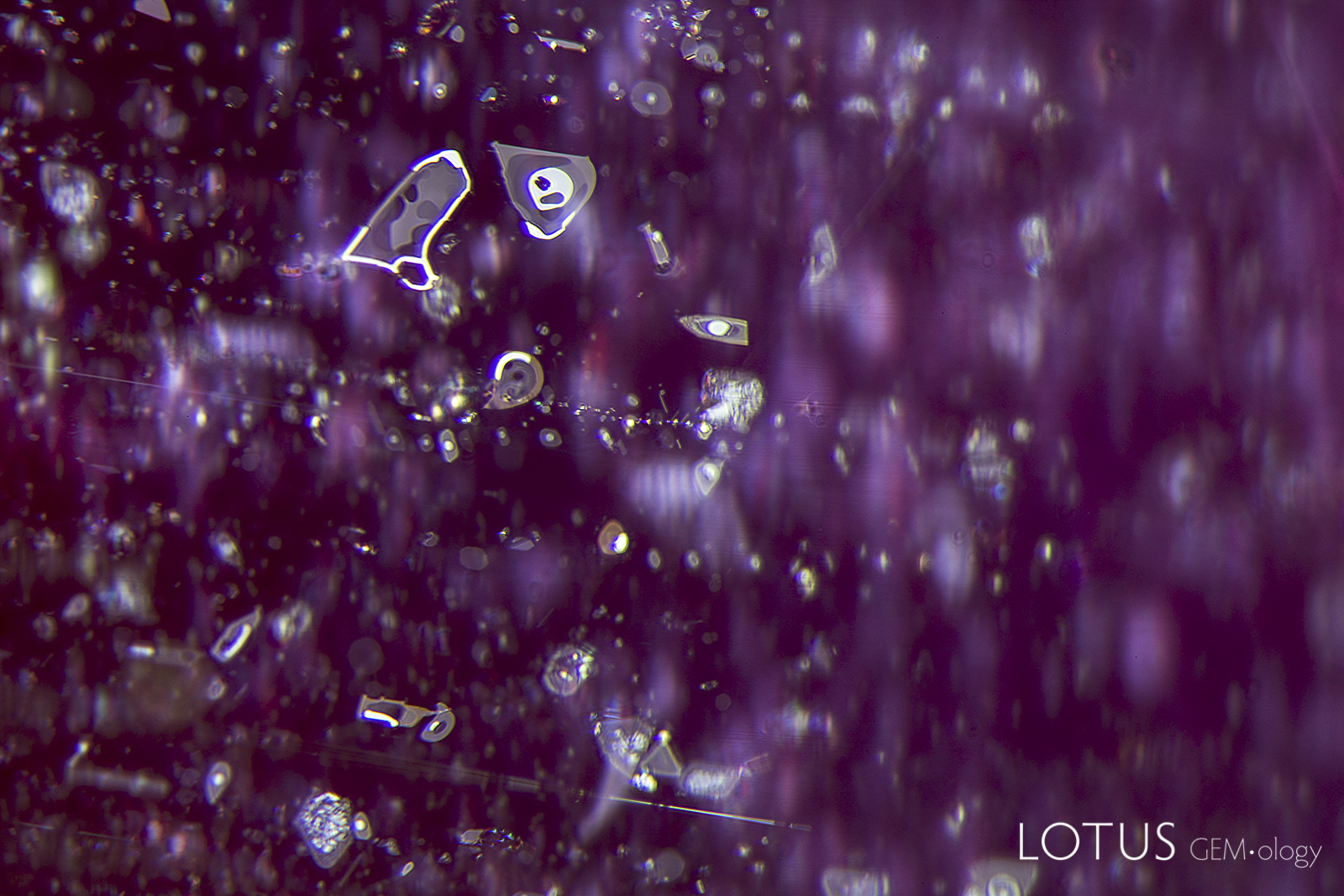
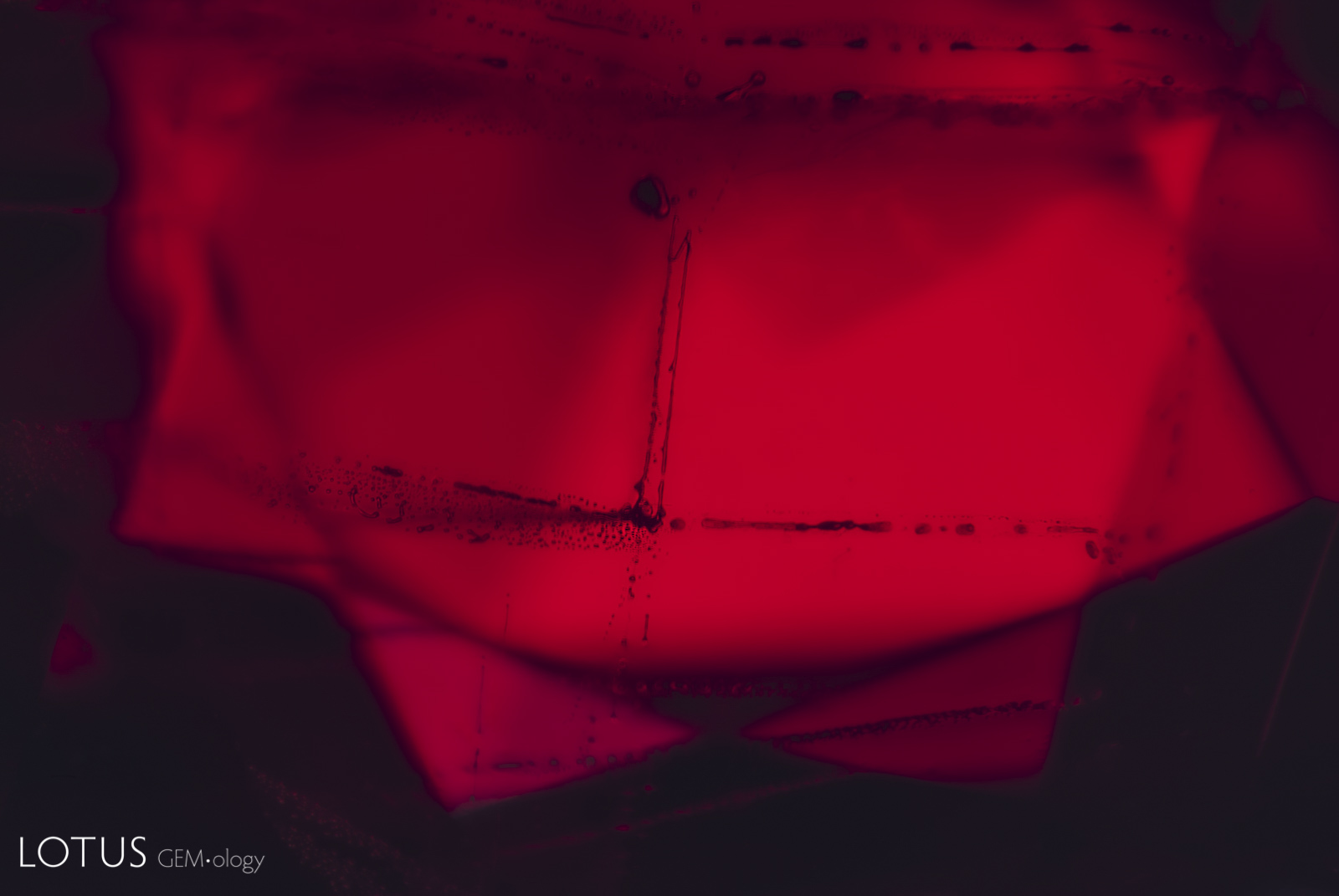
Thin films such as these are a distinctive feature of Thai/Cambodian ruby.
Natural Ruby •
Thailand/Cambodia •
Enhancements:
Heat (H) •
Lighting Conditions:
Dark Field + Diffuse Fiber Optic
Photographer:
E. Billie Hughes •
Image Number:
A-002-4601-1
A fine fissure radiates out from this crystal in a Madagascar ruby, creating a rainbow-like halo around it.
Natural Ruby •
Madagascar •
Enhancements:
None Detected (None) •
Lighting Conditions:
Fiber Optic: Diffuse Oblique
Photographer:
E. Billie Hughes •
Image Number:
A-002-4458-2
A fine fissure radiates out from this crystal in a Madagascar ruby, creating a rainbow-like halo around it.
Natural Ruby •
Madagascar •
Enhancements:
None Detected (None) •
Lighting Conditions:
Fiber Optic: Diffuse Oblique
Photographer:
E. Billie Hughes •
Image Number:
A-002-4458-1
Search the Complete Hyperion Database
Natural ruby inclusions may include mineral crystals, rutile silk, healed fissures, fluid inclusions, negative crystals, color zoning and other features formed during or after crystal growth. Such features are important to gemologists because they can provide evidence useful in identifying ruby, understanding its geological history, recognizing treatment and, in some cases, determining geographic origin.
Natural Ruby Inclusion Photomicrographs
The Hyperion natural ruby gallery includes microscopic features found in rubies from major deposits around the world. Each entry is accompanied by descriptive information and, where available, references to the gemological literature.
What Inclusions Can Reveal About Natural Ruby
Inclusions are an important part of ruby identification. Their form, composition, orientation and alteration can help gemologists distinguish natural ruby from synthetic material, recognize evidence of heat treatment, and study the geological environment in which the ruby formed.
Hyperion combines inclusion photomicrography with supporting gemological information so that individual features can be compared with documented examples from known ruby deposits.
About Hyperion
Hyperion is the Lotus Gemology searchable inclusion database. It allows users to browse gemstone inclusions by gem type, geographic origin, treatment and keyword.