Ruby & Sapphire Bibliography

Ruby & Sapphire Bibliography

Explore books, articles and historical sources on ruby, sapphire and corundum in Four Treasures, the Lotus Gemology reference database. This bibliography brings together matching records from the collection, with publication details, abstracts and cover images where available.

Ruby & Sapphire References

The list below matches the terms ruby, rubies, sapphire or corundum in the database's searchable fields. Some references discuss these gems as part of a broader subject. Linked titles take you to external links where you may find the full reference.
1–20 of 4,667 matching references

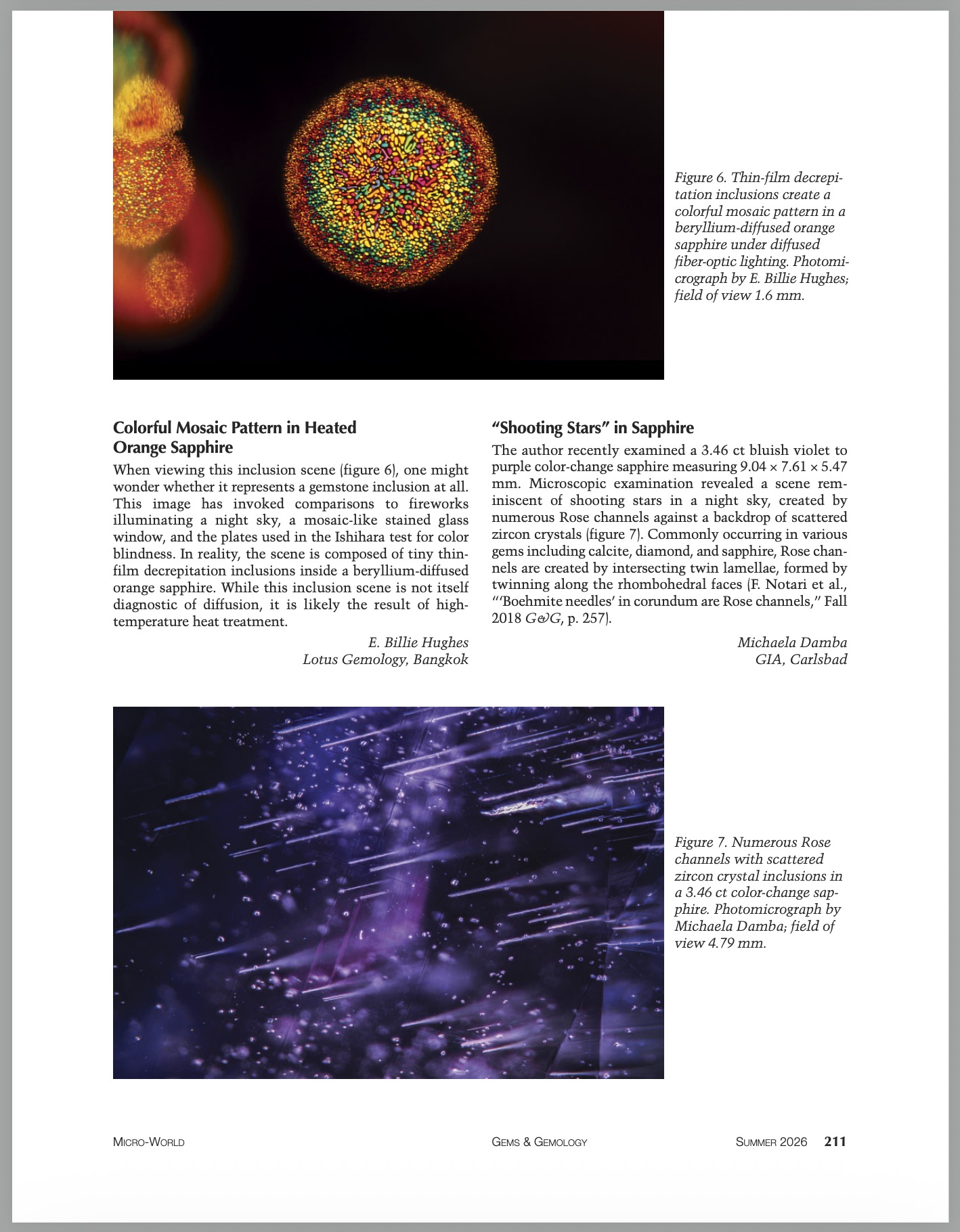
G&G Micro-World: Colorful mosaic pattern in heated orange sapphire
G&G Micro-World: Colorful mosaic pattern in heated orange sapphire

Hughes, E.B. (2026)

Journal Article · Source: Gems & Gemology · Volume: Vol. 62 · Issue: No. 2, Summer · Pages: p. 211

Abstract
The authors examined a 7.01 ct spinel reportedly from Tanzania. Under short-wave (254 nm) ultraviolet light, a small fluorescent spot was observed on the stone’s surface, caused by cut-through crystal inclusions. Micro-Raman analysis identified the inclusions as diopside, phlogopite, and edenite, forming a cluster of transparent crystals associated with a dark, opaque pyrite grain (see above, A). In reflected light, the inclusions showed luster distinct from the spinel host, with the pyrite exhibiting a golden metallic luster (see above, B). Under short-wave ultraviolet light, the crystals fluoresced in different colors: white for diopside, yellow for phlogopite, and blue for edenite (see above, C). Fluorescence from inclusions is often overlooked but can provide important identification clues.
Keywords
gems, spinel
Smoke and mirrors: Signs of smoke-treated opal

Smoke and mirrors: Signs of smoke-treated opal

Hughes, E.B. and Rattana-anan, N. (2026)

Journal Article · Source: Australian Gemmologist · Volume: Vol. 29 · Issue: No. 3, January–July · Pages: pp. 228–229

Abstract
Smoke treatment is a long-recognized method used to darken the body colour of opal and enhance its play of colour through increased contrast. With careful observation, this treatment can be identified using visual and microscopic features. The following case study documents a particularly clear example. Recently, a parcel of both white and black opals was submitted to the laboratory, declared by the client to be from Ethiopia. All displayed a play-of-colour effect, with the black opals being particularly striking as the vibrant colours stood out against the dark background (Figure 1). Upon closer examination, several features in the black opals drew the authors’ attention. Numerous small, mottled black spots were present throughout the stones. These dark discolourations appeared most prominently around small pits and scratches on the surface (Figures 2 and 3).
Keywords
gems, corundum, Myanmar.12, Burma.12, Mong Hsu
Beyond a single image: Uncovering evidence of heat treatment in a Burmese ruby
Beyond a single image: Uncovering evidence of heat treatment in a Burmese ruby

Hughes, E.B. and Rattana-anan, N. (2026)

Journal Article · Source: Australian Gemmologist · Volume: Vol. 29 · Issue: No. 3, January–July · Pages: pp. 221–223

Abstract
In a parcel of over thirty rubies from Myanmar’s Mong Hsu mines, all of the stones contained zoned clouds of cottony ‘silk’, believed to be diaspore, as seen in the sample shown in Figure 1. However, this stone stood out from the rest of the lot. In addition to the wispy diaspore silk, it also contained several bands of fine, intact silk needles, likely rutile (Figure 2). It was, in fact, the only stone in this suite to contain this type of silk. While rutile silk needles are uncommon in Mong Hsu rubies, they have been reported on rare occasions, and we have also observed them in a few samples from our laboratory’s reference collection. It is worth noting that despite the intact silk needles, this stone was determined to have been heated. Supporting evidence included other inclusions, such as melted fingerprints, as well as a clear 3309 series with 3232 in the infrared spectrum and zoned chalky short-wave ultraviolet fluorescence. This serves as an important reminder that the presence of intact silk needles does not always indicate that a stone is unheated.
Keywords
gems, corundum, Myanmar.12, Burma.12, Mong Hsu
Two types of ‘silk’ in Mong Hsu Ruby

Two types of ‘silk’ in Mong Hsu Ruby
Hughes, E.B. (2026)

Journal Article · Source: Australian Gemmologist · Volume: Vol. 29 · Issue: No. 3, January–July · Pages: p. 220

Abstract
In a parcel of over thirty rubies from Myanmar’s Mong Hsu mines, all of the stones contained zoned clouds of cottony ‘silk’, believed to be diaspore, as seen in the sample shown in Figure 1. However, this stone stood out from the rest of the lot. In addition to the wispy diaspore silk, it also contained several bands of fine, intact silk needles, likely rutile (Figure 2). It was, in fact, the only stone in this suite to contain this type of silk. While rutile silk needles are uncommon in Mong Hsu rubies, they have been reported on rare occasions, and we have also observed them in a few samples from our laboratory’s reference collection. It is worth noting that despite the intact silk needles, this stone was determined to have been heated. Supporting evidence included other inclusions, such as melted fingerprints, as well as a clear 3309 series with 3232 in the infrared spectrum and zoned chalky short-wave ultraviolet fluorescence. This serves as an important reminder that the presence of intact silk needles does not always indicate that a stone is unheated.
Keywords
gems, corundum, Tanzania.12, spinel, tanzanite, zoisite, Merelani, Mahenge, Tunduru
Hyperion – Mapping hidden worlds within stones
Hyperion – Mapping hidden worlds within stones

Hughes, E.B. (2026)

Conference Paper · Source: Twentieth Sinkankas Symposium • Gems & Minerals of Burma (Myanmar) · Publisher: Pala International · Pages: pp. 51–55

Abstract
Portfolio of photomicrographs from Lotus Gemology.
Keywords
gems, corundum, inclusions.5, Burma.12, Mogok, ruby, sapphire, spinel
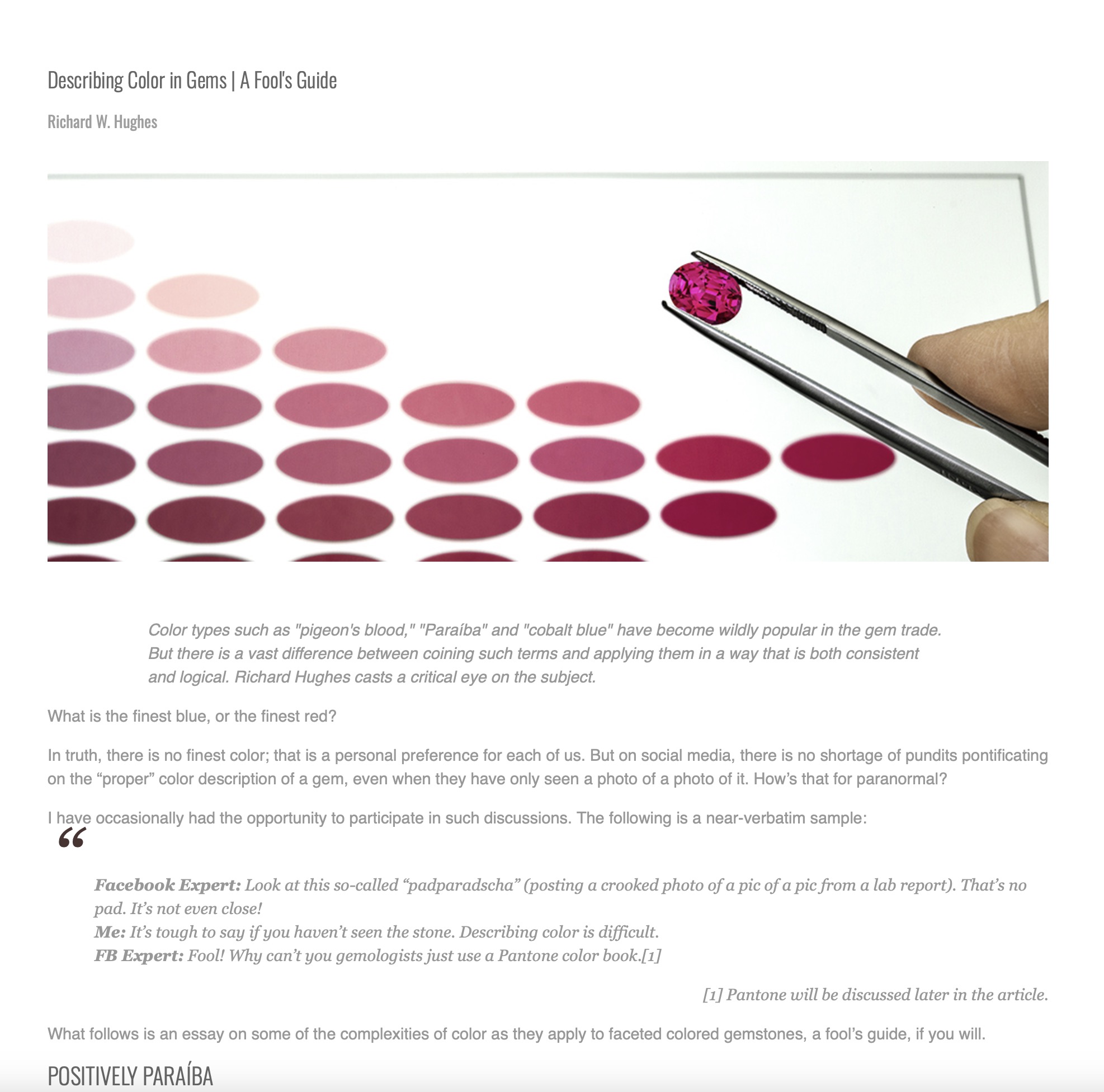
Describing color: A fool’s guide

Describing color: A fool’s guide

Hughes, R.W. (2023)

Journal Article · Source: GemGuide · Issue: May/June · Pages: pp. 1–7

Abstract
The market today is increasingly asking for color descriptors to be added to colored gemstones, especially from the labs on their reports. But talking about color comes with many complexities, making it a near-impossible task. All gemologists and gem traders should read this.
Keywords
gems, corundum, spinel, cobalt blue spinel, paraíba tourmaline, quality analysis, pigeon’s blood ruby, quality.10, color science, colored stone grading, Broken Bangle
A canary in the ruby mine: Low-temperature heat treatment experiments on Burmese ruby
A canary in the ruby mine: Low-temperature heat treatment experiments on Burmese ruby

Hughes, E.B. and Vertriest, W. (2022)

Journal Article · Source: Gems & Gemology · Volume: Vol. 58 · Issue: No. 4, Winter · Pages: pp. 400–423

Abstract
Detection of heat treatment below 1200°C in ruby and sapphire can present challenges to gemologists, as alterations to the material are often subtle. In this study, the authors heated Burmese ruby samples from Mogok, Myanmar, at temperatures ranging from 600° to 1500°C. The samples were documented using macrophotography, photomicrography of inclusions, ultraviolet fluorescence imaging, and spectroscopic analysis (Raman, ultraviolet/visible/near-infrared, and infrared) to record any changes, with a focus on features that could help detect heat treatment. A wide variety of solid inclusions, including calcite, mica, spinel, and zircon, were found in Mogok ruby. Many of those were found to be sensitive to heat treatment with regard to morphology and phase transition; their reactions varied depending on a number of factors such as size, distance from the surface, and species. Microscopic examination provided useful visual indications of heat treatment, even at lower temperatures. Raman analysis of calcite and spinel inclusions also proved valuable in providing complementary evidence of low-temperature heat treatment.
Keywords
gems, corundum, Burma.12, treatments.6, Mogok, ruby, heat treatment, inclusions.5
Gem News International: Yellow sapphires with unstable color
Gem News International: Yellow sapphires with unstable color

Hughes, E.B. (2022)

Journal Article · Source: Gems & Gemology · Volume: Vol. 58 · Issue: No. 2, Summer · Pages: pp. 259–260

Abstract
In recent years, one concern our laboratory has heard from clients and from other gemologists is the issue of color stability in corundum. Some sapphires, particularly those with a strong yellow component (including padparadscha sapphire), contain unstable color centers that may fade when the stone is exposed to light and/or heat (K. Nassau and G.K. Valente, “The seven types of yellow sapphire and their stability to light,” Winter 1987 G&G, pp. 222–231). We regularly test for this in the laboratory by conducting a fade test. Most of the sapphires we encounter that have an unstable color are unheated stones. Recently an orange sapphire of approximately 10 ct was submitted for testing (figure 1). Microscopic examination revealed signs of heat treatment, with partially dissolved silk, several glassy discoids (figure 2), and melted crystals (figure 3). A fade test was conducted by placing the stone approximately 5 cm under a 120-watt incandescent spotlight for at least an hour, and a dramatic difference was observed. The color had changed from orange to a vivid yellow (again, see figure 1). Under normal conditions, high-temperature heat treatment (at least 1200–1300°C) will bleach any color centers that might be present. This suggests that the orange color was activated after the heat treatment. It is possible that this occurred either by subjecting the stone to artificial irradiation or by placing it in sunlight (Nassau and Valente, 1987). However, we are unable to state definitively what process was used to activate the orange color. Several weeks later, we tested another yellow sapphire of approximately 18 ct (figure 4). In this instance, the stone’s features were consistent with those of unheated sapphire. Again, a fade test was performed with the 120-watt spotlight, which mildly warmed the stone to approximately 100°C. Its color also faded after the fade test, and the owner was informed. The owner explained that they had previously put the sapphire in direct sunlight, which would have brought the color back to what was likely its stable state, a process described by Nassau. To test this, we placed the stone in direct sunlight for 30 minutes, and the more intense yellow color did return. Unfortunately, placing the gem in direct sunlight behind a window in our office did not have the same effect. Upon seeing the color return after being placed in direct sunlight, we decided to try another fade test, this time using a light source that would not warm up the stone. An XD-300 xenon light source was used, and the stone was placed within 5 cm of a fiber-optic light guide connected to this source. After exposure to this cooler light source for over an hour, the color did not fade. This suggests that the mild heat of the 120-watt spotlight, not just the light, faded the stone’s color and that the more intense yellow color displayed after exposure to sunlight could indeed be considered the stable color. We have since adjusted our fade tests to be light-only by switching to this cooler light source to avoid the heat generated with the 120-watt spotlight. Our experience with these sapphires has been a fascinating case study in the color stability of yellow sapphire. This example reinforces the importance of considering all possibilities when testing stones in the laboratory. We do not fully understand the exact causes of these changes, and much remains to be learned.
Keywords
gems, corundum, treatments.6, Sri Lanka.12
Gem News International: Ruby • An expensive mistake
Gem News International: Ruby • An expensive mistake

Hughes, R.W. (2022)

Journal Article · Source: Gems & Gemology · Volume: Vol. 58 · Issue: No. 2, Summer · Pages: pp. 258–259

Abstract
Gemologists at Bangkok’s Lotus Gemology recently received a 6 ct ruby for identification. Declared to be an untreated ruby from Mozambique, the stone featured a superb vivid red color of the type often termed “pigeon’s blood” in the trade. As it was also of good clarity and well cut, it was clear we were dealing with a gem of potentially high value. The UV-Vis-NIR spectrum was typical for ruby or synthetic ruby. The infrared spectrum revealed peaks at 3309 and 3232 cm⁻¹. The 3232 cm⁻¹ peak generally indicates that a stone has been subjected to artificial heat treatment. We proceeded to examine the gem under the microscope, where we found two additional pieces of evidence of heat treatment. The first feature was rutile silk typical of rubies from East Africa. In these stones, the silk consists of high-relief needles of rutile with attached unidentified “daughter” crystals of another substance of lower relief. In heat-treated stones, the daughter crystals will sometimes show partial breakdown (“GIA Lab Reports on Low-Temperature Heat Treatment of Mozambique Ruby,” GIA Research News, April 28, 2015). Small areas of breakdown in the form of irregular white patches were found in this stone (figure 1). But the most obvious evidence of heat treatment was the presence of spall marks (figure 2), which are solidified droplets of material on the surface that melted or were dissolved during heating. These spall marks across the stone showed that the ruby had been heated after cutting and had not been repolished following treatment. We can only guess at the reasons for heating such a valuable gem, but there is no doubt that this particular roll of the dice was a losing gamble because the potential improvement in appearance was slight compared to the large price difference between untreated and heated ruby. We concluded that this was a heat-treated Mozambique ruby.
Keywords
gems, corundum, treatments.6, Mozambique.12
Gem News International: Black star sapphire with dual treatments
Gem News International: Black star sapphire with dual treatments

Hughes, R.W., Hughes, E.B. and Manorotkul, W. (2020)

Journal Article · Source: Gems & Gemology · Volume: Vol. 56 · Issue: No. 3, Fall · Pages: pp. 442–443

Abstract
A large black star sapphire was brought in for testing. Two large pits on the base were carefully filled with brown dopping varnish. After removal of the varnish with alcohol, it was found that a large portion of the base had been filled with a lead glass.
Keywords
gems, corundum, Thailand.12, treatments.6
FTIR in gem testing • A pink sapphire lesson
FTIR in gem testing • A pink sapphire lesson

Hughes, R.W. and Manorotkul, W. (2020)

Journal Article · Source: Journal of the Gemmological Association of Hong Kong · Volume: Vol. 41 · Pages: pp. 61–63

Abstract
A discussion of DRIFTS vs the Beam Condenser FTIR attachment in the testing of pink sapphire. The DRIFTS accessory is generally much better at unmasking heat treatment in ruby and sapphire.
Keywords
gems, corundum, color.4, treatments.6
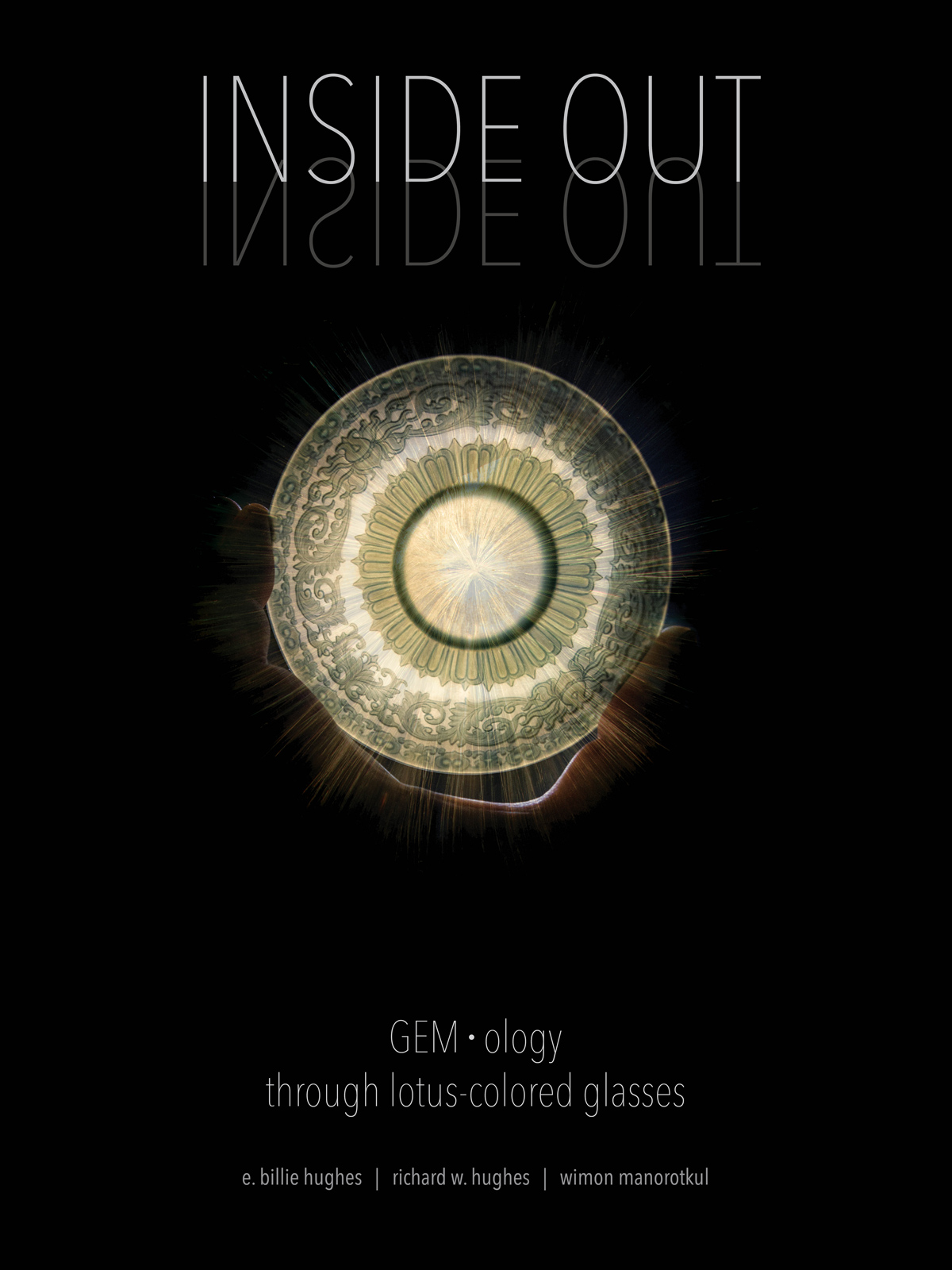
Inside Out: GEM•ology Through Lotus-Colored Glasses
Inside Out: GEM•ology Through Lotus-Colored Glasses

Hughes, E.B., Hughes, R.W. and Manorotkul, W. (2020)

Book · Publisher: Lotus Publishing · Pages: 152 pp. · Language: In English and Simplified Chinese

Abstract
From the dawn of time, precious stones have both attracted and fascinated humans in ways that few other items could. For while objects of desire are found throughout the natural world, physical beauty is too often ephemeral. From the allure of a man, woman, flower or butterfly, through the fleeting moments of a sunset, there is little that lasts and practically nothing that can be passed down to our descendants. The exception is precious stones. Not only are they the most durable creations of Mother Nature, but their visual splendor is truly eternal. This book presents a completely fresh approach to the subject. Dubbing it humanistic gemology, the authors take readers around the world, showing the places they have explored in their search for gems, along with the people and cultures encountered along the way. Within this volume, remarkable photographs of the human world are interwoven with images of the microscopic realm of the gems themselves. In a lifetime beset by time control, where living is broken into ever smaller bits, as you browse through these pages suddenly you plunge into a domain of frozen time, one that affords vistas of millions or even billions of years. For jewels offer not just superficial beauty, but a window on the primordial forces that birthed both our planet and universe. Inside Out – Gemology Through Lotus-Colored Glasses represents a fascinating new direction for gemology, linking the external and internal worlds of precious stones for the first time.
Keywords
gems, gemology, ruby, sapphire, jade, inclusions.5, corundum, garnet, quartz, China, Tibet, Thailand, Burma, Myanmar, Sri Lanka, Inner Mongolia, India, Madagascar, Mozambique, Tanzania, Rwanda, East Africa, Greenland
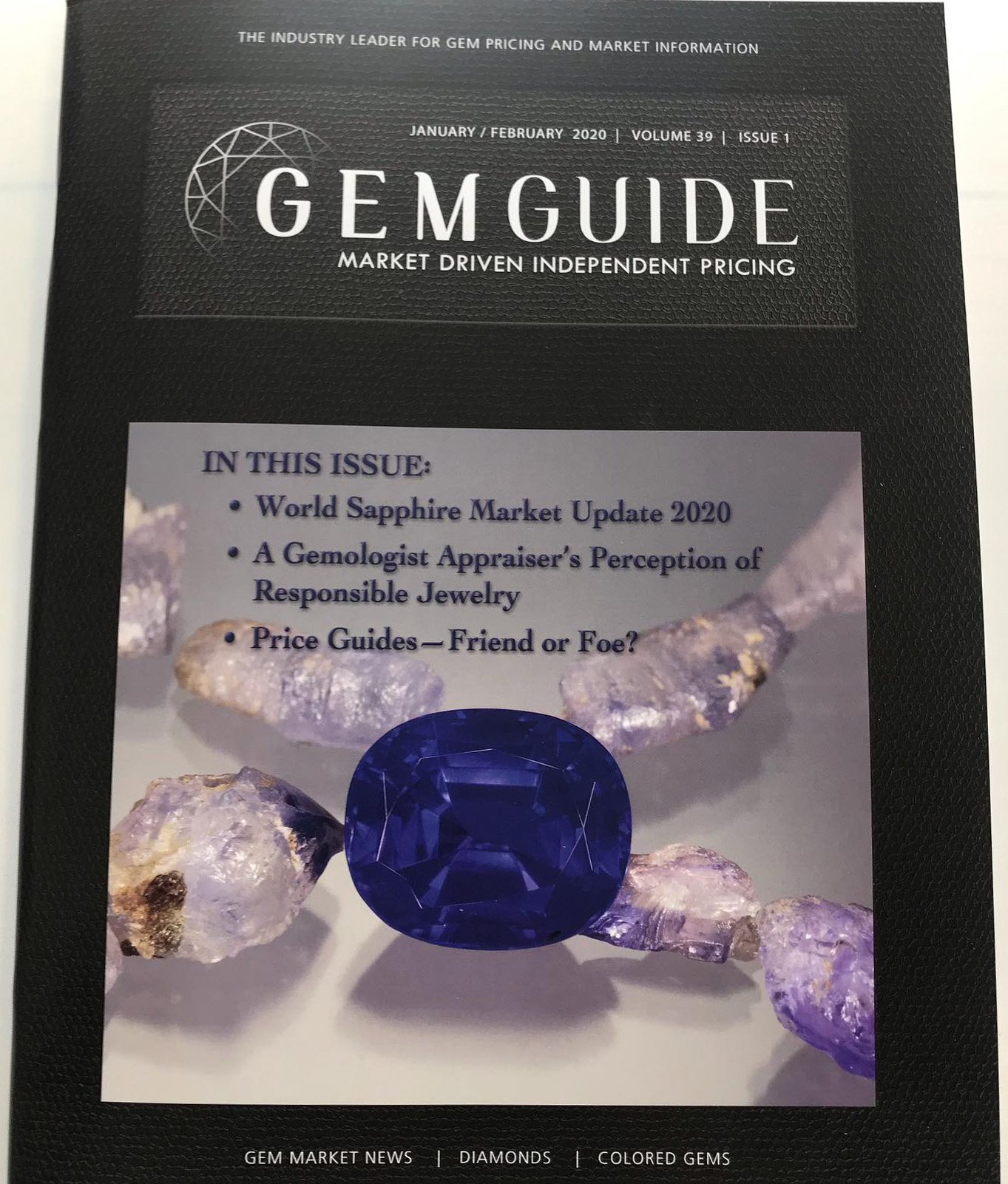
World sapphire market update

World sapphire market update

Hughes, R.W. and Hughes, E.B. (2020)

Journal Article · Source: GemGuide · Volume: Vol. 39 · Issue: No. 1 · Pages: pp. 4–10

Abstract
The world sapphire market has changed dramatically in the past 40 years. In this article, the authors review the famous sources of the past and look at the current situation in sapphire around the globe.
Keywords
gems, corundum, sapphire, Burma.12, Australia.12, Sri Lanka.12, Madagascar.12, India.12, Kashmir, China, quality.10
Gem News International: Oiled tanzanite
Gem News International: Oiled tanzanite

Hughes, R.W. (2020)

Journal Article · Source: Gems & Gemology · Volume: Vol. 56 · Issue: No. 4, Winter · Pages: pp. 552–553

Abstract
Over the past five years, gemologists at Bangkok’s Lotus Gemology have seen increasing numbers of what we might call “non-traditionally” oiled gems. This is particularly true of, but not limited to, Burmese gems such as ruby, sapphire, and spinel. But it is important to note that any gem with surface-reaching fissures can be oiled, often with dramatic improvements in apparent clarity. Cuprian and rubellite tourmalines are also frequently enhanced in this way. Recently we received a faceted tanzanite weighing more than 100 carats for testing. As is our practice for non- emeralds exhibiting fissure-filling clarity enhancement, we photograph the gem and then allow the client to re-submit the stone after filler removal. Figure 18 clearly shows the dramatic effect that fissure filling with oil/resin can have on gems such as tanzanite, even where the refractive index of the filler does not closely match that of the gem.
Keywords
gems, zoisite, tanzanite, treated tanzanite
G&G Microworld: Unmasking emerald filler
G&G Microworld: Unmasking emerald filler

Hughes, E.B. (2020)

Journal Article · Source: Gems & Gemology · Volume: Vol. 56 · Issue: No. 4, Winter · Pages: pp. 527–528

Abstract
Of the treatments we see in the laboratory, fissure filling has become one of the most ubiquitous. We have observed this treatment in a variety of stones, including emerald, ruby, sapphire, spinel, tourmaline, tanzanite, and more. The filling of fractures minimizes their appearance, making the gems appear cleaner. Fissure filling can be detected with a variety of methods. One way is to examine the infrared spectrum, where some fillers display distinctive peaks. Another is the hot point method, where oils can be observed leaking out in droplets. Some fillers are unmasked with simple observation in the microscope, because they display flashes of color or because they include visible dyes.
Keywords
gems, beryl, emerald, emerald fillers, LW UV torch
Hidden Treasure • Collecting books about ruby & sapphire
Hidden Treasure • Collecting books about ruby & sapphire

Hughes, R.W. (2020)

Journal Article · Source: IGR • Italian Gemological Review · Volume: Vol. 50 · Issue: No. 10 · Pages: pp. 52–62

Abstract
A discussion of the literature of ruby and sapphire (corundum), with particular emphasis on the most collectible books covering ruby and sapphire around the world.
Keywords
gems, corundum, ruby, sapphire, books

Exploring the Literature of Corundum

Ruby and sapphire research spans mineralogy, gem deposits, identification, treatments, synthesis and the history of the gem trade. Older publications can also be useful for tracing terminology, early observations and accounts of mining localities. Publication dates and the original source should be considered when using historical descriptions.

For an introduction to collecting books on this subject, read Ruby & Sapphire Books: Collecting the Literature of Corundum.

About Four Treasures

Four Treasures is Lotus Gemology's freely accessible gemological reference database. Use the full database to search by author, title or keyword and explore literature on gemology, mineralogy, jewelry and related fields. Where available, hyperlinks on titles may lead directly to the full publication.

Search the Complete Four Treasures Database