Treated Emerald Inclusions
Explore treated emerald inclusions in Hyperion, the Lotus Gemology inclusion database. Hyperion contains photomicrographs of inclusions and internal features in natural emeralds that have undergone treatment, documented with information on geographic origin, treatment, lighting conditions, field of view, photographer and published references.
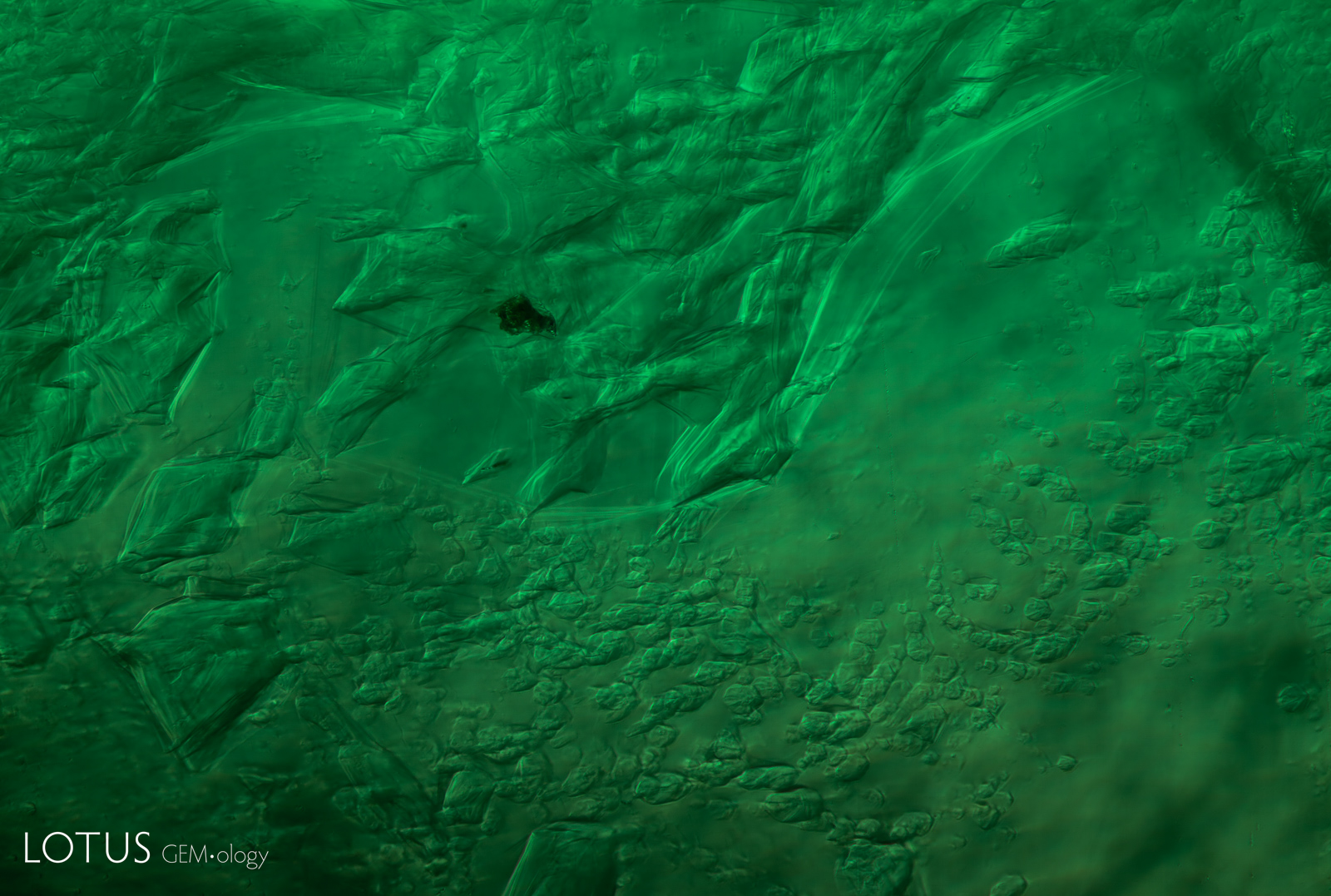
The “gota de aceite” (Spanish for “drop of oil”) effect in this Colombian emerald creates an appearance similar to a topographic map. Sample courtesy Nasser S. Altayyar.
Natural • Beryl • Beryl • Emerald •
Colombia •
Enhancements:
Fissure Filling with colorless Oil/resin (FF-O3) •
Lighting Conditions:
Dark Field
Photographer:
E. Billie Hughes •
Image Number:
R-005-9114-1
• Field of View = 3.6mm
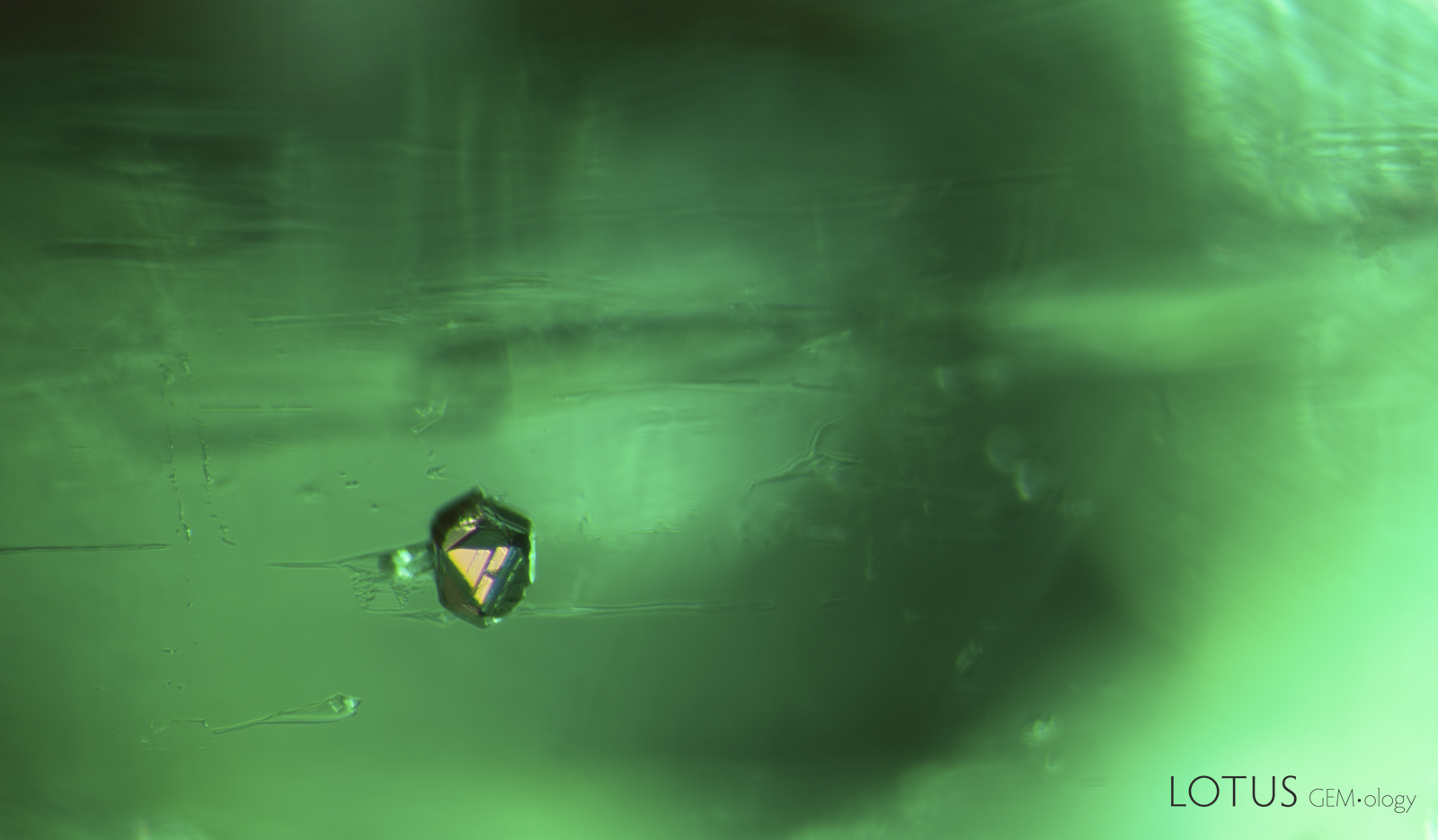
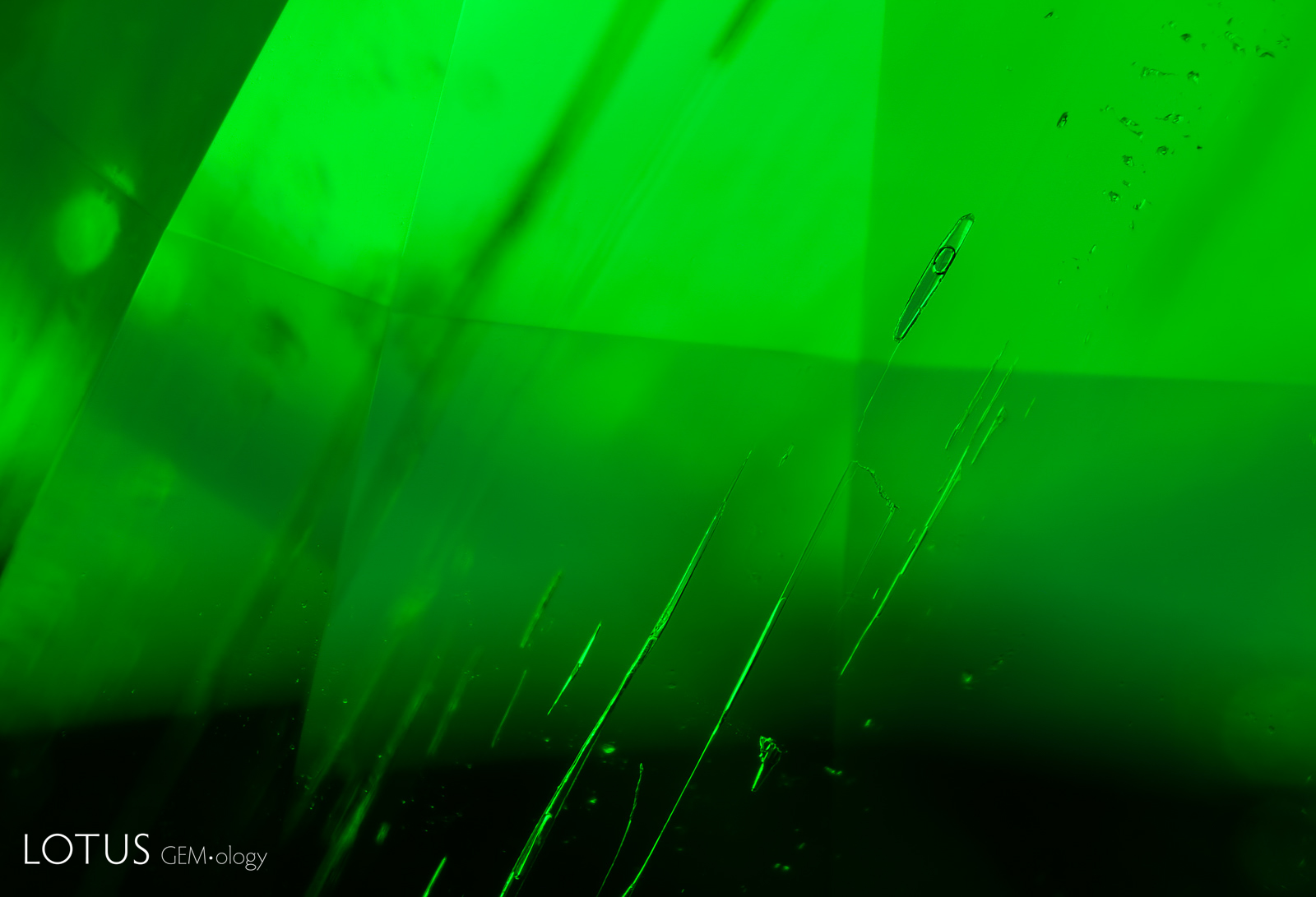
Pyrite (an iron sulfide) is a common mineral inclusion found in emeralds from Colombia and some other sources. The defined crystal faces of this crystal indicate a syngenetic origin. However, pyrite is known to form slightly earlier than emerald in most conditions. Its formation reduces the iron content that is available in the emerald-mineralizing fluid; hence the low iron content of most Colombian emeralds.
Natural • Beryl • Beryl • Emerald •
Colombia •
Enhancements:
Fissure Filling with colorless Oil/resin (FF-O2–3) •
Lighting Conditions:
Dark Field
Photographer:
Kaylan Khourie •
Image Number:
A-005-6992-2
• Field of View = 2.2mm
• Magnification = 8x
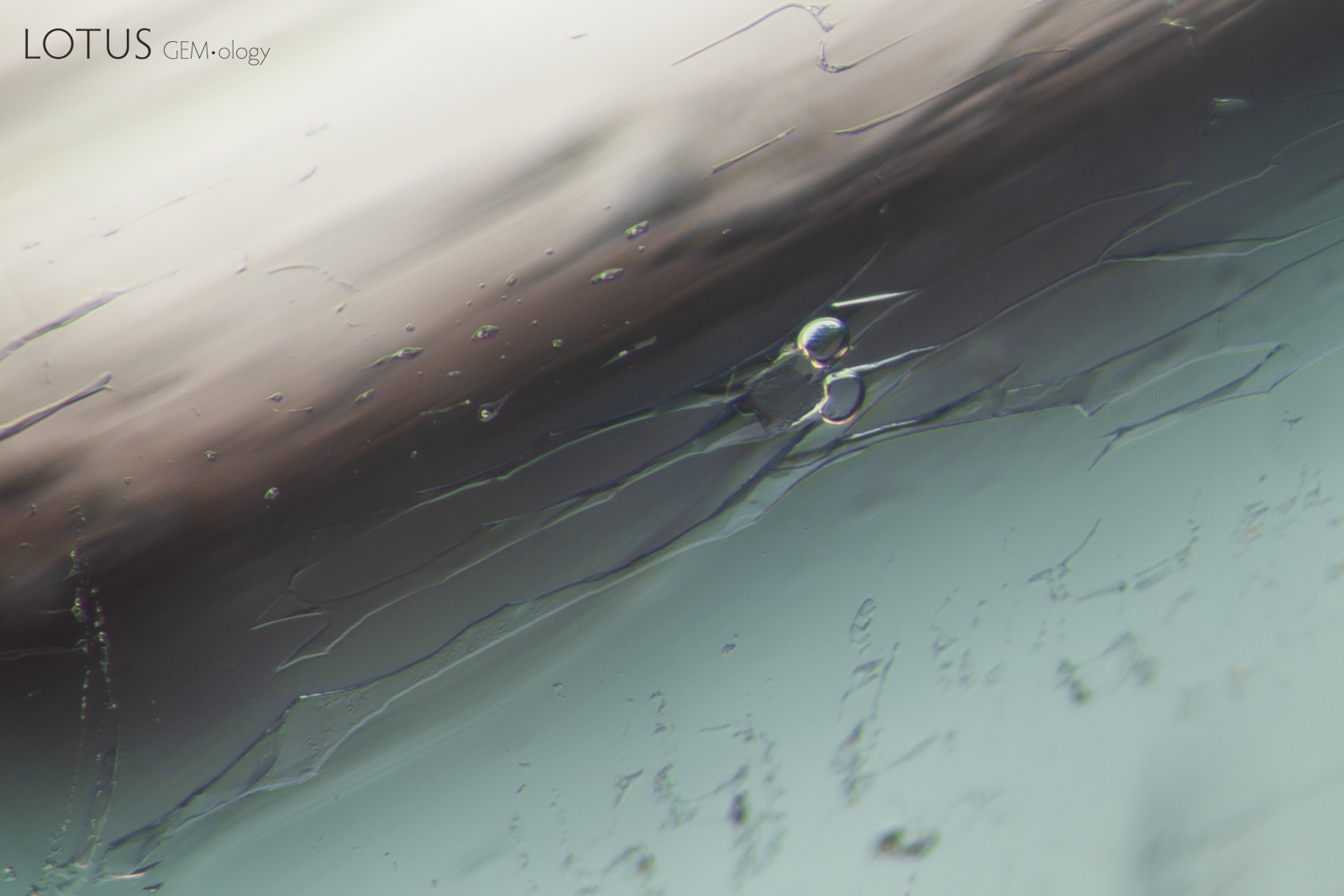
Although previously thought to be exclusive to Colombian emeralds, three-phase fluid inclusions can be found in emeralds from many different deposits. In this example, two fluid inclusions appear to be sharing one solid phase (probably halite).
Natural • Beryl • Beryl • Emerald •
Colombia •
Enhancements:
Fissure Filling with colorless Oil/resin (FF-O2–3) •
Lighting Conditions:
Diffuse Dark Field
Photographer:
Kaylan Khourie •
Image Number:
A-005-6992-1
• Field of View = 1.6mm
• Magnification = 11x
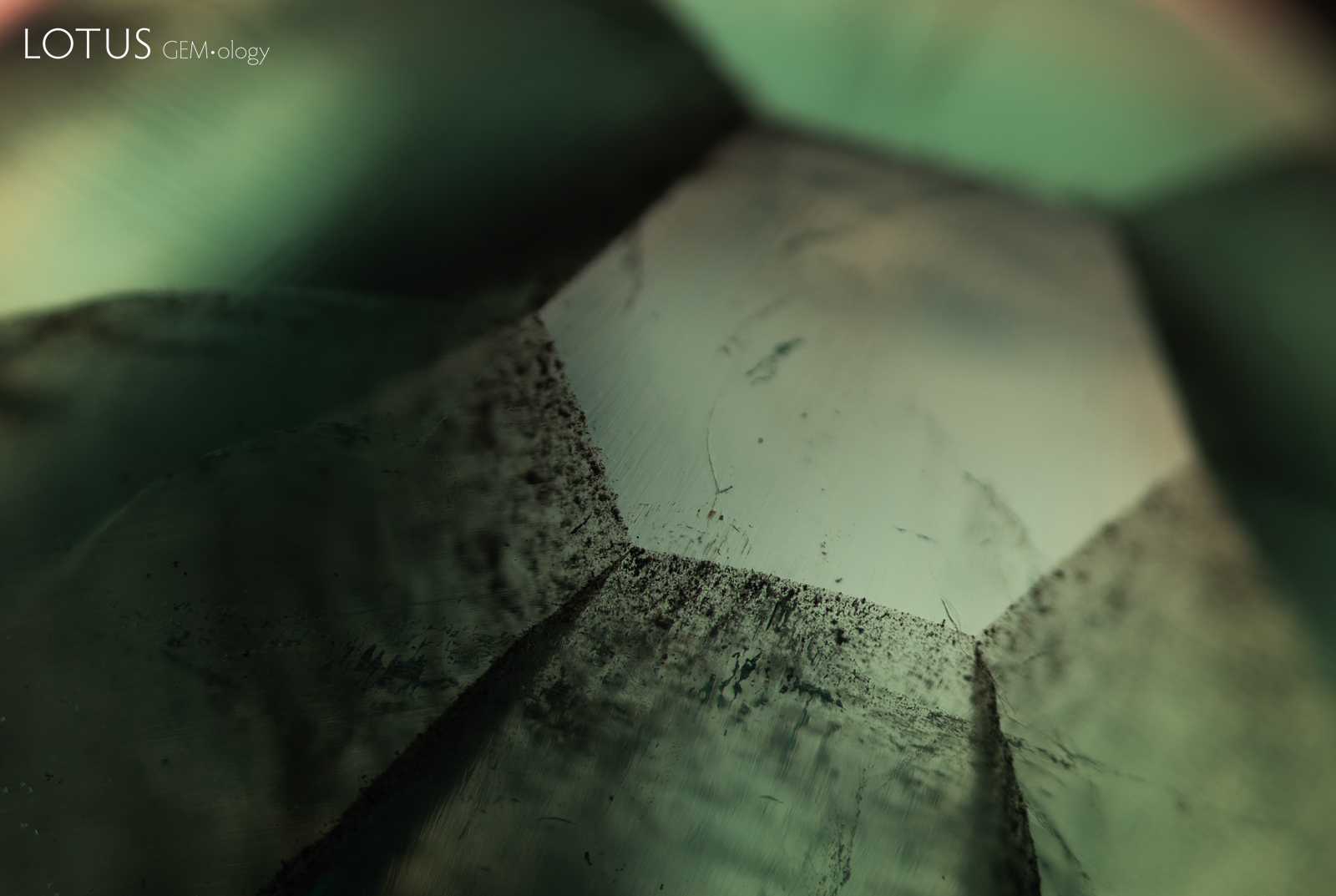
Trapiche emeralds display a striking hexagonal pattern, a reflection of the crystal’s underlying symmetry.
Natural • Beryl • Trapiche • Beryl • Emerald •
Colombia •
Enhancements:
Fissure Filling with colorless Oil/resin (FF-O2) •
Lighting Conditions:
Light Field (Transmitted Light)
Photographer:
E. Billie Hughes •
Image Number:
A-005-6893-1
• Field of View = 5.2mm
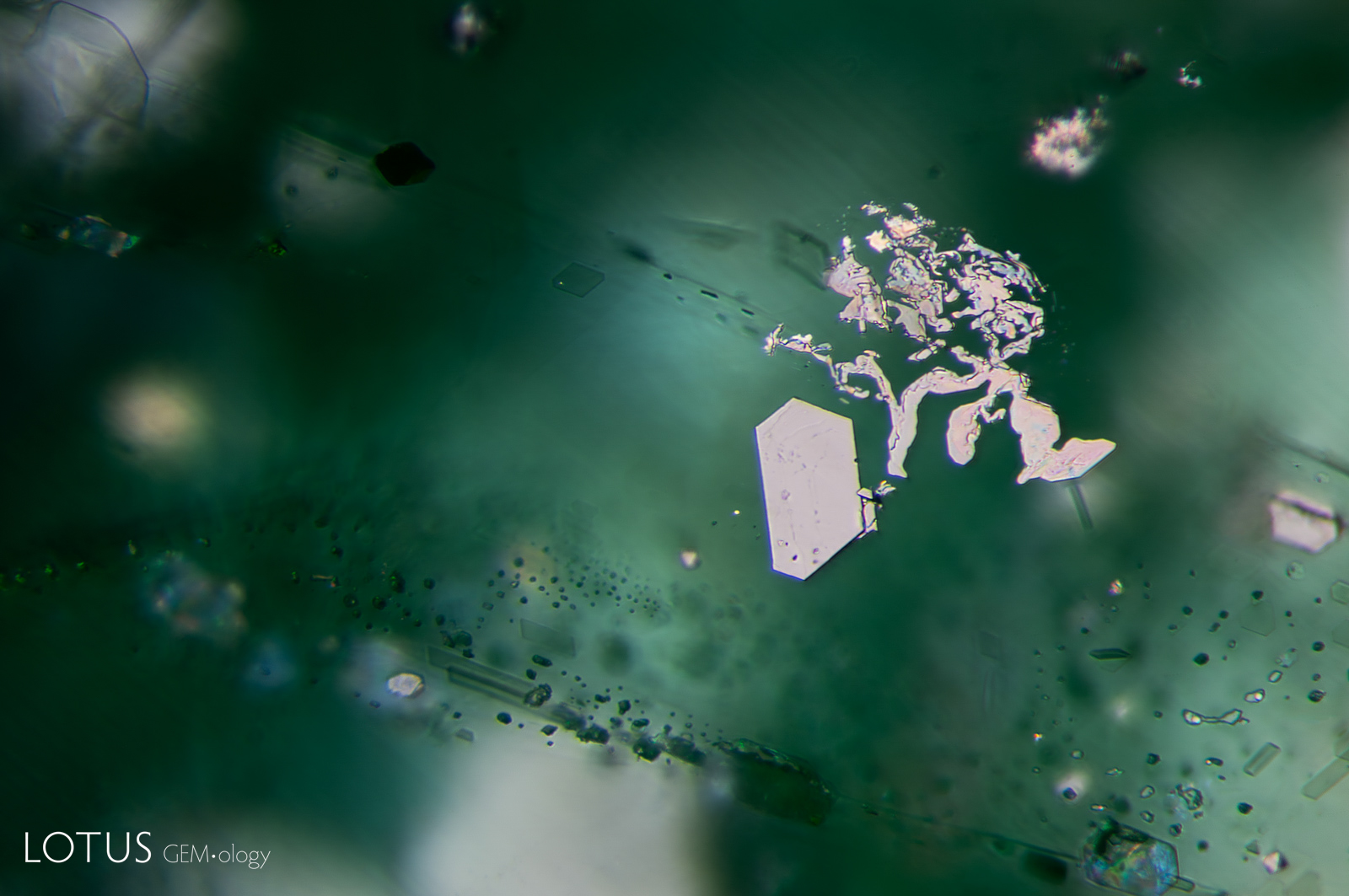
The whomping willow. Iridescent platelets (likely ilmenite), one hexagonal and others irregular in shape, stand out against a verdant background in this Zambian emerald.
Natural • Beryl • Beryl • Emerald •
Zambia •
Enhancements:
Fissure Filling with colorless Oil/resin (FF-O1–2) •
Lighting Conditions:
Dark Field + Diffuse Fiber Optic
Photographer:
E. Billie Hughes •
Image Number:
A-005-6469-2
• Field of View = 2.5mm
Iridescent platelets (likely ilmenite) stand out against a verdant background in this Zambian emerald. Some areas of the platelets have dendritic shapes, while others show hexagonal forms.
Natural • Beryl • Beryl • Emerald •
Zambia •
Enhancements:
Fissure Filling with colorless Oil/resin (FF-O1–2) •
Lighting Conditions:
Dark Field + Diffuse Fiber Optic
Photographer:
E. Billie Hughes •
Image Number:
A-005-6469-1
• Field of View = 1.6mm
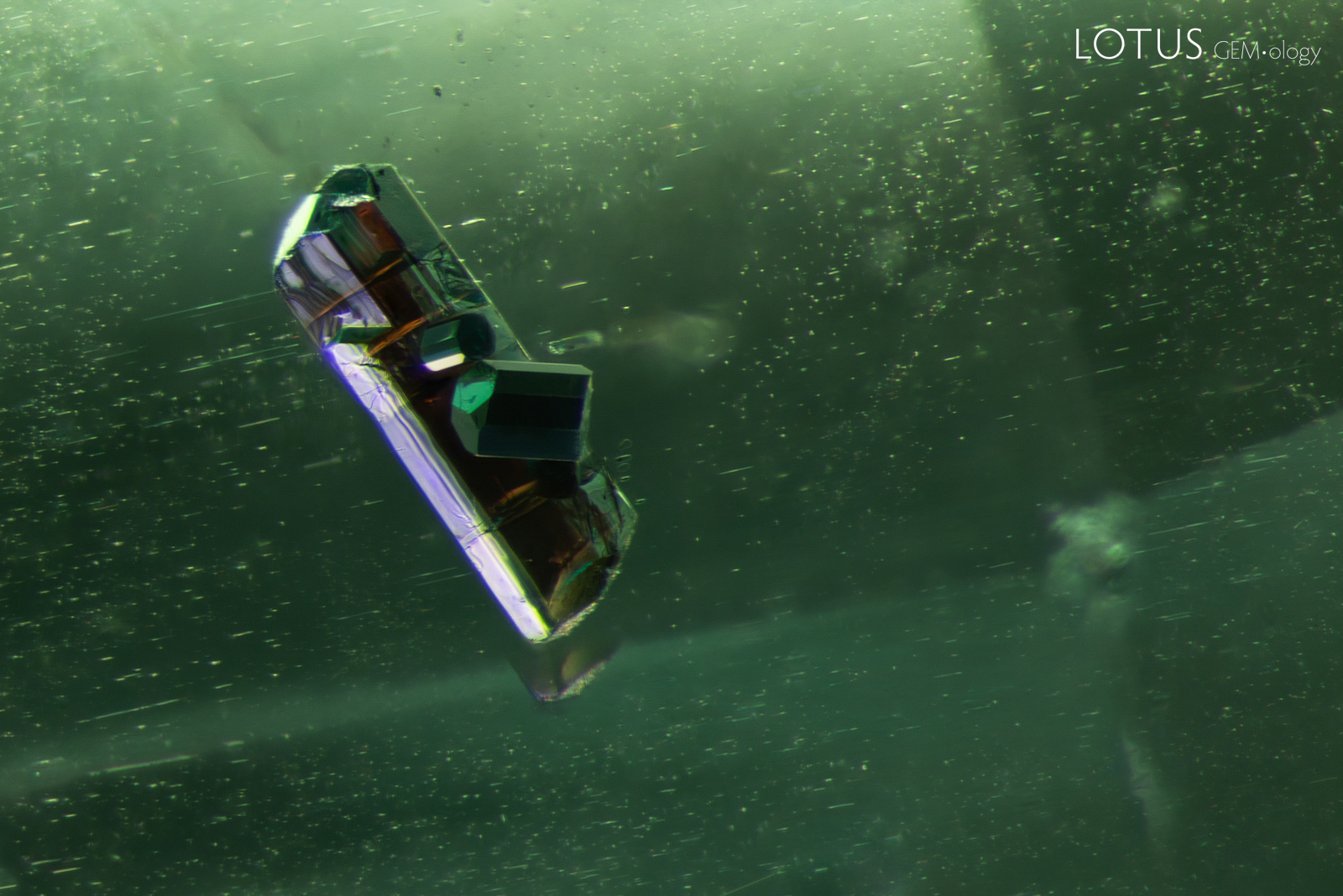
A brown, prismatic crystal, possibly tourmaline, is suspended inside of this schist-hosted emerald.
Natural • Beryl • Beryl • Emerald •
Zambia •
Enhancements:
Fissure Filling with colorless Oil/resin (FF-O2) •
Lighting Conditions:
Dark Field + Diffuse Fiber Optic
Photographer:
E. Billie Hughes •
Image Number:
A-005-6143-1
• Field of View = 1.4mm
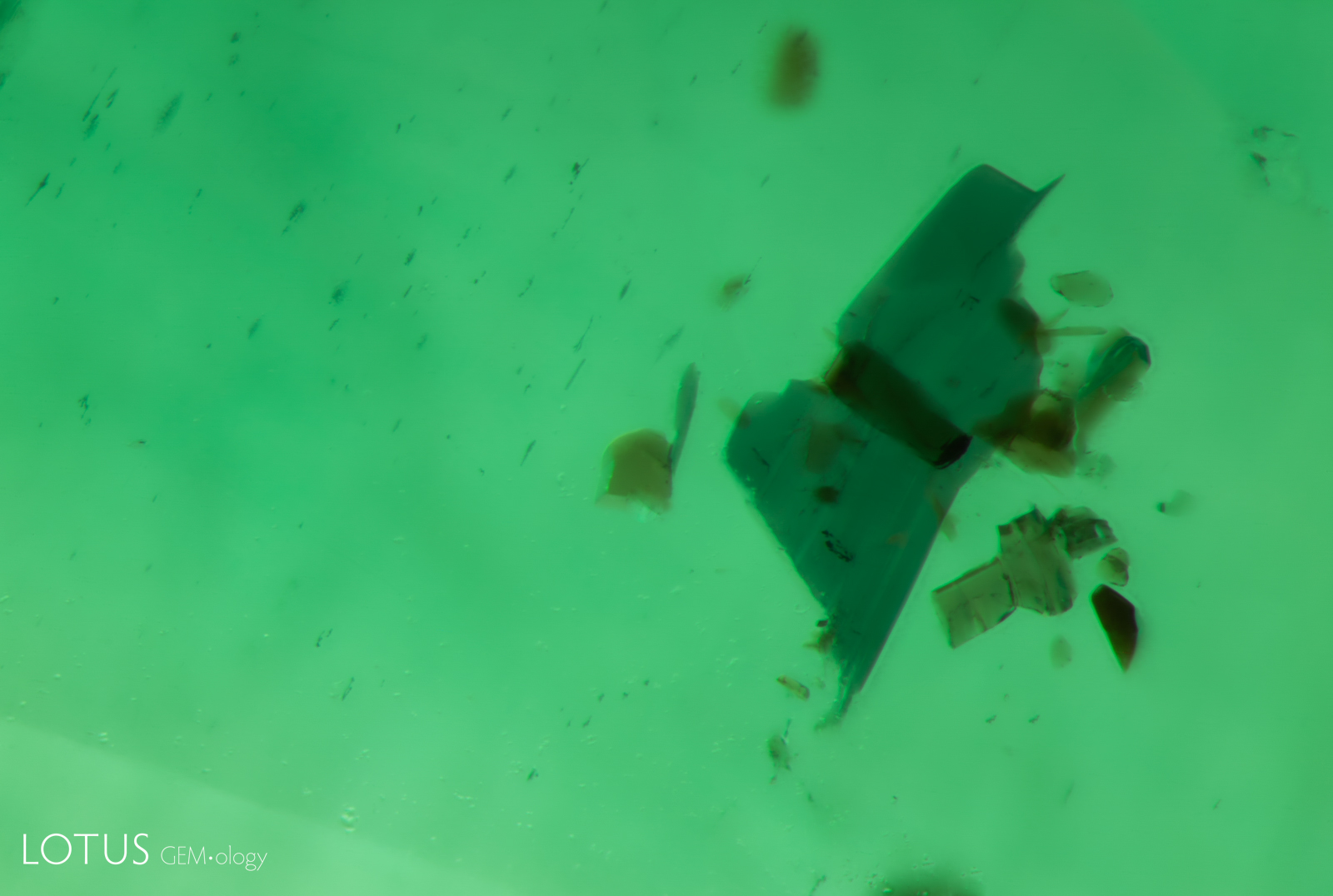
A cluster of crystals, likely mica, of various sizes and shapes is suspended in this Zambian emerald.
Natural • Beryl • Beryl • Emerald •
Zambia •
Enhancements:
Fissure Filling with colorless Oil/resin (FF-O3) •
Lighting Conditions:
Light Field (Transmitted Light)
Photographer:
Natcha Rattana-anan •
Image Number:
A-005-5941-2
• Field of View = 2.2mm
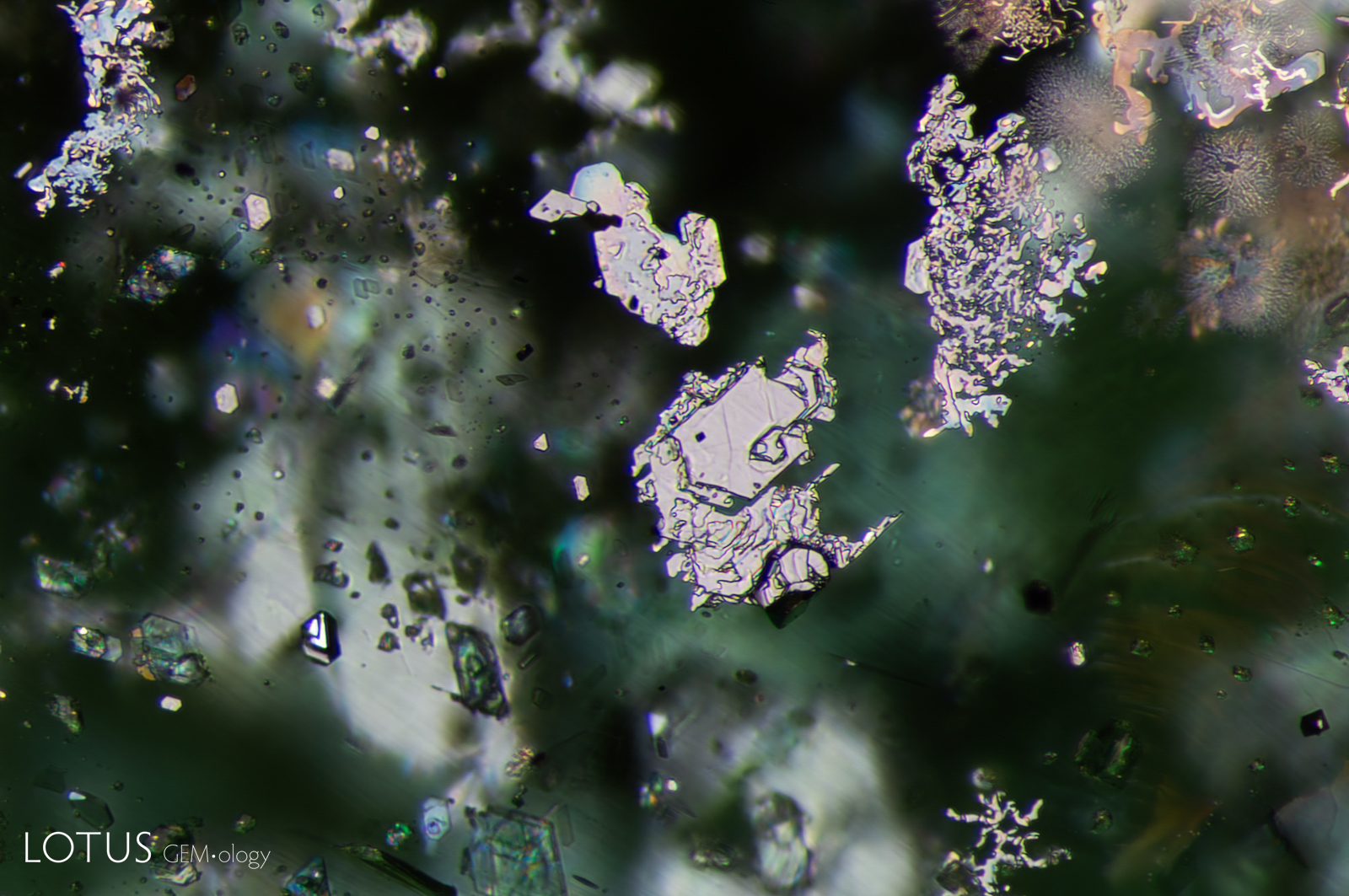
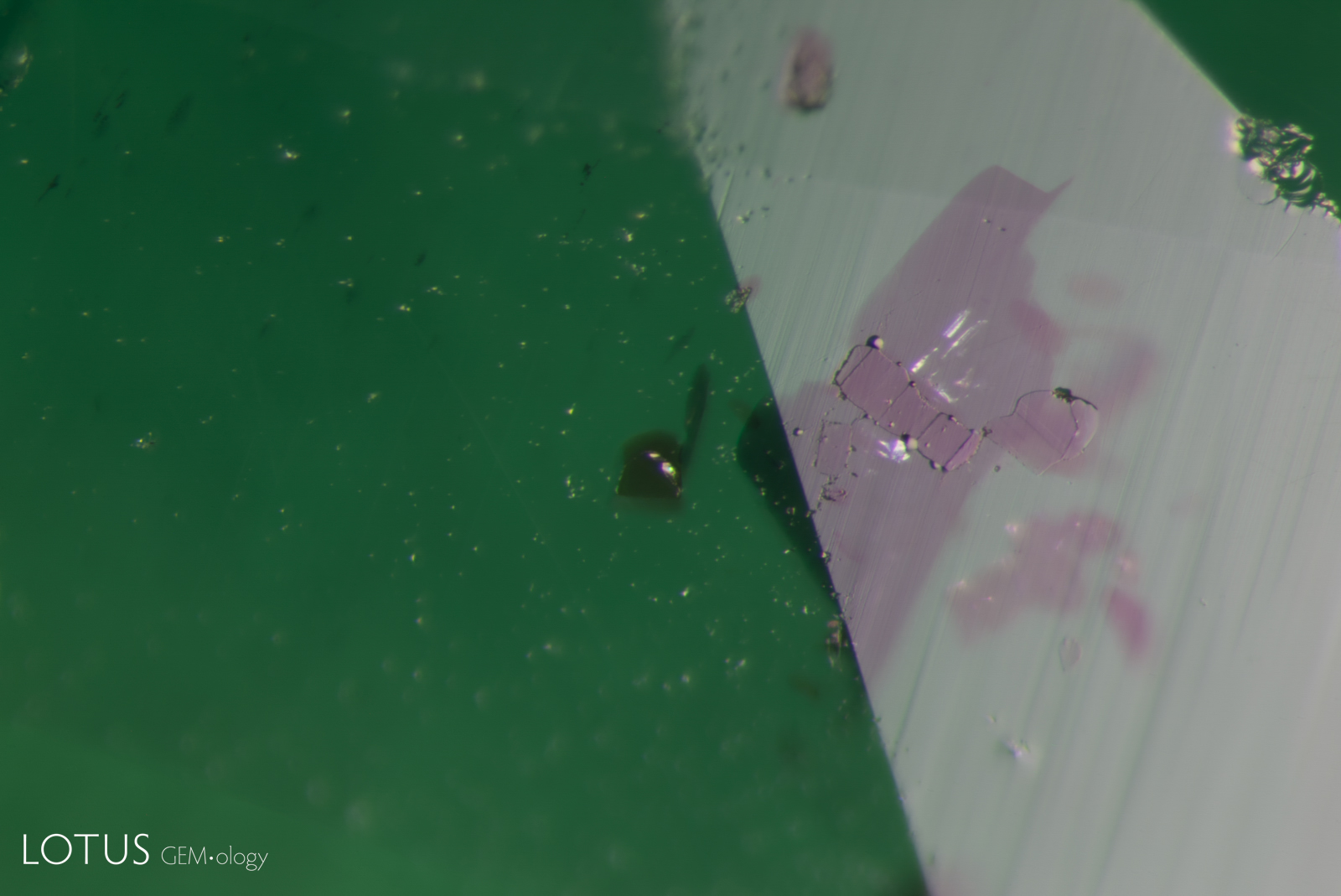
A cluster of crystals (likely mica) reaches the surface of this Zambian emerald. When exposed to the gentle heat of the microscope light, oil droplets leaked out at the boundary between the inclusions and the host.
Natural • Beryl • Beryl • Emerald •
Zambia •
Enhancements:
Fissure Filling with colorless Oil/resin (FF-O3) •
Lighting Conditions:
Dark Field + Diffuse Fiber Optic
Photographer:
Natcha Rattana-anan •
Image Number:
A-005-5941-1
• Field of View = 2.2mm
This emerald contained a series of slender two-phase inclusions. Like a genie in a bottle, the bubble (probably carbon dioxide) trapped inside has likely resided there for millions of years.
Natural • Beryl • Beryl • Emerald •
Russia; Malysheva •
Enhancements:
Fissure Filling with colorless Oil/resin (FF-O1) •
Lighting Conditions:
Light Field (Transmitted Light)
Photographer:
E. Billie Hughes •
Image Number:
A-005-5303-2
• Field of View = 3.2mm
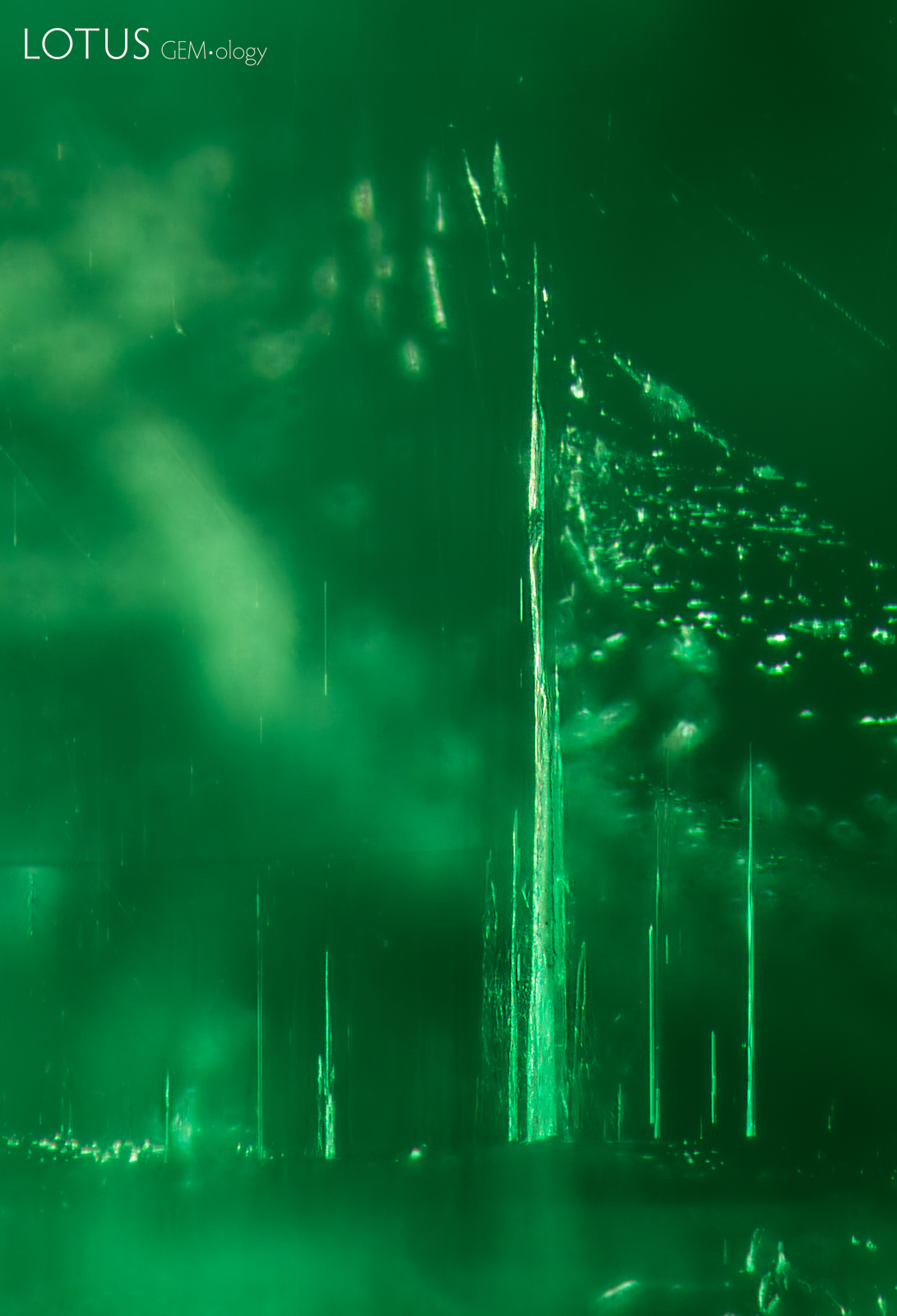
The Emerald City. Fine tubes form a dramatic skyline in this gem.
Natural • Beryl • Beryl • Emerald •
Russia; Malysheva •
Enhancements:
Fissure Filling with colorless Oil/resin (FF-O1–2) •
Lighting Conditions:
Dark Field
Photographer:
E. Billie Hughes •
Image Number:
A-005-5198-3
• Field of View = 1.2mm
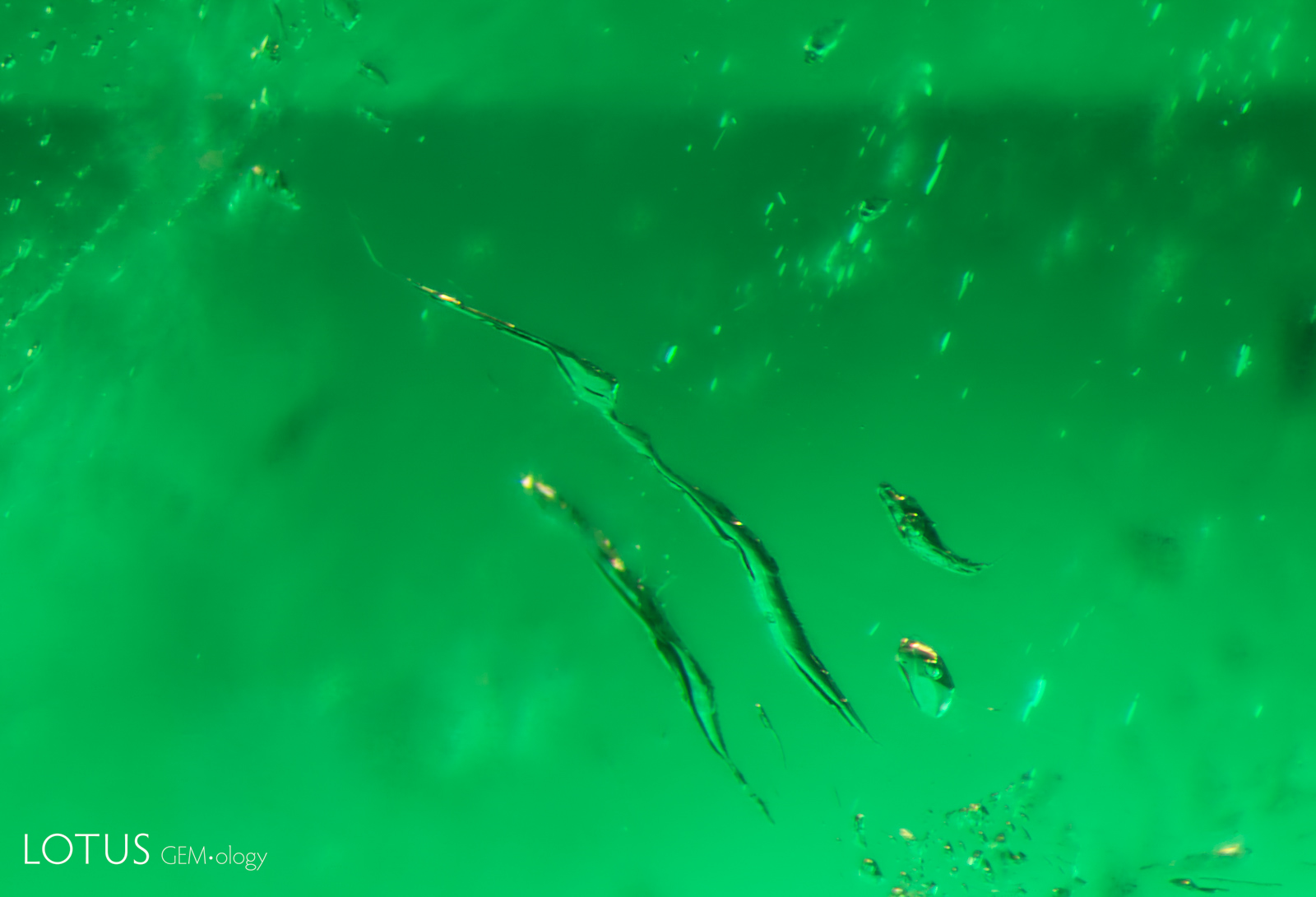
Like ribbons, irregular negative crystals decorate the interior of this emerald.
Natural • Beryl • Beryl • Emerald •
Russia; Malysheva •
Enhancements:
Fissure Filling with colorless Oil/resin (FF-O1) •
Lighting Conditions:
Dark Field
Photographer:
E. Billie Hughes •
Image Number:
A-005-5196-2
• Field of View = 1mm
Search the Complete Hyperion Database
Treatment can alter existing inclusions and produce new microscopic features in emerald. These may include changes to fractures, fissures, fluid inclusions, residues and other internal features associated with fissure filling and other treatment processes.
Treated Emerald Inclusion Photomicrographs
The Hyperion treated emerald gallery includes microscopic features documented in natural emeralds subjected to treatment. Each entry identifies the recorded treatment and is accompanied by descriptive information and, where available, references to the gemological literature.
What Inclusions Can Reveal About Emerald Treatment
Microscopic examination is an important part of detecting treatment in emerald. The appearance of fractures, fissures, fillers and associated internal features can provide evidence of treatment and, in some cases, information about the processes to which an emerald has been subjected.
Hyperion combines inclusion photomicrography with supporting gemological information so that treatment-related features can be compared with documented examples in natural emerald.
About Hyperion
Hyperion is the Lotus Gemology searchable inclusion database. It allows users to browse gemstone inclusions by gem type, geographic origin, treatment and keyword.