Emerald Bibliography

Emerald Bibliography

Explore books, articles and historical sources on emerald in Four Treasures, the Lotus Gemology reference database. This bibliography brings together matching records from the collection, with publication details, abstracts and cover images where available.

Emerald References

The list below matches the terms emerald or emeralds in the database's searchable fields. Some references discuss emeralds as part of a broader subject.

661–680 of 848 matching references
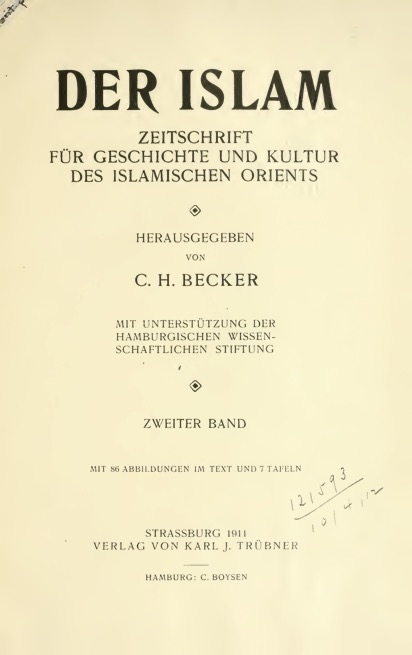
Über den wert von edelsteinen bei den Muslimen

Über den wert von edelsteinen bei den Muslimen

On the value of precious stones among Muslims

Wiedemann, E. (1911)

Journal Article · Source: Der Islam · Volume: Vol. 2 · Pages: pp. 345–358 · Language: in German

Abstract
Wiedemann examines the values assigned to precious stones in medieval Islamic sources, drawing upon Arabic writings on mineralogy, commerce, and gemology. He discusses the prices and relative esteem of various gemstones, including ruby, emerald, sapphire, pearls, and other ornamental materials, and considers the factors affecting their valuation, such as color, quality, size, provenance, and rarity. The paper provides insight into Islamic knowledge of gemstones and the economic and cultural importance attached to them, preserving information from Arabic authors concerning the classification, appraisal, and trade of precious stones.
Keywords
corundum, history.1, gems, Arabic mineralogy, early lapidaries
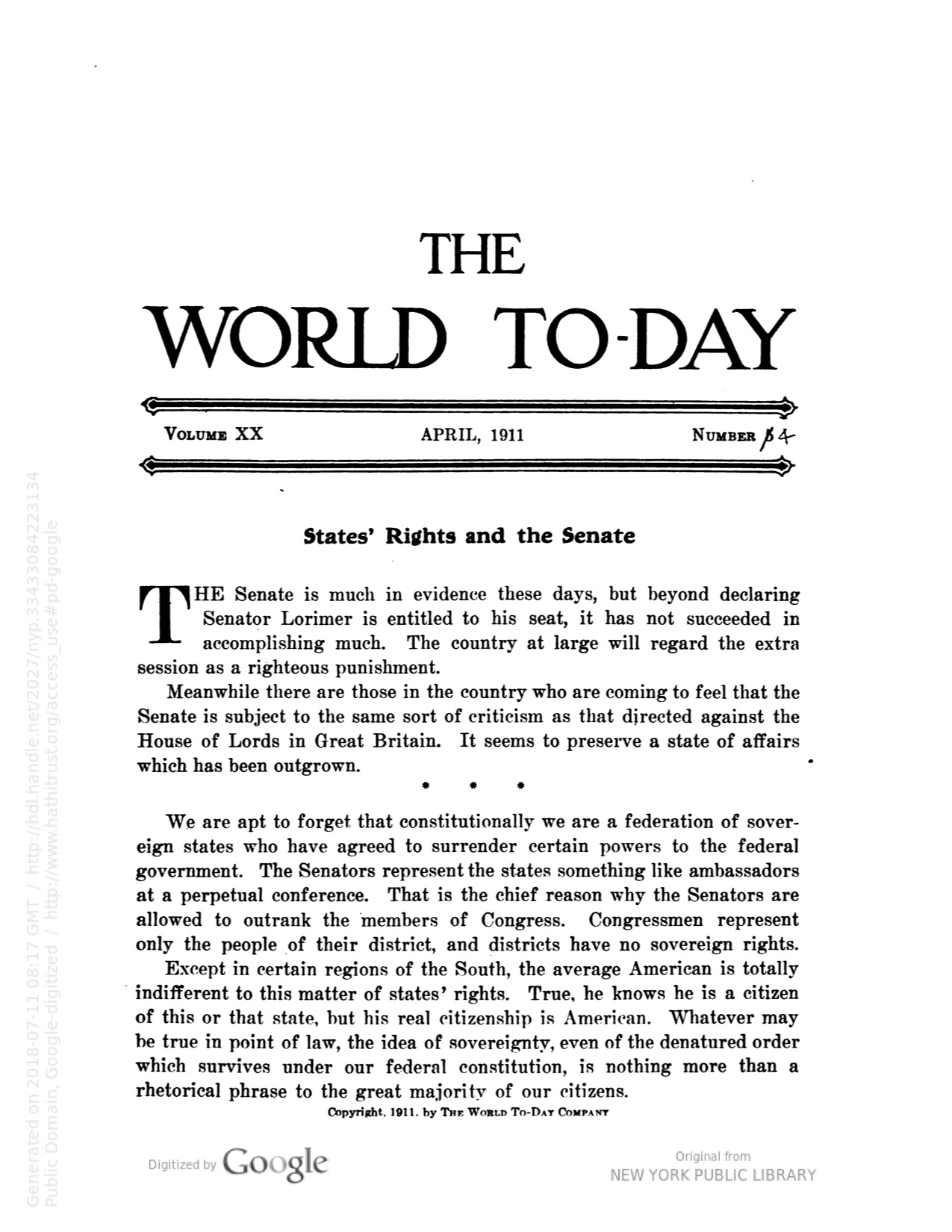
On the trail of the emerald

On the trail of the emerald

Woehlke, W.V. (1911)

Journal Article · Source: The World To-Day · Volume: Vol. 20 · Issue: April · Pages: pp. 430–435

Abstract
Woehlke gives a firsthand account of a journey to the Colombian emerald-mining district, describing the country traversed, conditions at the mines, and the methods employed in extracting emeralds. Particular attention is given to the famous Muzo deposits, their geological setting, mining operations, and the search for emerald-bearing material. The article also discusses the value and marketing of the stones and the difficulties surrounding their production, providing a contemporary popular account of Colombia’s emerald industry in the early twentieth century.
Keywords
beryl, emerald, tourmaline, kunzite, Pala, American gems, San Diego county, California
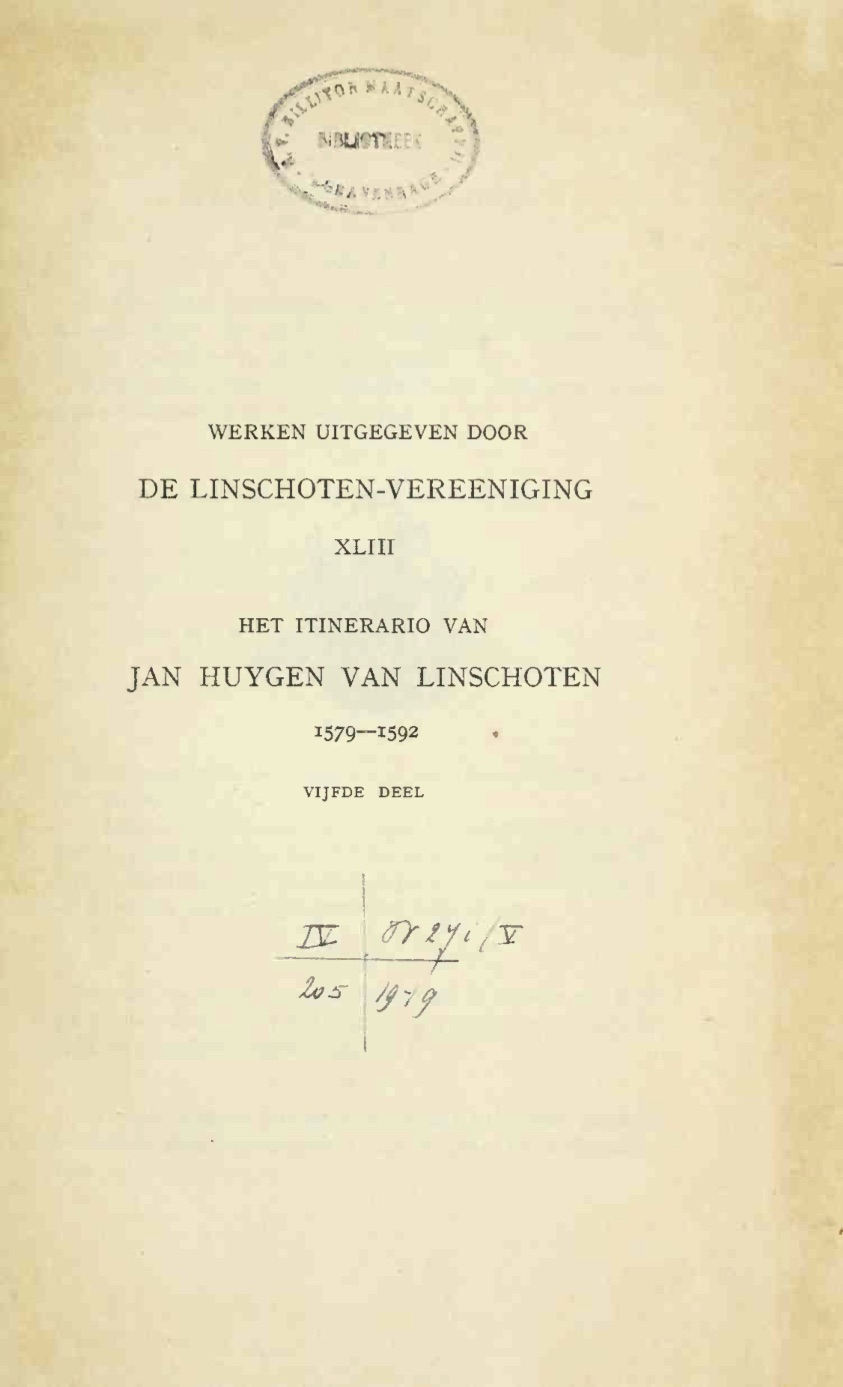
Itinerario Voyage ofte Schivaert von Jan Huygen van Linschoten mer oost ofte Portugaels Indien 1579–1592

Itinerario Voyage ofte Schivaert von Jan Huygen van Linschoten mer oost ofte Portugaels Indien 1579–1592

Itinerary of the Voyage of Jan Huygen van Linschoten to the East or Portuguese India 1579–1592.

Linschoten, J.H., van (1910)

Book · Publisher: Kern · Language: in Dutch

Abstract
Van Linschoten’s Itinerario is one of the most important early European accounts of the Portuguese maritime empire and Asian trade. Based largely on his residence at Goa from 1583 to 1588 and his travels and observations in the East, it describes the countries, peoples, ports, navigation, commerce, and commodities of the Portuguese Indies and adjoining regions. Of particular interest are references to the trade in precious stones and pearls, including diamonds, rubies, sapphires, emeralds, spinels, and other gems encountered in India and the wider Asian trading network. Linschoten records contemporary information on their sources, markets, qualities, and values, making the work an important primary source for the history of the gemstone trade in the late sixteenth century. This 1910 edition presents the Dutch text of Linschoten’s account of his voyage and experiences during 1579–1592.
Keywords
corundum, history.1, India.12, gems
The Tuzuk-i-Jahangirl or Memoirs of Jahangir

The Tuzuk-i-Jahangirl or Memoirs of Jahangir

Jahangir (1909, 1914)

Book · Pages: 478, 315 pp.

Abstract
Jahangir’s memoirs, composed principally by the Mughal emperor himself and continued by others for the later years of his reign, provide a detailed record of his life, court, travels, political affairs, and unusually acute observations of the natural world. The work contains numerous references to jewels, gemstones, and jeweled objects presented as gifts, received as tribute, purchased, valued, or incorporated into imperial regalia. Diamonds, rubies, spinels, emeralds, pearls, and other precious materials are frequently recorded with their weights and contemporary valuations, providing important evidence for the Mughal gem trade and court appreciation of gemstones. Jahangir displays a particular interest in exceptional individual stones and carefully records their provenance, appearance, size, inscriptions, and histories of ownership. The memoirs also contain descriptions of jade and other carved hardstone vessels, jeweled weapons and ornaments, and the celebrated imperial practice of weighing rulers and princes against precious substances. Beyond gems, Jahangir’s close observations of animals, plants, minerals, geography, and unusual natural phenomena make the Tuzuk-i-Jahangiri an exceptionally rich primary source for the material culture and natural history of the Mughal Empire in the early seventeenth century.
Keywords
corundum, quality.10, gems
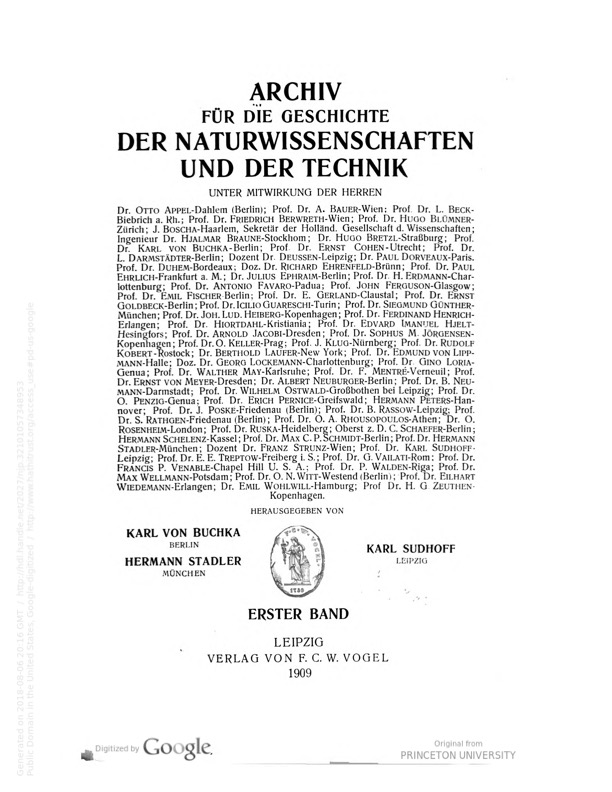
Zur Mineralogie bei den Muslimen

Zur Mineralogie bei den Muslimen

On mineralogy among the Muslims

Wiedemann, E. (1909)

Journal Article · Source: Archiv fur die Geschichte der Naturwissenschaften und der Technik · Volume: Vol. 1 · Pages: pp. 208–211 · Language: in German

Abstract
Wiedemann presents notes toward a history of mineralogical knowledge among Muslim scholars, drawing particularly on a Gotha manuscript containing material attributed to ʿAlī ibn Aidamur ibn ʿAlī al-Gildakī and on fragments of al-Kindī’s mineralogical writings preserved by later authors. [208–209] Al-Kindī’s work is described as containing what Wiedemann considers among the earliest Muslim accounts of minerals in this field, including observations on the value and properties of diamonds, pearls, and turquoise. Pearls are said to come from Muscat, with the finest occurring between the mouth and ear of the shellfish; turquoise is described as changing color with weather, being affected by musk and water, and damaged by oil or fat. [209] Al-Kindī divides gemstones (ǧauhar) into those derived from animals and those from the earth, and the latter into transparent and opaque varieties. Pearls belong to the animal group; transparent stones are divided into precious and non-precious classes, with the precious stones including diamond among those that cut, and hyacinth, zircon, and emerald among those that do not. Hyacinth is further divided into red, yellow, sky-blue, and white varieties, each with numerous shades, illustrating the highly developed discrimination of color nuances in the Oriental gem trade. Carnelian, amber, and onyx are included among lesser stones, while coral is classified with plants. [210] Wiedemann also records al-Gildakī’s observations on glass, including its ability to be colored and molded and its behavior when heated, and cites al-Muqaddasī on naturally greenish glass from the Persian desert. The article concludes with a discussion of amber, including its medicinal and talismanic uses and the names applied to it by Byzantine and Arabic writers. [211]
Keywords
gems, Arabic mineralogy, al-Biruni, early lapidaries
Precious stones

Precious stones

Kunz, G.F. (1908)

Book Section · Source: The Mineral Industry… During 1907 · Publisher: Hill Publishing Co. · Volume: Vol. 16 · Pages: pp. 790–812

Abstract
Kunz reviews developments in the precious-stone industry during 1907, covering both American occurrences and the principal foreign sources. U.S. material includes turquoise, amethyst, kunzite, chalcedony, benitoite, sapphire, diamonds, and other ornamental stones, with particular attention to the newly developed Arkansas diamond field and the recently discovered benitoite of California. Foreign sections discuss South African and Brazilian diamonds, Queensland sapphire, Burmese tourmaline, Australian topaz and opal, New Zealand jade, Burmese jadeite, and verdite. Of special interest is a report of sapphires from an otherwise unknown locality in Colombia, described as white, colorless, yellow, pale blue, and hexagonal, flat and barrel-shaped. Kunz notes that although emerald had long been associated with Colombia, the occurrence of sapphire there had not previously been recognized. The article also surveys changing jewelry fashions and the commercial market, noting renewed demand for blue stones, particularly sapphire, the continued popularity of green gems, and the effects of the 1907 financial crisis on diamond imports and trade.
Keywords
corundum, Colombia.12, gems, sapphire, benitoite, Australia.12, jade, nephrite, New Zealand
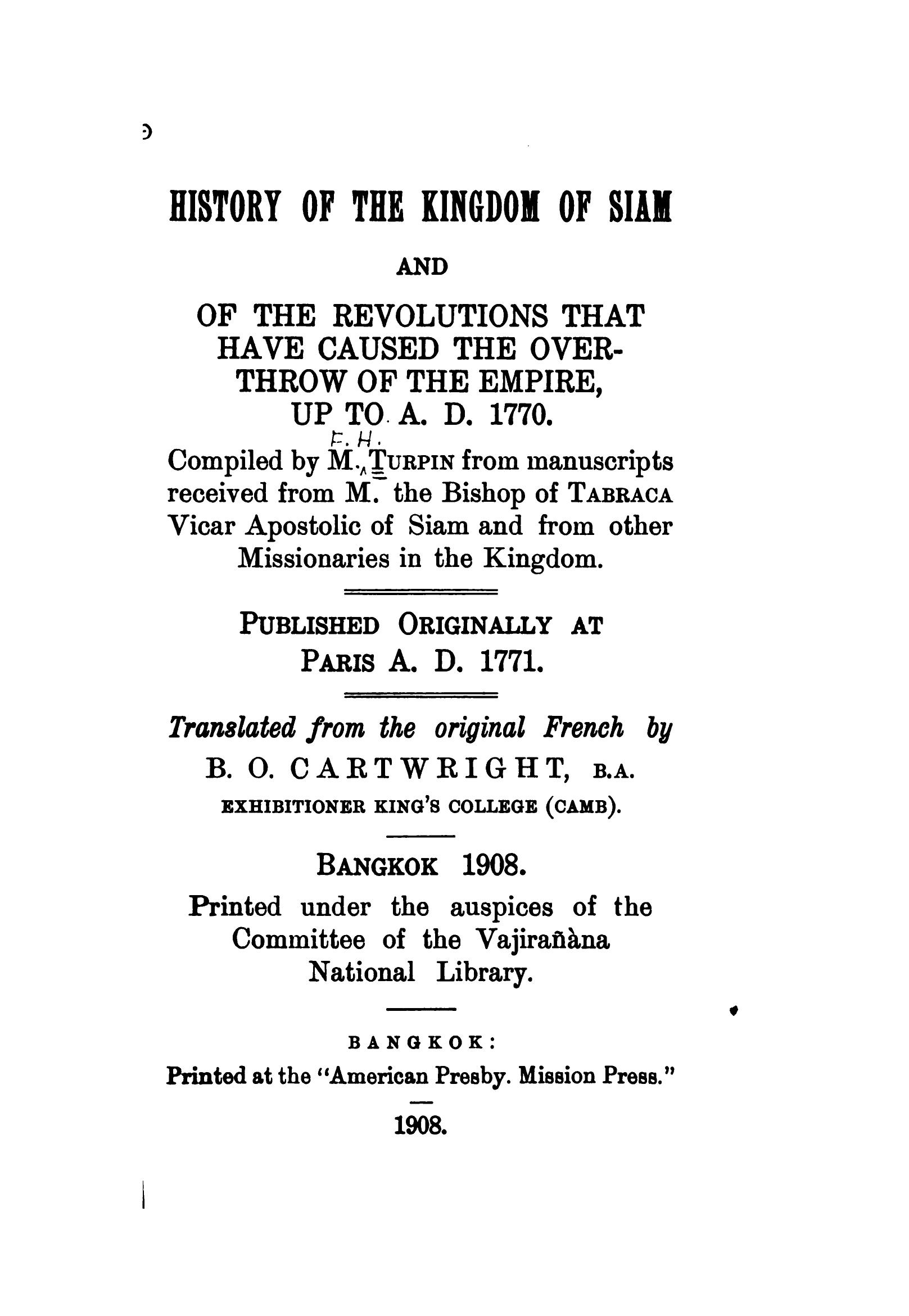
The History of the Kingdom of Siam

The History of the Kingdom of Siam

Turpin, M. (1908)

Book · Publisher: American Presbyterian Mission Press · Pages: 233 pp.

Abstract
Turpin’s History of the Kingdom of Siam, originally published in French in 1771 and here translated by B.O. Cartwright, presents an eighteenth-century European account of Siam from its early kings through the destruction of Ayutthaya and the rise of Phya Tak (Taksin). Drawing largely upon reports of Catholic missionaries and earlier European writers, it gives particular attention to the reign of King Narai, Constantine Phaulkon, Siam’s relations with France under Louis XIV, the Macassar revolt, the overthrow of Phaulkon and expulsion of the French, and subsequent persecution of Christians. The most important later sections describe Burmese invasions, the capture and destruction of Ayutthaya in 1767, the sufferings of its inhabitants and European residents, and the political fragmentation and recovery that followed under Phya Tak. The final chapters broaden into descriptions of Siam’s neighboring kingdoms and an argument for renewed French commercial involvement in the region. Of gemological interest are numerous contemporary statements on mineral resources and the precious-stone trade. Burma and Ava are described as producing exceptionally fine rubies and sapphires, while Pegu exported gold, silver and precious stones, with “rubies” used broadly to include topaz, sapphire, amethyst and other gems. Laos is said to possess a mine yielding rubies and emeralds, including a celebrated royal emerald reputedly the size of an orange; Cambodia is credited with amethyst, ruby, topaz, chrysolite, agate and bloodstone; and Siam itself is reported to contain agate, diamonds and pearls. The work is valuable both as a near-contemporary European narrative of the political upheavals that ended the Ayutthaya kingdom and as a record of eighteenth-century European beliefs concerning the geography, commerce and gem resources of mainland Southeast Asia.
Keywords
corundum, ruby, sapphire, Thailand.12, Cambodia.12, gems
Nukhbat al-dhakha’ir fī aḥwāl al-jawāhir [كتاب نخب الذخائر في أحوال الجواهر]

Nukhbat al-dhakha’ir fī aḥwāl al-jawāhir [كتاب نخب الذخائر في أحوال الجواهر]

The Choicest Treasures on the Properties of Gems

Ibn al-Akfānī, M.i.M.i.a.-ʿ. (1908)

Journal Article · Source: Al-Machriq · Volume: Translated by P.L. Cheikho, Vol. 11 · Pages: 1005 pp. [see pp. 751–765] · Language: in Arabic

Abstract
This treatise is one of the earliest Arabic works devoted entirely to gemstones, blending empirical observation with earlier scholarly traditions. It offers detailed descriptions of major gems such as ruby, diamond, pearl, emerald, peridot, and crystal (quartz), and examines their physical and chemical properties, economic value, and geographic origins. It also provides guidance on distinguishing genuine stones from counterfeits. Drawing on classical sources like al-Kindī, al-Bīrūnī, and Naṣr al-Jawharī, the work reflects Ibn al-Akfānī’s wide-ranging scholarship and deep engagement with both Islamic and Greek scientific heritage. A 1939 edition published in Cairo and edited by Anastas al-Karmalī (a renowned Iraqi Christian Arab scholar). A digital version is available via Shamela Library (in Arabic). A scanned edition can be found on Archive.org. As of now, there is no known complete English translation of Kitāb Nukhbat al-Dhakha'ir fī Aḥwāl al-Jawāhir by Ibn al-Akfānī. However, the original Arabic manuscript is preserved and accessible through the Library of Congress. This manuscript, dating from the 18th century, is part of the Mansuri Collection and is available in digital format. It includes a brief poem on the title page and concise notes on various gemstones, particularly focusing on hyacinth, pearls, and other aquatic gems.​ Al-Machriq (Arabic: المشرق, meaning “The East”) was a highly influential Arabic-language scholarly journal published by the Jesuit Fathers of Saint Joseph University in Beirut, Lebanon. It was first issued in 1898 and became a key platform for intellectual, linguistic, and cultural exchange in the Arab world during the late 19th and early 20th centuries.
Keywords
corundum, history.1, gems, Arabic mineralogy, early lapidaries
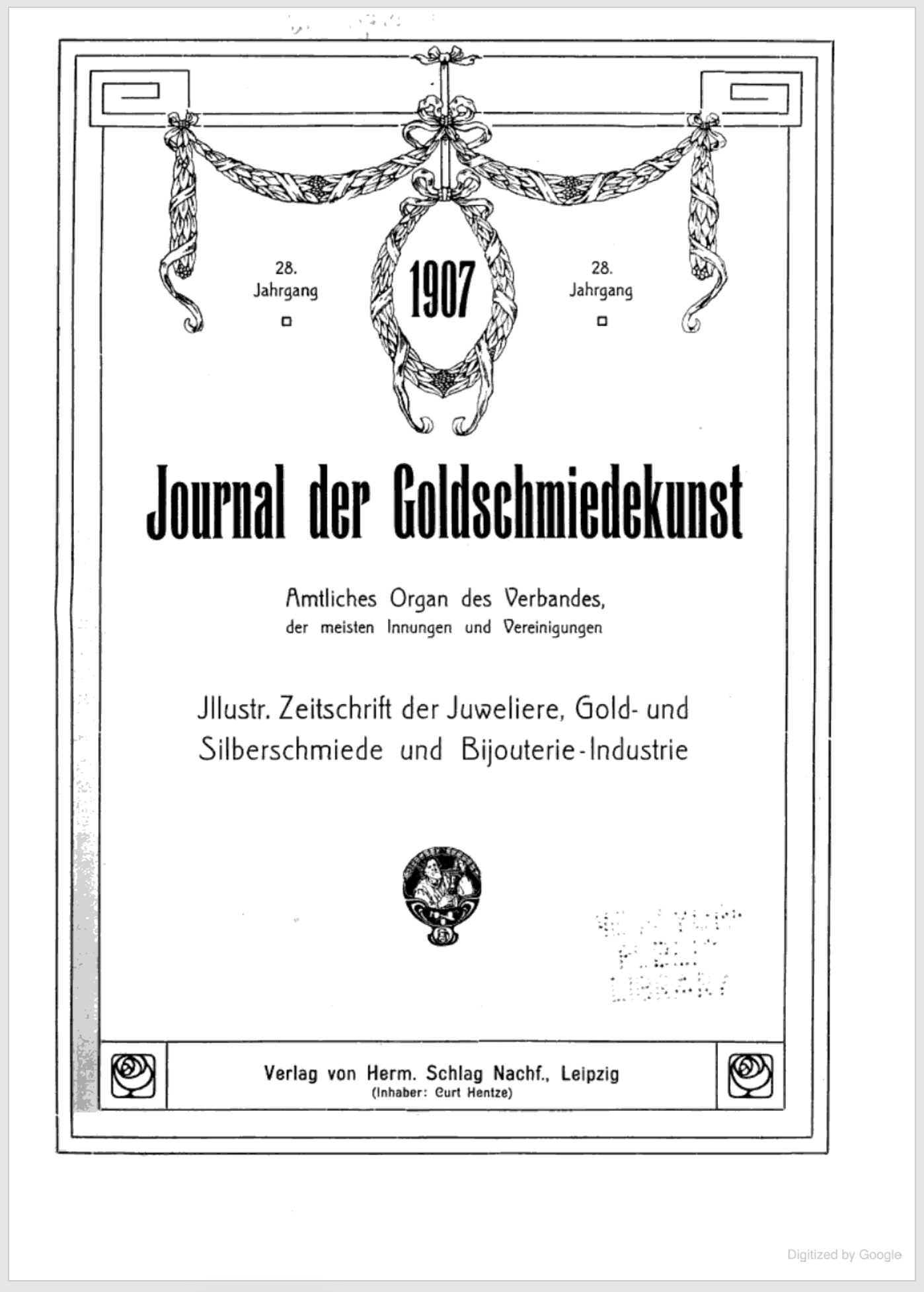
Idar-Oberstein und seine Industrie

Idar-Oberstein und seine Industrie

Idar-Oberstein and its industry

Anonymous (1907)

Journal Article · Source: Journal der Goldschmiedekunst · Volume: Vol. 27 · Issue: 29 June · Pages: pp. 193–198 · Language: in German

Abstract
A contemporary survey of Idar-Oberstein and its gemstone industry, describing the geographical setting, local geology, agate deposits and the historical development of the region’s lapidary trades. The article explains the occurrence of agate in volcanic rocks, noting chalcedony, opal and crystalline quartz as cavity fillings, and traces the growth of medieval agate cutting under the protection of the Oberstein authorities. It describes the emergence of specialized trades including agate miners, cutters, hollow grinders, stone sawyers and drillers, and discusses the decline of local rough supplies followed by the importation of large quantities of Brazilian agate and carnelian beginning in the nineteenth century. The account also documents the broadening of the industry to other gemstones such as ruby, sapphire, opal, tourmaline, topaz, emerald, aquamarine, zircon and garnet, together with the rise of jewelry and metalworking manufacture in Oberstein. Detailed sections describe traditional water-powered cutting mills, grinding positions, sawing, drilling, horizontal lapidary machines, stone coloring, gem engraving and cameo cutting, as well as the organization of imported rough into public auctions. Illustrated with views of Idar-Oberstein, the castles and Felsenkirche, cutting workshops, drilling and lapidary equipment, and preparations for Brazilian agate auctions, the article presents the district as a highly specialized and internationally important center of gemstone fashioning and trade.
Keywords
gems, agate, quartz, chalcedony, Germany, Idar-Oberstein, history, lapidary, fashioning
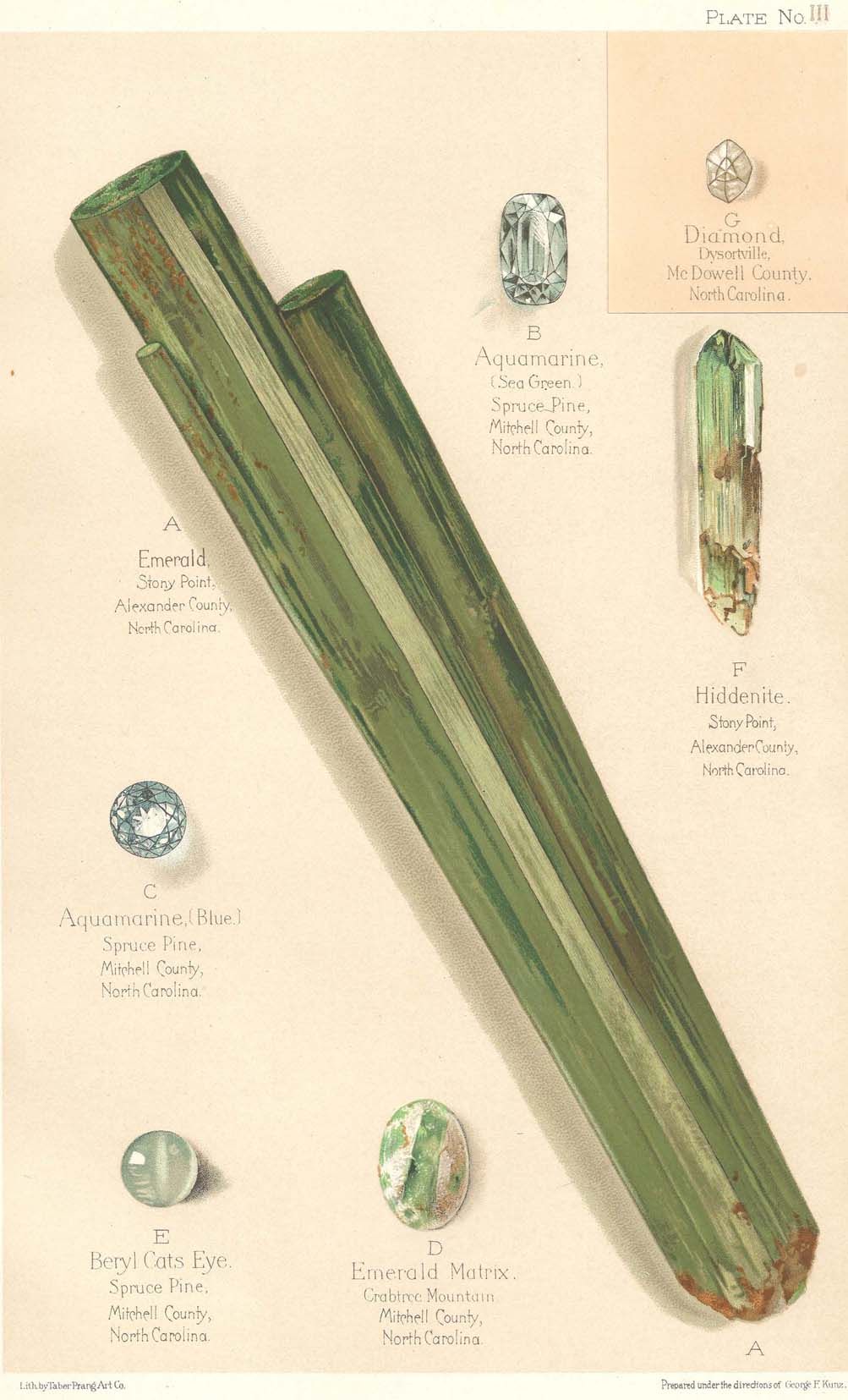
History of the Gems Found in North Carolina

History of the Gems Found in North Carolina

Kunz, G.F. (1907)

Book · Publisher: E.M. Uzzell & Co. · Pages: 60 pp.

Abstract
A historical and descriptive survey of the gemstones of North Carolina, prepared for the North Carolina Geological and Economic Survey. Kunz reviews the development of gem mining in the state and gives detailed accounts of the principal gem minerals and their localities, including diamond, corundum, emerald, hiddenite, beryl, garnet, zircon, quartz and other ornamental stones. Particular attention is given to the celebrated emerald and hiddenite deposits of Alexander County, the corundum occurrences of the western counties, and the circumstances surrounding notable discoveries and specimens. The work combines mineralogical description with historical information on mining, production, collectors and localities, and is illustrated with 15 plates. It remains an important early source on the history and distribution of North Carolina gemstones and on the development of gem mining in the state.
Keywords
corundum, USA.12, North Carolina.12, gems
[Chapter on gemstones]

[Chapter on gemstones]

Kunz, G.F. (1906–1932)

Book Section · Source: The Mineral Industry… During…

Abstract
Kunz’s long-running annual chapters provide a contemporary record of the gemstone industry during the first third of the twentieth century, combining reports on new discoveries and mining developments with information on production, prices, trade, cutting, jewelry fashions, and notable individual gems. Although strongly focused on the United States, the series ranges widely across the major gem-producing regions of the world and follows developments in diamonds, ruby and sapphire, emerald, pearl, tourmaline, beryl, topaz, turquoise, garnet, quartz varieties, jade and other ornamental materials. Individual installments commonly describe particular mines and deposits, changes in output and commercial importance, newly reported localities, unusual crystals and exceptional cut stones, and advances in lapidary practice and gem treatment. The early reports document the rapid growth of the American jewelry and diamond-cutting industries and the increasing demand for colored stones; for 1905, for example, Kunz records unprecedented U.S. precious-stone imports and vigorous demand across the gem trade. he series is also valuable for preserving contemporary geological observations and production statistics, including detailed accounts of South African diamonds, Burmese rubies, Colombian emeralds and numerous American gem deposits. Taken as a whole, these chapters constitute an unusually rich year-by-year chronicle of the transition of gemology from a largely descriptive and commercial field into an increasingly scientific and international discipline, while documenting the changing geography, technology and economics of the world gemstone trade.
Keywords
corundum, ruby, sapphire, history.1, sources, gems
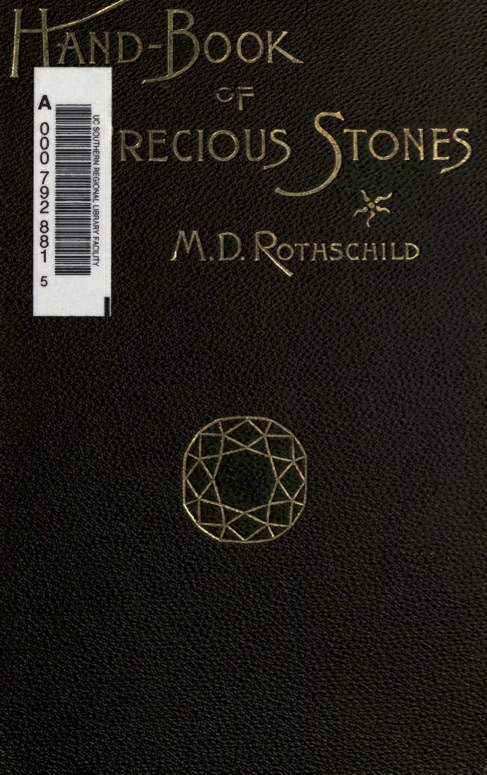
Hand-Book of Precious Stones

Hand-Book of Precious Stones

Rothschild, M.D. (1905)

Book · Publisher: G.P. Putnam’s Sons · Pages: 143 pp.

Abstract
The object of this little book is to convey to the merchant, the workman, and the amateur, in a condensed and accurate form, information concerning the variouspropertiesofpreciousstones. Be-sides drawing freely on a number of au-thorities, the author has used his practical experience to indicate such tests as an amateurcanreadilymake. Specificgrav-ity, hardness, and dichroism are tests which are easily mastered, and a thor-ough understanding of these three prop-erties will assist in classifying doubtful gems. Such stones have been dealt with prin-cipally as are used in commerce for jewelry and ornamental purposes. The attention of the writer has often been called to the general lack of knowledge among the jewelers regarding pre-cious stones other than diamonds, rubies,sapphires, and emeralds. As there are so many other beautiful and rare gems which nature yields to man, and which are worthy of the jew-elers' art, the author trusts that his book will awaken a new interest in the fascina-ting study of mineralogy as applied to precious stones, and that at some future day he may feel encouraged to enlarge upon this treatise.
Keywords
precious stones, gems, general
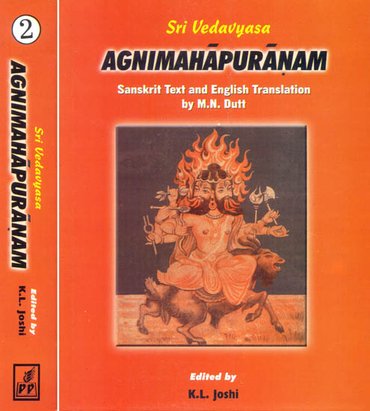
Agni Puranam

Agni Puranam

Dutt, M.N. (1903, 1904)

Edited Book · Publisher: Elysium Press · Pages: 676 pp.

Abstract
The Agni Purana, (Sanskrit: अग्नि पुराण, Agni Purāṇa) is an English prose translation of one of the major Sanskrit Purāṇas and an encyclopedic compilation covering mythology, ritual, cosmology, medicine, architecture, statecraft, astronomy and numerous practical arts. Of particular gemological importance is the section on ratna-parīkṣā (“testing of gems”), which lists stones appropriate for royal use, including diamond, emerald, ruby, pearl, sapphire, lapis lazuli, crystal and several less readily identifiable materials. Good gems are characterized generally by internal lustre, purity and well-formed shape, while dull, cracked or included stones are rejected. Diamond is praised when pure, unbreakable, bright and exhibiting rainbow-like lustre; emerald should possess a parrot-green hue, gloss and radiance; rubies are classified partly according to their supposed sources and colors; and pearls are valued for roundness, whiteness, transparency and weight, with both naturalistic and legendary origins being recorded. Sapphire is described in terms of its strong color and lustre, while lapis lazuli is recommended for necklaces and other ornaments. The passage is valuable less as mineralogy in the modern sense than as evidence for early Indian systems of gem classification, quality assessment, auspiciousness and the close association of precious stones with kingship and personal fortune.
Keywords
corundum, history.1, gems
Lithotherapie. Historische Studien über die medizinische Verwendung der Edelsteine

Lithotherapie. Historische Studien über die medizinische Verwendung der Edelsteine

Lithotherapy: Historical Studies on the Medical use of Gemstones

Fühner, H. (1902)

Book · Publisher: S. Calvary · Pages: 150 pp. · Language: in German

Abstract
Sinkankas: An expanded version of the author’s doctoral disseration of the same title. In the general part, he discusses the medicinal uses of gemstones among prehistoric and primitive peoples, then the Indians, Chinese, the peoples of the Mid East, the and others, up to and including the Middle Ages. A thus created of how, where, and why picture is gemstones entered into pharmacopeias. The emphasis is on actual specific medicinal uses and less prevention through imagined magical powers. The descriptive part of the text systematically describes the gemstones and gives for each references to the literature in which their use in medicine is mentioned as well as what such stones were supposed to treat or cure. A valuable reference work. Reported in reprint, Ulm: 1956;
Keywords
gems, lore, history, medicinal use of gems, magical gems, healing gems, Medieval gems
Precious stones

Precious stones

Kunz, G.F. (1902)

Book Section · Source: Mineral Resources of the United States | Calendar Year 1901 · Publisher: Govt. Printing Office · Pages: pp. 729–771

Abstract
A comprehensive review of the precious-stone industry and important gemological developments during 1901, which Kunz describes as the most successful year yet in the history of the American trade. U.S. production was valued at $289,060, led by Montana sapphires, turquoise, rhodolite garnet, tourmaline, quartz, and other ornamental stones, while imports of diamonds and other precious stones reached about $22.8 million. Notable developments included a diamond from Lee County, Georgia; expanding sapphire mining at Yogo, Montana; an output of about 200,000 carats of rhodolite from Cowee Valley, North Carolina; colored tourmalines at Mesa Grande, California; chrysoprase near Visalia; new turquoise deposits in Colorado and Nevada and continued major production in New Mexico; large epidote crystals from Alaska; and a jade-like compact idocrase from California. Kunz gives detailed accounts of South African, Guianan, and Bornean diamond mining, Montana sapphire geology and recovery, American corundum deposits, the improving fortunes of the Burma Ruby Mines Company, emerald and beryl occurrences, garnet, quartz varieties, opal, turquoise, apatite, and other gem materials. He also discusses contemporary gem cutting and jewelry fashions and comments extensively on Chinese jade objects reaching Western markets following the looting associated with recent conflicts in China. The report concludes with statistical tables of U.S. precious-stone production from 1896–1901 and imports from 1867–1901.
Keywords
corundum, USA.12, North Carolina.12, Montana.12, gems
Precious stones

Precious stones

Kunz, G.F. (1901)

Book Section · Source: Mineral Resources of the United States | Calendar Year 1900 · Publisher: Govt. Printing Office · Pages: pp. 749–778

Abstract
Kunz reviews the production, discovery, and trade of precious stones during 1900, with particular attention to developments in the United States. He discusses diamonds and the international diamond industry, corundum gems, including the increasingly important sapphire deposits of Montana, and a wide range of other gem materials, including emerald, beryl, chrysoberyl, garnet, tourmaline, turquoise, quartz, opal, jade and nephrite. The report records new discoveries and mining activity at American gem localities, developments in cutting and marketing, notable specimens, and contemporary production and import statistics, while also surveying important foreign sources and developments in the world gem trade. Of particular historical interest are Kunz’s observations on the expanding American precious-stone industry at the beginning of the twentieth century and his documentation of contemporary gem deposits, production, values, and commerce.
Keywords
corundum, USA.12, North Carolina.12, Montana.12, gems
Precious stones

Precious stones

Kunz, G.F. (1901)

Book Section · Source: Twenty-First Annual Report of the United States Geological Survey to the Secretary of the Interior: 1899–1900 · Publisher: Govt. Printing Office · Volume: Part VI (continued) · Pages: pp. 419–462

Abstract
Kunz reviews the precious-stone industry during 1899, combining accounts of American discoveries and production with developments in the international gem trade. Particular attention is given to diamonds, including discoveries in the United States, the South African diamond fields and industry, and production in Brazil, Australia, and other countries. He discusses corundum gems, including American sapphire and ruby occurrences, as well as emerald, beryl, chrysoberyl, garnet, tourmaline, turquoise, quartz, opal, and other gem and ornamental materials. The report records new or developing American localities, notable specimens, mining and cutting activity, production and import values, and contemporary changes in demand and fashion, providing a detailed picture of the American gem industry and its relationship to the international precious-stone market at the close of the nineteenth century.
Keywords
corundum, USA.12, North Carolina.12, Montana.12, gems, Mineral Resources of the United States
Jade in America

Jade in America

Wilson, T. (1900)

Conference Paper · Source: Congrès International de Américanistes · Pages: pp. 141–187

Abstract
Sinkankas: One of the most valuable papers published in North America on jade and little known because of being embodied in a relatively obscure journal. Thomas Wilson commences with a review of all that was known of jade, its nomenclature, its sources, etc., from the earliest mentions that he could find in the literature, citing such authors as Pliny the Elder, Georgius Agricola, John Mandeville, Ulisse Aldrovandi and others, especially those who wrote of the jade of Mexico and the confusing terminology which was applied to green stones and therefore embracing nephrite, turquoise, and even emerald. The use of jades in Mexico is especially treated, and then, passing on to the jade of the Pacific Northwest & Alaska, we find a true bibliographical rarity indeed when Wilson states “No official report has been published [on Alaskan jade], but the following statement of the expedition, including the discovery of Jade Mountain, has been furnished me by Lieutenant-Commander George M. Stoney: … [p. 157–162].” In his account, Stoney tells of his travels in Alaska, his excursions up the Kobuk River, and his discovery of the deposits and collections of specimens, over a time span of three expeditions in 1881, 1883, and 1885–1886. For another account by Stoney, see elsewhere under his own name. Wilson then passes on to a discussion of nephrite and jadeite, then other places where nephrite occurs in Canada, citing George Mercer Dawson in this regard. From p. 171, Wilson now compares the two jades, their occurrences in Europe, the findings of Auguste Damour and Horace-Bénédict de Saussure, mineralogical composition, with a plate of thin-section photographs, and the great Jade Question or “Migration” as Wilson captions this section. An invaluable work which must be consulted by anyone researching the jades of the Western Hemisphere.
Keywords
gems, jade, pyroxene jade, fei cui, Guatemala, Mesoamerica, Nicaragua, Mexico, Honduras, Costa Rica, archaeogemology
The Herber R. Bishop Collection of Jade and Other Hardstones

The Herber R. Bishop Collection of Jade and Other Hardstones

Metropolitan Museum of Art (1900)

Book · Publisher: Metropolitan Museum of Art · Issue: Hand-Book No. 10 · Pages: 104 pp.

Abstract
Jade is a popular name for various tough, compact ornamental stones ranging in color from nearly white to deep green, long used in tools, ornaments, and decorative objects, but scientifically restricted to the minerals jadeite, nephrite, and the iron-rich jadeite variety chloromelanite. Though chemically distinct, jadeite and nephrite share many physical traits—both are hard, compact, usually fibrous, translucent, capable of high polish, and exhibit a characteristic sheen. Jadeite, a sodium-aluminum silicate of the pyroxene group, sometimes contains iron, calcium, and magnesium, with chloromelanite having up to 10% iron. Typically found as a massive aggregate of fibres or granules, jadeite has a hardness of about 7 and a specific gravity of 3.33, melting easily to a clear glass and resisting hydrochloric acid unless pre-fused. Its colors vary widely, though shades of white and green predominate, with prized tones like pale lavender and emerald green, the latter known as fei-ts’ui in Chinese. Nephrite, a calcium-magnesium silicate of the amphibole group, identical in composition to tremolite and actinolite but structurally different, is a dense mat of fine fibres, never found as discrete crystals. With a hardness of 6.5 and specific gravity around 3.0, it melts to a greenish glass and is acid-resistant. Its colors also vary but tend toward darker greens, with white more common than in jadeite, though rarely pure, and with occasional faint greenish, bluish, grayish, or pale yellow tones. The close resemblance between jadeite and nephrite has led to their common classification as jade, though accurate distinction often requires detailed chemical and microscopic analysis, especially when both occur together through metamorphic transformation. Despite jade’s ancient use, known in situ sources are few, with most material recovered from secondary deposits. The most studied jadeite locality is in Upper Burma’s Kachin region, while India and Tibet are said to contain jade but lack verifiable quarry evidence. Jadeite from Mesoamerica is distinctly different and may yet be found in situ. Nephrite is more widely distributed, with primary sources in the Kunlun Mountains of Turkistan, long known and studied, and occurrences in Siberia, Switzerland, France, Alaska, British Columbia, Washington, New Zealand, and New Caledonia. European finds have mostly been boulders, with confirmed in situ deposits only since the late 19th century. Jade’s toughness and beauty made it highly valued in prehistoric tools and ornaments worldwide, evident from finely made axes, adzes, and pendants found across Europe, Asia, and the Americas, with China, Central America, and New Zealand contributing iconic forms like the hei-tiki. China, above all, revered jade as the supreme precious material, used in ancient rituals and praised for its tactile and aesthetic qualities. The Chinese tradition emphasized carving, particularly in floral and symbolic motifs, often for imperial use, with designs reflecting strict sumptuary codes. India introduced the practice of embedding jade with gems, creating luxurious pieces during the Mongol empire, combining delicate carving with rubies, emeralds, and enamel. The artistic elegance of these and simpler forms highlights jade’s enduring appeal. Modern jade work continues, notably in Europe and Russia, with examples such as a Paris-cut paper knife from New Zealand nephrite and elaborate imperial Russian vases demonstrating the material’s ongoing artistic potential.
Keywords
jade, jadeite, fei cui, nephrite, amber, quartz, tourmaline, coral, gems, Indian lapidary
The emerald mines of northern Etbai

The emerald mines of northern Etbai

MacAlister, D.A. (1900)

Journal Article · Source: Geographical Journal · Volume: Vol. 16 · Issue: No. 5, Nov. · Pages: pp. 537–549

Abstract
MacAlister describes the ancient emerald-mining district of northern Etbai in Egypt’s Eastern Desert, including its geography, geology, routes of access, water supply, and surviving mining remains. He discusses the principal workings and settlements associated with the emerald mines, the character of the host rocks and methods by which the deposits were exploited, and evidence for mining in antiquity. Particular attention is given to the difficult desert environment and the practical problems of reaching and working the mines. The paper provides an important late nineteenth-century account of Egypt’s historic emerald deposits, combining geographical observation with descriptions of the mines, ruins, and mineral occurrences.
Keywords
gems, beryl, emerald, Egypt, Cleopatra

Exploring the Literature of Emerald

Emerald literature spans gemology, mineralogy, deposits, identification, treatments, synthesis, history and the gem trade, with important sources covering deposits around the world.

For a curated guide to this subject, read Green Fire — Lotus Gemology's Guide to the Literature of Emerald.

About Four Treasures

Four Treasures is Lotus Gemology's freely accessible gemological reference database. Use the full database to search by author, title or keyword and explore literature on gemology, mineralogy, jewelry and related fields. Where available, hyperlinks on titles may lead directly to the full publication.

Search the Complete Four Treasures Database