Emerald Bibliography

Emerald Bibliography

Explore books, articles and historical sources on emerald in Four Treasures, the Lotus Gemology reference database. This bibliography brings together matching records from the collection, with publication details, abstracts and cover images where available.

Emerald References

The list below matches the terms emerald or emeralds in the database's searchable fields. Some references discuss emeralds as part of a broader subject.

641–660 of 848 matching references
Precious stones

Precious stones

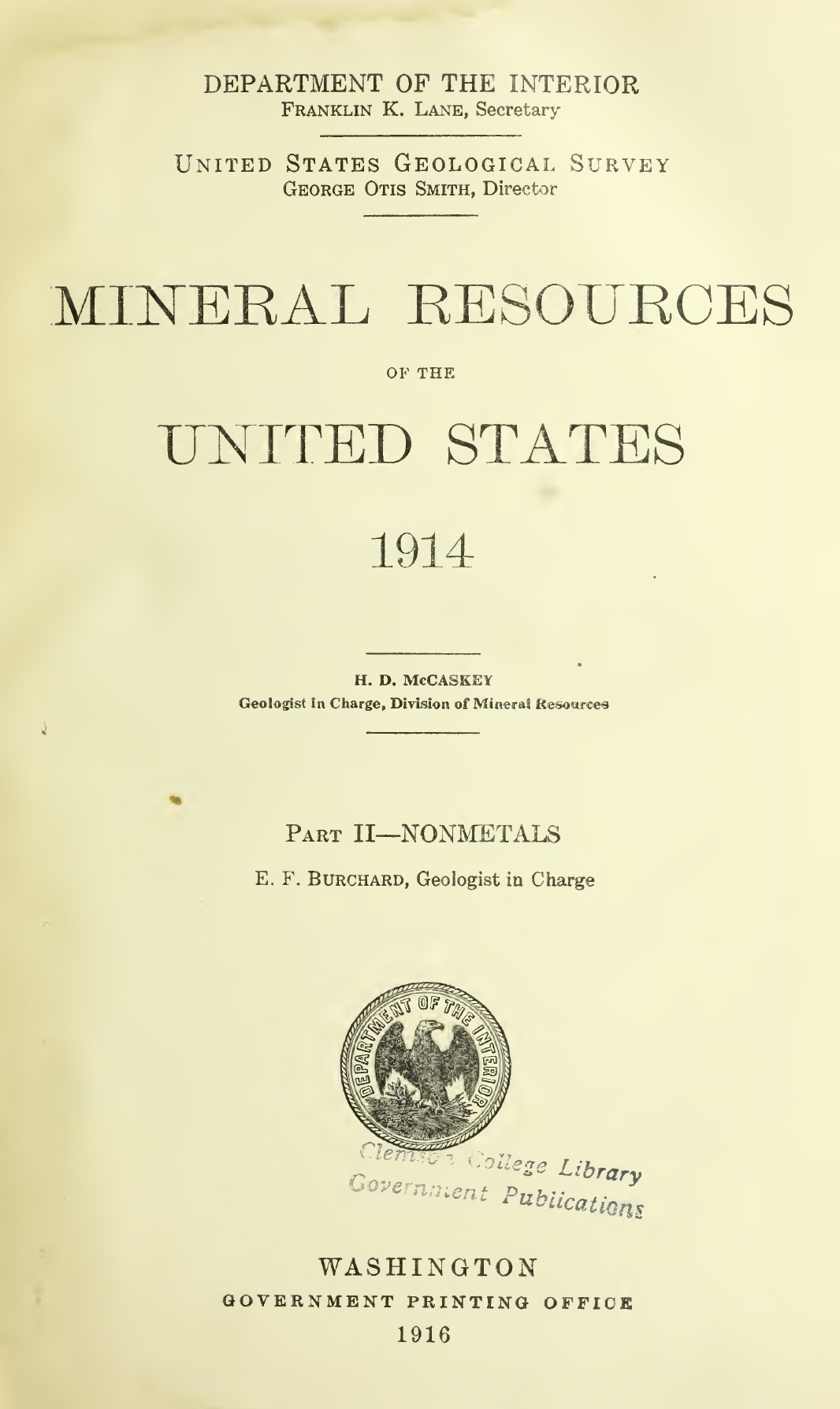
Stoddard, B.H. (1922)

Book Section · Source: Mineral Resources of the United States | 1919 · Volume: Part 2—Nonmetals · Pages: pp. 165–180

Abstract
Stoddard reviews the production, trade, and principal developments in gems and precious stones during 1919. U.S. production was valued at $111,763, about 5% above 1918, with increased output of tourmaline, turquoise, quartz, garnet, spinel, variscite, jet, and fossil coral; tourmaline showed the largest gain. Montana remained the leading producing state, chiefly through sapphire, followed by Maine, Arizona, Nevada, and California. Particular attention is given to the Yogo sapphire mine in Montana; the Arkansas diamond field, where about 5,000 diamonds were estimated to have been recovered since 1906; and the rapidly expanding American diamond market and cutting industry. Imports of precious stones excluding pearls reached a record $91,958,830, reflecting exceptionally high demand and sharply rising diamond prices. Extensive discussion covers South African diamond production and the increasing control of sales by the major producers, as well as new diamond discoveries in the Gold Coast. Other notable subjects include the reported rediscovery of the Chivor emerald mines in Colombia, renewed production of jet in Utah, and a remarkable large black opal associated with the Nevada opal fields.
Keywords
gems, gems general
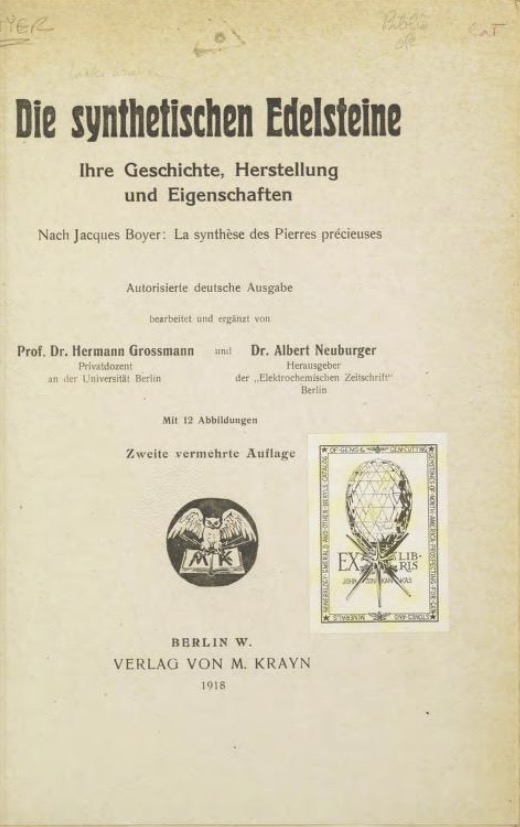
Die synthetischen edelsteine, ihre geschichte, herstellung und eigenschaften

Die synthetischen edelsteine, ihre geschichte, herstellung und eigenschaften

The synthetic gemstones, their history, manufacture and properties

Boyer, J.-M.-J., Grossmann, H. and Neuburger, A. (1918)

Book · Publisher: M. Krayn · Pages: 72 pp. · Language: in German

Abstract
Sinkankas: In general, major remarks are confined to the synthesis of corundum but also include comments on synthetic quartz, opal, emerald, and diamond [...]. Amplifying remarks in part four discuss color in natural gemstones, distinctions between synthetic and natural gemstones, properties of synthetic diamonds (!) and including their combustion, and prices of synthetic stones. Translated from the 1909 French original.
Keywords
gems, corundum, synthetic corundum.7, synthetic quartz, synthetic opal, synthetic emerald, synthetic diamond
Precious stones

Precious stones

Morgan, A.H. (1918)

Book Section · Source: Lectures Delivered at Tavoy under the Auspices of the Mining Advisory Board · Publisher: Supt. Govt. Printing · Pages: pp. 71–80

Abstract
A broad introductory lecture on precious stones, written from the practical viewpoint of a mining engineer familiar with Burma’s gem industry. Morgan discusses the qualities that give gems value—beauty, durability, hardness, transparency, color, rarity, and fashion—and surveys the principal precious and semiprecious stones, including diamond, ruby, sapphire, emerald, opal, spinel, tourmaline, aquamarine, chrysoberyl, peridot, garnet, beryl, zircon, amethyst, moonstone, turquoise, jadeite, and lapis lazuli. His treatment of ruby is especially notable, drawing on experience with the Burma Ruby Mines and giving contemporary observations on value, color, size, production, and the Mogok deposits; he notes that rubies occur chiefly in residual clays and gravels derived from crystalline limestone. He also discusses sapphire, spinel, and tourmaline from Burma and gives particular attention to jadeite, emphasizing its occurrence in northern Burma and its strong Chinese market. Morgan outlines methods of gem recovery from residual deposits, stresses the large scale required for profitable gem mining, and compares ruby mining with diamond recovery. The lecture concludes with remarks on glass, reconstructed and synthetic gems, practical methods of gem identification using hardness, specific gravity, pleochroism, and refractive index, and a tabular summary of the characteristics and principal sources of important gemstones.
Keywords
corundum, Burma.12, gems
Precious stones

Precious stones

Kunz, G.F. (1917)

Book Section · Source: The Mineral Industry… During 1916 · Publisher: McGraw-Hill · Volume: Vol. 25 · Pages: pp. 608–637, 885

Abstract
A detailed survey of the international precious-stone industry in 1916, emphasizing the continuing effects of the First World War on production, cutting, trade, shipping, and prices. Kunz records exceptionally high U.S. imports of precious stones and pearls, while discussing wartime controls on diamonds, changes in the Amsterdam and Antwerp cutting industries, and the growing importance of American and British cutting. Much of the report concerns diamonds, with extensive production and financial data for South Africa, together with accounts of deposits and exploration in Australia, Brazil, British Guiana, India, and California. Other sections cover Colombian emeralds, garnets, Burmese jadeite, Japanese and Australian opal, pearl fisheries in Australia, India, the Persian Gulf and the United States, the Burma ruby mines at Mogok, and sapphires from Queensland. The Mogok section notes reduced ruby production and exports but increased output of sapphire and spinel, while the Australian sapphire discussion describes mining methods, production, heat-related color changes, and marketing. An additional statistical table on p. 885 summarizes mineral production in British India, including jade and diamonds.
Keywords
corundum, treatments.6, gems
Precious stones

Precious stones

Kunz, G.F. (1916)

Book Section · Source: The Mineral Industry… During 1915 · Publisher: McGraw-Hill · Volume: Vol. 24 · Pages: pp. 591–613

Abstract
A wide-ranging review of the precious-stone industry during 1914, dominated by the disruptive effects of the First World War on mining, cutting, trade, and consumption. Kunz describes the immediate collapse of European demand after the outbreak of hostilities, the interruption of the Amsterdam and Antwerp diamond-cutting industries, restrictions on shipping, and the consequent sharp decline in U.S. imports during the latter part of the year. Much of the report is devoted to diamonds, with detailed accounts of De Beers and Premier operations, the shutdown or curtailment of South African mines, German Southwest African production, the Belgian Congo, Brazil, and other fields. The war caused widespread suspension of mining and severe labor and marketing problems, although diamond prices remained comparatively firm. Other sections treat Colombian emerald mining, Alaskan garnet, pearls and pearl fisheries in the Pacific and Indian oceans, the Burma Ruby Mines at Mogok, and sapphire production at Anakie, Queensland. Kunz notes that the Mogok company operated at a loss for the year and records the effects of weaker European demand for ruby, while Australian sapphire production was also curtailed. The report closes with discussion of the growing international adoption of the metric carat and provides a valuable contemporary account of how the outbreak of war abruptly transformed the global gemstone industry.
Keywords
corundum, quality.10, gems
Precious stones

Precious stones

Sterrett, D.B. (1916)

Book Section · Source: Mineral Resources of the United States | 1914 · Volume: Part 2—Nonmetals · Pages: pp. 307–346

Abstract
Sterrett’s annual review records a sharp contraction in the American gem-mining industry during 1914, reflecting depressed conditions in the gem trade and disruptions associated with the European war. The greatest decline was in Montana sapphire: important placer workings were idle and the English-owned Yogo sapphire mines closed in August. Nevada opal production also fell, while turquoise was a notable exception, increasing with the development of new deposits. The report provides detailed descriptions of numerous American gem occurrences, including agate and moss agate, amethyst, beryl and aquamarine, chrysoprase, diamonds, amazon stone, sapphire, spodumene, tourmaline, turquoise, and miscellaneous ornamental stones, with attention to geology, mining, gem quality, and commercial potential. Arkansas diamond development continued but remained inconclusive, and several diamonds were recovered from California placers. Sterrett includes a substantial historical summary of the U.S. precious-stone industry from 1882 to 1914, emphasizing its generally sporadic character and the principal roles of sapphire, turquoise, tourmaline, spodumene, and chrysoprase. A section on microspectroscopy describes its application to identifying colored gems and distinguishing ruby, sapphire, emerald, garnet, zircon, and corundum. Domestic gem production fell from $319,454 in 1913 to $124,651 in 1914, while imports of precious stones dropped to $19,211,084, the lowest value since 1908.
Keywords
gems, gems general
Precious stones

Precious stones

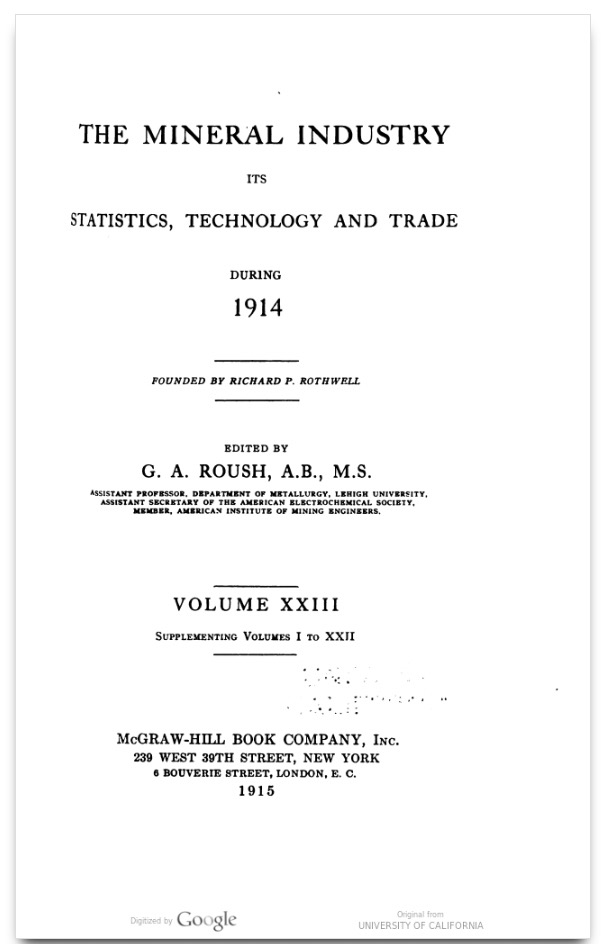
Kunz, G.F. (1915)

Book Section · Source: The Mineral Industry… During 1914 · Publisher: McGraw-Hill · Volume: Vol. 23 · Pages: pp. 623–653

Abstract
A wide-ranging review of the precious-stone industry during 1914, dominated by the disruptive effects of the First World War on mining, cutting, trade, and consumption. Kunz describes the immediate collapse of European demand after the outbreak of hostilities, the interruption of the Amsterdam and Antwerp diamond-cutting industries, restrictions on shipping, and the consequent sharp decline in U.S. imports during the latter part of the year. Much of the report is devoted to diamonds, with detailed accounts of De Beers and Premier operations, the shutdown or curtailment of South African mines, German Southwest African production, the Belgian Congo, Brazil, and other fields. The war caused widespread suspension of mining and severe labor and marketing problems, although diamond prices remained comparatively firm. Other sections treat Colombian emerald mining, Alaskan garnet, pearls and pearl fisheries in the Pacific and Indian oceans, the Burma Ruby Mines at Mogok, and sapphire production at Anakie, Queensland. Kunz notes that the Mogok company operated at a loss for the year and records the effects of weaker European demand for ruby, while Australian sapphire production was also curtailed. The report closes with discussion of the growing international adoption of the metric carat and provides a valuable contemporary account of how the outbreak of war abruptly transformed the global gemstone industry.
Keywords
corundum, quality.10, gems
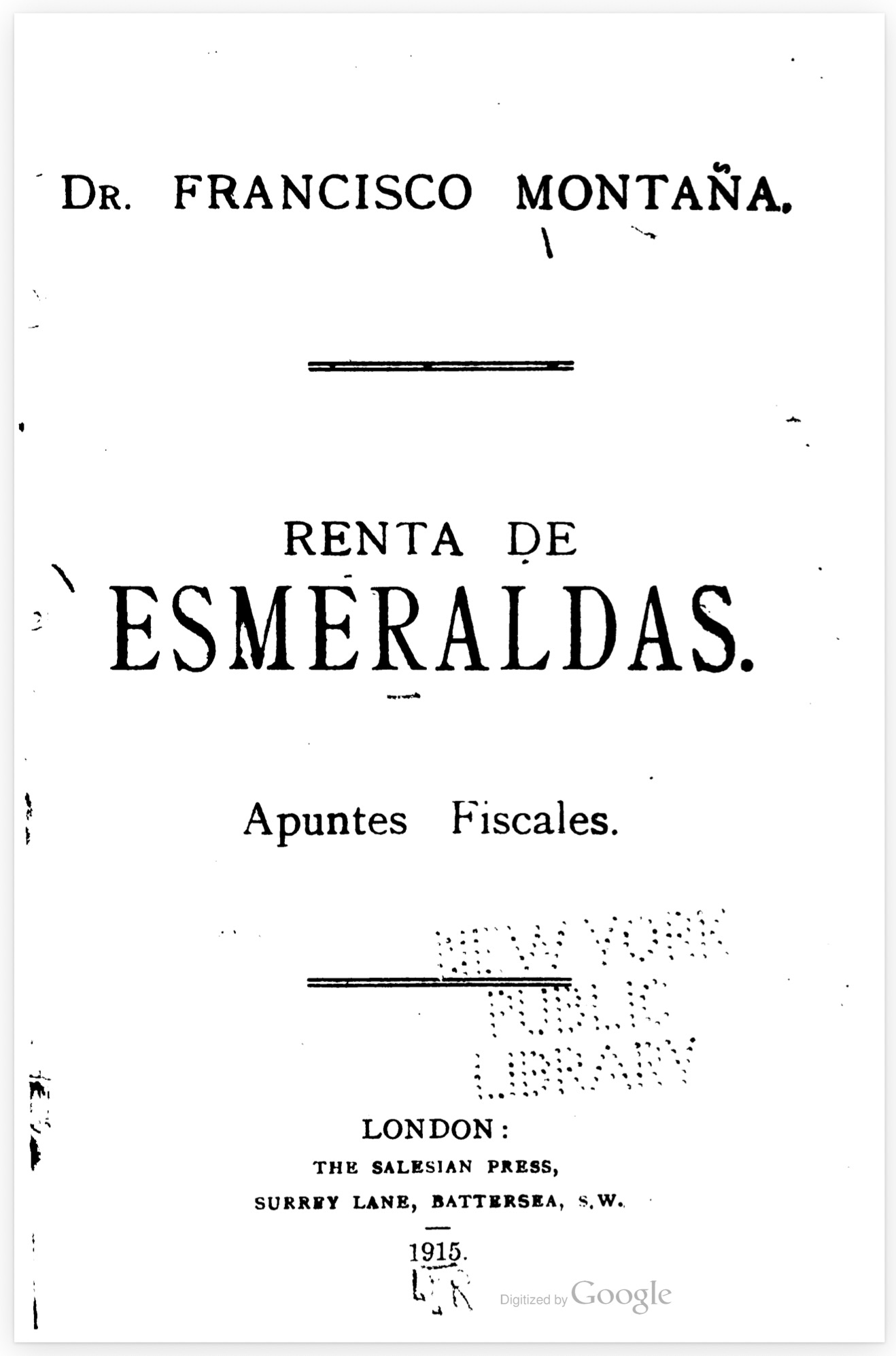
Renta de esmeraldas; apuntes fiscales

Renta de esmeraldas; apuntes fiscales

Emerald revenue; fiscal notes

Montaña, F. (1915)

Book · Publisher: Salesian Press · Pages: 79 pp. · Language: in Spanish

Abstract
Montaña examines Colombia’s government revenue from the national emerald mines, particularly Muzo, from the standpoint of public finance and administration. The work discusses the various systems by which the mines had been exploited and their revenues collected, including leasing and the administration of the mines through the Sindicato de Muzo, and argues that the emerald deposits constituted an exceptionally valuable national asset whose fiscal potential had historically been poorly realized. Particular attention is given to government contracts, production and sales, revenues and expenses, the problem of illicit extraction and contraband, and the measures required to protect the state’s monopoly and obtain a greater return from the emerald trade. Montaña supports his arguments with financial accounts and documentary evidence concerning the administration of the mines, making the work an important contemporary source for the economic and administrative history of the Colombian emerald industry in the early twentieth century.
Keywords
gems, beryl, emerald, Colombia
Precious stones

Precious stones

Kunz, G.F. (1914)

Book Section · Source: The Mineral Industry… During 1913 · Volume: Vol. 22 · Pages: pp. 621–650

Abstract
A wide-ranging review of the international precious-stone industry during 1913, covering fashions, markets, mining, trade, and new gem occurrences. Kunz notes the exceptional popularity of sapphire, especially star sapphires and other “phenomenal gems,” together with a revival of bead necklaces in amber, chalcedony, lapis lazuli, amethyst, chrysoprase, topaz, quartz, and moonstone. The diamond trade receives extensive treatment, including unusually heavy U.S. imports stimulated by anticipated tariff changes, adoption of the international metric carat of 200 mg, and detailed accounts of De Beers, Premier, German Southwest Africa, the Belgian Congo, Australia, Arkansas, British Guiana, India, and Brazil. Colored-stone sections include Australian emeralds, Ceylon garnet and moonstone, a new opal occurrence in New Mexico, California tourmaline and kunzite, and Montana sapphire. Of particular interest is an historical account of the Burmese jadeite mines at Seik-moo and Hweka, together with mention of an enormous two-ton block of New Zealand nephrite shipped to Germany. Kunz also records a poor-quality lapis lazuli occurrence in southern California, discusses the expanding pearl trade through Bahrain and Australian and American pearl fisheries, and concludes with unusual tourmaline from serpentine in the southern Urals and a summary of Berthold Laufer’s observations on the turquoise trade in China, Mongolia, and Tibet.
Keywords
corundum, synthetic corundum.7, gems, sapphire, Australia.12, Anakie, pearl, tourmaline, jade, Burma, fei cui, jadeite, opal, lapis lazuli, beryl, emerald
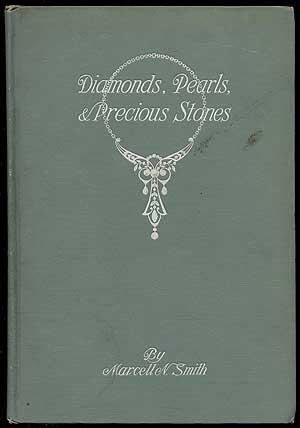
Diamonds, Pearls, and Precious Stones

Diamonds, Pearls, and Precious Stones

Smith, M.N. (1914)

Book · Publisher: Smith Patterson Co. · Pages: 97 pp.

Abstract
Sinkankas: A handsome production, designed “primarily to give assistance to the employees of the Smith Patterson Company in understanding more fully the diamond, pearl and colored gem business.” The preface gives sources of information that were drawn upon for the factual portions; these are reliable and the present work also shares this distinction. Much space is devoted to the diamond in all aspects, also the pearl, and much less wordage is given to the other gemstones and such rarities as kunzite and hiddenite. The frontispiece color plate is from watercolor sketches of rough crystal specimens of emerald and a cut gem from Muzo, Colombia.
Keywords
corundum, fashioning.9, pearls, diamonds, cutting, gems
Prehistoric emerald mines

Prehistoric emerald mines

Claremont, L. (1913)

Journal Article · Source: Knowledge Magazine · Volume: Vol. 36 · Issue: April · Pages: pp. 124–127

Abstract
Claremont describes the ancient emerald mines of Egypt’s Eastern Desert, situated in the mountainous region between the Nile and Red Sea, and argues that these were the source of emeralds used in antiquity. He recounts their rediscovery by the French explorer Cailliaud and reports that later investigations found large but poor-quality emeralds resembling ancient examples. The emerald crystals occur in mica schist, with important workings at Sikait, Nugrus, and Zebara, where extensive systems of tunnels and chambers attest to mining on a considerable scale. Archaeological remains—including tools, lamps, baskets, wooden mine supports, buildings, wells, temples, inscriptions, and other structures—are presented as evidence for the antiquity and extent of the workings; some objects were then dated as early as 1660 B.C., although Claremont states that the date when mining began was unknown. He suggests that the mines were worked repeatedly by different peoples and attributes the most skillful phase of mining to the Romans. Numerous surviving buildings are interpreted as possible forts, watchtowers, dwellings, barracks, and temples serving a once substantial mining population. The article is illustrated with photographs of the mines, mountainous terrain, artificial passageways, and ancient buildings supplied by Edwin W. Streeter, who pioneered an expedition to the mines, and expedition members Allan Forster and F. Grote.
Keywords
gems, beryl, emerald, Egypt
Precious stones

Precious stones

Sterrett, D.B. (1913)

Book Section · Source: Mineral Resources of the United States | Calendar Year 1912 · Volume: Part 2—Nonmetals · Pages: pp. 1023–1060

Abstract
Sterrett’s annual review surveys gem mining and production in the United States during 1912, with detailed descriptions of important deposits, their geology, mining, gem quality, and commercial prospects. Montana sapphire was the principal domestic gem mineral, with blue stones from Fergus County and varicolored material from placer deposits. Particular attention is given to the newly developed precious-opal deposits of Virgin Valley, Humboldt County, Nevada, where brilliant opal occurs commonly in association with petrified wood, and to extensive investigations of amethyst and beryl occurrences in North Carolina and Virginia. The report also discusses emerald mining at the Old Plantation mine near Shelby, North Carolina; Arkansas and other American diamond occurrences; chrysoprase, amazon stone, topaz, tourmaline, turquoise, variscite, and related gem materials. Domestic production was valued at $319,722, a decrease of $23,970 from 1911; opal and kunzite increased markedly, whereas turquoise, chrysoprase, and emerald declined. Sterrett additionally records the American jewelry trade’s decision to adopt the 200-milligram metric carat from July 1913 and the 1912 standardized list of birthstones adopted by the American National Retail Jewelers’ Association.
Keywords
gems, gems general
Die Mineralogie in der arabischen Literatur

Die Mineralogie in der arabischen Literatur

Mineralogy in Arabic literature

Ruska, J. (1913–14)

Journal Article · Source: Isis · Volume: Vol. 1 · Pages: pp. 341–350 · Language: in German

Abstract
Ruska surveys the character and development of mineralogical knowledge in Arabic literature, emphasizing that medieval “mineralogy” embraced not only stones and ores but also technically produced substances, pearls, coral, and fossils, and differed fundamentally from modern mineralogy in its emphasis on readily observable physical properties, behavior in fire and acids, medicinal uses, magical powers, localities, varieties, and practical applications rather than crystallography. He traces this knowledge through Arabic pharmacological, cosmographical, natural-philosophical, and astrological writings, including Ibn Sīnā, Ibn al-Baiṭār, Qazwīnī, the Ikhwān al-Ṣafāʾ, and Arabic lapidaries attributed to Aristotle, Ḥunain ibn Isḥāq, and others. Particularly interesting are accounts assigning particular stones and metals to the planets and prescribing engraved images and astrological conditions for their use; Ruska connects this Arabic tradition with the Spanish Lapidario of Alfonso X and with later works of Albertus Magnus, Thomas of Cantimpré, and Konrad von Megenberg. He devotes substantial attention to al-Tīfāshī’s lapidary, which treats 25 precious and semiprecious stones according to their formation, localities, qualities, powers, and commercial value. As an example, Ruska discusses al-Tīfāshī’s account of emerald, including the medieval theory of its formation, the Egyptian emerald mines near the Red Sea, mining conditions, varieties and defects, medicinal and legendary properties, and valuation; the finest “beetle-green” emerald is stated to average four gold dinars per carat. Ruska closes by stressing the exceptional importance of al-Bīrūnī’s eleventh-century Kitāb al-jamāhir fī maʿrifat al-jawāhir, particularly for the history of gemstones and information concerning important stones of India, and expresses his intention to make the work accessible through an edition and translation.
Keywords
gems, Arabic mineralogy, early gemology, al-Biruni, al-Kindi, al-Tifaschi, early lapidaries
Emerald fields of Colombia

Emerald fields of Colombia

Gamba, F.P. (1913)

Journal Article · Source: Scientific and Mining Press · Volume: Vol. 107 · Pages: p. 345

Abstract
Short article on emerald mining in Colombia.
Keywords
gems, beryl, emerald, Colombia, Muzo, Chivor, Cosquez
Precious stones

Precious stones

Kunz, G.F. (1913)

Book Section · Source: The Mineral Industry… During 1912 · Volume: Vol. 21 · Pages: pp. 707–736

Abstract
A wide-ranging review of the international precious-stone industry during 1912, covering markets, mining, cutting, new discoveries, and changing jewelry fashions. Kunz notes continued strength in the diamond trade and the popularity of sapphire and other blue stones, while discussing synthetic gems, customs duties, and long-term trends in U.S. imports. Diamond coverage is extensive, treating De Beers, Premier, Voorspoed and other South African mines, German Southwest African production and government regulation, British Guiana, Canada, and the still-developing Arkansas field, as well as the diamond-cutting industries of Amsterdam, Antwerp, Germany, and South Africa. Colored-stone sections include the Burma Ruby Mines at Mogok, artificial ruby, Montana sapphires, North Carolina emeralds, Texas topaz, California tourmaline and kunzite, jadeite from Burma, and numerous ornamental stones. Particular attention is given to opal, including the remarkable fossil-bearing and hydrous material of Virgin Valley, Nevada, Mexican opal, and Australian black opal. Kunz also discusses jade and the importance of the Chinese market, amber, amethyst, and several newly reported gem materials and localities. The concluding section surveys pearl fisheries and pearl culture, including Ceylon, the Persian Gulf, Japan, Lower California, and experimental methods intended to stimulate pearl formation.
Keywords
corundum, synthetic corundum.7, gems, diamond, Burma.12, Mogok, jade, Burma, fei cui, jadeite
Precious stones

Precious stones

Kunz, G.F. (1912)

Book Section · Source: The Mineral Industry… During 1911 · Volume: Vol. 20 · Pages: pp. 624–644

Abstract
A wide-ranging review of the international precious-stone industry during 1911, with particular emphasis on diamonds, their production, prices, cutting, and trade. Kunz notes the continuing rise in diamond and pearl prices despite recent financial depression and discusses efforts to establish the metric carat of 200 mg as an international standard. Detailed accounts cover the major South African diamond mines, including De Beers, Premier, and Jagersfontein, the rapidly developing deposits of German Southwest Africa, Australian and Brazilian production, Canadian occurrences, and the Arkansas diamond field, where development remained limited. A substantial section examines the diamond-cutting industries of Amsterdam, Antwerp, and the United States and the competitive effects of new African production. Other gem materials discussed include emeralds from North Carolina, opal from Australia and the western United States, rhodonite, Montana sapphire, turquoise from Virginia and Nevada, zircon, amber, and jade; New Zealand nephrite (pounamu) receives particular attention, including Māori terminology and its growing export for cutting in Europe. The turquoise section includes chemical analyses and discussion of its mineralogical composition. The report concludes with observations on amber deposits in Russia, pearl fisheries in Ceylon and Australia, Japanese cultured or “made” pearls, and contemporary problems affecting the pearl industry.
Keywords
corundum, synthetic corundum.7, gems
Precious stones

Precious stones

Sterrett, D.B. (1912)

Book Section · Source: Mineral Resources of the United States | Calendar Year 1911 · Volume: Part 2—Nonmetals · Pages: pp. 1057–1078

Abstract
Sterrett’s annual review surveys the production, occurrence, and trade of gems and precious stones during 1911, with particular emphasis on deposits in the United States. He describes renewed sapphire mining in Montana, promising emerald development at the Turner mine near Shelby, North Carolina, increased interest in agate, moss agate, jasper, and bloodstone, and declining production of tourmaline, kunzite, turquoise, and variscite. Numerous individual occurrences are discussed, including aquamarine, amethyst, chrysoprase, californite (compact vesuvianite and garnet), rhodonite, diamonds, and other ornamental materials, with notes on geology, gem quality, mining, cutting, and commercial value. The report also records diamond production and discoveries in Arkansas and abroad, and provides statistics on U.S. gem production and imports. The reported value of domestic gem production rose from $295,797 in 1910 to $343,692 in 1911, although it remained below the levels of 1907–1909; Sterrett cautions that these figures largely represent the first-sale value of rough material rather than the much higher value of finished gems.
Keywords
gems, gems general
Precious stones

Precious stones

Kunz, G.F. (1911)

Book Section · Source: The Mineral Industry… During 1910 · Volume: Vol. 19 · Pages: pp. 563–589

Abstract
A broad review of the international precious-stone industry during 1910, emphasizing diamond production, markets, cutting, and major new gem discoveries. Kunz criticizes misleading trade names and undisclosed artificial gems, discusses the growing use of platinum in jewelry, and notes strong demand for emerald, pearl, sapphire, and other colored stones. Diamond coverage is extensive, including De Beers, Premier, Voorspoed, the Vaal River diggings, German Southwest Africa, the Belgian Congo, Australia, Brazil, British Guiana, Canada, and the developing Arkansas field, together with production statistics and the diamond-cutting industries of Antwerp, Amsterdam, and Germany. Of particular gemological importance is the account of microscopic diamonds in chromite-bearing altered peridotite from British Columbia. Colored stones include the Burma Ruby Mines at Mogok, Montana sapphires, and an extraordinary 110.5-kg transparent aquamarine crystal from Minas Gerais, Brazil. Kunz also introduces the name morganite for the fine rose-colored beryl newly mined in Madagascar, describing its occurrence, properties, and association with tourmaline and kunzite. Further sections treat moldavite and tektites, tourmaline, peridot, jade and jadeite, Ceylon moonstone, Lightning Ridge black opal, Baltic amber, Whitby jet, and pearl fisheries in Bahrain, Ceylon, and the United States.
Keywords
corundum, synthetic corundum.7, gems
Precious stones

Precious stones

Sterrett, D.B. (1911)

Book Section · Source: Mineral Resources of the United States | Calendar Year 1910 · Volume: Part 2—Nonmetals · Pages: pp. 847–900

Abstract
A detailed review of gem production, mining, and discoveries in the United States and abroad during 1910. Sterrett records a substantial decline in U.S. precious-stone production, from $534,380 in 1909 to $295,797 in 1910, largely because of reduced output of tourmaline, turquoise, and chrysoprase. Particular attention is given to turquoise and the rapidly expanding use of variscite, with extensive descriptions of new deposits in Nevada and Utah, including their geology, mineralogy, color, and suitability for jewelry. Other American materials treated include agate and jasperized dinosaur bone from Colorado, amethyst deposits in North Carolina and Georgia, aquamarine and other beryls, opal, lapis lazuli, tourmaline, sapphire, and californite, a compact vesuvianite or garnet resembling jade and considered suitable as a substitute for nephrite or jadeite. Diamond sections discuss the Arkansas field, California placer diamonds, microscopic diamonds discovered in chromite-bearing peridotite in British Columbia, and the major South African mines. Sterrett also describes North Carolina emerald prospects, Montana sapphires, Burmese ruby, sapphire, and spinel production, and numerous newly reported gem localities. The report concludes with production statistics and U.S. import figures, noting a slight increase in precious-stone imports during 1910, particularly pearls and rough diamonds.
Keywords
gems, gems general
The newly discovered emerald mines of “Somondoco”

The newly discovered emerald mines of “Somondoco”

Latham, E.B. (1911)

Journal Article · Source: School of Mines Quarterly · Volume: Vol. 32 · Issue: No. 3 · Pages: pp. 210–214

Abstract
Latham reports on the recently rediscovered emerald deposits of Somondoco in Colombia, an area known for emerald mining in pre-Columbian and early Spanish colonial times. He describes the location and geological occurrence of the emeralds, their association with veins in the enclosing rocks, and the character of the mining operations and material recovered. The paper places the deposits in their historical setting and discusses their potential as a renewed source of Colombian emeralds.
Keywords
gems, beryl, emerald, Colombia, Chivor, Somondoco, Cosquez

Exploring the Literature of Emerald

Emerald literature spans gemology, mineralogy, deposits, identification, treatments, synthesis, history and the gem trade, with important sources covering deposits around the world.

For a curated guide to this subject, read Green Fire — Lotus Gemology's Guide to the Literature of Emerald.

About Four Treasures

Four Treasures is Lotus Gemology's freely accessible gemological reference database. Use the full database to search by author, title or keyword and explore literature on gemology, mineralogy, jewelry and related fields. Where available, hyperlinks on titles may lead directly to the full publication.

Search the Complete Four Treasures Database