Gemology Books Bibliography

Gemology Books Bibliography

Explore books on gems, gemology, jewelry and mineralogy in Four Treasures, the Lotus Gemology reference database. This bibliography brings together matching book records from the collection, with publication details, abstracts and cover images where available.

Gemology Book References

The list below matches books concerning gemology and related subjects in the database's searchable fields. Some works cover several branches of gems, jewelry or mineralogy.

3,401–3,420 of 3,434 matching references
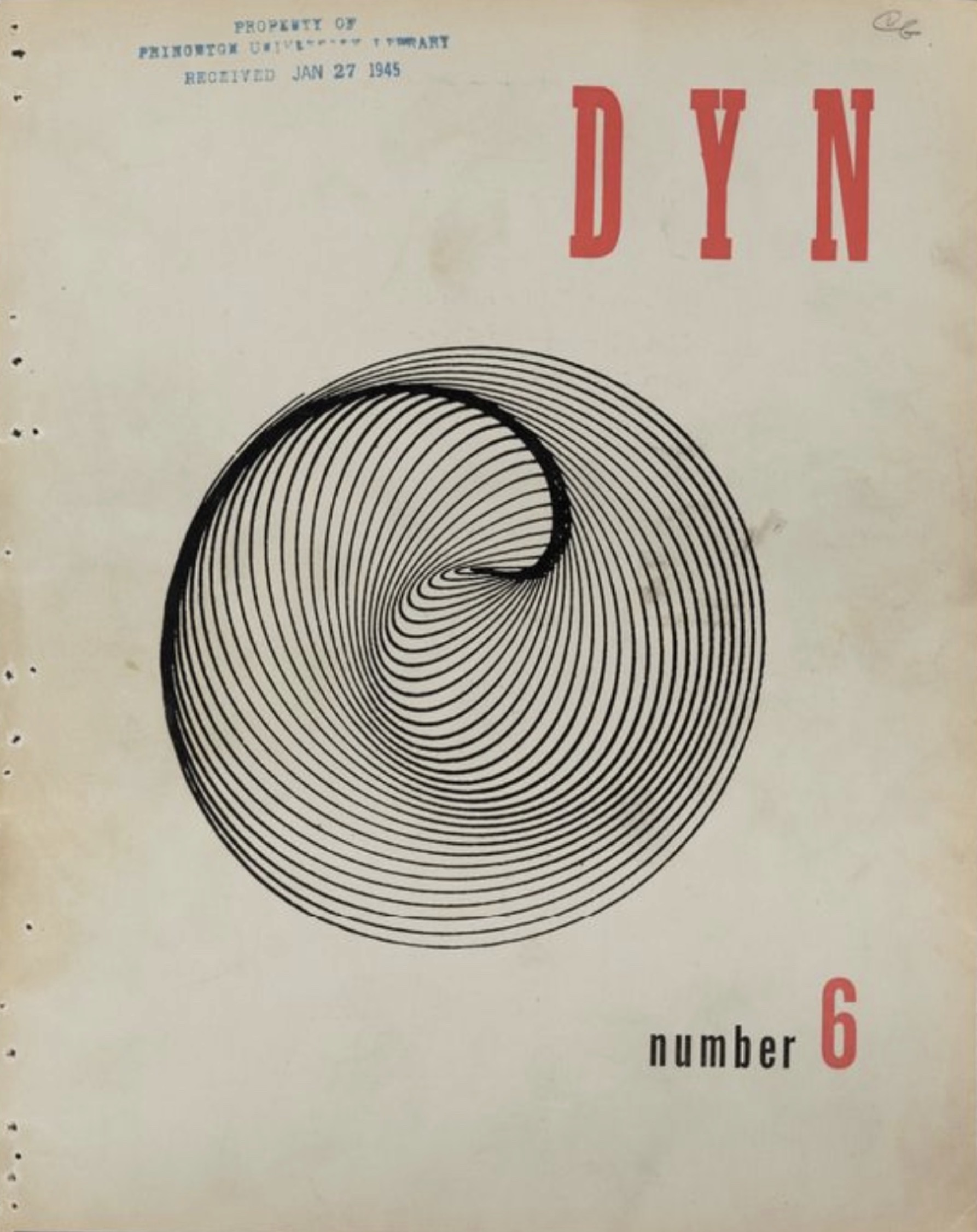
La Venta: Colossal Heads and Jaguar Gods

La Venta: Colossal Heads and Jaguar Gods

Covarrubias, M. (1946)

Journal Article · Source: Dyn · Volume: Vol. 6 · Pages: pp. 24–33

Keywords
gems, jade, pyroxene jade, fei cui, Guatemala, Mesoamerica, Nicaragua, Mexico, Honduras, Costa Rica, archaeogemology, Cuba, Dominican Republic, Olmec, Mayan, Aztec, Mixtec, Toltec, Zapotec
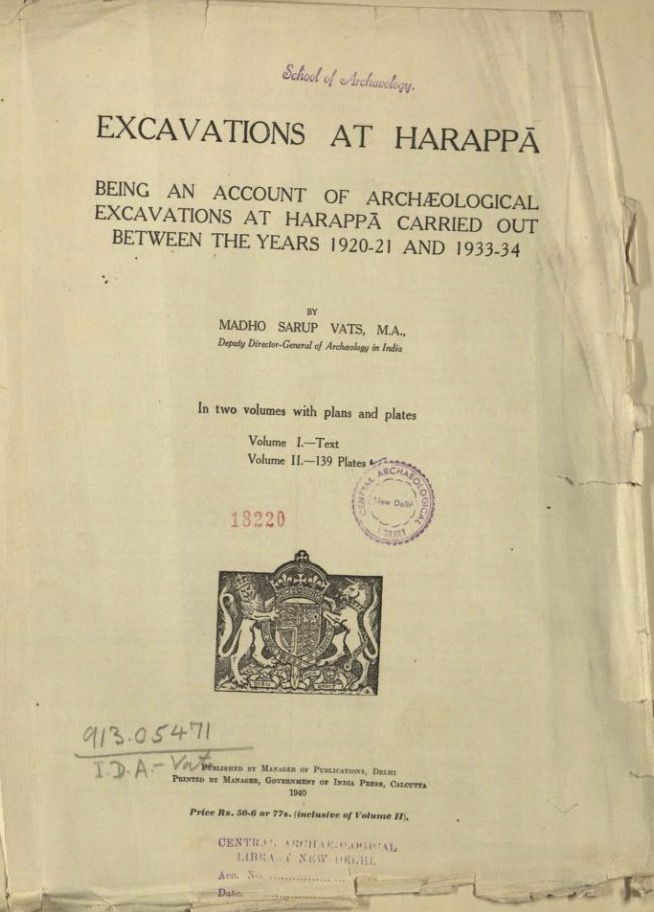
Part I. Report on selected beads from Harappa

Part I. Report on selected beads from Harappa

Beck, H.C. (1940)

Book Section · Source: Excavations at Harappa: Being an Account of Archaeological Excavations at Harappa Carried Out Between the Years 1920–21 and 1933–34 · Publisher: Government of India Press · Volume: Vol. 1 · Pages: pp. 392–431

Abstract
At the request of Mr. Madho Sarup Vats, Deputy Director General of Archaeology in India, I have undertaken to write a chapter on selected beads from Harappa. The fact that I cannot examine the entire collection has made it difficult to assess the likelihood of foreign importation, but Mr. Vats has been of great assistance in providing details on whether each specimen is unique, rare, or common, as well as information on the stratigraphic layer in which it was found. This data, combined with a close examination of the beads, has revealed some interesting possibilities regarding connections with other civilizations, particularly the Sumerian civilization in Mesopotamia. Since there appears to be little variation among the beads from different layers—many types occurring across several layers—I have chosen to group the beads by material rather than by stratigraphy. Several plates accompany the text for clarification. The first two are diagrammatic and show the beads arranged by shape according to the Beck Method of classification. Plate CXXIX illustrates beads in Group I, those with circular transverse sections, while Plate CXXX shows beads with non-circular transverse sections. Some plates also consist of microphotographs showing internal structure. One especially notable feature of the Harappa beads is the remarkably large number made from steatite. Nowhere else has such a high proportion of beads been found in this material. Moreover, the variety of treatment applied to the steatite is quite exceptional. While some beads are in natural stone, the vast majority have undergone heat treatment that whitens the surface. These are referred to as “burnt” steatite beads. Although I cannot be certain that intense heat was used in every instance, I have adopted the term nonetheless.
Keywords
gems, ancient gems, glyptic, archaeology, archaeogemology, beads, chalcedony, Harrapa, jade, feldspar, amazonite, lapis lazuli, faience, ivory, shell, brecciated jasper in chalcedony, Indian lapidary, Central Asia
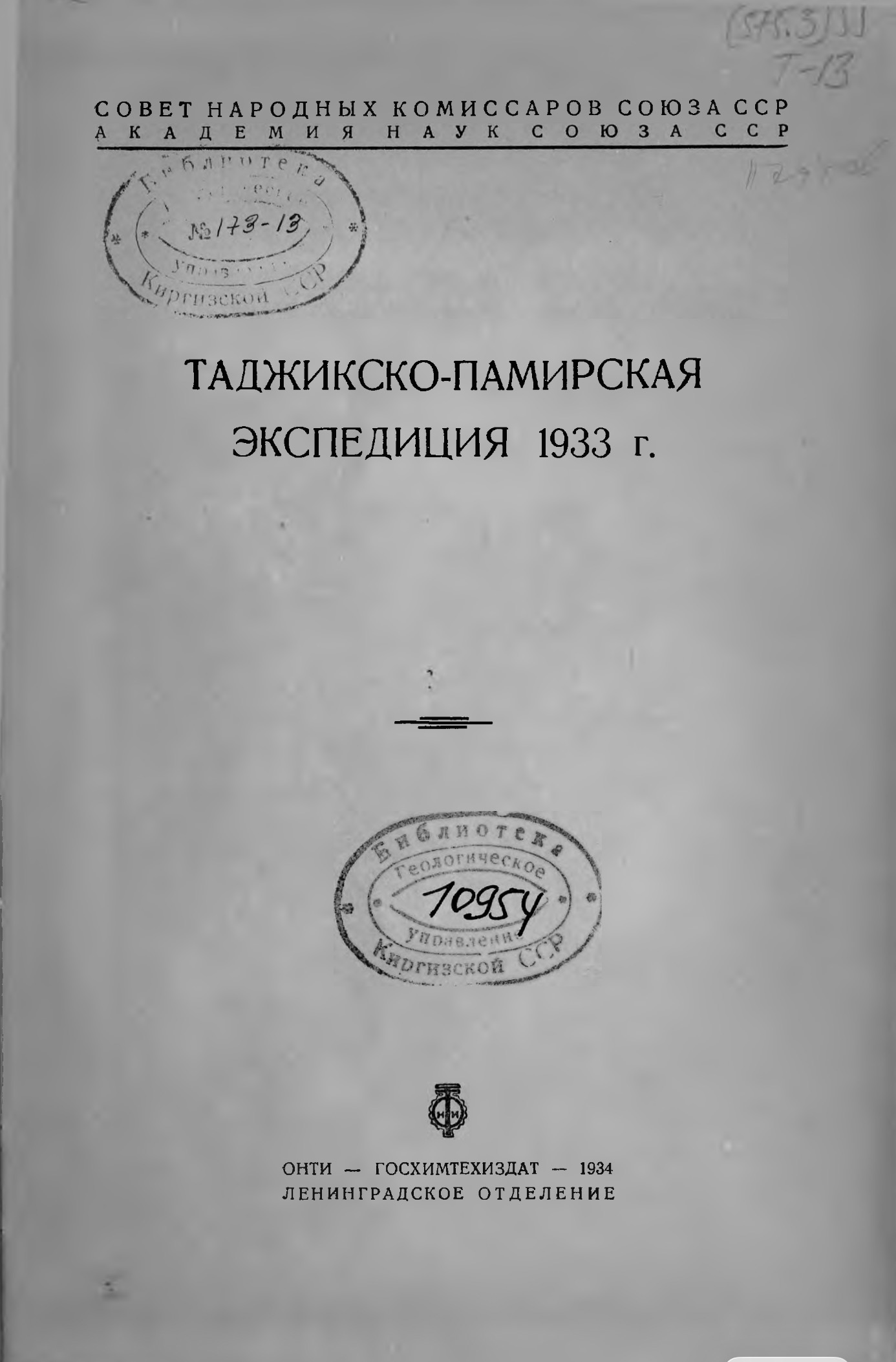
Mineral Resources of Southern Tajikistan: Pamir, Badakhshan, Darvaz, Karategin

Mineral Resources of Southern Tajikistan: Pamir, Badakhshan, Darvaz, Karategin

Полезные ископаемые Южного Таджикистана: Памир, Бадахшан, Дарваз, Каратегин

Popov, V.I. (1936)

Book · Publisher: Tajik-Pamir Expedition · Volume: Materials of the Tajik-Pamir Expedition, No. 28 · Pages: 470 pp. · Language: in Russian

Abstract
A comprehensive economic-geological survey of the mineral resources of southern Tajikistan, covering the Pamir, Badakhshan, Darvaz, and Karategin and synthesizing the results of the Tajik-Pamir expeditions. Popov relates mineral occurrences to the regional geology and distinguishes the metallogenic character of the principal geological zones. Of particular gemological importance is his treatment of the southern crystalline belt of the Pamir, which he characterized as especially rich in nonmetallic mineral resources, including lapis lazuli, gem spinel, clinohumite, garnet, kyanite, and graphite. He also records pegmatites associated with younger granites carrying mica, beryl, tantalite, and columbite. The work is an important early synthesis of the mineral resources and gem-bearing geology of the Pamir and remains a frequently cited foundation for later studies of the region’s gem deposits.
Keywords
gems, Tajikistan, spinel
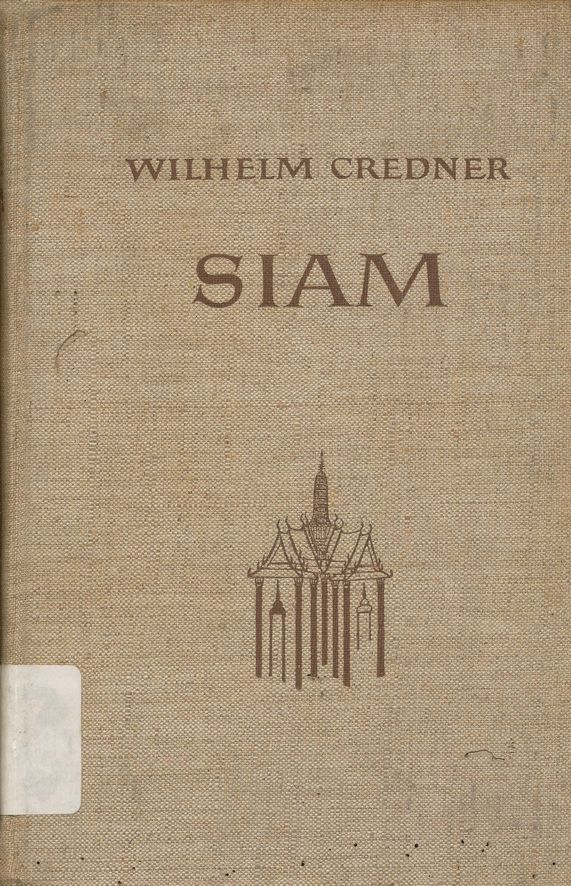
Siam, das Land der Thai

Siam, das Land der Thai

Siam, the Land of the Thai

Credner, W. (1935)

Book · Publisher: [in German] · Language: in German

Abstract
Credner presents a broad geographical account of Siam based on his extensive travels and field investigations, combining physical geography, geology, climate, vegetation, settlement, population, agriculture, communications, and economic development. He describes the major geographical regions of the country and relates their landscapes and patterns of human occupation to underlying geology and relief. Mineral resources and mining form part of the economic-geographical treatment, including Siam’s important tin industry and other mineral occurrences, while the gem-producing districts are considered within the wider discussion of natural resources. The work is particularly valuable as a detailed picture of Thailand in the early 1930s, shortly after the political changes of 1932, and contains numerous photographs, maps, and observations derived from Credner’s own fieldwork. For gemological purposes its importance lies chiefly in the geographical and geological context it provides for Siam’s mineral and gemstone resources rather than in detailed mineralogical descriptions.
Keywords
corundum, ruby, sapphire, Thailand.12, gems
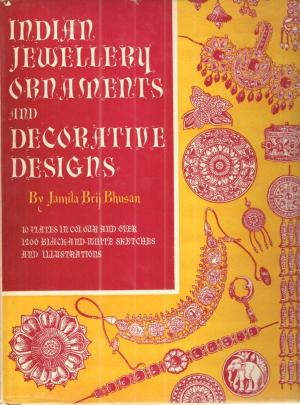
Indian Jewellery, Ornaments and Decorative Designs

Indian Jewellery, Ornaments and Decorative Designs

Bhushan, J.B. (1935)

Book · Publisher: D.B. Taraporevala Sons & Co. LTD · Pages: 168 pp.

Abstract
The most recent comprehensive work on the subject, distinguished by its authoritative text and wealth of illustrations. The text discusses the vogue for beads in India, ancient jewelry forms, Muslim jewelry types, modern trends, the craft of the goldsmith, precious stones, and advice for collectors. The chapter on precious stones (pp. 134–150) deals primarily with the traditional lore associated with gems in India, but also includes information on several famous stones, their owners, and elementary gemological data. The volume concludes with a list of Indian ornaments. References are provided at the end of each chapter; however, although the author cites the Journal of Indian Art & Industry for many illustrations, she fails to credit its author, T.H. Hendley (q.v.). The text paper is browned and brittle.
Keywords
corundum, India.12, jewelry, gems, Indian lapidary

Elegance of Stones [Shí Yǎ]

石雅

Zhang, H. (1927)

Book · Language: in Chinese

Abstract
Zhang Hongzhao’s Shí Yǎ (石雅, “Elegance of Stones”) is a pioneering attempt to reinterpret the mineral substances recorded in Chinese literature through modern mineralogy. Drawing extensively on classical texts, including the Shan Hai Jing and later historical, literary, pharmacological, and antiquarian sources, Zhang examines traditional names and descriptions and attempts to identify the materials to which they refer. The work is divided into three broad sections: the first concerns yù (玉) and related precious and ornamental stones, including 璆琳, 瓊瑰, and 水精; the second treats stones and mineral substances, including worked jade, decorative stones, and coal; and the third deals with metals. An appendix examines the historical development of China’s Bronze and Iron Ages. Particularly important for gemology is Zhang’s application of contemporary mineralogical knowledge to traditional Chinese gemstones and jade terminology, demonstrating that historical names cannot automatically be equated with single modern mineral species. The work consequently provides an important bridge between traditional Chinese lapidary literature and modern geology, mineralogy, and gemology and remains a major source for the historical study of Chinese stone terminology. The 1927 edition is a reprint, issued by the Central Geological Survey as Memoirs of the Geological Survey of China, Series B [乙種], No. 2; catalogues confirm the December 1927 reissue.
Keywords
gems, jade, China, Adam, Chinese jade books, jade lore
Los Minerales de Colombia

Los Minerales de Colombia

The Minerals of Colombia

Lleras Codazzi, R. (1927)

Book · Publisher: Imprenta Nacional, Biblioteca del Museo Nacional · Pages: 150 pp. · Language: in Spanish

Abstract
Lleras Codazzi provides an early systematic account of the minerals known from Colombia, combining mineralogical descriptions with information on their Colombian occurrences and localities. Produced as part of the Biblioteca del Museo Nacional, a series intended to document the museum’s collections scientifically while making them accessible to a wider readership, the work forms one of the foundational publications of modern Colombian mineralogy. It covers both common and economically significant mineral species and records occurrences of particular interest to mining and economic geology; later geological literature, for example, cites its discussion of pitchblende and other uranium minerals from Norte de Santander. For gemological research the book is particularly relevant because Lleras Codazzi had already studied the mineralogy of Muzo and its emerald deposits in his 1925 Catálogo descriptivo de los minerales de Muzo, and Los minerales de Colombia places such Colombian mineral occurrences within a broader national mineralogical survey.
Keywords
corundum, Colombia.12, gems, beryl, emerald

Mayan jades

Gann, T.W.F. (1925)

Journal Article · Source: Proceedings of the 21st International Congress of Americanists, Goteborg, 1924 · Pages: 276–282

Keywords
gems, jade, jadeite, fei cui, Mesoamerica, Mexico, Guatemala, Costa Rica, Mayans, Olmecs, Aztecs, archaeology, history, archaeogemology
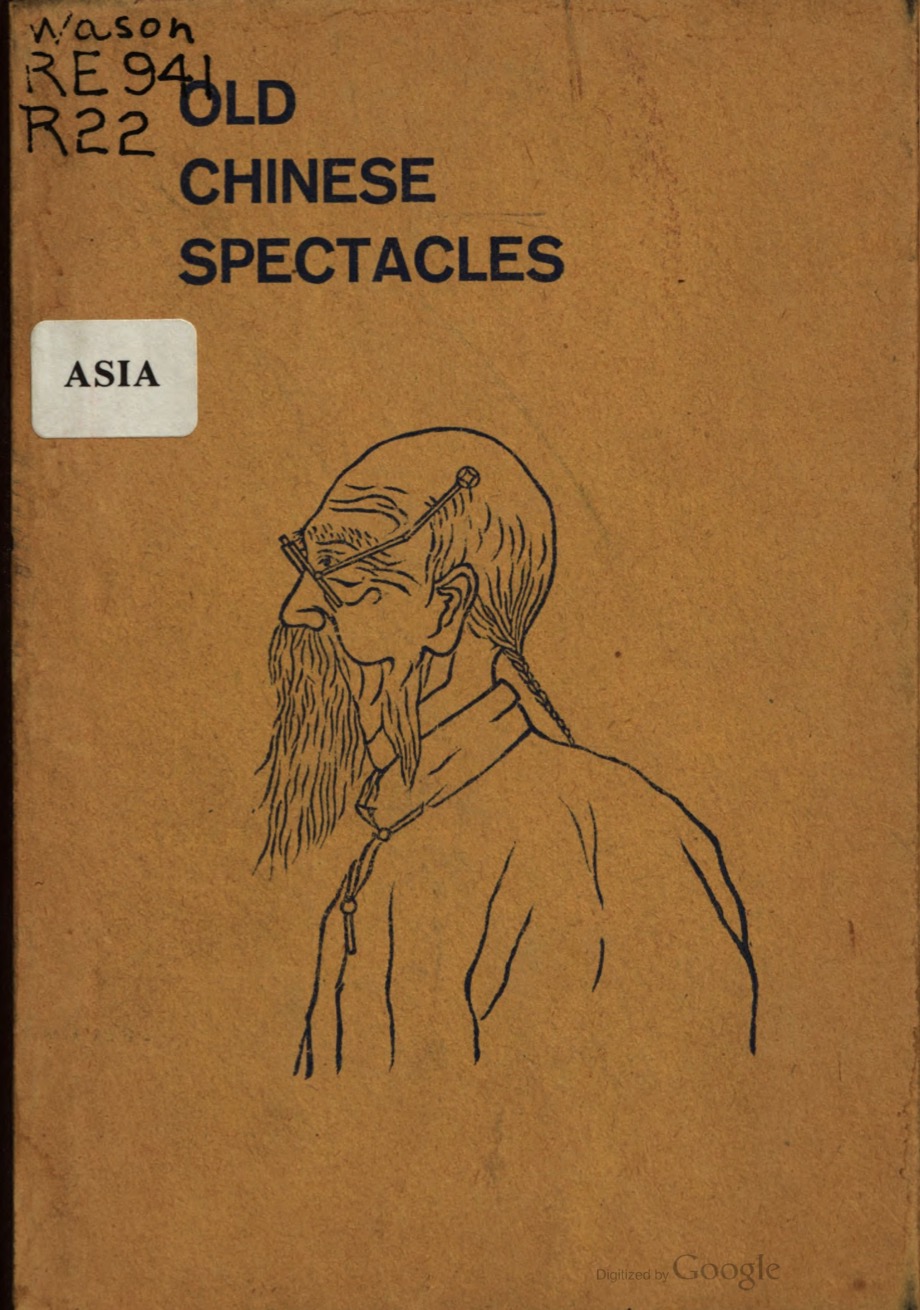
Old Chinese Spectacles

Old Chinese Spectacles

Rasmussen, O.D. (1915)

Book · Publisher: North China Press · Pages: 33 pp.

Abstract
Sinkankas: Fascinating account of an optometrist’s study of the development of spectacles in China that were manufactured from transparent quartz varieties and by the same lapidary methods as were used to carve jade. Four of the illustrations show various stages of work while another is a line drawing of a typical lapidary’s lathe-bench employing foot-treadle propulsion. Another valuable feature of this work is an account of the curious lore associated with wear of quartz spectacles and explaining why the Chinese were of the firm conviction that spectacles made from smoky quartz were soothing to the eyes and helped heal diseases of those organs. Very scarce.
Keywords
gems, lapidary arts, ancient lapidary, Afghanistan, Kabul, bow drill, beads, archaeology, archaeogemology, spectacles, quartz, China, jade
Nephrit und Jadeit

Nephrit und Jadeit

Bauer, M. (1914)

Book Section · Source: Handbuch der Mineralchemie · Volume: Vol. 2, Part 1 · Pages: pp. 649–704

Abstract
Sinkankas: A substantial technical article covering the chemistry and analysis of jade, including the investigations of Heber Reginald Bishop published in Investigations and Studies in Jade (1906). Topics discussed include physical properties, cohesive properties, melting points, reactions to acids and other reagents, the mineralogical characteristics of nephrite and jadeite, and their occurrence and origin. The article was also issued separately as an offprint.
Keywords
gems, mineralogy, gemology, jade, jadeite, fei cui, nephrite, amphibole jade, yu, pyroxene jade

Les Tailleurs de Pierres Fines Jurassiens

The Fine Stone Cutters of the Jura

Boullier, H. (1908)

Thesis · Source: Faculté de Droit , Département de droit commercial 1908 · Publisher: Université de Paris · Pages: 150 pp. · Language: in French

Abstract
A study of the lapidary industry of the French Jura, particularly the long-established communities of fine-stone cutters around Saint-Claude and the Haut-Jura. Boullier examines the historical development and economic organization of this specialized craft, in which gemstone cutting often supplemented agricultural work during the long winter months. The industry relied on skilled home and workshop labor, with cutters shaping and polishing imported precious and ornamental stones for the jewelry and watch trades, despite the absence of local gem deposits. The work is of particular gemological interest for documenting the organization, techniques, labor conditions and commercial structure of an important European lapidary center at the beginning of the twentieth century.
Keywords
gems, lapidary arts, Jura Mountains, France, Switzerland, gem cutting, faceting
Corundum and the basic magnesian rocks of western North Carolina

Corundum and the basic magnesian rocks of western North Carolina

Lewis, J.V. (1896)

Book · Source: North Carolina Geological Survey, 1891- Bulletin · Publisher: M.I. & J.C. Stewart · Issue: Bulletin No. 11 · Pages: 107 pp.

Abstract
Lewis presents a detailed study of the corundum deposits and associated basic magnesian rocks of western North Carolina, describing their geographical distribution, geology, mineralogy, and economic importance. He traces a belt of peridotitic and related rocks through the region and examines the relationship of corundum to these ultrabasic bodies and their altered products, including serpentine and talcose rocks. Individual mines and prospects are described, together with the occurrence, character, and quality of their corundum and associated minerals. Lewis discusses the geological origin of the deposits, the alteration of the enclosing rocks, and the manner in which corundum occurs in veins and contact zones. Attention is also given to mining methods, production, and the commercial use of corundum as an abrasive, as well as to crystals and colored varieties of mineralogical or gemological interest. The bulletin provides an important late nineteenth-century account of the Appalachian corundum belt and its relationship to the basic magnesian rocks of western North Carolina.
Keywords
Corundum, USA.12, North Carolina.12, gems

The Kachin Gazetteer

Walker, H.B., Capt. and Davies, H.R., Capt. (1893)

Book · Publisher: Compiled in the Intelligence Office, Burma Branch · Pages: 122 pp.

Abstract
Walker and Davies compile geographical, political, ethnographic, and administrative information on the Kachin peoples and territories of northern Upper Burma for the use of British officials. The gazetteer describes the distribution of Kachin communities, their tribal and clan organization, chiefs and systems of authority, villages, customs, religion, warfare, agriculture, trade, routes, and relations with neighboring peoples. It also records the physical geography of the mountainous frontier region, communications and principal settlements, and the natural and economic resources encountered there. Of particular relevance to gemological history is the work’s coverage of the northern Burmese districts and trade routes associated with the jade-producing country and commerce with China. As a proof edition compiled by the Intelligence Office shortly after the British annexation of Upper Burma, it provides an early administrative account of a region then being systematically surveyed and brought under colonial control.
Keywords
jade, jadeite, fei cui, Burma, gems
Les Lapidaires Français de Moyen Age des XIIe, XIIIeet XIVe Siècles

Les Lapidaires Français de Moyen Age des XIIe, XIIIeet XIVe Siècles

The French Lapidaries of the Middle Ages from the 12th, 13th, and 14th Centuries

Pannier, L.C.A. (1882)

Journal Article · Publisher: Bibliothèque de L’École des Hautes Études, Sciences Phililogiques et Historiques, Cinquante-Deuxième Fascicule · Pages: 340 pp. · Language: in French

Abstract
Pannier presents a scholarly collection and study of medieval French lapidaries dating from the twelfth, thirteenth, and fourteenth centuries. Drawing upon manuscript sources, the work publishes and compares texts concerned with precious stones and other minerals, their names, physical characteristics, supposed origins, medicinal uses, and magical or supernatural virtues. The lapidaries reflect traditions inherited from classical and medieval authorities and illustrate how knowledge and beliefs concerning gems were transmitted and transformed in medieval France. The volume is particularly valuable for the history of gemology, mineral nomenclature, and medieval beliefs about the properties and symbolism of precious stones.
Keywords
corundum, history.1, gems
Jin Yu Suosui (金玉瑣碎)

Jin Yu Suosui (金玉瑣碎)

Miscellaneous Fragments on Gold and Yu

Xie, K. (1880)

Book · Pages: juan 1, fols. 17a–18b, entry “Fei Cui Tanglang (mantis)” (翡翠螳螂) · Language: in Chinese

Abstract
Jin Yu Suosui (金玉瑣碎) [Miscellaneous Fragments on Gold and Yu] is a Qing-dynasty collection of miscellaneous observations concerning gold, yu, precious materials, and objects made from them. Of particular gemological interest is its discussion of fei cui (翡翠), including an entry concerning a fei cui mantis (翡翠螳螂), reflecting the terminology, appreciation, and use of fei cui in nineteenth-century China.
Keywords
gems, jade, China, chinese jade carving, Chinese lapidary arts, archaic jades, Hetian yu, amphibole jade
Report of the geological survey of North Carolina. Vol. I. Physical geography, resumé, economical geology

Report of the geological survey of North Carolina. Vol. I. Physical geography, resumé, economical geology

North Carolina State Geologist (1875)

Book · Publisher: J. Turner · Pages: xviii, 325, 120 p.

Abstract
The report presents a comprehensive survey of the physical geography and economically important geological resources of North Carolina, describing the state’s principal geological regions, rocks, soils, minerals, ores, and mining districts. It reviews resources of commercial importance, including gold, iron, copper, coal, building stones, and other mineral products, and summarizes contemporary knowledge of their occurrence and potential exploitation. Of particular gemological interest are the state’s corundum deposits and associated occurrences of ruby and sapphire, as well as other minerals suitable for ornamental or industrial use. The volume provides an important nineteenth-century account of North Carolina’s mineral resources during the period when its corundum deposits were attracting considerable scientific and commercial attention.
Keywords
Geology North Carolina., North Carolina Description and travel., gems

Building a Gemological Library

Gemological books range from general identification manuals and textbooks to specialized works on individual gems, mineralogy, jewelry, treatments, synthesis, history and gem-producing regions.

For a curated selection of particularly useful books, read The Gemologist's Core Library — Classic Books on Gemology, Jewelry and Mineralogy.

About Four Treasures

Four Treasures is Lotus Gemology's freely accessible gemological reference database. Use the full database to search by author, title or keyword and explore literature on gemology, mineralogy, jewelry and related fields. Where available, hyperlinks on titles may lead directly to the full publication.

Search the Complete Four Treasures Database