Gemology Books Bibliography

Gemology Books Bibliography

Explore books on gems, gemology, jewelry and mineralogy in Four Treasures, the Lotus Gemology reference database. This bibliography brings together matching book records from the collection, with publication details, abstracts and cover images where available.

Gemology Book References

The list below matches books concerning gemology and related subjects in the database's searchable fields. Some works cover several branches of gems, jewelry or mineralogy.
2,481–2,500 of 3,675 matching references

More on Russian hydrothermal synthetic emeralds
Journal Article
Koivula, J.I. (1985) More on Russian hydrothermal synthetic emeralds. Gems & Gemology, Vol. 21, No. 1, Spring, pp. 59–60.
Record No. 2383  |  ISBN/ISSN: 0016626X  |  Sinkankas/Born No.: NIS/NIB  |  RWHL
View Individual Record ↗
Dr. Frederick H. Pough, noted mineralogist and gemologist, supplied Gem News with the following information concerning the Russian hydrothermal synthetic emer-alds that have recently appeared on the colored-stone market. The emeralds show a refractive index of 1.574–1.580 with a birefringence of 0.006. They do not fluoresce to either long-wave or short-wave ultraviolet radiation, and their color-filter reaction is negative. The specific gravity is above 2.67, as would be expected from a hydrothermal synthetic emerald.The emeralds show a unique chevron-shaped internal growth pattern (figure 3),which has not been observed in any natural emeralds. The emeralds are doped with iron which maslts the fluorescence. The Gem News Editor also has examined some of these Russian synthetic emeralds and his obser-vations support those of Dr. Pough.

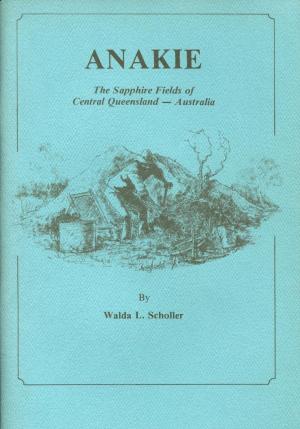
Anakie: The Sapphire Fields of Central Queensland—Australia
Book
Scholler, W.L. (1985) Anakie: The Sapphire Fields of Central Queensland—Australia. Anakie, E & W Scholler, 112 pp.
Record No. 1558  |  Sinkankas/Born No.: NIS/NIB  |  RWHL
View Individual Record ↗
Walda L. Scholler’s Anakie: The Sapphire Fields of Central Queensland—Australia, first published in 1985 and subsequently revised in 1986 and 1990, is an illustrated regional history of the sapphire-mining districts surrounding Anakie, Rubyvale, and Sapphire in central Queensland. Written and published locally, the book documents the development of one of Australia’s most important gemstone-producing regions, combining the history of sapphire discoveries and mining settlements with accounts of the people and commercial interests associated with the fields. The region’s recorded sapphire history began in 1873, when surveyor Archibald John Richardson discovered sapphire near Retreat Creek, west of Emerald. Subsequent discoveries and mining activity established a district internationally known for its corundum deposits, particularly blue, yellow, green, and parti-colored sapphires. The sapphire fields attracted prospectors, small-scale miners, merchants, cutters, and collectors, whose activities connected relatively isolated Queensland settlements with international gemstone markets. The book is especially interesting for its treatment of exceptional gemstones recovered from the fields. A description of the third edition identifies several notable stones, including the Golden Willow, Stonebridge’s Green, the Centenary Gem, and the celebrated Black Star of Queensland. The latter, a remarkably large star sapphire, became internationally famous through its acquisition by the Kazanjian brothers, Los Angeles jewelers and gemstone dealers. The same description indicates that the book discusses the brothers’ purchasing activities and their acquisition of other important Anakie gemstones, illustrating the influence of international buyers upon the marketing of Australian sapphire. This aspect of the local industry is particularly relevant to gemological trade history, since Australian rough sapphire became an important component of the material exported to Thailand for cutting, treatment, and international distribution. Contemporary gemological reporting confirms that, by the 1980s, Thai buyers were purchasing substantial quantities of sapphire directly from Australian mining operations, with heat treatment frequently employed to improve appearance. Although these broader trade practices provide context for Scholler’s subject, their treatment in the book has not been independently verified. The publication is of particular bibliographic and historical interest because it records a regional gemstone industry through the perspective of a local author, preserving information concerning mining settlements, notable discoveries, and personalities that might otherwise be dispersed among local records and oral traditions. The 1990 third edition comprises 112 pages and includes illustrations. A separate, later publication by Scholler, Images of the Anakie Sapphire Fields, Queensland (1993), was praised in a contemporary Journal of Gemmology review for its detailed historical research, particularly its extensive use of local newspaper accounts and documentation of miners and mining personalities. That review concerns the later book and cannot establish the precise contents of the 1985–1990 editions. Nevertheless, the documented subject matter of Anakie makes it a useful reference for the history of Australian sapphire mining, notable corundum discoveries, and the development of commercial connections between Queensland’s gemfields and the international gemstone trade.

Identification characteristics of flux grown synthetic orange sapphires
Journal Article
Gunawardene, M. (1985) Identification characteristics of flux grown synthetic orange sapphires. Journal of Gemmology, Vol. 19, No. 5, January, pp. 389–403.
Record No. 872  |  ISBN/ISSN: 221252  |  Sinkankas/Born No.: NIS/NIB  |  RWHL
View Individual Record ↗
Gunawardene examines the identification of Chatham flux-grown synthetic orange sapphire, material produced to imitate the orange-pink colour associated with Sri Lankan padparadscha sapphire. The paper documents the material’s gemmological properties and concentrates particularly on microscopic characteristics useful for separating it from natural sapphire. Diagnostic features associated with flux growth include residual flux and characteristic inclusions, together with growth features related to synthetic crystallization. The author also discusses platinum inclusions, derived from the crucibles used during growth, as an important indication of synthetic origin. The study compares these observations with natural orange sapphires and emphasizes microscopic examination as a practical means of identification.

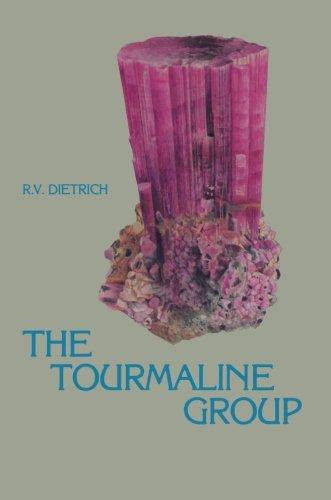
The Tourmaline Group

Book
Dietrich, R.V. (1985) The Tourmaline Group. New York, Van Nostrand Reinhold, 300 pp.
Record No. 163  |  ISBN/ISSN: 442218575  |  Sinkankas/Born No.: 1708; NIB  |  RWHL
View Individual Record ↗
A comprehensive synthesis of tourmaline mineralogy and gemology, drawing on more than 2,500 publications and incorporating nearly 1,000 references. Dietrich examines nomenclature, crystal morphology and structure, chemical composition, and the relationships between chemistry, species classification, and physical properties. Coverage includes crystal habits, exceptionally large crystals, inclusions and intergrowths, causes of color, color patterns, pleochroism, luminescence, and the effects of heating and irradiation. Additional chapters address physical properties, laboratory synthesis, industrial applications, and recovery. The gemstone chapter discusses tourmaline’s historical use in jewelry and decorative arts, fashioning, and notable gems. Geological coverage considers occurrences and formation in igneous, metamorphic, and sedimentary environments, while an appendix lists important sources of mineral specimens and gem material worldwide. The work’s principal strength is its organized compilation and evaluation of a widely scattered literature, making it useful to mineralogists, gemologists, and collectors. Individual deposits receive limited treatment, however, and the locality appendix lacks references directing readers to detailed accounts.

A recent find of taaffeite

Journal Article
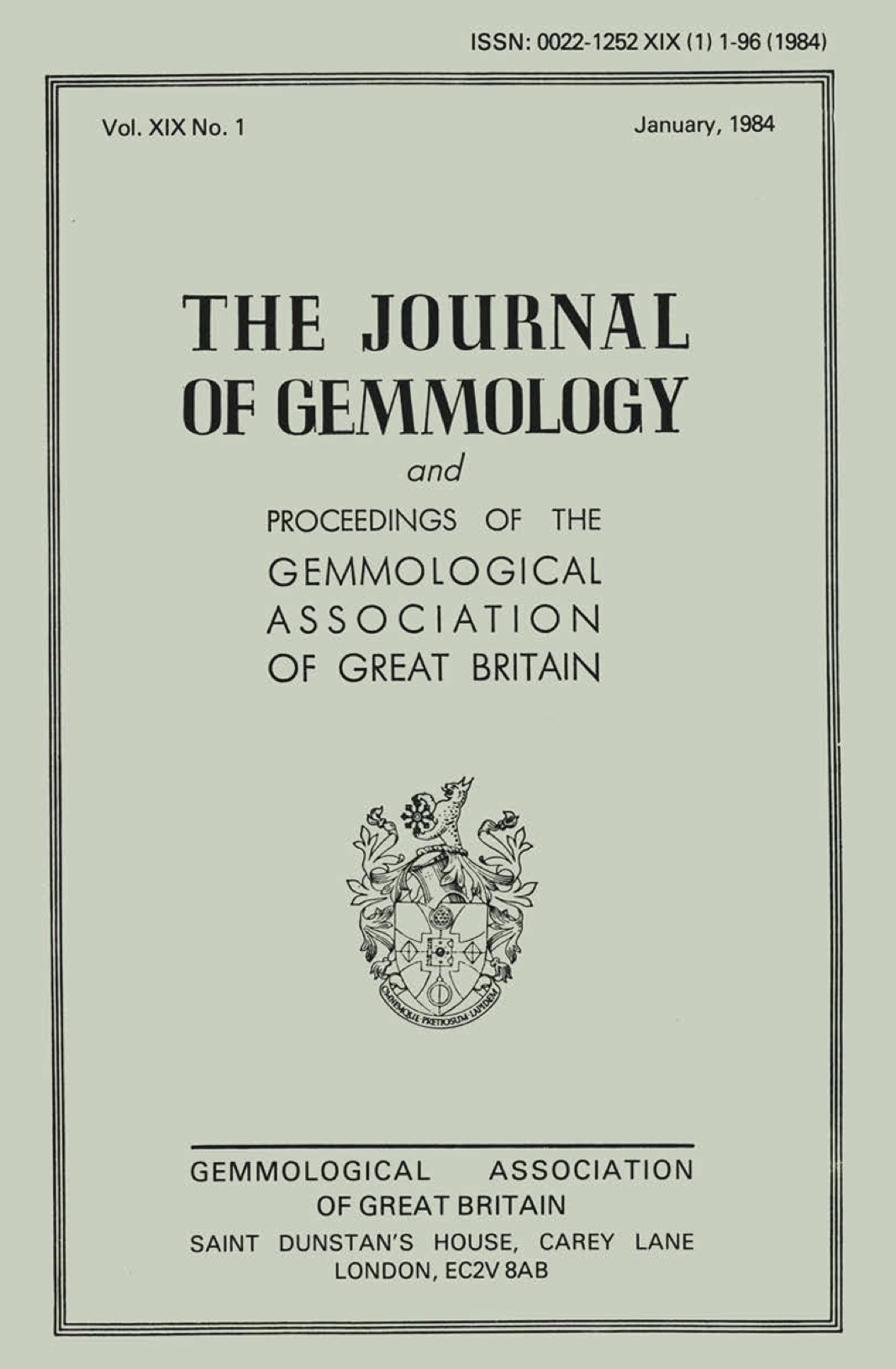
McDowell, R.B. (1984) A recent find of taaffeite. Journal of Gemmology, Vol. 19, No. 1, pp. 9–13.
Record No. 29927  |  Sinkankas/Born No.: NIS/NIB  |  RWHL
View Individual Record ↗
A report on a recent find of gem taaffeite. Additional abstract: McDowell reports several taaffeites found in Sri Lankan spinel gravels and describes one 1.65 ct water-worn specimen in detail. The paper emphasizes that taaffeite can be identified readily with a hand spectroscope.

Hallucinogenic mushrooms, jade, obsidian, and the Guatemalan highlands: What did the Olmecs really want?
Book Section
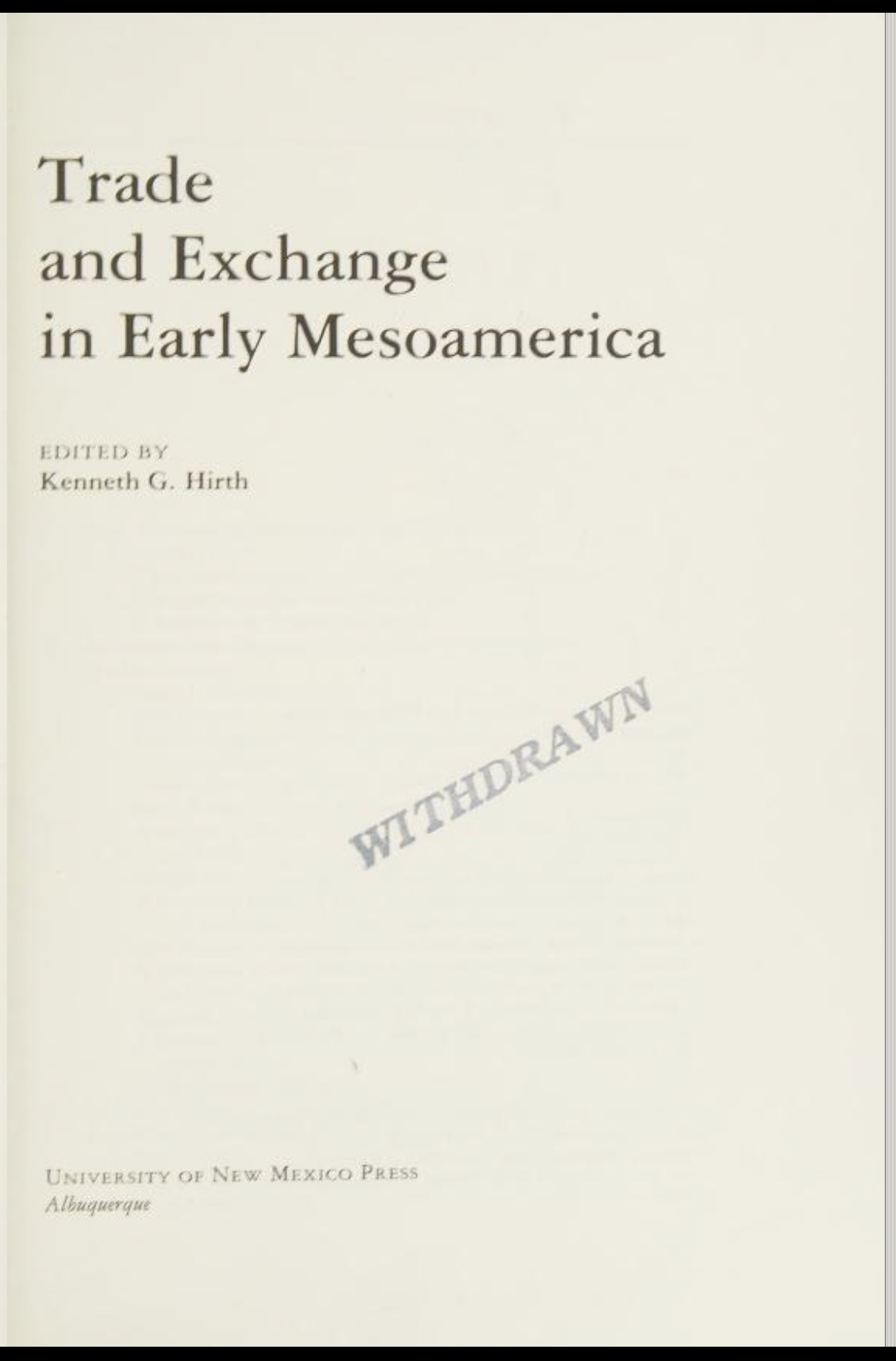
Brown, K.L. (1984) Hallucinogenic mushrooms, jade, obsidian, and the Guatemalan highlands: What did the Olmecs really want? In: Trade and Exchange in Early Mesoamerica, Albuquerque: University of New Mexico Press, pp. 215–234.
Record No. 28625  |  Sinkankas/Born No.: NIS/NIB  |  RWHL
View Individual Record ↗
Despite the recognized importance of the Guatemalan Highlands within Formative-period trade networks of Mesoamerica, relatively little research on this time period has been conducted in the region. Studies undertaken in the Gulf Coast Lowlands, the Southern Maya Lowlands, and the Pacific Lowlands have all yielded a variety of trade goods originating in the Guatemalan Highlands. Jade has been identified from the Manzanal–Acasaguastlán–Guaytán area, along with obsidian from El Chayal and San Martín Jilotepeque. While the actual source areas for these trade goods have been identified, very little archaeological research has been conducted either within these source regions or on the trade routes that connected them to other parts of Mesoamerica. Nevertheless, various foreign groups, and the trade opportunities they provided, are thought to have had a major influence on the cultures of the indigenous highland populations. Support for this hypothesis has most often been drawn from the Valley of Guatemala, particularly the site of Kaminaljuyú. The early appearance of mound construction, the erection of stelae, and the use of certain ceramic types have all been cited as evidence for the developmental importance of contact with foreign groups. Outside the Valley of Guatemala, however, relatively little is known about either the nature of foreign contact during this period or the effects such contact may have had on local cultures. This paper attempts to outline the evidence for Middle and Late Formative-period foreign interaction in two regions of the Guatemalan Highlands: the Valley of Guatemala and the Quiché Basin. Although the available evidence remains limited, it is used to examine the role that external contacts may have played in the cultural development of these two areas.

Gem Trade Lab Notes: Jade dyed jadeite; dyed nephrite
Journal Article
Fryer, C.W. (1984) Gem Trade Lab Notes: Jade dyed jadeite; dyed nephrite. Gems & Gemology, Vol. 20, pp. 47–48.
Record No. 28108  |  Sinkankas/Born No.: NIS/NIB  |  RWHL
View Individual Record ↗
JADE — Dyed jadeite: A report with an unusual twist comes from Yoshiko Doi of the Association of Japan Gem Trust in Tokyo. It seems that a quantity of small green jadeite cabochons that recently reached the Japanese market have been represented as being dyed. However, testing by Japanese gemologists revealed no evidence of dyeing. Believing that a new treatment method might have been developed, Ms. Doi sent some of the stones to the Santa Monica Gem Trade Laboratory for further testing. A refractive index of 1.66 and specific gravity of 3.33 confirmed that the material was jadeite. As expected, the stones were inert to ultraviolet radiation. Absorption lines in the red were consistent with the spectrum of a natural-color green jadeite. There was no evidence of any dye in the cracks when viewed with a microscope (see figure 11). All tests indicated natural-color green jadeite. As further confirmation, a piece of the jadeite was sent to Dr. George Rossman at the California Institute of Technology. A thin section of the stone was prepared and run on their Cary spectrophotometer. An absorption spectrum run from 350 nm to 1500 nm revealed a slight trace of Cr³⁺, with minor peaks at 434 and 439 nm and predominant peaks at approximately 638, 656, and 688 nm that were attributed to Cr³⁺. No extraneous features were present. This analysis is entirely consistent with natural-color green jadeite. It is still a mystery why anyone would want to represent natural-color jadeite as being dyed, but there is no doubt that the material tested was indeed natural color. Our thanks to Dr. Rossman for the detailed absorption spectrum. Dyed nephrite: Both the Los Angeles and the New York labs recently had the opportunity to study a flat, green 1.06-ct cabochon (figure 12) that had been presented as dyed nephrite jade. The client claimed that this material had retained its color better than the dyed jadeite he had. The cabochon was fairly translucent and, although slightly mottled, resembled fine green jadeite in color. However, the refractive index and specific gravity proved that the material was nephrite jade. The translucent crystalline aggregate structure was visible under magnification, with the green color concentrated within and around the fine cracks (see figure 13). Spectroscopic examination showed a broad absorption band (figure 14) in the red portion of the visible spectrum from 6600 to 7000 Å, which undoubtedly can be attributed to the green dye. However, only the faintest brownish color was seen under the color filter. This contrasts with the red color usually associated with dyed jadeite or serpentine. We have observed dyed nephrite only once or twice in the past (see, for example, the mottled carving pictured in the Winter 1965–1966 issue of Gems & Gemology). One theory about why there is not more dyed nephrite is that possibly the structure of nephrite resists the crackling necessary to take dye.

A brief description of a spectacular 6.671 carat tabular diamond
Journal Article
Jobbins, E.A., Harding, R.B. and Scarratt, K. (1984) A brief description of a spectacular 6.671 carat tabular diamond. Journal of Gemmology, Vol. 19, No. 1, pp. 1–7.
Record No. 27846  |  ISBN/ISSN: 221252  |  Sinkankas/Born No.: NIS/NIB  |  RWHL
View Individual Record ↗
In June 1983 a large, flat diamond of octagonal outline was shown to Miss Anna Somers-Cocks of the Victoria and Albert Museum, London, who suggested that it should be taken to the Geological Museum for further examination; the owner had wondered if it might be part of the ‘Great Table’ shown to the explorer Tavernier at Golconda, India, in 1642. We quickly assured him that this was unlikely in view of the convincing study carried out by Meen, Tushingham & Waite (1967) in Teheran in 1967. The study showed beyond reasonable doubt that the Darya-i-Nur diamond and a pink brilliant, both among the Iranian Crown Jewels, were derived from and comprise the major part of the Great Table shown to Tavernier. The history of the present important stone is not known before 1893, when the father of the present owner is reported to have had it in his possession during a visit to Paris.

Gem Trade Lab Notes: Ruby simulants, color-enhanced corundum beads
Journal Article
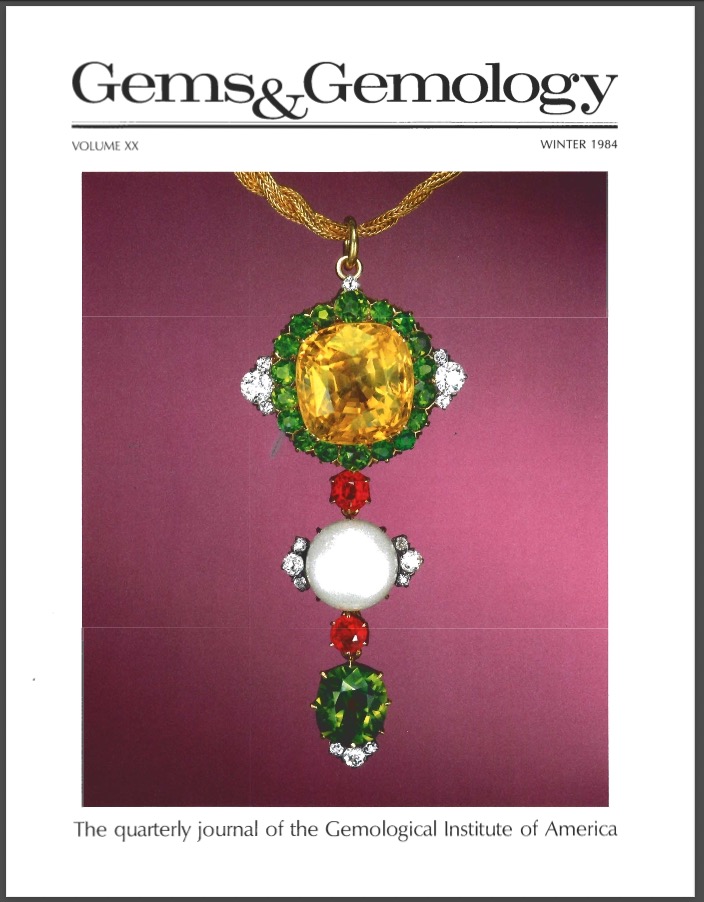
Koivula, J.I. (1984) Gem Trade Lab Notes: Ruby simulants, color-enhanced corundum beads. Gems & Gemology, Vol. 20, No. 4, Winter, p. 231.
Record No. 26773  |  Sinkankas/Born No.: NIS/NIB  |  RWHL
View Individual Record ↗
A small, 4 mm natural corundum bead recently examined by the GIA Applied Gemology Department appeared purplish pink, a color likely attributable to a red substance found lining its drill hole. While it is common to see near-colorless corundum beads take on a pinkish hue when strung on red cord, this instance was unusual in that the color enhancement resulted from a coating applied directly inside the drill hole. As a result, accurately assessing the true color of such beads is impossible without first removing the coating.

Gem Trade Lab Notes: Artistically stained nephrite
Journal Article
Kane, R.E. (1984) Gem Trade Lab Notes: Artistically stained nephrite. Gems & Gemology, Vol. 20, No. 2, Summer, p. 108.
Record No. 26769  |  Sinkankas/Born No.: NIS/NIB  |  RWHL
View Individual Record ↗
The Los Angeles laboratory examined a translucent to opaque pale green and brown carving of two birds, measuring approximately 23.4 × 7.2 × 9.5 cm, which testing confirmed to be nephrite jade. The brown coloration, especially concentrated in the shallow carved depressions such as the wing areas, appeared unnatural and suggested artificial staining meant to accentuate carved details. While rubbing a brown area with an acetone-soaked swab yielded no color transfer, a subsequent test using a 10% hydrochloric acid solution did produce a light brown stain, indicating the presence of dye or stain not removable by acetone. Based on the localized application and the unnatural color distribution, it was concluded that the carving had been artistically stained, a practice commonly observed with nephrite carvings. The gem identification report accordingly stated: NEPHRITE JADE, with some areas of artistic staining.

Gem Trade Lab Notes: Dyed nephrite

Journal Article
Crowningshield, G.R. (1984) Gem Trade Lab Notes: Dyed nephrite. Gems & Gemology, Vol. 20, No. 2, Summer, p. 108.
Record No. 26768  |  Sinkankas/Born No.: NIS/NIB  |  RWHL
View Individual Record ↗
Unlike the artistic surface staining sometimes applied to jade, certain nephrite specimens are now being dyed throughout their entire structure to alter their color completely. A notable example appeared in the Spring 1984 issue of Gems & Gemology, which reported on a batch of green-dyed nephrite cabochons—the first commercially significant quantity observed in some time. Figure 6 illustrates the first strand of 9-mm beads from this material received by the New York laboratory. Their absorption spectrum closely resembles that of dyed jadeite, suggesting the same dye may have been used. If this is the case, the nephrite may be equally prone to fading, as is common with dyed green jadeite.

Green opal from East Africa

Journal Article
Koivula, J.I. and Fryer, C.W. (1984) Green opal from East Africa. Gems & Gemology, Vol.  20, No. 4, Winter, pp. 226–227.
Record No. 26764  |  Sinkankas/Born No.: NIS/NIB  |  RWHL
View Individual Record ↗
Chrysoprase, the nickel-bearing green variety of chalcedony, has long been valued as a gem material, but its visual similarity to green nickel-colored opal (known as prase opal) has received little attention in the literature. Prase opal from Poland, Tanzania, Australia, and Peru has only been briefly mentioned in past studies. In light of this, the authors undertook a gemological investigation after receiving several samples of nickeliferous opal, particularly from Tanzania. These opals closely resemble chrysoprase in color and display similar diaphaneity, ranging from very translucent to semitranslucent. Both materials are commonly found in association with a brown limonite matrix in the rough, further increasing the potential for confusion. Given this strong likelihood of misidentification, a detailed gemological, chemical, and X-ray analysis of the opal was conducted, with results presented in the study.

Sapphires from Kanchanaburi Province, Thailand
Journal Article
Gunawardene, M. and Chawla, S.S. (1984) Sapphires from Kanchanaburi Province, Thailand. Journal of Gemmology, Vol. 19, No. 3, July, pp. 228–239.
Record No. 4791  |  ISBN/ISSN: 221252  |  Sinkankas/Born No.: NIS/NIB  |  RWHL
View Individual Record ↗
Gunawardene and Chawla describe the sapphire deposits of Bo Phloi, Kanchanaburi Province, western Thailand, a locality that had become an important source of commercial blue sapphire during the preceding decade. The paper gives details of the locality and its accessibility and reviews geological investigations of Kanchanaburi, comparing the occurrence with the better-known basalt-associated gemfields of Chanthaburi–Trat in eastern Thailand. The authors present chemical and physical data for the sapphires and grade their colours using the DIN colour system. Particular attention is given to microscopic examination: characteristic internal features are illustrated with photomicrographs and analyzed for their value in characterizing Kanchanaburi material. The study provides an early detailed gemmological description of sapphires from this important Thai basalt-related deposit.

New Zealand Jade: The Story of Greenstone
Book
Beck, R.J. (1984) New Zealand Jade: The Story of Greenstone. Wellington, A.H. and A.W. Reed
Record No. 2226  |  Sinkankas/Born No.: 511  |  RWHL
View Individual Record ↗
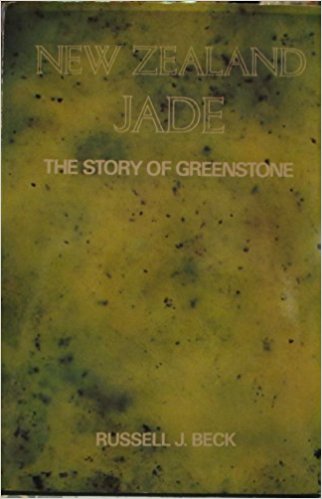
Sinkankas: Described by Henry Devenish Skinner, Director Emeritus of the Otago Museum, as “the most authoritative book ever written on New Zealand nephrite and bowenite” (p. 7), this work covers all aspects of the subject. Topics include the definition of Māori terminology; the history and legends associated with jade; the locations of nephrite, bowenite, and serpentine deposits, both alluvial and in situ (accompanied by maps); the origin and properties of nephrite; methods of jade working employed by the Māori and by modern craftsmen; and practical advice for contemporary jade workers. The book is richly illustrated, with numerous photographs depicting different jade varieties under both reflected and transmitted light, artefacts, jade boulders, landscapes of the jade-producing regions, and views of modern lapidary workshops. The history of modern jade working in New Zealand is also thoroughly covered. Reviewing the work in the Journal of Gemmology 12(8), 1971, pp. 363–364, Michael O’Donoghue remarked that “the coloured illustrations are particularly meritorious.” A further review appeared in Gems & Gemology 13(3), p. 84.

Rosa-Topas aus Pakistan

Pink topaz from Pakistan
Journal Article
Gübelin, E.J. (1984) Rosa-Topas aus Pakistan. [Pink topaz from Pakistan] Lapis, Vol. 9, No. 1, January, pp. 23–28.
Record No. 2169  |  Sinkankas/Born No.: NIS/NIB  |  Language: in German  |  RWHL
View Individual Record ↗
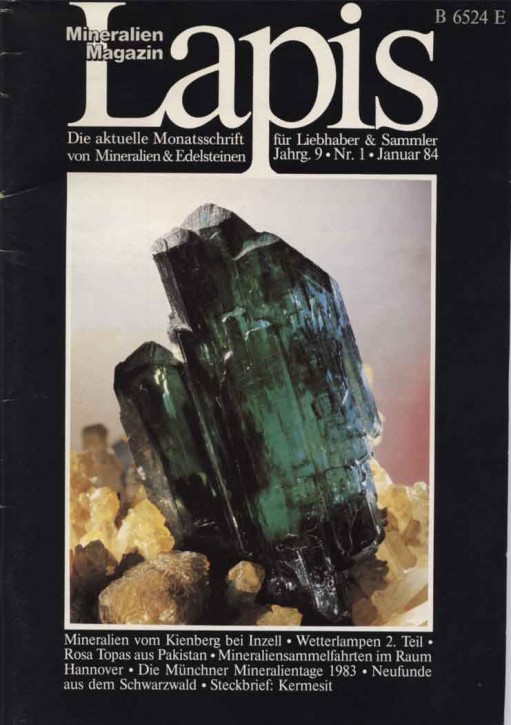
Gübelin describes gem-quality rose to pink topaz from the Katlang area, northeast of Peshawar, Pakistan. The crystals are well developed and occur together with colorless and brown topaz. Gemological examination gave refractive indices of approximately 1.629–1.642, birefringence 0.009–0.011, and specific gravity 3.515–3.53. The stones show yellow, purple, and lilac-to-violet pleochroism and weak dark-red fluorescence under long-wave ultraviolet radiation. Chemical analysis showed small amounts of chromium and vanadium, with Cr³⁺ principally responsible for the pink coloration. Characteristic internal features include two-phase inclusions and parallel needle-like growth features. The article contains 17 color illustrations.

Russian hydrothermal synthetic emeralds
Journal Article
Koivula, J.I. (1984) Russian hydrothermal synthetic emeralds. Gems & Gemology, Vol. 20, No. 4, Winter, p. 245.
Record No. 1991  |  ISBN/ISSN: 0016626X  |  Sinkankas/Born No.: NIS/NIB  |  RWHL
View Individual Record ↗
Recently submitted to both the Los Angeles and New York offices of GIA'S Gem Trade Laboratory, Inc., were several faceted examples of a sophisticated type of synthetic emerald. The stones resemble in many ways synthetic emeralds of Russian hydrothermal manufacture that were recently obtained by Mr. Thomas Chatham in Hong Kong (see figure 2) and generously provided by Mr. Chatham to the Los Angeles lab for research.

Notes from the laboratory [sapphire with glass-filled cavities; irradiated yellow sapphire]
sapphire with glass-filled cavities; irradiated yellow sapphire
Journal Article
Scarratt, K. (1984) Notes from the laboratory [sapphire with glass-filled cavities; irradiated yellow sapphire]. Journal of Gemmology, Vol. 19, No. 2, April, pp. 98–124.
Record No. 1537  |  ISBN/ISSN: 221252  |  Sinkankas/Born No.: NIS/NIB  |  RWHL
View Individual Record ↗
The sapphire observations in these laboratory notes address the identification of treatment and the distinction between natural origin, artificial colour modification and colour stability. A colourless natural sapphire from the laboratory collection, stored in a packet identifying it as an irradiated yellow sapphire, illustrated the reversibility of radiation-induced colour. Its former yellow appearance had faded, but a ten-minute exposure to x-rays at 45 kV and 19 mA, close to the tube window, restored the colour. The account explains that some colourless sapphires become yellow readily under x-ray irradiation and subsequently return towards their original colourless or pale yellow state through exposure to sunlight. Consequently, establishing that a sapphire is natural does not establish either that its colour is natural or that the colour will remain unchanged. Tests intended to assess stability may themselves alter a stone’s appearance and therefore require the owner’s permission. A second case concerns two intensely orange sapphires weighing 32.44 and 8.72 ct, whose unusual hue resembled Verneuil synthetic orange sapphire more closely than the heat-treated yellow sapphires commonly examined by the laboratory. Their refractive indices were normal for corundum, while their absorption showed strong attenuation in the blue and violet, without sharp red lines or the usual sapphire bands in the blue. Microscopy revealed numerous dust-like particles responsible for a cloudy appearance. These formed very fine silk, generally aligned in particular directions but also arranged around small angular areas. Other internal features, including glassy centres in some feathers, supported identification as natural sapphires that had undergone heat treatment. The exceptional colour and intensity nevertheless left open the possibility of additional irradiation or unstable colour associated with treatment. Controlled fading tests were proposed, but permission was refused, leaving this question unresolved. Together, the observations demonstrate the complementary roles of refractometry, absorption spectroscopy, microscopy and colour-stability testing, while showing the limits of conclusions that can be drawn when potentially colour-altering examinations cannot be performed.

The Alpha-Test: A test report

Journal Article
Read, P.G. (1984) The Alpha-Test: A test report. Journal of Gemmology, Vol. 19, No. 3, July, pp. 261–265.
Record No. 1470  |  ISBN/ISSN: 221252  |  Sinkankas/Born No.: NIS/NIB  |  RWHL
View Individual Record ↗
The Alpha-Test electronic gemstone identifier is evaluated as a thermal-probe instrument capable of assisting identification of diamonds, diamond simulants and selected coloured gemstones. Its operation is compared with that of the earlier Gemtek Gemmologist. Both instruments measure the time taken for a heated probe tip to cool between two predetermined temperatures after contact with a gemstone; lower readings indicate faster heat removal. Because thermal differences among non-diamond materials are comparatively small, repeatable measurements require a draught-free environment at 18–25 °C, a stone first warmed to body temperature, and controlled probe pressure with the tip perpendicular to the tested surface. The Alpha-Test simplifies operation through automatic display resetting and thermostatic regulation of probe temperature, with a ready indicator and an off-scale warning above its maximum numerical reading of 999. Separate sapphire and emerald calibration adjustments provide two-point calibration across the measuring range. A permanently attached probe is identified as a servicing disadvantage because damage would require returning the complete instrument. Following calibration with sapphire and natural emerald, Read tested each specimen ten times and recorded average readings and their spread. Repeatability was better for materials with higher thermal conductivity: diamond, corundum, topaz, high zircon and spinel showed relatively narrow spreads, whereas lower-conductivity materials produced substantially wider variation. The author stresses that repeat measurements on one specimen do not represent the full range expected among different stones of the same species. The instrument is considered particularly useful for diamonds and their simulants, and for very small mounted coloured stones that cannot readily be examined with a refractometer or reflectivity meter. With care, useful separations include ruby from garnet, sapphire from tourmaline, and natural emerald from some flux-grown synthetic emeralds. Natural and synthetic spinel give appreciably different readings, while high and low zircon differ markedly. However, readings for topaz, high zircon and natural spinel overlap too closely for reliable differentiation. The report therefore presents thermal testing as a practical supplementary method whose value depends on controlled operating conditions and sufficient separation between the thermal responses of the materials under consideration.

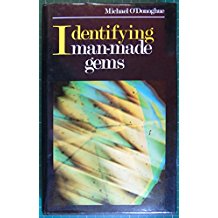
Identifying Man-made Gems

Book
O’Donoghue, M. (1984) Identifying Man-made Gems. London, NAG Press, 223 pp.
Record No. 1375  |  Sinkankas/Born No.: 4840  |  RWHL
View Individual Record ↗
This practical handbook surveys manufactured gem materials, their production, and the features used to distinguish them from natural gemstones and from one another. Its scope includes synthetic counterparts of natural gems, artificial materials without natural equivalents, imitations, composite stones, and selected treatments applied to natural material. A preliminary discussion clarifies terminology, reserving “synthetic” for products corresponding to natural substances in essential composition and structure, and emphasizes the importance of accurate descriptions in commerce. The first part introduces crystal structure, symmetry, growth, and imperfections before explaining the principal manufacturing processes. Flame fusion, hydrothermal synthesis, crystal pulling and other melt-growth techniques, flux growth, and skull melting are related to the materials they produce and to the inclusions, growth structures, and variations in physical properties that arise during manufacture. Irradiation, staining, and coating are considered as methods of altering appearance. General testing guidance discusses magnification, specific gravity, refractive properties, absorption spectra, color filters, reflectivity measurements, and cathodoluminescence, while a separate chapter explains the equipment and techniques used to photograph inclusions. The second part organizes identification information by material, covering diamond and its simulants, corundum, emerald and other beryls, alexandrite, spinel, garnet, quartz, opal, lapis lazuli, turquoise, organic materials, glass, doublets and triplets, and less common artificial crystals. Manufacturing histories and descriptions of commercial products are combined with diagnostic properties, comparisons with natural stones, and reports of individual specimens from the gemological literature. Particular attention is given to internal evidence such as curved growth striae, gas bubbles, flux residues, metallic inclusions, seed-related structures, and characteristic patterns in manufactured opal. Composite stones are examined through their junction planes, cement layers, bubbles, and differences between the optical properties of their components; immersion is especially useful for revealing their construction. The text stresses the continuing value of simple optical examination while placing individual observations within the broader evidence supplied by several tests. Color photomicrographs from Edward Gübelin’s collection illustrate characteristic inclusions and structures, supported by diagrams, spectra, and other photographs. An appendix explains trade names, and an extensive bibliography directs readers to manufacturing research and identification reports. Intended for working gemologists, dealers, and students rather than as an elementary gemology textbook, the book connects production methods with practical recognition across a wide range of manufactured and modified ornamental materials.

Gem News: Seiko growing synthetic gemstones by the floating-zone method

Journal Article
Koivula, J.I. (1984) Gem News: Seiko growing synthetic gemstones by the floating-zone method. Gems & Gemology, Vol. 20, No. 1, Spring, p. 60.
Record No. 1118  |  ISBN/ISSN: 0016626X  |  Sinkankas/Born No.: NIS/NIB  |  RWHL
View Individual Record ↗
Floating-zone crystal growth was first devel-oped in 1953 to produce high-purity silicon as a semi-concluctor. It has since becn used to produce refractory mctals, alloys, and other sen~iconductingcompounds. Although colorless synthetic sapphire has been grown by this method in the past, it was not until thc Suwa Seikosha (SeikoWatch)Company Ltd. of Japan, became involved, as part of their efforts to make a better elec-tronic crystal for their watches, that this technique was developed to produce synthetic gems. 111 thc floating-zone crystal growth process, a sin-tcrcd rod, composed of a uniform mixture of all of thc coinponcnts necessary to producc thc dcsired gcin material, is held vertically at both thc top and bottom. An infrared radiation convcrgcnce heater, using a halogen lamp and an ellipsoidal reflector with its inncr surfacc gold plated, hcats a small region ncar the top of thc rod until it melts. The two holdcrs thcn bcgin to rotate whilc at the same timc the hcat source begins dropping down the rod at an cvcn rate. Eventually, the sintered rod is consunled and a single crystal results.

Building a Gemological Library

Gemological books range from general identification manuals and textbooks to specialized works on individual gems, mineralogy, jewelry, treatments, synthesis, history and gem-producing regions.

For a curated selection of particularly useful books, read The Gemologist's Core Library — Classic Books on Gemology, Jewelry and Mineralogy.

About Four Treasures

Four Treasures is Lotus Gemology's freely accessible gemological reference database. Use the full database to search by author, title or keyword and explore literature on gemology, mineralogy, jewelry and related fields. Where available, hyperlinks on titles may lead directly to the full publication.

Search the Complete Four Treasures Database