Explore books, articles and historical sources on inclusions in gemstones in Four Treasures, the Lotus Gemology reference database. This bibliography brings together matching records from the collection, with publication details, abstracts and cover images where available.
Gemstone Inclusion References
The list below matches the terms inclusion or inclusions in the database's searchable fields. Some references discuss inclusions as part of a broader subject.
Phillips, D.S., Heuer, A.H. and Mitchell, T.E. (1980) Precipitation in star sapphire, I. Identification of the precipitate.Philosophical Magazine, Series A, Vol. 42, No. 3, pp. 385–404.
Record No. 4943 | Sinkankas/Born No.: NIS/NIB | RWHL*
Reference copied to clipboard!
corundum, treatments.6, inclusions.5, gems
The asterism in star sapphire is due to precipitation of needle-like particles in the basal plane of sapphire. These particles have now been identified as rutile (TiO,) by both electron diffraction and microchemical analysis. The rutile needles have tho following orientation relationship with the host sapphire :
Carbon dioxide as a fluid inclusion
Journal Article
Koivula, J.I. (1980) Carbon dioxide as a fluid inclusion.Gems & Gemology, Vol. 16, No. 12, Winter, pp. 386–390.
Second only to water in abundance as a fluid inclusion filler, carbon dioxide in a liquefied form, because of its low critical temperature and extreme sensitivity to heating, is often and easily overlooked. Found in natural gem minerals, the explosive pressures CO₂ can generate in an inclusion chamber, even with only a slight rise in temperature, make it a type of fluid inclusion that all gemologists should be aware of.
“Thin films”: elusive beauty in the world of inclusions
Journal Article
Koivula, J.I. (1980) “Thin films”: elusive beauty in the world of inclusions.Gems & Gemology, Vol. 16, No. 9, Summer, pp. 326–330.
Anderson discusses early synthetic rubies commonly called reconstructed rubies, combining observations from the London Chamber of Commerce Gem Testing Laboratory and his personal collection with historical accounts of their manufacture and sale. He uses pre-Verneuil as a convenient chronological designation for material predating commercial operation of Verneuil’s furnace, while acknowledging Verneuil’s earlier experimental activity and the possible circulation of his technical knowledge. Such stones occasionally reached the laboratory in jewellery and could initially resemble natural rubies because their colour was less garish than that of later synthetics and they contained numerous impurities. Lens or microscope examination nevertheless revealed their synthetic character. A photomicrograph obtained in November 1958 records one of nine early synthetic rubies mounted in an antique silver snuffbox bearing a Georgian hallmark dating from 1800; the setting’s age was inconsistent with the stones. Anderson draws attention to a prominent flask-shaped bubble whose apparent direction of movement is opposite to that usually seen in Verneuil material, suggesting that the original boule might have grown as a stalactite rather than a stalagmite. He presents this interpretation cautiously and recommends closer study of bubble shapes and distributions. Another specimen is a small boule grown around a visible fragment of natural Siamese ruby. Although formerly regarded as reconstructed material, Anderson accepts the possibility that it was produced by a flame-fusion technique resembling the later commercial Verneuil process, with the natural fragment serving as support and seed. Five additional early synthetic rubies in a gold ring show a rhodolite-like colour, dark rounded and fragmentary inclusions, minute bubbles, strongly marked and tightly curved striae, pronounced dichroism, and complete extinction between crossed polarizers. Historical discussion centres on accounts of the jeweller Ohlat or Oblatt, who reportedly manufactured rubies by fusing small natural fragments. Anderson recounts a story involving financial backing, pawnbroking, and an alleged fraud trial, while acknowledging uncertainty over details and calling for archival verification. A separate published account describes oxyhydrogen burners, a platinum–iridium tube, and a closely guarded cooling procedure. These narratives are treated as potentially informative but less secure than scientific records. The article also revisits the distinction between natural and laboratory products, rejecting the implication that using natural ruby as feedstock makes the resulting synthetic equivalent to a natural gemstone. Anderson concludes that early predictions of synthetic stones destroying the natural-gem market proved unfounded, while emphasizing the continuing historical and gemmological interest of these sparsely documented materials.
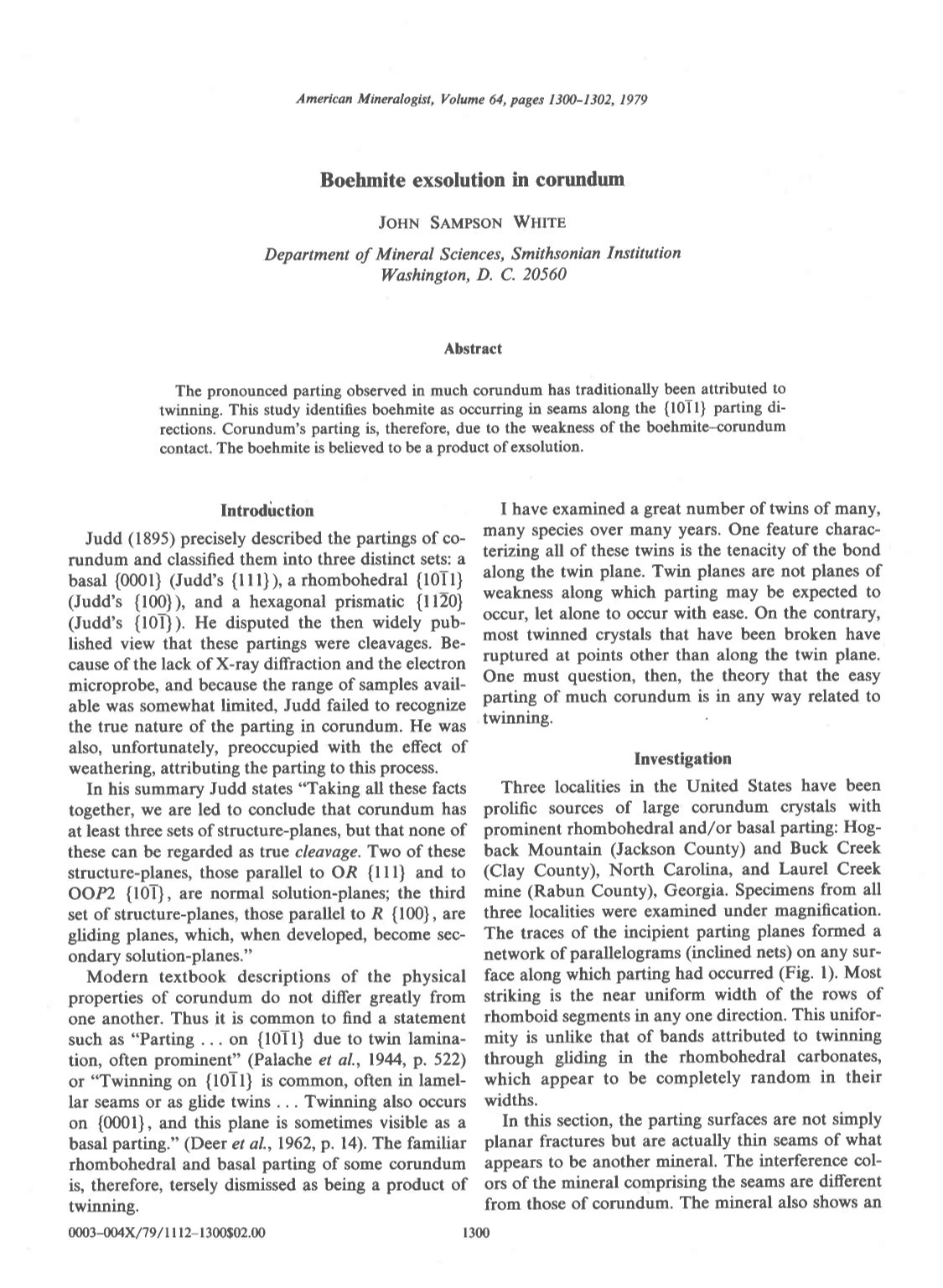
The pronouncedparting observedin much corundumhastraditionally beenattributedto twinning. This studyidentiflesboehmiteasoccurringin seamsalongthe {IOTU Partingdi-rections.Corundum'sparting is, therefore,due to the weaknessof the boehmite-corundum contact.The boehmiteis believedto be a product of exsolution.
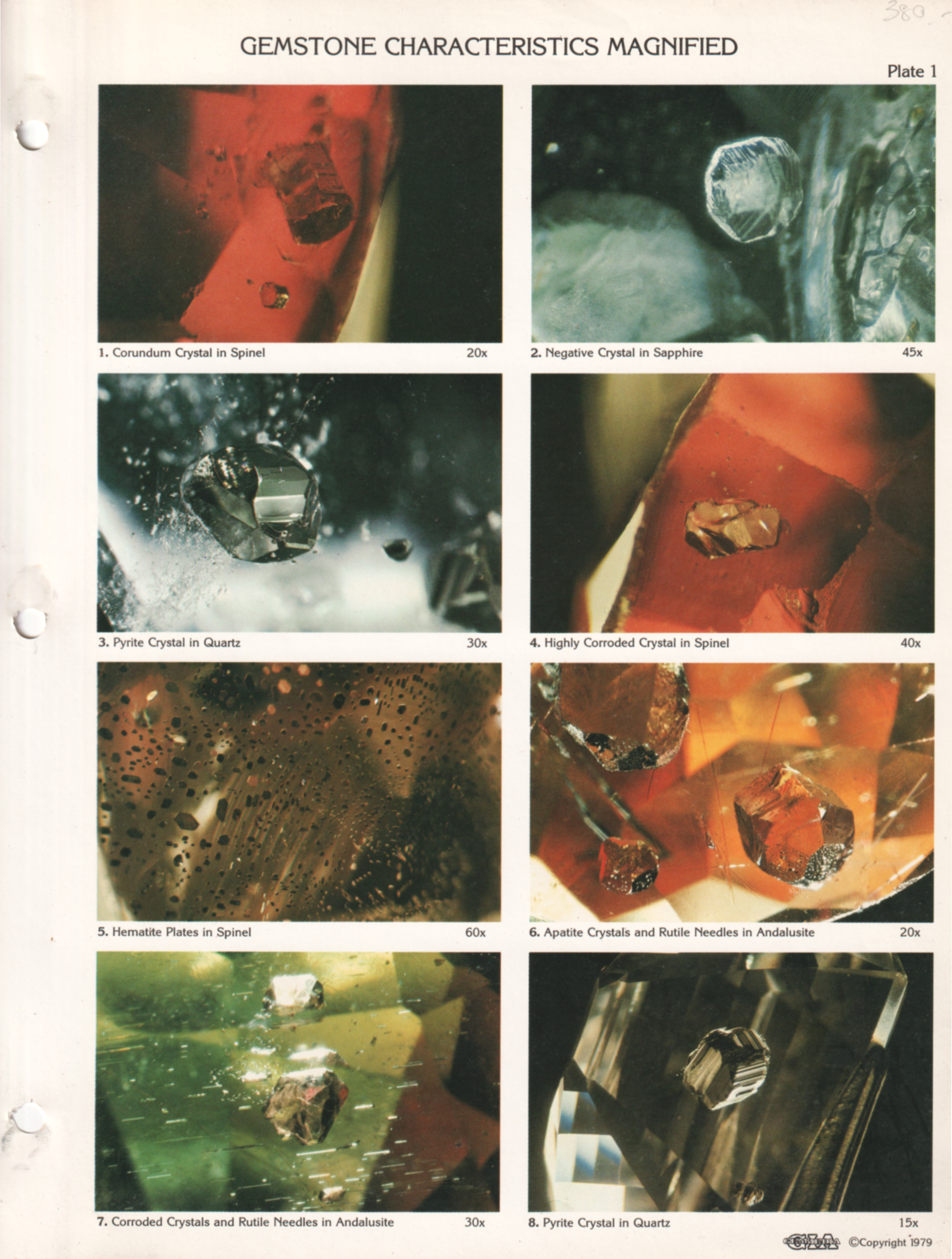
Gemstone Characteristics Magnified
Book
Gemological Institute of America (1979)Gemstone Characteristics Magnified. Los Angeles, CA. (U.S.A), Gemological Institute of America, 16 pp.
Record No. 817 | Sinkankas/Born No.: NIS/NIB | RWHL*
Reference copied to clipboard!
corundum, inclusions.5, gems
Set of color plates in a folder by John Koivula displaying various inclusions in gemstones. Although his name is not on it, this is the first stand-alone publication of John Koivula’s photomicrographs on gems. Due to the manner in which it was bound, copies are extremely scarce today.
Man-Made Gemstones
Book
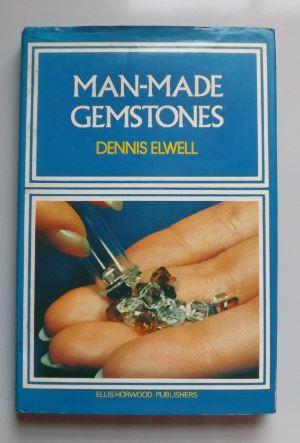
Elwell, D. (1979)Man-Made Gemstones. Chichester, UK, Ellis Horwood, 191 pp.
Record No. 698 | Sinkankas/Born No.: NIS/NIB | RWHL*
Reference copied to clipboard!
synthetic corundum.7, gems
Surveys the history, scientific principles and practical manufacture of synthetic gemstones, combining a crystal grower’s perspective with an accessible account for lapidaries, jewellers and interested nonspecialists. Elwell distinguishes synthetic counterparts of natural gems from imitations, reconstructed materials and artificial crystalline substances used as gemstones despite having no familiar natural gem equivalent. Historical coverage begins with glazed steatite, faience and glass in ancient civilisations, then follows nineteenth-century experiments that established the foundations of commercial crystal growth. Particular attention is given to the development of flame-fusion ruby, the work of Auguste Verneuil and subsequent production of sapphire, spinel and star stones. Other chapters examine emerald growth from fluxes and hydrothermal solutions, the prolonged search for synthetic diamond, successful high-pressure methods, and investigations of diamond growth under metastable conditions. The technological explanations relate furnace design, solvents, temperature control, nucleation and crystal-growth conditions to the size, quality and economics of the resulting material. Diamond substitutes receive detailed treatment, including synthetic rutile, strontium titanate, garnets and cubic zirconia, with comparisons of optical appeal, hardness and suitability for jewellery. Further sections discuss quartz, opal, alexandrite and manufactured alternatives to opaque materials such as turquoise, coral and lapis lazuli. Opal illustrates how understanding a natural material’s internal structure can enable its artificial reproduction. Throughout, the author emphasises the contribution of research undertaken for electronic, optical and other technological applications to the discovery of attractive new gem materials. A speculative chapter considers future possibilities, distinguishing efforts to reproduce valuable natural stones from the emergence of unfamiliar materials through scientific research. The concluding discussion reviews gemstone testing, the importance of inclusions and growth features, and the increasing need for sophisticated analytical instruments as manufacturers improve their products. It also considers rarity, appearance, production costs, fashion and market demand as influences on value, arguing that synthetic and natural gems can coexist as complementary products. Commercial secrecy is acknowledged as a limitation on the available technical information. Appendices provide gemstone-property data, a glossary, an introductory guide to growing rubies, supplier information and further reading. The book presents gem synthesis as a combination of historical ingenuity, controlled materials processing and continuing interaction between scientific discovery and the jewellery market.
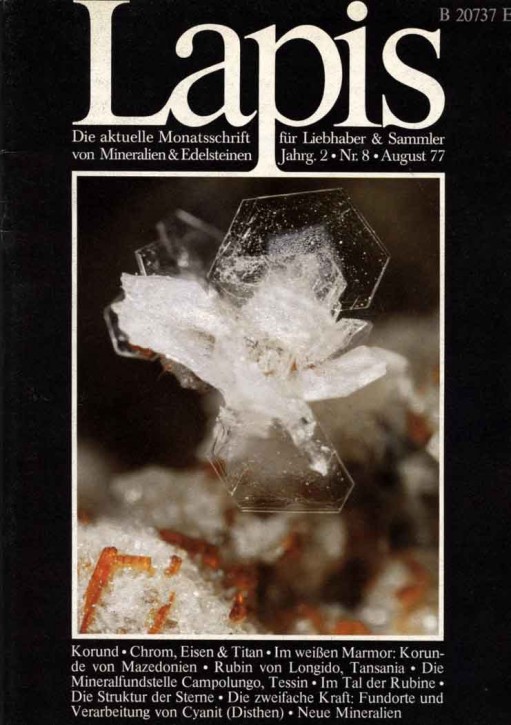
Im tal der rubine
In the valley of rubies
Journal Article
Gübelin, E.J. (1977) Im tal der rubine. [In the valley of rubies]Lapis, Vol. 2, No. 8, August, pp. 19–26.
Record No. 896 | Sinkankas/Born No.: NIS/NIB | Language: in German | RWHL*
Reference copied to clipboard!
corundum, Burma.12, gems
Describes the Mogok ruby-producing region of Burma (Myanmar), outlining the occurrence and mining of its rubies. A colour geological map and other illustrations document the area, while colour photomicrographs show characteristic inclusions in the gemstones.
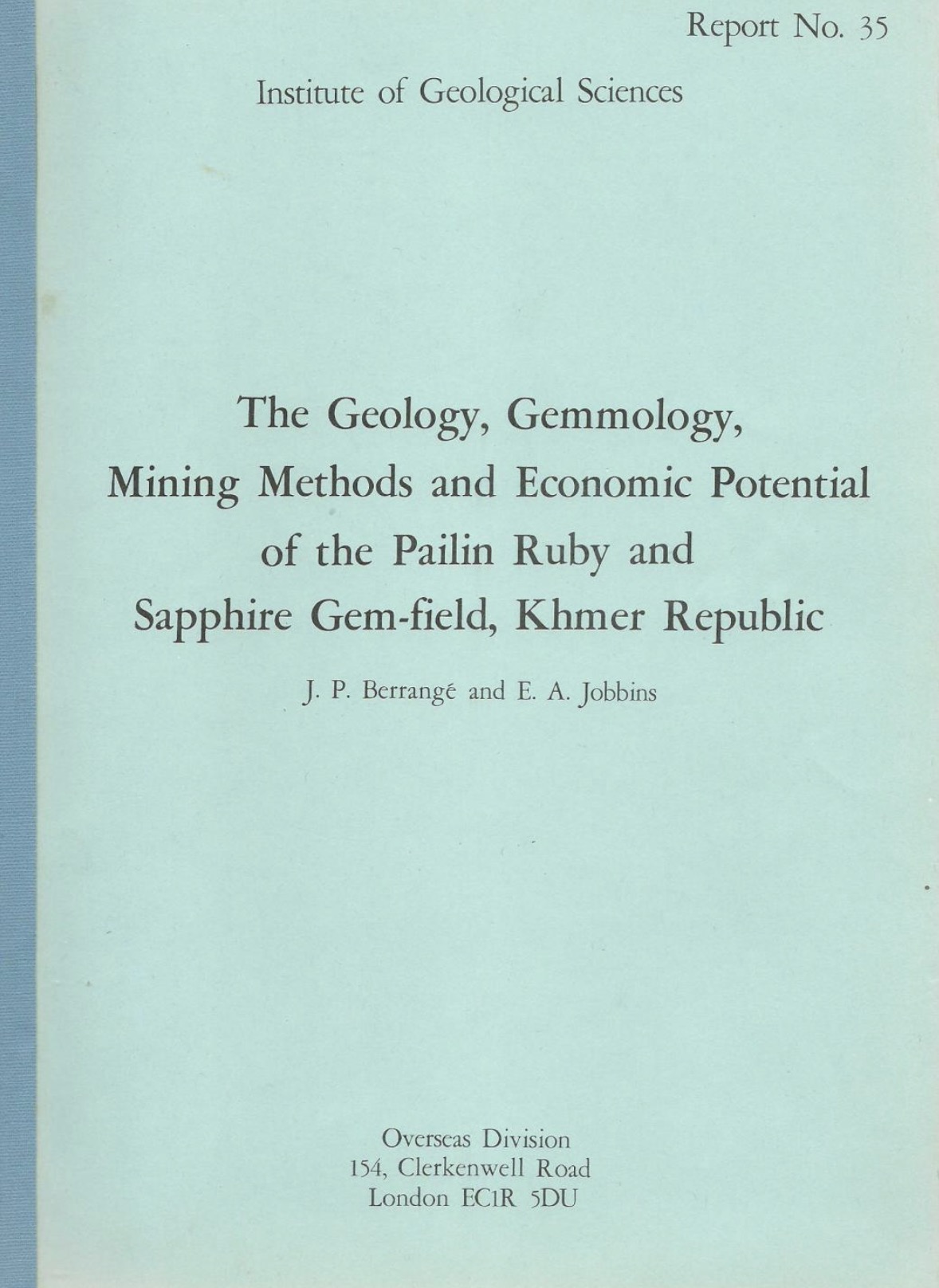
The geology, gemmology, mining methods and economic potential of the Pailin ruby and sapphire gem-field, Khmer Republic
Report
Berrangé, J.P. and Jobbins, E.A. (1976)The geology, gemmology, mining methods and economic potential of the Pailin ruby and sapphire gem-field, Khmer Republic. Institute of Geological Sciences, Overseas Division,
Record No. 4707 | ISBN/ISSN: Report No. 35, 32 pp. + maps | Sinkankas/Born No.: NIS/NIB | RWHL*
Reference copied to clipboard!
corundum, Cambodia.12, Pailin, blue sapphire, ruby, inclusions.5, geology.11, gems
The most detailed report ever prepared on the ruby and sapphire fields at Pailin, Cambodia.
Edelsteinkundlisches Handbuch
Handbook of Gemology
Book
Chudoba, K. and Gübelin, E. (1974)Edelsteinkundlisches Handbuch. [Handbook of Gemology] Bonn, Germany, Wilhelm Stollfuss Verlag, 409 + 32 pp.
Record No. 6084 | Sinkankas/Born No.: 1348; NIB | Language: in German | RWHL*
The new edition of this well-known text follows familiar lines. The first 160 pages are occupied by a glossary including cross-references to later sections of the book and details of synonyms, incorrect names and constants. Following this section is an account of the crystal systems and other physical and chemical data. The section on absorption spectra is expanded and improved in this edition with clear diagrams of spectra pertaining to the newer synthetics. As may be expected in a book by these authors, the chapters on inclusions are comprehensive. Although illustrations in the text would have been useful here (and generally throughout the work), there is a booklet of black-and-white photographs of inclusions in a pocket at the end of the book. A chapter on synthetics includes such unlikely candidates as BaF2 and MgF2, the first of which is slightly water-soluble; but there is no mention here or anywhere in the book of gadolinium gallium garnet, now on the market as a cut diamond simulant, nor of Gilson synthetic opal. This section is, however, very well written and comprehensive. A reading of Linde for Gilson on p. 340 is one of the rare misprints. For a book of this size and scope the coloured illustrations are not worthy and the world map of gemstone deposits is too crowded. A more serious criticism is the presence of material in the body of the book which appears neither in the glossary section nor in the short index. However, the usefulness of the work is considerable. Reviewed by Michael O’Donoghue
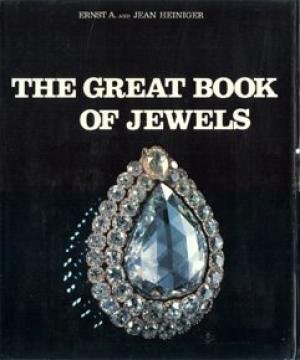
The Great Book of Jewels
Book
Heiniger, E.A. and Heiniger, J. (1974)The Great Book of Jewels. Lausanne, Edita Lausanne, 316 pp.
Sinkankas: This physically large and elegantly designed book features handsome illustrations and reflects the considerable effort invested by the editors in locating notable gems and jewels—such as the Wittelsbach diamond—in order to produce new photographs. Many of the pieces included had never before been available for photography, and those previously published now appear in superior new images. The book originated from this remarkable photographic assemblage and was expanded with essays that align with its central theme. Of particular gemological interest is Eduard Gübelin’s opening essay, “The Origin of Gemstones” (pp. 15–32), which, though not focused on geological genesis, provides a general survey accompanied by photos of rough and cut gems. Billeter explores the timeless allure of gems in personal adornment, Gregorietti examines ancient precious ornaments, while Higgins and Tait of the British Museum trace the evolution of jewelry styles and forms. Other contributors include Ledit, who discusses sacred jewels as artistic objects; Lightbown, who covers regalia and ceremonial items; Neu, who addresses modern jewelry; and Switzer of the Smithsonian Institution, who describes some of the world’s most famous gems. The volume also includes a summary table detailing gemstone properties, sources, and historical periods of peak use. As expected from a high-quality “coffee-table” book, the illustrations are exceptional, though the generous type size and limited space for contributors mean the essays offer only cursory overviews of their respective subjects.
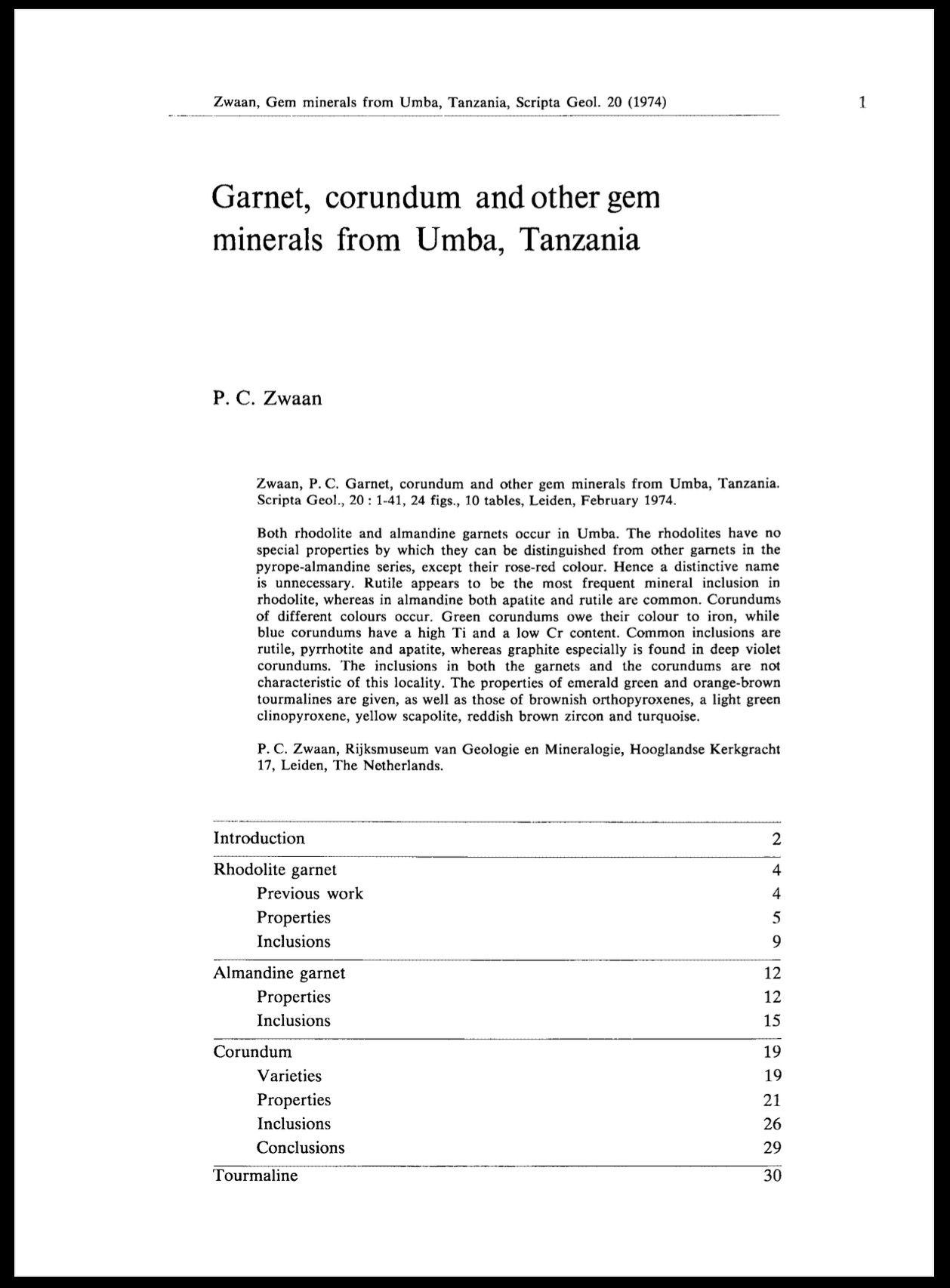
Garnet, corundum, and other gem minerals from Umba, Tanzania
Journal Article
Zwaan, P.C. (1974) Garnet, corundum, and other gem minerals from Umba, Tanzania.Scripta Geologica, Vol. 20, pp. 19–30.
Record No. 1925 | Sinkankas/Born No.: NIS/NIB | RWHL*
Reference copied to clipboard!
corundum, ruby, sapphire, Umba.12, Tanzania.12, East Africa.12, inclusions.12, gems
[Gem Identification By The Inclusion]
Gem Identification By The Inclusion
Book
Chikayama, A. (1973)[Gem Identification By The Inclusion]. Tokyo, Japan, Gemmological Association of All Japan, 246 pp.
Record No. 506 | Sinkankas/Born No.: NIS/NIB | Language: in Japanese | RWHL*
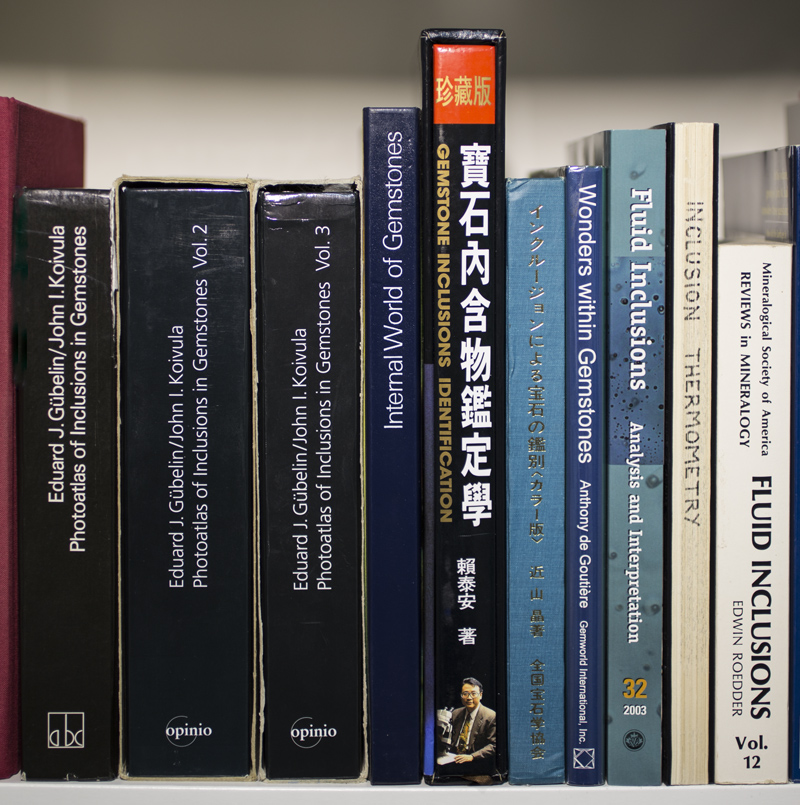
Chikayama presents a practical guide to gemstone identification through the microscopic examination of inclusions. The work illustrates and discusses internal features found in natural gemstones and shows how characteristic mineral inclusions, growth structures, fractures, cavities, zoning, and other internal features can aid identification and separation of gem materials. Particular emphasis is placed on the diagnostic value of inclusions in distinguishing natural stones from synthetic and imitation materials and in recognizing features characteristic of particular gem species. The volume serves as a reference for gemological microscopy and the systematic use of internal characteristics in gemstone identification.
Recently, a paper was published describing inclusions of corundum within corundum. The stones in question are light blue sapphires with a tinge of green, or alternatively brownish or purple-colored corundums. They are found in the Umba mine near the Umba River in northeastern Tanzania, close to Mount Kilimanjaro. The inclusions are elongated needles that, at first glance, resemble the well-known rutile needles often seen in corundum. Figure 1 illustrates that the needles follow three directions that appear to be at right angles to one another. Figure 2 reinforces this impression; however, in reality, the angles differ slightly but measurably from 90°. According to the cited publication, these needles run at right angles to the faces (42̅1), (22̅1), and (24̅1), which are steep hexagonal pyramid faces. X-ray analysis revealed that the needles are composed of corundum and occur in “twin positions” relative to the host crystal. Surprisingly, each of these needles is themselves twinned parallel to the prism faces of the surrounding corundum. Furthermore, the needles are of secondary origin, having formed after the host crystal. This, along with the fact that the inclusions induce considerable internal stress, suggests that the needles may have formed due to pressure. However, this theory has not yet been conclusively proven.
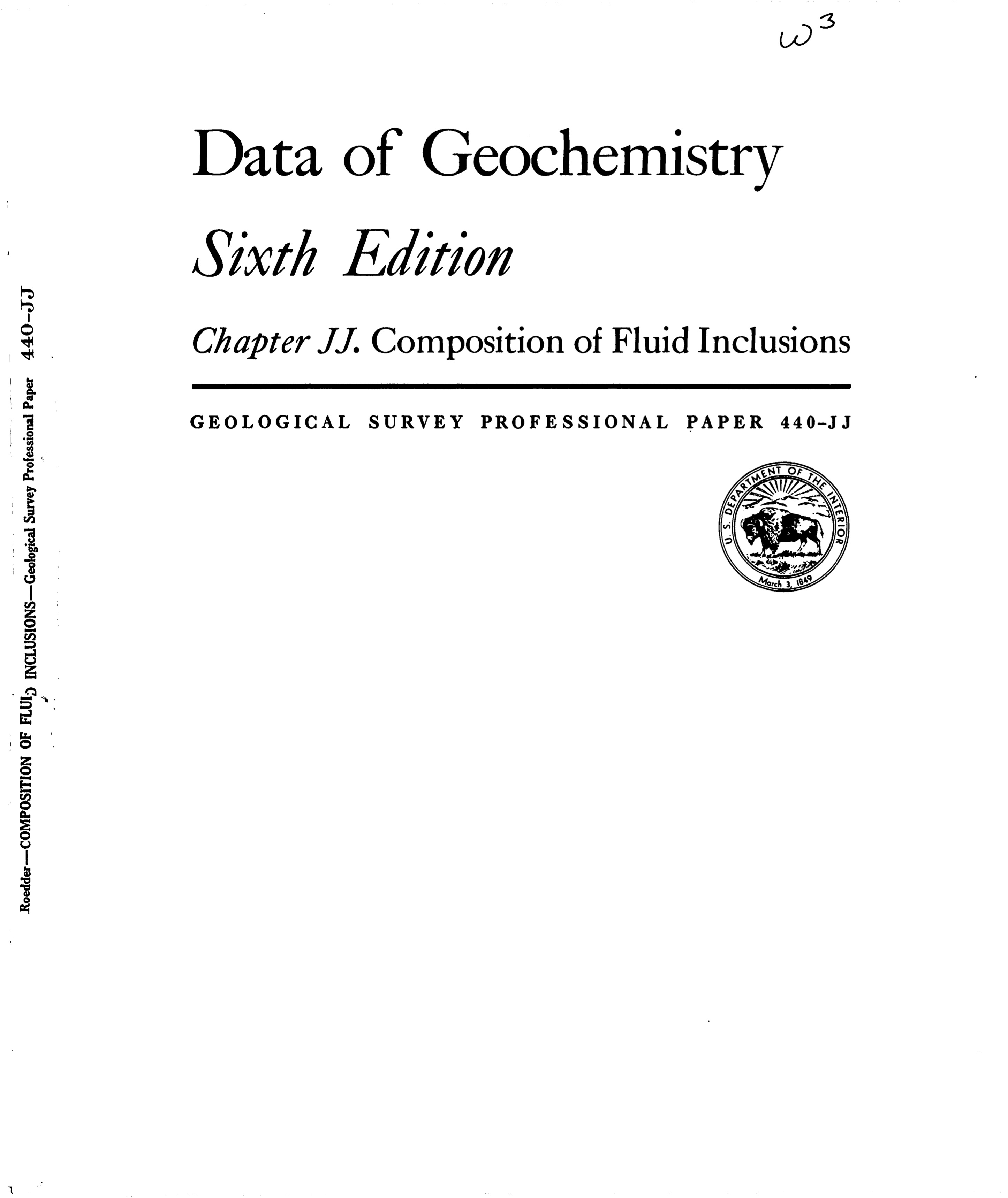
Fluid inclusions in minerals and rocks preserve for us tiny samples of the fluids that have been present during, and that have in part caused, a number of geological processes, including ore deposition. Although the original material trapped in them was generally a homogeneous fluid at the time of trapping, most inclusions have undergone changes on cooling to surface temperatures, resulting in the formation of new phases such as a gas bubble, immiscible liquids, or daughter minerals. This report is mainly a compilation of the world literature on the methods and results of study of their composition, but it also includes various unpublished data by the author. Sinkankas: Very important paper: “mainly a compilation of the world literature on fluid inclusions, methods and results of study of their composition.” A paper that should be at hand in any gemological laboratory; contains not only a vast fund of information on the nature and composition of inclusions but also illuminating discussions of the history of fluid inclusion research, the ways by which inclusions are trapped, and their subsequent appearances in the crystals, the methods used to examine their contents, etc. The exhaustive references mention studies from Robert Boyle to the present.
New analytical results of the inclusions in Siam rubies
Journal Article
Gübelin, E.J. (1971) New analytical results of the inclusions in Siam rubies.Journal of Gemmology, Vol. 12, No. 7, July, pp. 242–252.
Reports electron-microprobe identifications of characteristic inclusions in Thai rubies, relating their microscopic appearance to mineral composition and considering their possible geological significance. Gübelin describes mineral grains associated with flat, approximately circular halos or reticulated films of fluid inclusions, commonly aligned with twin or parting planes. These features had been observed in many thousands of specimens but could not be identified reliably by conventional gemmological tests. Rubies containing unusually large inclusions were therefore selected in Bangkok and polished until the enclosed grains were exposed for analysis. Yellowish crystals containing calcium and phosphorus were identified as apatite; brown to reddish-brown grains containing iron, aluminium and silicon were assigned to almandine garnet. Black, metallic inclusions consisted principally of iron and sulfur and were identified as pyrrhotite. One composite inclusion contained nickel-bearing material interpreted as minute pentlandite grains within pyrrhotite, surrounded by a chalcopyrite envelope. Element-distribution images illustrate these relationships. Separate colourless, rounded inclusions were identified as plagioclase, while one slightly greenish crystal surrounded by tension fractures was identified as diopside. Many other transparent features proved to be negative crystals, whose original gas or liquid contents were lost during polishing. The author stresses that small rounded inclusions may resemble gas bubbles and therefore require careful examination when distinguishing natural ruby from synthetic material. Competing explanations for the associated fluid halos include fracture formation followed by healing and primary incorporation of foreign fluid during interrupted crystal growth. Gübelin favours a primary origin involving disturbances in growth, supersaturation and the enclosure of residual fluid, while acknowledging the difficulty of reconstructing the process. He interprets the recurring inclusion assemblages as evidence of similar formation conditions among rubies recovered from scattered Thai alluvial deposits. Their sulfides and associated silicates, together with the reported absence of calcite, spinel and rutile silk, lead him to suggest interactions between crystalline schists or granitic pegmatites and basaltic rocks as a possible source environment. The paper establishes analytical support for several inclusion identifications while presenting the proposed growth and geological models as interpretations.
On the nature of mineral inclusions in gemstones
Journal Article
Gübelin, E.J. (1969) On the nature of mineral inclusions in gemstones.Journal of Gemmology, Vol. 11, No. 5, Jan., pp. 149–192.
Gübelin examines mineral inclusions in gemstones as evidence of the conditions and processes under which their host crystals formed. He discusses the nature, morphology, identification, and genetic significance of included minerals, showing how their crystal forms, orientations, associations, and relationships to other internal features can reveal aspects of a gemstone’s geological history. Numerous examples illustrate characteristic inclusions in important gem materials and demonstrate their usefulness in gem identification and, in favorable cases, determination of origin. Particular emphasis is placed on careful microscopic observation and interpretation of inclusion assemblages, not merely as a means of distinguishing natural stones, but as a method of reconstructing the environment of gemstone formation.
Edelsteine
Gemstones
Book
Gübelin, E.J. (1969)Edelsteine. [Gemstones] Zürich, Silva-Verlag, 144 pp.
Record No. 891 | Sinkankas/Born No.: 2576; NIB | Language: in German | RWHL*
Reference copied to clipboard!
corundum, Burma.12, Sri Lanka.12, Thailand.12, gems
Sinkankas: In this pictorial popular work, the author provides a nontechnical description of the major gemstones in a language that stresses the beauty and fascination of gems and deliberately suppresses dry scientific data. Thus the book begins with several chapters extolling the wonders of gemstones, their colors and origins, the special beauty of gems that display color or reflective phenomena, inclusions in such gems as moss agates, and a little on the splendid crystals from which gems are cut and their sources in nature. Other chapters touch on the arts of the lapidary, the diamond, the corundum family, and many other gemstones, ending with a chapter on the Idar-Oberstein agate-cutting and carving industry, and closing with a very brief chapter on the true value of gemstones in their aesthetic appeal. The book includes a glossary in which technical terms are defined and the basic properties of gemstones mentioned elsewhere are summarized. There is no index nor bibliography. The most striking feature is the large number of superb color photographs, ranging from faceted gems, some obviously selected from the finest available for illustration, to cabochons, carvings, natural crystals, views of lapidary work in progress, scenes in famous gem-mining areas, jewelry, and objects of art made from stone. These are of particular value and reflect the author’s wide travels. Not seen. Reviews: Zeitschrift der Deutschen Gemmologischen Gesellschaft, 18(4), 1969, pp. 193–194; Der Aufschluss, 21(12), 1970, p. 384.
Jewelry Through the Ages
Book
Gregorietti, G. (1969)Jewelry Through the Ages. New York, Crescent Books, 319 pp.
Record No. 845 | Sinkankas/Born No.: 2518; NIB | RWHL*
Reference copied to clipboard!
corundum, quality.10, gems
Sinkankas: A large, lavishly illustrated book on jewelry of all ages but differing from most similar books by the inclusion of far more information on gold and gemstones instead of passing these over in incidental fashion as is too often the case. The gold is treated in the first chapter while colored gemstones are given all of the second chapter, [pp. 87–127], with appropriate illustrations. This chapter provides general remarks on gemstones and then describes those used in Indian, Asiatic, Egyptian, and other ornaments, with a section on pearl. The diamond receives special treatment in the Baroque Period, [pp. 219–221], with specific remarks on coral immediately following. Modern discoveries and uses of diamond are also discussed in a section on 19th-century jewelry, [pp. 269–281], which includes discoveries in South Africa, diamond in America, the trade, cutting, and descriptions of some famous diamonds, again with appropriate illustrations. Lastly, [pp. 308–312], is a table of gemstone properties with sources of rough, and periods in which the gemstones were used in jewelry. It is apparent that the author regards gemstones as of great importance as is evident from the many illustrations in which they are prominent. The bibliography is large but no paginations are supplied. Rev. G & G, 13, 4, 1969–70, 135–136.
Exploring the Literature of Gemstone Inclusions
The literature of gemstone inclusions covers identification, origin determination, treatments, synthesis, mineral inclusions, fluid inclusions and other internal features of natural and synthetic gems.
Four Treasures is Lotus Gemology's freely accessible gemological reference database. Use the full database to search by author, title or keyword and explore literature on gemology, mineralogy, jewelry and related fields. Where available, hyperlinks on titles may lead directly to the full publication.