Gemstone Inclusions Bibliography

Gemstone Inclusions Bibliography

Explore books, articles and historical sources on inclusions in gemstones in Four Treasures, the Lotus Gemology reference database. This bibliography brings together matching records from the collection, with publication details, abstracts and cover images where available.

Gemstone Inclusion References

The list below matches the terms inclusion or inclusions in the database's searchable fields. Some references discuss inclusions as part of a broader subject.
441–460 of 1,247 matching references

GNI: Gem-quality spinel from southern Malawi
Journal Article
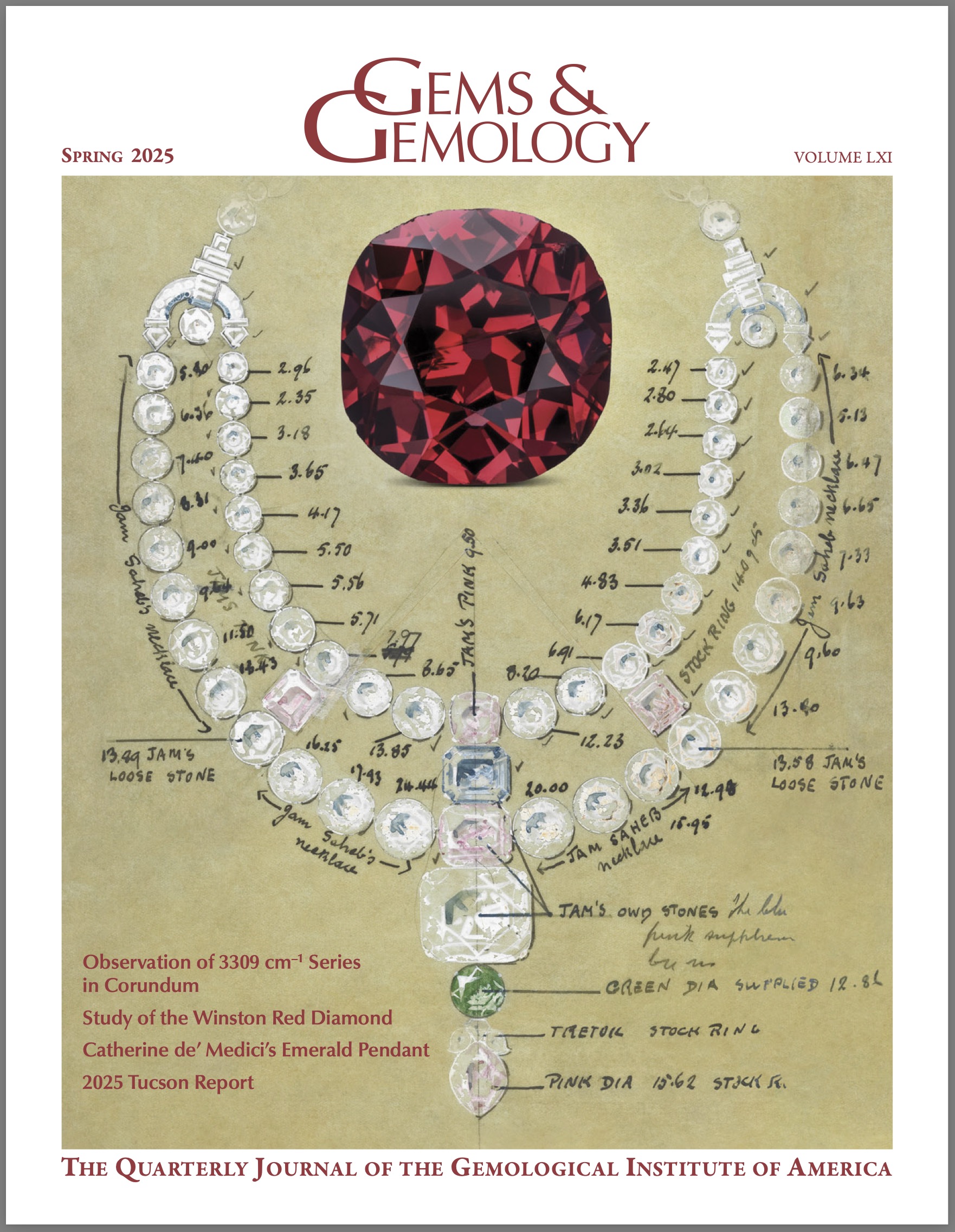
Brigada, C. (2025) GNI: Gem-quality spinel from southern Malawi. Gems & Gemology, Vol. 61, No. 1, Spring, pp. 97–99.
Record No. 26868  |  ISBN/ISSN: 16626  |  Sinkankas/Born No.: NIS/NIB  |  RWHL
At the AGTA show, the author spoke with Brent Smith, owner of Phoenix Gems (Holly, Michigan), who presented several parcels of rough spinel in various colors recently mined in Malawi. Although spinel occurrences were identified in 2014, actual mining operations only began in 2024 and are now producing moderate quantities, though exact figures remain unavailable. The rough stones ranged from 4 ct to over 10 ct. Some parcels featured pink spinel with tones from light to medium-dark and saturations up to moderately strong; these stones were translucent to transparent, relatively clean, and fluoresced bright red under UV light. Other lots included spinel in hues from bluish gray to grayish blue to violet-blue, with tones from medium-light to dark and no UV fluorescence; these stones were highly transparent and lacked eye-visible inclusions. Smith also reported encountering dark purple spinel from the same source. The material was reportedly mined in Makoko, a village in southern Malawi, where early finds were small and of poor quality until recent operations uncovered gem-quality crystals. According to Smith and other gem dealers familiar with the area, no gem-quality Malawian spinel had previously been known in the trade. Phoenix Gems was the only exhibitor offering this new material at the show. As Malawi continues to develop its gem resources, ethical trade practices remain a priority. Smith explained that Phoenix Gems collaborates with the Export Development Fund (EDF), a subsidiary of the Reserve Bank of Malawi, to ensure fair payment to local miners through an official selling channel. EDF is also working to introduce Malawian spinel to international markets. This cooperative effort between local institutions and international dealers signals a positive step toward a more transparent and sustainable gemstone supply chain in Malawi.

Microscopic, Spectroscopic and Chemical Analysis of Emeralds from Habachtal, Austria
Electronic Article
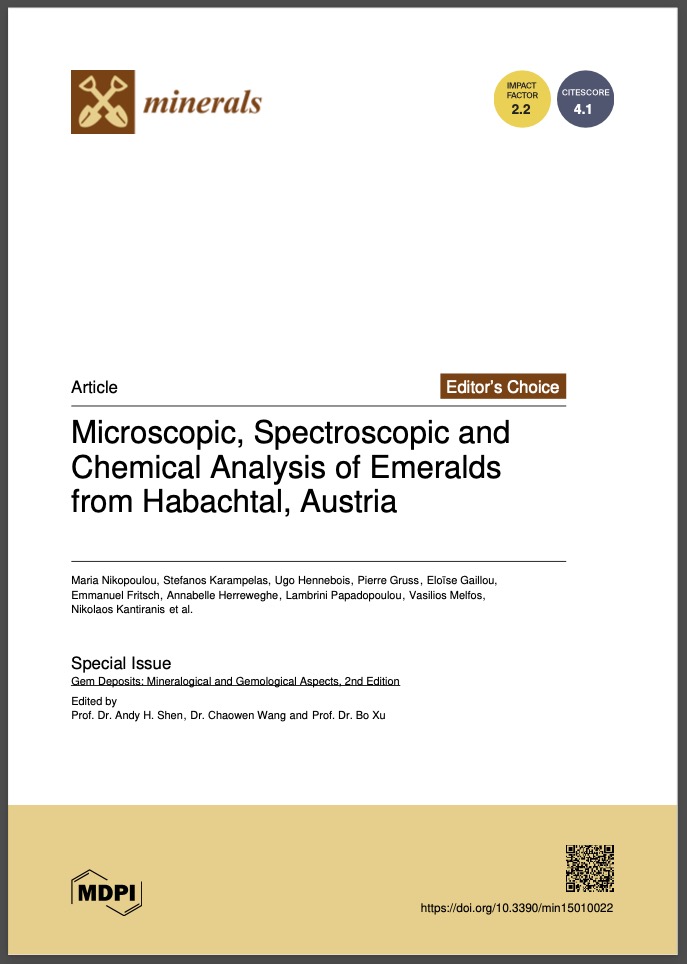
Nikopoulou, M., Karampelas, S., Hennebois, U., Gruss, P., Gaillou, E., Fritsch, E., Herreweghe, A., Papadopoulou, L., Melfos, V., Kantiranis, N. and Delaunay, A. (2025) Microscopic, Spectroscopic and Chemical Analysis of Emeralds from Habachtal, Austria. Minerals, Vol. 15, No. 1, 22 pp.
Record No. 17101  |  ISBN/ISSN: 2075163X  |  Sinkankas/Born No.: NIS/NIB  |  RWHL
Studies on emeralds from Habachtal (Austria) are scarce and non-exhaustive. However, they represent a significant interest to the community, as they have been assumed to be present in historical pieces of jewelry. Along with Egypt, Habachtal is suggested to be one of the main sources of gem-quality emeralds of archaeological significance. In this regard and due to their similar macroscopic look and geological context, it has always been challenging to distinguish Austrian and Egyptian emeralds set in historic jewelry. In this paper, a first comprehensive study of several Habachtal emeralds is presented based on a combination of classic gemology, chemistry, and spectroscopy, using non-destructive to micro-destructive methods. Spectroscopic analyses, such as via Raman, FTIR, and UV-Vis–NIR spectroscopies, showed that emeralds from Habachtal (Austria) contain Type II H₂O molecules with alkalis and they are colored by chromium and iron, similarly to emeralds from Egypt. Under an optical microscope (and identified by Raman spectroscopy), actinolite needle-like inclusions are frequently observed in Austrian emeralds. Other inclusions, such as quartz, plagioclase, albite, phlogopite, and pyrite, can also be observed in Austrian samples. Chemical analysis of Austrian emeralds’ trace elements by LA–ICP–MS show similar results to those from Egypt, with the exception of V, K, and Rb, which show a lesser content in Austrian emeralds. Thanks to the determination of inclusions combined with a careful examination of specific chemistry, this study shows that Austrian emeralds can be distinguished from their Egyptian counterpart.

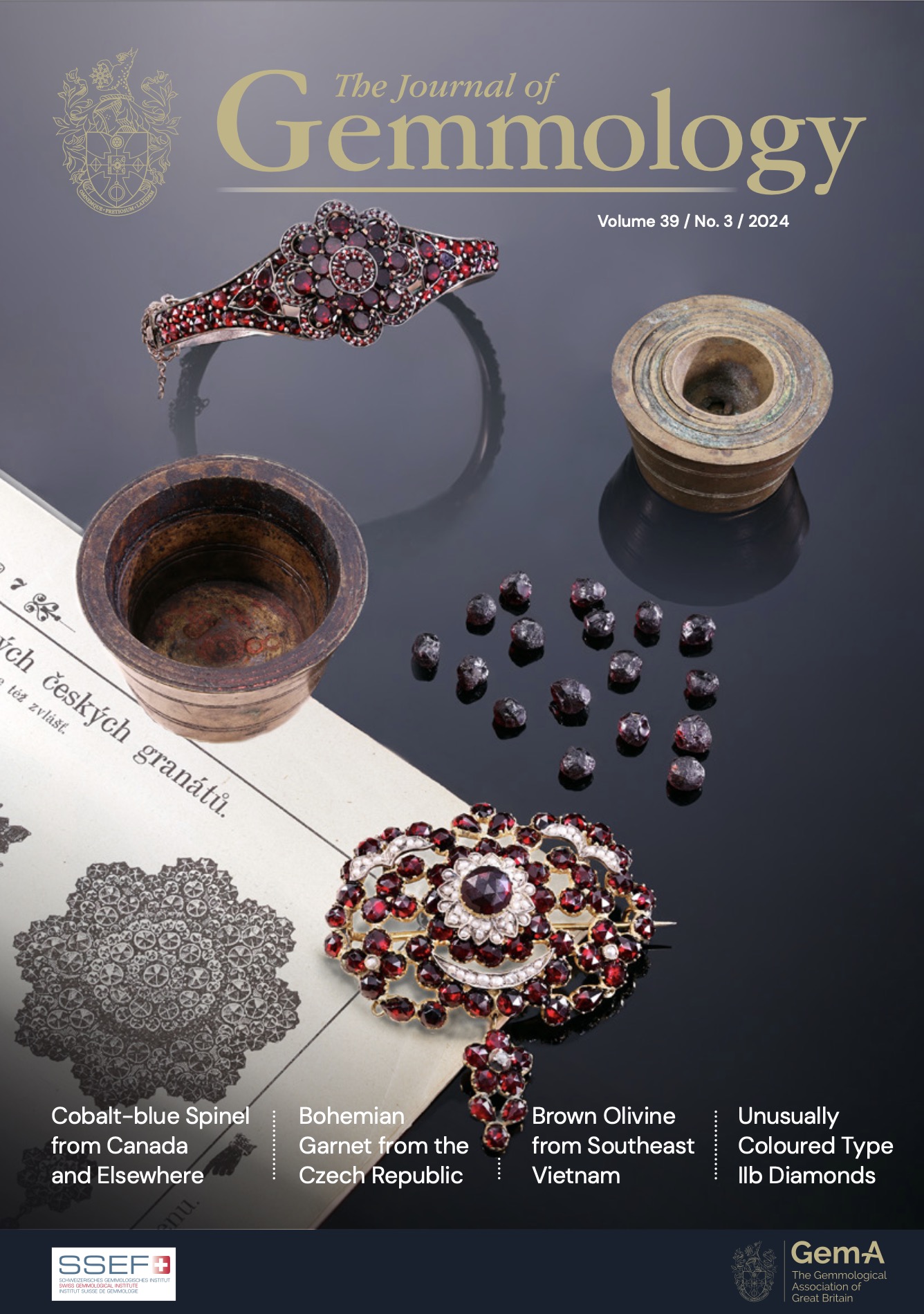
Color mechanism analysis and origin comparison of pink-purple sapphires from Vietnam and Madagascar
Journal Article
Guo, Q., Li, P., Wang, M., Zhao, S., Yang, S. and Shi, G. (2025) Color mechanism analysis and origin comparison of pink-purple sapphires from Vietnam and Madagascar. Crystals, Vol. 15, No. 229, 24  pp..
Record No. 16924  |  Sinkankas/Born No.: NIS/NIB  |  RWHL
Extensive research has been conducted on sapphires, yet methods for identifying the provenance of pink-purple sapphires, particularly those from Vietnam and Madagascar, remain limited. This study examined samples from both locations using gemological tests, microscopic observations, and various spectroscopic techniques, comparing them with pink-red corundum from other sources. Vietnamese samples exhibit a foggy appearance with orange iridescence, while Madagascan samples have a stronger purple hue. Color analysis attributes the pink hue to Cr³⁺ absorption peaks, with Madagascan samples showing enhanced blue light transmission due to Fe³⁺ and Fe²⁺–Ti⁴⁺ transitions, leading to a purple tint. Inclusions further distinguish their origins: Vietnamese sapphires contain white and blue bands, cloudy inclusions, and calcite and apatite deposits indicative of marble-type origins, while Madagascan samples, rich in small zircon formations and clusters, originate from alkaline basalt. Chemical analysis confirmed these findings, showing Vietnamese samples have lower V, Mg, and Ga but higher Fe compared to marble-type pink-red corundum from Myanmar and Yunnan, China, whereas Madagascan samples have lower Fe and higher Ga than high-iron pink-red corundum from Thailand, Cambodia, and Tanzania. This study holds significant value in tracing and identifying the origins of pink-purple sapphires.

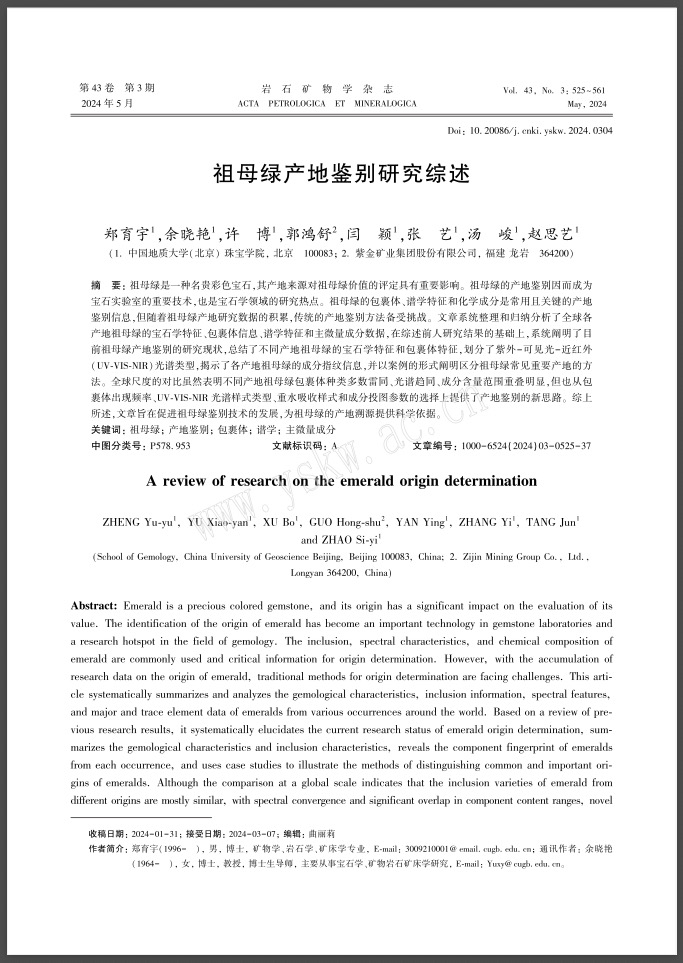
Gem Notes: Sapphires from Chimoio, Mozambique
Journal Article
Laurs, B.M. and Renfro, N.D. (2024) Gem Notes: Sapphires from Chimoio, Mozambique. Journal of Gemmology, Vol. 39, No. 3, pp. 212–213.
Record No. 27773  |  ISBN/ISSN: 221252  |  Sinkankas/Born No.: NIS/NIB  |  RWHL
In January 2023, gem dealer Dudley Blauwet informed author BML about some intriguing new sapphires sourced from near Chimoio in central Mozambique, roughly 100 km east of the Zimbabwean border. These sapphires are remarkable for their wide color range and inclusion diversity, and some display a visible schiller effect when illuminated at specific angles. Among the finest stones Blauwet acquired were a 3.75 ct orangey brown-pink gem and two red-orange gems just over 3 ct, along with smaller round brilliants (3.0–4.5 mm) exhibiting hues from pink to purplish pink, brownish pink, and reddish orange. Two of the 3.0 mm stones were red enough to be considered ruby. The mining site is reportedly 50–70 km from Chimoio, in high-grade gneiss terrain of the Mozambique Belt near the northeastern edge of the Kalahari craton (Manhica et al. 2001). Although sapphires have been known in this area since at least 2009 (Shigley et al. 2010), there appear to be no prior detailed studies on their gemological properties.

A review of research on the emerald origin determination
祖母绿产地鉴别研究综述
Journal Article
Zheng, Y., Yu, X., Xu, B., Guo, H., Yan, Y., Zhang, Y., Tang, J. and Zhao, S. (2024) A review of research on the emerald origin determination. [祖母绿产地鉴别研究综述] Acta Petrologica et Mineralogica [岩石矿物学杂志], Vol. 43, No. 3, pp. 525–561.
Record No. 26154  |  Sinkankas/Born No.: NIS/NIB  |  Language: in Chinese with English abstract  |  RWHL
Emerald is a precious colored gemstone, and its origin has a significant impact on the evaluation of its value. The identification of the origin of emerald has become an important technology in gemstone laboratories and a research hotspot in the field of gemology. The inclusion, spectral characteristics, and chemical composition of emerald are commonly used and critical information for origin determination. However, with the accumulation of research data on the origin of emerald, traditional methods for origin determination are facing challenges. This article systematically summarizes and analyzes the gemological characteristics, inclusion information, spectral features, and major and trace element data of emeralds from various occurrences around the world. Based on a review of previous research results, it systematically elucidates the current research status of emerald origin determination, summarizes the gemological characteristics and inclusion characteristics, reveals the component fingerprint of emeralds from each occurrence, and uses case studies to illustrate the methods of distinguishing common and important origins of emeralds. Although the comparison at a global scale indicates that the inclusion varieties of emerald from different origins are mostly similar, with spectral convergence and significant overlap in component content ranges, novel approaches for origin determination are proposed based on inclusion frequency, UV–VIS–NIR spectral patterns, absorption patterns of HDO and D₂O, and the parameter selection of compositional diagrams.

Review of emerald origin determination
祖母绿产地鉴别研究综述
Journal Article
Zheng, Y., Yu, X., Xu, B., Guo, H., Yan, Y., Zhang, Y., Tang, J. and Zhao, S. (2024) Review of emerald origin determination. [祖母绿产地鉴别研究综述] Acta Petrologica et Mineralogica [岩石矿物学杂志], Vol. 43, No. 3, pp. 525–561.
Record No. 17170  |  Sinkankas/Born No.: NIS/NIB  |  Language: in Chinese with English abstract  |  RWHL
Emerald is a precious colored gemstone, and its origin has a significant impact on the evaluation of its value. The identification of the origin of emerald has become an important technology in gemstone laboratories and a research hotspot in the field of gemology. The inclusion, spectral characteristics, and chemical composition of emerald are commonly used and critical information for origin determination. However, with the accumulation of research data on the origin of emerald, traditional methods for origin determination are facing challenges. This article systematically summarizes and analyzes the gemological characteristics, inclusion information, spectral features, and major and trace element data of emeralds from various occurrences around the world. Based on a review of previous research results, it systematically elucidates the current research status of emerald origin determination, summarizes the gemological characteristics and inclusion characteristics, reveals the component fingerprint of emeralds from each occurrence, and uses case studies to illustrate the methods of distinguishing common and important origins of emeralds. Although the comparison at a global scale indicates that the inclusion varieties of emerald from different origins are mostly similar, with spectral convergence and significant overlap in component content ranges, novel approaches for origin determination are proposed based on inclusion frequency, UV-VIS-NIR spectral patterns, absorption patterns of HDO and D₂O, and the parameter selection of compositional diagrams.

Hidden Beauty

Book
Hyman, J.M. (2024) Hidden Beauty. no city, self-published, unpaginated
Record No. 16592  |  ISBN/ISSN: 9788330000000  |  Sinkankas/Born No.: NIS/NIB  |  RWHL
Self-published book on inclusions in gems.

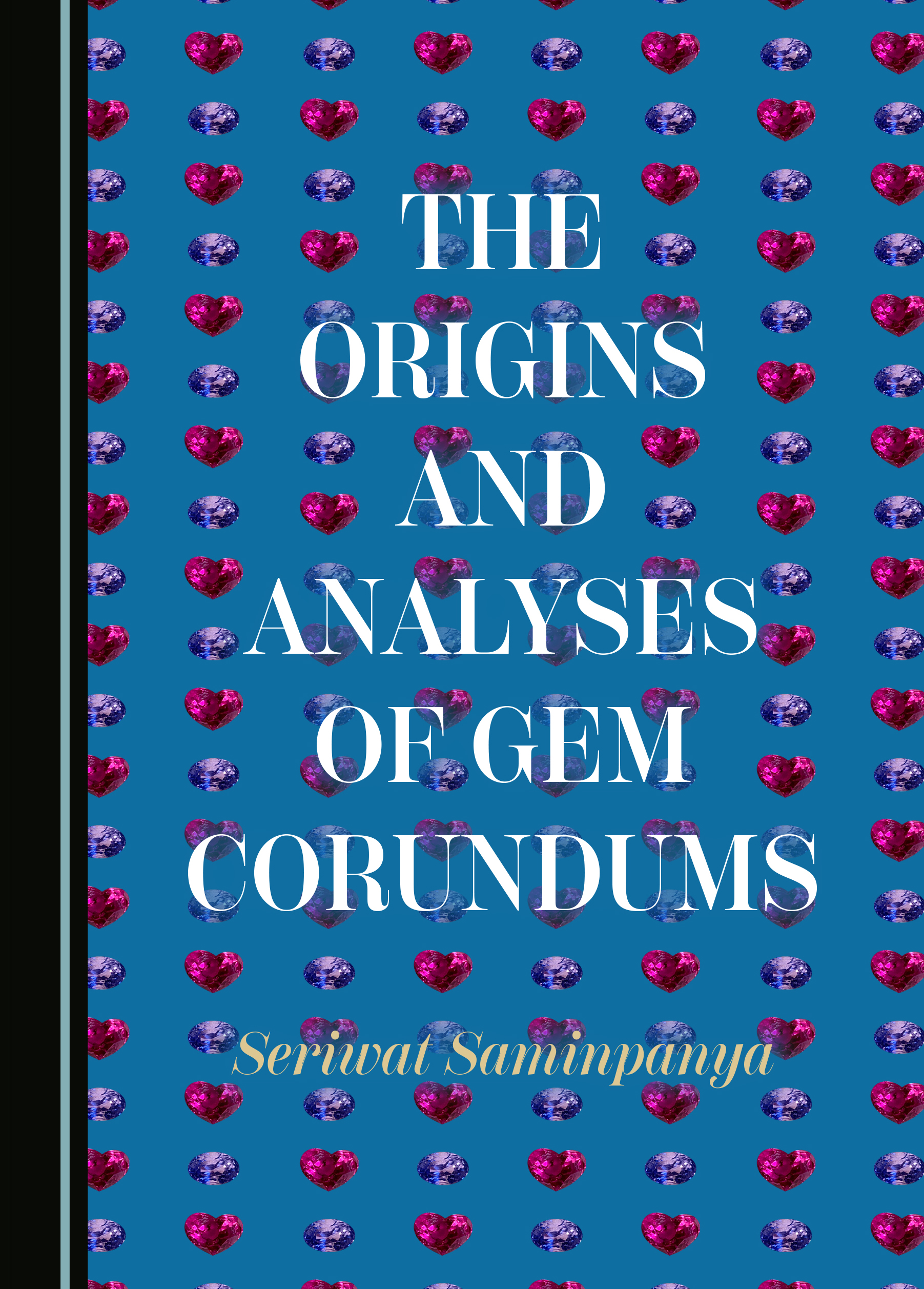
The Origins and Analyses of Gem Corundums
Book
Saminpanya, S. (2024) The Origins and Analyses of Gem Corundums. Newcastle upon Tyne, Cambridge Scholars, 288 pp.
Record No. 16336  |  ISBN/ISSN: 9781040000000  |  Sinkankas/Born No.: NIS/NIB  |  RWHL
This book provides a comprehensive review of gem corundum origins worldwide, highlighting the enduring value of rubies and sapphires despite synthetic alternatives. By delving into natural corundum origins and associated minerals, this knowledge boosts corundum prices and intensifies market trade. The book explores formation conditions and key evidence such as trace elements, mineral inclusions, and stable isotopes. These findings elucidate corundum’s origin, linking to the rock types and geological occurrences. Drawing from high-impact journals, books, and the author’s research, it offers valuable insights into synthetic processes and treatments. Catering to mineralogists, geologists, gemmologists, students, and gem traders, the book serves as a valuable reference for identifying gemstone origins. Its rarity in the market makes it particularly valuable for enthusiasts and professionals. As researches in this field continue to grow, this book bridges the gap by making complex terminology accessible to a wide audience.

Effects of low-temperature heat treatment on Mong Hsu rubies
Electronic Article
Fan, C. and Ding, Y.-C. (2024) Effects of low-temperature heat treatment on Mong Hsu rubies. Minerals, Vol. 14, No. 8, 20 pp.
Record No. 8159  |  ISBN/ISSN: 2075163X  |  Sinkankas/Born No.: NIS/NIB  |  RWHL
This study examined the effects of low-temperature heat treatment on the characteristics of rubies from Mong Hsu, Myanmar. Five ruby samples were heated to 400, 600, 900, and 1200 °C for varying durations. Before and after each heating step, visual examinations were conducted using a gem microscope under different illumination conditions. Various spectral techniques—UV-Vis, FTIR, Raman, and photoluminescence (PL)—were employed to assess the changes induced by heating. The treatment enhanced the rubies by partially or completely fading the dark blue core, which in turn increased overall light transmittance and enhanced the fluorescence peak around 694 nm, though it did not improve the red hue of the samples. Two primary effects were observed. First, the fading of the dark blue core with increasing temperature was attributed to changes in the intervalence charge transfer (IVCT) between Fe²⁺ and Ti⁴⁺. This IVCT variation was negligible below 900 °C but became pronounced at 1200 °C. Second, a shift in the FTIR spectrum, particularly the 630 cm⁻¹ peak, was observed and is thought to result from the decomposition of mineral inclusions during heating. This FTIR peak proved to be sensitive to low-temperature heat treatment and may serve as a useful indicator for detecting such treatment in Mong Hsu rubies.

Sapphires from Chimoio, Mozambique

Journal Article
Laurs, B.M. and Renfro, N.D. (2024) Sapphires from Chimoio, Mozambique. Journal of Gemmology, Vol. 39, No. 3, pp. 212–213.
Record No. 8155  |  ISBN/ISSN: 221252  |  Sinkankas/Born No.: NIS/NIB  |  RWHL
In January 2023, gem dealer Dudley Blauwet informed author BML about some interesting new sapphires that he obtained from Chimoio in central Mozambique, about 100 km east of the border with Zimbabwe. The sapphires are notable for their range of colour and diversity of inclusions, and in some cases they display a noticeable schiller effect when viewed at certain orientations with a pinpoint light source. The largest clean stones that Blauwet obtained consisted of an orangey brown-pink gem weighing 3.75 ct and two red-orange gems weighing just over 3 ct. He also cut several smaller round brilliants measuring 3.0, 3.5 and 4.5 mm in diameter that showed various colours ranging from pink to purplish pink, brownish pink and reddish orange. Two of the 3.0 mm gems were red enough to be classified as ruby.

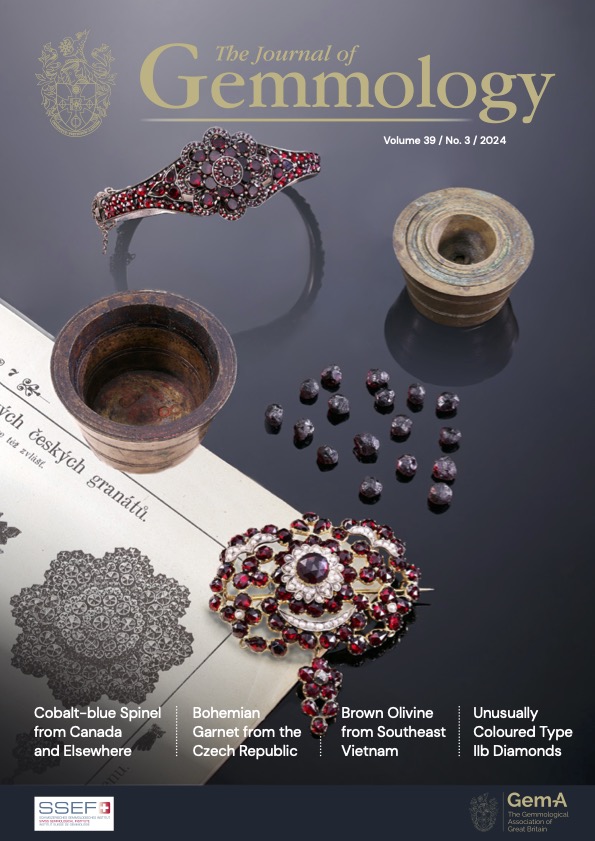
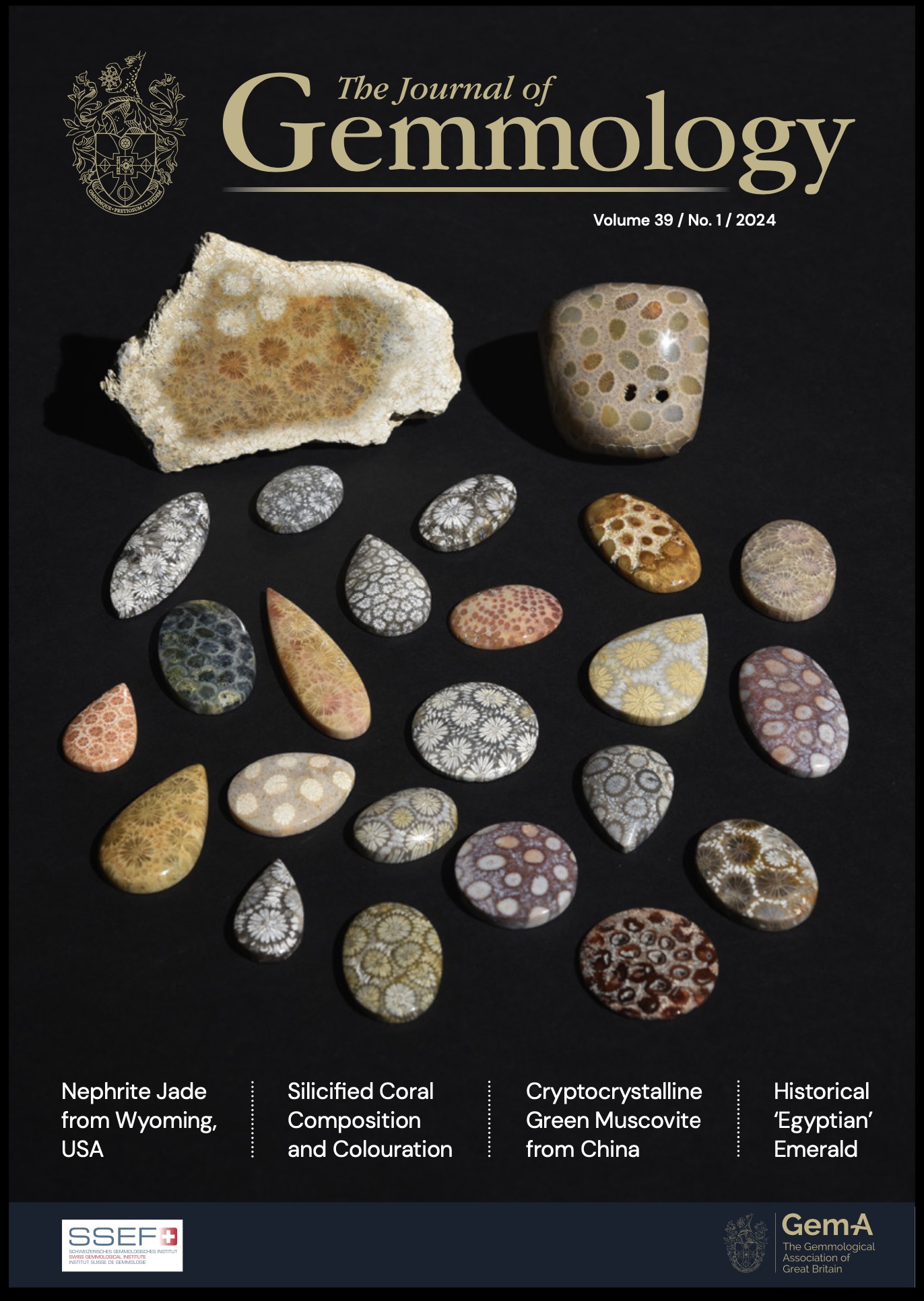
Cobalt-blue spinel from Baffin Island, Canada: Comparison to other Mg-Al spinels and a chemical discrimination approach for the colouration of spinel
Journal Article
Belley, P.M., Schollenbruch, K., Groat, L.A. and Wilson, B.S. (2024) Cobalt-blue spinel from Baffin Island, Canada: Comparison to other Mg-Al spinels and a chemical discrimination approach for the colouration of spinel. Journal of Gemmology, Vol. 39, No. 3, pp. 220–240.
Record No. 8154  |  ISBN/ISSN: 221252  |  Sinkankas/Born No.: NIS/NIB  |  RWHL
Cobalt-blue spinel from two localities (Qila and Trailside) on Baffin Island, Nunavut, Canada, are compared with other spinels from 12 occurrences in the same geological terrane and to Co-bearing blue spinel from other localities worldwide. Qila spinel is suitable for cutting cabochons, which commonly incorporate small amounts of associated calcite, dolomite, corundum, fluorapatite, pargasite and other silicates, as well as secondary cobaltpentlandite and fluid inclusions. Trailside spinel can be faceted into small gemstones (generally <0.2 ct), which rarely contain magnesite, fluorapatite, muscovite and CO2-rich fluid inclusions. The bright blue colour of the spinels from Qila and Trailside is due to TCo2+, although they also contain other chromophoric elements such as Fe and traces of Cr, Mn and V. Compared with other Mg-Al spinels from Baffin Island, those from Qila and Trailside are generally enriched in Co, Ni, Mn, Li and Be, and depleted in Ti, V and Cr. In addition, the Qila and Trailside Co-blue spinels are fairly chemically distinct from those of other world localities: they are depleted in V and Ti, fairly poor in Cr and Zn, and considerably enriched in Co and Mn. A new approach for the preliminary chemical discrimination of gem spinels is proposed by plotting the weighted chromophore concentrations in a ternary diagram (i.e. Cr+V vs 40×Co vs Fe/8). These weighted percentage values are also plotted against the ppmw concentrations of the chromophoric elements in X–Y plots, which provide further correlations of high Co with vivid Co-blue spinel and elevated Fe with overly dark non-gem spinel. This method can be applied to samples that are difficult or inefficient to characterise using spectroscopy, such as spinel grains in heavy-mineral concentrates obtained during regional exploration programmes.

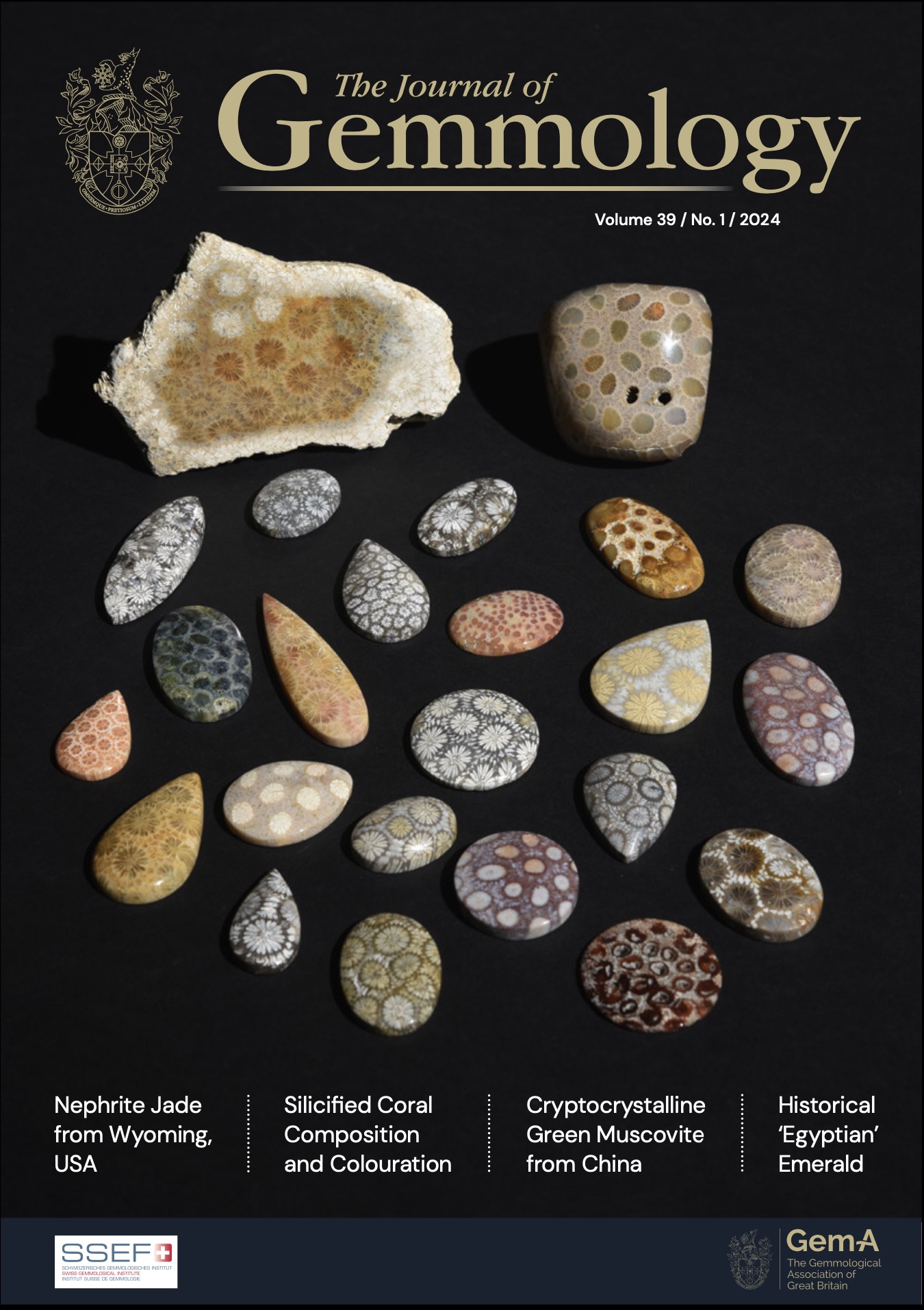
Gem-quality green cryptocrystalline muscovite (fuchsite) from Ya’an Prefecture, Sichuan, China
Journal Article
Blumentritt, F., Notari, F., Becouze, M., Vigier, M., Zuber, G., Caplan, C. and Fritsch, E. (2024) Gem-quality green cryptocrystalline muscovite (fuchsite) from Ya’an Prefecture, Sichuan, China. Journal of Gemmology, Vol. 39, No. 1, pp. 66–76.
Record No. 7877  |  ISBN/ISSN: 221252  |  Sinkankas/Born No.: NIS/NIB  |  RWHL
An attractive massive green gem material from central China was recently purchased by the authors as ‘chrome-pyrophyllite’, but proved to be cryptocrystalline Cr-bearing muscovite (fuchsite). The material contains inclusions of ochrous rutile, tourmaline needles, granular quartz, black masses of disordered graphite, and pyrite that is locally altered to black hematite and brownish red lepidocrocite. EDXRF chemical analysis showed the expected major constituents Al, Si and K, as well as minor-to-trace amounts of S, Ba, Ti, Cl, Fe, Cr, V, Rb, Mn and Mg (some of which may be due to inclusions). UV-Vis-NIR spectroscopy showed that the green colour of the muscovite is due to Cr³⁺ and V³⁺. The material exhibits whitish blue fluorescence to long-wave UV radiation as well as blue persistent luminescence—neither of which has been documented previously in muscovite—and these features are tentatively assumed to be associated with oxygen vacancies. This new material from China is similar to massive fuchsite from Ethiopia and Myanmar.

Identification of heat treatment in metamorphic-type blue sapphires using FTIR spectroscopy: New insights on the 3232 cm⁻¹ band
Journal Article
Delaunay, A., Hennebois, U., Karampelas, S. and Fritsch, E. (2024) Identification of heat treatment in metamorphic-type blue sapphires using FTIR spectroscopy: New insights on the 3232 cm⁻¹ band. Journal of Gemmology, Vol. 39, No. 1, pp. 33–35.
Record No. 7581  |  ISBN/ISSN: 221252  |  Sinkankas/Born No.: NIS/NIB  |  RWHL
Evidence of heat treatment of gem corundum can be provided by microscopic observations (e.g. altered inclusions), blue luminescence to short-wave UV excitation (254 nm), and FTIR spectroscopic features. For metamorphic-type stones, evidence of heating is provided by the presence of a low-intensity infrared absorption band at 3232 cm⁻¹, and sometimes by another band at 3185 cm⁻¹, that accompany a band at 3309 cm⁻¹ (therefore known as the ‘3309 series’; Hughes & Emmett 2005; Beran & Rossman 2006; Saeseaw et al. 2020). Recently, a similar feature at 3234 cm⁻¹—also accompanying the 3309 cm⁻¹ band, but with two additional bands at about 3380 and 3395 cm⁻¹—was reported for a blue sapphire which, because it contained diaspore inclusions, presumably could not have been heated to more than 550 °C (Krzemnicki et al. 2023). In the present note, we document for the first time a heated sapphire with FTIR bands at 3234, 3380, and 3395 cm⁻¹ occurring together with the 3309 cm⁻¹ band.

Gemological and chemical characterization of varicolored gem-grade spinel from Mogok, Myanmar
Electronic Article
Zhao, Y., Xu, B., Zhao, Z., Xu, Q. and Li, Z. (2023) Gemological and chemical characterization of varicolored gem-grade spinel from Mogok, Myanmar. Crystals, Vol. 13, No. 3, 18 pp.
Record No. 29190  |  ISBN/ISSN: 2073-4352  |  Sinkankas/Born No.: NIS/NIB  |  RWHL
Spinel is a precious gem with a long history, but people are far less familiar with it. Previous studies on Mogok spinel from Myanmar focused on inclusion analysis, the chromogenic mechanism of single-color gemstones and heat treatment, whereas systematic studies on varicolored gem-grade spinel are lacking. In this study, gemological and geochemical analyses of four colors of spinel samples from Mogok were carried out, including basic gemology, inclusion morphology and identification, spectroscopy and geochemistry. The aim was to explore the occupation of elements in the spinel crystal structure, as well as the chromogenic mechanisms of varicolored spinels and the geological and geodynamic conditions of their formation. Mogok spinel samples are characterized by octahedral negative crystals filled with calcite and chondrodite inclusions, indicating that they are derived from a marble metamorphic-type deposit. The spinel samples of four colors are magnesia–alumina spinel (MgAl₂O₄). The contents of V and Cr in Mogok spinel are generally high, with a significantly high content of Zn being the most characteristic feature, while trace elements vary greatly. The infrared spectra of spinel samples of different colors are basically similar. According to the UV–Vis spectra, pink and red samples are mainly colored by Cr and/or V, whereas orange samples are mainly colored by V. Two broad absorption bands in the range 300–600 nm are mainly attributed to the spin-allowed and spin-forbidden transitions of Cr³⁺ and/or V³⁺. The purple samples are mainly colored by Fe, and the UV–Vis spectrum is mainly attributed to the spin-forbidden transition of TFe²⁺. This study is a useful supplement to research on Mogok spinels of various colors from multiple perspectives.

Supercritical geofluids and genesis of jadeite jade
超临界地质流体与翡翠成因
Journal Article
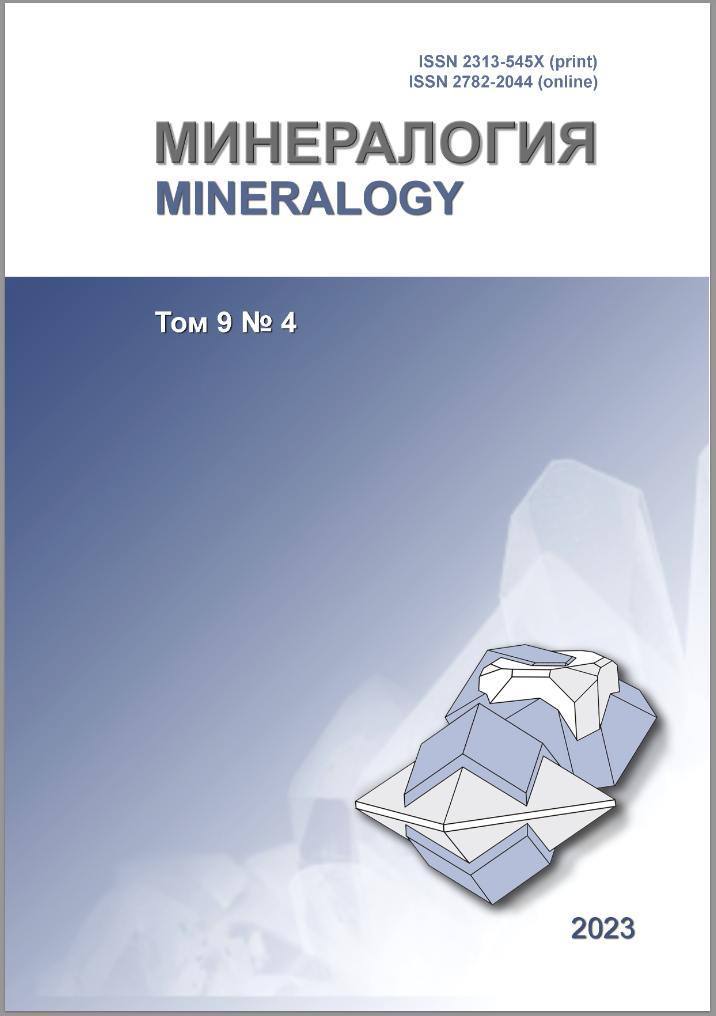
Wang, L., Wang, L., Wang, Y., Shen, C., Ma, Y., Liu, J., Liu, Y. and Song, Y. (2023) Supercritical geofluids and genesis of jadeite jade. [超临界地质流体与翡翠成因] Journal of Gems & Gemmology, Vol. 25, No. 5, pp. 1–16.
Record No. 28564  |  ISBN/ISSN: 2096-9120  |  DOI: https://doi.org/10.15964/j.cnki.027jgg.2023.05.001  |  Sinkankas/Born No.: NIS/NIB  |  Language: in Chinese with English abstract  |  RWHL
Supercritical geofluids are transitional fluids formed in silicate rock–H₂O systems under conditions of high temperature and pressure. Their chemical compositions lie between those of aqueous fluids and magmatic melts. Possessing strong capacities for dissolution, transport and reaction, they serve as important carriers and media for material circulation within the Earth. Traditional models for the origin of primary jadeite jade (jadeitite)—including regional metamorphic, magmatic and metasomatic theories—are supported by evidence from experimental petrology, petrography and petrogenesis. However, each encounters difficulties in explaining mineral crystallization sequences, mineral assemblages and their spatial distributions. The original fluid-precipitation and metasomatic-replacement theory proposes two modes for the formation of the constituent minerals of jadeite jade. Commonly observed fluid–melt inclusions within jadeite and omphacite grains and their aggregates indicate that primary jadeitites crystallized from fluid–melt miscible systems. Drawing upon advances in the study of supercritical geofluids in Earth sciences and recent research on jadeite jade, this paper presents a supercritical-geofluid model for jadeitite formation. In this model, supercritical geofluids generated by dehydration of the subducting slab transport dissolved materials under suitable pressure–temperature conditions. Changes in temperature, pressure and related parameters lead to the crystallization and infilling of early jadeitite within fractures and fissures of the mantle wedge, followed by superimposed metasomatism. This model is supported by multiple lines of evidence, including characteristic fluid–melt inclusions, pronounced dissolution relics, early infilling textures, middle- to late-stage metasomatic textures, enrichment in high-field-strength elements, abundant and complex mineral (or solid-phase) assemblages, and high- to ultra-high-pressure veins containing diagnostic minerals. Chromite, a magmatic mineral predating the formation of early jadeitite, was subsequently dissolved or replaced, providing the Cr³⁺ responsible for the green coloration of jadeite jade. Following its initial formation, jadeitite underwent multiple geological processes, including melt activity and fluid activity (both crystallization and metasomatism) associated with the separation of supercritical geofluids, as well as deformation, metamorphism and supergene alteration. To establish a comprehensive theoretical framework for jadeite jade formation, further investigation and reassessment are required, with particular attention to the timing and role of supercritical geofluid activity.

Additions to the composition of the ural beryls and inclusions of syngenetic minerals in them
Journal Article
Popova, V.I., Popov, V.A. and Rassomakhin, M. (2023) Additions to the composition of the ural beryls and inclusions of syngenetic minerals in them. МИНЕРАЛОГИЯ [Mineralogy (Russia)], Vol. 9, No. 4, pp. 5–16.
Record No. 28149  |  ISBN/ISSN: ISSN 2313-545X (print); ISSN 2782-2044 (online)  |  DOI: 10.35597/2313-545X-2023-9-4-1  |  Sinkankas/Born No.: NIS/NIB  |  Language: in Russian  |  RWHL
In addition to the data of predecessors, the chemical composition of zoned or zoned-sectorial beryl crystals from pegmatites of the Mariinsky and Kvartalny deposits of the Urals emerald mines in the Central Urals, granitic pegmatite of mine no. 242 of the Ilmeny State Reserve and Svetlinsky pegmatite quarry in the South Urals is characterized using scanning electron microscopy and energy-dispersive analysis. The light peripheral zones of prism and pinacoid in crystal sections differ in variations in Al, Fe and Mg contents from the inner zones or areas. The presence of fractures and regenerated fragments of early beryl indicates synmineralization tectonics. In beryl from the Mariinsky deposit, the previously unknown syntactic ingrowths of bavenite and zones of parallel columnar aggregates of co-crystallization of beryl and bavenite, as well as late pyrite, fluorite, gismondine-Ca and tobermorite, are identified. Beryls from mine no. 242 of the Ilmeny State Reserve are yellowish-greenish and bluish with a peripheral white zone and syntactic microingrowths of annite and syngenetic inclusions of columbite and Ta-Nb rutile. Muddy bluish-white beryl regenerated by colorless beryl from the Svetlinsky quarry hosts numerous syntactic inclusions of muscovite, gahnite, calcite, quartz and quartz-muscovite microaggregates with pyrite, chalcopyrite, sphalerite, galena, siderite, calcite, and micropores. The syntaxy of mica, quartz and gahnite with beryl is revealed for the first time. Keywords: beryl, zoning, composition, syntaxy, mineral inclusions, granitic pegmatites, Urals emerald mines, Ilmeny Reserve, Svetlinsky pegmatite quarry, Russia.

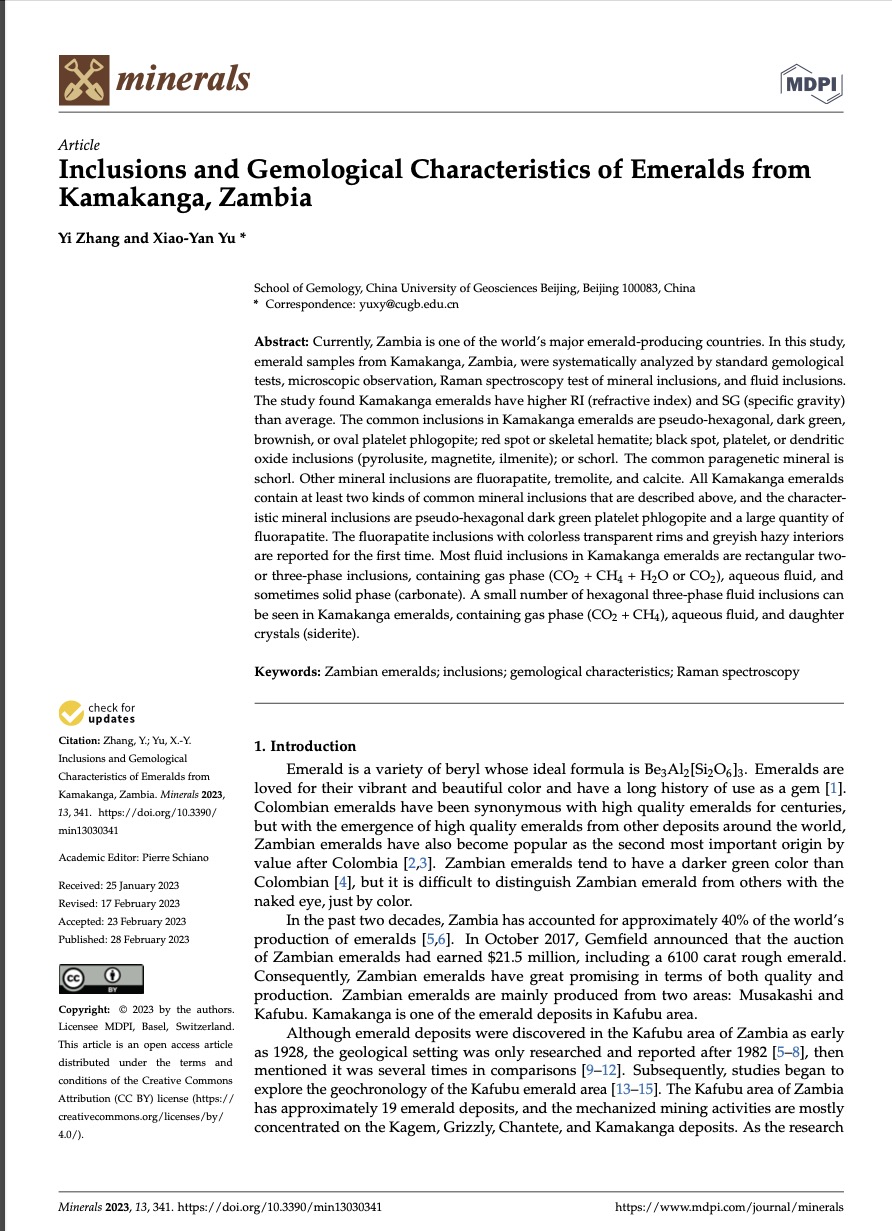
G&G Microworld: Tourmaline in emerald
Journal Article
Schneider, V. (2023) G&G Microworld: Tourmaline in emerald. Gems & Gemology, Vol. 59, No. 3, p. 377.
Record No. 16321  |  ISBN/ISSN: 0016626X  |  Sinkankas/Born No.: NIS/NIB  |  RWHL
A 3.80 ct emerald containing well-formed black, opaque prismatic crystals was examined. Raman spectroscopy identified the surface-reaching crystals as tourmaline, an uncommon inclusion in emeralds that has been documented in schist-hosted deposits in Zambia, Pakistan, Russia, and Ethiopia. Laser ablation–inductively coupled plasma–mass spectrometry chemical analysis, combined with inclusion observation, revealed the emerald to be of Zambian origin.

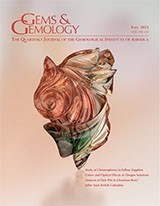
Inclusions and gemological characteristics of emeralds from Kamakanga, Zambia
Journal Article
Zhang, Y. and Yu, X.-Y. (2023) Inclusions and gemological characteristics of emeralds from Kamakanga, Zambia. Minerals, Vol. 13, No. 3,
Record No. 7589  |  ISBN/ISSN: 2075163X  |  DOI: https://dx.doi.org/10.3390/min13030341  |  Sinkankas/Born No.: NIS/NIB  |  RWHL
Currently, Zambia is one of the world’s major emerald-producing countries. In this study, emerald samples from Kamakanga, Zambia, were systematically analyzed by standard gemological tests, microscopic observation, Raman spectroscopy test of mineral inclusions, and fluid inclusions. The study found Kamakanga emeralds have higher RI (refractive index) and SG (specific gravity) than average. The common inclusions in Kamakanga emeralds are pseudo-hexagonal, dark green, brownish, or oval platelet phlogopite; red spot or skeletal hematite; black spot, platelet, or dendritic oxide inclusions (pyrolusite, magnetite, ilmenite); or schorl. The common paragenetic mineral is schorl. Other mineral inclusions are fluorapatite, tremolite, and calcite. All Kamakanga emeralds contain at least two kinds of common mineral inclusions that are described above, and the characteristic mineral inclusions are pseudo-hexagonal dark green platelet phlogopite and a large quantity of fluorapatite. The fluorapatite inclusions with colorless transparent rims and greyish hazy interiors are reported for the first time. Most fluid inclusions in Kamakanga emeralds are rectangular two- or three-phase inclusions, containing gas phase (CO₂ + CH₄ + H₂O or CO₂), aqueous fluid, and sometimes solid phase (carbonate). A small number of hexagonal three-phase fluid inclusions can be seen in Kamakanga emeralds, containing gas phase (CO₂ + CH₄), aqueous fluid, and daughter crystals (siderite).

Gem News International: Blackish green omphacite jade from Guatemala
Journal Article
Xu, S., Chen, Q. and Liu, X. (2023) Gem News International: Blackish green omphacite jade from Guatemala. Gems & Gemology, Vol. 59, No. 3, Fall, pp. 395–397.
Record No. 6782  |  ISBN/ISSN: 0016626X  |  Sinkankas/Born No.: NIS/NIB  |  RWHL
In recent years, a new kind of Guatemalan jade has entered the Chinese jewelry market, where it is called yongchuliao fei cui (or yongchuliao for short). Prior to the availability of yongchuliao, Chinese consumers had a negative impression of Guatemalan material and preferred Burmese jade. However, the recent emergence of this new high-quality blackish green jade has attracted the attention of Chinese buyers. The authors recently tested a rough stone and a carved pendant of yongchuliao. Under reflected light, these samples appeared blackish green with a greasy luster similar to Burmese inky black jade. The rough stone was opaque and had numerous fine white inclusions measuring approximately 300 μm in diameter on its surface. The carved sample was bright green with coarse texture and medium transparency under transmitted light. The rough and carved samples had a refractive index of 1.67 and specific gravities of 3.342 and 3.332, respectively. These gemological characteristics are consistent with both jadeite-type jade and omphacite-type jade. Qualitative analysis using energy-dispersive X-ray fluorescence spectrometry revealed magnesium, aluminum, silicon, calcium, chromium, manganese, and iron, among other elements. It should be noted that the ideal chemical formula of jadeite is NaAlSi₂O₆ and that of omphacite is (Ca,Na)(Mg,Fe,Al)Si₂O₆. Jadeite and omphacite can form a complete solid solution. The occurrence of calcium, magnesium, and other elements implies that the mineral composition of yongchuliao is not pure jadeite. Raman shifts at 681, 514, 411, 378, 340, and 209 cm⁻¹ were consistent with those of omphacite. The Raman spectra of fibrous inclusions in the carved sample also matched those of omphacite rather than jadeite. The strongest Raman shift at 681 cm⁻¹ was attributed to the symmetrical Si-O-Si stretching vibration. Raman spectroscopy was used to compare the samples’ mineral composition against the RRUFF database, revealing that yongchuliao material consists almost entirely of omphacite. The fine white inclusions distributed evenly in the rough sample were coincident with titanite. In addition, some of the sample was ground into powder for X-ray diffraction analysis to obtain the mineral composition of the whole rock. The results showed an omphacite content of about 98.49% (with a 5% margin of error), and the rest was magnesian calcite. The results from Fourier-transform infrared absorption spectroscopy were consistent with the Raman spectra, identifying the main mineral composition of the samples as omphacite. A double-sided polished piece was cut from the rough sample for testing. Its ultraviolet/visible/near-infrared (UV-Vis-NIR) absorption spectrum showed an absorption peak at 437 nm, indicating the presence of Fe³⁺. Absorption peaks at 637, 657, and 688 nm were also observed and attributed to Cr³⁺. Based on testing, both samples were omphacite-type jade containing titanite inclusions. Since almost all of the yongchuliao we have observed exhibited nearly the same colors and textures as these samples, it is likely that other yongchuliao may also have similar mineral compositions.

Micro-World: Large stellate dislocation in spinel

Journal Article
Kiyak, E. (2023) Micro-World: Large stellate dislocation in spinel. Gems & Gemology, Vol. 59, No. 3, Fall, pp. 376–377.
Record No. 6781  |  ISBN/ISSN: 0016626X  |  Sinkankas/Born No.: NIS/NIB  |  RWHL
The author recently examined a 4.49 ct greenish blue spinel exhibiting a prominent stellate inclusion characterized by a network of needle-like dislocations clustered in a six-rayed star pattern (see above). The inclusion was large enough to be readily observed without magnification. Star-like needles have been previously documented in spinel originating from Vietnam. These findings contribute to our understanding of spinel and its origins, providing valuable information for gemologists. This is one of the most remarkable stellate inclusions the author has observed in a spinel.

Exploring the Literature of Gemstone Inclusions

The literature of gemstone inclusions covers identification, origin determination, treatments, synthesis, mineral inclusions, fluid inclusions and other internal features of natural and synthetic gems.

For a curated selection of important sources, read Inclusions in Gemstones — Hyperion Literature Sources.

About Four Treasures

Four Treasures is Lotus Gemology's freely accessible gemological reference database. Use the full database to search by author, title or keyword and explore literature on gemology, mineralogy, jewelry and related fields. Where available, hyperlinks on titles may lead directly to the full publication.

Search the Complete Four Treasures Database